

Long-term treatment with senolytic drugs Dasatinib and Quercetin ameliorates age-dependent intervertebral disc degeneration in mice
Open accessPublished version of a preprint
The DOI matches its Crossref record; 79 of the 79 references it cites were found in a registry or an index.
Abstract
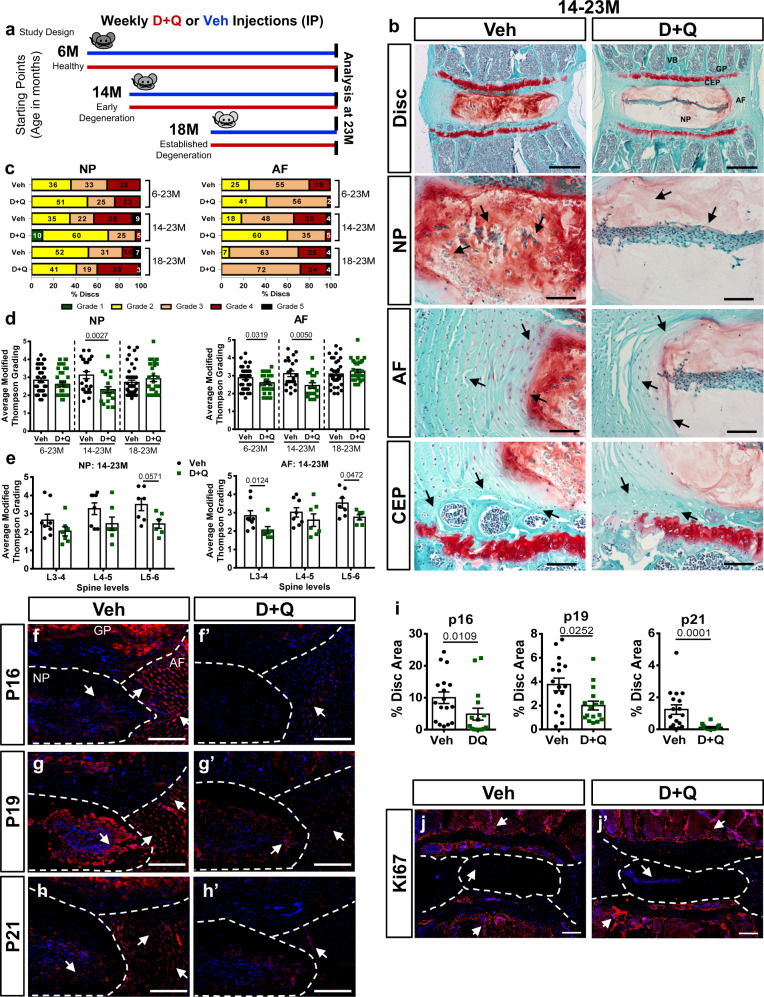
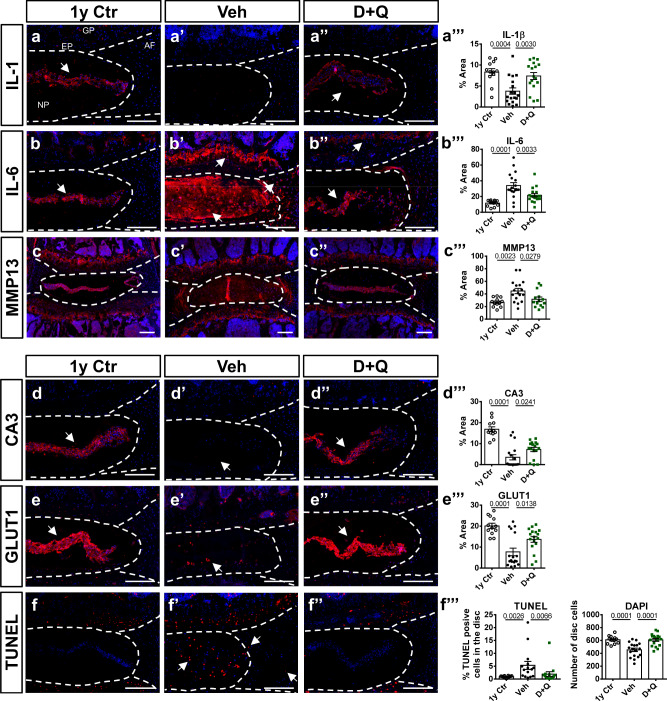
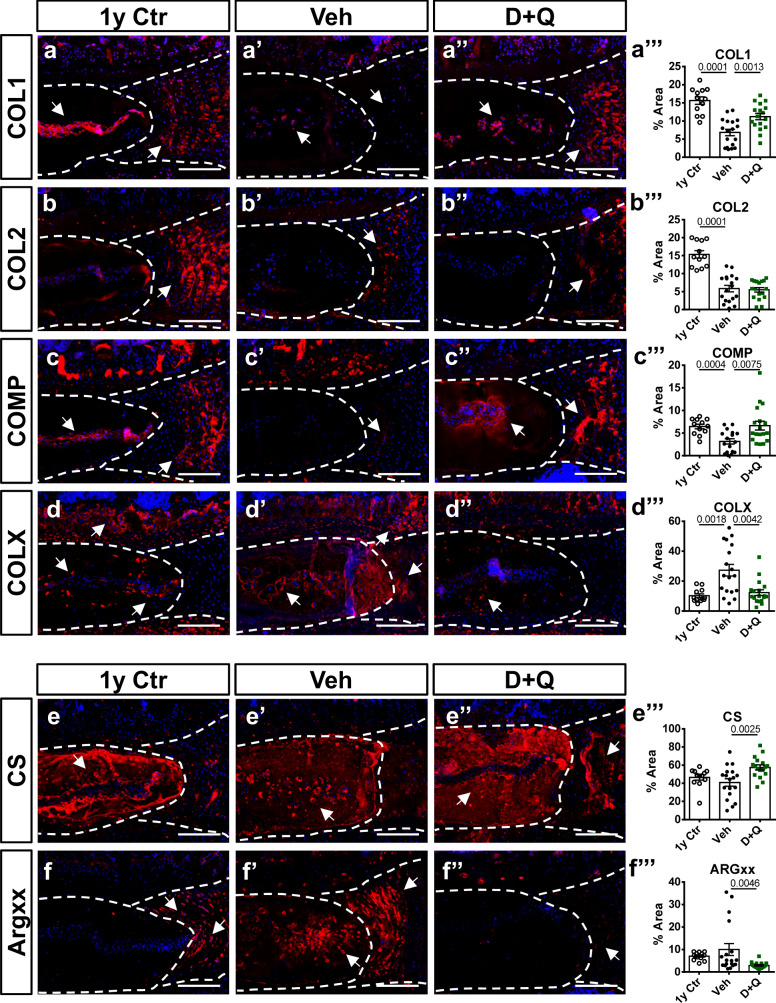
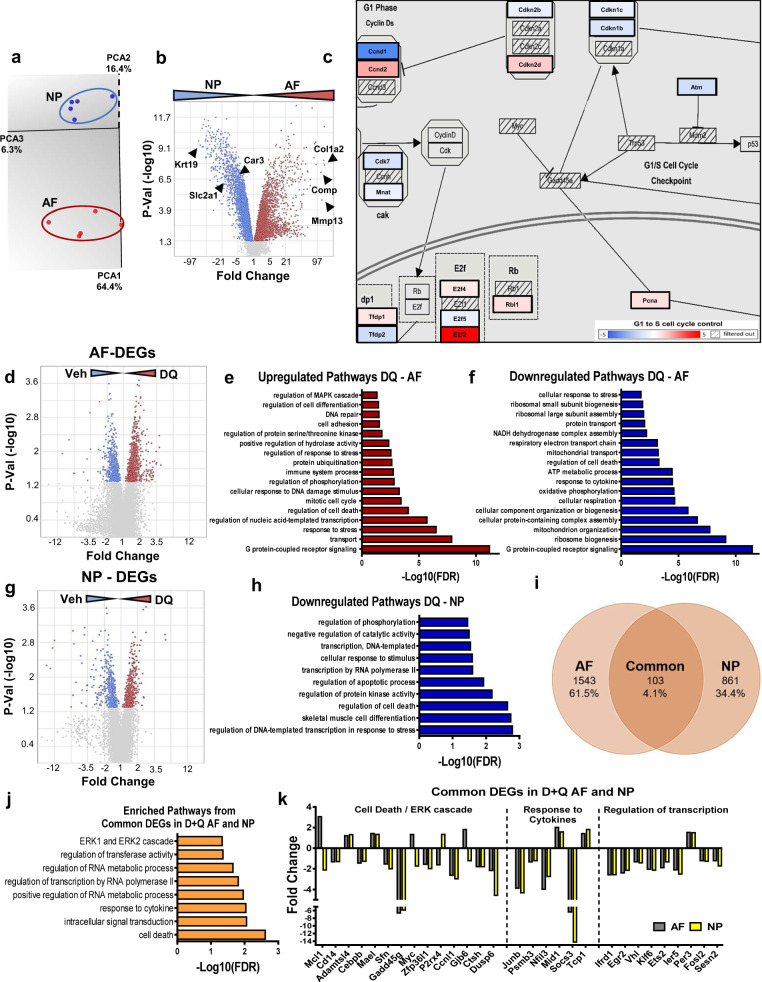
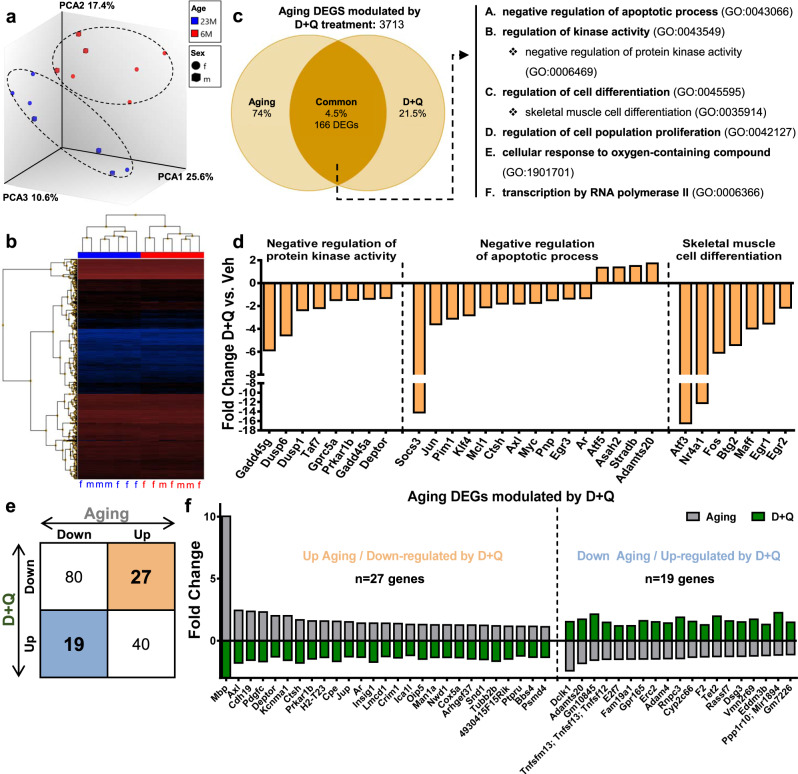
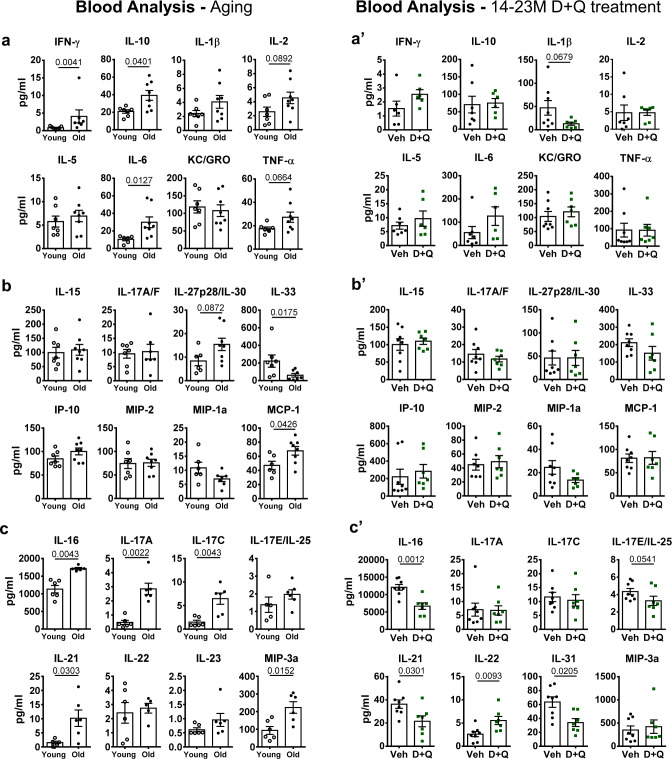
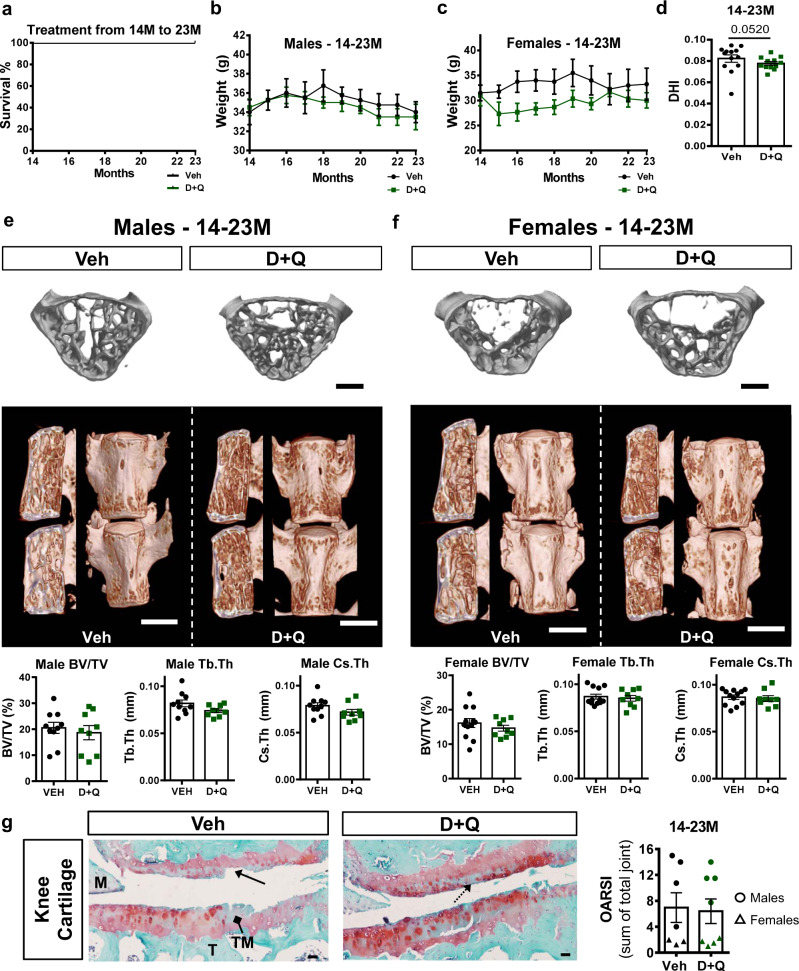
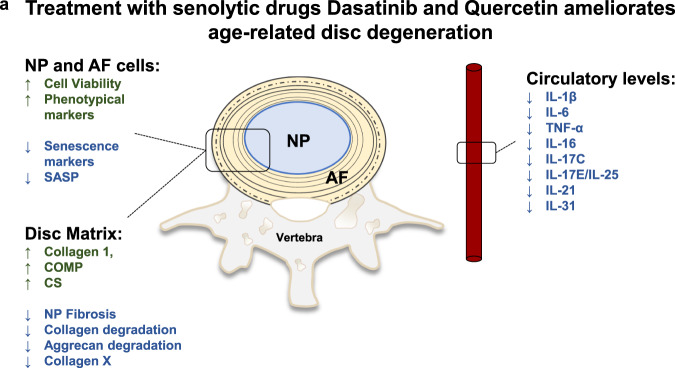
Intervertebral disc degeneration is highly prevalent within the elderly population and is a leading cause of chronic back pain and disability. Due to the link between disc degeneration and senescence, we explored the ability of the Dasatinib and Quercetin drug combination (D + Q) to prevent an age-dependent progression of disc degeneration in mice. We treated C57BL/6 mice beginning at 6, 14, and 18 months of age, and analyzed them at 23 months of age. Interestingly, 6- and 14-month D + Q cohorts show lower incidences of degeneration, and the treatment results in a significant decrease in senescence markers p16 INK4a , p19 ARF , and SASP molecules IL-6 and MMP13. Treatment also preserves cell viability, phenotype, and matrix content. Although transcriptomic analysis shows disc compartment-specific effects of the treatment, cell death and cytokine response pathways are commonly modulated across tissue types. Results suggest that senolytics may provide an attractive strategy to mitigating age-dependent disc degeneration.
Overview
The claims and statistics of this paper haven’t been checked yet.
Free: it reads the open-access text and checks the first 5 claims that cite a source we can check. Create a free account to check every claim.
Integrity signals
Registry
Cites
Statistics
Figures
Verification
Claims the paper makes
The claims and statistics of this paper haven’t been checked yet.
Free: it reads the open-access text and checks the first 5 claims that cite a source we can check. Create a free account to check every claim.
Claims other papers make about this one
Each is checked against this paper’s own text: does it say what the citing paper says it does?
The source backs part of the claim, not all of it — or backs it for a different population, condition or comparison.
In the citing paper
“Consistent with this notion, the administration of dasatinib and quercetin (D+Q), a well-studied senolytic cocktail, in subjects with diabetic kidney disease reduced senescent cell numbers and circulating levels of SASP factors, such as IL-1α and IL-6 (20, 40–45).”
From Connecting aging biology and inflammation in the omics era (2022) · cites this paper as [44]
Experimental — accuracy not yet measuredThe source backs part of the claim, not all of it — or backs it for a different population, condition or comparison.
In the citing paper
“In several mouse experiments, the treatment alleviated inflammation342 and age-related diseases of the intestines343 and bone.344”
From Inflammation and aging: signaling pathways and intervention therapies (2023) · cites this paper as [344]
Experimental — accuracy not yet measuredThe cited source says what the claim attributes to it.
In the citing paper
“treatment with a senolytic therapy mitigated age-dependent disc degeneration122”
From Telomere dysfunction in ageing and age-related diseases (2022) · cites this paper as [122]
Self-check
Percentages, sums and reported differences re-computed from the paper’s own numbers.
The self-check needs the paper’s full text.
Citations
Cites
James, S. L., Abate, D., Abate, K. H., Abay, S. M., Abbafati, C., Abbasi, N., Abbastabar, H., Abd-Allah, F., Abdela, J., Abdelalim, A., et al. (2018) · The Lancet · doi:10.1016/s0140-6736(18)32279-7 · Cited by 13,867
Vos, T., Abajobir, A. A., Abate, K. H., Abbafati, C., Abbas, K. M., Abd-Allah, F., Abdulkader, R. S., Abdulle, A. M., Abebo, T. A., Abera, S. F., et al. (2017) · The Lancet · doi:10.1016/s0140-6736(17)32154-2 · Cited by 13,220
The senescence-associated secretory phenotype: the dark side of tumor suppression
Coppé, J.-P., Desprez, P.-Y., Krtolica, A., & Campisi, J. (2010) · Annual Review of Pathology: Mechanisms of Disease · doi:10.1146/annurev-pathol-121808-102144 · Cited by 5,206
Cellular senescence: from physiology to pathology
Muñoz-Espín, D., & Serrano, M. (2014) · Nature Reviews Molecular Cell Biology · doi:10.1038/nrm3823 · Cited by 2,818
The Achilles' heel of senescent cells: from transcriptome to senolytic drugs
Zhu, Y., Tchkonia, T., Pirtskhalava, T., Gower, A. C., Ding, H., Giorgadze, N., Palmer, A. K., Ikeno, Y., Hubbard, G. B., Lenburg, M., et al. (2015) · Aging Cell · doi:10.1111/acel.12344 · Cited by 2,584
Senolytics improve physical function and increase lifespan in old age
Xu, M., Pirtskhalava, T., Farr, J. N., Weigand, B. M., Palmer, A. K., Weivoda, M. M., Inman, C. L., Ogrodnik, M. B., Hachfeld, C. M., Fraser, D. G., et al. (2018) · Nature Medicine · doi:10.1038/s41591-018-0092-9 · Cited by 2,287
Clearance of senescent cells by ABT263 rejuvenates aged hematopoietic stem cells in mice
Chang, J., Wang, Y., Shao, L., Laberge, R.-M., Demaria, M., Campisi, J., Janakiraman, K., Sharpless, N. E., Ding, S., Feng, W., et al. (2016) · Nature Medicine · doi:10.1038/nm.4010 · Cited by 1,819
Kraus, V. B., Huebner, J. L., DeGroot, J., & Bendele, A. (2010) · Osteoarthritis and Cartilage · doi:10.1016/j.joca.2010.04.015 · Cited by 1,771
Senescence in Health and Disease
He, S., & Sharpless, N. E. (2017) · Cell · doi:10.1016/j.cell.2017.05.015 · Cited by 1,766
Molecular targets of dietary agents for prevention and therapy of cancer
Aggarwal, B. B., & Shishodia, S. (2006) · Biochemical Pharmacology · doi:10.1016/j.bcp.2006.02.009 · Cited by 1,754
Cited by
Items 101–200 of 469
Role of Autophagy and Pyroptosis in Intervertebral Disc Degeneration
Wang, Z., Li, X., Yu, P., Zhu, Y. M., Dai, F., Ma, Z., Shen, X., Jiang, H., & Liu, J. (2024) · Journal of Inflammation Research · doi:10.2147/jir.s434896 · Cited by 31
Umbaugh, D. S., Nguyen, N. T., Smith, S. H., Ramachandran, A., & Jaeschke, H. (2024) · Toxicology · doi:10.1016/j.tox.2024.153804 · Cited by 29
Zhao, D., Cheng, Q., Geng, H., Liu, J., Zhang, Y., Cui, J., Liu, C., & Cheng, L. (2023) · Advanced Science · doi:10.1002/advs.202304480 · Cited by 29
Liu, S., Li, K., He, Y., Chen, S., Yang, W., Chen, X., Feng, S., Xiong, L., Peng, Y., & Shao, Z. (2024) · Advanced Science · doi:10.1002/advs.202400749 · Cited by 33
Jiang, H., Qin, H., Yang, Q., Huang, L., Liang, X. Q., Wang, C., Moro, A., Xu, S., & Wei, Q. (2024) · Journal of Nanobiotechnology · doi:10.1186/s12951-024-02561-x · Cited by 28
“NPC senescence is thought to be one of the molecular mechanisms involved in age-related IDD [40, 41].”
BackgroundSenolytics rejuvenate aging cardiomyopathy in human cardiac organoids
Scalise, M., Cianflone, E., Quercia, C., Pagano, L., Chiefalo, A., Stincelli, A., Torella, A., Puccio, B., Santamaria, G., Guzzi, H. P., et al. (2025) · Mechanisms of Ageing and Development · doi:10.1016/j.mad.2024.112007 · Cited by 24
Sirt6 deficiency promotes senescence and age-associated intervertebral disc degeneration in mice
Ramteke, P. L., Watson, B., Toci, M., Tran, V. A., Johnston, S. N., Tsingas, M., Barve, R. A., Mitra, R., Loeser, R. F., Collins, J. A., et al. (2025) · Bone Research · doi:10.1038/s41413-025-00422-3 · Cited by 31
“36 Levels of IL-6, TGF-β and IL1-β , were signi fi cantly elevated in Sirt6 cKO discs (Fig.”
Self-citationMannarino, M., Martinez, O. W., Sheng, K., Li, L., Navarro-Ramírez, R., Jarzem, P. F., Ouellet, J. A., Cherif, H., & Haglund, L. (2023) · Biomolecules · doi:10.3390/biom13081257 · Cited by 29
“Recently, it has been shown that multiple and long-term injections of a combination of Dasatinib and Quercetin in elderly mice reduce p16ink4a and SASP expression levels in the IVD [30].”
BackgroundResultInfluentialChen, B., Zhu, R., Hu, H., Zhan, M., Wang, T., Huang, F., Wei, F., Chai, Y., Ling, Z., & Zou, X. (2022) · Frontiers in Cell and Developmental Biology · doi:10.3389/fcell.2022.853688 · Cited by 33
Zhang, T., Chen, W.-K., Huang, X., Zheng, B., Wu, P.-F., Zheng, B., Jiang, L., Escobar, D., Li, J., Lv, G., et al. (2024) · Translational research · doi:10.1016/j.trsl.2024.05.011 · Cited by 29
Dasatinib and Quercetin Limit Gingival Senescence, Inflammation, and Bone Loss
Rattanaprukskul, K., Xia, X.-J., Hysa, M., Jiang, M., Hung, M., Suslavich, S. F., & Sahingur, S. E. (2025) · Journal of Dental Research · doi:10.1177/00220345241299789 · Cited by 26
“…improvements in physical function and extended life span in DQ-treated mice, with no significant differences in the causes of death or morbidities compared with vehicle-treated groups, as determined through autopsies and complete metabolic and blood profiling (Xu et al. 2018; Novais et al. 2021).”
GLUT1 is redundant in hypoxic and glycolytic nucleus pulposus cells of the intervertebral disc
Johnston, S. N., Silagi, E. S., Madhu, V., Nguyen, D. H., Shapiro, I. M., & Risbud, M. V. (2023) · JCI Insight · doi:10.1172/jci.insight.164883 · Cited by 30
Self-citationCellular senescence and frailty: a comprehensive insight into the causal links
Marcozzi, S., Bigossi, G., Giuliani, M. E., Giacconi, R., Piacenza, F., Cardelli, M., Brunetti, D., Segala, A., Valerio, A., Nisoli, E., et al. (2023) · GeroScience · doi:10.1007/s11357-023-00960-w · Cited by 28
“Interventions performed with D + Q in normally or accelerated aging mice, quite uniformly, reinforce this hypothesis [63, 74, 76–78].”
ResultEngineered extracellular vesicle-based gene therapy for the treatment of discogenic back pain
Tang, S. N., Salazar‐Puerta, A. I., Heimann, M. K., Kuchynsky, K., Rincon‐Benavides, M. A., Kordowski, M., Gunsch, G., Bodine, L., Diop, K., Gantt, C., et al. (2024) · Biomaterials · doi:10.1016/j.biomaterials.2024.122562 · Cited by 26
“To date, most therapeutic interventions targeting the degenerate IVD joint in mouse DBP models have relied on systemic drug delivery, for example, the use of senolytics drugs or used voluntary exercise to mitigate degenerative effects [74-77].”
Murray, K. O., Mahoney, S. A., Ludwig, K. R., Miyamoto-Ditmon, J., VanDongen, N. S., Banskota, N., Herman, A. B., Seals, D. R., Mankowski, R. T., Rossman, M. J., et al. (2025) · Aging Cell · doi:10.1111/acel.70114 · Cited by 25
“Fisetin also attenuated age-associated differences in other se- nescent-and SASP-related genes, including genes involved in MAPK signaling, growth arrest, and DNA damage (Anerillas et al. 2020; Englund et al. 2023; Novais et al. 2021).”
The Potential Role and Therapeutic Relevance of Cellular Senescence in Skeletal Pathophysiology
Li, B., Lyu, P., Tang, J., Li, J., Ouchi, T., Fan, Y., Zhao, Z., & Li, L. (2024) · The Journals of Gerontology Series A · doi:10.1093/gerona/glae037 · Cited by 25
Ottone, O. K., Kim, J., Collins, J. A., & Risbud, M. V. (2022) · Frontiers in Immunology · doi:10.3389/fimmu.2022.882407 · Cited by 26
“Targeting of senescent disc cells with the 70 senotherapeutic o-vanillin has shown efficacy in reducing SASP in vitro, and most recently, the 71 combination senolytic drug treatment of Dasatinib and Quercetin reduced SASP and incidence of 72 disc degeneration in vivo, in aged C57B6 mice (20,21).”
BackgroundSelf-citationConstructing intervertebral disc degeneration animal model: A review of current models
Liang, T., Gao, B., Zhou, J., Qiu, X., Qiu, J., Chen, T., Liang, Y., Gao, W., Qiu, X., & Lin, Y. (2023) · Frontiers in Surgery · doi:10.3389/fsurg.2022.1089244 · Cited by 26
He, Y., Zhang, L., Chen, X., Liu, B., Shao, X., Fang, D., Lin, J., Liu, N., Lou, Y., Qin, J., et al. (2023) · Advanced Healthcare Materials · doi:10.1002/adhm.202302972 · Cited by 24
Targeting multiple hallmarks of mammalian aging with combinations of interventions
Panchin, A. Y., Ogmen, A., Blagodatski, A. S., Egorova, A., Batin, M., & Glinin, T. S. (2024) · Aging · doi:10.18632/aging.206078 · Cited by 26
“Other trials have shown that dasatinib plus quercetin can improve metabolic function, attenuate adipose tissue inflammation and age-dependent intervertebral disc degeneration [105] as well as prevent age-related uterine dysfunction and fibrosis [106].”
BackgroundChen, J., Gan, X., Su, S., Jiao, S., Gong, Z., Ziqiang, L., Wu, X., Jiang, J., Zhang, J., & Wan, J. (2025) · Journal of Controlled Release · doi:10.1016/j.jconrel.2025.02.052 · Cited by 23
Compound combinations targeting longevity: Challenges and perspectives
Rybina, O. Y., Symonenko, A. V., & PASYUKOVA, E. G. (2023) · Ageing Research Reviews · doi:10.1016/j.arr.2023.101851 · Cited by 23
Antisenescence Therapy Improves Function in a Human Model of Cardiac Fibrosis-on-a-Chip
Mourad, O., Mastikhina, O., Khan, S. T., Sun, X., Hatkar, R., Williams, K., & Nunes, S. S. (2023) · ACS Materials Au · doi:10.1021/acsmaterialsau.3c00009 · Cited by 26
Yusri, K., Kumar, S., Fong, S., Gruber, J., & Sorrentino, V. (2024) · International Journal of Molecular Sciences · doi:10.3390/ijms25126793 · Cited by 26
Xu, J.-Z., Zhou, Y.-M., Zhang, L.-L., Chen, X.-J., Yang, Y.-Y., Zhang, D., Zhu, K.-C., Kong, X.-K., Sun, L.-H., Tao, B., et al. (2022) · Cell Death Discovery · doi:10.1038/s41420-022-01048-8 · Cited by 22
“Consistently, recent study noted that mice treated with senolytic drugs (Dasatinib+Quercetin) from 18-month-old to 23-month-old showed improved vertebral bone quality parameters, whereas same treatment during 6–23months of age showed no obvious effect [14].”
Sao, K., & Risbud, M. V. (2024) · Neurospine · doi:10.14245/ns.2347342.671 · Cited by 24
“135,136 The senolytic (D+Q) cocktail works by selectively inducing senescent cell apoptosis by targeting senescent cell antiapoptotic pathways.”
BackgroundSelf-citationSharafi, M. H., Nazari, A., Cheraghi, M., Souri, F., & Bakhshesh, M. (2025) · Osteoporosis International · doi:10.1007/s00198-025-07553-7 · Cited by 24
“For example, one study published in Nature Communications found that treatment with the senolytic drug dasatinib and the flavonoid quercetin reduced the number of senescent cells in mice, which led to improvements in bone density and strength [152].”
Wang, J., Xin, Y., Dong, Z., Li, S., & Yang, G. (2025) · Experimental Gerontology · doi:10.1016/j.exger.2025.112974 · Cited by 22
Yang, C., Gong, Q., Zhu, R., Fan, Y., Wang, Q., Ge, G., & Wang, P. (2026) · European Journal of Medicinal Chemistry · doi:10.1016/j.ejmech.2025.118549 · Cited by 22
Ding, Y., Wang, H., Wang, Y., Li, L., Ding, J., Yuan, C., Xu, T., Xu, H., Xie, H., Zhu, N., et al. (2022) · Nano Research · doi:10.1007/s12274-022-4285-7 · Cited by 24
Wang, Z., Zhang, P., Zhao, Y., Yu, F., Wang, S., Liu, K., Cheng, X., Shi, J., He, Q., Xia, Y., et al. (2022) · Frontiers in Bioengineering and Biotechnology · doi:10.3389/fbioe.2022.883118 · Cited by 24
Meiners, F., Hinz, B., Boeckmann, L., Secci, R., Sueto, S. O. B., Kuepfer, L., Fuellen, G., & Barrantes, I. (2024) · Scientific Reports · doi:10.1038/s41598-024-55870-4 · Cited by 22
“Long-term treatment by D + Q reduced the number of senescent cells and ameliorated age-dependent intervertebral disk-degeneration in mice, along with downregulation of circulating proinflammatory factors and an increase in physical strength 26 .”
BackgroundWang, H., Chen, S., Liu, Z., Meng, Q., Sobreiro‐Almeida, R., Liu, L., Haugen, H. J., Li, J., Mano, J. F., Hong, Y., et al. (2024) · Advanced Science · doi:10.1002/advs.202404496 · Cited by 22
Qu, Y., Meng, B., Cai, S., Yang, B., He, Y., Fu, C., Li, X., Li, P., Cao, Z., Mao, X., et al. (2024) · Journal of Nanobiotechnology · doi:10.1186/s12951-024-02820-x · Cited by 22
“Current anti-aging research mainly focuses on senolytics to treat senescent osteoporosis by targeting anti-apoptotic pathways to increase the level of apoptosis of senescent cells [42, 43].”
BackgroundEmerging role and therapeutic implications of p53 in intervertebral disc degeneration
Wang, Y., Hu, S., Zhang, W., Zhang, B.-F., & Yang, Z. (2023) · Cell Death Discovery · doi:10.1038/s41420-023-01730-5 · Cited by 22
“However, in the process of IVD degeneration, a series of internal, external, physical, or chemical factors promote the death and aging of IVD cells, leading to a decrease in the number of functional and viable cells and, thus, a decline in ECM synthesis [23, 24].”
BackgroundNadeem, J., Sultana, R., Parveen, A., & Kim, S. Y. (2025) · Cell Biochemistry and Function · doi:10.1002/cbf.70046 · Cited by 21
“Targeted pathways include a significant reduction in aging markers, such as SASP molecules, IL ‐ 6, MMP13, p19 ARF , and p16 INK4a [118].”
Senescence in cancer: Hallmarks, paradoxes, and therapeutic promise
Hinterleitner, C., Goldberg, H. V., McHugh, D., Barthet, V. J. A., Filliol, A. A., & Lowe, S. W. (2026) · Cell · doi:10.1016/j.cell.2026.03.005 · Cited by 24
“Combination regimens, including the dasatinib–quercetin (D+Q), show senolytic activity across diverse tissues and disease models 249,250 , underscoring the breadth of pathways that can be leveraged to eliminate senescent cells.”
Yi, Y., Chen, H., Zhang, S., Xu, H.-W., Fang, X., & Wang, S. (2022) · Mechanisms of Ageing and Development · doi:10.1016/j.mad.2022.111715 · Cited by 21
Molecular mechanism and therapeutic potential of HDAC9 in intervertebral disc degeneration
Lei, M., Lin, H., Shi, D., Hong, P., Song, H. K., Herman, B., Liao, Z., & Cao, Y. (2023) · Cellular & Molecular Biology Letters · doi:10.1186/s11658-023-00517-x · Cited by 21
“Recent studies have shown that the development of intervertebral disc degeneration (IVDD) is primarily caused by disc cell death, excessive secretion of inflammatory cytokines, and degradation of extracellular matrix components such as proteoglycan and collagen II [11–17].”
BackgroundCao, X., Wang, X., Rong, K., Liu, K., Yang, X., Zhou, T., Zhang, P., Guo, J., Ma, H., Qin, A., et al. (2022) · Oxidative Medicine and Cellular Longevity · doi:10.1155/2022/7548145 · Cited by 20
Ohnishi, T., Tran, V., Sao, K., Ramteke, P. L., Querido, W., Barve, R. A., van de Wetering, K., & Risbud, M. V. (2023) · Cell Death and Disease · doi:10.1038/s41419-023-05893-y · Cited by 20
“…disc transcriptome of ank mice with a pronounced perturbation in BAML1/CLOCK circadian regulation with the SenMayo gene list suggested that matrix remodeling and cytokine signaling that plays a critical role in age-dependent disc degeneration were two features shared between the datasets [68 – 70].”
BackgroundSelf-citationLi, J., Ren, L., Wan, L., Liu, M., Zhao, M., Lin, Y., Zheng, J., Tang, Y., Luo, Y., Ma, Y., et al. (2025) · Journal of Nanobiotechnology · doi:10.1186/s12951-025-03574-w · Cited by 19
“The compound has been recognized by a series of studies for its role in combating the overexpression of ROS within the IVDs, thereby alleviating IDD [36, 37].”
Wang, H., Gao, Y., Mingzhang, Dai, G.-C., Lu, P., Li, Y., Cao, M., Liu, X., Sheng, R., Shi, L., et al. (2025) · Journal of Advanced Research · doi:10.1016/j.jare.2025.08.013 · Cited by 19
“Quercetin has been reported to treat age-related diseases, such as disc degeneration, such as disc degeneration [62], osteoarthritis [63], and age-related macular degeneration [22].”
Silva, E. D., Tomé, I., Vasques‐Nóvoa, F., Conceição, G., da Silva, A. M., Barros, A. S., Mendes‐Ferreira, P., Santos-Ribeiro, D., Gonçalves, A., Angélico‐Gonçalves, A., et al. (2025) · Cardiovascular Research · doi:10.1093/cvr/cvaf208 · Cited by 19
“Recent studies employing aged rodent models have assessed the impact of prolonged systemic senolytic treatments on age-related conditions, specifically focusing on intervertebral disc degeneration 53 and cognitive decline.”
InfluentialInterplay between aging and metabolic diseases: from molecular mechanisms to therapeutic horizons
Zhong, D., Sun, Y., Zhao, L., Hu, Z., Li, G., Li, H., & Xie, Z. (2025) · Medical Review · doi:10.1515/mr-2025-0047 · Cited by 20
“Preclinical studies highlight the therapeutic potential of senolytic drugs such as D&Q, and NAD + boosters like NMN, in addressing hepatic steatosis and mitochondrial dysfunction [90, 91].”
Tripathi, G., Guha, L., & Kumar, H. (2024) · Bone Reports · doi:10.1016/j.bonr.2024.101784 · Cited by 20
Zheng, B., Zhang, X., Kong, X., Li, J., Huang, B. H., Li, H., Ji, Z., Wei, X., Tao, S., Shan, Z., et al. (2024) · JCI Insight · doi:10.1172/jci.insight.177789 · Cited by 20
“Furthermore, we employed dasatinib and quercetin (D + Q), a commonly used senolytic drug combination to reduce senescent cells (31).”
Omentin-1 alleviate interleukin-1β(IL-1β)-induced nucleus pulposus cells senescence
Huang, X., Chen, C., Chen, Y., Xu, J. C., & Liu, L. (2022) · Bioengineered · doi:10.1080/21655979.2022.2084495 · Cited by 19
“The etiology of IVDD is associated with many factors, among which the accumulation of senescent NPCs provides new insights into the pathogenesis of IVDD [13,36].”
BackgroundRetractedJohnston, S. N., Madhu, V., Shapiro, I. M., & Risbud, M. V. (2020) · Journal of Bone and Mineral Research · doi:10.1002/jbmr.4707 · Cited by 20
“To explore the mechanisms underlying NP phenotype in 14-month HIF-2α, we delineated status of molecules linked to local inflammation and fibrosis.((41,52,53)) MCP1 was predominantly localized in the NP and showed an increased abundance at 6 months but decreased levels at 14 months in HIF-2α (Fig.”
BackgroundSelf-citationGao, S., Wang, C., Qi, L., Liang, S., Qu, X., Liu, W., & Li, N. (2024) · Journal of Inflammation Research · doi:10.2147/jir.s431609 · Cited by 18
Nurturing longevity through natural compounds: Where do we stand, and where do we go?
Todorova, M. N., Savova, M. S., Mihaylova, L. V., & Georgiev, M. I. (2024) · Food Frontiers · doi:10.1002/fft2.350 · Cited by 20
Li, C., Qin, T., Zhao, J., Jin, Y., Qin, Y., He, R., Wu, T., Duan, C., Jiang, L., Yuan, F., et al. (2024) · Bone Research · doi:10.1038/s41413-024-00323-x · Cited by 18
“53,54 Diogo et al. previously illustrated the favorable outcomes of senolytic drugs in enhancing functional recovery post-injury by promoting myelin preservation, reducing fi brotic scarring, and mitigating in fl ammation.”
BackgroundRusso, L., Babboni, S., Andreassi, M. G., Daher, J., Canale, P., Turco, S. D., & Basta, G. (2025) · Antioxidants · doi:10.3390/antiox14010099 · Cited by 21
Senolytic Treatment Improve Small Intestine Regeneration in Aging
Luo, Q., Ye, Y., Guo, W., Zhu, Q., Wang, S.-S., Li, N., Cheng, C.-S., & Fan, G. (2023) · Aging and Disease · doi:10.14336/ad.2023.0920 · Cited by 19
“Given the absence of untoward consequences in mice resulting from the protracted administration of senolytic drugs D+Q, these findings underscore the advantageous safety profile of D+Q therapy [13].”
BackgroundSchweiger, A., Diniz, B. S., Nicol, G. E., Schweiger, J. A., Dasklakis-Perez, A. E., & Lenze, E. J. (2024) · F1000Research · doi:10.12688/f1000research.151963.1 · Cited by 18
“23 Both dasatinib and quercetin have shown senolytic effects in different tissues, and it is thought that their combination provides a synergistic senolytic effect.”
Characterization of Induction and Targeting of Senescent Mesenchymal Stromal Cells
Gresham, R. C. H., Kumar, D., Copp, J., Lee, M., & Leach, J. K. (2022) · Tissue Engineering Part C Methods · doi:10.1089/ten.tec.2022.0048 · Cited by 19
“27,28 While the use of senolytics in vivo has resulted in improved bone health markers, 29 the application of senolytics on senescent populations of MSCs in vitro and the resultant senescent and osteogenic phenotype has not been studied.”
Yan, Z., Zhu, J., Liu, Y., Li, Z., Liang, X., Zhou, S., Hou, Y., Chen, H., Zhou, L., Wang, P., et al. (2024) · Clinical and Translational Medicine · doi:10.1002/ctm2.1690 · Cited by 18
Cellular Models of Aging and Senescence
Kim, B., Lee, D. I., Basisty, N., & Dai, D.-F. (2025) · Cells · doi:10.3390/cells14161278 · Cited by 16
“Senolytic compounds like dasatinib plus quercetin (D+Q) or Fisetin, which selectively eliminate senescent cells often by targeting pro-survival pathways (e.g., BCL-2 family proteins) [62,63].”
Failure of senolytic treatment to prevent cognitive decline in a female rodent model of aging
Rani, A., Bean, L., Budamagunta, V., Kumar, A., & Foster, T. C. (2024) · Frontiers in Aging Neuroscience · doi:10.3389/fnagi.2024.1384554 · Cited by 16
Senescent macrophages in tumor: phenotypes, roles, and interventions
Shen, W., Huang, Y., Yang, X., Zhang, Y., Pan, Y., Xiao, Y., Wang, J., Wang, C., Mao, W., & Zhao, A. (2025) · Cell Death and Disease · doi:10.1038/s41419-025-08000-5 · Cited by 17
“These compounds have demonstrated promising effects in various studies [145 – 148].”
Anti-Senescent Biomaterials for Breaking Intervertebral Disc Degeneration
Ding, J.-Y., Ge, Y.-S., Shen, J., Li, W.-Y., Huang, C.-M., Zhao, M.-J., Yin, J.-L., 王学宗, Xu, J.-G., Cui, W., et al. (2025) · Engineering · doi:10.1016/j.eng.2025.07.015 · Cited by 20
The Roles of Myeloid Cells in Aging-related Liver Diseases
Yao, J., Li, Y., & Wang, H. (2023) · International Journal of Biological Sciences · doi:10.7150/ijbs.82352 · Cited by 18
“In preclinical models, senolytics prevent or alleviate cardiovascular [151], liver [119], lung [152], kidney disorders [153] as well as complications of organ transplantation [154], age-dependent fracture healing [155] and disc degeneration [156].”
BackgroundMavrogonatou, E., & Kletsas, D. (2024) · Metabolites · doi:10.3390/metabo14030146 · Cited by 18
“…that treatment with a quercetin and dasatinib combination prevented age-dependent IDD progression in mice, based on the significant decrease in the senescence markers p16 INK4a , p19 ARF and the SASP molecules IL-6 and MMP-13 and the amelioration of cell viability, phenotype and ECM content [65].”
BackgroundMa, S., Xue, R., Zhu, H., Yu, H., Ji, X., Zhang, C., Wei, N., Xu, J., & Li, F. (2024) · International Immunopharmacology · doi:10.1016/j.intimp.2024.112028 · Cited by 16
Cellular Senescence and Ageing
Reed, R., & Miwa, S. (2023) · Sub-cellular biochemistry/Subcellular biochemistry · doi:10.1007/978-3-031-21410-3_7 · Cited by 16
Cheng, Z., Gao, H., Shi, P., Zhang, A., Chen, X., Chen, Y., Gan, W., Zhao, K., Li, S., Cao, Y., et al. (2025) · Bone Research · doi:10.1038/s41413-025-00441-0 · Cited by 19
“…and nuclear translocation CMA induces a fate switch of senescent NPC from cellular senescence to apoptosis Given that senescent NPC play a key role in the accelerated degeneration of IVD, 34,35 we next investigated how restoration of CMA activity affects IL1B-induced senescent NPC, I-Sen.”
Yang, N., Nakagawa, M., Nishiura, A., Yamada, M., Morikuni, H., Honda, Y., & Matsumoto, N. (2023) · International Journal of Molecular Sciences · doi:10.3390/ijms24032507 · Cited by 17
“The relationship between various inflammatory diseases and senescent cells has been demonstrated in previous studies [26,27].”
ResultTelomere dysfunction in chronic liver disease: The link from aging
Penrice, D. D., Jalan‐Sakrikar, N., Jurk, D., Passos, J. F., & Simonetto, D. A. (2023) · Hepatology · doi:10.1097/hep.0000000000000426 · Cited by 17
Zhao, W. H., Li, Y., Cheng, X., Wei, H., Li, P., Fan, L., Liu, K., Zhang, S., & Wang, H. (2023) · Aging · doi:10.18632/aging.205251 · Cited by 15
Senolytics Enhance the Longevity of Caenorhabditis elegans by Altering Betaine Metabolism
Lan, W., Xiao, X., Nian, J., Wang, Z., Zhang, X., Wu, Y., Zhang, D., Chen, J., Bao, W., Li, C., et al. (2024) · The Journals of Gerontology Series A · doi:10.1093/gerona/glae221 · Cited by 16
Gao, X., Jia, S., Gao, L., Chen, S., Zhang, Y., Liang, X., Zhang, L., Zhang, B., & Meng, C. (2025) · Free Radical Biology and Medicine · doi:10.1016/j.freeradbiomed.2025.04.051 · Cited by 18
Insights into the therapeutic strategies for aging and aging-associated diseases
Dong, R., Wu, Q., Kan, J., Fu, C., Sorrentino, V., Chow, A., Lei, Y., Wu, D., Xu, Z., Du, J., et al. (2026) · Signal Transduction and Targeted Therapy · doi:10.1038/s41392-026-02662-z · Cited by 17
Therapeutic factors and biomaterial-based delivery tools for degenerative intervertebral disc repair
Song, H., Guo, C. F., Wu, Y., Liu, Y., Kong, Q., & Wang, Y. (2024) · Frontiers in Cell and Developmental Biology · doi:10.3389/fcell.2024.1286222 · Cited by 14
Zhu, J., Ao, X., Liu, Y., Zhou, S., Hou, Y., Yan, Z., Zhou, L., Chen, H., Wang, P., Liang, X., et al. (2024) · Respiratory Research · doi:10.1186/s12931-024-02914-y · Cited by 14
Wang, S., Zhai, J., Heng, K., Sha, L., Song, X., Zhai, H., Dai, C., Li, J., Teng, F., Huang, J., et al. (2024) · Scientific Reports · doi:10.1038/s41598-024-82262-5 · Cited by 15
Zhu, H., Ren, J. Z., Wang, X., Qin, W., & Xie, Y. (2025) · Journal of Orthopaedic Surgery and Research · doi:10.1186/s13018-025-05577-7 · Cited by 14
“This process significantly diminishes the water content, volume, and height of the disc, representing a primary contributor to IVDD [100].”
Li, K., Lin, H., Yu, Y., Liu, Y., Yang, W., Chen, S., Li, X., Huang, W., Wang, H., Meng, C., et al. (2025) · Acta Biomaterialia · doi:10.1016/j.actbio.2025.02.060 · Cited by 14
Keerikkadu, M., Bangera, P. D., Tippavajhala, V. K., & Rathnanand, M. (2025) · AAPS PharmSciTech · doi:10.1208/s12249-025-03130-7 · Cited by 15
“Some of these include nanoparticle-based delivery systems, such as lipid, polymeric, and metal nanoparticles, and offer targeted drug release and increased solubility [14].”
High-Tech Methods of Cytokine Imbalance Correction in Intervertebral Disc Degeneration
Shnayder, N. A., Ashkhotov, A. V., Trefilova, V. V., Novitsky, M. A., Medvedev, G. V., Петрова, М. М., Narodova, E. A., Kaskaeva, D. S., Chumakova, G. A., Garganeeva, N. P., et al. (2023) · International Journal of Molecular Sciences · doi:10.3390/ijms241713333 · Cited by 15
“[95] demonstrated that administration is a combination of senolytics (dasatinib and quercetin) on viability, phenotypic characteristics, and ECM structures in degenerative IVDs.”
BackgroundGresham, R. C. H., Filler, A. C., Fok, S. W., Czachor, M. E., Schmier, N., Pearson, C., Bahney, C. S., & Leach, J. K. (2023) · Journal of Biomedical Materials Research Part A · doi:10.1002/jbm.a.37657 · Cited by 15
Shi, H., Xiao, M., Li, Y., Liu, X., Na, J., Liang, C., Hua, J., Meng, Q., Wei, M., Wang, W., et al. (2025) · Theranostics · doi:10.7150/thno.112633 · Cited by 15
“The combination of D and Q has been observed to alleviate symptoms and increase survival rates in various age-related diseases, including postmenopausal osteoporosis [299], intervertebral disc degeneration [300], diabetic kidney disease [301], and SARS-CoV-2 [302].”
Lee, C. H., Nguyen, T. M., Lee, Y., Choi, S. G., Nguyễn, P. N., Park, J. H., & Park, M. K. (2025) · International Journal of Molecular Sciences · doi:10.3390/ijms27010357 · Cited by 15
“Additionally, the dual degrader 753b, which leverages E3 ligases like VHL with low platelet expression, has shown breakthrough results in inhibiting NASH-to-HCC progression due to its liver-specific tropism [105,109].”
Novais, E. J., Ottone, O. K., Jagannath, S., Akande, E. J., Barve, R. A., & Risbud, M. V. (2026) · Bone Research · doi:10.1038/s41413-026-00526-4 · Cited by 15
“25,27,41,42,43 In both NP and AF tissues of DQ-treated mice, p19 ARF (p19) levels were reduced (Fig.”
InfluentialSelf-citationSun, K., Kang, Z., Chen, Y., Yu, Y., Han, L., Shi, Y., Chen, L., Shi, J., Chen, Y., & Sun, J. (2025) · Advanced Science · doi:10.1002/advs.202412908 · Cited by 16
Circadian rhythm, hypoxia, and cellular senescence: From molecular mechanisms to targeted strategies
Nie, T., Nepovimová, E., & Wu, Q. (2025) · European Journal of Pharmacology · doi:10.1016/j.ejphar.2025.177290 · Cited by 13
Savova, M. S., Todorova, M. N., Binev, B. K., Georgiev, M. I., & Mihaylova, L. V. (2025) · International Journal of Obesity · doi:10.1038/s41366-025-01724-6 · Cited by 13
Yang, B., Yang, K., Xi, R., Li, S., Chen, J., & Wu, Y. (2025) · Redox Biology · doi:10.1016/j.redox.2025.103716 · Cited by 13
“The combination of dasatinib (D) and quercetin (Q) is one of the widely utilized senolytic therapies [25,26].”
Zheng, Y., Mei, L., Li, S., Ma, T., Xia, B., Hao, Y., Gao, X. J., Wei, B., Wei, Y., Jing, D., et al. (2022) · Frontiers in Bioengineering and Biotechnology · doi:10.3389/fbioe.2022.853872 · Cited by 13
Lemaître, J.-M. (2024) · Journal of the European Academy of Dermatology and Venereology · doi:10.1111/jdv.19820 · Cited by 14
Li, T., Ye, P., Chen, Y., Huang, X., Li, X., Zhang, Z., & Du, J. (2022) · Bioengineered · doi:10.1080/21655979.2022.2043100 · Cited by 13
“Next, according to the previous study [21], we collected the NP tissues, cut them into 1 mm(3) pieces, and placed them in a centrifuge tube.”
MethodTranslating Senotherapeutic Interventions into the Clinic with Emerging Proteomic Technologies
Dey, A. K., Banarjee, R., Boroumand, M., Rutherford, D. V., Strassheim, Q., Nyunt, T., Olinger, B., & Basisty, N. (2023) · Biology · doi:10.3390/biology12101301 · Cited by 14
“Dasatinib has been shown to induce senescent cell apoptosis by inhibiting specific signaling pathways that promote survival in senescent cells, such as forkhead transcription factor (FOXO)-p53 and PI3K δ [41,42].”
BackgroundChen, X., Cai, D., Li, H. R., Wei, Q., Li, X., Han, Z., Liang, J., Xie, J., Ruan, J., Liu, J., et al. (2024) · Regenerative Therapy · doi:10.1016/j.reth.2024.01.006 · Cited by 12
“Growing evidence have revealed that ACAN degradation in NPCs leads to IDD [19 e 21].”
BackgroundDashtmian, A. R., Darvishi, F. B., & Arnold, W. D. (2024) · Cells · doi:10.3390/cells13110928 · Cited by 12
Ni, S., Huang, X., Li, X., Shi, C., Fan, M., Zhao, L., Rong, Z., & Zhang, H. (2024) · The Journals of Gerontology Series A · doi:10.1093/gerona/glae150 · Cited by 13
Yao, Q., Yue, L., Zhang, Y., Chen, H., Dong, X., Ye, Z., & Liang, H. (2024) · Inflammation · doi:10.1007/s10753-024-02096-1 · Cited by 14
“Intervertebral disc degeneration (IDD) is the major cause of chronic back pain and impaired mobility, affecting a significant portion of the global population [1].”
Chen, Y., Huang, H., Luo, Y., Wu, H., Deng, W., Min, X., Lao, H., & Xiong, H. (2025) · Phytomedicine · doi:10.1016/j.phymed.2025.156772 · Cited by 13
Wu, Z., Chen, J., Luo, W., & Kuang, T. (2025) · Frontiers in Pharmacology · doi:10.3389/fphar.2025.1605764 · Cited by 13
Current aspects of targeting cellular senescence for the therapy of neurodegenerative diseases
Jaganathan, R., Iyaswamy, A., Krishnamoorthi, S., Thakur, A., Durairajan, S. S. K., Yang, C., & Wankhar, D. (2025) · Frontiers in Aging Neuroscience · doi:10.3389/fnagi.2025.1627921 · Cited by 13
Cai, Z., Wang, H., Hu, J., Qu, C., Chen, S., Liu, X., & Fan, C. (2025) · The American Journal of Sports Medicine · doi:10.1177/03635465251381763 · Cited by 12
“7,19,24,33 Cellular senescence can be triggered by diverse stimuli, including telomere attrition, cellular stress, and oncogenes.”
Cheng, H., Chunping, A., Shu, Z., Zhao, H., Wang, L., Huang, C., Li, W., Fang, X., Wu, H. K., Bao, X., et al. (2025) · Journal of Controlled Release · doi:10.1016/j.jconrel.2025.114449 · Cited by 13
Metadata
- Authors
- Novais, E. J., Tran, V. A., Johnston, S. N., Darris, K. R., Roupas, A. J., Sessions, G. A., Shapiro, I. M., Diekman, B. O., & Risbud, M. V.
- Affiliations
- Thomas Jefferson University (US)
- University of North Carolina at Chapel Hill (US)
- Corresponding author
- Risbud, Makarand V.
- ORCID
- Venue
- Nature Communications
- Published
- 2021-09-03
- Volume
- 12
- Issue
- 1
- Pages
- 5213-5213
- ISSN
- 2041-1723 (ISSN-L)
- PMC
- PMC8417260
- OpenAlex
- W3125259346
- Cited by
- 440
- References
- 78
- Citations by year
- 2026: 87 · 2025: 122 · 2024: 105 · 2023: 73 · 2022: 50 · 2021: 2
- FWCI
- 39.00
- Type
- journal article
- Language
- en
- Open access
- gold
- doi.org
- Licence
- cc-by
- creativecommons.org/licenses/by/4.0 (tdm)
- creativecommons.org/licenses/by/4.0 (vor)
- Locations
- Nature Communications (publishedVersion, cc-by)
- Research Square (acceptedVersion, cc-by)
- Europe PMC (PubMed Central) (publishedVersion, other-oa)
- PubMed Central (publishedVersion, cc-by)
- PubMed (publishedVersion)
- The Medicine Forum (submittedVersion, cc-by)
- RePEc: Research Papers in Economics (submittedVersion)
- DOAJ (DOAJ: Directory of Open Access Journals) (submittedVersion, cc-by-sa)
- Funders
- Research Center for Biomedical Engineering
- Universidade do Minho
- National Institutes of Health (5r01ar055655-14)
- University of North Carolina at Chapel Hill
- Fundação para a Ciência e a Tecnologia (PD/BD/128077/2016)
- National Institute on Aging (T35AG038047)
- National Institute of Arthritis and Musculoskeletal and Skin Diseases (R01AR074813, R01AR064733, PD/BD/128077/2016, R01‐AR055655)
- Topics
- Health Sciences › Medicine › Orthopedics and Sports Medicine › Spine and Intervertebral Disc Pathology
- Life Sciences › Biochemistry, Genetics and Molecular Biology › Cell Biology › Telomeres, Telomerase, and Senescence
- Health Sciences › Medicine › Rheumatology › Osteoarthritis Treatment and Mechanisms
- Keywords
- senolytics, dasatinib, quercetin, intervertebral disc degeneration, cellular senescence, aging, back pain, p16INK4a, p19ARF, senescence-associated secretory phenotype, interleukin-6, MMP-13, extracellular matrix, drug combination therapy
- MeSH terms
- Dasatinib, Nucleus Pulposus, Annulus Fibrosus, Aging, Animals, Cell Survival, Extracellular Matrix, Fibrosis, Inflammation, Mice, Inbred C57BL, Phenotype, Quercetin, Cellular Senescence, Mice, Aggrecans, Intervertebral Disc Degeneration, Transcriptome
About these checks
Registry, retraction, Cites and statistics results are computed, not judged, with one exception: a printed reference that no index lists is read once by a model before it counts as a citation error. Claims are extracted by a model and kept only when their quote appears verbatim in the text; each cited source is then checked, with a model’s help, for whether it says what the claim relies on. Those verdicts can be wrong — read the claim’s quote and the cited source before relying on one.
Statistics and arithmetic are recomputed, not judged.
Confidence bands are shown only for fields calibrated on our annotated test set. None is calibrated yet, so no band is shown.
What counts as a claim ›How we measure confidence ›How we check this ›
Are you an author, or do you see a problem with this page? Request a review
Data sources
Bibliographic data: Semantic Scholar, OpenAlex, Crossref.
Contains information from the Semantic Scholar Academic Graph Datasets, made available under the ODC Attribution License (ODC-BY 1.0).
Semantic Scholar’s data is described in: Kinney, R., et al. (2023). The Semantic Scholar Open Data Platform. arXiv:2301.10140.
