

Long-term treatment with senolytic drugs Dasatinib and Quercetin ameliorates age-dependent intervertebral disc degeneration in mice
Open accessPublished version of a preprint
The DOI matches its Crossref record; 79 of the 79 references it cites were found in a registry or an index.
Abstract
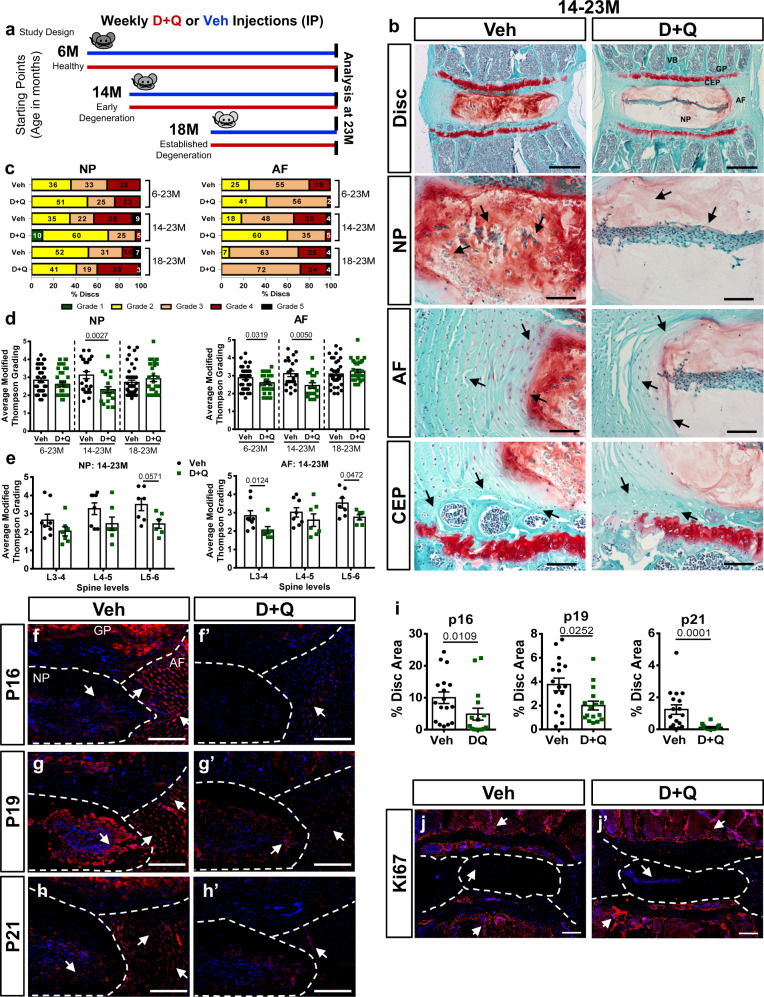
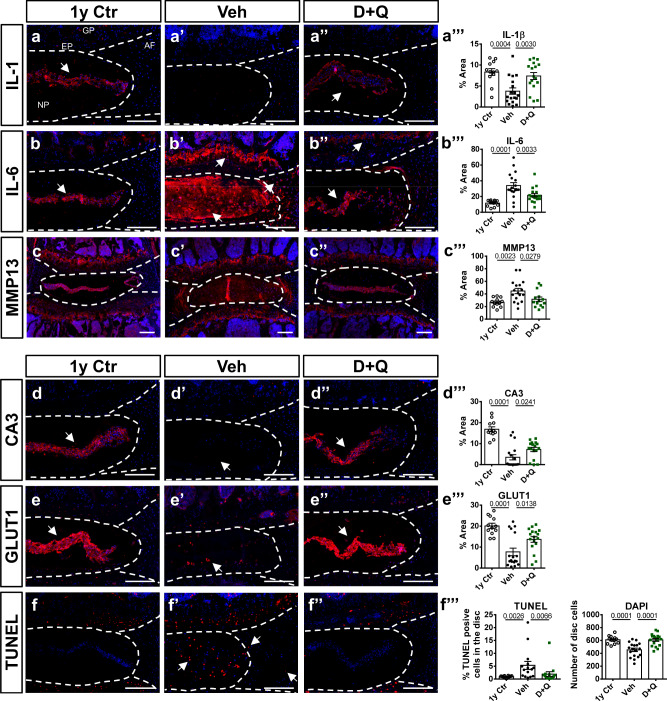
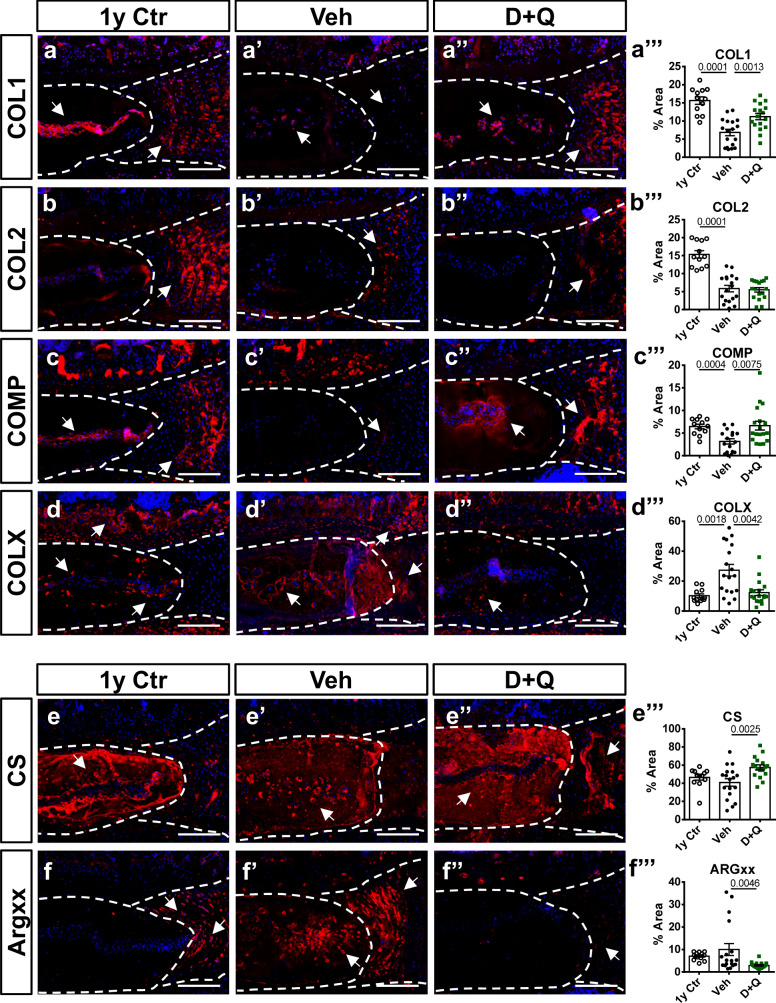
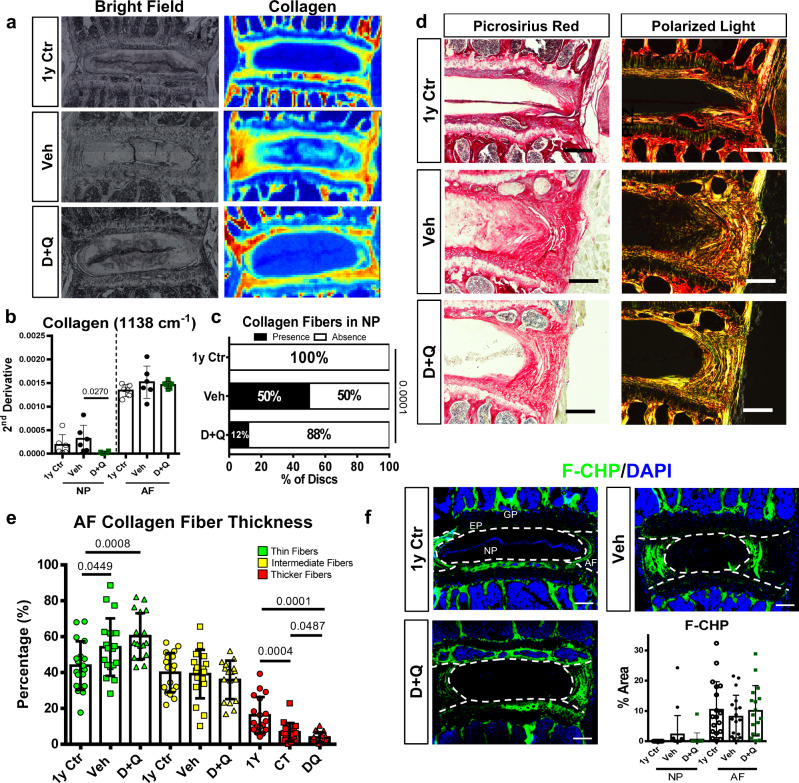
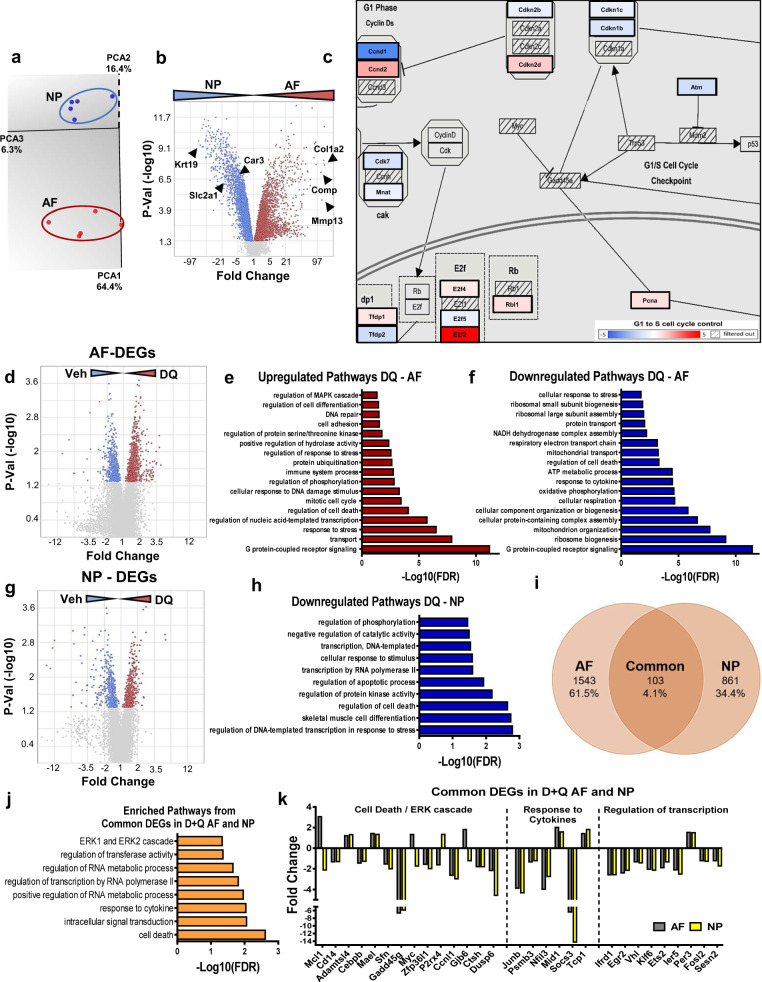
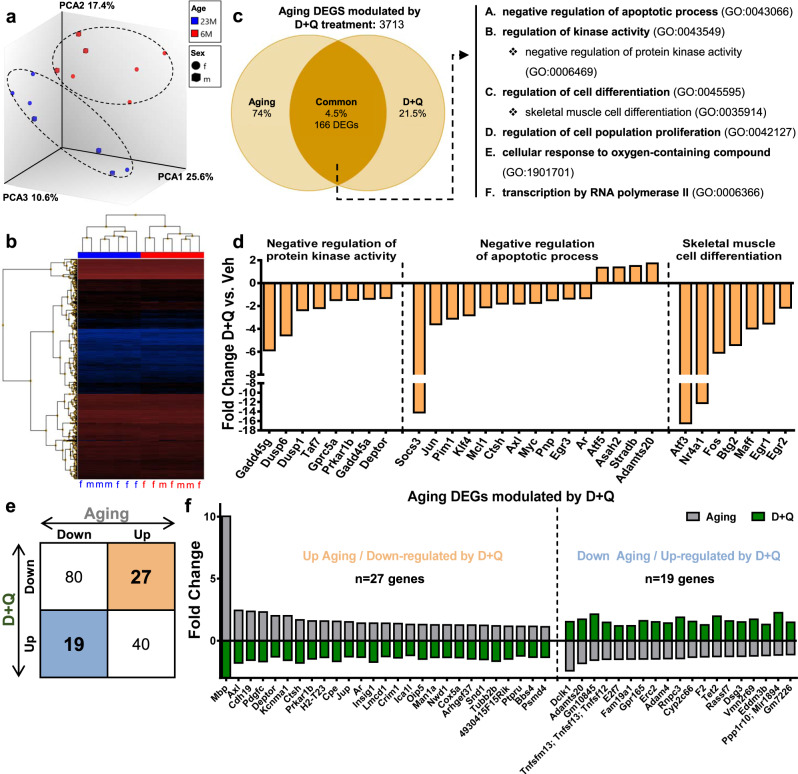
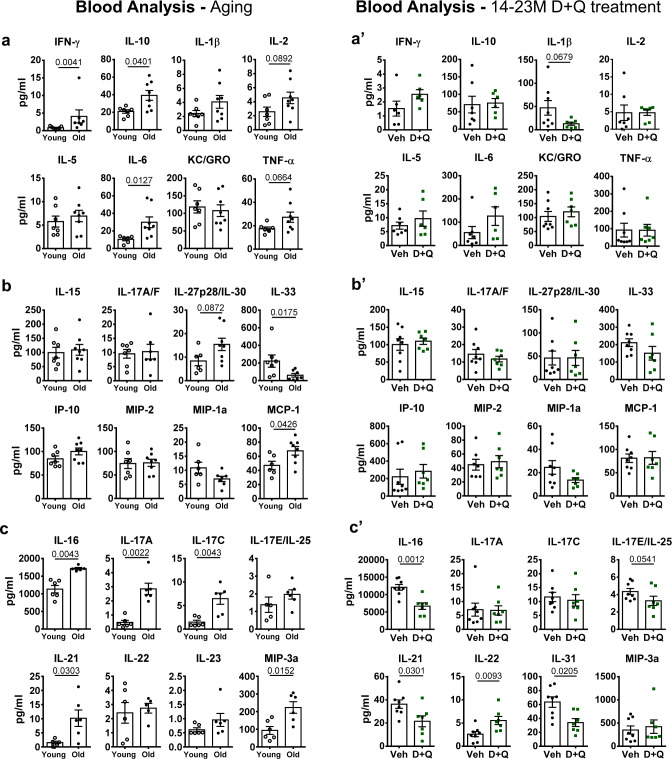
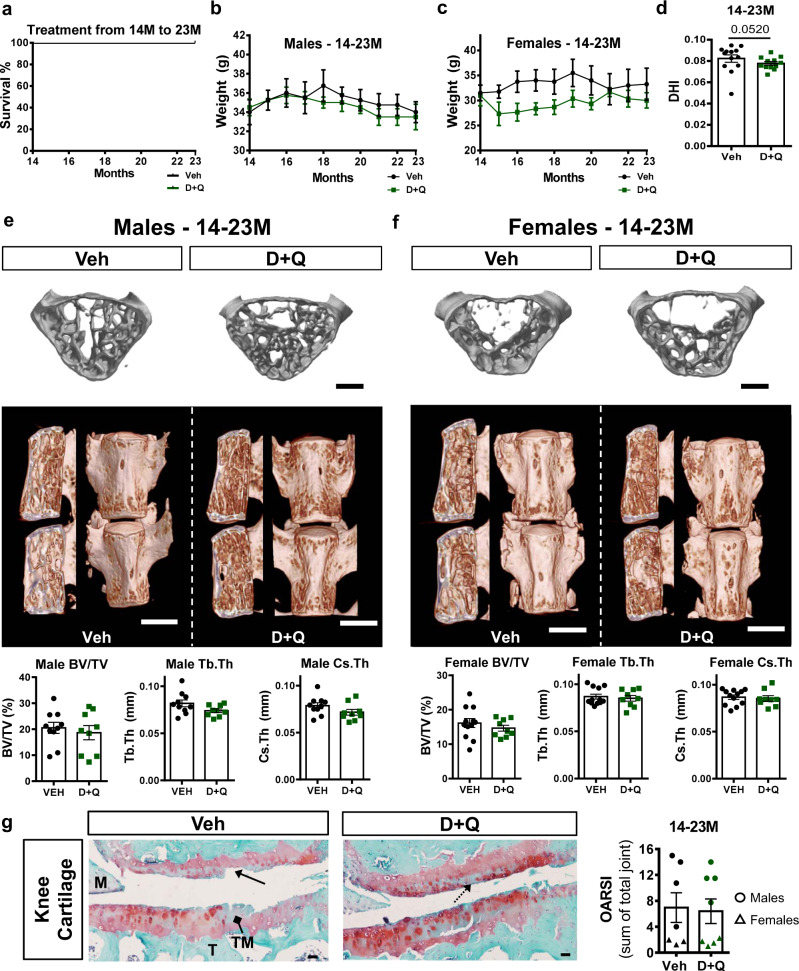
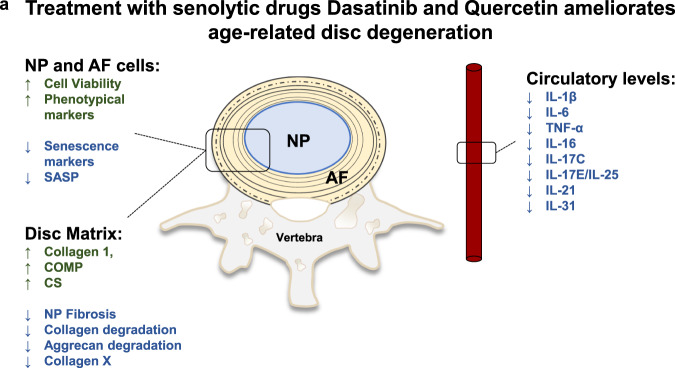
Intervertebral disc degeneration is highly prevalent within the elderly population and is a leading cause of chronic back pain and disability. Due to the link between disc degeneration and senescence, we explored the ability of the Dasatinib and Quercetin drug combination (D + Q) to prevent an age-dependent progression of disc degeneration in mice. We treated C57BL/6 mice beginning at 6, 14, and 18 months of age, and analyzed them at 23 months of age. Interestingly, 6- and 14-month D + Q cohorts show lower incidences of degeneration, and the treatment results in a significant decrease in senescence markers p16 INK4a , p19 ARF , and SASP molecules IL-6 and MMP13. Treatment also preserves cell viability, phenotype, and matrix content. Although transcriptomic analysis shows disc compartment-specific effects of the treatment, cell death and cytokine response pathways are commonly modulated across tissue types. Results suggest that senolytics may provide an attractive strategy to mitigating age-dependent disc degeneration.
Overview
The claims and statistics of this paper haven’t been checked yet.
Free: it reads the open-access text and checks the first 5 claims that cite a source we can check. Create a free account to check every claim.
Integrity signals
Registry
Cites
Statistics
Figures
Verification
Claims the paper makes
The claims and statistics of this paper haven’t been checked yet.
Free: it reads the open-access text and checks the first 5 claims that cite a source we can check. Create a free account to check every claim.
Claims other papers make about this one
Each is checked against this paper’s own text: does it say what the citing paper says it does?
The source backs part of the claim, not all of it — or backs it for a different population, condition or comparison.
In the citing paper
“Consistent with this notion, the administration of dasatinib and quercetin (D+Q), a well-studied senolytic cocktail, in subjects with diabetic kidney disease reduced senescent cell numbers and circulating levels of SASP factors, such as IL-1α and IL-6 (20, 40–45).”
From Connecting aging biology and inflammation in the omics era (2022) · cites this paper as [44]
Experimental — accuracy not yet measuredThe source backs part of the claim, not all of it — or backs it for a different population, condition or comparison.
In the citing paper
“In several mouse experiments, the treatment alleviated inflammation342 and age-related diseases of the intestines343 and bone.344”
From Inflammation and aging: signaling pathways and intervention therapies (2023) · cites this paper as [344]
Experimental — accuracy not yet measuredThe cited source says what the claim attributes to it.
In the citing paper
“treatment with a senolytic therapy mitigated age-dependent disc degeneration122”
From Telomere dysfunction in ageing and age-related diseases (2022) · cites this paper as [122]
Self-check
Percentages, sums and reported differences re-computed from the paper’s own numbers.
The self-check needs the paper’s full text.
Citations
Cites
James, S. L., Abate, D., Abate, K. H., Abay, S. M., Abbafati, C., Abbasi, N., Abbastabar, H., Abd-Allah, F., Abdela, J., Abdelalim, A., et al. (2018) · The Lancet · doi:10.1016/s0140-6736(18)32279-7 · Cited by 13,867
Vos, T., Abajobir, A. A., Abate, K. H., Abbafati, C., Abbas, K. M., Abd-Allah, F., Abdulkader, R. S., Abdulle, A. M., Abebo, T. A., Abera, S. F., et al. (2017) · The Lancet · doi:10.1016/s0140-6736(17)32154-2 · Cited by 13,220
The senescence-associated secretory phenotype: the dark side of tumor suppression
Coppé, J.-P., Desprez, P.-Y., Krtolica, A., & Campisi, J. (2010) · Annual Review of Pathology: Mechanisms of Disease · doi:10.1146/annurev-pathol-121808-102144 · Cited by 5,206
Cellular senescence: from physiology to pathology
Muñoz-Espín, D., & Serrano, M. (2014) · Nature Reviews Molecular Cell Biology · doi:10.1038/nrm3823 · Cited by 2,818
The Achilles' heel of senescent cells: from transcriptome to senolytic drugs
Zhu, Y., Tchkonia, T., Pirtskhalava, T., Gower, A. C., Ding, H., Giorgadze, N., Palmer, A. K., Ikeno, Y., Hubbard, G. B., Lenburg, M., et al. (2015) · Aging Cell · doi:10.1111/acel.12344 · Cited by 2,584
Senolytics improve physical function and increase lifespan in old age
Xu, M., Pirtskhalava, T., Farr, J. N., Weigand, B. M., Palmer, A. K., Weivoda, M. M., Inman, C. L., Ogrodnik, M. B., Hachfeld, C. M., Fraser, D. G., et al. (2018) · Nature Medicine · doi:10.1038/s41591-018-0092-9 · Cited by 2,287
Clearance of senescent cells by ABT263 rejuvenates aged hematopoietic stem cells in mice
Chang, J., Wang, Y., Shao, L., Laberge, R.-M., Demaria, M., Campisi, J., Janakiraman, K., Sharpless, N. E., Ding, S., Feng, W., et al. (2016) · Nature Medicine · doi:10.1038/nm.4010 · Cited by 1,819
Kraus, V. B., Huebner, J. L., DeGroot, J., & Bendele, A. (2010) · Osteoarthritis and Cartilage · doi:10.1016/j.joca.2010.04.015 · Cited by 1,771
Senescence in Health and Disease
He, S., & Sharpless, N. E. (2017) · Cell · doi:10.1016/j.cell.2017.05.015 · Cited by 1,766
Molecular targets of dietary agents for prevention and therapy of cancer
Aggarwal, B. B., & Shishodia, S. (2006) · Biochemical Pharmacology · doi:10.1016/j.bcp.2006.02.009 · Cited by 1,754
Cited by
Items 301–400 of 469
Damage-Induced Senescent Immune Cells Regulate Regeneration of the Zebrafish Retina
Patton, J. G., Konar, G. J., Flickinger, Z., Sharma, S., Vallone, K. T., Lyon, C. E., Doshier, C., Lingan, A. L., & Lyon, W. (2024) · doi:10.59368/agingbio.20240021 · Cited by 4
“Removal of senescent cells via senolytic treatment has the potential to alleviate degenerative diseases 89,90 .”
BackgroundRegulation of the Cilia as a Potential Treatment for Senescence and Tumors: A Review
Zhu, D., Pan, Y., Yang, Y., & Wang, S. (2024) · Journal of Cellular Physiology · doi:10.1002/jcp.31499 · Cited by 4
“The data indicates the favorable tolerability of long ‐ term D + Q treatment (Novais et al. 2021; Justice et al. 2019).”
Kong, X., Gu, H., Zhang, Y., Meng, Q., Li, Q., Song, K., Li, Y., Liu, K., Liu, Z., Hu, R., et al. (2025) · Advanced Science · doi:10.1002/advs.202505077 · Cited by 4
Collagenesis orchestrates mechanoadaptive development and homeostasis of intervertebral discs
He, J., Huang, S., Li, Y., Wang, Y., Yan, P., Hu, O., Lin, P., Jin, H., Zhu, J., Zhang, L., et al. (2026) · Cell Reports · doi:10.1016/j.celrep.2026.117076 · Cited by 4
Epidural Injection of Harpagoside for the Recovery of Rats with Lumbar Spinal Stenosis
Hong, J. Y., Kim, H., Yeo, C., Lee, J., Jeon, W., Lee, Y. J., & Ha, I. (2023) · Cells · doi:10.3390/cells12182281 · Cited by 4
“HAS is a key herbal ingredient of Harpagophytum procumbens (HP) in Jaseng Shinbaro3 and Chungpajeon-H (Jaseng Hospital of Korean Medicine, Seoul, Republic of Korea), both of which are used clinically to treat LSS [13,14].”
BackgroundTang, Z., Guo, M., Peng, Y., Zhang, T., Xiao, Y. C., Ni, R., & Qi, X. (2022) · bioRxiv (Cold Spring Harbor Laboratory) · doi:10.1101/2022.09.18.508406 · Cited by 4
“Quercetin exhibits a wide range of beneficial activities, such as antioxidant, anti-inflammatory, anti-proliferative and anti-apoptotic effects on various cells and animal models (Ebrahimpour et al., 2020; Farr et al., 2017; Islam et al., 2021; Novais et al., 2021; Suganthy et al., 2016).”
BackgroundHe, S., Liu, X., Luo, S., Li, H., Min, J.-K., & Shi, Q. (2024) · Journal of Pain Research · doi:10.2147/jpr.s454785 · Cited by 3
Huang, Y., Zhang, Q., Wang, J., Luan, T., Guo, L., Hao, Z., Shi, G., Chen, R., Wu, Z., Xuan'ang, Z., et al. (2025) · Chemistry & Biodiversity · doi:10.1002/cbdv.202500048 · Cited by 3
“Additionally, quercetin has been shown to alleviate age-dependent IDD by reducing the expression levels of aging-related proteins (e.g., p16, p21, and p53) and the senescence-associated secretory phenotype (SASP) [60, 61].”
SENOLYTICS AND SENOMORPHICS: A NEW CLASS OF DRUGS FOR ANTI-AGING THERAPY
Saliev, T. M., & Singh, P. B. (2025) · Central Asian Journal of Medical Hypotheses and Ethics · doi:10.47316/cajmhe.2025.6.3.01 · Cited by 3
Chapter 4.5: New Proposed Treatments for Pelvic Organ Prolapse
Alperin, M., Fitz, F. F., Gargett, C. E., Güler, Z., Iglesia, C. B., Kisby, C. K., Lozo, S., Valentín Manríquez, G., Prasad, S., Swenson, C. W., et al. (2025) · International Urogynecology Journal · doi:10.1007/s00192-025-06450-1 · Cited by 3
“Together, dasatinib and quercetin have been shown to work synergistically to clear senescent cells and decrease pro-inflammatory cytokines in numerous animal models as well as human adipose tissues [119, 120].”
Targeting immunometabolism in cancer through pharmacological and lifestyle interventions
Tan, R. J. Y., Liu, Y., Chen, W., Liang, Y., & Ling, G. S. (2026) · PLoS Biology · doi:10.1371/journal.pbio.3003617 · Cited by 3
“Another study also reported similar findings, showing that the plasma levels of T H 17 cell-mediating cytokines, namely IL-16, IL-17A, IL-17C, IL-21, and MIP-3 α , were reduced upon senolytic treatment in older mice [153].”
Hu, R., Liu, K., Wang, W., Zhang, W., Wang, L., Zhang, Y., Ma, H., Cong, M., Chi, C., Cao, J., et al. (2026) · Materials Today Bio · doi:10.1016/j.mtbio.2026.102827 · Cited by 3
“The synthesis of matrix molecules and the reconstruction of the extracellular matrix (ECM) in nucleus pulposus cells are crucial for the treatment of degenerated intervertebral disc tissue [36].”
Miao, J., Li, J., Meng, P., Li, X., Huang, J., Liang, Y., Ling, X., Wang, X., Shen, W., Zhou, S. Y., et al. (2026) · Nature Communications · doi:10.1038/s41467-026-71553-2 · Cited by 3
RetractedYang, C., Xu, Z., He, S.-T., Zheng, G.-J., Wang, J., Zang, F., Hu, J.-Q., Wang, Y., Zhang, W.-Y., Gao, C.-F., et al. (2026) · Nature Aging · doi:10.1038/s43587-026-01124-z · Cited by 4
“The most direct manifestation of IVD aging is age-related disc degeneration, characterized by loss of structural integrity and reduced extracellular matrix (ECM) hydration 19 .”
Cell senescence in chronic pain: An integrative perspective on cellular and neural mechanisms
Ma, L., Wang, Y., Wang, J., Li, Y., Hu, X., Zou, X., Zhang, D., Zhu, T., & Zhou, C. (2026) · Neuroscience & Biobehavioral Reviews · doi:10.1016/j.neubiorev.2026.106789 · Cited by 3
Tsingas, M., Tsingas, K., Smyers, M., Zhang, W., Goldman, A. R., Lawrence, E., Collins, J. A., & Risbud, M. V. (2026) · Cell Death and Disease · doi:10.1038/s41419-026-08942-4 · Cited by 4
Self-citationA precise dual-drug codelivery nanosystem for treating kidney failure by eliminating senescent cells
Jin, S., Li, W., Huang, Q., Zeng, X., & Zhang, X. (2024) · Science China Materials · doi:10.1007/s40843-024-2864-5 · Cited by 4
“In several preclinical models of aging and aging-related diseases, D+Q has also been shown to improve physical function [37–44].”
Pan, Z., Zhang, J., Zuo, H., Li, C., Song, H., Yang, H., Wu, K., Zhao, M., Zhang, Z., Lai, Y., et al. (2025) · Journal of Medicinal Chemistry · doi:10.1021/acs.jmedchem.5c00269 · Cited by 3
Microgravity Therapy as Treatment for Decelerated Aging and Successful Longevity
Mozalbat, N., Sharvit, L. E., & Atzmon, G. (2025) · International Journal of Molecular Sciences · doi:10.3390/ijms26136544 · Cited by 3
Dioh, W., Narkar, V. A., Singh, A., Malik, F. I., Ferrucci, L., Tourette, C., Mariani, J., van Maanen, R., & Fielding, R. A. (2023) · The Journals of Gerontology Series A · doi:10.1093/gerona/glad072 · Cited by 3
Wyles, S. P., Vyas, K. S., Wasserburg, J. R., Ansaf, R. B., & Kirkland, J. L. (2024) · Elsevier eBooks · doi:10.1016/b978-0-443-15500-0.00009-8 · Cited by 4
Silva, A. O., Bitencourt, T. C., Vargas, J. E., Fraga, L. R., & Filippi‐Chiela, E. C. (2024) · Genetics and Molecular Biology · doi:10.1590/1678-4685-gmb-2023-0311 · Cited by 4
“Preliminary evidence indicates that these compounds can eliminate SnCs in vivo (Ellison-Hughes, 2020), leading to decreased inflammation, improved organ and tissue function, and ultimately increased survival in animal models (Xu et al., 2018; Lewis-McDougall et al., 2019; Novais et al., 2021).”
BackgroundGuo, J., Zhang, P., Yang, X., Wang, X., Cao, X., & Zhao, J. (2025) · Frontiers in Pharmacology · doi:10.3389/fphar.2025.1526107 · Cited by 3
Gong, R., Yan, T., Pan, Y., Cao, K., Cheng, Y., Mo, L., & Jiang, Z. (2026) · bioRxiv (Cold Spring Harbor Laboratory) · doi:10.64898/2026.03.22.713446 · Cited by 3
Game changer: Navigating between challenges and hopes in geropharmacology
Chen, Q., Hartman, R., Dankiv, L., Yan, E., Young, L. H., & Barsotti, R. (2025) · Advances in pharmacology · doi:10.1016/bs.apha.2025.02.007 · Cited by 2
Extracellular Vesicles in the Aging Male Reproductive System: Progresses and Perspectives
Li, W., Yu, Z., Xu, S., Zheng, L., & Xia, W. (2025) · Advances in experimental medicine and biology · doi:10.1007/978-3-031-82990-1_16 · Cited by 3
ZNF865 (BLST) a Novel Regulator of DNA Damage and Cell Senescence in Back Pain
Lewis, C., Levis, H., Holbrook, J., Polaski, J. T., Jacobsen, T. D., Mizels, J., Czachor, M., Gullbrand, S. E., Diekman, B. O., Iatridis, J. C., et al. (2026) · Aging Cell · doi:10.1101/2025.06.13.659603 · Cited by 2
Self-citationZuncheddu, D., Buedo, P., Stoddart, M. J., Creemers, L. B., Grad, S., & Waligóra, M. (2025) · JOR Spine · doi:10.1002/jsp2.70104 · Cited by 2
Bun, M., Ukon, Y., Ikuta, M., Kitahara, T., Furuichi, T., Hirai, H., Tateiwa, D., Kanie, Y., Furuya, M., Fujimori, T., et al. (2025) · Aging Cell · doi:10.1111/acel.70331 · Cited by 2
“D + Q, previously identified as senolytic agents, were administered weekly to minimize off-target effects and efficacy in clearing senescent cells (Novais et al. 2021; Tappy et al. 2024).”
Paul, D. (2025) · Springer eBooks · doi:10.1007/978-3-032-08808-6_12 · Cited by 3
Meng, B., Li, X., Yang, B., Qu, Y., He, Y., Fu, C., An, Z., Wu, A., Hei, Y., Zhang, R., et al. (2026) · Journal of Extracellular Vesicles · doi:10.1002/jev2.70224 · Cited by 3
Sex-specific proteostasis and urothelial responses to senolytic therapy in the aged mouse bladder
Kasturi, S., Salazar, A., Hardy, C. C., Korstanje, R., & Mysorekar, I. U. (2026) · The Journals of Gerontology Series A · doi:10.1093/gerona/glag059 · Cited by 2
Zhai, H., Wang, Z., Wang, S., Liu, Z., Zhao, D., Zhang, Y., Liu, K., Kong, X., Meng, Q., Gu, H., et al. (2026) · Journal of Advanced Research · doi:10.1016/j.jare.2026.03.008 · Cited by 2
Lu, J.-J., Sheng, Y., Hu, W., Liu, Y., Xie, F., Li, M., & Zhu, X. (2026) · Autophagy · doi:10.1080/15548627.2026.2659946 · Cited by 2
“In contrast, while D+Q has shown potent senolytic activity in various disease models, most published protocols employ higher doses optimized for maximally clearing senescent cells in non-pregnant settings [47,48].”
Heinrichs, D. P., Needy, T., Maldonado, V. V., Comer, K. D., Zotti, M., Berryhill, S. B., Cabrera, A. R., Jensen, H., Murach, K. A., Barnes, C. L., et al. (2026) · Biochimie · doi:10.1016/j.biochi.2026.05.008 · Cited by 2
Cellular senescence in musculoskeletal diseases: biological mechanisms and clinical implications
Li, B., Qi, W., Zhang, B., Ma, S., Zhang, W., Zhang, C., Xiang, W., Chen, R., Bai, C., Fei, J., et al. (2026) · Theranostics · doi:10.7150/thno.130018 · Cited by 2
“The therapeutic effect is strongly influenced by treatment timing, with earlier intervention showing better outcomes than treatment at advanced stages of degeneration [302].”
Ambrosio, L., Schol, J., Ruiz‐Fernández, C., Denaro, V., Vadalà, G., & Sakai, D. (2026) · JOR Spine · doi:10.1002/jsp2.70187 · Cited by 3
“…of distinct IDD endotypes , potentially driven by diverse pathophysiological processes including genetic predisposition [135], metabolic dysfunction [136–138], mechanical overload [139, 140], neuroinflammation [29, 30, 141], cell senescence [142, 143], and microbiome-related factors [144, 145].”
Jung, J. K., Nguyen, T. O. O., Jung, W. C., Nguyễn, B. L., Le, N. D., Kim, B., Luong, H. X., Park, S., Jeong, S., Kim, J., et al. (2026) · Journal of Controlled Release · doi:10.1016/j.jconrel.2026.115178 · Cited by 2
Gao, Z., Lyu, G., Zhou, Q., Yang, S., Cao, Z., Li, S., Lyu, T., Xq, L., Sun, S. Y., Huang, Y., et al. (2026) · Advanced Materials · doi:10.1002/adma.74189 · Cited by 3
“In particular, matrix metalloproteinase-13 (MMP13), a major collagenase involved in disc matrix degradation, is markedly upregulated in degenerative discs and contributes to the breakdown of type II collagen and aggrecan [3, 9].”
Salas-Venegas, V., López‐Díazguerrero, N. E., Carreto, R. J. R., Königsberg, M., & Chavarría, A. (2026) · Frontiers in Nutrition · doi:10.3389/fnut.2026.1824908 · Cited by 2
Chen, W., Huang, W., Chen, L., Chen, Y., Hu, Z., Wu, J., Zhang, Q., Ren, Y., Cui, P., & He, D. (2026) · Free Radical Biology and Medicine · doi:10.1016/j.freeradbiomed.2026.08.011 · Cited by 2
Heinrichs, D. P., & Samsonraj, R. M. (2026) · Current Osteoporosis Reports · doi:10.1007/s11914-026-00977-y · Cited by 2
“These new developments in rejuvenation of senescent cell groups provide a more complete picture of the attenuation of bone degeneration with age and provide a great breadth of evidence for future clinical practices.”
Wang, C., Chen, R., Zhu, X., & Zhang, X. (2022) · Open Medicine · doi:10.1515/med-2022-0544 · Cited by 2
“Meanwhile, it has been documented in several studies that the senescence of NPCs plays a vital role in the pathogenesis and development of IDD [18,19].”
BackgroundEpigenetic Signatures of Aging: A Comprehensive Study of Biomarker Discovery
Lee, M. S., Kwon, H., Kim, Y., Min, N. Y., Lee, S. Y., & Lee, I. K. (2023) · Advances in Aging Research · doi:10.4236/aar.2023.122002 · Cited by 2
Chemical constituents with senolytic activity from the stems of Limacia scandens
Lee, H. J., Zhang, M., Doan, T., Park, E. J., Nghiem, D.-T., Pham, H. T. T., Pan, C., & Oh, W. K. (2023) · Phytochemistry · doi:10.1016/j.phytochem.2023.113740 · Cited by 2
Senotherapy: Implications for Transplantation
Jaros, M., & Melk, A. (2025) · Transplantation · doi:10.1097/tp.0000000000005291 · Cited by 3
Peng, J., Zhang, H., Wang, H., Meng, Q., Li, D., Gao, M., Li, Y., Ma, X., Li, X., Xu, R., et al. (2025) · Medicine · doi:10.1097/md.0000000000041917 · Cited by 2
“[19,20] Intervertebral disc degeneration (IDD) is a major cause of disc herniation and can lead to lower back pain.”
Omics metabolism tools in antiaging drug discovery
Tibúrcio, R., Rappaport, J., & Palmer, C. S. (2025) · Elsevier eBooks · doi:10.1016/b978-0-443-15447-8.00010-6 · Cited by 2
Kim, D., Kang, S., Jun, S., & Kang, N. (2025) · Natural Product Communications · doi:10.1177/1934578x251338519 · Cited by 3
Chen, Y., Zhang, X., Zhang, S., Hou, L., Chen, J., Chen, S., Liu, Y., & Wang, Y. (2022) · Science of Advanced Materials · doi:10.1166/sam.2022.4367 · Cited by 2
Exploration of New Therapies for Heart Failure Targeting Age-Related Mechanisms
Shimizu, I. (2023) · Circulation Journal · doi:10.1253/circj.cj-23-0419 · Cited by 2
DRUGS WITH SENOLYTIC ACTIVITY: PROSPECTS AND POSSIBLE LIMITATIONS
Васильевна, М. Г., & Khokhlov, A. N. (2024) · Vestnik Moskovskogo universiteta Seria 16 Biologia · doi:10.55959/msu0137-0952-16-78-4-3 · Cited by 3
Drugs with Senolytic Activity: Prospects and Possible Limitations
Васильевна, М. Г., & Khokhlov, A. N. (2023) · Moscow University Biological Sciences Bulletin · doi:10.3103/s0096392524600455 · Cited by 2
What’s New in Musculoskeletal Basic Science
Gugala, Z. (2022) · Journal of Bone and Joint Surgery · doi:10.2106/jbjs.22.00947 · Cited by 2
Bentolila, G., Agrawal, N., Phung, J., Van, L. M., & Trivedi, G. (2024) · Berkeley Pharma Tech Journal of Medicine · doi:10.52243/bptjm.v4i2.71 · Cited by 1
Azad, T. D., Li, M., Chiu, P.-Y., Jones, K. E., Lord, E. L., Molina, C. A., Walker, C. T., Osorio, J. A., Pizones, J., Theologis, A. A., et al. (2025) · Spine Deformity · doi:10.1007/s43390-025-01124-w · Cited by 1
“Finally, recent studies have demonstrated that both local and systemic elimination of senescent cells ameliorate signs of OA and IVDD in various preclinical models [32–34].”
GNF-5837 alleviates intervertebral disc ageing by upregulating glutathione peroxidase 7
Xu, Y., Chen, R., Zhuang, Y., & Xu, W. (2025) · International Journal of Immunopathology and Pharmacology · doi:10.1177/03946320251343365 · Cited by 1
“14–16 Biomarkers such as p53, p21, p16 and IL-6 are widely utilised to evaluate ageing-related pathologies, including IVDD, and their dysregulation has been linked to oxidative stress and ECM degradation in degenerated discs.”
Antibiotics and Cellular Senescence: An Unexplored Territory
Zinovkin, R. A., & Kondratenko, N. (2025) · Biochemistry (Moscow) · doi:10.1134/s0006297925602758 · Cited by 1
“In addition to the well-established senolytics such as combination of quercetin with dasatinib [103, 104], senolytic properties have also been found in several antibiotics.”
Biology of intervertebral disc degeneration
Weinberg, J., Bonamer, J. P., Ramanathan, R., Gonzalez, C., Rotunno, M., Sowa, G., Vo, N. N., Spitnale, M. J., Lee, J. Y., & Wawrose, R. A. (2025) · Seminars in Spine Surgery · doi:10.1016/j.semss.2025.101233 · Cited by 1
Partial Reprogramming Is Conserved from Insect to Mammal
Tolwinski, N. S., Fong, S., Shankar, S., & Gruber, J. (2026) · Cells · doi:10.3390/cells15020168 · Cited by 1
“…instance, dasatinib combined with quercetin (D+Q) reduces intervertebral disc degeneration, maintains matrix integrity, and lowers senescence in aged mice [93]; newer agents like PZ15227 similarly rejuvenate tissue stem and progenitor cells in aged mice without causing severe thrombocytopenia [94].”
Yamashita, A., Tenshin, H., Matsuki, S., Nishino, G., Ser-Od, S., Saito, F. M., Hiasa, M., & Tanaka, E. I. (2026) · JBMR Plus · doi:10.1093/jbmrpl/ziag014 · Cited by 2
“23,33,34 Since there was no significant reduction in LCN area per bone area at 12 mo of age (Figure S2), we hypothesized that the LCN alterations observed at 16 mo might begin developing from around 12 mo of age.”
Li, Q.-H., Ji, M., Weng, S., Li, X., Xiao, Q., Zhou, Y. N., Luo, T., & Liu, Z. (2026) · International Immunopharmacology · doi:10.1016/j.intimp.2026.116405 · Cited by 1
Exploring the Senotherapeutic Potential of Polyphenols in Aging and Disease: A Literature Review
Mitrovic, L. B., & Semen, K. O. (2026) · International Journal of Molecular Sciences · doi:10.3390/ijms27083651 · Cited by 1
“Some studies illustrated a significant decrease post-treatment in liver, pgWAT and plasma levels [23,46], while others found no significant effect [24,42,46].”
InfluentialSenescence dynamics define therapeutic windows for Duchenne muscular dystrophy in DBA/2-mdx mice
Calls, A., Tàrrega, A. B., Cisneros, A., Rommelfanger, M., Campanario, S., Grima-Terrén, M., Ramírez‐Pardo, I., Moiseeva, V., Lukesova, V., Andrés, E., et al. (2026) · Skeletal Muscle · doi:10.1186/s13395-026-00426-5 · Cited by 1
Senolytic Therapy as a Preventive Strategy for Spine Degeneration and Pain
Darband, S. G., Cherif, H., Mannarino, M., Sagir, J., Millecamps, M., Ouellet, J. A., Stone, L. S., & Haglund, L. (2026) · Advanced Science · doi:10.1002/advs.202522770 · Cited by 2
Filipek, K., Nowowiejska, J., & Flisiak, I. (2026) · Psoriasis Targets and Therapy · doi:10.2147/ptt.s598115 · Cited by 5
“200 Moreover, a pilot study involving senolytic therapy in older adults at risk for Alzheimer’s disease showed preliminary good tolerability and revealed a correlation between improvements in cognitive function and reductions in SASP.”
Tamimi, R., Tafazzoli‐Shadpour, M., & Vosough, M. (2026) · Biochimica et Biophysica Acta (BBA) - Reviews on Cancer · doi:10.1016/j.bbcan.2026.189626 · Cited by 2
Senotherapeutics: Emerging pharmacological strategies to target cellular senescence
Nagy, D., Brunner, E., Ekambaram, S., Nagaraja, R. Y., Kordestan, K. V., Patai, R., Kristóf, R., Nagykaldi, M., Chandragiri, S. S., Shanmugarama, S., et al. (2026) · Advances in Translational Research · doi:10.1556/1661.2026.00015 · Cited by 3
Biomarkers and therapies associated with Hutchinson-Gilford Progeria Syndrome
Ali, R. S., Cao, Z., Zhou, X., Wang, G., He, H., Du, Z., Li, Y., Chen, L., & Hu, L. (2026) · Ageing Research Reviews · doi:10.1016/j.arr.2026.103209 · Cited by 2
He, J., Gan, Y., Zhang, P., Gong, Y., Cheng, Z., Shang, Q., Chen, H., Chen, G., Zhao, W., Shen, G., et al. (2026) · Journal of Immunology Research · doi:10.1155/jimr/6396887 · Cited by 1
“After 24 months of rearing, we obtained a naturally aged mouse model of senescence, as described previously [18].”
Liang, H., Zhu, D., Du, Z., Li, X., Shi, R., Lei, J., Tong, B., Xu, H., Wu, D., Zhou, X., et al. (2026) · Journal of Clinical Investigation · doi:10.1172/jci197274 · Cited by 1
“IVD aging is accompanied by NPC senescence (52, 54).”
A critical role for mitochondrial dynamics in cigarette smoke condensate-induced RPE senescence
Zhou, Q., Zhang, Z., Wu, Y. J., Dong, C., Wu, C.-C., Handa, J. T., Ma, J., & Wang, S. (2026) · Free Radical Biology and Medicine · doi:10.1016/j.freeradbiomed.2026.06.060 · Cited by 1
Multi-omics profiling reveals systemic rejuvenation of the aged kidney through senolytic therapy
Chen, S., Zhang, C., Cang, P., Guo, W., Xiao, L., He, Y., Su, Q., Ouyang, S., Zha, J., Maimaitirexiati, G., et al. (2026) · npj Regenerative Medicine · doi:10.1038/s41536-026-00490-x · Cited by 2
“Among senolytic regimens, the combination of dasatinib and quercetin (D + Q) is one of the most extensively studied 15,16 .”
Alexander, P. G., Yan, B., Clark, K. L., Dong, Q. D., Wang, D., Yang, Y., Zhang, T., Zhang, P., Zheng, G., Robbins, P. D., et al. (2026) · Aging · doi:10.18632/aging.206394 · Cited by 1
“…compelling evidence supporting the causative roles of persistent DNA damage and cellular senescence in driving age-related IDD, suggesting pharmacologic approaches to clear SnCs would be therapeutic, which we and others have observed with treatment with the senolytic combination of D+Q [25, 50].”
InfluentialResearch advances in microneedle-exosome delivery systems for the treatment of multisystem diseases
Jin, Z.-E., Wang, X., & Cai, Z. (2026) · Regenerative Therapy · doi:10.1016/j.reth.2026.101166 · Cited by 1
“This imbalance ultimately results in ECM loss, AF structural failure, and progression of IVDD [82,83].”
Senescence-directed nanotherapy ameliorates fibrosis and overcomes immune exclusion in cancer
Hinterleitner, C., Barthet, V. J. A., Goldberg, H. V., Vogt, K. C., Perea, A. M., Hillger, L. R., Ruiz, S. B., McHugh, D., Ho, Y.-J., Perez, A. C., et al. (2026) · Science · doi:10.1126/science.aeg4791 · Cited by 2
“Pharmacologic strategies to eliminate or modulate senescent cells show promise in preclinical models (30-35), yet translation has been limited by two fundamental challenges (16).”
Koning, M., Kovynev, A., Fondevila, M. F., Ruhé, E. J. M., Mommersteeg, M. C., Ramakers, C. R. B., Hutten, B. A., Verwer, B. J., Vlug, M. S., Kuiper, T., et al. (2026) · Nature Metabolism · doi:10.1038/s42255-026-01643-4 · Cited by 1
SIRT6 Activation Improves Intervertebral Disc Health in the Aging Spine
Ramteke, P. L., Watson, B., Jagannath, S., Bell, S. E., Toci, M., Ottone, O. K., Wu, Q., Abinader, O., Mitra, R., Collins, J. A., et al. (2026) · Aging Cell · doi:10.1111/acel.70709 · Cited by 2
“Deparaffinized sections following antigen retrieval or frozen sections were blocked in 5% normal serum in PBS-T and incubated with antibodies against H3K9Ac (1:50, Sigma, 06-942), Collagen I (1:100, Abcam ab34710), Collagen X (1:500, Abcam ab58632), Aggrecan (1:300, Abcam ab11570); GLUT1 (1:200, Abcam, ab40084), F-CHP…”
InfluentialSelf-citationSenescence in Aging, Within the Brain and Other Diseases: Mechanisms and Interventions
Chakrabarti, S. K., & Chattopadhyay, D. (2023) · Exploratory Research and Hypothesis in Medicine · doi:10.14218/erhm.2023.00018 · Cited by 1
Palmer, A. K., & Kirkland, J. L. (2024) · Elsevier eBooks · doi:10.1016/b978-0-443-15500-0.00012-8 · Cited by 3
Chemical Recording of Pump‐Specific Drug Efflux in Living Cells
Sun, X., Chen, Y., Chen, Y., Yang, S., Lin, W., Quan, B., Pan, X., Ding, Q., Chen, X., Wang, C., et al. (2024) · Angewandte Chemie · doi:10.1002/ange.202409282 · Cited by 4
Pancreatic β-Cell Senescence: A Contributor to Type 2 Diabetes
Urmi, R., Singh, R., Singh, M., & Sinha, B. K. (2025) · Springer eBooks · doi:10.1007/978-981-96-1041-9_8 · Cited by 1
Nunes, A., Pitcher, L. E., Exner, H. A., Grassi, D., Burns, B., Sanchez, M. B. H., Tetta, C., Camussi, G., & Robbins, P. D. (2025) · Stem Cell Reviews and Reports · doi:10.1007/s12015-025-10876-x · Cited by 1
“D + Q has shown beneficial effects on bone loss [17], disc degeneration [18], myogenic progenitor cell proliferation [19], and improvement of physical condition and lifespan in mice [20].”
Geng, Q., Geng, Y., Heng, K., Zhai, J., Song, X., Sha, L., Geng, Y., Nie, P., Liu, F., Zhai, H., et al. (2025) · Journal of Translational Medicine · doi:10.1186/s12967-025-07212-9 · Cited by 1
“Emerging evidence suggests that senolytic drugs may help delay age-related IVD degeneration [44].”
Nadeem, J., Parveen, A., & Kim, S. Y. (2023) · Preprints.org · doi:10.20944/preprints202309.1932.v1 · Cited by 1
Chen, L., Zhao, Y., Chen, H., Tan, T., Yao, P., & Tang, Y. (2021) · Research Square · doi:10.21203/rs.3.rs-961620/v1
Borgne, E. L. (2022) · theses.fr (ABES) · doi:10.70675/234a825cz3599z40edz978cz9fd5925bd0f6 · Cited by 1
Lei, M., Lin, H., Shi, D., Hong, P., Song, H. K., Herman, B., Liao, Z., & Cao, Y. (2023) · Figshare · doi:10.6084/m9.figshare.24804308
Liu, C., Gao, X., Lou, J., Li, C., Chen, Y., Chen, M., Zhang, Y., Hu, Z., Chang, X., Luo, M., et al. (2023) · Figshare · doi:10.6084/m9.figshare.23647480
The interconnections between gerontogen, aging, and senotherapy
Rahma, R., & Barinda, A. J. (2024) · Journal of Applied Pharmaceutical Science · doi:10.7324/japs.2024.184140
Eg, P., Vasylieva, I. G., Khyzhnyak, M. V., Chopyk, N. G., Цюбко, О. И., Dmytrenko, A. B., Makarova, T. А., Troyan, O. I., & Ksenzov, T. A. (2024) · PAIN JOINTS SPINE · doi:10.22141/pjs.14.2.2024.417
Intradiscal biologic implants for low back pain
Azeem, N., Ganey, T. M., Nasseri, M. N., Beall, D. P., Langhorst, M. L., Golovac, S., Calodney, A. K., Amirdelfan, K., & Deer, T. R. (2024) · Elsevier eBooks · doi:10.1016/b978-0-443-15962-6.00012-6
Protective effects of PDGF-AB/BB against cellular senescence in human intervertebral discPreprint
Zhang, C., Díaz‐Hernández, M. E., Fukunaga, T., Shenoy, S. P. V., Yoon, S. T., Haglund, L., & Drissi, H. (2024) · eLife · doi:10.7554/elife.103073.1
Therapeutic effects of PDGF-AB/BB against cellular senescence in human intervertebral discPreprint
Zhang, C., Díaz‐Hernández, M. E., Fukunaga, T., Shenoy, S. P. V., Yoon, S. T., Haglund, L., & Drissi, H. (2025) · eLife · doi:10.7554/elife.103073.2
Molecular Mechanisms Behind Organ-Related Aging and Regulatory Effects of Natural Therapeutics
Abaidullah, R., Ali, S., Summer, M., & Tahir, H. (2025) · Cell Biochemistry and Biophysics · doi:10.1007/s12013-025-01792-5 · Cited by 1
Returning aging cells to productivity
Vaidya, R., & Tang, S. Y. (2025) · eLife · doi:10.7554/elife.107777
Bibliometric Analysis of Chronic Low Back Pain Research: Trends and Perspectives
Tirla, S., Niculescu, V., Deac, Ș., Gherle, A., Jurcău, M. C., Iosub, M. E., & Nistor-Cseppento, C. D. (2025) · Balneo and PRM Research Journal · doi:10.12680/balneo.2025.854
Jung, S., Hodar, J. A., Badam, T. V. S., & del Sol, A. (2025) · Aging · doi:10.18632/aging.206342 · Cited by 1
“For instance, dasatinib applied to HSCs shows significant negative enrichment in “Senescence -associated Secretory Phenotype” and “NF - kB Related Genes”, which is supported by previous studies due to the proven effect of dasatinib+quercitin as a senolytic [25].”
Investigation of the mechanisms underlying intervertebral disc degeneration
Tu, J. (2022) · UNSWorks (University of New South Wales, Sydney, Australia) · doi:10.26190/unsworks/24875
Zhu, J., Ao, X., Liu, Y., Zhou, S., Hou, Y., Yan, Z., Zhou, L., Chen, H., Wang, P., Liang, X., et al. (2024) · Figshare · doi:10.6084/m9.figshare.26758631
Metadata
- Authors
- Novais, E. J., Tran, V. A., Johnston, S. N., Darris, K. R., Roupas, A. J., Sessions, G. A., Shapiro, I. M., Diekman, B. O., & Risbud, M. V.
- Affiliations
- Thomas Jefferson University (US)
- University of North Carolina at Chapel Hill (US)
- Corresponding author
- Risbud, Makarand V.
- ORCID
- Venue
- Nature Communications
- Published
- 2021-09-03
- Volume
- 12
- Issue
- 1
- Pages
- 5213-5213
- ISSN
- 2041-1723 (ISSN-L)
- PMC
- PMC8417260
- OpenAlex
- W3125259346
- Cited by
- 440
- References
- 78
- Citations by year
- 2026: 87 · 2025: 122 · 2024: 105 · 2023: 73 · 2022: 50 · 2021: 2
- FWCI
- 39.00
- Type
- journal article
- Language
- en
- Open access
- gold
- doi.org
- Licence
- cc-by
- creativecommons.org/licenses/by/4.0 (tdm)
- creativecommons.org/licenses/by/4.0 (vor)
- Locations
- Nature Communications (publishedVersion, cc-by)
- Research Square (acceptedVersion, cc-by)
- Europe PMC (PubMed Central) (publishedVersion, other-oa)
- PubMed Central (publishedVersion, cc-by)
- PubMed (publishedVersion)
- The Medicine Forum (submittedVersion, cc-by)
- RePEc: Research Papers in Economics (submittedVersion)
- DOAJ (DOAJ: Directory of Open Access Journals) (submittedVersion, cc-by-sa)
- Funders
- Research Center for Biomedical Engineering
- Universidade do Minho
- National Institutes of Health (5r01ar055655-14)
- University of North Carolina at Chapel Hill
- Fundação para a Ciência e a Tecnologia (PD/BD/128077/2016)
- National Institute on Aging (T35AG038047)
- National Institute of Arthritis and Musculoskeletal and Skin Diseases (R01AR074813, R01AR064733, PD/BD/128077/2016, R01‐AR055655)
- Topics
- Health Sciences › Medicine › Orthopedics and Sports Medicine › Spine and Intervertebral Disc Pathology
- Life Sciences › Biochemistry, Genetics and Molecular Biology › Cell Biology › Telomeres, Telomerase, and Senescence
- Health Sciences › Medicine › Rheumatology › Osteoarthritis Treatment and Mechanisms
- Keywords
- senolytics, dasatinib, quercetin, intervertebral disc degeneration, cellular senescence, aging, back pain, p16INK4a, p19ARF, senescence-associated secretory phenotype, interleukin-6, MMP-13, extracellular matrix, drug combination therapy
- MeSH terms
- Dasatinib, Nucleus Pulposus, Annulus Fibrosus, Aging, Animals, Cell Survival, Extracellular Matrix, Fibrosis, Inflammation, Mice, Inbred C57BL, Phenotype, Quercetin, Cellular Senescence, Mice, Aggrecans, Intervertebral Disc Degeneration, Transcriptome
About these checks
Registry, retraction, Cites and statistics results are computed, not judged, with one exception: a printed reference that no index lists is read once by a model before it counts as a citation error. Claims are extracted by a model and kept only when their quote appears verbatim in the text; each cited source is then checked, with a model’s help, for whether it says what the claim relies on. Those verdicts can be wrong — read the claim’s quote and the cited source before relying on one.
Statistics and arithmetic are recomputed, not judged.
Confidence bands are shown only for fields calibrated on our annotated test set. None is calibrated yet, so no band is shown.
What counts as a claim ›How we measure confidence ›How we check this ›
Are you an author, or do you see a problem with this page? Request a review
Data sources
Bibliographic data: Semantic Scholar, OpenAlex, Crossref.
Contains information from the Semantic Scholar Academic Graph Datasets, made available under the ODC Attribution License (ODC-BY 1.0).
Semantic Scholar’s data is described in: Kinney, R., et al. (2023). The Semantic Scholar Open Data Platform. arXiv:2301.10140.
