

Long-term treatment with senolytic drugs Dasatinib and Quercetin ameliorates age-dependent intervertebral disc degeneration in mice
Open accessPublished version of a preprint
The DOI matches its Crossref record; 79 of the 79 references it cites were found in a registry or an index.
Abstract
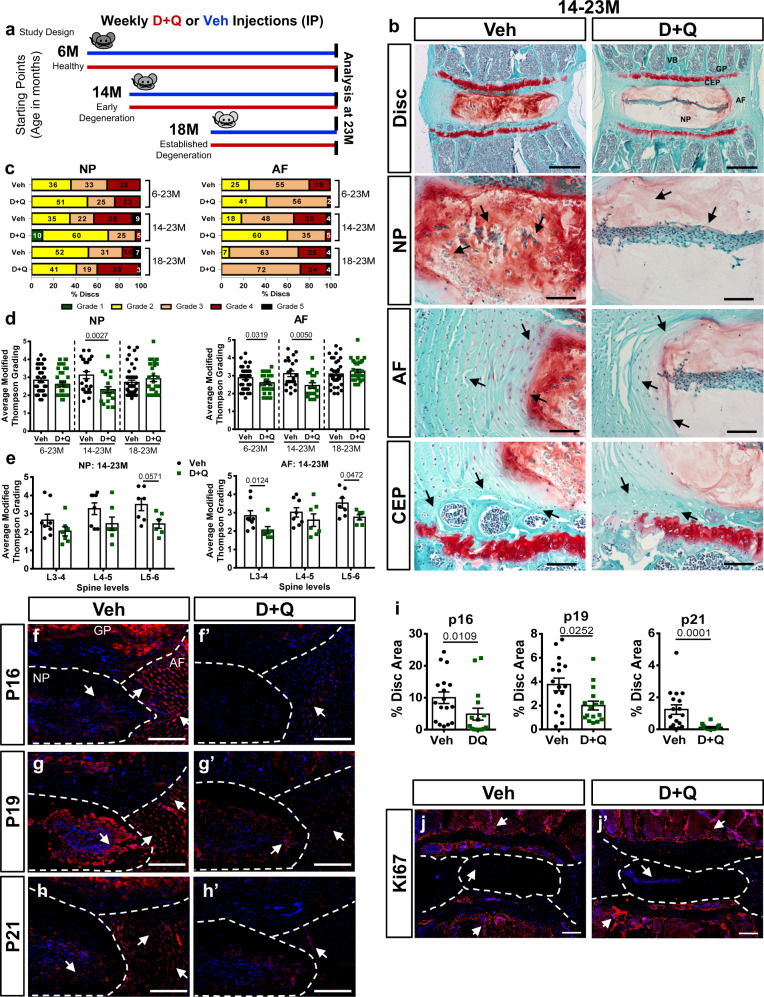
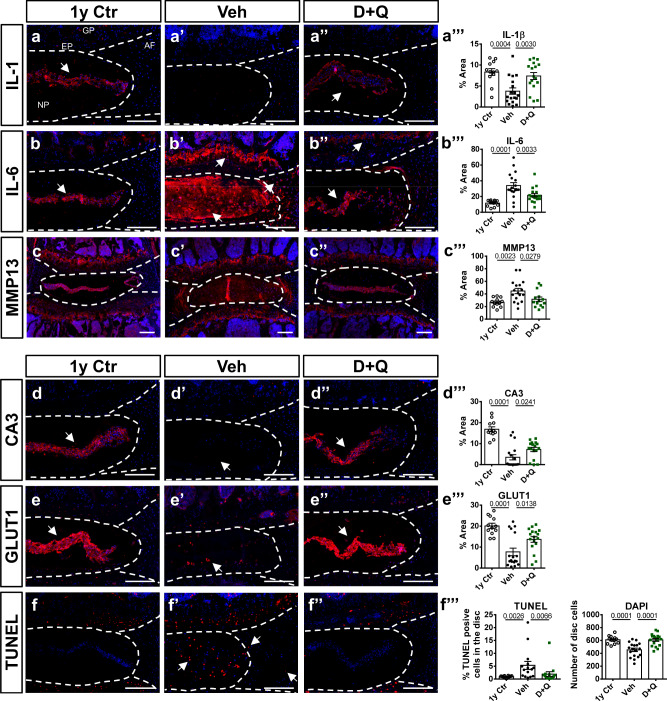
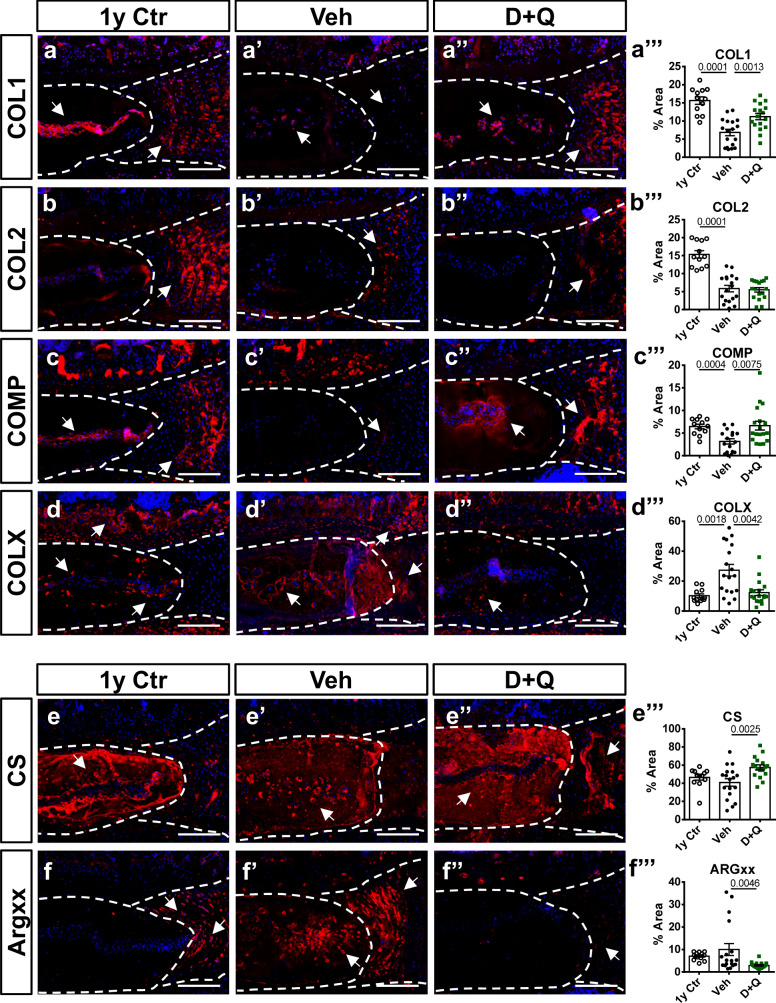
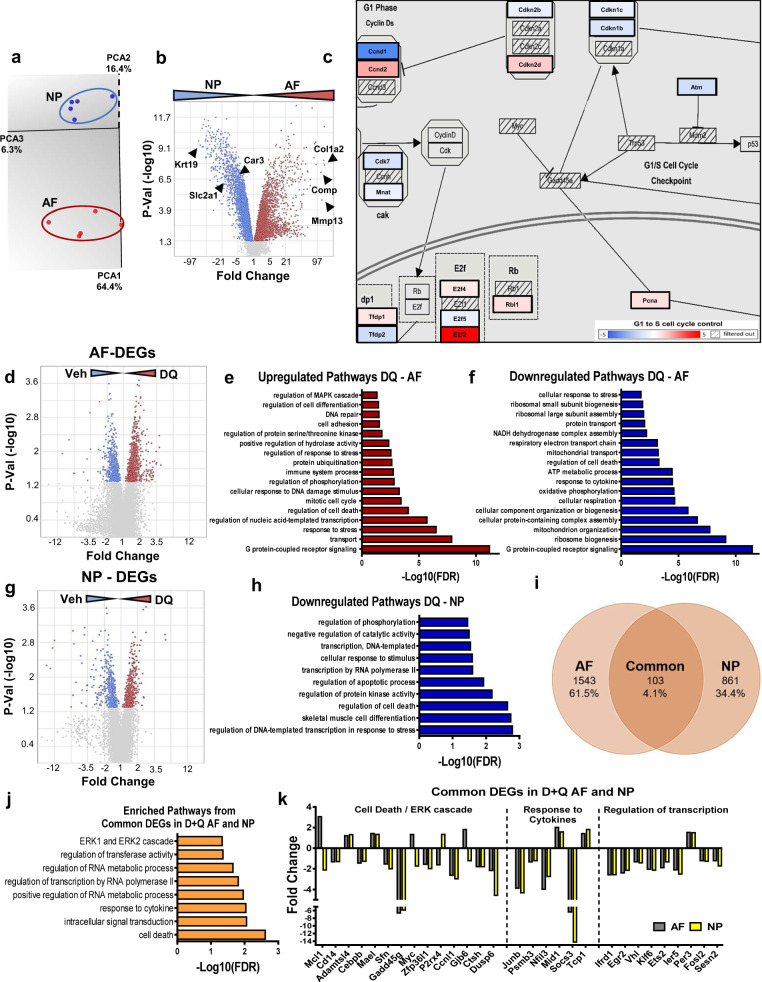
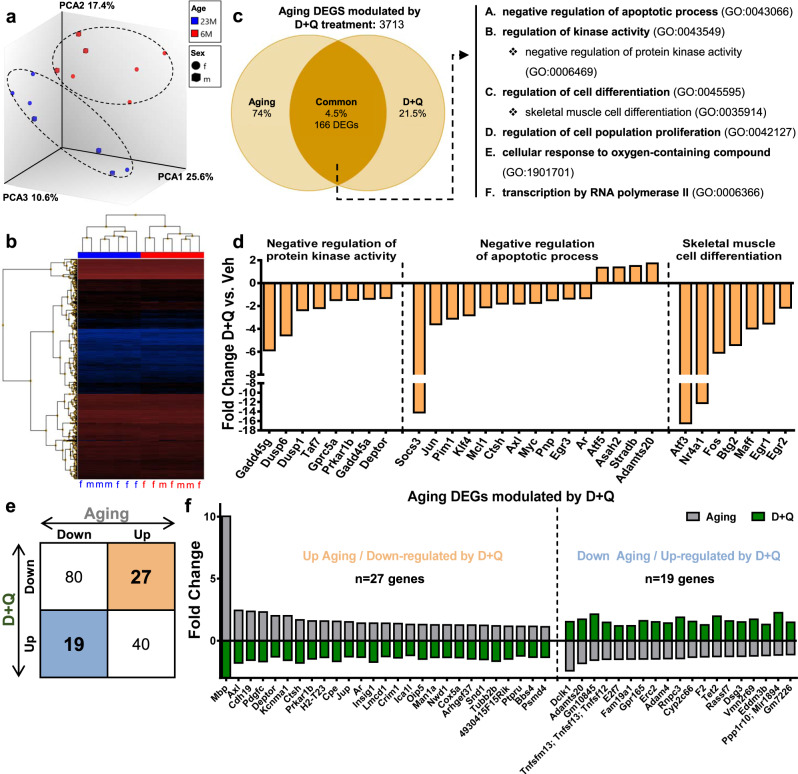
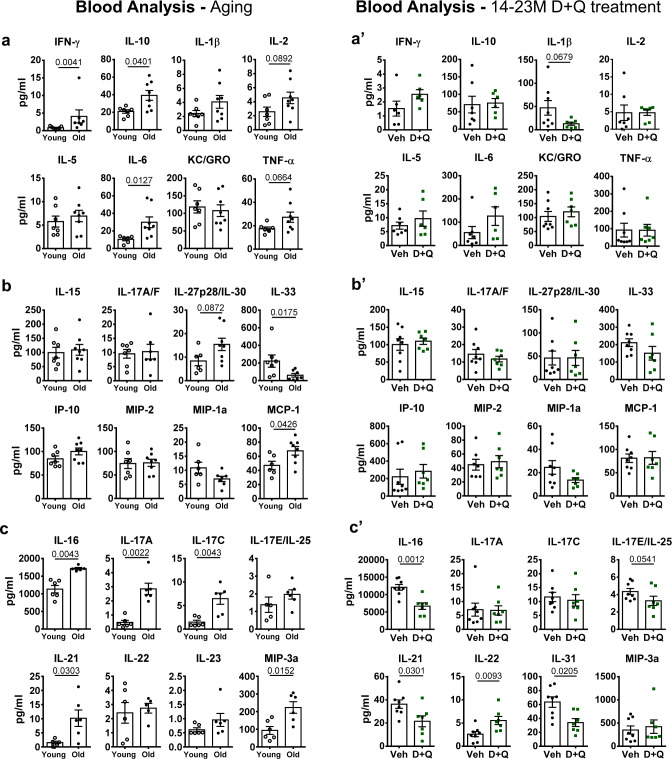
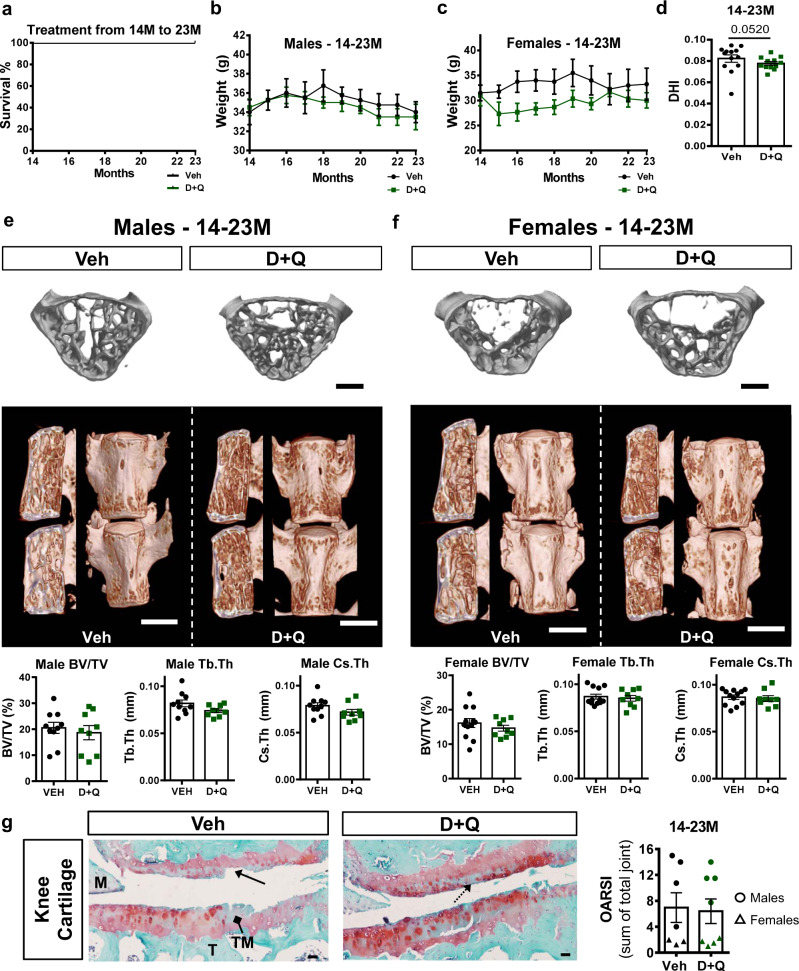
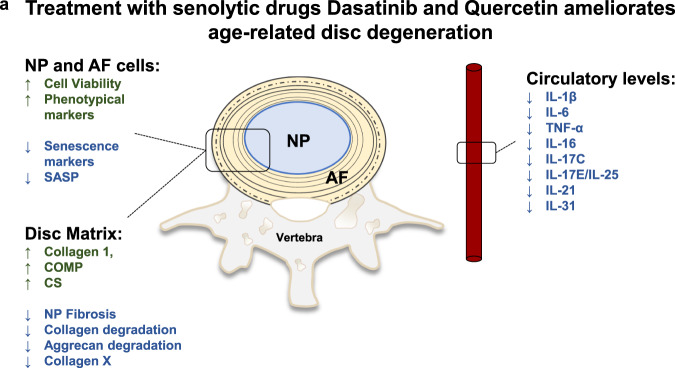
Intervertebral disc degeneration is highly prevalent within the elderly population and is a leading cause of chronic back pain and disability. Due to the link between disc degeneration and senescence, we explored the ability of the Dasatinib and Quercetin drug combination (D + Q) to prevent an age-dependent progression of disc degeneration in mice. We treated C57BL/6 mice beginning at 6, 14, and 18 months of age, and analyzed them at 23 months of age. Interestingly, 6- and 14-month D + Q cohorts show lower incidences of degeneration, and the treatment results in a significant decrease in senescence markers p16 INK4a , p19 ARF , and SASP molecules IL-6 and MMP13. Treatment also preserves cell viability, phenotype, and matrix content. Although transcriptomic analysis shows disc compartment-specific effects of the treatment, cell death and cytokine response pathways are commonly modulated across tissue types. Results suggest that senolytics may provide an attractive strategy to mitigating age-dependent disc degeneration.
Overview
The claims and statistics of this paper haven’t been checked yet.
Free: it reads the open-access text and checks the first 5 claims that cite a source we can check. Create a free account to check every claim.
Integrity signals
Registry
Cites
Statistics
Figures
Verification
Claims the paper makes
The claims and statistics of this paper haven’t been checked yet.
Free: it reads the open-access text and checks the first 5 claims that cite a source we can check. Create a free account to check every claim.
Claims other papers make about this one
Each is checked against this paper’s own text: does it say what the citing paper says it does?
The source backs part of the claim, not all of it — or backs it for a different population, condition or comparison.
In the citing paper
“Consistent with this notion, the administration of dasatinib and quercetin (D+Q), a well-studied senolytic cocktail, in subjects with diabetic kidney disease reduced senescent cell numbers and circulating levels of SASP factors, such as IL-1α and IL-6 (20, 40–45).”
From Connecting aging biology and inflammation in the omics era (2022) · cites this paper as [44]
Experimental — accuracy not yet measuredThe source backs part of the claim, not all of it — or backs it for a different population, condition or comparison.
In the citing paper
“In several mouse experiments, the treatment alleviated inflammation342 and age-related diseases of the intestines343 and bone.344”
From Inflammation and aging: signaling pathways and intervention therapies (2023) · cites this paper as [344]
Experimental — accuracy not yet measuredThe cited source says what the claim attributes to it.
In the citing paper
“treatment with a senolytic therapy mitigated age-dependent disc degeneration122”
From Telomere dysfunction in ageing and age-related diseases (2022) · cites this paper as [122]
Self-check
Percentages, sums and reported differences re-computed from the paper’s own numbers.
The self-check needs the paper’s full text.
Citations
Cites
James, S. L., Abate, D., Abate, K. H., Abay, S. M., Abbafati, C., Abbasi, N., Abbastabar, H., Abd-Allah, F., Abdela, J., Abdelalim, A., et al. (2018) · The Lancet · doi:10.1016/s0140-6736(18)32279-7 · Cited by 13,867
Vos, T., Abajobir, A. A., Abate, K. H., Abbafati, C., Abbas, K. M., Abd-Allah, F., Abdulkader, R. S., Abdulle, A. M., Abebo, T. A., Abera, S. F., et al. (2017) · The Lancet · doi:10.1016/s0140-6736(17)32154-2 · Cited by 13,220
The senescence-associated secretory phenotype: the dark side of tumor suppression
Coppé, J.-P., Desprez, P.-Y., Krtolica, A., & Campisi, J. (2010) · Annual Review of Pathology: Mechanisms of Disease · doi:10.1146/annurev-pathol-121808-102144 · Cited by 5,206
Cellular senescence: from physiology to pathology
Muñoz-Espín, D., & Serrano, M. (2014) · Nature Reviews Molecular Cell Biology · doi:10.1038/nrm3823 · Cited by 2,818
The Achilles' heel of senescent cells: from transcriptome to senolytic drugs
Zhu, Y., Tchkonia, T., Pirtskhalava, T., Gower, A. C., Ding, H., Giorgadze, N., Palmer, A. K., Ikeno, Y., Hubbard, G. B., Lenburg, M., et al. (2015) · Aging Cell · doi:10.1111/acel.12344 · Cited by 2,584
Senolytics improve physical function and increase lifespan in old age
Xu, M., Pirtskhalava, T., Farr, J. N., Weigand, B. M., Palmer, A. K., Weivoda, M. M., Inman, C. L., Ogrodnik, M. B., Hachfeld, C. M., Fraser, D. G., et al. (2018) · Nature Medicine · doi:10.1038/s41591-018-0092-9 · Cited by 2,287
Clearance of senescent cells by ABT263 rejuvenates aged hematopoietic stem cells in mice
Chang, J., Wang, Y., Shao, L., Laberge, R.-M., Demaria, M., Campisi, J., Janakiraman, K., Sharpless, N. E., Ding, S., Feng, W., et al. (2016) · Nature Medicine · doi:10.1038/nm.4010 · Cited by 1,819
Kraus, V. B., Huebner, J. L., DeGroot, J., & Bendele, A. (2010) · Osteoarthritis and Cartilage · doi:10.1016/j.joca.2010.04.015 · Cited by 1,771
Senescence in Health and Disease
He, S., & Sharpless, N. E. (2017) · Cell · doi:10.1016/j.cell.2017.05.015 · Cited by 1,766
Molecular targets of dietary agents for prevention and therapy of cancer
Aggarwal, B. B., & Shishodia, S. (2006) · Biochemical Pharmacology · doi:10.1016/j.bcp.2006.02.009 · Cited by 1,754
Cited by
Items 201–300 of 469
Gu, W., Wan, R., Chen, Z., Wang, W., Xie, S., Hao, C., Liu, G., Wan, M., & Gao, P. (2026) · EBioMedicine · doi:10.1016/j.ebiom.2026.106226 · Cited by 13
Targeted delivery strategy: A beneficial partner for emerging senotherapy
Zhang, Q., Li, S., Chen, F., Zeng, R., & Tong, R. (2022) · Biomedicine & Pharmacotherapy · doi:10.1016/j.biopha.2022.113737 · Cited by 15
Paul, D., & Nedelcu, A. M. (2022) · Frontiers in Oncology · doi:10.3389/fonc.2022.1040034 · Cited by 11
Natural Products in Aging: Cellular Mechanisms and Emerging Therapeutics for Age‐Related Disorders
Dixit, V., Chaubey, K. K., Dayal, D., Chole, P. B., Manjunath, B. T., Bachheti, R. K., Gupta, P. C., Bachheti, A., & Worku, L. A. (2025) · Journal of Aging Research · doi:10.1155/jare/6868732 · Cited by 12
Gene therapy strategies for aging intervention
Jing, Y., Ren, J., Qu, J. T., & Liu, G. (2025) · Cell Insight · doi:10.1016/j.cellin.2025.100254 · Cited by 11
“For example, the combination of dasatinib and quercetin (D + Q) effectively reduces senescent cell burden, restoring vitality in aged mice (Chaib et al., 2022; Novais et al., 2021).”
Chen, Y., Xue, C., Ni, F., Hu, B., Yan, M., Zhang, H., Hu, Y., Peng, X., Li, G., Yu, H., et al. (2025) · Advanced Functional Materials · doi:10.1002/adfm.202422817 · Cited by 11
Ma, L., Han, Y., Chen, Z., Liu, X., Wang, Y., Wang, Z., Xiang, W., (29537), L. L., Jin, X., Hou, J., et al. (2025) · Science Advances · doi:10.1126/sciadv.adw1553 · Cited by 11
“Other studies have shown that the senolytic combination of dasatinib and quercetin reduces the number of senescent cells in aged mice ( 50, 51 ) and demonstrates the feasibility of treating cancer through senolytic therapy ( 52 ).”
Wu, D., Chen, Y., Han, L., Li, F., Xu, X., Sun, J., Cao, Y. B., Sun, K., Shi, J., & Wang, Y. (2025) · Journal of Nanobiotechnology · doi:10.1186/s12951-025-03579-5 · Cited by 12
“Additionally, chemical control of senescence using seno-lytic drugs—specifically a combination of Dasatinib and Quercetin—has been found to ameliorate age-dependent IVDD in mice [11].”
Mehdipour, M., Thakkar, V., & Chang, S. J. (2025) · GeroScience · doi:10.1007/s11357-025-01882-5 · Cited by 12
“In addition, long-term D&Q treatment was shown to ameliorate intervertebral disc degeneration in aged mice [162].”
GSDME-dependent pyroptosis drives abdominal aortic aneurysm via promoting vascular senescence
Sun, S.-J., Zhang, Z., Zhang, G., Wu, J., Zhang, Y.-X., Wu, W., Zhang, Y., Yin, H. H., Zhang, J., Cao, Q., et al. (2025) · Nature Communications · doi:10.1038/s41467-025-66103-1 · Cited by 12
Wang, Y., Tseng, Y., Chen, K., Wang, X., Mao, Z., & Li, X. (2022) · Journal of Functional Biomaterials · doi:10.3390/jfb14010006 · Cited by 11
“Several studies have shown that D+Q can reduce the senescence burden, decrease the expression of SASP-related markers, and subsequently alleviate disease progression, such as ischemic nephropathy, age-dependent intervertebral disc degeneration, and insulin resistance [16,26,27].”
BackgroundHua, K., Li, L.-H., Yu, H.-C., Wong, W.-T., & Hsu, H.-T. (2023) · Journal of Inflammation Research · doi:10.2147/jir.s431026 · Cited by 11
Lin, X., Zhang, K., Li, C., Liu, K., Sun, Y., Wu, W., Liu, K., Yi, X., Wang, X., Qu, Z., et al. (2024) · European Journal of Pharmacology · doi:10.1016/j.ejphar.2024.176631 · Cited by 14
Wang, X., Wang, Q., Li, G., Xu, H., Liu, B., Yuan, B., Zhou, Y., & Li, Y. (2024) · Journal of Cellular and Molecular Medicine · doi:10.1111/jcmm.18492 · Cited by 12
“Furthermore, Novais et al. 27 demonstrated that the dasatinib and quercetin drug combination could inhibit age-dependent IVDD development in mice and conducted microarray analysis.”
BackgroundWu, J., Zhang, L., Zhao, Z., Liu, Y., Li, Z., Feng, X., Zhang, L., Yao, X., Du, J., Chen, L., et al. (2025) · Ageing Research Reviews · doi:10.1016/j.arr.2025.102783 · Cited by 10
Beyond Traditional Medicine: EVs-Loaded Hydrogels as a Game Changer in Disease Therapeutics
Du, S., Zhou, X., & Zheng, B. (2024) · Gels · doi:10.3390/gels10030162 · Cited by 11
Fu, Y., Lan, Z., Li, N., Xing, L., Yuan, L., Lai, J., Feng, H., Cong, L., Wang, Y., He, S., et al. (2024) · Osteoarthritis and Cartilage · doi:10.1016/j.joca.2024.08.007 · Cited by 11
Liang, Z.-H., Song, J., Shangguan, W.-J., Zhang, Q.-Q., Shao, J., & Zhang, Y.-H. (2024) · American Journal of Physiology-Cell Physiology · doi:10.1152/ajpcell.00630.2023 · Cited by 11
Cellular senescence in age-related musculoskeletal diseases
Xiong, J., Guo, Q., & Luo, X. (2025) · Frontiers of Medicine · doi:10.1007/s11684-025-1125-7 · Cited by 10
Tang, H., Zhang, X., Hu, S., Song, Y., Jin, W., Zou, J., Zhang, Y., Guo, J., An, P., Luo, J., et al. (2025) · Targets · doi:10.3390/targets3030023 · Cited by 13
“In contrast to medicine that is taken continuously, senolytics can be used intermittently to reduce off-target or other side effects because many of them are able to work independently of their age-clearing properties when administered continuously [8,61,62].”
Chen, W., Zhao, T., Ren, Y., Huang, W., Xia, J., Hu, Z., Chen, L., Li, H., Zhang, Q., Wang, H., et al. (2025) · Materials Today Bio · doi:10.1016/j.mtbio.2025.102200 · Cited by 12
Liu, W., Fan, B., Fang, T., Li, H., Zhang, J., Liu, B., & Liu, Z. (2025) · Acta Pharmaceutica Sinica B · doi:10.1016/j.apsb.2025.08.010 · Cited by 10
“In the skeletal system, prolonged combination therapy with dasatinib and quercetin (D + Q) improved age-related disc degeneration in mice and significantly ameliorated post-menopausal osteoporosis while restoring mesenchymal stem cell function 45,46 .”
Pan, X., Ding, Y., Han, H., Chen, S., Liu, H., Zhou, H., Li, C., Yang, Z., Li, G., & Jin, L. (2026) · Journal of Nanobiotechnology · doi:10.1186/s12951-026-04074-1 · Cited by 11
“To overcome these limitations, quercetin-a natural polyphenol with potent antioxidant and anti-inflammatory properties-was introduced to engineer kiwifruit EVs (KEVs-Q), enhancing their ability to suppress pro-inflammatory signaling and restore immune balance [17].”
Florian-Rodriguez, M. E., Hare, A. M., Gaddam, N. G., Shi, H., Keller, P., & Word, R. A. (2022) · Urogynecology · doi:10.1097/spv.0000000000001131 · Cited by 10
“Dasatinib is a kinase inhibitor and quercetin acts by binding to BCL-2 and modulating transcription factors, cell cycle, and apoptotic proteins.(20) In animal models, senolytics have been shown to alleviate a range of conditions, including atherosclerosis, pulmonary fibrosis, and frailty.”
BackgroundCellular Senescence and Senolytic Agents: Recent Updates on Their Role and Applications
Chandrakar, L., Ambatwar, R., & Khatik, G. L. (2023) · Current Topics in Medicinal Chemistry · doi:10.2174/0115680266273698231107110956 · Cited by 11
Manavi, Z., Melchor, G. S., Bullard, M. R., Gross, P. S., Ray, S., Gaur, P., Baydyuk, M., & Huang, J. K. (2025) · Journal of Neuroinflammation · doi:10.1186/s12974-025-03425-3 · Cited by 10
“However, when immune-mediated clearance of senescent cells (SCs) fails to take place, SCs accumulate, leading to aging [7] and age-related conditions such as cardiovascular disease [60], osteoarthritis [61], diabetes [62], and disc degeneration [57] among others.”
Association of dyslipidemia with intervertebral disc degeneration: a case–control study
Tan, B., Xiang, S., Zheng, Y., Ouyang, J., & Zhou, N. (2025) · European journal of medical research · doi:10.1186/s40001-025-02455-0 · Cited by 9
Zhang, Z., Cao, F., Liang, D., Pan, M., Lu, W. W., Lyu, H., Xie, Y., Zhang, L., & Tang, P. (2025) · Journal of Orthopaedic Translation · doi:10.1016/j.jot.2025.04.018 · Cited by 12
When therapy-induced senescence meets tumors: A double-edged sword: A review
Liu, K., Huang, H., Zhang, M., Chen, S., Yang, Y., Fang, C., & Zhong, X. (2025) · Medicine · doi:10.1097/md.0000000000042886 · Cited by 14
Scieszka, D. P., Hulse, J. P., Gu, H., Barkley‐Levenson, A. M., Barr, E., Garcia, M. A., Begay, J., Herbert, G., McCormick, M. A., Brigman, J. L., et al. (2025) · Particle and Fibre Toxicology · doi:10.1186/s12989-025-00639-4 · Cited by 9
Emerging Therapeutic Strategies in Anti‐Aging Medicine: A Comprehensive Review
Peng, Y., Li, R., Li, H., Zhou, J., Liu, X., Valente, G. T., Melo, T. D. C., Chen, S., & 顾镭 (2026) · Medicine Bulletin · doi:10.1002/mdb2.70021 · Cited by 12
Lin, Q., Zhang, Y., Hong, W., Miao, H., Dai, J., & Sun, Y. H. (2022) · European Journal of Pharmacology · doi:10.1016/j.ejphar.2022.175347 · Cited by 9
Rusu, B., Kukreja, B., Wu, T., Dan, S. J., Feng, M. Y., & Kalish, B. T. (2023) · eNeuro · doi:10.1523/eneuro.0147-23.2023 · Cited by 10
Yang, S., Jing, S., Wang, S., & Jia, F. (2024) · Frontiers in Cellular and Infection Microbiology · doi:10.3389/fcimb.2024.1303645 · Cited by 12
Sao, K., & Risbud, M. V. (2023) · Matrix Biology · doi:10.1016/j.matbio.2024.05.006 · Cited by 9
Self-citationChen, M., Li, F., Qu, M., Jin, X., He, T., He, S., Chen, S., Yao, Q., Wang, L., Chen, D., et al. (2024) · Aging Cell · doi:10.1111/acel.14237 · Cited by 10
Pharmacological Therapies for Connective Tissue Fibrosis in Orthopaedics
Disser, N. P., Yu, J. S. C., Yao, V. J. H., & Rodeo, S. A. (2022) · The American Journal of Sports Medicine · doi:10.1177/03635465221116358 · Cited by 9
“As a member of the class of ‘‘antisenolytic’’ drugs, quercetin also has the ability to remove senescent cells and reduce the subsequent inflammatory response.(41,60) Preclinical studies have shown positive effects of quercetin in reducing inflammation in musculoskeletal tissues, although evidence is limited.”
BackgroundGuo, M., Zeng, J., Sun, Z., Wu, X., & Hu, Z. (2023) · ChemistrySelect · doi:10.1002/slct.202303167 · Cited by 10
Baicalin alleviates intervertebral disc degeneration by inhibiting the p38 MAPK signaling pathway
Wu, Y., Li, F., Shu, S., Feng, Z., Qiu, Y., Li, S., & Zhu, Z. (2025) · Experimental Gerontology · doi:10.1016/j.exger.2025.112743 · Cited by 9
“A recent investigation into chronic pathologies has identified low back pain as the leading contributor to disability (Novais et al., 2021), and IVDD is thought to be the primary etiological factor (Binch et al., 2021).”
MRI detection of senescent cells in porcine knee joints with a β-galactosidase responsive Gd-chelate
Nernekli, K., Mangarova, D. B., Suryadevara, V., Hajipour, M., Tang, J., Wang, J., Liang, T., Harris, M., Ueyama, T., Lyons, J. K., et al. (2025) · npj Imaging · doi:10.1038/s44303-025-00078-y · Cited by 8
“Novais et al. explored the ability of Dastinib and Quercetin drug combination(D + Q)toreduceintervertebraldiscdegenerationinmice 51 .”
Rademacher, D. J., Exline, J. E., & Foecking, E. M. (2025) · Biomedicines · doi:10.3390/biomedicines13061400 · Cited by 10
“The potential long-term side effects of senolytics and senomorphics remain unclear as, to date, these compounds have been administered to mice for a short duration, ranging from 3 to 6 months [336].”
Zhou, R., Wang, X., Jin, Y., Chen, B., Liu, H., Zhao, X., Jing, D., & Zhao, B. (2025) · Free Radical Biology and Medicine · doi:10.1016/j.freeradbiomed.2025.08.049 · Cited by 8
Chen, S., Han, H., Zhang, Y., Li, L., Wang, Z., Zhang, J., Han, L., Kou, H., Shang, G., Shang, C., et al. (2025) · Advanced Science · doi:10.1002/advs.202513645 · Cited by 8
Kang, Y., Li, M., Hu, B., Lv, Y., Du, J., Zhang, D. C., Zhou, H., & Feng, S. (2026) · Inflammation · doi:10.1007/s10753-025-02429-8 · Cited by 8
“In contrast, genetic or pharmacological ablation of these cells has been shown to attenuate degeneration [25, 26].”
Zhou, Z., Qin, W., Zhang, P., He, J., Cheng, Z., Gong, Y., Zhu, G., Liang, D., Ren, H. J., Jiang, X., et al. (2023) · BMC Musculoskeletal Disorders · doi:10.1186/s12891-023-06891-z · Cited by 8
“Reduced abundance and quality of extracellular matrix (ECM) are hallmark features of disc degeneration [5].”
BackgroundFan, C., Du, J., Yu, Z., Wang, J., Yao, L., Ji, Z., He, W., Deng, Y., Geng, D., Wu, X., et al. (2024) · International Immunopharmacology · doi:10.1016/j.intimp.2024.111904 · Cited by 8
Insights and Interventions in Age-Associated Inflammation
Huang, H., Ren, J., & Liu, G. (2025) · Current Opinion in Genetics & Development · doi:10.1016/j.gde.2024.102306 · Cited by 8
Liu, J., Lin, X., McDavid, A., Yang, Y., Zhang, H., Boyce, B. F., & Xing, L. (2023) · Frontiers in Endocrinology · doi:10.3389/fendo.2023.1090049 · Cited by 9
“Unlike consistent reports of beneficial effects of senolytic drugs in fracture healing (38, 39), conflicting findings have been reported for inflammatory drugs (NSAIDs) in fracture healing, despite their analgesic potency being well established (40).”
BackgroundMladenova, S. G., Todorova, M. N., Savova, M. S., Georgiev, M. I., & Mihaylova, L. V. (2023) · International Journal of Molecular Sciences · doi:10.3390/ijms242417442 · Cited by 8
“…combining approved medicines with bioactive compounds of natural origin that aims to produce additive pharmacological effects, such as in the case of the dasatinib and quercetin senolytic combination that is under clinical evaluation for musculoskeletal disorders [56–58], has begun to be studied.”
BackgroundAdvances in Cutaneous Melanoma Therapy: The Emerging Role of CDK4/6 Inhibitors
Kim, U., McCormick, T. S., Mangla, A., Cooper, K. D., Schwartz, G. K., & Yoshida, A. (2025) · Pharmacological Research · doi:10.1016/j.phrs.2025.107955 · Cited by 9
“Dasatinib/Quercetin are senolytic drugs that reduce age-dependent intervertebral disc degeneration and adipose tissue inflammation in aged mice[205–207].”
Yao, B., Wan, L., Deng, J. H., Chen, Z., Zhao, L., Wang, W., & Han, Z. (2025) · Cell Biology and Toxicology · doi:10.1007/s10565-025-10093-9 · Cited by 7
“Functional assessments including forelimb grip strength testing (Novais et al. 2021), mechanical testing (Burt et al. 2024), magnetic resonance imaging (MRI) analysis, and disc height index (DHI) calculations (Cheng et al. 2025) would strengthen the study’s validity.”
Xia, P., Zheng, J., Han, Z., Chen, Y., Xu, L., Yu, J., Ye, X., & Cui, W. (2026) · Nature Communications · doi:10.1038/s41467-026-71513-w · Cited by 7
Musculoskeletal imaging of senescence
Daldrup-Link, H. E., Suryadevara, V., Tanyildizi, Y., Nernekli, K., Tang, J., & Meade, T. J. (2024) · Skeletal Radiology · doi:10.1007/s00256-024-04585-8 · Cited by 7
Assessing the Effects of Dasatinib on Mesenchymal Stem/Stromal Cells
Heinrichs, D. P., Maldonado, V. V., Ardana, I. K. K., Porter, R. M., & Samsonraj, R. M. (2024) · Cellular and Molecular Bioengineering · doi:10.1007/s12195-024-00830-1 · Cited by 8
“More specifically, dasatinib is a Src/tyrosine kinase inhibitor that interferes with members of the ephrin survival-regulating dependence receptors (ENFB), and appears to exhibit specificity in terms of clearing senescent preadipocytes [16, 17].”
Shang, L., Ma, H., Zhang, X., Mao, R., Ma, C., & Ruan, Z. (2023) · Clinical and Experimental Pharmacology and Physiology · doi:10.1111/1440-1681.13757 · Cited by 7
Zhang, K., Yin, Q., Ma, Y. F., Cao, M., Li, L., Jin, X. M., & Leng, J. (2025) · Human Vaccines & Immunotherapeutics · doi:10.1080/21645515.2025.2479229 · Cited by 7
“5,6 For instance, senescent cells gradually build up in the adipose tissue of aging mice, and the removal of these senescent cells from adipose tissue helps to mitigate the onset of metabolic abnormalities associated with aging.”
Correa‐de‐Araujo, R., & Bhasin, S. (2022) · The Journals of Gerontology Series A · doi:10.1093/gerona/glac181 · Cited by 7
Liu, M., Duan, X., & Lou, C. (2025) · International Immunopharmacology · doi:10.1016/j.intimp.2025.115654 · Cited by 6
Wang, X., Zhong, W.-J., Li, J.-M., Wang, D., Chen, S., Miao, J., Shen, W., Li, X.-L., Huang, J., Zhou, S., et al. (2025) · Military Medical Research · doi:10.1186/s40779-025-00669-1 · Cited by 6
“These compounds have been shown to effectively eliminate senescent cells in various tissues [32, 47], but their efficacy in peritoneal fibrosis has not been evaluated till now.”
Mechanistic Links Between the Gut Microbiome and Longevity Therapeutics
Garzon-Escamilla, N., Medina-Cardena, M., Roy, P., Trent, J., Jamous, J., Somesan, Y., & Denslow, S. (2026) · Biomedicines · doi:10.3390/biomedicines14020316 · Cited by 7
“These intestinal effects align with findings in other tissues, such as the intervertebral disc, where sustained D+Q treatment preserves structural integrity and reduces senescence markers [164].”
Tamagawa, S., Schol, J., Ambrosio, L., Nojiri, H., Ishijima, M., & Sakai, D. (2026) · Neurospine · doi:10.14245/ns.26420332.0166 · Cited by 7
“72-74 OS is a primary upstream activator of major proinflammatory transcription factor pathways. the aforementioned NF-κ B pathway and MAPK, promotes the massive transcription of proinflammatory cytokines and catabolic enzymes, such as inducible nitric oxide synthase, cyclooxygenase-2, and…”
Guan, Z., Li, X., Chen, Y., Sheng, Z., Wen, J., Zhou, H., Chen, C., Liu, J., Zhu, G., Pang, Z., et al. (2026) · Bone Research · doi:10.1038/s41413-026-00541-5 · Cited by 6
“33,34 Consistent with the population-level fi ndings, Akk abundance was signi fi cantly lower in the feces of 21-month-old mice compared to 6-month-old counterparts (Fig.”
Johnston, S. N., Tsingas, M., Ain, R., Barve, R. A., & Risbud, M. V. (2024) · Frontiers in Cell and Developmental Biology · doi:10.3389/fcell.2024.1360376 · Cited by 6
Self-citationFan, W., Qian, Z., Song, G., Wang, K., Galbusera, F., Ren, L., Wilke, H., & Ren, L. (2024) · Advanced Functional Materials · doi:10.1002/adfm.202414275 · Cited by 6
Detection of quercetin and aluminum ion based on fluorescent polydopamine organic nanoparticles
Chen, L., Chen, C., Cui, Z., Ji, C., Yang, L., Yan, Y., Xie, C., & Liu, R. (2025) · Microchemical Journal · doi:10.1016/j.microc.2025.113320 · Cited by 6
Nano-encapsulated senolytic cocktail attenuates germ cell senescence in female mice
Guan, Y., Deng, S., Zou, X., Wei, W., Li, Z., Zhong, J., Zhu, Y., Zhang, D., Ju, Y., Sun, Q., et al. (2025) · Cellular and Molecular Life Sciences · doi:10.1007/s00018-025-05697-7 · Cited by 6
“It was previously reported that the D + Q combination ameliorated age-related conditions, such as hepatic steatosis and intervertebral disc degeneration, and also extended lifespans in mice [30, 31, 42].”
SLC38A9 is directly involved in Tat-induced endolysosome dysfunction and senescence in astrocytes
Rezagholizadeh, N., Datta, G., Hasler, W. A., Nguon, E. C., Smokey, E. V., Khan, N., & Chen, X. (2025) · Life Science Alliance · doi:10.26508/lsa.202503231 · Cited by 6
The adverse effects of chemotherapy on bone mass are not prevented by senolytics
Ali, M. M., Simmons, P., Warren, A. D., Gatrell, L. B., Resende-Coelho, A., McElroy, T., Allen, A. R., & Almeida, M. (2025) · Scientific Reports · doi:10.1038/s41598-025-01717-5 · Cited by 6
“As in other tissues, the number of senescent cells increases in the aged skeleton including bone, joints, and intervertebral discs 41,42 .”
Senolytic Interventions for Type 2 Diabetes: Current Evidence and Future Directions
Sodini, S., & Suárez‐Ortegón, M. F. (2025) · Diabetology · doi:10.3390/diabetology6060048 · Cited by 6
“Dasatinib and quercetin (D + Q) combined treatment improved glucose metabolism, reduced adipose tissue inflammation, and alleviated metabolic dysfunction in obesity-related diabetes preclinical models [67] by significantly decreasing senescent markers [68].”
Chemical Recording of Pump‐Specific Drug Efflux in Living Cells
Sun, X., Chen, Y., Chen, Y., Yang, S., Lin, W., Quan, B., Pan, X., Ding, Q., Chen, X., Wang, C., et al. (2024) · Angewandte Chemie International Edition · doi:10.1002/anie.202409282 · Cited by 7
Guo, J., Xue, J., He, Z., Jia, H., & Yang, X. (2023) · Journal of Orthopaedic Surgery and Research · doi:10.1186/s13018-023-04014-x · Cited by 6
“Abbreviations IDD Intervertebral disc degeneration PPI Protein‒protein interaction GO Gene ontology KEGG Kyoto Encyclopedia of Genes and Genomes ECM Extracellular matrix LBP Low back pain IVD Intervertebral disc NP Nucleus pulposus AF Annulus fibrosus CEP Cartilage endplate TCM Traditional Chinese Medicine TMM Traditi…”
BackgroundInfluentialInvestigating the bidirectional interactions between senotherapeutic agents and human gut microbiota
Sangfuang, N., Xie, Y., McCoubrey, L. E., Taub, M., Favaron, A., Mai, Y., Gaisford, S., & Basit, A. W. (2025) · European Journal of Pharmaceutical Sciences · doi:10.1016/j.ejps.2025.107098 · Cited by 5
“Key investigatory senolytics include the flavonoids, quercetin (Q) and fisetin (F), and the pan-tyrosine kinase inhibitor, dasatinib (D) (Novais et al., 2021).”
Mid-life: a critical window for intervention during aging
de Carvalho, E. L. (2025) · doi:10.32948/ajsep.2025.01.08 · Cited by 5
Zhang, S., Yan, M., Lv, X., Wang, P., Liu, W., Hu, B., Chen, S., & Shao, Z. (2025) · International Journal of Nanomedicine · doi:10.2147/ijn.s482646 · Cited by 5
Yuan, W., Ji, G., Wang, X., Li, W., Sun, Z., Wei, Z., Shi, X., & Hu, H. (2025) · Journal of Agricultural and Food Chemistry · doi:10.1021/acs.jafc.4c12006 · Cited by 5
Qu, M., Liu, Y., Yang, G., & Xing, H. (2025) · Biochemical and Biophysical Research Communications · doi:10.1016/j.bbrc.2025.152400 · Cited by 5
Therapeutic effects of PDGF-AB/BB against cellular senescence in human intervertebral disc
Zhang, C., Díaz‐Hernández, M. E., Fukunaga, T., Shenoy, S. P. V., Yoon, S. T., Haglund, L., & Drissi, H. (2025) · eLife · doi:10.7554/elife.103073.3 · Cited by 7
Plasma Pro‐ and Anti‐Inflammatory Cytokines in an Observational Chronic Low Back Pain Cohort
Enrico, V. T., Anderst, W. J., Bell, K. M., Coelho, J. P., Darwin, J., Delitto, A., Greco, C. M., Lee, J. Y., McKernan, G., Patterson, C. G., et al. (2025) · JOR Spine · doi:10.1002/jsp2.70095 · Cited by 6
Guan, Y., Bai, X., Li, C., Zhang, Z., He, Q., Chen, L., Xie, Y., & Wang, Z. (2025) · Genes & Diseases · doi:10.1016/j.gendis.2025.101871 · Cited by 6
“152 Quercetin, a natural flavonol, inhibits the phosphatase and tensin homolog (PTEN)/PI3K/ AKT signaling pathway, reducing the viability of senescent cells.”
Jin, C., Xu, X., Yao, N., Zhang, H., Chen, C. F., Zeng, L., Liu, Z., Lei, L., Cui, S., Wen, C., et al. (2025) · Nature Communications · doi:10.1038/s41467-025-67364-6 · Cited by 6
“…ammation, cell death, oxidant stress and cell senescence pathways, correlating well with TUNEL and SASP results, These fi ndings are in line with recent reports of the mechanism of canonical senolytics involving DQ 47,58,59 and further support the senescence-targeting function of the nanosenolytics.”
Meng, B., Qu, Y., Yang, B., Fu, C., He, Y., Li, J., Wan, R., Li, X., Xue, Z., Cao, Z., et al. (2026) · Nature Biomedical Engineering · doi:10.1038/s41551-025-01584-5 · Cited by 6
Zhang, J., Li, X., Wang, P., Liu, X., Guo, W., Si, J., Huo, Q., Xu, M., Liu, Y., & Niu, Y. (2026) · ACS Nano · doi:10.1021/acsnano.5c15543 · Cited by 5
Yu, Q., Zhu, Z., Wang, Y., Duan, Y., Liu, C., Hong, Y., Sun, H., Yuan, Z., Ji, W., Yang, Q., et al. (2026) · Bioactive Materials · doi:10.1016/j.bioactmat.2026.02.021 · Cited by 9
“Conversely, the expression of genes known to exert protective roles in IVDD (e.g., Sod3 , Ibsp , and Foxf1 ) was markedly downregulated [28 – 30].”
Hou, J., Chen, K.-X., Xiao, Q.-N., Hu, C., Wei, J., Jiang, Y.-Z., Liu, L., He, C., Huang, M., Jiao, Y., et al. (2026) · Nature Aging · doi:10.1038/s43587-026-01130-1 · Cited by 6
Apigetrin alleviates intervertebral disk degeneration by regulating nucleus pulposus cell autophagy
Xu, T., Zhao, H., Li, J., Fang, X., Wu, H. K., & Hu, W. (2024) · JOR Spine · doi:10.1002/jsp2.1325 · Cited by 5
“46 In this study, we identified the protective effects of API on ameliorating IVDD in vitro and in vivo.”
BackgroundDownregulated SPESP1‐driven fibroblast senescence decreases wound healing in aged mice
Zhong, Y., Zhou, L., Guo, Y., Wang, F., He, F., Cheng, Y., Meng, X., Xie, H., Zhang, Y., & Li, J. (2024) · Clinical and Translational Medicine · doi:10.1002/ctm2.1660 · Cited by 5
Chen, S., Bigdon, S. F., Riether, C., Ma, X., Niu, X., Häckel, S., Li, Z., & Gantenbein, B. (2024) · International Journal of Molecular Sciences · doi:10.3390/ijms252111803 · Cited by 5
The potential for senotherapy as a novel approach to extend life quality in veterinary medicine
Williams, Z. J., Chow, L., Dow, S., & Pezzanite, L. M. (2024) · Frontiers in Veterinary Science · doi:10.3389/fvets.2024.1369153 · Cited by 6
“While quercetin alone was found to ameliorate the progression of intervertebral disc disease in mice via the Nrf2/NF-κ B axis (93), the combination of dasatinib and quercetin have shown decreases in p16 INK4a , p19 ARF , IL-6, and MMP13 expression while preserving cell viability (94).”
Depletion of senescent cells improves surgery-induced neuroinflammation in aged mice
Perikamana, S. M., Newman, H., Shih, Y.-R. V., Duncan, L., Rather, H. A., Li, J., Velagapudi, R., Terrando, N., & Varghese, S. (2025) · PNAS Nexus · doi:10.1093/pnasnexus/pgaf103 · Cited by 4
“Among these, the combination of dasatinib and quercetin (D/Q) has shown promise by targeting multiple prosurvival pathways (13, 14).”
Examining the Effects of Quercetin on Phenotypic Characteristics of Human Mesenchymal Stem Cells
Needy, T., Heinrichs, D., Maldonado, V. V., Porter, R. M., Jensen, H., Barnes, C. L., & Samsonraj, R. (2025) · Cellular and Molecular Bioengineering · doi:10.1007/s12195-025-00849-y · Cited by 4
“While quercetin, or quercetin and dasatanib treatment appear to be very promising as senolytics in living primate models [31], and murine models [9], its effects in cell culture are convoluted.”
Wang, P., Yang, M., Liu, W., & Chen, C. (2025) · International Immunopharmacology · doi:10.1016/j.intimp.2025.114963 · Cited by 4
Wang, X., Liu, Z., Zou, L., Shi, Y., Chen, Y., Zhang, A., Liu, X., Wu, Y., Gao, M., Deng, Z., et al. (2025) · Materials Today Bio · doi:10.1016/j.mtbio.2025.102387 · Cited by 5
Hu, E., Wei, Y., Liao, T., Liu, D., Zijian, G. O. N. G., Mao, J. J. J., Wang, P., & Zhang, N. (2025) · Journal of Cellular and Molecular Medicine · doi:10.1111/jcmm.70992 · Cited by 4
“Owing to its diverse biological functions in counteracting degenerative pathologies [14], quercetin is gaining attention as a viable therapeutic option in the management of KOA [15].”
Zhou, T., Yan, J., Mao, G., Zhang, Y., Shi, S., Hu, T., Xu, J., Zhang, Y., Ji, Z., Fang, Q., et al. (2026) · Cancer Discovery · doi:10.1158/2159-8290.cd-25-1627 · Cited by 4
Jiao, J., Song, L., Xu, S., Xue, Y., Liao, Y., Xu, K., Wen, Q., Xiang, K., Chen, R., Dong, X., et al. (2026) · Gut · doi:10.1136/gutjnl-2025-336422 · Cited by 8
Cheng, J., Aung, C. T. Z., Suslavich, S. F., Sahingur, S. E., & Kapila, Y. L. (2026) · Periodontology 2000 · doi:10.1111/prd.70049 · Cited by 6
Senescent cells: a therapeutic target in correction of aging
Kirichenko, T. V., Markina, Y. V., Markin, A. M., Eremin, I. I., & Deev, R. V. (2024) · Восстановительные биотехнологии, профилактическая, цифровая и предиктивная медицина. · doi:10.17116/rbpdpm2024103153 · Cited by 5
Aging and anti-aging strategies: A review of past and future therapeutics
Wei, Y., Xiong, B., Song, Z., Zhong, S., Zheng, N., Zhang, A., Chen, Y., & Sun, H. (2025) · Bioorganic & Medicinal Chemistry · doi:10.1016/j.bmc.2025.118340 · Cited by 4
Reversing coma by senolytics and stem cells: the future is now
Ichim, T. E., Ramos, R. A., Rath, A. V., Castellano, J., Azimi, N. A., Veltmeyer, J. D., Koumjian, M. P., Nicole, E. U., Bajnath, A., Lin, E. S., et al. (2025) · Journal of Translational Medicine · doi:10.1186/s12967-025-07099-6 · Cited by 4
Montgomery-Song, A., Ashraf, S., Santerre, P., & Kandel, R. A. (2024) · PLoS ONE · doi:10.1371/journal.pone.0280101 · Cited by 5
“Further, treatment with senolytic drugs have been shown to reduce IVD degeneration severity [15–17].”
Background
Metadata
- Authors
- Novais, E. J., Tran, V. A., Johnston, S. N., Darris, K. R., Roupas, A. J., Sessions, G. A., Shapiro, I. M., Diekman, B. O., & Risbud, M. V.
- Affiliations
- Thomas Jefferson University (US)
- University of North Carolina at Chapel Hill (US)
- Corresponding author
- Risbud, Makarand V.
- ORCID
- Venue
- Nature Communications
- Published
- 2021-09-03
- Volume
- 12
- Issue
- 1
- Pages
- 5213-5213
- ISSN
- 2041-1723 (ISSN-L)
- PMC
- PMC8417260
- OpenAlex
- W3125259346
- Cited by
- 440
- References
- 78
- Citations by year
- 2026: 87 · 2025: 122 · 2024: 105 · 2023: 73 · 2022: 50 · 2021: 2
- FWCI
- 39.00
- Type
- journal article
- Language
- en
- Open access
- gold
- doi.org
- Licence
- cc-by
- creativecommons.org/licenses/by/4.0 (tdm)
- creativecommons.org/licenses/by/4.0 (vor)
- Locations
- Nature Communications (publishedVersion, cc-by)
- Research Square (acceptedVersion, cc-by)
- Europe PMC (PubMed Central) (publishedVersion, other-oa)
- PubMed Central (publishedVersion, cc-by)
- PubMed (publishedVersion)
- The Medicine Forum (submittedVersion, cc-by)
- RePEc: Research Papers in Economics (submittedVersion)
- DOAJ (DOAJ: Directory of Open Access Journals) (submittedVersion, cc-by-sa)
- Funders
- Research Center for Biomedical Engineering
- Universidade do Minho
- National Institutes of Health (5r01ar055655-14)
- University of North Carolina at Chapel Hill
- Fundação para a Ciência e a Tecnologia (PD/BD/128077/2016)
- National Institute on Aging (T35AG038047)
- National Institute of Arthritis and Musculoskeletal and Skin Diseases (R01AR074813, R01AR064733, PD/BD/128077/2016, R01‐AR055655)
- Topics
- Health Sciences › Medicine › Orthopedics and Sports Medicine › Spine and Intervertebral Disc Pathology
- Life Sciences › Biochemistry, Genetics and Molecular Biology › Cell Biology › Telomeres, Telomerase, and Senescence
- Health Sciences › Medicine › Rheumatology › Osteoarthritis Treatment and Mechanisms
- Keywords
- senolytics, dasatinib, quercetin, intervertebral disc degeneration, cellular senescence, aging, back pain, p16INK4a, p19ARF, senescence-associated secretory phenotype, interleukin-6, MMP-13, extracellular matrix, drug combination therapy
- MeSH terms
- Dasatinib, Nucleus Pulposus, Annulus Fibrosus, Aging, Animals, Cell Survival, Extracellular Matrix, Fibrosis, Inflammation, Mice, Inbred C57BL, Phenotype, Quercetin, Cellular Senescence, Mice, Aggrecans, Intervertebral Disc Degeneration, Transcriptome
About these checks
Registry, retraction, Cites and statistics results are computed, not judged, with one exception: a printed reference that no index lists is read once by a model before it counts as a citation error. Claims are extracted by a model and kept only when their quote appears verbatim in the text; each cited source is then checked, with a model’s help, for whether it says what the claim relies on. Those verdicts can be wrong — read the claim’s quote and the cited source before relying on one.
Statistics and arithmetic are recomputed, not judged.
Confidence bands are shown only for fields calibrated on our annotated test set. None is calibrated yet, so no band is shown.
What counts as a claim ›How we measure confidence ›How we check this ›
Are you an author, or do you see a problem with this page? Request a review
Data sources
Bibliographic data: Semantic Scholar, OpenAlex, Crossref.
Contains information from the Semantic Scholar Academic Graph Datasets, made available under the ODC Attribution License (ODC-BY 1.0).
Semantic Scholar’s data is described in: Kinney, R., et al. (2023). The Semantic Scholar Open Data Platform. arXiv:2301.10140.
