

Imagined speech can be decoded from low- and cross-frequency intracranial EEG features
Open accessThe DOI matches its Crossref record; 77 of the 77 references it cites were found in a registry or an index.
Abstract
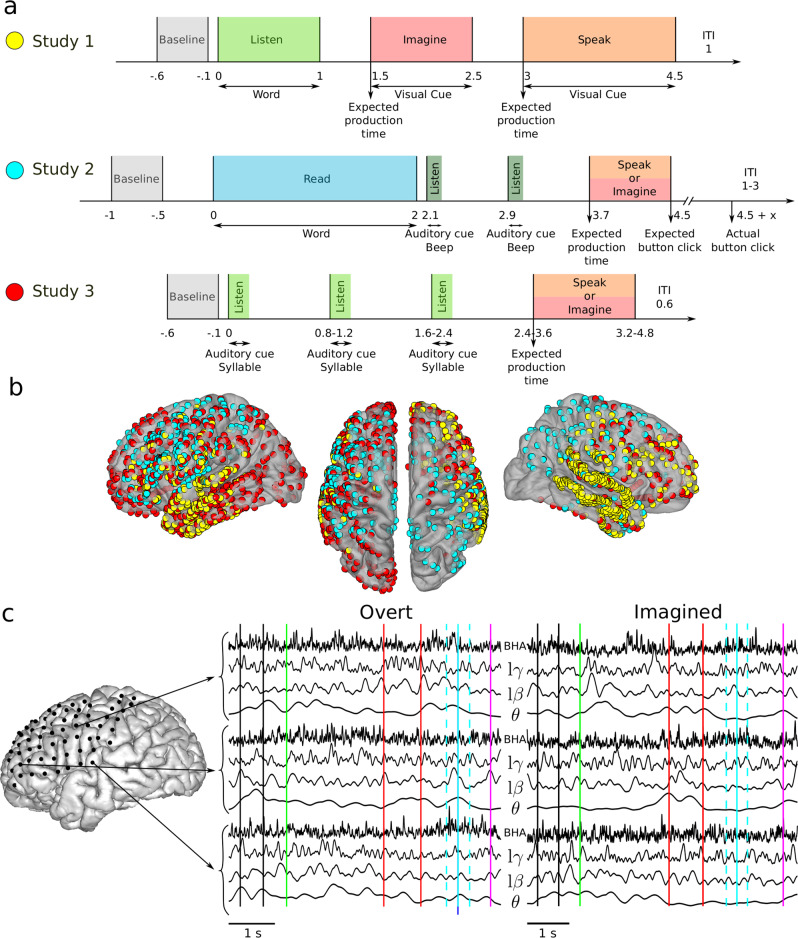
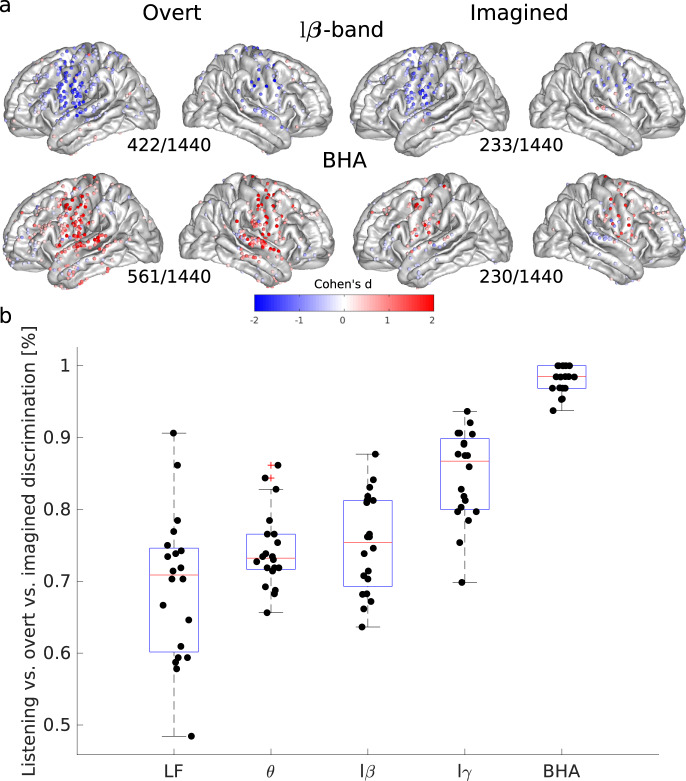
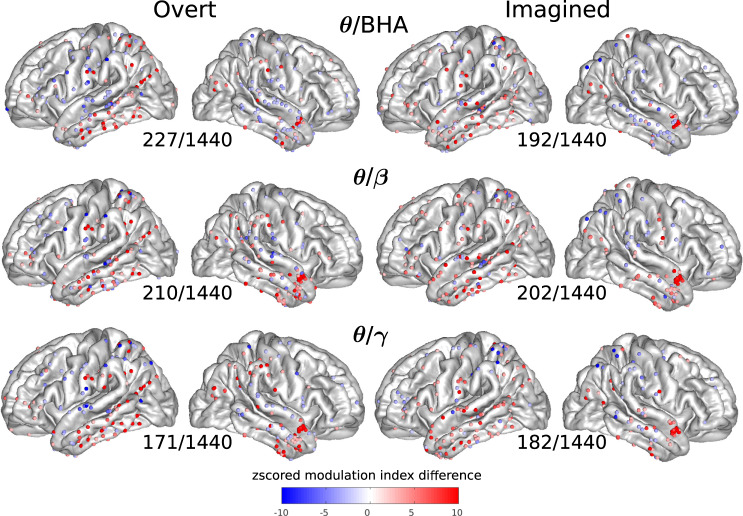
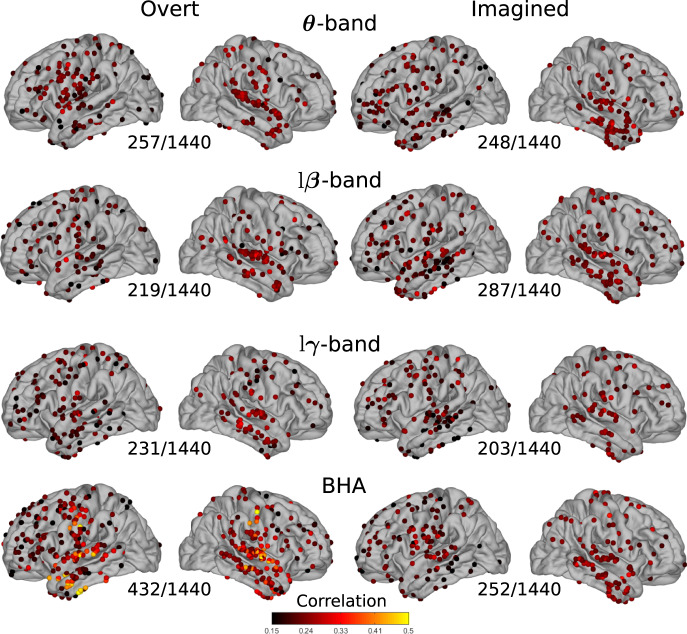
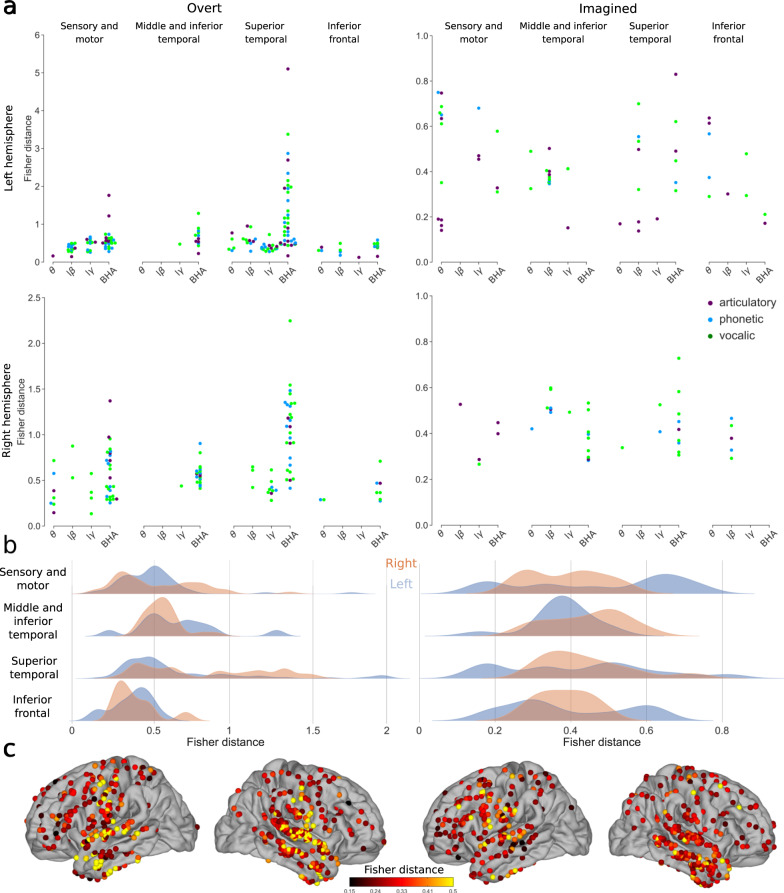
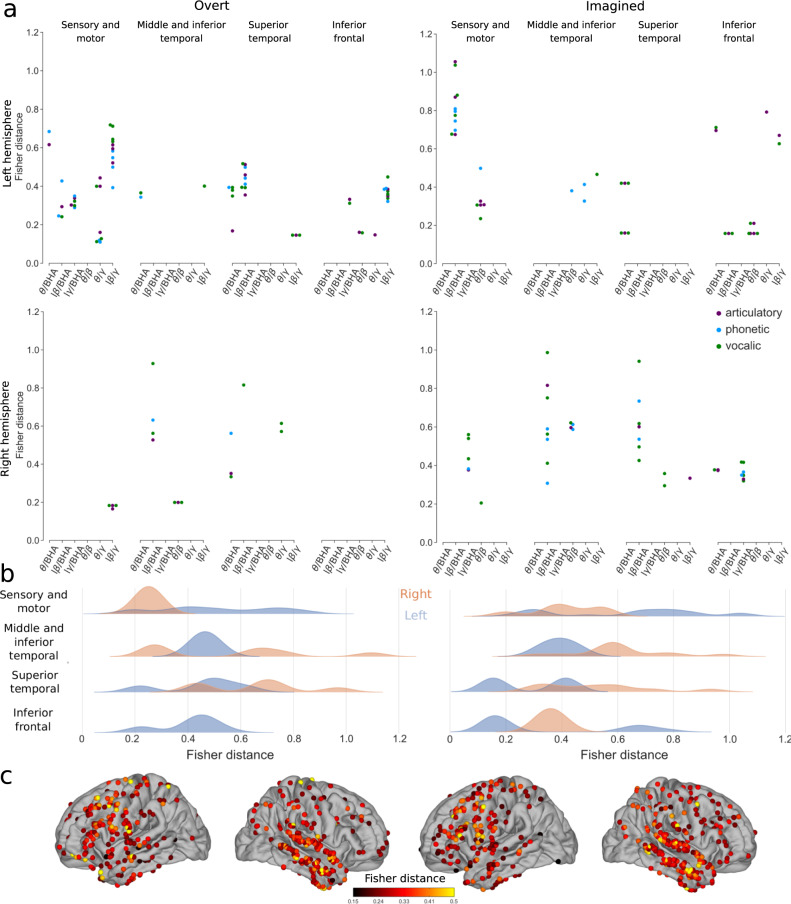
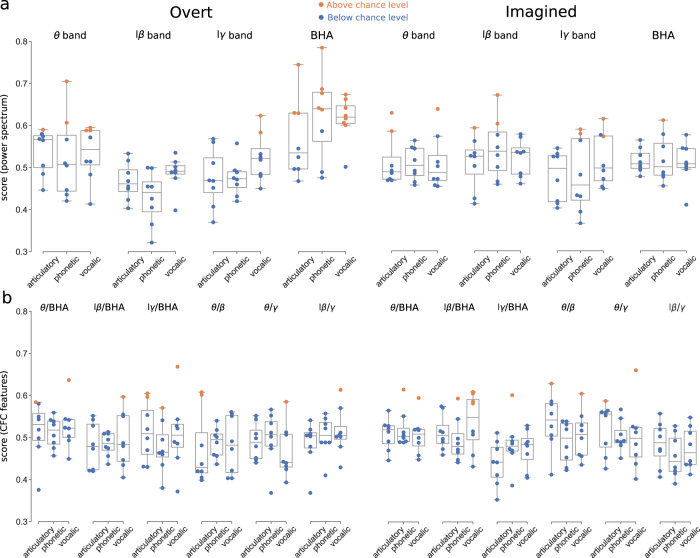
Reconstructing intended speech from neural activity using brain-computer interfaces holds great promises for people with severe speech production deficits. While decoding overt speech has progressed, decoding imagined speech has met limited success, mainly because the associated neural signals are weak and variable compared to overt speech, hence difficult to decode by learning algorithms. We obtained three electrocorticography datasets from 13 patients, with electrodes implanted for epilepsy evaluation, who performed overt and imagined speech production tasks. Based on recent theories of speech neural processing, we extracted consistent and specific neural features usable for future brain computer interfaces, and assessed their performance to discriminate speech items in articulatory, phonetic, and vocalic representation spaces. While high-frequency activity provided the best signal for overt speech, both low- and higher-frequency power and local cross-frequency contributed to imagined speech decoding, in particular in phonetic and vocalic, i.e. perceptual, spaces. These findings show that low-frequency power and cross-frequency dynamics contain key information for imagined speech decoding.
Overview
The claims and statistics of this paper haven’t been checked yet.
Free: it reads the open-access text and checks the first 5 claims that cite a source we can check. Create a free account to check every claim.
Integrity signals
Registry
Cites
Statistics
Figures
Verification
Claims the paper makes
The claims and statistics of this paper haven’t been checked yet.
Free: it reads the open-access text and checks the first 5 claims that cite a source we can check. Create a free account to check every claim.
Claims other papers make about this one
Each is checked against this paper’s own text: does it say what the citing paper says it does?
The source backs part of the claim, not all of it — or backs it for a different population, condition or comparison.
In the citing paper
“Along these lines, when able speakers are instructed to imagine speaking or hearing a word, neural activity in the STG can be used to decode those words with above-chance accuracy59–63.”
From The speech neuroprosthesis (2024) · cites this paper as [62]
Experimental — accuracy not yet measuredThe cited source says what the claim attributes to it.
In the citing paper
“Both neuroimaging and electrophysiological studies have shown that inner speech engages a similar (but not identical) cortical network as physically produced speech34–36”
From Inner speech in motor cortex and implications for speech neuroprostheses (2025) · cites this paper as [36]
Self-check
Percentages, sums and reported differences re-computed from the paper’s own numbers.
The self-check needs the paper’s full text.
Citations
Cites
Controlling the False Discovery Rate: A Practical and Powerful Approach to Multiple Testing
Benjamini, Y., & Hochberg, Y. (1995) · Journal of the Royal Statistical Society Series B: Statistical Methodology · doi:10.1111/j.2517-6161.1995.tb02031.x · Cited by 109,482
Fischl, B. (2012) · NeuroImage · doi:10.1016/j.neuroimage.2012.01.021 · Cited by 9,526
BCI2000: A General-Purpose Brain-Computer Interface (BCI) System
Schalk, G., McFarland, D. J., Hinterberger, T., Birbaumer, N., & Wolpaw, J. R. (2004) · IEEE Transactions on Biomedical Engineering · doi:10.1109/tbme.2004.827072 · Cited by 3,024
Reach and grasp by people with tetraplegia using a neurally controlled robotic arm
Hochberg, L. R., Bacher, D., Jarosiewicz, B., Masse, N. Y., Simeral, J. D., Vogel, J., Haddadin, S., Liu, J., Cash, S. S., van der Smagt, P., et al. (2012) · Nature · doi:10.1038/nature11076 · Cited by 2,719
The spatial and temporal signatures of word production components
Indefrey, P., & Levelt, W. J. M. (2004) · Cognition · doi:10.1016/j.cognition.2002.06.001 · Cited by 2,144
Cortical oscillations and speech processing: emerging computational principles and operations
Giraud, A.-L., & Poeppel, D. (2012) · Nature Neuroscience · doi:10.1038/nn.3063 · Cited by 1,917
Self-citationAn integrated theory of language production and comprehension
Pickering, M. J., & Garrod, S. (2013) · Behavioral and Brain Sciences · doi:10.1017/s0140525x12001495 · Cited by 1,569
Measuring Phase-Amplitude Coupling Between Neuronal Oscillations of Different Frequencies
Tort, A. B. L., Komorowski, R., Eichenbaum, H., & Kopell, N. (2010) · Journal of Neurophysiology · doi:10.1152/jn.00106.2010 · Cited by 1,363
Neuroscience Needs Behavior: Correcting a Reductionist Bias
Krakauer, J. W., Ghazanfar, A. A., Gomez-Marin, A., MacIver, M. A., & Poeppel, D. (2017) · Neuron · doi:10.1016/j.neuron.2016.12.041 · Cited by 1,358
Self-citationPulvermüller, F. (1999) · Behavioral and Brain Sciences · doi:10.1017/s0140525x9900182x · Cited by 1,284
Research works printed but not linked: 1
- Rezazadeh Sereshkeh A Yousefi R Wong AT Rudzicz F Chau T Development of a ternary hybrid fNIRS-EEG brain–computer interface based on imagined speech. Brain-Comput Interfaces 2019 6 128 140
Cited by
Metzger, S. L., Liu, J. R., Moses, D. A., Dougherty, M. E., Seaton, M. P., Littlejohn, K. T., Chartier, J., Anumanchipalli, G. K., Tu-Chan, A., Ganguly, K., et al. (2022) · Nature Communications · doi:10.1038/s41467-022-33611-3 · Cited by 153
Kim, T., Shin, Y., Kang, K., Kim, K., Kim, G., Byeon, Y., Kim, H., Gao, Y., Lee, J. R., Son, G., et al. (2022) · Nature Communications · doi:10.1038/s41467-022-33457-9 · Cited by 157
Silva, A. B., Littlejohn, K. T., Liu, J. R., Moses, D. A., & Chang, E. F. (2024) · Nature Reviews Neuroscience · doi:10.1038/s41583-024-00819-9 · Cited by 103
Luo, S., Angrick, M., Coogan, C., Candrea, D. N., Wyse‐Sookoo, K., Shah, S., Rabbani, Q., Milsap, G. W., Weiss, A. R., Anderson, W. S., et al. (2023) · Advanced Science · doi:10.1002/advs.202304853 · Cited by 90
Tang, C., Xu, M., Yi, W., Zhang, Z., Occhipinti, E., Dong, C., Ravenscroft, D., Jung, S., Lee, S., Gao, S., et al. (2024) · npj Flexible Electronics · doi:10.1038/s41528-024-00315-1 · Cited by 112
Representation of internal speech by single neurons in human supramarginal gyrus
Wandelt, S. K., Bjånes, D. A., Pejsa, K., Lee, B., Liu, C., & Andersen, R. A. (2024) · Nature Human Behaviour · doi:10.1038/s41562-024-01867-y · Cited by 74
“Lack of behavioural output, lower signal-to-noise ratio and differences in cortical activations compared with vocalized speech are speculated to contribute to lower classification accuracies of internal speech 7,8,13,27,28 .”
BackgroundTowards Voice Reconstruction from EEG during Imagined Speech
Lee, Y.-E., Lee, S., Kim, S., & Lee, S. (2023) · Proceedings of the AAAI Conference on Artificial Intelligence · doi:10.1609/aaai.v37i5.25745 · Cited by 93
Music can be reconstructed from human auditory cortex activity using nonlinear decoding models
Bellier, L., Llorens, A., Marciano, D., Schalk, G., Brunner, P., Knight, R. T., & Pasley, B. N. (2023) · PLoS Biology · doi:10.1371/journal.pbio.3002176 · Cited by 93
Self-citationOrigami-inspired soft fluidic actuation for minimally invasive large-area electrocorticography
Coles, L., Ventrella, D., Carnicer‐Lombarte, A., Elmi, A., Troughton, J. G., Mariello, M., Hadwe, S. E., Woodington, B. J., Bacci, M. L., Malliaras, G. G., et al. (2024) · Nature Communications · doi:10.1038/s41467-024-50597-2 · Cited by 81
Dataset of Speech Production in intracranial Electroencephalography
Verwoert, M., Ottenhoff, M. C., Goulis, S., Colon, A., Wagner, L., Tousseyn, S., van Dijk, J. P., Kubben, P., & Herff, C. (2022) · Scientific Data · doi:10.1038/s41597-022-01542-9 · Cited by 69
Rethinking CNN Architecture for Enhancing Decoding Performance of Motor Imagery-Based EEG Signals
Kim, S., Lee, D.-H., & Lee, S. (2022) · IEEE Access · doi:10.1109/access.2022.3204758 · Cited by 56
“Motor imagery (MI) [11], [12], 31 [13], [14], visual imagery [15], and imagined speech [16], 32 [17] are representative endogenous BCIs.”
BackgroundInner speech in motor cortex and implications for speech neuroprostheses
Kunz, E. M., Abramovich Krasa, B., Kamdar, F., Avansino, D. T., Hahn, N., Yoon, S., Singh, A., Nason-Tomaszewski, S. R., Card, N. S., Jude, J. J., et al. (2025) · Cell · doi:10.1016/j.cell.2025.06.015 · Cited by 55
“Notably, when evaluating inner speech with a decoder trained solely on attempted speech, performance was above chance for all participants (Figure 3E, green), indicating that a speech BCI trained only on attempted speech signals can decode inner speech.”
Soroush, P. Z., Herff, C., Ries, S. K., Shih, J. J., Schultz, T., & Krusienski, D. J. (2023) · NeuroImage · doi:10.1016/j.neuroimage.2023.119913 · Cited by 48
Multisensory subtypes of aphantasia: Mental imagery as supramodal perception in reverse
Dawes, A. J., Keogh, R., & Pearson, J. (2023) · Neuroscience Research · doi:10.1016/j.neures.2023.11.009 · Cited by 65
Direct Speech Reconstruction from Sensorimotor Brain Activity with Optimized Deep Learning Models
Berezutskaya, J., Freudenburg, Z. V., Vansteensel, M. J., Aarnoutse, E. J., Ramsey, N. F., & van Gerven, M. A. J. (2022) · doi:10.1101/2022.08.02.502503 · Cited by 42
Direct speech reconstruction from sensorimotor brain activity with optimized deep learning models
Berezutskaya, J., Freudenburg, Z. V., Vansteensel, M. J., Aarnoutse, E. J., Ramsey, N. F., & van Gerven, M. A. J. (2023) · Journal of Neural Engineering · doi:10.1088/1741-2552/ace8be · Cited by 42
“and are in line with the previous reports on speech decoding from that region [25, 28, 33].”
Decoding semantic relatedness and prediction from EEG: A classification method comparison
Trammel, T., Khodayari, N., Luck, S. J., Traxler, M. J., & Swaab, T. Y. (2023) · NeuroImage · doi:10.1016/j.neuroimage.2023.120268 · Cited by 40
Neurorights, mental privacy, and mind reading
Brown, C. M. L. (2024) · Neuroethics · doi:10.1007/s12152-024-09568-z · Cited by 33
Theta‐gamma phase‐amplitude coupling in auditory cortex is modulated by language proficiency
Lizarazu, M., Carreiras, M., & Molinaro, N. (2023) · Human Brain Mapping · doi:10.1002/hbm.26250 · Cited by 36
“Previous research pointed to the role of the beta band oscillations (13–25 Hz) in top-down control during language processing (Keitel et al., 2018; Pefkou et al., 2017; Proix et al., 2022).”
BackgroundDeep brain–machine interfaces: sensing and modulating the human deep brain
Sui, Y., Yu, H., Zhang, C., Chen, Y., Jiang, C., & Li, L. (2022) · National Science Review · doi:10.1093/nsr/nwac212 · Cited by 39
“Various ECoG-based BMI settings are proposed depending on the electrode distribution in nonepileptogenic areas [25], including motor control and imagination, speech, visual spelling, auditory and memory paradigms [26].”
BackgroundRestoring Speech Using Brain–Computer Interfaces
Stavisky, S. D. (2025) · Annual Review of Biomedical Engineering · doi:10.1146/annurev-bioeng-110122-012818 · Cited by 52
Cheng, T.-H. Z., Creel, S. C., & Iversen, J. R. (2021) · Journal of Neuroscience · doi:10.1523/jneurosci.1121-21.2021 · Cited by 43
Chisco: An EEG-based BCI dataset for decoding of imagined speech
Zhang, Z., Ding, X., Bao, Y., Zhao, Y., Liang, X., Qin, B., & Liu, T. (2024) · Scientific Data · doi:10.1038/s41597-024-04114-1 · Cited by 59
CNN Architectures and Feature Extraction Methods for EEG Imaginary Speech Recognition
Rusnac, A.-L., & Grigore, O. (2022) · Sensors · doi:10.3390/s22134679 · Cited by 32
Bhadra, K., Giraud, A., & Marchesotti, S. (2025) · Communications Biology · doi:10.1038/s42003-025-07464-7 · Cited by 33
“Here we applied this methodology for the fi rst time to the speech domain to probe a possible relationship between interindividual variability in speech imagery timing (acutelyandacrosstrainingdays)andBCIperformance,andtogaininsights intothepaceusedtoperformtheimagery.”
Self-citationWu, S., Bhadra, K., Giraud, A., & Marchesotti, S. (2024) · Brain Sciences · doi:10.3390/brainsci14030196 · Cited by 38
“Previous research indicated that distinct phonetic features elicit different neural responses [11,50–52].”
BackgroundSelf-citationHovsepyan, S., Olasagasti, I., & Giraud, A. (2023) · PLoS Computational Biology · doi:10.1371/journal.pcbi.1011595 · Cited by 38
Self-citationWu, X., Wellington, S., Fu, Z., & Zhang, D. (2024) · Journal of Neural Engineering · doi:10.1088/1741-2552/ad593a · Cited by 28
“While the aforementioned studies are all based on overt speech, covert speech decoding (imagined speech) has also been demonstrated to be possible using ECoG [39].”
BackgroundFeasibility of decoding covert speech in ECoG with a Transformer trained on overt speech
Komeiji, S., Mitsuhashi, T., Iimura, Y., Suzuki, H., Sugano, H., Shinoda, K., & Tanaka, T. (2024) · Scientific Reports · doi:10.1038/s41598-024-62230-9 · Cited by 34
“Although this “commonality” of the activities for overt and covert speech has been introduced in prior studies 25,44 , how the activities are generated remains unclear.”
Wang, P., Gong, P., Zhou, Y., Wen, X., & Zhang, D. (2022) · IEEE Transactions on Instrumentation and Measurement · doi:10.1109/tim.2022.3224991 · Cited by 28
“limb disability patients [3], [4], [5] and helping them with the ability to communicate with the outside world [6], [7], [8].”
BackgroundDeng, Q., Fu, Z., Ma, N., & Wang, B. (2025) · Brain Hemorrhages · doi:10.1016/j.hest.2025.09.002 · Cited by 28
de Borman, A., Wittevrongel, B., Dauwe, I., Carrette, E., Meurs, A., Roost, D. V., Boon, P., & Hulle, M. M. V. (2024) · Communications Biology · doi:10.1038/s42003-024-06518-6 · Cited by 24
“This is in line with the previous results showing that fewer cortical sites are activated by imagined speech 18,21,29 .”
InfluentialIntracranial EEG signals disentangle multi-areal neural dynamics of vicarious pain perception
Tan, H., Zeng, X., Ni, J., Liang, K., Xu, C., Zhang, Y., Wang, J., Li, Z., Yang, J., Han, C., et al. (2024) · Nature Communications · doi:10.1038/s41467-024-49541-1 · Cited by 24
“Similar to previous studies 117,118 , the classi fi cation performance of the SVM clas-si fi er was evaluated by a fi ve-fold cross-validation procedure.”
MethodLanguage follows a distinct mode of extra-genomic evolution
Bickel, B., Giraud, A., Zuberbühler, K., & van Schaik, C. P. (2024) · Physics of Life Reviews · doi:10.1016/j.plrev.2024.08.003 · Cited by 26
Self-citationOnline internal speech decoding from single neurons in a human participant
Wandelt, S. K., Bjånes, D. A., Pejsa, K., Lee, B., Liu, C., & Andersen, R. A. (2022) · doi:10.1101/2022.11.02.22281775 · Cited by 17
“Lack of behavioral output, lower signal-to-noise ratio, and differences in cortical activation have resulted in much lower classification accuracies of internal speech (Angrick et al. 2018; Martin et al. 2018; Luo, Rabbani, and Crone 2022; Proix et al. 2022).”
BackgroundCooney, C., Folli, R., & Coyle, D. (2022) · Neuroscience & Biobehavioral Reviews · doi:10.1016/j.neubiorev.2022.104783 · Cited by 19
“Research articles were excluded if: (1) No original data collection was undertaken (Angrick et al., 2019b; Cooney et al., 2019a; Cooney et al., 2019b; Herff et al., 2019; Proix et al., 2022); (2) No measures were taken to decode speech (i.”
BackgroundWard, L. M., & Erra, R. G. (2022) · Frontiers in Human Neuroscience · doi:10.3389/fnhum.2022.874241 · Cited by 26
Zhang, W., Jiang, M., Teo, C., Bhuvanakantham, R., Zoey, F. L., Sim, W. K. J., Guo, Z., Foo, C. H. V., Chua, R. H. J., Padmanabhan, P., et al. (2024) · NeuroImage · doi:10.1016/j.neuroimage.2024.120629 · Cited by 22
Advances in flexible high-density microelectrode arrays for brain-computer interfaces
Ban, S., Chong, D., Kwon, J., Lee, S., Huang, Y., Yoo, S., & Yeo, W. (2025) · Biosensors and Bioelectronics · doi:10.1016/j.bios.2025.118102 · Cited by 15
Giroud, J., Trébuchon, A., Mercier, M. R., Davis, M. H., & Morillon, B. (2024) · Science Advances · doi:10.1126/sciadv.ado8915 · Cited by 27
“…out the possibility that the broadband signal may be especially sensitive to the coupling measure used in this work, this finding is nevertheless consistent with mounting evidence from different lines of research showing the advantages of using the broadband signal over just the HFa ( 75 – 78 ).”
Ethical Challenges of Using Artificial Intelligence in Judiciary
John, A. M., Aiswarya, M. U., & Panachakel, J. T. (2023) · IEEE International Conference on Metrology for eXtended Reality, Artificial Intelligence and Neural Engineering (MetroXRAINE) · doi:10.1109/metroxraine58569.2023.10405688 · Cited by 18
“Recently, researchers have developed brain–computer interface (BCI) systems for decoding imagined speech from various neuroimaging modalities [9], [10], [19], [20].”
BackgroundRecommendations for promoting user agency in the design of speech neuroprostheses
Sankaran, N., Moses, D., Chiong, W., & Chang, E. F. (2023) · Frontiers in Human Neuroscience · doi:10.3389/fnhum.2023.1298129 · Cited by 14
“…the majority of speech-BCI research has focused on decoding low-level articulatory and phonological signals within sensorimotor and auditory regions of the cortex (Martin et al., 2014; Herff et al., 2015; Ramsey et al., 2018; Anumanchipalli et al., 2019; Moses et al., 2021; Proix et al., 2022).”
BackgroundImaginary Speech Recognition Using a Convolutional Network with Long-Short Memory
Rusnac, A.-L., & Grigore, O. (2022) · Applied Sciences · doi:10.3390/app122211873 · Cited by 13
Arnulf, J. K., Olsson, U. H., & Nimon, K. (2024) · Frontiers in Psychology · doi:10.3389/fpsyg.2024.1308098 · Cited by 17
Imagined Speech Reconstruction From Neural Signals—An Overview of Sources and Methods
Tang, J., Chen, J., Xu, X., Liu, A., & Chen, X. (2024) · IEEE Transactions on Instrumentation and Measurement · doi:10.1109/tim.2024.3472830 · Cited by 19
Speech sequencing in the human precentral gyrus
Liu, J. R., Zhao, L., Hullett, P. W., & Chang, E. F. (2025) · Nature Human Behaviour · doi:10.1038/s41562-025-02250-1 · Cited by 23
“Recent studies have additionally found that lower frequencies are useful for decoding imagined 74 or silently attempted speech 75 , highlighting a possible role in facilitating internal representations of speech.”
Common and distinct neural representations of imagined and perceived speech
Lu, L., Han, M., Zou, G., Zheng, L., & Gao, J.-H. (2023) · Cerebral Cortex · doi:10.1093/cercor/bhac519 · Cited by 11
Self-Supervised Learning of Neural Speech Representations From Unlabeled Intracranial Signals
Lesaja, S., Stuart, M., Shih, J. J., Soroush, P. Z., Schultz, T., Manic, M., & Krusienski, D. J. (2022) · IEEE Access · doi:10.1109/access.2022.3230688 · Cited by 12
“The neural circuits for perceiving speech, and producing overt, mouthed, and imagined speech, are highly intertwined [43], [46], [47].”
BackgroundAdvances in brain computer interface for amyotrophic lateral sclerosis communication
Wang, Y., Tang, Y., Wang, Q., Ge, M., Wang, J., Cui, X., Wang, N., Bao, Z., Chen, S., Wang, J., et al. (2025) · Brain‐X · doi:10.1002/brx2.70023 · Cited by 14
The sound of thought: Form matters–The prosody of inner speech
Kreiner, H., & Eviatar, Z. (2024) · Physics of Life Reviews · doi:10.1016/j.plrev.2024.10.006 · Cited by 16
Decoding Neural Correlation of Language-Specific Imagined Speech using EEG Signals
Lee, K.-W., Lee, D.-H., Kim, S.-J., & Lee, S. (2022) · Annual International Conference of the IEEE Engineering in Medicine and Biology Society (EMBC) · doi:10.1109/embc48229.2022.9871721 · Cited by 13
“[14] referred that the studies in imagined speech still have some limitations because of the low signal–to–noise ratio in raw data.”
BackgroundStuart, M., Lesaja, S., Shih, J. J., Schultz, T., Manic, M., & Krusienski, D. J. (2022) · IEEE Transactions on Neural Systems and Rehabilitation Engineering · doi:10.1109/tnsre.2022.3207624 · Cited by 10
“The original Kaldi implementation initializes bands starting at a low-cutoff of 30 Hz, but this minimum starting frequency is reduced to 10 Hz for the present analysis to help encourage use of lower frequencies that may be relevant for this application [19].”
BackgroundInfluentialZhu, L., Wang, S., Jin, X., Zheng, K., Zhang, J., Sun, S., Tian, F., Cai, R., & Hu, B. (2025) · IEEE Internet of Things Journal · doi:10.1109/jiot.2025.3553450 · Cited by 14
“Furthermore, these convolutions are adept at processing low-frequency information, which is advantageous for depression recognition [62].”
Ko, B.-K., Lee, S., & Lee, S. (2025) · IEEE Transactions on Neural Systems and Rehabilitation Engineering · doi:10.1109/tnsre.2025.3592312 · Cited by 12
“These findings reinforce the value of low-frequency bands [34], [59], [60] in optimizing speech detection.”
InfluentialXue, P., Wang, K., Ma, C., Chen, C., Yin, M., & Diao, D. (2025) · Carbon · doi:10.1016/j.carbon.2025.120720 · Cited by 10
Wu, X., Zhang, D., Li, G., Gao, X., Metcalfe, B., & Chen, L. (2024) · Journal of Neural Engineering · doi:10.1088/1741-2552/ad200e · Cited by 13
“Both approaches have witnessed significant advancements in areas such as motor decoding [3–6], speech restoration [7–9], and emotion recognition [10–12].”
BackgroundDual-stream cortical pathways mediate sensory prediction
Chu, Q., Ma, O., Hang, Y., & Tian, X. (2023) · Cerebral Cortex · doi:10.1093/cercor/bhad168 · Cited by 9
Self-citationRepresentation of verbal thought in motor cortex and implications for speech neuroprosthesesPreprint
Kunz, E. M., Meschede-Krasa, B., Kamdar, F. B., Avansino, D. T., Nason, S. R., Card, N. S., Jacques, B. G., Bechefsky, P. H., Hahn, N. V., Iacobacci, C., et al. (2024) · bioRxiv (Cold Spring Harbor Laboratory) · doi:10.1101/2024.10.04.616375 · Cited by 8
Exploiting Approximate Joint Diagonalization for Covariance Estimation in Imagined Speech Decoding
Kalaganis, F. P., Georgiadis, K., Oikonomou, V. P., Nikolopoulos, S., Laskaris, N., & Kompatsiaris, I. Y. (2023) · Lecture notes in computer science · doi:10.1007/978-3-031-43075-6_35 · Cited by 7
Clinical practice of Brain–Machine interfaces in neurological disorders
Wang, K., Wei, P., Shan, Y., & Zhao, G. (2025) · EngMedicine · doi:10.1016/j.engmed.2025.100090 · Cited by 9
Zhang, H., Pan, Y., Jin, L., & Wang, B. (2025) · MedComm · doi:10.1002/mco2.70377 · Cited by 11
“Proix et al. [218] has demonstrated that high-frequency activities in the brain are beneficial for language encoding by sampling and analyzing patients’ cortical electroencephalogram (EEG) signal data for language encoding.”
Speech and music recruit frequency-specific distributed and overlapping cortical networks
Rietmolen, N. T., Mercier, M. R., Trébuchon, A., Morillon, B., & Schön, D. (2024) · eLife · doi:10.7554/elife.94509 · Cited by 33
An efficient deep learning approach for automatic speech recognition using EEG signals
Chinta, B., Pampana, M., & Moorthi, M. (2025) · Computer Methods in Biomechanics & Biomedical Engineering · doi:10.1080/10255842.2025.2456982 · Cited by 6
“The motor cortex, for instance, is activated when an appendage is moved, and the visual cortex is activated when an internal object is perceived (Akbari et al. 2018; Proix et al. 2022), where relative influences are shown in each concrete way.”
Speech imagery brain–computer interfaces: a systematic literature review
Tates, A., Matran‐Fernandez, A., Halder, S., & Daly, I. P. (2025) · Journal of Neural Engineering · doi:10.1088/1741-2552/ade28e · Cited by 13
Iterative alignment discovery of speech-associated neural activity
Rabbani, Q., Shah, S., Milsap, G., Fifer, M. S., Heřmanský, H., & Crone, N. E. (2024) · Journal of Neural Engineering · doi:10.1088/1741-2552/ad663c · Cited by 7
ArEEG: an Open-Access Arabic Inner Speech EEG Dataset
Metwalli, D., Kiroles, A. E., Radwan, Y. A., Mohamed, E. A., Barakat, M., AHMED, A. A., Omar, A. M., & Selim, S. (2025) · Scientific Data · doi:10.1038/s41597-025-05387-w · Cited by 8
“Recent research 17 indicates that a number of signal processing and feature extraction techniques can be done on the low-resolution signals acquired to enhance their quality.”
Towards Dynamic Neural Communication and Speech Neuroprosthesis Based on Viseme Decoding
Park, J.-H., Lee, S., Kim, S.-W., & Lee, S.-W. (2025) · IEEE International Conference on Acoustics Speech and Signal Processing · doi:10.1109/icassp49660.2025.10888113 · Cited by 7
“Also, the ability to decode visemes without overt articulation underscores the system’s capability to capture and interpret internal cognitive processes related to speech, paving the way for further advancements in silent communication [37], [38].”
A systematic review of EEG-based Imagined Speech decoding
Jin, Z., Li, D., & Huang, S. (2025) · Applied Soft Computing · doi:10.1016/j.asoc.2025.113563 · Cited by 9
Identification of perceived sentences using deep neural networks in EEG
del Valle, C. H. G., Méndez‐Orellana, C., Herff, C., & Rodriguez-Fernández, M. (2024) · Journal of Neural Engineering · doi:10.1088/1741-2552/ad88a3 · Cited by 10
“Additionally, imagined speech decoding has benefited from both low-and cross-frequency intra-cranial EEG features, highlighting the potential of BCIs in reconstructing intended speech from neural activity [21].”
Nie, J. Z., Flint, R. D., Prakash, P., Hsieh, J. K., Mugler, E. M., Tate, M. C., Rosenow, J. M., & Slutzky, M. W. (2024) · eNeuro · doi:10.1523/eneuro.0163-23.2023 · Cited by 5
“Additionally, several types of PAC, including Lγ-Hγ PAC, contain some information about speech that may be used for simple decoding tasks(63).”
BackgroundIntroducing HiBoP: a Unity‐based visualization software for large iEEG datasets
Vecchio, M. D., Bontemps, B., Lance, F., Gannerie, A., Sipp, F., Albertini, D., Cassani, C. M., Chatard, B., Dupin, M., & Lachaux, J.-P. (2024) · Journal of Neuroscience Methods · doi:10.1016/j.jneumeth.2024.110179 · Cited by 7
Rhythmic modulation of prediction errors: a possible role for the beta-range in speech processingPreprint
Hovsepyan, S., Olasagasti, I., & Giraud, A. (2022) · bioRxiv (Cold Spring Harbor Laboratory) · doi:10.1101/2022.03.28.486037 · Cited by 5
“…was to explore the possible role of cortical beta oscillations in speech processing from a theoretical perspective, where the brain deploys predictions through top-down connections and refines them based on bottom-up prediction errors (Rao and Ballard, 1999; Friston and Kiebel, 2009; Shipp, 2016).”
BackgroundSelf-citationVocalMind: A Stereotactic EEG Dataset for Vocalized, Mimed, and Imagined Speech in Tonal Language
He, T., Wei, M., Wang, R., Wang, R., Du, S., Cai, S., Tao, W., & Li, H. (2025) · Scientific Data · doi:10.1038/s41597-025-04741-2 · Cited by 17
“• Imagined Speech : This involves a mental speaking process without any overt articulation or sound production 27,28 .”
fMRI2GES: Co-Speech Gesture Reconstruction From fMRI Signal With Dual Brain Decoding Alignment
Zhu, C., Shao, J., Lin, J., Wang, Y., Wang, J., Tang, J., & Li, K. (2025) · IEEE Transactions on Circuits and Systems for Video Technology · doi:10.1109/tcsvt.2025.3558125 · Cited by 12
“The second direction aims to understand cognitive information in the brain, particularly linguistic decoding [6], [7], [8].”
From pronounced to imagined: improving speech decoding with multi-condition EEG data
Alonso-Vázquez, D., Mendoza-Montoya, O., Caraza, R., Martínez, H. R., & Antelis, J. M. (2025) · Frontiers in Neuroinformatics · doi:10.3389/fninf.2025.1583428 · Cited by 13
“Although MEG and ECoG have shown impressive performance in decoding neural representations of speech (Dash et al., 2020b; Moses et al., 2021; Proix et al., 2022), their high cost, limited accessibility, and invasive nature restrict their application in assistive communication technologies for…”
Guggisberg, A. G., Siebner, H. R., Lundell, H., Madsen, M. A. J., Madsen, K. H., Wiggermann, V., Mégevand, P., Proix, T., Dalal, S. S., Grouiller, F., et al. (2025) · Clinical Neurophysiology · doi:10.1016/j.clinph.2025.2110942 · Cited by 5
Self-citationOrbitofrontal High-Gamma Reflects Spike-Dissociable Value and Decision Mechanisms
Sharma, D., Lupkin, S. M., & McGinty, V. B. (2025) · Journal of Neuroscience · doi:10.1523/jneurosci.0789-24.2025 · Cited by 4
Multi-View Self-Supervised Domain Adaptation for EEG-Based Emotion Recognition
Zhang, L., Shi, H., Li, Z., Zheng, W., & Lu, B. (2025) · IEEE Transactions on Affective Computing · doi:10.1109/taffc.2025.3574868 · Cited by 10
“Many studies have been conducted on feature extraction methods based on EEG signals and they have been used in many fields such as workload monitoring [4], depression detection [5], motor imaginary classification [6], [7], speech production [8], etc.”
Cometa, A., d’Orio, P., Revay, M., Bottoni, F., Repetto, C., Russo, G. L., Cappa, S. F., Moro, A., Micera, S., & Artoni, F. (2023) · Journal of Neural Engineering · doi:10.1088/1741-2552/accaa8 · Cited by 4
Reconstructing language from brain signals and deconstructing adversarial thought-reading
Giraud, A., & Su, Y. (2023) · Cell Reports Medicine · doi:10.1016/j.xcrm.2023.101115 · Cited by 6
Self-citationUnsupervised Learning for Exploring Hidden Structures in Self-Talk
Tyrrell, K., & Kapourchali, M. H. (2023) · Wearable and Implantable Body Sensor Networks · doi:10.1109/bsn58485.2023.10331182 · Cited by 4
Zhang, S., & Li, H. (2022) · Occupational Therapy International · doi:10.1155/2022/1723736 · Cited by 4
Speech and music recruit frequency-specific distributed and overlapping cortical networksPreprint
Rietmolen, N. T., Mercier, M. R., Trébuchon, A., Morillon, B., & Schön, D. (2022) · bioRxiv (Cold Spring Harbor Laboratory) · doi:10.1101/2022.10.08.511398 · Cited by 4
“Rather, in every cortical region, the majority of patients show shared responses at the regional level, as estimated by the population prevalence analysis (Figure 10).”
BackgroundAraújo, J., Simons, B. D., Peter, V., Mandke, K. N., Kalashnikova, M., Macfarlane, A., Gabrielczyk, F. C., Wilson, A. M., Liberto, G. M. D., Burnham, D. K., et al. (2022) · bioRxiv (Cold Spring Harbor Laboratory) · doi:10.1101/2022.10.26.513864 · Cited by 4
Integrated Word2Vec-Based Speech Annotations for Enhanced EEG Decoding of Speech Intentions
Jang, S.-N., Park, H.-Y., Kim, S.-W., Yu, S.-H., Lee, M., & Jeong, J.-H. (2025) · International Winter Conference on Brain-Computer Interface (BCI) · doi:10.1109/bci65088.2025.10931508 · Cited by 3
“The high gamma band is generally associated with high-level cognitive processes and language processing, aligning with its typically strong classification performance [19], [20].”
Implantable Neural Speech Decoders: Recent Advances, Future Challenges
Jhilal, S., Marchesotti, S., Thirion, B., Soudrie, B., Giraud, A., & Mandonnet, E. (2025) · Neurorehabilitation and neural repair · doi:10.1177/15459683251369468 · Cited by 9
“99 On the other hand, the drawback is that increasing the number of features makes the decoding much more challenging.”
Self-citationChen, Z. S., Lu, B., & Wu, W. (2025) · IEEE Signal Processing Magazine · doi:10.1109/msp.2025.3595320 · Cited by 6
“EEG signals can be used to decode not only audible speech but also imagined speech [75], [76].”
Emotion recognition based on spatio-temporal connectivity of prefrontal EEG signals
Wu, F., Wang, E., Xue, B., & Liu, Y. (2025) · Biomedical Signal Processing and Control · doi:10.1016/j.bspc.2025.109369 · Cited by 5
Frisby, S. L., Halai, A. D., Cox, C. R., Clarke, A., Shimotake, A., Kikuchi, T., Kuneida, T., Arakawa, Y., Takahashi, R., Ikeda, A., et al. (2026) · Imaging Neuroscience · doi:10.1162/imag.a.1201 · Cited by 5
Remote optical decoding of inner speech in Broca’s area via AI-based speckle pattern analysis
Segal, N., Bar, M., Rubinstein, D., Agdarov, S., Beiderman, Y., Beiderman, Y., & Zalevsky, Z. (2026) · Journal of Physics Photonics · doi:10.1088/2515-7647/ae869f · Cited by 3
The comparison of EEG features in specific Mandarin words’ speech
Tsai, W.-S., Huang, S.-G., Huang, K., Chen, J.-C., & Lin, C. (2023) · International conference on Fuzzy Theory and Its Applications · doi:10.1109/ifuzzy60076.2023.10324150 · Cited by 3
“As for speak vs. imagine classification, the average accuracy reaches 71.97%, also indicating different mechanisms of the two tasks [18].”
BackgroundInfluentialDuraisamy, S., Dubiel, M., Rekrut, M., & Leiva, L. A. (2025) · IEEE International Conference on Acoustics Speech and Signal Processing · doi:10.1109/icassp49660.2025.10888880 · Cited by 10
“Although invasive methods such as electrocorticogra-phy (ECoG) have yielded promising results [9], [10], noninvasive approaches such as electroencephalography (EEG) have also shown potential in decoding imagined speech [11], [12].”
Shao, X., Chung, R. S., Sundaram, S., Campo-Vera, R. M. D., Cavaleri, J., Zhang, S., Swarup, A., Kammen, A., Parra, M., Mason, X. L., et al. (2025) · Experimental Brain Research · doi:10.1007/s00221-025-07124-6 · Cited by 3
“This approach is consistent with numerous studies from our labo - ratory (Campo-Vera et al. 2020; Chung et al. 2024 ; Gilbert et al. 2022 ) and others utilizing similar patient populations (Proix et al. 2022 ; Schwartz et al. 2023; Swann et al. 2009).”
Bryndin, E. (2023) · Journal of Progress in Engineering and Physical Science · doi:10.56397/jpeps.2023.12.07 · Cited by 6
Sentence Reconstruction Leveraging Contextual Meaning from Speech-Related Brain Signals
Lee, J., Lee, S., Lee, Y.-E., Kim, S.-W., & Lee, S. (2023) · Conference proceedings/Conference proceedings - IEEE International Conference on Systems, Man, and Cybernetics · doi:10.1109/smc53992.2023.10394348 · Cited by 4
“Brain-computer interface (BCI) systems enable communication using neurophysiological characteristics found in brain signals [4].”
BackgroundAdvanced CNN-based Model for Imagined Speech Classification Using Electroencephalogram
Seswitha, K. B., Sahithi, S. V., Reddy, B. R., Priya, M. L., Banerjee, O., & Govind, D. (2023) · IEEE India Conference · doi:10.1109/indicon59947.2023.10440803 · Cited by 3
“…distinguish speech items in articulatory, phonetic, and vocalic representation spaces from brain signals in their study, and conclude that low-frequency power and cross-frequency dynamics of brain signals correspond to imagined speech containing key information for imagined speech decoding [10].”
BackgroundDecoding semantics from natural speech using human intracranial EEGPreprint
Pescatore, C. R. C., Zhang, H., Hadjinicolaou, A. E., Paulk, A. C., Rolston, J. D., Richardson, R. M., Williams, Z. M., Cai, J., & Cash, S. S. (2025) · bioRxiv (Cold Spring Harbor Laboratory) · doi:10.1101/2025.02.10.637051 · Cited by 5
emg2vec: Self-supervised Pretraining in Electromyography-based Silent Speech Interfaces
Hou, Q., van Gogh, S., Scheck, K., Ren, Z. X., Schultz, T., Wand, M., & Schmidhuber, J. (2024) · Annual International Conference of the IEEE Engineering in Medicine and Biology Society (EMBC) · doi:10.1109/embc53108.2024.10781736 · Cited by 7
“Simultaneously, there has been a rising interest in silent speech interfaces (SSI) [8], which use biosignals from EMG [9]–[11] and EEG [12] to generate speech or recognize text without the need for audible communication.”
Neural signals, machine learning, and the future of inner speech recognition
Chowdhury, A. T., Hassanein, A., Shibli, A. N. A., Khanafer, Y., AbuHaweeleh, M. N., Pedersen, S., & Chowdhury, M. E. H. (2025) · Frontiers in Human Neuroscience · doi:10.3389/fnhum.2025.1637174 · Cited by 4
Bisla, M., & Anand, R. S. (2025) · Biomedical Physics & Engineering Express · doi:10.1088/2057-1976/ae04ee · Cited by 2
Metadata
- Authors
- Proix, T., Delgado Saa, J., Christen, A., Martin, S., Pasley, B. N., Knight, R. T., Tian, X., Poeppel, D., Doyle, W. K., Devinsky, O., Arnal, L. H., Mégevand, P., & Giraud, A.-L.
- Affiliations
- University of Geneva (CH)
- University of California, Berkeley (US)
- New York University Shanghai (CN)
- Ernst Strüngmann Institute for Neuroscience (DE)
- New York University (US)
- Inserm (FR)
- Corresponding author
- Proix, Timothée
- Venue
- Nature Communications
- Published
- 2022-01-10
- Volume
- 13
- Issue
- 1
- Pages
- 48-48
- ISSN
- 2041-1723 (ISSN-L)
- PMC
- PMC8748882
- OpenAlex
- W4205549622
- Cited by
- 212
- References
- 74
- Citations by year
- 2026: 36 · 2025: 58 · 2024: 67 · 2023: 27 · 2022: 23
- FWCI
- 22.56
- Type
- journal article
- Language
- en
- Open access
- gold
- doi.org
- Licence
- cc-by
- creativecommons.org/licenses/by/4.0 (tdm)
- creativecommons.org/licenses/by/4.0 (vor)
- Locations
- Nature Communications (publishedVersion, cc-by)
- PubMed Central (publishedVersion, cc-by)
- PubMed (publishedVersion)
- Archive ouverte UNIGE (University of Geneva) (publishedVersion, other-oa)
- HAL (submittedVersion, cc-by)
- RePEc: Research Papers in Economics (submittedVersion)
- DOAJ (DOAJ: Directory of Open Access Journals) (submittedVersion, cc-by-sa)
- Archive ouverte UNIGE (University of Geneva) (submittedVersion, cc-by)
- Funders
- National Science Foundation
- Natural Science Foundation of Shanghai (20ZR1472100, B16018, 32071099)
- New York University Shanghai
- Fondation Pour l'Audition (RD-2020-10, FPA RD‐2020‐10)
- Schweizerischer Nationalfonds zur Förderung der Wissenschaftlichen Forschung (180888, 167836, 193542, 163040)
- National Natural Science Foundation of China (2020-10, 20ZR1472100, 32071099, B16018)
- National Institutes of Health (2r01ns021135-33)
- Project 211 (32071099, Base B16018, 20ZR1472100, B16018)
- National Institute of Neurological Disorders and Stroke (R01 NS-021135)
- Topics
- Life Sciences › Neuroscience › Cognitive Neuroscience › EEG and Brain-Computer Interfaces
- Life Sciences › Neuroscience › Cognitive Neuroscience › Neurobiology of Language and Bilingualism
- Life Sciences › Neuroscience › Cognitive Neuroscience › Neural dynamics and brain function
- Keywords
- imagined speech, speech decoding, intracranial EEG, electrocorticography, brain-computer interface, cross-frequency coupling, low-frequency power, overt speech, phonetic representation, articulatory representation, speech production deficits, epilepsy patients
- MeSH terms
- Electrocorticography, Adult, Brain, Brain Mapping, Electrodes, Female, Humans, Imagination, Language, Male, Middle Aged, Phonetics, Speech, Young Adult, Brain-Computer Interfaces
About these checks
Registry, retraction, Cites and statistics results are computed, not judged, with one exception: a printed reference that no index lists is read once by a model before it counts as a citation error. Claims are extracted by a model and kept only when their quote appears verbatim in the text; each cited source is then checked, with a model’s help, for whether it says what the claim relies on. Those verdicts can be wrong — read the claim’s quote and the cited source before relying on one.
Statistics and arithmetic are recomputed, not judged.
Confidence bands are shown only for fields calibrated on our annotated test set. None is calibrated yet, so no band is shown.
What counts as a claim ›How we measure confidence ›How we check this ›
Are you an author, or do you see a problem with this page? Request a review
Data sources
Bibliographic data: Semantic Scholar, OpenAlex, Crossref.
Contains information from the Semantic Scholar Academic Graph Datasets, made available under the ODC Attribution License (ODC-BY 1.0).
Semantic Scholar’s data is described in: Kinney, R., et al. (2023). The Semantic Scholar Open Data Platform. arXiv:2301.10140.
