

Imagined speech can be decoded from low- and cross-frequency intracranial EEG features
Open accessThe DOI matches its Crossref record; 77 of the 77 references it cites were found in a registry or an index.
Abstract
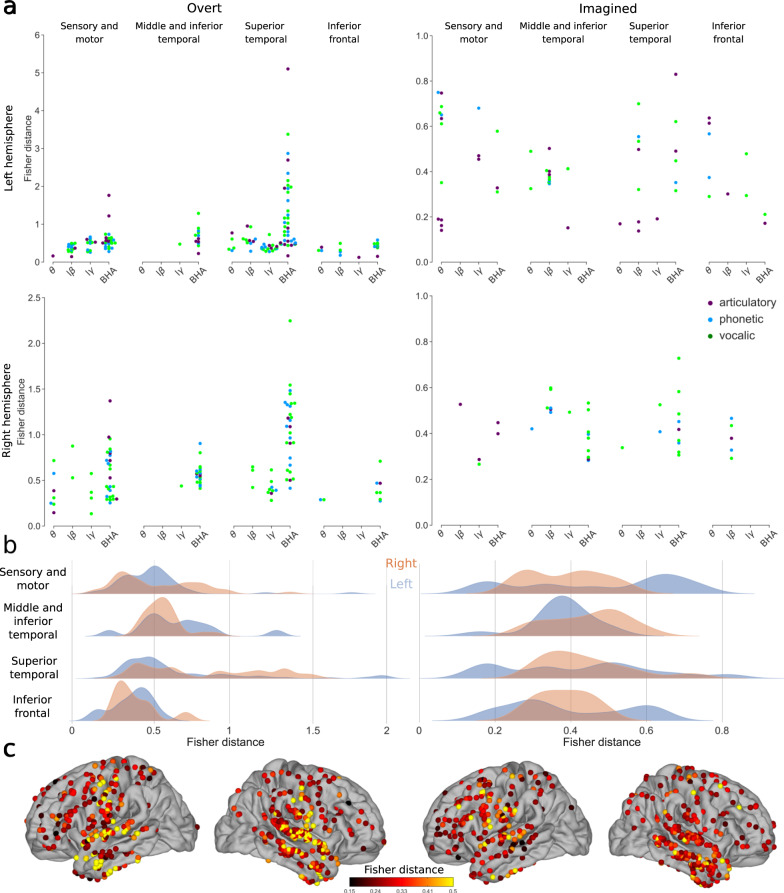
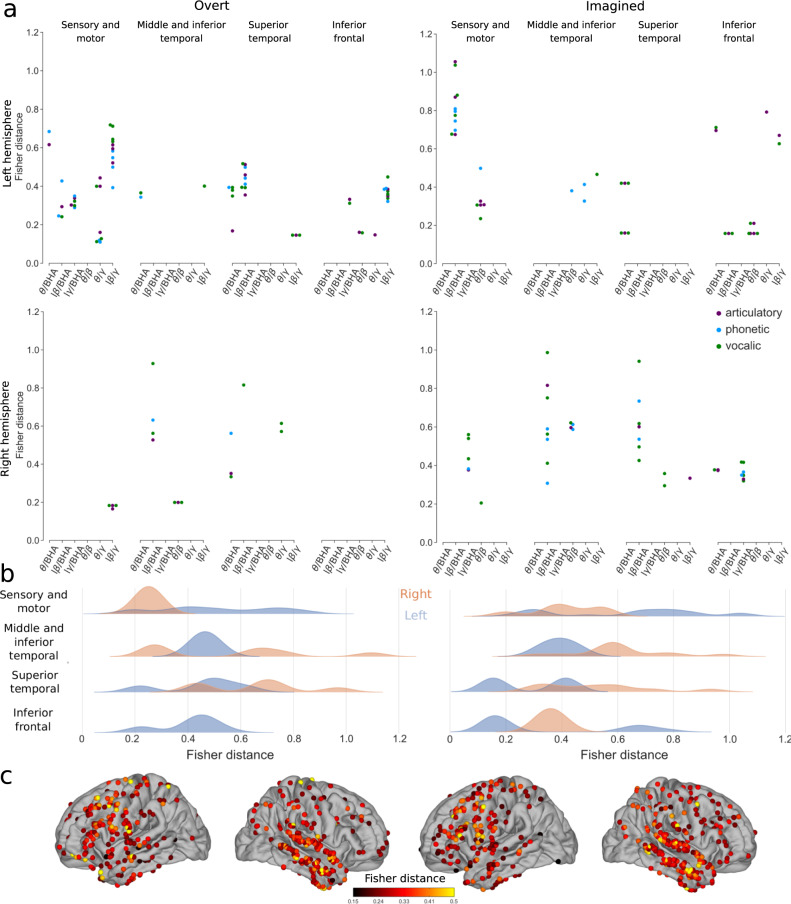
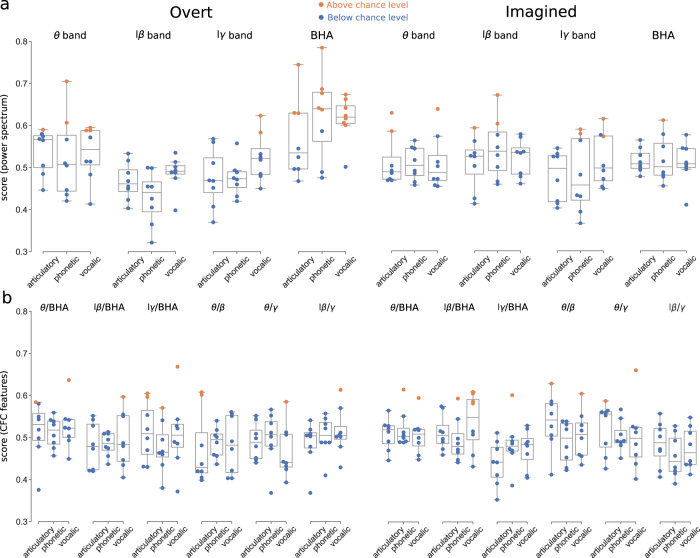
Reconstructing intended speech from neural activity using brain-computer interfaces holds great promises for people with severe speech production deficits. While decoding overt speech has progressed, decoding imagined speech has met limited success, mainly because the associated neural signals are weak and variable compared to overt speech, hence difficult to decode by learning algorithms. We obtained three electrocorticography datasets from 13 patients, with electrodes implanted for epilepsy evaluation, who performed overt and imagined speech production tasks. Based on recent theories of speech neural processing, we extracted consistent and specific neural features usable for future brain computer interfaces, and assessed their performance to discriminate speech items in articulatory, phonetic, and vocalic representation spaces. While high-frequency activity provided the best signal for overt speech, both low- and higher-frequency power and local cross-frequency contributed to imagined speech decoding, in particular in phonetic and vocalic, i.e. perceptual, spaces. These findings show that low-frequency power and cross-frequency dynamics contain key information for imagined speech decoding.
Overview
The claims and statistics of this paper haven’t been checked yet.
Free: it reads the open-access text and checks the first 5 claims that cite a source we can check. Create a free account to check every claim.
Integrity signals
Registry
Cites
Statistics
Figures
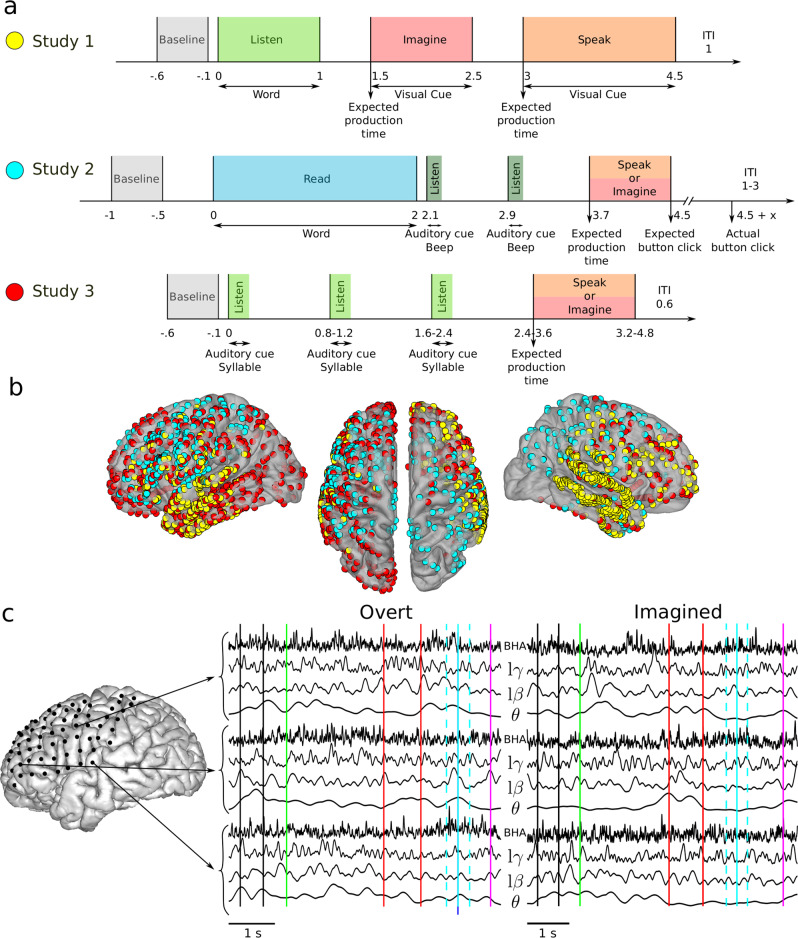
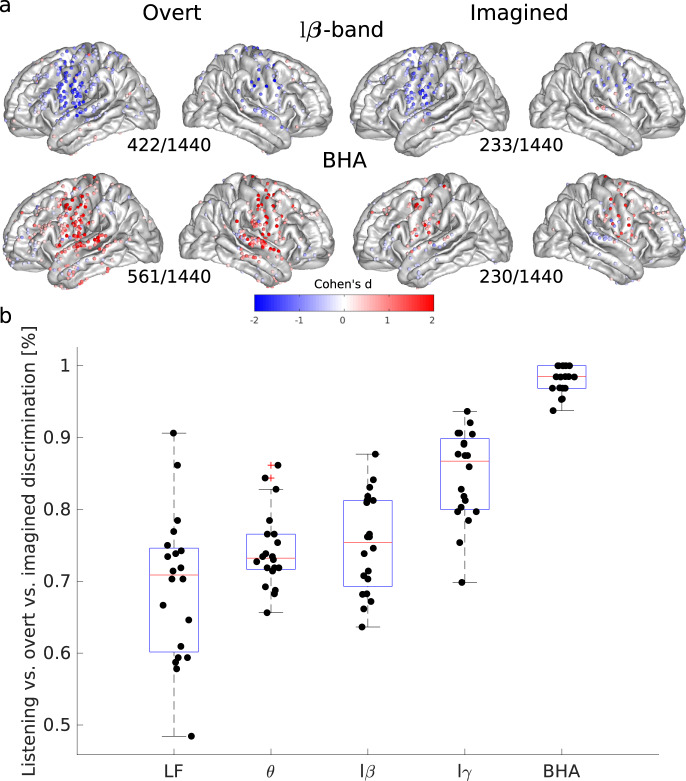
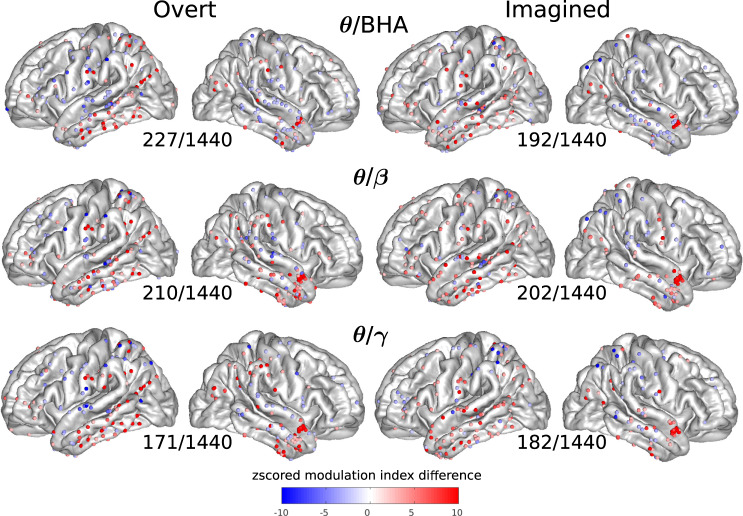
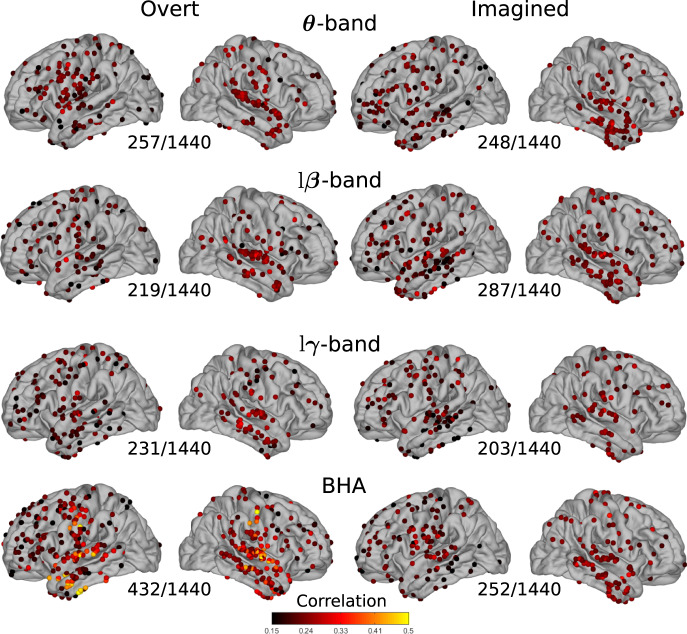
Verification
Claims the paper makes
The claims and statistics of this paper haven’t been checked yet.
Free: it reads the open-access text and checks the first 5 claims that cite a source we can check. Create a free account to check every claim.
Claims other papers make about this one
Each is checked against this paper’s own text: does it say what the citing paper says it does?
The source backs part of the claim, not all of it — or backs it for a different population, condition or comparison.
In the citing paper
“Along these lines, when able speakers are instructed to imagine speaking or hearing a word, neural activity in the STG can be used to decode those words with above-chance accuracy59–63.”
From The speech neuroprosthesis (2024) · cites this paper as [62]
Experimental — accuracy not yet measuredThe cited source says what the claim attributes to it.
In the citing paper
“Both neuroimaging and electrophysiological studies have shown that inner speech engages a similar (but not identical) cortical network as physically produced speech34–36”
From Inner speech in motor cortex and implications for speech neuroprostheses (2025) · cites this paper as [36]
Self-check
Percentages, sums and reported differences re-computed from the paper’s own numbers.
The self-check needs the paper’s full text.
Citations
Cites
Controlling the False Discovery Rate: A Practical and Powerful Approach to Multiple Testing
Benjamini, Y., & Hochberg, Y. (1995) · Journal of the Royal Statistical Society Series B: Statistical Methodology · doi:10.1111/j.2517-6161.1995.tb02031.x · Cited by 109,482
Fischl, B. (2012) · NeuroImage · doi:10.1016/j.neuroimage.2012.01.021 · Cited by 9,526
BCI2000: A General-Purpose Brain-Computer Interface (BCI) System
Schalk, G., McFarland, D. J., Hinterberger, T., Birbaumer, N., & Wolpaw, J. R. (2004) · IEEE Transactions on Biomedical Engineering · doi:10.1109/tbme.2004.827072 · Cited by 3,024
Reach and grasp by people with tetraplegia using a neurally controlled robotic arm
Hochberg, L. R., Bacher, D., Jarosiewicz, B., Masse, N. Y., Simeral, J. D., Vogel, J., Haddadin, S., Liu, J., Cash, S. S., van der Smagt, P., et al. (2012) · Nature · doi:10.1038/nature11076 · Cited by 2,719
The spatial and temporal signatures of word production components
Indefrey, P., & Levelt, W. J. M. (2004) · Cognition · doi:10.1016/j.cognition.2002.06.001 · Cited by 2,144
Cortical oscillations and speech processing: emerging computational principles and operations
Giraud, A.-L., & Poeppel, D. (2012) · Nature Neuroscience · doi:10.1038/nn.3063 · Cited by 1,917
Self-citationAn integrated theory of language production and comprehension
Pickering, M. J., & Garrod, S. (2013) · Behavioral and Brain Sciences · doi:10.1017/s0140525x12001495 · Cited by 1,569
Measuring Phase-Amplitude Coupling Between Neuronal Oscillations of Different Frequencies
Tort, A. B. L., Komorowski, R., Eichenbaum, H., & Kopell, N. (2010) · Journal of Neurophysiology · doi:10.1152/jn.00106.2010 · Cited by 1,363
Neuroscience Needs Behavior: Correcting a Reductionist Bias
Krakauer, J. W., Ghazanfar, A. A., Gomez-Marin, A., MacIver, M. A., & Poeppel, D. (2017) · Neuron · doi:10.1016/j.neuron.2016.12.041 · Cited by 1,358
Self-citationPulvermüller, F. (1999) · Behavioral and Brain Sciences · doi:10.1017/s0140525x9900182x · Cited by 1,284
Research works printed but not linked: 1
- Rezazadeh Sereshkeh A Yousefi R Wong AT Rudzicz F Chau T Development of a ternary hybrid fNIRS-EEG brain–computer interface based on imagined speech. Brain-Comput Interfaces 2019 6 128 140
Cited by
Items 101–200 of 212
Kwon, J., Lee, G., Park, Y. J., Lee, E., & Chung, C. K. (2025) · Scientific Reports · doi:10.1038/s41598-025-18537-2 · Cited by 4
Cross-Hemispheric Spatial-Temporal Attention Network for Decoding Silent Speech From EEG
Bai, Y., Zhang, S., Zhao, R., Han, X., Ni, G., & Ming, D. (2025) · IEEE Transactions on Biomedical Engineering · doi:10.1109/tbme.2025.3624878 · Cited by 2
“…neural representations in different frequency bands play distinct functional roles: high-frequency gamma oscillations correlate with language integration and semantic processing [26], while theta and beta bands are critically involved in speech motor encoding and feature extraction [27].”
Pretraining Large Brain Language Model for Active BCI: Silent Speech
Zhou, J., Cao, Z., Duan, Y., Barkley, C., Leong, D., Jiang, X., Nguyen, Q.-T., Zhao, Z., Do, T., Chang, Y., et al. (2025) · ACM International Conference on Multimedia (ACM MM) · doi:10.1145/3746027.3754810 · Cited by 14
“EEG has been widely used for decoding brain activities in language processing [10–12].”
Magnetoencephalography (MEG) based non-invasive Chinese speech decoding
Jia, Z., Wang, H., Shen, Y., Hu, F., An, J., Shu, K., & Wu, D. (2025) · Journal of Neural Engineering · doi:10.1088/1741-2552/ae1ea2 · Cited by 5
“Speech BCIs have the potential to directly reflect auditory perception and thoughts, offering a promising communication alternative for patients with aphasia [45].”
Generative AI for brain-computer interfaces decoding: Advances, challenges and future
Guo, Y., Ren, G., Ma, S., Zhou, J., Al-Nashash, H. A., Jolfaei, A., Zhang, Z., Li, G., Li, Y., Hu, Y., et al. (2026) · The Innovation Medicine · doi:10.59717/j.xinn-med.2026.100193 · Cited by 8
Hu, H., Wang, Y., Li, H., Zang, Q., Huang, J., Zhang, Y., Wu, J., Liu, L., Xing, Z., & Yu, Y. (2026) · JMIR Medical Informatics · doi:10.2196/73283 · Cited by 3
“The feature selection process involved using the recursive elimination of features approach of the random forest [27].”
Dörterler, S., Şahin, E., & Özdemir, D. (2026) · Neuroscience · doi:10.1016/j.neuroscience.2026.05.004 · Cited by 2
Speech Synthesis from Brain Signals Based on Generative Model
Lee, Y.-E., Kim, S., Lee, S., Lee, J., Kim, S.-W., & Lee, S. (2023) · International Winter Conference on Brain-Computer Interface (BCI) · doi:10.1109/bci57258.2023.10078574 · Cited by 6
“Although non-invasive measures have not yet shown the outcomes based on imagined speech, voice generation using spoken speech EEG or direct senors such as kinematic, or EMG has yield promising outcomes [17]–[20].”
BackgroundRegion-Specific Endogenous Brain Rhythms and Their Role for Speech and Language
Rimmele, J. M., & Keitel, A. (2026) · Cambridge University Press eBooks · doi:10.1017/9781009295888.005 · Cited by 2
Inner speech classification using inter-trial coherence framework for feature extraction
Lopez-Bernal, D., Balderas, D., Ponce, P., & Molina, A. (2023) · International Symposium on Medical Information Processing and Analysis (SIPAIM) · doi:10.1109/sipaim56729.2023.10373449 · Cited by 4
“Additionally, research has investigated the classification of syllabic prompts, including /ba/, /ku/, /da/, /ga/, /fo/, /le/, /ry/ [7]–[9].”
BackgroundZheng, H., Ding, Y., & Liu, X. (2024) · IEEE International Symposium on Circuits and Systems proceedings · doi:10.1109/iscas58744.2024.10558392 · Cited by 2
“Complex information, such as motion intention, speech information [4] can be decoded from the vast neural information obtained from multi-channel recording amplifiers.”
BackgroundLiu, L., & Zeng, X. (2024) · Journal of Aging and Rehabilitation · doi:10.1097/jagr.0000000000000022 · Cited by 2
“35 Even at an advanced stage, patients are already socially engaged through the technology, and end-of-life decisions can be independently communicated.”
Invasive Brain-Computer Interface (BCI) for Communication
Chaudhary, U. (2025) · Springer eBooks · doi:10.1007/978-3-031-78991-5_5 · Cited by 3
Speech and music recruit frequency-specific distributed and overlapping cortical networksPreprint
Rietmolen, N. T., Mercier, M. R., Trébuchon, A., Morillon, B., & Schön, D. (2022) · Research Square · doi:10.21203/rs.3.rs-2145777/v1 · Cited by 2
Language follows a distinct mode of extra-genomic evolutionPreprint
Bickel, B., Giraud, A., Zuberbühler, K., & van Schaik, C. P. (2023) · doi:10.31234/osf.io/nxf8c · Cited by 2
Self-citationSpeech and music recruit frequency-specific distributed and overlapping cortical networksPreprint
Rietmolen, N. T., Mercier, M. R., Trébuchon, A., Morillon, B., & Schön, D. (2024) · eLife · doi:10.7554/elife.94509.2 · Cited by 6
Information-making processes in the speaker’s brain drive human conversationsPreprint
Goldstein, A., Wang, H., Sheffer, T., Lioubashevski, D., Schain, M., Zada, Z., Niekerken, L., Aubrey, B., Nastase, S. A., Taubenfeld, A., et al. (2024) · bioRxiv (Cold Spring Harbor Laboratory) · doi:10.1101/2024.08.27.609946 · Cited by 2
“In contrast, most research on speech production has focused on highly controlled and predetermined sequences, frequently neglecting the complexities involved in spontaneous speech (1–3).”
Self-citationLi, H., Li, H., Ma, L., & Polina, D. (2024) · Frontiers in Human Neuroscience · doi:10.3389/fnhum.2024.1377233 · Cited by 3
Representation of Articulatory Features in EEG During Speech Production Tasks
Sun, S., Zhang, L., Wang, B., Wu, X. H., & Chen, J. (2024) · International Symposium on Chinese Spoken Language Processing (ISCSLP) · doi:10.1109/iscslp63861.2024.10800095 · Cited by 2
“This finding aligns with neuroscientific theories on the neural basis of speech production and motor control, indicating that the neural representation of articulatory actions is primarily concentrated in the motor cortex [15,30,31].”
Differences in spatiotemporal dynamics for processing specific semantic categories: An EEG study
Le, T., Luong, D. A. Q., Joo, H., Kim, D., & Woo, J. (2024) · Scientific Reports · doi:10.1038/s41598-024-83417-0 · Cited by 3
Identifying the Respiratory Sound Based on Single-Channel Separation and Hyperdimensional Computing
Zheng, J., Wang, Y., Niu, J., Shi, Y., & Xie, F. (2025) · IEEE Sensors Journal · doi:10.1109/jsen.2025.3557909 · Cited by 1
Speech mode classification from electrocorticography: transfer between electrodes and participants
de Borman, A., Wittevrongel, B., Dyck, B. V., Rooy, K. V., Carrette, E., Meurs, A., Roost, D. V., & Hulle, M. M. V. (2025) · Journal of Neural Engineering · doi:10.1088/1741-2552/adf2de · Cited by 2
“This was in line with our expectations since imagined speech typically elicits weaker signals and sparser activation across the brain (Pei et al 2011, Proix et al 2022, Soroush et al 2023).”
Heart Talk: Emotional Inner Speech Increases Heart Rate
Wallentin, M., Kruse, L., Yan, X., Samide, P., Meerwald, A. F., Fjendbo, D. T., & Nedergaard, J. (2025) · Psychophysiology · doi:10.1111/psyp.70138 · Cited by 4
Decoding phone pairs from MEG signals across speech modalities
de Zuazo, X., Navas, E., Saratxaga, I., Bourguignon, M., & Molinaro, N. (2026) · Computer Speech & Language · doi:10.1016/j.csl.2026.101939 · Cited by 3
Eyvazpour, R., Farrokhi, B., & Erfanian, A. (2025) · iScience · doi:10.1016/j.isci.2025.114521 · Cited by 4
Qin, Y., Xu, Q., Kujala, T., Wang, X., & Cong, F. (2026) · Biomedical Signal Processing and Control · doi:10.1016/j.bspc.2026.109535 · Cited by 1
Li, Z., He, S., Huang, J., Zhang, G., Dang, J., Zhao, S., & Han, J. (2026) · Information Fusion · doi:10.1016/j.inffus.2026.104262 · Cited by 1
Artificial intelligence for brain-to-speech decoding in paralysis: a systematic review
Belfrouh, S., Salmam, F. Z., Errattahi, R., Hanine, M., Obidallah, W. J., & Alhulayyil, H. A. (2026) · BMC Medical Informatics and Decision Making · doi:10.1186/s12911-026-03552-8 · Cited by 3
“This performance advantage depends on the capacity to acquire high-frequency neural activity (high-gamma, 70–170 Hz), which is correlated with both the kinematics of articulation and acoustic properties of speech [49, 54].”
EEG-FM-Compass: progress, benchmarking and future directions for EEG foundation models
Liu, D., Chen, Y., Chen, Z., Cui, Z., Wen, Y., An, J., Luo, J., & Wu, D. (2026) · National Science Review · doi:10.1093/nsr/nwag466 · Cited by 35
Reconstruction of speech spectrogram based on non-invasive EEG signal
Zhou, D., Unoki, M., Zhang, G., & Dang, J. (2022) · International Symposium on Chinese Spoken Language Processing (ISCSLP) · doi:10.1109/iscslp57327.2022.10038234 · Cited by 2
“The most effective approach so far to advance toward a speech decoding system is based on intracranial signals [19].”
BackgroundHow Can I Identify Stimulus-Driven Neural Activity Patterns in Multi-Patient ECoG Data?
Manning, J. R. (2023) · Studies in neuroscience, psychology and behavioral economics · doi:10.1007/978-3-031-20910-9_48 · Cited by 1
Speech Recognition from MEG Data Using Covariance Filters
Verkhlyutov, V. M., Vvedensky, V. L., Gurtovoy, K., Burlakov, E., & Martynova, O. (2024) · Studies in computational intelligence · doi:10.1007/978-3-031-50381-8_98 · Cited by 1
Voxeloc: A time-saving graphical user interface for localizing and visualizing stereo-EEG electrodes
Monney, J., Dallaire, S. E., Stoutah, L., Fanda, L., & Mégevand, P. (2024) · Journal of Neuroscience Methods · doi:10.1016/j.jneumeth.2024.110154 · Cited by 2
“Epilepsy surgery is currently the best option for patients who suffer from drug-resistant epilepsy (Sheng et al., 2017).”
BackgroundSelf-citationRecognition of Oral Speech from MEG Data Using Covariance Filters
Verkhlyutov, V. M., Burlakov, E., Gurtovoy, K., & Vvedensky, V. L. (2024) · Neuroscience and Behavioral Physiology · doi:10.1007/s11055-024-01612-y · Cited by 1
“Frequency bandpass fi ltering showed that all electroencephalographic brainwave bands, which are generated by both short-and long-range interactions between electrical brain sources, can be used to decode words [Proix et al., 2022].”
Peterson, V., Vissani, M., Luo, S., Rabbani, Q., Crone, N. E., Bush, A., & Richardson, R. M. (2024) · Imaging Neuroscience · doi:10.1162/imag_a_00301 · Cited by 2
Imagined Speech State Classification for Robust Brain-Computer Interface
Ko, B.-K., Kim, J.-Y., & Lee, S.-H. (2025) · International Winter Conference on Brain-Computer Interface (BCI) · doi:10.1109/bci65088.2025.10931499 · Cited by 4
“However, further aligning ground truth labels more precisely with the actual imagined speech intervals within each trial could lead to improved model performance by providing a more accurate representation of speech-related neural dynamics [26].”
Wu, K., Zhang, W., Zhang, Q., & Hu, X. (2025) · Polymers · doi:10.3390/polym17081105 · Cited by 1
“In recent years, emerging HCI technologies such as touch control, gesture recognition, voice interaction, eye tracking, and brain–computer interfaces have attracted significant attention [5–8].”
Dual-stream cortical feedbacks mediate sensory predictionPreprint
Chu, Q., Ma, O., Hang, Y., & Tian, X. (2022) · bioRxiv (Cold Spring Harbor Laboratory) · doi:10.1101/2022.07.12.499695 · Cited by 1
Self-citationKomeiji, S., Shigemi, K., Mitsuhashi, T., Iimura, Y., Suzuki, H., Sugano, H., Shinoda, K., Yatabe, K., & Tanaka, T. (2024) · bioRxiv (Cold Spring Harbor Laboratory) · doi:10.1101/2024.08.21.608927 · Cited by 2
“These targets may include motor actions or motor intentions [1, 2, 3], internal speech [4, 5, 6], or psychological states [7, 8, 9].”
An open dataset of multidimensional signals based on different speech patterns in pragmatic Mandarin
Zhao, R., Bai, Y., Zhang, S., Zhu, J., Liu, H., & Ni, G. (2025) · Scientific Data · doi:10.1038/s41597-025-06213-z · Cited by 6
Contactless optical decoding of cortical language responses via region-transferable speckle dynamicsPreprint
Segal, N., Bar, M., Rubinstein, D., Krapovnytskyi, Y., Agdarov, S., Beiderman, Y., Beiderman, Y., & Zalevsky, Z. (2026) · Research Square · doi:10.21203/rs.3.rs-9141990/v1 · Cited by 2
Speech Production in Intracranial Electroencephalography: iBIDS DatasetPreprint
Verwoert, M., Ottenhoff, M. C., Goulis, S., Colon, A., Wagner, L., Tousseyn, S., van Dijk, J. P., Kubben, P., & Herff, C. (2022) · bioRxiv (Cold Spring Harbor Laboratory) · doi:10.1101/2022.04.05.487183
What is the Functional Role of iEEG Oscillations in Neural Processing and Cognitive Functions?
Proix, T., Mégevand, P., & Giraud, A. (2023) · Studies in neuroscience, psychology and behavioral economics · doi:10.1007/978-3-031-20910-9_19 · Cited by 1
Self-citationRecognition of Spoken Words from MEG Data Using Covariance Patterns
Verkhlyutov, V. M., Burlakov, E., Vvedensky, V. L., Gurtovoy, K., & Ushakov, V. (2023) · Studies in computational intelligence · doi:10.1007/978-3-031-44865-2_18
Latifi, S., Chang, J., Pedram, M., Latifikhereshki, R., & Carmichael, S. T. (2024) · bioRxiv (Cold Spring Harbor Laboratory) · doi:10.1101/2024.01.30.577967 · Cited by 2
Speech and music recruit frequency-specific distributed and overlapping cortical networksPreprint
Rietmolen, N. T., Mercier, M. R., Trébuchon, A., Morillon, B., & Schön, D. (2024) · eLife · doi:10.7554/elife.94509.1
Feasibility of decoding covert speech in ECoG with a Transformer trained on overt speechPreprint
Komeiji, S., Mitsuhashi, T., Iimura, Y., Suzuki, H., Sugano, H., Shinoda, K., & Tanaka, T. (2024) · Research Square · doi:10.21203/rs.3.rs-3927907/v1
A Review on Applications of Electroencephalogram: Includes Imagined Speech
Santhakumari, S., & Kamalakannan, J. (2024) · International Journal of Advanced Computer Science and Applications · doi:10.14569/ijacsa.2024.0150242 · Cited by 1
“As per Proix et al., non-invasive methods have not given convincing results and have limited success due to brain signals taken on the scalp by either EEG or MEG technique during the imagined speech; brain signals are weak and vary with overt speech [5].”
BackgroundAn Interpretable and Generalizable Speech Detector Based on a CNN-LSTM Framework
Wan, Z., Wu, Y., Ticha, M. B. B., Godais, G. L., Kahane, P., Chabardès, S., Chen, W., Zhang, S., & Yvert, B. (2024) · IEEE International Conference on Acoustics Speech and Signal Processing · doi:10.1109/icassp48485.2024.10445835 · Cited by 2
RECOGNITION OF ORAL SPEECH ACCORDING TO MEG DATA BY COVARIANCE FILTERS
Verkhlyutov, V. M., Burlakov, E., Gurtovoy, K., & Vvedensky, V. L. (2023) · Журнал высшей нервной деятельности им И П Павлова · doi:10.31857/s0044467723060126
Bordonaro, M. (2024) · Theory in Biosciences · doi:10.1007/s12064-024-00423-6
“There has also been progress in interpreting imagined speech via electroencephalogram (EEG) analysis of brainwave activity (Li et al. 2021; Singh and Gumaste 2021; Proix et al. 2022).”
Impact of Fragmentation on Temporal Event Localization for Speech EEG
Balasubramanian, A., & Samanta, D. (2024) · International Conference on Signal Processing and Communications (SPCOM) · doi:10.1109/spcom60851.2024.10631625
“…are provided in Table I. Machine learning and deep learning algorithms are commonly used to train on the extracted features and among them, support vector machine (SVM) is frequently employed [8], [12], [13], [19], [20], but its complexity increases with class because it is a binary classifier.”
Wu, Y., Li, C., Zhang, H., Chen, F., Chen, W., & Zhang, S. (2024) · International Conference on Biomedical Signal and Image Processing (ICBIP) · doi:10.1145/3691521.3691534
“Numerous studies on speech brain-computer-interfaces (BCI) have demonstrated that the sensorimotor cortex (SMC), superior temporal gyrus (STG), and other language functional areas play crucial roles in speech decoding [1-8].”
Howard, G. C. (2024) · Oxford University Press eBooks · doi:10.1093/oso/9780197664797.002.0004
Howard, G. C. (2024) · Oxford University Press eBooks · doi:10.1093/oso/9780197664797.003.0001
Howard, G. C. (2024) · Oxford University Press eBooks · doi:10.1093/oso/9780197664797.003.0014
Whitehouse, A. (2024) · Oxford University Press eBooks · doi:10.1093/oso/9780197664797.002.0006
Howard, G. C. (2024) · Oxford University Press eBooks · doi:10.1093/oso/9780197664797.003.0013
Howard, G. C. (2024) · Oxford University Press eBooks · doi:10.1093/oso/9780197664797.003.0015
Howard, G. C. (2024) · Oxford University Press eBooks · doi:10.1093/oso/9780197664797.002.0008
Howard, G. C. (2024) · Oxford University Press eBooks · doi:10.1093/oso/9780197664797.002.0007
Howard, G. C. (2024) · Oxford University Press eBooks · doi:10.1093/oso/9780197664797.003.0006
Howard, G. C. (2024) · Oxford University Press eBooks · doi:10.1093/oso/9780197664797.003.0011
Howard, G. C. (2024) · Oxford University Press eBooks · doi:10.1093/oso/9780197664797.003.0007
Howard, G. C. (2024) · Oxford University Press eBooks · doi:10.1093/oso/9780197664797.003.0002
Howard, G. C. (2024) · Oxford University Press eBooks · doi:10.1093/oso/9780197664797.003.0003
Howard, G. C. (2024) · Oxford University Press eBooks · doi:10.1093/oso/9780197664797.003.0008
Howard, G. C. (2024) · Oxford University Press eBooks · doi:10.1093/oso/9780197664797.003.0012
Howard, G. C. (2024) · Oxford University Press eBooks · doi:10.1093/oso/9780197664797.003.0009
Howard, G. C. (2024) · Oxford University Press eBooks · doi:10.1093/oso/9780197664797.003.0010
Howard, G. C. (2024) · Oxford University Press eBooks · doi:10.1093/oso/9780197664797.003.0004
Howard, G. C. (2024) · Oxford University Press eBooks · doi:10.1093/oso/9780197664797.003.0005
The Biology of Us: The Living World All Around and In Us
Howard, G. C. (2024) · doi:10.1093/oso/9780197664797.001.0001 · Cited by 1
Howard, G. C. (2024) · Oxford University Press eBooks · doi:10.1093/oso/9780197664797.002.0003
Response coupling with an auxiliary neural signal for enhancing brain signal detection
Gupta, E., & Sivakumar, R. (2025) · Scientific Reports · doi:10.1038/s41598-025-87414-9 · Cited by 1
Towards Scalable Handwriting Communication via EEG Decoding and Latent Embedding Integration
Kim, J.-Y., Kim, D.-S., & Lee, S. (2025) · International Winter Conference on Brain-Computer Interface (BCI) · doi:10.1109/bci65088.2025.10931608
“In speech decoding, low and high–frequency neural activity has been shown to play a significant role in imagined speech decoding, particularly in phonetic spaces [14].”
Self-paced silent speech brain-computer interface for device control
Luo, S., Angrick, M., Coogan, C. G., Candrea, D. N., Wyse‐Sookoo, K., Schippers, A., Ganji, R., Milsap, G., Anderson, W. S., Gordon, C. R., et al. (2026) · Communications Biology · doi:10.1101/2025.04.09.25325542 · Cited by 2
“Although previous research has shown that covertly imagined speech can be decoded 38,39 , this study was entirely focused on decoding silently mimed speech.”
Unlocking the Mind: Revolutionizing the Metaverse with Brain-Computer Interfaces
Wang, K. (2025) · Applied and Computational Engineering · doi:10.54254/2755-2721/2025.22853
Neural hierarchy for coding articulatory dynamics in speech imagery and productionPreprint
Zhao, Z.-H., Wang, Z.-J., Liu, Y., Qian, Y.-K., Yin, Y., Gao, X.-W., Yuan, B.-K., Tong, S. X., Tian, X., Chen, G., et al. (2025) · bioRxiv · doi:10.1101/2025.05.27.656311 · Cited by 1
Self-citationExploring Auditory Category Distinctions in Perception and ImageryPreprint
Leeman, J. M., Hare, E. T., Morales‐Torres, R., Kabber, P., Zhang, J., Meter, K. V., & Overath, T. (2025) · bioRxiv (Cold Spring Harbor Laboratory) · doi:10.1101/2025.07.21.665330
Optimizing Temporal and Spectral Interval Selection for Imagined Speech Decoding from EEG
Qiu, F., Tan, T. S., Tiong, M. F. T., & Sheikh, J. (2025) · World Congress on Medical Physics and Biomedical Engineering, September 7 - 12, 2009, Munich, Germany · doi:10.1007/978-3-031-97578-3_17 · Cited by 1
Pretto, M. D., Kodrasi, I., & Laganaro, M. (2025) · Brain Topography · doi:10.1007/s10548-025-01131-0
“Other studies have tested imagined speech (e.g., de Borman et al. 2024; Proix et al. 2022), tough this implies the absence of motor activation, making it unlikely to represent speech planning and programming.”
Restoring communication with speech brain–computer interfaces
Prakash, P. R., Luo, S., Crone, N. E., & Slutzky, M. W. (2025) · Elsevier eBooks · doi:10.1016/b978-0-443-24824-5.00015-6 · Cited by 2
Wu, X., Hu, K., Fu, Z., & Zhang, D. (2025) · Imaging Neuroscience · doi:10.1162/imag.a.146 · Cited by 2
“…decoding text ( Card et al., 2024; Duraivel et al., 2023; Luo et al., 2023; Makin et al., 2020; Metzger et al., 2022, 2023; Moses et al., 2021; Proix et al., 2022; Sun et al., 2020; Willett et al., 2021, 2023; Wilson et al., 2020; Zhang et al., 2024) and reconstructing waveforms ( Akbari et…”
A Novel Binocular-Encoded SSVEP Framework for Efficient VR-Based Brain-Computer Interface
Liu, H., Wang, Z., Li, R., Zhao, X., Xu, T., Zhou, T., & Hu, H. (2025) · IEEE Journal of Biomedical and Health Informatics · doi:10.1109/jbhi.2025.3626332
Lee, H., Hwang, J., Kim, K., Lee, G., Chung, C. K., & Im, C. (2025) · Machine Learning with Applications · doi:10.1016/j.mlwa.2025.100805
TMS as a Tool for Mapping the Dynamic Properties of Language in the Brain
Kaur, H., Grant, G. A., & Baumer, F. M. (2025) · Cambridge University Press eBooks · doi:10.1017/9781009202336.006
Neuroimaging Studies of Brain and Language
Andrews, E., & Kiran, S. (2025) · Cambridge University Press eBooks · doi:10.1017/9781009202336.003
A Novel Imagined Speech Paradigm: Word Classification from Neurophysiological Signals
Iacomi, F., Farabbi, A., Mollura, M., Polo, E. M., Barbieri, R., & Mainardi, L. (2026) · SN Computer Science · doi:10.1007/s42979-025-04714-7
Word classification across speech modes from low-density electrocorticography signals
de Borman, A., Dyck, B. V., Rooy, K. V., Carrette, E., Meurs, A., Roost, D. V., & Hulle, M. M. V. (2026) · Journal of Neural Engineering · doi:10.1088/1741-2552/ae3a1b · Cited by 1
“Yet imagined speech is known to recruit a broader network of regions (Pei et al 2011, Brumberg et al 2016, Proix et al 2022).”
InfluentialSoft Multiaxial Strain Mapping Interface with AI-Driven Decoding for Silent Speech in Noise
Hong, S., Yoo, J., & Park, S. (2026) · Cyborg and Bionic Systems · doi:10.34133/cbsystems.0536 · Cited by 1
Cross-frequency integration with multiple brain regions for imagined speech
OGREY, C. C., Gupta, R., & Kumar, J. (2026) · Engineering Research Express · doi:10.1088/2631-8695/ae47a5
UGR-MINDVOICE: A multimodal EEG-audio dataset for overt and covert Iberian Spanish speech production
Cortina, I. V., Khanday, O. M., Ouellet, M., Pérez-Córdoba, J. L., Esteban, P. R.-S., Miccoli, L., Galdón, A., Granados, G. O., & González, J. A. (2026) · Computer Speech & Language · doi:10.1016/j.csl.2026.101964 · Cited by 1
Lightweight Diffusion-based Framework for Online Imagined Speech Decoding in Aphasia
Ko, E., Kim, S.-W., & Jo, H.-N. (2026) · International Winter Conference on Brain-Computer Interface (BCI) · doi:10.1109/bci69045.2026.11435091
“BCIs facilitate device operation through the direct decoding of neural signals, thereby enabling individuals with motor paralysis or language disorders to regain communicative and interactive capabilities [5]–[7].”
Speech Decoding from Non-invasive Brain Signals Using Generative Learning Framework
Lee, S.-H., Kim, S.-W., Kim, J.-Y., & Lee, S.-W. (2026) · International Winter Conference on Brain-Computer Interface (BCI) · doi:10.1109/bci69045.2026.11435073
“Early studies in pattern recognition and biologically inspired vision have also contributed foundational insights for modern neural decoding frameworks, emphasizing hierarchical feature extraction and multiresolution representation learning [22]–[27].”
Spatiotemporal Dynamics in Prespeech Semantic Category Decoding: An Intracranial EEG Study
Park, Y. J., Kwon, J., Lee, G. H., Meng, K., & Chung, C. K. (2026) · eNeuro · doi:10.1523/eneuro.0254-25.2026
“Each channel was then evaluated independently using a linear support vector machine (SVM) with fi vefold strati fi ed cross-validation, and channels whose mean decoding accuracy exceeded chance (>0.50) were retained for subsequent multichannel analyses (Proix et al., 2022).”
InfluentialSystematic Benchmarking of Single-Channel EEG for Cognitive State Recognition
Wen, X., Wang, S., Yang, M., Wu, X., & Zhang, D. (2026) · IEEE Transactions on Cognitive and Developmental Systems · doi:10.1109/tcds.2026.3683097
“It encompasses a variety of task categories, such as motor imagery [1], emotion recognition [2], workload assessment [3], speech imagery [4], auditory attention [5], and mental arithmetic [6].”
Neuromamba: Adaptive Frequency Filtering with a Pyramid Mamba for sEEG-driven Speech Synthesis
Xie, J., Wang, R., Zhang, X., Cai, S., & Li, H. (2026) · IEEE International Conference on Acoustics Speech and Signal Processing · doi:10.1109/icassp55912.2026.11462161
Lee, S., Lee, S.-H., & Lee, S. (2026) · Expert Systems with Applications · doi:10.1016/j.eswa.2026.132526
Meyer, L., Meyer, L., & Meyer, L. (2026) · Cambridge University Press eBooks · doi:10.1017/9781009295888.002
Metadata
- Authors
- Proix, T., Delgado Saa, J., Christen, A., Martin, S., Pasley, B. N., Knight, R. T., Tian, X., Poeppel, D., Doyle, W. K., Devinsky, O., Arnal, L. H., Mégevand, P., & Giraud, A.-L.
- Affiliations
- University of Geneva (CH)
- University of California, Berkeley (US)
- New York University Shanghai (CN)
- Ernst Strüngmann Institute for Neuroscience (DE)
- New York University (US)
- Inserm (FR)
- Corresponding author
- Proix, Timothée
- Venue
- Nature Communications
- Published
- 2022-01-10
- Volume
- 13
- Issue
- 1
- Pages
- 48-48
- ISSN
- 2041-1723 (ISSN-L)
- PMC
- PMC8748882
- OpenAlex
- W4205549622
- Cited by
- 212
- References
- 74
- Citations by year
- 2026: 36 · 2025: 58 · 2024: 67 · 2023: 27 · 2022: 23
- FWCI
- 22.56
- Type
- journal article
- Language
- en
- Open access
- gold
- doi.org
- Licence
- cc-by
- creativecommons.org/licenses/by/4.0 (tdm)
- creativecommons.org/licenses/by/4.0 (vor)
- Locations
- Nature Communications (publishedVersion, cc-by)
- PubMed Central (publishedVersion, cc-by)
- PubMed (publishedVersion)
- Archive ouverte UNIGE (University of Geneva) (publishedVersion, other-oa)
- HAL (submittedVersion, cc-by)
- RePEc: Research Papers in Economics (submittedVersion)
- DOAJ (DOAJ: Directory of Open Access Journals) (submittedVersion, cc-by-sa)
- Archive ouverte UNIGE (University of Geneva) (submittedVersion, cc-by)
- Funders
- National Science Foundation
- Natural Science Foundation of Shanghai (20ZR1472100, B16018, 32071099)
- New York University Shanghai
- Fondation Pour l'Audition (RD-2020-10, FPA RD‐2020‐10)
- Schweizerischer Nationalfonds zur Förderung der Wissenschaftlichen Forschung (180888, 167836, 193542, 163040)
- National Natural Science Foundation of China (2020-10, 20ZR1472100, 32071099, B16018)
- National Institutes of Health (2r01ns021135-33)
- Project 211 (32071099, Base B16018, 20ZR1472100, B16018)
- National Institute of Neurological Disorders and Stroke (R01 NS-021135)
- Topics
- Life Sciences › Neuroscience › Cognitive Neuroscience › EEG and Brain-Computer Interfaces
- Life Sciences › Neuroscience › Cognitive Neuroscience › Neurobiology of Language and Bilingualism
- Life Sciences › Neuroscience › Cognitive Neuroscience › Neural dynamics and brain function
- Keywords
- imagined speech, speech decoding, intracranial EEG, electrocorticography, brain-computer interface, cross-frequency coupling, low-frequency power, overt speech, phonetic representation, articulatory representation, speech production deficits, epilepsy patients
- MeSH terms
- Electrocorticography, Adult, Brain, Brain Mapping, Electrodes, Female, Humans, Imagination, Language, Male, Middle Aged, Phonetics, Speech, Young Adult, Brain-Computer Interfaces
About these checks
Registry, retraction, Cites and statistics results are computed, not judged, with one exception: a printed reference that no index lists is read once by a model before it counts as a citation error. Claims are extracted by a model and kept only when their quote appears verbatim in the text; each cited source is then checked, with a model’s help, for whether it says what the claim relies on. Those verdicts can be wrong — read the claim’s quote and the cited source before relying on one.
Statistics and arithmetic are recomputed, not judged.
Confidence bands are shown only for fields calibrated on our annotated test set. None is calibrated yet, so no band is shown.
What counts as a claim ›How we measure confidence ›How we check this ›
Are you an author, or do you see a problem with this page? Request a review
Data sources
Bibliographic data: Semantic Scholar, OpenAlex, Crossref.
Contains information from the Semantic Scholar Academic Graph Datasets, made available under the ODC Attribution License (ODC-BY 1.0).
Semantic Scholar’s data is described in: Kinney, R., et al. (2023). The Semantic Scholar Open Data Platform. arXiv:2301.10140.
