

Tissue extracellular matrix hydrogels as alternatives to Matrigel for culturing gastrointestinal organoids
Open accessThe DOI matches its Crossref record; 103 of the 103 references it cites were found in a registry or an index.
Abstract
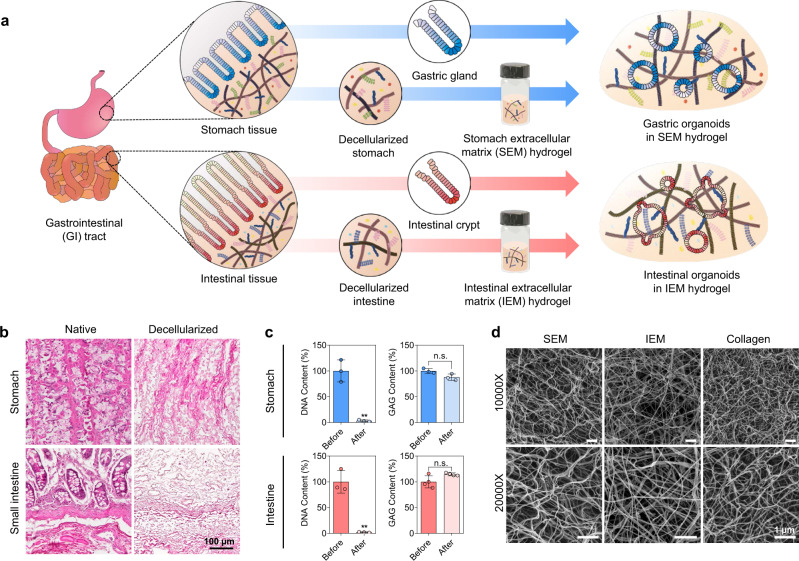
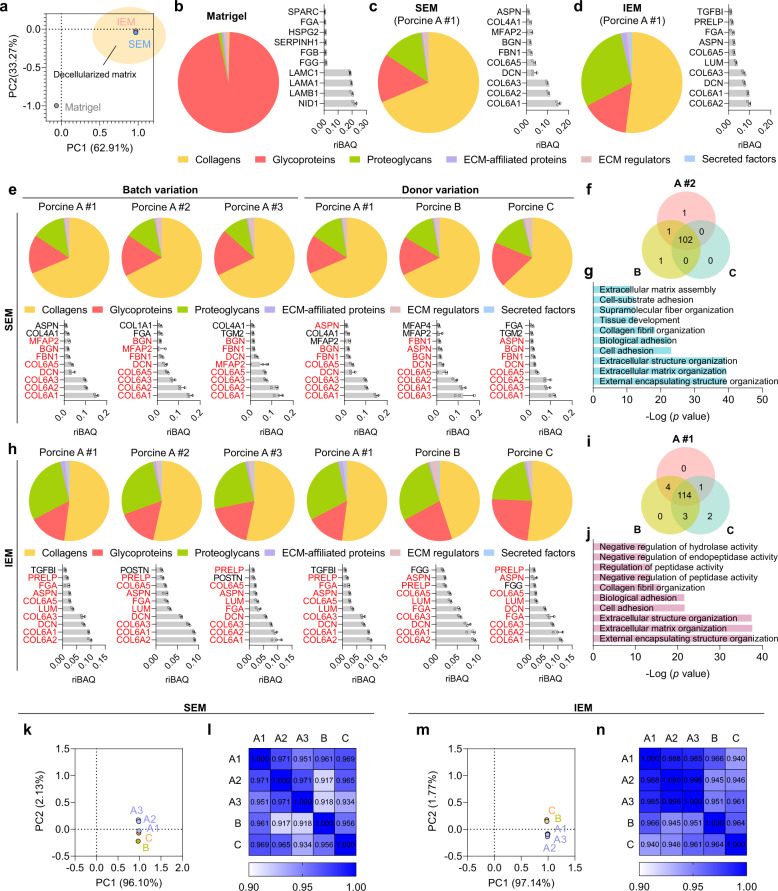
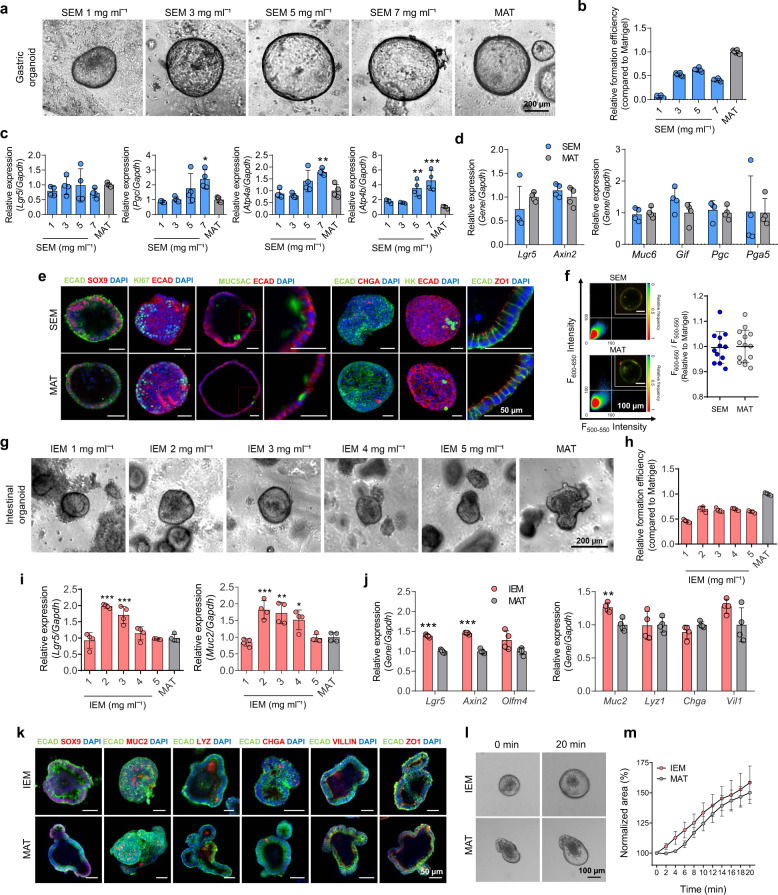
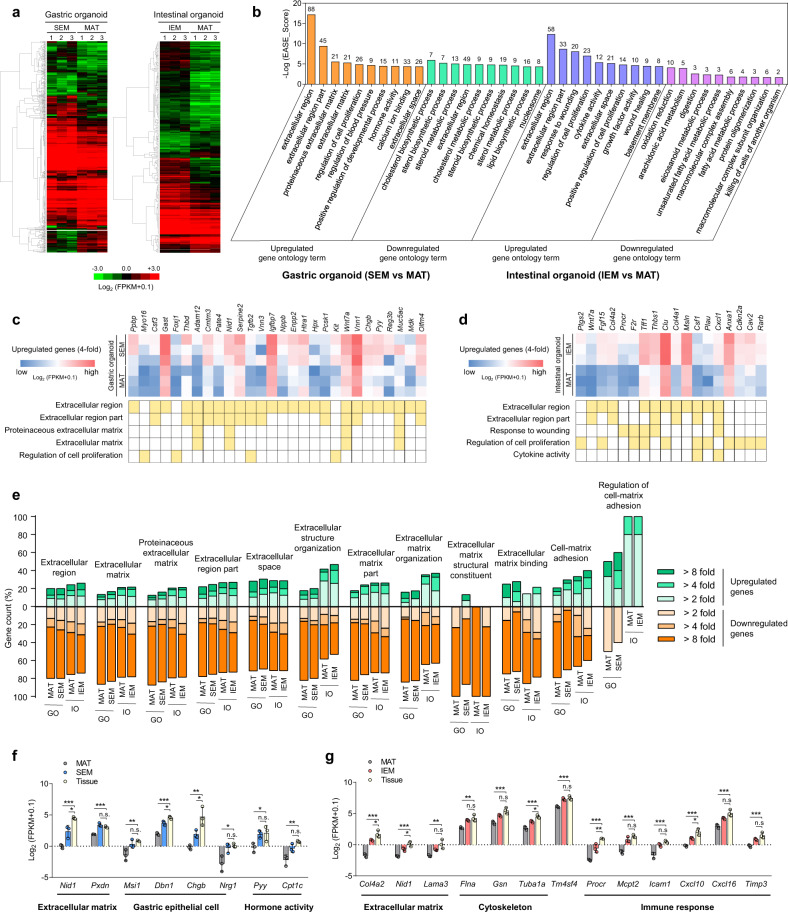
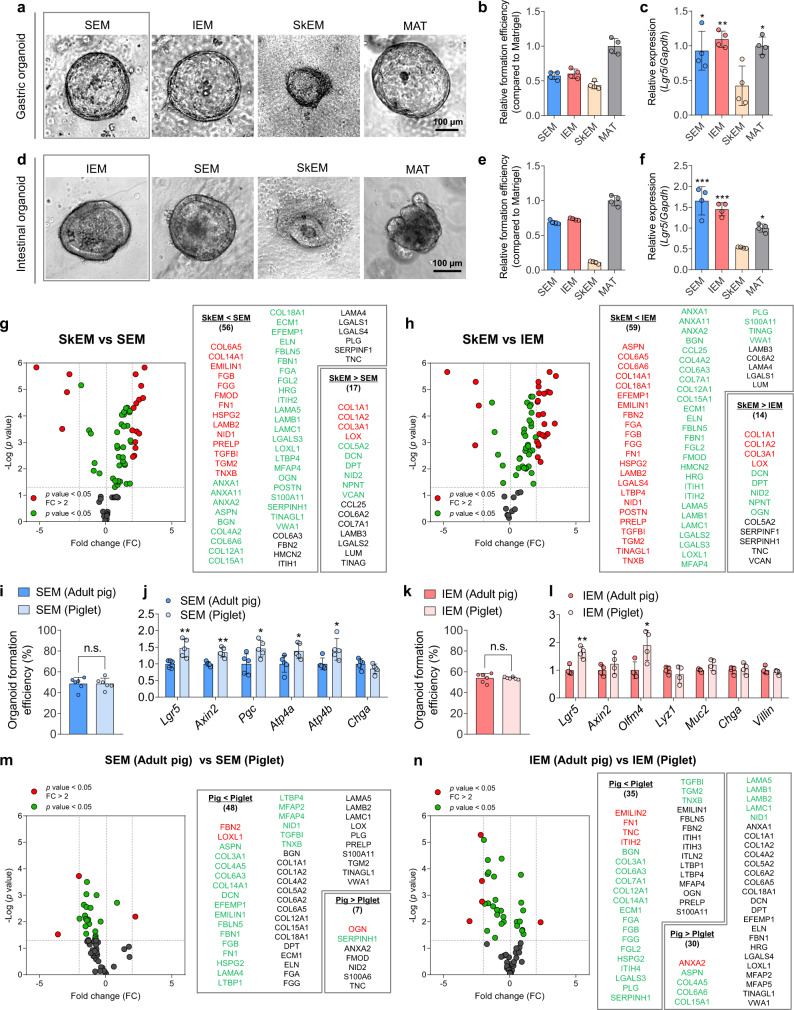
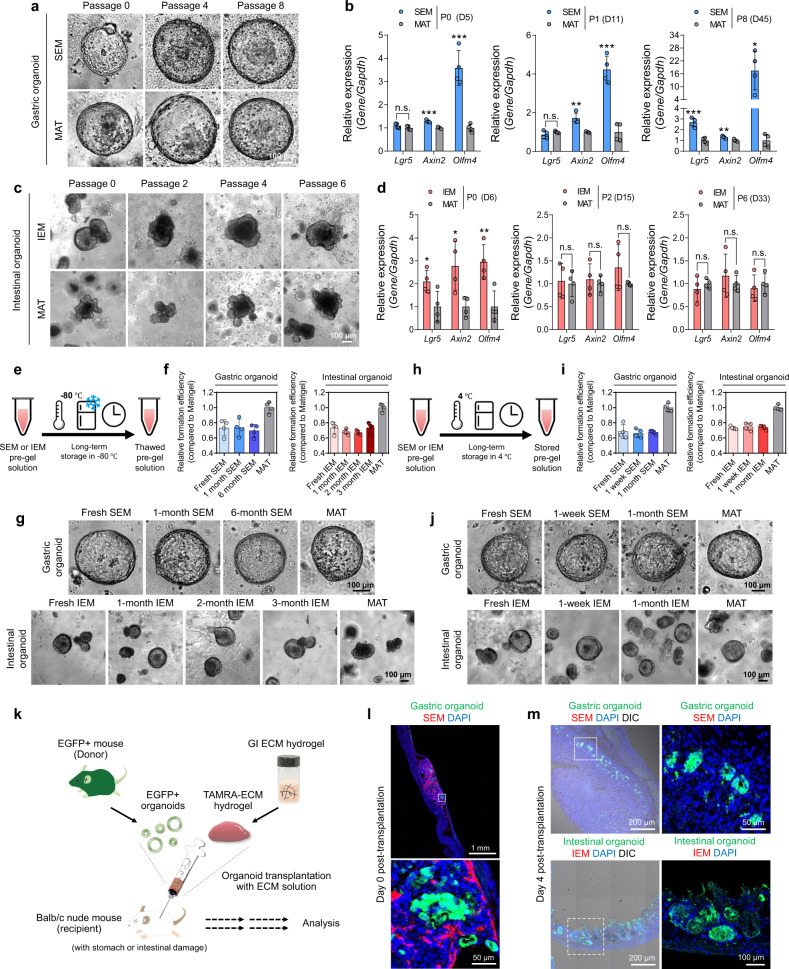
Matrigel, a mouse tumor extracellular matrix protein mixture, is an indispensable component of most organoid tissue culture. However, it has limited the utility of organoids for drug development and regenerative medicine due to its tumor-derived origin, batch-to-batch variation, high cost, and safety issues. Here, we demonstrate that gastrointestinal tissue-derived extracellular matrix hydrogels are suitable substitutes for Matrigel in gastrointestinal organoid culture. We found that the development and function of gastric or intestinal organoids grown in tissue extracellular matrix hydrogels are comparable or often superior to those in Matrigel. In addition, gastrointestinal extracellular matrix hydrogels enabled long-term subculture and transplantation of organoids by providing gastrointestinal tissue-mimetic microenvironments. Tissue-specific and age-related extracellular matrix profiles that affect organoid development were also elucidated through proteomic analysis. Together, our results suggest that extracellular matrix hydrogels derived from decellularized gastrointestinal tissues are effective alternatives to the current gold standard, Matrigel, and produce organoids suitable for gastrointestinal disease modeling, drug development, and tissue regeneration.
Overview
The claims and statistics of this paper haven’t been checked yet.
Free: it reads the open-access text and checks the first 5 claims that cite a source we can check. Create a free account to check every claim.
Integrity signals
Registry
Cites
Statistics
Figures
Verification
Claims the paper makes
The claims and statistics of this paper haven’t been checked yet.
Free: it reads the open-access text and checks the first 5 claims that cite a source we can check. Create a free account to check every claim.
Claims other papers make about this one
Each is checked against this paper’s own text: does it say what the citing paper says it does?
The cited source says what the claim attributes to it.
In the citing paper
“Kim et al. determined that gastrointestinal ECM hydrogels facilitated prolonged passaging and transplantation of organoids, producing organoids suitable for gastrointestinal disease modeling, drug development, and tissue regeneration by simulating the microenvironment of gastrointestinal tissues.[ 202 ]”
From Bioactive scaffolds for tissue engineering: A review of decellularized extracellular matrix applications and innovations (2025) · cites this paper as [202]
The check wasn’t confident either way, so it gives no verdict — never disputed.
In the citing paper
“macrophages could speed up cancer cell migration through secreting TGF‐β1.”
From 3D Biomimetic Models to Reconstitute Tumor Microenvironment In Vitro: Spheroids, Organoids, and Tumor‐on‐a‐Chip (2023) · cites this paper as [122]
Experimental — accuracy not yet measured
Self-check
Percentages, sums and reported differences re-computed from the paper’s own numbers.
The self-check needs the paper’s full text.
Citations
Cites
Gene Ontology: tool for the unification of biology
Ashburner, M., Ball, C. A., Blake, J. A., Botstein, D., Butler, H., Cherry, J. M., Davis, A. P., Dolinski, K., Dwight, S. S., Eppig, J. T., et al. (2000) · Nature Genetics · doi:10.1038/75556 · Cited by 43,206
Tissue-based map of the human proteome
Uhlén, M., Fagerberg, L., Hallström, B. M., Lindskog, C., Oksvold, P., Mardinoglu, A., Sivertsson, Å., Kampf, C., Sjöstedt, E., Asplund, A., et al. (2015) · Science · doi:10.1126/science.1260419 · Cited by 15,286
Cox, J., & Mann, M. (2008) · Nature Biotechnology · doi:10.1038/nbt.1511 · Cited by 14,855
The Perseus computational platform for comprehensive analysis of (prote)omics data
Tyanova, S., Temu, T., Sinitcyn, P., Carlson, A., Hein, M. Y., Geiger, T., Mann, M., & Cox, J. (2016) · Nature Methods · doi:10.1038/nmeth.3901 · Cited by 8,803
Single Lgr5 stem cells build crypt-villus structures in vitro without a mesenchymal niche
Sato, T., Vries, R. G., Snippert, H. J., van de Wetering, M., Barker, N., Stange, D. E., van Es, J. H., Abo, A., Kujala, P., Peters, P. J., et al. (2009) · Nature · doi:10.1038/nature07935 · Cited by 7,204 · cited 2×
“To evaluate the variation of decellularized GI tissue-derived matrices in the ECM compositions, we compared the samples under two conditions: (1) comparison of multiple sample batches derived from different locations in the same donor tissue (batch variation—porcine A1–A3), (2) comparison of multiple samples derived f…”
BackgroundMethodGlobal quantification of mammalian gene expression control
Schwanhäusser, B., Busse, D., Li, N., Dittmar, G., Schuchhardt, J., Wolf, J., Chen, W., & Selbach, M. (2011) · Nature · doi:10.1038/nature10098 · Cited by 6,566
Andromeda: A Peptide Search Engine Integrated into the MaxQuant Environment
Cox, J., Neuhauser, N., Michalski, A., Scheltema, R. A., Olsen, J. V., & Mann, M. (2011) · Journal of Proteome Research · doi:10.1021/pr101065j · Cited by 5,500
Raudvere, U., Kolberg, L., Kuzmin, I., Arak, T., Adler, P., Peterson, H., & Vilo, J. (2019) · Nucleic Acids Research · doi:10.1093/nar/gkz369 · Cited by 5,045
The extracellular matrix at a glance
Frantz, C., Stewart, K. M., & Weaver, V. M. (2010) · Journal of Cell Science · doi:10.1242/jcs.023820 · Cited by 4,334
Sato, T., Stange, D. E., Ferrante, M., Vries, R. G. J., van Es, J. H., van den Brink, S., van Houdt, W. J., Pronk, A., van Gorp, J., Siersema, P. D., et al. (2011) · Gastroenterology · doi:10.1053/j.gastro.2011.07.050 · Cited by 3,753 · cited 1×
“In this study, we provide experimental evidence on how our approach with decellularized GI tissue-derived ECM hydrogels can resolve the major issues of Matrigel including (1) batch-to-batch variation, (2) safety, and (3) high-cost issues.”
Background
Cited by
Items 301–400 of 414
Gastrointestinal cancer: Current status of preclinical research
Shahid, N., Hanif, S., Syed, M. A., Syed, H. K., Zahoor, A. F., Khan, I. U., Mohsin, N. U. A., Sonia, S., & Irfan, M. (2025) · Elsevier eBooks · doi:10.1016/b978-0-443-31656-2.00015-3 · Cited by 2
Current Organoid Culture Systems in Pancreatic Cancer
Liu, L., Sun, J., Chen, S., Tang, X., Zhang, S., Wang, M., Yue, Q., Zhong, C., & Li, L. (2025) · Current Topics in Medicinal Chemistry · doi:10.2174/0115680266392238250423115420 · Cited by 2
In Vitro Models for Drug Delivery Systems
Kour, S. S., Khandelwal, S., Roshni, & Yadav, V. (2025) · Methods in pharmacology and toxicology · doi:10.1007/978-1-0716-4554-3_23 · Cited by 2
Alfonso, A. B., Pomerleau, V., Nicolás, V. R., Raisch, J., Jurkovic, C.-M., Boisvert, F., & Perreault, N. (2022) · Biomedicines · doi:10.3390/biomedicines11010019 · Cited by 1
“ECM glycoproteins and ECM regulators are other matrix components essential for proper tissue function, including the stomach [10,44].”
BackgroundAn Optimized Method for Single Cell Cloning of Human CAR-T Cells based on FBS-coated Plates
Jafari, M., Abdoli, S., Pour, M. M., Shokrgozar, M. A., & Sharifzadeh, Z. (2024) · Advanced Pharmaceutical Bulletin · doi:10.34172/apb.43798 · Cited by 1
“23,24 23-25 Nonetheless, it has limited use in cellular biology and therapeutic cell manufacture due to its complicated batch-to-batch variation, lack of repeatability, high cost, and safety concerns.”
Construction of Microsphere Culture System for Human Mesenchymal Stem Cell Aggregates
Lv, C., Li, S., Sang, M., Cui, T., & Xie, J. (2025) · International Journal of Molecular Sciences · doi:10.3390/ijms26136435 · Cited by 1
“At the same time, different batches of Matrigel will have different effects on cells when used to culture stem cells for drug screening or clinical applications [26,27].”
Lee, C., Choi, Y., Lee, H., & Lee, B. (2025) · Organoid · doi:10.51335/organoid.2025.5.e6 · Cited by 1
Self-citationWu, J., Liu, S., Zeng, X., Li, Y., Yao, Y., Wang, J., Hu, G., & Kang, K. (2025) · Biology · doi:10.3390/biology14121664 · Cited by 1
“Hydrogels are three-dimensional networks composed of cross-linked natural or synthetic polymer chains [36].”
Kaur, N., Savitsky, M. J., Lipscomb, M., Yang, D., & Ali, J. (2025) · ACS Pharmacology & Translational Science · doi:10.1021/acsptsci.5c00567 · Cited by 1
Mogilevsky, Y., Sharon-Yagol, C., Manobla, B., Saad, S., Raviv, Z., & Shaked, Y. (2026) · BIO-PROTOCOL · doi:10.21769/bioprotoc.5586 · Cited by 1
“While tissue-derived hydrogels generated from human or porcine organs provide more physiological ECM environments [12], they are limited by availability, batch variability, and lack of compatibility with murine experimental systems.”
Xia, R., Xue, J., Liu, X., Gui, M., Zhang, L., Cai, Y., Shan, Z., Liu, G., Liao, X., Chen, Z., et al. (2026) · Research · doi:10.34133/research.1234 · Cited by 1
“Comparative analyses indicate that embryonic Dev-dECM retains the molecular foundation (e.g., hyaluronic acid and arginylglycylaspartic acid [RGD]-related proteins) necessary to remodel osteogenic microenvironments and stimulate angiogenesis [ 3 , 12 , 13 ].”
Engineering the Developmental Continuum: From Embryo-Like Structures to Functional Tissue Interfaces
Topal, T. (2026) · Methods in molecular biology · doi:10.1007/7651_2026_700 · Cited by 2
Harnessing Tumor Organoids to Revolutionize Immunotherapy Research
Wang, Z., Yin, P., Cui, S., Liu, H., Li, D., Yang, Y., Cao, B., & Liu, X. (2026) · Cancer Medicine · doi:10.1002/cam4.71776 · Cited by 1
Organoid models: applications and research advances in gastric cancer
Ling, R., Wu, Y., Yan, Z., Xian, Q., Chu, Y., & Zhu, W. (2026) · Frontiers in Oncology · doi:10.3389/fonc.2026.1766571 · Cited by 1
“Under existing culture conditions, maintaining functional parietal cell activity and stable epithelial polarization beyond three weeks remains challenging (108 – 110).”
Liu, N., Zhang, Y., Liu, Y., Dong, X., Li, Y. D., Geng, J., & Li, Y. (2026) · Journal of the Korean Gastric Cancer Association · doi:10.5230/jgc.2026.26.e25 · Cited by 1
An, H., Liu, Y., Jiang, J., Bao, Y., Li, W., Lv, K., Wu, H., Yan, Y., & Si, W. (2026) · Materials Today Bio · doi:10.1016/j.mtbio.2026.103415 · Cited by 1
“In particular, tissue specific decellularized extracellular matrix (dECM) hydrogels have attracted increasing attention, as they preserve native ECM components and ultrastructural features while exhibiting low immunogenicity [40,41].”
Wanczyk, H., Porritt, L., Linke, J., Walker, J., Suki, B., Ryan, A. L., Weiss, D. J., & Finck, C. M. (2026) · Biomaterials · doi:10.1016/j.biomaterials.2026.124420 · Cited by 1
Dias, M., Rufino, A. T., Vitorino, R. M. P., Custódio, C. A., & Mano, J. F. (2026) · Materials Today Bio · doi:10.1016/j.mtbio.2026.103443 · Cited by 1
“Most of them focus on the comparison of organoid culture in Matrigel and other matrices, such as decellularized animal-based ECM, hydrogels and composites, but not on the effect of Matrigel on dispersed 3D cell cultures, essential in tissue engineering applications [52,53].”
Zhang, J., Luo, X., Sun, Z., Jin, B., & Zhao, Y. (2026) · Drug Design Development and Therapy · doi:10.2147/dddt.s618870 · Cited by 1
“45 The practical consequences, including diffusion resistance, are underestimated, sometimes by a wide margin.”
You, S., Liu, S., Shi, X., & Hu, L. (2026) · Materials & Design · doi:10.1016/j.matdes.2026.116607 · Cited by 1
Engineering extracellular matrix-based liver hydrogels as advanced bio-mimetic platforms
Wieland, J., Weinhart, M., Papke, B., Käs, J. A., Roth, K., Sack, I., Pratschke, J., Igor, S., Hillebrandt, K. H., & Daneshgar, A. (2026) · npj gut and liver. · doi:10.1038/s44355-026-00073-z · Cited by 1
“Matrigel ® lacks inherent biochemical and biomechanical cues needed to fully mimic the hepatic microenvironment for organoid culture which is provided by dLECM-based biomimetic hydrogels 228,229 .”
Cherne, M. D., Gattiker, J. L., Lyon, K. N., Russell, D., Sebrell, T. A., Burcham, A., Richard, A. P., Mathew, E. M. N., Mackintosh, S. G., Gorzalski, A. J., et al. (2026) · Biomedical Materials · doi:10.1088/1748-605x/ae943e · Cited by 1
“Kim and colleagues also developed ECM hydrogels from porcine intestine and stomach that were compatible with culture of human gastrointestinal tissue-derived organoids [21].”
Wu, Y., Xu, M., Wang, X., Wang, C., Wang, Z., & Liu, J. (2026) · Journal of Biomedical Materials Research Part A · doi:10.1002/jbm.a.70154 · Cited by 1
Clegg, J., Davern, J. W., Holloway, P. L., McFetridge, M. L., Ravichandran, A., Jeffery, P. L., Hilmi, F. S., Murekatete, B., Dargaville, T. R., Werner, C., et al. (2026) · Materials Today Advances · doi:10.1016/j.mtadv.2026.100986 · Cited by 1
Gonnella, G., Roncada, T., & Kelly, D. J. (2026) · Journal of Biomedical Materials Research Part A · doi:10.1002/jbm.a.70153 · Cited by 1
Szlachcic, W. J., Letai, K. C., Scavuzzo, M. A., & Borowiak, M. (2023) · BioEssays · doi:10.1002/bies.202200186 · Cited by 1
Perez-Pedroza, R., Moretti, M., & Hauser, C. A. E. (2024) · Journal of Visualized Experiments · doi:10.3791/66060 · Cited by 1
Matsuki, S., Inoue, Y., Watanabe, R., Mitsui, T., & Moriyama, Y. (2026) · Proceedings of the National Academy of Sciences · doi:10.1073/pnas.2511871123 · Cited by 2
Photo-click Decellularized Matrix Hydrogels for Generating Pancreatic Ductal OrganoidsPreprint
Luong, N. H., Shao, K., Duong, V. T., Bao, X., & Lin, C. (2026) · bioRxiv (Cold Spring Harbor Laboratory) · doi:10.64898/2026.02.16.706185 · Cited by 1
Decellularized Tissue-Derived Materials for Organoid Culture
Willemse, J., & Verstegen, M. M. A. (2023) · Springer eBooks · doi:10.1007/978-3-030-92090-6_50-1
Strategies to investigate migration and metastases in thyroid cancer
Chopyk, D. M., & Dedhia, P. H. (2024) · Current Opinion in Endocrine and Metabolic Research · doi:10.1016/j.coemr.2023.100502
Flandes‐Iparraguirre, M. (2023) · Depósito Académico Digital Universidad de Navarra (University of Navarra) · doi:10.15581/10171/69152 · Cited by 1
Decellularized Tissue-Derived Materials for Organoid Culture
Willemse, J., & Verstegen, M. M. A. (2024) · Springer eBooks · doi:10.1007/978-3-031-56363-8_50
Shrestha, S. (2024) · University of North Texas Digital Library (University of North Texas) · doi:10.12794/metadc2415948
An enzyme-free alcohol-based organoid harvesting solution
Maillard, J., Pickard, L., & Banerji, U. (2025) · BioTechniques · doi:10.1080/07366205.2025.2527540
Lessons from organoid engineering for rheumatic disease
Meudec, L., Goudarzi, N., Mariette, X., & Nocturne, G. (2025) · Joint Bone Spine · doi:10.1016/j.jbspin.2025.105948
Az RYBP szerepének vizsgálata a mezoderma kialakításában és axiális megnyúlásában
Kókity, L. (2025) · SZTE Repository of Dissertations (University of Szeged) · doi:10.14232/phd.12484
Tailored Xenogeneic‐Free Polymer Surface Promotes Dynamic Migration of Intestinal Stem Cells
Park, S.-H., Sun, S. Y., Son, J. G., Lee, S. Y., Shon, H. K., Kwon, O., Lee, M.-S., Choi, K., Yeun, J., Yoon, S., et al. (2025) · Advanced Materials · doi:10.1002/adma.202513371 · Cited by 2
Hydrogels Derived from Decellularized Intestines as Platforms for Studying Colorectal Cancer
Botelho, C. J. M. (2022) · Portuguese National Funding Agency for Science, Research and Technology (RCAAP Project by FCT) · doi:10.34626/d5nk-ac56
Mun, H., & Yoo, M. H. (2025) · Organoid · doi:10.51335/organoid.2025.5.e9
“These platforms employ immortalized or tumor-derived cell lines seeded into ECM scaffolds, such as Matrigel, collagen, or engineered hydrogels, to promote the self-assembly of structured, organoid-like formations that more closely mimic the spatial organization of native tissues [63,64].”
Fallert, L., Urigoitia-Asua, A., Pardo-Sánchez, J. M., Batiz, E. A., Susperregui, R. M. Z., de Aberasturi, D. J., & Cipitria, A. (2026) · bioRxiv (Cold Spring Harbor Laboratory) · doi:10.64898/2026.01.08.698349
Bashtanova, U. B., Li, R., Goldberga, I., Bansode, S. B., Gerl, K., Burgess, K. P., Wegner-Repke, A. J., & Duer, M. J. (2026) · Journal of Biological Engineering · doi:10.1186/s13036-025-00617-6
“It has been utilized in over 12,000 publications [66] and has provided scientists with the opportunity to study embryonic, normal, stem, and malignant cells in a more natural 3D environment compared to growing them on a plastic surface in liquid growth media.”
SHI, M., Gao, J., Wu, J., Gu, Z., Chen, Y., Wei, Y., Xu, X., & Xue, W. A. N. G. (2026) · Scientia Sinica Vitae · doi:10.1360/ssv-2025-0270
Decellularized extracellular matrix for gastrointestinal organoid culture: a comprehensive review
He, Y., Wong, C.-S., Chen, J., Leong, C.-N., Lan, J., Lei, L.-H., Wei, S., Yang, D., & Yan, L. (2026) · In vitro models · doi:10.1007/s44164-025-00103-9
“This difference intestinal ECM (IEM) and skin ECM (SkEM) [95].”
Papoz, A., Coffy, S., Jeanneret, F., Bah, T.-S., Ducassou, J. N., Couté, Y., Obeïd, P., Clément, F., Battail, C., Martin, L. S., et al. (2026) · SSRN Electronic Journal · doi:10.2139/ssrn.6712260
Sugihara, H. Y., Nagata, S., Kawasaki, S., Takahashi, J., Hiraguri, Y., Fukuda, M., Suzuki, K., Murano, T., Fujii, S., Fujii, T., et al. (2026) · Stem Cell Research & Therapy · doi:10.1186/s13287-026-04995-6
“The first hurdle in clinical-grade culture is the widely used extracellular matrix (ECM) Matrigel, which suffers from significant challenges to clinical application due to its murine tumor-derived origin and considerable batch-batch variability [15, 16].”
Scomazzon, L. (2023) · theses.fr (ABES) · doi:10.70675/c8ac5437z120az4260zba26zb511f1afbdfc
Etude de l'effet du microenvironnement sur le développement de tumeur pancréatique
Coffy, S. (2024) · theses.fr (ABES) · doi:10.70675/bd0a1100zdd28z43d2zb675zdbbcc6dab559
Lemarié, L. (2024) · theses.fr (ABES) · doi:10.70675/4b717f02z8fbcz4870z85e7z88b55140b5ec
Adaptive PEG Bis-dendron Hydrogels with Tunable Mechanics and Bioactivity
Apartsin, E. K., Richard, N., Habenstein, B., Loquet, A., Lecomte, S., & Durrieu, M. (2026) · Chemistry of Materials · doi:10.1021/acs.chemmater.6c00419
Chen, S., Cao, J., Ye, X., Xie, F., Wang, W., Liang, Y., Yang, T., Xie, M., Liang, L., Su, C., et al. (2026) · Acta Biomaterialia · doi:10.1016/j.actbio.2026.04.042
Chen, H., Wang, S., Wu, J., Chen, J., Cai, S., Xu, R., Xu, J., Zheng, L., & Zhao, M. (2026) · Trends in Food Science & Technology · doi:10.1016/j.tifs.2026.105800 · Cited by 1
Diverse Organoid Models and their Utility in the One Health Framework
Aicher, S., Mahoney, H., Ansari, A., Jenik, K., Shrivastava, S., Dhar, N., Mubareka, S., & Banerjee, A. (2026) · Current Clinical Microbiology Reports · doi:10.1007/s40588-026-00267-2
Co‐Assembling 3D In Vitro Model to Recreate the Colorectal Tumor Microenvironment
Martínez-Espuga, M., Sagadevan, S., Ligorio, C., Balasubramanian, B., Pramanik, B., Dalleywater, W., Ordóñez‐Morán, P., & Mata, Á. (2026) · Advanced Healthcare Materials · doi:10.1002/adhm.202505943 · Cited by 1
Jiang, H. X., Wang, S., Zhou, Z., Chen, J., Huang, C., Liu, W. T., Jia, Z., Wu, J., Ye, J., Xiong, Y., et al. (2026) · Journal of Translational Medicine · doi:10.1186/s12967-026-08263-2
“Other investigations successfully generated intestinal organoids in vitro using porcine small intestinal ECM hydrogels [48].”
3D nanoscaffolds: Bridging the gap between tumor microenvironment and therapy
Vakili‐Ghartavol, R., Nekounam, H., Sede, M. J. G., Safari, M., & Nazeri, N. (2026) · Biomedicine & Pharmacotherapy · doi:10.1016/j.biopha.2026.119630
Yadav, K., Jang, I., Ji, Y., Kim, T., Lee, P. C.-W., & Lee, J. B. (2026) · Materials Horizons · doi:10.1039/d6mh00586a
Self-citationMatrix-freies 2D-Organoidmodell zur Erforschung der Darmbarrierefunktion
Hering, N. A., Masete, K. V., & Epple, H. (2026) · BIOspektrum · doi:10.1007/s12268-026-2766-z
The Role of Subcultures in Defining Urban Identities
Hidayat, R., Santos, L., & Reyes, M. C. (2024) · Journal of Humanities Research Sustainability · doi:10.70177/jhrs.v1i5.1786
“In the urban context, subcultures emerge as an important part of the social dynamics that shape the collective identity of society (Kim 2022).”
Recent advancements and limitations of intestinal organoids for clinical applications
Khan, M. Z. I., Roy, S., Nair, S., Pinkey, A. A. H., Al-Hilal, T. A., Law, H. K., & Roy, S. (2026) · Progress in Biomedical Engineering · doi:10.1088/2516-1091/ae8107
Chen, R., Yin, B., Zhang, Y., Peng, J., Guo, X., & Wu, W. (2026) · iScience · doi:10.1016/j.isci.2026.116487 · Cited by 1
“41 dECM hydrogels retain multiple cell growth factors, effectively supporting the growth, migration, proliferation, and angiogenesis of stem cells and tumor cells.”
Nguyen, T. H., Nguyen, H. A., Thi, Y.-V. T., Nguyen, H. T., Cao, A., Do, Q. L., Bui, T. T., Duc, T. C., & Cao, H. (2026) · Biotechnology Journal · doi:10.1002/biot.70274 · Cited by 1
A Narrative Review on Disease Models Used in the Study of Inflammatory Bowel Disease
Huang, C., Xie, Y., Wang, R., & Hongcui, C. (2026) · Infectious Microbes & Diseases · doi:10.1097/im9.0000000000000214
Doğan, L. A. (2026) · Çukurova medical journal (Online)/Çukurova medical journal · doi:10.17826/cumj.1843737
[Organoid-based strategies and challenges in tissue regeneration].
Wang, G. C., & Su, J. C. (2026) · PubMed Central · doi:10.3760/cma.j.cn501225-20260119-00033
Sun, X.-B., Zou, C., Li‐Ling, J., & Xie, H. (2026) · Biofabrication · doi:10.1088/1758-5090/ae7bc7
“Consequently, it more closely mimics the in vivo gastrointestinal microenvironment, thereby facilitating the culture of gastrointestinal organoids [154] (figures 6(A) and (B)).”
Youn, J., Kim, H., Than, N., Kim, J., Yoon, J., Kim, D., Kim, D. S., & Kim, D. S. (2026) · Advanced Healthcare Materials · doi:10.1002/adhm.202501510
Self-citationKassab, A., Abosalha, A. K., Makhlouf, S., Islam, P., Renesteen, E., Boyajian, J. L., Santos, M., Chen, H., Shum-Tim, C., Al‐Asmakh, M., et al. (2026) · ACS Applied Bio Materials · doi:10.1021/acsabm.5c01628
Alveolar organoids: from model systems to applications in respiratory diseases
Xing, Y., Yang, L., Cao, Z., Wang, D., & Ye, H. (2026) · Journal of Translational Medicine · doi:10.1186/s12967-026-08616-x
“Other alternative materials have also been shown to overcome batch-to-batch variability in Matrigel composition and performance, reduce heterogeneity in organoid size and structure, and demonstrate promising potential for application [30, 38, 39].”
A high-throughput 3D conjunctival spheroid model for standardized in vitro testing
Liang, Z., Aslam, M., Haq, W. U., Wiesler, M., MUTLU, S. N., Stahlhut, P., Verma-Fuehring, R., Zahn, I., Paulsen, F. P., Gröll, J., et al. (2026) · Scientific Reports · doi:10.1038/s41598-026-63887-0
“This approach not only eliminates the variability and translational limitations associated with Matrigel-based systems but also provides a reproducible and high-throughput-compatible platform.”
InfluentialLiu, J., Htwe, S. S., Tan, L. P., & Choo, Y. (2026) · Advanced Healthcare Materials · doi:10.1002/adhm.71498
Integrated inference of cellular compositions and gene expression programs by deconvolution
Zhang, Z., Wang, X., Hong, F., Yu, P., Suo, S., & Chen, Y. (2026) · Cell Regeneration · doi:10.1186/s13619-026-00299-5
“In an organoid culture model (Kim et al. 2022b), DWLS revealed highly similar cellular compositions between organoids grown in hydrogel and those cultured in Matrigel (Fig.”
The application and progress of AI-based image analysis in tumor organoid research
Xu, Y., Fan, S., Chen, Y., Xu, W., Lu, H., Zhou, Y., Liu, Y., Du, Q., Wang, W., Yu, T., et al. (2026) · iScience · doi:10.1016/j.isci.2026.116756
“8,9 10–12 The choice of method and the supplementation of culture media with specific growth factors (e.g., FGF, EGF, Noggin) are tailored to the tissue of origin to mimic the physiological stem cell niche.”
Yin, S., Zhu, W., Weng, B., Shi, J., Zhou, C., Peng, J., Ye, J., Li, M., & Zhao, J. (2026) · Colloids and Surfaces B Biointerfaces · doi:10.1016/j.colsurfb.2026.116078
The sixth sense of the brain: interoception in organoid study
Li, J., Wang, F., Gao, Q., Chen, X., Bai, L., & Su, J. (2026) · Bone Research · doi:10.1038/s41413-026-00569-7
“12,13 These approaches address the absence of a suitable extracellular matrix, a key determinant of cell behavior, in conventional planar adherent culture.”
Sun, S., Chen, S., Ma, W., Xu, J., Lu, M., & Lu, H. (2026) · Organoids · doi:10.3390/organoids5030026
Biomaterials in organoid research: current state and future directions
Klasen, L., Nasehi, R., Selzener, L., & Laporte, L. D. (2026) · Frontiers in Bioengineering and Biotechnology · doi:10.3389/fbioe.2026.1895558 · Cited by 1
Wu, X., Du, B., Chen, Q., Hang, R., Cui, C., & Li, M. (2026) · Frontiers in Immunology · doi:10.3389/fimmu.2026.1931370
“The meningeal immune module should fi rst demonstrate a stable low-in fl ammatory baseline, including low spontaneous release of IL-1 b , IL-6, TNF, CCL2, and CXCL10, as well as retained responsiveness to speci fi c positive controls (100).”
Hongju, X., Li, C., Wu, L., Yang, J., Ji, J., Liu, S., Wang, Y., Zheng, H., Zhu, Y., Zheng, Y., et al. (2026) · Biomaterials Advances · doi:10.1016/j.bioadv.2026.215138
Mendoza, R., Cruz, I., & Lopez, C. (2026) · Interdisciplinary Research in Medical Sciences Specialty · doi:10.51847/yxm9sqygaq
Scalable generation of T lymphocytes from human pluripotent stem cells in suspended organoids
Lei, Q., Miao, Y., Zheng, F., Cheng, R., Mo, Y., Lai, W., Zhou, Z., Lv, L., He, Y., Xie, H., et al. (2026) · Stem Cell Reports · doi:10.1016/j.stemcr.2026.103076
Keller, S., Szafran-Lally, S., Bolnick, D. I., & Steinel, N. C. (2026) · Fish & Shellfish Immunology · doi:10.1016/j.fsi.2026.111709
Modeling inflammation and inflammatory diseases in organoids
Moor, A. D., Vankelecom, H. E. J., & Arnauts, K. (2026) · British Medical Bulletin · doi:10.1093/bmb/ldag028
Approaches for recapitulating the extracellular matrix in organs-on-chip
Singletary, M. W., Stack, R. N., Garcia, M., Schmoyer, S., Elayaperumal, S., & Polacheck, W. J. (2026) · Cell Biomaterials · doi:10.1016/j.celbio.2026.100577
Zhao, D., & Mesquita, T. (2026) · Frontiers in Materials · doi:10.3389/fmats.2026.1954224
AI‐Enabled Organoid Chips for Modeling and Decoding Nerve‐Tumor Interactions
Han, J., Meng, F., Ding, J., Chen, J., Wang, L., & Shi, C. (2026) · Advanced Functional Materials · doi:10.1002/adfm.78364
Ashraf, F., Olmos, D., & González‐Benito, J. (2026) · Polymers · doi:10.3390/polym18182253 · Cited by 1
“Owing to their fibrous microstructure, polymer nanofibers closely resemble the extracellular matrix (ECM) [3], which promotes cell adhesion, proliferation, and differentiation, thereby supporting tissue regeneration and repair.”
Kim, Y. S., Han, S. Y., An, S., Lee, M. J., Oh, T.-G., Kim, H. J., Son, M.-Y., & Cho, S. (2026) · Bioactive Materials · doi:10.1016/j.bioactmat.2026.09.006
“S8a and b) [27,76].”
InfluentialSelf-citationAn acellular laminin-521-functionalized medical gelatin sponge for spinal cord injury repair
Guo, Y., Jiang, Z., Wang, Z., Wang, L., Liu, W., Ouyang, J., Huang, H., Shen, T., Liu, Y., Yin, W., et al. (2026) · Chemical Engineering Journal · doi:10.1016/j.cej.2026.182015
Wang, X., Wang, Q., Wang, J., Ding, G., Huang, Y., Feng, Y., & Zou, B. (2026) · Materials Today Advances · doi:10.1016/j.mtadv.2026.100976
Sherwood, L. J., Samuel, R. Z., Bhamidipati, S. H., Nam, K., Maslow, F., Small, T., Zhang, Y., Wang, J., Liu, S., Baker, O. J., et al. (2026) · Nature Communications · doi:10.1038/s41467-026-77724-5
“It would be interesting to examine how the stage of cell/organoid differentiation affects engraftment and differentiation in vivo; the long-termfate of humancells in the mouse enhanced biocompatibility and translational potential will be an important focus of future work 119 .”
Cheam, M. S., Raffi, S. B. M., Ong, H. T., Ghayad, S. E., Grand, M. L., Pasquier, E., Dunbabin, P., Poole, K., Chin, J. F. L., Jun, L., et al. (2026) · bioRxiv (Cold Spring Harbor Laboratory) · doi:10.64898/2026.09.10.750786
“The choice of matrix is applicaOon-dependent, ranging from fibrin hydrogels for angiogenesis models 14 to hyaluronic acid hydrogels for lung alveolar organoids 15 and Ossue-specific decellularized ECM for organoid cultures 16,17 .”
Lim, J., Kim, Y., & Lee, J. (2026) · Organoid · doi:10.51335/organoid.2026.6.e11
“Similarly, decellularized gastric and intestinal ECM hydrogels retain a broader range of native ECM components, support organoid formation comparably to or better than Matrigel, and may overcome batch variability, safety concerns, and cost barriers [42].”
Self-citationMechanosensitive ion channels in intestinal homeostasis and disease
Cao, Y., Rao, Q., Bai, X., Li, W., Dai, H., Xue, X., 蒋灵娟, Yang, H., & Ma, N. (2026) · eGastroenterology · doi:10.1136/egastro-2026-100443
“80 81 Studies in lung organoids further suggest that engineered hydrogel viscoelasticity may engage PIEZO1-integrin signalling during epithelial maturation, offering a transferable design principle for intestinal models.”
Xiu, L., Zhang, J., Bong, W., Jeong, S., Yue, T., Hann, S.-Y., Wang, Y., Cui, H., & Zhang, L. G. (2026) · Small · doi:10.1002/smll.76030
Fused deposition modelling supporting the design of in vitro models of diseased muscular tissues
Spedicati, M. (2024) · PORTO@Iris
Zhu, H., Xie, Y., Li, J., Li, L., Wang, Z., Li, J., Hua, X., Hao, Y., Zhu, Z., Song, Z., et al. (2026) · ACS Nano · doi:10.1021/acsnano.6c12492
Chamber-Design-Associated I n Situ Formation of HepG2 Spheroids in a Perfusable Organ-on-a-Chip
Zhang, J., Yin, H., Yang, H., Wang, Y., Xu, Y., & Yue, T. (2026) · ACS Biomaterials Science & Engineering · doi:10.1021/acsbiomaterials.6c01462
Metadata
- Authors
- Kim, S., Min, S., Choi, Y. S., Jo, S.-H., Jung, J. H., Han, K., Kim, J., An, S., Ji, Y. W., Kim, Y.-G., & Cho, S.-W.
- Affiliations
- Yonsei University (KR)
- Soongsil University (KR)
- Corresponding author
- Cho, Seung-Woo
- ORCID
- Venue
- Nature Communications
- Published
- 2022-03-30
- Volume
- 13
- Issue
- 1
- Pages
- 1692-1692
- ISSN
- 2041-1723 (ISSN-L)
- PMC
- PMC8967832
- OpenAlex
- W4220834703
- Semantic Scholar
- e21b3da2ea850f4368b57de14dfb52f8a36eef91
- Cited by
- 375
- References
- 103
- Citations by year
- 2026: 82 · 2025: 113 · 2024: 88 · 2023: 74 · 2022: 18
- FWCI
- 70.01
- Type
- journal article
- Language
- en
- Open access
- gold
- doi.org
- Licence
- cc-by
- creativecommons.org/licenses/by/4.0 (tdm)
- creativecommons.org/licenses/by/4.0 (vor)
- Locations
- Nature Communications (publishedVersion, cc-by)
- PubMed Central (publishedVersion, cc-by)
- PubMed (publishedVersion)
- YUHSpace (Yonsei University Medical Library) (submittedVersion, cc-by-nc-nd)
- RePEc: Research Papers in Economics (submittedVersion)
- DOAJ (DOAJ: Directory of Open Access Journals) (submittedVersion, cc-by-sa)
- Funders
- National Research Foundation of Korea (2018M3A9H1021382, 2021R1A2C3004262)
- Ministry of Trade, Industry and Energy, Korea | Korea Evaluation Institute of Industrial Technology (20009125)
- Institute for Basic Science (IBS-R026-D1)
- Topics
- Health Sciences › Medicine › Surgery › Tissue Engineering and Regenerative Medicine
- Physical Sciences › Materials Science › Biomaterials › Hydrogels: synthesis, properties, applications
- Physical Sciences › Engineering › Biomedical Engineering › 3D Printing in Biomedical Research
- Keywords
- extracellular matrix hydrogel, Matrigel alternative, gastric organoids, intestinal organoids, decellularized tissue, organoid culture, organoid transplantation, regenerative medicine
- MeSH terms
- Animals, Collagen, Drug Combinations, Extracellular Matrix, Laminin, Organoids, Proteoglycans, Hydrogels, Proteomics, Mice
About these checks
Registry, retraction, Cites and statistics results are computed, not judged, with one exception: a printed reference that no index lists is read once by a model before it counts as a citation error. Claims are extracted by a model and kept only when their quote appears verbatim in the text; each cited source is then checked, with a model’s help, for whether it says what the claim relies on. Those verdicts can be wrong — read the claim’s quote and the cited source before relying on one.
Statistics and arithmetic are recomputed, not judged.
Confidence bands are shown only for fields calibrated on our annotated test set. None is calibrated yet, so no band is shown.
What counts as a claim ›How we measure confidence ›How we check this ›
Are you an author, or do you see a problem with this page? Request a review
Data sources
Bibliographic data: Semantic Scholar, OpenAlex, Crossref.
Contains information from the Semantic Scholar Academic Graph Datasets, made available under the ODC Attribution License (ODC-BY 1.0).
Semantic Scholar’s data is described in: Kinney, R., et al. (2023). The Semantic Scholar Open Data Platform. arXiv:2301.10140.
