

Tissue extracellular matrix hydrogels as alternatives to Matrigel for culturing gastrointestinal organoids
Open accessThe DOI matches its Crossref record; 103 of the 103 references it cites were found in a registry or an index.
Abstract
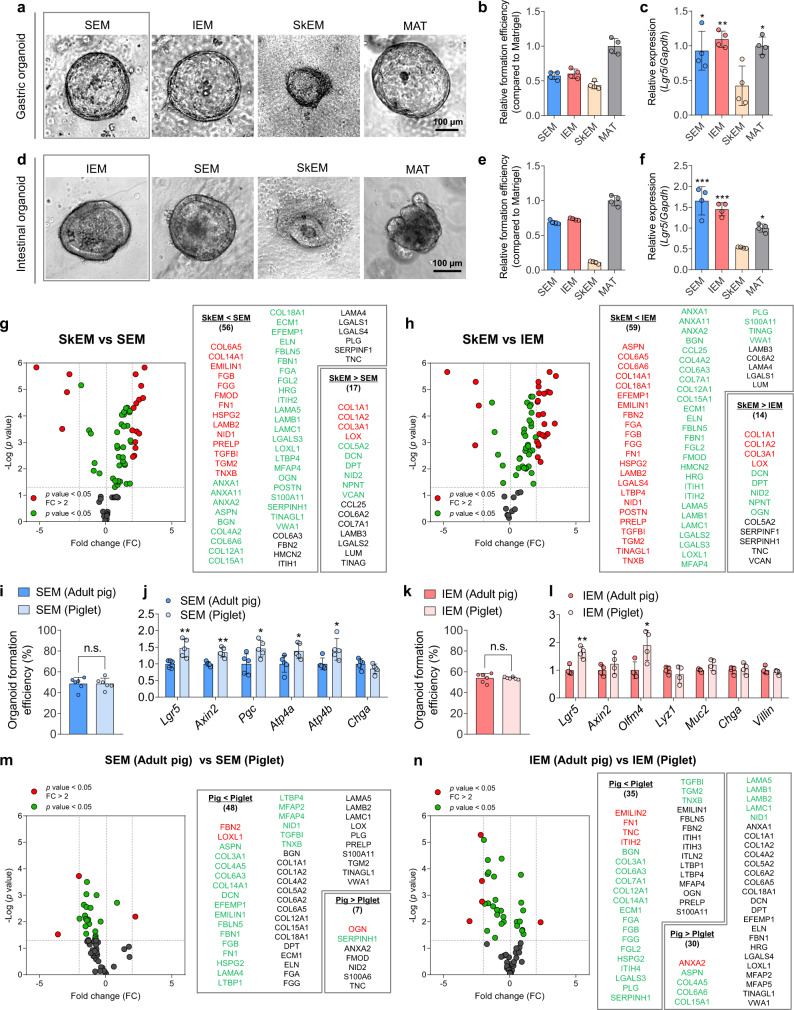
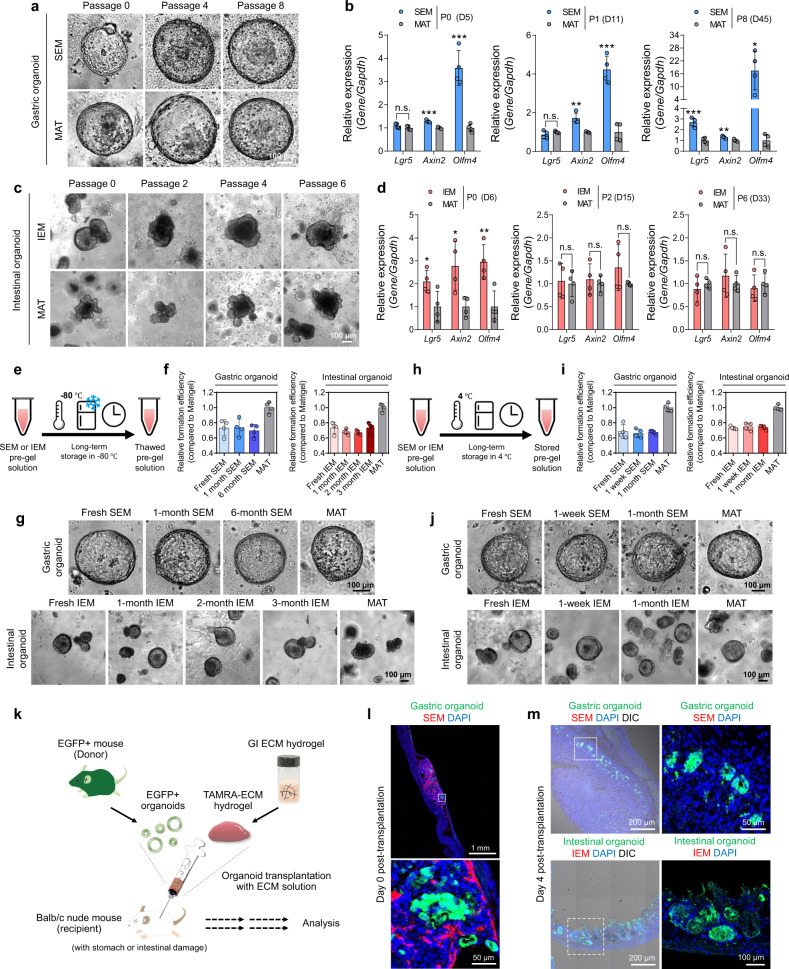
Matrigel, a mouse tumor extracellular matrix protein mixture, is an indispensable component of most organoid tissue culture. However, it has limited the utility of organoids for drug development and regenerative medicine due to its tumor-derived origin, batch-to-batch variation, high cost, and safety issues. Here, we demonstrate that gastrointestinal tissue-derived extracellular matrix hydrogels are suitable substitutes for Matrigel in gastrointestinal organoid culture. We found that the development and function of gastric or intestinal organoids grown in tissue extracellular matrix hydrogels are comparable or often superior to those in Matrigel. In addition, gastrointestinal extracellular matrix hydrogels enabled long-term subculture and transplantation of organoids by providing gastrointestinal tissue-mimetic microenvironments. Tissue-specific and age-related extracellular matrix profiles that affect organoid development were also elucidated through proteomic analysis. Together, our results suggest that extracellular matrix hydrogels derived from decellularized gastrointestinal tissues are effective alternatives to the current gold standard, Matrigel, and produce organoids suitable for gastrointestinal disease modeling, drug development, and tissue regeneration.
Overview
The claims and statistics of this paper haven’t been checked yet.
Free: it reads the open-access text and checks the first 5 claims that cite a source we can check. Create a free account to check every claim.
Integrity signals
Registry
Cites
Statistics
Figures
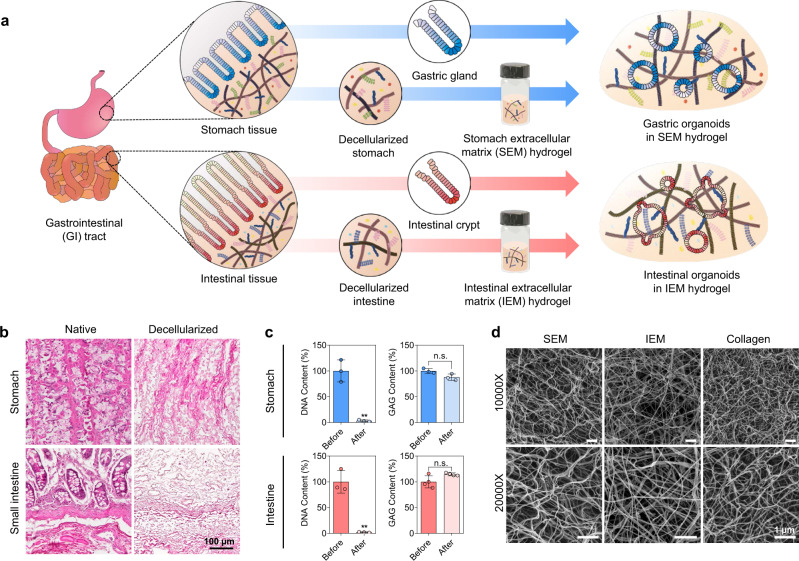
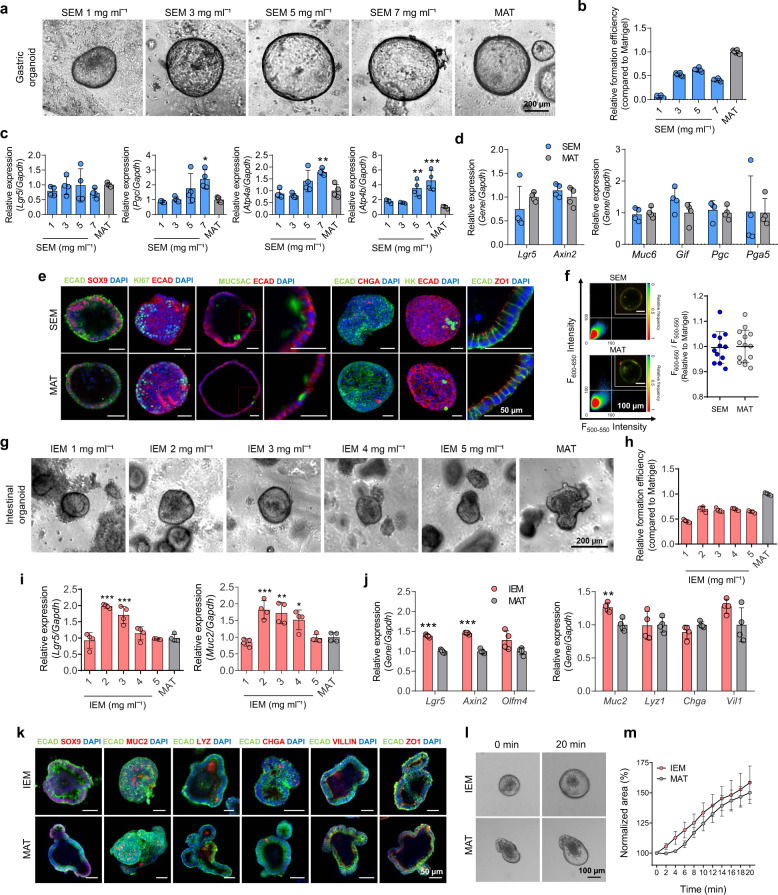
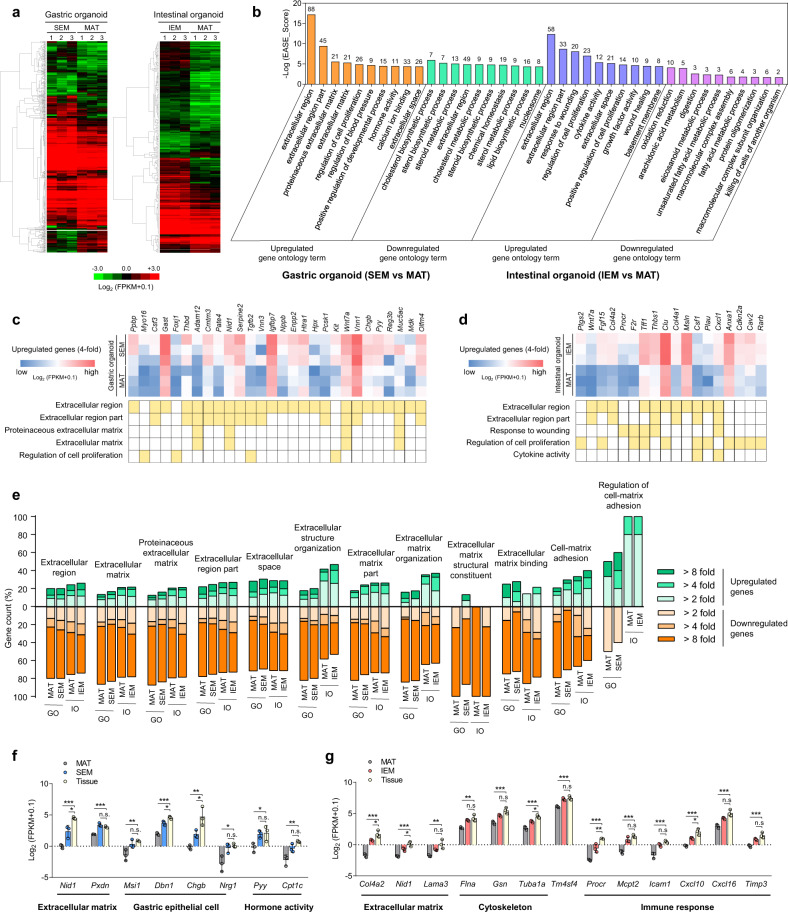
Verification
Claims the paper makes
The claims and statistics of this paper haven’t been checked yet.
Free: it reads the open-access text and checks the first 5 claims that cite a source we can check. Create a free account to check every claim.
Claims other papers make about this one
Each is checked against this paper’s own text: does it say what the citing paper says it does?
The cited source says what the claim attributes to it.
In the citing paper
“Kim et al. determined that gastrointestinal ECM hydrogels facilitated prolonged passaging and transplantation of organoids, producing organoids suitable for gastrointestinal disease modeling, drug development, and tissue regeneration by simulating the microenvironment of gastrointestinal tissues.[ 202 ]”
From Bioactive scaffolds for tissue engineering: A review of decellularized extracellular matrix applications and innovations (2025) · cites this paper as [202]
The check wasn’t confident either way, so it gives no verdict — never disputed.
In the citing paper
“macrophages could speed up cancer cell migration through secreting TGF‐β1.”
From 3D Biomimetic Models to Reconstitute Tumor Microenvironment In Vitro: Spheroids, Organoids, and Tumor‐on‐a‐Chip (2023) · cites this paper as [122]
Experimental — accuracy not yet measured
Self-check
Percentages, sums and reported differences re-computed from the paper’s own numbers.
The self-check needs the paper’s full text.
Citations
Cites
Gene Ontology: tool for the unification of biology
Ashburner, M., Ball, C. A., Blake, J. A., Botstein, D., Butler, H., Cherry, J. M., Davis, A. P., Dolinski, K., Dwight, S. S., Eppig, J. T., et al. (2000) · Nature Genetics · doi:10.1038/75556 · Cited by 43,206
Tissue-based map of the human proteome
Uhlén, M., Fagerberg, L., Hallström, B. M., Lindskog, C., Oksvold, P., Mardinoglu, A., Sivertsson, Å., Kampf, C., Sjöstedt, E., Asplund, A., et al. (2015) · Science · doi:10.1126/science.1260419 · Cited by 15,286
Cox, J., & Mann, M. (2008) · Nature Biotechnology · doi:10.1038/nbt.1511 · Cited by 14,855
The Perseus computational platform for comprehensive analysis of (prote)omics data
Tyanova, S., Temu, T., Sinitcyn, P., Carlson, A., Hein, M. Y., Geiger, T., Mann, M., & Cox, J. (2016) · Nature Methods · doi:10.1038/nmeth.3901 · Cited by 8,803
Single Lgr5 stem cells build crypt-villus structures in vitro without a mesenchymal niche
Sato, T., Vries, R. G., Snippert, H. J., van de Wetering, M., Barker, N., Stange, D. E., van Es, J. H., Abo, A., Kujala, P., Peters, P. J., et al. (2009) · Nature · doi:10.1038/nature07935 · Cited by 7,204 · cited 2×
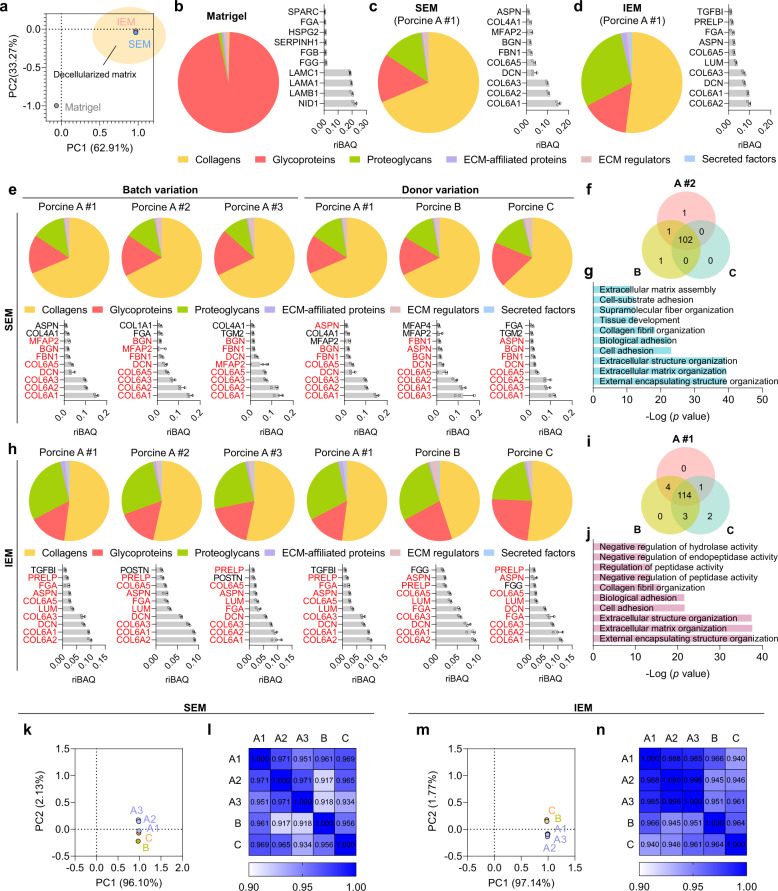
“To evaluate the variation of decellularized GI tissue-derived matrices in the ECM compositions, we compared the samples under two conditions: (1) comparison of multiple sample batches derived from different locations in the same donor tissue (batch variation—porcine A1–A3), (2) comparison of multiple samples derived f…”
BackgroundMethodGlobal quantification of mammalian gene expression control
Schwanhäusser, B., Busse, D., Li, N., Dittmar, G., Schuchhardt, J., Wolf, J., Chen, W., & Selbach, M. (2011) · Nature · doi:10.1038/nature10098 · Cited by 6,566
Andromeda: A Peptide Search Engine Integrated into the MaxQuant Environment
Cox, J., Neuhauser, N., Michalski, A., Scheltema, R. A., Olsen, J. V., & Mann, M. (2011) · Journal of Proteome Research · doi:10.1021/pr101065j · Cited by 5,500
Raudvere, U., Kolberg, L., Kuzmin, I., Arak, T., Adler, P., Peterson, H., & Vilo, J. (2019) · Nucleic Acids Research · doi:10.1093/nar/gkz369 · Cited by 5,045
The extracellular matrix at a glance
Frantz, C., Stewart, K. M., & Weaver, V. M. (2010) · Journal of Cell Science · doi:10.1242/jcs.023820 · Cited by 4,334
Sato, T., Stange, D. E., Ferrante, M., Vries, R. G. J., van Es, J. H., van den Brink, S., van Houdt, W. J., Pronk, A., van Gorp, J., Siersema, P. D., et al. (2011) · Gastroenterology · doi:10.1053/j.gastro.2011.07.050 · Cited by 3,753 · cited 1×
“In this study, we provide experimental evidence on how our approach with decellularized GI tissue-derived ECM hydrogels can resolve the major issues of Matrigel including (1) batch-to-batch variation, (2) safety, and (3) high-cost issues.”
Background
Cited by
Items 101–200 of 414
Genetically modified organoids for tissue engineering and regenerative medicine
Zhang, Q., Jin, H., Zhu, D., Chen, Y., Fu, M., Lu, S., Qiu, Y., Zhou, G., Yang, G., & Jiang, Z. (2024) · Advances in Colloid and Interface Science · doi:10.1016/j.cis.2024.103337 · Cited by 26
Wijnakker, J. J. A. P. M., van Son, G. J. F., Krueger, D., van de Wetering, W. J., López‐Iglesias, C., Schreurs, R., van Rijt, F. L. H., Lim, S., Lin, L., Peters, P. J., et al. (2024) · Proceedings of the National Academy of Sciences · doi:10.1073/pnas.2420595121 · Cited by 23
“Matrigel/BME mainly consists of the embryonic laminin - 111 and additionally contains collagen IV, fibronectin, and multiple minor components ( 13 , 14 ).”
Microphysiological system recapitulating the pathophysiology of adipose tissue in obesity
Yoon, H., Seo, J. K., & Park, T. (2023) · Acta Biomaterialia · doi:10.1016/j.actbio.2023.01.040 · Cited by 23
Advances in organoid-on-a-chip for recapitulation of human physiological events
Park, B. J., Park, J., Han, S., Kwon, T., Sung, J. Y., Kim, J., Safarkhani, M., Min, K.-H., Lee, E.-H., Kang, S., et al. (2025) · Materials Today · doi:10.1016/j.mattod.2025.02.002 · Cited by 23
Self-citationOptimization of 3D-aggregated spheroid model (3D-ASM) for selecting high efficacy drugs
Lee, S., Hwang, H. J., & Lee, D. W. (2022) · Scientific Reports · doi:10.1038/s41598-022-23474-5 · Cited by 22
Bone on-a-chip: a 3D dendritic network in a screening platform for osteocyte-targeted drugs
Lipreri, M. V., Pompo, G. D., Boanini, E., Graziani, G., Sassoni, E., Baldini, N., & Avnet, S. (2023) · Biofabrication · doi:10.1088/1758-5090/acee23 · Cited by 22
Bae, M., Ngo, H., Kang, Y. J., Lee, S., Park, W., Jo, Y., Choi, Y., Kim, J. J., Yi, H., Kim, H., et al. (2023) · Small · doi:10.1002/smll.202308815 · Cited by 23
Self-citationChi, K. Y., Kim, G., Kim, H., Kim, H., Jo, S., Lee, J., Lee, Y., Yoon, H., Cho, S.-H., Kim, J., et al. (2024) · Biomaterials · doi:10.1016/j.biomaterials.2024.122898 · Cited by 23
Self-citationMarhuenda, E., Villarino, Á., Narciso, M., Elowsson, L., Almendros, I., Westergren‐Thorsson, G., Farré, R., Gavara, N., & Otero, J. (2022) · Frontiers in Pharmacology · doi:10.3389/fphar.2022.945134 · Cited by 21
“Recent mass spectrometry studies on porcine-derived ECM hydrogels composition (Kim et al., 2022) showed a high number of ECM proteins present in the hydrogels but a high variability between individuals.”
BackgroundEngineering Heterogeneous Tumor Models for Biomedical Applications
Wu, Z., Huang, D., Wang, J., Zhao, Y., Sun, W., & Shen, X. (2023) · Advanced Science · doi:10.1002/advs.202304160 · Cited by 25
Wang, H., Hou, Y., Chen, L., Mo, W., Xuan, L., Wu, J., Wang, J., Xie, M., Wang, S., & Tang, G. (2025) · Biomedical Technology · doi:10.1016/j.bmt.2025.100084 · Cited by 21
Immune Organoids: A Review of Their Applications in Cancer and Autoimmune Disease Immunotherapy
Olawade, D. B., Oisakede, E. O., Egbon, E., Ovsepian, S. V., & Boussios, S. (2025) · Current Issues in Molecular Biology · doi:10.3390/cimb47080653 · Cited by 21
“Traditional matrices, such as Matrigel, while supportive, lack the biochemical and mechanical specificity required for optimal immune organoid development [90].”
Wang, Z., Lin, X., Shi, Y., Yan, H., Shang, Y., & Ren, H. (2026) · Biomedical Technology · doi:10.1016/j.bmt.2025.100131 · Cited by 22
Hydrogels with brain tissue-like mechanical properties in complex environments
Wang, J., Zhang, Y., Lei, Z., Wang, J., Zhao, Y., Sun, T., Jiang, Z., Zhou, L., Liu, Z., Liu, Y., et al. (2023) · Materials & Design · doi:10.1016/j.matdes.2023.112338 · Cited by 23
Using Liver Organoids as Models to Study the Pathobiology of Rare Liver Diseases
Obeid, D. A., Mir, T. A., Alzhrani, A., Altuhami, A., Shamma, T., Ahmed, S. G., Kazmi, S., Fujitsuka, I., Ikhlaq, M., Mir, M. S., et al. (2024) · Biomedicines · doi:10.3390/biomedicines12020446 · Cited by 21
“Although most natural-source-derived biomaterials exhibit excellent bioactive properties and offer higher biocompatibility performance, pure biopolymers exhibit several shortcomings, including poor stability, mechanical integrity, and unmanageable degradation [55,56].”
BackgroundWan, J., Jiang, J., Yu, X., Zhou, J., Wang, Y., Fu, S., Wang, J., Liu, Y., Dong, Y., Midgley, A. C., et al. (2025) · International Journal of Biological Macromolecules · doi:10.1016/j.ijbiomac.2025.140058 · Cited by 22
Tracking of Intestinal Probiotics In Vivo by NIR-IIb Fluorescence Imaging
Ji, C., Huang, Y. D., Sun, L., Geng, H., Liu, W., Grimes, C. A., Luo, M., Feng, X., & Cai, Q. (2023) · ACS Applied Materials & Interfaces · doi:10.1021/acsami.2c20610 · Cited by 19
Zeiringer, S., Wiltschko, L., Glader, C., Reiser, M., Absenger‐Novak, M., Fröhlich, E., & Roblegg, E. (2023) · Molecular Pharmaceutics · doi:10.1021/acs.molpharmaceut.3c00532 · Cited by 19
“28,29 Hence, in this study starting from an already established Transwell coculture system consisting of Caco-2 and HT29-MTX cells, the first aim was to evaluate alternative xenofree materials to mimic the ECM.”
BackgroundMicrofluidic-based platforms for cell-to-cell communication studies
Zhu, L., Tang, Q., Mao, Z., Chen, H., Wu, L. J., & Qin, Y. (2023) · Biofabrication · doi:10.1088/1758-5090/ad1116 · Cited by 19
“Its superiority lies in its ability to fully reconstitute the biochemical ECM of native matri-some tissues, allowing a more realistic in vitro simulation microenvironment [112].”
BackgroundIntestinal organoid modeling: bridging the gap from experimental model to clinical translation
Liu, T., Li, X., Li, H., Qin, J., Xu, H., Wen, J., Ya-qin, H., & Cao, Z. (2024) · Frontiers in Oncology · doi:10.3389/fonc.2024.1334631 · Cited by 19
“Nonetheless, the ECM, being a dynamic environmental component, poses challenges in terms of manipulation in both in vivo and in vitro models (20, 21).”
BackgroundSong, Y., Seitz, M., Kowalczewski, A. C., Mai, N. Y., Jain, E., Yang, H., & Ma, Z. (2025) · Advanced Healthcare Materials · doi:10.1002/adhm.202403997 · Cited by 21
Hong, C., & Lyu, S. (2025) · International Journal of Molecular Sciences · doi:10.3390/ijms26157247 · Cited by 19
“Alternative approaches using tissue-derived extracellular matrix hydrogels show promise for reducing variability while maintaining physiological relevance [214].”
Organoid Models and Next-Generation Sequencing for Bone Marrow and Related Disorders
Rausch, M., Iqbal, N., Pathak, S., Owston, H. E., & Ganguly, P. (2023) · Organoids · doi:10.3390/organoids2030010 · Cited by 18
Park, E. Y., Park, J. H., Mai, N. T. Q., Moon, B.-S., & Choi, J. K. (2023) · Materials Today Bio · doi:10.1016/j.mtbio.2023.100824 · Cited by 20
“It is, therefore, used to mimic the optimized 3D environment for culturing induced pluripotent stem cells [34], ovarian follicles [35], and orga-noids [36], as it enables the maintenance and proliferation of these cells in vitro.”
Bioengineering toolkits for potentiating organoid therapeutics
Park, S., & Cho, S. (2024) · Advanced Drug Delivery Reviews · doi:10.1016/j.addr.2024.115238 · Cited by 19
Self-citationNon-small cell lung cancer organoids: Advances and challenges in current applications
Wu, M., Liao, Y., & Tang, L. (2024) · Chinese Journal of Cancer Research · doi:10.21147/j.issn.1000-9604.2024.05.01 · Cited by 18
Bioprinting approaches in cardiac tissue engineering to reproduce blood-pumping heart function
Kim, M. J., Hwang, D. G., & Jang, J. (2024) · iScience · doi:10.1016/j.isci.2024.111664 · Cited by 22
Gregory, E., Powers, I., Jamshidi‐Parsian, A., Griffin, R. J., & Song, Y. H. (2025) · In vitro models · doi:10.1007/s44164-025-00083-w · Cited by 20
van Tienderen, G. S., Willemse, J., van Loo, B., van Hengel, E. V. A., de Jonge, J., van der Laan, L. J. W., Leijten, J., & Verstegen, M. M. A. (2022) · Cells · doi:10.3390/cells11223657 · Cited by 17
“However, it was also shown that there is a tissue-specific effect of the ECM hydrogels on the organoids [37].”
BackgroundAdvances and applications of gut organoids: modeling intestinal diseases and therapeutic development
Xu, X., Zhang, Y., Huang, G., Perekatt, A. O., Wang, Y., & Chen, L. (2025) · Life Medicine · doi:10.1093/lifemedi/lnaf012 · Cited by 20
“Additionally, incorporating biologically derived cells into the medium can elicit specific biological responses [38, 39], such as enhancing vascularization within organoids [40] or more effectively replicating the intestinal microenvironment [41].”
Jin, J., Chen, W., Li, J., Yang, J., Dai, R., Tang, J., Li, M., Chen, Y., Zhang, C., & Liu, J. (2025) · Biofabrication · doi:10.1088/1758-5090/adf099 · Cited by 18
“Optimal physical characteristics not only provide colloidal stability but also promote organoid proliferation [31].”
Matrigel Tunes H9 Stem Cell-Derived Human Cerebral Organoid Development
Estridge, R. C., O’Neill, J. E., & Keung, A. J. (2023) · Organoids · doi:10.3390/organoids2040013 · Cited by 18
“Substantial work has been pursued to attempt to replace reagents such as Matrigel [33–46], but it is a complex task to be able to replace all the complex components and functions of such matrices.”
Modeling of the brain-lung axis using organoids in traumatic brain injury: an updated review
Kim, J.-T., Song, K., Han, S. W., Youn, D. H., Jung, H., Kim, K., Lee, H., Hong, J. Y., Cho, Y.-J., Kang, S., et al. (2024) · Cell & Bioscience · doi:10.1186/s13578-024-01252-2 · Cited by 17
“As a solution, novel hydrogels have been proposed to develop artificially synthesized ECM or nanofi-brillar hydrogels for culturing organoids [107–109].”
BackgroundSelf-citationJia, Z., & Wang, Z. (2025) · International Journal of Molecular Sciences · doi:10.3390/ijms26020663 · Cited by 18
Tumor organoids in cancer medicine: from model systems to natural compound screening
Cong, R., Lu, C., Li, X., Xu, Z., Wang, Y., & Sun, S. (2025) · Pharmaceutical Biology · doi:10.1080/13880209.2025.2458149 · Cited by 17
“It is reasonable to assume that the optimal matrix for organoid culture would be the ECM directly relevant to the cells under study, considering the variations in ECM composition (Kim et al. 2022).”
Schaafsma, P., Kracht, L., Baanstra, M., Bruin, A. L. J.-D., & Coppes, R. P. (2023) · Frontiers in Molecular Biosciences · doi:10.3389/fmolb.2023.1100541 · Cited by 18
“Nowadays, Matrigel is the golden standard used in our and many other 3D organoid culture systems, however its poorly defined composition and animal origin hampers the utility of stem cells in clinical applications (Kim et al., 2022).”
BackgroundFrom niche to organoid: Engineering bone tissues through microenvironmental insights
Yan, X., Sheng, L., Zhu, M., He, Z., Yao, X., & Wu, H. (2025) · Journal of Tissue Engineering · doi:10.1177/20417314251358567 · Cited by 16
“171,172 Capi-talizing on these traits, dECM finds extensive application in organoid construction, such as in the development of brain, 173 intestine, 174 and kidney organoids.”
Engineered human cardiac tissues for modeling heart diseases
Min, S., & Cho, S. (2022) · BMB Reports · doi:10.5483/bmbrep.2022-0185 · Cited by 18
“matrix has been manufactured as hydrogel and integrated into tissue models (54, 55).”
Self-citationFaruqui, N., Williams, D. S., Briones, A., Kepiro, I. E., Ravi, J., Kwan, T. O. C., Mearns‐Spragg, A., & Ryadnov, M. G. (2023) · Materials Today Bio · doi:10.1016/j.mtbio.2023.100786 · Cited by 18
Lin, X., Cai, L., Nie, M., Wu, X., Liang, G., Shang, L., & Zhao, Y. (2023) · Chemical Engineering Journal · doi:10.1016/j.cej.2023.144118 · Cited by 15
Multiscale Construction, Evaluation, and Application of Organoids
Ma, W., Dong, Z., Zheng, Z., Bai, L., Zhang, X., & Su, J. (2025) · Advanced Science · doi:10.1002/advs.202508534 · Cited by 19
Urological cancer organoids, patients' avatars for precision medicine: past, present and future
Chen, H., Zhang, W., Maskey, N., Yang, F., Zheng, Z., Li, C., Wang, R., Wu, P., Mao, S., Zhang, J., et al. (2022) · Cell & Bioscience · doi:10.1186/s13578-022-00866-8 · Cited by 15
“[127] demonstrated that gastrointestinal tissue-derived extracellular matrix hydrogels were effective substitutes for Matrigel in gastrointestinal organoid culture.”
BackgroundBai, L., Li, M., & Su, J. (2023) · International Journal of Bioprinting · doi:10.18063/ijb.688 · Cited by 18
“However, limitations of MatrigelTM such as xenogenous origins, variable composition, non-programmability, and poor mechanical properties still hinder its application clinically[25].”
BackgroundHuang, R., Zhu, Y., Chen, H., Yu, L., Liu, Z., Liu, Y., Wang, Z., He, X., Li, Y., Xu, X., et al. (2024) · PubMed Central · doi:10.12336/biomatertransl.2024.04.003 · Cited by 18
Sousa, V., Ladeira, B., Garanger, É., Lecommandoux, S., Meijer, E. W., Dankers, P. Y. W., Mano, J. F., & Borges, J. (2025) · ACS Nano · doi:10.1021/acsnano.5c10088 · Cited by 15
Feng, B., Yang, H., Zhu, M., Li, J., Chang, H., Leung, P. C. K., Guo, J., & Zhang, Y. (2023) · Collagen and Leather · doi:10.1186/s42825-023-00142-6 · Cited by 16
“Research by Kim, S. and others found that more core matrisomes and matrisome-related proteins, especially collagen subtype proteins, were detected in dECM scaffolds compared with Matrigel, where over 96% were glycoproteins [158].”
BackgroundResultOrganoids in gastrointestinal diseases: from bench to clinic
Wang, Q., Guo, F., Zhang, Q., Hu, T., Jin, Y., Yang, Y., & Ma, Y. (2024) · MedComm · doi:10.1002/mco2.574 · Cited by 15
Huang, T. H., Huang, W. T., & Bian, Q. (2025) · Journal of Controlled Release · doi:10.1016/j.jconrel.2025.114222 · Cited by 14
Functional biomaterials for biomimetic 3D in vitro tumor microenvironment modeling
Ahmed, T. (2023) · In vitro models · doi:10.1007/s44164-023-00043-2 · Cited by 14
Li, J., Liu, J., Xia, W., Yang, H., Sha, W., & Chen, H. H. (2024) · Technology in Cancer Research & Treatment · doi:10.1177/15330338231221856 · Cited by 15
“122 This decellularized ECM hydrogel enables to mimic the microenvironment of gastrointestinal tissues and can support long-term organoid culture and transplantation.”
BackgroundRecent advances in extracellular matrix manipulation for kidney organoid research
Wang, R., Sui, Y., Liu, Q., Xiong, Y., Li, S., Guo, W., Xu, Y., & Zhang, S. (2024) · Frontiers in Pharmacology · doi:10.3389/fphar.2024.1472361 · Cited by 15
Scalable Matrigel‐Free Suspension Culture for Generating High‐Quality Human Liver Ductal Organoids
Gong, S., He, K., Liu, Y., Luo, X., Ashraf, K., He, J., Li, W., Yang, L., Rehman, T. U., Shen, M., et al. (2025) · Cell Proliferation · doi:10.1111/cpr.70033 · Cited by 14
Cost-reduction strategy to culture patient derived bladder tumor organoids
Sisakht, M. M., Gholizadeh, F., Hekmatirad, S., Mahmoudi, T., Montazeri, S., Sharifi, L., Daemi, H., Romal, S., Yazdi, M. H., Faramarzi, M. A., et al. (2025) · Scientific Reports · doi:10.1038/s41598-025-87509-3 · Cited by 13
Zhou, G., Lin, X., Li, W., Li, H., Zhang, Q., Ding, X., & Sun, W. (2024) · Chemical Engineering Journal · doi:10.1016/j.cej.2024.151138 · Cited by 12
Hydrogel formats to model potential drug interactions occurring at the subcutaneous injection site
Gomes, C. M., Gridley, K., Anastasiou, I., Sinkó, B., & Mrsny, R. J. (2024) · European Journal of Pharmaceutics and Biopharmaceutics · doi:10.1016/j.ejpb.2024.114308 · Cited by 12
Choi, S., Lee, M. J., Kim, M., Bae, Y., Park, J., & Cho, S. (2024) · Advanced Healthcare Materials · doi:10.1002/adhm.202401826 · Cited by 13
Self-citationModeling collagen fibril degradation as a function of matrix microarchitecture
Debnath, B., Narasimhan, B. N., Fraley, S. I., & Rangamani, P. (2024) · Soft Matter · doi:10.1039/d4sm00971a · Cited by 12
Colorectal Organoids: Models, Imaging, Omics, Therapy, Immunology, and Ethics
Taglieri, M., Gregorio, L. D., Matis, S., Uras, C. R. M., Ardy, M., Casati, S., Marchese, M., Poggi, A. D., Raffaghello, L., & Benelli, R. (2025) · Cells · doi:10.3390/cells14060457 · Cited by 14
“In the context of gastrointestinal organoids, Kim et al. demonstrated that decellularized ECM (dECM) derived from gastrointestinal tissues can effectively replace Matrigel [30].”
Organoids in Dynamic Culture: Microfluidics and 3D Printing Technologies
Su, X., Wang, M., Yuan, R., Guo, L., Han, Y., Huang, C., Li, A., Kaplan, D. L., & Wang, X. (2025) · ACS Biomaterials Science & Engineering · doi:10.1021/acsbiomaterials.4c02245 · Cited by 15
Pancreatic β-cell remodeling in health and aging: Lessons from rodents and humans
Darwish, R., Alcibahy, Y., Dhawan, S., Butler, A. E., & Moin, A. S. M. (2025) · Ageing Research Reviews · doi:10.1016/j.arr.2025.102815 · Cited by 13
Mechanobiological engineering strategies for organoid culture
Taghizadeh, M., Taghizadeh, A. A., & Kim, H. S. (2025) · APL Bioengineering · doi:10.1063/5.0275439 · Cited by 14
Generation of Individualized, Standardized, and Electrically Synchronized Human Midbrain Organoids
Harane, S. E., Nazari, B., Harane, N. E., Locatelli, M., Zidi, B., Durual, S., Karmime, A., Ravier, F., Roux, A., Stoppini, L., et al. (2025) · Cells · doi:10.3390/cells14151211 · Cited by 14
Durante, V., Wittwer, A., Theek, B., Martinez-Osuna, M., Donnadieu, E., Hardt, O., Eckardt, D., Bosio, A., Schallenberg, S., & Herbel, C. (2025) · PLoS ONE · doi:10.1371/journal.pone.0327322 · Cited by 13
“Moreover, compared to the other abovementioned models, precision-cut tissue slices are prepared after embedding the sample in a solution of agarose dissolved in PBS, thus avoiding the criticality linked to the undefined composition and batch-to-batch variation of Matrigel ® [35–37].”
Sulaksono, H. L. S., Annisa, A., Ruslami, R., Mufeeduzzaman, M., Panatarani, C., Hermawan, W., Ekawardhani, S., & Joni, I. M. (2024) · International Journal of Nanomedicine · doi:10.2147/ijn.s455940 · Cited by 14
“191 Furthermore, tumor matrisomes differ significantly from normal tissue, suggesting that ECM-based matrigel may not provide a tissue-specific microenvironment for organoids.”
BackgroundUdagawa, D., Nagata, S., Yagi, H., Nishi, K., Morisaku, T., Adachi, S., Nakano, Y., Tanaka, M., Hori, S., Hasegawa, Y., et al. (2024) · Cell Transplantation · doi:10.1177/09636897241253700 · Cited by 11
“Proteomic analysis revealed that matri-some, an essential component of ECM 41,44 , is retained after decellularization.”
An, S., Jeon, E. J., Kim, M., Han, S. Y., Song, Y. S., Jeon, J., Park, J., & Cho, S. (2024) · Chemical Engineering Journal · doi:10.1016/j.cej.2024.149906 · Cited by 12
Self-citationThe Application of Biomaterial‐Based Spinal Cord Tissue Engineering
Ma, L., Zhang, Z., Mu, Y., Liu, B., Zhou, H., & Wang, D. (2024) · Macromolecular Bioscience · doi:10.1002/mabi.202400444 · Cited by 12
Atta, D., Abou‐Shanab, A. M., Kamar, S. S., Soliman, M. W., Magdy, S., & El‐Badri, N. (2025) · Journal of Biomedical Materials Research Part A · doi:10.1002/jbm.a.37882 · Cited by 11
Yang, S., Ju, J., Shen, C., Li, Y., Yang, W., Luo, X., Wang, Z., Zeng, J., & Liu, L. (2025) · Materials Today Bio · doi:10.1016/j.mtbio.2025.101636 · Cited by 13
“Decellularization was conducted according to an optimized protocol from previous studies [29].”
Jeon, E. J., An, S., Han, S. Y., Jeong, E., Song, Y. S., Lee, J. S., & Cho, S. (2025) · Advanced Healthcare Materials · doi:10.1002/adhm.202403747 · Cited by 13
Self-citationXu, S., Sun, X. S., Gu, Y., Liu, T., Liu, S., Weng, Y., Zhang, W., Wang, L., Zhou, M., Lu, G., et al. (2025) · Materials Today Bio · doi:10.1016/j.mtbio.2025.101823 · Cited by 15
Córdoba, L., Cueto, F. J., Cantero-Cid, R., Moret, R., Díaz, E., Alvarez-Benayas, J., Fernández-Felipe, J., Jiménez-Rodríguez, J., Arvelo-Rosario, D., Mata-Martínez, P., et al. (2025) · Cancers · doi:10.3390/cancers18010132 · Cited by 11
“Traditionally, the generation of organoids has relied on the use of naturally derived extracellular matrixes, such as Matrigel [9,10].”
Wang, J., Zhang, Y., Jiang, Z., Zhou, L., Liu, Z., Liu, Y., Yang, B., & Tang, L. (2023) · Mechanics of Advanced Materials and Structures · doi:10.1080/15376494.2022.2150917 · Cited by 12
Evaluation of the Effect of Fibroblasts on Melanoma Metastasis Using a Biomimetic Co-Culture Model
Wu, M., Yu, E., Ye, K., Huang, Y., Ren, T., Guo, M., Yin, J., Xu, K., & Wei, P. (2023) · ACS Biomaterials Science & Engineering · doi:10.1021/acsbiomaterials.2c01186 · Cited by 13
Engineering Biomimetic Microenvironment for Organoid
Chen, S., Wang, L., Yang, L., Rana, A. S., & He, C. (2023) · Macromolecular Bioscience · doi:10.1002/mabi.202300223 · Cited by 10
Matching together living cells and prototissues: will there Be chemistry?
Valente, S., Galanti, A., Maghin, E., Najdi, N., Piccoli, M., & Gobbo, P. (2024) · ChemBioChem · doi:10.1002/cbic.202400378 · Cited by 10
Inner ear organoids: Recent progress and potential applications
Lou, Y., Liu, Y., Wu, M., Jia, G., Xia, M., & Li, W. (2023) · Fundamental Research · doi:10.1016/j.fmre.2023.07.013 · Cited by 10
“Compared with Matrigel, they have the advantages of upregulating tissue-specific genes and more amounts and subtypes of collagens [38–41] .”
Engineered Cell Microenvironments: A Benchmark Tool for Radiobiology
Akolawala, Q., & Accardo, A. (2025) · ACS Applied Materials & Interfaces · doi:10.1021/acsami.4c20455 · Cited by 10
Buckenmeyer, M. J., Brooks, E. A., Taylor, M. S., Orenuga, I. K., Yang, L., Holewinski, R. J., Meyer, T. J., Galloux, M., Garmendia‐Cedillos, M., Pohida, T. J., et al. (2025) · Cancer Research · doi:10.1158/0008-5472.can-24-1954 · Cited by 10
Regulating Cell–Material Interfacial Interactions through Selective Cellular Resistance
Hao, H., Chen, Y., Yu, W., Wang, X., Wang, C., Zhang, P., & Ji, J. (2025) · Journal of the American Chemical Society · doi:10.1021/jacs.5c01433 · Cited by 10
Zhao, N., Pessell, A. F., Chung, T. D., & Searson, P. C. (2025) · Matrix Biology · doi:10.1016/j.matbio.2025.04.003 · Cited by 10
Establishment of a Cochlear Organoid Platform for Remodeling the Extracellular Matrix
Li, N., Zhang, Z., Zhang, L., Wu, D., Li, Z., Xu, C., Sun, Q., Lu, Y., Zhou, Y., Qian, X., et al. (2025) · ACS Nano · doi:10.1021/acsnano.5c04897 · Cited by 12
Organoid scaffold materials: research and application
Zhang, Z., Zhu, M., Luo, H., Zeng, F., & Qi, Z. (2025) · Frontiers in Bioengineering and Biotechnology · doi:10.3389/fbioe.2025.1637456 · Cited by 13
Sensi, F., Spagnol, G., Repetto, O., D'Angelo, E., Biccari, A., Marangio, A., Guerriero, A., Castillo, A. A. M., Vogliardi, A., Zanrè, E., et al. (2025) · Translational Oncology · doi:10.1016/j.tranon.2025.102523 · Cited by 11
“As Kim et al. demonstrated, our data shows Matrigel ® has limited ECM components and cannot simulate the complex ovarian tissue matrisome [29].”
Intestinal organoid technology and applications in probiotics
Tan, H., Chen, X., Wang, C., Song, J., Xu, J., Zhang, Y., & Suo, H. (2023) · Critical Reviews in Food Science and Nutrition · doi:10.1080/10408398.2023.2288887 · Cited by 11
“Matrigel, a substitute for cancer cell systems, can better mimic the intestinal microenvironment and can solve the problems faced by Matrigel to some extent (Kim, Choi, et al. 2022; Kim, Min, et al. 2022).”
Hu, N., Jiang, R., Deng, Y., Li, W., Jiang, W., Xu, N., Wang, J., Wen, J., & Gu, S. (2024) · Regenerative Biomaterials · doi:10.1093/rb/rbae050 · Cited by 10
Biomaterials meet organ-on-chips – a perspective on tumor modeling
Monteiro, C. F., Deus, I. A., Custódio, C. A., & Mano, J. F. (2024) · International Materials Reviews · doi:10.1177/09506608241303436 · Cited by 10
“93 However, the exploitation of decellularized ECMs raises some questions regarding their translatability for the high-throughput drug screening experiments required for the approval of new therapeutics to the pre-clinical in vivo testing phase.”
Tang, R., & Liu, X. (2025) · Interdisciplinary medicine · doi:10.1002/inmd.20240083 · Cited by 11
Multi-index-dependent decellularization processes for scalable tissue-specific bioink production
Kim, H. J., Park, I., Choi, Y., Choi, H., Jeong, S. H., Yoon, J., Kim, D., Lee, B. R., & Jang, J. (2025) · Chemical Engineering Journal · doi:10.1016/j.cej.2025.161827 · Cited by 9
Self-citationChen, X., Wang, M., Shu, X., Li, J., Tang, R., & Liu, X. (2025) · Materials Today Bio · doi:10.1016/j.mtbio.2025.101818 · Cited by 13
“Even in the comparison with Matrigel (a commercialized matrix most organoid culture [24]), the spheroids in EGF( + ) showed comparable average area but more uniform in size after 6-day incubation (Fig.”
Revilla, S. A., Cutilli, A., Cambiaso, E., Rockx-Brouwer, D., Frederiks, C. L., Falandt, M., Levato, R., Kranenburg, O., Lindemans, C. A., Coffer, P. J., et al. (2025) · iScience · doi:10.1016/j.isci.2025.113234 · Cited by 9
“Overall, these findings indicate that CAR-T mediated cytotoxicity in short-term (24 h) co-cultures is preserved in NFC, Matrigel, and BME.”
InfluentialLuong, N. H., Duong, V. T., Bryan, J. B., & Lin, C. (2025) · Small · doi:10.1002/smll.202506632 · Cited by 9
Xue, C., Sun, F., Zhu, H. J., Shi, J., Wang, J., Sun, Q., Tong, M., Gu, X., Han, Q., & Shi, W. (2025) · Engineering · doi:10.1016/j.eng.2025.10.013 · Cited by 10
Wang, L., Chen, A., Zhang, D., & He, Z. (2025) · Cells · doi:10.3390/cells14231898 · Cited by 11
“By mimicking the physical properties of the in vivo organ microenvironment, these ECM components fulfill core functions, including the maintenance of epithelial polarity, promotion of parietal cell polarization, and support of airway branching [83–85].”
Zhu, H., Li, H., Gao, K., Huang, Y., Liao, Y. R., Hu, W., Chen, F., Jiang, H., Liang, X., Song, H., et al. (2023) · Nano Today · doi:10.1016/j.nantod.2023.101986 · Cited by 9
Uterus‐Mimetic Extracellular Microenvironment for Engineering Female Reproductive System
Cha, E., Choi, Y. S., Lee, M. J., Kim, M. J., Seo, S. J., Kwak, S. M., Park, S., Cho, S., & Jin, Y. (2024) · Advanced Functional Materials · doi:10.1002/adfm.202415149 · Cited by 9
Self-citationMulti-omics perspective: mechanisms of gastrointestinal injury repair
Zhao, H., Zhang, Z., Liu, H., Ma, M., Sun, P., Zhao, Y., & Liu, X. (2025) · Burns & Trauma · doi:10.1093/burnst/tkae057 · Cited by 10
Advances in Organoid Culture Research
Xie, Z., Wang, L., & Zhang, Y. (2022) · Global Medical Genetics · doi:10.1055/s-0042-1756662 · Cited by 10
Chen, T.-A., Sharma, D., Jia, W., Ha, D., Man, K., Zhang, J., Yang, Y. S., Zhou, Y., Kamp, T. J., & Zhao, F. (2023) · Biomimetics · doi:10.3390/biomimetics8070551 · Cited by 9
“Because each method has its own advantages and disadvantages, a combination of multiple methods is often necessary to achieve complete decellularization [6,47].”
MethodVanhove, L., Gansbeke, T. V., Devriendt, B., der Meeren, R. V., Dmitriev, R. I., & Okkelman, I. A. (2025) · Journal of Tissue Engineering · doi:10.1177/20417314251345000 · Cited by 10
“9 Matrigel provides cues of the basement membrane (BM), which are thin layers of a specialised ECM, essential for stem cell function and organoid production.”
Metadata
- Authors
- Kim, S., Min, S., Choi, Y. S., Jo, S.-H., Jung, J. H., Han, K., Kim, J., An, S., Ji, Y. W., Kim, Y.-G., & Cho, S.-W.
- Affiliations
- Yonsei University (KR)
- Soongsil University (KR)
- Corresponding author
- Cho, Seung-Woo
- ORCID
- Venue
- Nature Communications
- Published
- 2022-03-30
- Volume
- 13
- Issue
- 1
- Pages
- 1692-1692
- ISSN
- 2041-1723 (ISSN-L)
- PMC
- PMC8967832
- OpenAlex
- W4220834703
- Semantic Scholar
- e21b3da2ea850f4368b57de14dfb52f8a36eef91
- Cited by
- 375
- References
- 103
- Citations by year
- 2026: 82 · 2025: 113 · 2024: 88 · 2023: 74 · 2022: 18
- FWCI
- 70.01
- Type
- journal article
- Language
- en
- Open access
- gold
- doi.org
- Licence
- cc-by
- creativecommons.org/licenses/by/4.0 (tdm)
- creativecommons.org/licenses/by/4.0 (vor)
- Locations
- Nature Communications (publishedVersion, cc-by)
- PubMed Central (publishedVersion, cc-by)
- PubMed (publishedVersion)
- YUHSpace (Yonsei University Medical Library) (submittedVersion, cc-by-nc-nd)
- RePEc: Research Papers in Economics (submittedVersion)
- DOAJ (DOAJ: Directory of Open Access Journals) (submittedVersion, cc-by-sa)
- Funders
- National Research Foundation of Korea (2018M3A9H1021382, 2021R1A2C3004262)
- Ministry of Trade, Industry and Energy, Korea | Korea Evaluation Institute of Industrial Technology (20009125)
- Institute for Basic Science (IBS-R026-D1)
- Topics
- Health Sciences › Medicine › Surgery › Tissue Engineering and Regenerative Medicine
- Physical Sciences › Materials Science › Biomaterials › Hydrogels: synthesis, properties, applications
- Physical Sciences › Engineering › Biomedical Engineering › 3D Printing in Biomedical Research
- Keywords
- extracellular matrix hydrogel, Matrigel alternative, gastric organoids, intestinal organoids, decellularized tissue, organoid culture, organoid transplantation, regenerative medicine
- MeSH terms
- Animals, Collagen, Drug Combinations, Extracellular Matrix, Laminin, Organoids, Proteoglycans, Hydrogels, Proteomics, Mice
About these checks
Registry, retraction, Cites and statistics results are computed, not judged, with one exception: a printed reference that no index lists is read once by a model before it counts as a citation error. Claims are extracted by a model and kept only when their quote appears verbatim in the text; each cited source is then checked, with a model’s help, for whether it says what the claim relies on. Those verdicts can be wrong — read the claim’s quote and the cited source before relying on one.
Statistics and arithmetic are recomputed, not judged.
Confidence bands are shown only for fields calibrated on our annotated test set. None is calibrated yet, so no band is shown.
What counts as a claim ›How we measure confidence ›How we check this ›
Are you an author, or do you see a problem with this page? Request a review
Data sources
Bibliographic data: Semantic Scholar, OpenAlex, Crossref.
Contains information from the Semantic Scholar Academic Graph Datasets, made available under the ODC Attribution License (ODC-BY 1.0).
Semantic Scholar’s data is described in: Kinney, R., et al. (2023). The Semantic Scholar Open Data Platform. arXiv:2301.10140.
