

Tissue extracellular matrix hydrogels as alternatives to Matrigel for culturing gastrointestinal organoids
Open accessThe DOI matches its Crossref record; 103 of the 103 references it cites were found in a registry or an index.
Abstract
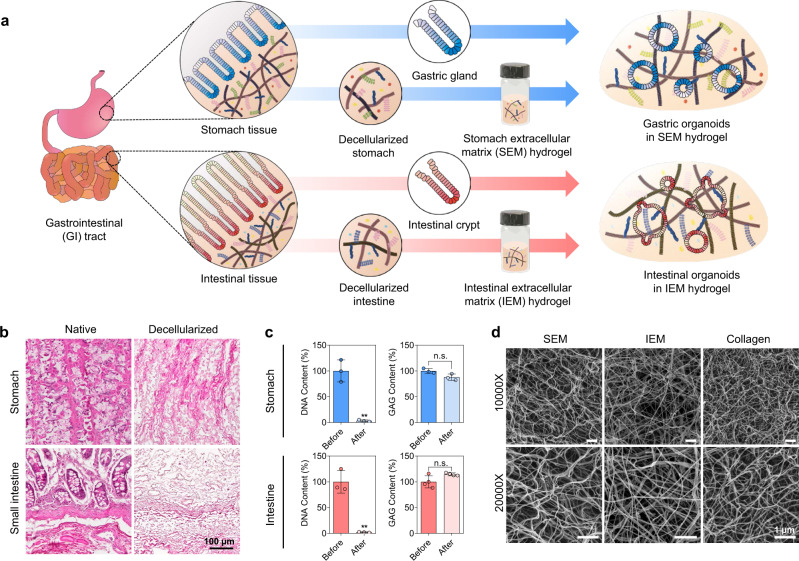
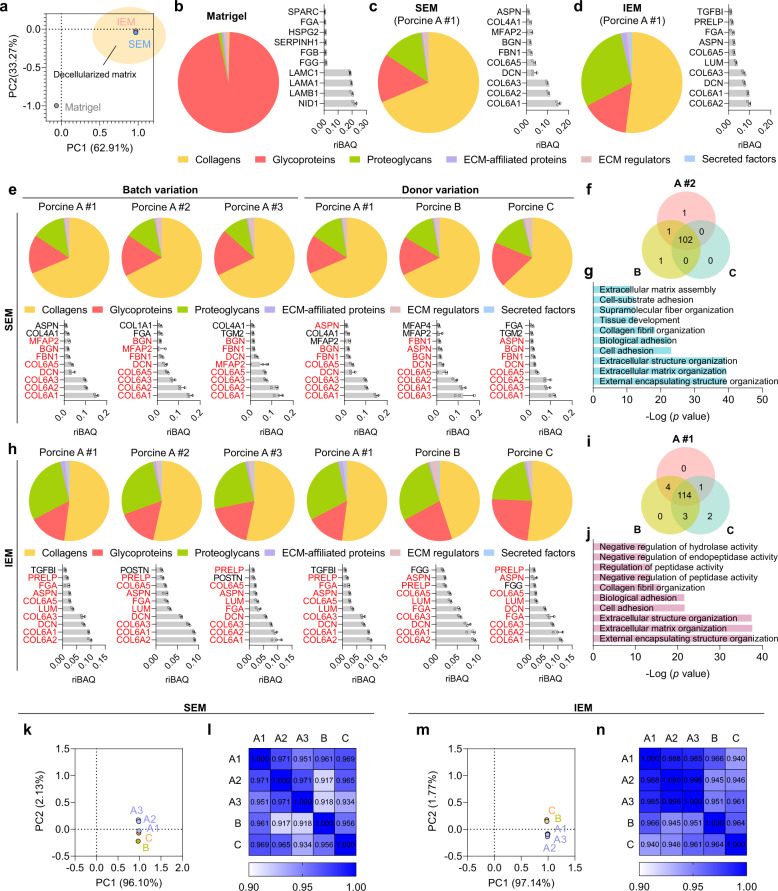
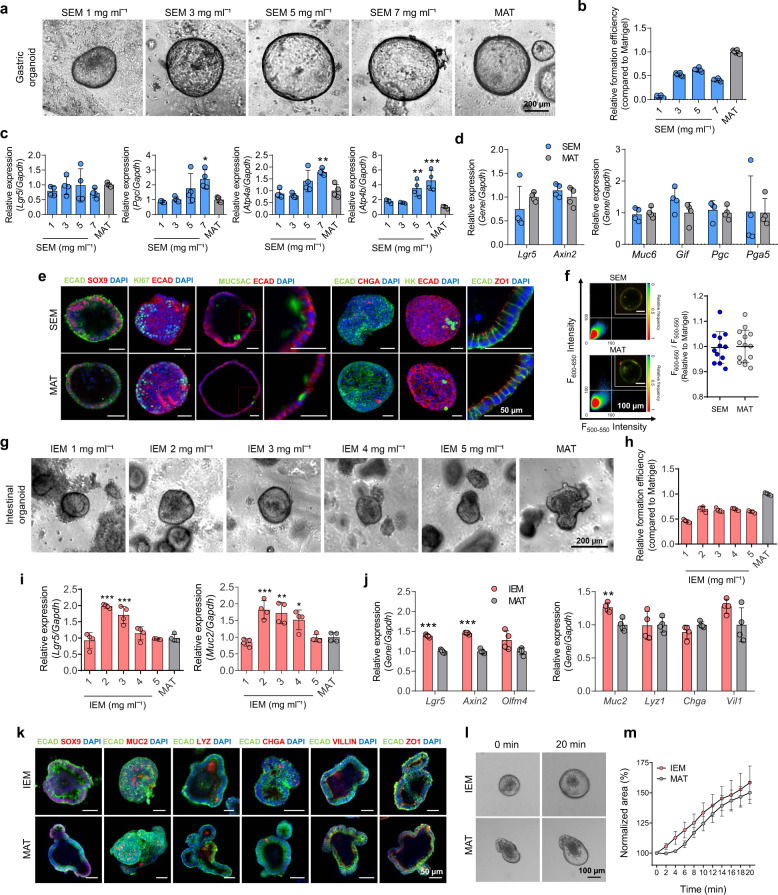
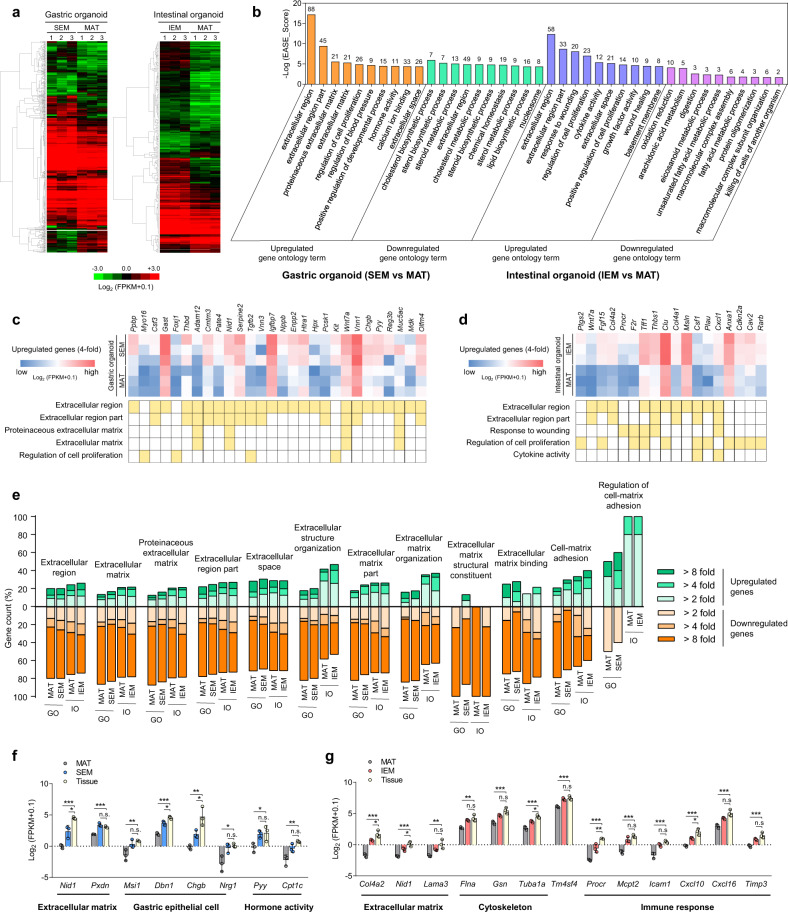
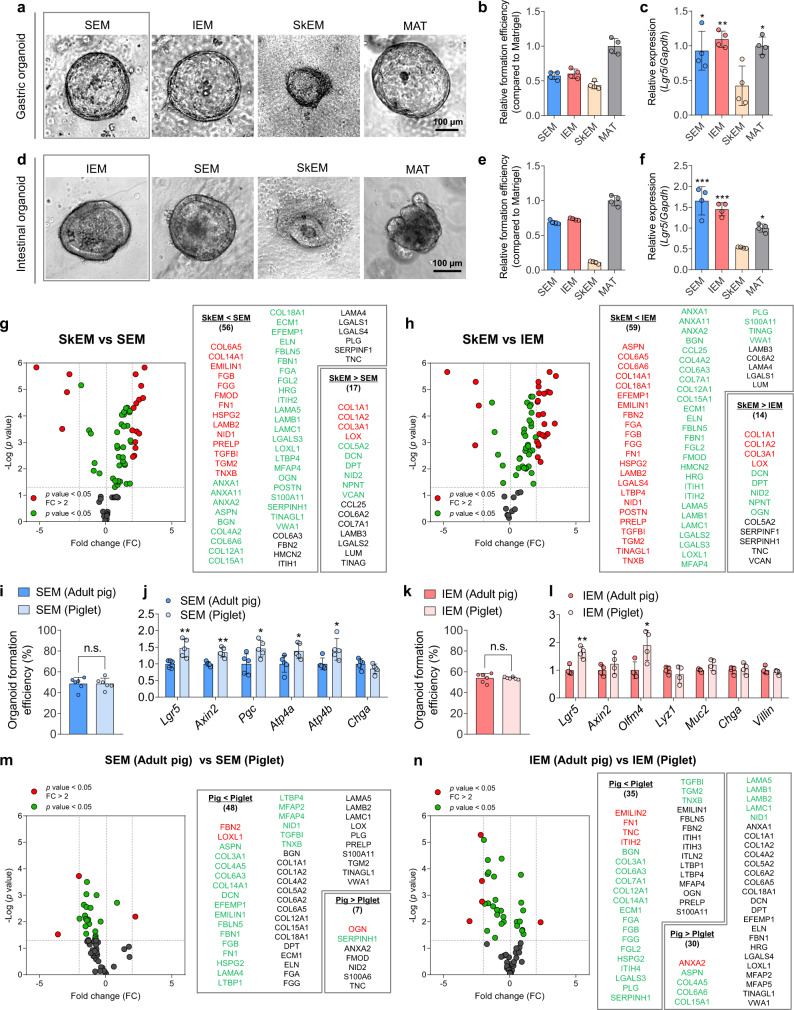
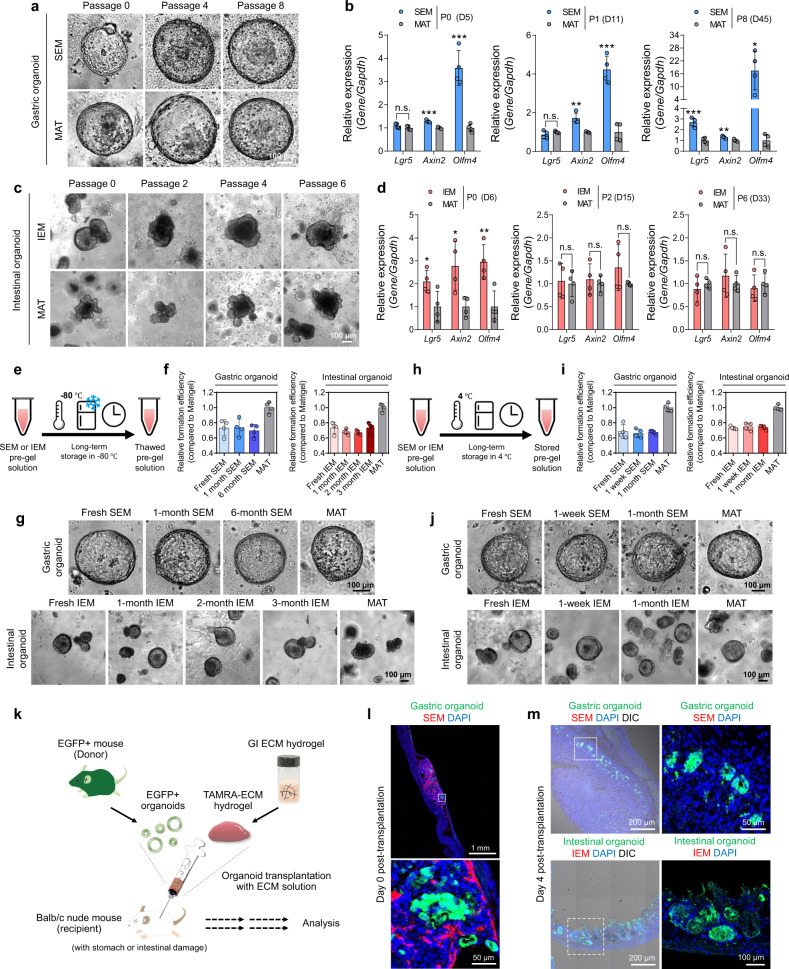
Matrigel, a mouse tumor extracellular matrix protein mixture, is an indispensable component of most organoid tissue culture. However, it has limited the utility of organoids for drug development and regenerative medicine due to its tumor-derived origin, batch-to-batch variation, high cost, and safety issues. Here, we demonstrate that gastrointestinal tissue-derived extracellular matrix hydrogels are suitable substitutes for Matrigel in gastrointestinal organoid culture. We found that the development and function of gastric or intestinal organoids grown in tissue extracellular matrix hydrogels are comparable or often superior to those in Matrigel. In addition, gastrointestinal extracellular matrix hydrogels enabled long-term subculture and transplantation of organoids by providing gastrointestinal tissue-mimetic microenvironments. Tissue-specific and age-related extracellular matrix profiles that affect organoid development were also elucidated through proteomic analysis. Together, our results suggest that extracellular matrix hydrogels derived from decellularized gastrointestinal tissues are effective alternatives to the current gold standard, Matrigel, and produce organoids suitable for gastrointestinal disease modeling, drug development, and tissue regeneration.
Overview
The claims and statistics of this paper haven’t been checked yet.
Free: it reads the open-access text and checks the first 5 claims that cite a source we can check. Create a free account to check every claim.
Integrity signals
Registry
Cites
Statistics
Figures
Verification
Claims the paper makes
The claims and statistics of this paper haven’t been checked yet.
Free: it reads the open-access text and checks the first 5 claims that cite a source we can check. Create a free account to check every claim.
Claims other papers make about this one
Each is checked against this paper’s own text: does it say what the citing paper says it does?
The cited source says what the claim attributes to it.
In the citing paper
“Kim et al. determined that gastrointestinal ECM hydrogels facilitated prolonged passaging and transplantation of organoids, producing organoids suitable for gastrointestinal disease modeling, drug development, and tissue regeneration by simulating the microenvironment of gastrointestinal tissues.[ 202 ]”
From Bioactive scaffolds for tissue engineering: A review of decellularized extracellular matrix applications and innovations (2025) · cites this paper as [202]
The check wasn’t confident either way, so it gives no verdict — never disputed.
In the citing paper
“macrophages could speed up cancer cell migration through secreting TGF‐β1.”
From 3D Biomimetic Models to Reconstitute Tumor Microenvironment In Vitro: Spheroids, Organoids, and Tumor‐on‐a‐Chip (2023) · cites this paper as [122]
Experimental — accuracy not yet measured
Self-check
Percentages, sums and reported differences re-computed from the paper’s own numbers.
The self-check needs the paper’s full text.
Citations
Cites
Gene Ontology: tool for the unification of biology
Ashburner, M., Ball, C. A., Blake, J. A., Botstein, D., Butler, H., Cherry, J. M., Davis, A. P., Dolinski, K., Dwight, S. S., Eppig, J. T., et al. (2000) · Nature Genetics · doi:10.1038/75556 · Cited by 43,206
Tissue-based map of the human proteome
Uhlén, M., Fagerberg, L., Hallström, B. M., Lindskog, C., Oksvold, P., Mardinoglu, A., Sivertsson, Å., Kampf, C., Sjöstedt, E., Asplund, A., et al. (2015) · Science · doi:10.1126/science.1260419 · Cited by 15,286
Cox, J., & Mann, M. (2008) · Nature Biotechnology · doi:10.1038/nbt.1511 · Cited by 14,855
The Perseus computational platform for comprehensive analysis of (prote)omics data
Tyanova, S., Temu, T., Sinitcyn, P., Carlson, A., Hein, M. Y., Geiger, T., Mann, M., & Cox, J. (2016) · Nature Methods · doi:10.1038/nmeth.3901 · Cited by 8,803
Single Lgr5 stem cells build crypt-villus structures in vitro without a mesenchymal niche
Sato, T., Vries, R. G., Snippert, H. J., van de Wetering, M., Barker, N., Stange, D. E., van Es, J. H., Abo, A., Kujala, P., Peters, P. J., et al. (2009) · Nature · doi:10.1038/nature07935 · Cited by 7,204 · cited 2×
“To evaluate the variation of decellularized GI tissue-derived matrices in the ECM compositions, we compared the samples under two conditions: (1) comparison of multiple sample batches derived from different locations in the same donor tissue (batch variation—porcine A1–A3), (2) comparison of multiple samples derived f…”
BackgroundMethodGlobal quantification of mammalian gene expression control
Schwanhäusser, B., Busse, D., Li, N., Dittmar, G., Schuchhardt, J., Wolf, J., Chen, W., & Selbach, M. (2011) · Nature · doi:10.1038/nature10098 · Cited by 6,566
Andromeda: A Peptide Search Engine Integrated into the MaxQuant Environment
Cox, J., Neuhauser, N., Michalski, A., Scheltema, R. A., Olsen, J. V., & Mann, M. (2011) · Journal of Proteome Research · doi:10.1021/pr101065j · Cited by 5,500
Raudvere, U., Kolberg, L., Kuzmin, I., Arak, T., Adler, P., Peterson, H., & Vilo, J. (2019) · Nucleic Acids Research · doi:10.1093/nar/gkz369 · Cited by 5,045
The extracellular matrix at a glance
Frantz, C., Stewart, K. M., & Weaver, V. M. (2010) · Journal of Cell Science · doi:10.1242/jcs.023820 · Cited by 4,334
Sato, T., Stange, D. E., Ferrante, M., Vries, R. G. J., van Es, J. H., van den Brink, S., van Houdt, W. J., Pronk, A., van Gorp, J., Siersema, P. D., et al. (2011) · Gastroenterology · doi:10.1053/j.gastro.2011.07.050 · Cited by 3,753 · cited 1×
“In this study, we provide experimental evidence on how our approach with decellularized GI tissue-derived ECM hydrogels can resolve the major issues of Matrigel including (1) batch-to-batch variation, (2) safety, and (3) high-cost issues.”
Background
Cited by
Lu, P., Ruan, D., Huang, M., Tian, M., Zhu, K., Gan, Z., & Xiao, Z. (2024) · Signal Transduction and Targeted Therapy · doi:10.1038/s41392-024-01852-x · Cited by 667
Organoids: The current status and biomedical applications
Yang, S., Hu, H., Kung, H., Zou, R., Dai, Y., Hu, Y., Wang, T., Lv, T., Yu, J., & Li, F. (2023) · MedComm · doi:10.1002/mco2.274 · Cited by 266
Engineered hydrogels for mechanobiology
Blache, U., Ford, E. M., Ha, B., Rijns, L., Chaudhuri, O., Dankers, P. Y. W., Kloxin, A. M., Snedeker, J. G., & Gentleman, E. (2022) · Nature Reviews Methods Primers · doi:10.1038/s43586-022-00179-7 · Cited by 227
Biomaterials / bioinks and extrusion bioprinting
Chen, X. B., Fazel Anvari-Yazdi, A., Duan, X., Zimmerling, A., Gharraei, R., Sharma, N. K., Sweilem, S., & Ning, L. (2023) · Bioactive Materials · doi:10.1016/j.bioactmat.2023.06.006 · Cited by 244
Magré, L., Verstegen, M. M. A., Buschow, S., van der Laan, L. J. W., Peppelenbosch, M., & Desai, J. (2023) · Journal for ImmunoTherapy of Cancer · doi:10.1136/jitc-2022-006290 · Cited by 178
Li, Q., Yu, H., Zhao, F., Cao, C., Wu, T., Fan, Y., Ao, Y., & Hu, X. (2023) · Advanced Science · doi:10.1002/advs.202303650 · Cited by 185
Human organoids-on-chips for biomedical research and applications
Wang, H., Ning, X., Zhao, F. H., Zhao, H., & Li, D. (2024) · Theranostics · doi:10.7150/thno.90492 · Cited by 159
“In addition, ill-defined matrices ignore the important role of individual ECM factors in recapitulating key events in organogenesis and reorganization [107, 115, 171].”
BackgroundPreparation and Use of Decellularized Extracellular Matrix for Tissue Engineering
McInnes, A. D., Moser, M. A. J., & Chen, X. (2022) · Journal of Functional Biomaterials · doi:10.3390/jfb13040240 · Cited by 143
Liu, J., Song, Q., Yin, W., Li, C., An, N., Le, Y., Wang, Q., Feng, Y., Hu, Y., & Wang, Y. (2025) · Exploration · doi:10.1002/exp.20230078 · Cited by 140
Harane, S. E., Zidi, B., Harane, N. E., Krause, K., Matthes, T., & Preynat‐Seauve, O. (2023) · Cells · doi:10.3390/cells12071001 · Cited by 157
“Although Matrigel and BMEs have provided a tumor-relevant environment for human tumor organoid cultures, it has limitations, such as poor control of mechanical properties, batch-to-batch variation, and the risk of animal pathogen transmission [137,138].”
BackgroundVilaça-Faria, H., Noro, J., Reis, R. L., & Pirraco, R. P. (2024) · Bioactive Materials · doi:10.1016/j.bioactmat.2024.01.004 · Cited by 170
“…ECM hydrogels from decellularized gastrointestinal tissues showed comparable and even superior results in producing suitable 3D organoid culture for tissue regeneration, drug development, and for the modeling of gastrointestinal diseases, when compared to the current gold standard Matrigel [102].”
BackgroundLi, W., Zhou, Z., Zhou, X., Khoo, B. L., Gunawan, R., Chin, Y. R., Zhang, L., Yi, C., Guan, X., & Yang, M. (2023) · Advanced Healthcare Materials · doi:10.1002/adhm.202202609 · Cited by 119
Min, S., Kim, S., Sim, W., Choi, Y. S., Joo, H., Park, J.-H., Lee, S.-J., Kim, H., Lee, M. J., Jeong, I., et al. (2024) · Nature Communications · doi:10.1038/s41467-024-46928-y · Cited by 125
“Prior to transplantation, we induced the gentle fragmentation of cardiac tissues using collagenase for reliable injection 24,113,114 .”
InfluentialSelf-citationA comprehensive review on 3D tissue models: Biofabrication technologies and preclinical applications
Xie, R., Pal, V., Yu, Y., Lu, X., Gao, M., Liang, S., Huang, M., Peng, W., & Ozbolat, I. T. (2023) · Biomaterials · doi:10.1016/j.biomaterials.2023.122408 · Cited by 122
Advanced 3D imaging and organoid bioprinting for biomedical research and therapeutic applications
Maharjan, S., Ma, C., Singh, B., Kang, H., Orive, G., Yao, J., & Zhang, Y. S. (2024) · Advanced Drug Delivery Reviews · doi:10.1016/j.addr.2024.115237 · Cited by 114
Sun, Z., Chen, Z., Yin, M., Wu, X., Guo, B., Cheng, X., Quan, R., Sun, Y., Zhang, Q., Fan, Y., et al. (2024) · Cell stem cell · doi:10.1016/j.stem.2024.03.007 · Cited by 105
A patient-specific lung cancer assembloid model with heterogeneous tumor microenvironments
Zhang, Y., Hu, Q., Pei, Y., Luo, H., Wang, Z., Xu, X., Zhang, Q. H., Dai, J., Wang, Q., Fan, Z., et al. (2024) · Nature Communications · doi:10.1038/s41467-024-47737-z · Cited by 105
“…composite hydrogels because GelMA hydrogels are widely used for their excellent processing capability, tunable mechanical properties, and biocompatibility even for immune cells 16,33 – 35 , while Matrigel hydrogels can provide a favorable tumor microenvironment for patient-derived organoids 36,37 .”
Shi, W., Mirza, S., Kuss, M. A., Liu, B., Hartin, A., Wan, S., Kong, Y., Mohapatra, B. C., Krishnan, M. A., Band, H., et al. (2023) · Advanced Healthcare Materials · doi:10.1002/adhm.202300905 · Cited by 104
Extracellular Matrix Limits Nanoparticle Diffusion and Cellular Uptake in a Tissue-Specific Manner
Cahn, D., Stern, A., Buckenmeyer, M. J., Wolf, M. T., & Duncan, G. A. (2024) · ACS Nano · doi:10.1021/acsnano.4c10381 · Cited by 103
Choi, Y.-M., Lee, H., Ann, M., Song, M., Rheey, J., & Jang, J. (2023) · Biofabrication · doi:10.1088/1758-5090/acd95f · Cited by 94
Self-citationConstruction of tumor organoids and their application to cancer research and therapy
Lv, J., Du, X., Wang, M., Su, J., Wei, Y., & Xu, C. (2024) · Theranostics · doi:10.7150/thno.91362 · Cited by 97
“In addition, given its mouse origin, Matrigel can potentially carry pathogens to infect macrophages and affect the immune systems [55].”
BackgroundInfluentialMiddle-out methods for spatiotemporal tissue engineering of organoids
Blatchley, M. R., & Anseth, K. S. (2023) · Nature Reviews Bioengineering · doi:10.1038/s44222-023-00039-3 · Cited by 97
Stem cell-derived intestinal organoids: a novel modality for IBD
Tian, C., Yang, M., Xu, H., Zhu, M., Yue, N.-N., Zhang, Y., Shi, R., Yao, J., Wang, L., Liang, Y.-J., et al. (2023) · Cell Death Discovery · doi:10.1038/s41420-023-01556-1 · Cited by 98
“SCs are dispersed in liquid hydrogels and then cross-linked to achieve 3D culture [38, 84].”
BackgroundZhou, Z., Pang, Y., Ji, J., He, J., Liu, T., Ouyang, L., Zhang, W., Zhang, X., Zhang, Z., Zhang, K., et al. (2023) · Nature reviews. Immunology · doi:10.1038/s41577-023-00896-4 · Cited by 84
Recent progress on the organoids: Techniques, advantages and applications
Liu, X., Zhou, Z., Zhang, Y., Zhong, H., Cai, X., & Guan, R. (2025) · Biomedicine & Pharmacotherapy · doi:10.1016/j.biopha.2025.117942 · Cited by 89
Reproducible extracellular matrices for tumor organoid culture: challenges and opportunities
Li, K., He, Y., Jin, X., Jin, K., & Qian, J. (2025) · Journal of Translational Medicine · doi:10.1186/s12967-025-06349-x · Cited by 85
“This dynamic balance between ECM deposition and degradation is crucial in both tissue homeostasis and tumor progression, as aberrant ECM remodeling can lead to a microenvironment that supports malignant behavior and therapeutic resistance [23, 24].”
Hydrogel Drug Delivery Systems for Bone Regeneration
Bai, L., Tao, G., Feng, M., Xie, Y., Cai, S., Peng, S., & Xiao, J. (2023) · Pharmaceutics · doi:10.3390/pharmaceutics15051334 · Cited by 75
Breaking the mold: 3D cell cultures reshaping the future of cancer research
Cordeiro, S. Z., Oliveira, B. B. P. P., Valente, R., Ferreira, D., Luz, A., Baptista, P. V., & Fernandes, A. R. (2024) · Frontiers in Cell and Developmental Biology · doi:10.3389/fcell.2024.1507388 · Cited by 76
“…variability, high cost, and safety issues, may complicate the development of standardized protocols, as the ones established for the 2D cultures (Kozlowski et al., 2021), which have been hampering broader application of organoids in drug development and regenerative medicine (Kim et al., 2022).”
In vitro models to study human gut-microbiota interactions: Applications, advances, and limitations
Qi, Y., Yu, L., Tian, F., Zhao, J., & Zhai, Q. (2023) · Microbiological Research · doi:10.1016/j.micres.2023.127336 · Cited by 72
The engineering and application of extracellular matrix hydrogels: a review
Zhang, Y.-T., Xu, Y., & Gao, J. (2023) · Biomaterials Science · doi:10.1039/d3bm00183k · Cited by 79
The role of organoids in cancer research
Fang, Z., Li, P., Du, F., Shang, L., & Li, L. (2023) · Experimental Hematology and Oncology · doi:10.1186/s40164-023-00433-y · Cited by 74
“Matrigel is a colloidal protein mixture secreted by Engelbreth-Holm-Swarm (EHS) mouse sarcoma cells and is produced by Corning Life Sciences [64].”
BackgroundAdvanced lung organoids for respiratory system and pulmonary disease modeling
Joo, H., Min, S., & Cho, S. (2024) · Journal of Tissue Engineering · doi:10.1177/20417314241232502 · Cited by 69
Self-citationGastrointestinal organs and organoids-on-a-chip: advances and translation into the clinics
Carvalho, M. R., Yan, L., Li, B., Zhang, C., He, Y., Reis, R. L., & Oliveira, J. M. (2023) · Biofabrication · doi:10.1088/1758-5090/acf8fb · Cited by 71
“Regarding the ECMused inmostmodels,Matrigel®, amouse tumor ECM protein mixture, is a crucial part of most organoid tissue culture, namely in Gastrointestinal organoids [28].”
BackgroundMethodEsmaeili, Y., Bidram, E., Bigham, A., Atari, M., Azadani, R. N., Tavakoli, M., Salehi, S., Mirhaj, M., Basiri, A., Mirzavandi, Z., et al. (2023) · Alexandria Engineering Journal · doi:10.1016/j.aej.2023.08.080 · Cited by 80
Li, C., An, N., Song, Q., Hu, Y., Yin, W., Wang, Q., Le, Y., Pan, W., Yan, X., Wang, Y., et al. (2024) · Journal of Biomedical Science · doi:10.1186/s12929-024-01086-7 · Cited by 68
“…S e v e r a l g e n e s i n v o l v e d i n w o u n d h e a l i n g a r e u p r e g u l a t e d i n g a s t r o - i n t e s t i n a l o r g a n o i d s , w h i c h e n a b l e b e tt e r c e ll c o m p o n e n t b i o g e n e s i s a n d s t r u c t u r a l d e v e l o p m e n t [ 140 ] h i P S C -”
BackgroundInfluentialEffects of hydrogel stiffness and viscoelasticity on organoid culture: a comprehensive review
Wei, L., Hu, G., Xu, B., & Wang, W. (2025) · Molecular Medicine · doi:10.1186/s10020-025-01131-7 · Cited by 70
Bioprinted Constructs in the Regulatory Landscape: Current State and Future Perspectives
Perin, F., Ouyang, L., Lim, K. S., Motta, A., Maniglio, D., Moroni, L., & Mota, C. (2025) · Advanced Materials · doi:10.1002/adma.202504037 · Cited by 75
Martins‐Costa, C., Pham, V. A., Sidhaye, J., Novatchkova, M., Wiegers, A., Peer, A. M., Möseneder, P., Corsini, N. S., & Knoblich, J. A. (2023) · The EMBO Journal · doi:10.15252/embj.2022113213 · Cited by 61
Engineered organoids for biomedical applications
de Barros, N. R., Wang, C., Maity, S., Peirsman, A., Nasiri, R., Herland, A., Ermis, M., Kawakita, S., de Carvalho, B. G., Kouchehbaghi, N. H., et al. (2023) · Advanced Drug Delivery Reviews · doi:10.1016/j.addr.2023.115142 · Cited by 64
Gut-on-a-Chip Models: Current and Future Perspectives for Host–Microbial Interactions Research
Morelli, M., Kurek, D., Ng, C. P., & Queiroz, K. C. S. (2023) · Biomedicines · doi:10.3390/biomedicines11020619 · Cited by 69
Immunomodulatory hybrid micro-nanofiber scaffolds enhance vascular regeneration
Liu, S. M., Yao, L., Wang, Y., Li, Y., Jia, Y., Yang, Y., Li, N., Hu, Y., Kong, D., Dong, X., et al. (2022) · Bioactive Materials · doi:10.1016/j.bioactmat.2022.08.018 · Cited by 67
Organoids from pluripotent stem cells and human tissues: When two cultures meet each other
Artegiani, B., & Hendriks, D. F. G. (2025) · Developmental Cell · doi:10.1016/j.devcel.2025.01.005 · Cited by 58
Integration of 3D-printed cerebral cortical tissue into an ex vivo lesioned brain slice
Jin, Y., Mikhailova, E., Lei, M., Cowley, S. A., Sun, T., Yang, X., Zhang, Y., Liu, K., da Silva, D. C., Soares, L. C., et al. (2023) · Nature Communications · doi:10.1038/s41467-023-41356-w · Cited by 55
Rethinking Matrigel: The Complex Journey to Matrix Alternatives in Organoid Culture
Wolff, L., & Hendrix, S. (2025) · Advanced Science · doi:10.1002/advs.202508734 · Cited by 57
Song, H., Jiang, H., Hu, W., Hai, Y., Cai, Y., Li, H., Liao, Y. R., Huang, Y., Lv, X., Zhang, Y., et al. (2024) · Science Advances · doi:10.1126/sciadv.adl3511 · Cited by 50
“The proteomic data of Matrigel are sourced from Suran Kim’s research ( 17 ).”
BackgroundMethodInfluentialUnraveling the Role of the Tumor Extracellular Matrix to Inform Nanoparticle Design for Nanomedicine
Cassani, M., Fernandes, S., Pagliari, S., Cavalieri, F., Caruso, F., & Forte, G. (2025) · Advanced Science · doi:10.1002/advs.202409898 · Cited by 48
van Tienderen, G. S., Conboy, J. P., Muntz, I., Willemse, J., Tieleman, J., Monfils, K., Schurink, I. J., Demmers, J., Doukas, M., Koenderink, G. H., et al. (2023) · Biomaterials Advances · doi:10.1016/j.bioadv.2023.213289 · Cited by 51
Biomimetic hydrogel derived from decellularized dermal matrix facilitates skin wounds healing
Yu, Y., Xiao, H., Tang, G., Wang, H., Shen, J., Sun, Y., Wang, S., Kong, W., Chai, Y., Liu, X., et al. (2023) · Materials Today Bio · doi:10.1016/j.mtbio.2023.100725 · Cited by 47
Organoid-based tissue engineering for advanced tissue repair and reconstruction
Hsiung, N., Ju, Y., Yang, K. C., Pu, Y., Zeng, W., Zhao, H., Zou, P., Ye, J., Yi, K., & Wang, X. (2025) · Materials Today Bio · doi:10.1016/j.mtbio.2025.102093 · Cited by 56
“Due to their physiological functions, organoids can be used as a cellular source for tissue repair, such as liver organoids transplantation for the treatment of liver disease [28], or intestinal organoids transplantation for the repair of gastrointestinal tract injuries [27].”
Flourishing tumor organoids: History, emerging technology, and application
Yang, Q., Li, M., Yang, X., Xiao, Z., Tong, X., Tuerdi, A., Li, S., & Lei, L. (2023) · Bioengineering & Translational Medicine · doi:10.1002/btm2.10559 · Cited by 49
“In recent years, tissue-engineered cell scaffolds provide support for cell growth and attachment and mimic the function of ECM in vivo with similar or superior results to Matrigel.60 Hydrogels are highly promising 3D scaffolds for tissue engineering applications because of their highwater content, porous structure, an…”
BackgroundInfluentialEngineered biomimetic hydrogels for organoids
Li, Y., Saiding, Q., Wang, Z., & Cui, W. (2023) · Progress in Materials Science · doi:10.1016/j.pmatsci.2023.101216 · Cited by 48
Decellularized extracellular matrix for organoid and engineered organ culture
Guo, X., Liu, B., Zhang, Y., Cheong, S., Xu, T., Lu, F., & He, Y. (2024) · Journal of Tissue Engineering · doi:10.1177/20417314241300386 · Cited by 49
Biomaterial-assisted organoid technology for disease modeling and drug screening
Shao, Y., Wang, J., Jin, A., Jiang, S., Lei, L., & Liu, L. (2024) · Materials Today Bio · doi:10.1016/j.mtbio.2024.101438 · Cited by 49
Standardization and quality assessment for human intestinal organoids
Lee, H., Yang, S., Lee, K. J., Kim, S.-N., Jeong, J., Kim, K. Y., Jung, C., Jeon, S., Kwon, D., Lee, S., et al. (2024) · Frontiers in Cell and Developmental Biology · doi:10.3389/fcell.2024.1383893 · Cited by 44
Self-citationOrganoids meet microfluidics: recent advancements, challenges, and future of organoids-on-chip
Chauhdari, T., Zaidi, S. A., Su, J., & Ding, Y. (2025) · In vitro models · doi:10.1007/s44164-025-00086-7 · Cited by 46
“Their results demonstrated that organoids grown in tissue-specific ECM were viable and could be maintained for extended periods [116].”
Engineered Synthetic Matrices for Human Intestinal Organoid Culture and Therapeutic Delivery
Mulero‐Russe, A., & García, A. J. (2023) · Advanced Materials · doi:10.1002/adma.202307678 · Cited by 43
Shrestha, S., Lekkala, V. K. R., Acharya, P., Kang, S., Vanga, M. G., & Lee, M. (2024) · Lab on a Chip · doi:10.1039/d4lc00149d · Cited by 42
Xiang, G., Yin, B., Heidari, B. S., Youssef, G., Gosecka, M., Gosecki, M., Torres, F. G., Wong, S. H. D., & Dodda, J. M. (2025) · Advanced Science · doi:10.1002/advs.202512037 · Cited by 46
Spagnol, G., Sensi, F., Tommasi, O. D., Marchetti, M., Bonaldo, G., Xhindoli, L., Noventa, M., Agostini, M., Tozzi, R., & Saccardi, C. (2023) · Cancers · doi:10.3390/cancers15072059 · Cited by 42
“Matrigel, a mouse sarcoma extracellular matrix protein mixture, is an indispensable component of most organoid tissue cultures [66].”
BackgroundLi, D., Li, S., He, S., He, H., Yuan, G., Ma, B., Zhang, Y., Yuan, C., Liu, Z., Deng, Z., et al. (2025) · Bioactive Materials · doi:10.1016/j.bioactmat.2025.01.016 · Cited by 52
“ECM hydrogels are capable of providing a microenvironment that is more physiologically relevant, facilitating long-term subculture and transplantation of organoids [44,45].”
Bioprinting-assisted tissue assembly to generate organ substitutes at scale
Jo, Y., Hwang, D. G., Kim, M., Yong, U., & Jang, J. (2022) · Trends in biotechnology · doi:10.1016/j.tibtech.2022.07.001 · Cited by 41
Advances in biomimetic hydrogels for organoid culture
Luo, L., Liu, L., Ding, Y., Dong, Y., & Ma, M. (2023) · Chemical Communications · doi:10.1039/d3cc01274c · Cited by 41
Işık, M., Okesola, B. O., Eylem, C. C., Koçak, E., Nemutlu, E., D’Este, M., Mata, Á., & Derkuş, B. (2023) · Acta Biomaterialia · doi:10.1016/j.actbio.2023.09.040 · Cited by 40
Xu, N.-Y., Li, J., Wang, M., Chen, X., Tang, R., & Liu, X. (2024) · ACS Applied Materials & Interfaces · doi:10.1021/acsami.3c17863 · Cited by 39
Organoids as regenerative medicine for inflammatory bowel disease
Hammerhøj, A., Chakravarti, D., Sato, T., Jensen, K. B., & Nielsen, O. H. (2024) · iScience · doi:10.1016/j.isci.2024.110118 · Cited by 37
Biofabrication and Monitoring of a 3D Printed Skin Model for Melanoma
Vázquez‐Aristizabal, P., Henriksen‐Lacey, M., García‐Astrain, C., de Aberasturi, D. J., Langer, J., Epelde, C., Litti, L., Liz‐Marzán, L. M., & Izeta, A. (2024) · Advanced Healthcare Materials · doi:10.1002/adhm.202401136 · Cited by 38
Advances of Engineered Hydrogel Organoids within the Stem Cell Field: A Systematic Review
Li, Z., Yue, M., Liu, Y., Zhang, P., Qing, J., Liu, H., & Zhou, Y. (2022) · Gels · doi:10.3390/gels8060379 · Cited by 40
“Tissue Stem Cell Type Hydrogel Hydrogel Type Mechanism Ref. mISCs and hISCs RGD-functionalized PEG gels (with laminin-111, collagen IV, HA acid, and perlecan) Synthetic hydrogel High matrix stiffness significantly enhanced ISCs expansion through a YAP-dependent mechanism [47] ISCs 3D printing: PEG elastomers; matrices…”
BackgroundInfluentialXia, K., Li, D.-D., Wang, C., Ying, L., Wang, J.-K., Yang, B., Shu, J., Huang, X., Zhang, Y., Yu, C., et al. (2022) · Bioactive Materials · doi:10.1016/j.bioactmat.2022.07.024 · Cited by 37
“[55] has demonstrated that the extracellular matrix hydrogels derived from decellularized gastrointestinal tissues are effective alternatives to the current gold standard, Matrigel.”
BackgroundHierarchical Design of Tissue‐Mimetic Fibrillar Hydrogel Scaffolds
Pardo, A., Gómez‐Florit, M., Davidson, M. D., Öztürk-Öncel, M. Ö., Domingues, R. M. A., Burdick, J. A., & Gomes, M. E. (2024) · Advanced Healthcare Materials · doi:10.1002/adhm.202303167 · Cited by 37
Development potential of extracellular matrix hydrogels as hemostatic materials
Cai, D., & Weng, W. (2023) · Frontiers in Bioengineering and Biotechnology · doi:10.3389/fbioe.2023.1187474 · Cited by 36
Injectable Hydrogels in Cardiovascular Tissue Engineering
Patel, R., & Patel, D. D. (2024) · Polymers · doi:10.3390/polym16131878 · Cited by 36
A Review of Advanced Biomaterials and Cells for the Production of Bone Organoid
Li, C., Zhang, Y., Du, Y., Hou, Z., Zhang, Y., Cui, W., & Chen, W. (2023) · Small Science · doi:10.1002/smsc.202300027 · Cited by 34
Kalla, J., Pfneissl, J., Mair, T., Tran, L., & Egger, G. (2024) · Cellular Oncology · doi:10.1007/s13402-024-00960-8 · Cited by 34
“Additionally, ECMs are mostly derived from mice [256 ], which raises the issue of possible influ - ence of cross species interactions, when culturing human-derived 3D cell lines in murine-derived ECMs [257, 258].”
Using Biosensors to Study Organoids, Spheroids and Organs-on-a-Chip: A Mechanobiology Perspective
Yousafzai, M. S., & Hammer, J. A. (2023) · Biosensors · doi:10.3390/bios13100905 · Cited by 31
“Importantly, efforts are being made to design alternative matrices that possess mechanically controllable properties, as these will allow better dissection of mechanotransduction-dependent signaling pathways and growth mechanisms [238].”
BackgroundA review of 3D bioprinting for organoids
Li, Z., Chen, L., Wu, J., Chen, Y., Zhu, Y. Z., Li, G., Xie, G., Tang, G., & Xie, M. (2025) · Medical Review · doi:10.1515/mr-2024-0089 · Cited by 37
“Compared to tumor-derived Matrigel, dECM is considered more suitable for human applications and is increasingly regarded as a viable replacement for Matrigel in organoids tissue culture [62].”
Wei, H., Gu, Y., Li, A., Song, P., Liu, D., Sun, F., Ma, X., & Qian, X. (2023) · Colloids and Surfaces B Biointerfaces · doi:10.1016/j.colsurfb.2023.113652 · Cited by 30
Ma, W., Zheng, Y., Yang, G.-Z., Zhang, H., Lu, M., Ma, H., Wu, C., & Lu, H. (2024) · Materials Horizons · doi:10.1039/d4mh00228h · Cited by 30
Treated Dentin Matrix in Tissue Regeneration: Recent Advances
Bi, F., Zhang, Z., & Guo, W. (2022) · Pharmaceutics · doi:10.3390/pharmaceutics15010091 · Cited by 30
“The other one is to see the dECM as the bio-environment for organoids construction [23] or the disease model [24] base for research and sifting drugs.”
BackgroundZhao, Y., Gong, J., Liu, H., Huang, H., Tan, W., & Cai, H. (2024) · International Journal of Biological Macromolecules · doi:10.1016/j.ijbiomac.2024.136707 · Cited by 30
Choi, Y., Na, D., Yoon, G., Kim, J., Min, S., Yi, H., Cho, S., Cho, J. H., Lee, C., & Jang, J. (2025) · Advanced Science · doi:10.1002/advs.202411769 · Cited by 36
Self-citationOrganoids in skin wound healing
Wang, Z., Zhao, F., Lang, H., Ren, H., Zhang, Q., Huang, X., He, C., Xu, C., Tan, C., Ma, J., et al. (2025) · Burns & Trauma · doi:10.1093/burnst/tkae077 · Cited by 30
Human Organoids and Their Application in Tumor Models, Disease Modeling, and Tissue Engineering
Song, S., Liu, Z., Wang, Y., & Gong, B. (2025) · Medicine Bulletin · doi:10.1002/mdb2.70001 · Cited by 33
Zhao, K.-Y., Du, Y., Cao, H., Su, L., Su, X., & Li, X. (2024) · Colloids and Surfaces B Biointerfaces · doi:10.1016/j.colsurfb.2024.114435 · Cited by 31
Synthesis of Hydrogel-Based Microgels and Nanogels Toward Therapeutic and Biomedical Applications
Choi, Y., Koh, H. Y., Han, J. Y., & Seo, S. (2025) · Applied Sciences · doi:10.3390/app15031368 · Cited by 30
Self-citationArtificial Intelligence for Organoids Multidimensional Assessment
Mo, Y., Wang, J., Yang, H., Bai, L., Xu, K., & Su, J. (2025) · SmartMat · doi:10.1002/smm2.70016 · Cited by 29
“…proteomics [169] Intensive ‐ Based Absolute Quantification (iBAQ) To compare expression levels between different samples or different proteins [170] Least absolute shrinkage and selection operator (LASSO), SVM Differentiate and assess the metabolomic subtypes [171] Histology Machine learning,…”
Paola, F. J. D., Calafato, G., Piccaluga, P. P., Tallini, G., & Rhoden, K. J. (2025) · Journal of Personalized Medicine · doi:10.3390/jpm15080394 · Cited by 28
“To overcome these limitations, synthetic alternatives to natural ECM such as hydrogel, synthetic polymers and peptide-based ECMs were developed [86–90].”
Omics technologies for high-throughput-screening of cell–biomaterial interactions
Sari, B., Işık, M., Eylem, C. C., Bektas, C. K., Okesola, B. O., Karakaya, E., Emregül, E., Nemutlu, E., & Derkuş, B. (2022) · Molecular Omics · doi:10.1039/d2mo00060a · Cited by 29
Rutherford, D. G., & Ho, G. (2023) · Inflammatory Bowel Diseases · doi:10.1093/ibd/izad044 · Cited by 26
Francés‐Herrero, E., Lopez, R., Campo, H., de Miguel–Gómez, L., Rodríguez‐Eguren, A., Faus, A., Pellicer, A., & Cervelló, I. (2023) · Biomaterials Advances · doi:10.1016/j.bioadv.2023.213480 · Cited by 28
Constructing a 3D co-culture in vitro synovial tissue model for rheumatoid arthritis research
Wang, X., He, J., Zhang, Q., He, J., & Wang, Q. (2025) · Materials Today Bio · doi:10.1016/j.mtbio.2025.101492 · Cited by 31
Dynamic Hydrogels with Tunable Mechanics for 3D Organoid Derivation
Xie, X., Chen, X., Zhou, J. X., Wang, T., Yang, G., Han, F., & Zhao, W. (2025) · Small · doi:10.1002/smll.202501862 · Cited by 30
Wang, Y., Zhang, H., Xu, Z., Zhu, W., Chang, S. L., Wei, J., Chen, S., Liu, Y., Kong, W., & Guo, J. (2025) · Materials Today Bio · doi:10.1016/j.mtbio.2025.102476 · Cited by 30
“Furthermore, bioactive materials designed for bone defect repair in tissue engineering often induce inflammatory responses, resulting in necrosis within the implanted bone repair materials [7,8].”
Cao, R., Li, N. T., Latour, S., Cadavid, J. L., Tan, C. M., Forman, A., Jackson, H. W., & McGuigan, A. P. (2023) · Advanced Healthcare Materials · doi:10.1002/adhm.202202422 · Cited by 25
“Many of these alternative bio-matrices are viscous hydrogels or hydrogel precursors therefore automated tissue manufacturing methods compatible with these more viscous materials will likely be important as the use of these alternative gels increases [49].”
BackgroundHuo, Y., Ci, Z., Wu, S., Feng, S., Sun, Y., Li, G., Liu, Y., Hua, Y., Zhang, Y., & Zhou, G. (2024) · Aggregate · doi:10.1002/agt2.619 · Cited by 27
ECM-derived biomaterials for regulating tissue multicellularity and maturation
Smandri, A., Al-Masawa, M. E., Ng, M. H., & Fauzi, M. B. (2024) · iScience · doi:10.1016/j.isci.2024.109141 · Cited by 24
“75 In the same fashion, different region-specific GI tract-derived ECMs have been used to grow mature or enhance the off-host functional maturity of patient-derived organoids such as gastric and small intestine organoids 187 and duodenal, jejunal, and ileal organoids, 31 wherein GI…”
BackgroundExploiting Matrix Stiffness to Overcome Drug Resistance
Aydın, H. B., Özçelikkale, A., & Acar, A. (2024) · ACS Biomaterials Science & Engineering · doi:10.1021/acsbiomaterials.4c00445 · Cited by 27
Batasheva, S., Kotova, S., Frolova, A., & Fakhrullin, R. F. (2024) · Science and Technology of Advanced Materials · doi:10.1080/14686996.2024.2421739 · Cited by 26
Intestinal organoids in inflammatory bowel disease: advances, applications, and future directions
Ren, J., & Huang, S. (2025) · Frontiers in Cell and Developmental Biology · doi:10.3389/fcell.2025.1517121 · Cited by 27
Ciprietti, M., Bueds, C., Vankelecom, H. E. J., & Vriens, J. (2025) · Cellular and Molecular Life Sciences · doi:10.1007/s00018-025-05807-5 · Cited by 25
Application of Organoids in Regenerative Medicine
Wu, Y., Ye, W., Gao, Y., Yi, Z., Chen, Z., Qu, C., Huang, J., Liu, F., & Liu, Z. (2023) · Stem Cells · doi:10.1093/stmcls/sxad072 · Cited by 24
Metadata
- Authors
- Kim, S., Min, S., Choi, Y. S., Jo, S.-H., Jung, J. H., Han, K., Kim, J., An, S., Ji, Y. W., Kim, Y.-G., & Cho, S.-W.
- Affiliations
- Yonsei University (KR)
- Soongsil University (KR)
- Corresponding author
- Cho, Seung-Woo
- ORCID
- Venue
- Nature Communications
- Published
- 2022-03-30
- Volume
- 13
- Issue
- 1
- Pages
- 1692-1692
- ISSN
- 2041-1723 (ISSN-L)
- PMC
- PMC8967832
- OpenAlex
- W4220834703
- Semantic Scholar
- e21b3da2ea850f4368b57de14dfb52f8a36eef91
- Cited by
- 375
- References
- 103
- Citations by year
- 2026: 82 · 2025: 113 · 2024: 88 · 2023: 74 · 2022: 18
- FWCI
- 70.01
- Type
- journal article
- Language
- en
- Open access
- gold
- doi.org
- Licence
- cc-by
- creativecommons.org/licenses/by/4.0 (tdm)
- creativecommons.org/licenses/by/4.0 (vor)
- Locations
- Nature Communications (publishedVersion, cc-by)
- PubMed Central (publishedVersion, cc-by)
- PubMed (publishedVersion)
- YUHSpace (Yonsei University Medical Library) (submittedVersion, cc-by-nc-nd)
- RePEc: Research Papers in Economics (submittedVersion)
- DOAJ (DOAJ: Directory of Open Access Journals) (submittedVersion, cc-by-sa)
- Funders
- National Research Foundation of Korea (2018M3A9H1021382, 2021R1A2C3004262)
- Ministry of Trade, Industry and Energy, Korea | Korea Evaluation Institute of Industrial Technology (20009125)
- Institute for Basic Science (IBS-R026-D1)
- Topics
- Health Sciences › Medicine › Surgery › Tissue Engineering and Regenerative Medicine
- Physical Sciences › Materials Science › Biomaterials › Hydrogels: synthesis, properties, applications
- Physical Sciences › Engineering › Biomedical Engineering › 3D Printing in Biomedical Research
- Keywords
- extracellular matrix hydrogel, Matrigel alternative, gastric organoids, intestinal organoids, decellularized tissue, organoid culture, organoid transplantation, regenerative medicine
- MeSH terms
- Animals, Collagen, Drug Combinations, Extracellular Matrix, Laminin, Organoids, Proteoglycans, Hydrogels, Proteomics, Mice
About these checks
Registry, retraction, Cites and statistics results are computed, not judged, with one exception: a printed reference that no index lists is read once by a model before it counts as a citation error. Claims are extracted by a model and kept only when their quote appears verbatim in the text; each cited source is then checked, with a model’s help, for whether it says what the claim relies on. Those verdicts can be wrong — read the claim’s quote and the cited source before relying on one.
Statistics and arithmetic are recomputed, not judged.
Confidence bands are shown only for fields calibrated on our annotated test set. None is calibrated yet, so no band is shown.
What counts as a claim ›How we measure confidence ›How we check this ›
Are you an author, or do you see a problem with this page? Request a review
Data sources
Bibliographic data: Semantic Scholar, OpenAlex, Crossref.
Contains information from the Semantic Scholar Academic Graph Datasets, made available under the ODC Attribution License (ODC-BY 1.0).
Semantic Scholar’s data is described in: Kinney, R., et al. (2023). The Semantic Scholar Open Data Platform. arXiv:2301.10140.
