

Mechanical control of innate immune responses against viral infection revealed in a human lung alveolus chip
Open accessPublished version of a preprint
The DOI matches its Crossref record; 83 of the 84 references it cites were found in a registry or an index.
Abstract
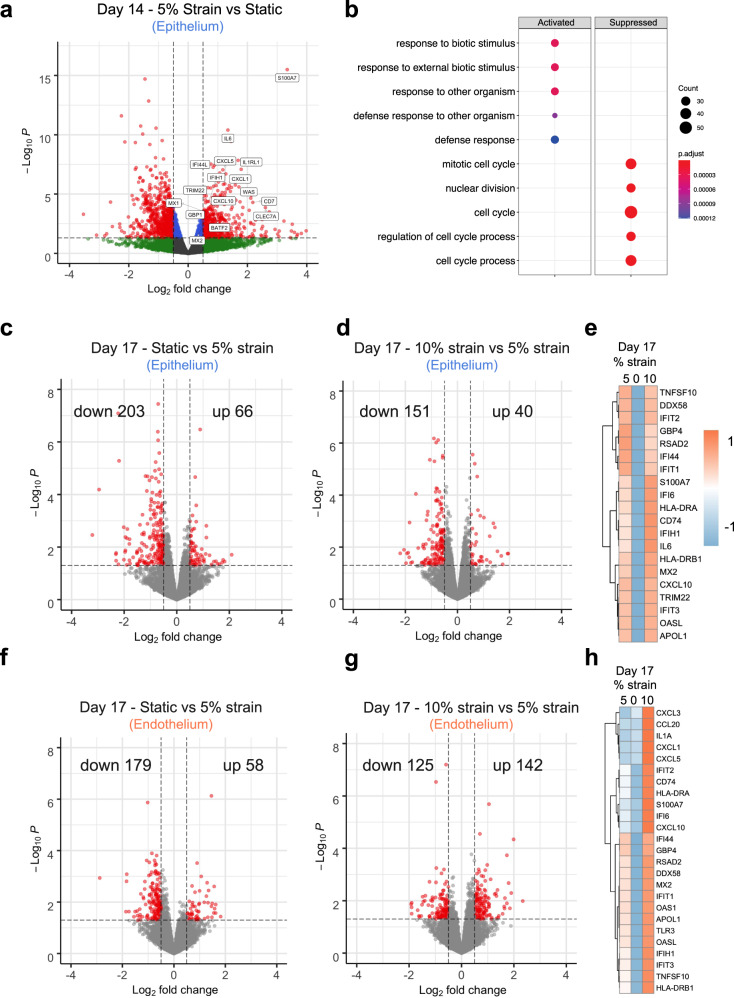
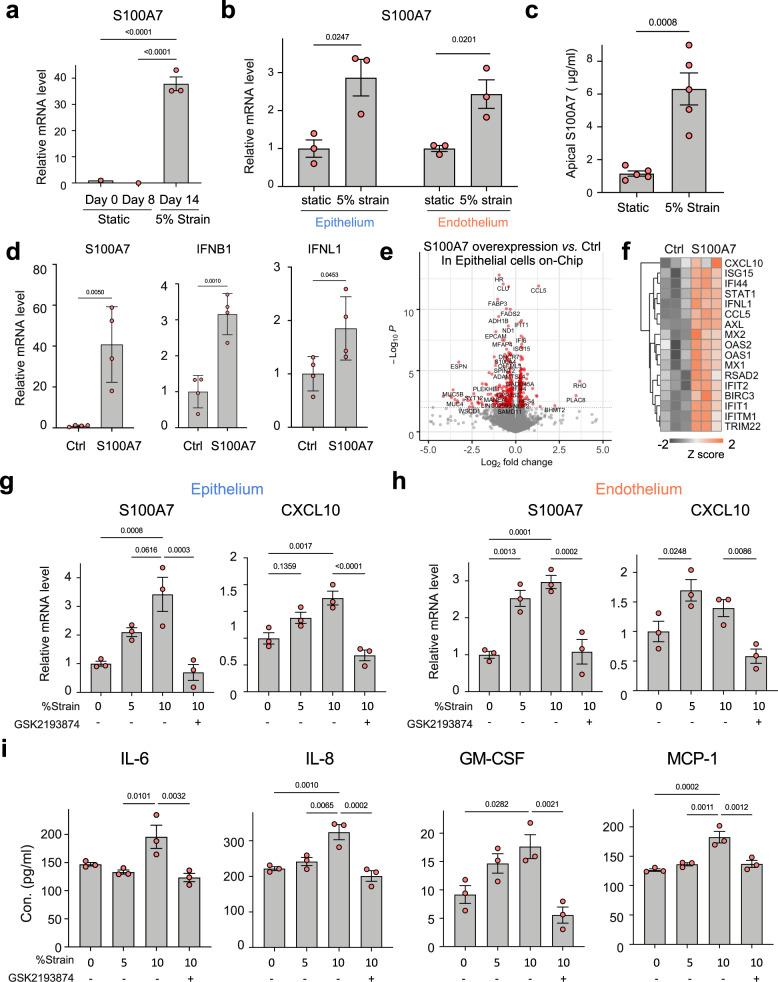
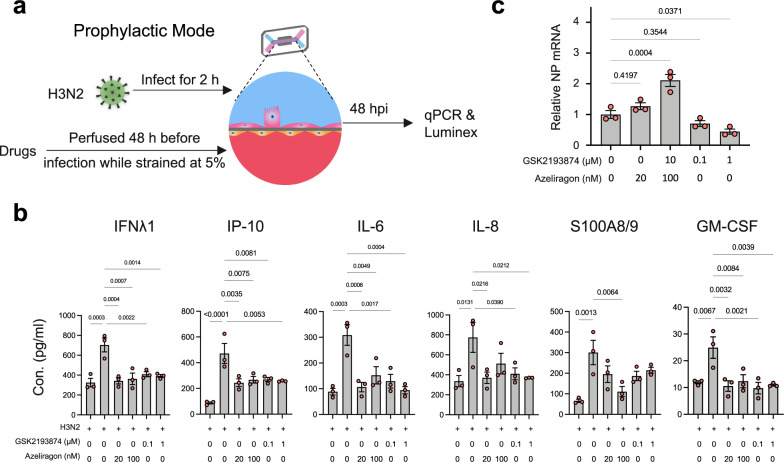
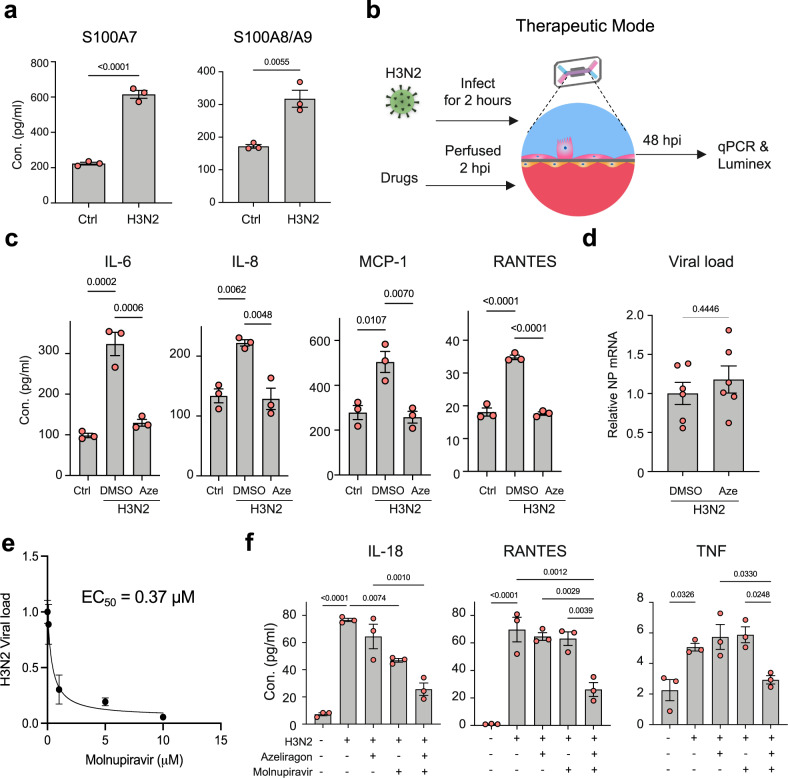
Mechanical breathing motions have a fundamental function in lung development and disease, but little is known about how they contribute to host innate immunity. Here we use a human lung alveolus chip that experiences cyclic breathing-like deformations to investigate whether physical forces influence innate immune responses to viral infection. Influenza H3N2 infection of mechanically active chips induces a cascade of host responses including increased lung permeability, apoptosis, cell regeneration, cytokines production, and recruitment of circulating immune cells. Comparison with static chips reveals that breathing motions suppress viral replication by activating protective innate immune responses in epithelial and endothelial cells, which are mediated in part through activation of the mechanosensitive ion channel TRPV4 and signaling via receptor for advanced glycation end products (RAGE). RAGE inhibitors suppress cytokines induction, while TRPV4 inhibition attenuates both inflammation and viral burden, in infected chips with breathing motions. Therefore, TRPV4 and RAGE may serve as new targets for therapeutic intervention in patients infected with influenza and other potential pandemic viruses that cause life-threatening lung inflammation.
Overview
The claims and statistics of this paper haven’t been checked yet.
Free: it reads the open-access text and checks the first 5 claims that cite a source we can check. Create a free account to check every claim.
Integrity signals
Registry
Cites
Statistics
Figures
Verification
Claims the paper makes
The claims and statistics of this paper haven’t been checked yet.
Free: it reads the open-access text and checks the first 5 claims that cite a source we can check. Create a free account to check every claim.
Claims other papers make about this one
Each is checked against this paper’s own text: does it say what the citing paper says it does?
The source backs part of the claim, not all of it — or backs it for a different population, condition or comparison.
In the citing paper
“The RAGE inhibitor azeliragon was then identified as effective by suppressing the overshooting of inflammatory responses as observed in patients who were severely ill with COVID-19.”
From Human disease models in drug development (2023) · cites this paper as [113]
Experimental — accuracy not yet measuredThe cited source says what the claim attributes to it.
In the citing paper
“an increase in S100A7 expression was observed which codes for alarmins and receptor for advanced glycation end products (RAGE) ligands.”
From Human disease models in drug development (2023) · cites this paper as [113]
Experimental — accuracy not yet measuredThe cited source says what the claim attributes to it.
In the citing paper
“applying physiological breathing mechanics in alveoli-on-chip models showed antiviral activity by increasing the expression of interferon-related genes and improving host defence113.”
From Human disease models in drug development (2023) · cites this paper as [113]
Self-check
Percentages, sums and reported differences re-computed from the paper’s own numbers.
The self-check needs the paper’s full text.
Citations
Cites
Analysis of Relative Gene Expression Data Using Real-Time Quantitative PCR and the 2−ΔΔCT Method
Livak, K. J., & Schmittgen, T. D. (2001) · Methods · doi:10.1006/meth.2001.1262 · Cited by 180,860
Systematic and integrative analysis of large gene lists using DAVID bioinformatics resources
Huang, D. W., Sherman, B. T., & Lempicki, R. A. (2009) · Nature Protocols · doi:10.1038/nprot.2008.211 · Cited by 35,890
(2000) · New England Journal of Medicine · doi:10.1056/nejm200005043421801 · Cited by 12,941
Reconstituting organ-level lung functions on a chip
Huh, D., Matthews, B. D., Mammoto, A., Montoya-Zavala, M., Hsin, H. Y., & Ingber, D. E. (2010) · Science · doi:10.1126/science.1188302 · Cited by 4,250
Self-citationImbalanced Host Response to SARS-CoV-2 Drives Development of COVID-19
Blanco-Melo, D., Nilsson-Payant, B. E., Liu, W.-C., Uhl, S., Hoagland, D., Møller, R., Jordan, T. X., Oishi, K., Panis, M., Sachs, D., et al. (2020) · Cell · doi:10.1016/j.cell.2020.04.026 · Cited by 4,222
Mutation of the mouse klotho gene leads to a syndrome resembling ageing
Kuro-o, M., Matsumura, Y., Aizawa, H., Kawaguchi, H., Suga, T., Utsugi, T., Ohyama, Y., Kurabayashi, M., Kaname, T., Kume, E., et al. (1997) · Nature · doi:10.1038/36285 · Cited by 3,837
Ranieri, V. M., Suter, P. M., Tortorella, C., De Tullio, R., Dayer, J. M., Brienza, A., Bruno, F., & Slutsky, A. S. (1999) · JAMA · doi:10.1001/jama.282.1.54 · Cited by 1,908
Type 2 alveolar cells are stem cells in adult lung
Barkauskas, C. E., Cronce, M. J., Rackley, C. R., Bowie, E. J., Keene, D. R., Stripp, B. R., Randell, S. H., Noble, P. W., & Hogan, B. L. M. (2013) · Journal of Clinical Investigation · doi:10.1172/jci68782 · Cited by 1,776
STEM: a tool for the analysis of short time series gene expression data
Ernst, J., & Bar-Joseph, Z. (2006) · BMC Bioinformatics · doi:10.1186/1471-2105-7-191 · Cited by 1,703
Krammer, F., Smith, G. J. D., Fouchier, R. A. M., Peiris, M., Kedzierska, K., Doherty, P. C., Palese, P., Shaw, M. L., Treanor, J., Webster, R. G., et al. (2018) · Nature Reviews Disease Primers · doi:10.1038/s41572-018-0002-y · Cited by 1,570
Research works printed but not linked: 1
- Si, L. et al. Human organs-on-chips as tools for repurposing approved drugs as potential influenza and COVID19 therapeutics in viral pandemics. Nat. Biomed. Engi. In Press (2021).
Cited by
Items 101–171 of 171
Feng, A., Yang, Y., & Rong, R. (2025) · International Journal of Biological Macromolecules · doi:10.1016/j.ijbiomac.2025.147506 · Cited by 5
Li, Y., Xu, J., Gao, Z., & Chen, H. (2025) · Advanced Science · doi:10.1002/advs.202511955 · Cited by 5
Next‐generation preclinical models of lung development, physiology and disease
Jozani, K. A., Kouthouridis, S., Hirota, J. A., & Zhang, B. (2022) · The Canadian Journal of Chemical Engineering · doi:10.1002/cjce.24581 · Cited by 6
Advances in In Vitro Blood-Air Barrier Models and the Use of Nanoparticles in COVID-19 Research
Özdemir, N. S., Belyaev, D., Castro, M. N., Balakin, S., Opitz, J. L., Wihadmadyatami, H., Anggraeni, R., Yücel, D., Kenar, H., Beshchasna, N., et al. (2023) · Tissue Engineering Part B Reviews · doi:10.1089/ten.teb.2023.0117 · Cited by 7
“50 Based on these findings, the researchers have submitted an application to pre-IND (Investigational New Drug) meeting of the Food and Drug Administration (FDA).”
The Development of Lung Tissue Engineering: From Biomaterials to Multicellular Systems
Ma, J., Wu, C., & Xu, J. (2024) · Advanced Healthcare Materials · doi:10.1002/adhm.202401025 · Cited by 6
Wang, C., Liu, S., Li, C., Wang, Z., Ming, R., & Huang, L. (2024) · ACS Applied Materials & Interfaces · doi:10.1021/acsami.4c15125 · Cited by 5
Sun, Y., Wu, J., Shen, B., Yang, H., Cui, H., Han, W., Luo, R., Zhang, S., Li, H., Qian, B., et al. (2025) · International Journal of Molecular Sciences · doi:10.3390/ijms26031381 · Cited by 4
Yadav, S., Fujimoto, K., Takenaga, T., Takahashi, S., Muramoto, Y., Mikawa, R., Noda, T., Gotoh, S., & Yokokawa, R. (2023) · bioRxiv (Cold Spring Harbor Laboratory) · doi:10.1101/2023.11.24.568532 · Cited by 4
“Since the onset of the recent COVID-19 pandemic, researchers have increasingly turned to micro-physiological systems (MPS) to emulate viral infections and the associated damage 27–29 .”
BackgroundOrganoids, organs-on-chips, complex in vitro model: Definitions, applications, validation, ethics
Mottet, G., Grassart, A., Barthélemy, P., Antignac, C., Arrabal, S., BOURDIN, A. A., Descroix, S., Vos, J. D., Doutriaux, A., Fabrega, Q., et al. (2024) · Therapies · doi:10.1016/j.therap.2024.12.002 · Cited by 5
Culiat, C. T., Soni, D. K., Malkes, W., Wienhold, M. D., Zhang, L., Henry, E., Dragan, M., Kar, S., Angeles, D. M., Eaker, S. S., et al. (2024) · Biochemical and Biophysical Research Communications · doi:10.1016/j.bbrc.2024.151198 · Cited by 4
Nanoscale acoustic oscillator for mechanoimmunology: NAOMI
He, Y., Jin, K., Pan, B., Li, K., Mai, J. D. H., Xu, X., Chen, Y., Ma, Z., Yang, K., Yang, S., et al. (2025) · Science Advances · doi:10.1126/sciadv.adx3851 · Cited by 5
Huang, M., Chen, Y., Liang, C., Narayan, O. P., Stallings, C., Yu, M., Traugot, C. M., Li, L., Li, K., Vo, Q., et al. (2025) · Biomaterials · doi:10.1016/j.biomaterials.2025.123920 · Cited by 3
Johansson, L., Raggi, G., Cartwright, J., Lindqvist, J., Froment, L., Andersson, P., Betts, C. J., Hornberg, J. J., Hobi, N., Ollerstam, A., et al. (2026) · Archives of Toxicology · doi:10.1007/s00204-025-04269-9 · Cited by 4
“Supporting this, a recent RNA sequencing study demonstrated that mechanical strain in a lung-on-chip model elevated cytokine levels, activated host defense pathways, and suppressed cell cycle and cell proliferation processes (Bai et al. 2022).”
Liu, G., Dong, B.-B., Ding, Z.-H., Lan, C., Zhu, C.-J., & Liu, Q. (2025) · Frontiers in Pharmacology · doi:10.3389/fphar.2024.1469783 · Cited by 4
Toward precision medicine: Inflammatory nasal epithelial transcriptomic profiles in long COVID
Baalbaki, N., Blankestijn, J. M., Kazer, S. W., Abdel‐Aziz, M. I., Bloemsma, L. D., Bogaard, H. J., Cornelissen, M. E. B., van Drunen, C. M., van Egmond, D., Nossent, E. J., et al. (2025) · Journal of Allergy and Clinical Immunology · doi:10.1016/j.jaci.2025.05.023 · Cited by 3
Zhang, X., Su, L., & Pan, P. (2024) · Journal of Clinical Medicine · doi:10.3390/jcm13020346 · Cited by 3
Wu, Y.-C., Yang, H. J., & Hsu, C. (2024) · Royal Society Open Science · doi:10.1098/rsos.240284 · Cited by 2
“To demonstrate the utility of the device, we conducted experiments using A549 human lung epithelial cells, a cell line well suited for studying biological responses in lung chip devices [27– 29].”
MethodKoceva, H., & Mosig, A. S. (2025) · Methods in molecular biology · doi:10.1007/978-1-0716-4326-6_12 · Cited by 3
Ex vivo mucosal cultures: an emerging player in vaccine development
Chilakamarri, N., Sallard, E., & Aydin, M. (2026) · Frontiers in Cellular and Infection Microbiology · doi:10.3389/fcimb.2025.1739617 · Cited by 3
Rahimi, R. A., Smith, N. P., Selle, A., Best, R., Martin, S., Tuttle, E., Said, W., Samanta, N., Ling, M. F., Medoff, B. D., et al. (2026) · Mucosal Immunology · doi:10.1016/j.mucimm.2026.01.001 · Cited by 2
“Previous work has shown that mechanical stress can increase interferon signaling 22 .”
Alwadi, A. Y., Abu-Dawas, S., Alsalameh, S., Alshehri, E., Shabab, M., Chinnappan, R., Yaqinuddin, A., & Mir, T. A. (2026) · Sensors International · doi:10.1016/j.sintl.2026.100379 · Cited by 2
Microfluidic engineering of immune-competent organs-on-chips and their applications
Liang, X., Bu, X., Yuan, S., Wu, C., Liu, D., & Deng, J. (2026) · Frontiers in Immunology · doi:10.3389/fimmu.2026.1743806 · Cited by 6
“For instance, Bai et al. used a human alveolus-chip with cyclic breathing motions to show that physiological stretching suppresses viral replication by activating innate immune responses in epithelial and endothelial cells (69).”
Rindchen, A., Schneider‐Daum, N., & Lehr, C. (2026) · Advanced Drug Delivery Reviews · doi:10.1016/j.addr.2026.115917 · Cited by 3
Mechanobiology of inflammation: Pulling the strings of innate immunity
Maniak, M. K., Jenkins, S. J., & Hansen, C. G. (2026) · The Journal of Experimental Medicine · doi:10.1084/jem.20252269 · Cited by 5
Guo, W., Luo, J., Zhao, S., Li, L., Xing, W., & Gao, R. (2024) · Clinical Immunology · doi:10.1016/j.clim.2024.110178 · Cited by 3
Li, B., Ni, S., Liu, Y., Lin, J., & Wang, X. (2024) · Microbiological Research · doi:10.1016/j.micres.2024.127817 · Cited by 2
3D Culture Analysis of Cancer Cell Adherence to Ex Vivo Lung Microexplants
Diodati, N. G., Dupee, Z., Lima, F. T., Famiglietti, J. E., Smolchek, R. A., Qu, G., Goddard, Y., Nguyen, D., Sawyer, W. G., Phelps, E. A., et al. (2024) · Tissue Engineering Part C Methods · doi:10.1089/ten.tec.2024.0146 · Cited by 2
Laybourn, H. A., Kristensen, C., Pedersen, A. G., Brogaard, L., George, S., Henriksen, B. L., Polhaus, C. H., Trebbien, R., Larsen, L. E., & Skovgaard, K. (2025) · Innate Immunity · doi:10.1177/17534259251331385 · Cited by 3
“These innate immune responses are consistent with what has been reported in human studies on IAV infection both in vivo and in vitro, 13,49 – 51 suggesting that both the sampling approach and the use of pigs may yield valuable innate immune data relevant to human IAV infections.”
Advances in the construction of human organs-on-chips
Yi, Z., & Gu, Z. (2023) · Chinese Science Bulletin (Chinese Version) · doi:10.1360/tb-2023-0435 · Cited by 3
Fonseca, B. F., Wong-Ng, J., Connor, M. G., Mary, H., Kim, M. H., Yim, R., Bondet, V., Michel, V., Strick‐Marchand, H., Santo, J. P. D., et al. (2025) · bioRxiv (Cold Spring Harbor Laboratory) · doi:10.1101/2025.03.31.644992 · Cited by 4
“While increasing the AT1 population was not the focus of this study, it may be achievable on-chip by inducing AT2-to-AT1 transdifferentiation, as demonstrated in other studies 14,29,43,48 .”
Isinelli, G., Failla, S., Plebani, R., & Prete, A. (2024) · Medicine International · doi:10.3892/mi.2024.212 · Cited by 1
Self-citationLCMR1 deficiency exacerbates LPS‑induced lung injury in lung‑on‑a‑chip and mouse models
Mo, Z., Su, C., Liu, J., Ren, J., Liu, L., Wang, Y., Li, Y., Li, C., Yang, Z., Ma, X., et al. (2025) · Molecular Medicine Reports · doi:10.3892/mmr.2025.13554 · Cited by 2
“In experiments using wild‑type mice to construct an LPS‑induced ALI model, 14) of mice died within 72 h after LPS injection, and the results presented in the current study are from mice that were still alive at each time point.”
Sheervalilou, M., Ghanei, M., & Arabfard, M. (2025) · Infection Genetics and Evolution · doi:10.1016/j.meegid.2025.105834 · Cited by 2
Mechanical strain exacerbates Pseudomonas infection in an organoid-based pneumonia-on-a-chip model
Hoffmann, K., Behrendt, U., Pennitz, P., Kirsten, H., Pohl, J., López-Rodríguez, E., Weissfuss, C., Kollmeier, J., Tönnies, M., Brill, S., et al. (2025) · Journal of Clinical Investigation · doi:10.1172/jci192454 · Cited by 1
Advances in lung biomimetic systems: exploring biophysical cues in lung regenerative medicine
Bian, S., Say, J., Brinson, D., & Karoubi, G. (2025) · Trends in biotechnology · doi:10.1016/j.tibtech.2025.11.009 · Cited by 2
Application and prospects of lung organ-on-a-chip in the development of new drugs
Su, J., Qiu, J., Meng, J., Gong, Y., Xu, Y., & Han, J. (2025) · BioMedical Engineering OnLine · doi:10.1186/s12938-025-01497-z · Cited by 2
“Data of its preclinical phase were entirely based on OOAC [68].”
Comprehending the Membrane Properties for Emulation in Organs‐on‐a‐Chip
Sathe, T., & Bodas, D. (2025) · Advanced NanoBiomed Research · doi:10.1002/anbr.202500078 · Cited by 1
Gauthier, L., Koceva, H., Bachelot, Y., Koutstaal, R. W., van Kasteren, P. B., Figge, M. T., Eggeling, C., & Mosig, A. S. (2025) · Advanced Healthcare Materials · doi:10.1002/adhm.202405141 · Cited by 1
Guo, W., Luo, J., Pu, S., Cui, S., Zhu, H., He, P., & Gao, R. (2026) · Antioxidants · doi:10.3390/antiox15040434 · Cited by 1
“Our previous study and others have demonstrated that RAGE contributes to inflammation-induced injury in severe influenza, including cytokine induction, and can serve as a therapeutic target to mitigate pathogenicity and mortality [18,19].”
Advances in lung-on-a-chip platforms for nanotherapeutic evaluation and screening
Abedi, K., Pavelick, J. L., dos Santos, C. C., & Young, E. W. K. (2026) · Advanced Drug Delivery Reviews · doi:10.1016/j.addr.2026.115873 · Cited by 7
Zhang, W., Wang, T. W., Yao, M., Su, L., Xie, L., & Pan, P. (2026) · View · doi:10.1002/viw.20250207 · Cited by 2
Human organ-on-a-chip technology as a catalyst for drug discovery
Posey, R. R., Özkan, A., & Ingber, D. E. (2026) · Advanced Drug Delivery Reviews · doi:10.1016/j.addr.2026.115920 · Cited by 2
Self-citationClinical Translation of Engineered Pulmonary Vascular Models
Yuan, Y. (2023) · Advances in experimental medicine and biology · doi:10.1007/978-3-031-26625-6_14 · Cited by 1
Advances in virus-host interaction research based on microfluidic platforms
Wang, C., Wang, J., Liu, D., & Zhang, Z. (2024) · Chinese Chemical Letters · doi:10.1016/j.cclet.2024.110302 · Cited by 1
dsRNA as broad-spectrum antiviral therapeutics
Xu, C. (2022) · Molecular Therapy — Nucleic Acids · doi:10.1016/j.omtn.2022.09.023 · Cited by 1
Contemporary and emerging technologies for research in children's rare and interstitial lung disease
Li, R., Sone, N., Gotoh, S., Sun, X., & Hagood, J. S. (2023) · Pediatric Pulmonology · doi:10.1002/ppul.26490 · Cited by 2
“72 Lung on ‐ chip disease models have been developed for cigarette smoking, 73 influenza virus, 72 COVID ‐ 19, 74 primary ciliary dyskinesia 75 and cystic fibrosis.”
Kiener, M., Maddalena, L. L. D., Roldán, N., Chouvardas, P., Froment, L., Menna, M. D., Geiser, T., Stucki, J. D., Hobi, N., & Julio, M. K. (2025) · bioRxiv (Cold Spring Harbor Laboratory) · doi:10.1101/2025.10.17.683096 · Cited by 1
“Cyclic stretch has been shown to alter cytokine secretion of alveolar epithelial cells 65 and to shape inflammation in response to nanoparticles, bacteria and influenza virus 63,100 highlighting the importance of mechanical stimuli to accurately simulate mucosal immunity in the distal lung.”
Development of a cost-effective Alveolus-on-Chip for studying Mycobacterium tuberculosis infectionPreprint
Deboosère, N., Dagan, Y., Burette, A., Delannoy, E., Salomé‐Desnoulez, S., Werkmeister, E., Siméone, R., Brodin, P. M., & Grassart, A. (2026) · bioRxiv (Cold Spring Harbor Laboratory) · doi:10.64898/2026.04.29.721656 · Cited by 1
Chiara, F. D., Fernández‐Costa, J. M., Ramón‐Azcón, J., Grochala, J., Paleczek, A., Grochala, D., & Rydosz, A. M. (2024) · Elsevier eBooks · doi:10.1016/b978-0-443-15384-6.00007-0
Microfluidics: Current and Future Perspectives
Wagaman, J. M., Weaver, E., & Lamprou, D. A. (2024) · AAPS introductions in the pharmaceutical sciences · doi:10.1007/978-3-031-60717-2_18
Nazari, H., Asbagh, R. A., Abasipanah, P., Nazari, Z., & Warkiani, M. E. (2024) · Elsevier eBooks · doi:10.1016/b978-0-443-27345-2.00007-2
Mottet, G., Grassart, A., Barthélemy, P., Antignac, C., Arrabal, S., BOURDIN, A. A., Descroix, S., Vos, J. D., Doutriaux, A., Fabrega, Q., et al. (2024) · Therapies · doi:10.1016/j.therap.2024.12.003
Multi-Dimensionally Biomimetic and Engineered Human Alveolus-on-a-Chip Model
Li, Z., Zhang, R., Zhao, J., Yang, J., Zhou, L., & Mao, H. (2026) · IEEE International Conference on Micro Electro Mechanical Systems (MEMS) · doi:10.1109/mems64181.2026.11419621
A 3D gut on chip to study the peristalsis influence on the physiopathological cellular ecosystem
Bernheim-Dennery, M. (2023) · theses.fr (ABES) · doi:10.70675/c4cc4f3ez501az4b2cz9b30z74012622987e
Choi, J., Umalkar, V., Wang, X., & Zheng, S. (2026) · bioRxiv (Cold Spring Harbor Laboratory) · doi:10.64898/2026.04.03.716404
“12-18 Moreover, most synthetic membranes are mechanically stiff and non-degradable, making it difficult to study dynamic remodeling or fibrosis.”
Langerude, L., Gill, B., Taylor, G., Patel, K., Nadig, S. N., McCarthy, J. R., Mulligan, J. K., Tu, Z., & Atkinson, C. (2026) · Transplantation · doi:10.1097/tp.0000000000005682
“Although immune migration has been modeled in alveolus-on-a-chip systems for respiratory infection, 7 the future incorporation of immune cells would enable studies of leukocyte trafficking, antigen presentation, and innate–adaptive crosstalk.”
Ingber, D. E. (2026) · Quarterly Reviews of Biophysics · doi:10.1017/s003358352610016x · Cited by 2
“…Alveolus Chip to study infection with influenza H3N2 virus, and it nicely replicated pathological responses observed in vivo, including increases in viral titer, lung permeability, apoptosis, cell regeneration, cytokine production, and recruitment of circulating immune cells (Bai et al. , 2022).”
Self-citationAdvanced fabrication protocol of an elastic porous membrane for organ-on-a-chip applications
Than, N., & Kim, H. J. (2026) · SLAS TECHNOLOGY · doi:10.1016/j.slast.2026.100431 · Cited by 1
“Membrane porosity enables molecular transport, supporting physiologically relevant processes including absorption [4,5] and efflux [6], as well as cell transmigration across epithelial or endothelial barriers [7–9].”
Wang, X. W., Wang, Y., Wang, C., Zhang, T., Yang, S., & Liang, G. (2026) · Respiratory Research · doi:10.1186/s12931-026-03777-1
“An Alveolus-on-a-Chip model showed that breath-ing-like motion can alter innate immune responses and contribute to endothelial inflammation during SARS-CoV-2 infection [52].”
Angiogenesis in Lung Regeneration and Aging
Kyi, P., Scheer, M., Mammoto, T., & Mammoto, A. (2026) · Arteriosclerosis Thrombosis and Vascular Biology · doi:10.1161/atvbaha.126.324410
Choi, J., Zhang, S., Jalili, A., Kohls, A., Maeng, W., Azam, S., Liu, W., Varghese, B., Zhao, Y., Ren, X., et al. (2026) · Advanced Functional Materials · doi:10.1002/adfm.76709
Advancing immunity research with immune-integrated organ-on-a-chip technologies
Ozefe, F., Körükcü, K. İ., & Tekin, H. C. (2026) · Biosensors and Bioelectronics X · doi:10.1016/j.biosx.2026.100830
Hernández-Castro, J. A., Lussier, F., Malic, L., Geißler, M., Kim, T.-H., Moon, B., Li, K., Zhao, Y., Clime, L., Brassard, D., et al. (2026) · Advanced Drug Delivery Reviews · doi:10.1016/j.addr.2026.115945
Lu, H., Liu, L., Hu, Z., Fang, S., Ren, R., Liu, S., Zhao, M., Luo, Z., Zhang, Z., Shao, W., et al. (2026) · Advanced Science · doi:10.1002/advs.77244
The 3D landscape of infection: spatial organization and in vitro models
Goldmann, O., & Medina, E. (2026) · Frontiers in Immunology · doi:10.3389/fimmu.2026.1898257
“Furthermore, lung-on-chip devices have been widely applied to investigate respiratory viral infections (219 – 221), including SARS-CoV-2 (222).”
Microfluidics in Biomedicine and Healthcare: Fundamentals, Applications and Future Perspectives
Moorthy, R. K., Mostert, D., Pandey, S., & Silvério, V. (2026) · Elsevier eBooks · doi:10.1016/b978-0-443-24738-5.00102-6
Immunoids: Building immunocompetent organoids from human pluripotent stem cells
O’Hern, C., Miller, Z., Dionise, M., Kulkarni, S., Contag, C. H., & Aguirre, A. (2026) · Cell stem cell · doi:10.1016/j.stem.2026.08.016
Li, X., Li, Y., Xu, J., Sun, R., Liu, W., Chen, X., Zhu, L., Zhao, Q., Li, J., Li, Y., et al. (2026) · Biosensors · doi:10.3390/bios16100547
“LOCs are constructed at the intersection of microfluidics, biomaterial science, and cell biology [35,36], utilizing miniaturized chip platforms to simulate the complex structure and physiological functions of lung tissue [21,37,38], as shown in Figure 3a.”
Abbas, B., Abbas, A., Khan, I., & Nazeer, S. (2026) · Clinical Immunology · doi:10.1016/j.clim.2026.110782
Chen, Y., Du, H., Sun, H., Huang, X., Wang, D., Chen, X., Chen, J., Zhang, X., Zhou, L., & Zhou, Z. (2026) · Nature Communications · doi:10.1038/s41467-026-78462-4
“For instance, breathing-mimetic mechanical motions have been reported to suppress viral replication by activating innate immune responses via TRPV4 and RAGE signaling 61 .”
Blood vessels-on-a-chip chapter
Moya, M. L. (2026) · Elsevier eBooks · doi:10.1016/b978-0-443-16110-0.00015-7
Metadata
- Authors
- Bai, H., Si, L., Jiang, A., Belgur, C., Zhai, Y., Plebani, R., Oh, C. Y., Rodas, M., Patil, A., Nurani, A., Gilpin, S. E., Powers, R. K., Goyal, G., Prantil-Baun, R., & Ingber, D. E.
- Affiliations
- Harvard University (US)
- Boston Children's Hospital (US)
- Corresponding author
- Ingber, Donald E.
- ORCID
- Venue
- Nature Communications
- Published
- 2022-04-08
- Volume
- 13
- Issue
- 1
- Pages
- 1928-1928
- ISSN
- 2041-1723 (ISSN-L)
- PMC
- PMC8993817
- OpenAlex
- W4225500737
- Semantic Scholar
- c655ec0a8ffc3bba70af7ca40e12fc0db216e1d8
- Cited by
- 171
- References
- 84
- Citations by year
- 2026: 34 · 2025: 48 · 2024: 42 · 2023: 29 · 2022: 16
- FWCI
- 21.78
- Type
- journal article
- Language
- en
- Open access
- gold
- doi.org
- Licence
- cc-by
- creativecommons.org/licenses/by/4.0 (tdm)
- creativecommons.org/licenses/by/4.0 (vor)
- Locations
- Nature Communications (publishedVersion, cc-by)
- bioRxiv (Cold Spring Harbor Laboratory) (acceptedVersion)
- PubMed Central (publishedVersion, cc-by)
- PubMed (publishedVersion)
- RePEc: Research Papers in Economics (submittedVersion)
- DOAJ (DOAJ: Directory of Open Access Journals) (submittedVersion)
- Funders
- U.S. Department of Health & Human Services | NIH | National Heart, Lung, and Blood Institute (UG3-HL-141797, UH3-HL-141797)
- United States Department of Defense | Defense Advanced Research Projects Agency (HR00111920008, HR0011-20-2-0040)
- The Wyss Institute for Biologically Inspired Engineering at Harvard University
- Topics
- Health Sciences › Medicine › Pulmonary and Respiratory Medicine › Respiratory Support and Mechanisms
- Health Sciences › Medicine › Epidemiology › Influenza Virus Research Studies
- Life Sciences › Biochemistry, Genetics and Molecular Biology › Cell Biology › Cellular Mechanics and Interactions
- Keywords
- mechanical forces, innate immunity, viral infection, influenza H3N2, respiratory mechanics, TRPV4, RAGE, mechanosensitive ion channels, lung permeability, epithelial cells, endothelial cells, cytokine production, lung inflammation, RAGE inhibitors
- MeSH terms
- Antigens, Neoplasm, Humans, Immunity, Innate, Influenza, Human, Lung, Cytokines, Mitogen-Activated Protein Kinases, Endothelial Cells, TRPV Cation Channels, Influenza A Virus, H3N2 Subtype
About these checks
Registry, retraction, Cites and statistics results are computed, not judged, with one exception: a printed reference that no index lists is read once by a model before it counts as a citation error. Claims are extracted by a model and kept only when their quote appears verbatim in the text; each cited source is then checked, with a model’s help, for whether it says what the claim relies on. Those verdicts can be wrong — read the claim’s quote and the cited source before relying on one.
Statistics and arithmetic are recomputed, not judged.
Confidence bands are shown only for fields calibrated on our annotated test set. None is calibrated yet, so no band is shown.
What counts as a claim ›How we measure confidence ›How we check this ›
Are you an author, or do you see a problem with this page? Request a review
Data sources
Bibliographic data: Semantic Scholar, OpenAlex, Crossref.
Contains information from the Semantic Scholar Academic Graph Datasets, made available under the ODC Attribution License (ODC-BY 1.0).
Semantic Scholar’s data is described in: Kinney, R., et al. (2023). The Semantic Scholar Open Data Platform. arXiv:2301.10140.
