

The DOI matches its Crossref record; 56 of the 56 references it cites were found in a registry or an index.
Clustering of single-cell multi-omics data with a multimodal deep learning method
Open accessAbstract
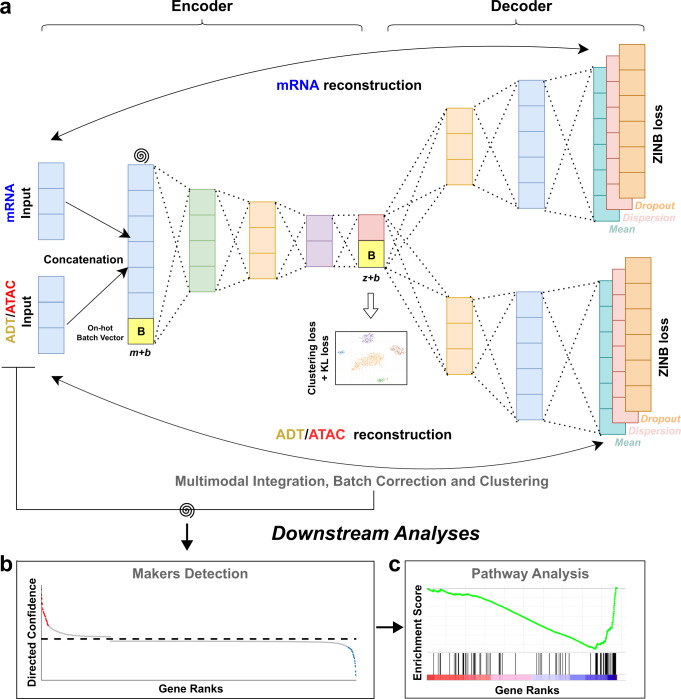
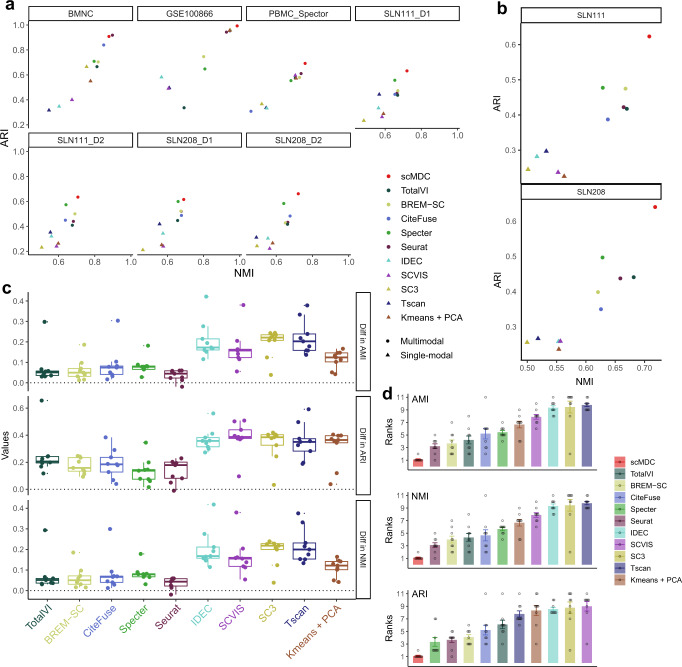
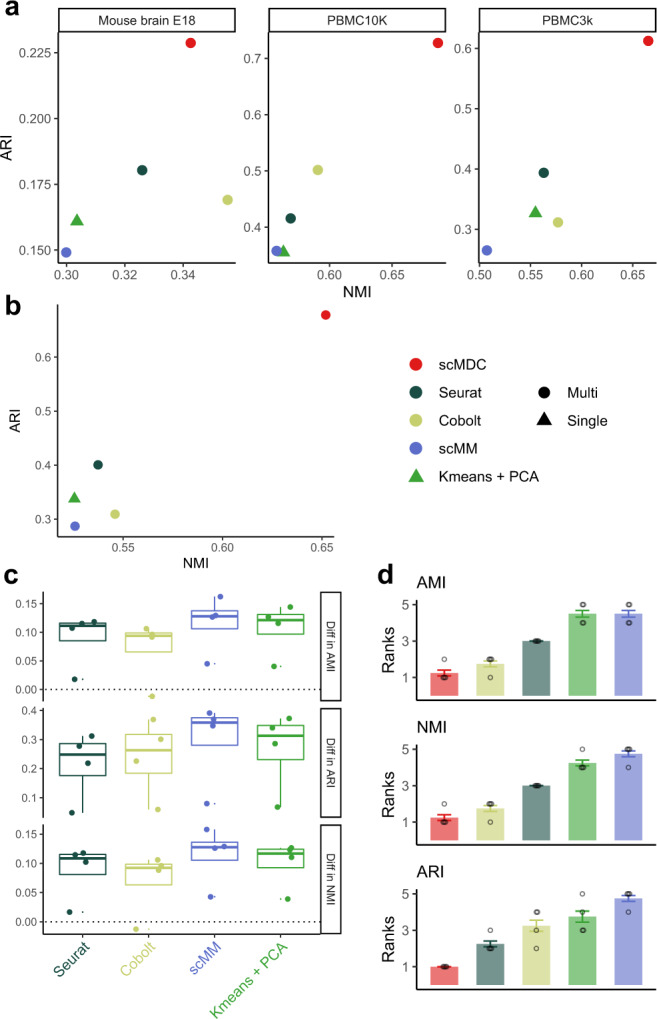
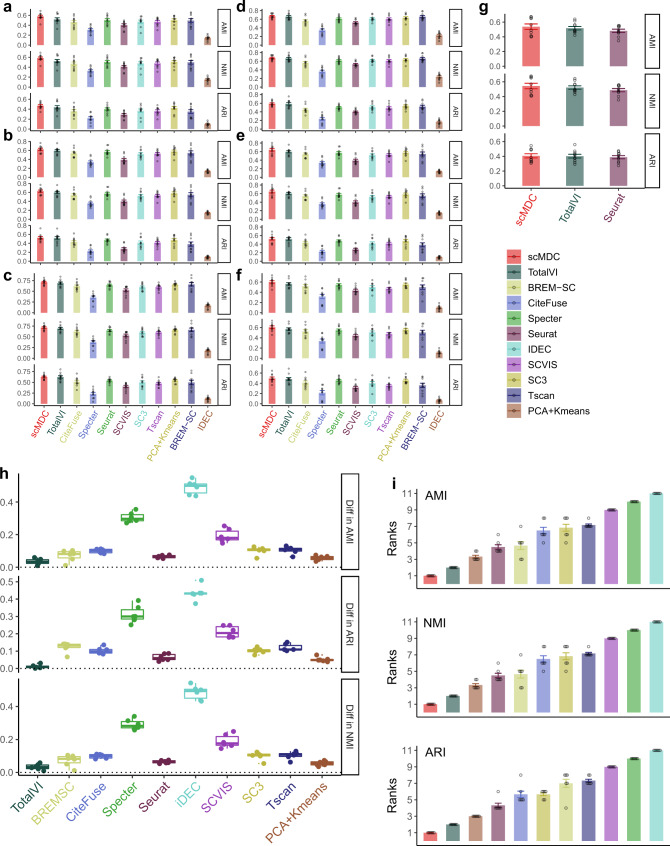
Single-cell multimodal sequencing technologies are developed to simultaneously profile different modalities of data in the same cell. It provides a unique opportunity to jointly analyze multimodal data at the single-cell level for the identification of distinct cell types. A correct clustering result is essential for the downstream complex biological functional studies. However, combining different data sources for clustering analysis of single-cell multimodal data remains a statistical and computational challenge. Here, we develop a novel multimodal deep learning method, scMDC, for single-cell multi-omics data clustering analysis. scMDC is an end-to-end deep model that explicitly characterizes different data sources and jointly learns latent features of deep embedding for clustering analysis. Extensive simulation and real-data experiments reveal that scMDC outperforms existing single-cell single-modal and multimodal clustering methods on different single-cell multimodal datasets. The linear scalability of running time makes scMDC a promising method for analyzing large multimodal datasets.
Overview
The claims and statistics of this paper haven’t been checked yet.
Run the check — free, no account needed. It reads the open-access text and checks the sources it cites.
Integrity signals
Registry
Cites
Statistics
Figures
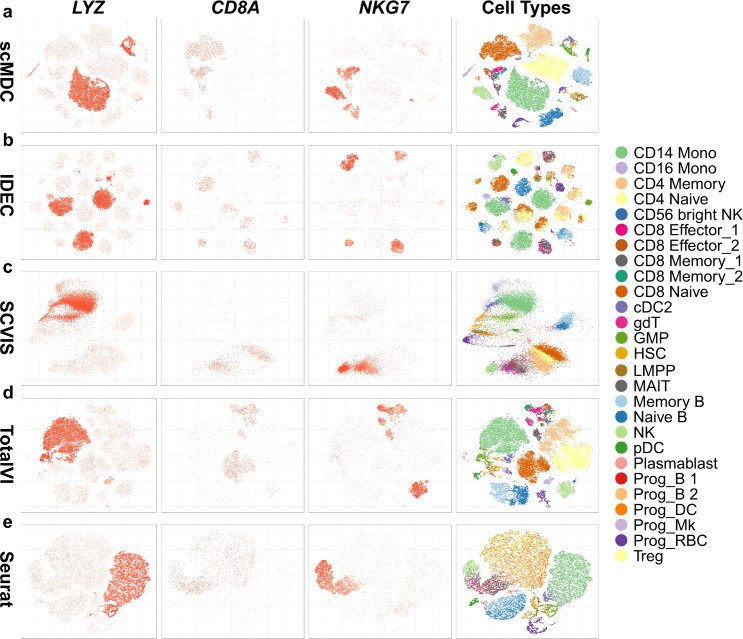
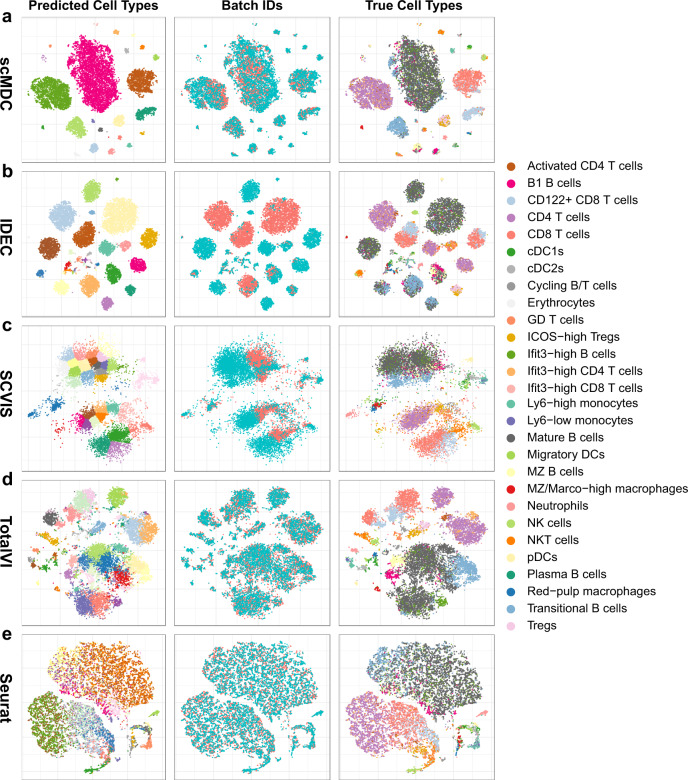
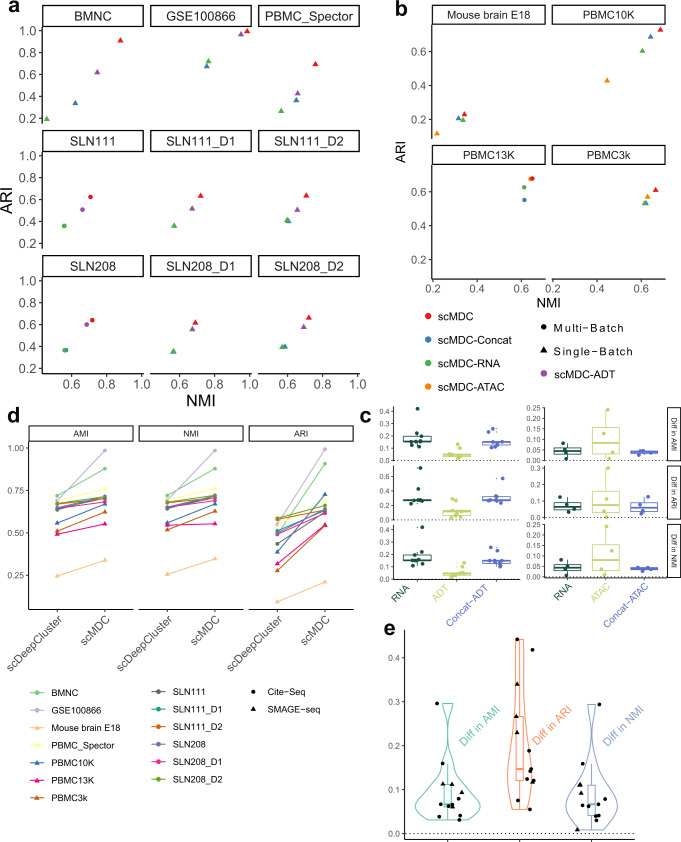
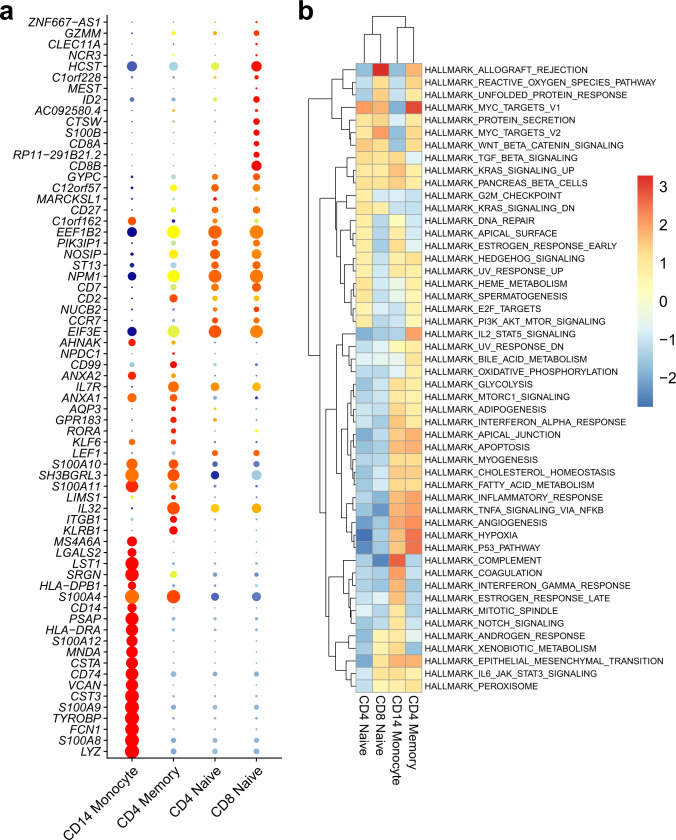
Verification
Claims the paper makes
The claims and statistics of this paper haven’t been checked yet.
Run the check — free, no account needed. It reads the open-access text and checks the sources it cites.
Claims other papers make about this one
Each is checked against this paper’s own text: does it say what the citing paper says it does?
The cited source says what the claim attributes to it.
In the citing paper
“For integrating multi-omics datasets from paired or unpaired single cells, Lin et al. introduced the scMDC method, which utilized an end-to-end autoencoder model to learn the joint embeddings of paired single-cell multi-omics datasets [119].”
From Challenges in AI-driven Biomedical Multimodal Data Fusion and Analysis (2025) · cites this paper as [119]
Self-check
Percentages, sums and reported differences re-computed from the paper’s own numbers.
The self-check needs the paper’s full text.
Citations
Cites
Moderated estimation of fold change and dispersion for RNA-seq data with DESeq2
Love, M. I., Huber, W., & Anders, S. (2014) · Genome Biology · doi:10.1186/s13059-014-0550-8 · Cited by 95,106
Fast unfolding of communities in large networks
Blondel, V. D., Guillaume, J.-L., Lambiotte, R., & Lefebvre, E. (2008) · Journal of Statistical Mechanics: Theory and Experiment · doi:10.1088/1742-5468/2008/10/p10008 · Cited by 21,424
Reducing the dimensionality of data with neural networks
Hinton, G. E., & Salakhutdinov, R. R. (2006) · Science · doi:10.1126/science.1127647 · Cited by 20,928
Integrated analysis of multimodal single-cell data
Hao, Y., Hao, S., Andersen-Nissen, E., Mauck, W. M., Zheng, S., Butler, A., Lee, M. J., Wilk, A. J., Darby, C., Zagar, M., et al. (2020) · doi:10.1101/2020.10.12.335331 · Cited by 15,508
Integrating single-cell transcriptomic data across different conditions, technologies, and species
Butler, A., Hoffman, P., Smibert, P., Papalexi, E., & Satija, R. (2018) · Nature Biotechnology · doi:10.1038/nbt.4096 · Cited by 13,174
(2017) · Cited by 11,625
SCANPY: large-scale single-cell gene expression data analysis
Wolf, F. A., Angerer, P., & Theis, F. J. (2018) · Genome Biology · doi:10.1186/s13059-017-1382-0 · Cited by 8,881
Double-slit photoelectron interference in strong-field ionization of the neon dimer
Kunitski, M., Eicke, N., Huber, P., Köhler, J., Zeller, S., Voigtsberger, J., Schlott, N., Henrichs, K., Sann, H., Trinter, F., et al. (2019) · Institutional Repository of Leibniz Universität Hannover (Leibniz Universität Hannover) · doi:10.15488/5174 · Cited by 8,378
Hubert, L., & Arabie, P. (1985) · Journal of Classification · doi:10.1007/bf01908075 · Cited by 8,219
Double-slit photoelectron interference in strong-field ionization of the neon dimer
Kunitski, M., Eicke, N., Huber, P., Köhler, J., Zeller, S., Voigtsberger, J., Schlott, N., Henrichs, K., Sann, H., Trinter, F., et al. (2019) · Nature Communications · doi:10.1038/s41467-018-07882-8 · Cited by 8,162
Research works printed but not linked: 10
- Ng, A., Jordan, M. & Weiss, Y. On spectral clustering: analysis and an algorithm. Adv. Neural Inf. Process. Syst. 14, 849–856 (2001).
- Xie, J., Girshick, R. & Farhadi, A. Unsupervised Deep Embedding for Clustering Analysis. In: (eds Balcan, M. F. & Weinberger, K. Q.) Proceedings of Machine Learning Research Vol. 48, 478–487 (PMLR, 2016).
- Lu, Y. Y., Timothy, C. Y., Bonora, G. & Noble, W. S. ACE: Explaining cluster from an adversarial perspective. In: (eds Meila, M. & Zhang, T.) International Conference on Machine Learning. 7156–7167 (PMLR).
- Clevert, D.-A., Unterthiner, T. & Hochreiter, S. Fast and accurate deep network learning by exponential linear units (ELUs). Preprint at https://arxiv.org/abs/1511.07289 (2015). · arXiv
- Maaten, L. V. D. & Hinton, G. Visualizing data using t-SNE. J. Mach. Learn. Res. 9, 2579–2605 (2008).
- Reddi, S. J., Kale, S. & Kumar, S. On the convergence of adam and beyond. arXiv preprint arXiv:1904.09237 (2019). · arXiv
- Kingma, D. P. & Ba, J. Adam: a method for stochastic optimization. Preprint at https://arxiv.org/abs/1412.6980 (2014). · arXiv
- Zeiler, M. D. ADADELTA: an adaptive learning rate method. Preprint at https://arxiv.org/abs/1212.5701 (2012). · arXiv
- Vinh, N. X., Epps, J. & Bailey, J. Information theoretic measures for clusterings comparison: Variants, properties, normalization and correction for chance. J. Mach. Learn. Res. 11, 2837–2854 (2010).
- Alexander, S. & Joydeep, G. Cluster ensembles—a knowledge reuse framework for combining multiple partitions. J. Mach. Learn Res 3, 583–617 (2003).
Cited by
Sorted by citations
Items 101–135 of 135
A Comparative Learning and Knowledge Distillation Based Approach to Scrna-Seq Data AnalysisPreprint
Lv, Y. X., Qi, L., Wang, P., Liu, H., Chen, C., Gu, J., Kang, X., & Chen, C. (2025) · SSRN Electronic Journal · doi:10.2139/ssrn.5177266
Guo, Y., Cheng, C.-H., Zhu, Z., Zhou, J., Lu, H., Qian, Y., & Liang, Z. (2025) · bioRxiv (Cold Spring Harbor Laboratory) · doi:10.1101/2025.04.10.648152
Thought Graph: Balancing Specificity and Uncertainty in LLM-Based Gene Set Annotation
Cox, K., Qu, G., Hsu, C.-Y., Xu, J., Zhou, Y., Tan, Z., Hu, M., Chen, T., Hu, Z., Zhao, Z., et al. (2025) · IEEE International Conference on Healthcare Informatics (ICHI) · doi:10.1109/ichi64645.2025.00060
Wang, Z., Wu, Z., & Deng, M. (2025) · BMC Bioinformatics · doi:10.1186/s12859-025-06239-5
Deep information fusion based on a transformer graph encoder for single-cell multi-omics clustering
Ren, Q., Liu, S., Shang, J., & Liu, X. (2025) · Journal of King Saud University - Computer and Information Sciences · doi:10.1007/s44443-025-00193-1
ImmFinder: A Multiomics-Based Neural Network Approach for Predicting the Immune Genes in Livestock
Thambiraja, M., Karthikeyan, P. P., Sezen, M., Senthilkumar, S., Singh, D., Onteru, S. K., & Yennamalli, R. M. (2025) · OMICS A Journal of Integrative Biology · doi:10.1177/15578100251389910
654 Artificial intelligence in bacterial staining and cell counting
Kumari, G. S., Vaithilingam, M., Ravi, L., & Poornima, D. (2025) · De Gruyter eBooks · doi:10.1515/9783111548777-004
Structure-Enhanced Self-Supervised Weighted Information Bottleneck for Multiview Clustering
Lou, Z., Wu, Y., Zhang, K., Zhang, C., Ji, B., & Hu, S. (2026) · IEEE Transactions on Neural Networks and Learning Systems · doi:10.1109/tnnls.2026.3654997
A Dual-Graph-Driven Non-Negative Matrix Factorization Model for Single-Cell Omics Analysis
Lan, J., Wang, N., & Deng, J. (2025) · IEEE International Conference on Bioinformatics and Biomedicine (BIBM) · doi:10.1109/bibm66473.2025.11357023
Meinhardt, N. J., Veltri, A. J., Gurski, C. J., Valenti, S. M., & Dittel, B. N. (2026) · ImmunoHorizons · doi:10.1093/immhor/vlaf088
Qian, Y., Kong, W., Wang, S., Wen, G., & Yu, Y. (2026) · Frontiers in Neuroscience · doi:10.3389/fnins.2026.1728558
Wang, J., Yang, C., Cai, W., Tan, D., Ding, Y., Xia, J., Su, Y., & Zheng, C. (2026) · IEEE Transactions on Computational Biology and Bioinformatics · doi:10.1109/tcbbio.2026.3680088
Single-cell multi-view clustering based on dual contrastive learning and cross-attention fusion
Hu, M.-Y., Zhu, R., Liu, J.-X., Shang, J.-L., & Dai, L.-Y. (2026) · Expert Systems with Applications · doi:10.1016/j.eswa.2026.132659
Joint library preparation and analysis methods for single-cell genome-transcriptome co-assays
Li, Y., He, Y., Qiao, Y., & Tu, J. (2026) · EngMedicine · doi:10.1016/j.engmed.2026.100139
Lu, Y., Zhang, X., & Li, H. (2026) · Quantitative Biology · doi:10.1002/qub2.70041
Hybrid Encoding and Adaptive Guidance for Enhanced Single-Cell Multi-omics Clustering
Li, J., Wang, H., Yu, J., Liang, C., Zhao, X., Zhao, J., & Sun, Y. (2026) · Interdisciplinary Sciences Computational Life Sciences · doi:10.1007/s12539-026-00827-6
A systematic review of algorithmic challenges in noise modelling for multimodal single-cell
Mallampalli, S. S., Madan, A., & Jain, C. K. (2026) · Computational Biology and Chemistry · doi:10.1016/j.compbiolchem.2026.109161
Machine Learning Approaches Using High-Throughput Profiling Data for Antibiotic Discovery
Kim, I., Jang, J., Yun, T., Shin, Y., & Lee, W. (2026) · ACS Infectious Diseases · doi:10.1021/acsinfecdis.6c00004
A Deep Non-negative Matrix Factorization Algorithm for Acupuncture Omics Data Clustering
Li, Z., Tao, L., Wu, Q., Deng, P., Zhang, P., Wang, D., Li, T., & Yu, S. (2026) · Lecture notes in computer science · doi:10.1007/978-981-92-2494-4_6
Li, Y., Yu, X., Zhang, H., Lin, H., Liu, B., & Long, H. (2026) · Briefings in Bioinformatics · doi:10.1093/bib/bbag385
Yang, B., Hua, J., Zhou, G., Feng, Y., Qi, J., Guo, Y., Sheng, D., & Jin, S. (2026) · Genome Research · doi:10.1101/gr.281661.125
Single circulating tumor cell omics: Technologies and clinical applications
Zhang, W., He, L., Merzougui, C., Wang, W., Ye, K., Wang, H., Shen, J., Qi, P., Huang, Y., He, B., et al. (2026) · The Innovation Medicine · doi:10.59717/j.xinn-med.2026.100227
scHashFormer: a hash-driven graph transformer for scalable scRNA-seq clustering
Lu, Z., Bai, L., Li, L., Yang, X., & Liang, J. (2026) · Briefings in Bioinformatics · doi:10.1093/bib/bbag402 · Cited by 1
Turki, T., & Taguchi, Y. (2026) · Scientific Reports · doi:10.1038/s41598-026-64531-7
Single-Cell Spatial Proteomics Clustering by Decoupling Spatiality and Expression
Wu, B., Zhang, S., Wang, Y., Ren, L.-R., Du, W., Wang, J., Domeniconi, C., & Yu, G. (2026) · ACM SIGKDD Conference on Knowledge Discovery and Data Mining (KDD) · doi:10.1145/3770855.3818990
Li, J., Ye, T., Xiao, Y., Zhao, M., Jiang, L., Chen, S., Guo, F., & Tang, J. (2026) · Briefings in Bioinformatics · doi:10.1093/bib/bbag435
SCONE: a subset-contrastive method for multi-omics network embedding
Avelar, P., Cardoso‐Silva, J., Wu, M., & Tsoka, S. (2026) · Briefings in Bioinformatics · doi:10.1093/bib/bbag381
Unifying multimodal single-cell data with a mixture-of-experts β-variational autoencoder frameworkPreprint
Ashford, A. J., Enright, T., Somers, J., Nikolova, O. H., & Demir, E. (2026) · Genome Research · doi:10.1101/gr.281431.125
Sheng, Y., Che, H., Su, J., Wang, H., Wang, Y., Liu, C., & Leung, M.-F. (2026) · Pattern Recognition · doi:10.1016/j.patcog.2026.114972
Mehmood, Z., & Sharma, D. (2026) · Frontiers in Bioinformatics · doi:10.3389/fbinf.2026.1901464
scURL: uncertainty-sharpened representation learning for single-cell multi-omics clustering
Liu, H., Yu, D., Li, W., Zhang, T., Cheng, C.-Y., Fu, H., Liang, H., Cong, S., & Yao, X. (2026) · Bioinformatics · doi:10.1093/bioinformatics/btag723
Zheng, J., Su, Z., Zhuo, X., Chai, H., Tang, H., & Lan, T. (2026) · Computational Biology and Chemistry · doi:10.1016/j.compbiolchem.2026.109465
Lv, J., Guo, J., Wang, Y., Wang, J., Guo, L., & Zhang, H. (2026) · Frontiers in Pharmacology · doi:10.3389/fphar.2026.1980359
Zhang, S., Zhou, B., Guo, Y., Huang, M., Huang, W., Lei, D., & Dan, T. (2026) · Algorithms · doi:10.3390/a19100898
Disentangling Over-Integration of Single-Cell and Spatial Multiomics Data with Transfer Learning
Lu, R., Zhang, S., & Gao, L. (2026) · Big Data Mining and Analytics · doi:10.26599/bdma.2025.9020112
Metadata
- Authors
- Lin, X., Tian, T., Wei, Z., & Hakonarson, H.
- Affiliations
- New Jersey Institute of Technology (US)
- Children's Hospital of Philadelphia (US)
- Corresponding author
- Wei, Zhi
- Venue
- Nature Communications
- Published
- 2022-12-13
- Volume
- 13
- Issue
- 1
- Pages
- 7705-7705
- ISSN
- 2041-1723 (ISSN-L)
- PMC
- PMC9748135
- OpenAlex
- W4311232381
- Cited by
- 135
- References
- 56
- Citations by year
- 2026: 45 · 2025: 43 · 2024: 39 · 2023: 7 · 2022: 1
- FWCI
- 7.35
- Type
- journal article
- Language
- en
- Open access
- gold
- doi.org
- Locations
- Nature Communications (publishedVersion, cc-by)
- PubMed Central (publishedVersion, cc-by)
- PubMed (publishedVersion)
- RePEc: Research Papers in Economics (submittedVersion)
- DOAJ (DOAJ: Directory of Open Access Journals) (submittedVersion, cc-by-sa)
- Funders
- U.S. Department of Health & Human Services | NIH | National Center for Advancing Translational Sciences (UL1TR003017)
- Topics
- Life Sciences › Biochemistry, Genetics and Molecular Biology › Molecular Biology › Single-cell and spatial transcriptomics
- Life Sciences › Biochemistry, Genetics and Molecular Biology › Molecular Biology › Gene expression and cancer classification
- Life Sciences › Biochemistry, Genetics and Molecular Biology › Biophysics › Cell Image Analysis Techniques
- Keywords
- single-cell multi-omics, multimodal deep learning, cell type annotation, single-cell sequencing
- MeSH terms
- Deep Learning, Multiomics, Computer Simulation, Cluster Analysis, Single-Cell Analysis
About these checks
Registry, retraction, Cites and statistics results are computed, not judged, with one exception: a printed reference that no index lists is read once by a model before it counts as a citation error. Claims are extracted by a model and kept only when their quote appears verbatim in the text; each cited source is then checked, with a model’s help, for whether it says what the claim relies on. Those verdicts can be wrong — read the claim’s quote and the cited source before relying on one.
Statistics and arithmetic are recomputed, not judged.
Confidence bands are shown only for fields calibrated on our annotated test set. None is calibrated yet, so no band is shown.
What counts as a claim ›How we measure confidence ›How we check this ›
Are you an author, or do you see a problem with this page? Request a review
