

Visible light-exposed lignin facilitates cellulose solubilization by lytic polysaccharide monooxygenases
Open accessThe DOI matches its Crossref record; 77 of the 77 references it cites were found in a registry or an index.
Abstract
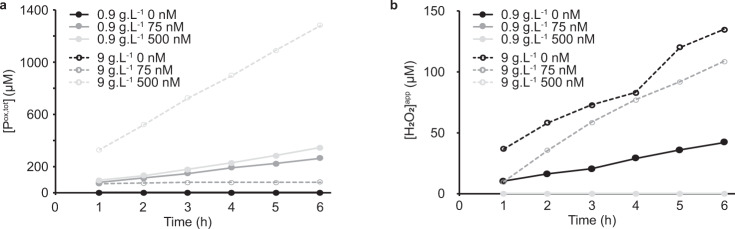
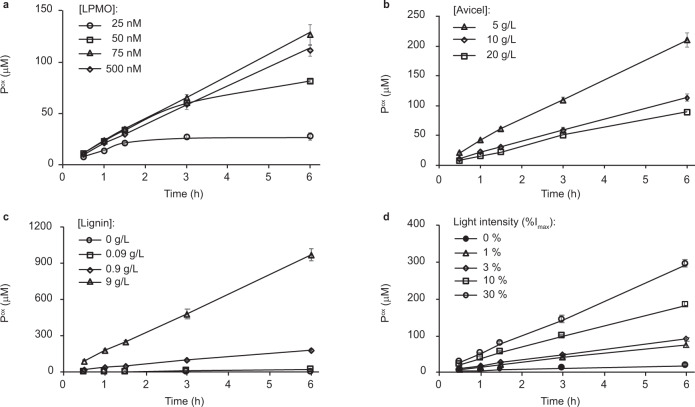
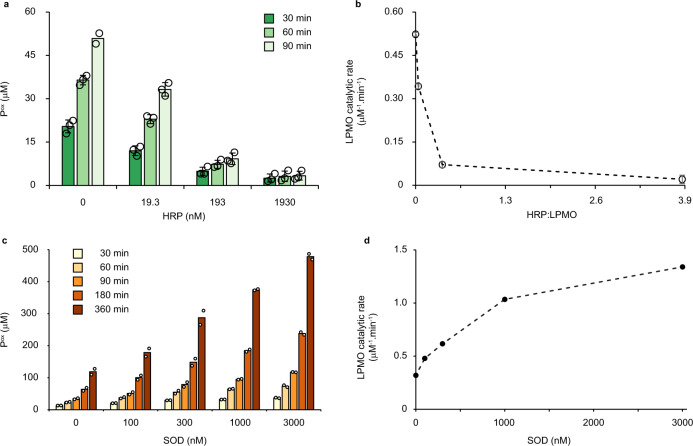
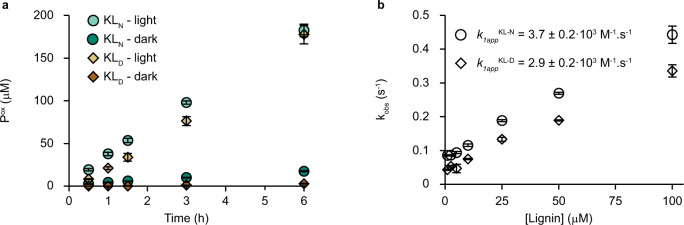
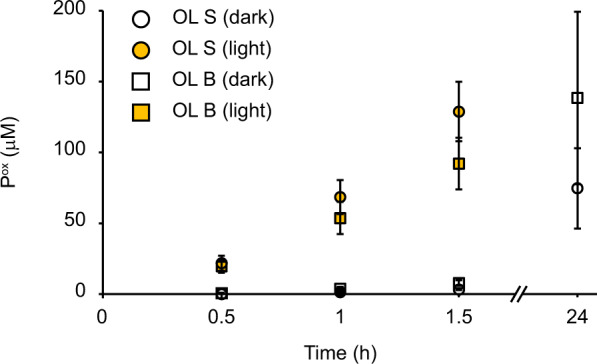
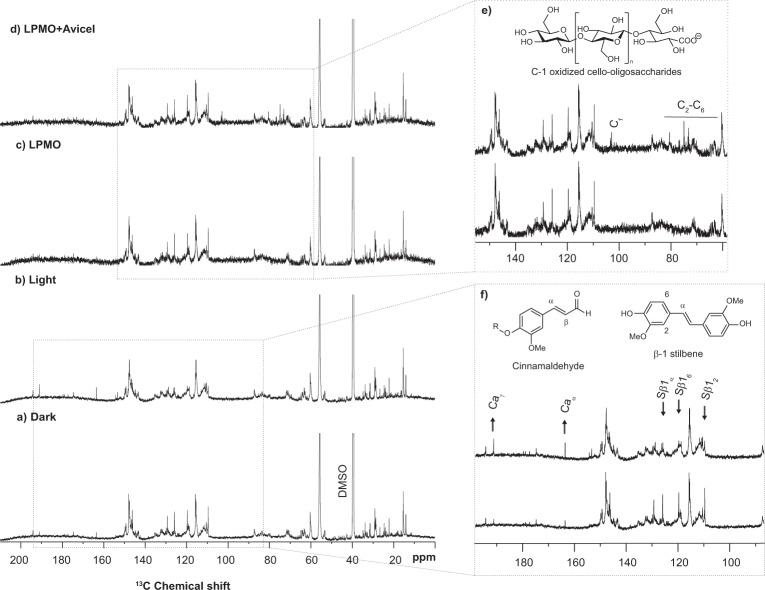
Lytic polysaccharide monooxygenases (LPMOs) catalyze oxidative cleavage of crystalline polysaccharides such as cellulose and are crucial for the conversion of plant biomass in Nature and in industrial applications. Sunlight promotes microbial conversion of plant litter; this effect has been attributed to photochemical degradation of lignin, a major redox-active component of secondary plant cell walls that limits enzyme access to the cell wall carbohydrates. Here, we show that exposing lignin to visible light facilitates cellulose solubilization by promoting formation of H 2 O 2 that fuels LPMO catalysis. Light-driven H 2 O 2 formation is accompanied by oxidation of ring-conjugated olefins in the lignin, while LPMO-catalyzed oxidation of phenolic hydroxyls leads to the required priming reduction of the enzyme. The discovery that light-driven abiotic reactions in Nature can fuel H 2 O 2 -dependent redox enzymes involved in deconstructing lignocellulose may offer opportunities for bioprocessing and provides an enzymatic explanation for the known effect of visible light on biomass conversion.
Overview
The claims and statistics of this paper haven’t been checked yet.
Free: it reads the open-access text and checks the first 5 claims that cite a source we can check. Create a free account to check every claim.
Integrity signals
Registry
Cites
Statistics
Figures
Verification
Claims the paper makes
The claims and statistics of this paper haven’t been checked yet.
Free: it reads the open-access text and checks the first 5 claims that cite a source we can check. Create a free account to check every claim.
Claims other papers make about this one
Each is checked against this paper’s own text: does it say what the citing paper says it does?
The source backs part of the claim, not all of it — or backs it for a different population, condition or comparison.
In the citing paper
“A laboratory study under controlled conditions has found that the hydrogen peroxide (H2O2) produced during photodegradation of lignin activates microbial enzymes in dead plant material (e.g. lytic polysaccharide monooxygenases—LPMO), generating carbohydrates such as saccharose.”
From Environmental consequences of interacting effects of changes in stratospheric ozone, ultraviolet radiation, and climate: UNEP Environmental Effects Assessment Panel, Update 2024 (2025) · cites this paper as [211]
Experimental — accuracy not yet measured
Self-check
Percentages, sums and reported differences re-computed from the paper’s own numbers.
The self-check needs the paper’s full text.
Citations
Cites
Primary production of the biosphere: Integrating terrestrial and oceanic components
Field, C. B., Behrenfeld, M. J., Randerson, J. T., & Falkowski, P. (1998) · Science · doi:10.1126/science.281.5374.237 · Cited by 6,371
An Oxidative Enzyme Boosting the Enzymatic Conversion of Recalcitrant Polysaccharides
Vaaje-Kolstad, G., Westereng, B., Horn, S. J., Liu, Z., Zhai, H., Sørlie, M., & Eijsink, V. G. H. (2010) · Science · doi:10.1126/science.1192231 · Cited by 1,341
Self-citationExpansion of the enzymatic repertoire of the CAZy database to integrate auxiliary redox enzymes
Levasseur, A., Drula, E., Lombard, V., Coutinho, P. M., & Henrissat, B. (2013) · Biotechnology for Biofuels · doi:10.1186/1754-6834-6-41 · Cited by 1,326
Quinlan, R. J., Sweeney, M. D., Lo Leggio, L., Otten, H., Poulsen, J.-C. N., Johansen, K. S., Krogh, K. B. R. M., Jørgensen, C. I., Tovborg, M., Anthonsen, A., et al. (2011) · Proceedings of the National Academy of Sciences · doi:10.1073/pnas.1105776108 · Cited by 1,036
Plant litter decomposition in a semi-arid ecosystem controlled by photodegradation
Austin, A. T., & Vivanco, L. (2006) · Nature · doi:10.1038/nature05038 · Cited by 827
Jastrow, J. D., Amonette, J. E., & Bailey, V. L. (2007) · Climatic Change · doi:10.1007/s10584-006-9178-3 · Cited by 711
Reese, E. T., Siu, R. G. H., & Levinson, H. S. (1950) · Journal of Bacteriology · doi:10.1128/jb.59.4.485-497.1950 · Cited by 694
Phillips, C. M., Beeson, W. T., Cate, J. H., & Marletta, M. A. (2011) · ACS Chemical Biology · doi:10.1021/cb200351y · Cited by 672
Oxidative cleavage of polysaccharides by monocopper enzymes depends on H2O2
Bissaro, B., Røhr, Å. K., Müller, G., Chylenski, P., Skaugen, M., Forsberg, Z., Horn, S. J., Vaaje-Kolstad, G., & Eijsink, V. G. H. (2017) · Nature Chemical Biology · doi:10.1038/nchembio.2470 · Cited by 594
Self-citationOn the structure of softwood kraft lignin
Crestini, C., Lange, H., Sette, M., & Argyropoulos, D. S. (2017) · Green Chemistry · doi:10.1039/c7gc01812f · Cited by 540
Electrode potentials of partially reduced oxygen species, from dioxygen to water
Koppenol, W. H., Stanbury, D. M., & Bounds, P. L. (2010) · Free Radical Biology and Medicine · doi:10.1016/j.freeradbiomed.2010.04.011 · Cited by 524
Dual role of lignin in plant litter decomposition in terrestrial ecosystems
Austin, A. T., & Ballaré, C. L. (2010) · Proceedings of the National Academy of Sciences · doi:10.1073/pnas.0909396107 · Cited by 506
Agger, J. W., Isaksen, T., Várnai, A., Vidal-Melgosa, S., Willats, W. G. T., Ludwig, R., Horn, S. J., Eijsink, V. G. H., & Westereng, B. (2014) · Proceedings of the National Academy of Sciences · doi:10.1073/pnas.1323629111 · Cited by 425
Self-citationExtracellular electron transfer systems fuel cellulose oxidative degradation
Kracher, D., Scheiblbrandner, S., Felice, A. K. G., Breslmayr, E., Preims, M., Ludwicka, K., Haltrich, D., Eijsink, V. G. H., & Ludwig, R. (2016) · Science · doi:10.1126/science.aaf3165 · Cited by 421
Self-citationLi, X. (2012) · Journal of Agricultural and Food Chemistry · doi:10.1021/jf204970r · Cited by 381
Cleavage of cellulose by a CBM33 protein
Forsberg, Z., Vaaje‐Kolstad, G., Westereng, B., Bunæs, A. C., Stenstrøm, Y., MacKenzie, A., Sørlie, M., Horn, S. J., & Eijsink, V. G. H. (2011) · Protein Science · doi:10.1002/pro.689 · Cited by 380
Self-citationKittl, R., Kracher, D., Burgstaller, D., Haltrich, D., & Ludwig, R. (2012) · Biotechnology for Biofuels · doi:10.1186/1754-6834-5-79 · Cited by 348
Photo-Biocatalysis: Biotransformations in the Presence of Light
Schmermund, L., Jurkaš, V., Özgen, F. F., Barone, G. D., Büchsenschütz, H. C., Winkler, C. K., Schmidt, S., Kourist, R., & Kroutil, W. (2019) · ACS Catalysis · doi:10.1021/acscatal.9b00656 · Cited by 345
Lytic xylan oxidases from wood-decay fungi unlock biomass degradation
Couturier, M., Ladevèze, S., Sulzenbacher, G., Ciano, L., Fanuel, M., Moreau, C., Villares, A., Cathala, B., Chaspoul, F., Frandsen, K. E., et al. (2018) · Nature Chemical Biology · doi:10.1038/nchembio.2558 · Cited by 335
Crystal Structure and Binding Properties of the Serratia marcescens Chitin-binding Protein CBP21
Vaaje-Kolstad, G., Houston, D. R., Riemen, A. H. K., Eijsink, V. G. H., & van Aalten, D. M. F. (2005) · Journal of Biological Chemistry · doi:10.1074/jbc.m407175200 · Cited by 314
Self-citationOxidoreductases and Reactive Oxygen Species in Conversion of Lignocellulosic Biomass
Bissaro, B., Várnai, A., Røhr, Å. K., & Eijsink, V. G. H. (2018) · Microbiology and Molecular Biology Reviews · doi:10.1128/mmbr.00029-18 · Cited by 303
Self-citationCarbohydrate-aromatic interface and molecular architecture of lignocellulose
Kirui, A., Zhao, W., Deligey, F., Yang, H., Kang, X., Mentink-Vigier, F., & Wang, T. (2022) · Nature Communications · doi:10.1038/s41467-022-28165-3 · Cited by 290
Forsberg, Z., Mackenzie, A. K., Sørlie, M., Røhr, Å. K., Helland, R., Arvai, A. S., Vaaje-Kolstad, G., & Eijsink, V. G. H. (2014) · Proceedings of the National Academy of Sciences · doi:10.1073/pnas.1402771111 · Cited by 289
Self-citationEibinger, M., Ganner, T., Bubner, P., Rošker, S., Kracher, D., Haltrich, D., Ludwig, R., Plank, H., & Nidetzky, B. (2014) · Journal of Biological Chemistry · doi:10.1074/jbc.m114.602227 · Cited by 286
Frommhagen, M., Sforza, S., Westphal, A. H., Visser, J., Hinz, S. W. A., Koetsier, M. J., van Berkel, W. J. H., Gruppen, H., & Kabel, M. A. (2015) · Biotechnology for Biofuels · doi:10.1186/s13068-015-0284-1 · Cited by 245
Hu, J., Arantes, V., Pribowo, A., Gourlay, K., & Saddler, J. N. (2014) · Energy Environ. Sci. · doi:10.1039/c4ee00891j · Cited by 231
Photodegradation alleviates the lignin bottleneck for carbon turnover in terrestrial ecosystems
Austin, A. T., Méndez, M. S., & Ballaré, C. L. (2016) · Proceedings of the National Academy of Sciences · doi:10.1073/pnas.1516157113 · Cited by 231
Light-driven oxidation of polysaccharides by photosynthetic pigments and a metalloenzyme
Cannella, D., Möllers, K. B., Frigaard, N.-U., Jensen, P. E., Bjerrum, M. J., Johansen, K. S., & Felby, C. (2016) · Nature Communications · doi:10.1038/ncomms11134 · Cited by 213
Enzymatic cellulose oxidation is linked to lignin by long-range electron transfer
Westereng, B., Cannella, D., Wittrup Agger, J., Jørgensen, H., Larsen Andersen, M., Eijsink, V. G. H., & Felby, C. (2015) · Scientific Reports · doi:10.1038/srep18561 · Cited by 213
Self-citationLancefield, C. S., Wienk, H. L. J., Boelens, R., Weckhuysen, B. M., & Bruijnincx, P. C. A. (2018) · Chemical Science · doi:10.1039/c8sc02000k · Cited by 210
Secreted pectin monooxygenases drive plant infection by pathogenic oomycetes
Sabbadin, F., Urresti, S., Henrissat, B., Avrova, A. O., Welsh, L. R. J., Lindley, P. J., Csukai, M., Squires, J. N., Walton, P. H., Davies, G. J., et al. (2021) · Science · doi:10.1126/science.abj1342 · Cited by 208
Müller, G., Chylenski, P., Bissaro, B., Eijsink, V. G. H., & Horn, S. J. (2018) · Biotechnology for Biofuels · doi:10.1186/s13068-018-1199-4 · Cited by 200
Self-citationLytic Polysaccharide Monooxygenases in Enzymatic Processing of Lignocellulosic Biomass
Chylenski, P., Bissaro, B., Sørlie, M., Røhr, Å. K., Várnai, A., Horn, S. J., & Eijsink, V. G. H. (2019) · ACS Catalysis · doi:10.1021/acscatal.9b00246 · Cited by 200
Self-citationRalph, J., & Landucci, L. (2010) · Lignin and Lignans · doi:10.1201/ebk1574444865-c5 · Cited by 189
Loose, J. S. M., Forsberg, Z., Fraaije, M. W., Eijsink, V. G. H., & Vaaje-Kolstad, G. (2014) · FEBS Letters · doi:10.1016/j.febslet.2014.07.036 · Cited by 184
Self-citationTransition-metal catalyzed valorization of lignin: the key to a sustainable carbon-neutral future
Kärkäs, M. D., Matsuura, B. S., Monos, T. M., Magallanes, G., & Stephenson, C. R. J. (2016) · Organic & Biomolecular Chemistry · doi:10.1039/c5ob02212f · Cited by 184
Frommhagen, M., Koetsier, M. J., Westphal, A. H., Visser, J., Hinz, S. W. A., Vincken, J.-P., van Berkel, W. J. H., Kabel, M. A., & Gruppen, H. (2016) · Biotechnology for Biofuels · doi:10.1186/s13068-016-0594-y · Cited by 182
Westereng, B., Agger, J. W., Horn, S. J., Vaaje-Kolstad, G., Aachmann, F. L., Stenstrøm, Y. H., & Eijsink, V. G. H. (2013) · Journal of Chromatography A · doi:10.1016/j.chroma.2012.11.048 · Cited by 176
Self-citationKinetics of H2O2-driven degradation of chitin by a bacterial lytic polysaccharide monooxygenase
Kuusk, S., Bissaro, B., Kuusk, P., Forsberg, Z., Eijsink, V. G. H., Sørlie, M., & Väljamäe, P. (2018) · Journal of Biological Chemistry · doi:10.1074/jbc.m117.817593 · Cited by 165
Self-citationMolecular mechanism of the chitinolytic peroxygenase reaction
Bissaro, B., Streit, B. R., Isaksen, I., Eijsink, V. G. H., Beckham, G. T., DuBois, J. L., & Røhr, Å. K. (2020) · Proceedings of the National Academy of Sciences · doi:10.1073/pnas.1904889117 · Cited by 158
Self-citationOxidation: An important enzyme reaction in fungal degradation of cellulose
Eriksson, K., Pettersson, B., & Westermark, U. (1974) · FEBS Letters · doi:10.1016/0014-5793(74)80531-4 · Cited by 152
Burek, B. O., Bahnemann, D. W., & Bloh, J. Z. (2018) · ACS Catalysis · doi:10.1021/acscatal.8b03638 · Cited by 152
Magallanes, G., Kärkäs, M. D., Bosque, I., Lee, S., Maldonado, S., & Stephenson, C. R. J. (2019) · ACS Catalysis · doi:10.1021/acscatal.8b04172 · Cited by 137
Frommhagen, M., Westphal, A. H., van Berkel, W. J. H., & Kabel, M. A. (2018) · Frontiers in Microbiology · doi:10.3389/fmicb.2018.01080 · Cited by 136
Petrović, D. M., Bissaro, B., Chylenski, P., Skaugen, M., Sørlie, M., Jensen, M. S., Aachmann, F. L., Courtade, G., Várnai, A., & Eijsink, V. G. H. (2018) · Protein Science · doi:10.1002/pro.3451 · Cited by 132
Self-citationPurification and characterization of two .beta.-1,4-endoglucanases from Thermomonospora fusca
Calza, R. E., Irwin, D. C., & Wilson, D. B. (1985) · Biochemistry · doi:10.1021/bi00347a044 · Cited by 124
Unraveling the roles of the reductant and free copper ions in LPMO kinetics
Stepnov, A. A., Forsberg, Z., Sørlie, M., Nguyen, G., Wentzel, A., Røhr, Å. K., & Eijsink, V. G. H. (2021) · Biotechnology for Biofuels · doi:10.1186/s13068-021-01879-0 · Cited by 124
Self-citationJones, S. M., Transue, W. J., Meier, K. K., Kelemen, B. R., & Solomon, E. I. (2020) · Proceedings of the National Academy of Sciences · doi:10.1073/pnas.1922499117 · Cited by 121
Song, B., Li, B., Wang, X., Shen, W., Park, S., Collings, C., Feng, A., Smith, S. J., Walton, J. D., & Ding, S.-Y. (2018) · Biotechnology for Biofuels · doi:10.1186/s13068-018-1023-1 · Cited by 104
Kim, J., Nguyen, T. V. T., Kim, Y. H., Hollmann, F., & Park, C. B. (2022) · Nature Synthesis · doi:10.1038/s44160-022-00035-2 · Cited by 102
REVIEW: LIGHT-INDUCED YELLOWING OF LIGNOCELLULOSIC PULPS – MECHANISMS AND PREVENTIVE METHODS
Paulsson, M., & Parkås, J. (2012) · BioResources · doi:10.15376/biores.7.4.5995-6040 · Cited by 101
Zámocký, M., Schümann, C., Sygmund, C., O’Callaghan, J., Dobson, A. D. W., Ludwig, R., Haltrich, D., & Peterbauer, C. (2008) · Protein Expression and Purification · doi:10.1016/j.pep.2008.02.007 · Cited by 98
Controlled depolymerization of cellulose by light-driven lytic polysaccharide oxygenases
Bissaro, B., Kommedal, E. G., Røhr, Å. K., & Eijsink, V. G. H. (2020) · Nature Communications · doi:10.1038/s41467-020-14744-9 · Cited by 98
Self-citationChalak, A., Villares, A., Moreau, C., Haon, M., Grisel, S., d’Orlando, A., Herpoël-Gimbert, I., Labourel, A., Cathala, B., & Berrin, J.-G. (2019) · Biotechnology for Biofuels · doi:10.1186/s13068-019-1548-y · Cited by 94
Cascading g-C3N4 and Peroxygenases for Selective Oxyfunctionalization Reactions
van Schie, M. M. C. H., Zhang, W., Tieves, F., Choi, D. S., Park, C. B., Burek, B. O., Bloh, J. Z., Arends, I. W. C. E., Paul, C. E., Alcalde, M., et al. (2019) · ACS Catalysis · doi:10.1021/acscatal.9b01341 · Cited by 86
A small lytic polysaccharide monooxygenase from Streptomyces griseus targeting α‐ and β‐chitin
Nakagawa, Y. S., Kudo, M., Loose, J. S. M., Ishikawa, T., Totani, K., Eijsink, V. G. H., & Vaaje‐Kolstad, G. (2015) · The FEBS Journal · doi:10.1111/febs.13203 · Cited by 85
Self-citationKuusk, S., Kont, R., Kuusk, P., Heering, A., Sørlie, M., Bissaro, B., Eijsink, V. G. H., & Väljamäe, P. (2018) · Journal of Biological Chemistry · doi:10.1074/jbc.ra118.006196 · Cited by 84
Self-citationInsights into the H 2 O 2 ‐driven catalytic mechanism of fungal lytic polysaccharide monooxygenases
Hedison, T. M., Breslmayr, E., Shanmugam, M., Karnpakdee, K., Heyes, D. J., Green, A. P., Ludwig, R., Scrutton, N. S., & Kracher, D. (2021) · FEBS Journal · doi:10.1111/febs.15704 · Cited by 83
Fueling biomass-degrading oxidative enzymes by light-driven water oxidation
Bissaro, B., Forsberg, Z., Ni, Y., Hollmann, F., Vaaje‐Kolstad, G., & Eijsink, V. G. H. (2016) · Green Chemistry · doi:10.1039/c6gc01666a · Cited by 79
Self-citationMuraleedharan, M. N., Zouraris, D., Karantonis, A., Topakas, E., Sandgren, M. O. J., Rova, U., Christakopoulos, P., & Karnaouri, A. (2018) · Biotechnology for Biofuels · doi:10.1186/s13068-018-1294-6 · Cited by 78
Enzymatic degradation of sulfite-pulped softwoods and the role of LPMOs
Chylenski, P., Petrović, D. M., Müller, G., Dahlström, M., Bengtsson, O., Lersch, M., Siika‐aho, M., Horn, S. J., & Eijsink, V. G. H. (2017) · Biotechnology for Biofuels · doi:10.1186/s13068-017-0862-5 · Cited by 76
Self-citationHeuts, D. P. H. M., Winter, R. T., Damsma, G. E., Janssen, D. B., & Fraaije, M. W. (2008) · Biochemical Journal · doi:10.1042/bj20071591 · Cited by 73
Peroxidase evolution in white-rot fungi follows wood lignin evolution in plants
Ayuso-Fernández, I., Rencoret, J., Gutiérrez, A., Ruiz-Dueñas, F. J., & Martínez, A. T. (2019) · Proceedings of the National Academy of Sciences · doi:10.1073/pnas.1905040116 · Cited by 72
Self-citationShort-term facilitation of microbial litter decomposition by ultraviolet radiation
Lin, Y., Karlen, S. D., Ralph, J., & King, J. Y. (2017) · The Science of The Total Environment · doi:10.1016/j.scitotenv.2017.09.239 · Cited by 61
Sunlight Doubles Aboveground Carbon Loss in a Seasonally Dry Woodland in Patagonia
Berenstecher, P., Vivanco, L., Pérez, L. I., Ballaré, C. L., & Austin, A. T. (2020) · Current Biology · doi:10.1016/j.cub.2020.06.005 · Cited by 56
Rieder, L., Petrović, D., Väljamäe, P., Eijsink, V. G. H., & Sørlie, M. (2021) · ACS Catalysis · doi:10.1021/acscatal.1c03344 · Cited by 55
Self-citationRole of surface tryptophan for peroxidase oxidation of nonphenolic lignin
Sáez-Jiménez, V., Rencoret, J., Rodríguez-Carvajal, M. Á., Gutiérrez, A., Ruiz-Dueñas, F. J., & Martínez, Á. T. (2016) · Biotechnology for Biofuels · doi:10.1186/s13068-016-0615-x · Cited by 53
Kuusk, S., & Väljamäe, P. (2021) · Journal of Biological Chemistry · doi:10.1016/j.jbc.2021.101256 · Cited by 47
Photochemical evolution of hydrogen peroxide on lignins
Miglbauer, E., Gryszel, M., & Głowacki, E. D. (2020) · Green Chemistry · doi:10.1039/c9gc04324a · Cited by 42
Kont, R., Pihlajaniemi, V., Borisova, A. S., Aro, N., Marjamaa, K., Loogen, J., Büchs, J., Eijsink, V. G. H., Kruus, K., & Väljamäe, P. (2019) · Biotechnology for Biofuels · doi:10.1186/s13068-019-1578-5 · Cited by 40
Self-citationMekasha, S., Tuveng, T. R., Askarian, F., Choudhary, S., Schmidt‐Dannert, C., Niebisch, A., Modregger, J., Vaaje‐Kolstad, G., & Eijsink, V. G. H. (2020) · Journal of Biological Chemistry · doi:10.1074/jbc.ra120.013040 · Cited by 39
Self-citationPhotobiocatalysis by a Lytic Polysaccharide Monooxygenase Using Intermittent Illumination
Blossom, B. M., Russo, D. A., Singh, R. K., van Oort, B., Keller, M. B., Simonsen, T. I., Perzon, A., Gamon, L. F., Davies, M. J., Cannella, D., et al. (2020) · ACS Sustainable Chemistry & Engineering · doi:10.1021/acssuschemeng.0c00702 · Cited by 36
Agaricales Mushroom Lignin Peroxidase: From Structure–Function to Degradative Capabilities
Sánchez-Ruiz, M. I., Ayuso‐Fernández, I., Rencoret, J., González‐Ramírez, A. M., Linde, D., Davó-Siguero, I., Romero, A., Gutiérrez, A., Martínez, Á. T., & Ruiz-Dueñas, F. J. (2021) · Antioxidants · doi:10.3390/antiox10091446 · Cited by 33
Self-citationKadić, A., Várnai, A., Eijsink, V. G. H., Horn, S. J., & Lidén, G. (2021) · Biotechnology for Biofuels · doi:10.1186/s13068-021-01894-1 · Cited by 29
Self-citationHegnar, O. A., Østby, H., Petrović, D. M., Olsson, L., Várnai, A., & Eijsink, V. G. H. (2021) · Applied and Environmental Microbiology · doi:10.1128/aem.01652-21 · Cited by 29
Self-citationThe role of oxygen in the photodegradation of lignin in solution
Neumann, M. G., & Machado, A. E. H. (1989) · Journal of Photochemistry and Photobiology B Biology · doi:10.1016/1011-1344(89)80073-9 · Cited by 27
Dodge, N., Russo, D. A., Blossom, B. M., Singh, R., van Oort, B. V., Croce, R., Bjerrum, M., & Jensen, P. (2020) · Biotechnology for Biofuels · doi:10.1186/s13068-020-01832-7 · Cited by 13
Research works printed but not linked: 1
- Pretsch, E. et al. Structure Determination Of Organic Compounds (Springer, 2009).
Cited by
Expanding the catalytic landscape of metalloenzymes with lytic polysaccharide monooxygenases
Munzone, A., Eijsink, V. G. H., Berrin, J., & Bissaro, B. (2024) · Nature Reviews Chemistry · doi:10.1038/s41570-023-00565-z · Cited by 73
“…LPMOs would also be consistently surrounded by available, water dissolved, H 2 O 2 which is the reaction product or substrate of a multitude of oxidoreductases during lignocellulose conversion 31 and which may also be generated through abiotic oxidation of abundantly present lignin 160 .”
Self-citationHall, K. R., Joseph, C., Ayuso‐Fernández, I., Tamhankar, A., Rieder, L., Skaali, R., Golten, O., Neese, F., Røhr, Å. K., Jannuzzi, S. A. V., et al. (2023) · Journal of the American Chemical Society · doi:10.1021/jacs.3c05342 · Cited by 53
Self-citationKuusk, S., Eijsink, V. G. H., & Väljamäe, P. (2023) · Journal of Biological Chemistry · doi:10.1016/j.jbc.2023.105094 · Cited by 42
Self-citationPhotodegradation in terrestrial ecosystems
Austin, A. T., & Ballaré, C. L. (2024) · New Phytologist · doi:10.1111/nph.20105 · Cited by 37
Zhao, J., Zhang, M., Wang, S., Cui, Z., Dai, Z., He, H., Qin, S., Mei, S., Zhang, W., & Guo, R. (2024) · Advanced Functional Materials · doi:10.1002/adfm.202401067 · Cited by 46
Metadata
- Authors
- Kommedal, E. G., Angeltveit, C. F., Klau, L. J., Ayuso-Fernández, I., Arstad, B., Antonsen, S. G., Stenstrøm, Y., Ekeberg, D., Gírio, F., Carvalheiro, F., Horn, S. J., Aachmann, F. L., & Eijsink, V. G. H.
- Affiliations
- Norwegian University of Life Sciences (NO)
- Norwegian University of Science and Technology (NO)
- SINTEF Industry (NO)
- National Laboratory of Energy and Geology (PT)
- Corresponding author
- Eijsink, Vincent G. H.
- ORCID
- Venue
- Nature Communications
- Published
- 2023-02-24
- Volume
- 14
- Issue
- 1
- Pages
- 1063-1063
- ISSN
- 2041-1723 (ISSN-L)
- PMC
- PMC9958194
- OpenAlex
- W4321791130
- Cited by
- 58
- References
- 77
- Citations by year
- 2026: 15 · 2025: 21 · 2024: 14 · 2023: 8
- FWCI
- 4.57
- Type
- journal article
- Language
- en
- Open access
- gold
- doi.org
- Licence
- cc-by
- creativecommons.org/licenses/by/4.0 (tdm)
- creativecommons.org/licenses/by/4.0 (vor)
- Locations
- Nature Communications (publishedVersion, cc-by)
- PubMed Central (publishedVersion, cc-by)
- PubMed (publishedVersion)
- RePEc: Research Papers in Economics (submittedVersion)
- DOAJ (DOAJ: Directory of Open Access Journals) (submittedVersion, cc-by-sa)
- NORA - Norwegian Open Research Archives (submittedVersion, other-oa)
- Portuguese National Funding Agency for Science, Research and Technology (RCAAP Project by FCT) (submittedVersion, cc-by)
- Funders
- Norges Forskningsråd (262853, 269408)
- European Commission (856446)
- Topics
- Physical Sciences › Engineering › Biomedical Engineering › Biofuel production and bioconversion
- Physical Sciences › Chemical Engineering › Process Chemistry and Technology › Lignin and Wood Chemistry
- Life Sciences › Immunology and Microbiology › Applied Microbiology and Biotechnology › Enzyme-mediated dye degradation
- Keywords
- lytic polysaccharide monooxygenase, lignin, visible light, cellulose solubilization, hydrogen peroxide, lignocellulose deconstruction, plant litter decomposition, biomass conversion
- MeSH terms
- Cellulose, Hydrogen Peroxide, Mixed Function Oxygenases, Light, Lignin, Oxidation-Reduction, Polysaccharides
About these checks
Registry, retraction, Cites and statistics results are computed, not judged, with one exception: a printed reference that no index lists is read once by a model before it counts as a citation error. Claims are extracted by a model and kept only when their quote appears verbatim in the text; each cited source is then checked, with a model’s help, for whether it says what the claim relies on. Those verdicts can be wrong — read the claim’s quote and the cited source before relying on one.
Statistics and arithmetic are recomputed, not judged.
Confidence bands are shown only for fields calibrated on our annotated test set. None is calibrated yet, so no band is shown.
What counts as a claim ›How we measure confidence ›How we check this ›
Are you an author, or do you see a problem with this page? Request a review
Data sources
Bibliographic data: Semantic Scholar, OpenAlex, Crossref.
Contains information from the Semantic Scholar Academic Graph Datasets, made available under the ODC Attribution License (ODC-BY 1.0).
Semantic Scholar’s data is described in: Kinney, R., et al. (2023). The Semantic Scholar Open Data Platform. arXiv:2301.10140.
