

The DOI matches its Crossref record; 79 of the 79 references it cites were found in a registry or an index.
Design of target specific peptide inhibitors using generative deep learning and molecular dynamics simulations
Open accessPublished version of a preprint
Abstract
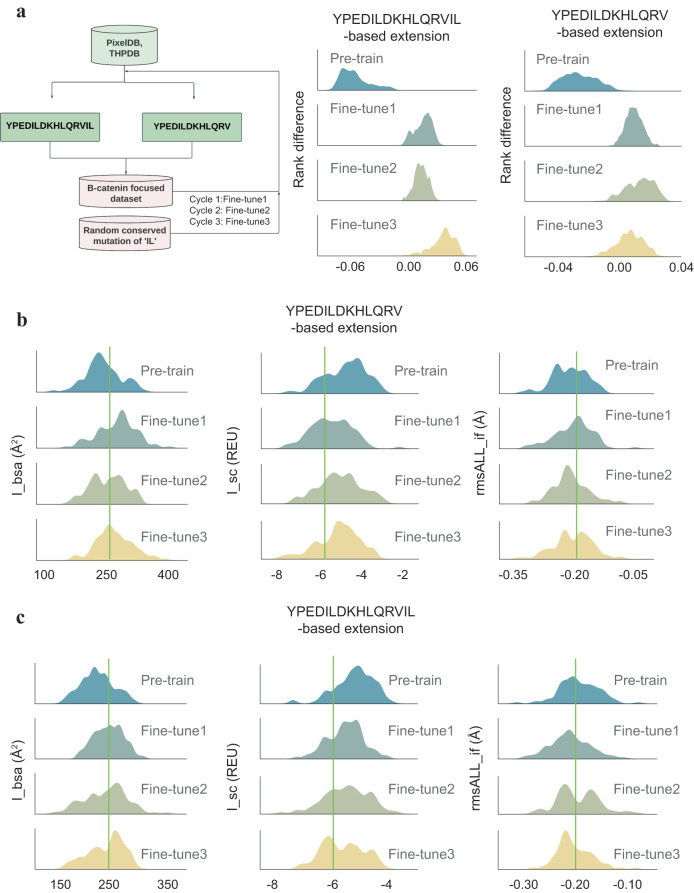
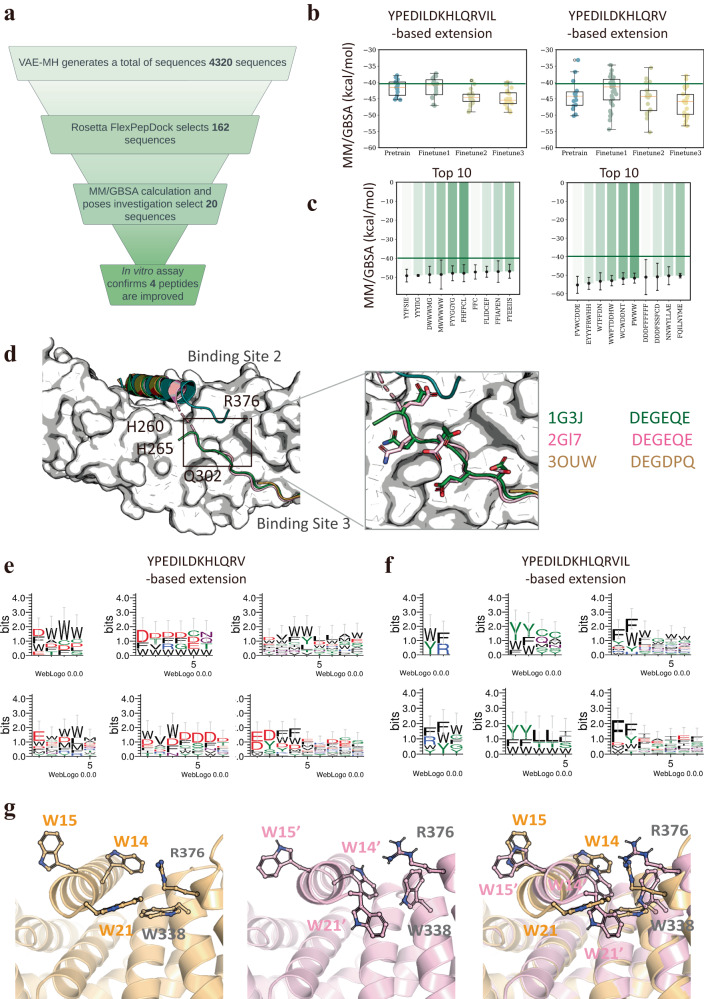
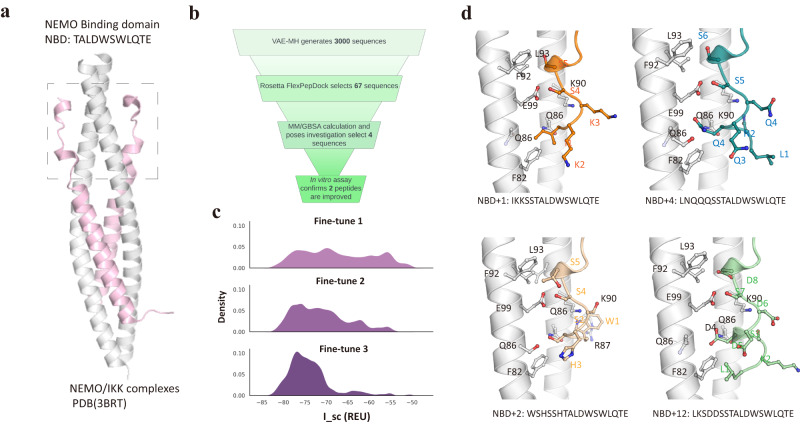
We introduce a computational approach for the design of target-specific peptides. Our method integrates a Gated Recurrent Unit-based Variational Autoencoder with Rosetta FlexPepDock for peptide sequence generation and binding affinity assessment. Subsequently, molecular dynamics simulations are employed to narrow down the selection of peptides for experimental assays. We apply this computational strategy to design peptide inhibitors that specifically target β -catenin and NF- κ B essential modulator. Among the twelve β -catenin inhibitors, six exhibit improved binding affinity compared to the parent peptide. Notably, the best C-terminal peptide binds β -catenin with an IC 50 of 0.010 ± 0.06 μM, which is 15-fold better than the parent peptide. For NF- κ B essential modulator, two of the four tested peptides display substantially enhanced binding compared to the parent peptide. Collectively, this study underscores the successful integration of deep learning and structure-based modeling and simulation for target specific peptide design.
Overview
The claims and statistics of this paper haven’t been checked yet.
Run the check — free, no account needed. It reads the open-access text and checks the sources it cites.
Integrity signals
Registry
Cites
Statistics
Figures
Verification
Claims the paper makes
The claims and statistics of this paper haven’t been checked yet.
Run the check — free, no account needed. It reads the open-access text and checks the sources it cites.
Self-check
Percentages, sums and reported differences re-computed from the paper’s own numbers.
The self-check needs the paper’s full text.
Citations
Cites
Vaswani, A., Shazeer, N., Parmar, N., Uszkoreit, J., Jones, L., Gomez, A. N., Kaiser, L., & Polosukhin, I. (2017) · arXiv · doi:10.48550/arxiv.1706.03762 · Cited by 120,404
Highly accurate protein structure prediction with AlphaFold
Jumper, J., Evans, R., Pritzel, A., Green, T., Figurnov, M., Ronneberger, O., Tunyasuvunakool, K., Bates, R., Žídek, A., Potapenko, A., et al. (2021) · Nature · doi:10.1038/s41586-021-03819-2 · Cited by 43,764
Abraham, M. J., Murtola, T., Schulz, R., Páll, S., Smith, J. C., Hess, B., & Lindahl, E. (2015) · SoftwareX · doi:10.1016/j.softx.2015.06.001 · Cited by 27,190
Efficient Estimation of Word Representations in Vector Space
Mikolov, T., Chen, K., Corrado, G., & Dean, J. (2013) · arXiv · doi:10.48550/arxiv.1301.3781 · Cited by 26,568
Polymorphic transitions in single crystals: A new molecular dynamics method
Parrinello, M., & Rahman, A. (1981) · Journal of Applied Physics · doi:10.1063/1.328693 · Cited by 19,915
LINCS: A linear constraint solver for molecular simulations
Hess, B., Bekker, H., Berendsen, H. J. C., & Fraaije, J. G. E. M. (1997) · Journal of Computational Chemistry · doi:10.1002/(sici)1096-987x(199709)18:12 · Cited by 18,182
UniProt: the Universal Protein knowledgebase
Apweiler, R. (2003) · Nucleic Acids Research · doi:10.1093/nar/gkh131 · Cited by 7,593
UniProt: the universal protein knowledgebase in 2021
The UniProt Consortium, Bateman, A., Martin, M.-J., Orchard, S., Magrane, M., Agivetova, R., Ahmad, S., Alpi, E., Bowler-Barnett, E. H., Britto, R., et al. (2021) · Nucleic Acids Research · doi:10.1093/nar/gkaa1100 · Cited by 6,372
Kollman, P. A., Massova, I., Reyes, C., Kuhn, B., Huo, S., Chong, L., Lee, M., Lee, T., Duan, Y., Wang, W., et al. (2000) · Accounts of Chemical Research · doi:10.1021/ar000033j · Cited by 4,978
Understanding the Metropolis-Hastings Algorithm
Chib, S., & Greenberg, E. (1995) · The American Statistician · doi:10.1080/00031305.1995.10476177 · Cited by 4,212
gmx_MMPBSA: A New Tool to Perform End-State Free Energy Calculations with GROMACS
Tresanco, M. S. V., Valdés-Tresanco, M. E., Valiente, P. A., & Moreno, E. (2021) · Journal of Chemical Theory and Computation · doi:10.1021/acs.jctc.1c00645 · Cited by 3,468
Molecular dynamics simulations of biomolecules
Karplus, M., & McCammon, J. (2002) · Nature Structural Biology · doi:10.1038/nsb0902-646 · Cited by 3,401
Automatic Chemical Design Using a Data-Driven Continuous Representation of Molecules
Gómez-Bombarelli, R., Wei, J. N., Duvenaud, D., Hernández-Lobato, J. M., Sánchez-Lengeling, B., Sheberla, D., Aguilera-Iparraguirre, J., Hirzel, T. D., Adams, R. P., & Aspuru-Guzik, A. (2018) · ACS Central Science · doi:10.1021/acscentsci.7b00572 · Cited by 3,106
Zhan, T., Rindtorff, N., & Boutros, M. (2017) · Oncogene · doi:10.1038/onc.2016.304 · Cited by 2,626
The two NF-κB activation pathways and their role in innate and adaptive immunity
Bonizzi, G., & Karin, M. (2004) · Trends in Immunology · doi:10.1016/j.it.2004.03.008 · Cited by 2,535
Wnt/β-catenin signalling: function, biological mechanisms, and therapeutic opportunities
Liu, J., Xiao, Q., Xiao, J., Niu, C., Li, Y., Zhang, X., Zhou, Z., Shu, G., & Yin, G. (2022) · Signal Transduction and Targeted Therapy · doi:10.1038/s41392-021-00762-6 · Cited by 2,519
Onufriev, A., Bashford, D., & Case, D. A. (2004) · Proteins: Structure, Function, and Bioinformatics · doi:10.1002/prot.20033 · Cited by 2,507
Therapeutic Peptides: Current Applications and Future Directions
Wang, L., Wang, N., Zhang, W., Cheng, X., Yan, Z., Shao, G., Wang, X., Wang, R., & Fu, C. (2022) · Signal Transduction and Targeted Therapy · doi:10.1038/s41392-022-00904-4 · Cited by 2,131
Self-citationTrends in peptide drug discovery
Muttenthaler, M., King, G. F., Adams, D. J., & Alewood, P. F. (2021) · Nature Reviews Drug Discovery · doi:10.1038/s41573-020-00135-8 · Cited by 2,074
Automatic Chemical Design Using a Data-Driven Continuous Representation of Molecules.
Gómez‐Bombarelli, R., Wei, J. N., Duvenaud, D., Hernández-Lobato, J. M., Sánchez-Lengeling, B., Sheberla, D., Aguilera‐Iparraguirre, J., Hirzel, T. D., Adams, R. P., & Aspuru‐Guzik, A. (2018) · Cambridge University Engineering Department Publications Database · doi:10.17863/cam.34134 · Cited by 1,813
The Rosetta All-Atom Energy Function for Macromolecular Modeling and Design
Alford, R. F., Leaver-Fay, A., Jeliazkov, J. R., O’Meara, M. J., DiMaio, F. P., Park, H., Shapovalov, M. V., Renfrew, P. D., Mulligan, V. K., Kappel, K., et al. (2017) · Journal of Chemical Theory and Computation · doi:10.1021/acs.jctc.7b00125 · Cited by 1,532
Approximate atomic surfaces from linear combinations of pairwise overlaps (LCPO)
Weiser, J., Shenkin, P. S., & Still, W. C. (1999) · Journal of Computational Chemistry · doi:10.1002/(sici)1096-987x(19990130)20:2 · Cited by 1,205
The IκB kinase (IKK) and NF-κB: key elements of proinflammatory signalling
Karin, M., & Delhase, M. (2000) · Seminars in Immunology · doi:10.1006/smim.2000.0210 · Cited by 973
Proteins: Structure, Function, and Bioinformatics
(2006) · Proteins Structure Function and Bioinformatics · doi:10.1002/(issn)1097-0134 · Cited by 943
ProtGPT2 is a deep unsupervised language model for protein design
Ferruz, N., Schmidt, S., & Höcker, B. (2022) · Nature Communications · doi:10.1038/s41467-022-32007-7 · Cited by 795
Accuracy and efficiency of the particle mesh Ewald method
Petersen, H. G. (1995) · The Journal of Chemical Physics · doi:10.1063/1.470043 · Cited by 776
The “One-Bead-One-Compound” Combinatorial Library Method
Lam, K. S., Lebl, M., & Krchňák, V. (1997) · Chemical Reviews · doi:10.1021/cr9600114 · Cited by 716
Accelerated antimicrobial discovery via deep generative models and molecular dynamics simulations
Das, P., Sercu, T., Wadhawan, K., Padhi, I., Gehrmann, S., Cipcigan, F. S., Chenthamarakshan, V., Strobelt, H., dos Santos, C., Chen, P.-Y., et al. (2021) · Nature Biomedical Engineering · doi:10.1038/s41551-021-00689-x · Cited by 498
THPdb: Database of FDA-approved peptide and protein therapeutics
Usmani, S. S., Bedi, G., Samuel, J. S., Singh, S., Kalra, S., Kumar, P., Ahuja, A. A., Sharma, D. M., Gautam, A., & Raghava, G. P. S. (2017) · PLoS ONE · doi:10.1371/journal.pone.0181748 · Cited by 488
NEMO/IKKγ-Deficient Mice Model Incontinentia Pigmenti
Schmidt‐Supprian, M., Bloch, W., Courtois, G., Addicks, K., Israël, A., Rajewsky, K., & Pasparakis, M. (2000) · Molecular Cell · doi:10.1016/s1097-2765(00)80263-4 · Cited by 437
Sub-angstrom modeling of complexes between flexible peptides and globular proteins
Raveh, B., London, N., & Schueler‐Furman, O. (2010) · Proteins Structure Function and Bioinformatics · doi:10.1002/prot.22716 · Cited by 430
Crystal Structure of a β-Catenin/Tcf Complex
Graham, T. A., Weaver, C. I., Mao, F., Kimelman, D., & Xu, W. (2000) · Cell · doi:10.1016/s0092-8674(00)00192-6 · Cited by 414
Rosetta FlexPepDock web server—high resolution modeling of peptide–protein interactions
London, N., Raveh, B., Cohen, E., Fathi, G., & Schueler‐Furman, O. (2011) · Nucleic Acids Research · doi:10.1093/nar/gkr431 · Cited by 413
Makris, C., Godfrey, V., Krähn‐Senftleben, G., Takahashi, T., Roberts, J. L., Schwarz, T., Feng, L., Johnson, R. S., & Karin, M. (2000) · Molecular Cell · doi:10.1016/s1097-2765(00)80262-2 · Cited by 393
Computational Design of ACE2-Based Peptide Inhibitors of SARS-CoV‑2
Han, Y., & Král, P. (2020) · ACS Nano · doi:10.1021/acsnano.0c02857 · Cited by 378
Transfer Learning for Drug Discovery
Cai, C., Wang, S., Xu, Y., Zhang, W., Tang, K., Ouyang, Q., Lai, L., & Pei, J. (2020) · Journal of Medicinal Chemistry · doi:10.1021/acs.jmedchem.9b02147 · Cited by 376
Self-citationRaveh, B., London, N., Zimmerman, L., & Schueler‐Furman, O. (2011) · PLoS ONE · doi:10.1371/journal.pone.0018934 · Cited by 327
WNT Signaling and Colorectal Cancer
Schatoff, E. M., Leach, B. I., & Dow, L. E. (2017) · Current Colorectal Cancer Reports · doi:10.1007/s11888-017-0354-9 · Cited by 310
Modulating protein–protein interactions: the potential of peptides
Nevola, L., & Giralt, E. (2014) · Chemical Communications · doi:10.1039/c4cc08565e · Cited by 297
Peptidomimetic therapeutics: scientific approaches and opportunities
Qvit, N., Rubin, S. J. S., Urban, T. J., Mochly‐Rosen, D., & Gross, E. R. (2016) · Drug Discovery Today · doi:10.1016/j.drudis.2016.11.003 · Cited by 286
Inhibition of oncogenic Wnt signaling through direct targeting of β-catenin
Grossmann, T. N., Yeh, J. T.-H., Bowman, B. R., Chu, Q., Moellering, R. E., & Verdine, G. L. (2012) · Proceedings of the National Academy of Sciences · doi:10.1073/pnas.1208396109 · Cited by 268
Proceedings of the 28th International Conference on Neural Information Processing Systems - Volume 1
Cortes, C., Lee, D. D., Sugiyama, M., & Garnett, R. (2015) · Cited by 260
Stranges, P. B., & Kuhlman, B. A. (2012) · Protein Science · doi:10.1002/pro.2187 · Cited by 233
Crystal Structure of a β-Catenin/BCL9/Tcf4 Complex
Sampietro, J., Dahlberg, C. L., Cho, U., Hinds, T. R., Kimelman, D., & Xu, W. (2006) · Molecular Cell · doi:10.1016/j.molcel.2006.09.001 · Cited by 225
Youngquist, R. S., Fuentes, G. R., Lacey, M. P., & Keough, T. W. (1995) · Journal of the American Chemical Society · doi:10.1021/ja00119a002 · Cited by 219
Computational design of peptide ligands
Vanhee, P., van der Sloot, A. M., Verschueren, E., Serrano, L. G., Rousseau, F., & Schymkowitz, J. W. H. (2011) · Trends in biotechnology · doi:10.1016/j.tibtech.2011.01.004 · Cited by 170
Balcan, M. F., & Weinberger, K. Q. (2016) · Cited by 152
SwissSidechain: a molecular and structural database of non-natural sidechains
Gfeller, D., Michielin, O. A., & Zoete, V. (2012) · Nucleic Acids Research · doi:10.1093/nar/gks991 · Cited by 146
Structure of a NEMO/IKK-Associating Domain Reveals Architecture of the Interaction Site
Rushe, M. M., Silvian, L. F., Bixler, S. A., Chen, L. L., Cheung, A. E., Bowes, S., Cuervo, H., Berkowitz, S. A., Zheng, T. S., Guckian, K. M., et al. (2008) · Structure · doi:10.1016/j.str.2008.02.012 · Cited by 133
PepBDB: a comprehensive structural database of biological peptide–protein interactions
Wen, Z., He, J., Tao, H., & Huang, S. (2018) · Bioinformatics · doi:10.1093/bioinformatics/bty579 · Cited by 106
Ranking Peptide Binders by Affinity with AlphaFold**
Chang, L., & Perez, A. (2023) · Angewandte Chemie International Edition · doi:10.1002/anie.202213362 · Cited by 100
Hosseinzadeh, P., Watson, P. R., Craven, T. W., Li, X., Rettie, S., Pardo‐Ávila, F., Bera, A. K., Mulligan, V. K., Lu, P., Ford, A. S., et al. (2021) · Nature Communications · doi:10.1038/s41467-021-23609-8 · Cited by 98
Self-citationWang, J., Alekseenko, A. E., Kozakov, D., & Miao, Y. (2019) · Frontiers in Molecular Biosciences · doi:10.3389/fmolb.2019.00112 · Cited by 96
Design of Peptoid-peptide Macrocycles to Inhibit the β-catenin TCF Interaction in Prostate Cancer
Schneider, J. A., Craven, T. W., Kasper, A. C., Yun, C., Haugbro, M., Briggs, E. M., Svetlov, V. V., Nudler, E., Knaut, H., Bonneau, R., et al. (2018) · Nature Communications · doi:10.1038/s41467-018-06845-3 · Cited by 94
Molecular Generative Model Based on an Adversarially Regularized Autoencoder
Hong, S. H., Ryu, S., Lim, J., & Kim, W. Y. (2019) · Journal of Chemical Information and Modeling · doi:10.1021/acs.jcim.9b00694 · Cited by 90
Phage Selection of Chemically Stabilized α-Helical Peptide Ligands
Diderich, P., Bertoldo, D., Dessen, P., Maola, K. M. G., Pizzitola, I., Held, W., Huelsken, J., & Heinis, C. (2016) · ACS Chemical Biology · doi:10.1021/acschembio.5b00963 · Cited by 88
Can AlphaFold2 predict protein-peptide complex structures accurately?
Ko, J., & Lee, J. (2021) · doi:10.1101/2021.07.27.453972 · Cited by 83
Enhancing the Cell Permeability of Stapled Peptides with a Cyclic Cell-Penetrating Peptide
Dougherty, P. G., Wen, J., Pan, X., Koley, A., Ren, J.-G., Sahni, A., Basu, R., Salim, H., Kubi, G. A., Qian, Z., et al. (2019) · Journal of Medicinal Chemistry · doi:10.1021/acs.jmedchem.9b00456 · Cited by 83
Self-citationAMPDeep: hemolytic activity prediction of antimicrobial peptides using transfer learning
Salem, M., Arshadi, A. K., & Yuan, J. S. (2022) · BMC Bioinformatics · doi:10.1186/s12859-022-04952-z · Cited by 80
Computed Binding of Peptides to Proteins with MELD-Accelerated Molecular Dynamics
Morrone, J. A., Pérez, A., MacCallum, J. L., & Dill, K. A. (2017) · Journal of Chemical Theory and Computation · doi:10.1021/acs.jctc.6b00977 · Cited by 76
Adding Diverse Noncanonical Backbones to Rosetta: Enabling Peptidomimetic Design
Drew, K., Renfrew, P. D., Craven, T. W., Butterfoss, G. L., Chou, F., Lyskov, S., Bullock, B. N., Watkins, A. M., Labonte, J. W., Pacella, M. S., et al. (2013) · PLoS ONE · doi:10.1371/journal.pone.0067051 · Cited by 67
Wendt, M., Bellavita, R., Gerber, A., Efrém, N., van Ramshorst, T., Pearce, N. M., Davey, P. R. J., Everard, I., Vázquez–Chantada, M., Chiarparin, E., et al. (2021) · Angewandte Chemie International Edition · doi:10.1002/anie.202102082 · Cited by 67
Recapitulation and Design of Protein Binding Peptide Structures and Sequences
Sood, V. D., & Baker, D. A. (2006) · Journal of Molecular Biology · doi:10.1016/j.jmb.2006.01.045 · Cited by 58
Sun, J., & Weis, W. I. (2010) · Journal of Molecular Biology · doi:10.1016/j.jmb.2010.11.010 · Cited by 54
Peptide design by optimization on a data-parameterized protein interaction landscape
Jenson, J. M., Xue, V., Stretz, L., Mandal, T., Reich, L. “., & Keating, A. E. (2018) · Proceedings of the National Academy of Sciences · doi:10.1073/pnas.1812939115 · Cited by 52
Joo, S., Kim, M. S., Yang, J., & Park, J. (2020) · ACS Omega · doi:10.1021/acsomega.0c01149 · Cited by 51
Implicit Deep Latent Variable Models for Text Generation
Fang, L., Li, C., Gao, J., Dong, W., & Chen, C. (2019) · Conference on Empirical Methods in Natural Language Processing (EMNLP) · doi:10.18653/v1/d19-1407 · Cited by 48
Targeting Unoccupied Surfaces on Protein–Protein Interfaces
Rooklin, D. W., Modell, A. E., Li, H., Berdan, V. Y., Arora, P. S., & Zhang, Y. (2017) · Journal of the American Chemical Society · doi:10.1021/jacs.7b05960 · Cited by 45
Sweeney, M. C., & Pei, D. (2003) · Journal of Combinatorial Chemistry · doi:10.1021/cc020113+ · Cited by 39
Self-citationFrappier, V., Duran, M., & Keating, A. E. (2017) · Protein Science · doi:10.1002/pro.3320 · Cited by 37
Advances in Computational Intelligence Systems
Lotfi, A., Bouchachia, H., Gegov, A., Langensiepen, C. S., & McGinnity, M. (2018) · Advances in intelligent systems and computing · doi:10.1007/978-3-319-97982-3 · Cited by 32
Nguyen, P. T., Nguyen, H. M., Wagner, K. M., Stewart, R. G., Singh, V., Thapa, P., Chen, Y., Lillya, M. W., Ton, A. T., Kondo, R., et al. (2022) · eLife · doi:10.7554/elife.81727 · Cited by 28
Covalent and Noncovalent Targeting of the Tcf4/β-Catenin Strand Interface with β-Hairpin Mimics
Blosser, S. L., Sawyer, N., Maksimovic, I., Ghosh, B., & Arora, P. S. (2021) · ACS Chemical Biology · doi:10.1021/acschembio.1c00389 · Cited by 27
Frappier, V., Duran, M., & Keating, A. E. (2018) · Protein Science · doi:10.1002/pro.3431 · Cited by 19
Computing Ligands Bound to Proteins Using MELD-Accelerated MD
Liu, C., Brini, E., Pérez, A., & Dill, K. A. (2020) · Journal of Chemical Theory and Computation · doi:10.1021/acs.jctc.0c00543 · Cited by 16
Cyclic Peptide Linker Design and Optimization by Molecular Dynamics Simulations
Yu, L., Barros, S. A., Sun, C., & Somani, S. (2023) · Journal of Chemical Information and Modeling · doi:10.1021/acs.jcim.3c01359 · Cited by 13
Adsorption studies of tritium-labeled peptides on polystyrene surfaces
Loomans, E. E. M. G., Gribnau, T. C. J., Bloemers, H. P. J., & Schielen, W. J. G. (1998) · Journal of Immunological Methods · doi:10.1016/s0022-1759(98)00174-4 · Cited by 13
Using anchoring motifs for the computational design of protein–protein interactions
Jacobs, T. M., & Kuhlman, B. A. (2013) · Biochemical Society Transactions · doi:10.1042/bst20130108 · Cited by 10
Disentangling the Latent Space of (Variational) Autoencoders for NLP
Brunner, G., Wang, Y., Wattenhofer, R. P., & Weigelt, M. (2018) · Advances in intelligent systems and computing · doi:10.1007/978-3-319-97982-3_13 · Cited by 5
Research works printed but not linked: 7
- Sutskever, I., Vinyals, O. & Le, Q. V. Sequence to sequence learning with neural networks. In Proceedings of the 27th International Conference on Neural Information Processing Systems, 3104–3112 (Curran Associates, Inc., 2014).
- Radford, A., Narasimhan, K., Salimans, T. & Sutskever, I. Improving language understanding by generative pre-training. https://api.semanticscholar.org/CorpusID:49313245 (2018).
- London, N., Raveh, B., Cohen, E., Fathi, G. & Schueler-Furman, O. Rosetta flexpepdock web server—high resolution modeling of peptide–protein interactions. Nucleic Acids Res. 39, W249–W253 (2011). · DOI
- Doersch, C. Tutorial on variational autoencoders. Preprint at https://arxiv.org/abs/1606.05908 (2016). · arXiv
- Pascanu, R., Mikolov, T. & Bengio, Y. On the difficulty of training recurrent neural networks. In Proceedings of the 30th International Conference on Machine Learning (eds. Dasgupta, S., & McAllester D.) PMLR 28, 1310–1318 (JMLR.org, 2012).
- Chung, J., Gulcehre, C., Cho, K. & Bengio, Y. Empirical evaluation of gated recurrent neural networks on sequence modeling. Preprint at https://arxiv.org/abs/1412.3555 (2014). · arXiv
- Stranges, P. B. & Kuhlman, B. A comparison of successful and failed protein interface designs highlights the challenges of designing buried hydrogen bonds. Protein Sci. 22, 74–82 (2012). · DOI
Cited by
Sorted by citations
Artificial intelligence in drug development
Zhang, K., Yang, X., Wang, Y., Yu, Y., Huang, N., Li, G. L., Li, X., Wu, J. C., & Yang, S. (2025) · Nature Medicine · doi:10.1038/s41591-024-03434-4 · Cited by 556
Self-citationGoles, M., Sanchez–Daza, A., Cabas-Mora, G., Varón, L. S., Sepúlveda-Yáñez, J., Anvari-Kazemabad, H., Davari, M. D., Uribe-Paredes, R., Olivera‐Nappa, Á., Navarrete, M. A., et al. (2024) · Briefings in Bioinformatics · doi:10.1093/bib/bbae275 · Cited by 188
Razumkov, H., Jiang, Z., Baek, K., You, I., Geng, Q., Donovan, K. A., Tang, M. T., Metivier, R. J., Mageed, N., Seo, P., et al. (2024) · Journal of the American Chemical Society · doi:10.1021/jacs.4c06127 · Cited by 53
Molecular Modelling in Bioactive Peptide Discovery and Characterisation
Agoni, C., Fernández-Díaz, R., Timmons, P. B., Adelfio, A., Gómez, H., & Shields, D. C. (2025) · Biomolecules · doi:10.3390/biom15040524 · Cited by 60
Target-Specific De Novo Peptide Binder Design with DiffPepBuilder
Wang, F., Wang, Y. X., Feng, L., Zhang, C., & Lai, L. (2024) · Journal of Chemical Information and Modeling · doi:10.1021/acs.jcim.4c00975 · Cited by 53
Metadata
- Authors
- Chen, S., Lin, T., Basu, R., Ritchey, J., Wang, S., Luo, Y., Li, X., Pei, D., Kara, L. B., & Cheng, X.
- Affiliations
- The Ohio State University (US)
- Carnegie Mellon University (US)
- Nantong University (CN)
- Corresponding author
- Pei, Dehua
- Kara, Levent Burak
- Cheng, Xiaolin
- Venue
- Nature Communications
- Published
- 2024-02-21
- Volume
- 15
- Issue
- 1
- Pages
- 1611-1611
- ISSN
- 2041-1723 (ISSN-L)
- PMC
- PMC10882002
- OpenAlex
- W4392091326
- Cited by
- 324
- References
- 78
- Citations by year
- 2026: 121 · 2025: 158 · 2024: 44
- FWCI
- 68.33
- Type
- journal article
- Language
- en
- Open access
- gold
- doi.org
- Locations
- Nature Communications (publishedVersion, cc-by)
- Research Square (acceptedVersion, cc-by)
- PubMed Central (publishedVersion, cc-by-nc)
- PubMed (publishedVersion)
- RePEc: Research Papers in Economics (submittedVersion)
- DOAJ (DOAJ: Directory of Open Access Journals) (submittedVersion)
- Funders
- Ohio State University (P30CA016058)
- National Institutes of Health (1s10rr025660-01a1)
- National Cancer Institute (CA234124, R01CA234124, P30CA016058)
- National Institute of General Medical Sciences (R35GM122459)
- National Center for Research Resources (S10 RR025660)
- Topics
- Life Sciences › Pharmacology, Toxicology and Pharmaceutics › Drug Discovery › Computational Drug Discovery Methods
- Physical Sciences › Chemistry › Organic Chemistry › Chemical Synthesis and Analysis
- Life Sciences › Biochemistry, Genetics and Molecular Biology › Molecular Biology › Protein Structure and Dynamics
- Keywords
- β-catenin, NF-κB essential modulator, peptide sequence generation, binding affinity prediction, molecular dynamics simulation, structure-based drug design
- MeSH terms
- Deep Learning, Peptides, Protein Binding, NF-kappa B, beta Catenin, Molecular Dynamics Simulation
About these checks
Registry, retraction, Cites and statistics results are computed, not judged, with one exception: a printed reference that no index lists is read once by a model before it counts as a citation error. Claims are extracted by a model and kept only when their quote appears verbatim in the text; each cited source is then checked, with a model’s help, for whether it says what the claim relies on. Those verdicts can be wrong — read the claim’s quote and the cited source before relying on one.
Statistics and arithmetic are recomputed, not judged.
Confidence bands are shown only for fields calibrated on our annotated test set. None is calibrated yet, so no band is shown.
What counts as a claim ›How we measure confidence ›How we check this ›
Are you an author, or do you see a problem with this page? Request a review
