

Design of a Cereblon construct for crystallographic and biophysical studies of protein degraders
Open accessPublished version of a preprint
The DOI matches its Crossref record; 70 of the 70 references it cites were found in a registry or an index.
Abstract
The ubiquitin E3 ligase cereblon (CRBN) is the target of therapeutic drugs thalidomide and lenalidomide and is recruited by most targeted protein degraders (PROTACs and molecular glues) in clinical development. Biophysical and structural investigation of CRBN has been limited by current constructs that either require co-expression with the adaptor DDB1 or inadequately represent full-length protein, with high-resolution structures of degrader ternary complexes remaining rare. We present the design of CRBN midi , a construct that readily expresses from E. coli with high yields as soluble, stable protein without DDB1. We benchmark CRBN midi for wild-type functionality through a suite of biophysical techniques and solve high-resolution co-crystal structures of its binary and ternary complexes with degraders. We qualify CRBN midi as an enabling tool to accelerate structure-based discovery of the next generation of CRBN based therapeutics.
Overview
The claims and statistics of this paper haven’t been checked yet.
Free: it reads the open-access text and checks the first 5 claims that cite a source we can check. Create a free account to check every claim.
Integrity signals
Registry
Cites
Statistics
Figures
Verification
Claims the paper makes
The claims and statistics of this paper haven’t been checked yet.
Free: it reads the open-access text and checks the first 5 claims that cite a source we can check. Create a free account to check every claim.
Claims other papers make about this one
Each is checked against this paper’s own text: does it say what the citing paper says it does?
The source backs part of the claim, not all of it — or backs it for a different population, condition or comparison.
In the citing paper
“importantly, cRBN midi yielded high resolution structures for both binary and ternary complexes, making it an essential tool that could be applied in the rational optimization of cRBN-recruiting degraders.”
From From serendipity to strategy: molecular glue degraders in cancer therapeutics (2025) · cites this paper as Kroupova et al. 2024
Experimental — accuracy not yet measuredThe cited source says what the claim attributes to it.
In the citing paper
“Recombinant cRBN midi retained its functionality as observed across multiple biophysical assays.”
From From serendipity to strategy: molecular glue degraders in cancer therapeutics (2025) · cites this paper as Kroupova et al. 2024
The cited source says what the claim attributes to it.
In the citing paper
“to address this, a systematic analysis of cRBN mutants was undertaken to identify a soluble cRBN construct that retained the ability to form ternary complexes, culminating in the generation of a minimally truncated cRBN construct, named cRBN midi (Kroupova et al. 2024).”
From From serendipity to strategy: molecular glue degraders in cancer therapeutics (2025) · cites this paper as Kroupova et al. 2024
Self-check
Percentages, sums and reported differences re-computed from the paper’s own numbers.
The self-check needs the paper’s full text.
Citations
Cites
Features and development of Coot
Emsley, P., Lohkamp, B., Scott, W. G., & Cowtan, K. (2010) · Acta Crystallographica Section D Biological Crystallography · doi:10.1107/s0907444910007493 · Cited by 29,915 · cited 3×
“The initial model was re fi ned iteratively using coot (WinCoot 0.9.8.1) 55 and phenix.re fi ne 54 .”
InfluentialPhaser crystallographic software
McCoy, A. J., Grosse-Kunstleve, R. W., Adams, P. D., Winn, M. D., Storoni, L. C., & Read, R. J. (2007) · Journal of Applied Crystallography · doi:10.1107/s0021889807021206 · Cited by 20,612
SWISS-MODEL: homology modelling of protein structures and complexes
Waterhouse, A., Bertoni, M., Bienert, S., Studer, G., Tauriello, G., Gumienny, R., Heer, F. T., de Beer, T. A. P., Rempfer, C., Bordoli, L., et al. (2018) · Nucleic Acids Research · doi:10.1093/nar/gky427 · Cited by 13,067
ColabFold - Making protein folding accessible to all
Mirdita, M., Schütze, K., Moriwaki, Y., Heo, L., Ovchinnikov, S., & Steinegger, M. (2021) · doi:10.1101/2021.08.15.456425 · Cited by 9,391
Madhavi Sastry, G., Adzhigirey, M., Day, T., Annabhimoju, R., & Sherman, W. (2013) · Journal of Computer-Aided Molecular Design · doi:10.1007/s10822-013-9644-8 · Cited by 6,006
Towards automated crystallographic structure refinement with phenix.refine
Afonine, P. V., Grosse-Kunstleve, R. W., Echols, N., Headd, J. J., Moriarty, N. W., Mustyakimov, M., Terwilliger, T. C., Urzhumtsev, A., Zwart, P. H., & Adams, P. D. (2012) · Acta Crystallographica Section D Biological Crystallography · doi:10.1107/s0907444912001308 · Cited by 5,511 · cited 3×
“The initial model was re fi ned iteratively using coot (WinCoot 0.9.8.1) 55 and phenix.re fi ne 54 .”
BackgroundMethodInfluentialPRODRG: a tool for high-throughput crystallography of protein–ligand complexes
Schüttelkopf, A. W., & van Aalten, D. M. F. (2004) · Acta Crystallographica Section D Biological Crystallography · doi:10.1107/s0907444904011679 · Cited by 4,804 · cited 1×
“Ligand structures and restraints were generated using the PRODRG server 59 .”
MethodSvergun, D. I. (1992) · Journal of Applied Crystallography · doi:10.1107/s0021889892001663 · Cited by 3,759 · cited 1×
“Pairwise-distance distributionswerecalculatedusingGNOM 63 .”
Svergun, D., Barberato, C., & Koch, M. H. J. (1995) · Journal of Applied Crystallography · doi:10.1107/s0021889895007047 · Cited by 3,434
PROTAC targeted protein degraders: the past is prologue
Békés, M., Langley, D. R., & Crews, C. M. (2022) · Nature Reviews Drug Discovery · doi:10.1038/s41573-021-00371-6 · Cited by 3,395 · cited 2×
“Targeted protein degradation enables development of small molecule therapies that promise to address medical needs that are currently unmet via conventional drugs 1,2 .”
BackgroundA hierarchical approach to all‐atom protein loop prediction
Jacobson, M. P., Pincus, D. L., Rapp, C. S., Day, T. J. F., Honig, B., Shaw, D. E., & Friesner, R. A. (2004) · Proteins: Structure, Function, and Bioinformatics · doi:10.1002/prot.10613 · Cited by 2,504
Fusion protein linkers: Property, design and functionality
Chen, X., Zaro, J. L., & Shen, W.-C. (2013) · Advanced Drug Delivery Reviews · doi:10.1016/j.addr.2012.09.039 · Cited by 2,056 · cited 1×
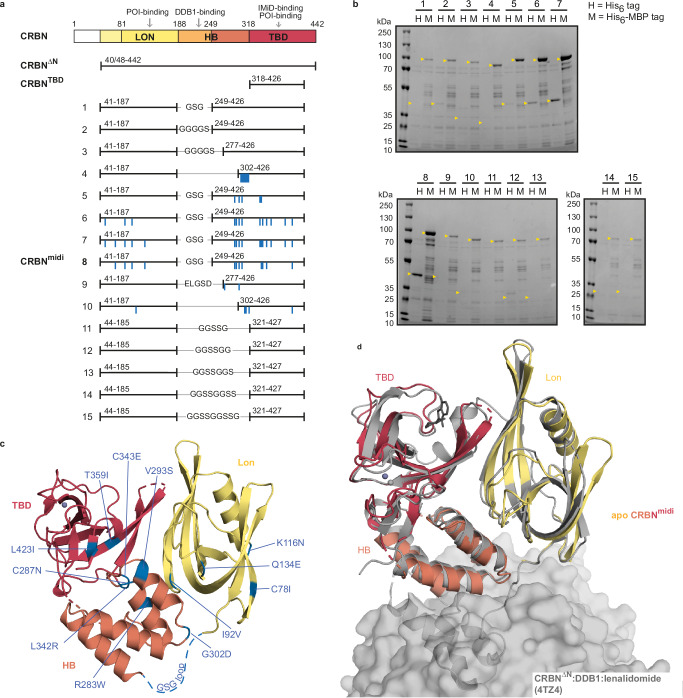
“In all constructs, glycine and serine-rich linkers were chosen for their fl exibility 48 with the length requirement predicted for each truncation by analysis of published CRBN crystal structures.”
MethodData processing and analysis with the autoPROC toolbox
Vonrhein, C., Flensburg, C., Keller, P., Sharff, A., Smart, O., Paciorek, W., Womack, T., & Bricogne, G. (2011) · Acta Crystallographica Section D Biological Crystallography · doi:10.1107/s0907444911007773 · Cited by 2,029
OPLS4: Improving Force Field Accuracy on Challenging Regimes of Chemical Space
Lu, C., Wu, C., Ghoreishi, D., Chen, W., Wang, L., Damm, W., Ross, G. A., Dahlgren, M. K., Russell, E., Von Bargen, C. D., et al. (2021) · Journal of Chemical Theory and Computation · doi:10.1021/acs.jctc.1c00302 · Cited by 2,005
Lenalidomide Causes Selective Degradation of IKZF1 and IKZF3 in Multiple Myeloma Cells
Krönke, J., Udeshi, N. D., Narla, A., Grauman, P., Hurst, S. N., McConkey, M., Svinkina, T., Heckl, D., Comer, E., Li, X., et al. (2014) · Science · doi:10.1126/science.1244851 · Cited by 1,879
The Myeloma Drug Lenalidomide Promotes the Cereblon-Dependent Destruction of Ikaros Proteins
Lu, G., Middleton, R. E., Sun, H., Naniong, M., Ott, C. J., Mitsiades, C. S., Wong, K.-K., Bradner, J. E., & Kaelin, W. G. (2014) · Science · doi:10.1126/science.1244917 · Cited by 1,583 · cited 1×
“Upon binding to CRBN, IMiDs act as molecular glues, enhancing the recruitment of a wide range of zinc-fi nger containing transcription factors and other proteins as CRBN neo -sub- strates leading to their rapid ubiquitination and degradation 12 – 14 .”
BackgroundStructural basis of PROTAC cooperative recognition for selective protein degradation
Gadd, M. S., Testa, A., Lucas, X., Chan, K.-H., Chen, W., Lamont, D. J., Zengerle, M., & Ciulli, A. (2017) · Nature Chemical Biology · doi:10.1038/nchembio.2329 · Cited by 1,242 · cited 2×
“This is in striking contrast with the structural and biophysical enablement that supports the design of PROTAC degraders recruiting another popular E3 ligase, von Hippel Lindau (VHL), as illustrated by the many ternary complex co-crystal structures solved by us and others that have led to ef fi cient structure-guided d…”
BackgroundSelf-citationStructure of the DDB1–CRBN E3 ubiquitin ligase in complex with thalidomide
Fischer, E. S., Böhm, K., Lydeard, J. R., Yang, H., Stadler, M. B., Cavadini, S., Nagel, J., Serluca, F., Acker, V., Lingaraju, G. M., et al. (2014) · Nature · doi:10.1038/nature13527 · Cited by 1,141
DIALS: implementation and evaluation of a new integration package
Winter, G., Waterman, D. G., Parkhurst, J. M., Brewster, A. S., Gildea, R. J., Gerstel, M., Fuentes-Montero, L., Vollmar, M., Michels-Clark, T., Young, I. D., et al. (2018) · Acta Crystallographica Section D Structural Biology · doi:10.1107/s2059798317017235 · Cited by 1,115 · cited 2×
“The data was processed using xia2.dials 58 .”
BackgroundMethodInfluentialATSAS 3.0: expanded functionality and new tools for small-angle scattering data analysis
Manalastas-Cantos, K., Konarev, P. V., Hajizadeh, N. R., Kikhney, A. G., Petoukhov, M. V., Molodenskiy, D. S., Panjkovich, A., Mertens, H. D. T., Gruzinov, A., Borges, C., et al. (2021) · Journal of Applied Crystallography · doi:10.1107/s1600576720013412 · Cited by 964 · cited 1×
“Frames from SEC-SAXS that corresponded to the main protein peak, were merged using Chromixs 61 and analyzed using the ATSAS (version 3.2.1) package 62 .”
MethodInfluentialA novel cereblon modulator recruits GSPT1 to the CRL4CRBN ubiquitin ligase
Matyskiela, M. E., Lu, G., Ito, T., Pagarigan, B., Lu, C.-C., Miller, K., Fang, W., Wang, N.-Y., Nguyen, D., Houston, J., et al. (2016) · Nature · doi:10.1038/nature18611 · Cited by 701 · cited 1×
“…a chimeric complex of G. gallus CRBN orthologue with human DDB1 (CRBN G.gallus :DDB1 H.sapiens ) ( 9 ); (ii) a construct lacking the unstructured N-terminal region of CRBN (CRBN ΔN :DDB1) ( 17, 20, 22, 41 ); and (iii) DDB1 lacking the WD40 propeller B (CRBN ΔN :DDB1 ΔBPB )( 16, 18, 19, 21, 24 ).”
BackgroundStructural basis of lenalidomide-induced CK1α degradation by the CRL4CRBN ubiquitin ligase
Petzold, G., Fischer, E. S., & Thomä, N. H. (2016) · Nature · doi:10.1038/nature16979 · Cited by 620 · cited 3×
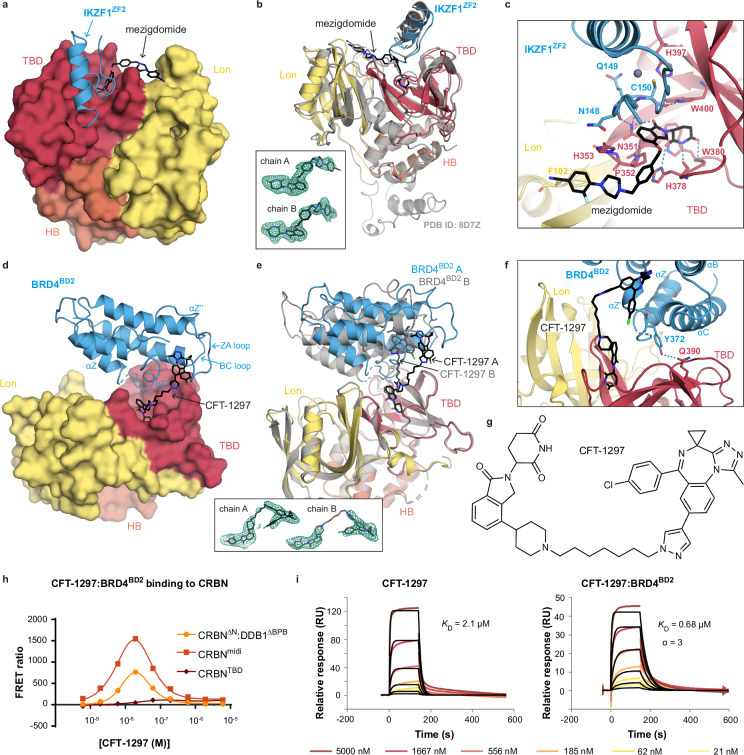
“…mezigdomide and CRBN, no further interactions are observed between mezigdomide and IKZF1 ZF2 beyond the known stacking of the neo-substrate Gly-loop on top of the iso-indolinone ring, consistent with the molecular glue degrader binding exclusively to CRBN and not IKZF1 at the binary level 19,21 .”
BackgroundGandhi, A. K., Kang, J., Havens, C. G., Conklin, T., Ning, Y., Wu, L., Ito, T., Ando, H., Waldman, M. F., Thakurta, A., et al. (2014) · British Journal of Haematology · doi:10.1111/bjh.12708 · Cited by 619 · cited 1×
“Upon binding to CRBN, IMiDs act as molecular glues, enhancing the recruitment of a wide range of zinc-finger containing transcription factors and other proteins as CRBN neo -substrates leading to their rapid ubiquitination and degradation ( 12-14 ).”
BackgroundPlasticity in binding confers selectivity in ligand-induced protein degradation
Nowak, R. P., DeAngelo, S. L., Buckley, D., He, Z., Donovan, K. A., An, J., Safaee, N., Jedrychowski, M. P., Ponthier, C. M., Ishoey, M., et al. (2018) · Nature Chemical Biology · doi:10.1038/s41589-018-0055-y · Cited by 615 · cited 2×
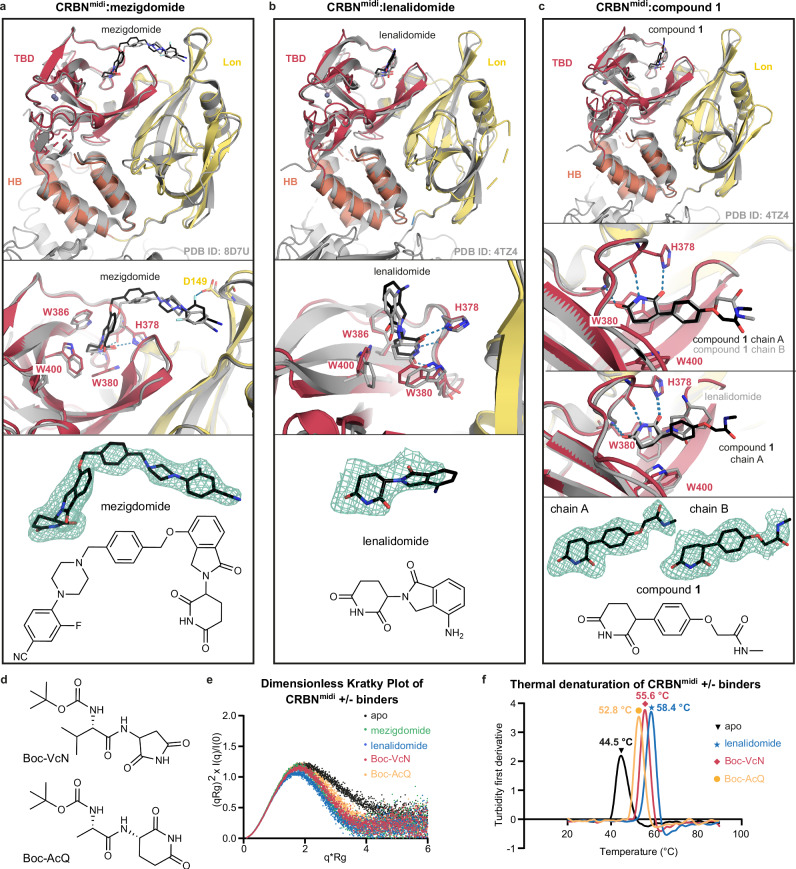
“Similarly to the CRBN midi :mezigdomide structure, the crystal structure of CRBN midi bound to lenalidomide shows the closed conformation (Fig.”
BackgroundMethodGoldenzweig, A., Goldsmith, M., Hill, S. E., Gertman, O., Laurino, P., Ashani, Y., Dym, O., Unger, T., Albeck, S., Prilusky, J., et al. (2016) · Molecular Cell · doi:10.1016/j.molcel.2016.06.012 · Cited by 572 · cited 1×
“In our second approach, we used the Protein Repair One-Stop Shop (PROSS) server 47 to identify amino acid substitutions that would positively contribute to protein stability and solubility.”
MethodBAF complex vulnerabilities in cancer demonstrated via structure-based PROTAC design
Farnaby, W., Koegl, M., Roy, M. J., Whitworth, C., Diers, E., Trainor, N., Zollman, D., Steurer, S., Karolyi-Oezguer, J., Riedmueller, C., et al. (2019) · Nature Chemical Biology · doi:10.1038/s41589-019-0294-6 · Cited by 562 · cited 1×
“Tert -butyl ((2 S )-1-((2,5-dioxopyrrolidin-3-yl)amino)- 3-methyl-1-oxobutan-2-yl)carbamate (Boc-VcN) was synthesised as per Yamaguchi et al. 51 , and tert -butyl (( S )-1-((( S )-2,6-dioxopiperidin-3-yl) amino)-1-oxopropan-2-yl)carbamate (Boc-AcQ) was synthesized as per Ichikawa et al. 28 .”
MethodSelf-citationDefining the human C2H2 zinc finger degrome targeted by thalidomide analogs through CRBN
Sievers, Q. L., Petzold, G., Bunker, R. D., Renneville, A., Słabicki, M., Liddicoat, B. J., Abdulrahman, W., Mikkelsen, T., Ebert, B. L., & Thomä, N. H. (2018) · Science · doi:10.1126/science.aat0572 · Cited by 537 · cited 4×
“…mezigdomide and CRBN, no further interactions are observed between mezigdomide and IKZF1 ZF2 beyond the known stacking of the neo-substrate Gly-loop on top of the iso-indolinone ring, consistent with the molecular glue degrader binding exclusively to CRBN and not IKZF1 at the binary level 19,21 .”
BackgroundInfluentialChamberlain, P. P., Lopez-Girona, A., Miller, K., Carmel, G., Pagarigan, B., Chie-Leon, B., Rychak, E., Corral, L. G., Ren, Y. J., Wang, M., et al. (2014) · Nature Structural & Molecular Biology · doi:10.1038/nsmb.2874 · Cited by 531 · cited 1×
“Constructs 5 – 10 were designed by manually curating the results of the PROSS analysis to exclude any residues within, and in the vicinity of, the IMiD-binding site that would engage in protein-protein interactions during ternary complex formation 18 – 26 .”
MethodThe CDK inhibitor CR8 acts as a molecular glue degrader that depletes cyclin K
Słabicki, M., Kozicka, Z., Petzold, G., Li, Y.-D., Manojkumar, M., Bunker, R. D., Donovan, K. A., Sievers, Q. L., Koeppel, J., Suchyta, D., et al. (2020) · Nature · doi:10.1038/s41586-020-2374-x · Cited by 433 · cited 1×
“Ternary co-crystal structures have also enabled structure-driven design of Cyclin K degraders which glue CDK12 to the CRL4 adaptor protein DDB1 (Damage speci fi c DNA binding protein 1) to induce ubiquitination and degradation of CDK12-complexed Cyclin K 39 – 42 .”
BackgroundSPR-measured dissociation kinetics of PROTAC ternary complexes influence target degradation rate
Roy, M. J., Winkler, S., Hughes, S. J., Whitworth, C., Galant, M., Farnaby, W., Rumpel, K., & Ciulli, A. (2019) · ACS Chemical Biology · doi:10.1021/acschembio.9b00092 · Cited by 386
Self-citationRational discovery of molecular glue degraders via scalable chemical profiling
Mayor-Ruiz, C., Bauer, S., Brand, M., Kozicka, Z., Siklos, M., Imrichova, H., Kaltheuner, I. H., Hahn, E., Seiler, K., Koren, A., et al. (2020) · Nature Chemical Biology · doi:10.1038/s41589-020-0594-x · Cited by 369
Durand, D., Vivès, C., Cannella, D., Pérez, J., Pebay-Peyroula, E., Vachette, P., & Fieschi, F. (2010) · Journal of Structural Biology · doi:10.1016/j.jsb.2009.08.009 · Cited by 309 · cited 2×
“To compare the extent of fl exibility of the apo and ligand-bound protein we used the dimensionless Kratky plot 49 , a representation of the SAXS data normalised for scattering intensity and R G (Fig.”
MethodPanjkovich, A., & Svergun, D. I. (2018) · Bioinformatics · doi:10.1093/bioinformatics/btx846 · Cited by 296 · cited 1×
“Frames from SEC-SAXS that corresponded to the main protein peak, were merged using Chromixs 61 and analyzed using the ATSAS (version 3.2.1) package 62 .”
MethodInfluentialStructure‐Based Design of a Macrocyclic PROTAC
Testa, A., Hughes, S. J., Lucas, X., Wright, J. E., & Ciulli, A. (2020) · Angewandte Chemie International Edition · doi:10.1002/anie.201914396 · Cited by 242 · cited 1×
“Superposition with CRBN Δ N :DDB1:lenalidomide (PDB ID: 4TZ4) yielded an RMSD of 1.37Å over 262 out of 317 C α atoms.”
Self-citationSurka, C., Jin, L., Mbong, N., Lu, C.-C., Jang, I. S., Rychak, E., Mendy, D., Clayton, T., Tindall, E., Hsu, C., et al. (2021) · Blood · doi:10.1182/blood.2020008676 · Cited by 229 · cited 1×
“…(i) a chimeric complex of G. gallus CRBN orthologue with human DDB1 (CRBN G.gallus :DDB1 H.sapiens ) 9 ; (ii) a construct lacking the unstructured N-terminal region of CRBN (CRBN Δ N :DDB1) 18,22,23,43 ; and (iii) DDB1 lacking the WD40 propeller B (CRBN Δ N :DDB1 Δ BPB ) 19 – 21, 24 , 26 .”
BackgroundA selective and orally bioavailable VHL-recruiting PROTAC achieves SMARCA2 degradation in vivo
Kofink, C., Trainor, N., Mair, B., Wöhrle, S., Wurm, M., Mischerikow, N., Roy, M. J., Bader, G., Greb, P., Garavel, G., et al. (2022) · Nature Communications · doi:10.1038/s41467-022-33430-6 · Cited by 216
Self-citationDiscovery of a molecular glue promoting CDK12-DDB1 interaction to trigger cyclin K degradation
Lv, L., Chen, P., Cao, L., Li, Y., Zeng, Z., Cui, Y., Wu, Q., Li, J., Wang, J.-H., Dong, M.-Q., et al. (2020) · eLife · doi:10.7554/elife.59994 · Cited by 215
Molecular glue CELMoD compounds are regulators of cereblon conformation
Watson, E. R., Novick, S., Matyskiela, M. E., Chamberlain, P. P., H. de la Peña, A., Zhu, J., Tran, E., Griffin, P. R., Wertz, I. E., & Lander, G. C. (2022) · Science · doi:10.1126/science.add7574 · Cited by 208 · cited 10×
“Inourstructure,Cys150 IKZF1 isnotwithinhydrogen bonding distance of His397 CRBN , unlike the cryo-EM structure 25 .”
BackgroundMethodResultInfluentialThe E3 ligase adapter cereblon targets the C-terminal cyclic imide degron
Ichikawa, S., Flaxman, H. A., Xu, W., Vallavoju, N., Lloyd, H. C., Wang, B., Shen, D., Pratt, M. R., & Woo, C. M. (2022) · Nature · doi:10.1038/s41586-022-05333-5 · Cited by 195 · cited 2×
“Thirdly, the HB domain was completely removed in constructs 11 – 15 to contain only the TBD and Lon domains connected by an assortment of fl exible linkers and the C366S mutation previously introduced to improve crystallization of the TBD domain 44 .”
BackgroundFrom Thalidomide to Rational Molecular Glue Design for Targeted Protein Degradation
Oleinikovas, V., Gainza, P., Ryckmans, T., Fasching, B., & Thomä, N. H. (2024) · Annual Review of Pharmacology and Toxicology · doi:10.1146/annurev-pharmtox-022123-104147 · Cited by 178
Beamline B21: high-throughput small-angle X-ray scattering at Diamond Light Source
Cowieson, N. P., Edwards-Gayle, C. J. C., Inoue, K., Khunti, N. S., Doutch, J., Williams, E., Daniels, S., Preece, G., Krumpa, N. A., Sutter, J. P., et al. (2020) · Journal of Synchrotron Radiation · doi:10.1107/s1600577520009960 · Cited by 177 · cited 1×
“SAXS data werecollectedatbeamline B21 at the Diamond Light Source inSEC-SAXScon fi guration(March2023andJune2024) 60 .”
Haven't got a glue: Protein surface variation for the design of molecular glue degraders
Kozicka, Z., & Thomä, N. H. (2021) · Cell Chemical Biology · doi:10.1016/j.chembiol.2021.04.009 · Cited by 170
Discovery and characterization of a selective IKZF2 glue degrader for cancer immunotherapy
Bonazzi, S., d’Hennezel, E., Beckwith, R. E. J., Xu, L., Fazal, A., Magracheva, A., Ramesh, R., Cernijenko, A., Antonakos, B., Bhang, H.-E. C., et al. (2023) · Cell Chemical Biology · doi:10.1016/j.chembiol.2023.02.005 · Cited by 167 · cited 4×
“Indeed, few high-resolution structures of ternary complexes (CRBN:degrader:target) have been solved using either X-ray crystallography or cryo-EM 18 – 26 .”
BackgroundMethodInfluentialPhenyl‐Glutarimides: Alternative Cereblon Binders for the Design of PROTACs
Min, J., Mayasundari, A., Keramatnia, F., Jonchere, B., Yang, S. W., Jarusiewicz, J., Actis, M., Das, S., Young, B., Slavish, J., et al. (2021) · Angewandte Chemie International Edition · doi:10.1002/anie.202108848 · Cited by 159 · cited 15×
“We next solved the ternary crystal structure of CRBN midi in complex with PROTAC CFT-1297 and BRD4 BD2 to a resolution of 2.9 Å (Fig.3d – g,SupplementaryTable1).”
BackgroundMethodInfluentialYamamoto, J., Ito, T., Yamaguchi, Y., & Handa, H. (2022) · Chemical Society Reviews · doi:10.1039/d2cs00116k · Cited by 158
A selective WDR5 degrader inhibits acute myeloid leukemia in patient-derived mouse models
Yu, X., Li, D., Kottur, J., Shen, Y., Kim, H. S., Park, K.-S., Tsai, Y.-H., Gong, W., Wang, J., Suzuki, K., et al. (2021) · Science Translational Medicine · doi:10.1126/scitranslmed.abj1578 · Cited by 149
Affinity and cooperativity modulate ternary complex formation to drive targeted protein degradation
Wurz, R. P., Rui, H., Dellamaggiore, K., Ghimire-Rijal, S., Choi, K., Smither, K., Amegadzie, A., Chen, N., Li, X., Banerjee, A., et al. (2023) · Nature Communications · doi:10.1038/s41467-023-39904-5 · Cited by 146 · cited 2×
“Thirdly, the HB domain was completely removed in constructs 11 – 15 to contain only the TBD and Lon domains connected by an assortment of fl exible linkers and the C366S mutation previously introduced to improve crystallization of the TBD domain 44 .”
MethodVonrhein, C., Tickle, I. J., Flensburg, C., Keller, P., Paciorek, W. A., Sharff, A., & Bricogne, G. (2018) · Acta Crystallographica Section A Foundations and Advances · doi:10.1107/s010876731809640x · Cited by 132 · cited 1×
“The data was processed using autoPROC (version 1.0.5) 52 and STARANISO (version 2.3.79) 56 , indexed in space group P 4 3 2 1 2.”
MethodInfluentialCowan, A. D., & Ciulli, A. (2022) · Annual Review of Biochemistry · doi:10.1146/annurev-biochem-032620-104421 · Cited by 130 · cited 1×
“…bifunctional proteolysis-targeting chimeras (PROTACs) that are composed of two distinct portions that separately bind the target and E3 ligase, or so-called “ molecular glues ” that are typically smaller than PROTACs and bind preferentially or exclusively either the E3 ligase or the target 3,4 .”
BackgroundSelf-citationAcute pharmacological degradation of Helios destabilizes regulatory T cells
Wang, E. S., Verano, A. L., Nowak, R. P., Yuan, J. C., Donovan, K. A., Eleuteri, N. A., Yue, H., Ngo, K. H., Lizotte, P. H., Gokhale, P. C., et al. (2021) · Nature Chemical Biology · doi:10.1038/s41589-021-00802-w · Cited by 124 · cited 1×
“…(i) a chimeric complex of G. gallus CRBN orthologue with human DDB1 (CRBN G.gallus :DDB1 H.sapiens ) 9 ; (ii) a construct lacking the unstructured N-terminal region of CRBN (CRBN Δ N :DDB1) 18,22,23,43 ; and (iii) DDB1 lacking the WD40 propeller B (CRBN Δ N :DDB1 Δ BPB ) 19 – 21, 24 , 26 .”
BackgroundDesign principles for cyclin K molecular glue degraders
Kozicka, Z., Suchyta, D. J., Focht, V., Kempf, G., Petzold, G., Jentzsch, M., Zou, C., Di Genua, C., Donovan, K. A., Coomar, S., et al. (2024) · Nature Chemical Biology · doi:10.1038/s41589-023-01409-z · Cited by 113 · cited 1×
“Ternary co-crystal structures have also enabled structure-driven design of Cyclin K degraders which glue CDK12 to the CRL4 adaptor protein DDB1 (Damage speci fi c DNA binding protein 1) to induce ubiquitination and degradation of CDK12-complexed Cyclin K 39 – 42 .”
BackgroundCrystal structure of the SALL4-pomalidomide-cereblon-DDB1 complex
Matyskiela, M. E., Clayton, T., Zheng, X., Mayne, C., Tran, E., Carpenter, A., Pagarigan, B., McDonald, J., Rolfe, M., Hamann, L. G., et al. (2020) · Nature Structural & Molecular Biology · doi:10.1038/s41594-020-0405-9 · Cited by 103 · cited 1×
“…(i) a chimeric complex of G. gallus CRBN orthologue with human DDB1 (CRBN G.gallus :DDB1 H.sapiens ) 9 ; (ii) a construct lacking the unstructured N-terminal region of CRBN (CRBN Δ N :DDB1) 18,22,23,43 ; and (iii) DDB1 lacking the WD40 propeller B (CRBN Δ N :DDB1 Δ BPB ) 19 – 21, 24 , 26 .”
BackgroundThe u -series: A separable decomposition for electrostatics computation with improved accuracy
Predescu, C., Lerer, A. K., Lippert, R. A., Towles, B., Grossman, J. P., Dirks, R. M., & Shaw, D. E. (2020) · The Journal of Chemical Physics · doi:10.1063/1.5129393 · Cited by 93
Structural bases of IMiD selectivity that emerges by 5-hydroxythalidomide
Furihata, H., Yamanaka, S., Honda, T., Miyauchi, Y., Asano, A., Shibata, N., Tanokura, M., Sawasaki, T., & Miyakawa, T. (2020) · Nature Communications · doi:10.1038/s41467-020-18488-4 · Cited by 89 · cited 1×
“Thirdly, the HB domain was completely removed in constructs 11 – 15 to contain only the TBD and Lon domains connected by an assortment of fl exible linkers and the C366S mutation previously introduced to improve crystallization of the TBD domain 44 .”
Self-citationEvolution of Cereblon-Mediated Protein Degradation as a Therapeutic Modality
Chamberlain, P. P., D’Agostino, L. A., Ellis, J. M., Hansen, J. D., Matyskiela, M. E., McDonald, J. J., Riggs, J. R., & Hamann, L. G. (2019) · ACS Medicinal Chemistry Letters · doi:10.1021/acsmedchemlett.9b00425 · Cited by 68 · cited 2×
“Thirdly, the HB domain was completely removed in constructs 11 – 15 to contain only the TBD and Lon domains connected by an assortment of fl exible linkers and the C366S mutation previously introduced to improve crystallization of the TBD domain 44 .”
BackgroundInduced protein degradation for therapeutics: past, present, and future
Yoon, H., Rutter, J. C., Li, Y.-D., & Ebert, B. L. (2024) · Journal of Clinical Investigation · doi:10.1172/jci175265 · Cited by 67
Phenyl Dihydrouracil: An Alternative Cereblon Binder for PROTAC Design
Jarusiewicz, J. A., Yoshimura, S., Mayasundari, A., Actis, M., Aggarwal, A., McGowan, K., Yang, L., Li, Y., Fu, X., Mishra, V., et al. (2023) · ACS Medicinal Chemistry Letters · doi:10.1021/acsmedchemlett.2c00436 · Cited by 63 · cited 1×
“CRBN binders, including IMiDs and related che-motypes such as phenyl-glutarimides and dihydrouracil-containing compounds provide attractive drug-like starting points for the development of glue-type CRBN modulators and CRBN-recruiting PROTACs 15 – 17 .”
BackgroundSystematic Potency and Property Assessment of VHL Ligands and Implications on PROTAC Design
Krieger, J., Sorrell, F. J., Wegener, A. A., Leuthner, B., Machrouhi, F., Hecht, M., Leibrock, E.-M., Müller, J. E., Eisert, J., Hartung, I. V., et al. (2023) · ChemMedChem · doi:10.1002/cmdc.202200615 · Cited by 61 · cited 1×
“…degraders recruiting another popular E3 ligase, von Hippel Lindau (VHL), as illustrated by the many ternary complex co-crystal structures solved by us and others that have led to ef fi cient structure-guided design of VHL-based PROTACs 30 – 36 , and their biophysical characterization 30,37,38 .”
BackgroundClinical Translation of Targeted Protein Degraders
Kong, N. R., & Jones, L. H. (2023) · Clinical Pharmacology & Therapeutics · doi:10.1002/cpt.2985 · Cited by 60 · cited 2×
“Constructs 5 – 10 were designed by manually curating the results of the PROSS analysis to exclude any residues within, and in the vicinity of, the IMiD-binding site that would engage in protein-protein interactions during ternary complex formation 18 – 26 .”
BackgroundMethodEron, S. J., Huang, H., Agafonov, R. V., Fitzgerald, M. E., Patel, J., Michael, R. E., Lee, T. D., Hart, A. A., Shaulsky, J., Nasveschuk, C. G., et al. (2021) · ACS Chemical Biology · doi:10.1021/acschembio.1c00376 · Cited by 57 · cited 2×
“These observations are inconsistent with the HDX-MS results from Eron et al . where shielding of the BC loop and Lon domain in Brd4 BD1 and CRBN, respectively, were observed in the ternary complex ( 25 ), suggesting a differential mode of recognition for BD1 vs. BD2.”
MethodResultVita, S. D., Chini, M. G., Bifulco, G., & Lauro, G. (2021) · Molecules · doi:10.3390/molecules26237192 · Cited by 55
Akuffo, A. A., Alontaga, A. Y., Metcalf, R., Beatty, M. S., Becker, A., McDaniel, J. M., Hesterberg, R. S., Goodheart, W. E., Gunawan, S., Ayaz, M., et al. (2018) · Journal of Biological Chemistry · doi:10.1074/jbc.m117.816868 · Cited by 53 · cited 1×
“For reference, ITC titration data have previously been reported for lenalido-mide againstCRBN TBD ( K D of19 µ M, Δ Hof -21.8kJ/mol)and CRBN:DDB1 ( K D of 0.6 µ M, Δ H of 10.5 kJ/mol) 50 .”
BackgroundInfluentialThe cyclimids: Degron-inspired cereblon binders for targeted protein degradation
Ichikawa, S., Payne, N. C., Xu, W., Chang, C., Vallavoju, N., Frome, S., Flaxman, H. A., Mazitschek, R., & Woo, C. M. (2024) · Cell chemical biology · doi:10.1016/j.chembiol.2024.01.003 · Cited by 51
Identification and structural basis of C-terminal cyclic imides as natural degrons for cereblon
Heim, C., Spring, A.-K., Kirchgäßner, S., Schwarzer, D., & Hartmann, M. D. (2022) · Biochemical and Biophysical Research Communications · doi:10.1016/j.bbrc.2022.11.001 · Cited by 51
A Degron Blocking Strategy Towards Improved CRL4 CRBN Recruiting PROTAC Selectivity**
Bouguenina, H., Scarpino, A., O’Hanlon, J. A., Warne, J. M., Wang, H., Hak, L. C. W., Sadok, A., McAndrew, C., Stubbs, M., Pierrat, O. A., et al. (2023) · ChemBioChem · doi:10.1002/cbic.202300351 · Cited by 28 · cited 1×
“…(i) a chimeric complex of G. gallus CRBN orthologue with human DDB1 (CRBN G.gallus :DDB1 H.sapiens ) 9 ; (ii) a construct lacking the unstructured N-terminal region of CRBN (CRBN Δ N :DDB1) 18,22,23,43 ; and (iii) DDB1 lacking the WD40 propeller B (CRBN Δ N :DDB1 Δ BPB ) 19 – 21, 24 , 26 .”
BackgroundCereblon neo-substrate binding mimics the recognition of the cyclic imide degron
Heim, C., Spring, A.-K., Kirchgäßner, S., Schwarzer, D., & Hartmann, M. D. (2023) · Biochemical and Biophysical Research Communications · doi:10.1016/j.bbrc.2023.01.051 · Cited by 25 · cited 1×
“While compound 1 used for crystallizationwas a racemic mixture, onlythe ( R ) enantiomer fi t the electron density well.”
BackgroundMa, X., Leon, B., Ornelas, E., Dovala, D., Tandeske, L., Luu, C., Pardee, G., Widger, S., Solomon, J. M., Beckwith, R. E. J., et al. (2023) · Scientific Reports · doi:10.1038/s41598-023-48606-3 · Cited by 21 · cited 1×
“In our second approach, we used the Protein Repair One-Stop Shop (PROSS) server 47 to identify amino acid substitutions that would positively contribute to protein stability and solubility.”
MethodCrystallization of VHL-based PROTAC-induced ternary complexes
Wijaya, A. J., Farnaby, W., & Ciulli, A. (2023) · Methods in enzymology on CD-ROM/Methods in enzymology · doi:10.1016/bs.mie.2022.10.005 · Cited by 18
Self-citationThe 17 th EFMC Short Course on Medicinal Chemistry on Small Molecule Protein Degraders
Ciulli, A., O’Connor, S., Chung, C., Hartung, I. V., Testa, A., Daniels, D. L., & Heitman, L. H. (2023) · ChemMedChem · doi:10.1002/cmdc.202300464 · Cited by 9
Self-citationYamaguchi, J., Noguchi‐Yachide, T., Sakaguchi, Y., Shibata, C., Kanuma, S., Yoshizaki, A., Takizawa, Y., & Hashimoto, Y. (2015) · Heterocycles · doi:10.3987/com-15-13184 · Cited by 2 · cited 1×
“Tert -butyl ((2 S )-1-((2,5-dioxopyrrolidin-3-yl)amino)- 3-methyl-1-oxobutan-2-yl)carbamate (Boc-VcN) was synthesised as per Yamaguchi et al. 51 , and tert -butyl (( S )-1-((( S )-2,6-dioxopiperidin-3-yl) amino)-1-oxopropan-2-yl)carbamate (Boc-AcQ) was synthesized as per Ichikawa et al. 28 .”
Method
Research works printed but not linked: 1
- Bowers, K. J. et al. in Proceedings of the 2006 ACM/IEEE conference on Supercomputing 84–es (Association for Computing Machinery, Tampa, Florida, 2006).
Cited by
Targeted protein degradation for cancer therapy
Hinterndorfer, M., Spiteri, V. A., Ciulli, A., & Winter, G. E. (2025) · Nature Reviews Cancer · doi:10.1038/s41568-025-00817-8 · Cited by 210
“Cryo-EM studies showed that more potent CRBN-recruiting degraders more efficiently induce a ‘closed’ conformation between the CRBN Lon and CULT domains 72,272 , enabling the structure-guided optimization of degraders.”
Self-citationHigh-throughput ligand diversification to discover chemical inducers of proximity
Shaum, J. B., Ordoño, M. M. I., Steen, E. A., Wenge, D. V., Cheong, H., Janowski, J., Hunkeler, M., Bilotta, E. M., Rutter, Z. J., Barta, P. A., et al. (2026) · Nature Chemical Biology · doi:10.1038/s41589-025-02137-2 · Cited by 47
“The double-stranded sequence for CRBN midi was amplified from a previously published plasmid (Addgene, 215330) 41 .”
InfluentialSelf-citationKazi, N. H., Klink, N., Gallant, K., Kipka, G.-M., & Gersch, M. (2025) · Nature Structural & Molecular Biology · doi:10.1038/s41594-025-01534-4 · Cited by 25
Kumar, H., & Sobhia, M. E. (2024) · ACS Medicinal Chemistry Letters · doi:10.1021/acsmedchemlett.4c00189 · Cited by 26
PCMT1 generates the C-terminal cyclic imide degron on CRBN substrates
Zhao, Z., Xu, W., Feng, E. Y., Cao, S., Hermoso-López, A., Peña-Vega, P., Lloyd, H. C., Porter, A. K. D., Guzmán, M., Zheng, N., et al. (2025) · Nature Chemical Biology · doi:10.1038/s41589-025-02106-9 · Cited by 20
Metadata
- Authors
- Kroupova, A., Spiteri, V. A., Rutter, Z. J., Furihata, H., Darren, D., Ramachandran, S., Chakraborti, S., Haubrich, K., Pethe, J., Gonzales, D., Wijaya, A. J., Rodriguez-Rios, M., Sturbaut, M., Lynch, D. M., Farnaby, W., Nakasone, M. A., Zollman, D., & Ciulli, A.
- Affiliations
- University of Dundee (GB)
- National University of Singapore (SG)
- Corresponding author
- Zollman, David
- Ciulli, Alessio
- ORCID
- Venue
- Nature Communications
- Published
- 2024-10-15
- Volume
- 15
- Issue
- 1
- Pages
- 8885-8885
- ISSN
- 2041-1723 (ISSN-L)
- PMC
- PMC11480361
- OpenAlex
- W4403428249
- Semantic Scholar
- eb416be057f095430d8d10e376945f481f363769
- Cited by
- 47
- References
- 70
- Citations by year
- 2026: 28 · 2025: 15 · 2024: 4
- FWCI
- 6.40
- Type
- journal article
- Language
- en
- Open access
- gold
- doi.org
- Licence
- cc-by
- creativecommons.org/licenses/by/4.0 (tdm)
- creativecommons.org/licenses/by/4.0 (vor)
- Locations
- Nature Communications (publishedVersion, cc-by)
- bioRxiv (Cold Spring Harbor Laboratory) (acceptedVersion, cc-by)
- PubMed Central (publishedVersion, cc-by)
- PubMed (publishedVersion)
- Discovery Research Portal (University of Dundee) (submittedVersion, cc-by)
- RePEc: Research Papers in Economics (submittedVersion)
- DOAJ (DOAJ: Directory of Open Access Journals) (submittedVersion, cc-by-sa)
- Funders
- McGill University
- University of Dundee
- Diamond Light Source
- European Federation of Pharmaceutical Industries and Associations (875510)
- European Commission (HORIZON2020, 875510)
- Eisai
- Japan Society for the Promotion of Science (23KJ1669)
- Topics
- Life Sciences › Biochemistry, Genetics and Molecular Biology › Molecular Biology › Protein Degradation and Inhibitors
- Life Sciences › Biochemistry, Genetics and Molecular Biology › Molecular Biology › Ubiquitin and proteasome pathways
- Life Sciences › Biochemistry, Genetics and Molecular Biology › Structural Biology › Enzyme Structure and Function
- Keywords
- cereblon, PROTACs, molecular glues, targeted protein degraders, ternary complex, co-crystal structure, E3 ubiquitin ligase, thalidomide, lenalidomide, structure-based drug design
- MeSH terms
- Lenalidomide, DNA-Binding Proteins, Escherichia coli, Humans, Models, Molecular, Protein Conformation, Thalidomide, Crystallography, X-Ray, Ubiquitin-Protein Ligases, Adaptor Proteins, Signal Transducing, Proteolysis
About these checks
Registry, retraction, Cites and statistics results are computed, not judged, with one exception: a printed reference that no index lists is read once by a model before it counts as a citation error. Claims are extracted by a model and kept only when their quote appears verbatim in the text; each cited source is then checked, with a model’s help, for whether it says what the claim relies on. Those verdicts can be wrong — read the claim’s quote and the cited source before relying on one.
Statistics and arithmetic are recomputed, not judged.
Confidence bands are shown only for fields calibrated on our annotated test set. None is calibrated yet, so no band is shown.
What counts as a claim ›How we measure confidence ›How we check this ›
Are you an author, or do you see a problem with this page? Request a review
Data sources
Bibliographic data: Semantic Scholar, OpenAlex, Crossref.
Contains information from the Semantic Scholar Academic Graph Datasets, made available under the ODC Attribution License (ODC-BY 1.0).
Semantic Scholar’s data is described in: Kinney, R., et al. (2023). The Semantic Scholar Open Data Platform. arXiv:2301.10140.
