

Identification of a PFAS hyperaccumulator and elucidation of its translocation mechanism for sustainable phytoremediation
Open accessThe DOI matches its Crossref record; 74 of the 74 references it cites were found in a registry or an index; 3 of the 29 sources its claims cite were checked for support.
Abstract
Remediation of soils contaminated by the globally concerning per- and polyfluoroalkyl substances (PFAS) is imperative yet challenging. Herein, we identify a PFAS hyperaccumulator, the herbaceous Oenothera rosea, in soil near a fluorochemical facility and demonstrate root-to-shoot translocation factors of 3.07 − 58.6 for 18 distinct PFAS. Comparative hydroponic/pot experiments using conspecifics from non-polluted areas confirm that hyperaccumulation arises from domestication after prolonged PFAS exposure. Root cell wall pectin and hemicellulose are critical PFAS binding sites, significantly affecting root-to-shoot translocation. Subcellular and transcriptomic analyses reveal that the hyperaccumulating O. rosea undergoes minimal cell wall remodeling under PFAS stress, a signature of adaptive evolution. Life cycle assessment further validates the environmental superiority of an integrated strategy combining O. rosea phytoremediation with biomass pyrolysis for PFAS destruction and biochar production, achieving a net-negative carbon footprint (–17.9 kg CO2/ton soil). Our work provides a comprehensive framework for PFAS remediation, from hyperaccumulator identification to sustainable field application. Phytoremediation of PFAS contaminated soils is limited by the lack of hyperaccumulators. Here, the authors identify an acclimated PFAS hyperaccumulator, Oenothera rosea, and propose a sustainable remediation strategy by elucidating hyperaccumulation mechanism and presenting a life cycle assessment.
Overview
CoChat Summary
TL;DR
The paper identifies the herbaceous plant *Oenothera rosea* as a PFAS hyperaccumulator near a fluorochemical facility, with root-to-shoot translocation factors of 3.07–58.6 for 18 PFAS. It links hyperaccumulation to reduced root cell wall remodeling and shows that combining phytoremediation with biomass pyrolysis can yield a net-negative carbon footprint.
Key findings
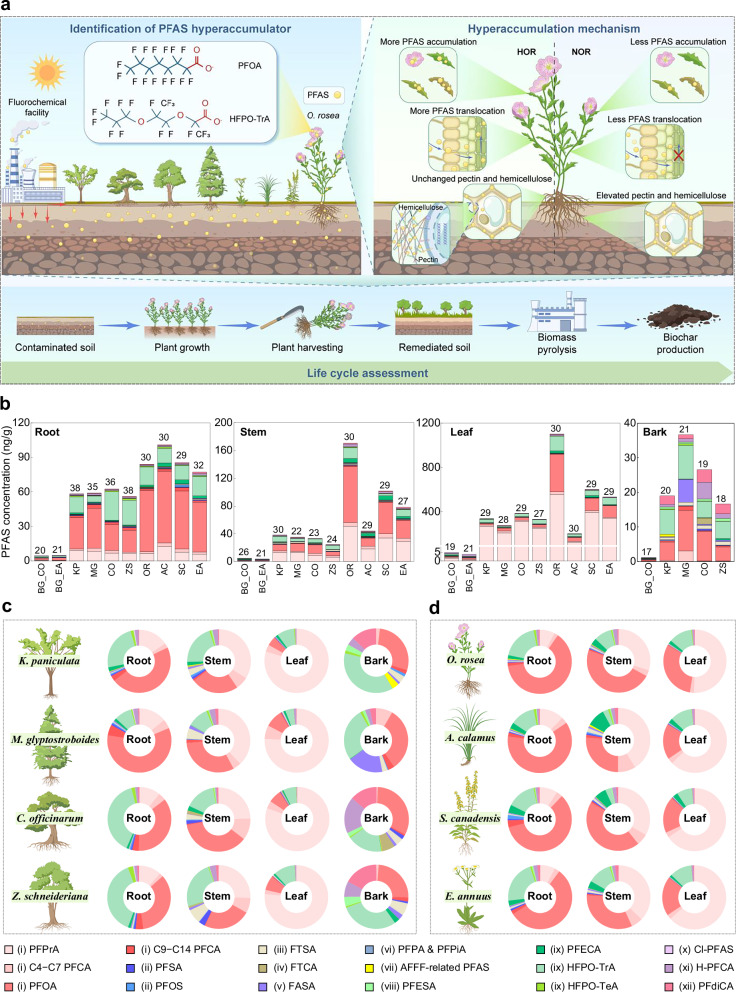
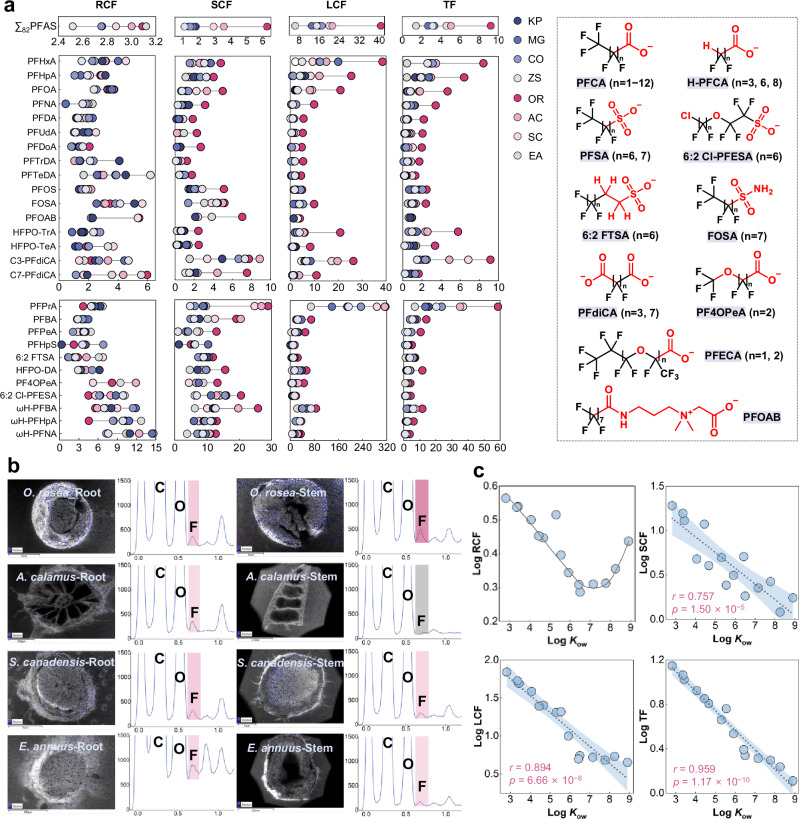
- *O. rosea* met hyperaccumulation criteria (LCF > 10; TF > 3) for 18 distinct PFAS, with TF values of 3.07–58.6; the highest TF was for PFPrA (58.6), followed by PFBA (14.1), ωH-PFBA (11.6), and HFPO-DA (11.6), while PFOA and HFPO-TrA had TF values of 4.67 and 5.76.
- In field samples, *O. rosea* had the highest aboveground uptake, with ∑82PFAS of 1102.5 ng/g in leaves and 170.6 ng/g in stems; for ∑82PFAS, SCF was 6.27, LCF was 40.5, and TF was 9.20, despite comparable RCF values (3.09 vs. 2.52–3.12 in other species).
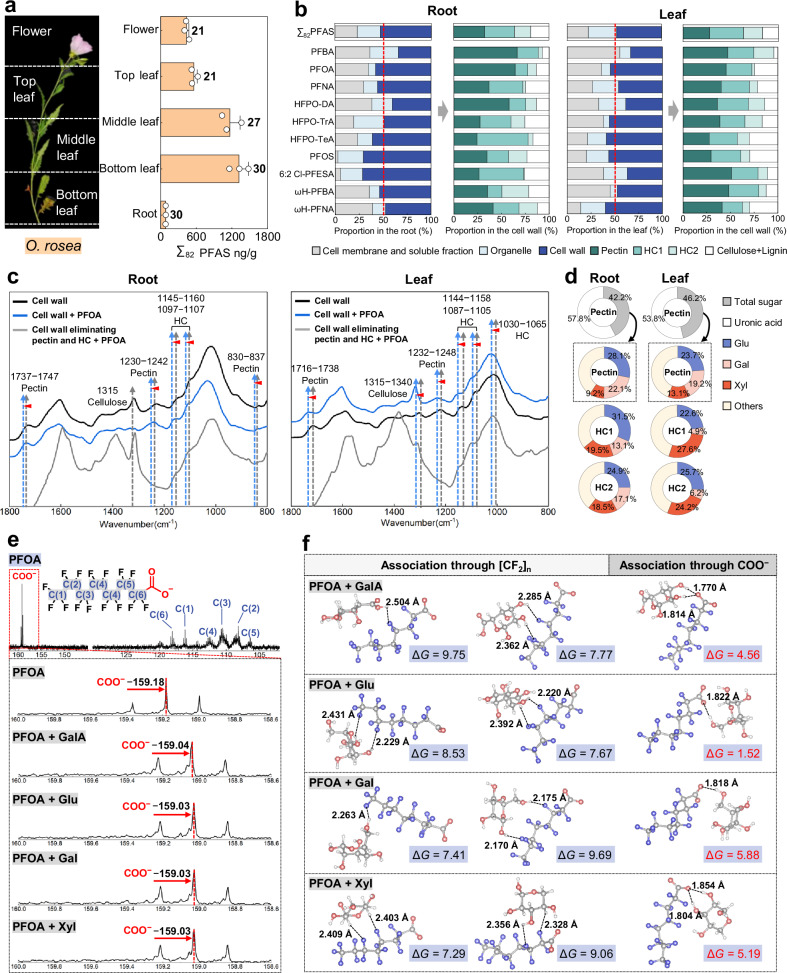
- Root cell walls were the primary PFAS binding site (>50% of ∑82PFAS), and pectin plus hemicellulose accounted for >75% of root-bound PFAS; PFOA association occurred through the COO− group via H-bonding, with ΔG of 1.52–5.88 kcal/mol for galacturonic acid, glucose, galactose, and xylose.
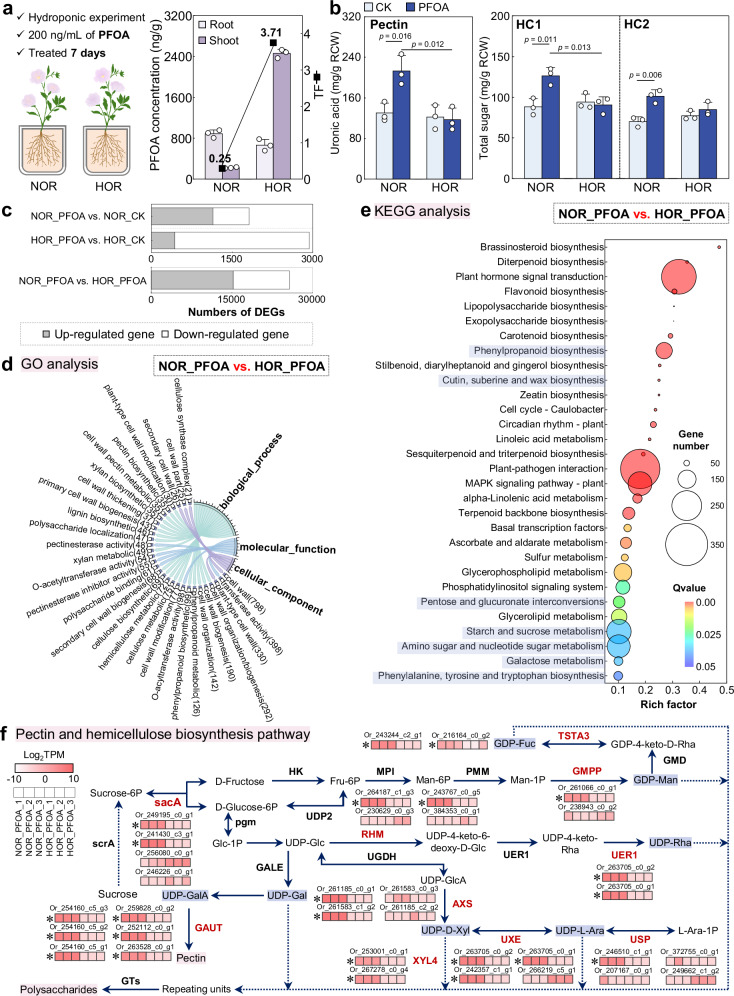
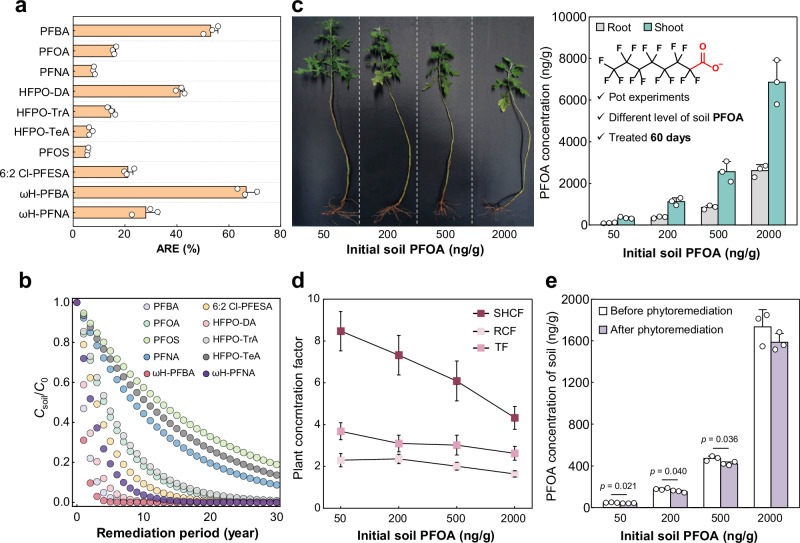
- In hydroponic comparison, hyperaccumulating *O. rosea* (HOR) had PFOA TF of 3.71 versus 0.25 in non-hyperaccumulating *O. rosea* (NOR); NOR showed more upregulated DEGs (1143) than HOR (435), including 168 versus 35 cell wall synthesis/modification genes.
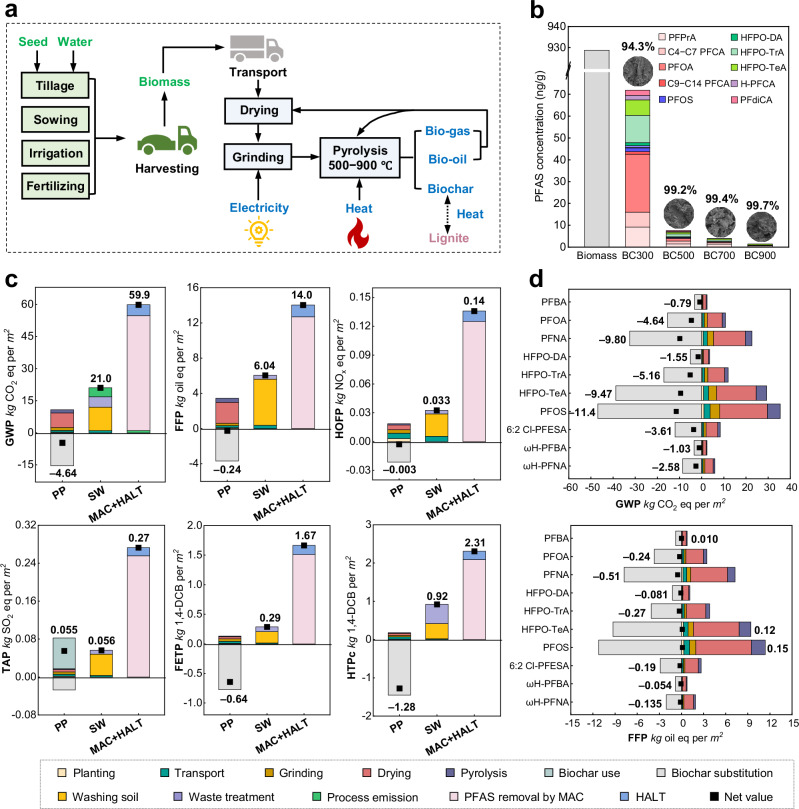
- Life cycle assessment showed phytoremediation plus pyrolysis had net GWP of −4.64 kg CO2/m2 and FFP of −0.24 kg oil/m2, or −17.9 kg CO2/ton soil; pyrolysis above 500 °C eliminated 99.2% of PFAS in biomass.
Methods
- Field screening sampled eight woody/herbaceous species within 2 km downstream of a fluorochemical facility in East China, including surface soils (0–15 cm) and plant tissues; 82 PFAS were quantified by HPLC-MS/MS, and RCF, SCF, LCF, and TF were calculated.
- Controlled hydroponic and pot experiments used HOR and NOR populations: hydroponic exposure to 200 ng/mL PFOA for 7 days, and pot cultivation with soil PFOA at 50–2000 ng/g for 60 days; analyses included subcellular fractionation, FTIR, GC-MS, 13C NMR, DFT calculations, and RNA-seq with DEG/GO/KEGG analysis.
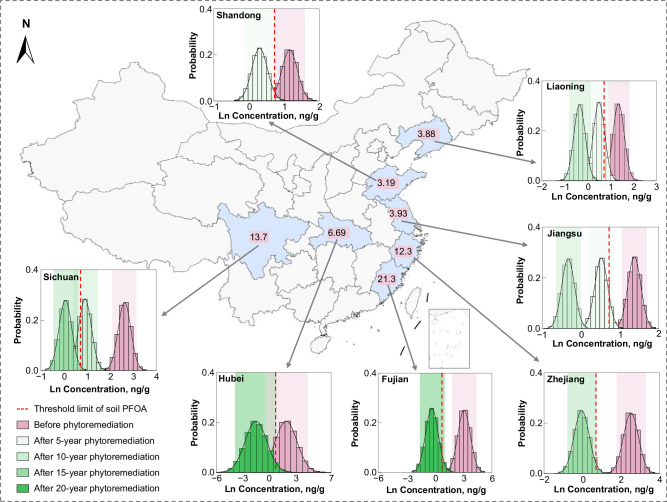
- Biomass pyrolysis was tested at 300, 500, 700, and 900 °C; LCA used SimaPro with ReCiPe2016 across 18 impact categories, and Monte Carlo simulations (10,000 iterations) modeled PFOA risk reduction in seven Chinese provinces.
Limitations
- The paper states that phytoremediation’s prolonged timeframe limits use for severely contaminated sites or commercially valuable land, and that it is most appropriate for moderately contaminated soils (<500 ng/g PFAS) and remote areas with minimal redevelopment pressure.
- The paper states that elevated soil PFOA reduced *O. rosea* biomass and accumulation factors (RCF 2.30 to 1.65, SHCF 8.47 to 4.32, TF 3.69 to 2.63), and that remediation was less effective for PFOS and HFPO-TeA, requiring 29 and 24 years, respectively.
- Evident from the text: the hyperaccumulator was identified at one fluorochemical facility/site, hydroponic validation used a single relatively high PFOA concentration, and the LCA relies on modeled functional-unit assumptions; the authors also note possible untargeted PFAS or fluorinated byproducts because total fluorine increased in biochar.
Model-written summary. Check it against the paper before relying on it.
Integrity signals
Registry
Cites
Statistics
Figures
Verification
Claims the paper makes
2 Valid · 1 Not valid · 14 Not checked · 92 Own results and interpretations
The cited sources support only part of this claim — read each source’s verdict below.
In the paper
“When normalized to per ton of contaminated soil, phytoremediation-pyrolysis exhibited a GWP of −17.9 kg CO₂/ton soil, which substantially outperforms previous reported electrothermal processes (130 kg CO₂/ton soil)61.”
§ Identification of a PFAS hyperaccumulator and elucidation of its translocation mechanism for sustainable phytoremediation > Results and discussion > Life cycle assessment of phytoremediation coupled with biomass pyrolysis
What the sources say
- Partly supportedcites [61] Cheng, Y. et al. Electrothermal mineralization of per- and polyfluoroalkyl substances for soil remediation. Nat. Commun. 15, 6117 (2024). 39033169 PMC11271446 sourceExperimental — accuracy not yet measured
The Results and discussion section (‘Scale-up, life cycle assessment, and techno-economic analysis’; page unavailable) identifies the studied process as electrothermal and reports a comparative greenhouse-gas assessment, but our copy does not give its emissions as 130 kg CO₂ per ton of soil. The 130-per-ton figure in that section is an operating expense of $130 per ton, not a GWP value. The −17.9 figure describes the citing paper’s own process and is not attributed to this source. (LLM, conf=0.82)
plainstates a cause- Asserted: passes — The authors put it forward as true.
- Checkable: passes — It can be checked against evidence.
- Load-bearing: passes — The paper’s conclusions depend on it.
- Based: passes — The paper gives a reason why it holds.
- Partly supported
A result the paper states — it cites no source for it, so there is none to check. The quote shows it is in the paper.
In the paper
“As a net effect, the FFP values for PFBA (0.01 kg oil/m2), HFPO-TeA (0.12 kg oil/m2), and PFOS (0.15 kg oil/m2) were positive compared to other PFAS.”
§ Identification of a PFAS hyperaccumulator and elucidation of its translocation mechanism for sustainable phytoremediation > Results and discussion > Life cycle assessment of phytoremediation coupled with biomass pyrolysis
plain- Asserted: passes — The authors put it forward as true.
- Checkable: passes — It can be checked against evidence.
- Load-bearing: unclear — It is unclear whether the paper’s conclusions depend on it.
- Based: passes — The paper gives a reason why it holds.
A result the paper states — it cites no source for it, so there is none to check. The quote shows it is in the paper.
In the paper
“The net GWP for the 10 concentration-significant PFAS was consistently negative, underscoring advantages of using biochar as a substitute heating source.”
§ Identification of a PFAS hyperaccumulator and elucidation of its translocation mechanism for sustainable phytoremediation > Results and discussion > Life cycle assessment of phytoremediation coupled with biomass pyrolysis
plain- Asserted: passes — The authors put it forward as true.
- Checkable: passes — It can be checked against evidence.
- Load-bearing: passes — The paper’s conclusions depend on it.
- Based: passes — The paper gives a reason why it holds.
A result the paper reports from its own data — it cites no other source for it, so there is none to check. The quote shows it is in the paper.
In the paper
“Conversely, drying O. rosea with high water content (up to 85.6%) contributed 63.2% (GWP) and 68.7% (FFP) to the positive emissions.”
§ Identification of a PFAS hyperaccumulator and elucidation of its translocation mechanism for sustainable phytoremediation > Results and discussion > Life cycle assessment of phytoremediation coupled with biomass pyrolysis
plainstates a cause- Asserted: passes — The authors put it forward as true.
- Checkable: passes — It can be checked against evidence.
- Load-bearing: unclear — It is unclear whether the paper’s conclusions depend on it.
- Based: passes — The paper gives a reason why it holds.
A result the paper reports from its own data — it cites no other source for it, so there is none to check. The quote shows it is in the paper.
In the paper
“Pyrolysis at 300, 500, 700, and 900 °C for 2 h yielded biochar at production rates of 56.8%, 32.8%, 32.4%, and 31.6%, respectively (Supplementary Fig. 22a).”
§ Identification of a PFAS hyperaccumulator and elucidation of its translocation mechanism for sustainable phytoremediation > Results and discussion > Life cycle assessment of phytoremediation coupled with biomass pyrolysis
plainstates a cause- Asserted: passes — The authors put it forward as true.
- Checkable: passes — It can be checked against evidence.
- Load-bearing: unclear — It is unclear whether the paper’s conclusions depend on it.
- Based: passes — The paper gives a reason why it holds.
54 more claims
Create a free account to see all 109 claims and every source verdict.
- It may state two separate claims as one. 40
- Probably not a substantial claim. 12
- The quote only partly states this claim. 2
Self-check
Percentages, sums and reported differences re-computed from the paper’s own numbers.
Each contradiction between two passages listed here was confirmed by an independent check.
Rated major: it would touch a result — a value a result rests on, reported and recomputed p-values on opposite sides of the significance level, two passages that conflict with no sign which is right, or a cited work retracted before this paper was published.
In the paper
§ Identification of a PFAS hyperaccumulator and elucidation of its translocation mechanism for sustainable phytoremediation > Results and discussion > Life cycle assessment of phytoremediation coupled with biomass pyrolysis
“A 9-year phytoremediation period is required using the field-observed ARE (15.7%) of O. rosea for PFOA.”
§ Identification of a PFAS hyperaccumulator and elucidation of its translocation mechanism for sustainable phytoremediation > Results and discussion > Life cycle assessment of phytoremediation coupled with biomass pyrolysis
“Successful remediation would achieve a target PFOA concentration of 2.0 ng/g”
Citations
Cites
Moderated estimation of fold change and dispersion for RNA-seq data with DESeq2
Love, M. I., Huber, W., & Anders, S. (2014) · Genome Biology · doi:10.1186/s13059-014-0550-8 · Cited by 95,106
Colorimetric Method for Determination of Sugars and Related Substances
DuBois, M., Gilles, K. A., Hamilton, J. K., Rebers, P. A., & Smith, F. (1956) · Analytical Chemistry · doi:10.1021/ac60111a017 · Cited by 52,269 · cited 1×
“The total sugar content in pectin and hemicellulose were determined using phenol sulfuric acid method 69 .”
Weigend, F., & Ahlrichs, R. (2005) · Physical Chemistry Chemical Physics · doi:10.1039/b508541a · Cited by 30,598
Zhao, Y., & Truhlar, D. G. (2008) · Theoretical Chemistry Accounts · doi:10.1007/s00214-007-0310-x · Cited by 30,302
Marenich, A. V., Cramer, C. J., & Truhlar, D. G. (2009) · The Journal of Physical Chemistry B · doi:10.1021/jp810292n · Cited by 17,843
New method for quantitative determination of uronic acids
Blumenkrantz, N., & Asboe-Hansen, G. (1973) · Analytical Biochemistry · doi:10.1016/0003-2697(73)90377-1 · Cited by 7,140 · cited 1×
“Using galacturonic acid (Sigma) as a standard, uronic acid concentrations were determined according to Blumenkrantz and Asboe-Hansen 68 .”
An overview of the uses of per- and polyfluoroalkyl substances (PFAS)
Glüge, J., Scheringer, M., Cousins, I. T., DeWitt, J. C., Goldenman, G., Herzke, D., Lohmann, R., Ng, C. A., Trier, X., & Wang, Z. (2020) · Environmental Science: Processes & Impacts · doi:10.1039/d0em00291g · Cited by 2,466
Per- and polyfluoroalkyl substances in the environment
Evich, M. G., Davis, M. J. B., McCord, J. P., Acrey, B., Awkerman, J. A., Knappe, D. R. U., Lindstrom, A. B., Speth, T. F., Tebes-Stevens, C., Strynar, M. J., et al. (2022) · Science · doi:10.1126/science.abg9065 · Cited by 2,157
A fern that hyperaccumulates arsenic
Ma, L. Q., Komar, K. M., Tu, C., Zhang, W., Cai, Y., & Kennelley, E. D. (2001) · Nature · doi:10.1038/35054664 · Cited by 1,837
The structure, function, and biosynthesis of plant cell wall pectic polysaccharides
Caffall, K. H., & Mohnen, D. (2009) · Carbohydrate Research · doi:10.1016/j.carres.2009.05.021 · Cited by 1,645
The molecular physiology of heavy metal transport in the Zn/Cd hyperaccumulator Thlaspi caerulescens
Pence, N. S., Larsen, P. B., Ebbs, S. D., Letham, D. L. D., Lasat, M. M., Garvin, D. F., Eide, D., & Kochian, L. V. (2000) · Proceedings of the National Academy of Sciences · doi:10.1073/pnas.97.9.4956 · Cited by 748
Yang, X. E., Long, X. X., Ye, H. B., He, Z. L., Calvert, D. V., & Stoffella, P. J. (2004) · Plant and Soil · doi:10.1023/b:plso.0000020956.24027.f2 · Cited by 724
Li, F., Duan, J., Tian, S., Ji, H., Zhu, Y., Wei, Z., & Zhao, D. (2020) · Chemical Engineering Journal · doi:10.1016/j.cej.2019.122506 · Cited by 707
Wang, S., Huang, J., Yang, Y., Hui, Y., Ge, Y., Larssen, T., Yu, G., Deng, S., Wang, B., & Harman, C. (2013) · Environmental Science & Technology · doi:10.1021/es401525n · Cited by 620
Becher, M., Talke, I. N., Krall, L., & Krämer, U. (2004) · The Plant Journal · doi:10.1046/j.1365-313x.2003.01959.x · Cited by 568 · cited 1×
“This observation is consistent with the metal hyper-accumulator Arabidopsis halleri 55 , which expresses high levels of metal transporters and metal-chelating enzymes without signi fi cant changes in gene expression under metal stress.”
Wen, B., Wu, Y., Zhang, H., Liu, Y., Hu, X., Huang, H., & Zhang, S. (2016) · Environmental Pollution · doi:10.1016/j.envpol.2016.06.032 · Cited by 229
Enhanced root-to-shoot translocation of cadmium in the hyperaccumulating ecotype of Sedum alfredii
Lu, L.-L., Tian, S.-K., Yang, X.-E., Wang, X.-C., Brown, P., Li, T.-Q., & He, Z.-L. (2008) · Journal of Experimental Botany · doi:10.1093/jxb/ern174 · Cited by 209
Cellular Sequestration of Cadmium in the Hyperaccumulator Plant Species Sedum alfredii
Tian, S., Lu, L., Labavitch, J., Yang, X., He, Z., Hu, H., Sarangi, R., Newville, M., Commisso, J., & Brown, P. (2011) · Plant Physiology · doi:10.1104/pp.111.183947 · Cited by 203
Li, F., Zhang, C., Qu, Y., Chen, J., Chen, L., Liu, Y., & Zhou, Q. (2010) · Science of The Total Environment · doi:10.1016/j.scitotenv.2009.10.032 · Cited by 191
Self-citationSheng, N., Pan, Y., Guo, Y., Sun, Y., & Dai, J. (2018) · Environmental Science & Technology · doi:10.1021/acs.est.8b01714 · Cited by 176
Peng, J.-S., Wang, Y.-J., Ding, G., Ma, H.-L., Zhang, Y.-J., & Gong, J.-M. (2017) · Molecular Plant · doi:10.1016/j.molp.2016.12.007 · Cited by 174
Self-citationHighly efficient xylem transport of arsenite in the arsenic hyperaccumulator Pteris vittata
Su, Y. H., McGrath, S. P., Zhu, Y. G., & Zhao, F. J. (2008) · New Phytologist · doi:10.1111/j.1469-8137.2008.02584.x · Cited by 173
Ahmed, M. B., Alam, M. M., Zhou, J. L., Xu, B., Johir, M. A. H., Karmakar, A. K., Rahman, M. S., Hossen, J., Hasan, A. T. M. K., & Moni, M. A. (2020) · Process Safety and Environmental Protection · doi:10.1016/j.psep.2020.01.005 · Cited by 169
Krippner, J., Falk, S., Brunn, H., Georgii, S., Schubert, S., & Stahl, T. (2015) · Journal of Agricultural and Food Chemistry · doi:10.1021/acs.jafc.5b00012 · Cited by 143
Techno-economic analysis of phytoremediation: A strategic rethinking
Wang, J., & Aghajani Delavar, M. (2023) · Science of The Total Environment · doi:10.1016/j.scitotenv.2023.165949 · Cited by 143
Qian, S., Lu, H., Xiong, T., Zhi, Y., Munoz, G., Zhang, C., Li, Z., Liu, C., Li, W., Wang, X., et al. (2023) · Environmental Science & Technology · doi:10.1021/acs.est.2c06883 · Cited by 122
Zhang, M., Wang, P., Lu, Y., Lu, X., Zhang, A., Liu, Z., Zhang, Y., Khan, K., & Sarvajayakesavalu, S. (2020) · Environment International · doi:10.1016/j.envint.2019.105347 · Cited by 109
Self-citationMihulka, S., & Pyšek, P. (2001) · Journal of Biogeography · doi:10.1046/j.1365-2699.2001.00574.x · Cited by 98
Cheng, Y., An, Q., Qi, H., Li, R., Liu, W., Gu, B., & Liu, K. (2023) · Environmental Science & Technology · doi:10.1021/acs.est.2c07873 · Cited by 91
He, Q., Yan, Z., Qian, S., Xiong, T., Grieger, K. D., Wang, X., Liu, C., & Zhi, Y. (2023) · Journal of Hazardous Materials · doi:10.1016/j.jhazmat.2023.131492 · Cited by 90
Wu, E., Wang, K., Liu, Z., Wang, J., Yan, H., Zhu, X., Zhu, X., & Chen, B. (2023) · Environmental Science & Technology · doi:10.1021/acs.est.3c07020 · Cited by 88
Self-citationMeng, J., Wang, T., Song, S., Wang, P., Li, Q., Zhou, Y., & Lu, Y. (2018) · Environmental Pollution · doi:10.1016/j.envpol.2018.03.056 · Cited by 82
Stabilisation of PFAS in soils: Long-term effectiveness of carbon-based soil amendments
Navarro, D. A., Kabiri, S., Ho, J., Bowles, K. C., Davis, G., McLaughlin, M. J., & Kookana, R. S. (2023) · Environmental Pollution · doi:10.1016/j.envpol.2023.121249 · Cited by 77
Xia, C., Capozzi, S. L., Romanak, K., Lehman, D. C., Dove, A., Richardson, V., Greenberg, T. A., McGoldrick, D. J., & Venier, M. (2024) · Environmental Science & Technology · doi:10.1021/acs.est.3c10098 · Cited by 75
Rathinasabapathi, B., Rangasamy, M., Froeba, J., Cherry, R. H., McAuslane, H. J., Capinera, J. L., Srivastava, M., & Ma, L. Q. (2007) · New Phytologist · doi:10.1111/j.1469-8137.2007.02099.x · Cited by 72
Grimison, C. C., Knight, E. R., Nguyen, T. M. H., Nagle, N., Kabiri, S., Bräunig, J., Navarro, D. A., Kookana, R. S., Higgins, C. P., McLaughlin, M. J., et al. (2022) · Journal of Hazardous Materials · doi:10.1016/j.jhazmat.2022.130441 · Cited by 66
Electrothermal mineralization of per- and polyfluoroalkyl substances for soil remediation
Cheng, Y., Deng, B., Scotland, P., Eddy, L., Hassan, A., Wang, B., Silva, K. J., Li, B., Wyss, K. M., Ucak-Astarlioglu, M. G., et al. (2024) · Nature Communications · doi:10.1038/s41467-024-49809-6 · Cited by 64
Self-citationAghili, S., & Golzary, A. (2023) · Environmental Technology & Innovation · doi:10.1016/j.eti.2023.103241 · Cited by 62
Wang, D., Liu, X., Guo, Z., Shan, W., Yang, Z., Chen, Y., Ju, F., & Zhang, Y. (2024) · Environmental Science & Technology · doi:10.1021/acs.est.4c05913 · Cited by 62
Self-citationChen, Z., Chen, J., Tan, S., Yang, Z., & Zhang, Y. (2024) · Environmental Science & Technology · doi:10.1021/acs.est.3c07435 · Cited by 61
Self-citationYang, X., Han, D., Zhao, Y., Li, R., & Wu, Y. (2020) · The Science of The Total Environment · doi:10.1016/j.scitotenv.2020.136915 · Cited by 60
Aerobic or anaerobic? Microbial degradation of per- and polyfluoroalkyl substances: A review
Niu, Q., Lin, X., Zheng, X., Wu, Y., Long, M., & Chen, Y. (2024) · Journal of Hazardous Materials · doi:10.1016/j.jhazmat.2024.136173 · Cited by 60
Wu, Q., Tao, Y., Huang, J., Liu, Y. S., Yang, X. Z., Jing, H. K., Shen, R. F., & Zhu, X. F. (2022) · The Plant Journal · doi:10.1111/tpj.15837 · Cited by 58
Richardson, M. J., Kabiri, S., Grimison, C., Bowles, K., Corish, S., Chapman, M., & McLaughlin, M. J. (2022) · Environmental Science & Technology · doi:10.1021/acs.est.2c05377 · Cited by 58
Steam explosion pretreatment of willow grown on phytomanaged soils for bioethanol production
Ziegler‐Devin, I., Menana, Z., Chrusciel, L., Chalot, M., Bert, V., & Brosse, N. (2019) · Industrial Crops and Products · doi:10.1016/j.indcrop.2019.111722 · Cited by 57
Zhao, S., Liang, T., Zhu, L., Yang, L., Liu, T., Fu, J., Wang, B., Zhan, J., & Liu, L. (2019) · Environmental Pollution · doi:10.1016/j.envpol.2019.06.020 · Cited by 56
OECD (2015) · OECD series on risk management of chemicals. · doi:10.1787/f97f34b1-en · Cited by 55
Plants to mine metals and remediate land
Rylott, E. L., & Bruce, N. C. (2022) · Science · doi:10.1126/science.abn6337 · Cited by 53
Copper Oxide Nanomaterial Fate in Plant Tissue: Nanoscale Impacts on Reproductive Tissues
Marmiroli, M., Pagano, L., Rossi, R., Torre-Roche, R. D. L., Lepore, G. O., Ruotolo, R., Gariani, G., Bonanni, V., Pollastri, S., Puri, A., et al. (2021) · Environmental Science & Technology · doi:10.1021/acs.est.1c01123 · Cited by 52
Chen, L., Chen, D., Zhou, S., Lin, J., Liu, Y., Huang, X., Lin, Q., Morel, J. L., Ni, Z., Wang, S., et al. (2023) · Environmental Science & Technology · doi:10.1021/acs.est.2c09226 · Cited by 51
Gu, Q., Wen, Y., Wu, H., & Cui, X. (2023) · Science of The Total Environment · doi:10.1016/j.scitotenv.2022.160684 · Cited by 48
Shen, L., Zhou, J., Ma, Y., Su, Q., Mao, H., Su, E., Tang, K. H. D., Wang, T., & Zhu, L. (2024) · Environmental Science & Technology · doi:10.1021/acs.est.4c04009 · Cited by 48
Hopkins, K. E., McKinney, M. A., Saini, A., Letcher, R. J., Karouna-Renier, N. K., & Fernie, K. J. (2023) · Environmental Science & Technology · doi:10.1021/acs.est.3c06944 · Cited by 44
Xiang, Q., Shan, G., Wu, W., Jin, H., & Zhu, L. (2018) · Environmental Pollution · doi:10.1016/j.envpol.2018.08.009 · Cited by 43
Dou, X., Dai, H., Skuza, L., & Wei, S. (2022) · Environmental Pollution · doi:10.1016/j.envpol.2022.119493 · Cited by 43
Wang, M., He, X., Taylor, M., Lorpaiboon, W., Mun, H., & Ho, J. (2023) · Journal of Chemical Theory and Computation · doi:10.1021/acs.jctc.3c00388 · Cited by 42
Yamazaki, E., Eun, H., Taniyasu, S., Sakamoto, T., Hanari, N., Inui, H., Wu, R., Lin, H., Lam, P. K. S., Falandysz, J., et al. (2023) · Environmental Science & Technology · doi:10.1021/acs.est.2c08767 · Cited by 39
Wang, J., Gao, J., Zheng, L., Fu, Y., Ji, L., Wang, C., Yuan, S., Yang, J., Liu, J., Li, G., et al. (2023) · Journal of Hazardous Materials · doi:10.1016/j.jhazmat.2023.130947 · Cited by 37
Guo, X., Luo, J., Zhang, R., Gao, H., Peng, L., Liang, Y., & Li, T. (2022) · Environmental and Experimental Botany · doi:10.1016/j.envexpbot.2022.104906 · Cited by 35
Self-citationApplication of soil amendments for reducing PFAS leachability and bioavailability
Juhasz, A. L., Kastury, F., Herde, C., & Tang, W. (2022) · Environmental Pollution · doi:10.1016/j.envpol.2022.119498 · Cited by 34
Espada, J. J., Rodríguez, R., Gari, V., Salcedo-Abraira, P., & Bautista, L. F. (2022) · Science of The Total Environment · doi:10.1016/j.scitotenv.2022.156675 · Cited by 31
Antimony speciation, phytochelatin stimulation and toxicity in plants
Abbasi, S., Lamb, D. T., Choppala, G., Burton, E. D., & Megharaj, M. (2022) · Environmental Pollution · doi:10.1016/j.envpol.2022.119305 · Cited by 29 · cited 1×
“Theresultsdemonstrate that enhanced PFAS translocation is an evolved trait speci fi c to HOR, whereas NOR retains exogenous PFAS in roots to protect shoots 49,50 .”
Shende, T., Andaluri, G., & Suri, R. (2020) · Separation and Purification Technology · doi:10.1016/j.seppur.2020.118250 · Cited by 28
Fu, Y., Lin, Y., Deng, Z., Chen, M., Yu, G., Jiang, P., Zhang, X., Liu, J., & Yang, X. (2024) · Journal of Hazardous Materials · doi:10.1016/j.jhazmat.2024.134590 · Cited by 27 · cited 2×
“…results demonstrated that NOR exhibits both an enhanced cell wall response to PFOA and elevated metabolic activity, consistent with defensive strategies observed in other plants (e.g., Triticum aestivum L 52 , Leersia hexandra Swartz 53 and Oryza sativa L 54 ) under pollutant stress.”
Self-citationGuo, X., Zhang, S., Luo, J., Pan, M., Du, Y., Liang, Y., & Li, T. (2022) · Journal of Hazardous Materials · doi:10.1016/j.jhazmat.2021.126859 · Cited by 25 · cited 6×
“The economic feasibility of this approach is further enhanced through valorization of harvested biomass, including bio-fuel conversion and lignin/cellulose extraction 21,22 .”
InfluentialSelf-citationPhytoscreening for Per- and Polyfluoroalkyl Substances at a Contaminated Site in Germany
Würth, A., Mechler, M., Menberg, K., Ikipinar, M. A., Martus, P., Söhlmann, R., Boeddinghaus, R. S., & Blum, P. (2023) · Environmental Science & Technology · doi:10.1021/acs.est.2c04519 · Cited by 22
Zhong, Y., & Chen, J. (2020) · Plant Physiology and Biochemistry · doi:10.1016/j.plaphy.2020.05.004 · Cited by 21
Self-citationZhu, W., Lu, S., Jiang, H., Wang, P., He, C., Bian, H., & Wang, J. (2023) · Environmental Pollution · doi:10.1016/j.envpol.2023.122360 · Cited by 21 · cited 1×
“Theresultsdemonstrate that enhanced PFAS translocation is an evolved trait speci fi c to HOR, whereas NOR retains exogenous PFAS in roots to protect shoots 49,50 .”
Shih, C.-H., Kim, J., Yang, S.-H., Soker, O., Strathmann, T. J., & Chu, K.-H. (2024) · Science of The Total Environment · doi:10.1016/j.scitotenv.2023.168931 · Cited by 18
PFOS and Its Commercial Alternative, 6:2 Cl-PFESA, Induce Multidrug Resistance in Pancreatic Cancer
Hong, J., Du, K., Zhang, W., Jiang, Y., Yu, H., Pan, T., Wu, T., Zhao, L., Du, W., Zheng, S.-S., et al. (2024) · Environmental Science & Technology · doi:10.1021/acs.est.4c08669 · Cited by 16 · cited 1×
“Forexample,HFPOoligomersand 6:2 Cl-PFESA demonstrated signi fi cantly higher accumulation factors than their predecessors, PFOA in fl uorochemicalproductionand PFOS in chrome plating, respectively 42,43 (Supplementary Fig.”
Jin, Y., O'Connor, D., Du, P., Qin, M., Zhao, B., Liu, C., & Hou, D. (2024) · Resources, Conservation and Recycling · doi:10.1016/j.resconrec.2024.107850 · Cited by 12
Effects of Coverlys TF150® on the Photosynthetic Characteristics of Grape
Li, Z., EnShun, J., Liu, M., Sun, Q., Gao, Z., & Du, Y. (2023) · International Journal of Molecular Sciences · doi:10.3390/ijms242316659 · Cited by 4
Basso, M. F., Aprile, A., Negussu, M., Colzi, I., Pernice, I., Passo, C. L., Gonnelli, C., Frontini, A., Bellis, L. D., Buti, M., et al. (2024) · Environmental and Experimental Botany · doi:10.1016/j.envexpbot.2024.105953 · Cited by 3
Oenothera L. a new genus of alien plant first reported in the Maltese Islands
TAVILLA, G., & LANFRANCO, S. (2025) · Phytotaxa · doi:10.11646/phytotaxa.705.2.7 · Cited by 1
Cited by
Wang, Y., Liu, L., Qiao, X., Sun, M., Guo, J., & Zhang, J. (2026) · Environmental Science & Technology · doi:10.1021/acs.est.5c18352 · Cited by 4
Beyond Molecules: In Situ Imaging Unveils DOM-Driven PFAS Nanoclusters with Mitigated Phytotoxicity
Ge, X., Wang, K., Xiao, X., Chu, C., Zhu, X., & Chen, B. (2026) · Environmental Science & Technology · doi:10.1021/acs.est.5c16338 · Cited by 5
Self-citationWang, Y., Wang, S., Liang, H., Liu, Q., Shang, H., Liu, C., & Yan, B. (2025) · Journal of Hazardous Materials · doi:10.1016/j.jhazmat.2025.140952 · Cited by 2
Li, J., Chen, B., Ma, X., Zhao, Z., Ma, W., Liang, J., Xu, X., Qiu, H., Cao, X., & Zhao, L. (2026) · Journal of Hazardous Materials · doi:10.1016/j.jhazmat.2026.141826 · Cited by 3
Xie, J., Zhang, L., Zhou, L., Wang, W., Wu, S., Huang, J., Chen, C., & Cheng, S. (2026) · Environmental Science & Technology · doi:10.1021/acs.est.6c09157 · Cited by 1
Metadata
- Authors
- Guo, X., Zhang, X., Chen, J., Shan, W., Wang, R., Wang, K., Chen, Z., Wang, L., & Zhang, Y.
- Affiliations
- Westlake University (CN)
- Corresponding author
- Wang, Lei
- Zhang, Yanyan
- Venue
- Nature Communications
- Published
- 2025-11-21
- Volume
- 16
- Issue
- 1
- Pages
- 10283-10283
- ISSN
- 2041-1723 (ISSN-L)
- PMC
- PMC12638775
- OpenAlex
- W4416470757
- Cited by
- 18
- References
- 73
- Citations by year
- 2026: 17 · 2025: 1
- FWCI
- 5.38
- Type
- journal article
- Language
- en
- Open access
- gold
- doi.org
- Licence
- cc-by-nc-nd
- creativecommons.org/licenses/by-nc-nd/4.0 (tdm)
- creativecommons.org/licenses/by-nc-nd/4.0 (vor)
- Locations
- Nature Communications (publishedVersion, cc-by-nc-nd)
- Europe PMC (PubMed Central) (publishedVersion, cc-by-nc-nd)
- PubMed (publishedVersion)
- DOAJ (DOAJ: Directory of Open Access Journals) (submittedVersion, cc-by-sa)
- Funders
- Westlake University (WU2022C026)
- National Natural Science Foundation of China (42207431)
- Topics
- Physical Sciences › Environmental Science › Environmental Chemistry › Per- and polyfluoroalkyl substances research
- Physical Sciences › Environmental Science › Water Science and Technology › Fluoride Effects and Removal
- Physical Sciences › Environmental Science › Water Science and Technology › Environmental and Analytical Chemistry Studies
- Keywords
- Oenothera rosea, per- and polyfluoroalkyl substances, phytoremediation, root-to-shoot translocation, soil contamination, plant domestication, hemicellulose, cell wall remodeling, adaptive evolution, biomass pyrolysis, biochar, life cycle assessment, carbon footprint
- MeSH terms
- Biodegradation, Environmental, Cell Wall, Fluorocarbons, Pectins, Soil, Soil Pollutants, Plant Roots, Plant Shoots
About these checks
Registry, retraction, Cites and statistics results are computed, not judged, with one exception: a printed reference that no index lists is read once by a model before it counts as a citation error. Claims are extracted by a model and kept only when their quote appears verbatim in the text; each cited source is then checked, with a model’s help, for whether it says what the claim relies on. Those verdicts can be wrong — read the claim’s quote and the cited source before relying on one.
The claim verdicts this report counts are experimental: their accuracy is not yet measured.
A language model drew the claims from the paper on 2026-10-10, under version 3 of the claim definition (model deepseek-v4.1-flash, prompt extract-v3).
A second model labelled each claim on 2026-10-10 (model jev-1.13-20260917, definition revision gold-guideline-v0.2).
Cited sources are checked with a language model’s help (gpt-6-sol).
Statistics and arithmetic are recomputed, not judged.
Confidence bands are shown only for fields calibrated on our annotated test set. None is calibrated yet, so no band is shown.
What counts as a claim ›How we measure confidence ›How we check this ›
Are you an author, or do you see a problem with this page? Request a review
Data sources
Bibliographic data: Semantic Scholar, OpenAlex, Crossref.
Contains information from the Semantic Scholar Academic Graph Datasets, made available under the ODC Attribution License (ODC-BY 1.0).
Semantic Scholar’s data is described in: Kinney, R., et al. (2023). The Semantic Scholar Open Data Platform. arXiv:2301.10140.
