

GRHL2 motif is associated with intratumor heterogeneity of cis-regulatory elements in luminal breast cancer
Open accessThe DOI matches its Crossref record; 46 of the 46 references it cites were found in a registry or an index.
Abstract
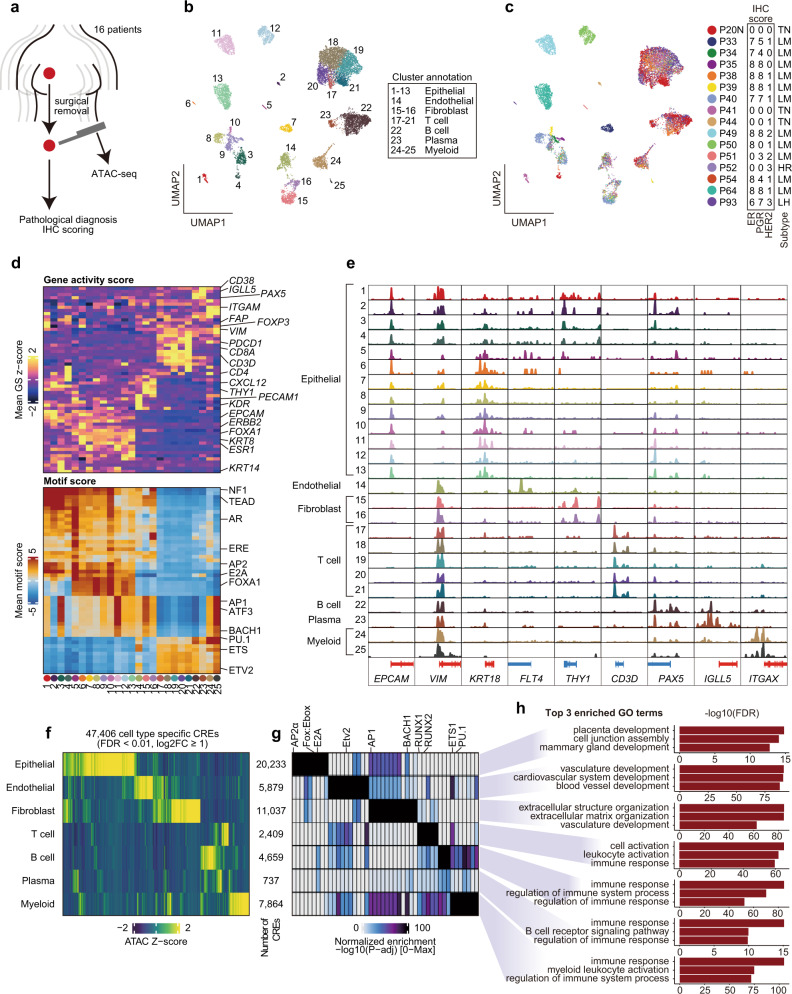
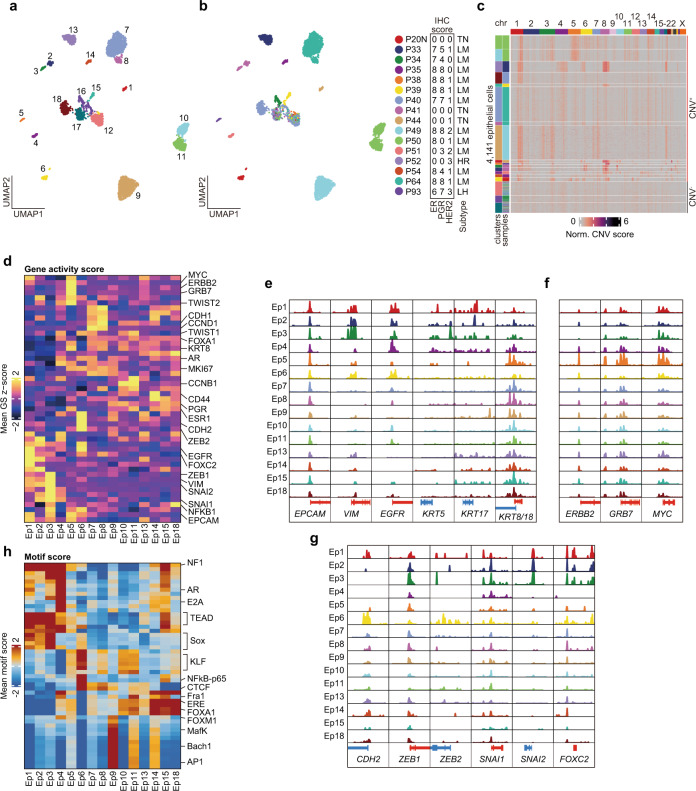
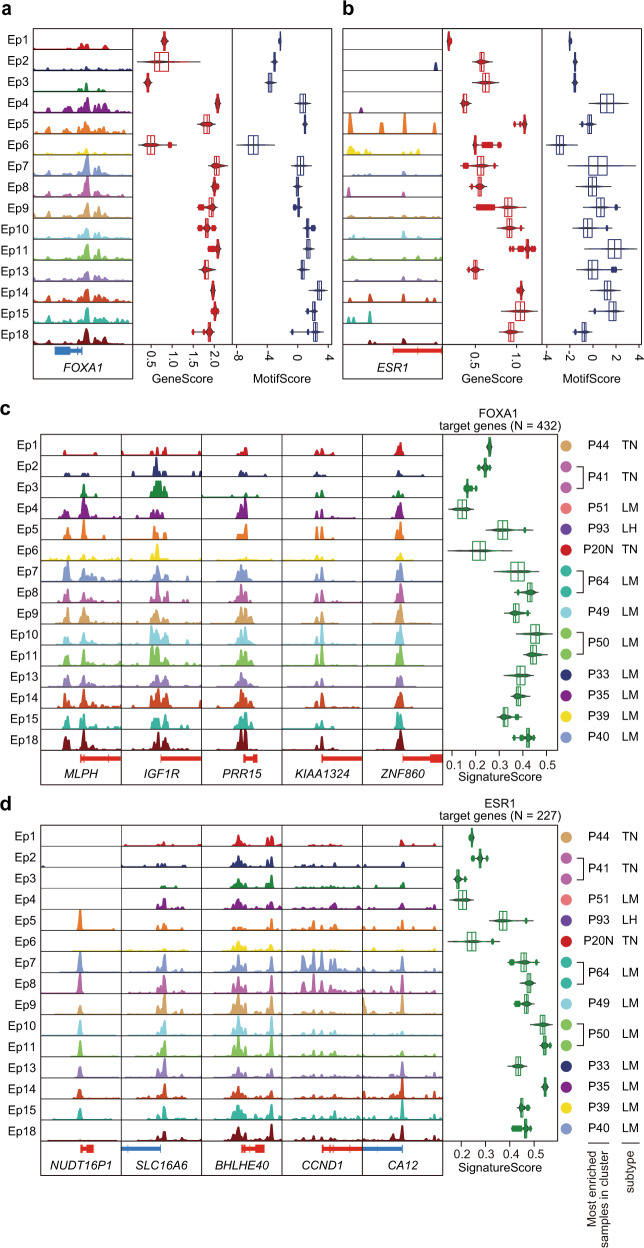
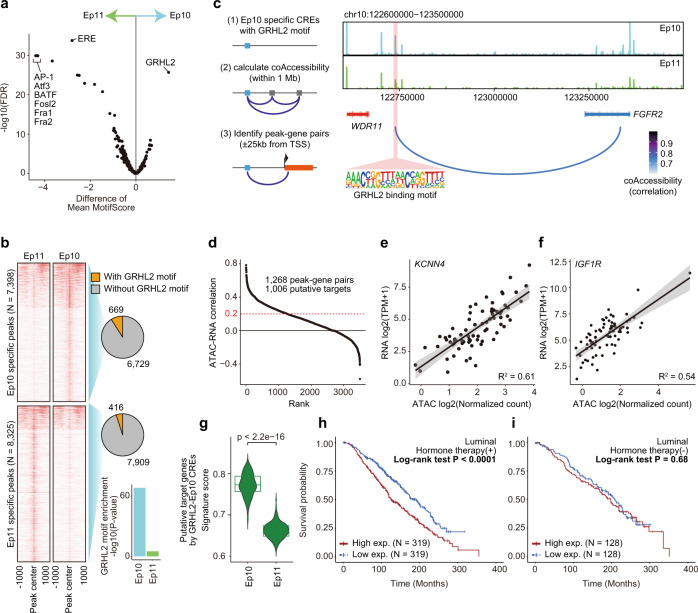
In breast cancer patients, tumor heterogeneity is associated with prognosis and therapeutic response; however, the epigenetic diversity that exists in primary tumors remains unknown. Using a single-cell sequencing assay for transposase-accessible chromatin (scATAC-seq), we obtained the chromatin accessibility profiles of 12,452 cells from 16 breast cancer patients including 11 luminal, 1 luminal-HER2, 1 HER2+, and 3 triple-negative subtypes. Via this profiling process, tumors were classified into cancer cells and the tumor microenvironment, highlighting the heterogeneity of disease-related pathways including estrogen receptor (ER) signaling. Furthermore, the coexistence of cancer cell clusters with different ER binding motif enrichments was identified in a single ER+ tumor. In a cluster with reduced ER motif enrichment, we identified GRHL2, a transcription factor, as the most enriched motif, and it cooperated with FOXA1 to initiate endocrine resistance. Coaccessibility analysis revealed that GRHL2 binding elements potentially regulate genes associated with endocrine resistance, metastasis, and poor prognosis in patients that received hormonal therapy. Overall, our study suggests that epigenetic heterogeneity could lead to endocrine resistance and poor prognosis in breast cancer patients and it offers a large-scale resource for further cancer research.
Overview
The claims and statistics of this paper haven’t been checked yet.
Free: it reads the open-access text and checks the first 5 claims that cite a source we can check. Create a free account to check every claim.
Integrity signals
Registry
Cites
Statistics
Figures
Verification
Claims the paper makes
The claims and statistics of this paper haven’t been checked yet.
Free: it reads the open-access text and checks the first 5 claims that cite a source we can check. Create a free account to check every claim.
Self-check
Percentages, sums and reported differences re-computed from the paper’s own numbers.
The self-check needs the paper’s full text.
Citations
Cites
PD-1 and PD-L1 Immune Checkpoint Blockade to Treat Breast Cancer
Hartkopf, A. D., Taran, F.-A., Wallwiener, M., Walter, C. B., Krämer, B., Grischke, E.-M., & Brucker, S. Y. (2016) · Breast Care · doi:10.1159/000453569 · Cited by 30,845
Integrated analysis of multimodal single-cell data
Hao, Y., Hao, S., Andersen-Nissen, E., Mauck, W. M., Zheng, S., Butler, A., Lee, M. J., Wilk, A. J., Darby, C., Zagar, M., et al. (2020) · doi:10.1101/2020.10.12.335331 · Cited by 15,508
Heinz, S., Benner, C., Spann, N., Bertolino, E., Lin, Y. C., Laslo, P., Cheng, J. X., Murre, C., Singh, H., & Glass, C. K. (2010) · Molecular Cell · doi:10.1016/j.molcel.2010.05.004 · Cited by 13,382
Nishimura, R., Osako, T., Nishiyama, Y., Tashima, R., Nakano, M., Fujisue, M., Toyozumi, Y., & Arima, N. (2013) · Oncology · doi:10.1159/000353099 · Cited by 13,166
Self-citationComprehensive molecular portraits of human breast tumours
The Cancer Genome Atlas Network (2012) · Nature · doi:10.1038/nature11412 · Cited by 12,129
The genomic and transcriptomic architecture of 2,000 breast tumours reveals novel subgroups
METABRIC Group, Curtis, C., Shah, S. P., Chin, S.-F., Turashvili, G., Rueda, O. M., Dunning, M. J., Speed, D., Lynch, A. G., Samarajiwa, S., et al. (2012) · Nature · doi:10.1038/nature10983 · Cited by 6,097
Lehmann, B. D., Bauer, J. A., Chen, X., Sanders, M. E., Chakravarthy, A. B., Shyr, Y., & Pietenpol, J. A. (2011) · Journal of Clinical Investigation · doi:10.1172/jci45014 · Cited by 5,592
Dissecting the multicellular ecosystem of metastatic melanoma by single-cell RNA-seq
Tirosh, I., Izar, B., Prakadan, S. M., Wadsworth, M. H., Treacy, D., Trombetta, J. J., Rotem, A., Rodman, C., Lian, C., Murphy, G., et al. (2016) · Science · doi:10.1126/science.aad0501 · Cited by 4,944
GREAT improves functional interpretation of cis-regulatory regions
McLean, C. Y., Bristor, D., Hiller, M., Clarke, S. L., Schaar, B. T., Lowe, C. B., Wenger, A. M., & Bejerano, G. (2010) · Nature Biotechnology · doi:10.1038/nbt.1630 · Cited by 4,502
TCGAbiolinks: an R/Bioconductor package for integrative analysis of TCGA data
Colaprico, A., Silva, T. C., Olsen, C., Garofano, L., Cava, C., Garolini, D., Sabedot, T. S., Malta, T. M., Pagnotta, S. M., Castiglioni, I., et al. (2016) · Nucleic Acids Research · doi:10.1093/nar/gkv1507 · Cited by 4,183
Salgado, R., Denkert, C., Demaria, S., Sirtaine, N., Klauschen, F., Pruneri, G., Wienert, S., Van den Eynden, G., Baehner, F. L., Penault-Llorca, F., et al. (2015) · Annals of Oncology · doi:10.1093/annonc/mdu450 · Cited by 3,113
Single-Cell Map of Diverse Immune Phenotypes in the Breast Tumor Microenvironment
Azizi, E., Carr, A. J., Plitas, G., Cornish, A. E., Konopacki, C., Prabhakaran, S., Nainys, J., Wu, K., Kiseliovas, V., Setty, M., et al. (2018) · Cell · doi:10.1016/j.cell.2018.05.060 · Cited by 1,976
Pereira, B., Chin, S.-F., Rueda, O. M., Vollan, H.-K. M., Provenzano, E., Bardwell, H. A., Pugh, M., Jones, L., Russell, R., Sammut, S.-J., et al. (2016) · Nature Communications · doi:10.1038/ncomms11479 · Cited by 1,717
ArchR is a scalable software package for integrative single-cell chromatin accessibility analysis
Granja, J. M., Corces, M. R., Pierce, S. E., Bagdatli, S. T., Choudhry, H., Chang, H. Y., & Greenleaf, W. J. (2021) · Nature Genetics · doi:10.1038/s41588-021-00790-6 · Cited by 1,392
Single-cell RNA-seq supports a developmental hierarchy in human oligodendroglioma
Tirosh, I., Venteicher, A. S., Hebert, C., Escalante, L. E., Patel, A. P., Yizhak, K., Fisher, J. M., Rodman, C., Mount, C., Filbin, M. G., et al. (2016) · Nature · doi:10.1038/nature20123 · Cited by 1,234
The chromatin accessibility landscape of primary human cancers
Corces, M. R., Granja, J. M., Shams, S., Louie, B. H., Seoane, J. A., Zhou, W., Silva, T. C., Groeneveld, C., Wong, C. K., Cho, S. W., et al. (2018) · Science · doi:10.1126/science.aav1898 · Cited by 1,230
Self-citationA benchmark of batch-effect correction methods for single-cell RNA sequencing data
Tran, H. T. N., Ang, K. S., Chevrier, M., Zhang, X., Lee, N. Y. S., Goh, M., & Chen, J. (2020) · Genome Biology · doi:10.1186/s13059-019-1850-9 · Cited by 1,113
Decoupling genetics, lineages, and microenvironment in IDH-mutant gliomas by single-cell RNA-seq
Venteicher, A. S., Tirosh, I., Hebert, C., Yizhak, K., Neftel, C., Filbin, M. G., Hovestadt, V., Escalante, L. E., Shaw, M. L., Rodman, C., et al. (2017) · Science · doi:10.1126/science.aai8478 · Cited by 1,004
Single-cell RNA-seq enables comprehensive tumour and immune cell profiling in primary breast cancer
Chung, W., Eum, H. H., Lee, H.-O., Lee, K.-M., Lee, H.-B., Kim, K.-T., Ryu, H. S., Kim, S., Lee, J. E., Park, Y. H., et al. (2017) · Nature Communications · doi:10.1038/ncomms15081 · Cited by 992 · cited 1×
“2, (5) the cells were projected onto UMAP embedding space by RunUMAP() with 1–50 dimensions.”
Kathleen Cuningham Foundation Consortium for Research into Familial Breast Cancer (kConFab), Savas, P., Virassamy, B., Ye, C., Salim, A., Mintoff, C. P., Caramia, F., Salgado, R., Byrne, D. J., Teo, Z. L., et al. (2018) · Nature Medicine · doi:10.1038/s41591-018-0078-7 · Cited by 992 · cited 1×
“factor of 10,000, (2) Highly variable features were identified by FindVariableFeatures() using “vst” method and 2,000 features, (3) scaling the data and computing principal components were performed by ScaleData() and RunPCA(), (4) Clustering the cells was conducted by FindNeighbors() function with 1–50 dimensions and…”
Satpathy, A. T., Granja, J. M., Yost, K. E., Qi, Y., Meschi, F., McDermott, G. P., Olsen, B. N., Mumbach, M. R., Pierce, S. E., Corces, M. R., et al. (2019) · Nature Biotechnology · doi:10.1038/s41587-019-0206-z · Cited by 980 · cited 1×
“We used the coaccessibility information with correlation cut-off of 0.6 and 1-bp resolution. scATAC-seq analysis—copy number estimation We inferred DNA copy number amplification from scATAC-seq data using a method as described in Satpathy et al., 2019 (“08_Run_scCNV_v2.”
InfluentialOvercoming Endocrine Resistance in Breast Cancer
Hanker, A. B., Sudhan, D. R., & Arteaga, C. L. (2020) · Cancer Cell · doi:10.1016/j.ccell.2020.03.009 · Cited by 927
Scaling single-cell genomics from phenomenology to mechanism
Tanay, A., & Regev, A. (2017) · Nature · doi:10.1038/nature21350 · Cited by 792
A Single-Cell Atlas of the Tumor and Immune Ecosystem of Human Breast Cancer
Wagner, J., Rapsomaniki, M. A., Chevrier, S., Anzeneder, T., Langwieder, C., Dykgers, A., Rees, M., Ramaswamy, A., Muenst, S., Soysal, S. D., et al. (2019) · Cell · doi:10.1016/j.cell.2019.03.005 · Cited by 790
Developmental and oncogenic programs in H3K27M gliomas dissected by single-cell RNA-seq
Filbin, M. G., Tirosh, I., Hovestadt, V., Shaw, M. L., Escalante, L. E., Mathewson, N. D., Neftel, C., Frank, N., Pelton, K., Hebert, C. M., et al. (2018) · Science · doi:10.1126/science.aao4750 · Cited by 696
Single-cell multiomic analysis identifies regulatory programs in mixed-phenotype acute leukemia
Granja, J. M., Klemm, S., McGinnis, L. M., Kathiria, A. S., Mezger, A., Corces, M. R., Parks, B., Gars, E., Liedtke, M., Zheng, G. X. Y., et al. (2019) · Nature Biotechnology · doi:10.1038/s41587-019-0332-7 · Cited by 498
Pal, B., Chen, Y., Vaillant, F., Capaldo, B. D., Joyce, R., Song, X., Bryant, V. L., Penington, J. S., Di Stefano, L., Tubau Ribera, N., et al. (2021) · The EMBO Journal · doi:10.15252/embj.2020107333 · Cited by 469 · cited 2×
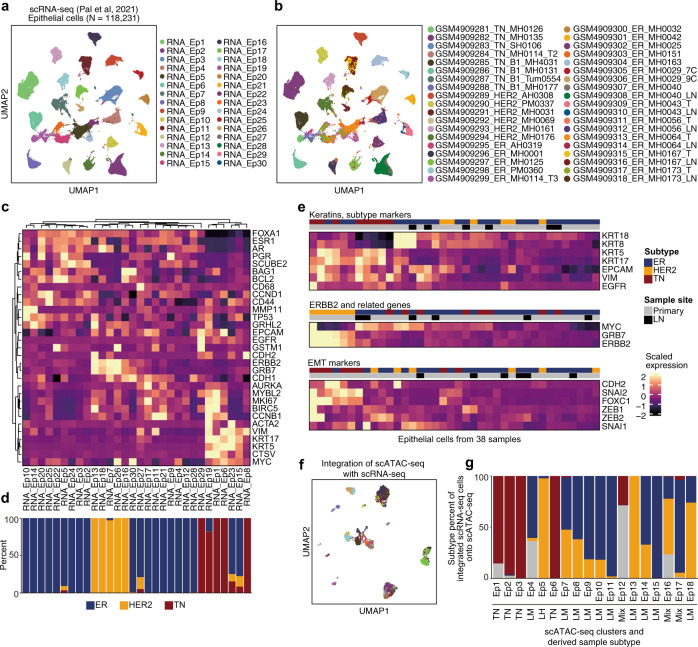
“…scRNA-seq results and our scATAC-seq data. a, b UMAP of subclustering of the epithelial cell transcriptome reported in a previous scRNA-seq study (Pal et al., 2021), colored according to the corresponding epithelial clusters in a and corresponding samples in b. c Heatmap of scaled expression of…”
Law, J. H., Habibi, G., Hu, K., Masoudi, H., Wang, M. Y. C., Stratford, A. L., Park, E., Gee, J. M. W., Finlay, P., Jones, H. E., et al. (2008) · Cancer Research · doi:10.1158/0008-5472.can-08-2755 · Cited by 401
Assessment of computational methods for the analysis of single-cell ATAC-seq data
Chen, H., Lareau, C., Andreani, T., Vinyard, M. E., Garcia, S. P., Clement, K., Andrade-Navarro, M. A., Buenrostro, J. D., & Pinello, L. (2019) · Genome Biology · doi:10.1186/s13059-019-1854-5 · Cited by 332
Functional interpretation of single cell similarity maps
DeTomaso, D., Jones, M. G., Subramaniam, M., Ashuach, T., Ye, C. J., & Yosef, N. (2019) · Nature Communications · doi:10.1038/s41467-019-12235-0 · Cited by 264
Zhang, Y., Moerkens, M., Ramaiahgari, S., de Bont, H., Price, L., Meerman, J., & van de Water, B. (2011) · Breast Cancer Research · doi:10.1186/bcr2883 · Cited by 171
Fu, X., Pereira, R., De Angelis, C., Veeraraghavan, J., Nanda, S., Qin, L., Cataldo, M. L., Sethunath, V., Mehravaran, S., Gutierrez, C., et al. (2019) · Proceedings of the National Academy of Sciences · doi:10.1073/pnas.1911584116 · Cited by 166
Cistrome Cancer: A Web Resource for Integrative Gene Regulation Modeling in Cancer
Mei, S., Meyer, C. A., Zheng, R., Qin, Q., Wu, Q., Jiang, P., Li, B., Shi, X., Wang, B., Fan, J., et al. (2017) · Cancer Research · doi:10.1158/0008-5472.can-17-0327 · Cited by 158
Reprogramming of the FOXA1 cistrome in treatment-emergent neuroendocrine prostate cancer
Baca, S. C., Takeda, D. Y., Seo, J.-H., Hwang, J., Ku, S. Y., Arafeh, R., Arnoff, T., Agarwal, S., Bell, C., O’Connor, E., et al. (2021) · Nature Communications · doi:10.1038/s41467-021-22139-7 · Cited by 158
Multiomic Integration of Public Oncology Databases in Bioconductor
Ramos, M., Geistlinger, L., Oh, S., Schiffer, L., Azhar, R., Kodali, H., de Bruijn, I., Gao, J., Carey, V. J., Morgan, M. T., et al. (2020) · JCO Clinical Cancer Informatics · doi:10.1200/cci.19.00119 · Cited by 121
c-Myc and Her2 cooperate to drive a stem-like phenotype with poor prognosis in breast cancer
Nair, R., Roden, D. L., Teo, W. S., McFarland, A., Junankar, S. R., Ye, S., Nguyen, A., Yang, J. Y. H., Nikolić, I., Hui, M. N., et al. (2013) · Oncogene · doi:10.1038/onc.2013.368 · Cited by 105
Estrogen receptor signaling is reprogrammed during breast tumorigenesis
Chi, D., Singhal, H., Li, L., Xiao, T., Liu, W., Pun, M. J., Jeselsohn, R. M., He, H., Lim, E., Vadhi, R., et al. (2019) · Proceedings of the National Academy of Sciences · doi:10.1073/pnas.1819155116 · Cited by 99
Intratumor Heterogeneity of the Estrogen Receptor and the Long-term Risk of Fatal Breast Cancer
Lindström, L. S., Yau, C. S. F., Czene, K., Thompson, C. K., Hoadley, K. A., Veer, L. J. V., Balassanian, R., Bishop, J. W., Carpenter, P. M., Chen, Y., et al. (2017) · JNCI Journal of the National Cancer Institute · doi:10.1093/jnci/djx270 · Cited by 96 · cited 2×
“factor of 10,000, (2) Highly variable features were identified by FindVariableFeatures() using “vst” method and 2,000 features, (3) scaling the data and computing principal components were performed by ScaleData() and RunPCA(), (4) Clustering the cells was conducted by FindNeighbors() function with 1–50 dimensions and…”
Breast cancer dormancy: need for clinically relevant models to address current gaps in knowledge
Bushnell, G. G., Deshmukh, A. P., den Hollander, P., Luo, M., Soundararajan, R., Jia, D., Levine, H., Mani, S. A., & Wicha, M. S. (2021) · npj Breast Cancer · doi:10.1038/s41523-021-00269-x · Cited by 82
Faouzi, M., Hague, F., Geerts, D., Ay, A., Potier‐Cartereau, M., Ahidouch, A., & Ouadid‐Ahidouch, H. (2016) · Oncotarget · doi:10.18632/oncotarget.9261 · Cited by 80
Cocce, K. J., Jasper, J. S., Desautels, T. K., Everett, L., Wardell, S., Westerling, T., Baldi, R., Wright, T. M., Tavares, K., Yllanes, A., et al. (2019) · Cell Reports · doi:10.1016/j.celrep.2019.09.032 · Cited by 76
Park, K., Kwak, K., Kim, J., Lim, S., & Han, S. (2005) · Human Pathology · doi:10.1016/j.humpath.2005.04.016 · Cited by 71
FoxA1 as a lineage-specific oncogene in luminal type breast cancer
Yamaguchi, N., Ito, E., Azuma, S., Honma, R., Yanagisawa, Y., Nishikawa, A., Kawamura, M., Imai, J., Tatsuta, K., Inoue, J., et al. (2007) · Biochemical and Biophysical Research Communications · doi:10.1016/j.bbrc.2007.11.064 · Cited by 70
Yu, N., Iftimi, A. A., Yau, C. S. F., Tobin, N. P., Veer, L. V. ‘., Hoadley, K. A., Benz, C. C., Nordenskjöld, B. A., Fornander, T., Stål, O., et al. (2019) · JAMA Oncology · doi:10.1001/jamaoncol.2019.1856 · Cited by 67
IGF1R signaling drives antiestrogen resistance through PAK2/PIX activation in luminal breast cancer
Zhang, Y., Wester, L., He, J.-C., Geiger, T., Moerkens, M., Siddappa, R., Helmijr, J., Timmermans, M. M., Look, M., van Deurzen, C. H., et al. (2018) · Oncogene · doi:10.1038/s41388-017-0027-9 · Cited by 42
Wang, Y. J., Schug, J., Lin, J., Wang, Z., Kossenkov, A., the HPAP Consortium, & Kaestner, K. H. (2019) · bioRxiv (Cold Spring Harbor Laboratory) · doi:10.1101/541433 · Cited by 34
Cited by
Epigenetic regulation during cancer transitions across 11 tumour types
Terekhanova, N. V., Karpova, A., Liang, W.-W., Strzalkowski, A., Chen, S., Li, Y., Southard-Smith, A. N., Iglesia, M. D., Wendl, M. C., Jayasinghe, R. G., et al. (2023) · Nature · doi:10.1038/s41586-023-06682-5 · Cited by 207
Single-cell sequencing technology applied to epigenetics for the study of tumor heterogeneity
Hu, Y., Shen, F., Yang, X., Han, T., Long, Z., Wen, J., Huang, J., Shen, J., & Guo, Q. (2023) · Clinical Epigenetics · doi:10.1186/s13148-023-01574-x · Cited by 108
“Another study, by scATAC-seq of 12 breast cancer patients, found that the transcription factor GRHL2 cooperates with FOXA1 to initiate endocrine resistance and that epigenetic heterogeneity may contribute to endocrine resistance in breast cancer patients [70].”
BackgroundEpigenomic heterogeneity as a source of tumour evolution
Laisné, M., Lupien, M., & Vallot, C. (2024) · Nature reviews. Cancer · doi:10.1038/s41568-024-00757-9 · Cited by 113
Subbalakshmi, A. R., Sahoo, S., Manjunatha, P., Goyal, S., Kasiviswanathan, V. A., Mahesh, Y., Ramu, S., McMullen, I., Somarelli, J. A., & Jolly, M. K. (2023) · Journal of Biological Engineering · doi:10.1186/s13036-023-00333-z · Cited by 50
“GRHL2 has also been reported to be lineage-specific driver of reprogrammed estrogen signaling and an enabler of endocrine resistance in ER+ breast cancer (Cocce et al., 2019; Kumegawa et al., 2022).”
BackgroundFang, K., Ohihoin, A. G., Liu, T., Choppavarapu, L., Nosirov, B., Wang, Q., Yu, X., Kamaraju, S., Leone, G. W., & Jin, V. X. (2024) · Genome Medicine · doi:10.1186/s13073-024-01407-3 · Cited by 38
Metadata
- Authors
- Kumegawa, K., Takahashi, Y., Saeki, S., Yang, L., Nakadai, T., Osako, T., Mori, S., Noda, T., Ohno, S., Ueno, T., & Maruyama, R.
- Affiliations
- Japanese Foundation For Cancer Research (JP)
- The Cancer Institute Hospital (JP)
- Corresponding author
- Maruyama, Reo
- ORCID
- Venue
- npj Breast Cancer
- Published
- 2022-06-08
- Volume
- 8
- Issue
- 1
- Pages
- 70-70
- ISSN
- 2374-4677 (ISSN-L)
- PMC
- PMC9177858
- OpenAlex
- W4281754371
- Cited by
- 45
- References
- 46
- Citations by year
- 2026: 12 · 2025: 8 · 2024: 19 · 2023: 6
- FWCI
- 2.78
- Type
- journal article
- Language
- en
- Open access
- gold
- doi.org
- Licence
- cc-by
- creativecommons.org/licenses/by/4.0 (tdm)
- creativecommons.org/licenses/by/4.0 (vor)
- Locations
- npj Breast Cancer (publishedVersion, cc-by)
- PubMed Central (publishedVersion, cc-by)
- PubMed (publishedVersion)
- DOAJ (DOAJ: Directory of Open Access Journals) (submittedVersion, cc-by-sa)
- Funders
- Japan Agency for Medical Research and Development (21fk0210054h0003, JP21fk0210092)
- Japan Society for the Promotion of Science (22K07161, 17K18336, 17K10568, 21H02793, 21K06898, 20K07708)
- Topics
- Life Sciences › Biochemistry, Genetics and Molecular Biology › Molecular Biology › Genomics and Chromatin Dynamics
- Life Sciences › Biochemistry, Genetics and Molecular Biology › Molecular Biology › Single-cell and spatial transcriptomics
- Life Sciences › Biochemistry, Genetics and Molecular Biology › Molecular Biology › Epigenetics and DNA Methylation
- Keywords
- GRHL2, luminal breast cancer, intratumoral heterogeneity, cis-regulatory elements, chromatin accessibility, estrogen receptor signaling, endocrine therapy resistance, FOXA1, tumor microenvironment, single-cell ATAC-seq, HER2-positive breast cancer, triple-negative breast cancer, metastasis, prognosis, hormone therapy
About these checks
Registry, retraction, Cites and statistics results are computed, not judged, with one exception: a printed reference that no index lists is read once by a model before it counts as a citation error. Claims are extracted by a model and kept only when their quote appears verbatim in the text; each cited source is then checked, with a model’s help, for whether it says what the claim relies on. Those verdicts can be wrong — read the claim’s quote and the cited source before relying on one.
Statistics and arithmetic are recomputed, not judged.
Confidence bands are shown only for fields calibrated on our annotated test set. None is calibrated yet, so no band is shown.
What counts as a claim ›How we measure confidence ›How we check this ›
Are you an author, or do you see a problem with this page? Request a review
Data sources
Bibliographic data: Semantic Scholar, OpenAlex, Crossref.
Contains information from the Semantic Scholar Academic Graph Datasets, made available under the ODC Attribution License (ODC-BY 1.0).
Semantic Scholar’s data is described in: Kinney, R., et al. (2023). The Semantic Scholar Open Data Platform. arXiv:2301.10140.
