

Accelerating materials discovery using artificial intelligence, high performance computing and robotics
Open accessThe DOI matches its Crossref record; 78 of the 80 references it cites were found in a registry or an index.
Abstract
New tools enable new ways of working, and materials science is no exception. In materials discovery, traditional manual, serial, and human-intensive work is being augmented by automated, parallel, and iterative processes driven by Artificial Intelligence (AI), simulation and experimental automation. In this perspective, we describe how these new capabilities enable the acceleration and enrichment of each stage of the discovery cycle. We show, using the example of the development of a novel chemically amplified photoresist, how these technologies’ impacts are amplified when they are used in concert with each other as powerful, heterogeneous workflows.
Overview
The claims and statistics of this paper haven’t been checked yet.
Free: it reads the open-access text and checks the first 5 claims that cite a source we can check. Create a free account to check every claim.
Integrity signals
Registry
Cites
Statistics
Figures
Verification
Claims the paper makes
The claims and statistics of this paper haven’t been checked yet.
Free: it reads the open-access text and checks the first 5 claims that cite a source we can check. Create a free account to check every claim.
Claims other papers make about this one
Each is checked against this paper’s own text: does it say what the citing paper says it does?
The cited source says what the claim attributes to it.
In the citing paper
“The central challenge is not only to predict a property, but to manage the sequence of reasoning and action that connects a scientific objective to executable computational or experimental steps [2-10].”
From From Scientific Copilots to Tool-Grounded Autonomy: AI Agents in Simulation-Driven Materials Discovery (2026) · cites this paper as [2]
Self-check
Percentages, sums and reported differences re-computed from the paper’s own numbers.
The self-check needs the paper’s full text.
Citations
Cites
Language Models are Few-Shot Learners
Brown, T. B., Mann, B., Ryder, N., Subbiah, M., Kaplan, J., Dhariwal, P., Neelakantan, A., Shyam, P., Sastry, G., Askell, A., et al. (2020) · arXiv · doi:10.48550/arxiv.2005.14165 · Cited by 23,372 · cited 1×
“Recent developments in AI technology based on pre-trained language models 47 and Generative Adversarial Networks (GANs) 48,49 , have been used to automatically generate images, speech, and natural language, and have recently been applied to materials discovery problems 50,51 .”
MethodGaussian Processes for Machine Learning
Rasmussen, C. E., & Williams, C. K. I. (2005) · doi:10.7551/mitpress/3206.001.0001 · Cited by 11,705
Density-Functional Theory for Time-Dependent Systems
Runge, E., & Gross, E. K. U. (1984) · Physical Review Letters · doi:10.1103/physrevlett.52.997 · Cited by 8,914
Extended-Connectivity Fingerprints
Rogers, D., & Hahn, M. (2010) · Journal of Chemical Information and Modeling · doi:10.1021/ci100050t · Cited by 7,524
Gaussian Processes in Machine Learning
Rasmussen, C. E. (2004) · Lecture Notes in Computer Science · doi:10.1007/978-3-540-28650-9_4 · Cited by 5,397
Improved protein structure prediction using potentials from deep learning
Senior, A. W., Evans, R., Jumper, J., Kirkpatrick, J., Sifre, L., Green, T., Qin, C., Žídek, A., Nelson, A. W. R., Bridgland, A., et al. (2020) · Nature · doi:10.1038/s41586-019-1923-7 · Cited by 3,378 · cited 1×
“Emerging from the use of neural networks to bypass expensive physics-based routines 28,29 , AI has been used to predict ever more complex properties, such as energetic materials 30 , solid-state materials properties 31,32 and even the structure of proteins 33 .”
MethodAutomatic Chemical Design Using a Data-Driven Continuous Representation of Molecules
Gómez-Bombarelli, R., Wei, J. N., Duvenaud, D., Hernández-Lobato, J. M., Sánchez-Lengeling, B., Sheberla, D., Aguilera-Iparraguirre, J., Hirzel, T. D., Adams, R. P., & Aspuru-Guzik, A. (2018) · ACS Central Science · doi:10.1021/acscentsci.7b00572 · Cited by 3,106 · cited 2×
“Recent developments in AI technology based on pre-trained language models 47 and Generative Adversarial Networks (GANs) 48,49 , have been used to automatically generate images, speech, and natural language, and have recently been applied to materials discovery problems 50,51 .”
BackgroundMethodRecent advances and applications of machine learning in solid-state materials science
Schmidt, J., Marques, M. R. G., Botti, S., & Marques, M. A. L. (2019) · npj Computational Materials · doi:10.1038/s41524-019-0221-0 · Cited by 2,607 · cited 1×
“Emerging from the use of neural networks to bypass expensive physics-based routines 28,29 , AI has been used to predict ever more complex properties, such as energetic materials 30 , solid-state materials properties 31,32 and even the structure of proteins 33 .”
MethodANI-1: an extensible neural network potential with DFT accuracy at force field computational cost
Smith, J. S., Isayev, O., & Roitberg, A. E. (2017) · Chemical Science · doi:10.1039/c6sc05720a · Cited by 1,921
Self-citationBurger, B., Maffettone, P. M., Gusev, V. V., Aitchison, C. M., Bai, Y., Wang, X., Li, X., Alston, B. M., Li, B., Clowes, R., et al. (2020) · Nature · doi:10.1038/s41586-020-2442-2 · Cited by 1,516 · cited 2×
“Concurrently, there is an explosion of automation and AI in chemical synthesis, with the important contribution in the use of commodity hardware 67 , fl uidic reactors 68 , or the use of robots able to execute the same tasks as human chemists 69 .”
Background
Research works printed but not linked: 8
- Kuhn, T. The Structure of Scientific Revolutions 2nd edn (The University of Chicago Press, 1970).
- arXiv.org e-Print archive. https://arxiv.org/.
- Hernández-Lobato, J. M., Requeima, J., Pyzer-Knapp, E. O. & Aspuru-Guzik, A. Parallel and distributed Thompson sampling for large-scale accelerated exploration of chemical space. In: Proc. 34th International Conference on Machine Learning-Volume 70 1470-1479 (JMLR. org, 2017).
- Brochu, E., Cora, V. M. & de Freitas, N. A Tutorial on Bayesian optimization of expensive cost functions, with application to active user modeling and hier- archical reinforcement learning. Preprint at https://arxiv.org/abs/10122599 (2010).
- Kusner, M. J., Paige, B. & Hernández-Lobato, J. M. Grammar variational auto- encoder. In: International Conference on Machine Learning 1945-1954 (PMLR, 2017).
- Crivello, J. V. & Lam, J. H. W. Photoinitiated cationic polymerization with triar- ylsulfonium salts. J. Polym. Sci. A: Polym. Chem. 17, 977-999 (1979).
- Carrete, J., Li, W., Mingo, N., Wang, S. & Curtarolo, S. Finding unprecedentedly low-thermal-conductivity half-Heusler semiconductors via high-throughput materials modeling. Phys. Rev. X 4, 011019 (2014).
- Shipley, G. & Dumpleton, G. OpenShift for Developers: A Guide for Impatient Beginners (O'Reilly Media, Inc., 2016).
Cited by
Items 101–200 of 532
Laxmi, B., Devi, P. U. M., Thanjavur, N., & Viswanath, B. (2024) · Current Microbiology · doi:10.1007/s00284-024-03750-5 · Cited by 27
“Stage 4: Empowerment of researchers and acceleration of discovery: AI-enabled systems empower researchers by freeing up their time to focus on experimental design, data interpretation, and hypothesis testing [54].”
Autonomous research and development of structural materials – An introduction and vision
Miracle, D. B., & Thoma, D. J. (2024) · Current Opinion in Solid State and Materials Science · doi:10.1016/j.cossms.2024.101188 · Cited by 26
Ni, B., Glaser, B., & Taheri-Mousavi, S. M. (2025) · npj Computational Materials · doi:10.1038/s41524-025-01768-2 · Cited by 23
“Similar explorations have been actively developed for various material systems 43,44 , including functional molecules 45,46 , polymers 47,48 , inorganic crystals 49,50 as well as metallic alloys 51,52 .”
Jin, L., Huang, H. L., & Ren, H. (2025) · Frontiers of Environmental Science & Engineering · doi:10.1007/s11783-025-2034-3 · Cited by 23
Kim, Y.-H., Doo, H., Shin, D., Lee, S. Y., Roh, Y., Park, S., Song, H., Jung, Y., Yoo, H. J., Han, S. S., et al. (2025) · Computers & Chemical Engineering · doi:10.1016/j.compchemeng.2025.109266 · Cited by 25
Wu, J., Song, S., Tian, X., Wang, Y., & Qi, X. (2023) · Energetic Materials Frontiers · doi:10.1016/j.enmf.2023.09.001 · Cited by 26
Eguchi, N., Fukazawa, T., Kanda, H., Yamamoto, K., Miyake, T., & Murakami, T. N. (2025) · EES solar. · doi:10.1039/d5el00007f · Cited by 22
Coudert, F. (2025) · Coordination Chemistry Reviews · doi:10.1016/j.ccr.2025.216760 · Cited by 24
Cho, J., Park, C. H., Sundharbaabu, P. R., Ju, S.-U., Shin, D., Heo, J. H., Kim, M., & Lee, J. H. (2025) · ACS Nano · doi:10.1021/acsnano.5c07220 · Cited by 22
Zhou, C., Zhang, Y., Xin, H., Li, X., & Chen, X. (2023) · Journal of Materials Research and Technology · doi:10.1016/j.jmrt.2023.12.181 · Cited by 23
Machine learning in microscopy – insights, opportunities and challenges
Cunha, I., Latron, E., Bauer, S., Sage, D., & Griffié, J. (2024) · Journal of Cell Science · doi:10.1242/jcs.262095 · Cited by 23
Automating traffic model enhancement with AI research agent
Guo, X., Yang, X., Peng, M., Lu, H., Zhu, M., & Yang, H. (2025) · Transportation Research Part C Emerging Technologies · doi:10.1016/j.trc.2025.105187 · Cited by 30
“These AI systems have already made significant progress in areas such as literature-based discovery 26,27 , code generation 28,29 , data analysis 30–33 as well as chemical experiment design 34 and materials discovery 35–37 .”
EAIRA: Establishing a methodology for evaluating LLMs as scientific research assistants
Cappello, F., Madireddy, S., Underwood, R., Getty, N., Chia, N., Ramachandra, N., Nguyen, T. D., Keçeli, M., Mallick, T., Li, Z., et al. (2026) · The International Journal of High Performance Computing Applications · doi:10.1177/10943420261467786 · Cited by 21
Svensson, P. H., Yushmanov, P. V., Tot, A. S., Kloo, L. A., Berg, E. J., & Edström, K. (2022) · Chemical Engineering Journal · doi:10.1016/j.cej.2022.140955 · Cited by 22
“In general, it takes an alarmingly long time to screen and discover new materials, and the time to implement new energy technologies into the commercial market from the time of discovery is in the realm of decades [1,4 – 6].”
Adoption of full-culm bamboo as a mainstream structural material
Harries, K. A. (2025) · npj Materials Sustainability · doi:10.1038/s44296-025-00050-2 · Cited by 20
“The proliferation of arti fi cial intelligence (AI) or machine learning (ML) approaches to materials discovery 44,45 decompose the process-structure-property relationship into process-structure and structure-property functions.”
Gao, R., Xu, T., Wang, Z., Ren, H., Zhang, G., Zhao, Y., Tay, A. K. P., & Miao, Y. (2024) · Advanced Functional Materials · doi:10.1002/adfm.202407535 · Cited by 20
Mariano, L. A., Anh, N. V. H., Briganti, V., & Lunghi, A. (2024) · Journal of the American Chemical Society · doi:10.1021/jacs.4c14076 · Cited by 23
Guo, W., Xu, J., Tang, Z., Li, W., & Zhang, D. (2025) · Separation and Purification Technology · doi:10.1016/j.seppur.2025.131784 · Cited by 21
AI and automation: democratizing automation and the evolution towards true AI-autonomous robotics
Takahashi, L., Kuwahara, M., & TAKAHASHI, K. G. (2025) · Chemical Science · doi:10.1039/d5sc03183d · Cited by 26
“21 The growing prominence of automation and robotics raises questions about the nature of research, requiring a more critical examination of their roles and in uences.”
Lin, Z., Su, Y., Yang, J., Qiu, C., Chai, X., Liu, X., Ouyang, Q., & Zhang, D. (2023) · Composites Communications · doi:10.1016/j.coco.2023.101688 · Cited by 20
Ibarra-Pérez, D., Faba, S., Hernández-Muñoz, V., Smith, C. M., Galotto, M. J., & Garmulewicz, A. (2023) · Applied Sciences · doi:10.3390/app132111841 · Cited by 19
Artificial Intelligence-Driven Materials Design for Next-Generation Sustainable Energy Technologies
Fawzy, S. M., Ali, M. K. M., & Allam, N. K. (2026) · ACS Sustainable Chemistry & Engineering · doi:10.1021/acssuschemeng.6c01084 · Cited by 22
Accelerating the Adoption of Research Data Management Strategies
Medina, J., Ziaullah, A. W., Park, H., Castelli, I. E., Shaon, A., Bensmail, H., & El‐Mellouhi, F. (2022) · Matter · doi:10.1016/j.matt.2022.10.007 · Cited by 23
Sousa, P., Afonso, A. M., & Rodrigues, C. V. (2024) · Neural Computing and Applications · doi:10.1007/s00521-024-09935-0 · Cited by 18
“…Intelligence (AI) algorithms have been expanding toward scientific computation [1], predicting protein structures in biology [2], optimizing drug discovery [3, 4], accelerating material discovery [5], aiding climate modeling [6–8] and enhancing Computational Fluid Dynamics (CFD) solvers [9–11].”
Zhang, X., Li, B., Zou, J. J., Liu, H., Xu, B., & Liu, K. (2024) · Science China Materials · doi:10.1007/s40843-024-2999-8 · Cited by 18
Innovations in seawater electrolysis: From fundamental challenges to practical applications
Alkoshab, M. Q., Shaikh, N., Qamar, M., & Toor, I. (2025) · International Journal of Hydrogen Energy · doi:10.1016/j.ijhydene.2025.03.272 · Cited by 18
Tokenization for Molecular Foundation Models
Wadell, A., Bhutani, A., & Viswanathan, V. (2026) · Journal of Chemical Information and Modeling · doi:10.1021/acs.jcim.5c01856 · Cited by 17
Green Synthesis of Molecularly Imprinted Polymers: Advances Toward Sustainable Materials
Cutaia, A., & Alberti, G. (2026) · Polymers · doi:10.3390/polym18040512 · Cited by 16
Perspectives on development of biomedical polymer materials in artificial intelligence age
Xie, S. (2023) · Journal of Biomaterials Applications · doi:10.1177/08853282231151822 · Cited by 18
“Fibers could be synthesized with biomedical polymers and used in a full range of applications, including biotechnology, medical care and other fields.(64) For the sake of establishing the model, machine learning first represents the molecular structure in the form of a Simplified Molecular Line Input System (SMLIS), a…”
MethodIlias, L., Tsapelas, G., Kapsalis, P., Michalakopoulos, V., Kormpakis, G., Mouzakitis, S., & Askounis, D. (2023) · Frontiers in Big Data · doi:10.3389/fdata.2023.1220348 · Cited by 19
Xu, J., Suleiman, A., Liu, G., Zhang, R., Jiang, M., Guo, R., & Luo, T. (2024) · Chemical Physics Reviews · doi:10.1063/5.0205433 · Cited by 17
Latest Advances in Manufacturing and Machine Learning of Bulk Metallic Glasses
Graeve, O. A., García-Vázquez, M. S., Ramírez‐Acosta, A. Á., & Cadieux, Z. (2023) · Advanced Engineering Materials · doi:10.1002/adem.202201493 · Cited by 18
Integration of X-ray absorption fine structure databases for data-driven materials science
Ishii, M., Tanabe, K., Matsuda, A., Ofuchi, H., Matsumoto, T., Yaji, T., Inada, Y., Nitani, H., Kimura, M., & Asakura, K. (2023) · Science and Technology of Advanced Materials Methods · doi:10.1080/27660400.2023.2197518 · Cited by 16
“There have been trials in many studies, for example, in the development of high-throughput experiments using robotics and combinatorial techniques [2–4].”
MethodXu, L., Hong, M., Guo, J., Shen, F., Xu, D., Zhang, J., Zhang, Y., Zheng, J., & Lu, J. (2026) · Nano-Micro Letters · doi:10.1007/s40820-026-02099-7 · Cited by 16
“…what is feasible by direct NEB sampling alone, high-throughput density functional theory (HT-DFT) enables rapid evaluation of kinetic descriptors over broad compositional and structural spaces, and these outputs can be coupled with machine learning (ML) models for scalable screening [167, 168].”
Ali, R., & Zhang, Y. (2024) · Frontiers of Chemical Science and Engineering · doi:10.1007/s11705-024-2500-7 · Cited by 17
Zhao, K., Wang, X., Feng, W., Ponrouch, A., Poizot, P., Armand, M. B., Zhou, Z., & Zhang, H. (2025) · Energy & Environmental Science · doi:10.1039/d4ee06017b · Cited by 17
A task allocation schema based on response time optimization in cloud computing
Jiang, Z., Li, K., Yong, W., Liu, M., & Li, H. (2023) · Cluster Computing · doi:10.1007/s10586-023-04185-6 · Cited by 15
“This strategy is common in cloud computing, such as Map/Reduce applications and HPC applications in cloud computing all need task slicing [25, 26].”
Yazdani, S., Mozaffarian, M., Pazuki, G., & Hadidi, N. (2026) · Materials Today Bio · doi:10.1016/j.mtbio.2026.103153 · Cited by 24
“In this regard, AI serves as an enabler of high-throughput screening, formulation optimization, and performance prediction [166,167].”
The past, present and future of self-driving laboratories
Canty, R. B., & Abolhasani, M. (2026) · Nature Reviews Chemistry · doi:10.1038/s41570-026-00847-2 · Cited by 27
“Such superintelligence is not reducible to automation or prediction; rather, it emerges from networks of interoperable SDLs producing”
Jalali, M., Luo, Y., Caulfield, L., Sauter, E., Nefedov, A., & Wöll, C. (2024) · Materials Today Communications · doi:10.1016/j.mtcomm.2024.109801 · Cited by 22
“This ↱ data-driven approach can significantly narrow down the search space for experi-mentalists, saving time and ↱ resources [30,33,34].”
Revolutionizing supramolecular materials design with artificial intelligence
Zhu, H., Wang, Z., Li, L., Dong, L., Li, Y., Xue, B., & Cao, Y. (2024) · Supramolecular Materials · doi:10.1016/j.supmat.2024.100090 · Cited by 18
Artificial intelligence enabled microstructure prediction in Al alloy castings
Hou, Q., Wu, X., Li, Z., Feng, S., Kong, D., Wang, S., Ma, X., Miao, Y., Qiao, H., Li, X., et al. (2025) · Journal of Material Science and Technology · doi:10.1016/j.jmst.2025.02.093 · Cited by 16
Synergy of Machine Learning and High‐Throughput Experimentation: A Road Toward Autonomous Synthesis
Ali, R. S. A. E., Meng, J., & Jiang, X. (2025) · Chemistry - An Asian Journal · doi:10.1002/asia.202500825 · Cited by 14
An equivariant pretrained transformer for unified 3D molecular representation learning
Jiao, R., Kong, X., Zhang, L., Yu, Z., Ren, F., Tan, W., Huang, W., & Liu, Y. (2026) · Nature Communications · doi:10.1038/s41467-026-69185-7 · Cited by 20
“Understanding and accurately representing the 3D geometric structure of molecular systems is critically important in numerous scientific domains, such as life sciences [7], drug discovery [4], and material design [33].”
Delivering Document Conversion as a Cloud Service with High Throughput and Responsiveness
Auer, C., Dolfi, M., de Carvalho, A. C. P. L. F., Berrospi, C., & Staar, P. (2022) · IEEE ... International Conference on Cloud Computing · doi:10.1109/cloud55607.2022.00060 · Cited by 20
Self-citationArtificial Intelligence in Accelerating Materials Discovery: Opportunities and Challenges
Yadav, A. K. (2026) · ChemistrySelect · doi:10.1002/slct.202507191 · Cited by 16
Wang, Z., & Zhu, X. (2024) · ACS Applied Nano Materials · doi:10.1021/acsanm.4c00255 · Cited by 15
Design of sulfonimide anions for rechargeable lithium batteries
Wang, X., Feng, W., Zhou, Z., & Zhang, H. (2024) · Chemical Communications · doi:10.1039/d4cc03759f · Cited by 14
New Redox Chemistries of Halogens in Aqueous Batteries
Chen, R. (2024) · ChemSusChem · doi:10.1002/cssc.202401678 · Cited by 13
Talreja, J., & Chauhan, D. (2025) · Elsevier eBooks · doi:10.1016/b978-0-443-29162-3.00007-1 · Cited by 13
Artificial intelligence in high-entropy materials
Wang, J., & Zhang, Y. (2025) · Next Materials · doi:10.1016/j.nxmate.2025.100993 · Cited by 17
Mashhadimoslem, H., Karimi, P., Elkamel, A., & Yu, A. (2025) · npj Computational Materials · doi:10.1038/s41524-025-01918-6 · Cited by 14
Stricker, M., Banko, L., Sarazin, N., Siemer, N., Janssen, J., Zhang, L., Neugebauer, J., & Ludwig, A. (2025) · npj Computational Materials · doi:10.1038/s41524-025-01919-5 · Cited by 13
“Further, recent developments in lab automation 29,34,50 willleadtolesstrainingspenttooperatedevices.”
An Overview on the Role of Artificial Intelligence in Modern Advancements of Material Science
Das, M., Perez, T. C., Shetty, D. K., Hiremath, P., Naik, N., & Bhat, R. (2024) · ES General · doi:10.30919/esg1183 · Cited by 22
A robust, simple, and efficient convergence workflow for GW calculations
Großmann, M., Grunert, M., & Runge, E. (2024) · npj Computational Materials · doi:10.1038/s41524-024-01311-9 · Cited by 15
“The demand for ef fi cient high-throughput ab initio computations for materials screening 1 – 3 is increasing due to, among other things, the availability of more and more structural data for theoretically stable solid compounds through the work of, e.g., Merchant et al. 4 and the possibility of…”
Guo, H., Jiang, G., Diao, B., Du, J., Sun, W. C., Fan, J., & Peng, X. (2024) · Journal of Materials Chemistry C · doi:10.1039/d4tc02333a · Cited by 12
GEMTELLIGENCE: Accelerating gemstone classification with deep learning
Bendinelli, T., Biggio, L., Nyfeler, D., Ghosh, A., Tollan, P., Kirschmann, M., & Fink, O. (2024) · Communications Engineering · doi:10.1038/s44172-024-00252-x · Cited by 17
“Asrobustnessand consistency arekey desiderata in gemstone analysis, we include an additional con fi dence-thresholding scheme in our pipeline allowing users to control the trade-off between the degree of automation provided by GEMTELLIGENCE (i.e. the number of stones that can be processed…”
Satō, T., Masuda, K., Sano, C., Matsumoto, K., Numata, H., Munetoh, S., Kasama, T., & Miyake, R. (2024) · Micromachines · doi:10.3390/mi15091064 · Cited by 14
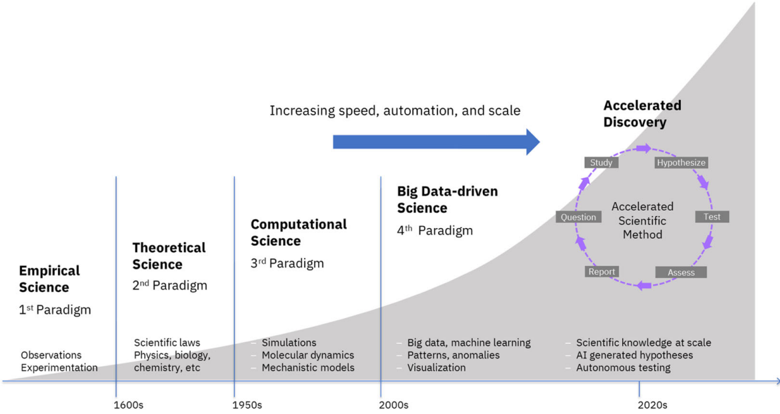
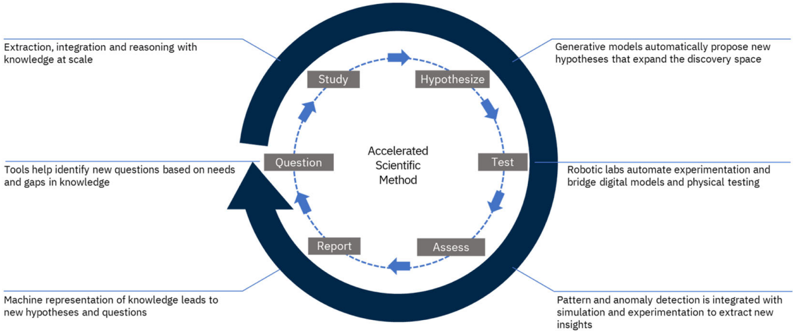
“…concept of an autonomous laboratory is now demonstrated as a viable A general work-flow of accelerated discovery consists of a knowledge base, model inference, hypothesis generation, and experimental validation, which iterates until a desired outcome is obtained (Figure 1) [15]. technology [14].”
BackgroundInfluentialRabiee, H. (2025) · Results in Engineering · doi:10.1016/j.rineng.2025.104734 · Cited by 12
Ontology-conformal recognition of materials entities using language models
Potu, S. T., Murthy, R. N., Thomas, A., Mishra, L., Prange, N., & Durmaz, A. R. (2025) · Scientific Reports · doi:10.1038/s41598-025-03619-y · Cited by 17
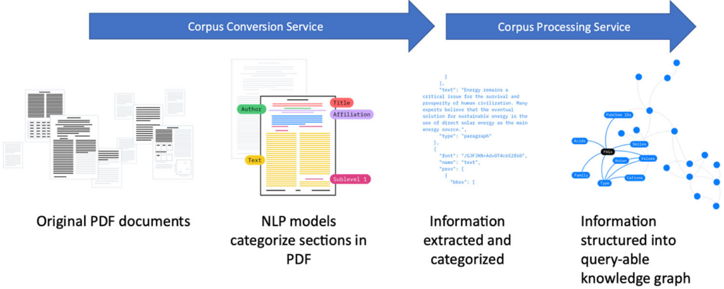
“The PDF documents were converted into machine-readable format using the IBM Deep Search platform 55 .”
Mind the gap: Bridging the divide between AI aspirations and the reality of autonomous microscopy
Guinan, G., Salvador, A., Smeaton, M. A., Glaws, A., Egan, H., Wyatt, B. C., Anasori, B., Fiedler, K. R., Olszta, M. J., & Spurgeon, S. R. (2025) · APL Machine Learning · doi:10.1063/5.0267699 · Cited by 12
Making the Right Thing: Bridging HCI and Responsible AI in Early-Stage AI Concept Selection
Jung, J.-Y., Saxena, D., Park, M., Kim, J., Forlizzi, J., Holstein, K., & Zimmerman, J. (2025) · Designing Interactive Systems Conference · doi:10.1145/3715336.3735745 · Cited by 14
Investigating magnetic van der Waals materials using data-driven approaches
Bhattarai, R., Minch, P., & Rhone, T. D. (2023) · Journal of Materials Chemistry C · doi:10.1039/d3tc00001j · Cited by 12
Next generation fatigue crack growth experiments of aerospace materials
Strohmann, T., Melching, D., Paysan, F., Dietrich, E., Requena, G. C., & Breitbarth, E. (2024) · Scientific Reports · doi:10.1038/s41598-024-63915-x · Cited by 12
Supply Risk-Aware Alloy Discovery and Design
Mulukutla, M., Robinson, R., Khatamsaz, D., Vela, B., Hastings, T., Vu, N., & Arróyave, R. (2024) · Materialia · doi:10.1016/j.mtla.2024.102332 · Cited by 11
Wani, A. A. (2025) · Materials Sciences and Applications · doi:10.4236/msa.2025.162005 · Cited by 11
Ehrenhofer, A., & Wallmersperger, T. (2025) · Smart Materials and Structures · doi:10.1088/1361-665x/adbdb3 · Cited by 11
Suh, J., Lee, J., Kim, J., Cho, M., Kim, J., Oh, J. M., Han, H., Lee, H. S., & Oh, J. (2025) · ACS Applied Materials & Interfaces · doi:10.1021/acsami.5c00564 · Cited by 11
Multimodal Machine Learning Analysis of GaSe Molecular Beam Epitaxy Growth Conditions
Yu, M., Moses, I. A., Reinhart, W. F., & Law, S. (2025) · ACS Applied Materials & Interfaces · doi:10.1021/acsami.5c02891 · Cited by 14
Artificial intelligence models for supercapacitor performance prediction in energy storage
Rai, S., Gupta, S., Sajwan, S., Aditi, V., & Kant, C. R. (2025) · Journal of Energy Storage · doi:10.1016/j.est.2025.119919 · Cited by 14
Anker, A. S., Butler, K. T., Le, M. D., Perring, T. G., & Thiyagalingam, J. (2023) · Digital Discovery · doi:10.1039/d2dd00147k · Cited by 12
Towards Agentic Intelligence for Materials SciencePreprint
Zhang, H., Li, Y., Huang, W., Hou, Z., Song, Y., Liu, X., Effaty, F., Jiang, J., Wu, S., Ding, Q., et al. (2026) · arXiv · doi:10.48550/arxiv.2602.00169 · Cited by 15
Nguyen, B. D., Steiner, J., Wellmann, P. J., & Sandfeld, S. (2024) · MRS Communications · doi:10.1557/s43579-024-00563-2 · Cited by 13
Raihan, A. S., Khosravi, H., Das, S., & Ahmed, I. (2024) · Manufacturing Letters · doi:10.1016/j.mfglet.2024.09.157 · Cited by 16
Safe and sustainable by design with ML/AI: A transformative approach to advancing nanotechnology
Melagraki, G. (2026) · Beilstein Journal of Nanotechnology · doi:10.3762/bjnano.17.11 · Cited by 10
A critical examination of active learning workflows in materials science
Nair, A. S., & Foppa, L. (2026) · Digital Discovery · doi:10.1039/d6dd00081a · Cited by 17
Tuning Bayesian optimization for materials synthesis: simulating two- and three-dimensional cases
Xu, H., Nakayama, R., Kimura, T., Shimizu, R., Ando, Y., Kobayashi, S., Yasuo, N., Sekijima, M., & Hitosugi, T. (2023) · Science and Technology of Advanced Materials Methods · doi:10.1080/27660400.2023.2210251 · Cited by 10
“High-throughput prediction and synthesis of novel materials are vital for achieving a sustainable society [1–5].”
BackgroundPrediction of the swelling rate of irradiated type 316 stainless steels via machine learning methods
Chen, Y., Wang, Z., Yu, M., Ma, W., Wang, H., Wei, Z., Gao, N., & Yao, Z. (2024) · Journal of Nuclear Materials · doi:10.1016/j.jnucmat.2024.155288 · Cited by 10
The use of artificial intelligence in liquid crystal applications: A review
Chattha, S., Chan, P. K., & Upreti, S. R. (2024) · The Canadian Journal of Chemical Engineering · doi:10.1002/cjce.25452 · Cited by 11
Amano, N., Lei, B., Müller, M. J., Mücklich, F., & Holm, E. A. (2024) · Materials Characterization · doi:10.1016/j.matchar.2024.114600 · Cited by 11
Al-Sakkari, E. G., Ragab, A., Amer, M., Ajao, O., Benali, M., Boffito, D. C., Dagdougui, H., & Amazouz, M. (2024) · Digital Chemical Engineering · doi:10.1016/j.dche.2024.100207 · Cited by 16
Ensemble Knowledge Distillation for Machine Learning Interatomic PotentialsPreprint
Matin, S., Shinkle, E., Pimonova, Y. A., Craven, G. T., Pachalieva, A. A., Li, Y. W., Barros, K. M., & Lubbers, N. (2025) · arXiv (Cornell University) · doi:10.48550/arxiv.2503.14293 · Cited by 14
Anand, A., Kumari, P., & Kalyani, A. K. (2024) · Computational Materials Science · doi:10.1016/j.commatsci.2024.113445 · Cited by 9
Discovering AI adoption patterns from big academic graph data
Kim, S.-Y., Lee, W. K., Jee, S. J., & Sohn, S. Y. (2025) · Scientometrics · doi:10.1007/s11192-024-05228-4 · Cited by 11
“…in various STEM fields is the AI-driven molecular discovery method, including material discovery in chemistry and material science [e.g., Pyzer-Knapp et al. (2022)], drug discovery in medicine [e.g., Urbina et al. (2022)], and protein structure discovery in biology [e.g., Schauperl and…”
Engineering ZnS nanoarchitectures: Defects and dynamic surfaces for improved photocatalysis
Tiwari, A., Bishnoi, S., & Dhoble, S. J. (2025) · Journal of Molecular Structure · doi:10.1016/j.molstruc.2025.143750 · Cited by 9
Mengesha, W. G. (2025) · Discover Nano · doi:10.1186/s11671-025-04389-2 · Cited by 11
“Realizing this potential will require sustained collaboration between materials scientists, artificial intelligence researchers, and aerospace engineers to address remaining challenges and fully exploit emerging computational and manufacturing technologies [5, 6].”
Advancing analysis of differential scanning calorimetry data – Converging DSC and AI
Dargaville, B. L., Ayyachi, T., & Hutmacher, D. W. (2026) · Materials Today · doi:10.1016/j.mattod.2025.12.036 · Cited by 9
Safely advancing a spacefaring humanity with artificial intelligence
Richards, C. E., Cernev, T., Tzachor, A., Zilgalvis, G., & Kaleagasi, B. (2023) · Frontiers in Space Technologies · doi:10.3389/frspt.2023.1199547 · Cited by 12
“It may accelerate innovations in spacecraft materials (Pyzer-Knapp et al., 2022), such as newmetals with higher resistance to the extreme temperatures (Hu and Yang, 1979) and green fuels (Mandow, 2020).”
BackgroundGeometry-Aware Line Graph Transformer Pretraining for Molecular Property Prediction
Bai, P., Liu, X., Fan, W., Jiang, T., Cheung, W. K., & Lu, H. (2026) · IEEE Transactions on Neural Networks and Learning Systems · doi:10.1109/tnnls.2026.3698579 · Cited by 9
Barrera, J., Cook, C. C., Lee, E., Swartz, K. E., & Tortorelli, D. A. (2024) · Polymers · doi:10.3390/polym16101425 · Cited by 9
Zhu, D. D., Xin, Z., Zheng, S., Wang, Y., & Yang, X. (2024) · Journal of Chemical Theory and Computation · doi:10.1021/acs.jctc.4c00625 · Cited by 9
Priyadi, P., Migunani, M., & Sasmoko, D. (2024) · Journal of Technology Informatics and Engineering · doi:10.51903/tvkk3t66 · Cited by 15
Li, S., Zhang, Y., Fang, Z., Meng, K., Tian, R., He, H., & Sun, S. (2023) · Journal of Chemical Information and Modeling · doi:10.1021/acs.jcim.3c01442 · Cited by 9
Digitization of flow battery experimental process research and development
Chen, C., Dai, G., Gao, Y., Xu, P., He, W., Feng, S., Zhu, X., & Zhao, Y. (2024) · Energy Materials · doi:10.20517/energymater.2023.91 · Cited by 9
USDOE Office of Science (SC), McInnes, L., Arnold, D., Balaprakash, P., Bernhardt, M., Cerny, B., Dubey, A., Giles, R., Hood, D. W., Leung, M. A., et al. (2025) · OSTI OAI (U.S. Department of Energy Office of Scientific and Technical Information) · doi:10.2172/2589068 · Cited by 9
“Dynamic computational workflows, encompassing modeling, simulation, data analytics, and emerging AI approaches, as enabled by the instrumental building blocks of scientific software, are key to next-generation science [8, 22, 23, 24, 25, 26].”
Data-Driven Score-Based Models for Generating Stable Structures with Adaptive Crystal Cells
Sultanov, A., Crivello, J., Rebafka, T., & Sokolovska, N. (2023) · Journal of Chemical Information and Modeling · doi:10.1021/acs.jcim.3c00969 · Cited by 11
Automated image segmentation for accelerated nanoparticle characterization
Day, A. L., Wahl, C. B., dos Reis, R., Liao, W., Li, Y., Kilic, M. N. T., Mirkin, C. A., Dravid, V. P., Choudhary, A., & Agrawal, A. (2025) · Scientific Reports · doi:10.1038/s41598-025-01337-z · Cited by 9
Architected Nanomaterials Powering Optical Physical Unclonable Functions
Pan, L., Wei, Y., Wang, J., & Ma, X. (2026) · Laser & Photonics Review · doi:10.1002/lpor.202501958 · Cited by 9
Jiang, S., Yang, Y., Liu, Z., Yang, R., Yan, H., & Cheng, X. (2026) · Journal of Hazardous Materials · doi:10.1016/j.jhazmat.2026.141330 · Cited by 8
Semantic Embeddings of Chemical Elements for Enhanced Materials Inference and Discovery
Jia, Y., Xian, Y., Xu, Y., Dang, P., Ding, X., Sun, J., Zhou, Y., & Xue, D. (2026) · Materials Genome Engineering Advances · doi:10.1002/mgea.70059 · Cited by 9
“Although data‐driven methodologies have emerged as promising tools to accelerate exploration within this space [3, 4, 6–10], they typically rely on structured numerical inputs, such as experimentally measured properties or computationally derived parameters.”
Metadata
- Authors
- Pyzer-Knapp, E. O., Pitera, J. W., Staar, P. W. J., Takeda, S., Laino, T., Sanders, D. P., Sexton, J., Smith, J. R., & Curioni, A.
- Affiliations
- IBM Research - Almaden (US)
- IBM Research - Zurich (CH)
- IBM Research - Tokyo (JP)
- IBM Research - Thomas J. Watson Research Center (US)
- Venue
- npj Computational Materials
- Published
- 2022-04-26
- Volume
- 8
- Issue
- 1
- ISSN
- 2057-3960 (ISSN-L)
- OpenAlex
- W4225000412
- Semantic Scholar
- 51bb51b06f57fada5d8f338aa484a87f93226468
- Cited by
- 465
- References
- 75
- Citations by year
- 2026: 120 · 2025: 150 · 2024: 107 · 2023: 65 · 2022: 23
- FWCI
- 24.26
- Type
- journal article
- Language
- en
- Open access
- gold
- doi.org
- Licence
- cc-by
- creativecommons.org/licenses/by/4.0 (tdm)
- creativecommons.org/licenses/by/4.0 (vor)
- Locations
- npj Computational Materials (publishedVersion, cc-by)
- DOAJ (DOAJ: Directory of Open Access Journals) (submittedVersion, cc-by-sa)
- Topics
- Physical Sciences › Materials Science › Materials Chemistry › Machine Learning in Materials Science
- Life Sciences › Pharmacology, Toxicology and Pharmaceutics › Drug Discovery › Computational Drug Discovery Methods
- Social Sciences › Decision Sciences › Information Systems and Management › Scientific Computing and Data Management
- Keywords
- materials discovery, artificial intelligence, high-performance computing, robotics, experimental automation, simulation automation, chemically amplified resists
About these checks
Registry, retraction, Cites and statistics results are computed, not judged, with one exception: a printed reference that no index lists is read once by a model before it counts as a citation error. Claims are extracted by a model and kept only when their quote appears verbatim in the text; each cited source is then checked, with a model’s help, for whether it says what the claim relies on. Those verdicts can be wrong — read the claim’s quote and the cited source before relying on one.
Statistics and arithmetic are recomputed, not judged.
Confidence bands are shown only for fields calibrated on our annotated test set. None is calibrated yet, so no band is shown.
What counts as a claim ›How we measure confidence ›How we check this ›
Are you an author, or do you see a problem with this page? Request a review
Data sources
Bibliographic data: Semantic Scholar, OpenAlex, Crossref.
Contains information from the Semantic Scholar Academic Graph Datasets, made available under the ODC Attribution License (ODC-BY 1.0).
Semantic Scholar’s data is described in: Kinney, R., et al. (2023). The Semantic Scholar Open Data Platform. arXiv:2301.10140.
