

Accelerating materials discovery using artificial intelligence, high performance computing and robotics
Open accessThe DOI matches its Crossref record; 78 of the 80 references it cites were found in a registry or an index.
Abstract
New tools enable new ways of working, and materials science is no exception. In materials discovery, traditional manual, serial, and human-intensive work is being augmented by automated, parallel, and iterative processes driven by Artificial Intelligence (AI), simulation and experimental automation. In this perspective, we describe how these new capabilities enable the acceleration and enrichment of each stage of the discovery cycle. We show, using the example of the development of a novel chemically amplified photoresist, how these technologies’ impacts are amplified when they are used in concert with each other as powerful, heterogeneous workflows.
Overview
The claims and statistics of this paper haven’t been checked yet.
Free: it reads the open-access text and checks the first 5 claims that cite a source we can check. Create a free account to check every claim.
Integrity signals
Registry
Cites
Statistics
Figures
Verification
Claims the paper makes
The claims and statistics of this paper haven’t been checked yet.
Free: it reads the open-access text and checks the first 5 claims that cite a source we can check. Create a free account to check every claim.
Claims other papers make about this one
Each is checked against this paper’s own text: does it say what the citing paper says it does?
The cited source says what the claim attributes to it.
In the citing paper
“The central challenge is not only to predict a property, but to manage the sequence of reasoning and action that connects a scientific objective to executable computational or experimental steps [2-10].”
From From Scientific Copilots to Tool-Grounded Autonomy: AI Agents in Simulation-Driven Materials Discovery (2026) · cites this paper as [2]
Self-check
Percentages, sums and reported differences re-computed from the paper’s own numbers.
The self-check needs the paper’s full text.
Citations
Cites
Language Models are Few-Shot Learners
Brown, T. B., Mann, B., Ryder, N., Subbiah, M., Kaplan, J., Dhariwal, P., Neelakantan, A., Shyam, P., Sastry, G., Askell, A., et al. (2020) · arXiv · doi:10.48550/arxiv.2005.14165 · Cited by 23,372 · cited 1×
“Recent developments in AI technology based on pre-trained language models 47 and Generative Adversarial Networks (GANs) 48,49 , have been used to automatically generate images, speech, and natural language, and have recently been applied to materials discovery problems 50,51 .”
MethodGaussian Processes for Machine Learning
Rasmussen, C. E., & Williams, C. K. I. (2005) · doi:10.7551/mitpress/3206.001.0001 · Cited by 11,705
Density-Functional Theory for Time-Dependent Systems
Runge, E., & Gross, E. K. U. (1984) · Physical Review Letters · doi:10.1103/physrevlett.52.997 · Cited by 8,914
Extended-Connectivity Fingerprints
Rogers, D., & Hahn, M. (2010) · Journal of Chemical Information and Modeling · doi:10.1021/ci100050t · Cited by 7,524
Gaussian Processes in Machine Learning
Rasmussen, C. E. (2004) · Lecture Notes in Computer Science · doi:10.1007/978-3-540-28650-9_4 · Cited by 5,397
Improved protein structure prediction using potentials from deep learning
Senior, A. W., Evans, R., Jumper, J., Kirkpatrick, J., Sifre, L., Green, T., Qin, C., Žídek, A., Nelson, A. W. R., Bridgland, A., et al. (2020) · Nature · doi:10.1038/s41586-019-1923-7 · Cited by 3,378 · cited 1×
“Emerging from the use of neural networks to bypass expensive physics-based routines 28,29 , AI has been used to predict ever more complex properties, such as energetic materials 30 , solid-state materials properties 31,32 and even the structure of proteins 33 .”
MethodAutomatic Chemical Design Using a Data-Driven Continuous Representation of Molecules
Gómez-Bombarelli, R., Wei, J. N., Duvenaud, D., Hernández-Lobato, J. M., Sánchez-Lengeling, B., Sheberla, D., Aguilera-Iparraguirre, J., Hirzel, T. D., Adams, R. P., & Aspuru-Guzik, A. (2018) · ACS Central Science · doi:10.1021/acscentsci.7b00572 · Cited by 3,106 · cited 2×
“Recent developments in AI technology based on pre-trained language models 47 and Generative Adversarial Networks (GANs) 48,49 , have been used to automatically generate images, speech, and natural language, and have recently been applied to materials discovery problems 50,51 .”
BackgroundMethodRecent advances and applications of machine learning in solid-state materials science
Schmidt, J., Marques, M. R. G., Botti, S., & Marques, M. A. L. (2019) · npj Computational Materials · doi:10.1038/s41524-019-0221-0 · Cited by 2,607 · cited 1×
“Emerging from the use of neural networks to bypass expensive physics-based routines 28,29 , AI has been used to predict ever more complex properties, such as energetic materials 30 , solid-state materials properties 31,32 and even the structure of proteins 33 .”
MethodANI-1: an extensible neural network potential with DFT accuracy at force field computational cost
Smith, J. S., Isayev, O., & Roitberg, A. E. (2017) · Chemical Science · doi:10.1039/c6sc05720a · Cited by 1,921
Self-citationBurger, B., Maffettone, P. M., Gusev, V. V., Aitchison, C. M., Bai, Y., Wang, X., Li, X., Alston, B. M., Li, B., Clowes, R., et al. (2020) · Nature · doi:10.1038/s41586-020-2442-2 · Cited by 1,516 · cited 2×
“Concurrently, there is an explosion of automation and AI in chemical synthesis, with the important contribution in the use of commodity hardware 67 , fl uidic reactors 68 , or the use of robots able to execute the same tasks as human chemists 69 .”
Background
Research works printed but not linked: 8
- Kuhn, T. The Structure of Scientific Revolutions 2nd edn (The University of Chicago Press, 1970).
- arXiv.org e-Print archive. https://arxiv.org/.
- Hernández-Lobato, J. M., Requeima, J., Pyzer-Knapp, E. O. & Aspuru-Guzik, A. Parallel and distributed Thompson sampling for large-scale accelerated exploration of chemical space. In: Proc. 34th International Conference on Machine Learning-Volume 70 1470-1479 (JMLR. org, 2017).
- Brochu, E., Cora, V. M. & de Freitas, N. A Tutorial on Bayesian optimization of expensive cost functions, with application to active user modeling and hier- archical reinforcement learning. Preprint at https://arxiv.org/abs/10122599 (2010).
- Kusner, M. J., Paige, B. & Hernández-Lobato, J. M. Grammar variational auto- encoder. In: International Conference on Machine Learning 1945-1954 (PMLR, 2017).
- Crivello, J. V. & Lam, J. H. W. Photoinitiated cationic polymerization with triar- ylsulfonium salts. J. Polym. Sci. A: Polym. Chem. 17, 977-999 (1979).
- Carrete, J., Li, W., Mingo, N., Wang, S. & Curtarolo, S. Finding unprecedentedly low-thermal-conductivity half-Heusler semiconductors via high-throughput materials modeling. Phys. Rev. X 4, 011019 (2014).
- Shipley, G. & Dumpleton, G. OpenShift for Developers: A Guide for Impatient Beginners (O'Reilly Media, Inc., 2016).
Cited by
Items 301–400 of 532
Automation and Active Learning for the Multi‐Objective Optimization of Antibody Formulations
Radford, D. C., Tamasi, M., Mare, E. D., & Gormley, A. J. (2026) · Advanced Science · doi:10.1002/advs.76551 · Cited by 2
Wang, Z., & Kenry, K. (2025) · Materials Chemistry Frontiers · doi:10.1039/d5qm00559k · Cited by 2
MaterialsGalaxy: A platform fusing experimental and theoretical data in condensed matter physics
Zhu, T., Fang, Z., Wu, Q., & Weng, H. (2025) · Chinese Physics B · doi:10.1088/1674-1056/ae172a · Cited by 3
ROSE: RADICAL Orchestrator for Surrogate Exploration
Al-Saadi, A., Wang, T., Park, A., Bajracharya, P., Wang, L., Sun, F., Seal, S. K., Jadhao, V., Fox, G., & Jha, S. (2025) · International Conference for High Performance Computing, Networking, Storage and Analysis (SC) · doi:10.1145/3731599.3767347 · Cited by 2
Applied mathematical and computational frameworks in materials science: a comprehensive review
Hingangavkar, G. M. (2025) · Next research. · doi:10.1016/j.nexres.2025.101224 · Cited by 2
A review on metal–organic framework-based polymer solid-state electrolytes for energy storage
Zhuang, Z., Yang, X., Cui, J., Liu, J., & Yang, X. (2026) · Journal of Energy Storage · doi:10.1016/j.est.2025.120195 · Cited by 2
Cao, Y., Sun, J., Zhou, S., Lan, F., Shao, Y., Liu, Y., & Chen, J. (2026) · Journal of environmental chemical engineering · doi:10.1016/j.jece.2026.121133 · Cited by 3
Evaluating large language models for inverse semiconductor design
Kilic, M. N. T., Wines, D., Choudhary, K. K., Gupta, V., Li, Y., Chakrabarty, S., Liao, W., Alok, C., & Agrawal, A. (2026) · Digital Discovery · doi:10.1039/d5dd00544b · Cited by 4
Chen, Z., Wang, K., Huang, D., Peng, Z., Deng, J., Feng, Z., Wu, J., Zhang, K., Liang, J., Zhao, L., et al. (2026) · Materials Horizons · doi:10.1039/d5mh01995h · Cited by 2
Image processing pipeline for AI-driven nanoparticle megalibrary characterization
Day, A. L., Wahl, C. B., dos Reis, R., Li, Y., Wei-keng, L., Dravid, V. P., Mirkin, C. A., Alok, C., & Agrawal, A. (2026) · Scientific Reports · doi:10.1038/s41598-026-37566-z · Cited by 2
“New laboratory workflows that include AI and ML as part of the discovery process, along with robotic laboratory equipment, are being proposed 7,16,17 .”
Next-generation hydrogen storage: Artificial intelligence-powered optimization for clean energy
Palanichamy, M. (2026) · Next Energy · doi:10.1016/j.nxener.2026.100563 · Cited by 2
Active Learning‐Guided Polymorph Control in Co‐Precipitation Synthesis
Zhao, T. G., & Zeng, Y. (2026) · Small Methods · doi:10.1002/smtd.202502398 · Cited by 2
Genzling, J., Luo, Z., Weiser, B., & Moitessier, N. (2026) · Communications Chemistry · doi:10.1038/s42004-026-01983-y · Cited by 3
Sustainable Materials Design With Multi‐Modal Artificial Intelligence
Xu, T., Wei, T., Ge, Y., Peng, B., Li, Y., Wang, M., Wen, P., Yang, C., & Wei, Y. (2026) · Advanced Science · doi:10.1002/advs.202524273 · Cited by 8
Ni, J., Liu, C., Yu, C., Che, H., Liu, B., & Ao, Y. (2026) · ACS Materials Letters · doi:10.1021/acsmaterialslett.6c00031 · Cited by 3
Aljaafreh, M. J., Sumrra, S. H., Hassan, A. U., & Noreen, S. (2026) · ACS Omega · doi:10.1021/acsomega.6c01010 · Cited by 2
Operando microscopy for neuromorphic hardware
Zhu, Y., Frañó, A., & Ramanathan, S. (2026) · Nature Materials · doi:10.1038/s41563-026-02629-z · Cited by 2
Learning ordinality-aware multimodal representations for composite materials design
Li, X., Qian, H., Li, J., Zhu, L., & Tsang, I. W.-H. (2026) · Nature Communications · doi:10.1038/s41467-026-75615-3 · Cited by 2
“Materials science forms the foundation for technological innovation across diverse fi elds, from semiconductors and catalysis to energy storage and biomedicine 1 .”
Molecular and polymer representations for machine learning
Lin, C., Taylor, J., Barnard, A. S., Connal, L. A., Pollard, B. L., & Parker, A. J. (2026) · Digital Discovery · doi:10.1039/d6dd00109b · Cited by 3
Iwasaki, Y., Toyama, R., Tamura, R., Matsuda, S., Sakuraba, Y., Kotsugi, M., Igarashi, Y., & Sodeyama, K. (2026) · Communications Materials · doi:10.1038/s43246-026-01304-9 · Cited by 2
Alimardani, H., Asgari, M., Shivaee-Gariz, R., & Tamnanloo, J. (2024) · Digital Chemical Engineering · doi:10.1016/j.dche.2024.100143 · Cited by 2
Fault‐tolerant quantum chemical calculations with improved machine‐learning models
Yuan, K., Zhou, S., Li, N., Li, T., Ding, B., Guo, D., & Ma, Y. (2024) · Journal of Computational Chemistry · doi:10.1002/jcc.27459 · Cited by 2
Kim, S., Muthoka, R. M., Kim, D.-J., & Lee, Y. (2024) · Separation and Purification Technology · doi:10.1016/j.seppur.2024.129144 · Cited by 2
PROFiT-Net: Property-Networking Deep Learning Model for Materials
Kim, S., Kim, W. J., Kim, C., Lee, E. K., & Kim, H. (2024) · Journal of the American Chemical Society · doi:10.1021/jacs.4c05159 · Cited by 2
Smart Solutions: AI and Sustainable Packaging – A Mini Review
Verma, S. K. (2024) · African Journal of Biomedical Research · doi:10.53555/ajbr.v27i4s.3731 · Cited by 2
Hu, J., Xu, L., & Jiang, J. (2025) · Scientia Sinica Chimica · doi:10.1360/ssc-2025-0084 · Cited by 2
Primitive Cubic Cation-Disordered Niobium Tungsten Oxides
Raji‐Adefila, B., Wang, Y., Yue, J., Nordlund, D. L., Zhou, S., & Chen, D. (2025) · JACS Au · doi:10.1021/jacsau.5c00359 · Cited by 2
Enabling technology for accelerated discovery of supramolecular materials
Shields, C. E., Scholes, A. M., & Slater, A. G. (2025) · Chemical Science · doi:10.1039/d5sc03960f · Cited by 2
Noble, A., Beasley, P., Dayan, P., Leonelli, S., Nolan, A., Quinlan, P., Sellen, A. J., Setchi, R., & Vere, K. (2024) · doi:10.1098/rs-policy.2026-31 · Cited by 8
Nam, C. (2024) · Korean Journal of Materials Research · doi:10.3740/mrsk.2024.34.7.363 · Cited by 1
Yang, H., Hu, C., Liu, Y., & Yang, W. (2025) · Polymers · doi:10.3390/polym17070995 · Cited by 1
Accelerated development of energy materials through automation and artificial intelligence
Soni, A., Jia, S., Chao, C., & Abate, I. I. (2026) · The Innovation · doi:10.1016/j.xinn.2026.101509 · Cited by 2
Fabbrini, E., Nguyen, L. T. H., Fukumoto, Y., Kaneko, Y., & Cesana, P. (2025) · International Journal of Quantum Chemistry · doi:10.1002/qua.70052 · Cited by 1
Real-time human-robot interaction and service provision using hybrid intelligent computing framework
Albekairi, M., Alanazi, M. D., Alanazi, T. M., Mohamed, M. V. O., Kaâniche, K., Sahbani, A., & Elrashidi, A. (2025) · PLoS ONE · doi:10.1371/journal.pone.0324986 · Cited by 1
Leveraging machine learning and deep learning in research: tools, algorithms, and applications
Joshi, J. (2025) · Elsevier eBooks · doi:10.1016/b978-0-443-31606-7.00015-6 · Cited by 1
Reza-Zaldívar, E. E., Mejía-Méndez, J. L., Navarro-López, D. E., Sanchez-Martinez, A., Ceballos-Sanchez, O., Rodríguez‐González, V., Jiménez-Pérez, M. I., Lozano, L. M., Armendáriz‐Borunda, J., Jacobo‐Velázquez, D. A., et al. (2025) · Journal of Hazardous Materials · doi:10.1016/j.jhazmat.2025.140094 · Cited by 1
Multi-Representation Local-Global Deep Learning Architecture for Molecular Property Prediction
Zhang, K., Wen, X., Xiang, J., Wang, X., Gao, Y., & Cao, R. (2025) · International Joint Conference on Neural Networks (IJCNN) · doi:10.1109/ijcnn64981.2025.11228160 · Cited by 1
“The emergence of machine learning and deep learning has greatly improved the efficiency and accuracy of property prediction [3].”
97Chapter 5 AI-powered polymer sequence design: applications and innovations
Ali, S. S., Dey, H., Khan, A., Chaudhary, B., Yarun, & Asif, M. (2025) · De Gruyter eBooks · doi:10.1515/9783111681870-005 · Cited by 1
Xiaoying, S. (2025) · Scientific Reports · doi:10.1038/s41598-025-14510-1 · Cited by 1
Yoo, H., Muthoka, R. M., Park, J., Kim, D.-J., Zhang, X., & Lee, Y. (2025) · Journal of Chemical Information and Modeling · doi:10.1021/acs.jcim.5c02140 · Cited by 1
Perera, W. A. D. C. S., Keerthana, K., Tharupath, K. M. C., Perera, T. A. N. T., & Jayasinghe, G. Y. (2025) · Proceedings in Technology Transfer · doi:10.1007/978-981-96-9551-5_21 · Cited by 1
Mea, G. B. D., Dokládal, P., Decencière, É., Laiarinandrasana, L., & Ovalle, C. (2025) · Computer Methods in Applied Mechanics and Engineering · doi:10.1016/j.cma.2025.118686 · Cited by 2
Deep Generative Models Regulate Ultralow‐Pt Catalyst Layer in Fuel Cells
Zheng, Q., Mu, Y., Zhang, G., Shi, X., & Zhang, D. (2026) · Advanced Energy Materials · doi:10.1002/aenm.202506271 · Cited by 3
Artificial intelligence in polymer chemistry: opportunities and challenges
Seyidova, C. M., Shikhverdiyeva, N., Aslanova, H. F., Rahimli, N. T., Zeynalov, N. A., Tagiyev, D. B., Amiraslanova, F. C., & Shikhverdiyev, I. V. (2026) · Chemical Papers · doi:10.1007/s11696-025-04509-3 · Cited by 1
Computation-assisted probing of the solid-solid interface in all-solid-state sodium-ion batteries
Yang, K., Zhou, J., Liu, Y., Tao, X., Xu, W., & Zhang, Z. (2026) · Journal of Energy Storage · doi:10.1016/j.est.2026.121057 · Cited by 1
Lu, Z., Kapoor, I., Araki, T., Chen, L., Song, T., Li, Y., Su, Y., Zeng, X., & Wang, L. (2026) · Materials Genome Engineering Advances · doi:10.1002/mgea.70056 · Cited by 3
NaviDiv: a web app for monitoring chemical diversity in generative molecular design
Azzouzi, M., Worakul, T., & Corminbœuf, C. (2026) · Digital Discovery · doi:10.1039/d5dd00487j · Cited by 1
ThinkFactory 2025: Community discussion on harmonizing and accelerating self-driving laboratories
Pickles, T., Baird, S. G., Salehian, M., & Florence, A. J. (2026) · Matter · doi:10.1016/j.matt.2026.102757 · Cited by 1
Deep learning-based high-information-content graph representation of early stage bacterial biofilms
Nersesyan, L. E., Boiko, D. A., Kurbanalieva, S., Dzhemileva, L. U., Kozlov, K. S., & Ananikov, V. P. (2026) · npj Biofilms and Microbiomes · doi:10.1038/s41522-026-00971-3 · Cited by 1
“Machinelearning makesitpossibletosigni fi cantlyaccelerateresearchwiththedevelopmentof new orthogonal methods 4,5 .”
Yue, H., Qian, G., Wang, Z., Dong, S., Wu, J., & Sun, Y. (2026) · Silicon · doi:10.1007/s12633-026-03681-9 · Cited by 1
“In the present work, a machine learning-driven framework is established to address the macro-challenges in boron removal during slag refining—namely, large multi-source data volume, complex parameter interactions, and difficult synergistic optimization [16].”
Agbogo, V. U., Lethabane, M. L., Mapula, M. L., Sadiku, E. R., & Mbaadega, I. O. (2026) · European Journal of Materials Science and Engineering · doi:10.36868/ejmse.2026.11.01.003 · Cited by 1
“In polymer informatics, explainable AI (XAI) will be essential to enabling uptake in both industrial and experimental contexts [40][41][42].”
Jaafar, J., Fan, Y., Kazemzadeh-Atoufi, M., Mizuta, R., Yang, J., Swallow, J. E. N., Jones, E., van Spronsen, M. A., Held, G., Weatherup, R. S., et al. (2026) · Journal of the American Chemical Society · doi:10.1021/jacs.6c03511 · Cited by 1
An AI-driven de novo design and optimisation of sustainable aviation fuels
Freitas, R. S. M., You, F., Xing, Z., Rochinha, F. A., Cracknell, R., Mira, D., Parente, A., Luo, K. H., Yan, J., & Jiang, X. (2026) · Energy and AI · doi:10.1016/j.egyai.2026.100791 · Cited by 1
Neumayr, K., Dutta, P., & Prehal, C. (2026) · Batteries & Supercaps · doi:10.1002/batt.70347 · Cited by 1
Machine‐Learning Framework for Designing Stable Interfaces in All‐Solid‐State Lithium‐Ion Batteries
Park, S., Jang, M., Jung, H., Chung, K. Y., & Yu, S. (2026) · Advanced Science · doi:10.1002/advs.76305 · Cited by 2
“…parallel, data-driven modeling has emerged as a practical way to cope with sparse and expensive labels in materials discovery: surrogate models trained on limited reference data can rapidly prioritize candidates and guide exploration beyond what can be exhaustively computed or measured [ 33, 34 ].”
Self-driving manufacturing: accelerating materials discovery with adaptive closed-loop processing
Choi, S., Ko, H., Lee, K., & Park, H. (2026) · npj Computational Materials · doi:10.1038/s41524-026-02204-9 · Cited by 2
“…for establishing mechanistic understanding, explicit physics-based theoretical and computational models encounter practical limitations when navigating expansive, high-dimensional design spaces and processing the heterogeneous datasets generated by modern experimental and simulated work fl ows 26 .”
Artificial Intelligence, Machine Learning, and High-Throughput Material Discovery Tools
Verma, P. K., & Vasudev, H. (2026) · World sustainability series · doi:10.1007/978-3-032-26150-2_23 · Cited by 1
Autonomous laboratories for sustainable nanomaterials discovery
Jathar, A., Nawghare, B. R., & Ganure, K. A. (2026) · Next Materials · doi:10.1016/j.nxmate.2026.102883 · Cited by 2
Hydride Materials for Advanced Electrochemical Energy Storage: Progress and Perspectives
Kim, T.-W., Lee, T., Oh, H., Orimo, S., & Kim, S. (2026) · EcoEnergy · doi:10.1002/ece2.70120 · Cited by 1
Kumar, S., Pasimeni, F., Bolton, M., Hadfield, P., & Raven, R. P. J. M. (2026) · Energy Research & Social Science · doi:10.1016/j.erss.2026.104895 · Cited by 1
Hellevang, H., Fischer, C., Nooraiepour, M., Molins, S., Masoudi, M., & Prasianakis, N. I. (2026) · Crystal Growth & Design · doi:10.1021/acs.cgd.6c00312 · Cited by 1
Gu, J., Xu, Y., Sun, X., & Nie, Y. (2026) · ACS Synthetic Biology · doi:10.1021/acssynbio.6c00336 · Cited by 1
Δ‐Machine Learning for the Prediction of Metal Complex Properties
Kneiding, H., & Balcells, D. (2026) · Chemistry - A European Journal · doi:10.1002/chem.71487 · Cited by 2
Abermann, S., Cigolotti, V., Ivanova, M., Macherhammer, M., Mazurkiewicz, L., Mougin, J., & Puszkiel, J. (2026) · International Journal of Hydrogen Energy · doi:10.1016/j.ijhydene.2026.157061 · Cited by 1
Faux-Data Injection Optimization for Accelerating Data-Driven Discovery of Materials
Ziaullah, A. W., Chawla, S., & El‐Mellouhi, F. (2023) · Integrating materials and manufacturing innovation · doi:10.1007/s40192-023-00301-x · Cited by 1
“Recent advancements in artificial intelligence (AI) have paved the way for accelerating the discovery of novel materials [38, 50].”
BackgroundTowards MatCore: A Unified Metadata Standard for Materials Science
Greenberg, J., Bóveda-Aguirre, P., Allison, J., Asinari, P., Chan, M. K. Y., Chandrasekaran, A. R., Ertekin, E., Garoufallou, E., Galli, G., Giannozzi, P., et al. (2025) · Communications in computer and information science · doi:10.1007/978-3-031-81974-2_1 · Cited by 1
Electrocaloric property optimization of PMN-PT ceramics using predictive modeling
Bayır, M. Ç., & Mensur‐Alkoy, E. (2025) · Journal of Materials Science Materials in Electronics · doi:10.1007/s10854-025-15136-9 · Cited by 1
Nakamura, H., & Kato, Y. (2025) · Journal of Artificial Intelligence for Materials Science · doi:10.68159/n815660688 · Cited by 1
Scientific Decision-Making with Materials AI — How Models Actually Influence Action: A Review Study
Martins, B., & Pereira, L. (2023) · Journal of Artificial Intelligence for Materials Science · doi:10.68159/p113314317 · Cited by 1
Al-Qahtani, Y., Al-Salem, F., & Al-Harbi, A. (2024) · Journal of Artificial Intelligence for Materials Science · doi:10.68159/s614110948 · Cited by 1
Zhou, C., Zhang, Y., Xin, H., Li, X., & Chen, X. (2023) · SSRN Electronic Journal · doi:10.2139/ssrn.4536158 · Cited by 1
Bringing digital synthesis to Mars
Symes, M. D., & Cronin, L. (2024) · Nature Synthesis · doi:10.1038/s44160-023-00456-7 · Cited by 1
Data Modelling of Through-Life Nuclear Dissimilar Metal Welds for Structural Integrity AssessmentPreprint
Eka, S., Paton, N. W., SHERRY, A. H., Pickering, E. J., & Martin, M. (2025) · SSRN Electronic Journal · doi:10.2139/ssrn.5351524 · Cited by 1
SPARS: A reinforcement learning-enabled simulator for power management in HPC job scheduling
Amrizal, M. A., Prasasta, R. S., Pradata, S. Y., Santiyuda, G., Pulungan, R., & Takizawa, H. (2026) · SoftwareX · doi:10.1016/j.softx.2026.102693 · Cited by 1
Deep Learning for Materials and Additive Manufacturing: Towards AI-Enabled Closed-Loop SystemsPreprint
Peramo, E. C., Laureen, I. M., Ballesteros, Margarito, M., Espera, A. H., Ribeiro, E. L., Advíncula, R. C., Rigoberto, C., & Advincula (2026) · ChemRxiv · doi:10.26434/chemrxiv.15000912/v1 · Cited by 1
Alviz-Meza, A., Valencia-Arias, A., Rojas-Flores, S., & Diaz, F. (2026) · Data · doi:10.3390/data11070180
Εισαγωγικά: Ψυχοκοινωνικά προβλήματα σύγχρονων ελληνίδων γυναικών και η συμπαράστασή που έχουν
Κυριακίδης, Π. Α. (2015) · Επιστημονική Επετηρίδα Παιδαγωγικού Τμήματος Νηπιαγωγών Πανεπιστημίου Ιωαννίνων · doi:10.12681/jret.940
Reproducible and Attributable Materials Science WorkflowsPreprint
Li, Y., Wilson, S. L., & Altman, M. (2022) · MetArXiv (OSF Preprints) · doi:10.31222/osf.io/93a4e
Tempke, R. S. (2022) · The Research Repository @ WVU (West Virginia University) · doi:10.33915/etd.11518
Multi-robot Systems Using Broadcast Control Framework with Visual-Based Tracking
Rudrusamy, B., Tan, C. W., Yang, M. P., Ramunathan, R., Ng, Y. J., Choong, F. C. M., & Nor, M. H. M. (2022) · International Conference on Mechanical Engineering and Robotics Research (ICMERR) · doi:10.1109/icmerr56497.2022.10097802
“Technologies such as advanced robotics with artificial intelligence transform physical and biological information into digital information [2], shifting the operation of the supply chain and production line, including automation of machine-to-machine communication (M2M) via the internet of…”
BackgroundVision-driven Autocharacterization of Perovskite SemiconductorsPreprint
Siemenn, A. E., Aissi, E., Sheng, F., Tiihonen, A., Kavak, H., Das, B., & Buonassisi, T. (2023) · ChemRxiv · doi:10.26434/chemrxiv-2023-7qzhw
Aprendizado de Máquina e Computação de Alto Desempenho
Binelo, M. O., & Padoin, E. L. (2023) · doi:10.5753/sbc.11938.7.4
At The Intersection of Medical Robotic Surgery and Drug Discovery with Quantum Computing
(2023) · Journal of Electrical Electronics Engineering · doi:10.33140/jeee.02.03.10
“This research broadened the Artificial Neural Networks with new algorithms [13-15].”
MethodZhou, C., Zhang, Y., Xin, H., Li, X., & Chen, X. (2023) · SSRN Electronic Journal · doi:10.2139/ssrn.4604531
ВПЛИВ РОЗМИТТЯ ЗОБРАЖЕННЯ СТРУКТУРИ МАТЕРІАЛУ НА ВИЗНАЧЕННЯ ЇЇ МУЛЬТИФРАКТАЛЬНИХ ХАРАКТЕРИСТИК
Красиков, И. В., Красікова, І. Є., & Kartuzov, V. V. (2023) · Наукові нотатки · doi:10.36910/775.24153966.2023.75.25
Mathematical Crystal ChemistryPreprint
Ryotaro, & Taisuke (2024) · Research Square · doi:10.21203/rs.3.rs-4345319/v1
Reply to comment on ‘Composition-based aluminum alloy selection using an artificial neural network’
Fatriansyah, J. F., Rizqillah, R. K., Suhariadi, I., Federico, A., & Kurniawan, A. (2024) · Modelling and Simulation in Materials Science and Engineering · doi:10.1088/1361-651x/ad4574
“This targeted approach significantly reduces the time and resources required for experimentation [9, 10].”
Machine learning approaches for screening of materials in flexible electronic devices
Deng, S. (2024) · DR-NTU (Nanyang Technological University) · doi:10.32657/10356/177761 · Cited by 1
Reproducible and Attributable Materials Science Curation Practices: A Case Study
Li, Y., Wilson, S. L., & Altman, M. (2024) · International Journal of Digital Curation · doi:10.2218/ijdc.v18i1.940
FWBP: A New Generative Modeling Scheme
Yu, S., Jiang, Y., & Yang, Y. Z. (2024) · International Conference on Artificial Intelligence and Big Data (ICAIBD) · doi:10.1109/icaibd62003.2024.10604540
LiCOMPGNN - Lightweight Contextual Message Passing for Crystalline Materials Property PredictionPreprint
Humphreys, Z., Evangelopoulos, X., Gerolymatos, S., Pyzer‐Knapp, E. O., & Cooper, A. I. (2024) · ChemRxiv · doi:10.26434/chemrxiv-2024-dm50n
Self-citationMaterials-aware Entity Augmentation for Continued Pre-training in Materials Science
Kim, S. (2024) · IEEE International Conference on Big Data (BigData) · doi:10.1109/bigdata62323.2024.10825208
“Given the vast search space in materials science literature, natural language processing (NLP) based approaches have emerged as powerful tools for accelerating the entire research pipeline [1] [2].”
Extremely low phonon thermal conductivity of CdHgPb originating from quasi-rattling atoms
Yang, Z., Zhang, M., Xu, X., Lan, X., Wang, J., Лю, Ч., & Tan, L. (2025) · Physica Scripta · doi:10.1088/1402-4896/adb460
NeuroDISK: An AI Approach to Automate Continuous Inquiry-Driven Discoveries in Neuroimaging GeneticsPreprint
Garijo, D., Yang, Q., Vargas, H., Gadewar, S. P., Low, K., Ratnakar, V., Osorio, M., Zhu, A. H., McMahon, M. A. B., Gil, Y., et al. (2025) · bioRxiv (Cold Spring Harbor Laboratory) · doi:10.1101/2025.02.14.638360 · Cited by 1
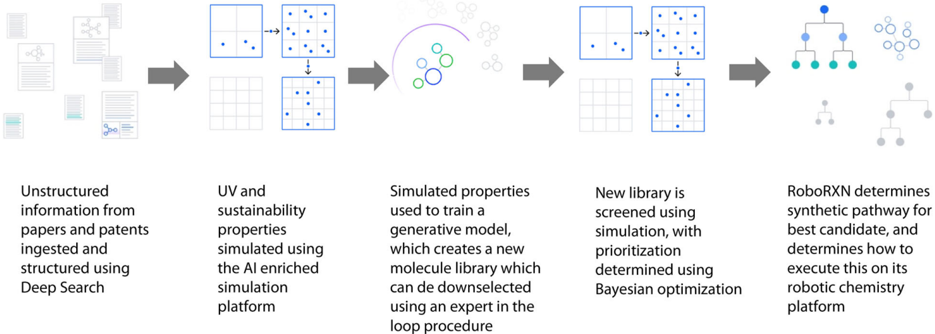
“Pyzer-Knapp and colleagues (Pyzer-Knapp et al., 2022) describe an AI prototype for materials discovery, including natural language tools to extract information from the literature, simulators to optimize molecule choices, and a robotic chemistry platform to execute the experiments.”
AI-enabled manufacturing process discovery
Quispe, D., Kozjek, D., Mozaffar, M., Xue, T., & Cao, J. (2025) · PNAS Nexus · doi:10.1093/pnasnexus/pgaf054 · Cited by 2
“This capability has driven rapid advancements across various fields, including the generation of new high-entropy alloys in material science (25), the identification of photoacid generator candidates for drug discovery (26), and the development of pathways for inverse molecular design (27).”
Sarkar, B., & Paul, R. K. (2025) · Springer eBooks · doi:10.1007/978-3-031-86091-1_7
The Necessary Requirements for Utilizing AI in Data Access Setting
Singh, N., Gautam, A., Sharma, V., Gautam, P., & Sharma, T. K. (2024) · International Conference on Communication, Computing and Energy Efficient Technologies (I3CEET) · doi:10.1109/i3ceet61722.2024.10994001
“Simultaneously, enterprise groups must stay current with the present-day developments in a subject and confirm that their strategy addresses the proper accessory use instances [5].”
Construction and Practice of High-Performance Computing Public Platform
Ji, K., Wu, B., Yao, Q., Huang, L., Liu, B., & Wang, H. (2025) · International Conference on Distributed Computing and Electrical Circuits and Electronics (ICDCECE) · doi:10.1109/icdcece65353.2025.11035959
“…many countries have included high-performance computing as a professional discipline in their student training programs[4], and began to explore the teaching characteristics of high-performance parallel computing[5], including quantum chemistry[6], microbiology[7], materials science[3] and so on.”
End-To-End ML with LLMs and Semantic Data Management: Experiences from Chemistry 4.0
Hoseini, S., Herrmann, V., & Quix, C. (2025) · Workshop on Data Management for End-to-End Machine Learning (DEEM) · doi:10.1145/3735654.3735942
“The fusion of materials science and modern digital technologies, including robotics, and artificial intelligence for replacing traditional manual, analog and human-intensive work in chemistry [5, 6, 39, 47] is an on-going topic of research.”
Metadata
- Authors
- Pyzer-Knapp, E. O., Pitera, J. W., Staar, P. W. J., Takeda, S., Laino, T., Sanders, D. P., Sexton, J., Smith, J. R., & Curioni, A.
- Affiliations
- IBM Research - Almaden (US)
- IBM Research - Zurich (CH)
- IBM Research - Tokyo (JP)
- IBM Research - Thomas J. Watson Research Center (US)
- Venue
- npj Computational Materials
- Published
- 2022-04-26
- Volume
- 8
- Issue
- 1
- ISSN
- 2057-3960 (ISSN-L)
- OpenAlex
- W4225000412
- Semantic Scholar
- 51bb51b06f57fada5d8f338aa484a87f93226468
- Cited by
- 465
- References
- 75
- Citations by year
- 2026: 120 · 2025: 150 · 2024: 107 · 2023: 65 · 2022: 23
- FWCI
- 24.26
- Type
- journal article
- Language
- en
- Open access
- gold
- doi.org
- Licence
- cc-by
- creativecommons.org/licenses/by/4.0 (tdm)
- creativecommons.org/licenses/by/4.0 (vor)
- Locations
- npj Computational Materials (publishedVersion, cc-by)
- DOAJ (DOAJ: Directory of Open Access Journals) (submittedVersion, cc-by-sa)
- Topics
- Physical Sciences › Materials Science › Materials Chemistry › Machine Learning in Materials Science
- Life Sciences › Pharmacology, Toxicology and Pharmaceutics › Drug Discovery › Computational Drug Discovery Methods
- Social Sciences › Decision Sciences › Information Systems and Management › Scientific Computing and Data Management
- Keywords
- materials discovery, artificial intelligence, high-performance computing, robotics, experimental automation, simulation automation, chemically amplified resists
About these checks
Registry, retraction, Cites and statistics results are computed, not judged, with one exception: a printed reference that no index lists is read once by a model before it counts as a citation error. Claims are extracted by a model and kept only when their quote appears verbatim in the text; each cited source is then checked, with a model’s help, for whether it says what the claim relies on. Those verdicts can be wrong — read the claim’s quote and the cited source before relying on one.
Statistics and arithmetic are recomputed, not judged.
Confidence bands are shown only for fields calibrated on our annotated test set. None is calibrated yet, so no band is shown.
What counts as a claim ›How we measure confidence ›How we check this ›
Are you an author, or do you see a problem with this page? Request a review
Data sources
Bibliographic data: Semantic Scholar, OpenAlex, Crossref.
Contains information from the Semantic Scholar Academic Graph Datasets, made available under the ODC Attribution License (ODC-BY 1.0).
Semantic Scholar’s data is described in: Kinney, R., et al. (2023). The Semantic Scholar Open Data Platform. arXiv:2301.10140.
