

Accelerating materials discovery using artificial intelligence, high performance computing and robotics
Open accessThe DOI matches its Crossref record; 78 of the 80 references it cites were found in a registry or an index.
Abstract
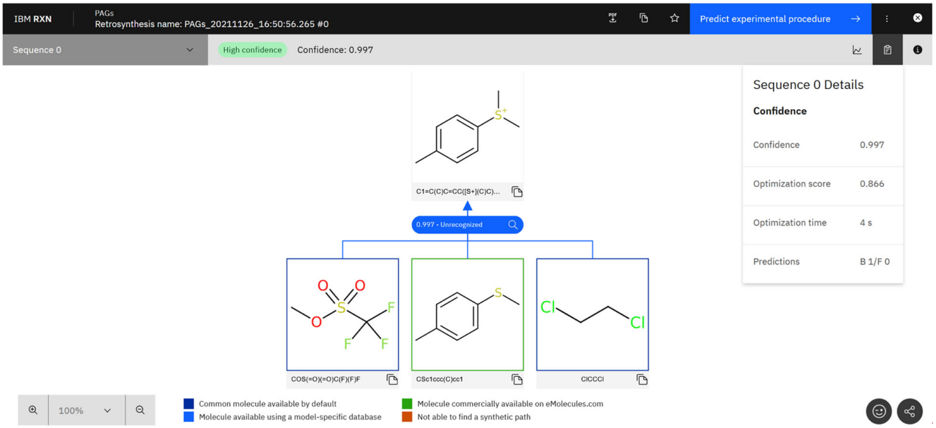
New tools enable new ways of working, and materials science is no exception. In materials discovery, traditional manual, serial, and human-intensive work is being augmented by automated, parallel, and iterative processes driven by Artificial Intelligence (AI), simulation and experimental automation. In this perspective, we describe how these new capabilities enable the acceleration and enrichment of each stage of the discovery cycle. We show, using the example of the development of a novel chemically amplified photoresist, how these technologies’ impacts are amplified when they are used in concert with each other as powerful, heterogeneous workflows.
Overview
The claims and statistics of this paper haven’t been checked yet.
Free: it reads the open-access text and checks the first 5 claims that cite a source we can check. Create a free account to check every claim.
Integrity signals
Registry
Cites
Statistics
Figures
Verification
Claims the paper makes
The claims and statistics of this paper haven’t been checked yet.
Free: it reads the open-access text and checks the first 5 claims that cite a source we can check. Create a free account to check every claim.
Claims other papers make about this one
Each is checked against this paper’s own text: does it say what the citing paper says it does?
The cited source says what the claim attributes to it.
In the citing paper
“The central challenge is not only to predict a property, but to manage the sequence of reasoning and action that connects a scientific objective to executable computational or experimental steps [2-10].”
From From Scientific Copilots to Tool-Grounded Autonomy: AI Agents in Simulation-Driven Materials Discovery (2026) · cites this paper as [2]
Self-check
Percentages, sums and reported differences re-computed from the paper’s own numbers.
The self-check needs the paper’s full text.
Citations
Cites
Language Models are Few-Shot Learners
Brown, T. B., Mann, B., Ryder, N., Subbiah, M., Kaplan, J., Dhariwal, P., Neelakantan, A., Shyam, P., Sastry, G., Askell, A., et al. (2020) · arXiv · doi:10.48550/arxiv.2005.14165 · Cited by 23,372 · cited 1×
“Recent developments in AI technology based on pre-trained language models 47 and Generative Adversarial Networks (GANs) 48,49 , have been used to automatically generate images, speech, and natural language, and have recently been applied to materials discovery problems 50,51 .”
MethodGaussian Processes for Machine Learning
Rasmussen, C. E., & Williams, C. K. I. (2005) · doi:10.7551/mitpress/3206.001.0001 · Cited by 11,705
Density-Functional Theory for Time-Dependent Systems
Runge, E., & Gross, E. K. U. (1984) · Physical Review Letters · doi:10.1103/physrevlett.52.997 · Cited by 8,914
Extended-Connectivity Fingerprints
Rogers, D., & Hahn, M. (2010) · Journal of Chemical Information and Modeling · doi:10.1021/ci100050t · Cited by 7,524
Gaussian Processes in Machine Learning
Rasmussen, C. E. (2004) · Lecture Notes in Computer Science · doi:10.1007/978-3-540-28650-9_4 · Cited by 5,397
Improved protein structure prediction using potentials from deep learning
Senior, A. W., Evans, R., Jumper, J., Kirkpatrick, J., Sifre, L., Green, T., Qin, C., Žídek, A., Nelson, A. W. R., Bridgland, A., et al. (2020) · Nature · doi:10.1038/s41586-019-1923-7 · Cited by 3,378 · cited 1×
“Emerging from the use of neural networks to bypass expensive physics-based routines 28,29 , AI has been used to predict ever more complex properties, such as energetic materials 30 , solid-state materials properties 31,32 and even the structure of proteins 33 .”
MethodAutomatic Chemical Design Using a Data-Driven Continuous Representation of Molecules
Gómez-Bombarelli, R., Wei, J. N., Duvenaud, D., Hernández-Lobato, J. M., Sánchez-Lengeling, B., Sheberla, D., Aguilera-Iparraguirre, J., Hirzel, T. D., Adams, R. P., & Aspuru-Guzik, A. (2018) · ACS Central Science · doi:10.1021/acscentsci.7b00572 · Cited by 3,106 · cited 2×
“Recent developments in AI technology based on pre-trained language models 47 and Generative Adversarial Networks (GANs) 48,49 , have been used to automatically generate images, speech, and natural language, and have recently been applied to materials discovery problems 50,51 .”
BackgroundMethodRecent advances and applications of machine learning in solid-state materials science
Schmidt, J., Marques, M. R. G., Botti, S., & Marques, M. A. L. (2019) · npj Computational Materials · doi:10.1038/s41524-019-0221-0 · Cited by 2,607 · cited 1×
“Emerging from the use of neural networks to bypass expensive physics-based routines 28,29 , AI has been used to predict ever more complex properties, such as energetic materials 30 , solid-state materials properties 31,32 and even the structure of proteins 33 .”
MethodANI-1: an extensible neural network potential with DFT accuracy at force field computational cost
Smith, J. S., Isayev, O., & Roitberg, A. E. (2017) · Chemical Science · doi:10.1039/c6sc05720a · Cited by 1,921
Self-citationBurger, B., Maffettone, P. M., Gusev, V. V., Aitchison, C. M., Bai, Y., Wang, X., Li, X., Alston, B. M., Li, B., Clowes, R., et al. (2020) · Nature · doi:10.1038/s41586-020-2442-2 · Cited by 1,516 · cited 2×
“Concurrently, there is an explosion of automation and AI in chemical synthesis, with the important contribution in the use of commodity hardware 67 , fl uidic reactors 68 , or the use of robots able to execute the same tasks as human chemists 69 .”
Background
Research works printed but not linked: 8
- Kuhn, T. The Structure of Scientific Revolutions 2nd edn (The University of Chicago Press, 1970).
- arXiv.org e-Print archive. https://arxiv.org/.
- Hernández-Lobato, J. M., Requeima, J., Pyzer-Knapp, E. O. & Aspuru-Guzik, A. Parallel and distributed Thompson sampling for large-scale accelerated exploration of chemical space. In: Proc. 34th International Conference on Machine Learning-Volume 70 1470-1479 (JMLR. org, 2017).
- Brochu, E., Cora, V. M. & de Freitas, N. A Tutorial on Bayesian optimization of expensive cost functions, with application to active user modeling and hier- archical reinforcement learning. Preprint at https://arxiv.org/abs/10122599 (2010).
- Kusner, M. J., Paige, B. & Hernández-Lobato, J. M. Grammar variational auto- encoder. In: International Conference on Machine Learning 1945-1954 (PMLR, 2017).
- Crivello, J. V. & Lam, J. H. W. Photoinitiated cationic polymerization with triar- ylsulfonium salts. J. Polym. Sci. A: Polym. Chem. 17, 977-999 (1979).
- Carrete, J., Li, W., Mingo, N., Wang, S. & Curtarolo, S. Finding unprecedentedly low-thermal-conductivity half-Heusler semiconductors via high-throughput materials modeling. Phys. Rev. X 4, 011019 (2014).
- Shipley, G. & Dumpleton, G. OpenShift for Developers: A Guide for Impatient Beginners (O'Reilly Media, Inc., 2016).
Cited by
Items 201–300 of 532
Fast, Transparent, and High-Fidelity Memoization Cache-Keys for Computational Workflows
Vassiliadis, V., Johnston, M. A., & McDonagh, J. L. (2022) · IEEE International Conference on Services Computing · doi:10.1109/scc55611.2022.00036 · Cited by 8
“We used these workflows in the context of Project Photoresist [37] to accelerate the discovery and synthesis of more sustainable Photo-Acid Generators (PAGs) for chemically amplified photoresists [38].”
MethodCorona, D., Buonocore, F., Bechstedt, F., Celino, M., & Pulci, O. (2024) · Nanomaterials · doi:10.3390/nano14030271 · Cited by 8
“In fact, by leveraging HPC capabilities, researchers can employ sophisticated quantum mechanical calculations (e.g., DFT calculations) and molecular dynamics simulations to explore the properties of thousands of potential nanoelectrodes and tackle complex material design challenges [50–52].”
MethodThermodynamically-Informed Iterative Neural Operators for heterogeneous elastic localization
Kelly, C., & Kalidindi, S. R. (2025) · Computer Methods in Applied Mechanics and Engineering · doi:10.1016/j.cma.2025.117939 · Cited by 10
Ferreira, R. P., Ding, R., Zhang, F., Pu, H., Donnat, C., Chen, Y., & Chen, J. (2025) · Molecular Systems Design & Engineering · doi:10.1039/d4me00203b · Cited by 7
Lee, S., Noh, J., & Ryu, H. J. (2025) · Journal of Hazardous Materials · doi:10.1016/j.jhazmat.2025.138735 · Cited by 7
Identifying Key Factors Influencing Advanced Hydrogen Evolution Reaction Catalysts
Wang, J., Hu, X., Jiang, Y., Yuan, W., Yang, H., Han, Z., & Wang, Y. (2025) · JACS Au · doi:10.1021/jacsau.5c00339 · Cited by 7
Yang, Z., Wang, L., Huang, T., Wang, Y., Gao, M., Hou, T., Ding, J., & Xiao, J. (2025) · Advanced Science · doi:10.1002/advs.202504867 · Cited by 10
Mejía-Méndez, J. L., Reza-Zaldívar, E. E., Navarro-López, D. E., Sanchez-Martinez, A., Ceballos-Sanchez, O., Badillo, M., Sánchez-López, A. L., Yacamán, M. J., Jacobo‐Velázquez, D. A., López-Mena, E. R., et al. (2025) · Ultrasonics Sonochemistry · doi:10.1016/j.ultsonch.2025.107704 · Cited by 7
“By analyzing experimental datasets, ML algorithms can identify patterns and correlations that may not be identified immediately using traditional methods [37,38].”
A critical review on electronic materials properties and multifunctional applications
Mengesha, W. G., & Nagessar, K. (2025) · Discover Materials · doi:10.1007/s43939-025-00517-y · Cited by 8
“By establishing stronger connections between quantum mechanical principles, predictive modeling, and experimental validation, we can advance toward more sustainable and scalable innovation in next-generation electronic materials [15–17].”
Few-Shot Ensemble Learning for Catalysis and Application to Trimetallics for Oxygen Reduction
Hill, A. F., Ruiz-Escudero, A., & Montemore, M. M. (2026) · ACS Catalysis · doi:10.1021/acscatal.5c08168 · Cited by 7
CLOUD: A Scalable and Physics-Informed Foundation Model for Crystal Representation Learning
Xu, C., Zhu, S., & Viswanathan, V. (2026) · Nature Communications · doi:10.1038/s41467-026-70467-3 · Cited by 8
“However, the work can be better organized to show better novelty and clarity.”
Hebert, J., Hratisch, R., Gomes, R., Kunkel, W., Marshall, D., Ghosh, A., Doss, I., Ma, Y., Stedman, D., Stinson, B., et al. (2024) · Education and Information Technologies · doi:10.1007/s10639-024-12582-6 · Cited by 7
“HPC resources have been used worldwide to perform cutting-edge research in many fields to accelerate the rate of scientific discovery (Pyzer-Knapp et al., 2022).”
Generative Adversarial Networks in Business and Social Science
Gándara, Á. R., & Abril, L. G. (2024) · Applied Sciences · doi:10.3390/app14177438 · Cited by 10
Dhal, A., Mukherjee, S., Jain, R., Haridas, R. S., & Mishra, R. S. (2025) · Materials Research Letters · doi:10.1080/21663831.2025.2476172 · Cited by 7
“In such rapidly increasing compositional space, alloy design paradigm has evolved from parametric approach based on simple thermodynamic and geometric calculations to computational approach involving CALPHAD, ab-initio simulation, and more recently, artificial intelligence [6,7].”
Many-body physics and machine learning enabled discovery of promising solar materials
Biswas, T., Gupta, A., & Singh, A. K. (2025) · RSC Advances · doi:10.1039/d5ra01285f · Cited by 8
Clc-db: an open-source online database of chiral ligands and catalysts
Yu, G., Yu, K., Wang, X., Zhang, C., Luo, Y., Huo, X., & Yang, Y. (2025) · Journal of Cheminformatics · doi:10.1186/s13321-025-00991-9 · Cited by 8
“The use of ML techniques in catalysis [26], as well as in the wider realms of chemistry [27] and materials science [28, 29], is drawing notable interest.”
Pakamorė, I., & Forgan, R. S. (2025) · Digital Discovery · doi:10.1039/d5dd00200a · Cited by 7
Xiong, Y., Wu, H., Cheng, Y., Shao, M., Wang, Y., Zhou, J., Hao, F., Liu, F., Guo, L., Meng, X., et al. (2025) · Chemistry of Materials · doi:10.1021/acs.chemmater.5c00955 · Cited by 8
Hilbert, L., Gadzekpo, A., Vecchio, S. L., Wellhäusser, M., Tschurikow, X., Prizak, R., Becker, B., Burghart, S., & Oprzeska‐Zingrebe, E. A. (2025) · Annals of the New York Academy of Sciences · doi:10.1111/nyas.15415 · Cited by 8
“70 Similarly, synthetic DNA nanostructures can be represented computationally, bridging scales from all-atomistic, via base-pair resolution, to coarse-grained micrometer-scale simulations.”
Networking autonomous material exploration systems through transfer learning
Yoshida, N., Iwabuchi, Y., Igarashi, Y., & Iwasaki, Y. (2025) · npj Computational Materials · doi:10.1038/s41524-025-01851-8 · Cited by 8
Wen, Y., Wang, Z., Li, J., Xue, C., Wang, H., Li, X., Zhang, H., Lu, Y., Zhang, Y., Hou, Q., et al. (2025) · Chinese Chemical Letters · doi:10.1016/j.cclet.2025.111960 · Cited by 6
A Review of Artificial Intelligence-Driven Approaches for Nanoscale Heat Conduction and Radiation
Guo, Z., Carne, D., Khot, K., Feng, D., Lin, G., & Ruan, X. (2025) · Journal of Computing and Information Science in Engineering · doi:10.1115/1.4070202 · Cited by 7
Harnessing Quantum Computing for Energy Materials: Opportunities and Challenges
Kim, S., Suh, I., Humble, T. S., Beck, T. L., lee, E., & Luo, T. (2026) · ACS Energy Letters · doi:10.1021/acsenergylett.5c04009 · Cited by 10
Vitillo, J. G., Aspuru‐Guzik, A., Doskocil, E. J., Farha, O. K., İslamoğlu, T., Kulik, H. J., Margl, P. M., Miller, S., Reddel, J. C. T., Singh, A. R., et al. (2026) · Digital Discovery · doi:10.1039/d5dd00524h · Cited by 7
AI-powered OLEDs: speeding up innovation in displays
Sarma, M., & Chatterjee, T. (2026) · Journal of Materials Chemistry C · doi:10.1039/d5tc03088a · Cited by 6
He, C., Singull, M., & Jacobsson, T. J. (2026) · Advanced Intelligent Systems · doi:10.1002/aisy.202501149 · Cited by 9
AI for science: Progress, challenges, and perspectives
Xu, Y., Shao, Z., Liu, X., Li, Y., An, Z., Fu, C., Huang, C., Zhang, L., Gao, F., Li, J., et al. (2026) · The Innovation · doi:10.1016/j.xinn.2026.101530 · Cited by 16
Safavi, A. S., & Karbasi, S. (2024) · Journal of Biomaterials Science Polymer Edition · doi:10.1080/09205063.2024.2444077 · Cited by 9
“AI can improve simulation tools for designing and testing magnetic materials, accelerating the development cycle and leading to better-performing materials [90].”
Discovering novel lead-free mixed cation hybrid halide perovskites via machine learning
Jamalinabijan, F., Alidoust, S., Demir, G. İ., & Tekin, A. (2025) · Physical Chemistry Chemical Physics · doi:10.1039/d4cp04218b · Cited by 9
Liao, J., Wang, P., Jiang, W., Du, X., Liu, J. Z., & Li, D. (2025) · Advanced Materials · doi:10.1002/adma.202506177 · Cited by 7
Trzepieciński, T., Kowalik, M., Najm, S. M., Laouini, S. E., & Mezher, M. T. (2025) · AIMS Materials Science · doi:10.3934/matersci.2025034 · Cited by 6
Sample-efficient active learning for materials informatics using integrated posterior variance
Issa, R., Hamad, S., Grau‐Crespo, R., Awad, E., & Sparks, T. D. (2026) · Computational Materials Science · doi:10.1016/j.commatsci.2026.114551 · Cited by 9
Joshi, H., Wilde, N., Asche, T. S., & Wolf, D. (2022) · Chemie Ingenieur Technik · doi:10.1002/cite.202200071 · Cited by 6
Versatile fitting approach for operando spectroscopic imaging ellipsometry of HfS 2 oxidation
Chircă, I., AlMutairi, A. A., Achinuq, B., Cai, R., Haigh, S. J., & Hofmann, S. (2024) · 2D Materials · doi:10.1088/2053-1583/ad58f1 · Cited by 6
Gbedawo, V. W., Dzikunu, A. D. K., & Nyamadi, M. (2024) · African Journal Of Applied Research · doi:10.26437/ajar.v10i2.807 · Cited by 6
Bilge, K., Baykal, A., & Kızıldağ, N. (2025) · Progress in Additive Manufacturing · doi:10.1007/s40964-025-01100-w · Cited by 6
“Additive manufacturing is the only viable and adaptable way of manufacturing hierarchically structured mechanical metamaterials [1, 2].”
Data Science in Order and Disorder of High-Entropy Materials
Wang, J., Jiang, J., Liaw, P. K., Geng, G., & Zhang, Y. (2025) · Metals · doi:10.3390/met15060632 · Cited by 8
“These approaches offer several advantages, such as accelerating the discovery process, reducing experimental costs, and providing insights into complex material behaviors that are difficult to obtain through traditional methods alone [56,57].”
Machine learning techniques for data analysis in materials science
Ronchetti, C., Puccini, M., Ferlito, S., Giusepponi, S., Palombi, F., Buonocore, F., & Celino, M. (2022) · AEIT International Annual Conference · doi:10.23919/aeit56783.2022.9951839 · Cited by 7
“In material science [6], there have been developed GNN architectures-based neural networks such as SchNet [7] [8], Crystal Graph Convolutional Neural Networks (CGCNN) [9], MatErials Graph Network (MEGNet) [10], improved Crystal Graph Convolutional Neural Networks (iCGCNN) [11], Orb-Net [12],…”
MethodAdvances and challenges in N2O valorization for alkane oxidative dehydrogenation to olefins
Wu, Y., Wu, X., Wang, H., & Wu, Z. (2024) · Green Chemical Engineering · doi:10.1016/j.gce.2024.11.005 · Cited by 6
SOLID-MAP: Development of a Materials Acceleration Platform for High-Entropy Alloys
Antikainen, A., Jokiaho, T., Kaunisto, K. M., Lambai, A., Laukkanen, A., Lindroos, T. J., Linnala, L., Mäkipää, M., Nandy, S., Pakarinen, J., et al. (2025) · Journal of Materials Engineering and Performance · doi:10.1007/s11665-025-11504-y · Cited by 5
A review on electrolyte innovation enabled by machine learning for energy storage applications
Shukla, N., Saikia, M., & Deka, M. (2025) · Materials Today Physics · doi:10.1016/j.mtphys.2025.101799 · Cited by 7
Li, W., Li, W., Hu, J. Z., Liu, P., Shi, H., & Yu, J. (2025) · Journal of Nuclear Materials · doi:10.1016/j.jnucmat.2025.156217 · Cited by 5
Accurate and rapid measurement of fluid thermal conductivity
Kazemi, M. A., Zargartalebi, M., & Sinton, D. A. (2025) · Nature Communications · doi:10.1038/s41467-025-65553-x · Cited by 5
Artificial intelligence-guided design of manufactured sand concrete with targeted performance
Chen, Y., Liu, Q., Xiong, Q. X., Tan, K., Zhu, W., & Shen, W. (2025) · Engineering Applications of Artificial Intelligence · doi:10.1016/j.engappai.2025.113424 · Cited by 5
Kumar, V. V., SANTOS, T. M. B., Santos, C. M. D. S., Nzeyimana, B. S., Shahin, K., Rao, H. J., & do Nascimento, J. H. O. (2026) · Polymer Composites · doi:10.1002/pc.71029 · Cited by 5
“…decades, exponential trajectories of increasing computational capabilities and enhanced data accessibility, along with advances in algorithms, have transformed these techniques into critical tools for predicting, modeling, defect screening, material design, and performance optimization [14–17].”
Chopstick-Like Structure for the Free Transfer of Microdroplets in Robot Chemistry Laboratory
Bian, X., Chen, L., Ma, L., & Shen, X. (2022) · Langmuir · doi:10.1021/acs.langmuir.2c01921 · Cited by 5
Croucher, C., Powell, W. A., Stevens, B., Dicks, M., Powell, V., Wiltshire, T. J., & Spronck, P. H. M. (2023) · IEEE Transactions on Visualization and Computer Graphics · doi:10.1109/tvcg.2023.3313439 · Cited by 5
“This question reflects an area of discussion not limited to RDW research [22], [23].”
BackgroundPredictive modeling of critical temperatures in magnesium compounds using transfer learning
Kumar, S., Jaafreh, R., Dutta, S., Yoo, J. H., Pereznieto, S., Hamad, K., & Yoon, D. H. (2024) · Journal of Magnesium and Alloys · doi:10.1016/j.jma.2024.04.006 · Cited by 5
Evaluating the Energy Efficiency of Toubkal HPC: Insights for the Green500 Rankings and Its Metric
Kissami, I., Basmadjian, R., & Zahir, A. (2025) · ACM International Conference on Future Energy Systems (e-Energy) · doi:10.1145/3679240.3735103 · Cited by 6
Svaluto‐Ferro, E., Kimbell, G., Kim, Y., Plainpan, N., Kunz, B., Scholz, L., Läubli, R., Becker, M., Reber, D., Kraus, P., et al. (2025) · Batteries & Supercaps · doi:10.1002/batt.202500155 · Cited by 5
Position Paper: Unlocking the Potential of AI Researchers in Scientific Discovery—What Is Missing?
Yu, H., Liu, S., Yang, H., Yan, Y., Qu, M., & Jin, Y. (2026) · International Joint Conference on Neural Networks (IJCNN) · doi:10.1109/ijcnn69854.2026.11729527 · Cited by 5
“There are many AI4Science workflows for scientific discovery in various fields, such as proteomics [50], materials [39], biomedicine[51], and medical imaging [52], but most are designed for researchers in specific fields rather than for AI researchers.”
Best practice for sampling in automated parallel synthesizers
Ringleb, M., Schuett, T., Zechel, S., & Schubert, U. S. (2023) · Digital Discovery · doi:10.1039/d3dd00074e · Cited by 5
Coatings Intelligence: Data-driven Automation for Chemistry 4.0
Hoseini, S., Zhang, G., Polke, D., Surjana, A. I., Wagner, L., Schmitz, C., & Quix, C. (2024) · IEEE International Conference on Industrial Cyber-Physical Systems (ICPS) · doi:10.1109/icps59941.2024.10640053 · Cited by 7
“There exists many proposals to incorporate artificial intelligence for replacing traditional manual, analog and human-intensive work in chemistry [24]–[27].”
Background3D Denoisers Are Good 2D Teachers: Molecular Pretraining via Denoising and Cross-Modal Distillation
Cho, S., Jeong, D.-W., Ko, S. M., Kim, J., Han, S., Hong, S., Lee, H., & Lee, M. (2025) · Proceedings of the AAAI Conference on Artificial Intelligence · doi:10.1609/aaai.v39i1.31986 · Cited by 6
Baek, H. Y., & Kim, J. H. (2025) · Sensors and Materials · doi:10.18494/sam5592 · Cited by 6
Huang, C., Zhang, Y., Li, S., Wang, H., Wang, Y., Wei, S., & Sun, S. (2025) · Chemical Science · doi:10.1039/d5sc00494b · Cited by 5
Khan, G. A., Sanford, C., & Trinh, C. (2025) · Biotechnology Advances · doi:10.1016/j.biotechadv.2025.108738 · Cited by 4
Adamu, H., Bello, U., Tafida, U. I., Muhammad, K. Y., Modu, K. A., Amran, N. A., Alam, U., & Qamar, M. (2025) · Journal of Energy Storage · doi:10.1016/j.est.2025.119846 · Cited by 4
Ha, M.-Q., Le, D.-K., Nguyen, V.-C., Kino, H., Stefano Curtarolo, A., & Dam, H. (2025) · Digital Discovery · doi:10.1039/d5dd00400d · Cited by 4
Gangwal, A., & Lavecchia, A. (2026) · Medicinal Research Reviews · doi:10.1002/med.70074 · Cited by 4
Arkles, B., & Kaloyeros, A. E. (2024) · Coatings · doi:10.3390/coatings14091115 · Cited by 4
Koshoji, R., & Ozaki, T. (2024) · Physical Review Materials · doi:10.1103/physrevmaterials.8.113801 · Cited by 4
Zhang, X., Li, B., Wang, M., Liu, B., Lv, W., Liu, K., & Liu, K. (2025) · Ceramics International · doi:10.1016/j.ceramint.2025.08.024 · Cited by 4
Applications of machine learning in ion beam analysis of materials
da Silva, T. F. (2025) · Journal of Vacuum Science & Technology A Vacuum Surfaces and Films · doi:10.1116/6.0004277 · Cited by 4
Alwhelat, A. M., Fadare, O. A., Al-Turjman, F. M., & Ibrahim, L. J. (2025) · Sustainable civil infrastructures · doi:10.1007/978-3-031-72509-8_87 · Cited by 4
Building the future: the research frontiers and industrial prospects in framework chemistry
Yue, K., Ding, S., Hao, L., Bu, X., Chen, X., & Fu, X. (2024) · Scientia Sinica Chimica · doi:10.1360/ssc-2024-0009 · Cited by 4
Hassanloo, H., & Wang, X. (2024) · International Journal of Thermofluids · doi:10.1016/j.ijft.2024.100734 · Cited by 4
Hufnagel, T. C., Addepalli, P., Bhattacharjee, A., Berlia, R., El‐Awady, J. A., Elbert, D., Graham-Brady, L. L., Krieger, A., Neralla, H., Nkansah-Mahaney, T. J., et al. (2026) · arXiv (Cornell University) · doi:10.48550/arxiv.2603.06835 · Cited by 4
Ontology-based knowledge graph infrastructure for interoperable atomistic simulation dataPreprint
Guzmán, A. A., Menon, S. K., Hickel, T., & Sandfeld, S. (2026) · Research Square · doi:10.21203/rs.3.rs-9337379/v1 · Cited by 4
Xu, Y., Gao, Y., Wang, M., & Zhu, X. (2024) · ACS Applied Materials & Interfaces · doi:10.1021/acsami.4c09842 · Cited by 3
Trends in Sequence-Defined Polyelectrolyte Systems: A Perspective
Chang, Q., Wang, R., Qing, L., & Jiang, J. H. (2024) · Chinese Journal of Polymer Science · doi:10.1007/s10118-024-3221-6 · Cited by 3
Zhang, Q., Zhang, H., Su, Z., Sun, Y., & Hu, W. (2025) · Journal of Chemical Theory and Computation · doi:10.1021/acs.jctc.5c00713 · Cited by 3
Ali, Z. A., Mutschler, J., & Waldmann, O. (2025) · Physical review. B./Physical review. B · doi:10.1103/7tfd-22jr · Cited by 3
Normahmedov, O., Ma, H., Peng, J., Dong, H., Zhuo, J., Shi, M., Wang, L., Jiang, S., & Shi, Y. (2025) · Advanced Intelligent Systems · doi:10.1002/aisy.202500917 · Cited by 4
Yang, Y., Deng, M., Rui, T., Ma, Z., Lu, L., Wang, Y., Lan, T., Lan, Y., Wan, H., Li, Y., et al. (2025) · Crystals · doi:10.3390/cryst15121008 · Cited by 3
Stroyuk, O. L., Raievska, O., Zahn, D. R. T., & Brabec, C. J. (2025) · Nano Futures · doi:10.1088/2399-1984/ae271b · Cited by 3
“The automated synthesis generates materials, subjected to automated characterization to train a model for the prediction of new conditions and the next cycle of experiments, until the target property is achieved [67, 83].”
Artificial Intelligence as the Next Visionary in Liquid Crystal Research
Astam, M. O., L'Karkouri, O., & Liu, D. (2026) · Advanced Functional Materials · doi:10.1002/adfm.202529976 · Cited by 3
“The AI model proposes a candidate molecular structure, which can then be scrutinized either computationally, using density functional theory calculationsand simulations,orexperimentally [52].”
Revolutionizing Scientific Figure Decoding: Benchmarking LLM Data Extraction Performance
Turan, I., & Sparks, T. D. (2026) · Integrating materials and manufacturing innovation · doi:10.1007/s40192-026-00443-8 · Cited by 6
Silva, I. R., Pereira, N., Tubio, C. R., Correia, D., Costa, C. M., & Lanceros-Méndez, S. (2026) · Materials Today Nano · doi:10.1016/j.mtnano.2026.100796 · Cited by 3
Machine Learning Prediction of Crystal Structure Stability toward the Design of High-Entropy Oxides
Zhou, Q., Wang, C., Wang, L., Wang, Z., Qiu, M., Dong, M., & Yu, Y. (2026) · Chinese Physics Letters · doi:10.1088/0256-307x/43/5/050801 · Cited by 3
Antimicrobial hydrogels for oral infection management: From molecular design to clinical translation
Mu, Y., Lou, X., Bai, L., & Xiao, Y. (2026) · Acta Biomaterialia · doi:10.1016/j.actbio.2026.04.018 · Cited by 4
Raihan, A. S., Liu, Z., Bhuiyan, T. H., & Ahmed, I. (2026) · Applied Soft Computing · doi:10.1016/j.asoc.2026.115463 · Cited by 5
Aryan, M., Struble, D. C., Campbell, F. A., Upreti, S., Abedin, A., Khambhawla, A., Mittal, J., Dimitriyev, M. S., Pentzer, E., Sukhishvili, S. A., et al. (2026) · RSC Applied Polymers · doi:10.1039/d5lp00380f · Cited by 3
Breaking Bottlenecks in Solid Electrolyte Discovery With Large Artificial Intelligence Models
Cheng, E. J., Hong, M., Zeng, Z., Liu, C., Wang, Q., Meadowcroft, M. J., Badilita, V., Costa, C. M., Lanceros-Méndez, S., Li, Y., et al. (2026) · Advanced Materials · doi:10.1002/adma.75354 · Cited by 3
Buehler, M. J. (2026) · Integrating materials and manufacturing innovation · doi:10.1007/s40192-026-00465-2 · Cited by 4
“The trajectory is not monotonic accumulation: Move [8] removes a feature added at move [6]; move [13] removes a feature implicated by move [12]; the final accepted move [16] is itself a removal.”
Kim, M., Lee, J., Chun, H. W., Shin, E. S., Choi, H., Kang, D.-W., Kim, J. H., Huang, S., & Kim, J. (2026) · Energy and AI · doi:10.1016/j.egyai.2026.100856 · Cited by 5
Development of AI-eChemist Laboratory
Tan, Y., Chen, L., Shan, X., Tu, Y., Wang, P., Xu, J., Gao, H., & Zhou, M. (2026) · AI Agent · doi:10.20517/aiagent.2026.15 · Cited by 3
Wang, S., Chau, H. K., Kristy, S., Thompson, B. A., Malizia, J. P., & Fushimi, R. (2025) · ACS Engineering Au · doi:10.1021/acsengineeringau.5c00025 · Cited by 3
How is Artificial Intelligence (AI) Changing the Future of Computer-Based Testing (CBT)?
Romdani, R., & Adiyono, A. (2025) · Universal Education Journal of Teaching and Learning · doi:10.63081/uejtl.v2i2.48 · Cited by 4
Comparative analysis of search approaches to discover donor molecules for organic solar cells
Azzouzi, M., Bennett, S., Posligua, V., Bondesan, R., Zwijnenburg, M. A., & Jelfs, K. E. (2025) · Digital Discovery · doi:10.1039/d4dd00355a · Cited by 3
Stręk, A., Dudzik, M., & Machniewicz, T. (2025) · Materials · doi:10.3390/ma18194492 · Cited by 3
“These new approaches are promising complements or alternatives to traditional methods since they have the capacity to deal with non-linear problems, offer space for solving high-dimensional data sets, and are capable of discovering hidden patterns [54–56].”
Chen, L., Luo, W., Almadhor, A. S., & Abbas, M. A. (2023) · Mechanics of Advanced Materials and Structures · doi:10.1080/15376494.2023.2257180 · Cited by 3
“Material characterization is another crucial aspect of mechanical engineering where AI has demonstrated its potential [69].”
Causal emergent principles and relations for mechanical properties of covalent and ionic crystals
Hu, Z., & Yu, J. Y. (2024) · AIP Advances · doi:10.1063/5.0207863 · Cited by 3
Gomes, R. D. A., & Mendes, T. A. (2025) · Encontros Bibli Revista Eletrônica de Biblioteconomia e Ciência da Informação · doi:10.5007/1518-2924.2025.e103488 · Cited by 7
Leveraging our Teacher’s Experience to Improve Machine Learning: Application to pKa PredictionPreprint
Genzling, J., Luo, Z., Weiser, B., & Moitessier, N. (2024) · ChemRxiv · doi:10.26434/chemrxiv-2024-bpd53 · Cited by 3
The AI Revolution in Chemistry: Shaping the Future of Materials and Biomedical SciencesPreprint
Baranwal, B. S., Jones, L. O., Maind, A., Balande, U., Khandare, D. G., Goyal, H., Diaz, L. M. L., Ivanov, J. M., & Zhou, Q. A. (2025) · ChemRxiv · doi:10.26434/chemrxiv-2025-8lrf0 · Cited by 4
Sustainable electrification in the era of AI
Xie, L., Li, N., & Poor, H. V. (2024) · Nature Reviews Electrical Engineering · doi:10.1038/s44287-024-00083-0 · Cited by 2
Kernel learning assisted synthesis condition exploration for ternary spinel
Liu, Y., Ansari, M., Black, R., & Hattrick-Simpers, J. R. (2025) · Communications Materials · doi:10.1038/s43246-025-00867-3 · Cited by 2
Repellent Surfaces: Past Development, Present Status, and Future Perspective
Su, Y., & He, J. (2025) · Advanced Materials Technologies · doi:10.1002/admt.202500050 · Cited by 2
Plank, M., Saritas, E. M., Niebuur, B., Meckel, T., Lellinger, D., Krolla, P., Biesalski, M., Kraus, T., & Gallei, M. (2025) · Advanced Materials Interfaces · doi:10.1002/admi.202500593 · Cited by 2
Metadata
- Authors
- Pyzer-Knapp, E. O., Pitera, J. W., Staar, P. W. J., Takeda, S., Laino, T., Sanders, D. P., Sexton, J., Smith, J. R., & Curioni, A.
- Affiliations
- IBM Research - Almaden (US)
- IBM Research - Zurich (CH)
- IBM Research - Tokyo (JP)
- IBM Research - Thomas J. Watson Research Center (US)
- Venue
- npj Computational Materials
- Published
- 2022-04-26
- Volume
- 8
- Issue
- 1
- ISSN
- 2057-3960 (ISSN-L)
- OpenAlex
- W4225000412
- Semantic Scholar
- 51bb51b06f57fada5d8f338aa484a87f93226468
- Cited by
- 465
- References
- 75
- Citations by year
- 2026: 120 · 2025: 150 · 2024: 107 · 2023: 65 · 2022: 23
- FWCI
- 24.26
- Type
- journal article
- Language
- en
- Open access
- gold
- doi.org
- Licence
- cc-by
- creativecommons.org/licenses/by/4.0 (tdm)
- creativecommons.org/licenses/by/4.0 (vor)
- Locations
- npj Computational Materials (publishedVersion, cc-by)
- DOAJ (DOAJ: Directory of Open Access Journals) (submittedVersion, cc-by-sa)
- Topics
- Physical Sciences › Materials Science › Materials Chemistry › Machine Learning in Materials Science
- Life Sciences › Pharmacology, Toxicology and Pharmaceutics › Drug Discovery › Computational Drug Discovery Methods
- Social Sciences › Decision Sciences › Information Systems and Management › Scientific Computing and Data Management
- Keywords
- materials discovery, artificial intelligence, high-performance computing, robotics, experimental automation, simulation automation, chemically amplified resists
About these checks
Registry, retraction, Cites and statistics results are computed, not judged, with one exception: a printed reference that no index lists is read once by a model before it counts as a citation error. Claims are extracted by a model and kept only when their quote appears verbatim in the text; each cited source is then checked, with a model’s help, for whether it says what the claim relies on. Those verdicts can be wrong — read the claim’s quote and the cited source before relying on one.
Statistics and arithmetic are recomputed, not judged.
Confidence bands are shown only for fields calibrated on our annotated test set. None is calibrated yet, so no band is shown.
What counts as a claim ›How we measure confidence ›How we check this ›
Are you an author, or do you see a problem with this page? Request a review
Data sources
Bibliographic data: Semantic Scholar, OpenAlex, Crossref.
Contains information from the Semantic Scholar Academic Graph Datasets, made available under the ODC Attribution License (ODC-BY 1.0).
Semantic Scholar’s data is described in: Kinney, R., et al. (2023). The Semantic Scholar Open Data Platform. arXiv:2301.10140.
