

Advances in healthcare wearable devices
Open accessThe DOI matches its Crossref record; 123 of the 123 references it cites were found in a registry or an index.
Abstract
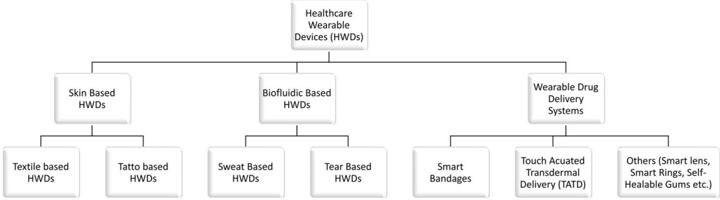
Wearable devices have found numerous applications in healthcare ranging from physiological diseases, such as cardiovascular diseases, hypertension and muscle disorders to neurocognitive disorders, such as Parkinson’s disease, Alzheimer’s disease and other psychological diseases. Different types of wearables are used for this purpose, for example, skin-based wearables including tattoo-based wearables, textile-based wearables, and biofluidic-based wearables. Recently, wearables have also shown encouraging improvements as a drug delivery system; therefore, enhancing its utility towards personalized healthcare. These wearables contain inherent challenges, which need to be addressed before their commercialization as a fully personalized healthcare system. This paper reviews different types of wearable devices currently being used in the healthcare field. It also highlights their efficacy in monitoring different diseases and applications of healthcare wearable devices (HWDs) for diagnostic and treatment purposes. Additionally, current challenges and limitations of these wearables in the field of healthcare along with their future perspectives are also reviewed.
Overview
The claims and statistics of this paper haven’t been checked yet.
Free: it reads the open-access text and checks the first 5 claims that cite a source we can check. Create a free account to check every claim.
Integrity signals
Registry
Cites
Statistics
Figures
Verification
Claims the paper makes
The claims and statistics of this paper haven’t been checked yet.
Free: it reads the open-access text and checks the first 5 claims that cite a source we can check. Create a free account to check every claim.
Claims other papers make about this one
Each is checked against this paper’s own text: does it say what the citing paper says it does?
The source backs part of the claim, not all of it — or backs it for a different population, condition or comparison.
In the citing paper
“The availability of relatively affordable noninvasive devices (smartwatches or bands) that can accurately measure several physiological metrics is increasing rapidly 49,50 .”
From Multimodal biomedical AI (2022) · cites this paper as [50]
Experimental — accuracy not yet measuredIn the citing paper
“First-generation wearables, in the form of watches, shoes or headsets, have mainly focused on biophysical monitoring by tracking the physical activity, heart rate or body temperature of an individual1,4,5.”
From End-to-end design of wearable sensors (2022) · cites this paper as [1]
In the citing paper
“Wearable biochemical and biophysical sensors have been used to detect and manage diseases1,12–15 and for wellness applications16–18.”
From End-to-end design of wearable sensors (2022) · cites this paper as [1]
In the citing paper
“Most of these examples are laboratory prototypes, but there are some commercial exceptions (including the FreeStyle Libre glucose monitoring system and the Gx Sweat Patch)1.”
From End-to-end design of wearable sensors (2022) · cites this paper as [1]
In the citing paper
“Such devices allow for the continuous monitoring of the biometrics of an individual in a non-invasive or minimally invasive manner, enabling the detection of small physiological changes from baseline values over time1.”
From End-to-end design of wearable sensors (2022) · cites this paper as [1]
2 more claims about this paper
Create a free account to see every claim other papers make about this one.
Self-check
Percentages, sums and reported differences re-computed from the paper’s own numbers.
The self-check needs the paper’s full text.
Citations
Cites
Measurement of the Elastic Properties and Intrinsic Strength of Monolayer Graphene
Lee, C., Wei, X., Kysar, J. W., & Hone, J. (2008) · Science · doi:10.1126/science.1157996 · Cited by 20,847
Saeedi, P., Petersohn, I., Salpea, P., Malanda, B., Karuranga, S., Unwin, N., Colagiuri, S., Guariguata, L., Motala, A. A., Ogurtsova, K., et al. (2019) · Diabetes Research and Clinical Practice · doi:10.1016/j.diabres.2019.107843 · Cited by 10,792
Coronaviridae Study Group of the International Committee on Taxonomy of Viruses, Gorbalenya, A. E., Baker, S. C., Baric, R. S., de Groot, R. J., Drosten, C., Gulyaeva, A. A., Haagmans, B. L., Lauber, C., Leontovich, A. M., et al. (2020) · Nature Microbiology · doi:10.1038/s41564-020-0695-z · Cited by 8,403
Wearable biosensors for healthcare monitoring
Kim, J., Campbell, A. S., de Ávila, B. E.-F., & Wang, J. (2019) · Nature Biotechnology · doi:10.1038/s41587-019-0045-y · Cited by 3,373 · cited 1×
“, saliva, blood, urine, sweat, etc.(6,7).”
Diet, Nutrition, and the Prevention of Chronic Diseases
Zimmermann, M. (1994) · The American Journal of Clinical Nutrition · doi:10.1093/ajcn/60.4.644a · Cited by 2,131
Diet, nutrition and the prevention of chronic diseases
Amine, E. K., Baba, N., Belhadj, M., Deurenberg‐Yap, M., Djazayery, A., Forrestre, T., Galuska, D. A., Herman, S. M., James, W. P. T., Kabangu, M., et al. (2002) · Figshare · doi:10.25405/ncl.34607289 · Cited by 1,993
Large-Scale Assessment of a Smartwatch to Identify Atrial Fibrillation
Perez, M. V., Mahaffey, K. W., Hedlin, H., Rumsfeld, J. S., Garcia, A., Ferris, T., Balasubramanian, V., Russo, A. M., Rajmane, A., Cheung, L., et al. (2019) · New England Journal of Medicine · doi:10.1056/nejmoa1901183 · Cited by 1,917
The rise of plastic bioelectronics
Someya, T., Bao, Z., & Malliaras, G. G. (2016) · Nature · doi:10.1038/nature21004 · Cited by 1,884
Weyl Semimetals as Hydrogen Evolution Catalysts
Rajamathi, C. R., Gupta, U., Kumar, N., Yang, H., Sun, Y., Süß, V., Shekhar, C., Schmidt, M., Blumtritt, H., Werner, P., et al. (2017) · Advanced Materials · doi:10.1002/adma.201606202 · Cited by 1,358
Bhalla, N., Jolly, P., Formisano, N., & Estrela, P. (2016) · Essays in Biochemistry · doi:10.1042/ebc20150001 · Cited by 1,312
Research works printed but not linked: 3
- 11. Min, W. & Jake, L. Wearable technology applications in healthcare: a literature review. Online J. Nurs. Informatics Contrib. https://www.himss.org/resources/ wearable-technology-applications-healthcare-literature-review (2019).
- 44. Savarese, G. & Lund, L. H. Pharmacological therapy nitrates as a treatment of acute heart failure pharmacological therapy. J. Hear. Team 3, 51-55 (2016).
- Bhagwat, R. R. & Vaidhya, I. S. Novel drug delivery systems: An Overview. Int. J. Pharm. Sci. Res. 4, 970–982 (2013).
Cited by
Items 101–200 of 777
Advances in memristor based artificial neuron fabrication-materials, models, and applications
Bian, J., Liu, Z., Tao, Y., Wang, Z., Zhao, X., Lin, Y., Xu, H., & Liu, Y. (2023) · International Journal of Extreme Manufacturing · doi:10.1088/2631-7990/acfcf1 · Cited by 53
“Flexible wearable devices are important for various applications across diverse areas such as sport, health, and medical treatment, and are currently the focus of international research [144–146].”
Fan, J., Tong, L., & Wu, M. (2024) · Expert Systems with Applications · doi:10.1016/j.eswa.2024.124749 · Cited by 48
Hu, B., Xu, D., Shao, Y., Nie, Z., Liu, P., Li, J. M., Zhou, L., Wang, P., Huang, N., Liu, J., et al. (2024) · Science Advances · doi:10.1126/sciadv.adp8804 · Cited by 50
Detection and Monitoring of Viral Infections via Wearable Devices and Biometric Data
Goergen, C. J., Tweardy, M. J., Steinhubl, S. R., Wegerich, S., Singh, K., Mieloszyk, R. J., & Dunn, J. (2021) · Annual Review of Biomedical Engineering · doi:10.1146/annurev-bioeng-103020-040136 · Cited by 53
Narasimhan, V., Kim, H., Lee, S. H., Kang, H., Siddique, R. H., Park, H., Wang, Y. M., Choo, H., Kim, Y., & Kumar, S. (2023) · Advanced Materials Technologies · doi:10.1002/admt.202300230 · Cited by 51
Atomically thin bioelectronics
Kireev, D., Kutagulla, S., Hong, J., Wilson, M. N., Ramezani, M., Kuzum, D., Ahn, J., & Akinwande, D. (2024) · Nature Reviews Materials · doi:10.1038/s41578-024-00728-4 · Cited by 53
Wu, G., Shi, W., Liu, M., Liang, L., Wang, T., Zhang, J., Chen, J., Liang, Y., Tang, W., & Li, H. (2025) · ACS Applied Materials & Interfaces · doi:10.1021/acsami.4c20994 · Cited by 43
Wang, M., Dong, L., Wu, J., Shi, J. Y., Gao, Q., Zhu, C., & Morikawa, H. (2022) · npj Flexible Electronics · doi:10.1038/s41528-022-00171-x · Cited by 47
Zhang, Q., Qu, M., Liu, X., Cui, Y., Hu, H., Li, Q., Jin, M., Xian, J., Nie, Z., & Zhang, C. (2022) · Advanced Materials Interfaces · doi:10.1002/admi.202201735 · Cited by 45
Bhatnagar, P., Zaferani, S. H., Rafiefard, N., Baraeinejad, B., Vazifeh, A. R., Mohammadpour, R., Ghomashchi, R., Dillersberger, H., Tham, D., & Vashaee, D. (2023) · Progress in Materials Science · doi:10.1016/j.pmatsci.2023.101184 · Cited by 46
Multimodal missing data in healthcare: A comprehensive review and future directions
Le, L. P., Nguyen, T., Riegler, M., Halvorsen, P., & Nguyen, B. T. (2025) · Computer Science Review · doi:10.1016/j.cosrev.2024.100720 · Cited by 55
Lai, X., Chen, J., Lai, Y., Huang, S., Cai, Y., Sun, Z., Wang, X. P., Pan, K., Gao, Q., & Huang, C. (2025) · JMIR Medical Informatics · doi:10.2196/59309 · Cited by 50
“Their integration into health care enables real-world, individualized health monitoring, offering valuable insights for ERs interventions [22,25,42].”
Janus Textile: Advancing Wearable Technology for Autonomous Sweat Management and Beyond
Li, D., Liu, W., Peng, T., Liu, Y., Zhong, L., & Wang, X. (2025) · Small · doi:10.1002/smll.202409730 · Cited by 48
Untethered triboelectric patch for wearable smart sensing and energy harvesting
Zhao, D., Zhang, K., Meng, Y., Li, Z., Pi, Y., Shi, Y., You, J., Wang, R., Dai, Z., Zhou, B., et al. (2022) · Nano Energy · doi:10.1016/j.nanoen.2022.107500 · Cited by 42
Zhao, Y., Chen, C., Lu, B., Zhu, X., & Gu, G. (2023) · Advanced Functional Materials · doi:10.1002/adfm.202312480 · Cited by 43
Jia, S., Gao, H., Xue, Z., & Meng, X. (2022) · Biosensors · doi:10.3390/bios12111057 · Cited by 42
Meena, J. S., Khanh, T. D., Jung, S., & Kim, J. (2023) · ACS Applied Materials & Interfaces · doi:10.1021/acsami.3c06060 · Cited by 41
From intangible to tangible: The role of big data and machine learning in walkability studies
Yang, J., Fricker, P., & Jung, A. (2024) · Computers Environment and Urban Systems · doi:10.1016/j.compenvurbsys.2024.102087 · Cited by 46
“The variety of handheld/wearable device data is evident in individual activity level from wearable devices (Iqbal, Mahgoub, Du, Leavitt, & Asghar, 2021) and the user location information from handheld devices.”
BackgroundDeveloping a Transparent Anaemia Prediction Model Empowered With Explainable Artificial Intelligence
Farooq, M. S., Muhammad, M. H. G., Ali, O., Zeeshan, Z., Saleem, M. A., Ahmad, M., Abbas, S., Khan, M. A., & Ghazal, T. M. (2024) · IEEE Access · doi:10.1109/access.2024.3522080 · Cited by 39
Huttunen, O., Behfar, M. H., Hiitola‐Keinänen, J., & Hiltunen, J. A. (2022) · Advanced Materials Technologies · doi:10.1002/admt.202101496 · Cited by 44
Chiappim, W., Fraga, M. A., Furlan, H., Saravia, D. C. A., & Pessoa, R. S. (2022) · Microsystem Technologies · doi:10.1007/s00542-022-05269-w · Cited by 40
Bu, X., Zhou, B., Li, J., Gao, C., & Guo, J. (2024) · Nano Energy · doi:10.1016/j.nanoen.2024.109280 · Cited by 41
Singh, M., Teodorescu, D. L., Rowlett, M., Wang, S. X., Balcells, M., Park, C., Bernardo, B., McGarel, S., Reeves, C., Mehra, M. R., et al. (2023) · Advanced Materials · doi:10.1002/adma.202307288 · Cited by 46
Cao, W., Kadir, A. A., Tang, W., Wang, J., Yuan, J., & Hassan, I. I. (2024) · BMC Medical Informatics and Decision Making · doi:10.1186/s12911-023-02391-1 · Cited by 46
Advances in Cardiovascular Wearable Devices
Iqbal, S. M. A., Leavitt, M. A., Mahgoub, I., & Asghar, W. (2024) · Biosensors · doi:10.3390/bios14110525 · Cited by 43
Self-citationThe Use of Smart Rings in Health Monitoring—A Meta-Analysis
Fiore, M., Bianconi, A., Sicari, G., Conni, A., Lenzi, J., Tomaiuolo, G., Zito, F., Golinelli, D., & Sanmarchi, F. (2024) · Applied Sciences · doi:10.3390/app142310778 · Cited by 48
Rabiee, N., & Rabiee, M. (2024) · Analytical Chemistry · doi:10.1021/acs.analchem.4c05004 · Cited by 39
The Future of Wearable Devices in Healthcare
Verma, V., & Saxena, C. (2025) · Information systems engineering and management · doi:10.1007/978-3-031-98897-4_11 · Cited by 37
Nsabiyeze, A., Zhang, M., Li, J., Zhao, Q., & Zhang, X. (2025) · Journal of Cleaner Production · doi:10.1016/j.jclepro.2025.146454 · Cited by 47
Integrating wearable health devices with AI and edge computing for personalized rehabilitation
Xi, L., Li, C., Anari, M. S., & Rezaee, K. (2025) · Journal of Cloud Computing · doi:10.1186/s13677-025-00795-0 · Cited by 36
Advances in Functionalized Applications of Graphene‐Based Wearable Sensors in Healthcare
Akter, M., Anik, H. R., Tushar, S. I., Tania, I. S., Chowdhury, M. K. H., Hasan, M., & Bristy, B. F. (2023) · Advanced Sensor Research · doi:10.1002/adsr.202300120 · Cited by 38
Biomimetic Materials for Skin Tissue Regeneration and Electronic Skin
Youn, S., Ki, M., Abdelhamid, M. A. A., & Pack, S. P. (2024) · Biomimetics · doi:10.3390/biomimetics9050278 · Cited by 38
Wearable Sensors for Physiological Condition and Activity Monitoring
Srikrishnarka, P., Haapasalo, J. A., Hinestroza, J. P., Sun, Z., & Nonappa, N. (2024) · Small Science · doi:10.1002/smsc.202300358 · Cited by 38
Enhancing the Performance of Wearable Flexible Sensors via Electrospinning
Chung, M., Nirmale, V. S., Reddy, V. S., Koutsos, V., Ramakrishna, S., & Radacsi, N. (2025) · ACS Applied Materials & Interfaces · doi:10.1021/acsami.5c02129 · Cited by 38
Umba, S. M. W., Abu-Mahfouz, A. M. I., & Ramotsoela, D. T. (2022) · International Journal of Environmental Research and Public Health · doi:10.3390/ijerph19095367 · Cited by 40
Soft skin-interfacing electrodes for wearable bioelectronics
Carneiro, M. R., Tavakoli, M., & Majidi, C. (2025) · Matter · doi:10.1016/j.matt.2025.102409 · Cited by 44
Kumar, A. P. S., Goel, S., Chaudhary, A., Dutt, S., Mishra, V., & Kumar, R. (2025) · Biosensors · doi:10.3390/bios15110756 · Cited by 44
Wearable, epidermal devices for assessment of swallowing function
Rafeedi, T., Abdal, A., Polat, B., Hutcheson, K. A., Shinn, E. H., & Lipomi, D. J. (2023) · npj Flexible Electronics · doi:10.1038/s41528-023-00286-9 · Cited by 44
Recent advances in wearable fiber-shaped supercapacitors: materials, design, and applications
Zhou, X., Zheng, X., Dong, X., Wang, X., Jiang, Y., Li, G., Li, L., Yuan, N., & Ding, J. (2025) · Energy Materials · doi:10.20517/energymater.2024.126 · Cited by 43
Dang, X., Fei, Y., Liu, X., Wang, X., & Wang, H. (2025) · Materials Horizons · doi:10.1039/d4mh01774a · Cited by 35
Romano, C., Formica, D., Schena, E., & Massaroni, C. (2023) · IEEE Sensors Journal · doi:10.1109/jsen.2023.3245415 · Cited by 37
AI‐Based Metamaterial Design for Wearables
Yigci, D., Ahmadpour, A., & Taşoğlu, S. (2023) · Advanced Sensor Research · doi:10.1002/adsr.202300109 · Cited by 35
Meta-learning in Healthcare: A Survey
Rafiei, A., Moore, R., Jahromi, S., Hajati, F., & Kamaleswaran, R. (2024) · SN Computer Science · doi:10.1007/s42979-024-03166-9 · Cited by 43
“Despite the growing development of healthcare-related DL algorithms with the aim of real-world implementation on these devices, a limited number of automated models have been put into practice [82].”
Sweat‐powered, skin‐adhesive multimodal sensor for long‐term and real‐time sweat monitoring
He, X., Li, Z., Huang, X., Zhang, Q., Zeng, Y., Li, J., Yiu, C. K., Yang, Y., Zhou, J., Xu, G., et al. (2024) · BMEMat · doi:10.1002/bmm2.12124 · Cited by 38
Alzghaibi, H. (2025) · Frontiers in Medicine · doi:10.3389/fmed.2025.1557054 · Cited by 43
Tao, X. Y., Tian, D., Liang, S., Jiang, P., Zhang, L., & Fu, F. (2022) · ACS Applied Energy Materials · doi:10.1021/acsaem.2c02171 · Cited by 33
Li, D., Wang, M., Wu, J., Zhang, C., Shi, J. Y., Oh, K., Yao, L., Zhu, C., & Morikawa, H. (2023) · Chemical Engineering Journal · doi:10.1016/j.cej.2023.141276 · Cited by 37
Face masks as a platform for wearable sensors
Adeel, M., Çotur, Y., Naik, A., Gonzalez‐Macia, L., & Güder, F. (2022) · Nature Electronics · doi:10.1038/s41928-022-00871-2 · Cited by 35
Low-Cost Flexible Glass-Based pH Sensor via Cold Atmospheric Plasma Deposition
Kasi, V., Sedaghat, S., Alcaraz, A. M., Maruthamuthu, M. K., Heredia-Rivera, U., Nejati, S., Nguyen, J., & Rahimi, R. (2022) · ACS Applied Materials & Interfaces · doi:10.1021/acsami.1c19805 · Cited by 32
Leveraging Machine Learning for Disease Diagnoses Based on Wearable Devices: A Survey
Jiang, Z., van Zoest, V., Deng, W., Ngai, E. C. ‐., & Liu, J. (2023) · IEEE Internet of Things Journal · doi:10.1109/jiot.2023.3313158 · Cited by 34
“V ARIOUS chronic diseases, such as cardiovascular diseases, Parkinson’s disease, and diabetes, can be early detected and managed by continuous and real-time monitoring of patients’ vital signs [1].”
BackgroundPei, S., Babity, S., Cordeiro, A. S., & Brambilla, D. (2024) · Advanced Drug Delivery Reviews · doi:10.1016/j.addr.2024.115341 · Cited by 31
Polvorinos-Fernández, C., Sigcha, L., Borzì, L., Olmo, G., Asensio, C., López, J. M., de Arcas, G., & Pavón, I. (2024) · Applied Sciences · doi:10.3390/app142210189 · Cited by 37
Iqbal, S. M. A., Mahgoub, I., Du, E., Leavitt, M. A., & Asghar, W. (2022) · Scientific Reports · doi:10.1038/s41598-022-23680-1 · Cited by 31
Self-citationCui, J., Du, L., Meng, Z., Gao, J., Tan, A., Jin, X., & Zhu, X. (2024) · Biomacromolecules · doi:10.1021/acs.biomac.4c00659 · Cited by 31
FBG-based wearable sensors and devices in the healthcare field: A review
Song, X., Fan, Y., & Tang, X. (2024) · Optics & Laser Technology · doi:10.1016/j.optlastec.2024.111920 · Cited by 33
Al‐Shami, A., Ma, H., Banks, M., Amirghasemi, F., Mohamed, M. A., Soleimani, A., Nejad, S. K., Ong, V., Tasso, A., Berkmen, A., et al. (2025) · Advanced Functional Materials · doi:10.1002/adfm.202420973 · Cited by 34
Babu, A., Ranpariya, S., Sinha, D. K., Chatterjee, A., & Mandal, D. (2023) · Advanced Materials Technologies · doi:10.1002/admt.202202021 · Cited by 33
Krishnan, A., Das, S., & Bhattacharjee, M. (2023) · IEEE Journal on Flexible Electronics · doi:10.1109/jflex.2023.3243877 · Cited by 30
“Different materials tested include polyimide (PI) or PET as the base and Ag, GO, carbon nanotubes (CNTs) [9], PEDOT:PSS/CNT composite [10], or gold/chrome (Au/Cr) [11] as the detecting material.”
BackgroundHeredia-Rivera, U., Kasi, V., Krishnakumar, A., Kadian, S., Barui, A. K., He, Z., Wang, H., Stanciu, L., & Rahimi, R. (2023) · ACS Applied Materials & Interfaces · doi:10.1021/acsami.2c20798 · Cited by 30
Etekochay, M. O., Amaravadhi, A. R., González, G. V., Atanasov, A. G., Matin, M., Mofatteh, M., Steinbusch, H. W. M., Tesfaye, T., & Praticò, D. (2024) · Journal of Alzheimer s Disease · doi:10.3233/jad-231135 · Cited by 34
Photonic Nanomaterials for Wearable Health Solutions
Park, T., Leem, J. W., Kim, Y. L., & Lee, C. H. (2025) · Advanced Materials · doi:10.1002/adma.202418705 · Cited by 32
Tu, D., Tang, Y., Huang, Y., Tang, M., Li, L., Li, Y., Lu, M., Luo, Z., & Duan, Y. (2025) · ACS Sensors · doi:10.1021/acssensors.5c00044 · Cited by 30
Wearable Microfluidics for Continuous Assay
Lin, P.-H., Nien, H.-H., & Li, B.-R. (2023) · Annual Review of Analytical Chemistry · doi:10.1146/annurev-anchem-091322-082930 · Cited by 28
Flexible magnetoelectric systems: Types, principles, materials, preparation and application
Zhang, S., Li, Z., Xu, Y., & Su, B. (2024) · Applied Physics Reviews · doi:10.1063/5.0220902 · Cited by 29
Alzghaibi, H. (2025) · BMC Nursing · doi:10.1186/s12912-025-03343-y · Cited by 33
“This aligns with previous research demonstrating that these technologies facilitate early disease detection and risk stratification, particularly for conditions such as cardiovascular disease and diabetes [1, 4, 15].”
InfluentialRind, S., Zhang, N., Khan, W. U., & Zhang, Q. M. (2025) · Wearable electronics. · doi:10.1016/j.wees.2025.08.002 · Cited by 33
Transparent Electronic Skin from the Integration of Strain Sensors and Supercapacitors
Liang, J., Sheng, H., Ma, H., Wang, P., Wang, Q., Yuan, J., Zhang, X., Shao, M., Li, W., Xie, E., et al. (2022) · Advanced Materials Technologies · doi:10.1002/admt.202201234 · Cited by 29
Ultra-flexible graphene/nylon/PDMS coaxial fiber-shaped multifunctional sensor
Puneetha, P., Mallem, S. P. R., Park, S. C., Kim, S., Heo, D. H., Kim, C. M., Shim, J., An, S. J., Lee, D., & Park, K. (2023) · Nano Research · doi:10.1007/s12274-022-5235-0 · Cited by 28
Buttery, S. C., Williams, P. J., Alghamdi, S. M., Philip, K. E. J., Perkins, A., Kallis, C., Quint, J. K., Polkey, M. I., Breuls, S., Buekers, J., et al. (2023) · European Respiratory Review · doi:10.1183/16000617.0134-2023 · Cited by 31
Zhang, M. L., Tian, X., Shen, J., & Yan, J. (2025) · npj Flexible Electronics · doi:10.1038/s41528-025-00477-6 · Cited by 27
Occupant-centered indoor environmental quality management: Physiological response measuring methods
Kong, M., An, J., Jung, D., & Hong, T. (2023) · Building and Environment · doi:10.1016/j.buildenv.2023.110661 · Cited by 29
Rajendran, J., & Esfandyarpour, R. (2024) · Biomedical Materials & Devices · doi:10.1007/s44174-024-00226-9 · Cited by 37
“This capability is crucial for the detection of minute physiological deviations from baseline metrics over time [1].”
Bridging Gaps in Wearable Technology for Exercise and Health Professionals: A Brief Review
Schumann, M., & Doherty, C. (2024) · International Journal of Sports Medicine · doi:10.1055/a-2376-6332 · Cited by 26
“Developments in flexible elec - tronics, e-textiles, and ultra-low-power microcontrollers have enabled wearables to become more comfortable, powerful, and capable of sophisticated real-time data analysis [19].”
Next-Generation Tools for Patient Care and Rehabilitation: A Review of Modern Innovations
Mehmood, F., Mumtaz, N., & Mehmood, A. (2025) · Actuators · doi:10.3390/act14030133 · Cited by 34
Smart textiles for chronic disease management: Advancements, applications, and future prospects
Wang, Z., Zhao, X., Yan, K., Zhang, P., Zhang, S., & Fan, H. (2025) · Materials Science and Engineering R Reports · doi:10.1016/j.mser.2025.100987 · Cited by 28
Lee, S., Lee, G., Kang, I.-H., Jeon, W., Kim, S., Ahn, Y., Kim, C. Y., Kwon, D. A., Dickey, M. D., Park, S., et al. (2025) · Science Advances · doi:10.1126/sciadv.adv4921 · Cited by 30
“Consequently, rigid electronics thrive in applications that require stable solid interfaces, such as smartphones and laptops, while flexible and stretchable technologies excel in wearable and implantable devices that adapt to body movements ( 14 , 15 ).”
Gel-Free Wearable Electroencephalography (EEG) with Soft Graphene Textiles
Golparvar, A. J., Öztürk, Ö., & Yapici, M. K. (2021) · Proceedings of IEEE Sensors/Proceedings of IEEE Sensors ... · doi:10.1109/sensors47087.2021.9639711 · Cited by 28
“However, limited such healthcare devices for psychological diseases have been spotted [2].”
BackgroundMin, G., Khandelwal, G., Dahiya, A. S., Mulvihill, D. M., & Dahiya, R. (2022) · IEEE Journal on Flexible Electronics · doi:10.1109/jflex.2022.3225128 · Cited by 27
“WEARABLE and flexible electronics have gained significant interest recently because of the wide range of solutions they enable for applications, such as health monitoring, robotics, displays, and interactive systems [1], [2],”
Recent Progress of Energy-Storage-Device-Integrated Sensing Systems
Yuan, M., Zhang, X., Wang, J., & Zhao, Y. (2023) · Nanomaterials · doi:10.3390/nano13040645 · Cited by 26
Objective estimation of m-CTSIB balance test scores using wearable sensors and machine learning
Nassajpour, M., Shuqair, M., Rosenfeld, A., Tolea, M. I., Galvin, J. E., & Ghoraani, B. (2024) · Frontiers in Digital Health · doi:10.3389/fdgth.2024.1366176 · Cited by 32
“Please refer to (28, 29) for a detailed review of recent advancements in wearable sensor technology and machine learning for balance assessment.”
BackgroundAspects of 6th generation sensing technology: from sensing to sense
Mazumdar, H., Khondakar, K. R., Das, S., & Kaushik, A. K. (2024) · Frontiers in Nanotechnology · doi:10.3389/fnano.2024.1434014 · Cited by 29
“Even, wearables have recently demonstrated positive advancements in drug delivery, further increasing their usefulness for personalized healthcare (Khondakar etal., 2019; Iqbal et al., 2021).”
BackgroundLi, Y., Zeng, W., Dong, W., Han, D., Chen, L., Chen, H., Kang, Z., Gong, S.-Y., Yan, H., Siok, W. T., et al. (2025) · IEEE Transactions on Instrumentation and Measurement · doi:10.1109/tim.2025.3556900 · Cited by 47
Ionogel‐Dominated Wearable Sensors for Reliable Health Monitoring
Xiao, W., He, T., Cui, X., Wang, J., Zhang, Y., Zhao, W., Yan, J., & Sun, J. (2025) · SusMat · doi:10.1002/sus2.70026 · Cited by 28
“Notably, advanced flexible wearable electronic devices have achieved significant advancements to meet the growing demand for digital health [7–10].”
Non-invasive anaemia detection by examining palm pallor: A smartphone-based approach
Kesarwani, A., Das, S., Dalui, M., Kisku, D. R., Sen, B., Roy, S., & Basu, A. (2022) · Biomedical Signal Processing and Control · doi:10.1016/j.bspc.2022.104045 · Cited by 25
Abeltino, A., Bianchetti, G., Serantoni, C., Riente, A., Spirito, M. D., & Maulucci, G. (2023) · Nutrients · doi:10.3390/nu15051199 · Cited by 26
“Increased knowledge of the effects of nutrition on pathophysiologies of diseases, achieved with new diagnostic and monitoring technologies spanning from -omics [6,7] to wearable devices [8], has offered innovative solutions for personalized treatments.”
BackgroundA Critical Review on Factors Affecting the User Adoption of Wearable and Soft Robotics
Ang, B., Yeow, C., & Lim, J. (2023) · Italian National Conference on Sensors · doi:10.3390/s23063263 · Cited by 20
“Modern consumer wearables are equipped with various sensors that aid in precise diagnostics and personalized treatment [6–9].”
Background(2025) · doi:10.1038/s41598-025-27818-9 · Cited by 24
Wearable technologies for assisted mobility in the real world
Gao, S., Chen, J., Xia, Y., Li, X., Ma, W., Yang, H., Li, J., Zhou, X., Jia, T., Xu, Y., et al. (2025) · Nature Communications · doi:10.1038/s41467-025-67126-4 · Cited by 43
“Sensor data can be sus-ceptibletodistortionandnoise 10 ,whilelimitedbattery life 10,172 makesit challenging to maintain a continuous power supply for long-term monitoring.”
Arora, R., & Baldi, A. (2024) · Current Pharmaceutical Design · doi:10.2174/0113816128284824240328071911 · Cited by 28
Castañeda, W. A. C., & Bertemes-Filho, P. (2024) · Sensors · doi:10.3390/s24247965 · Cited by 29
“Thus, the dynamic environment provided via s-health involves emerging technologies such as the Internet of Things (IoT), cloud computing-related technologies, and artificial intelligence (AI) to provide data-driven personalized care [13–21].”
Polymer-based films for all-in-one piezo-driven self-charging power systems
Shu, K., Li, W., Wu, Q., Zong, Y., Zhao, C., Zhang, Y., & Wang, C. (2024) · Journal of Materials Chemistry A · doi:10.1039/d4ta02965h · Cited by 23
Virtual Assistants: A Review of the Next Frontier in AI Interaction
Todericiu, I. A. (2025) · Acta Universitatis Sapientiae Informatica · doi:10.1007/s44427-025-00002-7 · Cited by 30
“Virtualassistantsare incorporated into wearable health devices to monitor chronic illnesses, including diabetes and heart disease, offering real-time notifications and actionable insights [66].”
Junior, A. G. L., Soares, M. S., Almeida, P. L., & Marques, C. (2023) · Advanced Sensor Research · doi:10.1002/adsr.202300022 · Cited by 24
Shi, B., Dhaliwal, S. S., soo, M., chan, C., Wong, J., Lam, N. W. C., Zhou, E., Paitimusa, V., Loke, K. Y., Chin, J., et al. (2023) · JMIR AI · doi:10.2196/48340 · Cited by 30
“Wearable technology has the potential to greatly expand the impact of public health initiatives by using a proactive approach to identify abnormal physiological signals, assessing disease risk factors, and helping patients manage chronic conditions and recovery [30-33].”
BackgroundHydrophilic, transparent, and stretchable film using unmodified cellulose fibers
Oh, J. E., & Park, N. (2021) · Materials Letters · doi:10.1016/j.matlet.2021.131385 · Cited by 22
Customized surface adhesive and wettability properties of conformal electronic devices
Chen, W., Lin, J., Ye, Z., Wang, X., Shen, J., & Wang, B. (2024) · Materials Horizons · doi:10.1039/d4mh00753k · Cited by 23
Stretchable and body conformable electronics for emerging wearable therapies
Huang, B., Wang, Q., Li, W., & Kong, D. (2024) · Interdisciplinary medicine · doi:10.1002/inmd.20240064 · Cited by 26
Triboelectric Bending Sensors for AI‐Enabled Sign Language Recognition
Wang, W., Bo, X., Li, W., Eldaly, A. B. M., Wang, L., Li, W. J., Chan, L. L. H., & Daoud, W. A. (2025) · Advanced Science · doi:10.1002/advs.202408384 · Cited by 22
Bikou, A., Deligianni, E., Dermiki‐Gkana, F., Liappas, N., Teriús-Padrón, J. G., Beltrán, M. E., Cabrera-Umpiérrez, M. F., & Kontogiorgis, C. A. (2024) · Journal of Medical Internet Research · doi:10.2196/60504 · Cited by 23
“The use of advanced information and communications technologies in combination with novel medical device technologies offers new approaches leading to the development of power-efficient, real-time, and personalized patient-monitoring systems in mobile devices [54].”
Baluta, S., Suresh, V., Chmielowska, M., Smeesters, L., & Cabaj, J. (2026) · ACS Omega · doi:10.1021/acsomega.5c06072 · Cited by 24
Metadata
- Authors
- Iqbal, S. M. A., Mahgoub, I., Du, E., Leavitt, M. A., & Asghar, W.
- Affiliations
- Florida Atlantic University (US)
- Corresponding author
- Asghar, Waseem
- Venue
- npj Flexible Electronics
- Published
- 2021-04-12
- Volume
- 5
- Issue
- 1
- ISSN
- 2397-4621 (ISSN-L)
- OpenAlex
- W3155494946
- Semantic Scholar
- ac9881adf66e4884422b4117cad2cacfe9c045e3
- Cited by
- 714
- References
- 122
- Citations by year
- 2026: 122 · 2025: 188 · 2024: 172 · 2023: 130 · 2022: 86 · 2021: 15
- FWCI
- 30.61
- Type
- journal article
- Language
- en
- Open access
- gold
- doi.org
- Licence
- cc-by
- creativecommons.org/licenses/by/4.0 (tdm)
- creativecommons.org/licenses/by/4.0 (vor)
- Locations
- npj Flexible Electronics (publishedVersion, cc-by)
- DOAJ (DOAJ: Directory of Open Access Journals) (submittedVersion, cc-by-sa)
- Funders
- National Science Foundation (1942487, CAREER)
- Florida Atlantic University
- Universidad del Atlántico
- National Institutes of Health (1942487)
- National Institute of Allergy and Infectious Diseases (R15AI127214)
- Topics
- Physical Sciences › Engineering › Biomedical Engineering › Advanced Sensor and Energy Harvesting Materials
- Physical Sciences › Engineering › Biomedical Engineering › Non-Invasive Vital Sign Monitoring
- Physical Sciences › Engineering › Biomedical Engineering › Wireless Body Area Networks
- Keywords
- physiological monitoring, cardiovascular disease, hypertension, muscle disorders, neurocognitive disorders, Parkinson's disease, Alzheimer's disease, drug delivery systems, personalized healthcare
About these checks
Registry, retraction, Cites and statistics results are computed, not judged, with one exception: a printed reference that no index lists is read once by a model before it counts as a citation error. Claims are extracted by a model and kept only when their quote appears verbatim in the text; each cited source is then checked, with a model’s help, for whether it says what the claim relies on. Those verdicts can be wrong — read the claim’s quote and the cited source before relying on one.
Statistics and arithmetic are recomputed, not judged.
Confidence bands are shown only for fields calibrated on our annotated test set. None is calibrated yet, so no band is shown.
What counts as a claim ›How we measure confidence ›How we check this ›
Are you an author, or do you see a problem with this page? Request a review
Data sources
Bibliographic data: Semantic Scholar, OpenAlex, Crossref.
Contains information from the Semantic Scholar Academic Graph Datasets, made available under the ODC Attribution License (ODC-BY 1.0).
Semantic Scholar’s data is described in: Kinney, R., et al. (2023). The Semantic Scholar Open Data Platform. arXiv:2301.10140.
