

Advances in healthcare wearable devices
Open accessThe DOI matches its Crossref record; 123 of the 123 references it cites were found in a registry or an index.
Abstract
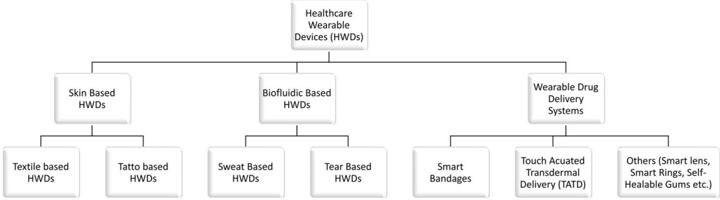
Wearable devices have found numerous applications in healthcare ranging from physiological diseases, such as cardiovascular diseases, hypertension and muscle disorders to neurocognitive disorders, such as Parkinson’s disease, Alzheimer’s disease and other psychological diseases. Different types of wearables are used for this purpose, for example, skin-based wearables including tattoo-based wearables, textile-based wearables, and biofluidic-based wearables. Recently, wearables have also shown encouraging improvements as a drug delivery system; therefore, enhancing its utility towards personalized healthcare. These wearables contain inherent challenges, which need to be addressed before their commercialization as a fully personalized healthcare system. This paper reviews different types of wearable devices currently being used in the healthcare field. It also highlights their efficacy in monitoring different diseases and applications of healthcare wearable devices (HWDs) for diagnostic and treatment purposes. Additionally, current challenges and limitations of these wearables in the field of healthcare along with their future perspectives are also reviewed.
Overview
The claims and statistics of this paper haven’t been checked yet.
Free: it reads the open-access text and checks the first 5 claims that cite a source we can check. Create a free account to check every claim.
Integrity signals
Registry
Cites
Statistics
Figures
Verification
Claims the paper makes
The claims and statistics of this paper haven’t been checked yet.
Free: it reads the open-access text and checks the first 5 claims that cite a source we can check. Create a free account to check every claim.
Claims other papers make about this one
Each is checked against this paper’s own text: does it say what the citing paper says it does?
The source backs part of the claim, not all of it — or backs it for a different population, condition or comparison.
In the citing paper
“The availability of relatively affordable noninvasive devices (smartwatches or bands) that can accurately measure several physiological metrics is increasing rapidly 49,50 .”
From Multimodal biomedical AI (2022) · cites this paper as [50]
Experimental — accuracy not yet measuredIn the citing paper
“First-generation wearables, in the form of watches, shoes or headsets, have mainly focused on biophysical monitoring by tracking the physical activity, heart rate or body temperature of an individual1,4,5.”
From End-to-end design of wearable sensors (2022) · cites this paper as [1]
In the citing paper
“Wearable biochemical and biophysical sensors have been used to detect and manage diseases1,12–15 and for wellness applications16–18.”
From End-to-end design of wearable sensors (2022) · cites this paper as [1]
In the citing paper
“Most of these examples are laboratory prototypes, but there are some commercial exceptions (including the FreeStyle Libre glucose monitoring system and the Gx Sweat Patch)1.”
From End-to-end design of wearable sensors (2022) · cites this paper as [1]
In the citing paper
“Such devices allow for the continuous monitoring of the biometrics of an individual in a non-invasive or minimally invasive manner, enabling the detection of small physiological changes from baseline values over time1.”
From End-to-end design of wearable sensors (2022) · cites this paper as [1]
2 more claims about this paper
Create a free account to see every claim other papers make about this one.
Self-check
Percentages, sums and reported differences re-computed from the paper’s own numbers.
The self-check needs the paper’s full text.
Citations
Cites
Measurement of the Elastic Properties and Intrinsic Strength of Monolayer Graphene
Lee, C., Wei, X., Kysar, J. W., & Hone, J. (2008) · Science · doi:10.1126/science.1157996 · Cited by 20,847
Saeedi, P., Petersohn, I., Salpea, P., Malanda, B., Karuranga, S., Unwin, N., Colagiuri, S., Guariguata, L., Motala, A. A., Ogurtsova, K., et al. (2019) · Diabetes Research and Clinical Practice · doi:10.1016/j.diabres.2019.107843 · Cited by 10,792
Coronaviridae Study Group of the International Committee on Taxonomy of Viruses, Gorbalenya, A. E., Baker, S. C., Baric, R. S., de Groot, R. J., Drosten, C., Gulyaeva, A. A., Haagmans, B. L., Lauber, C., Leontovich, A. M., et al. (2020) · Nature Microbiology · doi:10.1038/s41564-020-0695-z · Cited by 8,403
Wearable biosensors for healthcare monitoring
Kim, J., Campbell, A. S., de Ávila, B. E.-F., & Wang, J. (2019) · Nature Biotechnology · doi:10.1038/s41587-019-0045-y · Cited by 3,373 · cited 1×
“, saliva, blood, urine, sweat, etc.(6,7).”
Diet, Nutrition, and the Prevention of Chronic Diseases
Zimmermann, M. (1994) · The American Journal of Clinical Nutrition · doi:10.1093/ajcn/60.4.644a · Cited by 2,131
Diet, nutrition and the prevention of chronic diseases
Amine, E. K., Baba, N., Belhadj, M., Deurenberg‐Yap, M., Djazayery, A., Forrestre, T., Galuska, D. A., Herman, S. M., James, W. P. T., Kabangu, M., et al. (2002) · Figshare · doi:10.25405/ncl.34607289 · Cited by 1,993
Large-Scale Assessment of a Smartwatch to Identify Atrial Fibrillation
Perez, M. V., Mahaffey, K. W., Hedlin, H., Rumsfeld, J. S., Garcia, A., Ferris, T., Balasubramanian, V., Russo, A. M., Rajmane, A., Cheung, L., et al. (2019) · New England Journal of Medicine · doi:10.1056/nejmoa1901183 · Cited by 1,917
The rise of plastic bioelectronics
Someya, T., Bao, Z., & Malliaras, G. G. (2016) · Nature · doi:10.1038/nature21004 · Cited by 1,884
Weyl Semimetals as Hydrogen Evolution Catalysts
Rajamathi, C. R., Gupta, U., Kumar, N., Yang, H., Sun, Y., Süß, V., Shekhar, C., Schmidt, M., Blumtritt, H., Werner, P., et al. (2017) · Advanced Materials · doi:10.1002/adma.201606202 · Cited by 1,358
Bhalla, N., Jolly, P., Formisano, N., & Estrela, P. (2016) · Essays in Biochemistry · doi:10.1042/ebc20150001 · Cited by 1,312
Research works printed but not linked: 3
- 11. Min, W. & Jake, L. Wearable technology applications in healthcare: a literature review. Online J. Nurs. Informatics Contrib. https://www.himss.org/resources/ wearable-technology-applications-healthcare-literature-review (2019).
- 44. Savarese, G. & Lund, L. H. Pharmacological therapy nitrates as a treatment of acute heart failure pharmacological therapy. J. Hear. Team 3, 51-55 (2016).
- Bhagwat, R. R. & Vaidhya, I. S. Novel drug delivery systems: An Overview. Int. J. Pharm. Sci. Res. 4, 970–982 (2013).
Cited by
Items 401–500 of 777
Wang, W., Wu, Y., Hämmerle, L., Menon, C., Wei, K., & Rossi, R. M. (2025) · Advanced Fiber Materials · doi:10.1007/s42765-025-00641-7 · Cited by 5
Integrating wearable devices with AI to explore a disease world spanning time and space
Liu, Y., Wu, Y., Ren, H.-X., Wu, S., Hong, J., Du, J., Sun, M., Lin, Z.-H., & Miao, Y.-B. (2025) · Nano Energy · doi:10.1016/j.nanoen.2025.111481 · Cited by 6
Telemedicine in chronic lung disease management: progress and prospects
Yoon, H., & Song, J. W. (2025) · The Korean Journal of Internal Medicine · doi:10.3904/kjim.2025.081 · Cited by 6
“Currently, various wearable devices are used in clinical and home settings [35].”
Hybrid thermoelectric–battery architectures for self-powered wearable electronics
Moon, S., Oh, S., & Chung, S. (2026) · Wearable electronics. · doi:10.1016/j.wees.2025.10.003 · Cited by 5
MXene-based sweat sensor integrated with Janus fabric for glucose and lactate detection
Yao, H., Li, S., Yang, C., Liao, C., Li, Y., Guo, Z., Wang, G., & Liu, Y. (2026) · Colloids and Surfaces A Physicochemical and Engineering Aspects · doi:10.1016/j.colsurfa.2026.139638 · Cited by 5
Nanostructured electrochemical biosensors for real-time and portable health monitoring systems
Chowdhury, A. D., Sarkar, S., Dasgupta, U., & Ghosh, M. (2026) · Biosensors and Bioelectronics X · doi:10.1016/j.biosx.2026.100766 · Cited by 12
Digital twins and digital models of the human circulatory system
Wu, R., Ferreira, G., Khan, N. S., Mahmud, S. T., Stoop, J., Sohn, L. L., Leopold, J. A., & Randles, A. P. (2026) · Nature Reviews Bioengineering · doi:10.1038/s44222-026-00427-5 · Cited by 5
“…echocardiography, computed tomography, magnetic resonance imaging (MRI), wearable biosensors and invasive haemodynamic monitors, can capture structural, functional and physiological data with high spatial and temporal resolution 27 , thereby enabling non-invasive and continuous data collection 28 .”
Zhang, Y., & Wang, Z. (2023) · Optical and Quantum Electronics · doi:10.1007/s11082-023-05734-4 · Cited by 5
“As an important wearable device, wearable motion capture systems do not cause excessive burden on the human body when worn, and can accurately capture human motion data (Iqbal et al. 2021).”
RetractedChoice of Piezoelectric Element over Accelerometer for an Energy-Autonomous Shoe-Based System
Gogoi, N., Zhu, Y., Kirchner, J., & Fischer, G. (2024) · Sensors · doi:10.3390/s24082549 · Cited by 5
Desai, M. G., Kenney, J., & Pezalla, E. J. (2024) · Current Medical Research and Opinion · doi:10.1080/03007995.2024.2351165 · Cited by 5
“…advantages over traditional large-volume SC administration options, including an extended dosing interval due to larger volume capacity, flexibility in the site of care, hands-free mobility during treatment, ease-of-use, and thinner, hidden needles which may improve treatment adherence 21,25 .”
BackgroundDevelopment of a Wearable Device for Arteriovenous Fistula Monitoring
Pullano, S. A., Oliva, G., Laganà, F., Fiorillo, A. S., Pratticò, D., Presta, P., Carullo, N., Musolino, M., Andreucci, M., Bolignano, D., et al. (2024) · IEEE Sensors Applications Symposium (SAS) · doi:10.1109/sas60918.2024.10636446 · Cited by 5
“The development of sensors and electronic systems in the biomedical field led to improvements in the monitoring (e.g., continuous, and non-invasive) of a wide range of physiological signals [1].”
BackgroundCai, Y., Wang, F., Yang, L., Chen, L., Ying, J., Liu, Z., Wang, G., Ma, C., & Liu, J. (2024) · Journal of Materials Chemistry C · doi:10.1039/d4tc02801e · Cited by 5
Wang, Y., Shuang, Y., Kim, M. H., Ando, D., Narita, F., & Sutou, Y. (2024) · Materials Horizons · doi:10.1039/d4mh00616j · Cited by 5
Yuan, Y. Y., Lu, Y., Liang, T., Jia, H., Meng, L., Zhu, Y., Wang, J., Huang, T., Guan, P., Zhou, L., et al. (2024) · Journal of Physics Energy · doi:10.1088/2515-7655/ad92aa · Cited by 9
LC Repeater-Inspired Battery-Free, Chipless, Flexible Body Sensor Network With Lightweight Reader
Lyu, E.-Z., Sung, Y., Hsu, D.-Y., Su, G.-L., & Wang, T.-W. (2025) · IEEE Transactions on Instrumentation and Measurement · doi:10.1109/tim.2025.3541681 · Cited by 10
“The suitability of wearable devices for continuous and long-term health monitoring, coupled with advancements in wireless transmission technology, significantly enhances the diagnosis and treatment of various medical conditions within the realm of mobile health (m-health) [5], [6], [7], [8].”
Ma, N., Li, Y., Li, Y., Chen, Y., & Guo, L. (2025) · International Journal of Human-Computer Interaction · doi:10.1080/10447318.2025.2477747 · Cited by 6
“According to Iqbal et al. the learning curve and potential discomfort associated with using wearable ECG devices may result in user resistance due to the perceived conversion costs (Iqbal et al., 2021).”
McLachlan, C. S., & Truong, H. (2023) · Journal of Cardiovascular Development and Disease · doi:10.3390/jcdd10040141 · Cited by 5
“During the ongoing COVID-19 pandemic, several fitness apps that have measured heart rate and HRV for exercise fitness tracking and recovery [24] have expanded to also include corporate stress and wellness monitoring.”
BackgroundAnalyzing sex imbalance in EGA and dbGaP biological databases: Recommendations for better practices
Ruiz‐Serra, V., Buslón, N., Philippe, O., Saby, D., Morales, M. P., Pontes, C. F. T., Andirkó, A., Holliday, G. L., Jené, A., Moldes, M., et al. (2024) · iScience · doi:10.1016/j.isci.2024.110831 · Cited by 6
“25 The quality and content of these data have an immense impact on what and how AI learns.”
Self-Powered Wearable Breath Sensor Cum Nanogenerator Using AuNR-rGO-PVDF Nanocomposite
Bang, A. D., Ghalawat, M., Poddar, P., Kulkarni, S. K., & Adhyapak, P. V. (2023) · IEEE Sensors Journal · doi:10.1109/jsen.2023.3240744 · Cited by 6
“to diagnose diabetes and other diseases [2], [3], [4].”
BackgroundATHENA I—An architecture for near real-time physiological signal monitoring and pattern detection
Fröhlich, W. D. R., Rigo, S. J., & Bez, M. R. (2023) · Future Generation Computer Systems · doi:10.1016/j.future.2023.09.010 · Cited by 9
Learning the effective adhesive properties of heterogeneous substrates
Baraja, M. C., & Bhattacharya, K. (2023) · Extreme Mechanics Letters · doi:10.1016/j.eml.2023.102110 · Cited by 5
“The ability to understand and characterize adhesive properties of different systems is important for the development of wearable medical devices [13], durable coatings [14], and advanced manufacturing techniques [20], among others.”
BackgroundAhmad, S., Bibi, K., Talani, R. A., & Raja, R. A. A. (2025) · Social science review archives. · doi:10.70670/sra.v3i1.567 · Cited by 5
“The effectiveness of AI advancements in healthcare requires assessment through the partnership between human professionals and their technological counterparts (Iqbal et al., 2021).”
Laser additive–subtractive microfabrication of three-dimensional microsupercapacitor electrodes
Do, H. M., Ryu, C., & In, J. B. (2025) · Chemical Engineering Journal · doi:10.1016/j.cej.2025.163400 · Cited by 4
Research progress on the design of micro-batteries and applications in biomedicine
Yuan, Y., Liao, C., Mo, S., Mo, Q., Xie, M., He, X., Qin, W., Jiang, L., He, G., Yang, J., et al. (2025) · EnergyChem · doi:10.1016/j.enchem.2025.100178 · Cited by 4
Shan, Y., & Yu, J. (2026) · Applied Sciences · doi:10.3390/app16020790 · Cited by 5
Advances, challenges and prospects of origami and kirigami optoelectronics
Lee, D., Kim, S.-B., Kim, J., & Yoo, S. (2026) · Nature Communications · doi:10.1038/s41467-025-68217-y · Cited by 7
Cao, L., Wang, F. W., Jingwei, X. U. E., Liu, F., & Jin, M. (2026) · Advanced Science · doi:10.1002/advs.202520926 · Cited by 4
Zhu, G., Yuan, S., Yan, H., Du, H., Ren, F., Ren, P., Jiao, Y., & Sun, Q. (2026) · Journal of Power Sources · doi:10.1016/j.jpowsour.2026.239782 · Cited by 4
Wearable optical patches for non-invasive sweat sensing
Shuai, Y., Wu, X., Cao, C., Chen, L., Guo, Y., Qu, L., & Dong, X. (2026) · Soft Science · doi:10.20517/ss.2025.138 · Cited by 5
Application of smart sensors for internet of things healthcare environment
Rehman, S. U., & Manickam, S. (2024) · Elsevier eBooks · doi:10.1016/b978-0-323-98805-6.00006-3 · Cited by 4
Seliverstov, P. V. (2024) · Meditsinskaya sestra · doi:10.29296/25879979-2024-07-05 · Cited by 4
Chen, C., & Wang, Y. (2024) · Physica Scripta · doi:10.1088/1402-4896/ad9cfc · Cited by 4
Yoon, S., Jang, S.-J., Park, Y., Ryu, S.-J., Koh, J., & Lee, W. (2024) · Progress in Organic Coatings · doi:10.1016/j.porgcoat.2024.109007 · Cited by 5
A Personalized Energy Expenditure Estimation Method Using Modified MET and Heart Rate-Based DQN
Kim, M.-S., & Seong, J.-H. (2025) · Sensors · doi:10.3390/s25113416 · Cited by 4
“Recently, research on the accuracy of bio-signal measurement based on wearable devices has been actively conducted [1,2].”
Kim, T. I., Park, Y. W., Park, M., Kim, M. H., & Park, W. H. (2025) · ACS Applied Electronic Materials · doi:10.1021/acsaelm.5c00573 · Cited by 4
The promises and challenges of clinical AI in community paediatric medicine
Singh, D. A., Nagaraj, S., Daniel, R. C., Flood, C. M., Kulik, D. M., Flook, R., Goldenberg, A., Brudno, M., & Stedman, I. (2023) · Paediatrics & Child Health · doi:10.1093/pch/pxac080 · Cited by 6
The Benefits of Continuous Health Data Monitoring in Cardiovascular Diseases and Dementia
Christogianni, A. (2023) · Advances in information quality and management · doi:10.4018/978-1-6684-7366-5.ch014 · Cited by 6
Khan, M. A., Anjum, M., Hassan, S. A., & Jung, H. (2023) · Springer eBooks · doi:10.1007/978-3-031-32935-7_6 · Cited by 8
Ouyang, G., Whang, G. J., MacInnis, E., Ren, H., Sun, H., Irwin, R., Dunn, B., & Iyer, S. S. (2022) · IEEE Electronic Components and Technology Conference (ECTC) · doi:10.1109/ectc51906.2022.00129 · Cited by 6
Materials for Wearable Sensors
Abbas, M., Ahmad, M. N., Hussain, T., & Mujahid, A. (2022) · Materials Innovations · doi:10.54738/mi.2022.2702 · Cited by 4
Abisegapriyan, K. S., Alluri, N. R., Sharma, K., Raj, N. P. M. J., & Kim, S. (2022) · Applied Materials Today · doi:10.1016/j.apmt.2022.101679 · Cited by 4
Cleo: Smart Glasses to Monitor Consumption of Alcohol and Cigarettes
Sethuraman, S. C., Kompally, P., Mohanty, S. P., Raju, B. K., & Cruz, M. V. (2022) · SN Computer Science · doi:10.1007/s42979-022-01471-9 · Cited by 4
“But they tend to generate subtle distortions in data collection process [12].”
BackgroundWearables for Health Tourism: Perspectives and Model Suggestion
Köse, G., Marmolejo-Saucedo, L., Rodríguez-Aguilar, M., & Köse, U. (2024) · EAI Endorsed Transactions on Pervasive Health and Technology · doi:10.4108/eetpht.10.4310 · Cited by 4
“Iqbal et al. provides a wide review regarding application ways of wearables in healthcare and discuss about the potentials for effective diagnosis and treatment [34].”
BackgroundMachine Learning and Omic Data for Prediction of Health and Chronic Diseases
Olenik, M., & Dönertaş, H. M. (2025) · Elsevier eBooks · doi:10.1016/b978-0-323-95502-7.00284-0 · Cited by 4
AI Stroke Detection and Emergency Response System
Xavier, J. F., Kamsin, I. F. B., Abidin, Z. M. Z., & Vasudavan, H. (2022) · International journal of data science and advanced analytics. · doi:10.69511/ijdsaa.v4i0.173 · Cited by 3
Fu, D.-S., Adili, A., Chen, X., Li, J.-Z., & Muheremu, A. (2024) · SLAS TECHNOLOGY · doi:10.1016/j.slast.2024.100166 · Cited by 3
Panicker, L. R., Keerthanaa, M. R., Sukumaran, R. A., Lakavath, K., & Kotagiri, Y. G. (2024) · Springer eBooks · doi:10.1007/978-981-97-5473-1_13 · Cited by 4
Piezoelectric based devices for digital healthcare application
Mondal, S., Truong, T. T., Vo, T. T., Doan, V. H. M., Choi, J., Lee, B., & Oh, J. (2025) · Elsevier eBooks · doi:10.1016/b978-0-443-24790-3.00017-x · Cited by 3
Deciphering Wearable Adoption: Insights from Hospital Image and Consumer Innovativeness
Ulusoy, V., Hajdini, J., & Dirsehan, T. (2025) · Journal of Technology in Behavioral Science · doi:10.1007/s41347-025-00520-3 · Cited by 3
Kuncoro, M. A., Nurhasan, N., Kartiko, D. C., Turi, M., & Kristiyandaru, A. (2025) · Edelweiss Applied Science and Technology · doi:10.55214/25768484.v9i6.7873 · Cited by 3
“In addition, mental health is a major concern in the world of sports in the future [7].”
Liu, Y., Su, Y., Zhang, Y., He, P., & Liang, R. (2025) · Knowledge-Based Systems · doi:10.1016/j.knosys.2025.114694 · Cited by 6
Real-World Classification of Student Stress and Fatigue Using Wearable PPG Recordings
Laiti, J., Liu, Y., Dunne, P. J., Byrne, E., & Zhu, T. (2025) · IEEE Transactions on Affective Computing · doi:10.1109/taffc.2025.3628467 · Cited by 6
“Despite the promise of PPG-based stress detection, signal processing in real-world conditions remains a challenge due to motion artifacts and inconsistent signal quality [26], [27].”
Artificial Intelligence and Multiple Sclerosis: Past, Present, and Future
Amin, M., Nakamura, K., & Ontaneda, D. (2025) · Seminars in Neurology · doi:10.1055/a-2730-8997 · Cited by 3
Heartbeat signal quality assessment in smart clothing based on signal imaging and transfer learning
Yan, B., Jiang, Z., Zhao, S., Wang, C., Ma, J., & Zhang, X. (2025) · Biomedical Signal Processing and Control · doi:10.1016/j.bspc.2025.109240 · Cited by 3
Kumar, S., Prajapati, V. K., Singh, S. R., Patel, A. K., Singh, P., & Singh, M. (2026) · Informatics for Health and Social Care · doi:10.1080/17538157.2025.2605557 · Cited by 3
Microneedle-integrated wearable devices for healthcare monitoring
Tianli, H. U., Ko, E. B., Song, Y., & Xu, C. (2026) · Lab on a Chip · doi:10.1039/d5lc00993f · Cited by 4
Emerging Trends in Nanophotonic Systems for Sustainable and Resilient Societies
Kim, H. M., Kim, D., Kim, G., Kim, J., Lee, J., Ma, J., Lee, T., & Jeong, H. (2026) · Advanced Sensor Research · doi:10.1002/adsr.202500138 · Cited by 5
“Emerging technologies including electric vehicles [ 1, 2 ], wearable devices [ 3, 4 ], smart factories [ 5, 6 ], urban air mobility (UAM) [ 7 ], the internet of things (IoT) [ 8, 9 ], and artificial intelligence (AI) [ 10, 11 ] are deeply embedded in both daily life and industrial infrastructure.”
Alvarez-Ambrosio, M., Chausa, P., Moreno-Blanco, D., Roca‐Ventura, A., García, I. O., Cattaneo, G., González, P. S., Sánchez, J. S., & Gómez, E. J. (2026) · Frontiers in Digital Health · doi:10.3389/fdgth.2026.1710891 · Cited by 5
Chen, C., & Guo, J.-H. (2026) · Sensors and Actuators A Physical · doi:10.1016/j.sna.2026.117586 · Cited by 3
Li, Z., Shen, C. C., Shin, J., Dixit, K., Kumar, H., Zhang, H., Liu, D., Lu, Q., Chen, G., Lee, H. J., et al. (2026) · Materials & Design · doi:10.1016/j.matdes.2026.115658 · Cited by 3
Kim, Y., Park, J.-H., Lim, J., Yoon, S., & Kim, J. (2026) · Advanced Composites and Hybrid Materials · doi:10.1007/s42114-026-01712-y · Cited by 3
Kumar, A. A.-W., Bappoo, N., Ryall, J. L., Vandenberg, J. I., & Dwivedi, G. (2026) · Heart Lung and Circulation · doi:10.1016/j.hlc.2025.12.017 · Cited by 4
Quantum-Resilient Edge Computing Cryptography for Resource-Limited Medical IoT
Khan, R. I., Nirzhor, S. S. R., & Roosan, D. (2026) · Communications in computer and information science · doi:10.1007/978-3-032-22211-4_17 · Cited by 3
Changes in actigraphy metrics associated with PROMIS measures after orthopaedic surgery
Giordano, N. A., Kane, A., Rodriguez, R., Papay, D., Canales, B. I.-I., Kirk, K. F., Buckenmaier, C. C., & Highland, K. B. (2022) · International Journal of Nursing Practice · doi:10.1111/ijn.13089 · Cited by 3
Li, L., Sun, J., & Cong, H. (2023) · Journal of Industrial Textiles · doi:10.1177/15280837231200895 · Cited by 4
Measuring on Physiological Parameters and Its Applications: A Review
Bayani, H. Z., & Basari, B. (2024) · Jurnal Ilmiah Teknik Elektro Komputer dan Informatika · doi:10.26555/jiteki.v10i2.28767 · Cited by 3
“Research often involves the use of textile and skin-based wearable devices [103].”
Cerulli, R., Lepore, M., Maccioni, R., Plenzich, E., & Tufano, R. (2025) · Lecture notes in computer science · doi:10.1007/978-3-031-78241-1_15 · Cited by 3
Contractile Force and Stitch Modeling of Shape Memory Alloy Knitted Fabric Actuators
NAKASHIMA, A., Higuchi, Y., Sato, Y., WAKAKO, L., & KINARI, T. (2021) · Journal of Textile Engineering · doi:10.4188/jte.67.13 · Cited by 3
Smart Technologies to Reduce the Spreading of COVID-19: A Survey Study
Nafrees, A. C. M., Pirapuraj, P., Razeeth, M. S., Kariapper, R. K. A. R., & Nawaz, S. S. (2022) · Proceedings in adaptation, learning and optimization · doi:10.1007/978-3-030-97196-0_21 · Cited by 5
A 180 nm CMOS Integrated Optoelectronic Sensing System for Biomedical Applications
Stanchieri, G. D. P., Marcellis, A. D., Faccio, M., Palange, E., Battisti, G., & Güler, Ü. (2022) · Electronics · doi:10.3390/electronics11233952 · Cited by 3
Ding, R., Ye, M., Zhu, Y., Zhao, Y., Liu, Q., Cao, Y., & Xu, J. (2023) · Chemosensors · doi:10.3390/chemosensors11020099 · Cited by 6
Wirelessly Powered‐Electrically Conductive Polymer System for Stem Cell Enhanced Stroke Recovery
Santhanam, S., Chen, C., Oh, B., McConnell, K. W., Azadian, M. M., Patel, J. J., Gardner, E. E., Tanabe, Y., Poon, A. S. Y., & George, P. M. (2023) · Advanced Electronic Materials · doi:10.1002/aelm.202300369 · Cited by 4
Ciortuz, G., Wiedekopf, J., & Fudickar, S. (2024) · Springer eBooks · doi:10.1007/978-3-658-43236-2_31 · Cited by 4
An Investigation into the Rise of Wearable Technologies in the Healthcare Sector
Sharma, A., Bijo, K., Manandhar, S. P., & Sharma, L. K. (2024) · Lecture notes in computer science · doi:10.1007/978-3-031-60428-7_15 · Cited by 3
Development of Wearable Biosensors for Continuous Monitoring of Neurological Biomarkers
Haque, K., & Kaushik, A. (2023) · Biosensors and nanotheranostics. · doi:10.25163/biosensors.217330 · Cited by 7
Signal Integrity Assessment of Stretchable Interconnects for Flexible Electronics System
Bhatti, G., Agrawal, Y., & Palaparthy, V. S. (2024) · International Symposium on VLSI Design and Test (VDAT) · doi:10.1109/vdat63601.2024.10705698 · Cited by 3
“The creation of these devices has enabled the way for new applications and interaction methods in fields such as wearable technology, consumer electronics, electronic skin (E-skin) and robotics [1-3].”
BackgroundUso de wearables para monitoramento contínuo de pacientes com doenças cardíacas
Pereira, J. L. S., Andrade, R. L., Vilela, L. F., Oliveira, M. M., Marques, L. N., Inácio, J. V., Aguiar, M. D., Lima, R. N., Pinton, L. D. O., MOROSOLI, A. C. C., et al. (2025) · Caderno Pedagógico · doi:10.54033/cadpedv22n1-091 · Cited by 3
Chhoton, A. C., & Sharma, A. K. (2024) · IEEE Delhi Section Conference (DELCON) · doi:10.1109/delcon64804.2024.10866524 · Cited by 3
Integrative approaches of AI in personalised disease management: From diagnosis to drug delivery
Amin, M. S., & Rahman, A. (2025) · Paradise · doi:10.25163/paradise.1110339 · Cited by 3
Mechanical Properties and Contractile Force Mechanism of Shape Memory Alloy Knitted Fabric Actuator
NAKASHIMA, A., Higuchi, Y., Sato, Y., WAKAKO, L., & KINARI, T. (2019) · Journal of Textile Engineering · doi:10.4188/jte.65.47 · Cited by 3
Empowering communities: The role of wearable devices in environmental justicePreprint
Marfo, A., & Obeng-Gyasi, E. (2024) · Authorea · doi:10.22541/au.170965072.20316399/v1 · Cited by 5
Emerging Technologies in Healthcare Systems
Sachdeva, R. K., Bathla, P., Vij, S., Dishika, Jain, M., Kumar, L., Ghantasala, G. S. P., & Ahuja, R. (2024) · Wiley eBooks · doi:10.1002/9781394272587.ch16 · Cited by 2
Sağlığın Dijitalleştirilmesi: Küresel E-Sağlık Gelişmeleri için Öneriler
Gıersbergen, M. Y. V., & Özpınar, E. P. (2025) · Akdeniz Hemşirelik Dergisi · doi:10.59398/ahd.1446331 · Cited by 2
Polyelectrolyte Complex Coacervate Adhesive for Wearable Medical Devices
Montemayor, M. D., Iverson, E. T., Dahle, L., Green, A., Tenorio, E., Moran, A. V., Rodriguez‐Melendez, D., Chang, E. F., Karim, M. J., Haridas, B., et al. (2025) · Macromolecular Rapid Communications · doi:10.1002/marc.202500117 · Cited by 3
Towards out-of-studio motion capture through wearable sensors
Joung, J., Kim, J., & Kim, D. (2025) · Journal of Industrial and Engineering Chemistry · doi:10.1016/j.jiec.2025.08.032 · Cited by 4
Ethical considerations in using wearable devices for health monitoring
Das, S., Bej, A., Das, A., & Nandi, A. (2025) · Elsevier eBooks · doi:10.1016/b978-0-443-33439-9.00003-9 · Cited by 4
A magnet-actuated contact-sliding-separation mode triboelectric nanogenerator
Li, Z., Ee, Z., Gan, W. C., Tang, L., Xia, C., Zhu, Y., & Aw, K. C. (2025) · Smart Materials and Structures · doi:10.1088/1361-665x/ae2709 · Cited by 2
AI in Wearable Embedded Systems for Healthcare Monitoring: A Review
Rathnayake, R. M. D. D., Arawa, A. M. P. R. B., & Ekanayake, R. M. T. C. B. (2025) · Sri Lankan Journal of Applied Sciences · doi:10.4038/sljoas.v4i1.15 · Cited by 4
“One of the problems associated with traditional medicine methods is their model based on timely checkups, which does not cater to the proactive diagnosis of diseases and leads to delays in identification and treatment [6] .”
Turi, M., Wismanadi, H., & Kumaat, N. A. (2025) · Gelanggang Olahraga Jurnal Pendidikan Jasmani dan Olahraga (JPJO) · doi:10.31539/jpjo.v8i3.12999 · Cited by 2
“(Seneviratne et al., 2017)Teknologi wearable, seperti jam tangan pintar dan sensor, juga telah mempermudah atlet untuk memantau performa mereka secara real-time Selain itu, kesehatan mental menjadi perhatian utama dalam dunia olahraga di masa depan (Iqbal et al., 2021).”
Vitale, I. A., Fuochi, N., Rossi, R., Catarzi, M., Martella, D., Marrazza, G., Parmeggiani, C., & Palchetti, I. (2026) · Electrochimica Acta · doi:10.1016/j.electacta.2026.148559 · Cited by 2
Tokatlıoğlu, T. Ş., Kavala, A., & Oflaz, F. (2026) · Supportive Care in Cancer · doi:10.1007/s00520-026-10554-9 · Cited by 3
“These technologies are considered potentially beneficial for breast cancer patients due to their ability to offer more frequent monitoring, particularly in individuals at moderate to high risk, and to facilitate earlier identification of abnormalities and timely interventions [14, 21].”
The 2026 global roadmap for textile-integrated wearable technologies in health
Elgendi, M., Chen, J., Xiao, X., Yin, J., GRANADOS, D. F. P., Menon, C., Riener, R., Allen, J., Pineda-Alpizar, A. F., Zheng, D., et al. (2026) · Physiological Measurement · doi:10.1088/1361-6579/ae85b0 · Cited by 3
Ghimenti, S., Lenzi, A., Cristofaro, M. D., Biagini, D., Tsavourelou, P., Stamellou, E., Ntounousi, E., Gregorio, E. D., Salvo, P., Francesco, F. D., et al. (2026) · Analytica Chimica Acta · doi:10.1016/j.aca.2026.345926 · Cited by 2
Jan, M., Coppin-Renz, A., West, R., Gallo, C. L., Cochran, J. M., van Heumen, E., Fahmy, M., & Reuteman-Fowler, J. C. (2023) · JMIR Formative Research · doi:10.2196/44768 · Cited by 2
“Wearable sensors are devices worn on the human body or clothing [17]; therefore, wearable sensors intended for medical use are regulated as medical devices in the United States and the European Union [16,18].”
BackgroundProntera, C. T., Pugliese, M., Mariano, F., Taurino, D., Giannuzzi, R., Primiceri, V., Esposito, M., Andretta, A., Gigli, G., & Maiorano, V. (2024) · Textiles · doi:10.3390/textiles4010007 · Cited by 2
“In particular, wearable electronic devices are becoming a reality on the technology market for a wide range of applications: physiological signal monitoring, environmental sensing, visual signaling, work safety, etc. [1–3].”
BackgroundSim, S., Hwang, K., Bae, K., Jang, S., & Kim, J. (2024) · IEEE International Conference on Micro Electro Mechanical Systems (MEMS) · doi:10.1109/mems58180.2024.10439562 · Cited by 3
“Wearable device technologies are essential for establishing an environment that delivers realistic experiences to users, such as those in human–machine interface (HMI) and the virtual/augmented reality (VR/AR) industries [1-3].”
BackgroundKanthonga, T., Hwata, C., & Mwang’onda, A. N. (2023) · International Conference on the Advancements of Artificial Intelligence in African Context (AAIAC) · doi:10.1109/aaiac60008.2023.10465564 · Cited by 2
“For instance, smart wearable devices that monitor glucose levels in real-time can provide more accurate and continuous data about glucose fluctuations and help patients make informed decisions about their diet and lifestyle [13],[14],[15].”
BackgroundDesigning IoT-Enabled Circuits for Non-Contact Liquid Infusion in Infectious Patient Care
Kumar, A., Pathak, P., Dwivedi, V. K., & Sharma, D. K. (2023) · International Conference on Advances in Computation, Communication and Information Technology (ICAICCIT) · doi:10.1109/icaiccit60255.2023.10465726 · Cited by 3
Synthesis of Ag Nanowires with High Aspect Ratio for Highly Sensitive Flexible Strain Sensor
Qi, X., Lv, H., Wang, Y., Ye, Y., Wang, P., Yin, A., Luo, J., Ren, Z., Liu, H., Liu, J., et al. (2024) · ChemNanoMat · doi:10.1002/cnma.202400264 · Cited by 2
Castañeda, W. A. C. (2024) · Advances in medical technologies and clinical practice book series · doi:10.4018/979-8-3693-5237-3.ch003 · Cited by 2
Metadata
- Authors
- Iqbal, S. M. A., Mahgoub, I., Du, E., Leavitt, M. A., & Asghar, W.
- Affiliations
- Florida Atlantic University (US)
- Corresponding author
- Asghar, Waseem
- Venue
- npj Flexible Electronics
- Published
- 2021-04-12
- Volume
- 5
- Issue
- 1
- ISSN
- 2397-4621 (ISSN-L)
- OpenAlex
- W3155494946
- Semantic Scholar
- ac9881adf66e4884422b4117cad2cacfe9c045e3
- Cited by
- 714
- References
- 122
- Citations by year
- 2026: 122 · 2025: 188 · 2024: 172 · 2023: 130 · 2022: 86 · 2021: 15
- FWCI
- 30.61
- Type
- journal article
- Language
- en
- Open access
- gold
- doi.org
- Licence
- cc-by
- creativecommons.org/licenses/by/4.0 (tdm)
- creativecommons.org/licenses/by/4.0 (vor)
- Locations
- npj Flexible Electronics (publishedVersion, cc-by)
- DOAJ (DOAJ: Directory of Open Access Journals) (submittedVersion, cc-by-sa)
- Funders
- National Science Foundation (1942487, CAREER)
- Florida Atlantic University
- Universidad del Atlántico
- National Institutes of Health (1942487)
- National Institute of Allergy and Infectious Diseases (R15AI127214)
- Topics
- Physical Sciences › Engineering › Biomedical Engineering › Advanced Sensor and Energy Harvesting Materials
- Physical Sciences › Engineering › Biomedical Engineering › Non-Invasive Vital Sign Monitoring
- Physical Sciences › Engineering › Biomedical Engineering › Wireless Body Area Networks
- Keywords
- physiological monitoring, cardiovascular disease, hypertension, muscle disorders, neurocognitive disorders, Parkinson's disease, Alzheimer's disease, drug delivery systems, personalized healthcare
About these checks
Registry, retraction, Cites and statistics results are computed, not judged, with one exception: a printed reference that no index lists is read once by a model before it counts as a citation error. Claims are extracted by a model and kept only when their quote appears verbatim in the text; each cited source is then checked, with a model’s help, for whether it says what the claim relies on. Those verdicts can be wrong — read the claim’s quote and the cited source before relying on one.
Statistics and arithmetic are recomputed, not judged.
Confidence bands are shown only for fields calibrated on our annotated test set. None is calibrated yet, so no band is shown.
What counts as a claim ›How we measure confidence ›How we check this ›
Are you an author, or do you see a problem with this page? Request a review
Data sources
Bibliographic data: Semantic Scholar, OpenAlex, Crossref.
Contains information from the Semantic Scholar Academic Graph Datasets, made available under the ODC Attribution License (ODC-BY 1.0).
Semantic Scholar’s data is described in: Kinney, R., et al. (2023). The Semantic Scholar Open Data Platform. arXiv:2301.10140.
