

Thought disorder measured as random speech structure classifies negative symptoms and schizophrenia diagnosis 6 months in advance
Open accessThe DOI matches its Crossref record; 28 of the 28 references it cites were found in a registry or an index.
Abstract
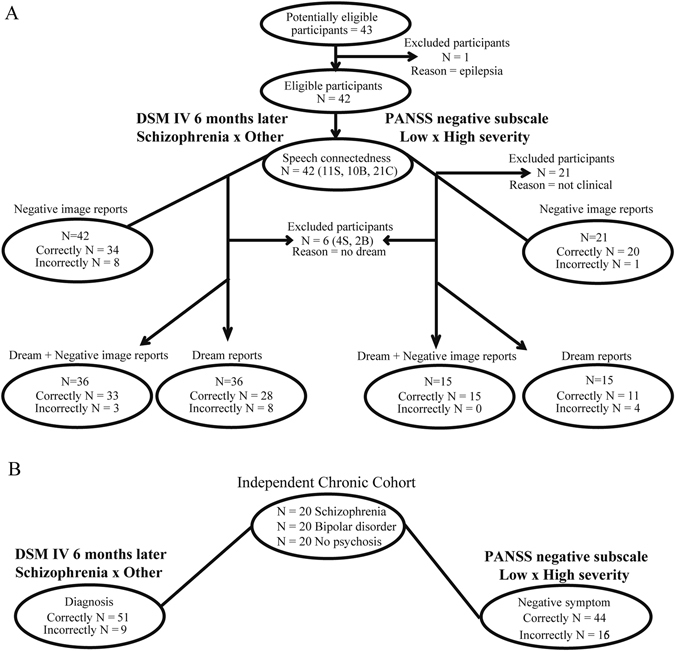
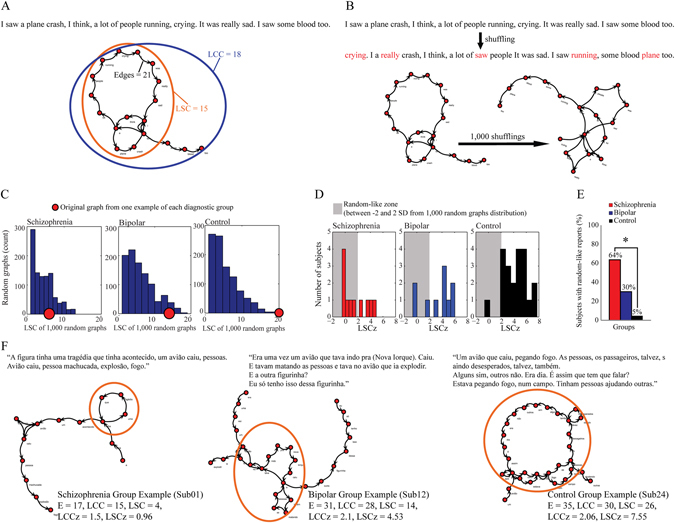
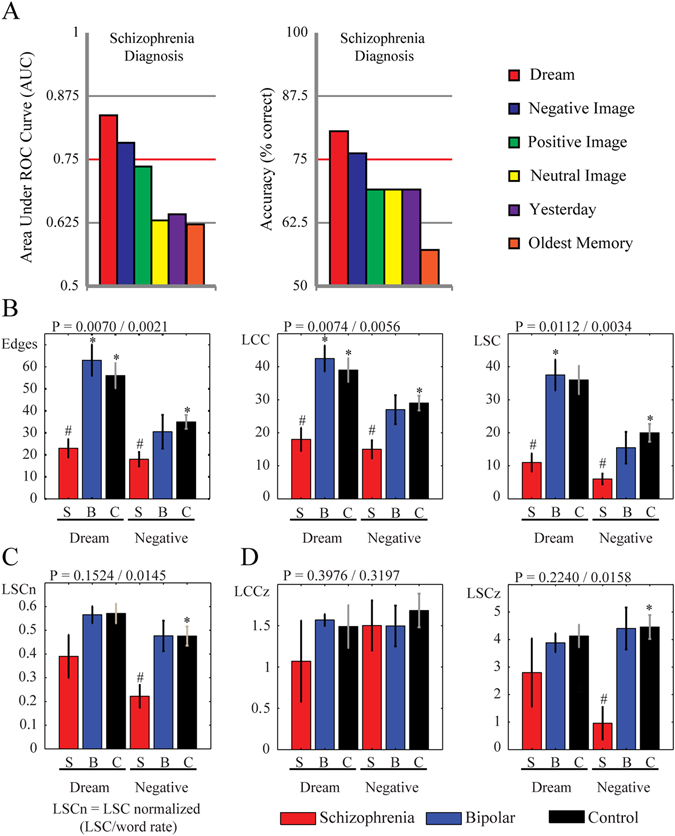
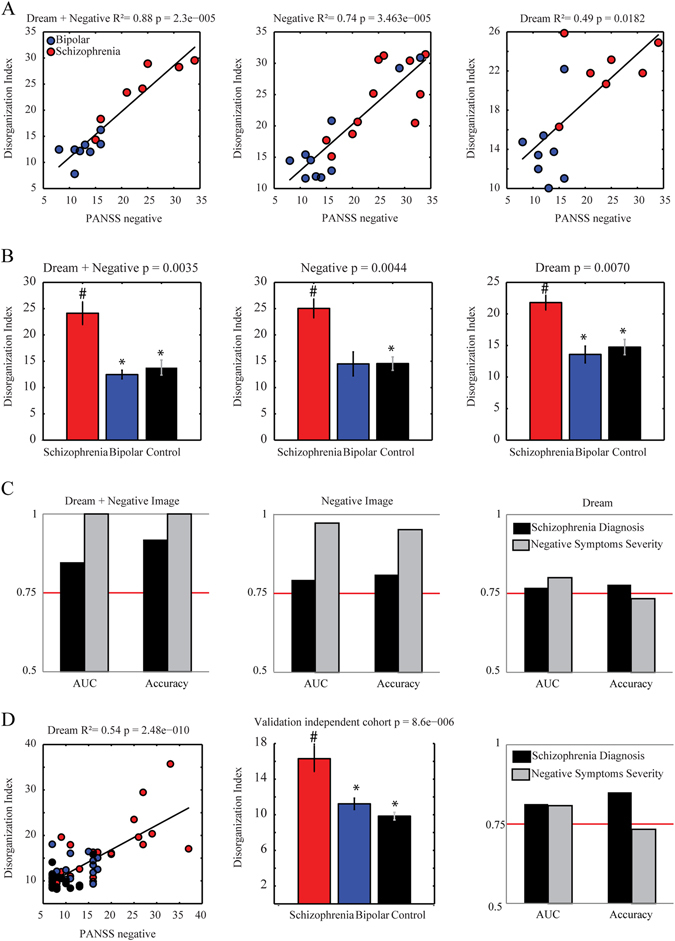
In chronic psychotic patients, word graph analysis shows potential as complementary psychiatric assessment. This analysis relies mostly on connectedness, a structural feature of speech that is anti-correlated with negative symptoms. Here we aimed to verify whether speech disorganization during the first clinical contact, as measured by graph connectedness, can correctly classify negative symptoms and the schizophrenia diagnosis 6 months in advance. Positive and negative syndrome scale scores and memory reports were collected from 21 patients undergoing first clinical contact for recent-onset psychosis, followed for 6 months to establish diagnosis, and compared to 21 well-matched healthy subjects. Each report was represented as a word-trajectory graph. Connectedness was measured by number of edges, number of nodes in the largest connected component and number of nodes in the largest strongly connected component. Similarities to random graphs were estimated. All connectedness attributes were combined into a single Disorganization Index weighted by the correlation with the positive and negative syndrome scale negative subscale, and used for classifications. Random-like connectedness was more prevalent among schizophrenia patients (64 × 5% in Control group, p = 0.0002). Connectedness from two kinds of memory reports (dream and negative image) explained 88% of negative symptoms variance (p < 0.0001). The Disorganization Index classified low vs. high severity of negative symptoms with 100% accuracy (area under the receiver operating characteristic curve = 1), and schizophrenia diagnosis with 91.67% accuracy (area under the receiver operating characteristic curve = 0.85). The index was validated in an independent cohort of chronic psychotic patients and controls (N = 60) (85% accuracy). Thus, speech disorganization during the first clinical contact correlates tightly with negative symptoms, and is quite discriminative of the schizophrenia diagnosis.
Overview
The claims and statistics of this paper haven’t been checked yet.
Free: it reads the open-access text and checks the first 5 claims that cite a source we can check. Create a free account to check every claim.
Integrity signals
Registry
Cites
Statistics
Figures
Verification
Claims the paper makes
The claims and statistics of this paper haven’t been checked yet.
Free: it reads the open-access text and checks the first 5 claims that cite a source we can check. Create a free account to check every claim.
Claims other papers make about this one
Each is checked against this paper’s own text: does it say what the citing paper says it does?
The source backs part of the claim, not all of it — or backs it for a different population, condition or comparison.
In the citing paper
“Third, it opens the door to voice or speech analysis, whereas features of the patient’s utterances can be passively monitored to derive health states [28-31].”
From Voice-Based Conversational Agents for the Prevention and Management of Chronic and Mental Health Conditions: Systematic Literature Review (2021) · cites this paper as [30]
Experimental — accuracy not yet measured
Self-check
Percentages, sums and reported differences re-computed from the paper’s own numbers.
The self-check needs the paper’s full text.
Citations
Cites
The Positive and Negative Syndrome Scale (PANSS) for schizophrenia.
Kay, S. R., Fiszbein, A., & Opler, L. A. (1987) · Schizophrenia Bulletin · doi:10.1093/schbul/13.2.261 · Cited by 21,378 · cited 1×
“The negative subscale measured seven symptoms: Blunted affect (N1), Emotional withdrawal (N2), Poor rapport (N3), Passive/apathetic social withdrawal (N4), Difficulty in abstract thinking (N5), Lack of spontaneity and flow of conversation (N6), Stereotyped thinking (N7).(28) Only one researcher performed PANSS scoring…”
The WEKA data mining software: an update
Hall, M., Frank, E., Holmes, G., Pfahringer, B., Reutemann, P., & Witten, I. H. (2009) · ACM SIGKDD Explorations Newsletter · doi:10.1145/1656274.1656278 · Cited by 17,750
Insel, T., Cuthbert, B., Garvey, M., Heinssen, R., Pine, D. S., Quinn, K., Sanislow, C., & Wang, P. (2010) · American Journal of Psychiatry · doi:10.1176/appi.ajp.2010.09091379 · Cited by 7,067
Comprehensive Textbook of Psychiatry
Freedman, A. M., & Kaplan, H. I. (1967) · The American Journal of the Medical Sciences · doi:10.1097/00000441-196712000-00052 · Cited by 3,799
Looking at pictures: Affective, facial, visceral, and behavioral reactions
LANG, P. J., GREENWALD, M. K., BRADLEY, M. M., & HAMM, A. O. (1993) · Psychophysiology · doi:10.1111/j.1469-8986.1993.tb03352.x · Cited by 3,190
Biostatistics: A Foundation for Analysis in the Health Sciences.
Rosenfeld, B., & Daniel, W. W. (1984) · Journal of the American Statistical Association · doi:10.2307/2288760 · Cited by 2,834
The NIMH Research Domain Criteria (RDoC) Project: Precision Medicine for Psychiatry
Insel, T. R. (2014) · American Journal of Psychiatry · doi:10.1176/appi.ajp.2014.14020138 · Cited by 1,472 · cited 1×
“This raises the point that precise behavioral measurements are more likely to describe symptomatology than standard diagnosis.(20) Importantly, it was possible to correctly classify schizophrenia diagnosis and negative symptom severity using the Disorganization Index from dream reports of an independent cohort of chro…”
Computational psychiatry as a bridge from neuroscience to clinical applications
Huys, Q. J. M., Maia, T. V., & Frank, M. J. (2016) · Nature Neuroscience · doi:10.1038/nn.4238 · Cited by 1,002
Automated analysis of free speech predicts psychosis onset in high-risk youths
Bedi, G., Carrillo, F., Cecchi, G. A., Slezak, D. F., Sigman, M., Mota, N. B., Ribeiro, S., Javitt, D. C., Copelli, M., & Corcoran, C. M. (2015) · npj Schizophrenia · doi:10.1038/npjschz.2015.30 · Cited by 673
Self-citationWhitaker, K. J., Vértes, P. E., Romero-Garcia, R., Váša, F., Moutoussis, M., Prabhu, G., Weiskopf, N., Callaghan, M. F., Wagstyl, K., Rittman, T., et al. (2016) · Proceedings of the National Academy of Sciences · doi:10.1073/pnas.1601745113 · Cited by 520
Research works printed but not linked: 2
- Mota, N. B., Carrillo, F., Slezak, D. F., Copelli, M. & Ribeiro, S. in Fiftieth Asilomar Conference on Signals, Systems and Computers. (IEEE Conference Publishing).
- First, M. H., Spitzer, R. L., Gibbon, M. & Williams, J. Structured clinical interview for DSM-IV Axis I disorders -- Research version, patient edition (SCID-I/P). (Biometrics Research, New York State Psychiatric Institute, 1990).
Cited by
Rezaii, N., Walker, E., & Wolff, P. (2019) · npj Schizophrenia · doi:10.1038/s41537-019-0077-9 · Cited by 203
“In an analysis of the speech, Mota et al. 13 could distinguish those with mania from schizophrenia by drawing on a set of ten different graph measures with 93.7% accuracy.”
BackgroundMethodInfluentialLanguage as a biomarker for psychosis: a natural language processing approach
Corcoran, C. M., Mittal, V. A., Bearden, C. E., E. Gur, R., Hitczenko, K., Bilgrami, Z., Savic, A., Cecchi, G. A., & Wolff, P. (2020) · Schizophrenia Research · doi:10.1016/j.schres.2020.04.032 · Cited by 186
Evaluation of Speech-Based Digital Biomarkers: Review and Recommendations
Robin, J., Harrison, J. E., Kaufman, L. D., Rudzicz, F., Simpson, W., & Yancheva, M. (2020) · Digital Biomarkers · doi:10.1159/000510820 · Cited by 171
Corcoran, C. M., & Cecchi, G. (2020) · Biological Psychiatry Cognitive Neuroscience and Neuroimaging · doi:10.1016/j.bpsc.2020.06.004 · Cited by 208
A survey on big data-driven digital phenotyping of mental health
Liang, Y., Zheng, X., & Zeng, D. D. (2019) · Information Fusion · doi:10.1016/j.inffus.2019.04.001 · Cited by 158
Tang, S. X., Kriz, R., Cho, S., Park, S. J., Harowitz, J., Gur, R. E., Bhati, M. T., Wolf, D. H., Sedoc, J., & Liberman, M. (2021) · Schizophrenia · doi:10.1038/s41537-021-00154-3 · Cited by 172
Predicting future mental illness from social media: A big-data approach
Thorstad, R., & Wolff, P. (2019) · Behavior Research Methods · doi:10.3758/s13428-019-01235-z · Cited by 154
Bérubé, C., Schachner, T., Keller, R., Fleisch, E., v Wangenheim, F., Barata, F., & Kowatsch, T. (2021) · Journal of Medical Internet Research · doi:10.2196/25933 · Cited by 133
Olszowska, K., Pang, J., Wrobel, P. S., Zhao, L., Ta, H. Q., Liu, Z., Trzebicka, B., Bachmatiuk, A., & Rümmeli, M. H. (2017) · Synthetic Metals · doi:10.1016/j.synthmet.2017.10.014 · Cited by 130
Altszyler, E., Ribeiro, S., Sigman, M., & Fernández Slezak, D. (2017) · Consciousness and Cognition · doi:10.1016/j.concog.2017.09.004 · Cited by 128
“…promises a much more accurate quantification of socially-shared meaning in dream reports, with great potential application in psychiatric diagnosis (Mota et al., 2014, 2017), dreams theories testing (Revonsuo & Valli, 2008; Revonsuo et al., 2015) and dream decoding research (Horikawa & Kamitani,…”
BackgroundSelf-citationBirnbaum, M. L., Ernala, S. K., Rizvi, A. F., Arenare, E., R. Van Meter, A., De Choudhury, M., & Kane, J. M. (2019) · npj Schizophrenia · doi:10.1038/s41537-019-0085-9 · Cited by 109
Parola, A., Lin, J. M., Simonsen, A., Bliksted, V., Zhou, Y., Wang, H., Inoue, L., Koelkebeck, K., & Fusaroli, R. (2022) · Schizophrenia Research · doi:10.1016/j.schres.2022.07.002 · Cited by 122
Natural Language Processing markers in first episode psychosis and people at clinical high-risk
Morgan, S. E., Diederen, K. M. J., Vértes, P. E., Ip, S., Wang, B., Thompson, B., Demjaha, A., Micheli, A. D., Oliver, D., Liakata, M., et al. (2021) · Translational Psychiatry · doi:10.1038/s41398-021-01722-y · Cited by 110
Hitczenko, K., Mittal, V. A., & Goldrick, M. (2020) · Schizophrenia Bulletin · doi:10.1093/schbul/sbaa141 · Cited by 101
Mota, N. B., Weissheimer, J., Ribeiro, M., de Paiva, M. M. M., Avilla-Souza, J., Simabucuru, G., Chaves, M. F., Cecchi, L., de Oliveira, J. B. C., Cecchi, G., et al. (2020) · PLoS ONE · doi:10.1371/journal.pone.0242903 · Cited by 81
“Such changes have been previously associated with cognitive impairments in psychosis [32, 34, 35] or during typical cognitive development [33, 50, 51], and therefore were not expected to be found in healthy adult individuals such as those sampled here.”
BackgroundSelf-citationMore than a biomarker: could language be a biosocial marker of psychosis?
Palaniyappan, L. K. (2021) · Schizophrenia · doi:10.1038/s41537-021-00172-1 · Cited by 96
Speech structure links the neural and socio-behavioural correlates of psychotic disorders
Palaniyappan, L. K., Mota, N. B., Oowise, S., Balain, V., Copelli, M., Ribeiro, S. T. G., & Liddle, P. F. (2018) · Progress in Neuro-Psychopharmacology and Biological Psychiatry · doi:10.1016/j.pnpbp.2018.07.007 · Cited by 80
“analysis to calculate the connectedness between words has been suggested to quantify the manifest-scale dysconnectivity in speech samples (Mota et al., 2017; Mota et al., 2014; Mota et al., 2012).”
InfluentialSelf-citationLinguistic findings in persons with schizophrenia—a review of the current literature
Ehlen, F., Montag, C., Leopold, K., & Heinz, A. (2023) · Frontiers in Psychology · doi:10.3389/fpsyg.2023.1287706 · Cited by 90
“Reduced speech graph connectivity may also predict transition from clinical high risk to first psychotic episode (Morgan et al., 2021; Spencer et al., 2021) and to schizophrenia (Mota et al., 2017).”
BackgroundResultLower speech connectedness linked to incidence of psychosis in people at clinical high risk
Spencer, T. J., Thompson, B., Oliver, D., Diederen, K. M. J., Demjaha, A., Weinstein, S., Morgan, S. E., Day, F., Valmaggia, L., Rutigliano, G., et al. (2020) · Schizophrenia Research · doi:10.1016/j.schres.2020.09.002 · Cited by 70
Self-citationAlonso-Sánchez, M. F., Ford, S. D., Mackinley, M., Silva, A., Limongi, R., & Palaniyappan, L. K. (2022) · Schizophrenia · doi:10.1038/s41537-022-00246-8 · Cited by 73
Chandler, C., Foltz, P. W., & Elvevåg, B. (2022) · Schizophrenia Bulletin · doi:10.1093/schbul/sbac038 · Cited by 46
“(5) Query by committee can be applied in both classification and regression tasks.”
Structural differences between REM and non-REM dream reports assessed by graph analysis
Martin, J. M., Andriano, D. W., Mota, N. B., Mota-Rolim, S. A., Araújo, J. F., Solms, M., & Ribeiro, S. (2020) · PLOS ONE · doi:10.1371/journal.pone.0228903 · Cited by 45
Self-citationBilgrami, Z. R., Sarac, C., Srivastava, A., Herrera, S. N., Azis, M., Haas, S. S., Shaik, R., Parvaz, M. A., Mittal, V. A., Cecchi, G., et al. (2022) · Schizophrenia Research · doi:10.1016/j.schres.2022.01.019 · Cited by 62
Alonso-Sánchez, M. F., Limongi, R., Gati, J. S., & Palaniyappan, L. K. (2022) · Schizophrenia Research · doi:10.1016/j.schres.2022.04.007 · Cited by 55
Automatic language analysis identifies and predicts schizophrenia in first-episode of psychosis
Figueroa-Barra, A. I., Aguila, D. D., Cerda, M., Gaspar, P. A., Terissi, L. D., Durán, M., & Valderrama, C. (2022) · Schizophrenia · doi:10.1038/s41537-022-00259-3 · Cited by 57
“In Portuguese, Mota et al.37 proposed a computational assessment using graph analysis of syntactic coherence for specific tasks (e.g., memory reports of a dream and negative image) and reported that it provides accurate quantification of speech characteristics and a correlation with clinical symptoms.”
MethodInfluentialSemantic coherence markers: The contribution of perplexity metrics
Colla, D., Delsanto, M., Agosto, M., Vitiello, B., & Radicioni, D. P. (2022) · Artificial Intelligence in Medicine · doi:10.1016/j.artmed.2022.102393 · Cited by 66
Silva, A., Limongi, R., Mackinley, M., Ford, S. D., Alonso-Sánchez, M. F., & Palaniyappan, L. K. (2022) · Schizophrenia Research · doi:10.1016/j.schres.2022.06.011 · Cited by 56
Pauselli, L., Halpern, B., Cleary, S. D., Ku, B. S., Covington, M. A., & Compton, M. T. (2018) · Psychiatry Research · doi:10.1016/j.psychres.2018.02.037 · Cited by 57
“Word graph analysis is chronologically the most recent of the quantitative linguistic methods that has been applied to explore thought disorder using transcription of speech samples (Cabana et al., 2011; Mota et al., 2017).”
Applying speech technologies to assess verbal memory in patients with serious mental illness
Holmlund, T. B., Chandler, C., Foltz, P. W., Cohen, A. S., Cheng, J., Bernstein, J., Rosenfeld, E. P., & Elvevåg, B. (2020) · npj Digital Medicine · doi:10.1038/s41746-020-0241-7 · Cited by 56
The maturation of speech structure in psychosis is resistant to formal education
Mota, N. B., Sigman, M., Cecchi, G., Copelli, M., & Ribeiro, S. T. G. (2018) · Schizophrenia · doi:10.1038/s41537-018-0067-3 · Cited by 57
Self-citationBirnbaum, M. L., Norel, R., Meter, A. V., Ali, A. F., Arenare, E., Eyigöz, E., Agurto, C., Germano, N., Kane, J. M., & Cecchi, G. (2020) · Schizophrenia · doi:10.1038/s41537-020-00125-0 · Cited by 54
Trajectories through semantic spaces in schizophrenia and the relationship to ripple bursts
Nour, M. M., McNamee, D., Liu, Y., & Dolan, R. J. (2023) · Proceedings of the National Academy of Sciences · doi:10.1073/pnas.2305290120 · Cited by 56
Dalal, T. C., Liang, L., Silva, A. M., Mackinley, M., Voppel, A., & Palaniyappan, L. K. (2024) · Acta Psychiatrica Scandinavica · doi:10.1111/acps.13685 · Cited by 51
Liddle, P. F. (2019) · The Canadian Journal of Psychiatry · doi:10.1177/0706743719870515 · Cited by 43
“In a sample of individuals with early phase of psychotic illness, comparison of speech graph attributes of the patients’ speech with the attributes of graphs generated by randomly reordering the words predicted a diagnosis of schizophrenia 6 months later.(33) Furthermore, in those early phase cases, disorganization of…”
BackgroundDeficits in nominal reference identify thought disordered speech in a narrative production task
Sevilla, G., Rosselló, J., Salvador, R. M., Sarró, S., López-Araquistain, L., Pomarol‐Clotet, E., & Hinzen, W. (2018) · PLoS ONE · doi:10.1371/journal.pone.0201545 · Cited by 44
Bambini, V., Frau, F., Bischetti, L., Cuoco, F., Bechi, M., Buonocore, M., Agostoni, G., Ferri, I., Sapienza, J., Martini, F., et al. (2022) · Schizophrenia · doi:10.1038/s41537-022-00306-z · Cited by 43
Oeztuerk, O. F., Pigoni, A., Antonucci, L. A., & Koutsouleris, N. (2021) · European Archives of Psychiatry and Clinical Neuroscience · doi:10.1007/s00406-021-01295-3 · Cited by 42
Lundin, N. B., Cowan, H. R., Singh, D. K., & Moe, A. M. (2023) · Schizophrenia Research · doi:10.1016/j.schres.2023.04.001 · Cited by 42
The entropic tongue: Disorganization of natural language under LSD
Sanz, C., Pallavicini, C., Carrillo, F., Zamberlán, F., Sigman, M., Mota, N. B., Copelli, M., Ribeiro, S. T. G., Nutt, D. J., Carhart-Harris, R. L., et al. (2020) · Consciousness and Cognition · doi:10.1016/j.concog.2020.103070 · Cited by 38
Self-citationRatana, R., Sharifzadeh, H., Krishnan, J., & Pang, S. (2019) · Frontiers in Psychiatry · doi:10.3389/fpsyt.2019.00659 · Cited by 39
Tan, E. J., Meyer, D., Neill, E., & Rossell, S. L. (2021) · Schizophrenia Research · doi:10.1016/j.schres.2021.10.003 · Cited by 41
Tang, S. X., Cong, Y., Nikzad, A. H., Mehta, A., Cho, S., Hänsel, K., Berretta, S. A., Dhar, A. A., Kane, J. M., & Malhotra, A. K. (2022) · Schizophrenia Research · doi:10.1016/j.schres.2022.06.012 · Cited by 39
García, A. M., Johann, F., Echegoyen, R. E., Calcaterra, C., Riera, P., Belloli, L. M. L., & Carrillo, F. (2023) · Behavior Research Methods · doi:10.3758/s13428-023-02240-z · Cited by 37
Morphological characteristics of spoken language in schizophrenia patients – an exploratory study
Ziv, I., Baram, H., Bar, K., Zilberstein, V., Itzikowitz, S., Harel, E. V., & Dershowitz, N. (2021) · Scandinavian Journal of Psychology · doi:10.1111/sjop.12790 · Cited by 39
A Narrative Review of Speech and EEG Features for Schizophrenia Detection: Progress and Challenges
Teixeira, F. L., Costa, M. R. E., Abreu, J. P., Cabral, M., Soares, S., & Teixeira, J. P. (2023) · Bioengineering · doi:10.3390/bioengineering10040493 · Cited by 27
Lundin, N. B., Hochheiser, J., Minor, K. S., Hetrick, W. P., & Lysaker, P. H. (2019) · Schizophrenia Research · doi:10.1016/j.schres.2019.11.032 · Cited by 36
“, 2007) and connectedness (Mota et al., 2017) in the discourse of individuals with psychosis relative to healthy individuals.”
BackgroundApplications of Speech Analysis in Psychiatry
Dikaios, K., Rempel, S., Dumpala, S. H., Oore, S., Kiefte, M., & Uher, R. (2023) · Harvard Review of Psychiatry · doi:10.1097/hrp.0000000000000356 · Cited by 35
“Speech disorganization, as detected by semantic graphs of memory reports, predicted a diagnosis of schizophrenia 6 months later, but did not predict a diagnosis of bipolar disorder.(122) These results demonstrate speech coherence and disorganization as relatively specific markers of psychosis.”
ResultImprecise Predictive Coding Is at the Core of Classical Schizophrenia
Liddle, P. F., & Liddle, E. B. (2022) · Frontiers in Human Neuroscience · doi:10.3389/fnhum.2022.818711 · Cited by 35
“Several studies using computerized analysis of speech samples have demonstrated that subtle disorganization of speech in cases at risk predicts onset of overt psychosis and subsequent severity of negative symptoms (Bedi et al., 2015; Mota et al., 2017).”
BackgroundSyntactic Network Analysis in Schizophrenia-Spectrum Disorders
Ciampelli, S., de Boer, J. N., Voppel, A., Hernández, H. C., Brederoo, S., van Dellen, E., Mota, N. B., & Sommer, I. E. (2023) · Schizophrenia Bulletin · doi:10.1093/schbul/sbac194 · Cited by 38
“16,46 This is consistent with research that has indicated that patients with predominantly negative symptoms have a simplified syntactic production with fewer clausal embeddings.”
MethodResultSelf-citationBrasso, C., Bellino, S., Bozzatello, P., Favero, E. D., Montemagni, C., & Rocca, P. (2023) · Schizophrenia Research · doi:10.1016/j.schres.2023.04.011 · Cited by 32
Arslan, B., Kizilay, E., Verim, B., Demirlek, C., Demir, M., Cesim, E., Eyuboglu, M. S., Ozbek, S. U., Süt, E., Yalınçetin, B., et al. (2024) · Journal of Affective Disorders · doi:10.1016/j.jad.2024.07.102 · Cited by 36
Voleti, R., Woolridge, S. M., Liss, J., Milanovic, M., Bowie, C. R., & Berisha, V. (2019) · Interspeech (USB) · doi:10.21437/interspeech.2019-2960 · Cited by 34
Zaher, F., Diallo, M., Achim, A. M., Joober, R., Roy, M., Demers, M., Subramanian, P., Lavigne, K. M., Lepage, M., Gonzalez, D., et al. (2024) · Schizophrenia Research · doi:10.1016/j.schres.2024.02.036 · Cited by 32
Malcorra, B. L. C., Mota, N. B., Weissheimer, J., Schilling, L. P., Wilson, M. A., & Hübner, L. C. (2021) · Journal of Alzheimer s Disease · doi:10.3233/jad-210134 · Cited by 33
“Speech graph connectedness anti-correlatedwithcognitiveandnegativesymptoms inpsychosis[33,34].”
Self-citationElce, V., Handjaras, G., & Bernardi, G. (2021) · Clocks & Sleep · doi:10.3390/clockssleep3030035 · Cited by 39
Speech as a Graph: Developmental Perspectives on the Organization of Spoken Language
Mota, N. B., Weissheimer, J., Finger, I., Ribeiro, M., Malcorra, B. L. C., & Hübner, L. C. (2023) · Biological Psychiatry Cognitive Neuroscience and Neuroimaging · doi:10.1016/j.bpsc.2023.04.004 · Cited by 34
Self-citationÇabuk, T., Sevim, N., Mutlu, E., Yağcioğlu, A. E. A., Koç, A., & Toulopoulou, T. (2024) · Schizophrenia Research · doi:10.1016/j.schres.2024.02.026 · Cited by 31
Time series classification based on complex network
Li, H., Jia, R., & Wan, X. (2022) · Expert Systems with Applications · doi:10.1016/j.eswa.2022.116502 · Cited by 27
Arslan, B., Kizilay, E., Verim, B., Demirlek, C., Dokuyan, Y., Turan, Y. E., Kucukakdag, A., Demir, M., Cesim, E., & Bora, E. (2024) · Schizophrenia Research · doi:10.1016/j.schres.2024.03.014 · Cited by 31
Semantic Speech Networks Linked to Formal Thought Disorder in Early Psychosis
Nettekoven, C., Diederen, K. M. J., Giles, O. T., Duncan, H., Stenson, I., Olah, J., Gibbs-Dean, T., Collier, N., Vértes, P. E., Spencer, T. J., et al. (2023) · Schizophrenia Bulletin · doi:10.1093/schbul/sbac056 · Cited by 27
Sharpe, V. P., Mackinley, M., Eddine, S. N., Wang, L., Palaniyappan, L. K., & Kuperberg, G. R. (2025) · Biological Psychiatry · doi:10.1016/j.biopsych.2025.06.001 · Cited by 28
Language as a Window Into the Altered State of Consciousness Elicited by Psychedelic Drugs
Tagliazucchi, E. (2022) · Frontiers in Pharmacology · doi:10.3389/fphar.2022.812227 · Cited by 26
“The topological properties of the resulting graphs contain information useful to characterize druginduced language alterations, as well as abnormalities specific to certain neuropsychiatric disorders (Mota et al., 2012; Bertola et al., 2014; Mota et al., 2014; Mota et al., 2017; Coelho et al., 2021).”
BackgroundNikzad, A. H., Cong, Y., Berretta, S. A., Hänsel, K., Cho, S., Pradhan, S., Behbehani, L. M., DeSouza, D. D., Liberman, M., & Tang, S. X. (2022) · Schizophrenia · doi:10.1038/s41537-022-00263-7 · Cited by 26
Reading and writing habits compensate for aging effects in speech connectedness
Malcorra, B. L. C., Mota, N. B., Weissheimer, J., Schilling, L. P., Wilson, M. A., & Hübner, L. C. (2022) · npj Science of Learning · doi:10.1038/s41539-022-00129-8 · Cited by 23
Self-citationCoreference Delays in Psychotic Discourse: Widening the Temporal Window
Palominos, C., Figueroa-Barra, A. I., & Hinzen, W. (2023) · Schizophrenia Bulletin · doi:10.1093/schbul/sbac102 · Cited by 26
Automated analysis of speech as a marker of sub-clinical psychotic experiences
Olah, J., Spencer, T. J., Cummins, N., & Diederen, K. M. J. (2024) · Frontiers in Psychiatry · doi:10.3389/fpsyt.2023.1265880 · Cited by 22
Mota, N. B., Fujii, R. C., Leite, L., Torres, A. R., Weissheimer, J., Bunge, S. A., Copelli, M., & Ribeiro, S. T. G. (2019) · Mind Brain and Education · doi:10.1111/mbe.12208 · Cited by 21
“, 2012, 2014), recent-onset samples (Mota et al., 2017), and across different languages (Mota et al.”
InfluentialSelf-citationMota, N. B., Pimenta, J. R., Tavares, M., Palmeira, L., Loch, A. A., Hedin‐Pereira, C., & Dias, E. C. (2022) · Psychiatry Research · doi:10.1016/j.psychres.2022.114477 · Cited by 22
Self-citationMota, N. B., Ribeiro, M., Malcorra, B. L. C., Atídio, J. P., Haguiara, B., & Gadelha, A. (2022) · Schizophrenia Research · doi:10.1016/j.schres.2022.06.025 · Cited by 20
Self-citationEarly language measures associated with later psychosis features in 22q11.2 deletion syndrome
Solot, C. B., Moore, T. M., Crowley, T. B., Gerdes, M., Moss, E., McGinn, D. E., Emanuel, B. S., Zackai, E. H., Gallagher, S., Calkins, M. E., et al. (2020) · American Journal of Medical Genetics Part B Neuropsychiatric Genetics · doi:10.1002/ajmg.b.32812 · Cited by 20
Fradkin, I., Nour, M. M., & Dolan, R. J. (2023) · Biological Psychiatry Cognitive Neuroscience and Neuroimaging · doi:10.1016/j.bpsc.2023.05.005 · Cited by 25
“Finally, we did not examine the effects of the simulated parameters on NLP measures that do not focus on semantic distance (e.g., speech-graph analysis, referential cohesion) (16,81).”
Connecting complex networks to nonadditive entropies
Oliveira, R., Brito, S., da Silva, L. R., & Tsallis, C. (2021) · Scientific Reports · doi:10.1038/s41598-020-80939-1 · Cited by 17
Loch, A. A., Lopes-Rocha, A. C., Ara, A., Gondim, J. M., Cecchi, G., Corcoran, C. M., Mota, N. B., & Argôlo, F. C. (2022) · JMIR Mental Health · doi:10.2196/41014 · Cited by 20
“For individuals at first-episode psychosis, AUCs of up to 0.92 were obtained to predict who would receive the diagnosis of schizophrenia 6 months in advance [16].”
InfluentialSelf-citationLoch, A. A., Gondim, J. M., Argôlo, F. C., Lopes-Rocha, A. C., Andrade, J. C., van de Bilt, M. T., de Jesus, L. P., Haddad, N. M., Cecchi, G., Mota, N. B., et al. (2023) · Schizophrenia Research · doi:10.1016/j.schres.2023.07.011 · Cited by 16
“The rationale here — as well as in the first protocol — is to elicit the freest and most spontaneous speech possible, while also evoking an affectively meaningful discourse (Mota et al., 2017, 2022).”
BackgroundMethodSelf-citationReilly, J. J., Finley, A. M., Litovsky, C. P., & Kenett, Y. N. (2023) · Journal of Experimental Psychology General · doi:10.1037/xge0001389 · Cited by 20
Measurement of schizophrenia symptoms through speech analysis from PANSS interview recordings
Worthington, M., Efstathiadis, G., Yadav, V., Galatzer‐Levy, I. R., Kott, A., Pintilii, E., Patel, T., Sauder, C. L., Kaul, I., Brannan, S. K., et al. (2025) · Frontiers in Psychiatry · doi:10.3389/fpsyt.2025.1571647 · Cited by 17
“…in amount of speech, greater pause duration, and slower speech rate, which may re fl ect symptom dimensions such as blunted affect and alogia (8 – 11 , 28 Our analysis shows a strong relationship between the calculated speech characteristics and symptom severity (10, 30, 31) as measured by the…”
Lopes-Rocha, A. C., Corcoran, C. M., Andrade, J. C., Peroni, L., Haddad, N. M., Hortêncio, L., Serpa, M. H., van de Bilt, M. T., Gattaz, W. F., & Loch, A. A. (2022) · Schizophrenia · doi:10.1038/s41537-022-00283-3 · Cited by 16
AIT Foundations of Structured Experience
Ruffini, G., & Lopez-Sola, E. (2022) · Journal of Artificial Intelligence and Consciousness · doi:10.1142/s2705078522500047 · Cited by 20
Automated linguistic analysis in youth at clinical high risk for psychosis
Kizilay, E., Arslan, B., Verim, B., Demirlek, C., Demir, M., Cesim, E., Eyuboglu, M. S., Ozbek, S. U., Süt, E., Yalınçetin, B., et al. (2024) · Schizophrenia Research · doi:10.1016/j.schres.2024.09.009 · Cited by 16
Pinheiro, S., Mota, N. B., Sigman, M., Slezak, D. F., Junior, A. R. G., Tófoli, L. F., Cecchi, G., Copelli, M., & Ribeiro, S. T. G. (2020) · Trends in Neuroscience and Education · doi:10.1016/j.tine.2020.100142 · Cited by 15
Self-citationMyers, E. J., Abel, D. B., Hardin, K. L., Bettis, R. J., Beard, A. M., Salyers, M. P., Lysaker, P. H., & Minor, K. S. (2022) · Journal of Psychiatric Research · doi:10.1016/j.jpsychires.2022.11.013 · Cited by 14
Daily Pain Prediction Using Smartphone Speech Recordings of Patients With Spine Disease
Duey, A. H., Rana, A., Siddi, F., Hussein, H., Onnela, J.-P. “., & Smith, T. R. (2023) · Neurosurgery · doi:10.1227/neu.0000000000002474 · Cited by 16
It is time for more holistic practices in mental health
Ribeiro, S. T. G., Pimentel, A. P., Fernandes, V. D. R., Deslandes, A. C., & Amarante, P. (2024) · PLOS mental health. · doi:10.1371/journal.pmen.0000028 · Cited by 17
“The quantitative structural analysis of patients’ dreams can offer profound insight into their mental state, as shown to be the case for the early diagnosis of schizophrenia [17].”
BackgroundSelf-citationNew strategies for the cognitive science of dreaming
Mallett, R., Konkoly, K. R., Nielsen, T., Carr, M., & Paller, K. A. (2024) · Trends in Cognitive Sciences · doi:10.1016/j.tics.2024.10.004 · Cited by 14
Identifying emerging mental illness utilizing search engine activity: A feasibility study
Birnbaum, M. L., Wen, H., Meter, A. V., Ernala, S. K., Rizvi, A. F., Arenare, E., Estrin, D. L., Choudhury, M. D., & Kane, J. M. (2020) · PLoS ONE · doi:10.1371/journal.pone.0240820 · Cited by 17
Ku, B. S., Pauselli, L., Covington, M. A., & Compton, M. T. (2021) · Psychiatry Research · doi:10.1016/j.psychres.2021.114105 · Cited by 14
He, R., Alonso-Sánchez, M. F., Sepulcre, J., Palaniyappan, L. K., & Hinzen, W. (2024) · Human Brain Mapping · doi:10.1002/hbm.70030 · Cited by 19
“…in psychosis (Alonso-Sánchez, Ford, et al., 2022; Corona Hernández et al., 2023; de Boer et al., 2023; Elvevåg et al., 2007; Iter et al., 2018; Mota et al., 2017; Voppel et al., 2023) motivate the prediction of a relation between semantic structure changes in spontaneous speech and the…”
BackgroundRecent Evidence on the Antidepressant Effects of Ayahuasca
Palhano-Fontes, F., Mota-Rolim, S. A., Soares, B. L., Coelho, N. L. G., Maia‐de‐Oliveira, J. P., & de Araújo, D. B. (2021) · Springer eBooks · doi:10.1007/978-3-030-55688-4_2 · Cited by 14
Olah, J., Wong, W. L. E., Chaudhry, A.-U. R. R., Mena, O., & Tang, S. X. (2025) · Translational Psychiatry · doi:10.1038/s41398-025-03433-0 · Cited by 12
Understanding mental health through computers: An introduction to computational psychiatry
Martínez, J. C. C., & Santamaría‐García, H. A. (2023) · Frontiers in Psychiatry · doi:10.3389/fpsyt.2023.1092471 · Cited by 17
“(54) Determine if early markers of speech disorganization during recent-onset psychosis measured using SpeechGraph could correctly”
BackgroundChaves, M. F., Rodrigues, C. A. N., Ribeiro, S. T. G., Mota, N. B., & Copelli, M. (2023) · PLoS ONE · doi:10.1371/journal.pone.0291446 · Cited by 11
“These corpora were previously collected for the purpose of graph-theoretical studies of SZ [28, 60], which have shown that speech graph attributes obtained from dream narratives (DM), as opposed to waking narratives (WK), could differentiate between participants with SZ, participants with bipolar disorder type I, and…”
BackgroundMethodInfluentialSelf-citationCorcoran, C. M., Benavides, C., & Cecchi, G. (2019) · Psychiatric Annals · doi:10.3928/00485713-20190411-01 · Cited by 15
Liddle, P. F., & Sami, M. B. (2024) · Biological Psychiatry · doi:10.1016/j.biopsych.2024.08.007 · Cited by 10
“Mota et al. (26) demonstrated that disorganization of speech quanti fi ed using graph theory in individuals at high risk for psychosis predicted onset of overt psychosis and severity of negative symptoms within the following 6 months.”
BackgroundRobin, J., Xu, M., Kaufman, L. D., Simpson, W. S., McCaughey, S. M., Tatton, N. A., Wolfus, C., & Ward, M. E. (2023) · Cognitive and Behavioral Neurology · doi:10.1097/wnn.0000000000000356 · Cited by 10
Ribeiro, M., Malcorra, B. L. C., Mota, N. B., Wilkens, R., Villavicencio, A., Hübner, L. C., & Rennó‐Costa, C. (2024) · arXiv (Cornell University) · doi:10.48550/arxiv.2410.00250 · Cited by 14
Self-citationClinical psychopathology-based early relapse prediction model using speech and language in psychosis
Dalal, T. C., Park, M. T. M., Silva, A. M., Iskhakova, S., Voppel, A., Brierley, N. J., Mackinley, M., Olarewaju, E., & Palaniyappan, L. K. (2025) · Schizophrenia Research Cognition · doi:10.1016/j.scog.2025.100392 · Cited by 10
“Indeed, there is emerging evidence for differentiating schizophrenia from other psychotic disorders (Mota et al., 2017; Tan et al., 2021) and in predicting the onset of the first episode (Corcoran et al., 2018; Spencer et al., 2021).”
Wießner, I., Falchi-Carvalho, M., Daldegan‐Bueno, D., Palhano-Fontes, F., Olivieri, R., Feilding, A., de Araújo, D. B., Ribeiro, S. T. G., Mota, N. B., & Tófoli, L. F. (2023) · European Neuropsychopharmacology · doi:10.1016/j.euroneuro.2022.12.013 · Cited by 8
Self-citationSpeech connectedness predicts reading performance three months in advance: a longitudinal experiment
Malcorra, B. L. C., Ribeiro, M., Jensen, L., Gomes, G., Meletti, T., & Mota, N. B. (2024) · npj Science of Learning · doi:10.1038/s41539-024-00248-4 · Cited by 8
Self-citationBiomedical application of polymer-graphene composites
Adhikari, M., Orasugh, J. T., & Chattopadhyay, D. (2021) · Elsevier eBooks · doi:10.1016/b978-0-12-821639-2.00011-2 · Cited by 8
Naeim, M., Narimani, M., & Aghajani, S. (2026) · BMC Psychiatry · doi:10.1186/s12888-026-07888-3 · Cited by 7
Metadata
- Authors
- Mota, N. B., Copelli, M., & Ribeiro, S.
- Affiliations
- Universidade Federal do Rio Grande do Norte (BR)
- Universidade Federal de Pernambuco (BR)
- Corresponding author
- Mota, Natália B.
- Venue
- npj Schizophrenia
- Published
- 2017-04-13
- Volume
- 3
- Issue
- 1
- Pages
- 18-18
- ISSN
- 2334-265X (ISSN-L)
- PMC
- PMC5441540
- OpenAlex
- W2604132829
- Cited by
- 157
- References
- 27
- Citations by year
- 2026: 10 · 2025: 13 · 2024: 17 · 2023: 29 · 2022: 32 · 2021: 17 · 2020: 20 · 2019: 11 · 2018: 5 · 2017: 3
- FWCI
- 8.76
- Type
- journal article
- Language
- en
- Open access
- gold
- doi.org
- Licence
- cc-by
- creativecommons.org/licenses/by/4.0 (tdm)
- creativecommons.org/licenses/by/4.0 (vor)
- Locations
- Schizophrenia (publishedVersion, cc-by)
- Europe PMC (PubMed Central) (publishedVersion, other-oa)
- PubMed Central (publishedVersion, cc-by)
- PubMed (publishedVersion)
- LA Referencia (Red Federada de Repositorios Institucionales de Publicaciones Científicas) (publishedVersion, other-oa)
- Americanae (AECID Library) (submittedVersion, other-oa)
- DOAJ (DOAJ: Directory of Open Access Journals) (submittedVersion, cc-by-sa)
- Funders
- Fundação de Amparo à Pesquisa do Estado de São Paulo (2013-07699-0, 13/07699-0)
- Coordenação de Aperfeiçoamento de Pessoal de Nível Superior (2013/07699-0, 0898/2013, 308775/2015-5, 408145/2016-1, 062/2015, OBEDUC-ACERTA 0898/2013)
- Conselho Nacional de Desenvolvimento Científico e Tecnológico (2013/07699–0, 308775/20155, 408145/2016-1)
- Universidade Federal do Rio Grande do Norte
- Topics
- Health Sciences › Medicine › Psychiatry and Mental health › Schizophrenia research and treatment
- Social Sciences › Psychology › Experimental and Cognitive Psychology › Mental Health Research Topics
- Social Sciences › Arts and Humanities › Philosophy › Mental Health and Psychiatry
- Keywords
- thought disorder, graph connectivity, negative symptoms, schizophrenia diagnosis, early diagnosis, recent-onset psychosis, memory reports, chronic psychosis
About these checks
Registry, retraction, Cites and statistics results are computed, not judged, with one exception: a printed reference that no index lists is read once by a model before it counts as a citation error. Claims are extracted by a model and kept only when their quote appears verbatim in the text; each cited source is then checked, with a model’s help, for whether it says what the claim relies on. Those verdicts can be wrong — read the claim’s quote and the cited source before relying on one.
Statistics and arithmetic are recomputed, not judged.
Confidence bands are shown only for fields calibrated on our annotated test set. None is calibrated yet, so no band is shown.
What counts as a claim ›How we measure confidence ›How we check this ›
Are you an author, or do you see a problem with this page? Request a review
Data sources
Bibliographic data: Semantic Scholar, OpenAlex, Crossref.
Contains information from the Semantic Scholar Academic Graph Datasets, made available under the ODC Attribution License (ODC-BY 1.0).
Semantic Scholar’s data is described in: Kinney, R., et al. (2023). The Semantic Scholar Open Data Platform. arXiv:2301.10140.
