

Relapse prediction in schizophrenia with smartphone digital phenotyping during COVID-19: a prospective, three-site, two-country, longitudinal study
Open accessThe DOI matches its Crossref record; 33 of the 33 references it cites were found in a registry or an index.
Abstract
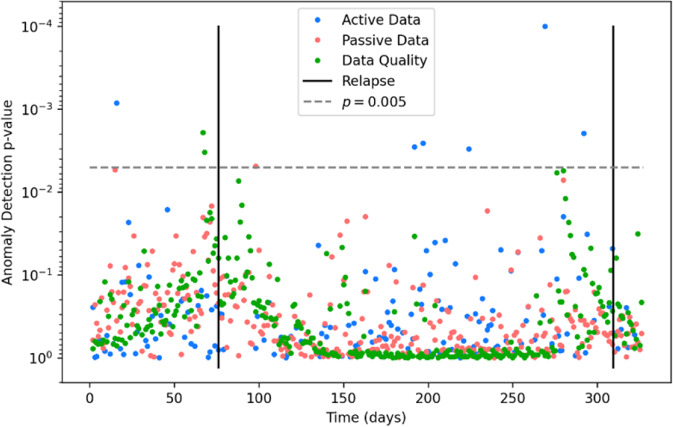
Smartphone technology provides us with a more convenient and less intrusive method of detecting changes in behavior and symptoms that typically precede schizophrenia relapse. To take advantage of the aforementioned, this study examines the feasibility of predicting schizophrenia relapse by identifying statistically significant anomalies in patient data gathered through mindLAMP, an open-source smartphone app. Participants, recruited in Boston, MA in the United States, and Bangalore and Bhopal in India, were invited to use mindLAMP for up to a year. The passive data (geolocation, accelerometer, and screen state), active data (surveys), and data quality metrics collected by the app were then retroactively fed into a relapse prediction model that utilizes anomaly detection. Overall, anomalies were 2.12 times more frequent in the month preceding a relapse and 2.78 times more frequent in the month preceding and following a relapse compared to intervals without relapses. The anomaly detection model incorporating passive data proved a better predictor of relapse than a naive model utilizing only survey data. These results demonstrate that relapse prediction models utilizing patient data gathered by a smartphone app can warn the clinician and patient of a potential schizophrenia relapse.
Overview
The claims and statistics of this paper haven’t been checked yet.
Free: it reads the open-access text and checks the first 5 claims that cite a source we can check. Create a free account to check every claim.
Integrity signals
Registry
Cites
Statistics
Figures
Verification
Claims the paper makes
The claims and statistics of this paper haven’t been checked yet.
Free: it reads the open-access text and checks the first 5 claims that cite a source we can check. Create a free account to check every claim.
Claims other papers make about this one
Each is checked against this paper’s own text: does it say what the citing paper says it does?
The source backs part of the claim, not all of it — or backs it for a different population, condition or comparison.
In the citing paper
“Digital phenotyping methods can also aid in relapse prediction by detecting changes in symptoms and behavioral patterns unique to each youth that may be associated with clinical deterioration [130].”
From Towards a youth mental health paradigm: a perspective and roadmap (2023) · cites this paper as [130]
Experimental — accuracy not yet measured
Self-check
Percentages, sums and reported differences re-computed from the paper’s own numbers.
The self-check needs the paper’s full text.
Citations
Cites
The PHQ-9: Validity of a brief depression severity measure
Kroenke, K., Spitzer, R. L., & Williams, J. B. W. (2001) · Journal of General Internal Medicine · doi:10.1046/j.1525-1497.2001.016009606.x · Cited by 44,910
The Pittsburgh Sleep Quality Index: a new instrument for psychiatric practice and research
Buysse, D. J., Reynolds, C. F., Monk, T. H., Berman, S. R., & Kupfer, D. J. (1989) · Psychiatry Research · doi:10.1016/0165-1781(89)90047-4 · Cited by 35,234
(1992) · PubMed · Cited by 33,716
The MOS 36-ltem Short-Form Health Survey (SF-36): I. Conceptual Framework and Item Selection
Ware, J. E., & Sherbourne, C. D. (1992) · Medical Care · doi:10.1097/00005650-199206000-00002 · Cited by 30,033
The Positive and Negative Syndrome Scale (PANSS) for schizophrenia.
Kay, S. R., Fiszbein, A., & Opler, L. A. (1987) · Schizophrenia Bulletin · doi:10.1093/schbul/13.2.261 · Cited by 21,378
Optimal Detection of Changepoints With a Linear Computational Cost
Killick, R., Fearnhead, P., & Eckley, I. A. (2012) · Journal of the American Statistical Association · doi:10.1080/01621459.2012.737745 · Cited by 2,548
Keefe, R. (2004) · Schizophrenia Research · doi:10.1016/j.schres.2003.09.011 · Cited by 1,573
Robinson, D., Woerner, M. G., Alvir, J. M. J., Bilder, R., Goldman, R., Geisler, S., Koreen, A., Sheitman, B., Chakos, M., Mayerhoff, D., et al. (1999) · Archives of General Psychiatry · doi:10.1001/archpsyc.56.3.241 · Cited by 1,327
Birchwood, M., Smith, J., Cochrane, R., Wetton, S., & Copestake, S. (1990) · British Journal of Psychiatry · doi:10.1192/bjp.157.6.853 · Cited by 1,157
Torous, J., Kiang, M. V., Lorme, J., & Onnela, J.-P. (2016) · JMIR Mental Health · doi:10.2196/mental.5165 · Cited by 758
Self-citation
Cited by
Torous, J., Linardon, J., Goldberg, S. B., Sun, S., Bell, I., Nicholas, J., Hassan, L., Hua, Y., Milton, A., & Firth, J. (2025) · World Psychiatry · doi:10.1002/wps.21299 · Cited by 323
Self-citationTowards a youth mental health paradigm: a perspective and roadmap
Uhlhaas, P. J., Davey, C. G., Mehta, U. M., Shah, J., Torous, J., Allen, N. B., Avenevoli, S., Bella-Awusah, T., Chanen, A., Chen, E. Y. H., et al. (2023) · Molecular Psychiatry · doi:10.1038/s41380-023-02202-z · Cited by 318
“Digital phenotyping methods can also aid in relapse prediction by detecting changes in symptoms and behavioral patterns unique to each youth that may be associated with clinical deterioration [130].”
MethodSelf-citationLeaning, I. E., Ikani, N., Savage, H. S., Leow, A., Beckmann, C. F., Ruhé, H. G., & Marquand, A. F. (2024) · Neuroscience & Biobehavioral Reviews · doi:10.1016/j.neubiorev.2024.105541 · Cited by 105
Rivelli, A. L., Fitzpatrick, V., Nelson, M., Laubmeier, K. K., Zeni, C. M., & Mylavarapu, S. (2024) · Schizophrenia · doi:10.1038/s41537-024-00448-2 · Cited by 46
Zaher, F., Diallo, M., Achim, A. M., Joober, R., Roy, M., Demers, M., Subramanian, P., Lavigne, K. M., Lepage, M., Gonzalez, D., et al. (2024) · Schizophrenia Research · doi:10.1016/j.schres.2024.02.036 · Cited by 32
Hassan, L., Milton, A. C., Sawyer, C. S., Casson, A. J., Torous, J. B., Davies, A., Ruiz‐Yu, B., & Firth, J. (2025) · JMIR Mental Health · doi:10.2196/65143 · Cited by 40
“…phase disturbance (DLMO c ) and mood symptoms in BD1 [51] Sleep duration: Sleep and circadian rhythm • Associated with various psychosis symptoms [44] • Not associated with symptom severity [33,48] Later sleep onset and later waking times associated with poorer symptoms [35]; sleep efficiency…”
InfluentialSelf-citationDigital Phenotyping in Adults with Schizophrenia: A Narrative Review
Lane, E., D’Arcey, J., Kidd, S. A., Onyeaka, H., Alon, N., Joshi, D., & Torous, J. B. (2023) · Current Psychiatry Reports · doi:10.1007/s11920-023-01467-z · Cited by 28
Self-citationCohen, A., Naslund, J. A., Lane, E., Bhan, A., Rozatkar, A. R., Mehta, U. M., Vaidyam, A. N., Byun, A. J. S., Barnett, I., & Torous, J. B. (2024) · Acta Psychiatrica Scandinavica · doi:10.1111/acps.13712 · Cited by 32
Self-citationA systematic review of passive data for remote monitoring in psychosis and schizophrenia
Bladon, S., Eisner, E., Bucci, S., Oluwatayo, A., Martin, G. P., Sperrin, M., Ainsworth, J. D., & Faulkner, S. (2025) · npj Digital Medicine · doi:10.1038/s41746-025-01451-2 · Cited by 37
“There were eight studies that used time series modelling methods, including generalised estimating equations 87 , periodogram analysis 23 , partial autocorrelation functions 88 , graph/network algorithms 43,76 and anomaly detection methods 51,61 .”
Hackett, K., Xu, S., McKniff, M., Paglia, L., Barnett, I., & Giovannetti, T. (2024) · JMIR Human Factors · doi:10.2196/59974 · Cited by 34
Linardon, J. (2025) · Current Treatment Options in Psychiatry · doi:10.1007/s40501-025-00344-1 · Cited by 28
“[26] Recent evidence from a multi-country longitudinal design [27] shows that relapse prediction models are most robust when passive and active data are modelled together, indicating that use of multiple data streams may improve the likelihood of detecting abnormal behavior for each patient.”
Cohen, A., Joshi, D., Bondre, A. P., Chand, P., Chaturvedi, N., Choudhary, S., Dutt, S., Khan, A., Langholm, C., Kumar, M., et al. (2024) · PLOS Digital Health · doi:10.1371/journal.pdig.0000526 · Cited by 20
Self-citationBurns, J., Chen, K., Flathers, M., Currey, D., Macrynikola, N., Vaidyam, A. N., Langholm, C., Barnett, I., Byun, A. J. S., Lane, E., et al. (2024) · Journal of Medical Internet Research · doi:10.2196/58502 · Cited by 22
“Specifically, anomalies within personal baselines of active data and Cortex-derived features of data for individuals with schizophrenia have been used to predict clinical relapse, an example of advanced data processing [48].”
Self-citationChang, S. M., Gray, L., Alon, N., & Torous, J. B. (2023) · Social Sciences · doi:10.3390/socsci12120648 · Cited by 23
“Often called digital phenotyping (Torous et al. 2016), the potential of smartphones to gather novel behavioral data has shown promising results in monitoring various illnesses ranging from depression (Chang et al. 2023) to schizophrenia (Cohen et al. 2023).”
Self-citationGleeson, J., McGuckian, T. B., Fernandez, D. K., Fraser, M. I., Pepe, A., Taskis, R., Alvarez-Jimenez, M., Farhall, J., & Gumley, A. I. (2023) · Clinical Psychology Review · doi:10.1016/j.cpr.2023.102357 · Cited by 27
“A second updated search was conducted in July 2023 which produced a further 228 articles, three of which were eligible for inclusion (Allan et al., 2023; Cohen et al., 2023; Lamichhane, Zhou, & Sano, 2023).”
New directions in psychiatric drug development: promising therapeutics in the pipeline
Brady, L. S., Lisanby, S. H., & Gordon, J. A. (2023) · Expert Opinion on Drug Discovery · doi:10.1080/17460441.2023.2224555 · Cited by 15
“Digital technologies offer new approaches to predict relapse, giving early warning to clinicians about patients in need of assessment and intervention [68].”
BackgroundSmartphone keyboard dynamics predict affect in suicidal ideation
Knol, L., Nagpal, A., Leaning, I. E., Idda, E., Hussain, F., Ning, E., Eisenlohr-Moul, T. A., Beckmann, C. F., Marquand, A. F., & Leow, A. (2024) · npj Digital Medicine · doi:10.1038/s41746-024-01048-1 · Cited by 18
“…that previous digital phenotyping studies have used measures related to data quantity (e.g., the duration of periods of successful data collection) to detect schizophrenia severity and relapses 38,39 , which suggests the utility of employing typing dynamics quantity metrics for similar purposes.”
Bridging the mental health gap: The scope, challenges, and future of digital psychiatry in India
Choudhary, S., Dutt, S., Torous, J. B., & Mehta, U. M. (2024) · Asian Journal of Psychiatry · doi:10.1016/j.ajp.2024.104215 · Cited by 15
Self-citationRogan, J., Firth, J., & Bucci, S. (2024) · Health Expectations · doi:10.1111/hex.70116 · Cited by 18
Digital health technologies in the accelerating medicines Partnership® Schizophrenia Program
Wigman, J. T. W., Ching, A. E., Chung, Y., Rahimi-Eichi, H., Lane, E., Langholm, C., Vaidyam, A. N., Byun, A. J. S., Haidar, A., Hartmann, J., et al. (2025) · Schizophrenia · doi:10.1038/s41537-025-00599-w · Cited by 17
“…screen use duration, hometime, etc. Applying these primary or secondary features with statistical methods such as anomaly or change point detection may thus help to detect periods of elevated risk of adverse clinical outcomes (e.g., relapse (Cohen et al. 2023 59 ) or conversion to psychosis).”
Self-citationLeaning, I. E., Costanzo, A., Jagesar, R. R., Reus, L. M., Visser, P. J., Kas, M. J., Beckmann, C. F., Ruhé, H. G., & Marquand, A. F. (2025) · Journal of Medical Internet Research · doi:10.2196/64007 · Cited by 13
“…classification [15]; linear mixed effects models accounting for repeated measures of time-averaged features [16-19]; multivariate anomaly detection to identify relapse in schizophrenia [20]; and joinpoint regression to identify changes in the trajectory of digital phenotypes (eg, step count) [21].”
Hau, C., Xia, W., Ryan, S., Firth, J., Linardon, J., & Torous, J. B. (2025) · Schizophrenia Research · doi:10.1016/j.schres.2025.05.019 · Cited by 15
Self-citationBiomarker discovery using machine learning in the psychosis spectrum
Yassin, W., Loedige, K. M., Wannan, C., Holton, K. M., Chevinsky, J. D., Torous, J. B., Hall, M., Ye, R. R., Kumar, P., Chopra, S., et al. (2024) · Biomarkers in Neuropsychiatry · doi:10.1016/j.bionps.2024.100107 · Cited by 13
Self-citationChukka, A., Choudhary, S., Dutt, S., Bondre, A. P., Reddy, P. H., Tugnawat, D. K., Rozatkar, A. R., Mehta, U. M., Manjunatha, N., Keshavan, M. S., et al. (2023) · Current Treatment Options in Psychiatry · doi:10.1007/s40501-023-00309-2 · Cited by 12
Self-citationPsychotic relapse prediction via biomarker monitoring: a systematic review
Smyrnis, A., Theleritis, C. G., Ferentinos, P. P., & Smyrnis, N. (2024) · Frontiers in Psychiatry · doi:10.3389/fpsyt.2024.1463974 · Cited by 10
Kelkar, R. S., Currey, D., Nagendra, S., Mehta, U. M., Sreeraj, V. S., Torous, J. B., & Thirthalli, J. (2023) · JMIR Formative Research · doi:10.2196/40197 · Cited by 9
Self-citationCapturing Motor Signs in Psychosis: How the New Technologies Can Improve Assessment and Treatment?
Lozano-Goupil, J., & Mittal, V. A. (2025) · Schizophrenia Bulletin · doi:10.1093/schbul/sbaf010 · Cited by 10
Tay, J. L., Ang, Y. L., Tam, W., & Sim, K. (2025) · BMJ Open · doi:10.1136/bmjopen-2024-084463 · Cited by 12
“Guarantor is JLT.”
Eisner, E., Ball, H., Ainsworth, J. D., Cella, M., Chalmers, N., Clifford, S., Drake, R., Elton, D., Faulkner, S., Greenwood, K., et al. (2025) · Schizophrenia Bulletin · doi:10.1093/schbul/sbaf126 · Cited by 9
Langholm, C., Breitinger, S. A., Gray, L., Goes, F. S., Walker, A., Xiong, A. E., Stopel, C., Zandi, P. P., Frye, M. A., & Torous, J. B. (2024) · Biomarkers in Neuropsychiatry · doi:10.1016/j.bionps.2024.100105 · Cited by 8
Self-citationAI-Y: An AI Checklist for Population Ethics Across the Global Context
Hswen, Y., Naslund, J. A., Hurley, M., Ragon, B., Handley, M. A., Fang, F., Haroz, E. E., Nabende, J. N., van Heerden, A. C., & Nsoesie, E. O. (2025) · Current Epidemiology Reports · doi:10.1007/s40471-025-00362-w · Cited by 9
“Participants were followed for up to 12 months, demonstrating feasibility across different global settings [75].”
Self-citationGaryfalli, V., Kalisperakis, E., Smrynis, A., Lazaridi, M., Karantinos, T., Mantas, A., Filntisis, P. P., Efthymiou, N., Zlatintsi, A., Maragos, P. A., et al. (2025) · JMIR Mental Health · doi:10.2196/75774 · Cited by 12
“Relapse could refer to a psychotic episode ([15-19], see [20] for a review), a mood episode [21-23], or a depressive episode ([24-26], see [27] for a review).”
Alam, N. B., Haque, M. T., Subedar, S., Giacco, D., Singh, S. R. G., & Jilka, S. (2026) · Frontiers in Digital Health · doi:10.3389/fdgth.2026.1772744 · Cited by 10
Lane, E., Gray, L., Kimhy, D., Jeste, D. V., & Torous, J. B. (2025) · Psychiatry and Clinical Neurosciences · doi:10.1111/pcn.13786 · Cited by 8
“14 15 – 17 There has been very limited research leveraging both passive and active data to monitor social functioning in people with schizophrenia, particularly across multiple domains of social functioning.”
Self-citationDiagnostic digital phenotyping in schizophrenia-spectrum disorders: a systematic review
Vecchio, I., Mifsud, L., Almeida, S. C. E., & Passecker, J. (2025) · npj Digital Medicine · doi:10.1038/s41746-025-02194-w · Cited by 12
Inns, M., Gill, M., Arribas, M., Logeswaran, Y., Minichino, A., Reilly, T. J., Micheli, A. D., Shah, J. L., McGuire, P. K., Fusar‐Poli, P., et al. (2025) · Schizophrenia Bulletin · doi:10.1093/schbul/sbaf201 · Cited by 7
“59,60 Second, P-Risk is an EHR-based clinical prediction model for psychosis developed, internally 61 and externally validated 62 in primary care data, displaying robust performance (C = 0.79).”
InfluentialDevraj, K., Jones, L., Higgins, B. E., Thomas, P. B. M., & Moosajee, M. (2024) · Healthcare · doi:10.3390/healthcare12242550 · Cited by 5
LINC: a framework for maintaining high-quality passive data in digital phenotyping studies
Calvert, E., Lane, E., Flathers, M., & Torous, J. B. (2026) · Scientific Reports · doi:10.1038/s41598-026-41435-0 · Cited by 5
Self-citationForecasting mental states in schizophrenia using digital phenotyping data
Jean, T., Hottin, R. G., & Orban, P. (2025) · PLOS Digital Health · doi:10.1371/journal.pdig.0000734 · Cited by 8
Byun, A. J. S., Lane, E., Langholm, C., Flathers, M., Hall, M., & Torous, J. B. (2025) · Molecular Psychiatry · doi:10.1038/s41380-025-03054-5 · Cited by 5
“…prior studies have longitudinally monitored and utilized personal smartphone metrics related to changes in sleep duration, home time, social interactions, attention, and symptom surveys to predict when a person who has experienced fi rst-episode psychosis may be at elevated risk of relapse [4].”
Self-citationMobile cognitive remote assessment of schizophrenia: a global multi-site pilot study
Castillo, J., Cheong, J., Choudhary, S., Bondre, A. P., Rozatkar, A. R., Mehta, U. M., Shrivastava, R., Ahmad, M. A., Malviya, A., Sen, Y., et al. (2025) · Schizophrenia · doi:10.1038/s41537-025-00660-8 · Cited by 4
“…framework for integrating cognitive assessments and smartphone sensor data while also supporting care delivery 22,28,29 . mindLAMP cognitive assessments have been studied in schizophrenia 9,30,31 , Parkinson ’ s Disease 32 , mild/moderate cognitive impairment, and Alzheimer ’ s Disease 19 .”
Self-citationSchizophrenia: advances in pathophysiology, management, and precision medicine
Sawa, A., Chiappelli, J., Hamrah, O., & Cascella, N. G. (2026) · BMJ · doi:10.1136/bmj-2026-635470 · Cited by 4
The Current State/ Trends in Digital Phenotyping for Mental Health Research and Care
Chen, K., Torous, J. B., & Cheong, J. (2025) · Psychiatric Clinics of North America · doi:10.1016/j.psc.2025.08.019 · Cited by 12
Self-citationSmith, K., Ostinelli, E. G., Ede, R., Allard, L., Thomson, M., Hewitt, K., Brown, P., Zangani, C., Jenkins, M., Hinze, V., et al. (2023) · JMIR Mental Health · doi:10.2196/52901 · Cited by 6
Das, N., Choudhary, S., Nagendra, S., Dutt, S., Reddy, P. H., Naslund, J. A., Torous, J. B., & Mehta, U. M. (2025) · Schizophrenia Research · doi:10.1016/j.schres.2025.07.009 · Cited by 4
Self-citationSchulte‐Strathaus, J. C. C., Ikegwuonu, T., Schick, A., Wolters, M. K., de Thurah, L., Hajdúk, M., Kurilla, A., Myin‐Germeys, I., Kiekens, G., Weermeijer, J. D. M., et al. (2025) · Journal of Medical Internet Research · doi:10.2196/72893 · Cited by 3
“…attention for their potential to offer a more comprehensive understanding of both physical and mental health [3]. mHealth tools, such as those used for monitoring conditions like depression [4], substance use disorders [5], and schizophrenia [6], show increasing promise in improving patient care.”
Choudhary, S., Mehta, U. M., Naslund, J. A., & Torous, J. B. (2025) · Journal of Technology in Behavioral Science · doi:10.1007/s41347-025-00569-0 · Cited by 9
Self-citationKim, S., Kim, J., Jhon, M., Kim, J., Ryu, S., Lee, J., & Kim, J. (2025) · Digital Health · doi:10.1177/20552076251317556 · Cited by 4
Sama, K., Sreevalsan‐Nair, J., Choudhary, S., Nagendra, S., Reddy, P. V., Cohen, A., Mehta, U. M., & Torous, J. B. (2025) · JMIR Formative Research · doi:10.2196/70073 · Cited by 2
“We compare our visualizations with those of anomaly plots [5] in Figures 4–8, which are for interpreting the passive data exclusively.”
InfluentialSelf-citationBeyond RCTs—Better Research Designs and Methods for Psychosocial Efficacy Studies in Mental Health
Lecomte, T., Raugh, I. M., Caiada, M., & Menon, M. (2026) · The Canadian Journal of Psychiatry · doi:10.1177/07067437261456381 · Cited by 3
“…as part of digital phenotyping (the use of active and passive digital data to determine behavioural phenotypes with clinical relevance) to advance precision medicine, 32 relapse prediction, 33 and risk calculation for the development of critical events like a developing a psychotic episode.”
Bondre, A. P., Ranjan, A., Shrivastava, R., Tugnawat, D. K., Chaturvedi, N., Bhan, A., Gupta, S., Rozatkar, A. R., Nagendra, S., Dutt, S., et al. (2025) · JMIR Formative Research · doi:10.2196/67745 · Cited by 3
Self-citationDigital interventions for mental health care
Naslund, J. A., & Babalola, D. (2025) · Elsevier eBooks · doi:10.1016/b978-0-443-15728-8.00023-9 · Cited by 3
Self-citationThe Psychopathology and Neuropsychology of Alzheimer’s Disease: A New Narrative
Barakat, M., Annan, I., Sader, A., & Khoury, R. (2024) · Springer eBooks · doi:10.1007/978-3-031-32035-4_54-1 · Cited by 1
Current Applications of Artificial Intelligence in Psychiatry
Kerna, N. A., Boulos, A., Abreu, M., Chigozie, I. K., Fide-Nwoko, F. U., Arube, E. R., Eziechi, E. S., Holets, H. M., Pruitt, K. D., Jomsky, B. M., et al. (2025) · Scientia. Technology, science and society. · doi:10.59324/stss.2025.2(4).10 · Cited by 2
“Longitudinal digital phenotyping studies employing smartphone sensor and survey data have demonstrated high accuracy relapse prediction through anomaly detection algorithms (Cohen et al., 2023).”
Meng, X., Wang, L., Duan, Y., Zhu, G., Wang, J., Sun, Y., Wang, M., Liu, M., Sun, C., Pang, L., et al. (2025) · Frontiers in Psychiatry · doi:10.3389/fpsyt.2025.1644341 · Cited by 2
Yang, H., Chang, F., Muroi, F., Liu, Z., Zhang, W., & Cai, J. (2026) · Translational Psychiatry · doi:10.1038/s41398-026-03872-3 · Cited by 5
Using AI to Detect Psychosis Relapse: Scoping Review
Ghelfi, L., Healy, J., Piacenza, F., French, I., McNamara, N., Rabbi, K. A., Bond, B. W., O’Hora, E., Roddy, D. W., Kamali, M., et al. (2026) · JMIR Mental Health · doi:10.2196/92192 · Cited by 1
“Several mobile phone apps have been developed and adopted to detect relapse through digital phenotyping, including CrossCheck [36-39], MindLAMP [43,44], Beiwe [42,43], and SleepSight [45]; however, to our knowledge, only CrossCheck has been paired with AI methods.”
Srivastava, K., & Srivastava, R. (2026) · Frontiers in Systems Biology · doi:10.3389/fsysb.2026.1898853 · Cited by 1
“The field now needs larger prospective studies, calibration and transportability analyses, fairness auditing, regulatory-grade evidence, and randomized evaluations that measure patient-important outcomes rather than only classifier performance (Cohen et al., 2023).”
Efthymiou, N., Retsinas, G., Filntisis, P. P., & Maragos, P. A. (2024) · IEEE International Conference on Acoustics Speech and Signal Processing · doi:10.1109/icassp48485.2024.10447213 · Cited by 1
“By tapping into the extensive data provided by wearables and smart devices, these professionals aim to offer a more nuanced evaluation of mental health, with an ultimate goal of predicting relapses [3].”
BackgroundSisti, D. A., & Smith, W. (2021) · Oxford University Press eBooks · doi:10.1093/oxfordhb/9780190947750.013.35
Psychotic Disorders Relapse Prediction from Passive Signals using Anomaly Detection MethodsPreprint
Hamieh, S., Osman, H. A., Heiries, V., & Godin, C. (2023) · doi:10.36227/techrxiv.23979045.v1 · Cited by 1
Psychotic Disorders Relapse Prediction from Passive Signals using Anomaly Detection MethodsPreprint
Hamieh, S., Osman, H. A., Heiries, V., & Godin, C. (2023) · doi:10.36227/techrxiv.23979045
Jean, T., Hottin, R. G., & Orban, P. (2023) · doi:10.2196/preprints.54741
Adolescent Mental Health Care: Time for Revolution
Marini, S., D’Agostino, L., Ciamarra, C., LenaMara, R. D., Giacomodonato, M., Molinero, M., Corsi, L., Gentile, A., & Acciavatti, T. (2024) · Juniper Online Journal of Case Studies · doi:10.19080/jojcs.2024.14.555891
Sama, K., Sreevalsan‐Nair, J., Choudhary, S., Nagendra, S., Reddy, P. V., Cohen, A., Mehta, U. M., & Torous, J. B. (2024) · doi:10.2196/preprints.70073
Self-citationGaryfalli, V., Kalisperakis, E., Smrynis, A., Lazaridi, M., Karantinos, T., Mantas, A., Filntisis, P. P., Efthymiou, N., Zlatintsi, A., Maragos, P. A., et al. (2025) · doi:10.2196/preprints.75774
Alam, N. B., Das, C. K., Roy, N., Giacco, D., Singh, S. P., & Jilka, S. (2025) · doi:10.2196/preprints.79826
Choudhary, S., Nelson, B., Jones, N., Mehta, U. M., & Torous, J. B. (2025) · Pharmaceutical Medicine · doi:10.1007/s40290-025-00579-6 · Cited by 1
“EMAs as a data point alone can also be used to prevent relapse in substance use treat-ment [45], predict relapse in schizophrenia [46], assess medication adherence in psychiatric population [47], predict the course of depression on the basis of daily mood fluctuations [48] and predict suicidal…”
InfluentialSelf-citationThe Psychopathology and Neuropsychology of Alzheimer’s Disease: A New Narrative
Barakat, M., Annan, I., Sader, A., & Khoury, R. (2025) · Springer eBooks · doi:10.1007/978-3-031-73368-0_54
Leaning, I. E., Schlüter, L., de Wijs, I., Brandsen, M., Roozen, M. C., Jagesar, R. R., Tjeerdsma, S., Tyborowska, A., Ikani, N., Kas, M. J., et al. (2025) · medRxiv · doi:10.1101/2025.11.18.25340238
Alam, N. B., Das, C. K., Roy, N., Giacco, D., Singh, S. P., & Jilka, S. (2026) · JMIR Research Protocols · doi:10.2196/79826
“In a study, anomalies in passive data, such as geolocation, accelerometer readings, and screen state, were 2.12 times more frequent in the month preceding a relapse compared to nonrelapse periods [40,43].”
InfluentialNegative Symptoms in Schizophrenia: Neurobiological Bases
Pallis, K., Kirschner, M., Kaiser, S., & Bègue, I. (2025) · Comprehensive approach to psychiatry · doi:10.1007/978-3-032-06209-3_5 · Cited by 1
Research Progress on Digital Biomarkers and Digital Therapeutics for Schizophrenia
张, 超. (2026) · Advances in Psychology · doi:10.12677/ap.2026.161028
Using Artificial Intelligence to Detect Relapse of Psychosis: A Scoping Review (Preprint)Preprint
Ghelfi, L., Healy, J., Piacenza, F., Ian, F., McNamara, N., Rabbi, K. A., Bond, B. W., O’Hora, E., Roddy, D. W., Kamali, M., et al. (2026) · doi:10.2196/preprints.92192
Treves, I. N., Bloom, P. A., Salem, S., Durham, K., Zaccaria, V., Spence, J., Dayan, P. S., Chernick, L. S., Blanchard, A. M., Kirshenbaum, J. S., et al. (2026) · NPP—Digital Psychiatry and Neuroscience · doi:10.1038/s44277-026-00057-0 · Cited by 1
Lai, A., Hou, R. Y.-T., Yu, C., & Qian, Y. (2026) · doi:10.2196/preprints.98742
Novel biomarkers for treatment response prediction: New fix or mere optics
Prakash, J., Chaudhury, S., Jeevantika, J., Panda, S. P., & Sharma, N. (2026) · Industrial Psychiatry Journal · doi:10.4103/ipj.ipj_383_25
Abbas, Q., & Albathan, M. (2026) · Biomedical Signal Processing and Control · doi:10.1016/j.bspc.2026.110330
The Changing Concept in the History of Schizophrenia
Cavalli, E., Nicoletti, G. R. P., & Nicoletti, F. (2026) · Brain Sciences · doi:10.3390/brainsci16050447
“Subsequent prospective multi-site work has reinforced feasibility and extended this approach to open-source platforms (e.g., mindLAMP), supporting the use of digital signals for relapse-relevant monitoring in real-world settings [110].”
Liang, C., Meng, X., Duan, Y., Yang, W., Zhu, G., Wang, J., Sun, Y., Wang, M., Liu, M., Sun, C., et al. (2026) · Frontiers in Psychiatry · doi:10.3389/fpsyt.2026.1760380
Jones, L., Higgins, B. E., Devraj, K., Crabb, D. P., Thomas, P. B. M., & Moosajee, M. (2026) · npj Digital Medicine · doi:10.1038/s41746-026-02817-w
“This approach has demonstrated utility in remote monitoring across psychiatric relapse prediction and prevention 20,21 , and post-treatment recovery in oncology 22,23 .”
Network Analysis in Digital Phenotyping for Mental Health: A Scoping Review (Preprint)Preprint
Cong, S., Calvert, E., Lim, K., & Torous, J. B. (2026) · doi:10.2196/preprints.111852
Self-citationStrauss, G. P., Raugh, I. M., Cowan, T., Luther, L., Zhang, Z., Luck, J. E., Dhima, A., Ehm, J. K., Cohen, A. S., Kirkpatrick, B. W., et al. (2026) · Schizophrenia Research · doi:10.1016/j.schres.2026.09.029
Self-citationGorban, C., Roux, S., Ryan, S., & Torous, J. B. (2026) · Psychiatric Services · doi:10.1176/appi.ps.20250679
Self-citationMorales-Pillado, C., Gutiérrez, E., Navas-Loro, M., Mayoral, M., León-Quismondo, L., Ochoa, S., Arango, C., Rubio‐Abadal, E., Ibáñez, Á., & Calvo, A. (2026) · Journal of Psychiatric Research · doi:10.1016/j.jpsychires.2026.10.021
Zhang, W., Zhu, D., Wang, X., Li, R., Jiang, H., Liu, Y., Cai, J., Liu, Z., & Wang, L. (2026) · JMIR Medical Informatics · doi:10.2196/86991
“The early identification and prediction of relapse have long been priorities in schizophrenia research [8-10].”
Metadata
- Authors
- Cohen, A., Naslund, J. A., Chang, S., Nagendra, S., Bhan, A., Rozatkar, A., Thirthalli, J., Bondre, A., Tugnawat, D., Reddy, P. V., Dutt, S., Choudhary, S., Chand, P. K., Patel, V., Keshavan, M., Joshi, D., Mehta, U. M., & Torous, J.
- Affiliations
- Beth Israel Deaconess Medical Center (US)
- Harvard University (US)
- National Institute of Mental Health and Neurosciences (IN)
- Sangath (IN)
- All India Institute of Medical Sciences Bhopal (IN)
- Corresponding author
- Torous, John
- ORCID
- Venue
- Schizophrenia
- Published
- 2023-01-27
- Volume
- 9
- Issue
- 1
- Pages
- 6-6
- ISSN
- 2754-6993 (ISSN-L)
- PMC
- PMC9880926
- OpenAlex
- W4318219161
- Cited by
- 90
- References
- 33
- Citations by year
- 2026: 24 · 2025: 35 · 2024: 19 · 2023: 11
- FWCI
- 18.12
- Type
- journal article
- Language
- en
- Open access
- gold
- doi.org
- Licence
- cc-by
- creativecommons.org/licenses/by/4.0 (tdm)
- creativecommons.org/licenses/by/4.0 (vor)
- Locations
- Schizophrenia (publishedVersion, cc-by)
- PubMed Central (publishedVersion, cc-by)
- PubMed (publishedVersion)
- Funders
- Wellcome Trust (215843/Z/19/Z)
- Topics
- Health Sciences › Medicine › Psychiatry and Mental health › Schizophrenia research and treatment
- Social Sciences › Psychology › Applied Psychology › Digital Mental Health Interventions
- Social Sciences › Psychology › Experimental and Cognitive Psychology › Mental Health Research Topics
- Keywords
- recurrence prediction, anomaly detection, geolocation data, accelerometer data, COVID-19 pandemic, mental health monitoring
About these checks
Registry, retraction, Cites and statistics results are computed, not judged, with one exception: a printed reference that no index lists is read once by a model before it counts as a citation error. Claims are extracted by a model and kept only when their quote appears verbatim in the text; each cited source is then checked, with a model’s help, for whether it says what the claim relies on. Those verdicts can be wrong — read the claim’s quote and the cited source before relying on one.
Statistics and arithmetic are recomputed, not judged.
Confidence bands are shown only for fields calibrated on our annotated test set. None is calibrated yet, so no band is shown.
What counts as a claim ›How we measure confidence ›How we check this ›
Are you an author, or do you see a problem with this page? Request a review
Data sources
Bibliographic data: Semantic Scholar, OpenAlex, Crossref.
Contains information from the Semantic Scholar Academic Graph Datasets, made available under the ODC Attribution License (ODC-BY 1.0).
Semantic Scholar’s data is described in: Kinney, R., et al. (2023). The Semantic Scholar Open Data Platform. arXiv:2301.10140.
