

Shared control of a 16 semiconductor quantum dot crossbar array
Open accessThe DOI matches its Crossref record; 50 of the 50 references it cites were found in a registry or an index.
Abstract
The efficient control of a large number of qubits is one of the most challenging aspects for practical quantum computing. Current approaches in solid-state quantum technology are based on brute-force methods, where each and every qubit requires at least one unique control line—an approach that will become unsustainable when scaling to the required millions of qubits. Here, inspired by random-access architectures in classical electronics, we introduce the shared control of semiconductor quantum dots to efficiently operate a two-dimensional crossbar array in planar germanium. We tune the entire array, comprising 16 quantum dots, to the few-hole regime. We then confine an odd number of holes in each site to isolate an unpaired spin per dot. Moving forward, we demonstrate on a vertical and a horizontal double quantum dot a method for the selective control of the interdot coupling and achieve a tunnel coupling tunability over more than 10 GHz. The operation of a quantum electronic device with fewer control terminals than tunable experimental parameters represents a compelling step forward in the construction of scalable quantum technology.
Overview
The claims and statistics of this paper haven’t been checked yet.
Free: it reads the open-access text and checks the first 5 claims that cite a source we can check. Create a free account to check every claim.
Integrity signals
Registry
Cites
Statistics
Figures
Verification
Claims the paper makes
The claims and statistics of this paper haven’t been checked yet.
Free: it reads the open-access text and checks the first 5 claims that cite a source we can check. Create a free account to check every claim.
Self-check
Percentages, sums and reported differences re-computed from the paper’s own numbers.
The self-check needs the paper’s full text.
Citations
Cites
Quantum computation with quantum dots
Loss, D., & DiVincenzo, D. P. (1998) · Physical Review A · doi:10.1103/physreva.57.120 · Cited by 6,840 · cited 5×
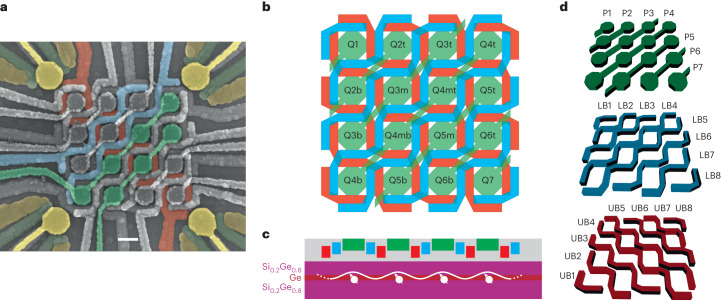
“We use two barrier layers (with gates UB i and LB i , where i ∈ [1, 8]) to control the interdot tunnel couplings, and exploit a layer of plunger lines (P i , where i ∈ [1, 7]) to vary the on-site energies (Fig.”
BackgroundMethodInfluentialSurface codes: Towards practical large-scale quantum computation
Fowler, A. G., Mariantoni, M., Martinis, J. M., & Cleland, A. N. (2012) · Physical Review A · doi:10.1103/physreva.86.032324 · Cited by 3,059
Spins in few-electron quantum dots
Hanson, R., Kouwenhoven, L. P., Petta, J. R., Tarucha, S., & Vandersypen, L. M. K. (2007) · Reviews of Modern Physics · doi:10.1103/revmodphys.79.1217 · Cited by 2,665 · cited 2×
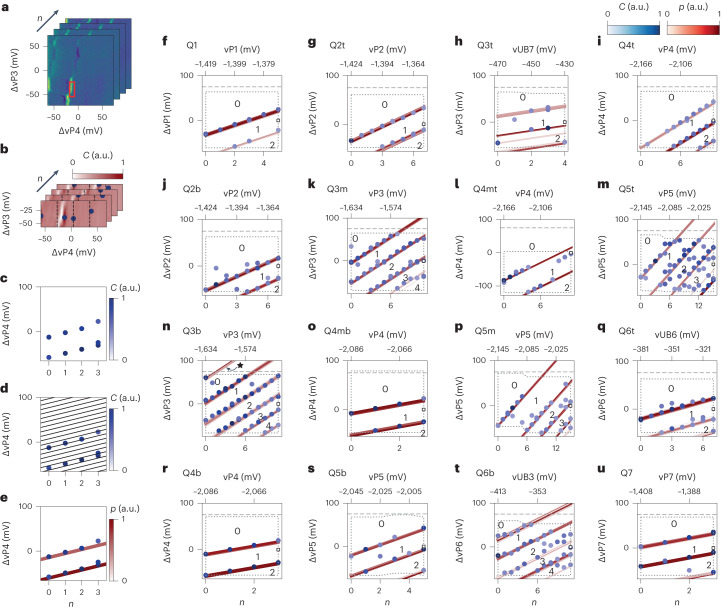
“In this configuration, we also prove the ability to prepare all the quantum dots in the odd-charge occupation, as a key step for the confinement of an unpaired spin in each site 18,19 .”
BackgroundMethodQuantum error correction for quantum memories
Terhal, B. M. (2015) · Reviews of Modern Physics · doi:10.1103/revmodphys.87.307 · Cited by 1,354
Zwanenburg, F. A., Dzurak, A. S., Morello, A., Simmons, M. Y., Hollenberg, L. C. L., Klimeck, G., Rogge, S., Coppersmith, S. N., & Eriksson, M. A. (2013) · Reviews of Modern Physics · doi:10.1103/revmodphys.85.961 · Cited by 1,210
On a Pin Versus Block Relationship For Partitions of Logic Graphs
Landman, B. S., & Russo, R. L. (1971) · IEEE Transactions on Computers · doi:10.1109/t-c.1971.223159 · Cited by 714 · cited 1×
“A key enabler has been the ability to control such a large number of components with only a few hundred to a few thousand control lines 5,6 .”
BackgroundInterfacing spin qubits in quantum dots and donors—hot, dense, and coherent
Vandersypen, L. M. K., Bluhm, H., Clarke, J. S., Dzurak, A. S., Ishihara, R., Morello, A., Reilly, D. J., Schreiber, L. R., & Veldhorst, M. (2017) · npj Quantum Information · doi:10.1038/s41534-017-0038-y · Cited by 624
Self-citationMaurand, R., Jehl, X., Kotekar-Patil, D., Corna, A., Bohuslavskyi, H., Laviéville, R., Hutin, L., Barraud, S., Vinet, M., Sanquer, M., et al. (2016) · Nature Communications · doi:10.1038/ncomms13575 · Cited by 604 · cited 1×
“Advanced semiconductor qubit systems are based on complementary-metal–oxide–semiconductor-compatible materials and even foundry manufactured qubits have been realized 11,12 .”
BackgroundQuantum logic with spin qubits crossing the surface code threshold
Xue, X., Russ, M., Samkharadze, N., Undseth, B., Sammak, A., Scappucci, G., & Vandersypen, L. M. K. (2022) · Nature · doi:10.1038/s41586-021-04273-w · Cited by 524
Self-citationUniversal control of a six-qubit quantum processor in silicon
Philips, S. G. J., Mądzik, M. T., Amitonov, S. V., de Snoo, S. L., Russ, M., Kalhor, N., Volk, C., Lawrie, W. I. L., Brousse, D., Tryputen, L., et al. (2022) · Nature · doi:10.1038/s41586-022-05117-x · Cited by 410
Self-citation
Research works printed but not linked: 1
- Harvey-Collard P High-fidelity single-shot readout for a spin qubit via an enhanced latching mechanism Phys. Rev. X 2018 8 021046
Cited by
Probing single electrons across 300-mm spin qubit wafers
Neyens, S., Zietz, O. K., Watson, T. F., Luthi, F., Nethwewala, A., George, H. C., Henry, E., Islam, M., Wagner, A. J., Borjans, F., et al. (2024) · Nature · doi:10.1038/s41586-024-07275-6 · Cited by 178
Operating semiconductor quantum processors with hopping spins
Wang, C.-A., John, V., Tidjani, H., Yu, C. X., Ivlev, A., Déprez, C., van Riggelen, F., Woods, B. D., Hendrickx, N. W., Lawrie, W. I. L., et al. (2024) · Science · doi:10.1126/science.ado5915 · Cited by 109
Self-citationSweet-spot operation of a germanium hole spin qubit with highly anisotropic noise sensitivity
Hendrickx, N. W., Massai, L., Mergenthaler, M., Schupp, F. J., Paredes, S., Bedell, S. W., Salis, G., & Fuhrer, A. (2024) · Nature Materials · doi:10.1038/s41563-024-01857-5 · Cited by 158
Self-citationRecent advances in hole-spin qubits
Fang, Y., Philippopoulos, P., Culcer, D., Coish, W. A., & Chesi, S. (2023) · Materials for Quantum Technology · doi:10.1088/2633-4356/acb87e · Cited by 102
“Efficient strategies to control a larger number of qubits, such as a 4 × 4 array [129], are being developed.”
MethodColloquium : Advances in automation of quantum dot devices control
Zwolak, J. P., & Taylor, J. M. (2023) · Reviews of Modern Physics · doi:10.1103/revmodphys.95.011006 · Cited by 87
Hard superconducting gap in germanium
Tosato, A., Levajac, V., Wang, J., Boor, C. J., Borsoi, F., Botifoll, M., Borja, C., Martí‐Sánchez, S., Arbiol, J., Sammak, A., et al. (2023) · Communications Materials · doi:10.1038/s43246-023-00351-w · Cited by 68
Self-citationCoherent spin qubit shuttling through germanium quantum dots
van Riggelen, F., Wang, C.-A., de Snoo, S. L., Lawrie, W. I. L., Hendrickx, N. W., Rimbach-Russ, M., Sammak, A., Scappucci, G., Déprez, C., & Veldhorst, M. (2024) · Nature Communications · doi:10.1038/s41467-024-49358-y · Cited by 69
Self-citationUniversal control of four singlet–triplet qubits
Zhang, X., Morozova, E., Rimbach-Russ, M., Jirovec, D., Hsiao, T.-K., Fariña, P. C., Wang, C.-A., Oosterhout, S. D., Sammak, A., Scappucci, G., et al. (2024) · Nature Nanotechnology · doi:10.1038/s41565-024-01817-9 · Cited by 69
Self-citationCorley-Wiciak, C. X., Richter, C., Zoellner, M. H., Zaitsev, I., Manganelli, C. L., Zatterin, E. M., Schülli, T. U., Corley‐Wiciak, A. A., Katzer, J., Reichmann, F., et al. (2023) · ACS Applied Materials & Interfaces · doi:10.1021/acsami.2c17395 · Cited by 57
Self-citationQuantum computing and chemistry
Weidman, J. D., Sajjan, M., Mikolas, C. A., Stewart, Z. J., Pollanen, J., Kais, S., & Wilson, A. K. (2024) · Cell Reports Physical Science · doi:10.1016/j.xcrp.2024.102105 · Cited by 71
“219,220 236–239 For more complete descriptions of these hardware platforms, we refer the reader to helpful reviews for further information on this highly active area of research.”
BackgroundA gate tunable transmon qubit in planar Ge
Sági, O., Crippa, A., Valentini, M., Janík, M., Baghumyan, L., Fabris, G., Kapoor, L. N., Hassani, F., Fink, J. M., Calcaterra, S., et al. (2024) · Nature Communications · doi:10.1038/s41467-024-50763-6 · Cited by 56
Massai, L., Hetényi, B., Mergenthaler, M., Schupp, F. J., Sommer, L., Paredes, S., Bedell, S. W., Harvey-Collard, P., Salis, G., Fuhrer, A., et al. (2024) · Communications Materials · doi:10.1038/s43246-024-00563-8 · Cited by 32
“As we push the accumulation voltages more negative, we observe non-monotonous changes in the low-density transport metrics, attributed to the induced gradual fi lling of a spatially varying density of charge traps at the SiGe-oxide interface.”
Self-citationElectrical operation of planar Ge hole spin qubits in an in-plane magnetic field
Sarkar, A., Wang, Z., Rendell, M. J., Hendrickx, N. W., Veldhorst, M., Scappucci, G., Khalifa, M., Salfi, J., Saraiva, A., Dzurak, A. S., et al. (2023) · Physical review. B./Physical review. B · doi:10.1103/physrevb.108.245301 · Cited by 34
Self-citationAdvanced Optical Integration Processes for Photonic‐Integrated Circuit Packaging
Baek, K., Kim, M., Kim, H., Ahn, J., & So, H. (2025) · Advanced Materials Technologies · doi:10.1002/admt.202401848 · Cited by 32
Electrical Control of Uniformity in Quantum Dot Devices
Meyer, M., Déprez, C., van Abswoude, T. R., Meijer, I. N., Liu, D., Wang, C.-A., Karwal, S., Oosterhout, S. D., Borsoi, F., Sammak, A., et al. (2023) · Nano Letters · doi:10.1021/acs.nanolett.2c04446 · Cited by 33
Self-citationA 2D quantum dot array in planar 28Si/SiGe
Unseld, F. K., Meyer, M., Mądzik, M. T., Borsoi, F., de Snoo, S. L., Amitonov, S. V., Sammak, A., Scappucci, G., Veldhorst, M., & Vandersypen, L. M. K. (2023) · Applied Physics Letters · doi:10.1063/5.0160847 · Cited by 36
Self-citationStrong hole-photon coupling in planar Ge for probing charge degree and strongly correlated states
Palma, F. D., Oppliger, F., Jang, W., Bosco, S., Janík, M., Calcaterra, S., Katsaros, G., Isella, G., Loss, D., & Scarlino, P. (2024) · Nature Communications · doi:10.1038/s41467-024-54520-7 · Cited by 50
“Building on all these advantages, recent works have demonstrated coherent single-and two-qubit operations [4, 13], scalable multi-qubit array architecture [12, 17], and coherent spin shuttling [18] in planar Ge.”
Bridging the Reality Gap in Quantum Devices with Physics-Aware Machine Learning
Craig, D., Moon, H., Fedele, F., Lennon, D. T., van Straaten, B., Vigneau, F., Camenzind, L. C., Zumbühl, D. M., Briggs, G. A. D., Osborne, M. A., et al. (2024) · Physical Review X · doi:10.1103/physrevx.14.011001 · Cited by 35
Single-Electron Spin Qubits in Silicon for Quantum Computing
Hu, G., Huang, W., Cai, R., Wang, L., Yang, C. H., Cao, G., Xue, X., Huang, P., & He, Y. (2025) · Intelligent Computing · doi:10.34133/icomputing.0115 · Cited by 33
Exciton Transport in a Germanium Quantum Dot Ladder
Hsiao, T.-K., Fariña, P. C., Oosterhout, S. D., Jirovec, D., Zhang, X., van Diepen, C. J., Lawrie, W. I. L., Wang, C.-A., Sammak, A., Scappucci, G., et al. (2024) · Physical Review X · doi:10.1103/physrevx.14.011048 · Cited by 33
Self-citationZhang, Y., Oberg, C. P., Hu, Y., Xu, H., Yan, M., Scholes, G. D., & Wang, M. (2024) · The Journal of Physical Chemistry Letters · doi:10.1021/acs.jpclett.4c00264 · Cited by 27
Geometry of the dephasing sweet spots of spin-orbit qubits
Mauro, L., Rodríguez-Mena, E. A., Bassi, M., Schmitt, V., & Niquet, Y. (2024) · Physical review. B./Physical review. B · doi:10.1103/physrevb.109.155406 · Cited by 27
“Ger-manium hole spin qubits have actually seen outstanding progress in the past few years with the demonstration of a four qubit processor [10] and of charge control in an array of sixteen dots [31].”
BackgroundHigh-Fidelity Spin Qubit Shuttling via Large Spin-Orbit Interactions
Bosco, S., Zou, J., & Loss, D. (2024) · PRX Quantum · doi:10.1103/prxquantum.5.020353 · Cited by 36
Blueprint for All-to-All-Connected Superconducting Spin Qubits
Pita‐Vidal, M., Wesdorp, J. J., & Andersen, C. K. (2025) · PRX Quantum · doi:10.1103/prxquantum.6.010308 · Cited by 40
Ultra-low-power cryogenic complementary metal oxide semiconductor technology
Zhao, Q., Han, Y., Han, H.-C., Schreiber, L. R., Lee, T.-E., Chiang, H.-L., Radu, I. P., Enz, C., Grützmacher, D., Stampfer, C., et al. (2025) · Nature Reviews Electrical Engineering · doi:10.1038/s44287-025-00157-7 · Cited by 34
Linear-in-momentum spin orbit interactions in planar Ge/GeSi heterostructures and spin qubits
Rodríguez-Mena, E. A., Abadillo-Uriel, J. C., Veste, G., Martínez, B., Li, J., Sklénard, B., & Niquet, Y. (2023) · Physical review. B./Physical review. B · doi:10.1103/physrevb.108.205416 · Cited by 21
Bichromatic Rabi Control of Semiconductor Qubits
John, V., Borsoi, F., György, Z., Wang, C.-A., Széchenyi, G., van Riggelen, F., Lawrie, W. I. L., Hendrickx, N. W., Sammak, A., Scappucci, G., et al. (2024) · Physical Review Letters · doi:10.1103/physrevlett.132.067001 · Cited by 26
Self-citationRobust and localised control of a 10-spin qubit array in germanium
John, V., Yu, C. X., van Straaten, B., Rodríguez-Mena, E. A., Rodríguez, M. J., Oosterhout, S. D., Stehouwer, L. E. A., Scappucci, G., Rimbach-Russ, M., Bosco, S., et al. (2025) · Nature Communications · doi:10.1038/s41467-025-65577-3 · Cited by 56
Self-citationSpinQ: Compilation Strategies for Scalable Spin-Qubit Architectures
Paraskevopoulos, N., Sebastiano, F., Almudéver, C. G., & Feld, S. (2023) · ACM Transactions on Quantum Computing · doi:10.1145/3624484 · Cited by 25
“Recently, a crossbar array [6] has been experimentally demonstrated showing great promise for architectures with shared control.”
BackgroundCoherent control of a triangular exchange-only spin qubit
Acuna, E., Broz, J., Shyamsundar, K., Mei, A. B., Feeney, C. P., Smetanka, V., Davis, T., Lee, K., Choi, M. D., Boyd, B., et al. (2024) · Physical Review Applied · doi:10.1103/physrevapplied.22.044057 · Cited by 31
“Recent progress has been made in the fabrication of small 2D arrays using single-and multi-layer gate stacks [12–14], as well as cross-bar geometries, where dots in an array share common gate electrodes [15].”
BackgroundChen, B., Shi, Y., Zhang, Y., Zhang, D., Lu, X., Xu, Q., Pan, Y., Kankala, R. K., Wang, S., & Chen, A. (2025) · Advanced Functional Materials · doi:10.1002/adfm.202504621 · Cited by 24
Electrical operation of hole spin qubits in planar MOS silicon quantum dots
Wang, Z., Sarkar, A., Liles, S. D., Saraiva, A., Dzurak, A. S., Hamilton, A. R., & Culcer, D. (2024) · Physical review. B./Physical review. B · doi:10.1103/physrevb.109.075427 · Cited by 21
Woods, B. D., Soomro, H., Joseph, E. S., Frink, C. C. D., Joynt, R., Eriksson, M. A., & Friesen, M. G. (2024) · npj Quantum Information · doi:10.1038/s41534-024-00853-6 · Cited by 19
“15% over a wide area ( > 785 µ m 2 ) that could potentially contain many dots in a dense two-dimensional array [46–49].”
BackgroundCoupling of a hole double quantum dot in planar germanium to a microwave cavity
Kang, Y., Li, Z.-H., Kong, Z., Li, F.-G., Hao, T.-Y., Wei, Z.-C., Deng, S.-Y., Wang, B., Li, H.-O., Wang, G., et al. (2024) · Physical Review Applied · doi:10.1103/physrevapplied.22.024054 · Cited by 18
An 11-qubit atom processor in silicon
Edlbauer, H., Wang, J., Huq, A. M. S., Thorvaldson, I., Jones, M. T., Misha, S. H., Pappas, W. J., Moehle, C. M., Hsueh, Y., Bornemann, H., et al. (2025) · Nature · doi:10.1038/s41586-025-09827-w · Cited by 49
Martínez, B., Franceschi, S. D., & Niquet, Y. (2024) · Physical Review Applied · doi:10.1103/physrevapplied.22.024030 · Cited by 16
Single-Electron Occupation in Quantum Dot Arrays at Selectable Plunger Gate Voltage
Meyer, M., Déprez, C., Meijer, I. N., Unseld, F. K., Karwal, S., Sammak, A., Scappucci, G., Vandersypen, L. M. K., & Veldhorst, M. (2023) · Nano Letters · doi:10.1021/acs.nanolett.3c03349 · Cited by 17
Self-citationModular Autonomous Virtualization System for Two-Dimensional Semiconductor Quantum Dot Arrays
Rao, A. S., Buterakos, D. L., van Straaten, B., John, V., Yu, C. X., Oosterhout, S. D., Stehouwer, L. E. A., Scappucci, G., Veldhorst, M., Borsoi, F., et al. (2025) · Physical Review X · doi:10.1103/physrevx.15.021034 · Cited by 38
“…QDs in large arrays decouple from the reservoirs, causing a reduced exchange rate of carriers with respect to the typical measurement scan rates, the 2D CSDs become more challenging to interpret and analyze due to, e.g., secondary charge transitions and more pronounced latching transition lines [ ?”
Self-citationHigh-fidelity geometric quantum gates exceeding 99.9% in germanium quantum dots
Zhou, Y.-C., Ma, R.-L., Kong, Z., Li, A.-R., Zhang, C., Zhang, X., Liu, Y., Jiang, H.-T., Wu, Z., Wang, G., et al. (2025) · Nature Communications · doi:10.1038/s41467-025-63241-4 · Cited by 32
Meunier, T., Daval, N., Perruchot, F., & Vinet, M. (2025) · The European Physical Journal A · doi:10.1140/epja/s10050-025-01514-8 · Cited by 15
“Strategies aimed at sharing gate control between dots, the so-called “line-column addressing” (see Figure) used, for example, in the production of memory within the semiconductor industry, have been proposed and are currently being explored and evaluated within the spin qubit community [55].”
Nigro, A., Jutzi, E., Oppliger, F., Palma, F. D., Olsen, C., Ruiz‐Caridad, A., Gadea, G., Scarlino, P., Zardo, I., & Hofmann, A. (2024) · ACS Applied Electronic Materials · doi:10.1021/acsaelm.4c00654 · Cited by 11
Coupled vertical double quantum dots at single-hole occupancy
Ivlev, A., Tidjani, H., Oosterhout, S. D., Sammak, A., Scappucci, G., & Veldhorst, M. (2024) · Applied Physics Letters · doi:10.1063/5.0198274 · Cited by 13
“Barrier gates B L and B R also con-trol the loading of charge carriers from the reservoirs to the quantum dots.”
BackgroundSelf-citationBilayer Crystals of Trapped Ions for Quantum Information Processing
Hawaldar, S., Shahi, P., Carter, A. L., Rey, A. M., Bollinger, J. J., & Shankar, A. (2024) · Physical Review X · doi:10.1103/physrevx.14.031030 · Cited by 18
“Such systems have now been realized on a wide variety of platforms, including but not restricted to trapped ions [2], neutral atoms in tweezers and optical lattices [3], quantum dots [4], and superconducting quantum circuits [5], to name but a few.”
Cryogenic multiplexing using selective area grown nanowires
Olšteins, D., Nagda, G., Carrad, D. J., Beznasyuk, D. V., Petersen, C. E. N., Martí‐Sánchez, S., Arbiol, J., & Jespersen, T. S. (2023) · Nature Communications · doi:10.1038/s41467-023-43551-1 · Cited by 13
Impact of electrostatic crosstalk on spin qubits in dense CMOS quantum dot arrays
Cifuentes, J. D., Tanttu, T., Steinacker, P., Serrano, S., Hansen, I., Slack-Smith, J., Gilbert, W., Huang, J. Y., Vahapoglu, E., Leon, R. C. C., et al. (2024) · Physical review. B./Physical review. B · doi:10.1103/physrevb.110.125414 · Cited by 17
Atomically precise construction of uniform single-molecule junctions for molecular electronics
Li, M., Yin, B., Wang, B., Hu, W., Cheng, J., Gao, C., Li, Z., Xu, Y., Yang, C., Xie, X., et al. (2025) · Nature Communications · doi:10.1038/s41467-025-63113-x · Cited by 10
Optimal operation of hole spin qubits
Bassi, M., Rodríguez-Mena, E. A., Brun, B., Zihlmann, S., Nguyen, T., Champain, V., Abadillo-Uriel, J. C., Bertrand, B., Niebojewski, H., Maurand, R., et al. (2025) · Nature Physics · doi:10.1038/s41567-025-03106-1 · Cited by 10
Vertical gate-defined double quantum dot in a strained germanium double quantum well
Tidjani, H., Tosato, A., Ivlev, A., Déprez, C., Oosterhout, S. D., Stehouwer, L. E. A., Sammak, A., Scappucci, G., & Veldhorst, M. (2023) · Physical Review Applied · doi:10.1103/physrevapplied.20.054035 · Cited by 12
Self-citationHigh quality Ge layers for Ge/SiGe quantum well heterostructures using chemical vapor deposition
Nigro, A., Jutzi, E., Forrer, N., Hofmann, A., Gadea, G., & Zardo, I. (2024) · Physical Review Materials · doi:10.1103/physrevmaterials.8.066201 · Cited by 12
“In the frame of quantum information, they were developed as a successful planar technology able to combine low disorder [9], fast qubit driving [10] and scalability [11,12] as well as compatibility with the widespread micro-fabrication techniques employed in the integrated circuitry industry [13].”
MethodHigh-quality Ge/SiGe heterostructure with atomically sharp interface grown by molecular beam epitaxy
Zhang, J. C., Ming, M., Wang, J., Huang, D., Gao, H., Chu, Y.-X., Xu, H. Q., Xu, H. Q., & Zhang, J. (2024) · Applied Physics Letters · doi:10.1063/5.0210639 · Cited by 10
Strain engineering in Ge / Ge − Si spin-qubit heterostructures
Mauro, L., Rodríguez-Mena, E. A., Martínez, B., & Niquet, Y. (2025) · Physical Review Applied · doi:10.1103/physrevapplied.23.024057 · Cited by 15
van Staveren, J., Enthoven, L., Bavdaz, P. L., Meyer, M., Déprez, C., Nuutinen, V., Lake, R. E., Esposti, D. D., Carlsson, C., Tosato, A., et al. (2025) · IEEE Transactions on Quantum Engineering · doi:10.1109/tqe.2025.3580377 · Cited by 13
“However, with quantum processors quickly approaching the scale of 1000 qubits per chip [21], [23], [24], [25], [26], [27], the wiring bottleneck at the mK stage may soon become a roadblock.”
Self-citationExtended Hubbard model describing small multidot arrays in bilayer graphene
Knothe, A., & Burkard, G. (2024) · Physical review. B./Physical review. B · doi:10.1103/physrevb.109.245401 · Cited by 12
“Successful realizations of multi-dot systems using semi-conductor QDs demonstrate their potential, e.g., for quantum simulation [71–73], quantum state transfer and routing [74–78], and inducing extended interactions [79] in 1D [80–85] and 2D [86–94] QD arrays.”
BackgroundBeSnake: A Routing Algorithm for Scalable Spin-Qubit Architectures
Paraskevopoulos, N., Almudéver, C. G., & Feld, S. (2024) · IEEE Transactions on Quantum Engineering · doi:10.1109/tqe.2024.3429451 · Cited by 13
“D array formats [23], [35].”
Reducing disorder in Ge quantum wells by using thick SiGe barriers
Costa, D., Stehouwer, L. E. A., Huang, Y., Martí‐Sánchez, S., Esposti, D. D., Arbiol, J., & Scappucci, G. (2024) · Applied Physics Letters · doi:10.1063/5.0242746 · Cited by 16
Self-citationDephasing of planar Ge hole spin qubits due to 1 / f charge noise
Wang, Z., Gholizadeh, S., Hu, X., Sarma, S. D., & Culcer, D. (2025) · Physical review. B./Physical review. B · doi:10.1103/physrevb.111.155403 · Cited by 8
“…interactions and the fact that interface roughness [99], alloy disorder [100], inhomogeneous lattice strain [69], and other atomistic-scale potential variations can alter the g -tensor of the hole spin [3, 67], potentially making significant contributions to spin dynamics [40, 82, 98, 101, 102].”
Single electron transistor based charge sensors: fabrication challenges and opportunities
Jency Rubia, J., Mazumder, J. T., Aloshious, A. B., & Jha, R. K. (2025) · Nanoscale · doi:10.1039/d5nr00384a · Cited by 11
Dephasing and error dynamics affecting a singlet-triplet qubit during coherent spin shuttling
Foster, N., Henshaw, J., Rudolph, M., Luhman, D. R., & Jock, R. (2025) · npj Quantum Information · doi:10.1038/s41534-025-00996-0 · Cited by 13
“At present, error dynamics are not well quanti fi ed out to the large number of shuttles needed to establish these long-range interactions.”
Progress of Gate‐Defined Semiconductor Spin Qubit: Host Materials and Device Geometries
Liu, Y., Guan, S., Luo, J., & Li, S. (2024) · Advanced Functional Materials · doi:10.1002/adfm.202304725 · Cited by 13
Passive and active suppression of transduced noise in silicon spin qubits
Park, J., Jang, H., Sohn, H., Yun, J., Song, Y., Kang, B., Stehouwer, L. E. A., Esposti, D. D., Scappucci, G., & Kim, D. (2025) · Nature Communications · doi:10.1038/s41467-024-55338-z · Cited by 24
“However, for fault-tolerant quantum computing, achieving consistent high-fi delity single-and two-qubit control is crucial, not only over an extended time but also across an extensive array of devices 13,14 .”
Self-citationChallenges in advancing our understanding of atomic-like quantum systems: Theory and experiment
Gali, Á., Schleife, A., Heinrich, A. J., Laucht, A., Schuler, B., Chakraborty, C., Anderson, C. P., Déprez, C., McCallum, J. C., Bassett, L. C., et al. (2024) · MRS Bulletin · doi:10.1557/s43577-023-00659-5 · Cited by 9
A dressed singlet-triplet qubit in germanium
Tsoukalas, K., von Lüpke, U., Orekhov, A., Hetényi, B., Seidler, I., Sommer, L., Kelly, E. G., Massai, L., Aldeghi, M., Pita‐Vidal, M., et al. (2026) · Nature Communications · doi:10.1038/s41467-025-65569-3 · Cited by 11
“Meanwhile, achieving J ≫ Δ E Z / h is in general dif fi cult and makes the qubit more susceptible to charge noise.”
Self-citationRecent progress and challenges of infrared quantum dots
Hu, Y., Xin, K., Qiu, S., Hu, J., Wang, P., Zhai, S., Shen, G., Yang, J., & Wei, Z. (2025) · Science China Information Sciences · doi:10.1007/s11432-025-4383-x · Cited by 9
“…constructed from metal oxide QDs hold the potential for exciting future applications as their strategy for sustainably controlling large-scale quantum processors by manipulating QDs in cross-structured setups may also illuminate potential development pathways for optoelectronic applications [107].”
Rimbach-Russ, M., John, V., van Straaten, B., & Bosco, S. (2025) · Physical Review Letters · doi:10.1103/mvtj-zhrl · Cited by 20
“[15] and gives rise to a stronger suppression of residual exchange coupling and reduced electrostatic crosstalk due to the larger spacing.”
Self-citationTracking spin qubit frequency variations over 912 days
Capannelli, K., Undseth, B., de Fuentes, I. F., Raymenants, E., Unseld, F. K., Pietx-Casas, O., Philips, S. G. J., Mądzik, M. T., Amitonov, S. V., Tryputen, L., et al. (2025) · npj Quantum Information · doi:10.1038/s41534-025-01134-6 · Cited by 14
Self-citationKuo, D. M.-T. (2025) · Physical Chemistry Chemical Physics · doi:10.1039/d4cp04224g · Cited by 7
Coupling a high-Q resonator to a spin qubit with all-electrical control
Eggli, R. S., Patlatiuk, T., Kelly, E. G., Orekhov, A., Salis, G., Warburton, R. J., Zumbühl, D. M., & Kuhlmann, A. V. (2025) · Physical Review Research · doi:10.1103/physrevresearch.7.013197 · Cited by 11
“Additional on-chip components beyond the qubit-defining gate electrodes such as single electron transistors for readout [2,3,8,17] and microwave striplines [8,18] or micro magnets [3,4,19] for spin manipulation create undesirable overhead which impedes scalability, connectivity, and qubit density.”
Engineering the Kitaev Spin Liquid in a Quantum Dot System
Cookmeyer, T., & Sarma, S. D. (2024) · Physical Review Letters · doi:10.1103/physrevlett.132.186501 · Cited by 14
Protocols to measure the non-Abelian Berry phase by pumping a spin qubit through a quantum-dot loop
Kolok, B., & Pályi, A. (2024) · Physical review. B./Physical review. B · doi:10.1103/physrevb.109.045438 · Cited by 7
“We anticipate that hole spin qubits in two-dimensional (2D) arrays of germanium quantum dots [1, 2, 32–34] are prominent candidates to carry out these experiments, due to their high device quality, planar 2D layout, strong spin-orbit interaction, and weak hyperfine effects.”
Towards scalable cryogenic quantum dot biasing using memristor-based DC sources
Mouny, P.-A., Dawant, R., Dufour, P., Valdenaire, M., Ecoffey, S., Pioro-Ladrière, M., Beilliard, Y., & Drouin, D. (2024) · Cryogenics · doi:10.1016/j.cryogenics.2024.103910 · Cited by 6
Gate-defined quantum point contacts in a germanium quantum well
Gao, H., Kong, Z., Zhang, P., Luo, Y., Su, H., Liu, X.-F., Wang, G., Wang, J., & Xu, H. Q. (2024) · Nanoscale · doi:10.1039/d4nr00712c · Cited by 5
Scalable parity architecture with a shuttling-based spin qubit processor
Ginzel, F., Fellner, M., Ertler, C., Schreiber, L. R., Bluhm, H., & Lechner, W. (2024) · Physical review. B./Physical review. B · doi:10.1103/physrevb.110.075302 · Cited by 17
Role of Superlattice Phonons in Charge Localization Across Quantum Dot Arrays
Hou, B., O’Rourke, M. J., Banin, U., Thoss, M., & Rabani, E. (2025) · ACS Nano · doi:10.1021/acsnano.4c15199 · Cited by 5
Highly Tunable 2D Silicon Quantum Dot Array with Coupling beyond Nearest Neighbors
Wang, N., Kang, J., Lu, W.-L., Wang, S., Wang, Y.-J., Li, H.-O., Cao, G., Wang, B., & Guo, G. (2024) · Nano Letters · doi:10.1021/acs.nanolett.4c02345 · Cited by 10
A 2 × 2 Quantum Dot Array in Silicon with Fully Tunable Pairwise Interdot Coupling
Lim, W. H., Tanttu, T., Youn, T., Huang, J. Y., Serrano, S., Dickie, A., Yianni, S. A., Hudson, F. E., Escott, C. C., Yang, C. H., et al. (2025) · Nano Letters · doi:10.1021/acs.nanolett.4c06264 · Cited by 9
QDsim: A user-friendly toolbox for simulating large-scale quantum dot devices
Gualtieri, V., Renshaw-Whitman, C., Hernandes, V., & Greplová, E. (2025) · SciPost Physics Codebases · doi:10.21468/scipostphyscodeb.46 · Cited by 19
Impact of Surface Treatments on the Transport Properties of Germanium 2DHGs
Sangwan, N., Jutzi, E., Olsen, C., Vogel, S., Nigro, A., Zardo, I., & Hofmann, A. (2025) · ACS Applied Electronic Materials · doi:10.1021/acsaelm.5c01069 · Cited by 5
Leveraging off-the-shelf silicon chips for quantum computing
Michniewicz, J., & Kim, M. S. (2024) · Applied Physics Letters · doi:10.1063/5.0207162 · Cited by 5
Quantification of the heavy-hole–light-hole mixing in two-dimensional hole gases
Stano, P., & Loss, D. (2025) · Physical review. B./Physical review. B · doi:10.1103/physrevb.111.115301 · Cited by 9
Experimental Online Quantum Dots Charge Autotuning Using Neural Networks
Yon, V., Galaup, B., Rohrbacher, C., Rivard, J., Morel, A., Leclerc, D., Godfrin, C., Li, R., Kubicek, S., Greve, K. D., et al. (2025) · Nano Letters · doi:10.1021/acs.nanolett.4c04889 · Cited by 6
“Each patch is categorized as “ line ” if at least one transition line annotation intersects the 6 × 6 square at its center (pink squares in Figure S4a,b).”
Scalable and Tunable In-Plane Ge/Si(001) Nanowires Grown by Molecular Beam Epitaxy
Wang, J., Ming, M., Huang, D., Zhang, J., Luo, Y., Fu, B.-X., Chu, Y.-X., Yao, Y., Xu, H. Q., & Zhang, J. (2025) · Nano Letters · doi:10.1021/acs.nanolett.5c02477 · Cited by 4
A crossbar chip for benchmarking semiconductor spin qubits
Tosato, A., Elsayed, A., Poggiali, F., Stehouwer, L. E. A., Costa, D., Hudson, K., Esposti, D. D., & Scappucci, G. (2026) · Nature Electronics · doi:10.1038/s41928-026-01569-5 · Cited by 24
“These insights provides a concrete benchmark for further materials and process optimization towards shared-control spin-qubit architectures [34].”
Self-citationInGaAs quantum dot chains grown by twofold selective area molecular beam epitaxy
Barbot, C., Rondeau-Body, C., Coinon, C., Deblock, Y., Tilmant, P., Vaurette, F., Yarekha, D. A., Berthe, M., Thomas, L., Diesinger, H., et al. (2024) · Nanotechnology · doi:10.1088/1361-6528/ad5f34 · Cited by 4
Combining multiplexed gate-based readout and isolated CMOS quantum dot arrays
Hamonic, P., Nurizzo, M., Nath, J., Dartiailh, M., El-Homsy, V., Fragnol, M., Martínez, B., Julliard, P.-L., Paz, B. C., Ouvrier-Buffet, M., et al. (2025) · Nature Communications · doi:10.1038/s41467-025-61556-w · Cited by 8
“Firstly, precise tuning of charge con fi gurations faces various technical hurdles, such as handling capacitive coupling between neighboring quantum dots 6,7,15,16 or dealing with a diverging number of accessible charge con fi gurations in arraysopentoreservoirs 17 – 19 .”
Parametric longitudinal coupling of a semiconductor charge qubit and an rf resonator
Champain, V., Zihlmann, S., Chessari, A., Bertrand, B., Niebojewski, H., Dumur, É., Jehl, X., Schmitt, V., Brun, B., Winkelmann, C. B., et al. (2025) · Physical Review Applied · doi:10.1103/physrevapplied.23.034067 · Cited by 5
Hole spin in direct bandgap germanium-tin quantum dot
Rotaru, N., Vecchio, P. D., & Moutanabbir, O. (2025) · Physical review. B./Physical review. B · doi:10.1103/nr1v-sngw · Cited by 4
Multi-qubit DC gates over an inhomogeneous array of quantum dots
Qi, J., Liu, Z., & Xu, H. Q. (2025) · New Journal of Physics · doi:10.1088/1367-2630/ae1635 · Cited by 7
Zwanenburg, M. F. S., Singh, S., Huang, E. Y., Yilmaz, F., Stefanski, T. V., Hu, J., Kumaravadivel, P., & Andersen, C. K. (2025) · Physical Review Research · doi:10.1103/z62h-kcnh · Cited by 14
“In many quantum computing architectures, such as NV centers [3], quantum dots [4, 5], trapped ions [6, 7], and superconducting circuits [8, 9], these operations are implemented using linearly polarized signals.”
Differentiable master equation solver for quantum device characterization
Craig, D., Ares, N., & Gauger, E. M. (2024) · Physical Review Research · doi:10.1103/physrevresearch.6.043175 · Cited by 6
“…our solver to electro-statically defined quantum dots as they offer a multi-faceted platform for realising quantum systems for which accurate parameter estimation would benefit experiments in quantum computation [33–35], quantum thermodynamics [36], and environment-assisted transport [37, 38].”
Compiling the surface code to crossbar spin qubit architectures
Pataki, D., & Pályi, A. (2025) · Physical review. B./Physical review. B · doi:10.1103/physrevb.111.115307 · Cited by 8
“Utilizing multiple charge sensors and PSB-based spin-to-charge conversion, qubit states across the chip could be inferred simultaneously [29].”
InfluentialShort two-qubit pulse sequences for exchange-only spin qubits in two-dimensional layouts
Chadwick, J. D., Guerreschi, G. G., Luthi, F., Mądzik, M. T., Mohiyaddin, F. A., Prabhu, P., Schmitz, A. T., Litteken, A., Premaratne, S., Bishop, N. C., et al. (2025) · Physical Review A · doi:10.1103/physreva.111.052616 · Cited by 8
ArtA: automating Design Space Exploration of spin-qubit architectures
Paraskevopoulos, N., Hamel, D., Sarkar, A., Almudéver, C. G., & Feld, S. (2025) · Quantum Information Processing · doi:10.1007/s11128-025-04759-w · Cited by 9
Peri, L., Oakes, G. A., Cochrane, L., Ford, C. J. B., & González-Zalba, M. F. (2024) · Quantum · doi:10.22331/q-2024-03-21-1294 · Cited by 16
Wen, C., Takahashi, H., Ibad, S. I., Nishiyama, S., Kato, K., Liu, Y., Murakami, S., Mori, T., Mizokuchi, R., Yoneda, J., et al. (2025) · Applied Physics Express · doi:10.35848/1882-0786/ad9af8 · Cited by 4
Limitations of the g -tensor formalism of semiconductor spin qubits
György, Z., Pályi, A., & Széchenyi, G. (2025) · Physical review. B./Physical review. B · doi:10.1103/gq3h-76mx · Cited by 4
“However, a major hurdle in these systems is how to control individual qubits efficiently while keeping the number of control electrodes to a minimum [5, 8, 38–40].”
Nonvolatile cryogenic phase-slip memory with single-shot readout
Nulens, L., Chaves, D. A. D., Reniers, S., Dillemans, R., Cools, I. P. C., Temst, K., Raes, B., Bael, M. J. V., & de Vondel, J. V. (2025) · Physical Review Applied · doi:10.1103/wrvj-5737 · Cited by 5
“This progress has been driven both by a better understanding of quantum phenomena and by innovations in nanofab-rication, microwave circuitry, and cryogenic technologies [7–13].”
Interplay of Zeeman splitting and tunnel coupling in coherent spin-qubit shuttling
Lin, S.-C., Steinacker, P., Feng, M., Dash, A., Serrano, S., Lim, W. H., Itoh, K. M., Hudson, F. E., Tanttu, T., Saraiva, A., et al. (2026) · Physical Review Applied · doi:10.1103/3d1t-pr7m · Cited by 5
“Besides, as the number of QDs and top gates increases, managing individual voltages through numerous top gates poses significant overhead and interconnect challenges [19, 20].”
Variability of hole-spin qubits in planar germanium
Martinez, B., & Niquet, Y. (2025) · Physical Review Applied · doi:10.1103/mtky-93p1 · Cited by 8
“In the past few years, high-fidelity single-[10, 21–23] and two-qubit gates [21–23] have been demonstrated in these platforms, as well as spin shuttling [24–26] and spin-photon coupling [27–29], the basic ingredients for quantum links between two-dimensional arrays [4, 14, 18, 30, 31].”
Transport diagrams of germanium double quantum dots/Si barriers using photocurrent measurement
Wang, I.-H., Chiu, Y.-W., Lin, H., & Li, P.-W. (2024) · Scientific Reports · doi:10.1038/s41598-024-71177-w · Cited by 3
Bersano, F., Aldeghi, M., Martinolli, N., Boureau, V., Aboud, T., Ghini, M., Scarlino, P., Salis, G., & Ionescu, A. M. (2025) · Advanced Functional Materials · doi:10.1002/adfm.202419940 · Cited by 5
Metadata
- Authors
- Borsoi, F., Hendrickx, N. W., John, V., Meyer, M., Motz, S., van Riggelen, F., Sammak, A., de Snoo, S. L., Scappucci, G., & Veldhorst, M.
- Affiliations
- QuTech (NL)
- Netherlands Organisation for Applied Scientific Research (NL)
- Corresponding author
- Borsoi, Francesco
- Veldhorst, Menno
- ORCID
- Venue
- Nature Nanotechnology
- Published
- 2023-08-28
- Volume
- 19
- Issue
- 1
- Pages
- 21-27
- ISSN
- 1748-3387 (ISSN-L)
- 1748-3395
- PMC
- PMC10796274
- OpenAlex
- W4386221797
- Semantic Scholar
- 7e49d5e7837f977adaf7ce83afc428bd6af25cbe
- Cited by
- 165
- References
- 50
- Citations by year
- 2026: 31 · 2025: 66 · 2024: 52 · 2023: 16
- FWCI
- 19.13
- Type
- journal article
- Language
- en
- Open access
- hybrid
- doi.org
- Licence
- cc-by
- creativecommons.org/licenses/by/4.0 (tdm)
- creativecommons.org/licenses/by/4.0 (vor)
- Locations
- Nature Nanotechnology (publishedVersion, cc-by)
- PubMed Central (publishedVersion, cc-by)
- PubMed (publishedVersion)
- arXiv (Cornell University) (submittedVersion)
- TNO Repository (submittedVersion)
- Research Repository (Delft University of Technology) (submittedVersion, cc-by)
- arXiv (Cornell University) (cc-by)
- Funders
- United States Department of Defense | United States Army | U.S. Army Research, Development and Engineering Command | Army Research Office (W911NF-17-1-0274)
- Topics
- Physical Sciences › Physics and Astronomy › Condensed Matter Physics › Quantum and electron transport phenomena
- Physical Sciences › Physics and Astronomy › Atomic and Molecular Physics, and Optics › Semiconductor Quantum Structures and Devices
- Physical Sciences › Engineering › Electrical and Electronic Engineering › Advancements in Semiconductor Devices and Circuit Design
- Keywords
- shared control, semiconductor quantum dots, crossbar arrays, germanium, unpaired spins, double quantum dot, interdot tunnel coupling, scalable quantum computing, qubit control
About these checks
Registry, retraction, Cites and statistics results are computed, not judged, with one exception: a printed reference that no index lists is read once by a model before it counts as a citation error. Claims are extracted by a model and kept only when their quote appears verbatim in the text; each cited source is then checked, with a model’s help, for whether it says what the claim relies on. Those verdicts can be wrong — read the claim’s quote and the cited source before relying on one.
Statistics and arithmetic are recomputed, not judged.
Confidence bands are shown only for fields calibrated on our annotated test set. None is calibrated yet, so no band is shown.
What counts as a claim ›How we measure confidence ›How we check this ›
Are you an author, or do you see a problem with this page? Request a review
Data sources
Bibliographic data: Semantic Scholar, OpenAlex, Crossref.
Contains information from the Semantic Scholar Academic Graph Datasets, made available under the ODC Attribution License (ODC-BY 1.0).
Semantic Scholar’s data is described in: Kinney, R., et al. (2023). The Semantic Scholar Open Data Platform. arXiv:2301.10140.
