

The DOI matches its Crossref record; 94 of the 94 references it cites were found in a registry or an index.
A large-scale binding and functional map of human RNA-binding proteins
Open accessPublished version of a preprint
Abstract
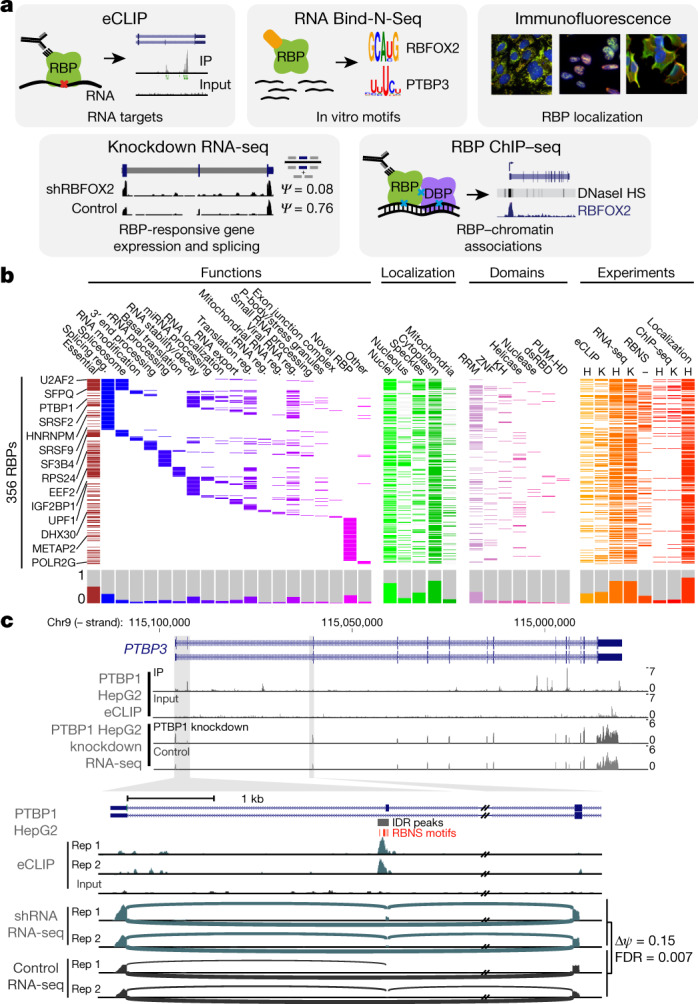
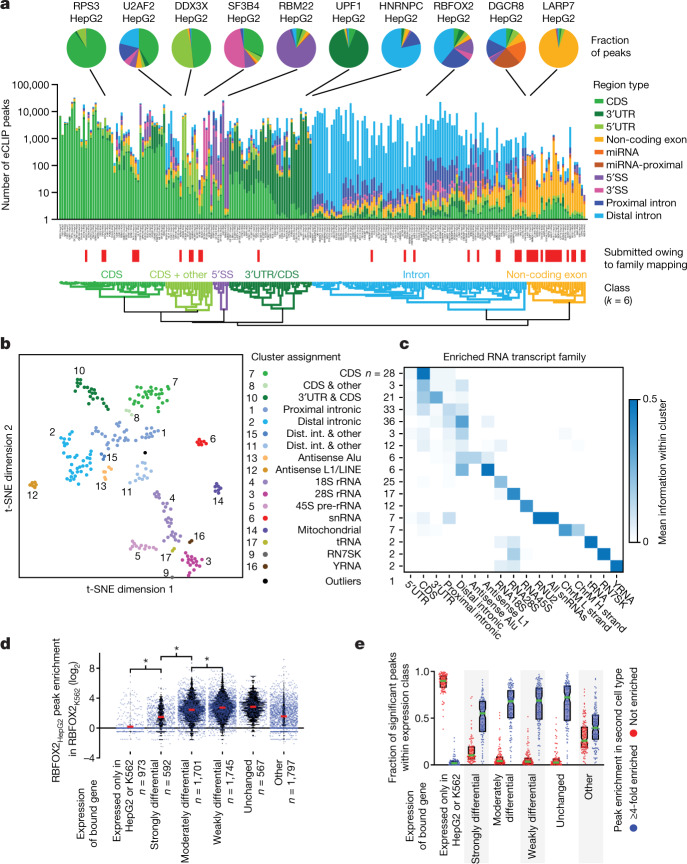
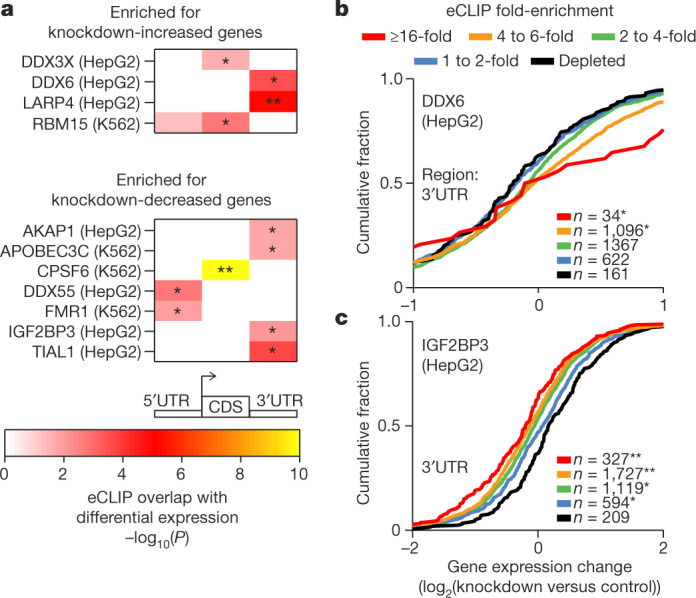
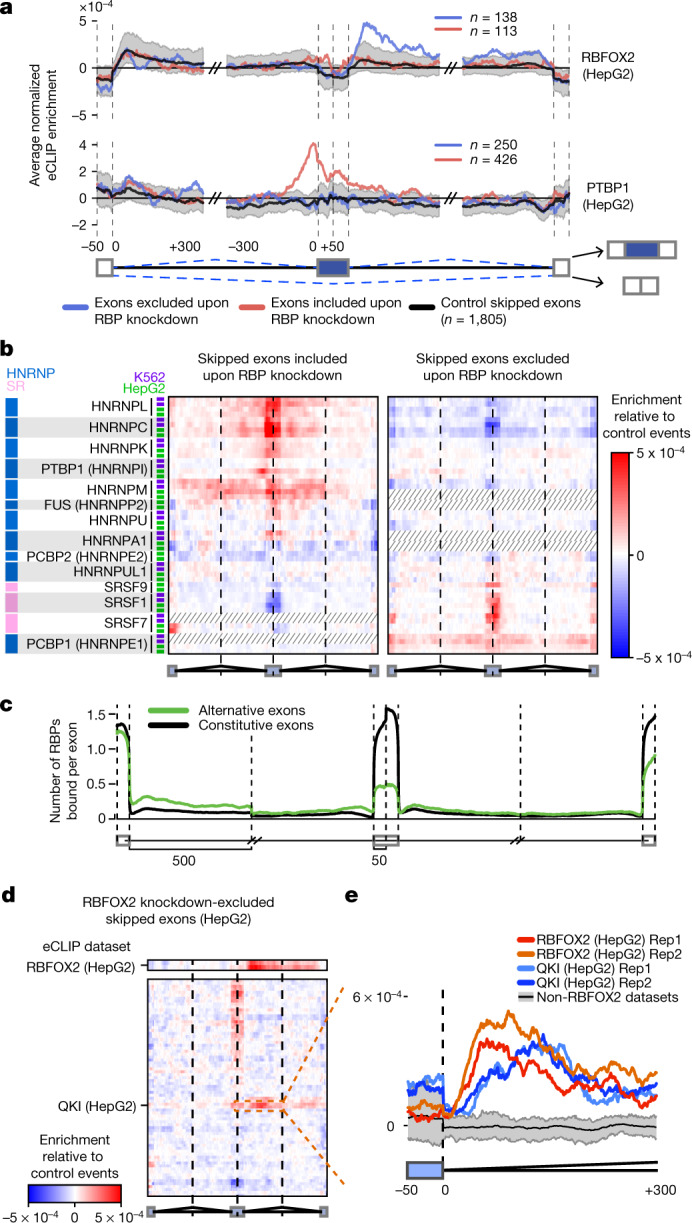
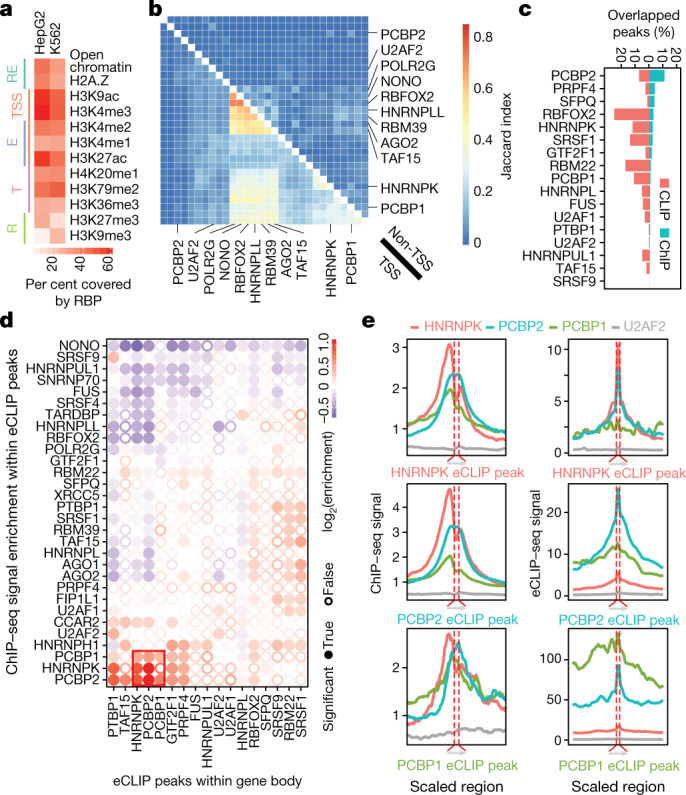
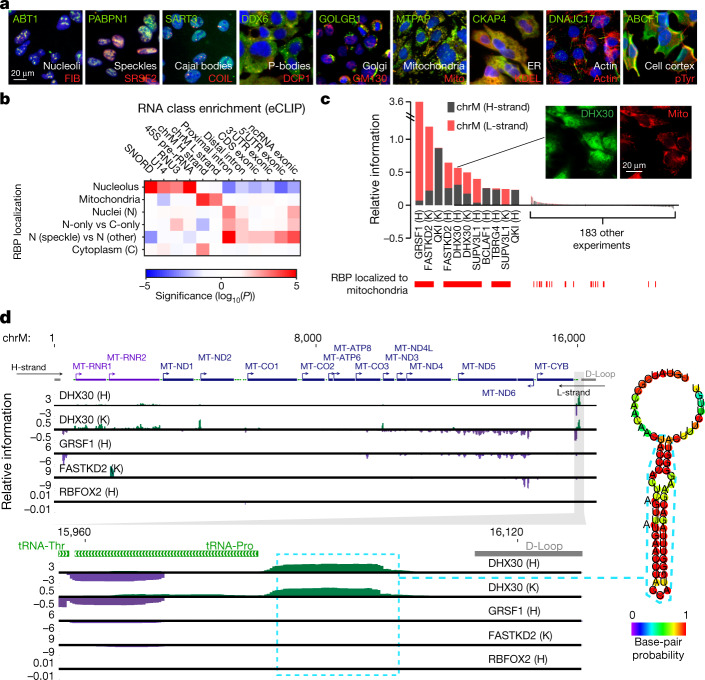
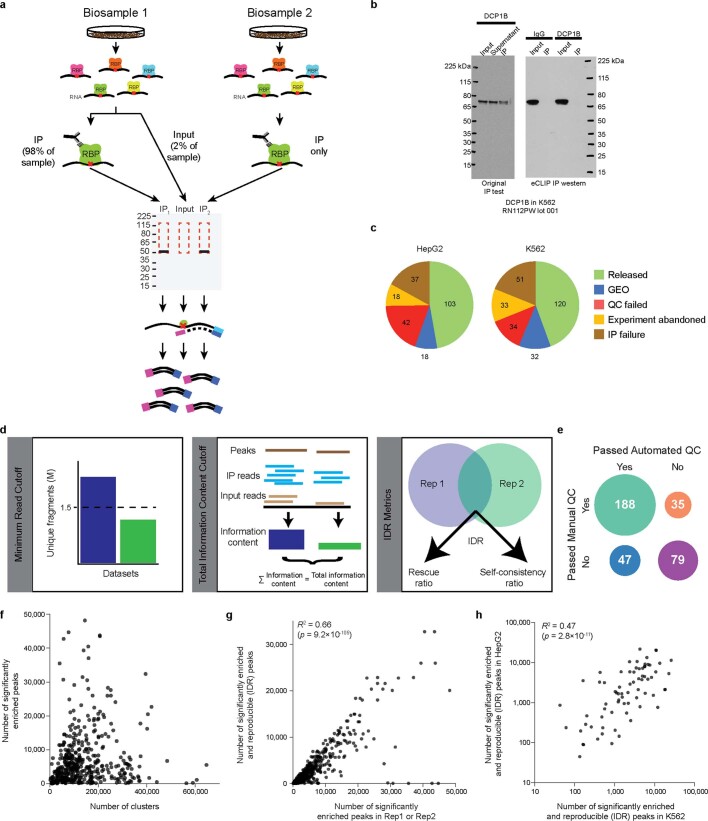
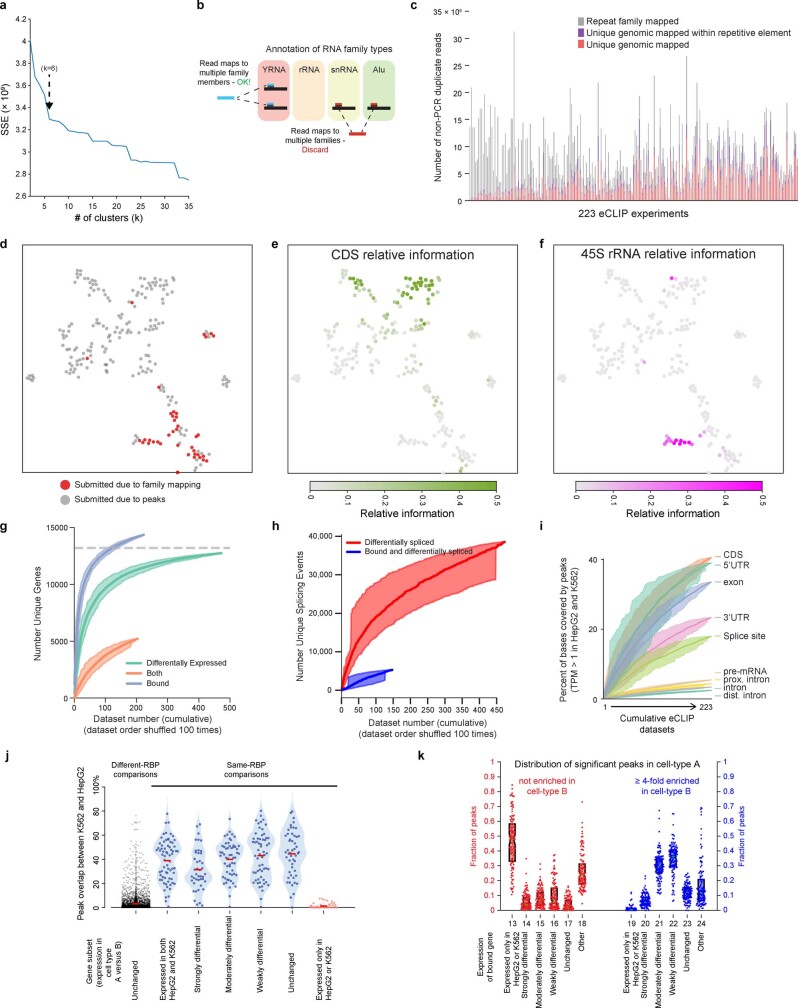
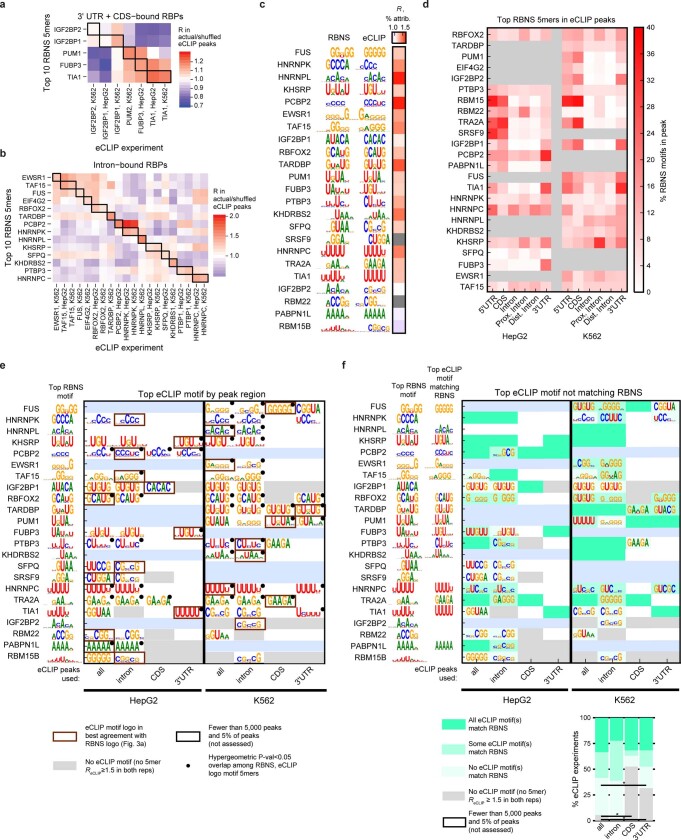
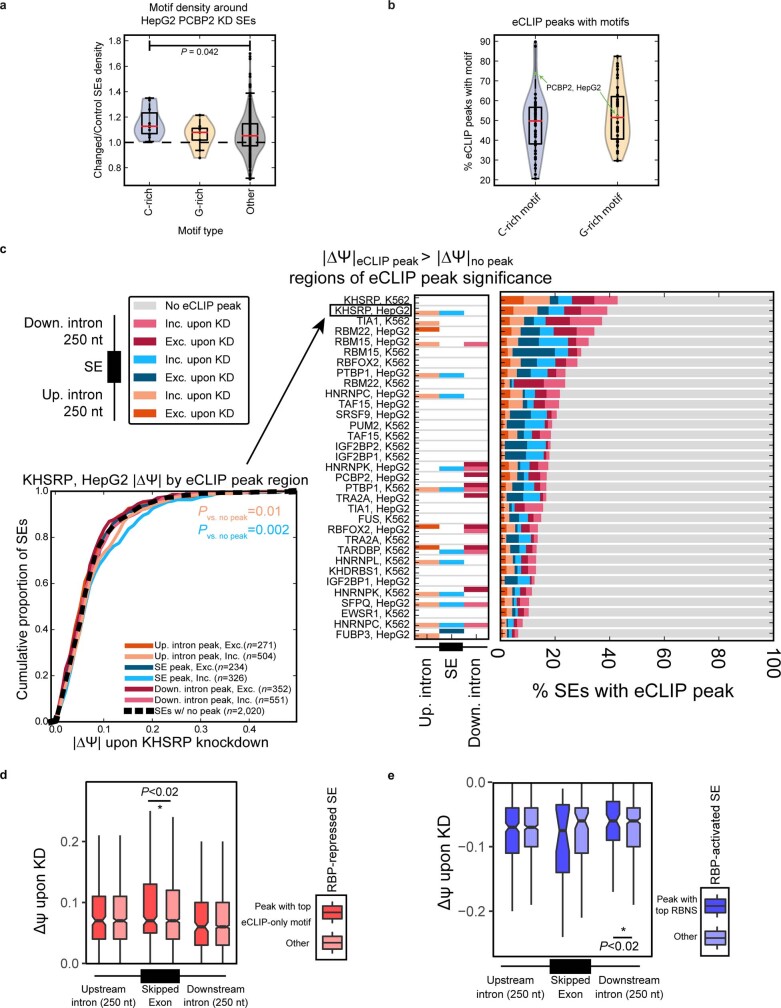
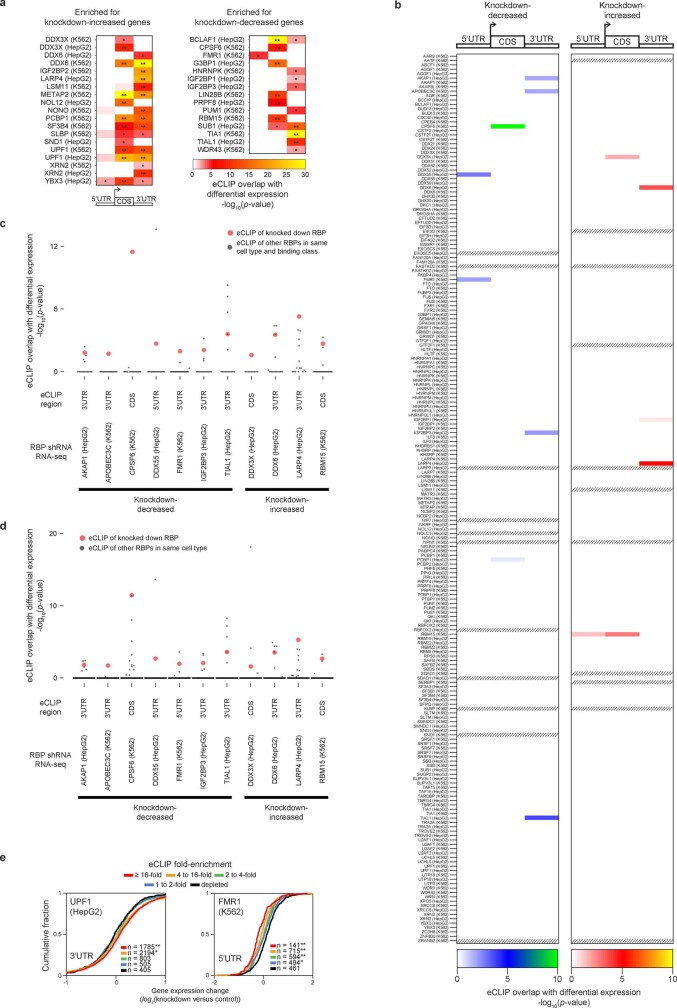
Many proteins regulate the expression of genes by binding to specific regions encoded in the genome 1 . Here we introduce a new data set of RNA elements in the human genome that are recognized by RNA-binding proteins (RBPs), generated as part of the Encyclopedia of DNA Elements (ENCODE) project phase III. This class of regulatory elements functions only when transcribed into RNA, as they serve as the binding sites for RBPs that control post-transcriptional processes such as splicing, cleavage and polyadenylation, and the editing, localization, stability and translation of mRNAs. We describe the mapping and characterization of RNA elements recognized by a large collection of human RBPs in K562 and HepG2 cells. Integrative analyses using five assays identify RBP binding sites on RNA and chromatin in vivo, the in vitro binding preferences of RBPs, the function of RBP binding sites and the subcellular localization of RBPs, producing 1,223 replicated data sets for 356 RBPs. We describe the spectrum of RBP binding throughout the transcriptome and the connections between these interactions and various aspects of RNA biology, including RNA stability, splicing regulation and RNA localization. These data expand the catalogue of functional elements encoded in the human genome by the addition of a large set of elements that function at the RNA level by interacting with RBPs.
Overview
The claims and statistics of this paper haven’t been checked yet.
Run the check — free, no account needed. It reads the open-access text and checks the sources it cites.
Integrity signals
Registry
Cites
Statistics
Figures
Verification
Claims the paper makes
The claims and statistics of this paper haven’t been checked yet.
Run the check — free, no account needed. It reads the open-access text and checks the sources it cites.
Claims other papers make about this one
Each is checked against this paper’s own text: does it say what the citing paper says it does?
The cited source says what the claim attributes to it.
In the citing paper
“Previous studies have shown that linear sequence motifs alone are often insufficient to fully capture the binding specificities of RBPs, and other contextual features such as RNA secondary structure and surrounding base composition contribute to binding specificity (Dominguez et al. 2018; Nostrand et al. 2020).”
From ESRP2–microRNA-122 axis promotes the postnatal onset of liver polyploidization and maturation (2025) · cites this paper as Nostrand et al. 2020
The check wasn’t confident either way, so it gives no verdict — never disputed.
In the citing paper
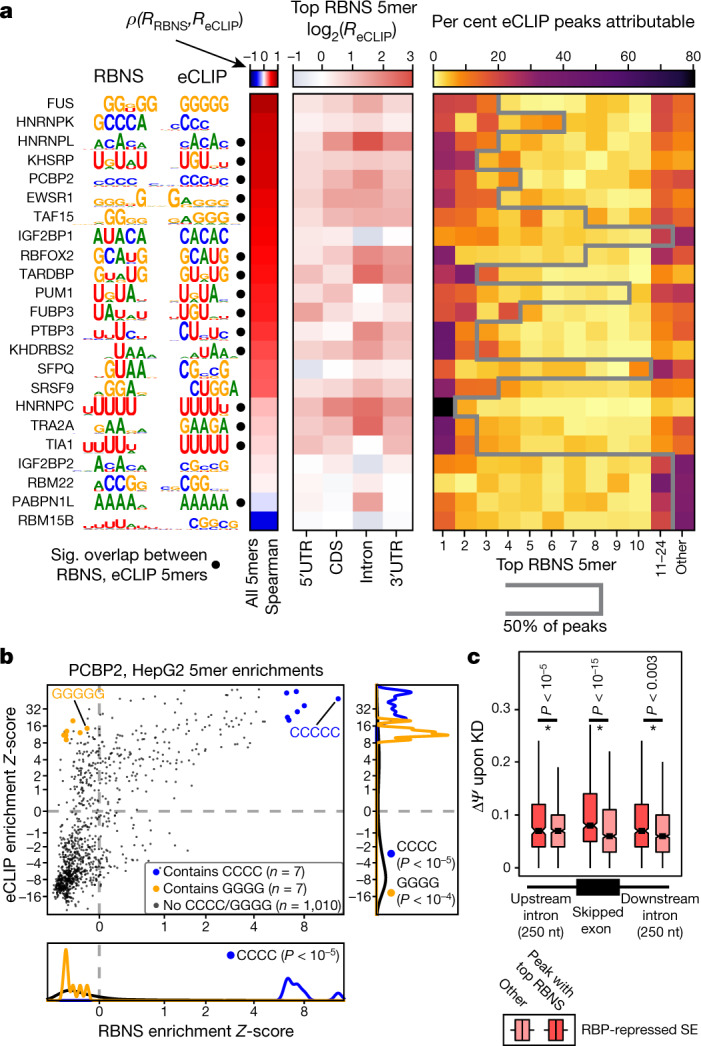
“Similar UG-containing sequence motifs for ESRP proteins have been identified in vitro by SELEX-seq (Dittmar et al. 2012) and RNA bind-n-seq (Nostrand et al. 2020), confirming the accuracy of our in vivo ESRP2-binding site determination with FLAG-ESRP2 eCLIP.”
From ESRP2–microRNA-122 axis promotes the postnatal onset of liver polyploidization and maturation (2025) · cites this paper as Nostrand et al. 2020
Experimental — accuracy not yet measured
Self-check
Percentages, sums and reported differences re-computed from the paper’s own numbers.
The self-check needs the paper’s full text.
Citations
Cites
Moderated estimation of fold change and dispersion for RNA-seq data with DESeq2
Love, M. I., Huber, W., & Anders, S. (2014) · Genome Biology · doi:10.1186/s13059-014-0550-8 · Cited by 95,106
Fast gapped-read alignment with Bowtie 2
Langmead, B., & Salzberg, S. L. (2012) · Nature Methods · doi:10.1038/nmeth.1923 · Cited by 56,400
STAR: ultrafast universal RNA-seq aligner
Dobin, A., Davis, C. A., Schlesinger, F., Drenkow, J., Zaleski, C., Jha, S., Batut, P., Chaisson, M., & Gingeras, T. R. (2013) · Bioinformatics · doi:10.1093/bioinformatics/bts635 · Cited by 51,709
RSEM: accurate transcript quantification from RNA-Seq data with or without a reference genome
Li, B., & Dewey, C. N. (2011) · BMC Bioinformatics · doi:10.1186/1471-2105-12-323 · Cited by 22,179
Differential expression analysis for sequence count data
Anders, S., & Huber, W. (2010) · Genome Biology · doi:10.1186/gb-2010-11-10-r106 · Cited by 15,581
Trapnell, C., Williams, B. A., Pertea, G., Mortazavi, A., Kwan, G., van Baren, M. J., Salzberg, S. L., Wold, B. J., & Pachter, L. (2010) · Nature Biotechnology · doi:10.1038/nbt.1621 · Cited by 15,556
Salmon provides fast and bias-aware quantification of transcript expression
Patro, R., Duggal, G., Love, M. I., Irizarry, R. A., & Kingsford, C. (2017) · Nature Methods · doi:10.1038/nmeth.4197 · Cited by 12,700
Kim, D., Pertea, G., Trapnell, C., Pimentel, H., Kelley, R., & Salzberg, S. L. (2013) · Genome Biology · doi:10.1186/gb-2013-14-4-r36 · Cited by 12,668
Near-optimal probabilistic RNA-seq quantification
Bray, N. L., Pimentel, H., Melsted, P., & Pachter, L. (2016) · Nature Biotechnology · doi:10.1038/nbt.3519 · Cited by 9,723
EMBOSS: the European molecular biology open software suite.
Rice, P., Longden, I., & Bleasby, A. (2000) · Trends in Genetics · doi:10.1016/s0168-9525(00)02024-2 · Cited by 9,466
Cited by
Sorted by citations
Expanded encyclopaedias of DNA elements in the human and mouse genomes
The ENCODE Project Consortium, Abascal, F., Acosta, R., Addleman, N. J., Adrian, J., Afzal, V., Ai, R., Aken, B., Akiyama, J. A., Jammal, O. A., et al. (2020) · Nature · doi:10.1038/s41586-020-2493-4 · Cited by 2,378
Self-citationRNA sequencing: the teenage years
Stark, R., Grzelak, M., & Hadfield, J. (2019) · Nature Reviews Genetics · doi:10.1038/s41576-019-0150-2 · Cited by 2,041
A brave new world of RNA-binding proteins
Hentze, M. W., Castello, A., Schwarzl, T., & Preiss, T. (2018) · Nature Reviews Molecular Cell Biology · doi:10.1038/nrm.2017.130 · Cited by 1,821
Alternative Splicing Regulatory Networks: Functions, Mechanisms, and Evolution
Ule, J., & Blencowe, B. J. (2019) · Molecular Cell · doi:10.1016/j.molcel.2019.09.017 · Cited by 780
Sequence, Structure, and Context Preferences of Human RNA Binding Proteins
Dominguez, D., Freese, P., Alexis, M. S., Su, A., Hochman, M., Palden, T., Bazile, C., Lambert, N. J., Van Nostrand, E. L., Pratt, G. A., et al. (2018) · Molecular Cell · doi:10.1016/j.molcel.2018.05.001 · Cited by 562
Self-citation
Metadata
- Authors
- Van Nostrand, E. L., Freese, P., Pratt, G. A., Wang, X., Wei, X., Xiao, R., Blue, S. M., Chen, J.-Y., Cody, N. A. L., Dominguez, D., Olson, S., Sundararaman, B., Zhan, L., Bazile, C., Bouvrette, L. P. B., Bergalet, J., Duff, M. O., Garcia, K. E., Gelboin-Burkhart, C., Hochman, M., Lambert, N. J., Li, H., McGurk, M. P., Nguyen, T. B., Palden, T., Rabano, I., Sathe, S., Stanton, R., Su, A., Wang, R., Yee, B. A., Zhou, B., Louie, A. L., Aigner, S., Fu, X.-D., Lécuyer, E., Burge, C. B., Graveley, B. R., & Yeo, G. W.
- Affiliations
- Massachusetts Institute of Technology (US)
- Montreal Clinical Research Institute (CA)
- UConn Health (US)
- University of California San Diego (US)
- Corresponding author
- Fu, Xiang-Dong
- Burge, Christopher B.
- Graveley, Brenton R.
- Yeo, Gene W.
- ORCID
- Van Nostrand, Eric L.
- Wang, Xiaofeng
- Xiao, Rui
- Blue, Steven M.
- Chen, Jia-Yu
- Olson, Sara
- Sundararaman, Balaji
- Zhan, Lijun
- Bazile, Cassandra
- Bouvrette, Louis Philip Benoit
- Duff, Michael O.
- Hochman, Myles
- McGurk, Michael P.
- Nguyen, Thai B.
- Rabano, Ines
- Sathe, Shashank
- Wang, Ruth
- Yee, Brian A.
- Zhou, Bing
- Aigner, Stefan
- Fu, Xiang-Dong
- Burge, Christopher B.
- Graveley, Brenton R.
- Yeo, Gene W.
- Venue
- Nature
- Published
- 2020-07-29
- Volume
- 583
- Issue
- 7818
- Pages
- 711-719
- ISSN
- 0028-0836 (ISSN-L)
- 1476-4687
- PMC
- PMC7410833
- OpenAlex
- W3046003662
- Cited by
- 1,317
- References
- 94
- Citations by year
- 2026: 193 · 2025: 232 · 2024: 248 · 2023: 170 · 2022: 204 · 2021: 153 · 2020: 55
- FWCI
- 50.08
- Type
- journal article
- Language
- en
- Update notices
- correction (2021-01-05)
- Open access
- hybrid
- doi.org
- Locations
- Nature (publishedVersion, cc-by)
- bioRxiv (Cold Spring Harbor Laboratory) (acceptedVersion, cc-by-nc-nd)
- PubMed Central (publishedVersion, cc-by)
- PubMed (publishedVersion)
- DSpace@MIT (Massachusetts Institute of Technology) (submittedVersion, cc-by-nc)
- eScholarship (California Digital Library) (submittedVersion)
- eScholarship (California Digital Library) (submittedVersion, cc-by)
- Funders
- National Science Foundation
- Damon Runyon Cancer Research Foundation (DRG-2172-13)
- National Institutes of Health (HG009530)
- National Human Genome Research Institute (K99HG009530, R00HG009530, R01HG004659, HG009530, U41HG009889, U54HG007005)
- Topics
- Life Sciences › Biochemistry, Genetics and Molecular Biology › Molecular Biology › RNA Research and Splicing
- Life Sciences › Biochemistry, Genetics and Molecular Biology › Molecular Biology › RNA regulation and disease
- Life Sciences › Biochemistry, Genetics and Molecular Biology › Molecular Biology › Genomics and Chromatin Dynamics
- Keywords
- RNA-binding proteins, RBP binding sites, post-transcriptional regulation, splicing regulation, RNA stability, RNA localization, cleavage and polyadenylation, RNA editing, K562 cells, HepG2 cells, human transcriptome
- MeSH terms
- Base Sequence, Binding Sites, Cell Line, Chromatin, Female, Humans, Male, Protein Binding, RNA, Messenger, Substrate Specificity, RNA-Binding Proteins, Alternative Splicing, Databases, Genetic, Intracellular Space, Gene Knockdown Techniques, Transcriptome
About these checks
Registry, retraction, Cites and statistics results are computed, not judged, with one exception: a printed reference that no index lists is read once by a model before it counts as a citation error. Claims are extracted by a model and kept only when their quote appears verbatim in the text; each cited source is then checked, with a model’s help, for whether it says what the claim relies on. Those verdicts can be wrong — read the claim’s quote and the cited source before relying on one.
Statistics and arithmetic are recomputed, not judged.
Confidence bands are shown only for fields calibrated on our annotated test set. None is calibrated yet, so no band is shown.
What counts as a claim ›How we measure confidence ›How we check this ›
Are you an author, or do you see a problem with this page? Request a review
