

The DOI matches its Crossref record; 64 of the 64 references it cites were found in a registry or an index.
Global reference mapping of human transcription factor footprints
Open accessPublished version of a preprint
Abstract
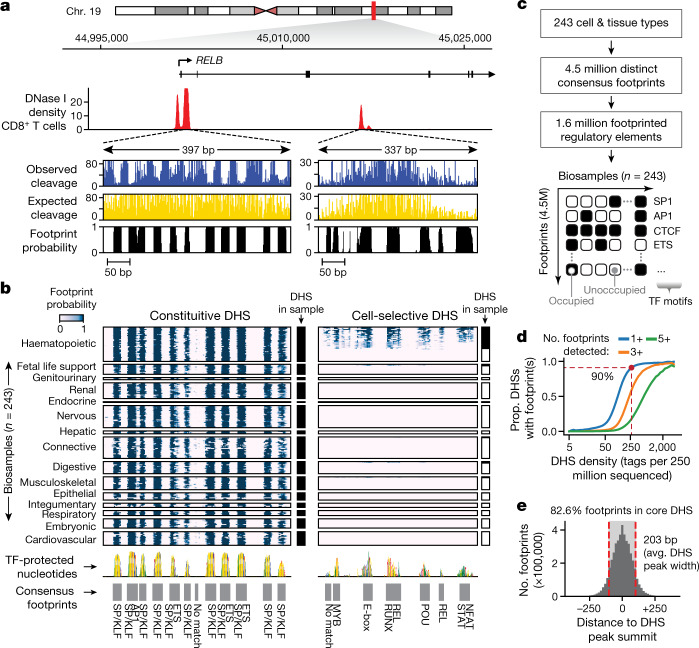
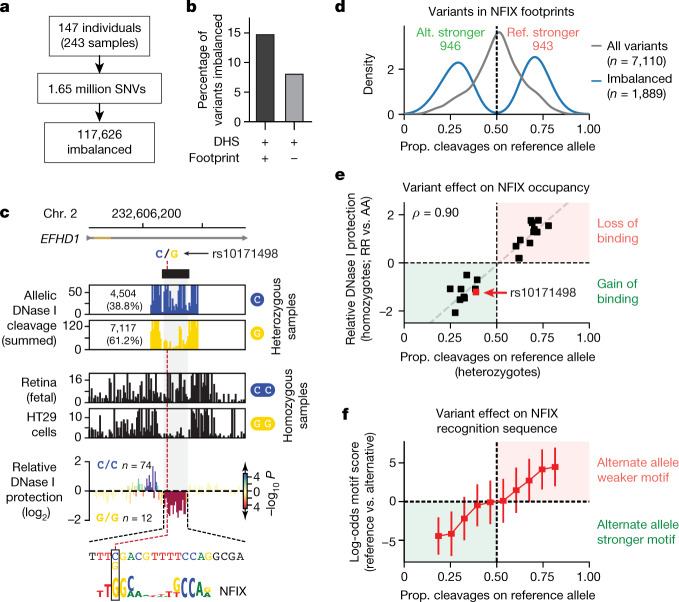
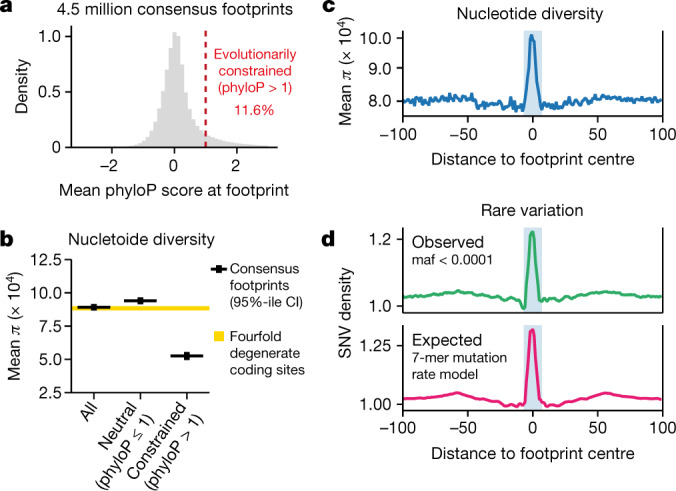
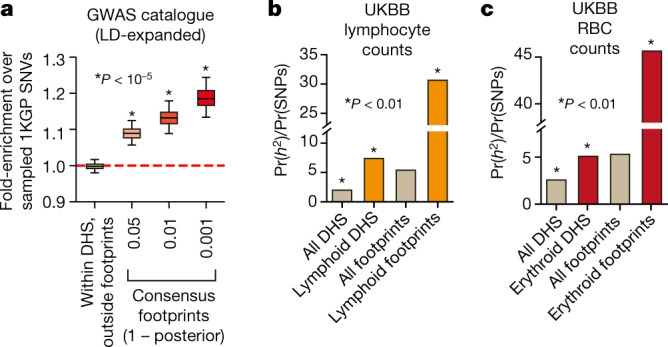
Abstract Combinatorial binding of transcription factors to regulatory DNA underpins gene regulation in all organisms. Genetic variation in regulatory regions has been connected with diseases and diverse phenotypic traits 1 , yet it remains challenging to distinguish variants that impact regulatory function 2 . Genomic DNase I footprinting enables quantitative, nucleotide-resolution delineation of sites of transcription factor occupancy within native chromatin 3–5 . However, to date only a small fraction of such sites have been precisely resolved on the human genome sequence 5 . To enable comprehensive mapping of transcription factor footprints, we produced high-density DNase I cleavage maps from 243 human cell and tissue types and states and integrated these data to delineate at nucleotide resolution ~4.5 million compact genomic elements encoding transcription factor occupancy. We map the fine-scale structure of ~1.6 million DHS and show that the overwhelming majority is populated by well-spaced sites of single transcription factor:DNA interaction. Cell context-dependent cis-regulation is chiefly executed by wholesale actuation of accessibility at regulatory DNA versus by differential transcription factor occupancy within accessible elements. We show further that the well-described enrichment of disease- and phenotypic trait-associated genetic variants in regulatory regions 1,6 is almost entirely attributable to variants localizing within footprints, and that functional variants impacting transcription factor occupancy are nearly evenly partitioned between loss- and gain-of-function alleles. Unexpectedly, we find that the global density of human genetic variation is markedly increased within transcription factor footprints, revealing an unappreciated driver of cis-regulatory evolution. Our results provide a new framework for both global and nucleotide-precision analyses of gene regulatory mechanisms and functional genetic variation.
Overview
The claims and statistics of this paper haven’t been checked yet.
Run the check — free, no account needed. It reads the open-access text and checks the sources it cites.
Integrity signals
Registry
Cites
Statistics
Figures
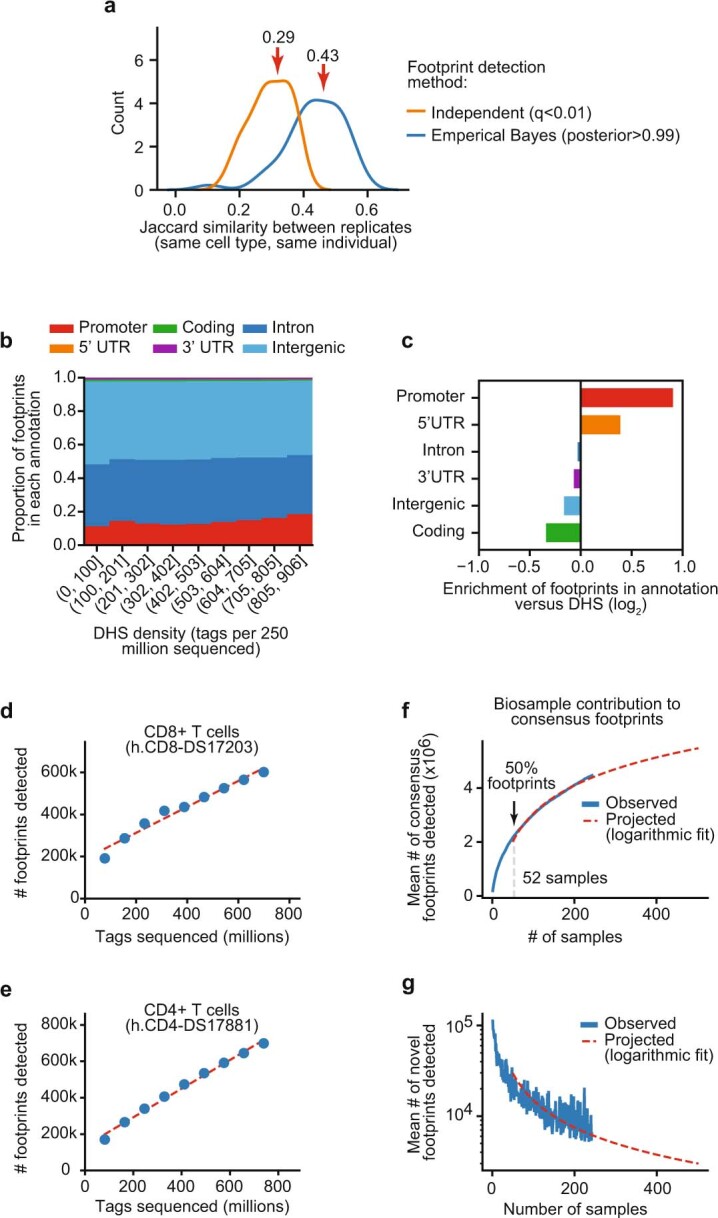
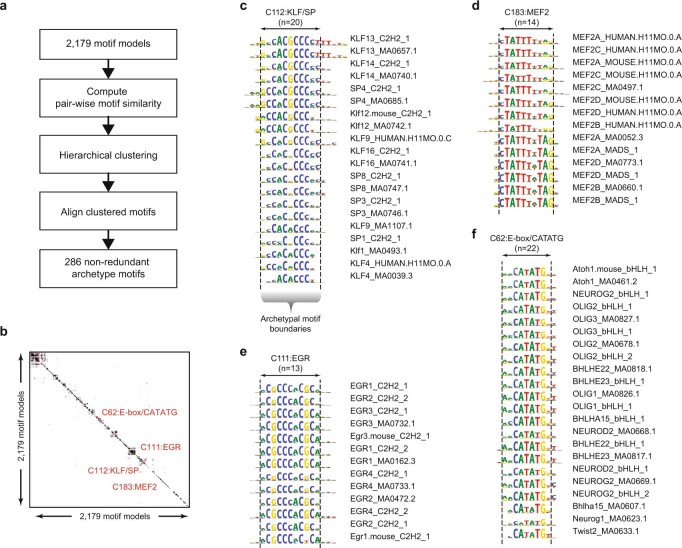
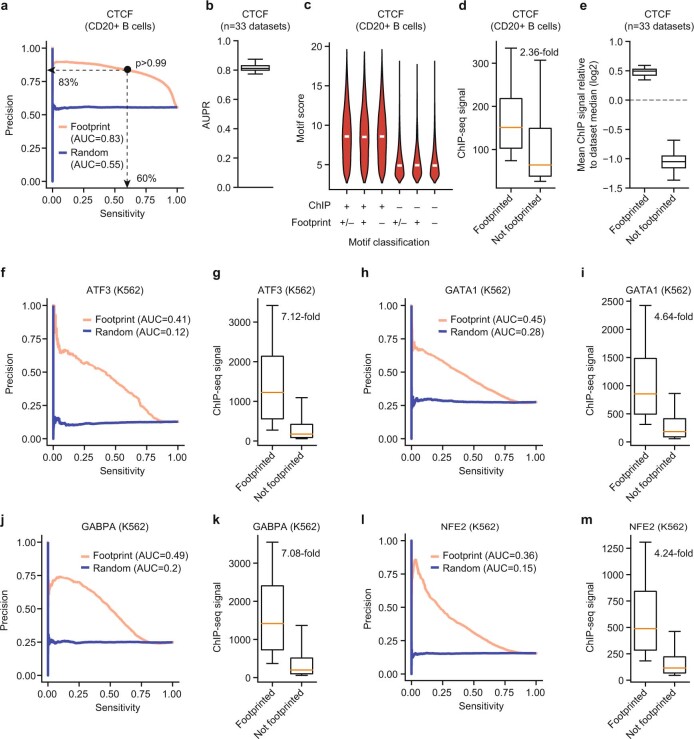
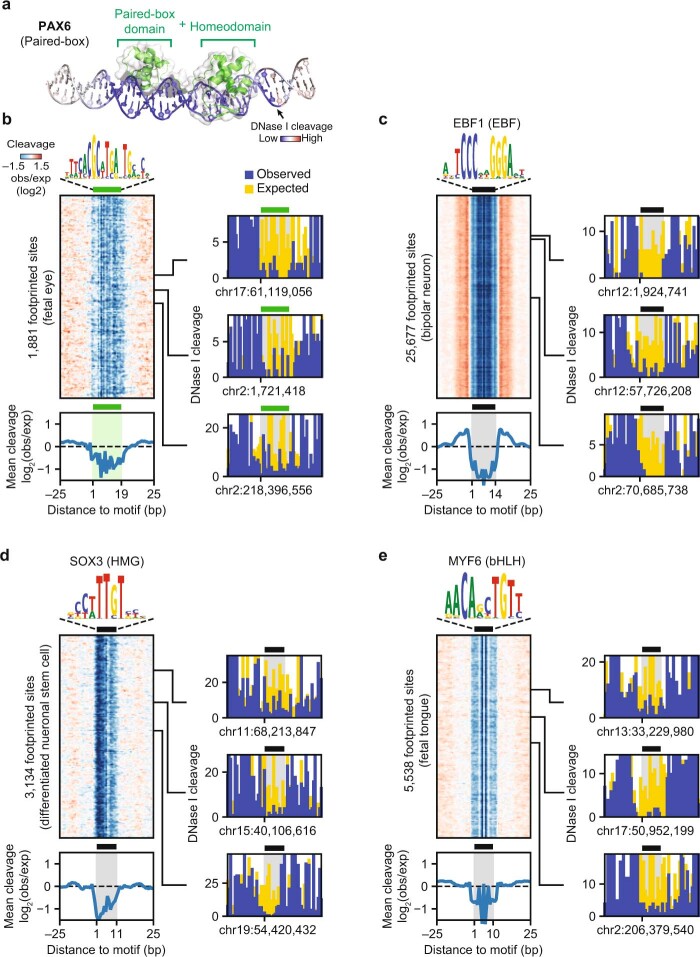
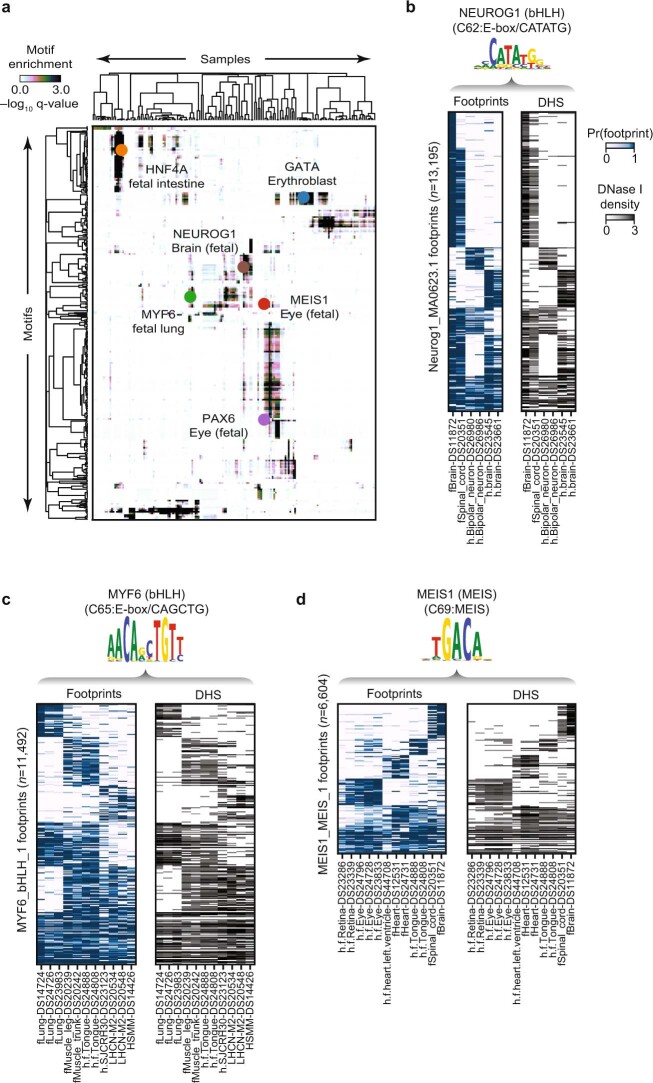
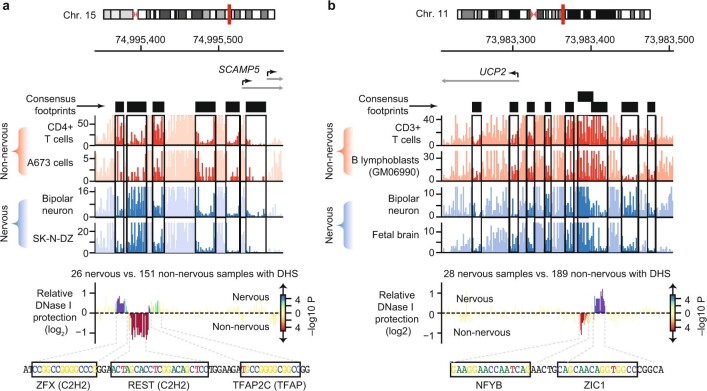
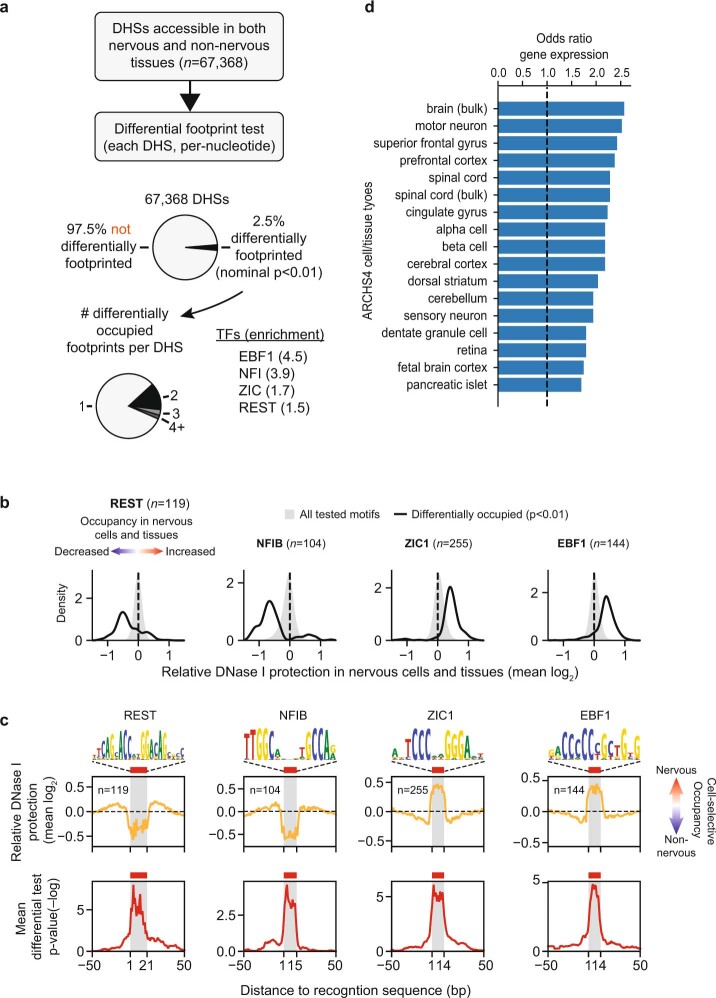
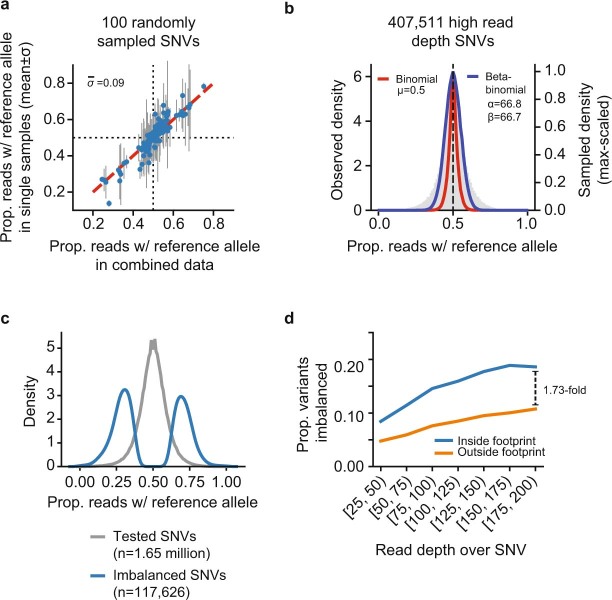
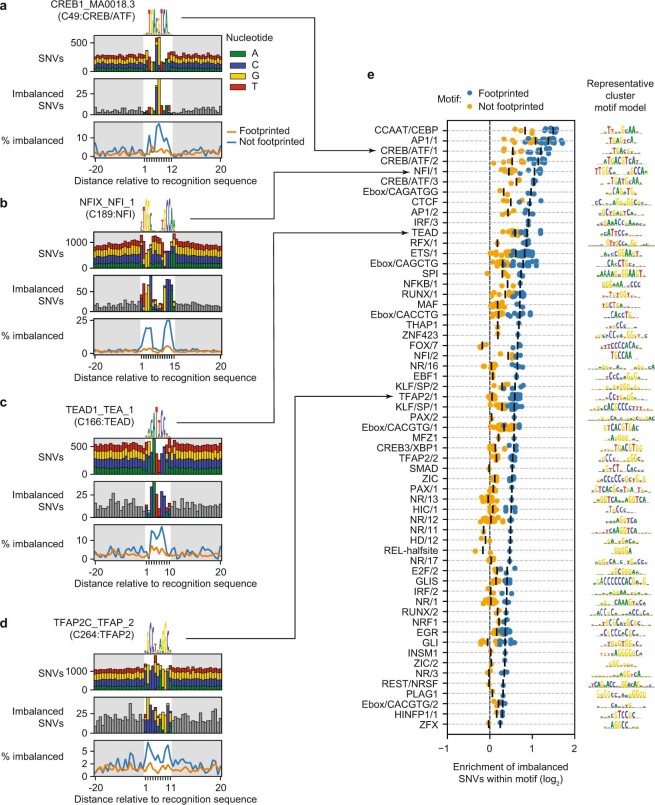
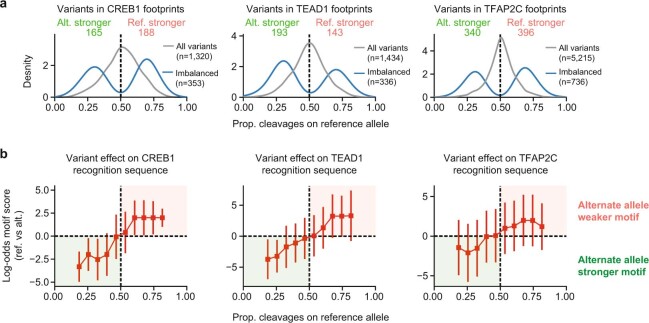
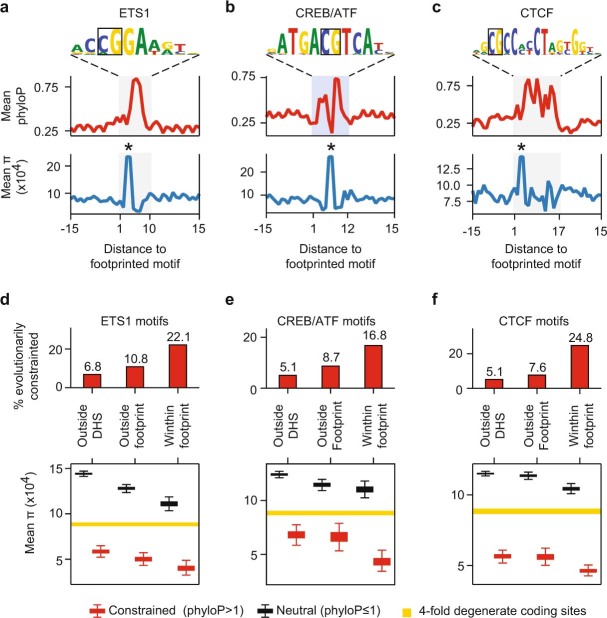
Verification
Claims the paper makes
The claims and statistics of this paper haven’t been checked yet.
Run the check — free, no account needed. It reads the open-access text and checks the sources it cites.
Claims other papers make about this one
Each is checked against this paper’s own text: does it say what the citing paper says it does?
The source backs part of the claim, not all of it — or backs it for a different population, condition or comparison.
In the citing paper
“In some cases, we found statistically weak evidence for stronger correlations with other factors from the same motif family,45 e.g., the activity of enhancers with Gfi1 sites was correlated with the expression of Gfi1b (Figure S3C).”
From Design principles of cell-state-specific enhancers in hematopoiesis (2025) · cites this paper as [45]
Experimental — accuracy not yet measured
Self-check
Percentages, sums and reported differences re-computed from the paper’s own numbers.
The self-check needs the paper’s full text.
Citations
Cites
A global reference for human genetic variation
The 1000 Genomes Project Consortium, authors, C., Auton, A., Abecasis, G. R., Steering committee, Altshuler, D. M., Durbin, R. M., Abecasis, G. R., Bentley, D. R., Chakravarti, A., et al. (2015) · Nature · doi:10.1038/nature15393 · Cited by 18,247
An integrated encyclopedia of DNA elements in the human genome
The ENCODE Project Consortium (2012) · Nature · doi:10.1038/nature11247 · Cited by 18,072
A map of human genome variation from population-scale sequencing.
The 1000 Genomes Project Consortium (2010) · Nature · doi:10.1038/nature09534 · Cited by 7,877
Integrative analysis of 111 reference human epigenomes
Roadmap Epigenomics Consortium, Kundaje, A., Meuleman, W., Ernst, J., Bilenky, M., Yen, A., Heravi-Moussavi, A., Kheradpour, P., Zhang, Z., Wang, J., et al. (2015) · Nature · doi:10.1038/nature14248 · Cited by 6,368
LD Score regression distinguishes confounding from polygenicity in genome-wide association studies
Schizophrenia Working Group of the Psychiatric Genomics Consortium, Bulik-Sullivan, B. K., Loh, P.-R., Finucane, H. K., Ripke, S., Yang, J., Patterson, N., Daly, M. J., Price, A. L., & Neale, B. M. (2015) · Nature Genetics · doi:10.1038/ng.3211 · Cited by 5,559
Buniello, A., MacArthur, J. A. L., Cerezo, M., Harris, L. W., Hayhurst, J., Malangone, C., McMahon, A., Morales, J., Mountjoy, E., Sollis, E., et al. (2019) · Nucleic Acids Research · doi:10.1093/nar/gky1120 · Cited by 4,000
Systematic Localization of Common Disease-Associated Variation in Regulatory DNA
Maurano, M. T., Humbert, R., Rynes, E., Thurman, R. E., Haugen, E., Wang, H., Reynolds, A. P., Sandstrom, R., Qu, H., Brody, J., et al. (2012) · Science · doi:10.1126/science.1222794 · Cited by 3,716
Self-citationThe Human Transcription Factors
Lambert, S. A., Jolma, A., Campitelli, L. F., Das, P. K., Yin, Y., Albu, M., Chen, X., Taipale, J., Hughes, T. R., & Weirauch, M. T. (2018) · Cell · doi:10.1016/j.cell.2018.01.029 · Cited by 3,399
The accessible chromatin landscape of the human genome
Thurman, R. E., Rynes, E., Humbert, R., Vierstra, J., Maurano, M. T., Haugen, E., Sheffield, N. C., Stergachis, A. B., Wang, H., Vernot, B., et al. (2012) · Nature · doi:10.1038/nature11232 · Cited by 2,679
Self-citationPartitioning heritability by functional annotation using genome-wide association summary statistics
ReproGen Consortium, Finucane, H. K., Schizophrenia Working Group of the Psychiatric Genomics Consortium, The RACI Consortium, Bulik-Sullivan, B., Gusev, A., Trynka, G., Reshef, Y., Loh, P.-R., Anttila, V., et al. (2015) · Nature Genetics · doi:10.1038/ng.3404 · Cited by 2,604
Cited by
Sorted by citations
Items 101–200 of 394
Multiomic profiling of transcription factor binding and function in human brain
Loupe, J. M., Anderson, A. G., Rizzardi, L. F., Rodríguez-Nunez, I., Moyers, B. A., Trausch‐Lowther, K., Jain, R., Bunney, W. E., Bunney, B. G., Cartagena, P. M., et al. (2024) · Nature Neuroscience · doi:10.1038/s41593-024-01658-8 · Cited by 27
“To identify commonly occurring motifs, we used a previously published approach that identifies and clusters motifs by similarity 50 .”
Luperchio, T. R., Boukas, L., Zhang, L., Pilarowski, G. O. W., Jiang, J., Kalinousky, A. J., Hansen, K. D., & Bjornsson, H. T. (2021) · eLife · doi:10.7554/elife.65884 · Cited by 28
Phospho-seq: integrated, multi-modal profiling of intracellular protein dynamics in single cells
Blair, J. D., Hartman, A., Zenk, F. L., Wahle, P., Brancati, G., Dalgarno, C., Treutlein, B., & Satija, R. (2025) · Nature Communications · doi:10.1038/s41467-025-56590-7 · Cited by 27
“For example, weobservethatGLI3 protein levels showed only a weak correlation with the accessibility of the canonical GLI3 binding motif, but instead were associated with motifs from the homeodomain-2 (HD/2) family 55 , which are known to affect neurodevelopment 56 (Fig.”
Pal, A., Noble, M. A., Morales, M., Pal, R., Baumgartner, M., Yang, J. W., Yim, K., Uebbing, S., & Noonan, J. P. (2025) · Cell · doi:10.1016/j.cell.2025.01.007 · Cited by 38
Ng-Blichfeldt, J.-P., Stewart, B. J., Clatworthy, M. R., Williams, J. M., & Röper, K. (2024) · Developmental Cell · doi:10.1016/j.devcel.2024.01.011 · Cited by 24
Hua, H., Wang, Y., Wang, X., Wang, S., Zhou, Y., Liu, Y., Liang, Z., Ren, H., Lu, S., Wu, S., et al. (2024) · Cell stem cell · doi:10.1016/j.stem.2024.04.010 · Cited by 25
Tseng, A. M., Shrikumar, A., & Kundaje, A. B. (2020) · bioRxiv (Cold Spring Harbor Laboratory) · doi:10.1101/2020.06.11.147272 · Cited by 24
Multiomics analysis reveals signatures of selection and loci associated with complex traits in pigs
Liu, L.-Y., Yi, G., Yao, Y.-L., Liu, Y., Li, J., Yang, Y., Liu, M., Fang, L., Mo, D.-L., Zhang, L.-C., et al. (2024) · iMeta · doi:10.1002/imt2.250 · Cited by 23
“The majority of genetic underpinnings under selection were located within non-coding regions and generally act as regulatory elements to govern gene expression [65 – 67].”
ERG-driven prostate cancer initiation is cell-context dependent and requires KMT2A and DOT1L
Feng, W., Ladewig, E., Lange, M., Salsabeel, N., Zhao, H., Lee, Y. S., Gopalan, A., Luo, H., Kang, W., Fan, N., et al. (2025) · Nature Genetics · doi:10.1038/s41588-025-02289-w · Cited by 25
“For motif detection we utilized two databases, (1) CisBP and (2) the Non-redundant TF motif matches genome-wide 116 .”
Mulvey, B., & Dougherty, J. D. (2021) · Translational Psychiatry · doi:10.1038/s41398-021-01493-6 · Cited by 23
Rauner, M., Foessl, I., Formosa, M. M., Kague, É., Prijatelj, V., Alonso, N., Banerjee, B., Bergen, D. J. M., Busse, B., Calado, Â., et al. (2021) · Frontiers in Endocrinology · doi:10.3389/fendo.2021.731217 · Cited by 23
McArthur, E., Rinker, D. C., Cheng, Y., Wang, Q., Wang, J., Gilbertson, E. N., Fudenberg, G., Pittman, M., Keough, K. C., Yue, F., et al. (2022) · bioRxiv (Cold Spring Harbor Laboratory) · doi:10.1101/2022.02.07.479462 · Cited by 22
“0/, all models in the CTCF archetype motif cluster, 630 lifted-over to hg19)[96], CTCF-bound open chromatin candidate cis-regulatory elements (cCREs) in the 631 HFF cell type (https://screen.”
Serum Protein Exposure Activates a Core Regulatory Program Driving Human Proximal Tubule Injury
Lidberg, K. A., Muthusamy, S., Adil, M., Mahadeo, A., Yang, J., Patel, R. S., Wang, L., Bammler, T. K., Reichel, J. B., Yeung, C. K., et al. (2022) · Journal of the American Society of Nephrology · doi:10.1681/asn.2021060751 · Cited by 22
“Recently, a large-scale effort to map transcription factor motif archetypes and actual footprints in multiple cell types/states has been described.(43) High-resolution examination of the regulatory elements around HAVCR1 revealed overlap of predicted transcription factor motif archetypes with actual footprints in kidn…”
BackgroundMethodCharacterization of sequence determinants of enhancer function using natural genetic variation
Yang, M. G., Ling, E., Cowley, C. J., Greenberg, M. E., & Vierbuchen, T. (2022) · eLife · doi:10.7554/elife.76500 · Cited by 25
“To do this, we used DNase-seq footprinting data generated from a large panel of human tissues and cell types (Vierstra et al., 2020).”
MethodSingle-cell multi-scale footprinting reveals the modular organization of DNA regulatory elementsPreprint
Hu, Y., Ma, S., Kartha, V. K., Duarte, F. M., Horlbeck, M. A., Zhang, R., Shrestha, R., Labade, A. S., Kletzien, H., Meliki, A., et al. (2023) · bioRxiv (Cold Spring Harbor Laboratory) · doi:10.1101/2023.03.28.533945 · Cited by 22
Salma, M., Andrieu‐Soler, C., Deleuze, V., & Soler, É. (2023) · Blood Cells Molecules and Diseases · doi:10.1016/j.bcmd.2023.102745 · Cited by 19
Statistical framework for calling allelic imbalance in high-throughput sequencing data
Buyan, A., Meshcheryakov, G., Safronov, V., Abramov, S., Boytsov, A., Nozdrin, V., Baulin, E. F., Kolmykov, S. K., Vierstra, J. D., Kolpakov, F., et al. (2025) · Nature Communications · doi:10.1038/s41467-024-55513-2 · Cited by 23
“…or direct variant impact on allele-specific transcription factor binding (AS-binding, ASB) using ChIP-Seq data 7–11 , allele-specific chromatin accessibility (ASA) using e.g. DNase-Seq or ATAC-Seq 8,12–16 , allele-specific DNA methylation 17,18 , and allele-specific gene expression per se 9,19–29 .”
Self-citationYu, C.-P., Kuo, C.-H., Nelson, C. W., Chen, C., Soh, Z. T., Lin, J.-J., Hsiao, R.-X., Chang, C.-Y., & Li, W. (2021) · Proceedings of the National Academy of Sciences · doi:10.1073/pnas.2026754118 · Cited by 20
“Recently, Vierstra et al. (14) found that CTCF has a canonical and a secondary motif that is similar to the first motif above.”
BackgroundOsorio, D., Capasso, A., Eckhardt, S. G., Giri, U. P., Somma, A. J., Pitts, T. M., Lieu, C. H., Messersmith, W. A., Bagby, S. M., Singh, H., et al. (2024) · Nature Computational Science · doi:10.1038/s43588-024-00597-5 · Cited by 25
“40.”
BackgroundHansen, T. J., Fong, S., Day, J. K., Capra, J. A., & Hodges, E. C. (2024) · Cell Genomics · doi:10.1016/j.xgen.2024.100536 · Cited by 20
Predicting genotype-specific gene regulatory networksPreprint
Weighill, D. A., Guebila, M. B., Glass, K., Quackenbush, J. F., & Platig, J. (2022) · Genome Research · doi:10.1101/gr.275107.120 · Cited by 22
Fine-tuning sequence-to-expression models on personal genome and transcriptome data
Rastogi, R., Reddy, A. J., Chung, R., & Ioannidis, N. M. (2026) · Genome biology · doi:10.1186/s13059-026-04091-1 · Cited by 22
Schaepe, J. M., Fries, T., Doughty, B. R., Ramalingam, V., Liu, B. B., Crocker, O. J., Marinov, G. K., Hinks, M. M., Marklund, E., & Greenleaf, W. J. (2025) · Cell · doi:10.1016/j.cell.2025.11.008 · Cited by 23
Detection of trait-associated structural variations using short-read sequencing
Kosugi, S., Kamatani, Y., Harada, K., Tomizuka, K., Momozawa, Y., Morisaki, T., & Terao, C. (2023) · Cell Genomics · doi:10.1016/j.xgen.2023.100328 · Cited by 19
“To infer the causality of the GWAS variants on the traits, we used the transcription factor (TF)-binding footprints responsible for gene regulation in noncoding regions.(51) Of the 41 top-ranked GWAS SVs, 13 DELs (59% of the 22 top-ranked DELs) overlappedwith the TF-binding footprints, most of whichwere footprints fro…”
MethodDuan, Y.-Y., Chen, X., Zhu, R., Jia, Y., Huang, X., Zhang, M., Yang, N., Dong, S., Zeng, M., Feng, Z., et al. (2023) · The American Journal of Human Genetics · doi:10.1016/j.ajhg.2023.07.002 · Cited by 18
The architecture of binding cooperativity between densely bound transcription factors
Lupo, O., Kumar, D. K., Livne, R., Chappleboim, M., Levy, I., & Barkai, N. (2023) · Cell Systems · doi:10.1016/j.cels.2023.06.010 · Cited by 19
Wang, H. V., Forestier, S., & Corces, V. G. (2021) · Biology of Reproduction · doi:10.1093/biolre/ioab097 · Cited by 19
Li, Z., Zhang, Y., Peng, B., Qin, S., Zhang, Q., Chen, Y., Chen, C., Bao, Y., Zhu, Y. S., Hong, Y., et al. (2024) · Nucleic Acids Research · doi:10.1093/nar/gkae912 · Cited by 22
Preferential CEBP binding to T:G mismatches and increased C-to-T human somatic mutations
Yang, J., Horton, J., Akdemir, K., Li, J., Huang, Y., Kumar, J., Blumenthal, R., Zhang, X., & Cheng, X. (2021) · Nucleic Acids Research · doi:10.1093/nar/gkab276 · Cited by 16
“These ENCODE footprints represent TF occupancy, at nucleotide resolution, from hundreds of human cell and tissue types (14).”
BackgroundWhite, S. M., Snyder, M. P., & Yi, C. (2021) · Nucleic Acids Research · doi:10.1093/nar/gkab1105 · Cited by 17
“01) for footprints present in the ENCODE consensus footprint dataset, a high-confidence dataset identified by analyzing DNase-seq profiles across 243 human cell and tissue types (42).”
BackgroundOf mice and human-specific long noncoding RNAs
Ghanam, A. R., Bryant, W. B., & Miano, J. M. (2022) · Mammalian Genome · doi:10.1007/s00335-022-09943-2 · Cited by 17
“The disruption of regulatory cassettes is of particular concern given widespread transcription of the genome and the presence of millions of predicted TFBS (Jensen et al. 2013; Vierstra et al. 2020).”
BackgroundInfluentialThe cis-regulatory logic integrating spatial and temporal patterning in the vertebrate neural tube
Zhang, I., Boezio, G. L. M., Cornwall-Scoones, J., Frith, T. J. R., Finnie, E., Luo, J., Jiang, M., Howell, M. T., Lovell-Badge, R. H., Sagner, A., et al. (2025) · Developmental Cell · doi:10.1016/j.devcel.2025.06.029 · Cited by 17
Chromatin occupancy and target genes of the haematopoietic master transcription factor MYB
Lemma, R. B., Ledsaak, M., Fuglerud, B. M., Sandve, G. K., Eskeland, R., & Gabrielsen, O. S. (2021) · Scientific Reports · doi:10.1038/s41598-021-88516-w · Cited by 17
Doughty, B. R., Hinks, M. M., Schaepe, J. M., Marinov, G., Thurm, A. R., Rios-Martinez, C., Parks, B. E., Tan, Y.-X., Marklund, E., Dubocanin, D., et al. (2024) · bioRxiv · doi:10.1101/2024.02.02.578660 · Cited by 14
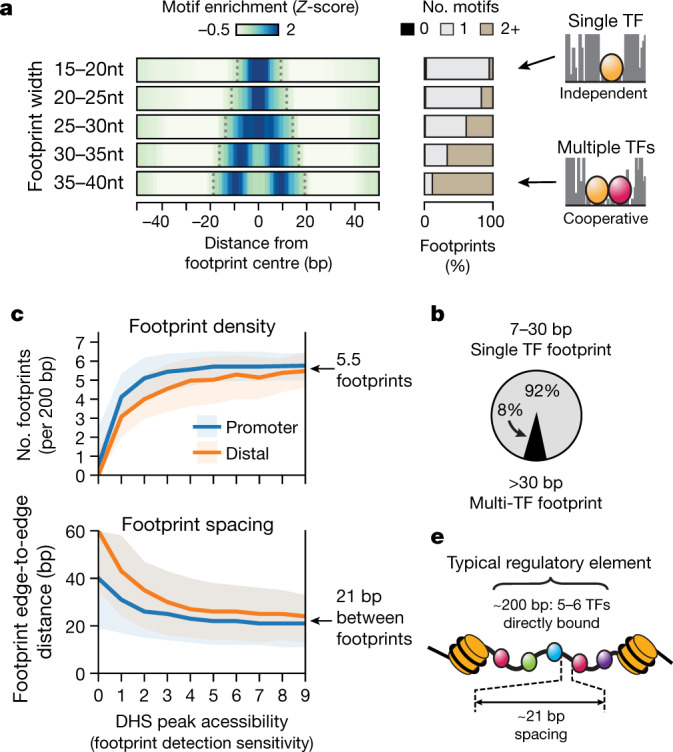
“On average, endogenous enhancers contain binding sites for 5-6 TFs 1 , and in many tractable experimental systems, increasing the number of sites leads to strongly nonlinear effects on gene expression 2,3 .”
BackgroundCavalli, M., Diamanti, K., Dang, Y., Xing, P., Pan, G., Chen, X., & Wadelius, C. (2021) · OMICS A Journal of Integrative Biology · doi:10.1089/omi.2021.0093 · Cited by 16
“Within each cluster motifs are aligned to each other to generate an archetypal consensus motif (Vierstra et al., 2020).”
BackgroundResultKinetic networks identify TWIST2 as a key regulatory node in adipogenesisPreprint
Dutta, A. B., Lank, D. S., Przanowska, R. K., Przanowski, P., Wang, L., Nguyen, B., Walavalkar, N. M., Duarte, F. M., & Guertin, M. J. (2023) · Genome Research · doi:10.1101/gr.277559.122 · Cited by 16
“Combining accessibility data with TF motif analyses can accurately infer TF binding without the need for factor- and species-specific antibodies (Wu et al. 1979; Vierstra et al. 2020).”
BackgroundKosicki, M., Cintrón, D. L., Keukeleire, P., Schubach, M., Page, N. F., Georgakopoulos‐Soares, I., Akiyama, J. A., Plajzer-Frick, I., Novak, C. S., Kato, M., et al. (2025) · Nature Communications · doi:10.1038/s41467-025-60064-1 · Cited by 27
“Motifs affected by variants tested in the transgenic assay were detected using motifbreakR 2.16.0 50 with fi lterp=T, threshold=1e-4 and pwmList from Viestra 2020 68 .”
InfluentialMultiomics and deep learning dissect regulatory syntax in human development
Liu, B. B., Jessa, S., Kim, S. H., Ng, Y. T., Higashino, S. I., Marinov, G. K., Chen, D. C., Parks, B. E., Li, L., Nguyen, T. C., et al. (2026) · Nature · doi:10.1038/s41586-026-10326-9 · Cited by 36
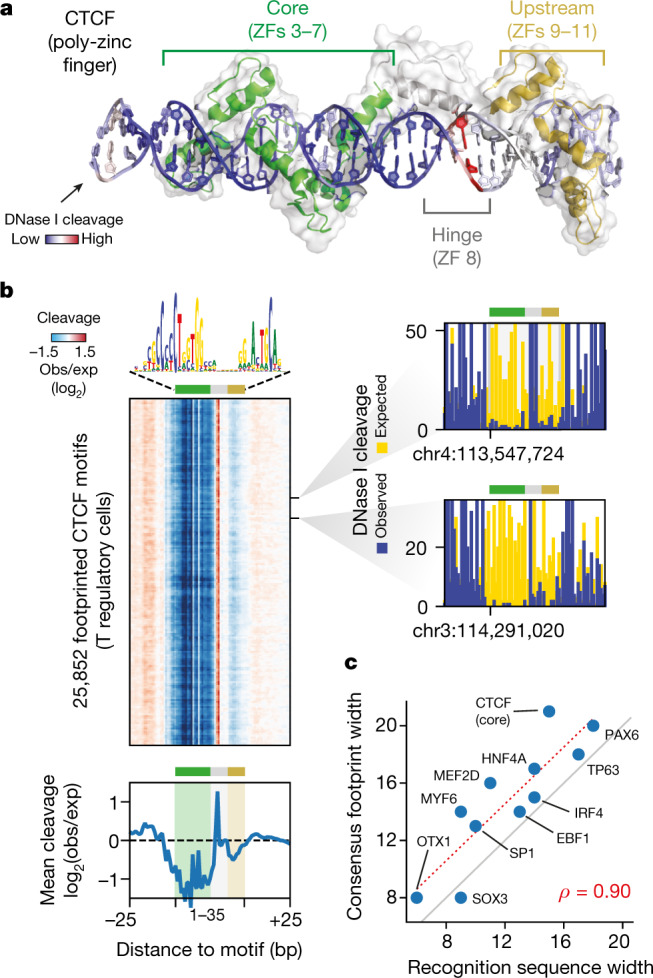
“The lexicon also recovered variants of canonical motifs, including both the core and upstream CTCF motifs, reflecting DNA contacts by distinct CTCF zinc-fingers 5,32 (Extended Data Fig.”
Integrative dissection of gene regulatory elements at base resolution
Chen, Z., Javed, N. M., Moore, M. M., Wu, J., Sun, G., Vinyard, M. E., Collins, A., Pinello, L., Najm, F. J., & Bernstein, B. (2023) · Cell Genomics · doi:10.1016/j.xgen.2023.100318 · Cited by 17
“To avoid motif redundancy, we obtained non-redundant motif cluster definitions and the corresponding PWMs from https://resources.altius.org/~jvierstra/projects/motif-clustering-v2.0beta/ (Vierstra et al., 2020).”
MethodAre non‐protein coding RNAs junk or treasure?
Walter, N. G. (2024) · BioEssays · doi:10.1002/bies.202300201 · Cited by 19
Jana, T., Brodsky, S., Manadre, W., Vidavski, M., Valinsky, G., Mindel, V., Ilan, G., Carmi, M., Jonas, F., & Barkai, N. (2024) · Nucleic Acids Research · doi:10.1093/nar/gkae846 · Cited by 17
Elliott, K., Singh, V. K., Boström, M., & Larsson, E. (2023) · Nature Communications · doi:10.1038/s41467-023-38266-2 · Cited by 15
“DNase I footprints from Vierstra, et al.31 are indicated as green lines in b–d. Source data are provided as a Source Data file.”
BackgroundMethodInfluentialHickey, J. W., Becker, W. R., Nevins, S. A., Horning, A. M., Espín-Pérez, A., Chiu, R., Chen, D. C., Cotter, D. J., Esplin, E. D., Weimer, A. K. K., et al. (2021) · bioRxiv (Cold Spring Harbor Laboratory) · doi:10.1101/2021.11.25.469203 · Cited by 16
“We next identified the TFs with the highest correlation between their gene expression and the chromatin accessibility activity level of their putative DNA binding motifs 44 to nominate TFs directly driving accessibility changes.”
BackgroundA multi-modal transformer for cell type-agnostic regulatory predictions
Javed, N. M., Weingarten, T., Sehanobish, A., Roberts, A., Dubey, A., Choromański, K., & Bernstein, B. (2025) · Cell Genomics · doi:10.1016/j.xgen.2025.100762 · Cited by 22
“We then selected 50k random peaks for each dataset and computed their motif enrichments relative to the cell type agnostic background using the SEA 44 tool from the MEME suite and 693 consensus motif models defined in Vierstra et al. 2020.”
Wang, B., Starr, A. L., & Fraser, H. B. (2023) · eLife · doi:10.7554/elife.89594 · Cited by 30
Transcription factor interactions explain the context-dependent activity of CRX binding sites
Loell, K., Friedman, R. Z., Myers, C. A., Corbo, J. C., Cohen, B. A., & White, M. A. (2024) · PLoS Computational Biology · doi:10.1371/journal.pcbi.1011802 · Cited by 17
Uebbing, S., Kocher, A. A., Baumgartner, M., Ji, Y., Bai, S., Xing, X., Nottoli, T., & Noonan, J. P. (2024) · Molecular Biology and Evolution · doi:10.1093/molbev/msae199 · Cited by 15
Perspective on recent developments and challenges in regulatory and systems genomics
Zeitlinger, J., Roy, S., Ay, F., Mathelier, A., Medina-Rivera, A., Mahony, S., Sinha, S. K., & Ernst, J. (2024) · Bioinformatics Advances · doi:10.1093/bioadv/vbaf106 · Cited by 18
“…to DNase digestion (Burch and Weintraub 1983), and DNase-seq provides comprehensive and quantitative information on chromatin accessibility genome-wide, while also revealing TF binding footprints with deeper sequencing (Song and Crawford 2010, Thurman et al. 2012, Vierstra et al. 2020).”
Metacode: One code to rule them all
Paredes, O., Morales, J. A., Mendizabal-Ruiz, A. P., & Romo‐Vázquez, R. (2021) · Biosystems · doi:10.1016/j.biosystems.2021.104486 · Cited by 14
Tissue context determines the penetrance of regulatory DNA variation
Halow, J. M., Byron, R., Hogan, M. S., Ordóñez, R., Groudine, M. T., Bender, M. A., Stamatoyannopoulos, J. A., & Maurano, M. T. (2021) · Nature Communications · doi:10.1038/s41467-021-23139-3 · Cited by 15
“…the challenge of obtaining TF-specific occupancy data for all factors expressed in a given cell type, we expect that improved recognition of in vivo occupied TF binding sites from DNase I footprinting data 26,27 will be the most fruitful way to obtain further improvements in prediction performance.”
BackgroundDifferences in nanoscale organization of regulatory active and inactive human chromatin
Brandstetter, K., Zülske, T., Ragoczy, T., Hörl, D., Guirao‐Ortiz, M., Steinek, C., Barnes, T., Stumberger, G., Schwach, J., Haugen, E., et al. (2022) · Biophysical Journal · doi:10.1016/j.bpj.2022.02.009 · Cited by 15
Large-scale mapping and systematic mutagenesis of human transcriptional effector domainsPreprint
DelRosso, N. V., Tycko, J., Suzuki, P., Andrews, C. J., Aradhana, Mukund, A. X., Liongson, I., Ludwig, C., Spees, K. K., Fordyce, P. M., et al. (2022) · bioRxiv (Cold Spring Harbor Laboratory) · doi:10.1101/2022.08.26.505496 · Cited by 14
Regulatory grammar in human promoters uncovered by MPRA-based deep learning
Barbadilla-Martínez, L., Klaassen, N. H. M., Franceschini-Santos, V. H., Breda, J., Yücel, H., Hernández-Quiles, M., van Lieshout, T., Urzúa-Traslaviña, C. G., Boi, M. C. L., Akbarzadeh, M., et al. (2026) · Nature · doi:10.1038/s41586-025-10093-z · Cited by 33
“To cluster motifs separately for the Hocomoco (v.11) human database and for the unknown motifs, we followed previously described meth-ods 81 .”
Epigenetics and tissue immunity—Translating environmental cues into functional adaptations*
Tuong, Z. K., Stewart, B. J., Guo, S. A., & Clatworthy, M. R. (2021) · Immunological Reviews · doi:10.1111/imr.13036 · Cited by 13
Fan, A. C., Nakauchi, Y., Bai, L., Azizi, A., Nuno, K. A., Zhao, F., Köhnke, T., Karigane, D., Hernandez, D. C., Reinisch, A., et al. (2023) · Journal of Clinical Investigation · doi:10.1172/jci167053 · Cited by 16
“Transcription factor motif enrichment was performed using ChromVAR (63) as previously described using JASPAR 2018 motif clusters (64) to reduce redundancy.”
MethodStrategies for effectively modelling promoter-driven gene expression using transfer learningPreprint
Reddy, A. J., Herschl, M. H., Geng, X., Kolli, S., Lu, A. X., Kumar, A., Hsu, P. D., Levine, S., & Ioannidis, N. M. (2023) · bioRxiv (Cold Spring Harbor Laboratory) · doi:10.1101/2023.02.24.529941 · Cited by 14
“First, we obtain a list of clustered TF-binding motifs (Vierstra et al., 2020) 1 .”
Martin-Geary, A. C., Blakes, A. J. M., Dawes, R., Findlay, S. D., Lord, J., Dong, S., Walker, S., Talbot-Martin, J., Wieder, N., D’Souza, E. N., et al. (2025) · Genome Medicine · doi:10.1186/s13073-025-01464-2 · Cited by 17
Cap analysis of gene expression (CAGE) and noncoding regulatory elements
Guerrini, M. M., Oguchi, A., Suzuki, A., & Murakawa, Y. (2021) · Seminars in Immunopathology · doi:10.1007/s00281-021-00886-5 · Cited by 12
Hu, S. S., Liu, L., Li, Q., Ma, W., Guertin, M. J., Meyer, C. A., Deng, K., Zhang, T., & Zang, C. (2022) · Nature Communications · doi:10.1038/s41467-022-33194-z · Cited by 12
“DNase/ATAC-seq footprint detection has been implicated as an effective approach for identifying accurate TF binding sites at base-pair resolution 6,7 .”
BackgroundMethodInfluentialFlanigan, K. M., Waldrop, M. A., Martin, P. T., Alles, R., Dunn, D. M., Alfano, L. N., Simmons, T. R., Moore‐Clingenpeel, M., Burian, J., Seok, S.-C., et al. (2023) · European Journal of Human Genetics · doi:10.1038/s41431-023-01329-5 · Cited by 12
“We used ENCODE transcription factor (TF) footprints [29] to assess whether rs2061566 disrupted a regulatory protein binding site within the E1929501 enhancer.”
BackgroundMethodJdp2 is a spatiotemporal transcriptional activator of the AhR via the Nrf2 gene battery
Wuputra, K., Tsai, M.-H., Kato, K., Ku, C., Pan, J.-B., Yang, Y.-H., Saito, S., Wu, C., Lin, Y., Cheng, K., et al. (2023) · Inflammation and Regeneration · doi:10.1186/s41232-023-00290-6 · Cited by 13
“In addition, the GST–Jdp2 protein bound to both DRE and ARE sites, probably through the CG-rich sequences [52].”
BackgroundA SWI/SNF-specific Ig-like domain, SWIFT, is a transcription factor binding platform
Jain, S. U., Williamson, K. E., Ying, A. W., Turner, A. M., Jiang, R. J., Raval, S., So, K., Allison, M. J., Sankar, A., Sáme Guerra, D. D., et al. (2026) · Science · doi:10.1126/science.aeb3627 · Cited by 11
Fischer, V., Kretschmer, M., Germain, P., Kaur, J., Barrenechea, S. M., Pelczar, P., Schürmann, D., Schär, P., & Gapp, K. (2023) · Translational Psychiatry · doi:10.1038/s41398-023-02684-z · Cited by 13
“Motifs were obtained from the HOCOMOCO v11 core motif database, and genome-wide hits for motif archetypes were downloaded from a previously published study [81].”
MethodAdaptive Selection of Cis-regulatory Elements in the Han Chinese
Liu, S., Luo, H., Zhang, P., Li, Y., Hao, D., Zhang, S., Song, T., Xu, T., & He, S. (2024) · Molecular Biology and Evolution · doi:10.1093/molbev/msae034 · Cited by 10
“The π is a prior probability of selection, and in this work, we integrated the evolution conservation and functional genomic features of sequences, where l represents the LINSIGHT scores (Huang et al. 2017) indicating sequence conservation, and the latter six factors represent the assumed prior probability for six fun…”
MethodInfluentialA relic of design: against proper functions in biology
Ratti, E., & Germain, P. (2022) · Biology & Philosophy · doi:10.1007/s10539-022-09856-z · Cited by 11
CSC software corrects off-target mediated gRNA depletion in CRISPR-Cas9 essentiality screens
Perez, A. R., Sala, L., Perez, R. K., & Vidigal, J. A. (2021) · Nature Communications · doi:10.1038/s41467-021-26722-w · Cited by 11
Chen, J., Ali, M. W., Yan, L., Dighe, S. G., Dai, J. Y., Vaughan, T. L., Casey, G., & Buas, M. F. (2021) · Human Molecular Genetics · doi:10.1093/hmg/ddab259 · Cited by 10
Review of gene expression using microarray and RNA-seq
Villaseñor-Altamirano, A. B., Balderas-Martínez, Y. I., & Medina-Rivera, A. (2024) · Elsevier eBooks · doi:10.1016/b978-0-12-817218-6.00008-5 · Cited by 10
Orlando, K. A., Grimm, S. A., & Wade, P. A. (2025) · Nucleic Acids Research · doi:10.1093/nar/gkaf473 · Cited by 12
Functional annotation of breast cancer risk loci: current progress and future directions
Cardoso, S. R., Gillespie, A., Haider, S. A., & Fletcher, O. (2021) · British Journal of Cancer · doi:10.1038/s41416-021-01612-6 · Cited by 10
“have generated a high-resolution genome-wide consensus TF-footprint index in 243 human cell and tissue types, including a breast cancer cell line (T-47D), a normal mammary epithelial cell line (MCF10a) and normal mammary fibroblasts [38].”
BackgroundExpanded ENCODE delivers invaluable genomic encyclopedia
Hon, C.-C., & Carninci, P. (2020) · Nature · doi:10.1038/d41586-020-02139-1 · Cited by 10
Han, S. K., Muto, Y., Wilson, P. C., Humphreys, B. D., Sampson, M. G., Chakravarti, A., & Lee, D. (2022) · Proceedings of the National Academy of Sciences · doi:10.1073/pnas.2212810119 · Cited by 10
DeepGWAS: Enhance GWAS Signals for Neuropsychiatric Disorders via Deep Neural NetworkPreprint
Li, Y., Wen, J., Li, G., Chen, J. C., Sun, Q., Liu, W., Guan, W., Lai, B., Szatkiewicz, J., He, X., et al. (2023) · Research Square · doi:10.21203/rs.3.rs-2399024/v1 · Cited by 11
“The candidate cis-regulatory elements (cCREs) from ENCODE3 were collected based on DHS (DNase I-hypersensitive sites), H3K27ac, H3K4me3, CTCF and transcription factors (TF) 48,49 and were downloaded from https://www.vierstra.org/resources/dgf.”
MethodDissecting regulatory syntax in human development with scalable multiomics and deep learningPreprint
Liu, B. B., Jessa, S., Kim, S. H., Ng, Y. T., Higashino, S. I., Marinov, G. K., Chen, D. C., Parks, B. E., Li, L., Nguyen, T. C., et al. (2025) · bioRxiv (Cold Spring Harbor Laboratory) · doi:10.1101/2025.04.30.651381 · Cited by 10
Saelens, W., Pushkarev, O., & Deplancke, B. (2025) · Nature Communications · doi:10.1038/s41467-024-55447-9 · Cited by 8
“8a), an observation further con fi rmed on DNase I hypersensitivity datasets 56 , which typically have a higher sensitivity to detect footprints (Supplementary Fig.”
Heilbrun, E. E., Tseitline, D., Wasserman, H., Kirshenbaum, A., Cohen, Y., Gordân, R., & Adar, S. (2025) · Nucleic Acids Research · doi:10.1093/nar/gkaf048 · Cited by 9
Patel, D., Tiusanen, V., Karttunen, K., Pihlajamaa, P., & Sahu, B. (2025) · Communications Biology · doi:10.1038/s42003-025-08413-0 · Cited by 9
Roh, H., Shen, S. P., Yan, H., Kwok, H. S., Siegenfeld, A. P., Lee, C., Zepeda, M. L., Guo, C., Roseman, S. A., Comenho, C., et al. (2025) · Nature Methods · doi:10.1038/s41592-025-02811-2 · Cited by 12
“The aggregate TF footprint scores correlate with DNase-seq footprint scores 28 , particularly for TFs known to exhibit strong footprinting in DNase-seq and ATAC-seq (Extended Data Fig.”
Conservation of cis-regulatory codes over half a billion years of evolution
Ogawa, Y., Liu, Y., Myers, C. A., Morshedian, A., Fain, G., Sampath, A. P., & Corbo, J. C. (2025) · Science Advances · doi:10.1126/sciadv.adw7681 · Cited by 9
“The motif clustering approach was adapted from a prior study ( 68 ).”
Predicting the impact of sequence motifs on gene regulation using single-cell data
Hepkema, J., Lee, N. K., Stewart, B. J., Ruangroengkulrith, S., Charoensawan, V., Clatworthy, M. R., & Hemberg, M. (2023) · Genome biology · doi:10.1186/s13059-023-03021-9 · Cited by 12
“To organize the rd motifs, they are assigned, based on their most significant motif alignment, to pre-specified motif clusters published else-where [34] (Fig.”
BackgroundInfluentialThe regulatory grammar of human promoters uncovered by MPRA-trained deep learningPreprint
Barbadilla-Martínez, L., Klaassen, N. H. M., Franceschini-Santos, V. H., Breda, J., Hernández-Quiles, M., van Lieshout, T., Urzúa-Traslaviña, C. G., Yücel, H., Boi, M. C. L., Hermana-Garcia-Agullo, C., et al. (2024) · bioRxiv (Cold Spring Harbor Laboratory) · doi:10.1101/2024.07.09.602649 · Cited by 9
Gao, Y., van Velthoven, C. T. J., Lee, C., Thomas, E. D., Bertagnolli, D., Carey, D., Casper, T., Chakka, A. B., Chakrabarty, R., Clark, M., et al. (2024) · bioRxiv (Cold Spring Harbor Laboratory) · doi:10.1101/2024.10.02.616246 · Cited by 9
Jolma, A., Laverty, K. U., Fathi, A., Yang, A. W. H., Yellan, I., Vorontsov, I. E., Inukai, S., Kribelbauer-Swietek, J. F., Gralak, A. J., Razavi, R., et al. (2024) · bioRxiv (Cold Spring Harbor Laboratory) · doi:10.1101/2024.11.11.622097 · Cited by 9
Comparative Genomics and Epigenomics of Transcriptional Regulation
Zhou, H., Clark, E. L., Guan, D., Lagarrigue, S., Fang, L., Cheng, H., Tuggle, C. K., Kapoor, M., Wang, Y., Giuffra, E., et al. (2024) · Annual Review of Animal Biosciences · doi:10.1146/annurev-animal-111523-102217 · Cited by 10
Dudek, M. F., Wenz, B. M., Brown, C. D., Voight, B. F., Almasy, L. A., & Grant, S. F. A. (2025) · The American Journal of Human Genetics · doi:10.1016/j.ajhg.2025.03.019 · Cited by 8
YAP/TAZ activity in PDGFRα-expressing alveolar fibroblasts modulates AT2 proliferation through Wnt4
Song, J. Y., Wehbe, F., Wong, A. K., Hall, B. M., Heiden, J. A. V., Brightbill, H. D., Arron, J. R., Garfield, D. A., Dey, A., & Rock, J. R. (2025) · Cell Reports · doi:10.1016/j.celrep.2025.115645 · Cited by 8
Synaptic activity causes minute-scale changes in BAF complex composition and function
Gourisankar, S. P., Nettles, S. A., Wenderski, W., Paulo, J. A., Kim, S. H., Roepke, K. C., Ellis, C., Abuzaid, H. Z., Gygi, S. P., & Crabtree, G. R. (2025) · Molecular Cell · doi:10.1016/j.molcel.2025.05.017 · Cited by 12
Ediriwickrema, A., Nakauchi, Y., Fan, A. C., Köhnke, T., Hu, X., Luca, B. A., Kim, Y., Ramakrishnan, S., Nakamoto, M. A., Karigane, D., et al. (2025) · Cell Reports · doi:10.1016/j.celrep.2025.116236 · Cited by 10
“…expression and chromatin accessibility analysis was performed using a non-redundant, multi-model motif reference database curated by Vierstra et al. 71 The integrated approach allowed us to discriminate between specific TFs within TF families, and the curated motif reference provided information…”
InfluentialTFSyntax: a database of transcription factors binding syntax in mammalian genomes
Zhao, Y. (2022) · Nucleic Acids Research · doi:10.1093/nar/gkac849 · Cited by 8
Peña-Martínez, E. G., Pomales-Matos, D. A., Rivera-Madera, A., Messon-Bird, J. L., Medina-Feliciano, J. G., Sanabria-Alberto, L., Barreiro-Rosario, A. C., Valle, J. R.-D., Rodríguez-Ríos, J. M., & Rodríguez‐Martínez, J. A. (2023) · Journal of Biological Chemistry · doi:10.1016/j.jbc.2023.105423 · Cited by 8
Interrogating cell type-specific cooperation of transcriptional regulators in 3D chromatin
Yi, X., Zheng, Z., Xu, H., Zhou, Y., Huang, D., Wang, J., Feng, X., Zhao, K., Fan, X., Zhang, S., et al. (2021) · iScience · doi:10.1016/j.isci.2021.103468 · Cited by 8
Kikutake, C., & Suyama, M. (2022) · Cancer Medicine · doi:10.1002/cam4.4749 · Cited by 7
Mapping of promoter usage QTL using RNA-seq data reveals their contributions to complex traits
Kubota, N., & Suyama, M. (2022) · PLoS Computational Biology · doi:10.1371/journal.pcbi.1010436 · Cited by 7
Denisovan introgression has shaped the immune system of present-day PapuansPreprint
Vespasiani, D. M., Jacobs, G. S., Cook, L. E., Brucato, N., Leavesley, M., Kinipi, C., Ricaut, F., Cox, M. P., & Romero, I. G. (2020) · bioRxiv (Cold Spring Harbor Laboratory) · doi:10.1101/2020.07.09.196444 · Cited by 8
Kosicki, M., Cintrón, D. L., Page, N. F., Georgakopoulos‐Soares, I., Akiyama, J. A., Plajzer-Frick, I., Novak, C. S., Kato, M., Hunter, R. D., von Maydell, K., et al. (2024) · bioRxiv (Cold Spring Harbor Laboratory) · doi:10.1101/2024.04.22.590634 · Cited by 8
“Motifs affected by variants tested in the transgenic assay were detected using motifbreakR 2.16.0 46 with filterp=T, threshold=1e-4 and pwmList from Viestra 2020 62 .”
MethodInfluentialDNA-binding factor footprints and enhancer RNAs identify functional non-coding genetic variants
Biddie, S. C., Weykopf, G., Hird, E. F., Friman, E. T., & Bickmore, W. A. (2024) · Genome biology · doi:10.1186/s13059-024-03352-1 · Cited by 8
“Chromatin accessibility QTL (caQTL) were down-loaded from ENCODE [13, 27] and QTLbase [25, 26].”
BackgroundMethodInfluentialTransformation of brain myeloid cell populations by SIV in rhesus macaques revealed by multiomics
Xu, X., Niu, M., Lamberty, B. G., Emanuel, K. M., Apostol, M. J. F., & Fox, H. S. (2025) · Communications Biology · doi:10.1038/s42003-024-07443-4 · Cited by 8
“Before the enrichment, we used two human TF motif databases, including the JASPAR 2020 database and the Vierstra non-redundant TF (version: 2.1) database 30 , to annotate the peaks.”
InfluentialMolecular circuits for genomic recording of cellular events
Chen, W., & Choi, J. (2025) · Trends in Genetics · doi:10.1016/j.tig.2025.04.004 · Cited by 8
Large-scale discovery of potent, compact and erythroid specific enhancers for gene therapy vectors
Psatha, N., Sova, P., Georgolopoulos, G., Paschoudi, K., Iwata, M., Bloom, J. E., Ulyanova, T., Wang, H., Kirtsou, A., Vasiloudis, N.-I., et al. (2025) · Nature Communications · doi:10.1038/s41467-025-59235-x · Cited by 9
Self-citationEpigenetic control of metabolic identity across cell types
Pacheco, M. P., Gérard, D., Mangan, R. J., Chapman, A. R., Hecker, D., Kellis, M., Schulz, M. H., Sinkkonen, L., & Sauter, T. (2025) · BMC Genomics · doi:10.1186/s12864-025-12155-y · Cited by 7
“We accessed the human reference genome-wide motif occurrences of 280 non-redundant archetypal TF motif modules [30].”
Metadata
- Authors
- Vierstra, J., Lazar, J., Sandstrom, R., Halow, J., Lee, K., Bates, D., Diegel, M., Dunn, D., Neri, F., Haugen, E., Rynes, E., Reynolds, A., Nelson, J., Johnson, A., Frerker, M., Buckley, M., Kaul, R., Meuleman, W., & Stamatoyannopoulos, J. A.
- Affiliations
- Altius Institute for Biomedical Sciences (US)
- University of Washington (US)
- Corresponding author
- Vierstra, Jeff
- Stamatoyannopoulos, John A.
- ORCID
- Venue
- Nature
- Published
- 2020-07-29
- Volume
- 583
- Issue
- 7818
- Pages
- 729-736
- ISSN
- 0028-0836 (ISSN-L)
- 1476-4687
- PMC
- PMC7410829
- OpenAlex
- W3046196569
- Cited by
- 386
- References
- 62
- Citations by year
- 2026: 48 · 2025: 84 · 2024: 75 · 2023: 58 · 2022: 39 · 2021: 67 · 2020: 15
- FWCI
- 15.15
- Type
- journal article
- Language
- en
- Open access
- hybrid
- doi.org
- Locations
- Nature (publishedVersion, cc-by)
- bioRxiv (Cold Spring Harbor Laboratory) (acceptedVersion, cc-by-nc-nd)
- PubMed Central (publishedVersion, cc-by)
- PubMed (publishedVersion)
- RePEc: Research Papers in Economics (submittedVersion)
- Funders
- GlaxoSmithKline
- National Institutes of Health
- National Human Genome Research Institute (U54HG007010, UM1HG009444, R35HG011317)
- Topics
- Life Sciences › Biochemistry, Genetics and Molecular Biology › Molecular Biology › Genomics and Chromatin Dynamics
- Life Sciences › Biochemistry, Genetics and Molecular Biology › Genetics › Genetic Associations and Epidemiology
- Life Sciences › Biochemistry, Genetics and Molecular Biology › Molecular Biology › Chromatin Remodeling and Cancer
- Keywords
- transcription factor footprints, DNase I footprinting, DNase I hypersensitive sites, transcription factor occupancy, chromatin accessibility, cis-regulatory evolution, loss-of-function alleles, gain-of-function alleles, gene expression regulation, functional genetic variation
- MeSH terms
- Deoxyribonuclease I, DNA, Genetics, Population, Humans, Models, Molecular, Regulatory Sequences, Nucleic Acid, Transcription Factors, Genome, Human, Consensus Sequence, DNA Footprinting, Polymorphism, Single Nucleotide, Genome-Wide Association Study
About these checks
Registry, retraction, Cites and statistics results are computed, not judged, with one exception: a printed reference that no index lists is read once by a model before it counts as a citation error. Claims are extracted by a model and kept only when their quote appears verbatim in the text; each cited source is then checked, with a model’s help, for whether it says what the claim relies on. Those verdicts can be wrong — read the claim’s quote and the cited source before relying on one.
Statistics and arithmetic are recomputed, not judged.
Confidence bands are shown only for fields calibrated on our annotated test set. None is calibrated yet, so no band is shown.
What counts as a claim ›How we measure confidence ›How we check this ›
Are you an author, or do you see a problem with this page? Request a review
