

The DOI matches its Crossref record; 64 of the 64 references it cites were found in a registry or an index.
Global reference mapping of human transcription factor footprints
Open accessPublished version of a preprint
Abstract
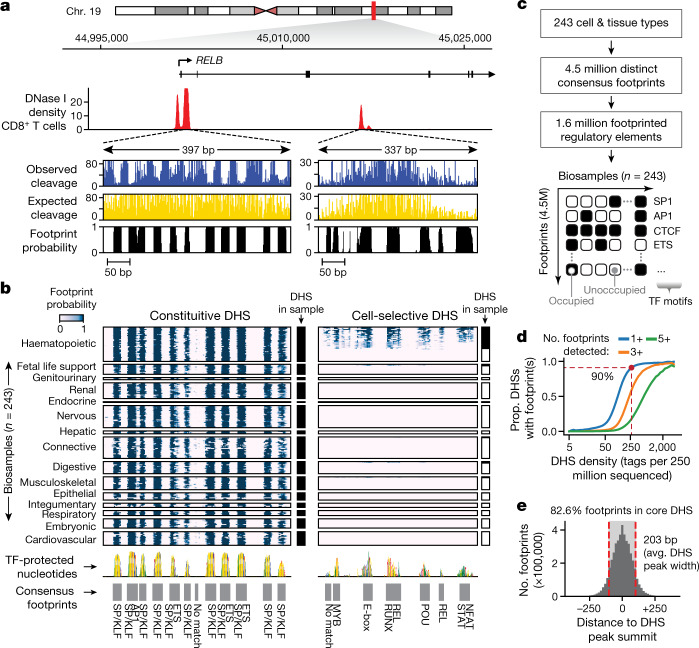
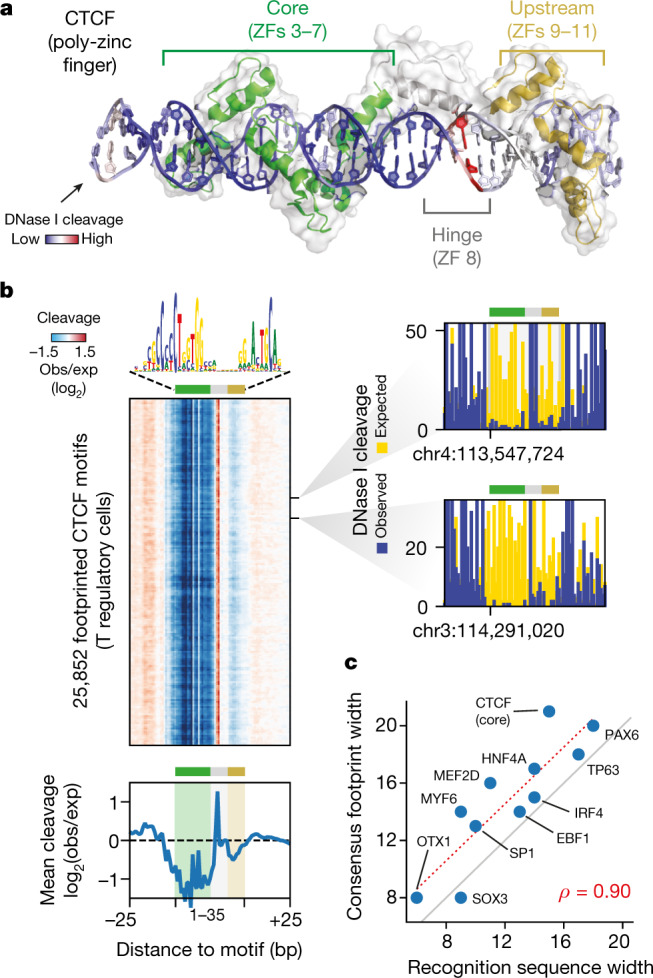
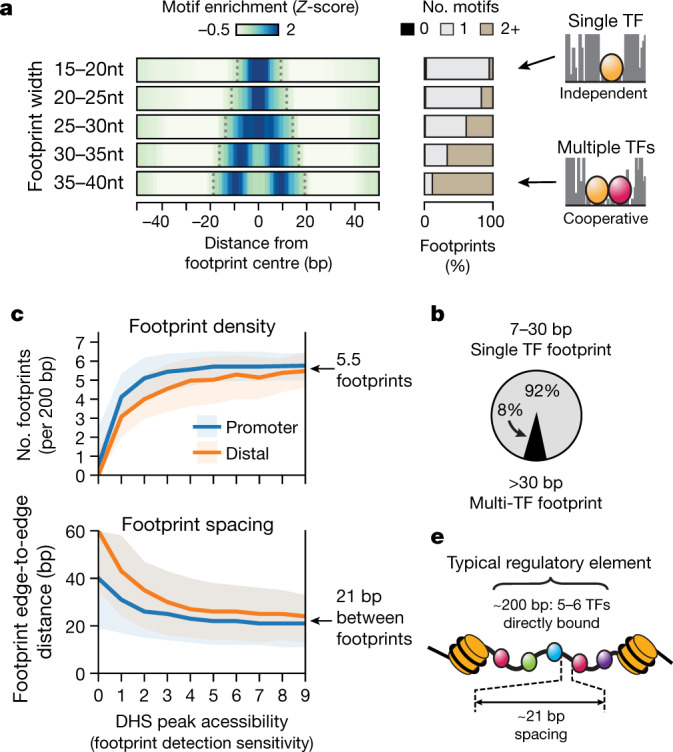
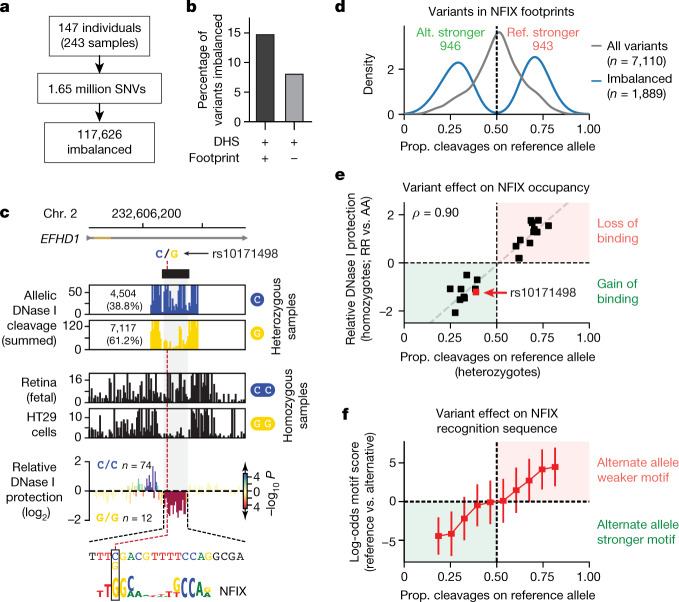
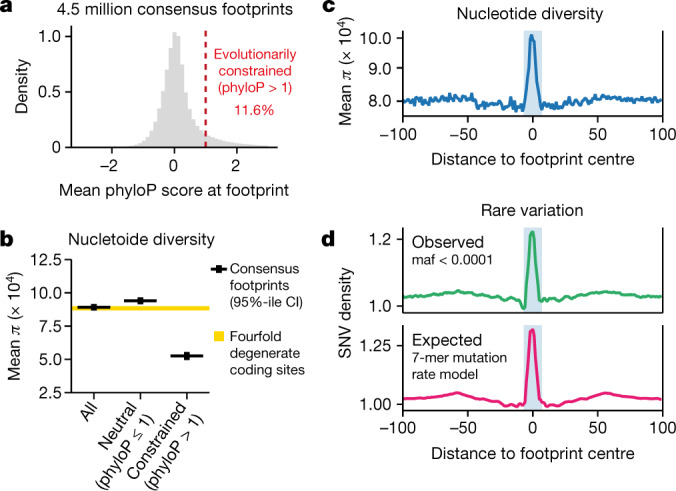
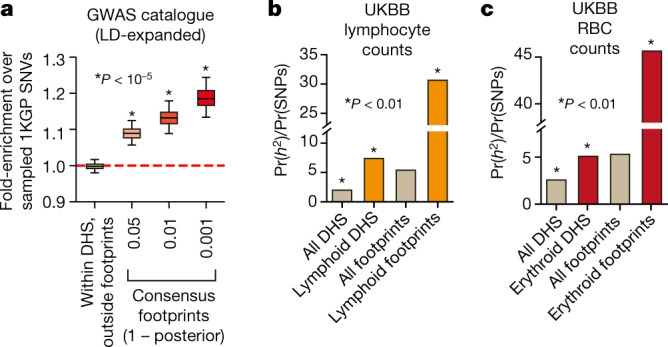
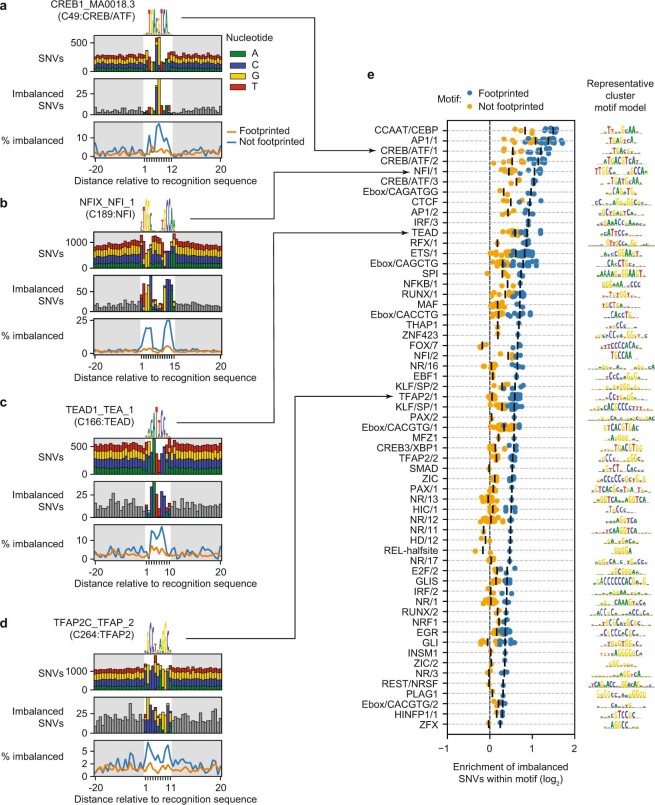
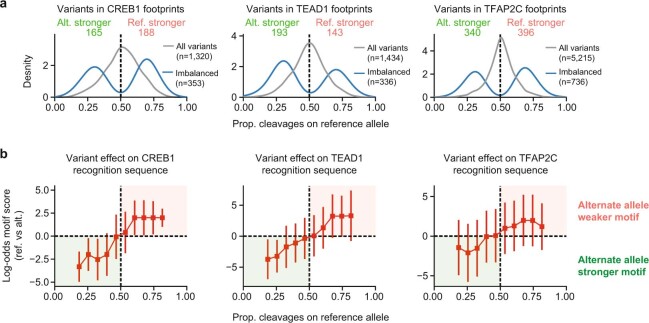
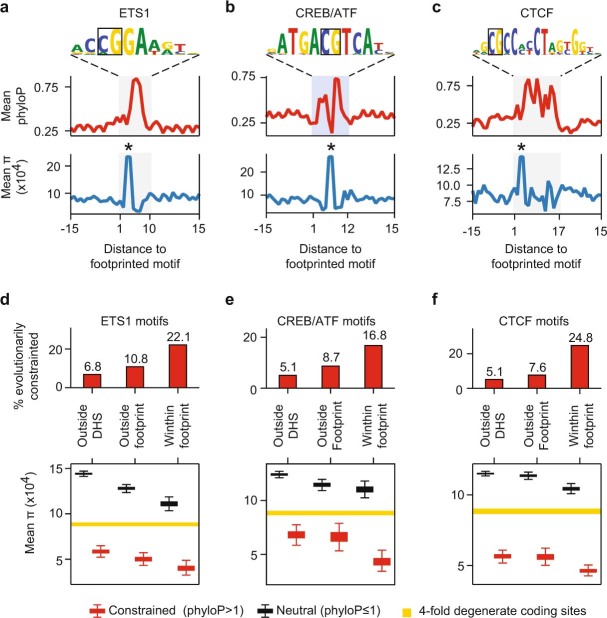
Abstract Combinatorial binding of transcription factors to regulatory DNA underpins gene regulation in all organisms. Genetic variation in regulatory regions has been connected with diseases and diverse phenotypic traits 1 , yet it remains challenging to distinguish variants that impact regulatory function 2 . Genomic DNase I footprinting enables quantitative, nucleotide-resolution delineation of sites of transcription factor occupancy within native chromatin 3–5 . However, to date only a small fraction of such sites have been precisely resolved on the human genome sequence 5 . To enable comprehensive mapping of transcription factor footprints, we produced high-density DNase I cleavage maps from 243 human cell and tissue types and states and integrated these data to delineate at nucleotide resolution ~4.5 million compact genomic elements encoding transcription factor occupancy. We map the fine-scale structure of ~1.6 million DHS and show that the overwhelming majority is populated by well-spaced sites of single transcription factor:DNA interaction. Cell context-dependent cis-regulation is chiefly executed by wholesale actuation of accessibility at regulatory DNA versus by differential transcription factor occupancy within accessible elements. We show further that the well-described enrichment of disease- and phenotypic trait-associated genetic variants in regulatory regions 1,6 is almost entirely attributable to variants localizing within footprints, and that functional variants impacting transcription factor occupancy are nearly evenly partitioned between loss- and gain-of-function alleles. Unexpectedly, we find that the global density of human genetic variation is markedly increased within transcription factor footprints, revealing an unappreciated driver of cis-regulatory evolution. Our results provide a new framework for both global and nucleotide-precision analyses of gene regulatory mechanisms and functional genetic variation.
Overview
The claims and statistics of this paper haven’t been checked yet.
Run the check — free, no account needed. It reads the open-access text and checks the sources it cites.
Integrity signals
Registry
Cites
Statistics
Figures
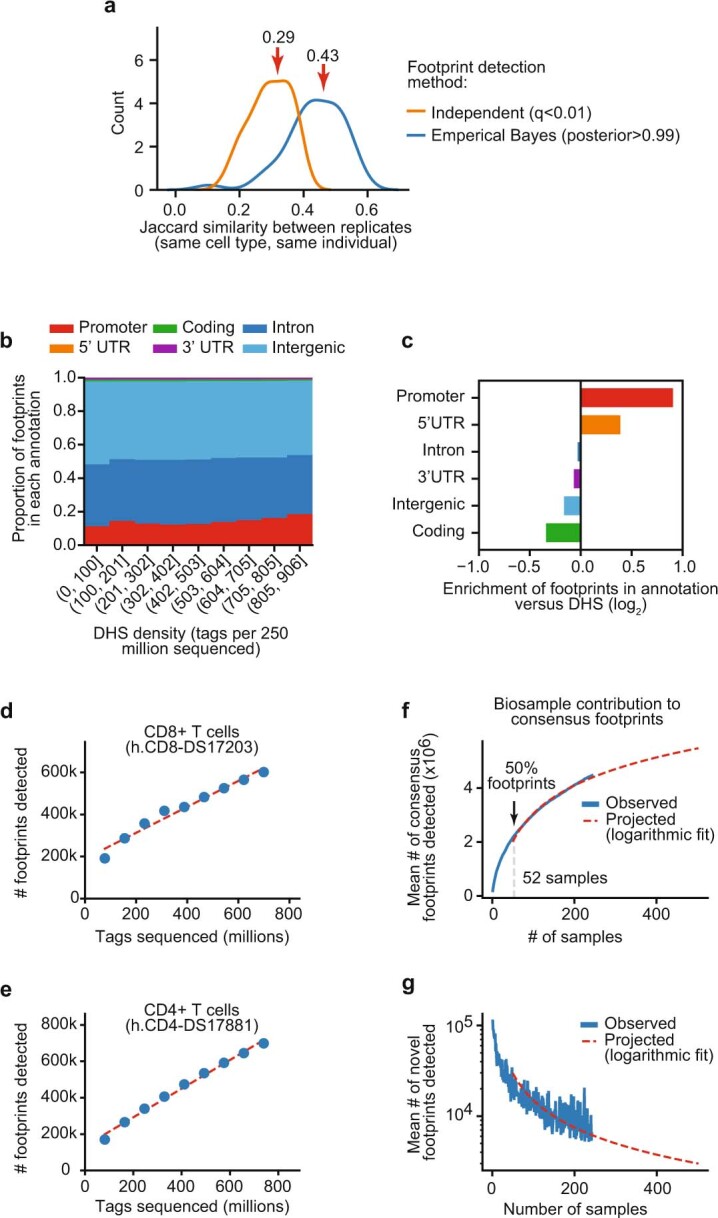
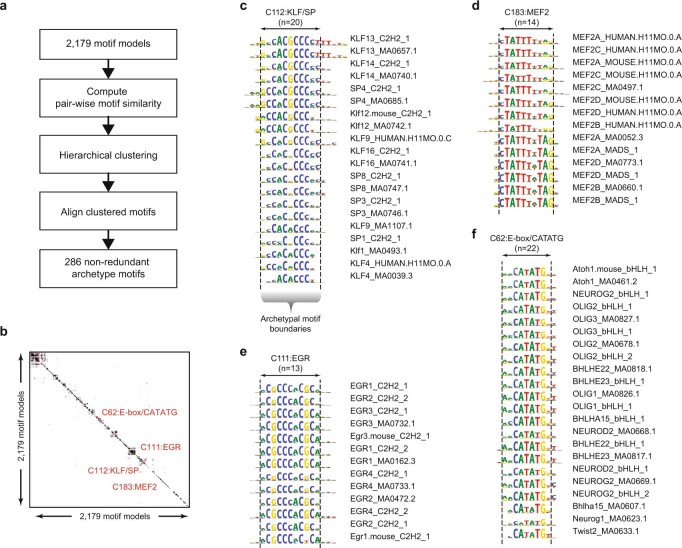
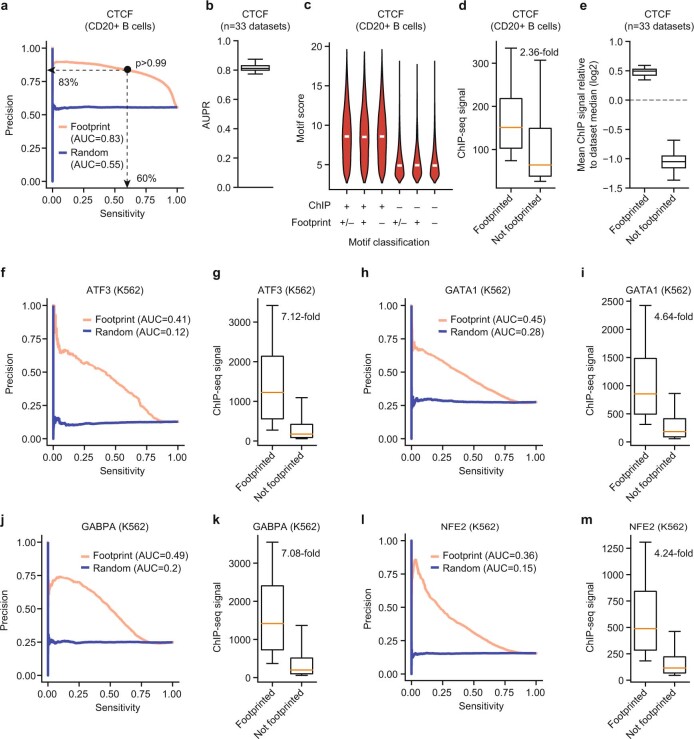
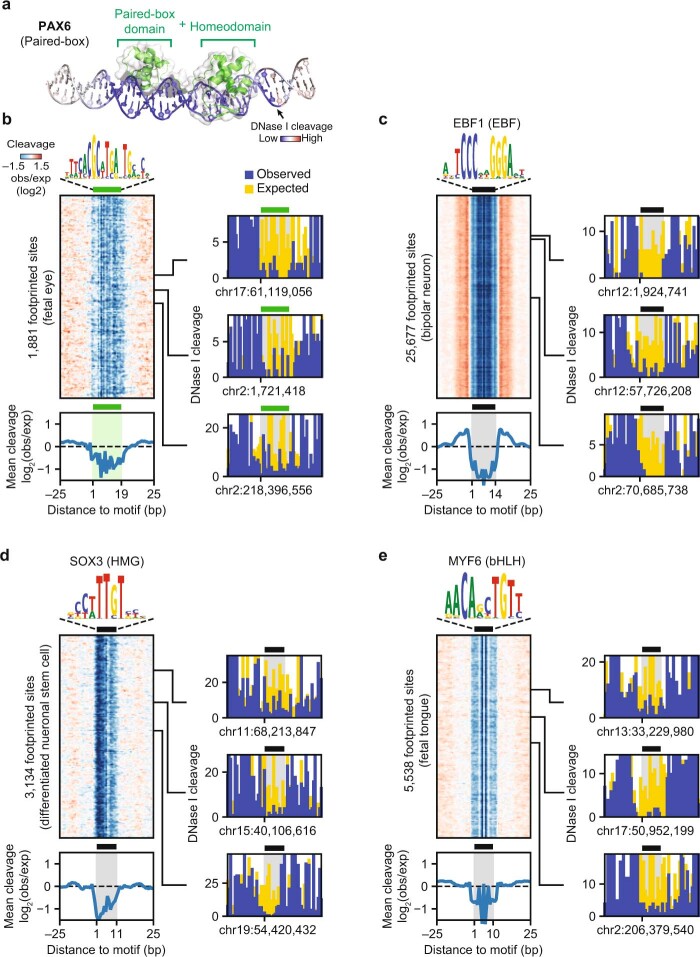
Verification
Claims the paper makes
The claims and statistics of this paper haven’t been checked yet.
Run the check — free, no account needed. It reads the open-access text and checks the sources it cites.
Claims other papers make about this one
Each is checked against this paper’s own text: does it say what the citing paper says it does?
The source backs part of the claim, not all of it — or backs it for a different population, condition or comparison.
In the citing paper
“In some cases, we found statistically weak evidence for stronger correlations with other factors from the same motif family,45 e.g., the activity of enhancers with Gfi1 sites was correlated with the expression of Gfi1b (Figure S3C).”
From Design principles of cell-state-specific enhancers in hematopoiesis (2025) · cites this paper as [45]
Experimental — accuracy not yet measured
Self-check
Percentages, sums and reported differences re-computed from the paper’s own numbers.
The self-check needs the paper’s full text.
Citations
Cites
A global reference for human genetic variation
The 1000 Genomes Project Consortium, authors, C., Auton, A., Abecasis, G. R., Steering committee, Altshuler, D. M., Durbin, R. M., Abecasis, G. R., Bentley, D. R., Chakravarti, A., et al. (2015) · Nature · doi:10.1038/nature15393 · Cited by 18,247
An integrated encyclopedia of DNA elements in the human genome
The ENCODE Project Consortium (2012) · Nature · doi:10.1038/nature11247 · Cited by 18,072
A map of human genome variation from population-scale sequencing.
The 1000 Genomes Project Consortium (2010) · Nature · doi:10.1038/nature09534 · Cited by 7,877
Integrative analysis of 111 reference human epigenomes
Roadmap Epigenomics Consortium, Kundaje, A., Meuleman, W., Ernst, J., Bilenky, M., Yen, A., Heravi-Moussavi, A., Kheradpour, P., Zhang, Z., Wang, J., et al. (2015) · Nature · doi:10.1038/nature14248 · Cited by 6,368
LD Score regression distinguishes confounding from polygenicity in genome-wide association studies
Schizophrenia Working Group of the Psychiatric Genomics Consortium, Bulik-Sullivan, B. K., Loh, P.-R., Finucane, H. K., Ripke, S., Yang, J., Patterson, N., Daly, M. J., Price, A. L., & Neale, B. M. (2015) · Nature Genetics · doi:10.1038/ng.3211 · Cited by 5,559
Buniello, A., MacArthur, J. A. L., Cerezo, M., Harris, L. W., Hayhurst, J., Malangone, C., McMahon, A., Morales, J., Mountjoy, E., Sollis, E., et al. (2019) · Nucleic Acids Research · doi:10.1093/nar/gky1120 · Cited by 4,000
Systematic Localization of Common Disease-Associated Variation in Regulatory DNA
Maurano, M. T., Humbert, R., Rynes, E., Thurman, R. E., Haugen, E., Wang, H., Reynolds, A. P., Sandstrom, R., Qu, H., Brody, J., et al. (2012) · Science · doi:10.1126/science.1222794 · Cited by 3,716
Self-citationThe Human Transcription Factors
Lambert, S. A., Jolma, A., Campitelli, L. F., Das, P. K., Yin, Y., Albu, M., Chen, X., Taipale, J., Hughes, T. R., & Weirauch, M. T. (2018) · Cell · doi:10.1016/j.cell.2018.01.029 · Cited by 3,399
The accessible chromatin landscape of the human genome
Thurman, R. E., Rynes, E., Humbert, R., Vierstra, J., Maurano, M. T., Haugen, E., Sheffield, N. C., Stergachis, A. B., Wang, H., Vernot, B., et al. (2012) · Nature · doi:10.1038/nature11232 · Cited by 2,679
Self-citationPartitioning heritability by functional annotation using genome-wide association summary statistics
ReproGen Consortium, Finucane, H. K., Schizophrenia Working Group of the Psychiatric Genomics Consortium, The RACI Consortium, Bulik-Sullivan, B., Gusev, A., Trynka, G., Reshef, Y., Loh, P.-R., Anttila, V., et al. (2015) · Nature Genetics · doi:10.1038/ng.3404 · Cited by 2,604
Cited by
Sorted by citations
Items 201–300 of 394
Akagha, M. J., Georgolopoulos, G., Martin, D., Meissl, K., Amenitsch, L., Vogl, C., Farlik, M., Fortelny, N., Halbritter, F., Müller, M. M., et al. (2026) · BMC Genomics · doi:10.1186/s12864-026-12601-5 · Cited by 7
“Briefly, non-redundant transcription factor motif archetypes derived from GRCm38 at p 1e-04 [79] were mapped to peaks using bedops [76] and the counts of each motif archetype per group was calculated.”
Naval-Sánchez, M., Deshpande, N., Tran, M., Zhang, J., Alhomrani, M., Alsanie, W. F., Nguyen, Q. H., & Nefzger, C. M. (2022) · Frontiers in Molecular Biosciences · doi:10.3389/fmolb.2022.900323 · Cited by 7
“Next, we matched motifs falling within predicted footprints using the command “rgtmotifanalysis matching”--organism = mm10′ using an extensive collection of 2177 PWMS (Vierstra et al., 2020) gathered from the HOCOMOCO v11 CORE collection for human and mouse, Jaspar 2018 Vertebrate CORE collection and Taipale 2103 HT-S…”
MethodInfluentialHeart Enhancers: Development and Disease Control at a Distance
Yuan, X., Scott, I. C., & Wilson, M. D. (2021) · Frontiers in Genetics · doi:10.3389/fgene.2021.642975 · Cited by 7
On the identification of differentially-active transcription factors from ATAC-seq data
Gerbaldo, F. E., Sonder, E., Fischer, V., Frei, S., Wang, J., Gapp, K., Robinson, M. D., & Germain, P. (2024) · PLoS Computational Biology · doi:10.1371/journal.pcbi.1011971 · Cited by 7
“For methods that specifically require BAM files, the fragment files were converted using bedToBam.”
MethodDynamics of chromatin accessibility during human first-trimester neurodevelopmentPreprint
Mannens, C. C. A., Hu, L., Lönnerberg, P., Schipper, M., Reagor, C. C., Li, X., He, X., Barker, R. A., Sundström, E., Danielle Posthuma, B., et al. (2023) · bioRxiv (Cold Spring Harbor Laboratory) · doi:10.1101/2023.08.18.553878 · Cited by 7
Zhu, I., & Landsman, D. (2023) · Genome Research · doi:10.1101/gr.278130.123 · Cited by 9
“Methods such as DNase I foot-printing can produce a comprehensive mapping of TF binding events in a cell (Neph et al. 2012; Vierstra et al. 2020), which, however, does not provide substantial information about collective TF binding.”
BackgroundXiang, G., He, X., Giardine, B. M., Isaac, K. J., Taylor, D. J., McCoy, R. C., Jansen, C. S., Keller, C. A., Wixom, A. Q., Cockburn, A., et al. (2024) · Genome Research · doi:10.1101/gr.277950.123 · Cited by 8
MEF2C controls segment-specific gene regulatory networks that direct heart tube morphogenesisPreprint
Muncie, J. M., Sinha, T., Clark, A. P., Brower, E. F., Saucerman, J. J., Black, B. L., & Bruneau, B. G. (2025) · Genes & Development · doi:10.1101/gad.352889.125 · Cited by 9
de Martin, X., Oliva, B., & Santpere, G. (2024) · Nucleic Acids Research · doi:10.1093/nar/gkae950 · Cited by 6
(2025) · doi:10.1038/s44319-024-00339-8 · Cited by 6
“…analyses of sequence motifs deduced from genome-wide DNA footprints in open chromatin regions suggest that transcription factors generally bind cooperatively to enhancers or promoters to execute their gene regulatory functions (Funk et al, 2020; Neph et al, 2012; Vierstra et al, 2020).”
Patel, Z. M., & Hughes, T. R. (2021) · Genome biology · doi:10.1186/s13059-021-02503-y · Cited by 7
Wang, X., Lu, Z., Bhattacharya, A., Paşaniuc, B., & Mancuso, N. (2023) · Bioinformatics · doi:10.1093/bioinformatics/btad288 · Cited by 6
“Furthermore, functional evidence suggests that most GWAS hits are involved in regulatory processes (Maurano et al. 2012; Vierstra et al. 2020), which implies that causal variants regulate the expression of nearby genes.”
BackgroundToward Identification of Functional Sequences and Variants in Noncoding DNA
Monti, R., & Ohler, U. (2023) · Annual Review of Biomedical Data Science · doi:10.1146/annurev-biodatasci-122120-110102 · Cited by 6
“More intricate probabilistic models such as hidden Markov models or Bayesian networks have been developed and have shown clear improvements for at least some TFs (80).”
BackgroundInfluentialBuilding integrative functional maps of gene regulation
Xu, J., Pratt, H., Moore, J. E., Gerstein, M., & Weng, Z. (2022) · Human Molecular Genetics · doi:10.1093/hmg/ddac195 · Cited by 6
Marderstein, A. R., Kundu, S., Padhi, E. M., Deshpande, S., Wang, A., Robb, E., Sun, Y., Yun, C. M., Pomales-Matos, D. A., Xie, Y., et al. (2025) · bioRxiv (Cold Spring Harbor Laboratory) · doi:10.1101/2025.02.18.638922 · Cited by 6
mRNA-engineered CRISPR-Cas epigenetic editors enable durable and efficient gene silencing in vivo
Xu, C., Zeng, C., Wang, M., Wei, X., Song, M., Liu, X., Wang, W., Chen, Q., Ji, X., Luo, P., et al. (2025) · The Innovation · doi:10.1016/j.xinn.2025.101151 · Cited by 5
Baderna, V., Barzaghi, G., Kleinendorst, R., Chatsirisupachai, K., Moniot-Perron, L., Doyle, C., Schopp, M., Hochepied, T., Libert, C., Odom, D. T., et al. (2026) · Nature Genetics · doi:10.1038/s41588-026-02703-x · Cited by 12
Foreign RNA spike-ins enable accurate allele-specific expression analysis at scale
Mendelevich, A., Gupta, S., Pakharev, A., Teodosiadis, A., Mironov, A. A., & Gimelbrant, A. A. (2023) · Bioinformatics · doi:10.1093/bioinformatics/btad254 · Cited by 5
“AI analysis has been increasingly used for understanding regulatory variation (Pirinen et al. 2015; Moyerbrailean et al. 2016; GTEx_Consortium, 2017; Mohammadi et al. 2019; Uechi et al. 2020; Vierstra et al. 2020).”
MethodDesigning Cell-Type-Specific Promoter Sequences Using Conservative Model-Based Optimization
Reddy, A. J., Geng, X., Herschl, M. H., Kolli, S., Kumar, A., Hsu, P. D., Levine, S., & Ioannidis, N. M. (2024) · neural information processing systems · doi:10.52202/079017-2954 · Cited by 5
Transcription and genome integrity
Ljungman, M. E. (2022) · DNA repair · doi:10.1016/j.dnarep.2022.103373 · Cited by 5
The dynseq browser track shows context-specific features at nucleotide resolution
Nair, S., Barrett, A., Li, D., Raney, B. J., Lee, B. T., Kerpedjiev, P., Ramalingam, V., Pampari, A., Lekschas, F., Wang, T., et al. (2022) · Nature Genetics · doi:10.1038/s41588-022-01194-w · Cited by 6
Abdulhay, N. J., Hsieh, L. J., McNally, C. P., Ketavarapu, M., Kasinathan, S., Nanda, A. S., Ostrowski, M. S., Wu, K., Moore, C. M., Goodarzi, H., et al. (2021) · bioRxiv (Cold Spring Harbor Laboratory) · doi:10.1101/2021.12.10.472156 · Cited by 5
“…chromatin fibers containing known gold-standard Ctcf bound sites in the mESC epigenome (Yue et al., 2014), as well as fibers harboring motif matches drawn randomly from the approximately 2.9E6 Ctcf sites found across the murine genome (i.e. unoccupied Ctcf sites) (Vierstra et al., 2020).”
BackgroundMartin-Geary, A. C., Blakes, A. J. M., Dawes, R., Findlay, S. D., Lord, J., Walker, S., Talbot-Martin, J., Wieder, N., D’Souza, E. N., Fernandes, M., et al. (2023) · medRxiv · doi:10.1101/2023.09.12.23295416 · Cited by 5
“To account for this, as well as promoters that are not annotated at all in the ENCODE dataset, we calculated the average size of all ‘promoter-like’ cCREs that overlap with TSS of MANE transcripts.”
InfluentialMulti-omics analysis reveals signatures of selection and loci associated with complex traits in pigsPreprint
Yi, G., Liu, L., Yao, Y., Liu, Y., Li, J., Yang, Y., Fang, L., Mo, D., Zhang, L., Liu, Y., et al. (2023) · bioRxiv (Cold Spring Harbor Laboratory) · doi:10.1101/2023.09.19.558553 · Cited by 5
Qiu, J., Ye, D., Chen, X. E., Dangle, N. J., Yoshor, B., Zhang, T., Shao, Y., Nallamala, V. C., Wang, S., Ren, D., et al. (2024) · bioRxiv (Cold Spring Harbor Laboratory) · doi:10.1101/2024.08.13.607862 · Cited by 5
Khan, A., Gould, P. A., Luo, Y., Prens, E. P., Wheless, L., Hung, A. M., Program, V. M. V., Drivas, T. G., Ritchie, M. D., Saeidian, A. H., et al. (2025) · medRxiv · doi:10.1101/2025.07.25.25332168 · Cited by 5
“Finally, we conducted genome-wide genetic correlation (r g ) analyses using LD score regression to examine shared susceptibility for paired traits ( Figure 4; Supplementary Data 17 ).”
Axes of biological variation in diffuse large B cell lymphoma
Wang, B., Wright, G. W., Enssle, J. C., Yu, X., Phelan, J. D., Yang, Y., Shaffer, A. L., Ruiz, A. E. B., Huang, D. W., Coulibaly, Z. A., et al. (2026) · Cancer Cell · doi:10.1016/j.ccell.2025.12.015 · Cited by 4
Wang, Z., Xiong, S., Yu, Y., Zhou, J., & Zhang, Y. (2023) · Bioinformatics · doi:10.1093/bioinformatics/btad299 · Cited by 4
“Transcription factors (TFs) play a crucial role in the gene transcription regulation program by binding to degenerate DNA sequences at specific genomic locations (Vierstra et al. 2020).”
BackgroundThe role of Immune cells in Alzheimer's disease: a bidirectional Mendelian randomization study
Zhang, E., Chen, T., Chen, Y., Long, C., Tao, L., Shen, X., & Dai, F. (2024) · Frontiers in Aging Neuroscience · doi:10.3389/fnagi.2024.1433691 · Cited by 6
Advance technologies for DNA-protein interactions and future research prospect
Qu, C., & Du, H. (2024) · Crop Design · doi:10.1016/j.cropd.2024.100082 · Cited by 4
Epitome: predicting epigenetic events in novel cell types with multi-cell deep ensemble learning
Morrow, A., Hughes, J. W., Singh, J., Joseph, A. D., & Yosef, N. (2021) · Nucleic Acids Research · doi:10.1093/nar/gkab676 · Cited by 4
Zhao, H.-H., Ma, Z., & Guan, D.-S. (2024) · World Journal of Clinical Cases · doi:10.12998/wjcc.v12.i7.1227 · Cited by 4
Bracken, R. C., Davison, L. M., Buehler, D. P., Fulton, M. E., Carson, E. E., Sheng, Q., Stolze, L. K., Guillermier, C., Steinhauser, M. L., & Brown, J. D. (2024) · iScience · doi:10.1016/j.isci.2024.110011 · Cited by 4
KAS-ATAC reveals the genome-wide single-stranded accessible chromatin landscape of the human genomePreprint
Kim, S. H., Marinov, G. K., & Greenleaf, W. J. (2024) · Genome Research · doi:10.1101/gr.279621.124 · Cited by 4
Predictable Engineering of Signal-Dependent Cis-Regulatory ElementsPreprint
Cornwall-Scoones, J., Benzinger, D., Yu, T., Pezzotta, A., Sagner, A., Gerontogianni, L., Bernadet, S., Finnie, E., Boezio, G. L. M., Stuart, H. T., et al. (2025) · bioRxiv (Cold Spring Harbor Laboratory) · doi:10.1101/2025.03.07.642002 · Cited by 5
Genome-wide investigation of transcription factor footprints and dynamics using cFOOT-seq
Wang, H., Wu, A., Yang, M., Zhou, D., Chen, X., Shi, Z., Zhang, Y., Liu, Y.-X., Chen, K., Wang, X., et al. (2025) · Protein & Cell · doi:10.1093/procel/pwaf071 · Cited by 3
“S3A), which conceptionally adapted from TOBIAS and footprint-tools (Bentsen et al., 2020; Vierstra et al., 2020).”
InfluentialKosugi, S., & Terao, C. (2025) · Genome biology · doi:10.1186/s13059-025-03718-z · Cited by 3
Basini, F., Hambli, A., Sahu, S., Bagale, R., Yesupatham, M. S., Ritzenthaler, C., Montaigne, D., Woitrain, E., Happy, H., Boukherroub, R., et al. (2025) · Nano Today · doi:10.1016/j.nantod.2025.102957 · Cited by 3
Long-term isolation and archaic introgression shape functional genetic variation in Near Oceania
Reilly, P. F., Rong, S., Tejada-Martínez, D., Miller, S. L., Tjahjadi, A., Liu, C., Akers, J. F., Pomer, A., Prentice, M. E., Merriwether, D. A., et al. (2026) · Science · doi:10.1126/science.adr6749 · Cited by 3
Decoding common and rare noncoding variant effects across cellular and developmental contexts
Marderstein, A. R., Kundu, S., Padhi, E. M., Deshpande, S., Wang, A., Robb, E., Sun, Y., Yun, C. M., Pomales-Matos, D. A., Xie, Y., et al. (2026) · Nature Genetics · doi:10.1038/s41588-026-02619-6 · Cited by 18
Role of Genetic Variation in Transcriptional Regulatory Elements in Heart Rhythm
Jonker, T., Barnett, P., Boink, G. J. J., & Christoffels, V. M. (2023) · Cells · doi:10.3390/cells13010004 · Cited by 3
Identification of transcription factor co-binding patterns with non-negative matrix factorization
Rauluševičiūtė, I., Launay, T., Barzaghi, G., Nikumbh, S., Lenhard, B., Krebs, A. R., Castro-Mondragon, J. A., & Mathelier, A. (2024) · Nucleic Acids Research · doi:10.1093/nar/gkae743 · Cited by 5
“Importantly, TFs interacting with the DNA in open chromatin regions protect their TFBSs from the DNase cleavage, which leaves a footprint on the corresponding TF-BSs ( 50 ,64 ).”
BackgroundExploring the transcriptional cooperation between RUNX2 and its associated elncRNA RAIN
Vitale, E., Manicardi, V., Gugnoni, M., Torricelli, F., Donati, B., Muccioli, S., Salviato, E., Rossi, T., Manzotti, G., Piana, S., et al. (2024) · Cell Death and Disease · doi:10.1038/s41419-024-07058-x · Cited by 5
“Central in these dynamics are Transcription Factors (TFs) that serve as primary docking sites for the entire transcriptional machinery [3, 6].”
Immune cells: Mediators in the metabolites and Alzheimer’s disease
Zhang, E., Dai, F., Tao, L., Chen, Y., Chen, T., & Shen, X. (2025) · Journal of Alzheimer s Disease · doi:10.1177/13872877241313140 · Cited by 3
“44 The assessment of the instrumental variables ’ ef fi cacy was anchored in the LD reference panel data from the 1000 Genomes Project, meticulously designed to represent the genetic tapestry of a European super-population, thereby providing a solid genetic substratum for our analysis.”
Planell, N., Martinez‐de‐Morentin, X., Mouzo, D., Lara‐Astiaso, D., Vilas‐Zornoza, A., Martín‐Úriz, P. S., Alignani, D., Paiva, B., Maillo, A., Kurowska, A., et al. (2025) · Science Advances · doi:10.1126/sciadv.adw3110 · Cited by 4
Decoding cnidarian cell type gene regulation
Elek, A., Iglesias, M., Mahieu, L., Zolotarov, G., Grau‐Bové, X., Aerts, S., & Sebé-Pedrós, A. (2025) · Nature Ecology & Evolution · doi:10.1038/s41559-025-02906-1 · Cited by 5
Vahab, N., Bonu, T., Kuhlmann, L., Ramialison, M., & Tyagi, S. (2024) · Computers in Biology and Medicine · doi:10.1016/j.compbiomed.2024.108068 · Cited by 3
Liu, X., Wei, H., Zhang, Q., Zhang, N., Wu, Q., & Xu, C. (2024) · Nature Communications · doi:10.1038/s41467-024-55403-7 · Cited by 3
“In this study, we utilize Deoxyribonuclease I (DNase I), a nuclease previously used for mapping TF footprints 10 , and develop Footprint-C, which speci fi cally captures chromatin interactions between TF footprints, and achieves higher ef fi ciency in identifying chromatin structural features, such…”
Peña-Martínez, E. G., Messon-Bird, J. L., Rodríguez-Ríos, J. M., Velázquez-Roig, R., Pomales-Matos, D. A., Rivera-Madera, A., Sanabria-Alberto, L., Barreiro-Rosario, A. C., Figueroa-Rosado, J. A., Valle, J. R.-D., et al. (2025) · Human Genetics and Genomics Advances · doi:10.1016/j.xhgg.2025.100415 · Cited by 3
“CVD-associated variants were intersected with known DGFs from multiple heart tissues 48 within putative cardiac enhancers that are active during heart development and the adult heart, 47 resulting in 1,535 CVD-associated variants within putative cardiac regulatory elements.”
CLIMB: High-dimensional association detection in large scale genomic data
Koch, H., Keller, C. A., Xiang, G., Giardine, B. M., Zhang, F., Wang, Y., Hardison, R. C., & Li, Q. (2022) · Nature Communications · doi:10.1038/s41467-022-34360-z · Cited by 3
Transcription factors organize into functional groups on the linear genome and in 3D chromatin
Vadnala, R. N., Hannenhalli, S. S., Narlikar, L., & Siddharthan, R. (2023) · Heliyon · doi:10.1016/j.heliyon.2023.e18211 · Cited by 4
Cakiroglu, S. A., Steinhauser, S., Smith, J., Wei, X., & Luscombe, N. M. (2021) · bioRxiv (Cold Spring Harbor Laboratory) · doi:10.1101/2021.03.19.436198 · Cited by 3
Shah, K., Maradana, M. R., Delàs, M. J., Metidji, A., Graelmann, F. J., Llorian, M., Chakravarty, P., Li, Y., Tolaini, M., Shapiro, M., et al. (2021) · Research Square · doi:10.21203/rs.3.rs-827700/v1 · Cited by 3
Hu, S. S., Liu, L. L., Li, Q., Ma, W., Guertin, M. J., Meyer, C. A., Deng, K., Zhang, T., & Zang, C. (2021) · bioRxiv (Cold Spring Harbor Laboratory) · doi:10.1101/2021.10.22.465530 · Cited by 3
Hansen, T. J., & Hodges, E. C. (2022) · bioRxiv (Cold Spring Harbor Laboratory) · doi:10.1101/2022.03.25.485870 · Cited by 4
Xiang, G., He, X., Giardine, B. M., Isaac, K. J., Taylor, D. J., McCoy, R. C., Jansen, C. S., Keller, C. A., Wixom, A. Q., Cockburn, A., et al. (2023) · bioRxiv (Cold Spring Harbor Laboratory) · doi:10.1101/2023.04.02.535219 · Cited by 3
CRISPR PERSIST-On enables heritable and fine-tunable human gene activationPreprint
Tak, Y. E., Hsu, J. Y., Shih, J., Schultz, H. T., Nguyen, I. T., Lam, K. C., Pinello, L., & Joung, J. K. (2024) · bioRxiv (Cold Spring Harbor Laboratory) · doi:10.1101/2024.04.26.590475 · Cited by 4
Pervasive and programmed nucleosome distortion patterns on single mammalian chromatin fibersPreprint
Yang, M. G., Richter, H. J., Wang, S., McNally, C. P., Harris, N., Dhillon, S., Maresca, M., de Wit, E., Willenbring, H., Maher, J. J., et al. (2025) · bioRxiv (Cold Spring Harbor Laboratory) · doi:10.1101/2025.01.17.633622 · Cited by 3
Cumulative TF binding and H3K27 Acetylation drive enhancer activation frequencyPreprint
Baderna, V., Barzaghi, G., Kleinendorst, R., Chatsirisupachai, K., Moniot-Perron, L., Schopp, M., Hochepied, T., Libert, C., Odom, D. T., Zaugg, J. B., et al. (2025) · bioRxiv (Cold Spring Harbor Laboratory) · doi:10.1101/2025.03.26.645413 · Cited by 3
Karbalayghareh, A., Pelzer, B., Chin, C. R., Melnick, A. M., Barišić, D., & Leslie, C. S. (2025) · bioRxiv (Cold Spring Harbor Laboratory) · doi:10.1101/2025.04.24.650458 · Cited by 3
authors:, L., Cheng, J., Taylor, K. R., Nicolaisen, L., Pan, J., Bycroft, C., Perino, M., Ward, T., Hawkes, G., Covill, L., et al. (2026) · medRxiv · doi:10.64898/2026.09.16.26363192 · Cited by 12
Cheng, Y.-M., He, X., Huang, X. J., Mao, F., Qin, F., & Wang, Y. (2025) · Brain Research · doi:10.1016/j.brainres.2025.149608 · Cited by 2
ArchVelo: archetypal velocity modeling for single-cell multi-omic trajectories
Avdeeva, M., Walker, S. K., van der Veeken, J., Rudensky, A. Y., & Pritykin, Y. (2026) · Nature Communications · doi:10.1038/s41467-026-74000-4 · Cited by 3
“64 FortheCD8Tcelldataanalysis,motif binding weights were generated using PWMs selected for T cells from Pritykin et al. 42 .”
Herbert, A. G. (2025) · International Journal of Molecular Sciences · doi:10.3390/ijms27010272 · Cited by 3
“The FOS and JUN proto-oncogenes dimerize through a bZIP domain that recognizes a TGASTCA (S = G/C) motif in response to growth factor/receptor tyrosine kinase signaling [75].”
The topography of nullomer-emerging mutations and their relevance to human disease
Chan, C. S. Y., Mouratidis, I., Montgomery, A., Tsiatsianis, G. C., Chantzi, N., Hemberg, M., Ahituv, N., & Georgakopoulos‐Soares, I. (2024) · Computational and Structural Biotechnology Journal · doi:10.1016/j.csbj.2024.12.026 · Cited by 2
High-Dimensional Covariance Regression with Application to Co-Expression QTL Detection
Kim, R., & Zhang, J. (2025) · Journal of the American Statistical Association · doi:10.1080/01621459.2025.2520996 · Cited by 4
“These simultaneous sparsity assumptions are well supported by genetic studies (Gardner et al. 2003; Vierstra et al. 2020), and improve model interpretability when compared to using the group sparsity or element-wise sparsity alone.”
Machine learning tools for deciphering the regulatory logic of enhancers in health and disease
Foutadakis, S., Bourika, V., Styliara, I., Koufargyris, P., Safarika, A., & Karakike, E. (2025) · Frontiers in Genetics · doi:10.3389/fgene.2025.1603687 · Cited by 2
“…scale rely on their structural characteristics, such as chromatin accessibility (Buenrostro et al., 2013; Marinov et al., 2023; John et al., 2013; Vierstra et al., 2020), binding of transcription factors and cofactors (Robertson et al., 2007; Lambert et al., 2018), activating histone modi fi…”
Mechanisms of enhanced or impaired DNA target selectivity driven by protein dimerization
Sang, M., Au, G., & Johnson, M. E. (2026) · PNAS Nexus · doi:10.1093/pnasnexus/pgag049 · Cited by 2
“Such isolated target motifs are common in the genome for proteins like GAF (64), and with a sufficiently transient protein – protein bond lifetime and moderate target binding, dimerizing proteins can occupy these isolated motifs more frequently but for short intervals (Fig.”
‘Enhancing’ red cell fate through epigenetic mechanisms
Rossmann, M. P., & Zon, L. I. (2021) · Current Opinion in Hematology · doi:10.1097/moh.0000000000000654 · Cited by 2
“A large-scale study, in which TF occupancy was mapped at nucleotide-resolution by DNase I footprinting in 243 different primary and transformed cell and tissue samples including primary CD34þ cells subjected to erythroid differentiation, revealed functional genetic variants to be preferentially localized with nucleoti…”
BackgroundPredicting the impact of sequence motifs on gene regulation using single-cell dataPreprint
Hepkema, J., Lee, N. K., Stewart, B. J., Ruangroengkulrith, S., Charoensawan, V., Clatworthy, M. R., & Hemberg, M. (2020) · bioRxiv (Cold Spring Harbor Laboratory) · doi:10.1101/2020.11.26.400218 · Cited by 2
Kubota, N., & Suyama, M. (2021) · bioRxiv (Cold Spring Harbor Laboratory) · doi:10.1101/2021.03.22.436360 · Cited by 2
“CC (529) CT (126) TT (15) rs11748158 genotype -1.”
Flanigan, K. M., Waldrop, M. A., Martin, P. T., Alles, R., Dunn, D. M., Alfano, L. N., Simmons, T. R., Moore‐Clingenpeel, M., Burian, J., Seok, S.-C., et al. (2021) · medRxiv · doi:10.1101/2021.11.03.21265899 · Cited by 2
Zarrineh, P., Darieva, Z. A., & Bobola, N. (2022) · bioRxiv (Cold Spring Harbor Laboratory) · doi:10.1101/2022.09.22.509048 · Cited by 2
Functional characteristics and computational model of abundant hyperactive loci in the human genomePreprint
Hudaiberdiev, S., & Ovcharenko, I. (2024) · eLife · doi:10.7554/elife.95170 · Cited by 1
The pioneer transcription factor ELF2 remodels the nucleosome near transcription start sitesPreprint
Xiao, T., Crowe‐McAuliffe, C., Ochmann, M., Du, Y., Hou, T., Chen, Y., Zhu, F., Seyednasrollah, F. S., Osmala, M., Vanharanta, S., et al. (2024) · bioRxiv (Cold Spring Harbor Laboratory) · doi:10.1101/2024.05.24.595749 · Cited by 2
“Correlative evidence from DNase I footprinting indicates that many typical open chromatin regions contain five to six highly occupied TF motif positions ( 46 ).”
Learning sequence-based regulatory dynamics in single-cell genomicsPreprint
Ibarra, I. L., Schneeberger, J., Erdogan, E., Redl, L., Martens, L. D., Klein, D., Aliee, H., & Theis, F. J. (2024) · bioRxiv (Cold Spring Harbor Laboratory) · doi:10.1101/2024.08.07.605876 · Cited by 2
Decoding the gene regulatory landscape through multimodal learning of protein-DNA interactionsPreprint
Tan, J., Fu, X., Ling, X., Mo, S., Bai, J., Rabadán, R., Fenyö, D., Boeke, J. D., Tsirigos, A., & Xia, B. (2025) · bioRxiv (Cold Spring Harbor Laboratory) · doi:10.1101/2025.08.17.670761 · Cited by 5
EpiATLAS – a reference for human epigenomic researchPreprint
Manz, Q., Bilenky, M., Hecker, D., Aggarwal, N., Arcila-Galvis, J. E., Ashrafiyan, S., Baumgarten, N., Ardakani, F. B., Lins, P. R. B., Breeze, C. E., et al. (2026) · bioRxiv (Cold Spring Harbor Laboratory) · doi:10.64898/2026.06.22.729579 · Cited by 2
Unraveling the complexity: Advanced methods in analyzing DNA, RNA, and protein interactions
Peixoto, M. L., & Madan, E. (2024) · Advances in cancer research · doi:10.1016/bs.acr.2024.06.010 · Cited by 1
Epigenomic Sequencing Technologies
Chen, J., Keshavarzian, T., & Lupien, M. (2024) · Royal Society of Chemistry eBooks · doi:10.1039/9781837674916-00109 · Cited by 1
Deleuze, V., Stephen, T., Salma, M., Orfeo, C., Jorna, R., Maas, A., Barroca, V., Arcangeli, M.-L., Lecellier, C., Andrieu‐Soler, C., et al. (2025) · Scientific Reports · doi:10.1038/s41598-025-94222-8 · Cited by 2
Ke, S., Yan, J., Li, B., & Feng, X. (2025) · Brain and Behavior · doi:10.1002/brb3.70632 · Cited by 1
Guo, F., Yang, Z., She, J., Chen, F., Hu, Y., Huang, H.-F., & Gao, L. (2025) · Cell Proliferation · doi:10.1111/cpr.70138 · Cited by 1
“Transcription factors regulate gene expression through specific binding to DNA sequences in gene promoters/enhancers via specialised domains [62].”
Enhancer dynamics and cellular architecture in the human spinal cord
Kandror, E. K., Wang, A., Carriere, M., Peterson, A., Liao, W., Tjärnberg, A., Fung, J. H., Mahbubani, K. T. A., Loper, J., Pangburn, W., et al. (2026) · Neuron · doi:10.1016/j.neuron.2025.12.035 · Cited by 2
How to build the regulatory genome: a constructionist guide to the cis-regulatory code
Bell, C. C., de Boer, C. G., Camellato, B. R., Delàs, M. J., Ibrahim, D. M., & Montgomery, M. T. (2026) · Development · doi:10.1242/dev.205516 · Cited by 2
NEXT-scASV: a Nextflow pipeline for allele-specific variant calling from single-cell RNA-seq data
Shevtsov, A., Buyan, A., Nozdrin, V., Akhtyamov, P., Stupnikov, A., Meshcheryakov, G., Kulakovskiy, I. V., & Medvedeva, Y. A. (2026) · GigaScience · doi:10.1093/gigascience/giag042
“A Python script [ 29 ] then parses these corrected BAM files to count the number of reads supporting the reference and alternative alleles for every variant in every sample × group combination, producing an extensive table of allelic read counts for statistical testing.”
Predictive design of tissue-specific mammalian enhancers that function in the mouse embryo
Chen, S., Loubière, V., Hollingsworth, E. W., Ken, M., Mandlburger, N., Jacinto, S. H., Dizehchi, A., Schreiber, J. M., Kvon, E. Z., & Stark, A. (2026) · Nature Genetics · doi:10.1038/s41588-026-02729-1 · Cited by 3
“Redundant PWMs were then filtered using the non-redundant motif clusters described in a previous publication 47 , selecting only the PWM with the highest z -score as the representative of each cluster.”
InfluentialVashisht, S., Parisi, C., & Winata, C. L. (2025) · BMC Genomics · doi:10.1186/s12864-025-11232-6 · Cited by 2
Kadivnik, M., Dundović, M., Bartulić, A., Rubin, V. R., Abičić Žuljević, K., Vranješ, I. M., Kralik, K., Arvaj, N., & Wagner, J. (2025) · International Journal of Molecular Sciences · doi:10.3390/ijms26041606 · Cited by 1
“In contrast, an SNP in a noncoding region potentially affects the gene expression [27,28].”
Functional dissection of noncoding variants associated with rheumatoid arthritis
Jajodia, A., Mishra, A., Jayavelu, N. D., Lambert, K., Moss, N., Yang, Z., Cerosaletti, K. M., Buckner, J. H., & Hawkins, R. D. (2025) · Annals of the Rheumatic Diseases · doi:10.1016/j.ard.2025.04.001 · Cited by 1
Metaplastic Barrett's oesophagus represents reversion to a developmental-like epithelial cell state
Baker, S. M., Mullan, A. F., Jennings, R. E., Hanley, K. P., Ang, Y. S., Palles, C., Hanley, N. A., & Sharrocks, A. D. (2025) · Development · doi:10.1242/dev.204735 · Cited by 2
“TF-binding motifs were grouped according to similarity and annotated based on their (sub)families for concise annotation of figures (Vierstra et al., 2020).”
Functional characteristics and computational model of abundant hyperactive loci in the human genome
Hudaiberdiev, S., & Ovcharenko, I. (2024) · eLife · doi:10.7554/elife.95170.3 · Cited by 1
Ibarra, I. L., Ratnu, V. S., Gordillo, L., Hwang, I., Mariani, L., Weinand, K., Hammarén, H. M., Bulyk, M. L., Savitski, M. M., Zaugg, J. B., et al. (2021) · bioRxiv (Cold Spring Harbor Laboratory) · doi:10.1101/2021.05.28.446128 · Cited by 1
Cell Type Specific DNA Signatures of Transcription Factor BindingPreprint
Awdeh, A., Turcotte, M., & Perkins, T. J. (2022) · bioRxiv (Cold Spring Harbor Laboratory) · doi:10.1101/2022.07.15.500259 · Cited by 1
“Thus, cell type specific chromatin accessibility is one mechanism directing TFs to different parts of the genome [3, 11, 14, 15].”
BackgroundDeepGWAS: Enhance GWAS Signals for Neuropsychiatric Disorders via Deep Neural NetworkPreprint
Wen, J., Li, G., Chen, J. C., Sun, Q., Liu, W., Guan, W., Lai, B., Zhou, H., Szatkiewicz, J., He, X., et al. (2022) · bioRxiv (Cold Spring Harbor Laboratory) · doi:10.1101/2022.12.20.521277 · Cited by 2
Emmett, A., Saadi, A., Care, M. A., Doody, G. M., Tooze, R. M., & Westhead, D. R. (2023) · bioRxiv (Cold Spring Harbor Laboratory) · doi:10.1101/2023.01.09.522862 · Cited by 1
Wang, B., Starr, A. L., & Fraser, H. B. (2023) · bioRxiv (Cold Spring Harbor Laboratory) · doi:10.1101/2023.05.22.541747 · Cited by 1
Wang, B., Starr, A. L., & Fraser, H. B. (2023) · eLife · doi:10.7554/elife.89594.1 · Cited by 1
DNA-binding factor footprints and enhancer RNAs identify functional non-coding genetic variantsPreprint
Biddie, S. C., Weykopf, G., Hird, E. F., Friman, E. T., & Bickmore, W. A. (2023) · bioRxiv (Cold Spring Harbor Laboratory) · doi:10.1101/2023.11.20.567860 · Cited by 1
Wang, B., Starr, A. L., & Fraser, H. B. (2024) · eLife · doi:10.7554/elife.89594.2 · Cited by 1
Metadata
- Authors
- Vierstra, J., Lazar, J., Sandstrom, R., Halow, J., Lee, K., Bates, D., Diegel, M., Dunn, D., Neri, F., Haugen, E., Rynes, E., Reynolds, A., Nelson, J., Johnson, A., Frerker, M., Buckley, M., Kaul, R., Meuleman, W., & Stamatoyannopoulos, J. A.
- Affiliations
- Altius Institute for Biomedical Sciences (US)
- University of Washington (US)
- Corresponding author
- Vierstra, Jeff
- Stamatoyannopoulos, John A.
- ORCID
- Venue
- Nature
- Published
- 2020-07-29
- Volume
- 583
- Issue
- 7818
- Pages
- 729-736
- ISSN
- 0028-0836 (ISSN-L)
- 1476-4687
- PMC
- PMC7410829
- OpenAlex
- W3046196569
- Cited by
- 386
- References
- 62
- Citations by year
- 2026: 48 · 2025: 84 · 2024: 75 · 2023: 58 · 2022: 39 · 2021: 67 · 2020: 15
- FWCI
- 15.15
- Type
- journal article
- Language
- en
- Open access
- hybrid
- doi.org
- Locations
- Nature (publishedVersion, cc-by)
- bioRxiv (Cold Spring Harbor Laboratory) (acceptedVersion, cc-by-nc-nd)
- PubMed Central (publishedVersion, cc-by)
- PubMed (publishedVersion)
- RePEc: Research Papers in Economics (submittedVersion)
- Funders
- GlaxoSmithKline
- National Institutes of Health
- National Human Genome Research Institute (U54HG007010, UM1HG009444, R35HG011317)
- Topics
- Life Sciences › Biochemistry, Genetics and Molecular Biology › Molecular Biology › Genomics and Chromatin Dynamics
- Life Sciences › Biochemistry, Genetics and Molecular Biology › Genetics › Genetic Associations and Epidemiology
- Life Sciences › Biochemistry, Genetics and Molecular Biology › Molecular Biology › Chromatin Remodeling and Cancer
- Keywords
- transcription factor footprints, DNase I footprinting, DNase I hypersensitive sites, transcription factor occupancy, chromatin accessibility, cis-regulatory evolution, loss-of-function alleles, gain-of-function alleles, gene expression regulation, functional genetic variation
- MeSH terms
- Deoxyribonuclease I, DNA, Genetics, Population, Humans, Models, Molecular, Regulatory Sequences, Nucleic Acid, Transcription Factors, Genome, Human, Consensus Sequence, DNA Footprinting, Polymorphism, Single Nucleotide, Genome-Wide Association Study
About these checks
Registry, retraction, Cites and statistics results are computed, not judged, with one exception: a printed reference that no index lists is read once by a model before it counts as a citation error. Claims are extracted by a model and kept only when their quote appears verbatim in the text; each cited source is then checked, with a model’s help, for whether it says what the claim relies on. Those verdicts can be wrong — read the claim’s quote and the cited source before relying on one.
Statistics and arithmetic are recomputed, not judged.
Confidence bands are shown only for fields calibrated on our annotated test set. None is calibrated yet, so no band is shown.
What counts as a claim ›How we measure confidence ›How we check this ›
Are you an author, or do you see a problem with this page? Request a review
