

Highly accurate protein structure prediction for the human proteome
Open accessThe DOI matches its Crossref record; 77 of the 83 references it cites were found in a registry or an index; 18 of the 24 sources its claims cite were checked for support.
Abstract
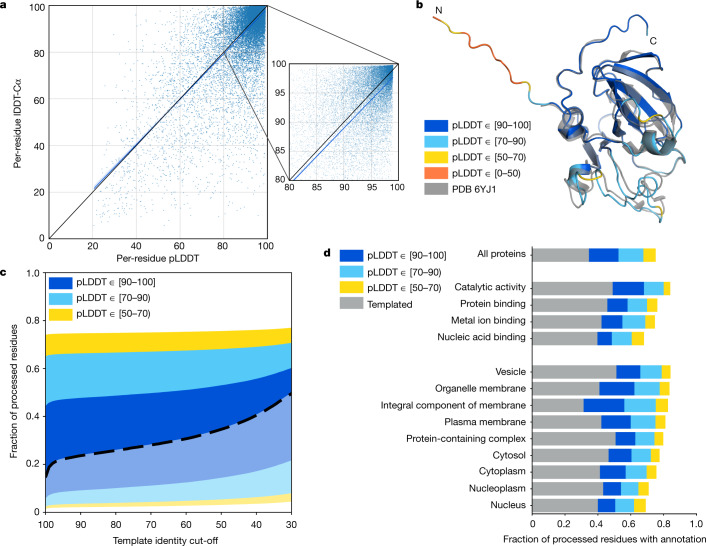
Protein structures can provide invaluable information, both for reasoning about biological processes and for enabling interventions such as structure-based drug development or targeted mutagenesis. After decades of effort, 17% of the total residues in human protein sequences are covered by an experimentally determined structure 1 . Here we markedly expand the structural coverage of the proteome by applying the state-of-the-art machine learning method, AlphaFold 2 , at a scale that covers almost the entire human proteome (98.5% of human proteins). The resulting dataset covers 58% of residues with a confident prediction, of which a subset (36% of all residues) have very high confidence. We introduce several metrics developed by building on the AlphaFold model and use them to interpret the dataset, identifying strong multi-domain predictions as well as regions that are likely to be disordered. Finally, we provide some case studies to illustrate how high-quality predictions could be used to generate biological hypotheses. We are making our predictions freely available to the community and anticipate that routine large-scale and high-accuracy structure prediction will become an important tool that will allow new questions to be addressed from a structural perspective.
Overview
CoChat Summary
TL;DR
AlphaFold2 was applied to 98.5% of human proteins, producing confident predictions for 58% of residues and very high confidence for 36% of all residues. The paper introduces pLDDT, pTM and an experimentally resolved head to interpret the dataset, presents case studies, and releases predictions freely.
Key findings
- The dataset covers 98.5% of human proteins with full-chain predictions, amounting to 10,537,122 residues (92.5% of residues); 58.0% of residues were predicted confidently (pLDDT > 70), and 35.7% of total residues fell in the highest accuracy band (pLDDT > 90), double the residues covered by experimental structures.
- At the per-protein level, 43.8% of proteins had a confident prediction on at least three quarters of their sequence, and 1,290 proteins contained a substantial region (>200 residues) with pLDDT ≥ 70 and no good template.
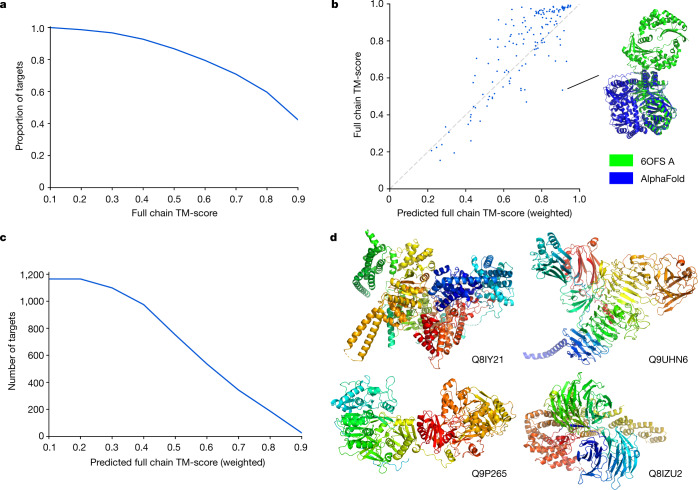
- On a held-out set of long PDB chains (n = 151), 70% of predictions had a TM-score > 0.7; pTM correlated with actual TM-score at Pearson’s r = 0.84, and among human proteins enriched for novel multidomain predictions, 187 had pTM > 0.8 and 343 had pTM > 0.7.
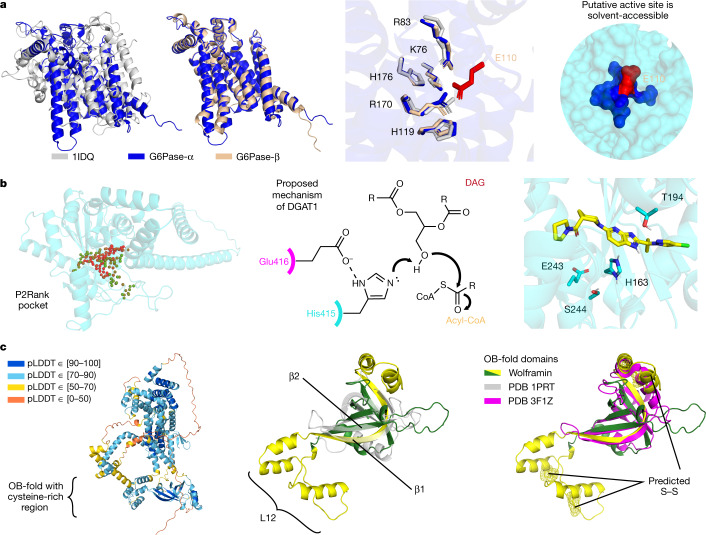
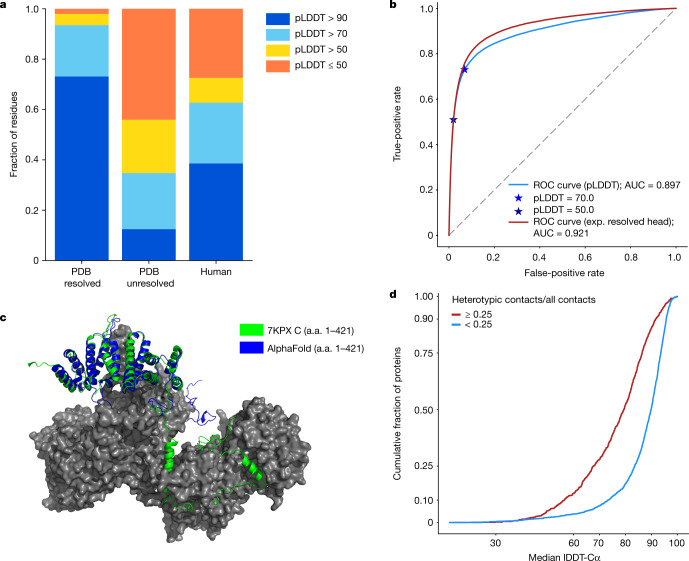
- pLDDT performed as a competitive disorder predictor on the CAID benchmark with AUC 0.897, while the experimentally resolved head achieved AUC 0.921; case studies proposed mechanistic hypotheses for G6Pase-α, DGAT2 and wolframin.
Methods
- AlphaFold2 was applied to the UniProt human reference proteome (release 2021_02), attempting all sequences of 16–2,700 amino acids and excluding residue codes B, J, O, U, Z or X; the pipeline used MSA construction, template search, inference with five models, model ranking by mean pLDDT, and constrained relaxation, with Reduced BFD and reduced ensembling.
- Evaluation used a recent PDB dataset of 12,494 chains, CAMEO targets from 21 March 2020 to 13 March 2021, and the CAID Disprot-PDB benchmark; metrics included pLDDT, pTM, the experimentally resolved head, TM-score, lDDT-Cα and AUC.
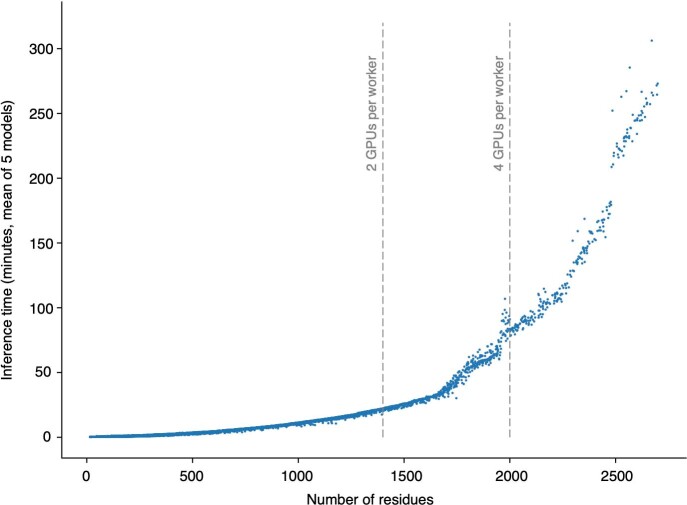
- Case-study analyses used PyMOL, P2Rank, AutoDockTools, AutoDock Vina and TM-align; inference for the human proteome used 930 GPU days, with an estimated 510 core days for other pipeline stages from scratch.
Limitations
- The paper states that low-confidence regions may reflect intrinsic disorder or regions structured only in complex, and that some proportion of proteins without confident predictions will be genuine failures where a fixed structure exists but AlphaFold does not predict it.
- The paper states that inter-domain accuracy is expected to be lower than within-domain accuracy, that some multidomain proteins may have mobile domains with no fixed packing, and that the case-study biological hypotheses require experimental confirmation.
- Evident from the text: predictions are single-chain and exclude sequences longer than 2,700 residues, so complex-dependent structure and larger proteins are not directly addressed.
Model-written summary. Check it against the paper before relying on it.
Integrity signals
Registry
Cites
Statistics
Figures
![Extended Data Fig. 7 Relationship between sequence length and run time for the non-inference stages of the pipeline. On the basis of 240 human protein sequences, chosen by stratified sampling from the length buckets: [16, 500), [500, 1,000), [1,000, 1,500), [1,500, 2,000), [2,000, 2,500) and [2,500, 2,700]. The relax plot shows five times more points, since five relaxed models are generated per protein. Coefficients for the quadratic lines of best fit were computed with Numpy polyfit.](https://figures.cochat.ai/paper-figures/c9bdcad64694429b95a292e248c7f05a/highly-accurate-protein-structure-prediction-for-the-human-proteome-figure-11.jpg)
Verification
Claims the paper makes
14 Valid · 1 Not valid · 5 Not checked · 44 Own results and interpretations
The cited sources support only part of this claim — read each source’s verdict below.
In the paper
“This system used a completely different model from our CASP13 entry31, and demonstrated a considerable improvement over previous methods in terms of providing routinely high accuracy29,30.”
§ Highly accurate protein structure prediction for the human proteome > Main
What the sources say
- Partly supportedcites [29] Kryshtafovych A Schwede T Topf M Fidelis K Moult J Critical assessment of methods of protein structure prediction (CASP)-round XIII Proteins 2019 87 1011 1020 10.1002/prot.25823 31589781 PMC6927249 sourceExperimental — accuracy not yet measured
The PROGRESS IN CASP13 section reports a dramatic improvement in model accuracy over earlier CASP rounds, and TEMPLATE FREE MODELING says DeepMind’s A7D group had the most accurate results overall. Those passages concern CASP13 methods, not the different system in the citing sentence; they do not establish that AlphaFold2 routinely achieved high accuracy. (LLM, conf=0.84)
- Supportedcites [30] Pereira, J. et al. High-accuracy protein structure prediction in CASP14. Proteins10.1002/prot.26171 (2021). 34218458 source
The Abstract reports a large leap in high accuracy due to AF2. The Conclusions say AF2 substantially outperformed its predecessor and produced the best models for 89 of 97 CASP14 targets, supporting both the improvement and its routine high accuracy. (LLM, conf=0.94)
boostedstates a cause- Asserted: passes — The authors put it forward as true.
- Checkable: passes — It can be checked against evidence.
- Load-bearing: passes — The paper’s conclusions depend on it.
- Based: passes — The paper gives a reason why it holds.
- Partly supported
Every source the paper cites for this claim was checked and supports it.
In the paper
“We note that the accuracy of AlphaFold was validated in CASP142, which focuses on challenging proteins that are dissimilar to structures already available in the PDB.”
§ Highly accurate protein structure prediction for the human proteome > Model confidence and added coverage
What the sources say
- Supportedcites [2] Jumper, J. et al. Highly accurate protein structure prediction with AlphaFold. Nature10.1038/s41586-021-03819-2 (2021). PMC8371605 34265844 source
The paper’s CASP14 assessment passage (section and page not provided in our copy) says AlphaFold was entered into CASP14, describes it as a blind accuracy assessment, and reports that AlphaFold’s structures were substantially more accurate than competing methods. This supports the attributed claim that its accuracy was validated in CASP14. (LLM, conf=0.94)
plain- Asserted: passes — The authors put it forward as true.
- Checkable: passes — It can be checked against evidence.
- Load-bearing: unclear — It is unclear whether the paper’s conclusions depend on it.
- Based: passes — The paper gives a reason why it holds.
- Supported
The cited sources support only part of this claim — read each source’s verdict below.
In the paper
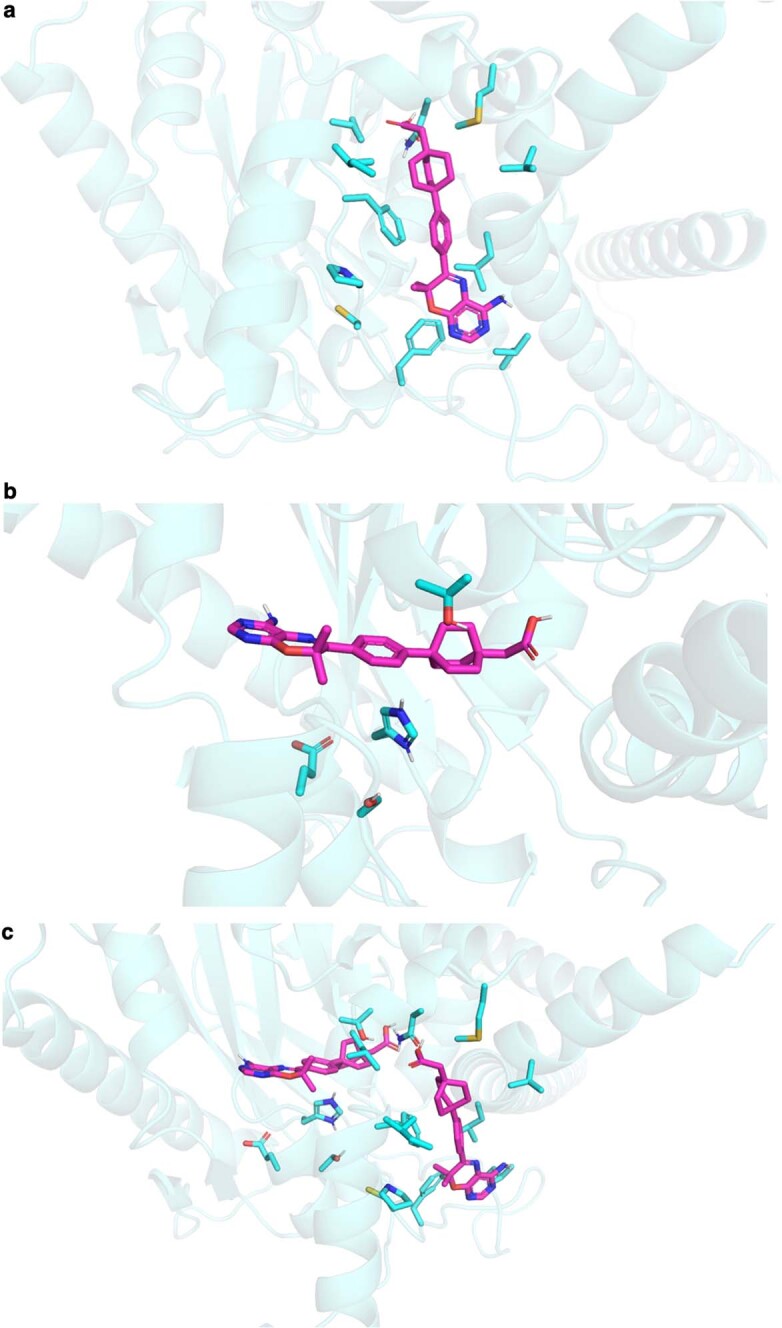
“Despite being the most similar chain, 3F1Z lacks the cysteines that are present in wolframin, which could form disulfide cross-links in the endoplasmic reticulum59.”
§ Highly accurate protein structure prediction for the human proteome > Highlighted predictions > Wolframin
What the sources say
- Partly supportedcites [59] Fass D Thorpe C Chemistry and enzymology of disulfide cross-linking in proteins Chem. Rev. 2018 118 1169 1198 10.1021/acs.chemrev.7b00123 28699750 PMC5808910 sourceExperimental — accuracy not yet measured
Section 2, “Which Proteins Contain Disulfides” (page unavailable), says that proteins in or passing through the ER can have cysteines positioned to form disulfide bonds. It does not address wolframin, 3F1Z, or whether their cysteine residues differ, so it supports only the general possibility of ER disulfide cross-linking. (LLM, conf=0.86)
hedged- Asserted: passes — The authors put it forward as true.
- Checkable: passes — It can be checked against evidence.
- Load-bearing: unclear — It is unclear whether the paper’s conclusions depend on it.
- Based: passes — The paper gives a reason why it holds.
- Partly supported
The sources with a verdict support this claim; the rest weren’t checked yet, have no full text we could read, or their verdicts aren’t rated yet.
In the paper
“Comparing our prediction for this region (median pLDDT of 86.0) to existing PDB chains using TM-align42,57 identified 3F1Z58 as the most similar known chain (TM-score of 0.472) (Fig. 3c, magenta).”
§ Highly accurate protein structure prediction for the human proteome > Highlighted predictions > Wolframin
What the sources say
- Not checked — no full text of the sourcecites [42] Zhang Y Skolnick J Scoring function for automated assessment of protein structure template quality Proteins 2004 57 702 710 10.1002/prot.20264 15476259 source
- Supportedcites [57] Zhang Y Skolnick J TM-align: a protein structure alignment algorithm based on the TM-score Nucleic Acids Res. 2005 33 2302 2309 10.1093/nar/gki524 15849316 PMC1084323 source
The citation is attached to “using TM-align,” identifying the method used by the citing authors, not attributing their 3F1Z match or TM-score to this source. The source’s Results (Benchmark test; page unavailable) describes TM-align as a tool for comparing protein structures and reporting TM-scores. (LLM, conf=0.93)
- Supportedcites [58] Das D The structure of KPN03535 (gi|152972051), a novel putative lipoprotein from Klebsiella pneumoniae, reveals an OB-fold Acta Crystallogr. F 2010 66 1254 1260 10.1107/S1744309109018168 PMC2954213 20944219 source
The citation is attached to 3F1Z, identifying the PDB chain used in the citing authors’ comparison. The source paper’s Materials and methods section states that its KPN03535 structure was deposited under accession code 3f1z; the pLDDT and TM-score describe the citing authors’ own analysis, not a result attributed to this source. (LLM, conf=0.93)
plainstates an association- Asserted: passes — The authors put it forward as true.
- Checkable: passes — It can be checked against evidence.
- Load-bearing: unclear — It is unclear whether the paper’s conclusions depend on it.
- Based: passes — The paper gives a reason why it holds.
Every source the paper cites for this claim was checked and supports it.
In the paper
“A recent evolutionary analysis suggested domains for wolframin, which our prediction largely supports55.”
§ Highly accurate protein structure prediction for the human proteome > Highlighted predictions > Wolframin
What the sources say
- Supportedcites [55] Schäffer DE Iyer LM Burroughs AM Aravind L Functional innovation in the evolution of the calcium-dependent system of the eukaryotic endoplasmic reticulum Front. Genet. 2020 11 34 10.3389/fgene.2020.00034 32117448 PMC7016017 source
The Results section, “Domain Architectural Anatomy and Functional Analysis of the Wolframin Protein,” reports the paper’s proposed domain assignments for wolframin, including Sel1-like repeats, an EF-hand region, and an OB-fold domain (Figure 4A). The citing authors’ statement that their own prediction largely supports those assignments is not a finding attributed to this source. (LLM, conf=0.93)
plainstates an association- Asserted: passes — The authors put it forward as true.
- Checkable: passes — It can be checked against evidence.
- Load-bearing: unclear — It is unclear whether the paper’s conclusions depend on it.
- Based: passes — The paper gives a reason why it holds.
- Supported
36 more claims · 4 with their cited sources checked
Create a free account to see all 64 claims and every source verdict.
- It may state two separate claims as one. 13
- Probably not a substantial claim. 12
Claims other papers make about this one
Each is checked against this paper’s own text: does it say what the citing paper says it does?
The source backs part of the claim, not all of it — or backs it for a different population, condition or comparison.
In the citing paper
“While AF2 performs exceptionally well on these types of folds on average”
From The power and pitfalls of AlphaFold2 for structure prediction beyond rigid globular proteins (2024) · cites this paper as [5]
Experimental — accuracy not yet measuredThe source backs part of the claim, not all of it — or backs it for a different population, condition or comparison.
In the citing paper
“For the majority of globular proteins, AF2 provides accurate, reliable models with high pLDDT (> 70) or low PAE values (< 5 Å) highlighting confidence in the prediction of the position of the atomic coordinates, which match experimentally determined native structures5,17,23,59”
From The power and pitfalls of AlphaFold2 for structure prediction beyond rigid globular proteins (2024) · cites this paper as [5]
Experimental — accuracy not yet measuredThe source backs part of the claim, not all of it — or backs it for a different population, condition or comparison.
In the citing paper
“The lower confidence bands appear to correlate well with backbone flexibility and intrinsic disorder (13) (Figure 2).”
From AlphaFold Protein Structure Database: massively expanding the structural coverage of protein-sequence space with high-accuracy models (2022) · cites this paper as [13]
Experimental — accuracy not yet measuredThe source backs part of the claim, not all of it — or backs it for a different population, condition or comparison.
In the citing paper
“One of the major insights leveraged by AlphaFold 1,2 comes from the use of evolutionary covariations that can be extracted from large-scale multiple sequence alignments.[49][50][51][52][53][54]”
From AlphaFold and Implications for Intrinsically Disordered Proteins (2021) · cites this paper as [2]
Experimental — accuracy not yet measuredThe source backs part of the claim, not all of it — or backs it for a different population, condition or comparison.
In the citing paper
“DeepMind’s AlphaFold2 success in sequence-based protein structure prediction,4 as well as the RoseTTAFold70 open-source counterpart, and the publicly available AlphaFold2 prediction of all human proteins203 are major steps that benefit the scientific community.”
From AlphaFold, Artificial Intelligence (AI), and Allostery (2022) · cites this paper as [203]
Experimental — accuracy not yet measured
16 more claims about this paper
Create a free account to see every claim other papers make about this one.
Citations
Cites
Highly accurate protein structure prediction with AlphaFold
Jumper, J., Evans, R., Pritzel, A., Green, T., Figurnov, M., Ronneberger, O., Tunyasuvunakool, K., Bates, R., Žídek, A., Potapenko, A., et al. (2021) · Nature · doi:10.1038/s41586-021-03819-2 · Cited by 43,764 · cited 1×
“[16, 500), [500, 1,000), [1,000, 1,500), [1,500, 2,000), [2,000, 2,500) and [2,500, 2,700].”
Self-citationGene Ontology: tool for the unification of biology
Ashburner, M., Ball, C. A., Blake, J. A., Botstein, D., Butler, H., Cherry, J. M., Davis, A. P., Dolinski, K., Dwight, S. S., Eppig, J. T., et al. (2000) · Nature Genetics · doi:10.1038/75556 · Cited by 43,206
Trott, O., & Olson, A. J. (2010) · Journal of Computational Chemistry · doi:10.1002/jcc.21334 · Cited by 38,412
AutoDock4 and AutoDockTools4: Automated docking with selective receptor flexibility
Morris, G. M., Huey, R., Lindstrom, W., Sanner, M. F., Belew, R. K., Goodsell, D. S., & Olson, A. J. (2009) · Journal of Computational Chemistry · doi:10.1002/jcc.21256 · Cited by 25,486
Initial sequencing and analysis of the human genome
International Human Genome Sequencing Consortium, Whitehead Institute for Biomedical Research, C. F. G. R., Lander, E. S., Linton, L. M., Birren, B., Nusbaum, C., Zody, M. C., Baldwin, J., Devon, K., Dewar, K., et al. (2001) · Nature · doi:10.1038/35057062 · Cited by 24,216
Self-citationThe sequence of the human genome
Venter, J. C., Adams, M. D., Myers, E. W., Li, P. W., Mural, R. J., Sutton, G. G., Smith, H. O., Yandell, M., Evans, C. A., Holt, R. A., et al. (2001) · Science · doi:10.1126/science.1058040 · Cited by 13,909
SWISS-MODEL: homology modelling of protein structures and complexes
Waterhouse, A., Bertoni, M., Bienert, S., Studer, G., Tauriello, G., Gumienny, R., Heer, F. T., de Beer, T. A. P., Rempfer, C., Bordoli, L., et al. (2018) · Nucleic Acids Research · doi:10.1093/nar/gky427 · Cited by 13,067
Pfam: The protein families database in 2021
Mistry, J., Chuguransky, S., Williams, L., Qureshi, M., Salazar, G. A., Sonnhammer, E. L. L., Tosatto, S. C. E., Paladin, L., Raj, S., Richardson, L. J., et al. (2021) · Nucleic Acids Research · doi:10.1093/nar/gkaa913 · Cited by 7,452
Self-citationUniProt: the universal protein knowledgebase in 2021
The UniProt Consortium, Bateman, A., Martin, M.-J., Orchard, S., Magrane, M., Agivetova, R., Ahmad, S., Alpi, E., Bowler-Barnett, E. H., Britto, R., et al. (2021) · Nucleic Acids Research · doi:10.1093/nar/gkaa1100 · Cited by 6,372
Self-citationThe Gene Ontology Resource: 20 years and still GOing strong
The Gene Ontology Consortium (2019) · Nucleic Acids Research · doi:10.1093/nar/gky1055 · Cited by 4,747
Cited by
Items 3,001–3,100 of 3,208
Structural basis of bile acid lateral diffusion facilitated by the OSTα/β transporterPreprint
Hou, W.-T., Xu, K., Li, B.-R., Huang, G., Wang, F., Wang, J., Wang, B., Chu, C.-Y., Chen, G.-T., Zhou, C., et al. (2026) · Research Square · doi:10.21203/rs.3.rs-8254570/v1
Camelid Single-Domain Antibodies as Tools for Novel Target Identification in Kinetoplastid Research
Odongo, S., Vocht, L. D., Jin, B.-K., Li, Z., Magez, S., & Sterckx, Y. G. ‐. (2026) · Methods in molecular biology · doi:10.1007/978-1-0716-5146-9_22
Structural Mechanisms of SAMD9 Autoinhibition and Pathogenic DysregulationPreprint
Mou, Z., Zhang, F., Morales, M., et al. (2026) · bioRxiv (Cold Spring Harbor Laboratory) · doi:10.64898/2026.02.02.703423
Bai, Z., Hu, J., Jin, Y., et al. (2026) · Annals of Hematology · doi:10.1007/s00277-026-06853-0
“Using AlphaFold2 [14, 15], we modeled the three-dimensional structure of the mutant protein.”
Fouchécourt, S., Callebaut, I., & Monget, P. (2025) · SSRN Electronic Journal · doi:10.2139/ssrn.5339359
Fu, Y., Wang, L., Zhao, Y., Han, R., Liu, J., & Yang, Z. (2026) · SSRN Electronic Journal · doi:10.2139/ssrn.6189625
Yamamoto, N., Sudhakar, N., Khan, S. H., Biswas, A., Mooney, E. J., Hoshino, Y., Gaucher, E. A., & Okafor, C. D. (2026) · Molecular Biology and Evolution · doi:10.1093/molbev/msag031
AI-driven discovery and engineering of human-derived protein scaffolds for mRNA delivery
Xun, D., Li, L., Zou, J., Liu, Y., Yang, Z., Liang, Q., Li, K., Zhu, Z., Zhang, J., Lang, L., et al. (2026) · Nature Communications · doi:10.64898/2026.02.07.704552
“Short protein sequences ( 100 amino acids) often yield unreliable model predictions due to limited structural context 31,32 , whereas longer sequences (>1024 amino acids) often exceed input limits of modern protein language models 33-35 and may carry redundant information, increasing computational…”
Fouchécourt, S., Callebaut, I., & Monget, P. (2026) · Research Square · doi:10.21203/rs.3.rs-8732881/v1
Generalise or Memorise? Benchmarking Ligand-Conditioned Protein Generation from Sequence-Only DataPreprint
Vicente-Sola, A., Dornfeld, L., Coines, J., & Ferruz, N. (2026) · bioRxiv (Cold Spring Harbor Laboratory) · doi:10.64898/2026.02.06.704305 · Cited by 2
“This approach has been common practice in the protein design community, given the correlation between pLDDT and the likelihood of the sequence being ordered (Tunyasuvunakool et al., 2021).”
Liu, X., Sun, Y., He, Z., Li, B., Song, W., Liu, H., Wei, C., Wu, Y., Cao, Z., Zhang, C., et al. (2026) · Developmental & Comparative Immunology · doi:10.1016/j.dci.2026.105570 · Cited by 1
Roterman, I., Konieczny, L., Fabian, P., & Stąpor, K. (2026) · Elsevier eBooks · doi:10.1016/b978-0-443-40475-7.01006-3
Li, X.-Z., Li, Y., Liu, W., Qi, J., & Zhu, J. (2026) · bioRxiv (Cold Spring Harbor Laboratory) · doi:10.64898/2026.02.16.706022
In vitro selection of VNAR antibodies using bioinformatics-based library design and cDNA displayPreprint
Anzai, H., Terai, T., Mitsuyama, S., et al. (2026) · SSRN Electronic Journal · doi:10.2139/ssrn.6259841
Wei, C., Chen, Z., Wang, Y., Huang, L., & Chen, C. (2026) · Animal Microbiome · doi:10.1186/s42523-026-00534-z
RevelioPlots: An Interactive Web Application for Fast AI-Based Protein Models Quality AssessmentPreprint
Fernandes, L. L. D. S., de Azevedo, A. H. D., de Franca, J. V. S., & Lima, J. P. M. S. (2026) · bioRxiv (Cold Spring Harbor Laboratory) · doi:10.64898/2026.02.23.707401
“To perform a comprehensive quality assessment, researchers typically employ a wide array of tools, such as SWISS-MODEL's quality assessment module (Tunyasuvunakool et al. 2021), Procheck (Laskowski et al. 1993), What_Check (Hooft et al. 1996), Verify3D (Lüthy et al. 1992), ERRAT (Colovos et al.…”
Zargari, G., Irani, M. A., Assadizadeh, M., Khoniki, S., & Eslami, M. J. (2026) · Results in Chemistry · doi:10.1016/j.rechem.2026.103190
Jiang, Y., Liu, X., Zhao, L., & Lu, Z. (2026) · bioRxiv (Cold Spring Harbor Laboratory) · doi:10.64898/2026.02.27.708199 · Cited by 1
“Studies have demonstrated that AlphaFold’s pLDDT (predicted local distance difference test) confidence score is a reliable indicator for predicting protein disorder (Tunyasuvunakool K, et al. 2021).”
Castro, E. D. R., Putta, S., Ali, M. Y., Martin, J. M. G., Zhao, X., Sylvain, S. S., Trybus, K. M., & Solmaz, S. R. (2026) · Biochemistry · doi:10.1021/acs.biochem.5c00596
Artificial intelligence shaping a new era in molecular medicine
Álvarez‐Mena, A., & Habenstein, B. (2026) · De Gruyter eBooks · doi:10.1515/9783111586458-024 · Cited by 3
Artificial Intelligence in Drug Discovery and Diagnosis: Challenges, Opportunities, and Strategies
Mishra, A. K., Verma, S., Yadav, S., & Chanchal, D. K. (2026) · Current Indian Science · doi:10.2174/012210299x411339260202160840
Functional Locality–Aligned Learning Reveals Structure–Function Causality in Enzyme KineticsPreprint
Zhang, H., Zhang, H., Kang, M., Zhang, K., Yang, T., & Zheng, N. (2026) · bioRxiv (Cold Spring Harbor Laboratory) · doi:10.64898/2026.03.04.709726
“For each enzyme, we obtained its 3D structure from public databases, using experimental structures when available and AlphaFold models [62] otherwise.”
MAESD: A Unified Multi-Agent Evolutionary Framework for Protein Sequence Design
Song, Z., Yang, H., Deng, Z., Pan, X., Shen, H., Hu, S., & Zhong, Y. (2026) · Journal of Chemical Information and Modeling · doi:10.1021/acs.jcim.5c02580
Iqbal, S., Zheng, X., Hu, S., Pal, D., & Shen, B. (2026) · Elsevier eBooks · doi:10.1016/b978-0-443-44430-2.00009-8
Tabata, E., Suzuki, K., Suzuki, Y., Okawa, K., Usui, Y., Kashimura, A., Bauer, P. O., & Oyama, F. (2026) · Molecules · doi:10.3390/molecules31060999
The evolutionary dynamics between viral mimics and host proteins
Fuchs, R., Schor, O., Naim, B., Tussia-Cohen, D., Mozzi, A., Forni, D., Friedman, S., Haggai, Z., Sironi, M., & Hagai, T. (2026) · Molecular Systems Biology · doi:10.1038/s44320-026-00200-1
“To fi nd host-like domains in viral proteomes, we used AlphaFold2 (Tunyasuvunakool et al, 2021), and predicted the structures of 540 viral proteins (from the proteomes of the fi ve viruses used in the analysis, downloaded from Uniprot — see additional details in “ Methods ” ).”
Das, S., Boeykens, L., Loubens, M. N., et al. (2026) · bioRxiv (Cold Spring Harbor Laboratory) · doi:10.64898/2026.03.16.712187
Cardiolipin disperses aquaporin Z tetramers to enhance water permeability
Surya, W., Bharambe, N. G., Tan, P., Basak, S., & Torres, J. (2026) · International Journal of Biological Macromolecules · doi:10.1016/j.ijbiomac.2026.151540
Bazedoxifene reverses sexually dimorphic autistic-like abnormalities in biallelic MDGA1-mutant mice
Kim, S., Kim, H., Pelayo, J. P., Alvarez, S., Jang, G., Kim, J., Kim, B., Hoelscher, V. M., Calleja‐Pérez, B., Jung, H., et al. (2026) · EMBO Molecular Medicine · doi:10.1038/s44321-026-00402-y
“Normal expression level, surface transport, ligand-binding, and folding of MDGA1 in the MDGA1 mutations of P1 and P2 To investigate the structural effect of the patient mutations on human MDGA1, we predicted the structure of hMDGA1 using AlphaFold2 (Jumper et al, 2021; Tunyasuvunakool et al, 2021).”
Disagreement among variant effect predictors guides experimental prioritization of target proteinsPreprint
Jonsson, N., Marsh, J. A., & Lindorff‐Larsen, K. (2026) · bioRxiv (Cold Spring Harbor Laboratory) · doi:10.64898/2026.03.18.712765 · Cited by 4
How Artificial Intelligence Shapes Science: Evidence from AlphaFoldPreprint
Stein, C., & Hill, R. (2026) · SSRN Electronic Journal · doi:10.2139/ssrn.6395041 · Cited by 6
Kawakami, Y., Ando, T., Ito, R., Kasakura, K., Yamamoto, R., Hong, S., Destito, G., Ferrer, J., Laudenslager, J., Sachen, K. L., et al. (2026) · Journal of Clinical Immunology & Microbiology · doi:10.46889/jcim.2026.7107
Gao, W., Cong, D., Chen, X., Wang, X., Duan, T., Zhao, X., Wang, D., Liu, W., & Huang, C. (2026) · Human Mutation · doi:10.1155/humu/4343678
“The predicted interaction sites provided by Alphafold3 offer a theoretical basis for further experimental validation [22].”
Takahashi, H., Okegawa, Y., Isu, A., et al. (2026) · PLANT PHYSIOLOGY · doi:10.1093/plphys/kiag164
“Such discrepancies are presumably not uncommon, because AlphaFold predictions may not accurately reflect the conformational flexibility or environment-dependent structural responses of proteins (Tunyasuvunakool et al. 2021).”
Medicinal chemistry enabling advances in protein structure prediction
Munasinghe, A., Zhang, Z., & Wu, H. (2026) · Elsevier eBooks · doi:10.1016/b978-0-443-29808-0.00096-0
Rao, B., Bai, J., Thafar, M. A., Albaradei, S., Arshad, K., Worachartcheewanh, A., & Arif, M. (2026) · Research Square · doi:10.21203/rs.3.rs-9088034/v1
Structural basis for the carboxylation and epoxidation of human gamma-glutamyl carboxylase
Zhang, W., Chen, Q., Zhang, B., et al. (2026) · Nature Communications · doi:10.1038/s41467-026-71212-6
Roussel, C. (2021) · theses.fr (ABES) · doi:10.70675/f3a0270cz3894z4ff4za156z608bfa918d9e · Cited by 2
The noncoding genome, a reservoir of genetic novelty
Papadopoulos, C. (2022) · theses.fr (ABES) · doi:10.70675/072a8512zc828z49d3zadb6ze7f64639716e · Cited by 1
Besombes, C. (2021) · theses.fr (ABES) · doi:10.70675/8b1872b2z46afz40ebz80dez8f3ee8b45876 · Cited by 1
Fully event-based motion estimation of neuromorphic binocular systems
Dardelet, L. (2021) · theses.fr (ABES) · doi:10.70675/9f6435dfz4289z4e9eza70fz9690293ffaba · Cited by 1
Étude structurale du complexe formé par la protéine Werner (WRN) et l'hétérodimère Ku70/80
Zahid, S. (2022) · theses.fr (ABES) · doi:10.70675/b9f0dba1z1963z4f82zab5dz0b4c5c276c7e
Les Rétrovirus Endogènes Humains en tant que cibles dans le développement de thérapies antitumorales
Postal, J. (2023) · theses.fr (ABES) · doi:10.70675/bd2322c8za7f6z435azb309zcdd20dc47572
From sequences to knowledge, improving and learning from sequence alignments
Blassel, L. (2022) · theses.fr (ABES) · doi:10.70675/edb2db56z9b8ez4f44zb76az28681bf8bc51
Low-rank network models of neural computations
Valente, A. (2022) · theses.fr (ABES) · doi:10.70675/51cf5234z10f7z42b2z8d46z13894170c780
Structural prediction of protein assemblies with deep learning
Bret, H. (2023) · theses.fr (ABES) · doi:10.70675/b3849091zce01z4ab0z91efz2b71d9cc754d
Throll, P. (2022) · theses.fr (ABES) · doi:10.70675/2d1a7d1az4f72z4ff9zb0acz8a714c33fda8
Molecular bases of proteome adaptation to High-Pressure in Extremophilic Archaea
Caliò, A., Peters, J., & Oger, P. (2021) · HAL · doi:10.70675/102a7c59zf0b0z40d1zb7a6zedd5e64b179f
Invernizzi, M. (2024) · theses.fr (ABES) · doi:10.70675/3c016219z2e43z4347zafe6z9f3cf58e9258
Mateos‐Gil, P., Feito, A., Cava, D. G., Tejedor, A. R., Almendro‐Vedia, V. G., Coleman, J., Zheng, H., Simanjuntak, M., Goder, J. N. D., Rothman, J. E., et al. (2026) · PRX Life · doi:10.1103/lp87-svtc
Design principles of human membrane protein topologyPreprint
Wu, H., & Hegde, R. S. (2026) · bioRxiv (Cold Spring Harbor Laboratory) · doi:10.64898/2026.04.18.719382
Sharma, A. R., khan, S., & Mehera, J. (2026) · Research Square · doi:10.21203/rs.3.rs-9327324/v1
Sahu, U., Sharma, S., Pandey, S. C., & Khare, P. (2026) · Archives of Microbiology · doi:10.1007/s00203-026-04896-5
“Meth - ods, such as inducible controlled expression systems and or incorrectly positioned disulfide bonds that could activate endoplasmic reticulum (ER) quality control pathways or ER-associated degradation mechanisms (Tunyasuvunakool et al. 2021 ; Jumper et al. 2021).”
Rahimzadeh, F., Khanli, L. M., Salehpour, P., & Golabi, F. (2026) · Expert Systems with Applications · doi:10.1016/j.eswa.2026.132559 · Cited by 1
Uddin, M., Islam, M. K., Hassan, M. R., Ratna, A. S., & Jahan, F. (2026) · Molecular Genetics and Genomics · doi:10.1007/s00438-026-02425-z
Genetic screening and response to drug therapy in familial hypercholesterolemia
Lu, Y., Chen, Q., Zhang, W., Dong, J., & Zha, L. (2026) · Frontiers in Molecular Biosciences · doi:10.3389/fmolb.2026.1784302
“Finally, we evaluated the effect of mutation on protein structure through the AlphaFold Protein Structure Database (https://www.alphafold.ebi.ac.uk/), which can make a confident prediction of amino acid structural positions in the human proteome (Tunyasuvunakool et al., 2021).”
Puerta-González, A., Soto-Ospina, A., Montoya, Y., Bustamante, J., & Peláez, L. M. S. (2026) · Journal of Genetic Engineering and Biotechnology · doi:10.1016/j.jgeb.2026.100692
Chen, H. (2026) · Journal of Virology · doi:10.1128/jvi.00175-26
“Their success has been exemplified in game playing (166), computer vision (167), natural language processing (168), and computational biology (169).”
An AI-Ready Phosphorylation Meta-Analysis for Saccharomyces cerevisiae
Boswell, E., Ramsbottom, K. A., Fan, J., Pérez‐Riverol, Y., Bowler-Barnett, E., Sun, Z., Mesdaghi, S., Rigden, D. J., Martin, M. J., Deutsch, E. W., et al. (2026) · Journal of Proteome Research · doi:10.1021/acs.jproteome.5c01263
“55 Thus, further studies are required to understand whether such findings are biologically meaningful or rather an artifact of the AF3 model.”
Secondary structure distances reveal a new dimension of protein evolutionPreprint
Bastida, A., Morales, A. M. M. O., & Egea‐Cortines, M. (2026) · bioRxiv (Cold Spring Harbor Laboratory) · doi:10.64898/2026.04.29.721599
Jessulat, M., Phanse, S., Aoki, H., Broderick, K., Zhang, Q., Castro, I. G., Novales, N. A., Hossain, M. S. A., Saccon, T., Moutaoufik, M. T., et al. (2026) · Nature Communications · doi:10.1038/s41467-026-72525-2
“Due to computational constraints, we analyzed 83 MPCs ( 3500 amino acids total) and identi fi ed 25 structurally supported MPCs using a predicted local distance difference test ≥ 70 threshold 41 (Supplementary Data 10).”
Zhang, X., Xiao, Y., Wang, S., Han, Y., Wang, S., Fan, J., Cheng, L. L., & Zhao, X. (2026) · Computers in Biology and Medicine · doi:10.1016/j.compbiomed.2026.111717
Alternative splicing expands and remodels the breast cancer proteoform landscapePreprint
Jiang, F. T., Chen, D., Wang, Z., Wang, X., Hao, H., Zhang, Y., Zhao, R., Liang, F., Cui, T., Tang, Z., et al. (2026) · bioRxiv (Cold Spring Harbor Laboratory) · doi:10.64898/2026.04.30.722115 · Cited by 1
“Regions with low AlphaFold confidence frequently correspond to intrinsically disordered or context-dependent sequences, although low confidence should not be treated as equivalent to disorder in every case (Tunyasuvunakool et al., 2021; Akdel et al., 2022).”
InfluentialMitjavila-Domènech, N., Díaz‐Holguín, A., Hu, H., Kahlous, N. A., de Vaca, I. C., Wallner, B., & Carlsson, J. (2026) · Journal of Chemical Information and Modeling · doi:10.1021/acs.jcim.6c00034 · Cited by 1
Case Study: Illuminating the Nanoscale World of Microbiology
Syed, P., Schembri, M. A., McCann, A. J., & Meunier, F. A. (2026) · Methods in molecular biology · doi:10.1007/978-1-0716-5268-8_14
Liu, M., Yang, Y., Valastyan, J. S., et al. (2026) · bioRxiv (Cold Spring Harbor Laboratory) · doi:10.64898/2026.05.05.722802
Wang, H., Bian, H., Wu, X., Chen, K., Grierson, D. S., & Zhang, B. (2026) · Molecular Horticulture · doi:10.1186/s43897-025-00218-3
Wang, Z., Fang, Y., & Li, Q. (2026) · Journal of Translational Medicine · doi:10.1186/s12967-026-08211-0 · Cited by 4
H2-dependent reduction of rubredoxin by FrhAGB hydrogenase in Thermococcus onnurineus NA1
Yang, J.-I., Park, H.-J., An, Y. J., Choi, B. G., Jegal, M.-E., Oh, H., Kang, S. G., & Lee, H. S. (2026) · Applied Microbiology and Biotechnology · doi:10.1007/s00253-026-13863-5 · Cited by 1
ConfDTI: Structure Confidence-Guided Multimodal Fusion for Drug–Target Interaction Prediction
Song, J., Sun, F., Shu, Y., Sun, W., Che, K., & Xing, L. (2026) · Journal of Chemical Information and Modeling · doi:10.1021/acs.jcim.6c01036 · Cited by 1
Proteomic Applications in Vaccine Development
Veenstra, T. D. (2026) · Advances in experimental medicine and biology · doi:10.1007/978-3-032-22340-1_10
Spinner, A., Notin, P., Berry, S. P., Cortade, D. L., Sisson, Z., Ikonomova, S. P., Ross, D. L., & Marks, D. S. (2026) · bioRxiv (Cold Spring Harbor Laboratory) · doi:10.64898/2026.05.08.723784 · Cited by 1
AI-derived Protein Structures Validation: AlphaFold2 Models in the Twilight ZonePreprint
Griffin, P., Deganutti, G., Jadeja, K., Idigbe, C., Pipitò, L., Mejuto, L., Ng, C. P., Peck, S., Greaves, J., & Reynolds, C. A. (2026) · bioRxiv (Cold Spring Harbor Laboratory) · doi:10.64898/2026.05.12.724499
Benchmarking Boltz-2 for Screening of Therapeutic Antibody-Antigen InteractionsPreprint
Fieux-Castagnet, A., Waton, J., Glukhonemykh, A., Snow, E., Ashokkumar, R., Fleming, J., Champagne, D., Devenyns, T., Peluffo, A., & Anagnostopoulos, C. (2026) · bioRxiv (Cold Spring Harbor Laboratory) · doi:10.64898/2026.05.13.724924 · Cited by 1
Lécureuil, C., Almunia, C., Guérin, V., Armengaud, J., Moreau, T., & Fouchécourt, S. (2026) · BMC Genomics · doi:10.1186/s12864-026-12918-1
“Even if robust, models require experimental validation, since AF2 does not account for dynamic interactions, multi-meric states or disulfide bounds [39, 66], though AF3 is expected to address these limitations [67].”
Cai, H., Zhuang, Z., Guan, X., Mai, S., Li, N., & Kuang, Z. (2026) · Protein Expression and Purification · doi:10.1016/j.pep.2026.106955
Hemida, Y. M., Ghazeer, A. O., Mahmoud-Aly, A. I., Elnawawy, A. Y., Helal, A. S., Abdelaal, M., Elganainy, M. H., Khalil, M. H., Alghabaghbi, M. S., Kamil, S. M., et al. (2026) · Research Square · doi:10.21203/rs.3.rs-9729092/v1
Pearce, C., & Heaslip, A. T. (2026) · bioRxiv (Cold Spring Harbor Laboratory) · doi:10.64898/2026.05.21.726867
Clavier, A., Shida, T., Droemer, M. A., Gómez-Evain, S., von Hammerstein, F., Holzinger, J., Leuthold, M. M., Douat, C., & Schütz, A. K. (2026) · Nature Communications · doi:10.1038/s41467-026-72986-5 · Cited by 1
“Given that low pLDDT scores can be associated either with poor prediction con fi dence or with structural disorder and absence of secondary structure 43 , it is possible that the interfacial zinc fi nger is the main driver behind the secondary binding site, without a stably formed interface shared…”
QFree: a universal value function factorisation for multi-agent reinforcement learning
Wang, R., Li, H., Cui, D., & Xu, D. (2026) · Journal of Control and Decision · doi:10.1080/23307706.2025.2601691 · Cited by 1
ML-Based Classification of Druggable Binding Sites Integrating AlphaFold Confidence MetricsPreprint
Marimuthu, N., Aarsha, R. K., Paruchuri, A., Dakshinamurthy, S., & Mahendran, R. (2026) · Research Square · doi:10.21203/rs.3.rs-9676675/v1
Distinct evolutionary patterns and structural insights into A33 and A34 glycoprotein in parapoxvirus
Wang, Y., Liu, X., Xiang, H., et al. (2026) · Microbial Pathogenesis · doi:10.1016/j.micpath.2026.108609
From prediction to discovery: AI as an observatory of physical organization in protein space
Zheng, Y., Zhang, Z., Wang, Y., Kang, W., Ren, W., & Tang, Q.-Y. (2026) · AI for Science · doi:10.1088/3050-287x/ae78ea
“AFDB expands coverage across known proteins and reference pro-teomes [33, 46, 47], whereas the ESM Metagenomic Atlas extends predicted structures into large-scale environmental and microbial sequence space [5].”
Janpaijit, S., Verma, K., Widoyanti, A. A. E., Tencomnao, T., & Prasansuklab, A. (2026) · International Journal of Molecular Sciences · doi:10.3390/ijms27125169
“The predicted 3D structures of target proteins were retrieved from the AlphaFold Protein Structure Database using their UniProt accession numbers (UniProt IDs) [70].”
Fu, Y., Zhao, Y., Han, R., Wang, L., & Yang, Z. (2026) · SSRN Electronic Journal · doi:10.2139/ssrn.6898679
Iglesias, V. S., Modi, N. J., Purackal, R. S., Shoukat, K., Koyun, A., Nangolo, M. N., & Park, K. (2026) · Westcliff International Journal of Applied Research · doi:10.47670/wuwijar20262vnrkamk
Yang, X., Wang, Y., Li, X., Li, Y., Wang, J. N., Li, X., Yao, X., Ruan, X., Wang, J. N., Ye, B., et al. (2026) · Applied and Environmental Microbiology · doi:10.1128/aem.01949-25
“The 3D structure of the lysin Lys1459 was predicted using the AlphaFold2 server (21).”
Wie billige Künstliche Intelligenz die Arbeitsplätze von Geistesarbeitern vernichtet
Spitzer, M. (2026) · Nervenheilkunde · doi:10.1055/a-2836-3442
Pseudoperplexity Probes Memorization in Protein Language ModelsPreprint
Alexander, P., PLONER, M., Sewald, Z., Senoner, T., Franz, S., Brenner, M., Heinzinger, M., & Rost, B. (2026) · bioRxiv (Cold Spring Harbor Laboratory) · doi:10.64898/2026.06.08.730685
Brown, N. K. G. P., & Valafar, H. (2026) · Communications in computer and information science · doi:10.1007/978-3-032-22211-4_6
Kanao, E., Nihei, T., Kako, K., Maeda, A., Ülker, D., Nishida, H., Ogata, K., Yan, M., Piletsky, S. A., Ishihama, Y., et al. (2026) · Small Structures · doi:10.1002/sstr.202600004
Wen, S., Cheng, W., Li, Y., Er, L., Wu, M., Deng, Z., Lü, L., & Liu, T. (2026) · Synthetic and Systems Biotechnology · doi:10.1016/j.synbio.2026.05.009
“The AlphaFold2 [36] was used to predict the protein structures of AyTPS1 models.”
Advanced Machine Learning Pipeline for Detecting Rare Genetic Diseases from Genome Data
Sunaina, & Saxena, P. (2026) · 2026 International Conference on Innovations in Computational Intelligence (ICICI) · doi:10.1109/icici68867.2026.11564953
Lee, B.-C., Tsai, J.-C., Chang, W.-W., Wang, C.-C., Hour, A., Wang, C., & Tsai, H. (2026) · Biomedicine & Pharmacotherapy · doi:10.1016/j.biopha.2026.119674
Li, Y., 滕风武, Zhu, Q., Cui, S., Yang, W., & Ma, P. (2026) · International Journal of Genomics · doi:10.1155/ijog/8894003
“At the same time, incorporating protein structural prediction and model quality assessment into the evidence framework may enhance structural-level interpretation of variant pathogenicity [47, 48].”
Ribosomes are covered by a coat of flexible tails of ribosomal proteinsPreprint
McGrath, H., Kvašňovský, R., Guan, X., & Kolář, M. H. (2026) · bioRxiv (Cold Spring Harbor Laboratory) · doi:10.64898/2026.06.18.733196
Engineered chromogenic proteins with carbohydrate binding modules for advanced textile dyeing
Costa, A. F., Teixeira, F., Magalhães, P., Silva, C., & Ribeiro, A. T. (2026) · International Journal of Biological Macromolecules · doi:10.1016/j.ijbiomac.2026.153151
Metadata
- Authors
- Tunyasuvunakool, K., Adler, J., Wu, Z., Green, T., Zielinski, M., Žídek, A., Bridgland, A., Cowie, A., Meyer, C., Laydon, A., Velankar, S., Kleywegt, G. J., Bateman, A., Evans, R., Pritzel, A., Figurnov, M., Ronneberger, O., Bates, R., Kohl, S. A. A., Potapenko, A., Ballard, A. J., Romera-Paredes, B., Nikolov, S., Jain, R., Clancy, E., Reiman, D., Petersen, S., Senior, A. W., Kavukcuoglu, K., Birney, E., Kohli, P., Jumper, J., & Hassabis, D.
- Affiliations
- Google DeepMind (United Kingdom) (GB)
- European Bioinformatics Institute (GB)
- Corresponding author
- Tunyasuvunakool, Kathryn
- Jumper, John
- Hassabis, Demis
- ORCID
- Tunyasuvunakool, Kathryn
- Adler, Jonas
- Wu, Zachary
- Green, Tim
- Žídek, Augustin
- Meyer, Clemens
- Laydon, Agata
- Velankar, Sameer
- Kleywegt, Gerard J.
- Bateman, Alex
- Evans, Richard
- Pritzel, Alexander
- Figurnov, Michael
- Ronneberger, Olaf
- Bates, Russ
- Kohl, Simon A. A.
- Potapenko, Anna
- Ballard, Andrew J.
- Nikolov, Stanislav
- Jain, Rishub
- Clancy, Ellen
- Reiman, David
- Petersen, Stig
- Senior, Andrew W.
- Birney, Ewan
- Kohli, Pushmeet
- Jumper, John
- Hassabis, Demis
- Venue
- Nature
- Published
- 2021-07-22
- Volume
- 596
- Issue
- 7873
- Pages
- 590-596
- ISSN
- 0028-0836 (ISSN-L)
- 1476-4687
- PMC
- PMC8387240
- OpenAlex
- W3183475563
- Semantic Scholar
- 1fb3ad9969245795f268636eff9a145337144718
- Cited by
- 3,025
- References
- 83
- Citations by year
- 2026: 346 · 2025: 517 · 2024: 580 · 2023: 701 · 2022: 692 · 2021: 181
- FWCI
- 169.53
- Type
- journal article
- Language
- en
- Open access
- hybrid
- doi.org
- Licence
- cc-by
- creativecommons.org/licenses/by/4.0 (tdm)
- creativecommons.org/licenses/by/4.0 (vor)
- Locations
- Nature (publishedVersion, cc-by)
- Europe PMC (PubMed Central) (publishedVersion, other-oa)
- PubMed Central (publishedVersion, cc-by)
- PubMed (publishedVersion)
- RePEc: Research Papers in Economics (submittedVersion)
- Funders
- European Bioinformatics Institute
- DeepMind
- Topics
- Life Sciences › Biochemistry, Genetics and Molecular Biology › Molecular Biology › Protein Structure and Dynamics
- Life Sciences › Biochemistry, Genetics and Molecular Biology › Molecular Biology › Machine Learning in Bioinformatics
- Life Sciences › Biochemistry, Genetics and Molecular Biology › Structural Biology › Enzyme Structure and Function
- Keywords
- protein structure prediction, human proteome, AlphaFold2, structural coverage, intrinsically disordered regions, multidomain proteins, protein structure database
- MeSH terms
- Deep Learning, Glucose-6-Phosphatase, Humans, Membrane Proteins, Models, Molecular, Protein Conformation, Reproducibility of Results, Protein Folding, Computational Biology, Proteome, Diacylglycerol O-Acyltransferase, Datasets as Topic
About these checks
Registry, retraction, Cites and statistics results are computed, not judged, with one exception: a printed reference that no index lists is read once by a model before it counts as a citation error. Claims are extracted by a model and kept only when their quote appears verbatim in the text; each cited source is then checked, with a model’s help, for whether it says what the claim relies on. Those verdicts can be wrong — read the claim’s quote and the cited source before relying on one.
The claim verdicts this report counts are experimental: their accuracy is not yet measured.
A language model drew the claims from the paper on 2026-10-10, under version 3 of the claim definition (model deepseek-v4.1-flash, prompt extract-v3).
A second model labelled each claim on 2026-10-10 (model jev-1.13-20260917, definition revision gold-guideline-v0.2).
Cited sources are checked with a language model’s help (gpt-6-sol).
Statistics and arithmetic are recomputed, not judged.
Confidence bands are shown only for fields calibrated on our annotated test set. None is calibrated yet, so no band is shown.
What counts as a claim ›How we measure confidence ›How we check this ›
Are you an author, or do you see a problem with this page? Request a review
Data sources
Bibliographic data: Semantic Scholar, OpenAlex, Crossref.
Contains information from the Semantic Scholar Academic Graph Datasets, made available under the ODC Attribution License (ODC-BY 1.0).
Semantic Scholar’s data is described in: Kinney, R., et al. (2023). The Semantic Scholar Open Data Platform. arXiv:2301.10140.
