

Highly accurate protein structure prediction for the human proteome
Open accessThe DOI matches its Crossref record; 77 of the 83 references it cites were found in a registry or an index; 18 of the 24 sources its claims cite were checked for support.
Abstract
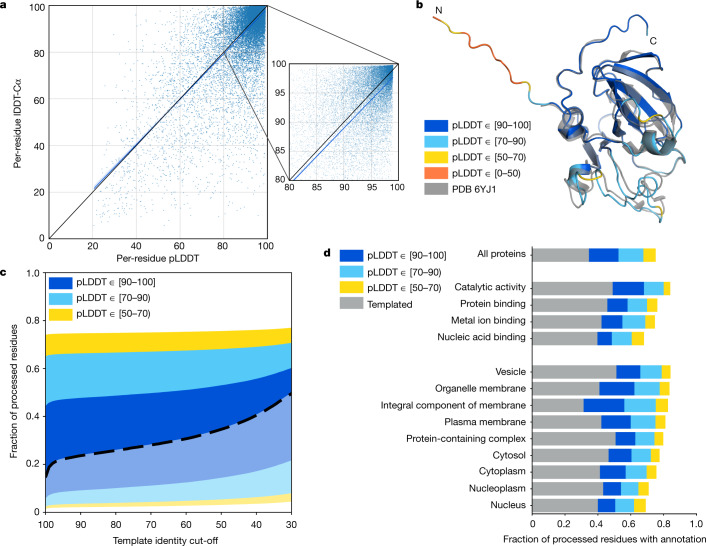
Protein structures can provide invaluable information, both for reasoning about biological processes and for enabling interventions such as structure-based drug development or targeted mutagenesis. After decades of effort, 17% of the total residues in human protein sequences are covered by an experimentally determined structure 1 . Here we markedly expand the structural coverage of the proteome by applying the state-of-the-art machine learning method, AlphaFold 2 , at a scale that covers almost the entire human proteome (98.5% of human proteins). The resulting dataset covers 58% of residues with a confident prediction, of which a subset (36% of all residues) have very high confidence. We introduce several metrics developed by building on the AlphaFold model and use them to interpret the dataset, identifying strong multi-domain predictions as well as regions that are likely to be disordered. Finally, we provide some case studies to illustrate how high-quality predictions could be used to generate biological hypotheses. We are making our predictions freely available to the community and anticipate that routine large-scale and high-accuracy structure prediction will become an important tool that will allow new questions to be addressed from a structural perspective.
Overview
CoChat Summary
TL;DR
AlphaFold2 was applied to 98.5% of human proteins, producing confident predictions for 58% of residues and very high confidence for 36% of all residues. The paper introduces pLDDT, pTM and an experimentally resolved head to interpret the dataset, presents case studies, and releases predictions freely.
Key findings
- The dataset covers 98.5% of human proteins with full-chain predictions, amounting to 10,537,122 residues (92.5% of residues); 58.0% of residues were predicted confidently (pLDDT > 70), and 35.7% of total residues fell in the highest accuracy band (pLDDT > 90), double the residues covered by experimental structures.
- At the per-protein level, 43.8% of proteins had a confident prediction on at least three quarters of their sequence, and 1,290 proteins contained a substantial region (>200 residues) with pLDDT ≥ 70 and no good template.
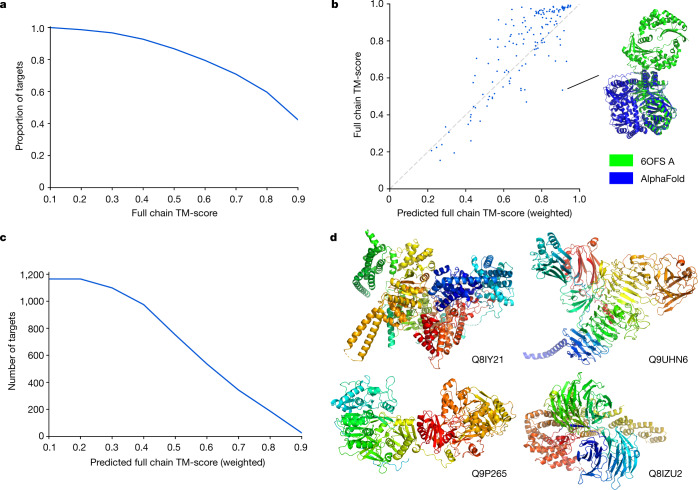
- On a held-out set of long PDB chains (n = 151), 70% of predictions had a TM-score > 0.7; pTM correlated with actual TM-score at Pearson’s r = 0.84, and among human proteins enriched for novel multidomain predictions, 187 had pTM > 0.8 and 343 had pTM > 0.7.
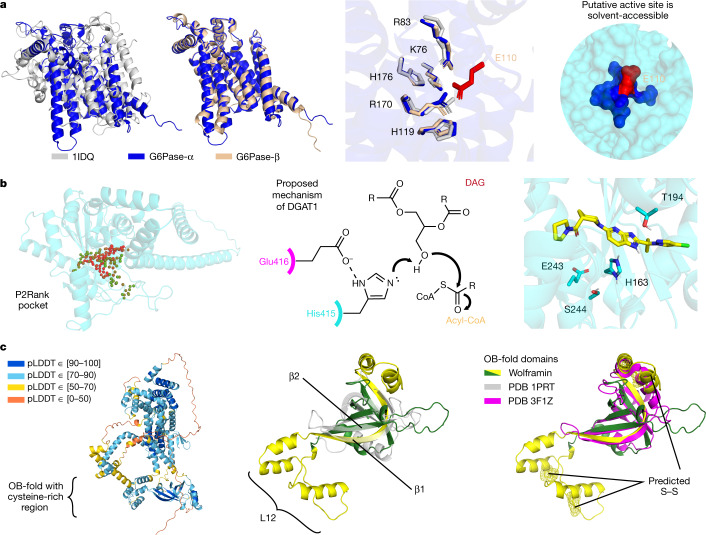
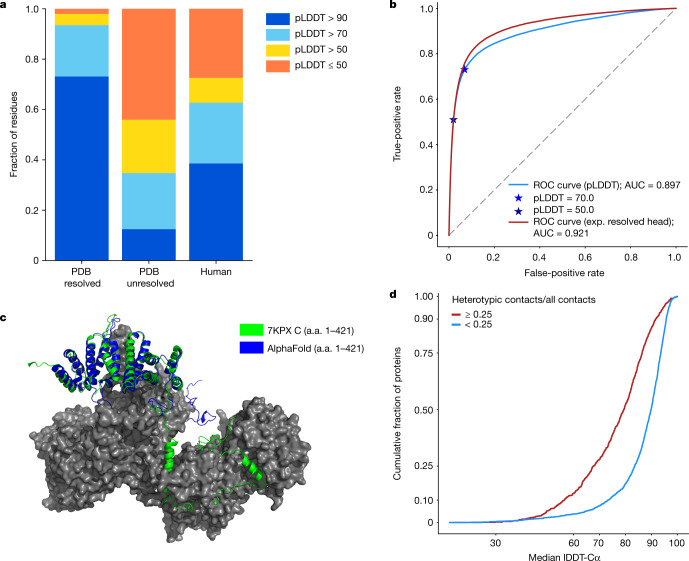
- pLDDT performed as a competitive disorder predictor on the CAID benchmark with AUC 0.897, while the experimentally resolved head achieved AUC 0.921; case studies proposed mechanistic hypotheses for G6Pase-α, DGAT2 and wolframin.
Methods
- AlphaFold2 was applied to the UniProt human reference proteome (release 2021_02), attempting all sequences of 16–2,700 amino acids and excluding residue codes B, J, O, U, Z or X; the pipeline used MSA construction, template search, inference with five models, model ranking by mean pLDDT, and constrained relaxation, with Reduced BFD and reduced ensembling.
- Evaluation used a recent PDB dataset of 12,494 chains, CAMEO targets from 21 March 2020 to 13 March 2021, and the CAID Disprot-PDB benchmark; metrics included pLDDT, pTM, the experimentally resolved head, TM-score, lDDT-Cα and AUC.
- Case-study analyses used PyMOL, P2Rank, AutoDockTools, AutoDock Vina and TM-align; inference for the human proteome used 930 GPU days, with an estimated 510 core days for other pipeline stages from scratch.
Limitations
- The paper states that low-confidence regions may reflect intrinsic disorder or regions structured only in complex, and that some proportion of proteins without confident predictions will be genuine failures where a fixed structure exists but AlphaFold does not predict it.
- The paper states that inter-domain accuracy is expected to be lower than within-domain accuracy, that some multidomain proteins may have mobile domains with no fixed packing, and that the case-study biological hypotheses require experimental confirmation.
- Evident from the text: predictions are single-chain and exclude sequences longer than 2,700 residues, so complex-dependent structure and larger proteins are not directly addressed.
Model-written summary. Check it against the paper before relying on it.
Integrity signals
Registry
Cites
Statistics
Figures
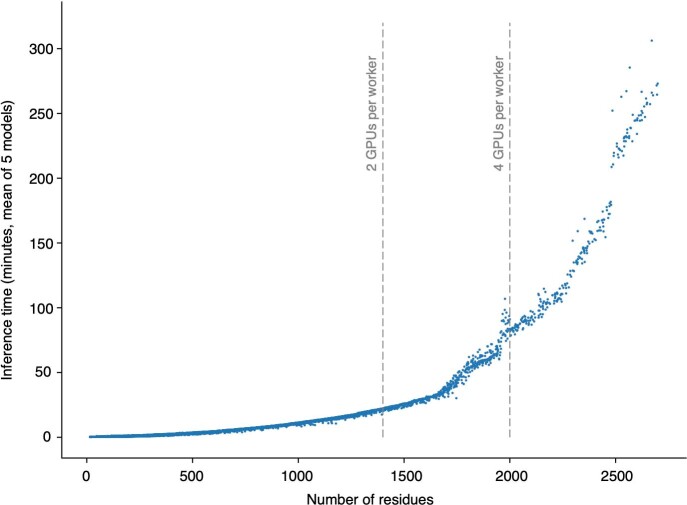
![Extended Data Fig. 7 Relationship between sequence length and run time for the non-inference stages of the pipeline. On the basis of 240 human protein sequences, chosen by stratified sampling from the length buckets: [16, 500), [500, 1,000), [1,000, 1,500), [1,500, 2,000), [2,000, 2,500) and [2,500, 2,700]. The relax plot shows five times more points, since five relaxed models are generated per protein. Coefficients for the quadratic lines of best fit were computed with Numpy polyfit.](https://figures.cochat.ai/paper-figures/c9bdcad64694429b95a292e248c7f05a/highly-accurate-protein-structure-prediction-for-the-human-proteome-figure-11.jpg)
Verification
Claims the paper makes
14 Valid · 1 Not valid · 5 Not checked · 44 Own results and interpretations
The cited sources support only part of this claim — read each source’s verdict below.
In the paper
“This system used a completely different model from our CASP13 entry31, and demonstrated a considerable improvement over previous methods in terms of providing routinely high accuracy29,30.”
§ Highly accurate protein structure prediction for the human proteome > Main
What the sources say
- Partly supportedcites [29] Kryshtafovych A Schwede T Topf M Fidelis K Moult J Critical assessment of methods of protein structure prediction (CASP)-round XIII Proteins 2019 87 1011 1020 10.1002/prot.25823 31589781 PMC6927249 sourceExperimental — accuracy not yet measured
The PROGRESS IN CASP13 section reports a dramatic improvement in model accuracy over earlier CASP rounds, and TEMPLATE FREE MODELING says DeepMind’s A7D group had the most accurate results overall. Those passages concern CASP13 methods, not the different system in the citing sentence; they do not establish that AlphaFold2 routinely achieved high accuracy. (LLM, conf=0.84)
- Supportedcites [30] Pereira, J. et al. High-accuracy protein structure prediction in CASP14. Proteins10.1002/prot.26171 (2021). 34218458 source
The Abstract reports a large leap in high accuracy due to AF2. The Conclusions say AF2 substantially outperformed its predecessor and produced the best models for 89 of 97 CASP14 targets, supporting both the improvement and its routine high accuracy. (LLM, conf=0.94)
boostedstates a cause- Asserted: passes — The authors put it forward as true.
- Checkable: passes — It can be checked against evidence.
- Load-bearing: passes — The paper’s conclusions depend on it.
- Based: passes — The paper gives a reason why it holds.
- Partly supported
Every source the paper cites for this claim was checked and supports it.
In the paper
“We note that the accuracy of AlphaFold was validated in CASP142, which focuses on challenging proteins that are dissimilar to structures already available in the PDB.”
§ Highly accurate protein structure prediction for the human proteome > Model confidence and added coverage
What the sources say
- Supportedcites [2] Jumper, J. et al. Highly accurate protein structure prediction with AlphaFold. Nature10.1038/s41586-021-03819-2 (2021). PMC8371605 34265844 source
The paper’s CASP14 assessment passage (section and page not provided in our copy) says AlphaFold was entered into CASP14, describes it as a blind accuracy assessment, and reports that AlphaFold’s structures were substantially more accurate than competing methods. This supports the attributed claim that its accuracy was validated in CASP14. (LLM, conf=0.94)
plain- Asserted: passes — The authors put it forward as true.
- Checkable: passes — It can be checked against evidence.
- Load-bearing: unclear — It is unclear whether the paper’s conclusions depend on it.
- Based: passes — The paper gives a reason why it holds.
- Supported
The cited sources support only part of this claim — read each source’s verdict below.
In the paper
“Despite being the most similar chain, 3F1Z lacks the cysteines that are present in wolframin, which could form disulfide cross-links in the endoplasmic reticulum59.”
§ Highly accurate protein structure prediction for the human proteome > Highlighted predictions > Wolframin
What the sources say
- Partly supportedcites [59] Fass D Thorpe C Chemistry and enzymology of disulfide cross-linking in proteins Chem. Rev. 2018 118 1169 1198 10.1021/acs.chemrev.7b00123 28699750 PMC5808910 sourceExperimental — accuracy not yet measured
Section 2, “Which Proteins Contain Disulfides” (page unavailable), says that proteins in or passing through the ER can have cysteines positioned to form disulfide bonds. It does not address wolframin, 3F1Z, or whether their cysteine residues differ, so it supports only the general possibility of ER disulfide cross-linking. (LLM, conf=0.86)
hedged- Asserted: passes — The authors put it forward as true.
- Checkable: passes — It can be checked against evidence.
- Load-bearing: unclear — It is unclear whether the paper’s conclusions depend on it.
- Based: passes — The paper gives a reason why it holds.
- Partly supported
The sources with a verdict support this claim; the rest weren’t checked yet, have no full text we could read, or their verdicts aren’t rated yet.
In the paper
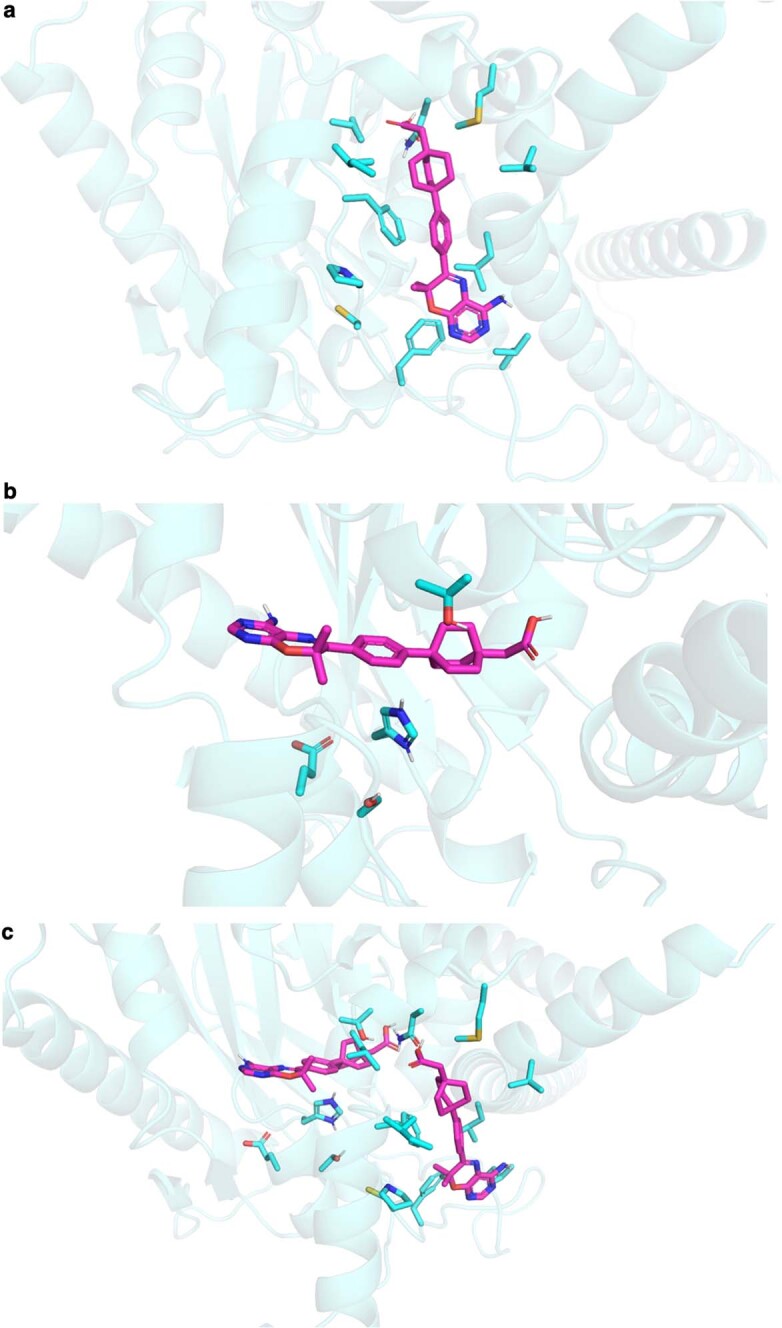
“Comparing our prediction for this region (median pLDDT of 86.0) to existing PDB chains using TM-align42,57 identified 3F1Z58 as the most similar known chain (TM-score of 0.472) (Fig. 3c, magenta).”
§ Highly accurate protein structure prediction for the human proteome > Highlighted predictions > Wolframin
What the sources say
- Not checked — no full text of the sourcecites [42] Zhang Y Skolnick J Scoring function for automated assessment of protein structure template quality Proteins 2004 57 702 710 10.1002/prot.20264 15476259 source
- Supportedcites [57] Zhang Y Skolnick J TM-align: a protein structure alignment algorithm based on the TM-score Nucleic Acids Res. 2005 33 2302 2309 10.1093/nar/gki524 15849316 PMC1084323 source
The citation is attached to “using TM-align,” identifying the method used by the citing authors, not attributing their 3F1Z match or TM-score to this source. The source’s Results (Benchmark test; page unavailable) describes TM-align as a tool for comparing protein structures and reporting TM-scores. (LLM, conf=0.93)
- Supportedcites [58] Das D The structure of KPN03535 (gi|152972051), a novel putative lipoprotein from Klebsiella pneumoniae, reveals an OB-fold Acta Crystallogr. F 2010 66 1254 1260 10.1107/S1744309109018168 PMC2954213 20944219 source
The citation is attached to 3F1Z, identifying the PDB chain used in the citing authors’ comparison. The source paper’s Materials and methods section states that its KPN03535 structure was deposited under accession code 3f1z; the pLDDT and TM-score describe the citing authors’ own analysis, not a result attributed to this source. (LLM, conf=0.93)
plainstates an association- Asserted: passes — The authors put it forward as true.
- Checkable: passes — It can be checked against evidence.
- Load-bearing: unclear — It is unclear whether the paper’s conclusions depend on it.
- Based: passes — The paper gives a reason why it holds.
Every source the paper cites for this claim was checked and supports it.
In the paper
“A recent evolutionary analysis suggested domains for wolframin, which our prediction largely supports55.”
§ Highly accurate protein structure prediction for the human proteome > Highlighted predictions > Wolframin
What the sources say
- Supportedcites [55] Schäffer DE Iyer LM Burroughs AM Aravind L Functional innovation in the evolution of the calcium-dependent system of the eukaryotic endoplasmic reticulum Front. Genet. 2020 11 34 10.3389/fgene.2020.00034 32117448 PMC7016017 source
The Results section, “Domain Architectural Anatomy and Functional Analysis of the Wolframin Protein,” reports the paper’s proposed domain assignments for wolframin, including Sel1-like repeats, an EF-hand region, and an OB-fold domain (Figure 4A). The citing authors’ statement that their own prediction largely supports those assignments is not a finding attributed to this source. (LLM, conf=0.93)
plainstates an association- Asserted: passes — The authors put it forward as true.
- Checkable: passes — It can be checked against evidence.
- Load-bearing: unclear — It is unclear whether the paper’s conclusions depend on it.
- Based: passes — The paper gives a reason why it holds.
- Supported
36 more claims · 4 with their cited sources checked
Create a free account to see all 64 claims and every source verdict.
- It may state two separate claims as one. 13
- Probably not a substantial claim. 12
Claims other papers make about this one
Each is checked against this paper’s own text: does it say what the citing paper says it does?
The source backs part of the claim, not all of it — or backs it for a different population, condition or comparison.
In the citing paper
“While AF2 performs exceptionally well on these types of folds on average”
From The power and pitfalls of AlphaFold2 for structure prediction beyond rigid globular proteins (2024) · cites this paper as [5]
Experimental — accuracy not yet measuredThe source backs part of the claim, not all of it — or backs it for a different population, condition or comparison.
In the citing paper
“For the majority of globular proteins, AF2 provides accurate, reliable models with high pLDDT (> 70) or low PAE values (< 5 Å) highlighting confidence in the prediction of the position of the atomic coordinates, which match experimentally determined native structures5,17,23,59”
From The power and pitfalls of AlphaFold2 for structure prediction beyond rigid globular proteins (2024) · cites this paper as [5]
Experimental — accuracy not yet measuredThe source backs part of the claim, not all of it — or backs it for a different population, condition or comparison.
In the citing paper
“The lower confidence bands appear to correlate well with backbone flexibility and intrinsic disorder (13) (Figure 2).”
From AlphaFold Protein Structure Database: massively expanding the structural coverage of protein-sequence space with high-accuracy models (2022) · cites this paper as [13]
Experimental — accuracy not yet measuredThe source backs part of the claim, not all of it — or backs it for a different population, condition or comparison.
In the citing paper
“One of the major insights leveraged by AlphaFold 1,2 comes from the use of evolutionary covariations that can be extracted from large-scale multiple sequence alignments.[49][50][51][52][53][54]”
From AlphaFold and Implications for Intrinsically Disordered Proteins (2021) · cites this paper as [2]
Experimental — accuracy not yet measuredThe source backs part of the claim, not all of it — or backs it for a different population, condition or comparison.
In the citing paper
“DeepMind’s AlphaFold2 success in sequence-based protein structure prediction,4 as well as the RoseTTAFold70 open-source counterpart, and the publicly available AlphaFold2 prediction of all human proteins203 are major steps that benefit the scientific community.”
From AlphaFold, Artificial Intelligence (AI), and Allostery (2022) · cites this paper as [203]
Experimental — accuracy not yet measured
16 more claims about this paper
Create a free account to see every claim other papers make about this one.
Citations
Cites
Highly accurate protein structure prediction with AlphaFold
Jumper, J., Evans, R., Pritzel, A., Green, T., Figurnov, M., Ronneberger, O., Tunyasuvunakool, K., Bates, R., Žídek, A., Potapenko, A., et al. (2021) · Nature · doi:10.1038/s41586-021-03819-2 · Cited by 43,764 · cited 1×
“[16, 500), [500, 1,000), [1,000, 1,500), [1,500, 2,000), [2,000, 2,500) and [2,500, 2,700].”
Self-citationGene Ontology: tool for the unification of biology
Ashburner, M., Ball, C. A., Blake, J. A., Botstein, D., Butler, H., Cherry, J. M., Davis, A. P., Dolinski, K., Dwight, S. S., Eppig, J. T., et al. (2000) · Nature Genetics · doi:10.1038/75556 · Cited by 43,206
Trott, O., & Olson, A. J. (2010) · Journal of Computational Chemistry · doi:10.1002/jcc.21334 · Cited by 38,412
AutoDock4 and AutoDockTools4: Automated docking with selective receptor flexibility
Morris, G. M., Huey, R., Lindstrom, W., Sanner, M. F., Belew, R. K., Goodsell, D. S., & Olson, A. J. (2009) · Journal of Computational Chemistry · doi:10.1002/jcc.21256 · Cited by 25,486
Initial sequencing and analysis of the human genome
International Human Genome Sequencing Consortium, Whitehead Institute for Biomedical Research, C. F. G. R., Lander, E. S., Linton, L. M., Birren, B., Nusbaum, C., Zody, M. C., Baldwin, J., Devon, K., Dewar, K., et al. (2001) · Nature · doi:10.1038/35057062 · Cited by 24,216
Self-citationThe sequence of the human genome
Venter, J. C., Adams, M. D., Myers, E. W., Li, P. W., Mural, R. J., Sutton, G. G., Smith, H. O., Yandell, M., Evans, C. A., Holt, R. A., et al. (2001) · Science · doi:10.1126/science.1058040 · Cited by 13,909
SWISS-MODEL: homology modelling of protein structures and complexes
Waterhouse, A., Bertoni, M., Bienert, S., Studer, G., Tauriello, G., Gumienny, R., Heer, F. T., de Beer, T. A. P., Rempfer, C., Bordoli, L., et al. (2018) · Nucleic Acids Research · doi:10.1093/nar/gky427 · Cited by 13,067
Pfam: The protein families database in 2021
Mistry, J., Chuguransky, S., Williams, L., Qureshi, M., Salazar, G. A., Sonnhammer, E. L. L., Tosatto, S. C. E., Paladin, L., Raj, S., Richardson, L. J., et al. (2021) · Nucleic Acids Research · doi:10.1093/nar/gkaa913 · Cited by 7,452
Self-citationUniProt: the universal protein knowledgebase in 2021
The UniProt Consortium, Bateman, A., Martin, M.-J., Orchard, S., Magrane, M., Agivetova, R., Ahmad, S., Alpi, E., Bowler-Barnett, E. H., Britto, R., et al. (2021) · Nucleic Acids Research · doi:10.1093/nar/gkaa1100 · Cited by 6,372
Self-citationThe Gene Ontology Resource: 20 years and still GOing strong
The Gene Ontology Consortium (2019) · Nucleic Acids Research · doi:10.1093/nar/gky1055 · Cited by 4,747
Cited by
Items 3,101–3,200 of 3,208
Racha, V., Sinha, A., Chengalvala, A., Gupta, J., Nalla, S., Bhamidipati, P., Yedla, P., & Amanchy, R. (2026) · Computers in Biology and Medicine · doi:10.1016/j.compbiomed.2026.111827
Gu, Y., Jiang, L., Qi, C., Lei, J., Li, J., Bai, B., & Jiang, X. P. (2026) · Journal of Ethnopharmacology · doi:10.1016/j.jep.2026.122111 · Cited by 1
Xiao, X., Wan, X., Lu, H. J., Cheng, W., Liu, J., Jiang, H. B., Yao, Z., Chen, F. N., Yang, J., Er, L., et al. (2026) · Synthetic and Systems Biotechnology · doi:10.1016/j.synbio.2026.04.017
“The ArarCARS protein structure was predicted with AlphaFold2 [34].”
Molina-Mora, J. A., & Kant, R. (2026) · Pathogens · doi:10.3390/pathogens15070665
Binding-induced folding of intrinsically disordered peptides
Heyden, M., & Maiti, S. (2026) · Elsevier eBooks · doi:10.1016/b978-0-443-30042-4.00008-0
Deciphering protein mutation-phenotype linkages from CRISPR-based tiling mutagenesis screens
He, W., Huang, J., Wang, Y., Hayward, S. B., Leuzzi, G., Fu, R., Wang, S., Vaitsiankova, A., Chen, Y., Bedford, M. T., et al. (2026) · Cell Systems · doi:10.1016/j.cels.2026.101651
G protein–coupled receptors: An introductory laboratory class
Dumitru, I., Halaicu, A.-M., & Bondar, A. (2026) · Elsevier eBooks · doi:10.1016/b978-0-443-30042-4.00007-9
The role of the WD40-repeat protein family in cancer
李家乐, Zhou, H., Luo, Q., Wu, D., Lin, M., Mai, G., Xu, X., He, Y., Liu, Y., Wang, J., et al. (2026) · Molecular Cancer · doi:10.1186/s12943-026-02718-2
“…the structural coverage of the human proteome and provides a practical starting point for annotating poorly characterized WD40 β-propellers, predicting blade organization, and identifying candidate pockets, rim-loop interfaces, or partner-binding surfaces for experimental validation [392, 393].”
Plant-derived L-asparaginases: Comprehensive functional and biological characterization
Mazurek, Z., Ściuk, A., Pieróg, I., Janicki, M., Surmiak, M., & Loch, J. I. (2026) · International Journal of Biological Macromolecules · doi:10.1016/j.ijbiomac.2026.153243
Ni, Y.-C., Chen, Y., Hsiao, W.-P., Huang, T., Cheng, C.-H., Wang, W., & Lee, K. (2026) · Research Square · doi:10.21203/rs.3.rs-8957808/v1
Balancing under constraint: Structural insights into norovirus evolution and antigenic innovation
Chen, Y., Wang, X.-Z., Tan, Y.-Y., & Yu, J. (2026) · PLoS Pathogens · doi:10.1371/journal.ppat.1014383
Function-guided design of active enzymesPreprint
Hu, M., Wu, L., Yang, Y., Li, F., & Zhu, L. (2026) · bioRxiv (Cold Spring Harbor Laboratory) · doi:10.64898/2026.06.27.735025
Accelerated De-Novo Generation of Protein Ligand Molecules With Generative Transformers
Nath, S., Acharya, A., & Datta, D. (2026) · Advances in computational intelligence and robotics book series · doi:10.4018/979-8-3373-7016-3.ch004
Wang, Y., Yin, Z., Yan, S., et al. (2026) · Journal of Hazardous Materials · doi:10.1016/j.jhazmat.2026.142889
AI-Driven Protein Research: From Prediction to Design
Min, G., & Peng, H. (2026) · Methods in molecular biology · doi:10.1007/978-1-0716-5249-7_13 · Cited by 1
Drugging the proteome via large-scale chemoproteomics
Li, Y., Wang, J., Wang, T., 柯细松, & 曲翊 (2026) · Trends in Biochemical Sciences · doi:10.1016/j.tibs.2026.06.005
57Chapter 4 AI-Enhanced Drug Discovery and Development
Verma, P., Duhan, P., Bansal, P., Verma, K. S., Mohan, N., & Kumar, P. (2026) · De Gruyter eBooks · doi:10.1515/9783112214275-004
Ros-Lucas, A., Martínez-Peinado, N., Gabaldón-Figueira, J. C., Morillo-Osorio, M., Ballart, C., Gállego, M., Pinazo, M., Gascón, J., Requena‐Méndez, A., & Alonso-Padilla, J. (2026) · Pharmaceuticals · doi:10.3390/ph19071046
“In addition, pockets were filtered to have at least a mean pLDDT score of 70 (a threshold reported to ensure reliable backbone prediction) [71] and a maximum mean PAE of 5 to exclude artificial pockets caused by incorrect inter-domain orientations [15].”
Ramasamy, P., Tichshenko, N., Díaz, A., Velghe, K., Massignani, E., Vranken, W., & Martens, L. (2026) · bioRxiv · doi:10.64898/2026.07.03.736340
“It further bridges experimental and predicted structural information by integrating both experimentally determined PDB structures 22 and AlphaFold models 18,19 , enabling proteome-wide structural contextualization of phosphosites while remaining transparent about data origin and limitations.”
Exercise suppresses IP6K3 to modulate BCAA metabolism and ferroptosis in MASLD
Li, Z., Xu, F.-F., Zhao, Y., Shen, C.-R., Song, X. L., Xu, Y.-P., Guo, H., Fu, J., Tao, X.-Y., Ren, J. T., et al. (2026) · Cellular & Molecular Biology Letters · doi:10.1186/s11658-026-00981-1 · Cited by 1
AF ‐ CALVADOS : AlphaFold ‐guided simulations of multi‐domain proteins at the proteome level
von Bülow, S., Johansson, K. E., & Lindorff‐Larsen, K. (2026) · Protein Science · doi:10.1002/pro.70694 · Cited by 25
Muto, N., Koshizawa, T., Takeda, M., Hu, X. S., Inoue, R., Yohda, M., Matsunami, H., & Fukutani, Y. (2026) · Journal of Biological Chemistry · doi:10.1016/j.jbc.2026.113319
“The 3D structure data of OR51E2 (PDB: 8F76) were downloaded from PDB, OR51E1 and Or8w1 were down-loaded from the AlphaFold2 database (https://alphafold.ebi. ac.uk/, downloaded 07/17/2022) (42).”
Advancing In Silico Drug Design with Bayesian Refinement of AlphaFold Models
Sen, S., Hoff, S., Morozova, T. I., Schnapka, V., & Bonomi, M. (2026) · Journal of Chemical Theory and Computation · doi:10.1021/acs.jctc.6c00868 · Cited by 7
Gao, R., Zhao, C., Wang, L., et al. (2026) · Journal of Agricultural and Food Chemistry · doi:10.1021/acs.jafc.6c02245
Dooda, M. K., Potapova, A., Piepoli, S., Vinogradov, E. V., Yildiz, F. H., & Troutman, J. M. (2026) · mBio · doi:10.1128/mbio.01096-26
“Sequence analysis of the vps gene clusters identified four candidate glycosyltransferases, VpsD, VpsI, VpsK, and VpsL, one of which we suspected would function as the initiating PGT. Structural prediction using AlphaFold (22–24) (Fig.”
InfluentialNovel biopharmaceutical strategies: Fc-fusion protein technology
Ding, X.-Y., Fan, H.-L., Zhang, C., Wei, M.-X., Lin, Z.-Z., Bai, C.-J., Wang, M. M., & Zhou, H. (2026) · Frontiers in Pharmacology · doi:10.3389/fphar.2026.1853458
“In addition to the aforementioned merits, the existing limitations of AI-assisted design remain significant (Jumper et al., 2021; Abramson et al., 2024; Tunyasuvunakool et al., 2021).”
Kawasaki, J., Sugahara, J., & Ashida, H. (2026) · Carbohydrate Research · doi:10.1016/j.carres.2026.110048
The evolutionary processes of bacterial aromatic polyketide ketosynthasesPreprint
Wang, X., Gao, Q., Ge, L., et al. (2026) · bioRxiv (Cold Spring Harbor Laboratory) · doi:10.64898/2026.07.16.738910
“The structures of KS and CLF proteins were predicted using the AlphaFold Protein Structure Database server [16].”
Feuerharmel, F., da Silva, R. B., Schneider, P. H., Ligabue‐Braun, R., Schneider, J. M. F. M., & Barros, H. M. T. (2026) · Pharmacology Biochemistry and Behavior · doi:10.1016/j.pbb.2026.174244
Pantiora, P. D., Georgakis, N., Matiadis, D., Sagnou, M., & Labrou, N. E. (2026) · Pharmaceuticals · doi:10.3390/ph19071106
“AlphaFold2 model quality was evaluated from the per-residue pLDDT traces, using the standard interpretation that pLDDT ≥ 90 indicates high accuracy, 70–90 indicates confident backbone placement, and 70 indicates flexible/low-confidence regions [70].”
From Codons to Protein Structure: Evolutionary Constraints of Mitochondrial Proteins in Corvides
Xiao, Y., Zhang, M., Xi, M., Han, S., Yang, J., Peng, H., Ge, W., Dai, C., Yang, L., & Kan, X. (2026) · Biology · doi:10.3390/biology15141190
“For each protein, the top-ranked model based on the predicted local distance difference test (pLDDT) score was selected [51].”
Proteo-genomics-guided interpretation of somatic mutations in cancer genomes
Hyeon, D. Y., Zhou, Y., Chung, W. K., & Dietlein, F. (2026) · Cancer Cell · doi:10.1016/j.ccell.2026.07.017 · Cited by 1
Prioritizing neuroactive ligands using motif-guided virtual discovery and zebrafish profiling
Ginsparg, A. B., Martinez, J. A., Patel, I. U., Buton, A., Lee, L., Sarwar, R., Moretti, R., Puig, S., & Thyme, S. B. (2026) · npj Drug Discovery. · doi:10.1038/s44386-026-00058-1 · Cited by 1
“If integrated with REAL-M, using AlphaFold2 models as starting points for discovery 55 would make over one-third of the human proteome accessible to virtual drug screening 56 .”
de Brevern, A. G. (2026) · International Journal of Molecular Sciences · doi:10.3390/ijms27146472
Liu, C., Liang, S., Jiao, J., et al. (2026) · The Journal of Physical Chemistry B · doi:10.1021/acs.jpcb.6c01900
Explainable AI reveals the allosteric blind spot in protein-ligand binding predictions
Parikh, V., Foley, B., Gatlin, W., Ludwick, M., Turano, L., & Verkhivker, G. M. (2026) · Cell Reports Physical Science · doi:10.1016/j.xcrp.2026.103448 · Cited by 1
“5 This revolution began with AlphaFold2 near-experimental protein structure prediction, 1,2 extending to multi-chain complexes, 6 sequence-based protein language models (PLMs) ESMFold 7,8 and RoseTTAFold2, 9,10 and generative design frameworks.”
Molecular mechanism of the pH-dependent dual catalytic activity of MaUGT84R1 from Morus alba
Gong, J., Zeng, W., Wu, Z., et al. (2026) · Plant Physiology and Biochemistry · doi:10.1016/j.plaphy.2026.111582
Self-citationModha, N., Panday, S. K., & Alexov, E. (2026) · Biophysical Journal · doi:10.1016/j.bpj.2026.07.023 · Cited by 1
In vitro selection of VNAR antibodies using bioinformatics-based library design and cDNA display
Anzai, H., Terai, T., Mitsuyama, S., Matsunaga, R., Tamagawa, K., Yamaguchi, I., Silva, D. P. N. D., Kuraku, S., Tsumoto, K., Campbell, R. E., et al. (2026) · Biotechnology Reports · doi:10.1016/j.btre.2026.e00975
“The DNA library used for model selection was designed based on sequence logo plots, with ambiguous residues resolved using VNAR sequence data published by Zielonka et al., followed by structural predictions using AlphaFold2 and AlphaFold3 [40,44,45].”
Su, T. T., He, J., Wang, Y., Huang, J., Huang, B., Nassar, A. F., Willen, L., Eslami, M., Wu, C., Huang, M., et al. (2026) · Immunity · doi:10.1016/j.immuni.2026.07.005
Matyszczak, G. (2026) · International Journal of Molecular Sciences · doi:10.3390/ijms27156839 · Cited by 1
“…proved its advantage over such methods by successfully predicting the structures of c.a. 98.5% of proteins present in the human proteome, including intrinsically disordered proteins and regions, in the 14th Critical Assessment of protein Structure Prediction (CASP14) (see Figure 25a) [151,152,154].”
InfluentialYu, W., Liu, F., Guo, Q., Ouyang, B., Zhuo, Y., Liu, Y., Liu, S., He, C., Zhu, X., Li, L., et al. (2026) · Journal of Agricultural and Food Chemistry · doi:10.1021/acs.jafc.6c06773 · Cited by 1
Recent advances in protein aggregation research and future outlook
Bakshi, B. S., Hargunani, R., Santosh, J. A., Patil, V., & Kotnis, A. L. (2026) · Elsevier eBooks · doi:10.1016/b978-0-443-36636-9.00012-5
Past achievements and future perspectives of personalized vaccines and the role of dendritic cells
Larijani, M. S., Bavand, A., Moradi, L., & Ramezani, A. (2026) · Immunologic Research · doi:10.1007/s12026-026-09812-z
Synthetic Biology Tools for Marine Actinobacteria
Yaqub, M. O., Arugonda, R., Jain, A., & Edison, L. K. (2026) · Springer eBooks · doi:10.1007/978-981-95-9849-6_16
Yoon, H., Han, R., Kim, J.-W., & Lee, Y. (2026) · Briefings in Bioinformatics · doi:10.1093/bib/bbag421 · Cited by 1
“Recent AI-based models, including AlphaFold [ 42, 43] and RoseTTAFold [ 44], have transformed this field by using evolutionary and structural data to predict protein structures with near-experimental accuracy for many targets.”
The Rosa roxburghii genome provides insights into triterpenoid metabolism
Zhang, H., Wang, Y., Li, M.-J., Guo, L.-N., Li, T., Wu, Y., Zhu, Y., Jin, L., & Zheng, H. (2026) · Plant Physiology and Biochemistry · doi:10.1016/j.plaphy.2026.111620
Hybrid artificial intelligence and quantum annealing as an optimization layer in drug discovery
Ou, C., Liao, J.-C., Huang, C., & Lee, O. K. (2026) · Patterns · doi:10.1016/j.patter.2026.101634
“27,28 These advances have enabled rapid in silico exploration of sequence variants and functional motifs relevant to enzyme engineering and therapeutic protein design.”
Rhobot-Screen: an integrated robotic platform for functional screening of rhodopsin variants
Nagata, T., Konno, M., Hashimoto, D. R., & Inoue, K. (2026) · BMC Biology · doi:10.1186/s12915-026-02691-8
“…major progress has been achieved in protein structure prediction from amino acid sequences through ML, as exemplified by AlphaFold and related models, largely driven by the availability of extensive and high-quality structural datasets such as those accumulated in the Protein Data Bank [4–8].”
Alavi, S. M. A., Borgonovo, F., Pourghazi, F., Tande, A. J., Berbari, E. F., & O’Horo, J. C. (2026) · Clinical Microbiology and Infection · doi:10.1016/j.cmi.2026.07.052 · Cited by 1
Zhang, J., Xiao, B., Wang, Z., & Li, X. (2026) · Molecular Genetics and Metabolism Reports · doi:10.1016/j.ymgmr.2026.101347
“Recent advances in artificial intelligence (AI) and machine learning have improved protein structure modeling and the prediction of the effects of amino acid substitutions [16,17].”
Fagbohun, O. F., Olawoye, B. T., Oriyomi, O. V., McDougle, X., Iragena, O., Kellenbarger, R., Joseph, J. S., Fadare, O., & Kincaid, R. (2026) · International Journal of Biological Macromolecules · doi:10.1016/j.ijbiomac.2026.153947
Deep Learning for Protein Structure Prediction: From AlphaFold to the Next Frontier
Shiwach, E., & Kumar, S. (2026) · Applied Science and Biotechnology Journal for Advanced Research · doi:10.31033/abjar/5.3.2026.122
Li, X., Li, Y.-L., Liu, W., Qi, J., & Zhu, J. (2026) · International Journal of Molecular Sciences · doi:10.3390/ijms27167191
Wang, Y., Xie, Y., Meng, S., et al. (2026) · Biochemical and Biophysical Research Communications · doi:10.1016/j.bbrc.2026.154445
Efficient experimental characterization of the GPCRome via deep receptor scanning
Tedman, A., Goel, M., Shah, S., Howard, M., Chamness, L. M., Bonifasi, A., Adams, I., Gallagher, J. M., Penn, W. D., Nemec, K., et al. (2026) · Nature Communications · doi:10.1038/s41467-026-76564-7 · Cited by 6
“Structural descriptors of canonical receptors were derived from structural models contained within the AlphaFold Protein Structure Database (https://alphafold.ebi.ac.uk/) 54 .”
Perspectives on Hybridizing Quantum Mechanics and Artificial Intelligence for Drug Design
Heifetz, A., Pillai, G. G., Quareshy, M., Jain, T., Birch, L., & Smith, C. S. (2026) · Methods in molecular biology · doi:10.1007/978-1-0716-5420-0_2
Metabolic Engineering of Komagataella Phaffii for de Novo Synthesis of Retinol From Methanol
Wu, Y., Liu, C., Liang, S., Jiang, Y., Zhang, X., Zhou, Y., & Lin, Y. (2026) · Biotechnology Journal · doi:10.1002/biot.70288
“The transporter structures used for molecular docking were predicted from the AlphaFold protein structure database [31].”
Li, H., Xu, J., Dong, Q., et al. (2026) · Entomologia Experimentalis et Applicata · doi:10.1111/eea.70181
Bettoni, L., Dmitrieva, J., Mousa, M., AlSafar, H. S., Saeys, Y., Zakeri, P., Veiga, N., & Carmeliet, P. (2026) · bioRxiv (Cold Spring Harbor Laboratory) · doi:10.64898/2026.08.23.746493
“It demonstrated a high accuracy in its predictions, notably through several predictions challenges over the last years, leading to a diversification of its applications over time, such as on a whole proteome [34] for instance.”
Wu, H., Deng, Y., Li, Z., Qi, M., Wei, Y., Zhuo, L., Zou, Q., & Zhang, W. (2026) · Interdisciplinary Sciences Computational Life Sciences · doi:10.1007/s12539-026-00863-2
Cannabinoid tolerance relies on CB 1 receptor ubiquitination by NEDD4L
Álvaro-Blázquez, A., Rodrigues, R. S., Montero-Fernández, C., Isasa, M., Cannich, A., Gisquet, D., Rodríguez‐Crespo, I., Bellocchio, L., Marsicano, G., Costas‐Insua, C., et al. (2026) · Proceedings of the National Academy of Sciences · doi:10.1073/pnas.2606671123
AI-driven drug design: a comprehensive review
Dong, Z., Shou, B., Chen, J., Fang, H., Wu, S., Zhang, Y., Wang, C., Sun, G., & Wan, Y. (2026) · Journal of Computer-Aided Molecular Design · doi:10.1007/s10822-026-00923-1
“However, models such as AlphaFold2 (AF2) [136], RoseT-TAFold, and the recently released AlphaFold3 (AF3) have brought new breakthroughs.”
AI-powered medicinal chemistry and translational drug development
Kaicheng, U., Zhang, S. M., Yu, Z., Zhang, Z., Zhang, J., He, C., Liu, A., Chen, R., Wang, S., Yan, L., et al. (2026) · Chemical Society Reviews · doi:10.1039/d5cs01469g · Cited by 1
Shoaib, M., & Waqas, A. (2026) · bioRxiv (Cold Spring Harbor Laboratory) · doi:10.64898/2026.08.26.747234
Niazi, S. K. (2026) · Cells · doi:10.3390/cells15171560
“Its performance is evaluated through concordance with experimental coordinate data and interaction benchmarks, and extensive databases of predicted structures significantly enhance structural coverage across proteomes [74,75].”
AI-enabled fungal biomanufacturing: from genome mining to the artificial intelligence virtual cell
Wang, Z., Chen, X., Gu, S., 王佩琦, Li, J., Zhou, S., & Zhang, S. (2026) · Mycology: An International Journal on Fungal Biology · doi:10.1080/21501203.2026.2716430
“Structural information can then be combined with molecular docking and active site analysis to infer substrate specificity and catalytic mechanisms (Tunyasuvunakool et al. 2021).”
Zhao, Y., Hu, Y., Zhang, S.-R., Yang, Y., Li, J.-F., Yao, R.-J., Feng, X.-Y., Zhang, W., Sun, Y., Sun, J., et al. (2026) · Pharmacological Research · doi:10.1016/j.phrs.2026.108423
Perry, A., & Cameron, C. D. (2026) · Cambridge University Press eBooks · doi:10.1017/9781009639057.002
Models Match or Surpass Objective Human Performance on Various Tasks
Goldstein, A., & Stanovsky, G. (2026) · Cambridge University Press eBooks · doi:10.1017/9781009639057.006
Lan, Y., Zou, S., & Wang, X. (2026) · Translational Oncology · doi:10.1016/j.tranon.2026.103021
Application of emerging technologies in the antiviral field
Zhang, X., Zhang, L., Guo, T., Du, W., Wang, S., & Li, Y. (2026) · Antiviral Research · doi:10.1016/j.antiviral.2026.106529
Richards, D. M., Zhai, F., Li, S., & Yu, Q. (2026) · Journal of Proteome Research · doi:10.1021/acs.jproteome.6c00125 · Cited by 1
Rhomboid protease Rhbdl2 influences macrophage recruitment and wound repair in zebrafish
Gourkanti, S., Ramakrishnan, G., Cheung, J., Schoen, T. J., Munoz, Y., Chavez, R. M., Dohnálek, J., Martin, K., Lovett-Barron, M., Whisenant, T. C., et al. (2026) · The Journal of Cell Biology · doi:10.1083/jcb.202602106 · Cited by 2
Almalki, B., & Liao, L. (2026) · Computational Biology and Chemistry · doi:10.1016/j.compbiolchem.2026.109402
Shiammala, P. N., Ramarajan, B. L., Sivakumar, R., & Jayaprakashvel, M. (2026) · Advances in protein chemistry and structural biology · doi:10.1016/bs.apcsb.2026.08.004
Closing the Empirical Loop: Autonomous AI Agents Conduct End‐to‐end Research With Human Participants
Wehr, G., Rideaux, R., Fox, A. J., Lightfoot, D. R., Tangen, J. M., Mattingley, J. B., & Ehrhardt, S. E. (2026) · Advanced Science · doi:10.1002/advs.76675
Cramer, N. A., Brangulis, K., Mann, S. N., et al. (2026) · Infection and Immunity · doi:10.1128/iai.00167-26
Nonaka, Y., Tamai, E., Sekiya, H., & Kamitori, S. (2026) · FEBS Journal · doi:10.1111/febs.70722
Gao, B., Xiao, M., Mao, C.-L., & Liu, J. (2026) · Frontiers in Plant Science · doi:10.3389/fpls.2026.1959829 · Cited by 1
“To address this gap, AlphaFold2 (AF2) was used to predict its structure, which was then compared with the crystal structures of bovine and mouse DHX36 (Tunyasuvunakool et al., 2021; Wayment-Steele et al., 2024).”
Pannu, J. S., Green, K., & Vedanayagam, J. (2026) · bioRxiv (Cold Spring Harbor Laboratory) · doi:10.64898/2026.09.11.750891
Dark proteome and emerging technologies for functional characterization and drug discovery
Haque, M. A., Kim, J.-J., & Danishuddin (2026) · Drug Discovery Today · doi:10.1016/j.drudis.2026.104806
Big data enabled discovery in bioinformatics and structural biology
Ansari, J., Khatoon, S., Kaif, M., Choudhir, G., Gaur, N. A., & Islam, A. (2026) · Elsevier eBooks · doi:10.1016/b978-0-443-44988-8.00006-x
Future trends in structural biology
Anwar, S., Khan, S., Khan, S. A., Dinislam, K., Parvez, S., & Shamsi, A. (2026) · Elsevier eBooks · doi:10.1016/b978-0-443-44988-8.00017-4
AI and machine learning in structural biology
Kumar, S. (2026) · Elsevier eBooks · doi:10.1016/b978-0-443-44988-8.00020-4
Domain classification of archaeal proteomes reveals conserved fold repertoire
Schaeffer, R. D., Pei, J., Guo, R., Zhang, J., Medvedev, K. E., Cong, Q., & Grishin, N. V. (2026) · PLoS Computational Biology · doi:10.1371/journal.pcbi.1014188 · Cited by 4
“These tools have been applied to proteome-scale datasets including 48 model organism and pathogen proteomes from the AlphaFold Database [20, 21], but no prior study has applied domain-level structural classification to archaeal proteomes at comparable scale.”
Liu, C., Liang, S., Zheng, Y., et al. (2026) · Journal of Chemical Theory and Computation · doi:10.1021/acs.jctc.6c01306
Guest, R., & Guerin, S. (2026) · Cell Reports Physical Science · doi:10.1016/j.xcrp.2026.103522
乔天星, & Feng, Y. (2026) · The Protein Journal · doi:10.1007/s10930-026-10354-4
Structural mechanisms of SAMD9 autoinhibition and pathogenic dysregulation
Mou, Z., Zhang, F., Morales, M., Sahoo, B., Dai, X., & Xiang, Y. (2026) · Science Advances · doi:10.1126/sciadv.aeg3967 · Cited by 1
Architecture of the human KICSTOR complex and its role in mTORC1 regulation
Yang, A., Li, S., Deng, F., Zuo, P., Wang, W., Dai, Z., Yu, S., Wang, H., Feng, J., Liu, Y., et al. (2026) · Cell Press Blue · doi:10.1016/j.cpblue.2026.100126
Quasispecies-guided E1 and E2 epitopes for rational design of a multi-epitope HCV vaccinePreprint
Najafi, S., Kohnehrouz, B. B., & Ehsasatvatan, M. (2026) · Research Square · doi:10.21203/rs.3.rs-10794747/v1
Dalsin, E., Morais, L., Salau, E. A. D. H., Lenz, L. S., Ligabue‐Braun, R., Czarnabay, D., Lenz, G., & Wink, M. R. (2026) · Biochimie · doi:10.1016/j.biochi.2026.09.014
Amaral, D. T., Teodoro, J. A., Cardoso, M. I. O., Moraes, E. M., Franco, F. F., & Bonatelli, I. A. S. (2026) · Genetica · doi:10.1007/s10709-026-00293-4
Rogers, J. R., Cardani, L. P., Shah, N. H., & AlQuraishi, M. (2026) · bioRxiv (Cold Spring Harbor Laboratory) · doi:10.64898/2026.09.25.754499
“45 In another example, confidence estimates allowed researchers to e ” ectively prioritize small molecule kinase inhibitors from a library of over a thousand compounds for experimental testing, achieving a 90% hit rate with a model trained on less than 100 compounds.”
Jahan, I., Yimer, H. L., Badal, K., et al. (2026) · Frontiers in Chemistry · doi:10.3389/fchem.2026.1913090
Intrinsically unfolded proteins and the role of protein condensation
Hromić‐Jahjefendić, A., Šutković, J., Sezer, A., & Uversky, V. N. (2026) · Elsevier eBooks · doi:10.1016/b978-0-443-34176-2.00005-5
Korutla, R., Garg, T., Pol, S. S., Shivandi, V., Gnanam, S., Padari, K. S., & Amal, S. (2026) · Artificial Intelligence in the Life Sciences · doi:10.1016/j.ailsci.2026.100183 · Cited by 1
Stańczak, M., & Niazi, S. K. (2026) · Pharmaceuticals · doi:10.3390/ph19101578
Metadata
- Authors
- Tunyasuvunakool, K., Adler, J., Wu, Z., Green, T., Zielinski, M., Žídek, A., Bridgland, A., Cowie, A., Meyer, C., Laydon, A., Velankar, S., Kleywegt, G. J., Bateman, A., Evans, R., Pritzel, A., Figurnov, M., Ronneberger, O., Bates, R., Kohl, S. A. A., Potapenko, A., Ballard, A. J., Romera-Paredes, B., Nikolov, S., Jain, R., Clancy, E., Reiman, D., Petersen, S., Senior, A. W., Kavukcuoglu, K., Birney, E., Kohli, P., Jumper, J., & Hassabis, D.
- Affiliations
- Google DeepMind (United Kingdom) (GB)
- European Bioinformatics Institute (GB)
- Corresponding author
- Tunyasuvunakool, Kathryn
- Jumper, John
- Hassabis, Demis
- ORCID
- Tunyasuvunakool, Kathryn
- Adler, Jonas
- Wu, Zachary
- Green, Tim
- Žídek, Augustin
- Meyer, Clemens
- Laydon, Agata
- Velankar, Sameer
- Kleywegt, Gerard J.
- Bateman, Alex
- Evans, Richard
- Pritzel, Alexander
- Figurnov, Michael
- Ronneberger, Olaf
- Bates, Russ
- Kohl, Simon A. A.
- Potapenko, Anna
- Ballard, Andrew J.
- Nikolov, Stanislav
- Jain, Rishub
- Clancy, Ellen
- Reiman, David
- Petersen, Stig
- Senior, Andrew W.
- Birney, Ewan
- Kohli, Pushmeet
- Jumper, John
- Hassabis, Demis
- Venue
- Nature
- Published
- 2021-07-22
- Volume
- 596
- Issue
- 7873
- Pages
- 590-596
- ISSN
- 0028-0836 (ISSN-L)
- 1476-4687
- PMC
- PMC8387240
- OpenAlex
- W3183475563
- Semantic Scholar
- 1fb3ad9969245795f268636eff9a145337144718
- Cited by
- 3,025
- References
- 83
- Citations by year
- 2026: 346 · 2025: 517 · 2024: 580 · 2023: 701 · 2022: 692 · 2021: 181
- FWCI
- 169.53
- Type
- journal article
- Language
- en
- Open access
- hybrid
- doi.org
- Licence
- cc-by
- creativecommons.org/licenses/by/4.0 (tdm)
- creativecommons.org/licenses/by/4.0 (vor)
- Locations
- Nature (publishedVersion, cc-by)
- Europe PMC (PubMed Central) (publishedVersion, other-oa)
- PubMed Central (publishedVersion, cc-by)
- PubMed (publishedVersion)
- RePEc: Research Papers in Economics (submittedVersion)
- Funders
- European Bioinformatics Institute
- DeepMind
- Topics
- Life Sciences › Biochemistry, Genetics and Molecular Biology › Molecular Biology › Protein Structure and Dynamics
- Life Sciences › Biochemistry, Genetics and Molecular Biology › Molecular Biology › Machine Learning in Bioinformatics
- Life Sciences › Biochemistry, Genetics and Molecular Biology › Structural Biology › Enzyme Structure and Function
- Keywords
- protein structure prediction, human proteome, AlphaFold2, structural coverage, intrinsically disordered regions, multidomain proteins, protein structure database
- MeSH terms
- Deep Learning, Glucose-6-Phosphatase, Humans, Membrane Proteins, Models, Molecular, Protein Conformation, Reproducibility of Results, Protein Folding, Computational Biology, Proteome, Diacylglycerol O-Acyltransferase, Datasets as Topic
About these checks
Registry, retraction, Cites and statistics results are computed, not judged, with one exception: a printed reference that no index lists is read once by a model before it counts as a citation error. Claims are extracted by a model and kept only when their quote appears verbatim in the text; each cited source is then checked, with a model’s help, for whether it says what the claim relies on. Those verdicts can be wrong — read the claim’s quote and the cited source before relying on one.
The claim verdicts this report counts are experimental: their accuracy is not yet measured.
A language model drew the claims from the paper on 2026-10-10, under version 3 of the claim definition (model deepseek-v4.1-flash, prompt extract-v3).
A second model labelled each claim on 2026-10-10 (model jev-1.13-20260917, definition revision gold-guideline-v0.2).
Cited sources are checked with a language model’s help (gpt-6-sol).
Statistics and arithmetic are recomputed, not judged.
Confidence bands are shown only for fields calibrated on our annotated test set. None is calibrated yet, so no band is shown.
What counts as a claim ›How we measure confidence ›How we check this ›
Are you an author, or do you see a problem with this page? Request a review
Data sources
Bibliographic data: Semantic Scholar, OpenAlex, Crossref.
Contains information from the Semantic Scholar Academic Graph Datasets, made available under the ODC Attribution License (ODC-BY 1.0).
Semantic Scholar’s data is described in: Kinney, R., et al. (2023). The Semantic Scholar Open Data Platform. arXiv:2301.10140.
