

Highly accurate protein structure prediction for the human proteome
Open accessThe DOI matches its Crossref record; 77 of the 83 references it cites were found in a registry or an index; 18 of the 24 sources its claims cite were checked for support.
Abstract
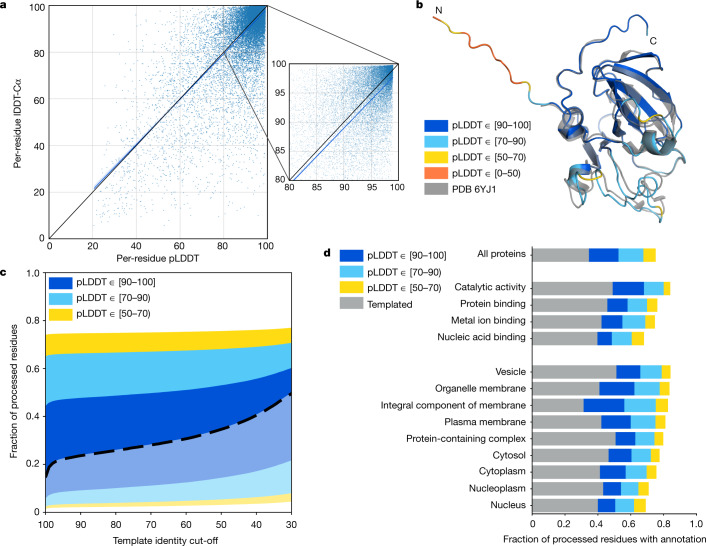
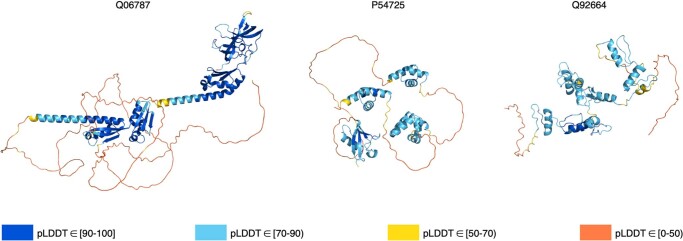
Protein structures can provide invaluable information, both for reasoning about biological processes and for enabling interventions such as structure-based drug development or targeted mutagenesis. After decades of effort, 17% of the total residues in human protein sequences are covered by an experimentally determined structure 1 . Here we markedly expand the structural coverage of the proteome by applying the state-of-the-art machine learning method, AlphaFold 2 , at a scale that covers almost the entire human proteome (98.5% of human proteins). The resulting dataset covers 58% of residues with a confident prediction, of which a subset (36% of all residues) have very high confidence. We introduce several metrics developed by building on the AlphaFold model and use them to interpret the dataset, identifying strong multi-domain predictions as well as regions that are likely to be disordered. Finally, we provide some case studies to illustrate how high-quality predictions could be used to generate biological hypotheses. We are making our predictions freely available to the community and anticipate that routine large-scale and high-accuracy structure prediction will become an important tool that will allow new questions to be addressed from a structural perspective.
Overview
CoChat Summary
TL;DR
AlphaFold2 was applied to 98.5% of human proteins, producing confident predictions for 58% of residues and very high confidence for 36% of all residues. The paper introduces pLDDT, pTM and an experimentally resolved head to interpret the dataset, presents case studies, and releases predictions freely.
Key findings
- The dataset covers 98.5% of human proteins with full-chain predictions, amounting to 10,537,122 residues (92.5% of residues); 58.0% of residues were predicted confidently (pLDDT > 70), and 35.7% of total residues fell in the highest accuracy band (pLDDT > 90), double the residues covered by experimental structures.
- At the per-protein level, 43.8% of proteins had a confident prediction on at least three quarters of their sequence, and 1,290 proteins contained a substantial region (>200 residues) with pLDDT ≥ 70 and no good template.
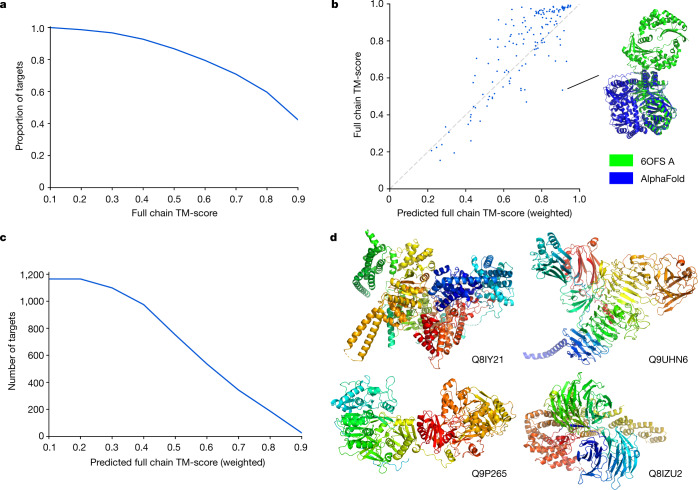
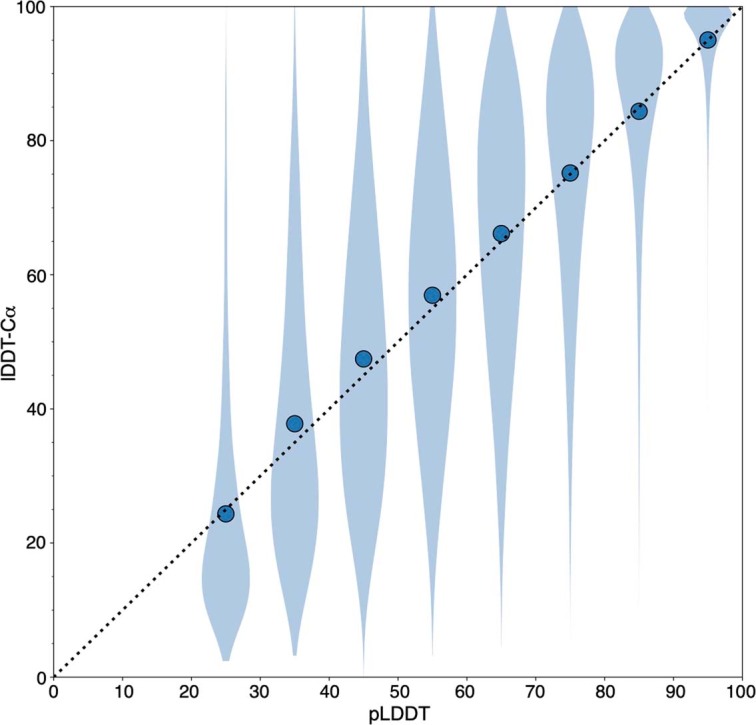
- On a held-out set of long PDB chains (n = 151), 70% of predictions had a TM-score > 0.7; pTM correlated with actual TM-score at Pearson’s r = 0.84, and among human proteins enriched for novel multidomain predictions, 187 had pTM > 0.8 and 343 had pTM > 0.7.
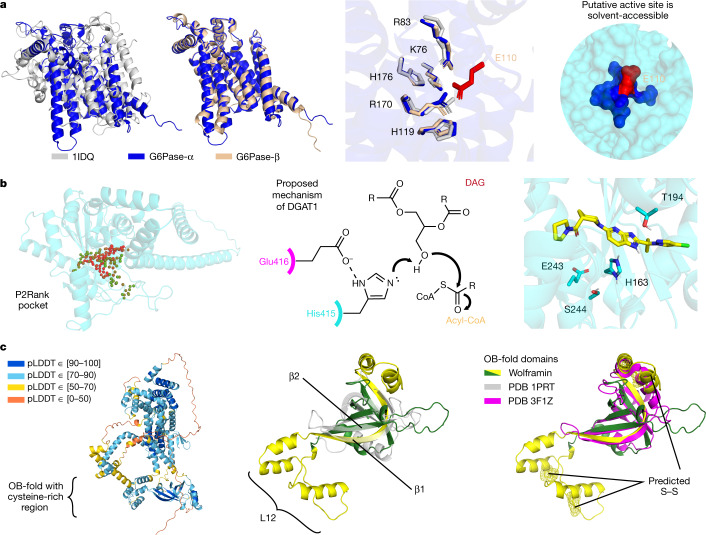
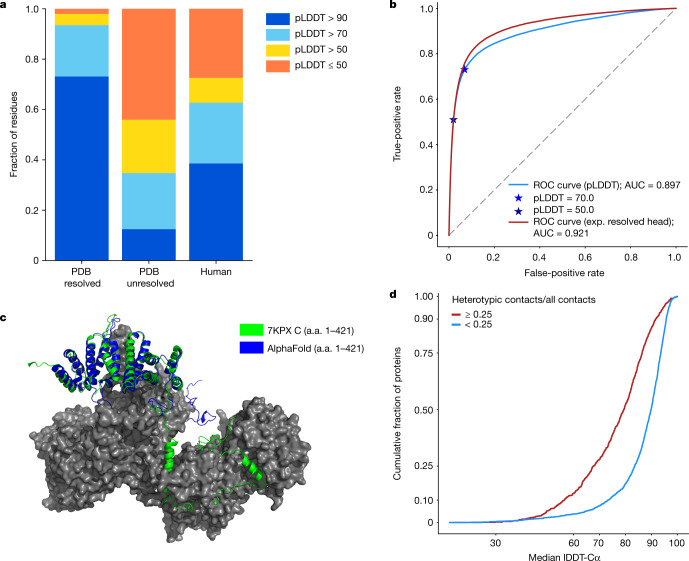
- pLDDT performed as a competitive disorder predictor on the CAID benchmark with AUC 0.897, while the experimentally resolved head achieved AUC 0.921; case studies proposed mechanistic hypotheses for G6Pase-α, DGAT2 and wolframin.
Methods
- AlphaFold2 was applied to the UniProt human reference proteome (release 2021_02), attempting all sequences of 16–2,700 amino acids and excluding residue codes B, J, O, U, Z or X; the pipeline used MSA construction, template search, inference with five models, model ranking by mean pLDDT, and constrained relaxation, with Reduced BFD and reduced ensembling.
- Evaluation used a recent PDB dataset of 12,494 chains, CAMEO targets from 21 March 2020 to 13 March 2021, and the CAID Disprot-PDB benchmark; metrics included pLDDT, pTM, the experimentally resolved head, TM-score, lDDT-Cα and AUC.
- Case-study analyses used PyMOL, P2Rank, AutoDockTools, AutoDock Vina and TM-align; inference for the human proteome used 930 GPU days, with an estimated 510 core days for other pipeline stages from scratch.
Limitations
- The paper states that low-confidence regions may reflect intrinsic disorder or regions structured only in complex, and that some proportion of proteins without confident predictions will be genuine failures where a fixed structure exists but AlphaFold does not predict it.
- The paper states that inter-domain accuracy is expected to be lower than within-domain accuracy, that some multidomain proteins may have mobile domains with no fixed packing, and that the case-study biological hypotheses require experimental confirmation.
- Evident from the text: predictions are single-chain and exclude sequences longer than 2,700 residues, so complex-dependent structure and larger proteins are not directly addressed.
Model-written summary. Check it against the paper before relying on it.
Integrity signals
Registry
Cites
Statistics
Figures
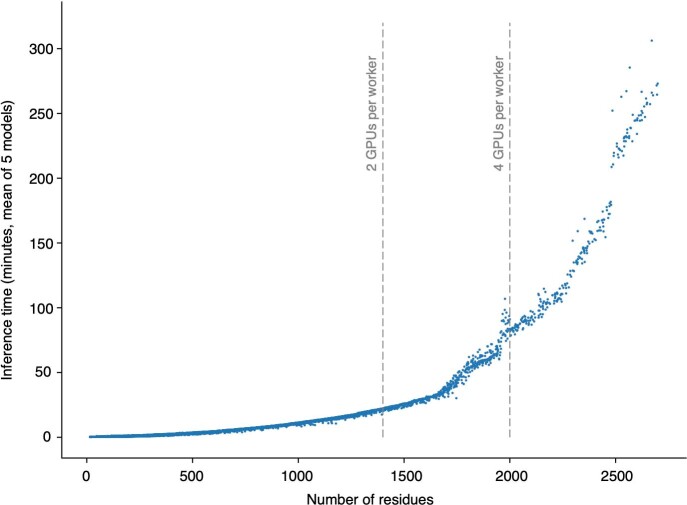
![Extended Data Fig. 7 Relationship between sequence length and run time for the non-inference stages of the pipeline. On the basis of 240 human protein sequences, chosen by stratified sampling from the length buckets: [16, 500), [500, 1,000), [1,000, 1,500), [1,500, 2,000), [2,000, 2,500) and [2,500, 2,700]. The relax plot shows five times more points, since five relaxed models are generated per protein. Coefficients for the quadratic lines of best fit were computed with Numpy polyfit.](https://figures.cochat.ai/paper-figures/c9bdcad64694429b95a292e248c7f05a/highly-accurate-protein-structure-prediction-for-the-human-proteome-figure-11.jpg)
Verification
Claims the paper makes
14 Valid · 1 Not valid · 5 Not checked · 44 Own results and interpretations
The cited sources support only part of this claim — read each source’s verdict below.
In the paper
“This system used a completely different model from our CASP13 entry31, and demonstrated a considerable improvement over previous methods in terms of providing routinely high accuracy29,30.”
§ Highly accurate protein structure prediction for the human proteome > Main
What the sources say
- Partly supportedcites [29] Kryshtafovych A Schwede T Topf M Fidelis K Moult J Critical assessment of methods of protein structure prediction (CASP)-round XIII Proteins 2019 87 1011 1020 10.1002/prot.25823 31589781 PMC6927249 sourceExperimental — accuracy not yet measured
The PROGRESS IN CASP13 section reports a dramatic improvement in model accuracy over earlier CASP rounds, and TEMPLATE FREE MODELING says DeepMind’s A7D group had the most accurate results overall. Those passages concern CASP13 methods, not the different system in the citing sentence; they do not establish that AlphaFold2 routinely achieved high accuracy. (LLM, conf=0.84)
- Supportedcites [30] Pereira, J. et al. High-accuracy protein structure prediction in CASP14. Proteins10.1002/prot.26171 (2021). 34218458 source
The Abstract reports a large leap in high accuracy due to AF2. The Conclusions say AF2 substantially outperformed its predecessor and produced the best models for 89 of 97 CASP14 targets, supporting both the improvement and its routine high accuracy. (LLM, conf=0.94)
boostedstates a cause- Asserted: passes — The authors put it forward as true.
- Checkable: passes — It can be checked against evidence.
- Load-bearing: passes — The paper’s conclusions depend on it.
- Based: passes — The paper gives a reason why it holds.
- Partly supported
Every source the paper cites for this claim was checked and supports it.
In the paper
“We note that the accuracy of AlphaFold was validated in CASP142, which focuses on challenging proteins that are dissimilar to structures already available in the PDB.”
§ Highly accurate protein structure prediction for the human proteome > Model confidence and added coverage
What the sources say
- Supportedcites [2] Jumper, J. et al. Highly accurate protein structure prediction with AlphaFold. Nature10.1038/s41586-021-03819-2 (2021). PMC8371605 34265844 source
The paper’s CASP14 assessment passage (section and page not provided in our copy) says AlphaFold was entered into CASP14, describes it as a blind accuracy assessment, and reports that AlphaFold’s structures were substantially more accurate than competing methods. This supports the attributed claim that its accuracy was validated in CASP14. (LLM, conf=0.94)
plain- Asserted: passes — The authors put it forward as true.
- Checkable: passes — It can be checked against evidence.
- Load-bearing: unclear — It is unclear whether the paper’s conclusions depend on it.
- Based: passes — The paper gives a reason why it holds.
- Supported
The cited sources support only part of this claim — read each source’s verdict below.
In the paper
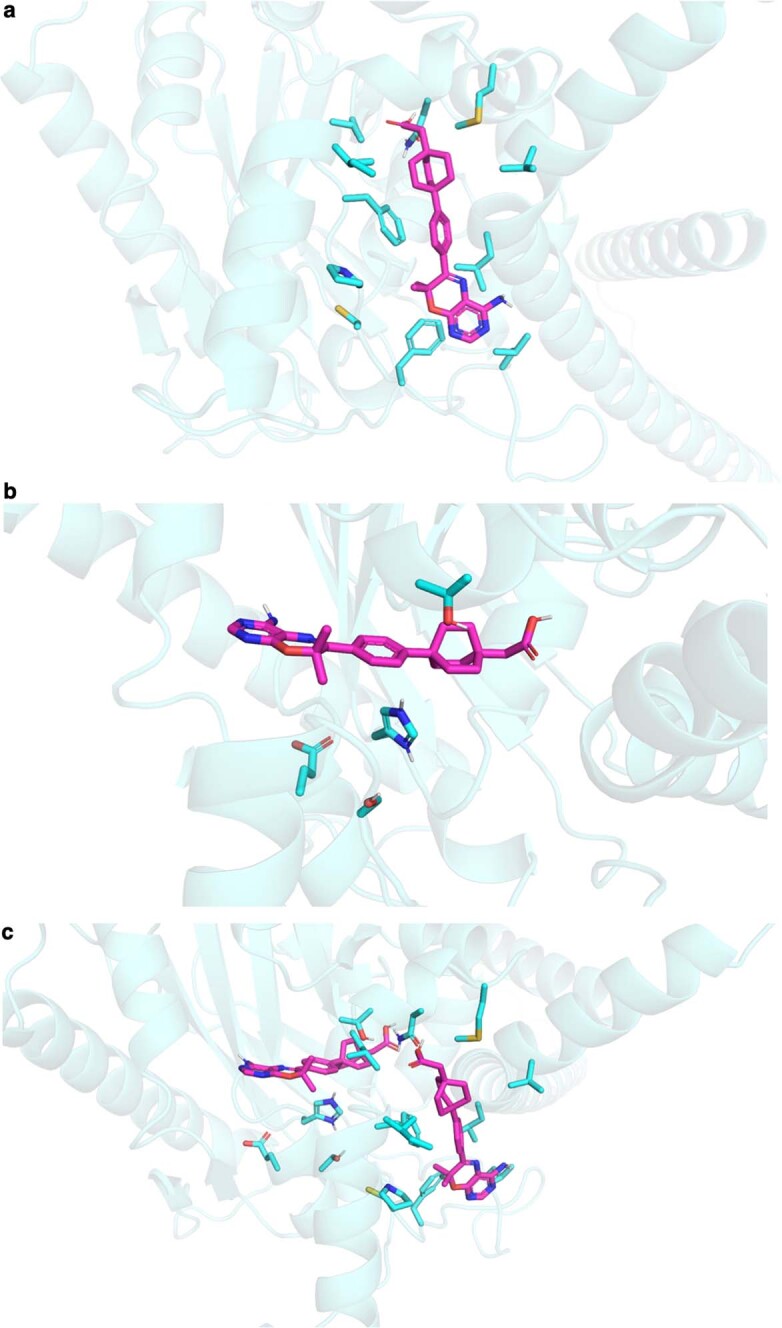
“Despite being the most similar chain, 3F1Z lacks the cysteines that are present in wolframin, which could form disulfide cross-links in the endoplasmic reticulum59.”
§ Highly accurate protein structure prediction for the human proteome > Highlighted predictions > Wolframin
What the sources say
- Partly supportedcites [59] Fass D Thorpe C Chemistry and enzymology of disulfide cross-linking in proteins Chem. Rev. 2018 118 1169 1198 10.1021/acs.chemrev.7b00123 28699750 PMC5808910 sourceExperimental — accuracy not yet measured
Section 2, “Which Proteins Contain Disulfides” (page unavailable), says that proteins in or passing through the ER can have cysteines positioned to form disulfide bonds. It does not address wolframin, 3F1Z, or whether their cysteine residues differ, so it supports only the general possibility of ER disulfide cross-linking. (LLM, conf=0.86)
hedged- Asserted: passes — The authors put it forward as true.
- Checkable: passes — It can be checked against evidence.
- Load-bearing: unclear — It is unclear whether the paper’s conclusions depend on it.
- Based: passes — The paper gives a reason why it holds.
- Partly supported
The sources with a verdict support this claim; the rest weren’t checked yet, have no full text we could read, or their verdicts aren’t rated yet.
In the paper
“Comparing our prediction for this region (median pLDDT of 86.0) to existing PDB chains using TM-align42,57 identified 3F1Z58 as the most similar known chain (TM-score of 0.472) (Fig. 3c, magenta).”
§ Highly accurate protein structure prediction for the human proteome > Highlighted predictions > Wolframin
What the sources say
- Not checked — no full text of the sourcecites [42] Zhang Y Skolnick J Scoring function for automated assessment of protein structure template quality Proteins 2004 57 702 710 10.1002/prot.20264 15476259 source
- Supportedcites [57] Zhang Y Skolnick J TM-align: a protein structure alignment algorithm based on the TM-score Nucleic Acids Res. 2005 33 2302 2309 10.1093/nar/gki524 15849316 PMC1084323 source
The citation is attached to “using TM-align,” identifying the method used by the citing authors, not attributing their 3F1Z match or TM-score to this source. The source’s Results (Benchmark test; page unavailable) describes TM-align as a tool for comparing protein structures and reporting TM-scores. (LLM, conf=0.93)
- Supportedcites [58] Das D The structure of KPN03535 (gi|152972051), a novel putative lipoprotein from Klebsiella pneumoniae, reveals an OB-fold Acta Crystallogr. F 2010 66 1254 1260 10.1107/S1744309109018168 PMC2954213 20944219 source
The citation is attached to 3F1Z, identifying the PDB chain used in the citing authors’ comparison. The source paper’s Materials and methods section states that its KPN03535 structure was deposited under accession code 3f1z; the pLDDT and TM-score describe the citing authors’ own analysis, not a result attributed to this source. (LLM, conf=0.93)
plainstates an association- Asserted: passes — The authors put it forward as true.
- Checkable: passes — It can be checked against evidence.
- Load-bearing: unclear — It is unclear whether the paper’s conclusions depend on it.
- Based: passes — The paper gives a reason why it holds.
Every source the paper cites for this claim was checked and supports it.
In the paper
“A recent evolutionary analysis suggested domains for wolframin, which our prediction largely supports55.”
§ Highly accurate protein structure prediction for the human proteome > Highlighted predictions > Wolframin
What the sources say
- Supportedcites [55] Schäffer DE Iyer LM Burroughs AM Aravind L Functional innovation in the evolution of the calcium-dependent system of the eukaryotic endoplasmic reticulum Front. Genet. 2020 11 34 10.3389/fgene.2020.00034 32117448 PMC7016017 source
The Results section, “Domain Architectural Anatomy and Functional Analysis of the Wolframin Protein,” reports the paper’s proposed domain assignments for wolframin, including Sel1-like repeats, an EF-hand region, and an OB-fold domain (Figure 4A). The citing authors’ statement that their own prediction largely supports those assignments is not a finding attributed to this source. (LLM, conf=0.93)
plainstates an association- Asserted: passes — The authors put it forward as true.
- Checkable: passes — It can be checked against evidence.
- Load-bearing: unclear — It is unclear whether the paper’s conclusions depend on it.
- Based: passes — The paper gives a reason why it holds.
- Supported
36 more claims · 4 with their cited sources checked
Create a free account to see all 64 claims and every source verdict.
- It may state two separate claims as one. 13
- Probably not a substantial claim. 12
Claims other papers make about this one
Each is checked against this paper’s own text: does it say what the citing paper says it does?
The source backs part of the claim, not all of it — or backs it for a different population, condition or comparison.
In the citing paper
“While AF2 performs exceptionally well on these types of folds on average”
From The power and pitfalls of AlphaFold2 for structure prediction beyond rigid globular proteins (2024) · cites this paper as [5]
Experimental — accuracy not yet measuredThe source backs part of the claim, not all of it — or backs it for a different population, condition or comparison.
In the citing paper
“For the majority of globular proteins, AF2 provides accurate, reliable models with high pLDDT (> 70) or low PAE values (< 5 Å) highlighting confidence in the prediction of the position of the atomic coordinates, which match experimentally determined native structures5,17,23,59”
From The power and pitfalls of AlphaFold2 for structure prediction beyond rigid globular proteins (2024) · cites this paper as [5]
Experimental — accuracy not yet measuredThe source backs part of the claim, not all of it — or backs it for a different population, condition or comparison.
In the citing paper
“The lower confidence bands appear to correlate well with backbone flexibility and intrinsic disorder (13) (Figure 2).”
From AlphaFold Protein Structure Database: massively expanding the structural coverage of protein-sequence space with high-accuracy models (2022) · cites this paper as [13]
Experimental — accuracy not yet measuredThe source backs part of the claim, not all of it — or backs it for a different population, condition or comparison.
In the citing paper
“One of the major insights leveraged by AlphaFold 1,2 comes from the use of evolutionary covariations that can be extracted from large-scale multiple sequence alignments.[49][50][51][52][53][54]”
From AlphaFold and Implications for Intrinsically Disordered Proteins (2021) · cites this paper as [2]
Experimental — accuracy not yet measuredThe source backs part of the claim, not all of it — or backs it for a different population, condition or comparison.
In the citing paper
“DeepMind’s AlphaFold2 success in sequence-based protein structure prediction,4 as well as the RoseTTAFold70 open-source counterpart, and the publicly available AlphaFold2 prediction of all human proteins203 are major steps that benefit the scientific community.”
From AlphaFold, Artificial Intelligence (AI), and Allostery (2022) · cites this paper as [203]
Experimental — accuracy not yet measured
16 more claims about this paper
Create a free account to see every claim other papers make about this one.
Citations
Cites
Highly accurate protein structure prediction with AlphaFold
Jumper, J., Evans, R., Pritzel, A., Green, T., Figurnov, M., Ronneberger, O., Tunyasuvunakool, K., Bates, R., Žídek, A., Potapenko, A., et al. (2021) · Nature · doi:10.1038/s41586-021-03819-2 · Cited by 43,764 · cited 1×
“[16, 500), [500, 1,000), [1,000, 1,500), [1,500, 2,000), [2,000, 2,500) and [2,500, 2,700].”
Self-citationGene Ontology: tool for the unification of biology
Ashburner, M., Ball, C. A., Blake, J. A., Botstein, D., Butler, H., Cherry, J. M., Davis, A. P., Dolinski, K., Dwight, S. S., Eppig, J. T., et al. (2000) · Nature Genetics · doi:10.1038/75556 · Cited by 43,206
Trott, O., & Olson, A. J. (2010) · Journal of Computational Chemistry · doi:10.1002/jcc.21334 · Cited by 38,412
AutoDock4 and AutoDockTools4: Automated docking with selective receptor flexibility
Morris, G. M., Huey, R., Lindstrom, W., Sanner, M. F., Belew, R. K., Goodsell, D. S., & Olson, A. J. (2009) · Journal of Computational Chemistry · doi:10.1002/jcc.21256 · Cited by 25,486
Initial sequencing and analysis of the human genome
International Human Genome Sequencing Consortium, Whitehead Institute for Biomedical Research, C. F. G. R., Lander, E. S., Linton, L. M., Birren, B., Nusbaum, C., Zody, M. C., Baldwin, J., Devon, K., Dewar, K., et al. (2001) · Nature · doi:10.1038/35057062 · Cited by 24,216
Self-citationThe sequence of the human genome
Venter, J. C., Adams, M. D., Myers, E. W., Li, P. W., Mural, R. J., Sutton, G. G., Smith, H. O., Yandell, M., Evans, C. A., Holt, R. A., et al. (2001) · Science · doi:10.1126/science.1058040 · Cited by 13,909
SWISS-MODEL: homology modelling of protein structures and complexes
Waterhouse, A., Bertoni, M., Bienert, S., Studer, G., Tauriello, G., Gumienny, R., Heer, F. T., de Beer, T. A. P., Rempfer, C., Bordoli, L., et al. (2018) · Nucleic Acids Research · doi:10.1093/nar/gky427 · Cited by 13,067
Pfam: The protein families database in 2021
Mistry, J., Chuguransky, S., Williams, L., Qureshi, M., Salazar, G. A., Sonnhammer, E. L. L., Tosatto, S. C. E., Paladin, L., Raj, S., Richardson, L. J., et al. (2021) · Nucleic Acids Research · doi:10.1093/nar/gkaa913 · Cited by 7,452
Self-citationUniProt: the universal protein knowledgebase in 2021
The UniProt Consortium, Bateman, A., Martin, M.-J., Orchard, S., Magrane, M., Agivetova, R., Ahmad, S., Alpi, E., Bowler-Barnett, E. H., Britto, R., et al. (2021) · Nucleic Acids Research · doi:10.1093/nar/gkaa1100 · Cited by 6,372
Self-citationThe Gene Ontology Resource: 20 years and still GOing strong
The Gene Ontology Consortium (2019) · Nucleic Acids Research · doi:10.1093/nar/gky1055 · Cited by 4,747
Cited by
Items 2,701–2,800 of 3,208
Improved KCNQ2 gene missense variant interpretation with artificial intelligencePreprint
Sáez-Matía, A., Muguruza‐Montero, A., M‐Alicante, S., Núñez, E., Ramis, R., Ballesteros, Ó. R., Ibarluzea, M. G., Fons, C., Leonardo, A., Bergara, A., et al. (2022) · bioRxiv (Cold Spring Harbor Laboratory) · doi:10.1101/2022.10.20.513007
“Despite efforts over many years, only 35% of human proteins map to a PDB entry with the 3D atomic coordinates, and in many cases the structure covers only some fragments of the sequence [Tunyasuvunakool et al., 2021; Bateman et al., 2021].”
BackgroundResearch on protein structure prediction and folding based on novel remote homologs recognitionPreprint
Zhao, K., Xia, Y., Zhang, F., Zhou, X., Li, S. Z., & Zhang, G. (2022) · bioRxiv (Cold Spring Harbor Laboratory) · doi:10.1101/2022.10.16.512404
Structural Analysis for Enzymatic Homology Determination in Terpene Cyclases
Farfán-Ugalde, E., Hernandez, C. V. F., Magaña-Cuevas, E., Paredes, O., & Morales, J. A. (2022) · World Congress on Medical Physics and Biomedical Engineering, September 7 - 12, 2009, Munich, Germany · doi:10.1007/978-3-031-18256-3_27
Kim, D., Tracey, J., Flores, M. B., et al. (2022) · Computational and Structural Biotechnology Journal · doi:10.1016/j.csbj.2022.10.042
“As orthogonal validation, we also predicted the BvgA and BvgA structures using AlphaFold2, which is an artificial intelligence algorithm that uses amino acid sequence to predict 3D structures of proteins ab initio with accuracy rivaling experimental methods [17,18].”
Methoddos FREIRE, M. B. G. (2022) · Digital Library of Theses and Dissertations (Universidade de São Paulo) · doi:10.11606/t.76.2022.tde-24082022-152133
Learning from magnetotactic bacteria: mms6 protects stem cells from oxidative damage
Wei, N., Xu, W., Tang, H., Xie, Q., Zhai, Y., Chen, J., Zhang, X., & Zhu, J. (2022) · Frontiers in Cellular Neuroscience · doi:10.3389/fncel.2022.1075640
“MMS6 possesses a ferrous ion binding site at C20, and the DDVED motif at the C-terminus is an iron ion binding site (Rawlings et al., 2016; Tunyasuvunakool et al., 2021).”
BackgroundOlszewska, M., Malcher, A., Stokowy, T., Pollock, N. C., Berman, A. J., Budkiewicz, S., Kamieniczna, M., Jackowiak, H., Suszyńska-Zajczyk, J., Jędrzejczak, P., et al. (2022) · medRxiv · doi:10.1101/2022.11.17.22282339
Atmospheric hydrogen oxidation extends to the domain archaeaPreprint
Leung, P. M., Grinter, R., Tudor-Matthew, E., Jimenez, L., Lee, H., Milton, M., Hanchapola, I., Tanuwidjaya, E., Peach, H. A., Carere, C. R., et al. (2022) · bioRxiv (Cold Spring Harbor Laboratory) · doi:10.1101/2022.12.13.520232
“1 implemented on the MASSIVE M3 computing cluster (58, 91).”
MethodKazmi, A., Kazim, M., Aslam, F., Kazmi, S. M.-U.-H., Wahab, A. H., Mikhlef, R. M., Khizar, C., Kazmi, A., Wazir, N. U., & Mainali, R. P. (2022) · bioRxiv (Cold Spring Harbor Laboratory) · doi:10.1101/2022.12.03.518956
Zhang, H., Cheng, Y., Ge, Q., Yu, J., Fu, G., Gao, Y., Wang, Y., Ye, Y., Du, J., Jiao, Q., et al. (2022) · Computational and Theoretical Chemistry · doi:10.1016/j.comptc.2022.113972
Modhiran, N., Lauer, S., Amarilla, A., Hewins, P., van den Broek, S. L., Low, Y., Thakur, N., Liang, B., Nieto, G. V., Jung, J., et al. (2022) · bioRxiv · doi:10.1101/2022.12.27.521990
Roche, R., Moussad, B., Shuvo, M. H., et al. (2022) · bioRxiv (Cold Spring Harbor Laboratory) · doi:10.1101/2022.12.14.520476
Dey, S. S., Chakraborty, R., & Taneja, B. (2022) · ACS Omega · doi:10.1021/acsomega.2c04691
Prediction of virus-receptor interactions based on multi-view learning and link prediction
Lingzhi, Z., Zheng, K., Duan, G., et al. (2022) · IEEE International Conference on Bioinformatics and Biomedicine (BIBM) · doi:10.1109/bibm55620.2022.9995553
“The receptor 3D structure is downloaded from the Alphafold2 Predicted Protein Structure Database (https://alphafold.ebi.ac.uk/) [8].”
MethodBiochemical characterization of a GDP-mannose transporter from Chaetomium thermophilumPreprint
Premageetha, G. T. R., Dhanabalan, K., Bose, S., et al. (2023) · bioRxiv (Cold Spring Harbor Laboratory) · doi:10.1101/2023.01.13.523913
Kurilla, A., László, L., Takács, T., Tilajka, Á., Lukács, L., Novák, J., Pancsa, R., Buday, L., & Vas, V. (2023) · bioRxiv (Cold Spring Harbor Laboratory) · doi:10.1101/2023.01.13.523903
“For this, the DSSP method (Kabsch and Sander 1983) was applied on the AlphaFold2-derived (Tunyasuvunakool et al. 2021) structure of TKS4 and the absolute surface accessibility values provided by DSSP were divided by the respective maximum surface accessibility values of the amino acids as proposed previously (Tien et…”
MethodWyganowski, T., Beckmann, L., & Batistič, O. (2023) · bioRxiv (Cold Spring Harbor Laboratory) · doi:10.1101/2023.01.17.524453
Bibliometric Analysis of Deep Learning Applications in Diabetes
Salehpour, A. (2022) · Journal of Trends in Computer Science and Smart Technology · doi:10.36548/jtcsst.2022.4.006
Chen, Q., Guo, Y., Jiang, J., Qu, J., Zhang, L., & Wang, H. (2023) · Mathematics · doi:10.3390/math11030642
Malik, A. J., Kenanov, D., Chong, C.-S., Ozturk, M. B., Wang, Q., Chang, H.-Y., Hebrard, M., Ho, Y. S., Wang, Z., Limviphuvadh, V., et al. (2026) · Nature Communications · doi:10.21203/rs.3.rs-2377190/v1
Protein tertiary structure prediction and refinement using deep learning
Wu, T. (2022) · MOspace Institutional Repository (University of Missouri) · doi:10.32469/10355/94100
Protein-DNA interaction prediction and protein structure modeling by machine learning
Chen, C. (2022) · MOspace Institutional Repository (University of Missouri) · doi:10.32469/10355/94056
We Can Think About Ourselves – The Computer Cannot
Dandekar, T., & Kunz, M. (2023) · Springer eBooks · doi:10.1007/978-3-662-65036-3_14
Recent Advances in Biomolecular Structure Modeling and Validation using Deep Learning
Terashi, G., & Kihara, D. (2023) · Nihon Kessho Gakkaishi · doi:10.5940/jcrsj.65.3
Specificities of Protein Homology Modeling for Allosteric Drug Design
Jakowiecki, J., Orzeł, U., Gliździńska, A., Możajew, M., & Filipek, S. (2023) · Methods in molecular biology · doi:10.1007/978-1-0716-2974-1_19
Li, Y., & Liu, S. (2023) · Lecture notes in computer science · doi:10.1007/978-3-031-29476-1_10 · Cited by 1
Public archiving of volume EM data
Iudin, A., Hartley, M., Kleywegt, G. J., & Patwardhan, A. (2023) · Methods in cell biology · doi:10.1016/bs.mcb.2023.02.002 · Cited by 1
Self-citationDiscovery of microsized RNA-derived RNAs and polypeptides in human cellsPreprint
Huang, X., Wu, H., Zhong, W., Li, W., Liu, Z., Yang, Z., Zhao, M., Xi, X., Cao, B., Pu, Y., et al. (2023) · bioRxiv (Cold Spring Harbor Laboratory) · doi:10.1101/2023.04.24.538138
Yang, A., Zhang, Y., & Yang, Z. (2023) · Wiley eBooks · doi:10.1002/9781119896258.ch12
Nuclear transport of the nitric oxide synthase interacting protein (NOSIP)
Pörschke, M. (2023) · eDiss (Georg-August-Universität Göttingen) · doi:10.53846/goediss-9877
Hussin, A., Nathan, S., Shahidan, M. A., Rahim, M. Y. N., Zainun, M. Y., Khairuddin, N. A. N., & Ibrahim, N. (2023) · bioRxiv (Cold Spring Harbor Laboratory) · doi:10.1101/2023.05.31.543095
“6, 404 indicating that the prediction was highly accurate with good backbone prediction and side chain 405 orientation (80).”
BackgroundCytoSIP: An annotated structural atlas for interactions involving cytokine or cytokine receptorPreprint
Wang, L., Sun, F., Ma, H., et al. (2023) · bioRxiv (Cold Spring Harbor Laboratory) · doi:10.1101/2023.06.05.543615
“For CK/CKR with no 201 experimentally-determined structures in the PDB, structural models predicted using Alphafold2[48] are used 202 as representative structures to illustrate the fold.”
MethodUeki, T., & Ohue, M. (2023) · bioRxiv (Cold Spring Harbor Laboratory) · doi:10.1101/2023.06.02.543382
NMR structure verifies the eponymous degenerate zinc finger domain of transcription factor ZNF750Preprint
Rua, A. J., Whitehead, R. D., & Alexandrescu, A. T. (2023) · bioRxiv (Cold Spring Harbor Laboratory) · doi:10.1101/2023.06.10.544471
“About 42% of residues in human proteins are predicted by AlphaFold with low confidence, defined by a pLDDT score lower than 70 (57).”
BackgroundMeng, X., & Veit, M. (2023) · bioRxiv (Cold Spring Harbor Laboratory) · doi:10.1101/2023.06.15.545201
yGPS-P: A Yeast-Based Peptidome Screen for Studying Quality Control-Associated Proteolysis
Mashahreh, B., Armony, S., & Ravid, T. (2023) · Biomolecules · doi:10.3390/biom13060987
“Cross-referencing the predicted yeast degronome with the AlphaFold yeast structure database [23,24], we detected enrichment of alpha-helices in QCAP degrons (Figure 4b).”
MethodSubstrates and Cyclic Peptide Inhibitors of the Oligonucleotide Activated SIRT7Preprint
Bolding, J. E., Nielsen, A. L., Jensen, I., Hansen, T. N., Ryberg, L. A., Jameson, S. T., Harris, P., Peters, G. H. J., Denu, J. M., Rogers, J. M., et al. (2023) · bioRxiv (Cold Spring Harbor Laboratory) · doi:10.1101/2023.06.16.545261
Del genoma humano a su pangenoma pasando por los consorcios ENCODE y T2T
Claros, M. G. (2022) · Encuentros en la Biología · doi:10.24310/enbio.v15i182.17114
“Lo más sorprendente de estas predicciones es que el 58% de los residuos están en una estructura predicha fiable, de los que el 36% se consideran tan fiables como si hubieran sido obtenidos por cristalografía de rayos X [32].”
Using In Vivo Intact Structure for System-wide Quantitative Analysis of Changes in ProteinsPreprint
Yates, J. R., Son, A., Kim, H., Diedrich, J. K., Bamberger, C., & McClatchy, D. B. (2023) · Research Square · doi:10.21203/rs.3.rs-3118982/v1
Poxviridae Protein kinases as targets for control of LSDV , Monkeypox like outbreaksPreprint
Amanchy, R., Poornachandra, Y., Nalla, S., Racha, V., & Bhamidipati, P. (2023) · Authorea · doi:10.22541/au.168865159.94168766/v1
Editorial: Flexibility in the genome and proteome: an adaptive toolkit for organisms
Narwani, T., Sharma, G., & de Brevern, A. G. (2023) · Frontiers in Genetics · doi:10.3389/fgene.2023.1229315
“Building upon these advancements, a collaborative effort led by Deepmind and EMBL-EBI have used AlphaFold to predict the structural space of the known human proteome (Tunyasuvunakool et al., 2021).”
MethodWITHDRAWN: NMR structure verifies the eponymous zinc finger domain of transcription factor ZNF750
Rua, A. J., Whitehead, R. D., & Alexandrescu, A. T. (2023) · Journal of Structural Biology · doi:10.1016/j.jsb.2023.108003
RetractedPredicting the 3D Structure of RNA from Sequence
Roll, J., & Zirbel, C. L. (2023) · Springer eBooks · doi:10.1007/978-981-19-9776-1_14
Fang, T., Szklarczyk, D., Hachilif, R., & von Mering, C. (2023) · bioRxiv (Cold Spring Harbor Laboratory) · doi:10.1101/2023.07.28.550005
“During preparation for this article, deep learning methods, especially AlphaFold from DeepMind, have succeeded greatly in protein structure prediction in CASP14 42,43 .”
BackgroundMethodBrenner, E. P., & Sreevatsan, S. (2023) · Scientific Reports · doi:10.1038/s41598-023-39578-5
Long-term hematopoietic stem cells trigger quiescence in Leishmania parasitesPreprint
Dirkx, L., Acker, S. V., Nicolaes, Y., Reis-Cunha, J. L., Ahmad, R., Caljon, B., Imamura, H., Ebo, D. G., Jeffares, D. C., Sterckx, Y. G. ‐., et al. (2023) · bioRxiv (Cold Spring Harbor Laboratory) · doi:10.1101/2023.08.23.554403
Zhang, X., He, J., & Ren, D. (2023) · Bioscience Reports · doi:10.1042/bsr20230057
Martins, T. A., Tatari, N., Kaymak, D., Hogan, S., Bartoszek, E. M., Wieboldt, R., Ritz, M.-F., Buck, A., McDaid, M., Gerber, A., et al. (2023) · doi:10.1101/2023.08.31.555122
Dang, M., Zhang, S., & Wu, L. (2023) · doi:10.22541/au.169451484.43581828/v1
Gracia, B., Montes, P., Gutierrez‐Barrera, A. M., Arun, B., & Karras, G. I. (2023) · bioRxiv (Cold Spring Harbor Laboratory) · doi:10.1101/2023.09.14.557795
Callebaut, I., Gaschignard, G., Millet, M., et al. (2023) · doi:10.22541/au.169596218.88011536/v1
Daisy: An integrated repeat protein curation service
Bezerra-Brandao, M., Cahui, R. R. T., & Hirsh, L. (2023) · Journal of Structural Biology · doi:10.1016/j.jsb.2023.108033
The Effect of Pulling and Twisting Forces on Chameleon Sequence Peptides**
Meadows, J. H., & Röder, K. (2023) · ChemPhysChem · doi:10.1002/cphc.202300351
Yang, Z., Zhou, N., Jiang, X., et al. (2023) · Journal of Chemical Information and Modeling · doi:10.1021/acs.jcim.3c00787
Ye, S., Wang, S., Chan, R., Cao, L., & Wang, H. (2023) · Journal of Experimental Botany · doi:10.1093/jxb/erad411
Substrates and Cyclic Peptide Inhibitors of the Oligonucleotide‐Activated Sirtuin 7**
Bolding, J. E., Nielsen, A. L., Jensen, I., Hansen, T. N., Ryberg, L. A., Jameson, S. T., Harris, P., Peters, G. H. J., Denu, J. M., Rogers, J. M., et al. (2023) · Angewandte Chemie · doi:10.1002/ange.202314597 · Cited by 1
Deep transfer learning on continual learning
de Carvalho, M. V. S. L. (2023) · DR-NTU (Nanyang Technological University) · doi:10.32657/10356/171082
Tatebayashi, K., Shirakawa, M., Abe, S., Fujita, M., & Yoshimura, S. (2023) · Acta Neurochirurgica · doi:10.1007/s00701-023-05859-1
İLAÇ TASARIMINDA YAPAY ZEKÂ UYGULAMALARI
Tari, O., & ARPACI, N. (2023) · Ankara Universitesi Eczacilik Fakultesi Dergisi · doi:10.33483/jfpau.1327078
Machine Learning-Enabled High-Throughput Industry Screening of Edible OilsPreprint
Deng, P., Lin, X., Yu, Z., et al. (2023) · SSRN Electronic Journal · doi:10.2139/ssrn.4637346
Raisinghani, N., Alshahrani, M., Gupta, G., Xiao, S., Tao, P., & Verkhivker, G. M. (2023) · bioRxiv (Cold Spring Harbor Laboratory) · doi:10.1101/2023.11.18.567697
AlphaFold: the silver lining of the ‘protein folding problem’
Mordina, P. (2023) · Archives of Bioinformatics and Computational Biology · doi:10.61577/abcb.2023.100003
Bukhnikashvili, L. (2023) · Journal of Molecular Evolution · doi:10.1007/s00239-023-10147-8
Banerjee, A., Garg, R., Liu, Q., van Kessel, J., Asavajaru, A., Uhlemann, E.-M. E., Joessel, M., Hamonic, G., Khatooni, Z., Kroeker, A., et al. (2023) · Research Square · doi:10.21203/rs.3.rs-3656968/v1
Structure basis for recognition of 26RFa by the pyroglutamylated RFamide peptide receptorPreprint
Jin, S., Li, X., Xu, Y., et al. (2023) · bioRxiv (Cold Spring Harbor Laboratory) · doi:10.1101/2023.12.09.570933
Raisinghani, N., Alshahrani, M., Gupta, G., Xiao, S., Tao, P., & Verkhivker, G. M. (2023) · bioRxiv (Cold Spring Harbor Laboratory) · doi:10.1101/2023.12.11.571185
A tribute to Professor Justin Yerbury: an advocate and beacon of hope for motor neurone disease
Ooi, L. (2023) · Physiology News · doi:10.36866/pn.132.45
Obituary: John Nicholls (1929-2023)
Ashmore, J. F., & Gibb, A. J. (2023) · Physiology News · doi:10.36866/pn.132.46
Faisal, A. A., Komorowski, M., Gordon, A. C., Lewis, R. M., Todd, O. M., & Antoniades, C. A. (2023) · Physiology News · doi:10.36866/pn.132.42
AI for fairer clinical decisions
Surodina, S., Albertyn, C. P., Siow, R. C. M., & Haraldsen, I. (2023) · Physiology News · doi:10.36866/pn.132.25
Meeting Report: Drowning Prevention and Treatment Online Summit
Events Team The Physiological Society (2023) · Physiology News · doi:10.36866/pn.132.36
News from our family of journals
The Physiological Society (2023) · Physiology News · doi:10.36866/pn.132.10
The Physiological Society (2023) · Physiology News · doi:10.36866/pn.132.41
Editorial: Artificial intelligence: Friend or foe?
Orpen, A. (2023) · Physiology News · doi:10.36866/pn.132.5
Meeting Report: Two-day scientific meetings
Events Team The Physiological Society (2023) · Physiology News · doi:10.36866/pn.132.32
Book Review: Survival kit for the Physiology Lecturer by Francisco Suárez et al.
Redzic, Z. B. (2023) · Physiology News · doi:10.36866/pn.132.12
Polygenic scores and precision genetics
Gidziela, A. (2023) · Physiology News · doi:10.36866/pn.132.21
Chief Executive’s View: Our 2023 highlights: Together we are stronger, effective, and innovative
Burdass, D. (2023) · Physiology News · doi:10.36866/pn.132.7
Policy Focus: Physiology at the heart of AI safety
Mackenzie, A. (2023) · Physiology News · doi:10.36866/pn.132.8
Meeting Preview: Physiology in Focus 2024
Events Team The Physiological Society (2023) · Physiology News · doi:10.36866/pn.132.37
Promises and pitfalls for artificial intelligence in healthcare
Nelson, J. W., & Stevens, A. (2023) · Physiology News · doi:10.36866/pn.132.16
The impact of artificial intelligence on teaching writing skills to life science students
Hardy, M. (2023) · Physiology News · doi:10.36866/pn.132.38
Physiological Reports celebrates 10 years of basic and translational physiology
The Physiological Society (2023) · Physiology News · doi:10.36866/pn.132.11
Using AI to develop better ovarian cancer treatment
Yau, C., & Ahmed, A. A. (2023) · Physiology News · doi:10.36866/pn.132.28
Redzic, S. (2023) · Physiology News · doi:10.36866/pn.132.14
Congratulations to the 2023 Honorary Fellows
The Physiological Society (2023) · Physiology News · doi:10.36866/pn.132.40
Structural analysis of the dynamic ribosome-translocon complex
Lewis, A. J. O., Zhong, F., Keenan, R. J., & Hegde, R. S. (2023) · doi:10.1101/2023.12.22.572959
“An initial model for uL22 was fetched from the ΑlphaFold DB 119 .”
MethodGenome-scale annotation of protein binding sites via language model and geometric deep learningPreprint
Yuan, Q., Tian, C., & Yang, Y. (2024) · eLife · doi:10.7554/elife.93695.1
Nmr-Guided Rational Exploration of Co-Factors in Boosting the Pfu DNA PolymerasePreprint
He, L., Chen, Y., Zhu, M., et al. (2024) · SSRN Electronic Journal · doi:10.2139/ssrn.4693788
Brunnhuber, S. (2024) · Sustainable finance · doi:10.1007/978-3-031-48113-0_4
Highly Efficient Multi-resolution Topology Optimization Based on the Kriging-Interpolation Network
Qian, W., & Li, H. (2024) · Structural integrity · doi:10.1007/978-3-031-49791-9_9 · Cited by 1
Three-Dimensional Structures of Proteins Responsible for Biological Functions
Mitaku, S., & Sawada, R. (2024) · Evolutionary studies · doi:10.1007/978-981-97-0060-8_3
Singh, A., Bedate, A. M., von Richthofen, H. J., van der Vlist, M., Kuhn, R., Yermanos, A., Kuball, J. H. E., Keşmir, C., Ramos, M. I. P., & Meyaard, L. (2024) · eLife · doi:10.7554/elife.92870.1 · Cited by 1
Albanese, K. I., Barbe, S., Tagami, S., Woolfson, D. N., & Schiex, T. (2025) · Nature Reviews Methods Primers · doi:10.1038/s43586-025-00383-1 · Cited by 119
Postembryonic developmental roles of the Arabidopsis KEULE genePreprint
Ruiz-Bayón, A., Cara-Rodríguez, C., Sarmiento‐Mañús, R., Muñoz‐Viana, R., Lozano, F. M., Ponce, M. R., & Micol, J. L. (2024) · bioRxiv (Cold Spring Harbor Laboratory) · doi:10.1101/2024.03.14.585090
Transfer and Capture of Envelope Protein Receptor-Binding Domains in the RetrovirusesPreprint
Hötzel, I. (2024) · bioRxiv (Cold Spring Harbor Laboratory) · doi:10.1101/2024.03.17.585361
“Models were obtained without templates and without amber relaxation. pLDDT scores above 90 indicate high side-chain reliability; scores between 70 and 90 indicate high main-chain reliability; scores between 50 and 70 indicate moderate reliability; scores below 50 indicate poor reliability (18, 19).”
MethodFerguson Plot Analysis of Chaperone Clpb From Moderate HalophilePreprint
Akuta, T., Tomioka, Y., Nakagawa, M., et al. (2024) · SSRN Electronic Journal · doi:10.2139/ssrn.4771528
Genome-scale annotation of protein binding sites via language model and geometric deep learning
Yuan, Q., Tian, C., & Yang, Y. (2024) · doi:10.7554/elife.93695.2
Role of protein packing in protein dynamics
Khade, P. M. (2022) · doi:10.31274/td-20240329-649
Metadata
- Authors
- Tunyasuvunakool, K., Adler, J., Wu, Z., Green, T., Zielinski, M., Žídek, A., Bridgland, A., Cowie, A., Meyer, C., Laydon, A., Velankar, S., Kleywegt, G. J., Bateman, A., Evans, R., Pritzel, A., Figurnov, M., Ronneberger, O., Bates, R., Kohl, S. A. A., Potapenko, A., Ballard, A. J., Romera-Paredes, B., Nikolov, S., Jain, R., Clancy, E., Reiman, D., Petersen, S., Senior, A. W., Kavukcuoglu, K., Birney, E., Kohli, P., Jumper, J., & Hassabis, D.
- Affiliations
- Google DeepMind (United Kingdom) (GB)
- European Bioinformatics Institute (GB)
- Corresponding author
- Tunyasuvunakool, Kathryn
- Jumper, John
- Hassabis, Demis
- ORCID
- Tunyasuvunakool, Kathryn
- Adler, Jonas
- Wu, Zachary
- Green, Tim
- Žídek, Augustin
- Meyer, Clemens
- Laydon, Agata
- Velankar, Sameer
- Kleywegt, Gerard J.
- Bateman, Alex
- Evans, Richard
- Pritzel, Alexander
- Figurnov, Michael
- Ronneberger, Olaf
- Bates, Russ
- Kohl, Simon A. A.
- Potapenko, Anna
- Ballard, Andrew J.
- Nikolov, Stanislav
- Jain, Rishub
- Clancy, Ellen
- Reiman, David
- Petersen, Stig
- Senior, Andrew W.
- Birney, Ewan
- Kohli, Pushmeet
- Jumper, John
- Hassabis, Demis
- Venue
- Nature
- Published
- 2021-07-22
- Volume
- 596
- Issue
- 7873
- Pages
- 590-596
- ISSN
- 0028-0836 (ISSN-L)
- 1476-4687
- PMC
- PMC8387240
- OpenAlex
- W3183475563
- Semantic Scholar
- 1fb3ad9969245795f268636eff9a145337144718
- Cited by
- 3,025
- References
- 83
- Citations by year
- 2026: 346 · 2025: 517 · 2024: 580 · 2023: 701 · 2022: 692 · 2021: 181
- FWCI
- 169.53
- Type
- journal article
- Language
- en
- Open access
- hybrid
- doi.org
- Licence
- cc-by
- creativecommons.org/licenses/by/4.0 (tdm)
- creativecommons.org/licenses/by/4.0 (vor)
- Locations
- Nature (publishedVersion, cc-by)
- Europe PMC (PubMed Central) (publishedVersion, other-oa)
- PubMed Central (publishedVersion, cc-by)
- PubMed (publishedVersion)
- RePEc: Research Papers in Economics (submittedVersion)
- Funders
- European Bioinformatics Institute
- DeepMind
- Topics
- Life Sciences › Biochemistry, Genetics and Molecular Biology › Molecular Biology › Protein Structure and Dynamics
- Life Sciences › Biochemistry, Genetics and Molecular Biology › Molecular Biology › Machine Learning in Bioinformatics
- Life Sciences › Biochemistry, Genetics and Molecular Biology › Structural Biology › Enzyme Structure and Function
- Keywords
- protein structure prediction, human proteome, AlphaFold2, structural coverage, intrinsically disordered regions, multidomain proteins, protein structure database
- MeSH terms
- Deep Learning, Glucose-6-Phosphatase, Humans, Membrane Proteins, Models, Molecular, Protein Conformation, Reproducibility of Results, Protein Folding, Computational Biology, Proteome, Diacylglycerol O-Acyltransferase, Datasets as Topic
About these checks
Registry, retraction, Cites and statistics results are computed, not judged, with one exception: a printed reference that no index lists is read once by a model before it counts as a citation error. Claims are extracted by a model and kept only when their quote appears verbatim in the text; each cited source is then checked, with a model’s help, for whether it says what the claim relies on. Those verdicts can be wrong — read the claim’s quote and the cited source before relying on one.
The claim verdicts this report counts are experimental: their accuracy is not yet measured.
A language model drew the claims from the paper on 2026-10-10, under version 3 of the claim definition (model deepseek-v4.1-flash, prompt extract-v3).
A second model labelled each claim on 2026-10-10 (model jev-1.13-20260917, definition revision gold-guideline-v0.2).
Cited sources are checked with a language model’s help (gpt-6-sol).
Statistics and arithmetic are recomputed, not judged.
Confidence bands are shown only for fields calibrated on our annotated test set. None is calibrated yet, so no band is shown.
What counts as a claim ›How we measure confidence ›How we check this ›
Are you an author, or do you see a problem with this page? Request a review
Data sources
Bibliographic data: Semantic Scholar, OpenAlex, Crossref.
Contains information from the Semantic Scholar Academic Graph Datasets, made available under the ODC Attribution License (ODC-BY 1.0).
Semantic Scholar’s data is described in: Kinney, R., et al. (2023). The Semantic Scholar Open Data Platform. arXiv:2301.10140.
