

The DOI matches its Crossref record; 67 of the 67 references it cites were found in a registry or an index.
Omicron escapes the majority of existing SARS-CoV-2 neutralizing antibodies
Open accessPublished version of a preprint
Abstract
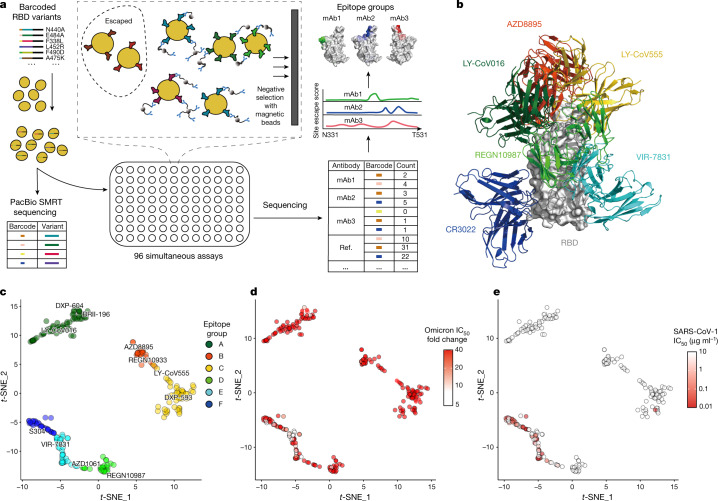
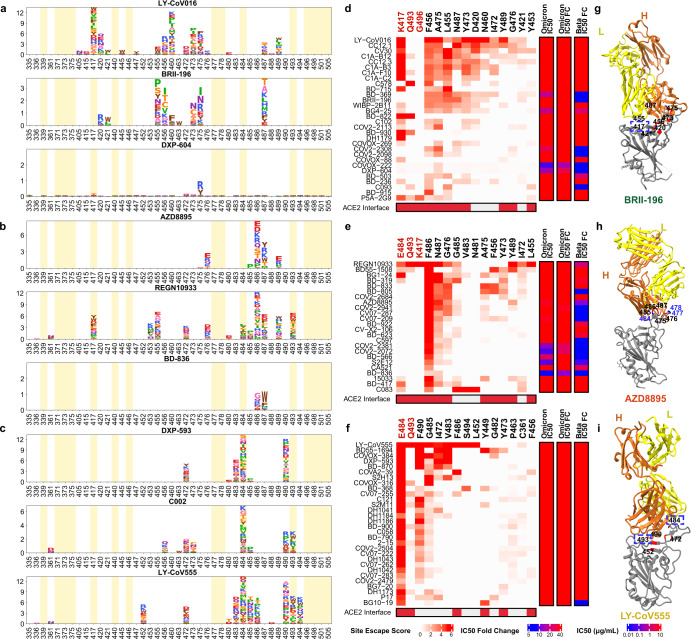
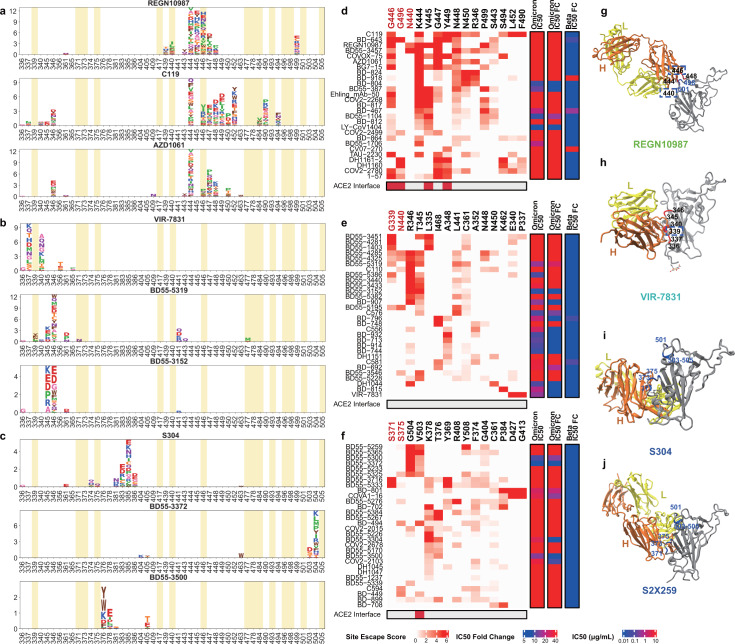
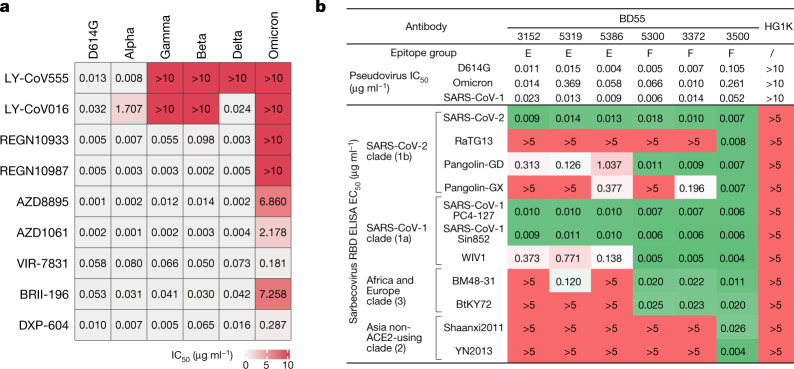
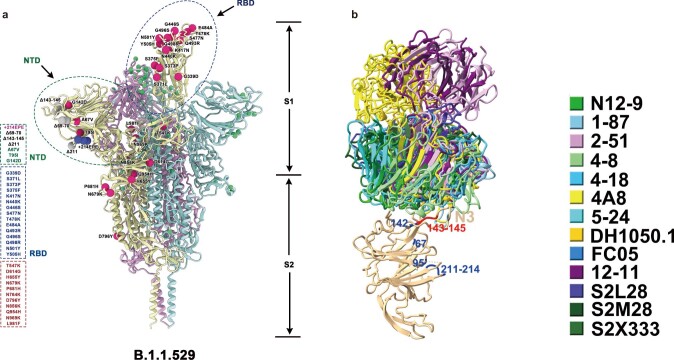
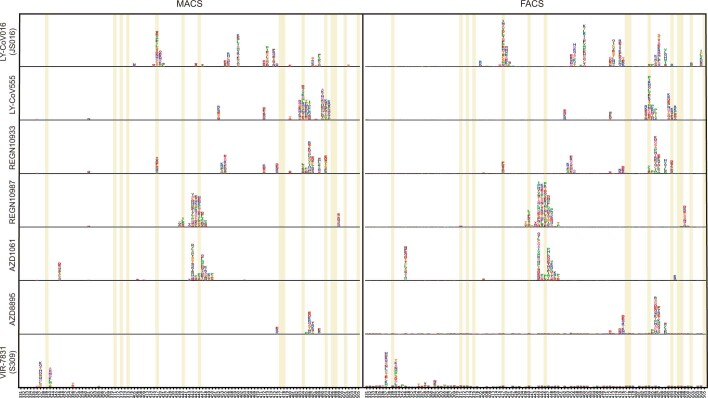
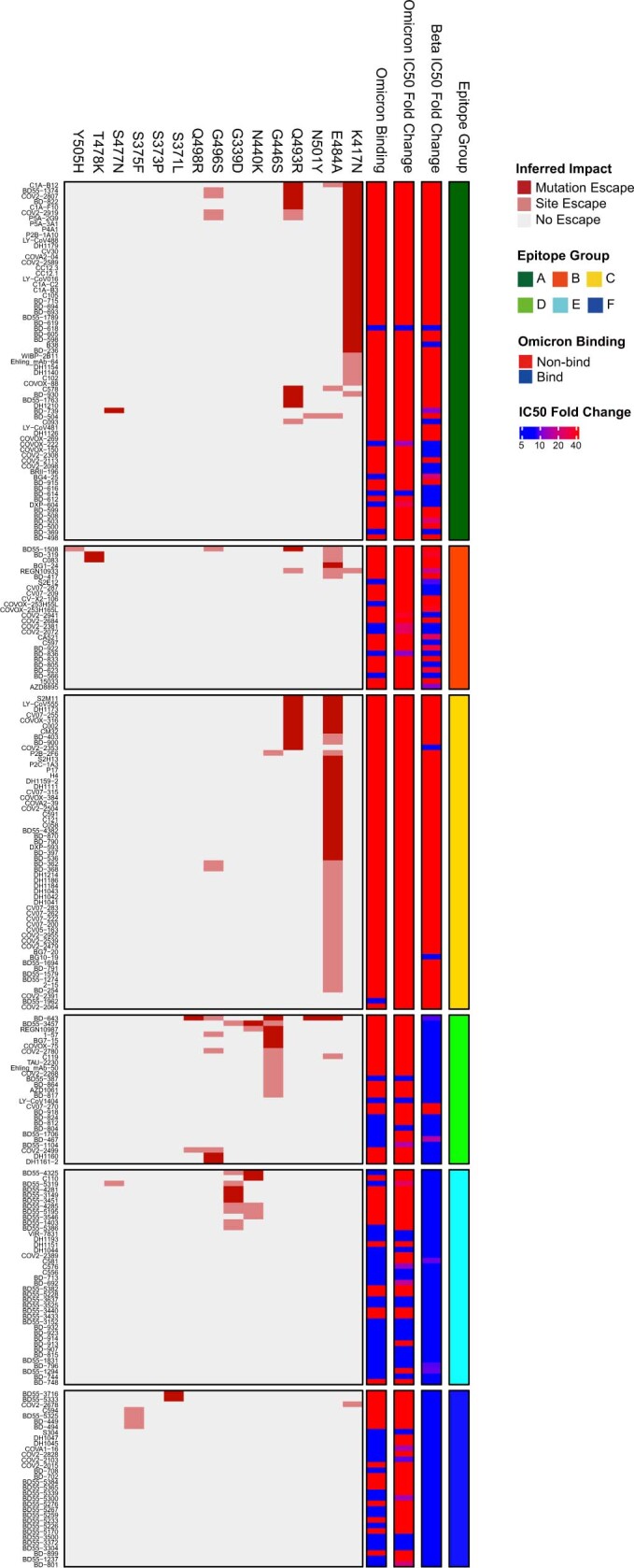
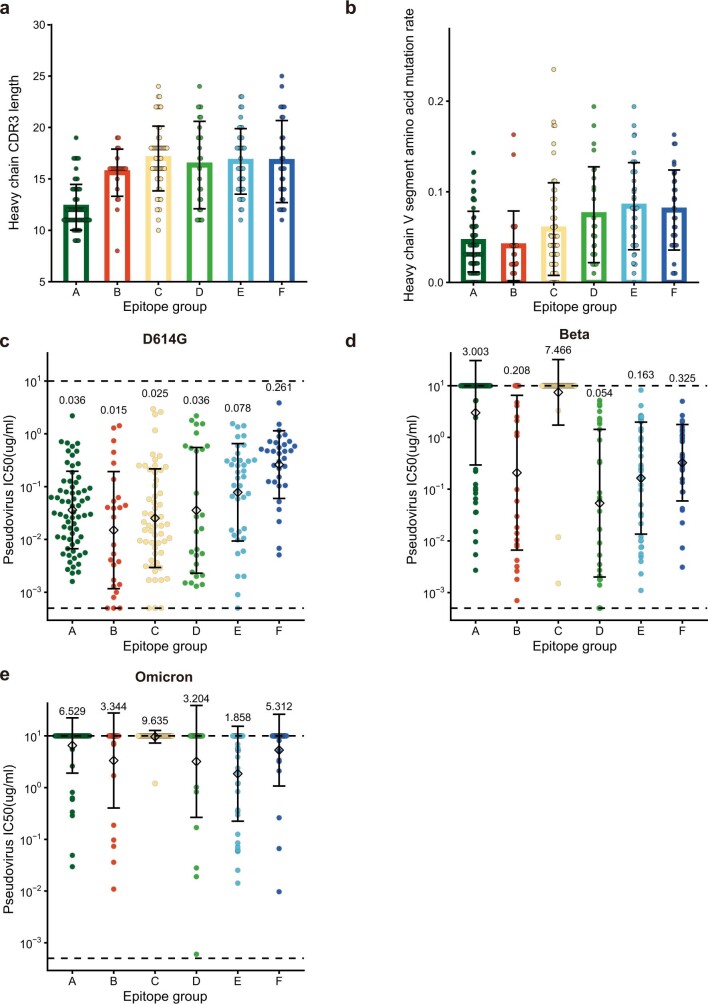
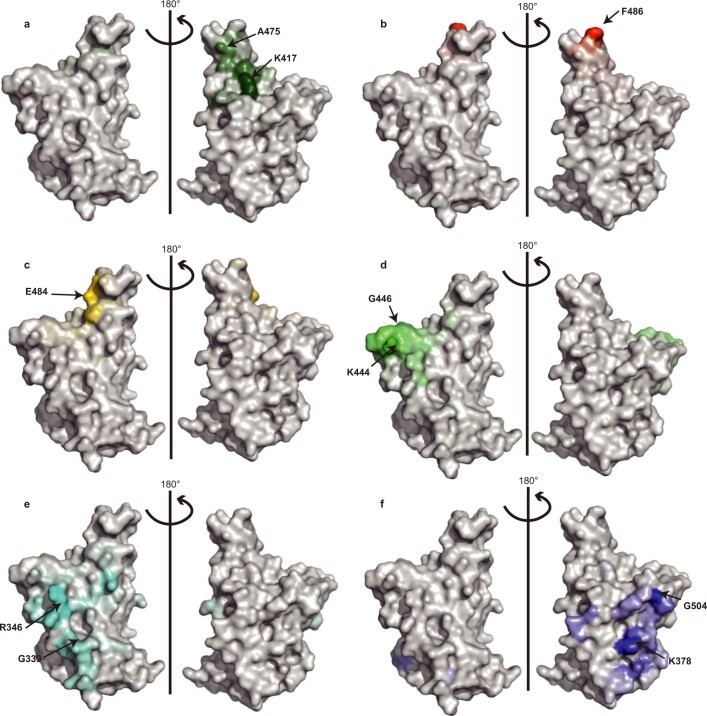
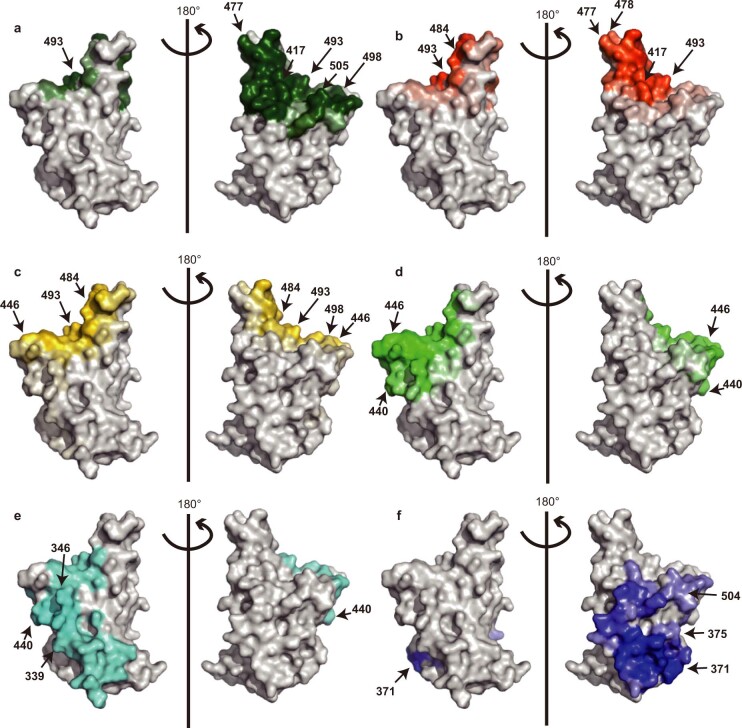
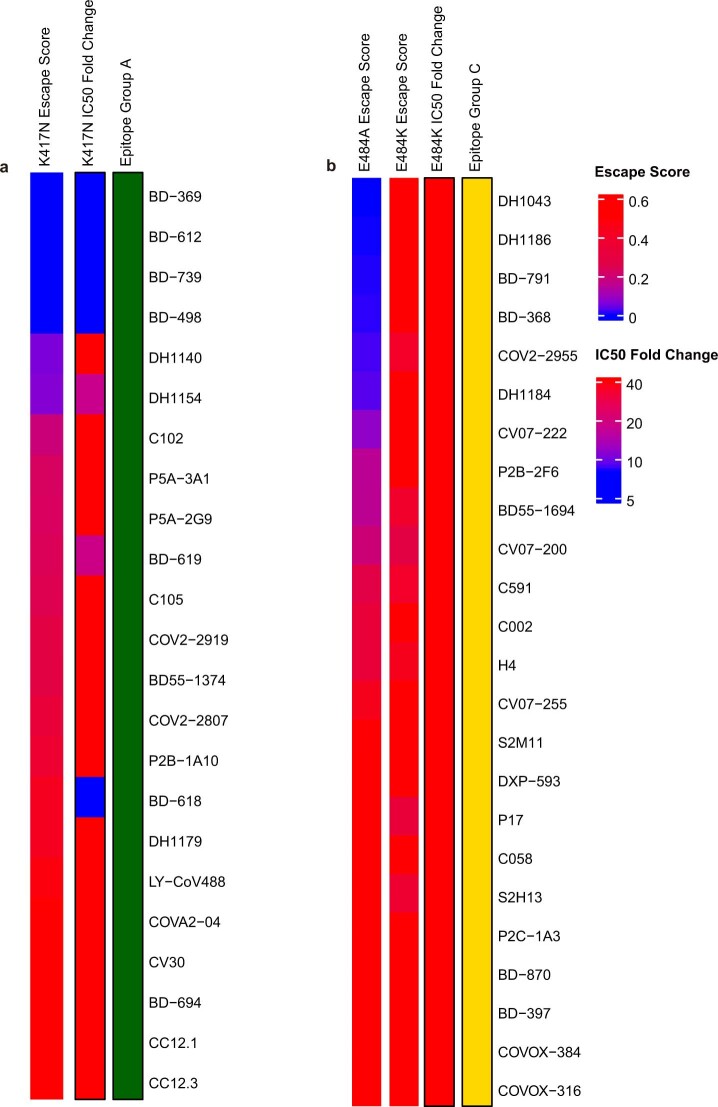
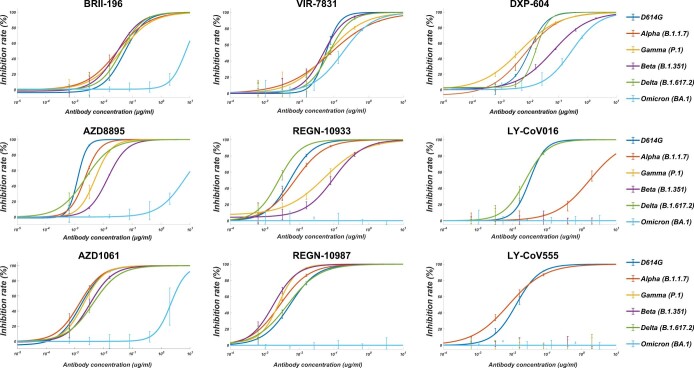
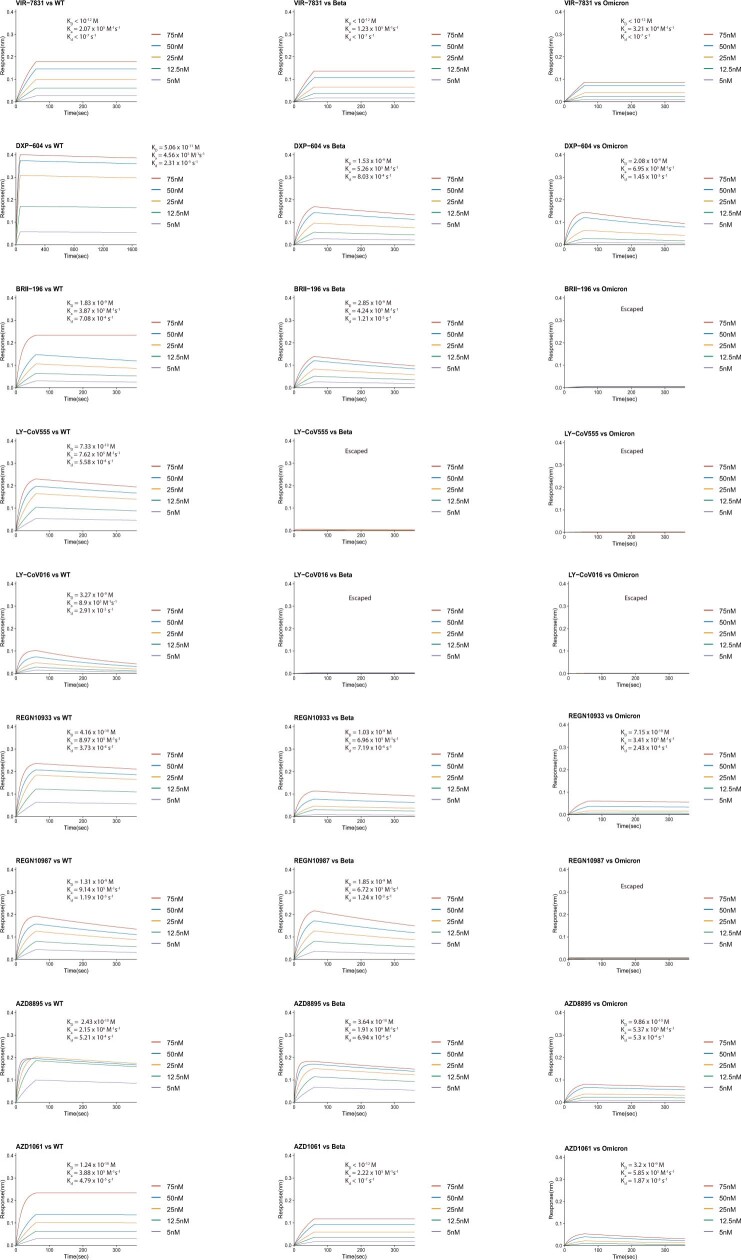
The SARS-CoV-2 B.1.1.529 (Omicron) variant contains 15 mutations of the receptor-binding domain (RBD). How Omicron evades RBD-targeted neutralizing antibodies requires immediate investigation. Here we use high-throughput yeast display screening 1,2 to determine the profiles of RBD escaping mutations for 247 human anti-RBD neutralizing antibodies and show that the neutralizing antibodies can be classified by unsupervised clustering into six epitope groups (A–F)—a grouping that is highly concordant with knowledge-based structural classifications 3–5 . Various single mutations of Omicron can impair neutralizing antibodies of different epitope groups. Specifically, neutralizing antibodies in groups A–D, the epitopes of which overlap with the ACE2-binding motif, are largely escaped by K417N, G446S, E484A and Q493R. Antibodies in group E (for example, S309) 6 and group F (for example, CR3022) 7 , which often exhibit broad sarbecovirus neutralizing activity, are less affected by Omicron, but a subset of neutralizing antibodies are still escaped by G339D, N440K and S371L. Furthermore, Omicron pseudovirus neutralization showed that neutralizing antibodies that sustained single mutations could also be escaped, owing to multiple synergetic mutations on their epitopes. In total, over 85% of the tested neutralizing antibodies were escaped by Omicron. With regard to neutralizing-antibody-based drugs, the neutralization potency of LY-CoV016, LY-CoV555, REGN10933, REGN10987, AZD1061, AZD8895 and BRII-196 was greatly undermined by Omicron, whereas VIR-7831 and DXP-604 still functioned at a reduced efficacy. Together, our data suggest that infection with Omicron would result in considerable humoral immune evasion, and that neutralizing antibodies targeting the sarbecovirus conserved region will remain most effective. Our results inform the development of antibody-based drugs and vaccines against Omicron and future variants.
Overview
The claims and statistics of this paper haven’t been checked yet.
Run the check — free, no account needed. It reads the open-access text and checks the sources it cites.
Integrity signals
Registry
Cites
Statistics
Figures
Verification
Claims the paper makes
The claims and statistics of this paper haven’t been checked yet.
Run the check — free, no account needed. It reads the open-access text and checks the sources it cites.
Claims other papers make about this one
Each is checked against this paper’s own text: does it say what the citing paper says it does?
In the citing paper
“Deep mutational scanning experiments of the SARS-CoV-2 receptor binding domain suggest that further mutations of Omicron BA.1/2 at sites 452 and 486 could lead to further immune evasion against antibodies isolated from individuals who had pre-Omicron and Omicron BA.1 breakthrough infections 21,28,29 .”
From Rapidly shifting immunologic landscape and severity of SARS-CoV-2 in the Omicron era in South Africa (2023) · cites this paper as [21]
In the citing paper
“Reinfections and vaccine breakthrough infections accounted for the majority of Omicron BA.1/2 infections, likely attributable to a minority of population remaining naïve prior to the Omicron BA.1/2 wave and to Omicron BA.1/2's immune-escape properties 16,21,22 .”
From Rapidly shifting immunologic landscape and severity of SARS-CoV-2 in the Omicron era in South Africa (2023) · cites this paper as [21]
In the citing paper
“Over reliance on immune memory may impact the breadth and strength of antibody and B-cell immunity as new antigenically drifted variants arise 15,21,32,33 .”
From Rapidly shifting immunologic landscape and severity of SARS-CoV-2 in the Omicron era in South Africa (2023) · cites this paper as [21]
Self-check
Percentages, sums and reported differences re-computed from the paper’s own numbers.
The self-check needs the paper’s full text.
Citations
Cites
SARS-CoV-2 variants, spike mutations and immune escape
Harvey, W. T., Carabelli, A. M., Jackson, B., Gupta, R. K., Thomson, E. C., Harrison, E. M., Ludden, C., Reeve, R., Rambaut, A., COVID-19 Genomics UK (COG-UK) Consortium, et al. (2021) · Nature Reviews Microbiology · doi:10.1038/s41579-021-00573-0 · Cited by 3,528
High-efficiency yeast transformation using the LiAc/SS carrier DNA/PEG method
Gietz, R. D., & Schiestl, R. H. (2007) · Nature Protocols · doi:10.1038/nprot.2007.13 · Cited by 2,785
Starr, T. N., Greaney, A. J., Hilton, S. K., Ellis, D., Crawford, K. H. D., Dingens, A. S., Navarro, M. J., Bowen, J. E., Tortorici, M. A., Walls, A. C., et al. (2020) · Cell · doi:10.1016/j.cell.2020.08.012 · Cited by 1,956
Cross-neutralization of SARS-CoV-2 by a human monoclonal SARS-CoV antibody
Pinto, D., Park, Y.-J., Beltramello, M., Walls, A. C., Tortorici, M. A., Bianchi, S., Jaconi, S., Culap, K., Zatta, F., De Marco, A., et al. (2020) · Nature · doi:10.1038/s41586-020-2349-y · Cited by 1,885
Convergent Antibody Responses to SARS-CoV-2 in Convalescent Individuals
Robbiani, D. F., Gaebler, C., Muecksch, F., Lorenzi, J. C. C., Wang, Z., Cho, A., Agudelo, M., Barnes, C. O., Gazumyan, A., Finkin, S., et al. (2020) · Nature · doi:10.1038/s41586-020-2456-9 · Cited by 1,853
Human neutralizing antibodies elicited by SARS-CoV-2 infection
Ju, B., Zhang, Q., Ge, J., Wang, R., Sun, J., Ge, X., Yu, J., Shan, S., Zhou, B., Song, S., et al. (2020) · Nature · doi:10.1038/s41586-020-2380-z · Cited by 1,667
Self-citationSARS-CoV-2 neutralizing antibody structures inform therapeutic strategies
Barnes, C. O., Jette, C. A., Abernathy, M. E., Dam, K.-M. A., Esswein, S. R., Gristick, H. B., Malyutin, A. G., Sharaf, N. G., Huey-Tubman, K. E., Lee, Y. E., et al. (2020) · Nature · doi:10.1038/s41586-020-2852-1 · Cited by 1,599
A highly conserved cryptic epitope in the receptor binding domains of SARS-CoV-2 and SARS-CoV
Yuan, M., Wu, N. C., Zhu, X., Lee, C.-C. D., So, R. T. Y., Lv, H., Mok, C. K. P., & Wilson, I. A. (2020) · Science · doi:10.1126/science.abb7269 · Cited by 1,429
Piccoli, L., Park, Y.-J., Tortorici, M. A., Czudnochowski, N., Walls, A. C., Beltramello, M., Silacci-Fregni, C., Pinto, D., Rosen, L. E., Bowen, J. E., et al. (2020) · Cell · doi:10.1016/j.cell.2020.09.037 · Cited by 1,395
Potent neutralizing antibodies against multiple epitopes on SARS-CoV-2 spike
Liu, L., Wang, P., Nair, M. S., Yu, J., Rapp, M., Wang, Q., Luo, Y., Chan, J. F.-W., Sahi, V., Figueroa, A., et al. (2020) · Nature · doi:10.1038/s41586-020-2571-7 · Cited by 1,349
Self-citation
Cited by
Sorted by citations
Items 901–1,000 of 1,000
Gu, M., Wu, M., Yuan, Y., Ho, P., Zhou, Z., Zhao, E., Shen, C., & Chen, S. (2022) · Materials Chemistry Frontiers · doi:10.1039/d2qm00630h · Cited by 9
Cohen‐Dvashi, H., Weinstein, J. J., Katz, M., Eilon-Ashkenazy, M., Mor, Y., Shimon, A., Achdout, H., Tamir, H., Israely, T., Strobelt, R., et al. (2022) · iScience · doi:10.1016/j.isci.2022.105193 · Cited by 9
Geromichalou, E. G., & Geromichalos, G. D. (2022) · Molecules · doi:10.3390/molecules27217572 · Cited by 8
Divergent Antibody Repertoires Found for Omicron versus Wuhan SARS-CoV-2 Strains Using Ig-MS
Forte, E., Soye, B. J. D., Melani, R. D., Hollas, M. A. R., Kafader, J. O., Sha, B. E., Schneider, J. R., & Kelleher, N. L. (2022) · Journal of Proteome Research · doi:10.1021/acs.jproteome.2c00514 · Cited by 8
Liu, H., Varvel, S. A., Chen, G., McConnell, J. P., Caffrey, R., Galdzicka, M. M., & Shabahang, S. (2022) · Frontiers in Immunology · doi:10.3389/fimmu.2022.1039163 · Cited by 10
Balasubramaniyam, A., Ryan, E. C., Brown, D. R., Hamza, T., Harrison, W., Gan, M., Sankhala, R. S., Chen, W., Martinez, E. J., Jensen, J. L., et al. (2022) · Vaccines · doi:10.3390/vaccines11010042 · Cited by 9
Impact of Reinfection with SARS-CoV-2 Omicron Variants in Previously Infected Hamsters
Shiwa-Sudo, N., Sakai, Y., Iwata‐Yoshikawa, N., Watanabe, S., Yamada, S., Kuroda, Y., Yamamoto, T., Shirakura, M., Fujisaki, S., Miyazaki, K., et al. (2023) · Journal of Virology · doi:10.1128/jvi.01366-22 · Cited by 9
Jabr, R., Khatri, A. M., Anderson, A. D., Garcia, L. A. C., Viotti, J. B., Natori, Y., Raja, M. A., Camargo, J. F., & Morris, M. I. (2023) · Transplant Infectious Disease · doi:10.1111/tid.14006 · Cited by 8
Dynamics of SARS-CoV-2 VOC Neutralization and Novel mAb Reveal Protection against Omicron
Hao, L., Hsiang, T.-Y., Dalmat, R. R., Ireton, R. C., Morton, J. F., Stokes, C., Netland, J., Hale, M. R., Thouvenel, C., Wald, A., et al. (2023) · Viruses · doi:10.3390/v15020530 · Cited by 8
García‐Vega, M., Melgoza-González, E. A., Hernández‐Valenzuela, S., Hinojosa‐Trujillo, D., Reséndiz‐Sandoval, M., Llamas-Covarrubias, M. A., Loza-López, M., Valenzuela, O., Soto‐Gaxiola, A., Hernández‐Oñate, M. Á., et al. (2023) · iScience · doi:10.1016/j.isci.2023.106562 · Cited by 9
Zheng, Y., Pan, J., Jin, M., Wang, J., Tung, T., Chen, S., Bi, X., Zhou, K., Chen, M., Wang, D., et al. (2023) · International Immunopharmacology · doi:10.1016/j.intimp.2023.110151 · Cited by 9
Self-citationGupta, A., Singh, A. P., Singh, V. K., & Sinha, R. P. (2023) · Viruses · doi:10.3390/v15061234 · Cited by 8
Cobre, A. D. F., Neto, M. M., de Melo, E. B., Fachi, M. M., Ferreira, L. M., Tonin, F. S., & Pontarolo, R. (2023) · Journal of Biomolecular Structure and Dynamics · doi:10.1080/07391102.2023.2229446 · Cited by 9
Katzmarzyk, M., Clesle, D. C., van den Heuvel, J., Hoffmann, M., Garritsen, H., Pöhlmann, S., Jacobsen, H., & Čičin‐Šain, L. (2023) · Frontiers in Immunology · doi:10.3389/fimmu.2023.1288794 · Cited by 7
Chronic shedding of a SARS-CoV-2 Alpha variant in wastewater
Conway, M. J., Yang, H., Revord, L. A., Novay, M. P., Lee, R. J., Ward, A. S., Abel, J. D., Williams, M. R., Uzarski, R. L., & Alm, E. W. (2024) · BMC Genomics · doi:10.1186/s12864-024-09977-7 · Cited by 9
Acute Actions of Natriuretic Peptides in Coronary Vasculature and Ischaemic Myocardium
Rautureau, Y., & Baxter, G. F. (2004) · Current Pharmaceutical Design · doi:10.2174/1381612043383854 · Cited by 9
Ragoobir, J., Abayasekara, D. R. E., Bruckdorfer, K. R., & Michael, A. E. (2002) · Journal of Endocrinology · doi:10.1677/joe.0.1730103 · Cited by 9
Ku, Z., Xie, X., Lin, J., Gao, P., Sahili, A. E., Su, H., Liu, Y., Ye, X., Li, X., Fan, X., et al. (2022) · bioRxiv (Cold Spring Harbor Laboratory) · doi:10.1101/2022.02.01.478504 · Cited by 9
Self-citationTao, K., Tzou, P. L., Pond, S. L. K., Ioannidis, J. P. A., & Shafer, R. W. (2022) · Preprints.org · doi:10.20944/preprints202203.0155.v1 · Cited by 9
Woo, M. S., Brehm, T. T., Fischer, M., Heyer, A., Wichmann, D., Jordan, S., Nörz, D. S., Lütgehetmann, M., Addo, M. M., Lohse, A. W., et al. (2022) · Microbiology Spectrum · doi:10.1128/spectrum.04103-22 · Cited by 8
Chong, W. L., Saparpakorn, P., Sangma, C., Lee, V. S., & Hannongbua, S. (2023) · Heliyon · doi:10.1016/j.heliyon.2022.e12667 · Cited by 9
An in vitro experimental pipeline to characterize the epitope of a SARS-CoV-2 neutralizing antibody
Atanasoff, K. E., Brambilla, L., Adelsberg, D. C., Kowdle, S., Stevens, C. S., Slamanig, S., Hung, C.-T., Fu, Y., Lim, R. K. V., Tran, L. M., et al. (2023) · mBio · doi:10.1128/mbio.02477-23 · Cited by 8
Developing CAR-immune cell therapy against SARS-CoV-2: Current status, challenges and prospects
Chen, Y., Liu, C., Fang, Y., Chen, W., Qiu, J., Zhu, M., Wei, W., & Tu, J. (2024) · Biochemical Pharmacology · doi:10.1016/j.bcp.2024.116066 · Cited by 8
Circulating cytokines and vascular dementia: A bi-directional Mendelian randomization study
Xia, Y., Xu, Z., Zhang, Y., Jiang, D., Zhu, Y., Liang, X., & Sun, R. (2024) · Experimental Gerontology · doi:10.1016/j.exger.2024.112394 · Cited by 8
Honda, T., Toyama, S., Matsumoto, Y., Sanada, T., Yasui, F., Koseki, A., Kono, R., Yamamoto, N., Kamishita, T., Kodake, N., et al. (2024) · Vaccines · doi:10.3390/vaccines12070794 · Cited by 8
Identification of antibody-resistant SARS-CoV-2 mutants via N4-Hydroxycytidine mutagenesis
Kumar, P., Zhang, X., Shaha, R., Kschischo, M., & Dobbelstein, M. (2024) · Antiviral Research · doi:10.1016/j.antiviral.2024.106006 · Cited by 7
Zhang, Z., Zhang, Y., Zhang, Y., Cheng, L., Zhang, L., Yan, Q., Liu, X., Chen, J., Dai, J., Guo, Y., et al. (2024) · MedComm · doi:10.1002/mco2.70008 · Cited by 8
Self-citationA Structural Voyage Toward the Landscape of Humoral and Cellular Immune Escapes of SARS ‐ CoV ‐2
Liu, J., Wu, Y., & Gao, G. F. (2025) · Immunological Reviews · doi:10.1111/imr.70000 · Cited by 8
Design of SARS-CoV-2 RBD immunogens to focus immune responses toward conserved coronavirus epitopes
Harris, C., Kapingidza, A. B., San, J. E., Christopher, J., Gavitt, T. D., Rhodes, B., Janowska, K., O’Donnell, C., Lindenberger, J. J., Huang, X. Y., et al. (2025) · Journal of Virology · doi:10.1128/jvi.00465-25 · Cited by 8
Enhanced deep Convolutional Neural Network for SARS-CoV-2 variants classification
Awe, O. I., Obura, H. O., Charles, S., Mudibo, E. O., & Mwanga, M. J. (2025) · Frontiers in Artificial Intelligence · doi:10.3389/frai.2025.1512003 · Cited by 28
Dadonaite, B., Harari, S., Larsen, B. B., Kampman, L., Harteloo, A., Elias-Warren, A., Chu, H. Y., & Bloom, J. D. (2025) · Journal of Virology · doi:10.1128/jvi.01423-25 · Cited by 11
Duration of COVID-19 PCR positivity for Omicron vs earlier variants
Kojima, N., Roshani, A., & Klausner, J. D. (2022) · Journal of Clinical Virology Plus · doi:10.1016/j.jcvp.2022.100085 · Cited by 8
T-cell immunity: a barrier to Omicron immune evasion
Yu, F., Tai, W., & Cheng, G. (2022) · Signal Transduction and Targeted Therapy · doi:10.1038/s41392-022-01142-4 · Cited by 8
Parn, S., Savsani, K., & Dakshanamurthy, S. (2022) · ImmunoInformatics · doi:10.1016/j.immuno.2022.100020 · Cited by 8
Hu, C., Liu, Y., Sun, Q., Zheng, D., Fang, Y., Guo, F., Wang, Y., He, Y., Cen, Y., & Zeng, F. (2022) · BMC Infectious Diseases · doi:10.1186/s12879-022-07935-w · Cited by 8
Self-citationYang, L., Caradonna, T. M., Schmidt, A. G., & Chakraborty, A. K. (2023) · Cell Reports · doi:10.1016/j.celrep.2023.112160 · Cited by 8
Mechanism of a rabbit monoclonal antibody broadly neutralizing SARS-CoV-2 variants
Guo, H., Yang, Y., Zhao, T., Lu, Y., Gao, Y., Li, T., Xiao, H., Chu, X., Zheng, L., Li, W., et al. (2023) · Communications Biology · doi:10.1038/s42003-023-04759-5 · Cited by 9
Self-citationStructural basis of spike RBM-specific human antibodies counteracting broad SARS-CoV-2 variants
Shitaoka, K., Higashiura, A., Kawano, Y., Yamamoto, A., Mizoguchi, Y., Hashiguchi, T., Nishimichi, N., Huang, S., Ito, A., Ohki, S., et al. (2023) · Communications Biology · doi:10.1038/s42003-023-04782-6 · Cited by 9
CD62L expression marks SARS-CoV-2 memory B cell subset with preference for neutralizing epitopes
Onodera, T., Sax, N., Sato, T., Adachi, Y., Kotaki, R., Inoue, T., Shinnakasu, R., Nakagawa, T., Fukushi, S., Terooatea, T. W., et al. (2023) · Science Advances · doi:10.1126/sciadv.adf0661 · Cited by 7
Sarkar, A., Santra, D., Panja, A. S., & Maiti, S. (2023) · International Immunopharmacology · doi:10.1016/j.intimp.2023.110636 · Cited by 8
Yadav, P. D., Sahay, R. R., Salwe, S., Trimbake, D., Babar, P., Sapkal, G. N., Deshpande, G. R., Bhise, K., Shete, A. M., Abraham, P., et al. (2023) · Journal of Immunology Research · doi:10.1155/2023/8846953 · Cited by 8
Azvudine versus paxlovid for oral treatment of COVID-19 in Chinese patients
Su, P., Yang, C., & Wang, X. (2024) · BMC Infectious Diseases · doi:10.1186/s12879-023-08828-2 · Cited by 8
Self-citationVerheul, M. K., Kaczorowska, J., Hofstee, M. I., Schepp, R. M., Smits, G. P., Beljaars, D. W., Kuijer, M., Schuin, W., Middelhof, I., Wong, D., et al. (2024) · Mucosal Immunology · doi:10.1016/j.mucimm.2024.03.008 · Cited by 8
Dynamic analysis of SARS-CoV-2 evolution based on different countries
Xiao, B., Wu, L., Sun, Q., Shu, C., & Hu, S. (2024) · Gene · doi:10.1016/j.gene.2024.148426 · Cited by 9
Antibody drugs targeting SARS-CoV-2: Time for a rethink?
Liang, L., Wang, B., Zhang, Q., Zhang, S., & Zhang, S. (2024) · Biomedicine & Pharmacotherapy · doi:10.1016/j.biopha.2024.116900 · Cited by 8
Muik, A., Quandt, J., Lui, B. G., Bacher, M., Lutz, S., Grünenthal, M., Toker, A., Grosser, J., Ozhelvaci, O., Blokhina, O., et al. (2024) · Cell Reports · doi:10.1016/j.celrep.2024.114567 · Cited by 10
Intranasal Multiepitope PD‐L1‐siRNA‐Based Nanovaccine: The Next‐Gen COVID‐19 Immunotherapy
Acúrcio, R. C., Kleiner, R., Vaskovich‐Koubi, D., Carreira, B., Liubomirski, Y., Palma, C., Yeheskel, A., Yeini, E., Viana, A. S., Ferreira, V., et al. (2024) · Advanced Science · doi:10.1002/advs.202404159 · Cited by 8
Kuramochi, T., Gan, S. W., Ho, A. W. S., Wang, B., Kageji, N., Nambu, T., Iida, S., Okuda-Miura, M., Chia, W. S., Yeo, C. Y., et al. (2022) · mAbs · doi:10.1080/19420862.2022.2040350 · Cited by 7
Hastert, F. D., Hein, S., von Rhein, C., Benz, N. I., Husria, Y., Oberle, D., Maier, T. J., Hildt, E., & Schnierle, B. S. (2022) · Vaccines · doi:10.3390/vaccines10050794 · Cited by 10
Li, Y., Fan, Q., Zhou, B., Shen, Y., Zhang, Y., Cheng, L., Qi, F., Song, S., Guo, Y., Yan, R., et al. (2022) · iScience · doi:10.1016/j.isci.2022.104431 · Cited by 8
Self-citationIn silico SARS-CoV-2 vaccine development for Omicron strain using reverse vaccinology
Li, V., Lee, C., Yoo, D., Cho, S., & Kim, H. (2022) · Genes & Genomics · doi:10.1007/s13258-022-01255-8 · Cited by 7
Bonura, F., Genovese, D., Amodio, E., Calamusa, G., Sanfilippo, G. L., Cacioppo, F., Giammanco, A., Grazia, S. D., & Ferraro, D. (2022) · Vaccines · doi:10.3390/vaccines10060874 · Cited by 8
Zhao, L., Qin, X.-B., Lin, T., Xie, F., Yao, L., Li, Y., Xiong, B., Xu, Z., Ye, Y., Chen, H., et al. (2022) · Journal of Ethnopharmacology · doi:10.1016/j.jep.2022.115528 · Cited by 8
Uninvited Guest: Arrival and Dissemination of Omicron Lineage SARS-CoV-2 in St. Petersburg, Russia
Gladkikh, A. S., Dedkov, V. G., Sharova, A. А., Klyuchnikova, E. O., Sbarzaglia, V. A., Arbuzova, T. V., Forghani, M., Ramsay, E. S., Dolgova, A. S., Shabalina, A. V., et al. (2022) · Microorganisms · doi:10.3390/microorganisms10081676 · Cited by 8
Singh, P., Negi, S. S., Bhargava, A., Kolla, V., & Arora, R. D. (2022) · Archives of Medical Research · doi:10.1016/j.arcmed.2022.08.006 · Cited by 9
Alshubaith, I. H., Alhajri, S. M., Alhajri, A. S., Alsultan, R. A., Azhar, E. I., Alhussaini, B. H., Solami, L. S. A., de Oliveira, M. C., Khafaga, A. F., Al‐Qurashi, A. D., et al. (2022) · Environmental Science and Pollution Research · doi:10.1007/s11356-022-22468-0 · Cited by 8
RetractedSun, P., Ramos, I., Coelho, C. H., Grifoni, A., Balinsky, C. A., Vangeti, S., Tarke, A., Bloom, N. I., Jani, V., Jakubski, S., et al. (2022) · iScience · doi:10.1016/j.isci.2022.105202 · Cited by 7
Lou, H., Zheng, J.-Q., Fang, X., Liang, Z., Zhang, M. L., Chen, Y. Z., Wang, C., & Cao, X. (2022) · Cell Research · doi:10.1038/s41422-022-00727-6 · Cited by 9
Burke, M. J., Scott, J. N. F., Minshull, T. C., Gao, Z., Manfield, I. W., Savic, S., Stockley, P. G., Calabrese, A. N., & Boyes, J. (2022) · Journal of Biological Chemistry · doi:10.1016/j.jbc.2022.102624 · Cited by 8
An Engineered IgG–VHH Bispecific Antibody against SARS‐CoV‐2 and Its Variants
Chi, H., Wang, L., Liu, C., Cheng, X., Zheng, H., Lv, L., Tan, Y., Zhang, N., Zhao, S.-Q., Wu, M., et al. (2022) · Small Methods · doi:10.1002/smtd.202200932 · Cited by 8
Self-citationYan, Z., Li, X., Ma, Y., & Ding, H. (2022) · Langmuir · doi:10.1021/acs.langmuir.2c02316 · Cited by 8
Hod, T., Ben‐David, A., Mor, E., Olmer, L., Halperin, R., Indenbaum, V., Beckerman, P., Doolman, R., Asraf, K., Atari, N., et al. (2022) · Transplantation · doi:10.1097/tp.0000000000004383 · Cited by 10
SARS-CoV-2 variants of concerns in animals: An unmonitored rising health threat
Saied, A. A., & Metwally, A. A. (2022) · VirusDisease · doi:10.1007/s13337-022-00794-8 · Cited by 8
Fiedler, S., Devenish, S. R. A., Morgunov, A. S., Ilsley, A., Ricci, F., Emmenegger, M., Kosmoliaptsis, V., Theel, E. S., Mills, J. R., Sholukh, A. M., et al. (2022) · Scientific Reports · doi:10.1038/s41598-022-22214-z · Cited by 8
Hepatic dysfunctions in COVID-19 patients infected by the omicron variant of SARS-CoV-2
Zhang, J., Zhao, D., Hu, J., Huang, X., Gu, Q., & Tao, Z. (2022) · Frontiers in Public Health · doi:10.3389/fpubh.2022.1049006 · Cited by 8
Tan, C. M., Owuamalam, C. K., Sarma, V., & Ng, P. K. (2022) · Stress and Health · doi:10.1002/smi.3216 · Cited by 7
Prediction of antibody binding to SARS-CoV-2 RBDs
Wang, E. J. D. (2022) · Bioinformatics Advances · doi:10.1093/bioadv/vbac103 · Cited by 9
Nguyen, V. G., Yavlinsky, A., Beale, S., Hoskins, S., Byrne, T., Lampos, V., Braithwaite, I., Fong, W. L. E., Fragaszy, E., Geismar, C., et al. (2023) · International Journal of Epidemiology · doi:10.1093/ije/dyad002 · Cited by 8
Advanced Vaccine Design Strategies against SARS-CoV-2 and Emerging Variants
Zhang, J., Xia, Y., Liu, X., & Liu, G. (2023) · Bioengineering · doi:10.3390/bioengineering10020148 · Cited by 8
Mwimanzi, F. M., Lapointe, H. R., Cheung, P. K., Sang, Y., Yaseen, F., Kalikawe, R., Datwani, S., Burns, L., Young, L., Leung, V. C. M., et al. (2023) · Open Forum Infectious Diseases · doi:10.1093/ofid/ofad073 · Cited by 9
Outsmarting Pathogens with Antibody Engineering
Qerqez, A. N., Silva, R. P., & Maynard, J. A. (2023) · Annual Review of Chemical and Biomolecular Engineering · doi:10.1146/annurev-chembioeng-101121-084508 · Cited by 8
Many Roles of Carbohydrates: A Computational Spotlight on the Coronavirus S Protein Binding
Maity, S., & Acharya, A. (2023) · ACS Applied Bio Materials · doi:10.1021/acsabm.2c01064 · Cited by 8
Ding, Y., Fan, F., Xu, X., Zhao, G., Zhang, X., Zhao, H., Wang, L., Wang, B., & Gao, X.-M. (2023) · Vaccines · doi:10.3390/vaccines11040778 · Cited by 10
Kuzmina, A., Korovin, D., Cohen-Lass, I., Atari, N., Ottolenghi, A., Hu, P., Mandelboim, M., Rosental, B., Rosenberg, E., Diaz‐Griffero, F., et al. (2023) · Heliyon · doi:10.1016/j.heliyon.2023.e16750 · Cited by 8
Govindaraj, S., Cheedarla, N., Cheedarla, S., Irby, L. S., Neish, A. S., Roback, J. D., Smith, A. K., & Velu, V. (2023) · Frontiers in Immunology · doi:10.3389/fimmu.2023.1211558 · Cited by 8
Potent antibodies against immune invasive SARS-CoV-2 Omicron subvariants
Wang, L., Wang, Y., & Zhou, H. (2023) · International Journal of Biological Macromolecules · doi:10.1016/j.ijbiomac.2023.125997 · Cited by 8
Self-citationAfrin, S. Z., Sathi, F. A., Nooruzzaman, M., & Parvin, R. (2023) · Virology · doi:10.1016/j.virol.2023.109882 · Cited by 8
Rizvi, Z. A., Madan, U., Tripathy, M. R., Goswami, S., Mani, S., Awasthi, A., & Dikshit, M. (2023) · Pharmaceuticals · doi:10.3390/ph16091333 · Cited by 8
Wu, Y., Wu, N., Jia, X., Wu, Y., Zhang, X., Liu, Y., Hou, Y., Shen, Y., Li, E., Wang, W., et al. (2023) · MedComm · doi:10.1002/mco2.460 · Cited by 7
Self-citationYi, C., Ling, Z., Lü, X., Fu, Y., Yang, Z. R., Wangmo, S., Chen, S., Zhang, Y., Ma, L., Gu, W., et al. (2022) · Cellular and Molecular Immunology · doi:10.1038/s41423-022-00853-6 · Cited by 8
Mazzotta, V., Cozzi‐Lepri, A., Colavita, F., Lanini, S., Rosati, S., Lalle, E., Mastrorosa, I., Cimaglia, C., Vergori, A., Bevilacqua, N., et al. (2022) · Frontiers in Immunology · doi:10.3389/fimmu.2022.868020 · Cited by 8
A Role for Nucleocapsid-Specific Antibody Function in COVID-19 Convalescent Plasma TherapyPreprint
Herman, J. D., Wang, C., Burke, J. S., Zur, Y., Compere, H., Kang, J., Macvicar, R., Shin, S. A., Frank, I., Siegel, D. L., et al. (2022) · medRxiv · doi:10.1101/2022.02.19.22271230 · Cited by 8
SARS-CoV-2 Omicron potently neutralized by a novel antibody with unique Spike binding propertiesPreprint
Fenwick, C. W., Turelli, P., Ni, D., Perez, L. H., Lau, K., Lana, E., Pellaton, C., Raclot, C., Esteves-Leuenberger, L., Campos, J., et al. (2022) · bioRxiv (Cold Spring Harbor Laboratory) · doi:10.1101/2022.03.18.484873 · Cited by 8
Ruiz, F., Foreman, W. B., Lilly, M., Baharani, V. A., Depierreux, D. M., Chohan, V., Taylor, A. L., Guenthoer, J., Ralph, D., Matsen IV, F. A., et al. (2024) · PLOS Pathogens · doi:10.1371/journal.ppat.1012650 · Cited by 7
FLip mutations (L455F + F456L) in newly emerging VOI, JN.1: Its antibody and immune escape
Chakraborty, C., & Bhattacharya, M. (2024) · International Immunopharmacology · doi:10.1016/j.intimp.2024.112146 · Cited by 7
Tan, Z., Yang, C., Lin, P., Ramadan, S., Yang, W., Rashidi, Z., Lang, S., Shafieichaharberoud, F., Gao, J., Pan, X., et al. (2024) · Advanced Healthcare Materials · doi:10.1002/adhm.202302755 · Cited by 7
Broad‐Spectrum Engineered Multivalent Nanobodies Against SARS‐CoV‐1/2
Wang, Z., Shi, Z., Liao, X., Quan, G., Dong, H., Zhao, P., Zhou, Y., Shi, N., Wang, J., Wu, Y., et al. (2024) · Advanced Science · doi:10.1002/advs.202402975 · Cited by 8
Self-citationDépéry, L., Bally, I., Amen, A., Némoz, B., Buisson, M., Grossi, L., Truffot, A., Germi, R., Guilligay, D., Véloso, M., et al. (2024) · Microbiology Spectrum · doi:10.1128/spectrum.01568-24 · Cited by 7
Zhao, L., Li, C., Wang, M., Zhou, M., Jiang, L., Zhang, W., Yu, J., Wang, W., Zhou, K., Pan, K., et al. (2025) · Antimicrobial Agents and Chemotherapy · doi:10.1128/aac.01556-24 · Cited by 7
Alshahrani, M., Parikh, V., Foley, B., & Verkhivker, G. M. (2025) · Viruses · doi:10.3390/v17060741 · Cited by 7
Mutation T9I in Envelope confers autophagy resistance to SARS-CoV-2 Omicron
Klute, S., Nchioua, R., Cordsmeier, A., Vishwakarma, J., Koepke, L., Alshammary, H., Jung, C., Hirschenberger, M., Hoenigsperger, H., Fischer, J.-R., et al. (2025) · iScience · doi:10.1016/j.isci.2025.112974 · Cited by 9
Panisset, M. G., Kilpatrick, T. J., Lizama, L. E. C., & Galea, M. P. (2022) · Multiple Sclerosis and Related Disorders · doi:10.1016/j.msard.2022.103933 · Cited by 8
Breakthrough infection shapes humoral immunity against SARS-CoV-2 Omicron Variant
Zhang, Y., Han, S., Guo, X., Yao, M., Zhao, L., Sun, W., Wang, S., Pang, B., Zhang, S., Wang, J., et al. (2022) · Journal of Infection · doi:10.1016/j.jinf.2022.10.021 · Cited by 7
Self-citationOvchynnykova, O., Капуста, К., Sizochenko, N., Sukhyy, K. M., Kołodziejczyk, W., Hill, G., & Saloni, J. (2022) · Molecules · doi:10.3390/molecules27217336 · Cited by 7
Cross-reactive SARS-CoV-2 epitope targeted across donors informs immunogen design
Hauser, B. M., Feldman, J. E., Sangesland, M., Ronsard, L., Denis, K. S., Sheehan, M. L., Cao, Y., Boucau, J., Windsor, I. W., Cheng, A. H., et al. (2022) · Cell Reports Medicine · doi:10.1016/j.xcrm.2022.100834 · Cited by 6
Self-citationEmerging Omicron subvariants evade neutralizing immunity elicited by vaccine or BA.1/BA.2 infection
Chen, Z., Li, J., Zheng, J., Jin, Y., Zhang, Y., Tang, F., Li, J., Cheng, H., Jiang, L., Wen, H., et al. (2023) · Journal of Medical Virology · doi:10.1002/jmv.28539 · Cited by 7
Guan, L., Mao, Q., Tan, D., Liu, J., Zhang, X., Li, L., Liu, M., Wang, Z., Cheng, F., Cui, B., et al. (2023) · Frontiers in Immunology · doi:10.3389/fimmu.2023.1107639 · Cited by 7
Self-citationSARS-CoV-2 S Glycoprotein Stabilization Strategies
Pedenko, B., Sulbarán, G., Guilligay, D., Effantin, G., & Weissenhorn, W. (2023) · Viruses · doi:10.3390/v15020558 · Cited by 8
GlyPerA™ effectively shields airway epithelia from SARS-CoV-2 infection and inflammatory events
Zaderer, V., Dichtl, S., Posch, W., Abiatari, I., Bonn, G. K., Jakschitz, T. A. E., Huber, L. A., Kurzchalia, T. V., & Wilflingseder, D. (2023) · Respiratory Research · doi:10.1186/s12931-023-02397-3 · Cited by 7
Metadata
- Authors
- Cao, Y., Wang, J., Jian, F., Xiao, T., Song, W., Yisimayi, A., Huang, W., Li, Q., Wang, P., An, R., Wang, J., Wang, Y., Niu, X., Yang, S., Liang, H., Sun, H., Li, T., Yu, Y., Cui, Q., Liu, S., Yang, X., Du, S., Zhang, Z., Hao, X., Shao, F., Jin, R., Wang, X., Xiao, J., Wang, Y., & Xie, X. S.
- Affiliations
- Peking University (CN)
- National Institutes for Food and Drug Control (CN)
- Capital Medical University (CN)
- Chinese Academy of Sciences (CN)
- Corresponding author
- Cao, Yunlong
- Wang, Yao
- Wang, Xiangxi
- Xiao, Junyu
- Wang, Youchun
- Xie, Xiaoliang Sunney
- ORCID
- Venue
- Nature
- Published
- 2021-12-23
- Volume
- 602
- Issue
- 7898
- Pages
- 657-663
- ISSN
- 0028-0836 (ISSN-L)
- 1476-4687
- PMC
- PMC8866119
- OpenAlex
- W4220807057
- Cited by
- 2,006
- References
- 56
- Citations by year
- 2026: 143 · 2025: 242 · 2024: 329 · 2023: 525 · 2022: 735 · 2021: 20
- FWCI
- 127.72
- Type
- journal article
- Language
- en
- Open access
- hybrid
- doi.org
- Locations
- Nature (publishedVersion, cc-by)
- bioRxiv (Cold Spring Harbor Laboratory) (acceptedVersion)
- Research Square (acceptedVersion, cc-by)
- PubMed Central (publishedVersion, cc-by)
- PubMed (publishedVersion)
- Funders
- Peking University
- Topics
- Health Sciences › Medicine › Infectious Diseases › SARS-CoV-2 and COVID-19 Research
- Life Sciences › Biochemistry, Genetics and Molecular Biology › Molecular Biology › vaccines and immunoinformatics approaches
- Life Sciences › Immunology and Microbiology › Immunology › Monoclonal and Polyclonal Antibodies Research
- Keywords
- Omicron variant, SARS-CoV-2, receptor binding domain, neutralizing antibodies, antibody escape, K417N, vaccine design
- MeSH terms
- Angiotensin-Converting Enzyme 2, COVID-19, SARS-CoV-2, COVID-19 Vaccines, Antibodies, Monoclonal, Antibodies, Viral, Cells, Cultured, Convalescence, Humans, Immune Sera, Models, Molecular, Mutation, Neutralization Tests, Epitopes, B-Lymphocyte, Immune Evasion, Antibodies, Neutralizing, Spike Glycoprotein, Coronavirus
About these checks
Registry, retraction, Cites and statistics results are computed, not judged, with one exception: a printed reference that no index lists is read once by a model before it counts as a citation error. Claims are extracted by a model and kept only when their quote appears verbatim in the text; each cited source is then checked, with a model’s help, for whether it says what the claim relies on. Those verdicts can be wrong — read the claim’s quote and the cited source before relying on one.
Statistics and arithmetic are recomputed, not judged.
Confidence bands are shown only for fields calibrated on our annotated test set. None is calibrated yet, so no band is shown.
What counts as a claim ›How we measure confidence ›How we check this ›
Are you an author, or do you see a problem with this page? Request a review
