

The DOI matches its Crossref record; 53 of the 53 references it cites were found in a registry or an index.
TDP-43 represses cryptic exon inclusion in the FTD-ALS gene UNC13A
Open accessPublished version of a preprint
Abstract
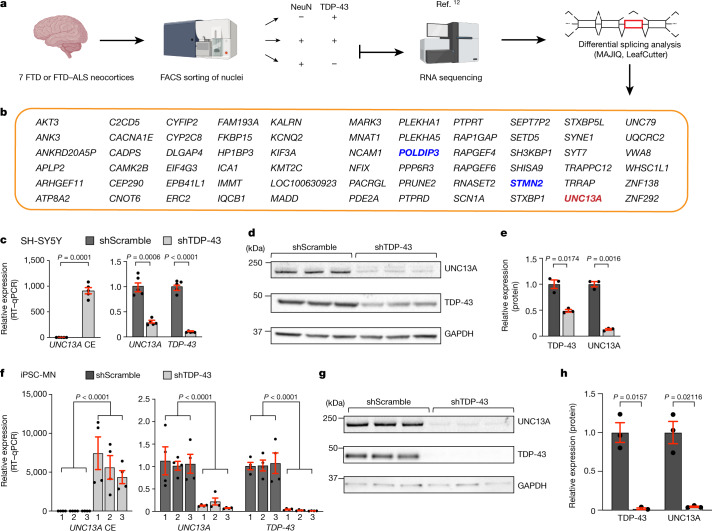
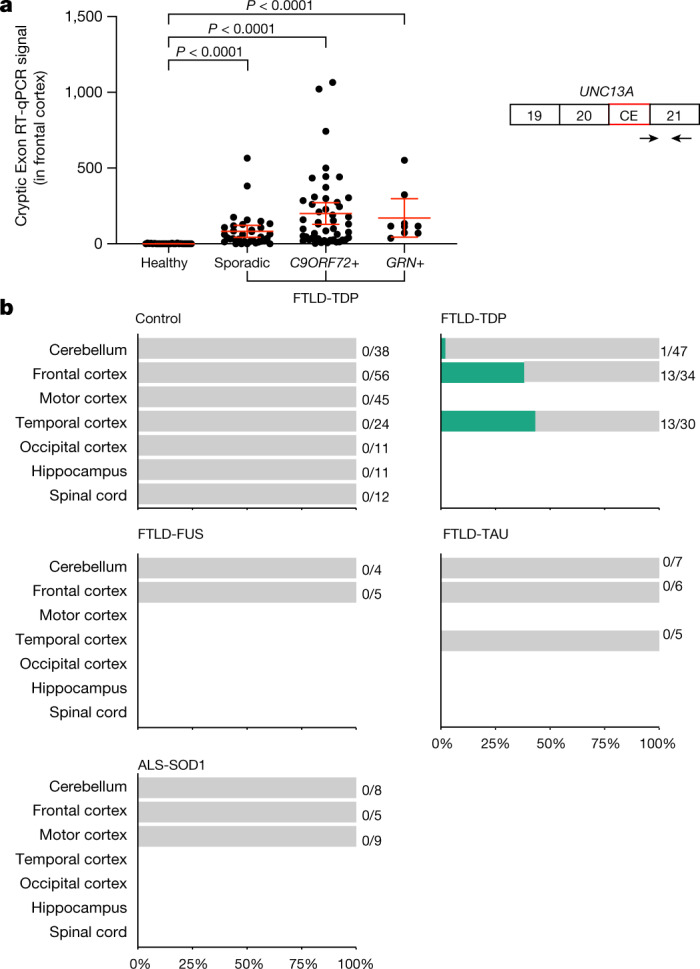
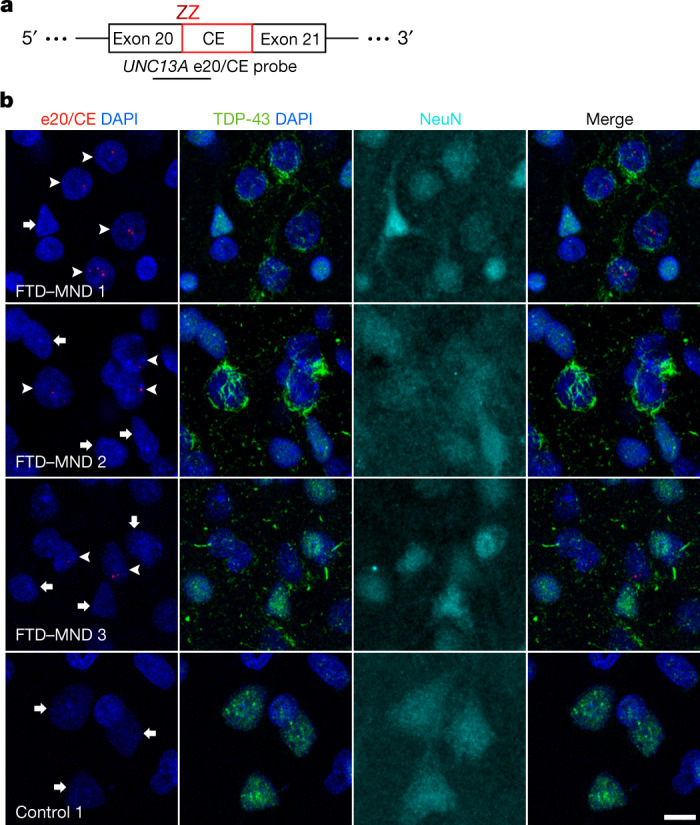
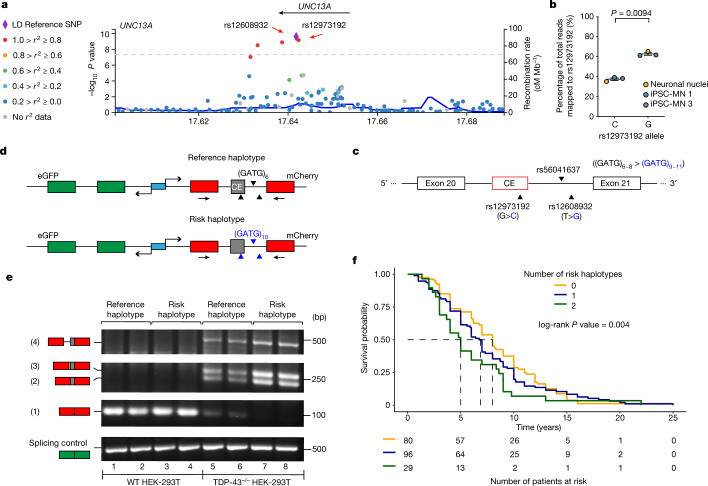
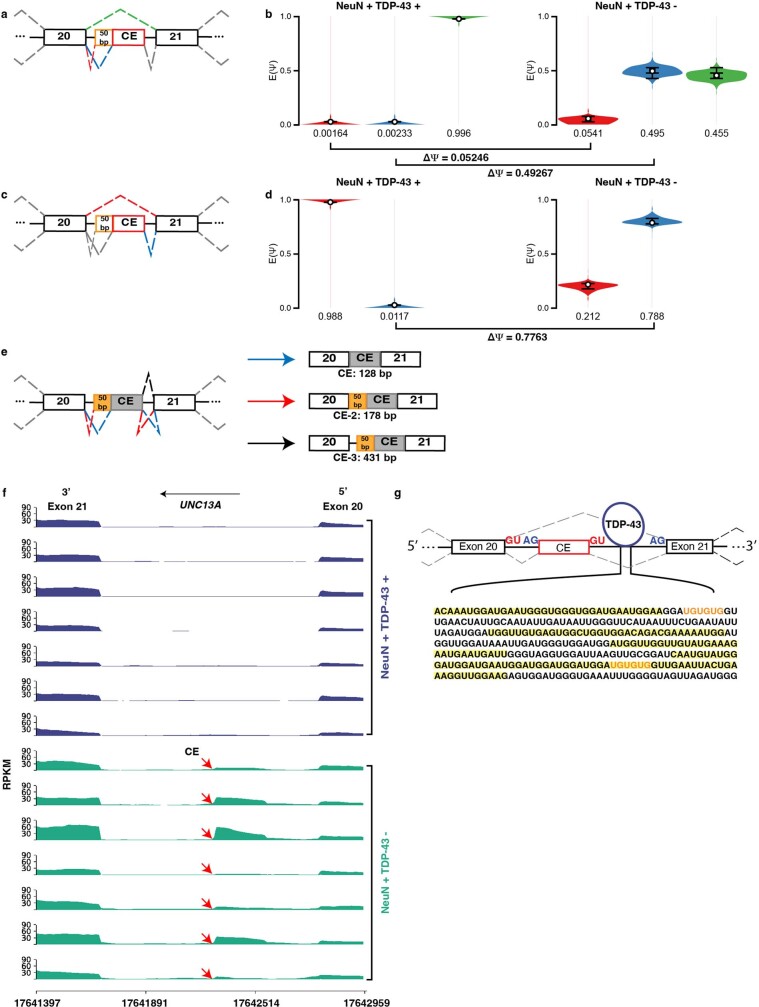
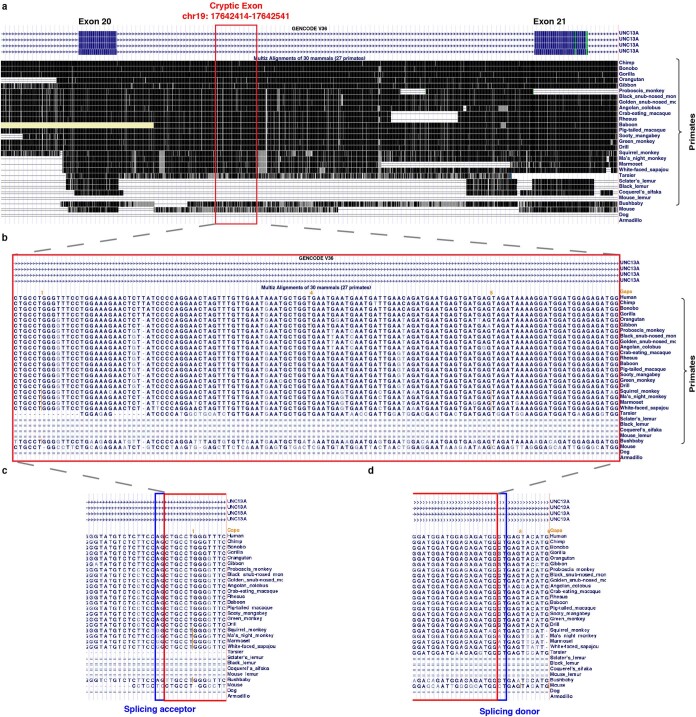
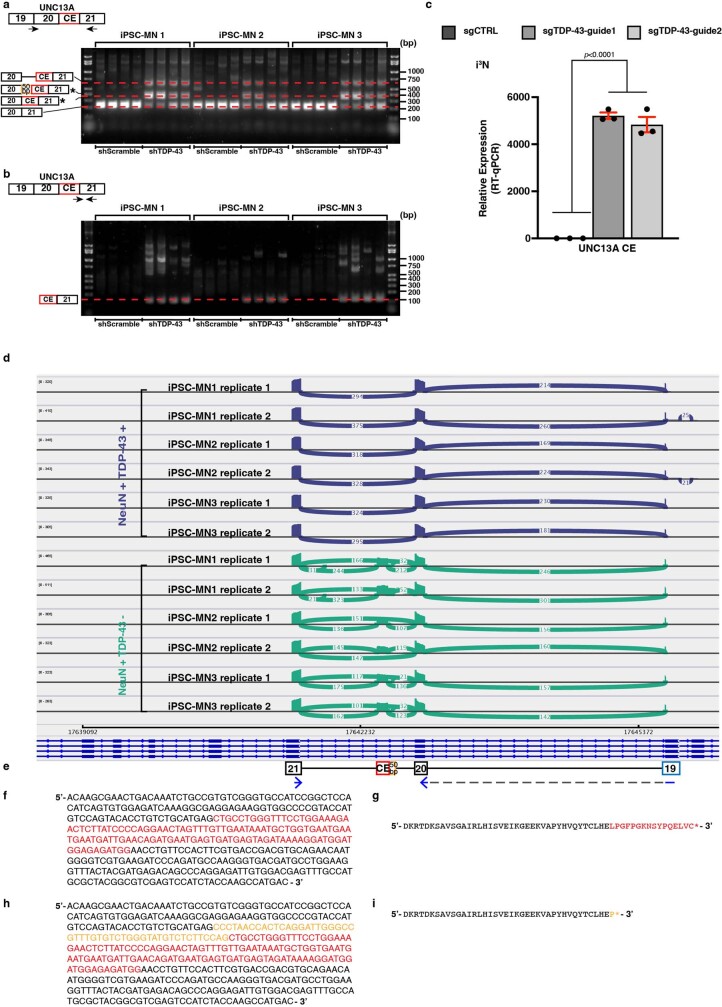
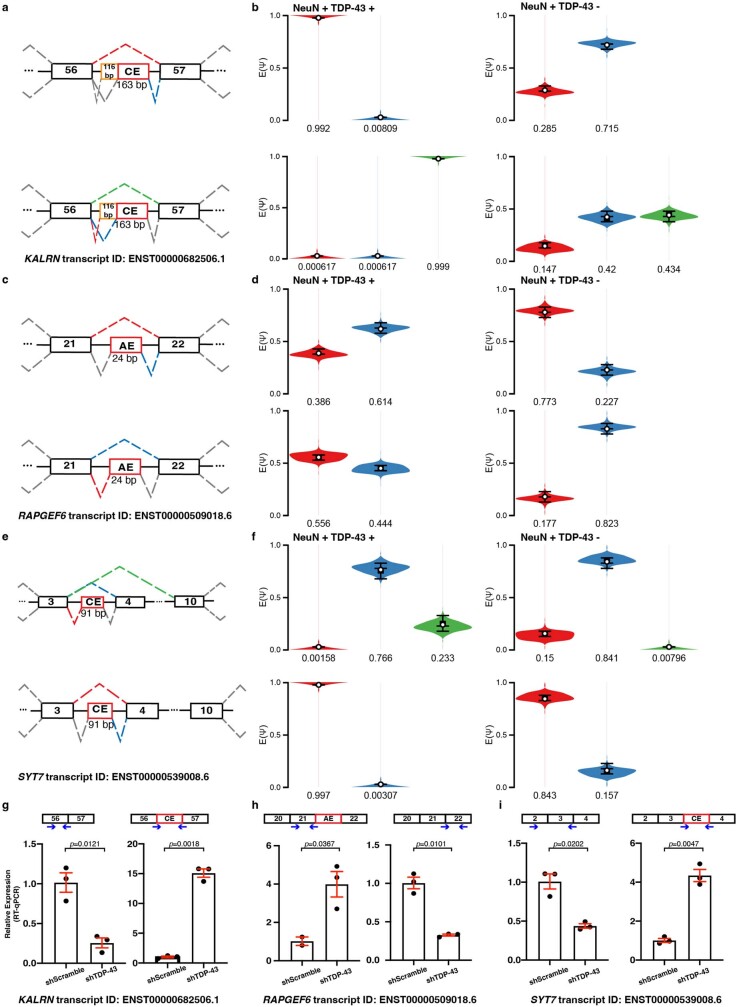
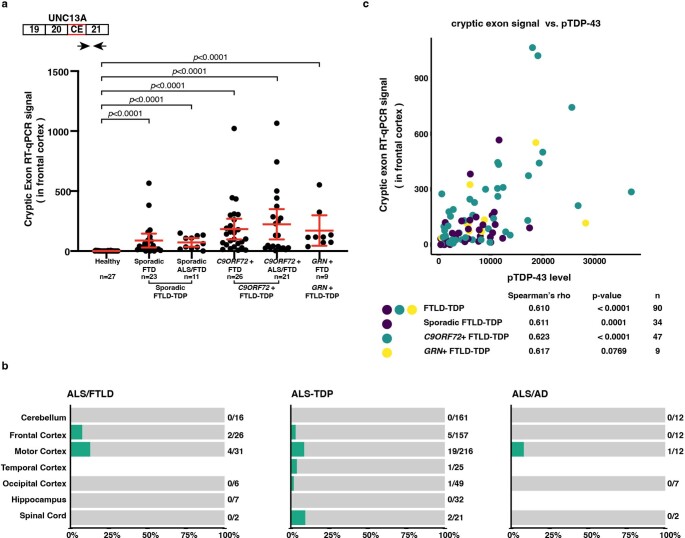
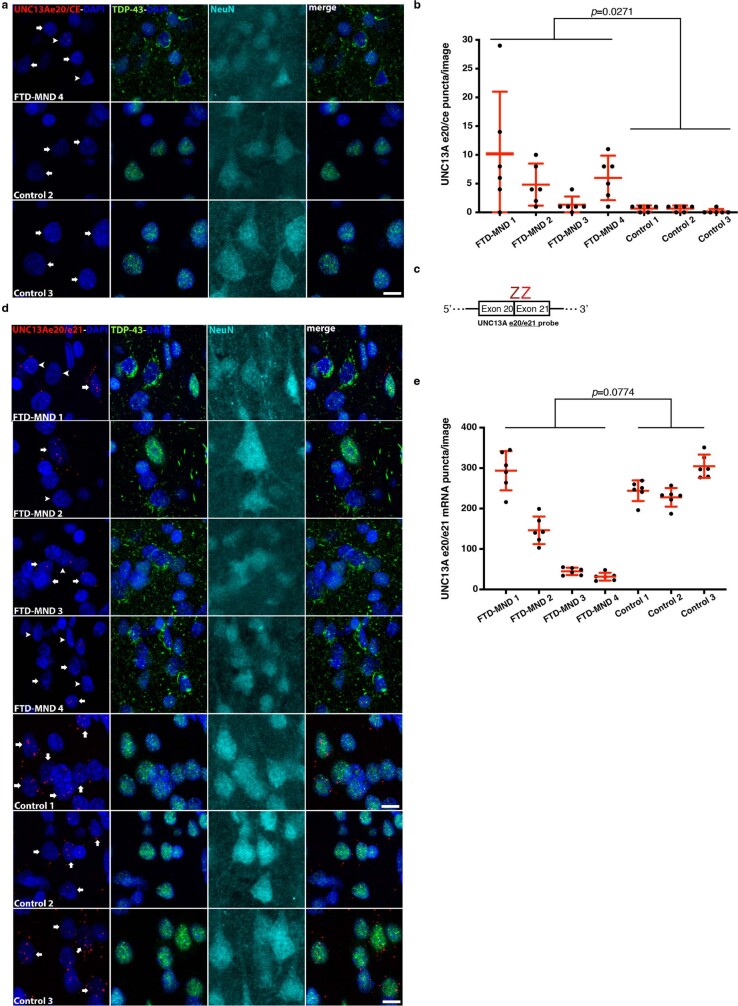
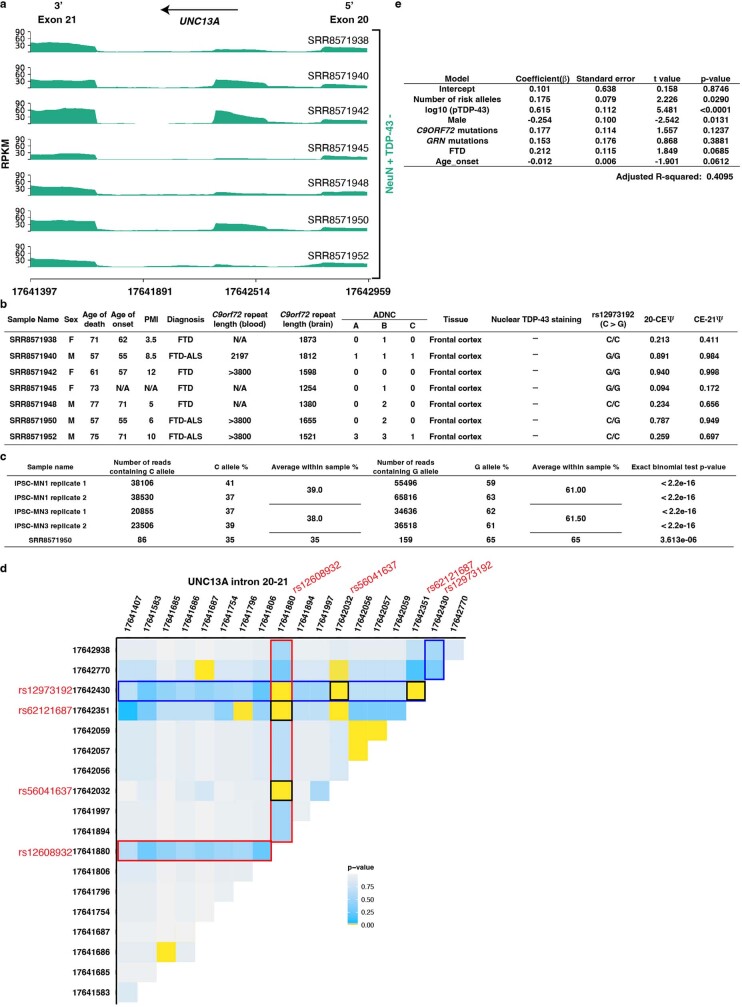
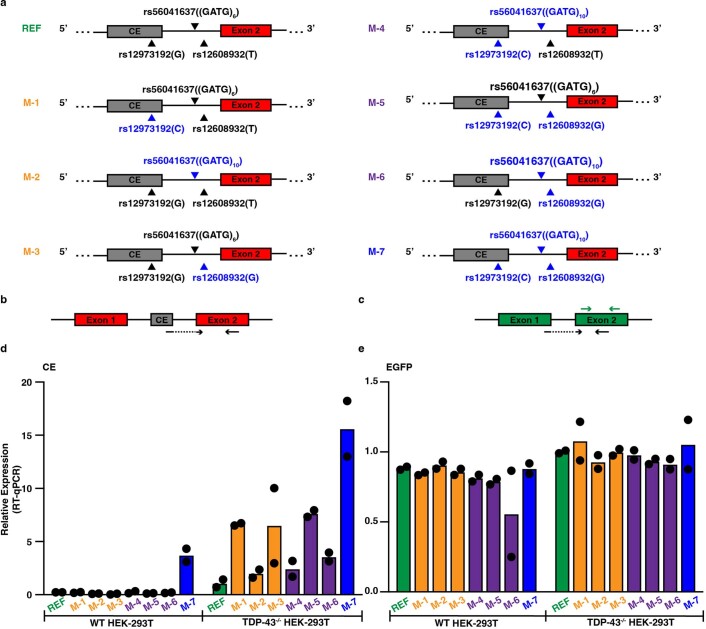
A hallmark pathological feature of the neurodegenerative diseases amyotrophic lateral sclerosis (ALS) and frontotemporal dementia (FTD) is the depletion of RNA-binding protein TDP-43 from the nucleus of neurons in the brain and spinal cord 1 . A major function of TDP-43 is as a repressor of cryptic exon inclusion during RNA splicing 2–4 . Single nucleotide polymorphisms in UNC13A are among the strongest hits associated with FTD and ALS in human genome-wide association studies 5,6 , but how those variants increase risk for disease is unknown. Here we show that TDP-43 represses a cryptic exon-splicing event in UNC13A . Loss of TDP-43 from the nucleus in human brain, neuronal cell lines and motor neurons derived from induced pluripotent stem cells resulted in the inclusion of a cryptic exon in UNC13A mRNA and reduced UNC13A protein expression. The top variants associated with FTD or ALS risk in humans are located in the intron harbouring the cryptic exon, and we show that they increase UNC13A cryptic exon splicing in the face of TDP-43 dysfunction. Together, our data provide a direct functional link between one of the strongest genetic risk factors for FTD and ALS ( UNC13A genetic variants), and loss of TDP-43 function.
Overview
The claims and statistics of this paper haven’t been checked yet.
Run the check — free, no account needed. It reads the open-access text and checks the sources it cites.
Integrity signals
Registry
Cites
Statistics
Figures
Verification
Claims the paper makes
The claims and statistics of this paper haven’t been checked yet.
Run the check — free, no account needed. It reads the open-access text and checks the sources it cites.
Claims other papers make about this one
Each is checked against this paper’s own text: does it say what the citing paper says it does?
In the citing paper
“The most common genes identified in clinical practice include SOD1, C9ORF72, TARDBP, FUS, and OPTNTD-P43 (55–57, 73, 74).”
From Modulation of the gut–brain axis via the gut microbiota: a new era in treatment of amyotrophic lateral sclerosis (2023) · cites this paper as [73]
Self-check
Percentages, sums and reported differences re-computed from the paper’s own numbers.
The self-check needs the paper’s full text.
Citations
Cites
Moderated estimation of fold change and dispersion for RNA-seq data with DESeq2
Love, M. I., Huber, W., & Anders, S. (2014) · Genome Biology · doi:10.1186/s13059-014-0550-8 · Cited by 95,106
A global reference for human genetic variation
The 1000 Genomes Project Consortium, authors, C., Auton, A., Abecasis, G. R., Steering committee, Altshuler, D. M., Durbin, R. M., Abecasis, G. R., Bentley, D. R., Chakravarti, A., et al. (2015) · Nature · doi:10.1038/nature15393 · Cited by 18,247
Self-citationTHE GENETICS OF CAENORHABDITIS ELEGANS
Brenner, S. (1974) · Genetics · doi:10.1093/genetics/77.1.71 · Cited by 15,220
The Human Genome Browser at UCSC
Kent, W. J., Sugnet, C. W., Furey, T. S., Roskin, K. M., Pringle, T. H., Zahler, A. M., & Haussler, A. D. (2002) · Genome Research · doi:10.1101/gr.229102 · Cited by 10,400
Ubiquitinated TDP-43 in Frontotemporal Lobar Degeneration and Amyotrophic Lateral Sclerosis
Neumann, M., Sampathu, D. M., Kwong, L. K., Truax, A. C., Micsenyi, M. C., Chou, T. T., Bruce, J., Schuck, T., Grossman, M., Clark, C. M., et al. (2006) · Science · doi:10.1126/science.1134108 · Cited by 6,576
LocusZoom: regional visualization of genome-wide association scan results
Pruim, R. J., Welch, R. P., Sanna, S., Teslovich, T. M., Chines, P. S., Gliedt, T. P., Boehnke, M., Abecasis, G. R., & Willer, C. J. (2010) · Bioinformatics · doi:10.1093/bioinformatics/btq419 · Cited by 2,707
Limbic-predominant age-related TDP-43 encephalopathy (LATE): consensus working group report
Nelson, P. T., Dickson, D. W., Trojanowski, J. Q., Jack, C. R., Boyle, P. A., Arfanakis, K., Rademakers, R., Alafuzoff, I., Attems, J., Brayne, C., et al. (2019) · Brain · doi:10.1093/brain/awz099 · Cited by 1,547
Self-citationLong pre-mRNA depletion and RNA missplicing contribute to neuronal vulnerability from loss of TDP-43
Polymenidou, M., Lagier-Tourenne, C., Hutt, K. R., Huelga, S. C., Moran, J., Liang, T. Y., Ling, S.-C., Sun, E., Wancewicz, E., Mazur, C., et al. (2011) · Nature Neuroscience · doi:10.1038/nn.2779 · Cited by 1,335
Characterizing the RNA targets and position-dependent splicing regulation by TDP-43
Tollervey, J. R., Curk, T., Rogelj, B., Briese, M., Cereda, M., Kayikci, M., König, J., Hortobágyi, T., Nishimura, A. L., Župunski, V., et al. (2011) · Nature Neuroscience · doi:10.1038/nn.2778 · Cited by 1,165
TDP-43 and FUS/TLS: emerging roles in RNA processing and neurodegeneration
Lagier-Tourenne, C., Polymenidou, M., & Cleveland, D. W. (2010) · Human Molecular Genetics · doi:10.1093/hmg/ddq137 · Cited by 1,021
Cited by
Sorted by citations
Items 101–200 of 576
Imaizumi, K., Ideno, H., Sato, T., Morimoto, S., & Okano, H. (2022) · eNeuro · doi:10.1523/eneuro.0061-22.2022 · Cited by 27
Genome-wide CRISPR screen reveals v-ATPase as a drug target to lower levels of ALS protein ataxin-2
Kım, G., Nakayama, L., Blum, J. A., Akiyama, T., Boeynaems, S., Chakraborty, M., Couthouis, J., Tassoni-Tsuchida, E., Rodriguez, C. M., Bassik, M. C., et al. (2022) · Cell Reports · doi:10.1016/j.celrep.2022.111508 · Cited by 30
Self-citationSYF2 suppression mitigates neurodegeneration in models of diverse forms of ALS
Linares, G. R., Li, Y., Chang, W.-H., Rubin-Sigler, J., Mendonca, S., Hong, S., Eoh, Y., Guo, W., Huang, Y., Chang, J., et al. (2023) · Cell stem cell · doi:10.1016/j.stem.2023.01.005 · Cited by 29
Younger, D. S., & Brown, R. H. (2023) · Handbook of clinical neurology · doi:10.1016/b978-0-323-98817-9.00031-4 · Cited by 35
Advancements and challenges in amyotrophic lateral sclerosis
Bradford, D. R., & Rodgers, K. E. (2024) · Frontiers in Neuroscience · doi:10.3389/fnins.2024.1401706 · Cited by 31
Targeting common disease pathomechanisms to treat amyotrophic lateral sclerosis
Faller, K. M. E., Chaytow, H., & Gillingwater, T. H. (2025) · Nature Reviews Neurology · doi:10.1038/s41582-024-01049-4 · Cited by 30
Akiyama, T., Koike, Y. M., Petrucelli, L., & Gitler, A. D. (2022) · Clinical and Translational Medicine · doi:10.1002/ctm2.818 · Cited by 25
Self-citationIntercellular transmission of pathogenic proteins in ALS: Exploring the pathogenic wave
Arnold, F. J., Nguyen, A., Bedlack, R., Bennett, C. L., & Spada, A. R. L. (2023) · Neurobiology of Disease · doi:10.1016/j.nbd.2023.106218 · Cited by 29
Synaptopathy: presynaptic convergence in frontotemporal dementia and amyotrophic lateral sclerosis
Clayton, E. L., Huggon, L., Cousin, M. A., & Mizielinska, S. (2024) · Brain · doi:10.1093/brain/awae074 · Cited by 26
TDP-43-dependent mis-splicing of KCNQ2 triggers intrinsic neuronal hyperexcitability in ALS/FTD
Joseph, B. J., Marshall, K. A., Harley, P., Mann, J. R., Alessandrini, F., Vanoye, C. G., Chi, W., Prudencio, M., Simkin, D., Kao, T.-T., et al. (2025) · Nature Neuroscience · doi:10.1038/s41593-025-02096-w · Cited by 30
Self-citationNeural circuit and synaptic dysfunctions in ALS-FTD pathology
Mora, S., & Allodi, I. (2023) · Frontiers in Neural Circuits · doi:10.3389/fncir.2023.1208876 · Cited by 24
Mori, F., Yasui, H., Miki, Y., Kon, T., Arai, A., Kurotaki, H., Tomiyama, M., & Wakabayashi, K. (2023) · Brain Pathology · doi:10.1111/bpa.13215 · Cited by 26
Recent advances in the genetics of familial and sporadic ALS
Al‐Chalabi, A., Andrews, J. A., & Farhan, S. M. K. (2024) · International review of neurobiology · doi:10.1016/bs.irn.2024.04.007 · Cited by 26
A stress-dependent TDP-43 SUMOylation program preserves neuronal function
Suk, T. R., Part, C. E., Zhang, J. L., Nguyen, T. T., Heer, M. M., Caballero-Gómez, A., Grybas, V. S., McKeever, P. M., Nguyen, B., Ali, T., et al. (2025) · Molecular Neurodegeneration · doi:10.1186/s13024-025-00826-z · Cited by 25
Advances in sequencing technologies for amyotrophic lateral sclerosis research
Udine, E., Jain, A., & van Blitterswijk, M. (2023) · Molecular Neurodegeneration · doi:10.1186/s13024-022-00593-1 · Cited by 27
TDP-43 nuclear loss in FTD/ALS causes widespread alternative polyadenylation changesPreprint
Zeng, Y., Lovchykova, A., Akiyama, T., Liu, C., Guo, C., Jawahar, V. M., Sianto, O., Calliari, A., Prudencio, M., Dickson, D. W., et al. (2024) · bioRxiv (Cold Spring Harbor Laboratory) · doi:10.1101/2024.01.22.575730 · Cited by 25
Self-citationhnRNPs: roles in neurodevelopment and implication for brain disorders
Tilliole, P., Fix, S., & Godin, J. D. (2024) · Frontiers in Molecular Neuroscience · doi:10.3389/fnmol.2024.1411639 · Cited by 26
Pottier, C. P., Küçükali, F., Baker, M. C., Batzler, A. J., Jenkins, G. D., van Blitterswijk, M., Vicente, C. T., Coster, W. D., Wynants, S., de Walle, P. V., et al. (2025) · Nature Communications · doi:10.1038/s41467-025-59216-0 · Cited by 28
Self-citationBye, C. R., Qian, E. L., Lim, K., Daniszewski, M., Garton, F. C., Trần-Lê, B. C., Liang, H. H., Lin, T., Lock, J. G., Crombie, D. E., et al. (2025) · Nature Neuroscience · doi:10.1038/s41593-025-02118-7 · Cited by 24
Advances in the genetic classification of amyotrophic lateral sclerosis
Cooper‐Knock, J., Harvey, C., Zhang, S., Moll, T., Timpanaro, I. S., Kenna, K. P., Iacoangeli, A., & Veldink, J. H. (2021) · Current Opinion in Neurology · doi:10.1097/wco.0000000000000986 · Cited by 23
Singling out motor neurons in the age of single-cell transcriptomics
Blum, J. A., & Gitler, A. D. (2022) · Trends in Genetics · doi:10.1016/j.tig.2022.03.016 · Cited by 22
Self-citationEvidence of cerebellar TDP-43 loss of function in FTLD-TDP
Pickles, S. R., Gendron, T. F., Koike, Y. M., Yue, M., Song, Y., Kachergus, J. M., Shi, J., Deture, M. A., Thompson, E. A., Oskarsson, B., et al. (2022) · Acta Neuropathologica Communications · doi:10.1186/s40478-022-01408-6 · Cited by 24
Self-citationWoodburn, B. M. D., Kanchi, K., Zhou, S., Colaianni, N. R., Joseph, S., & Swanstrom, R. I. (2022) · Journal of Virology · doi:10.1128/jvi.00957-22 · Cited by 23
Ionescu, A., Altman, T., & Perlson, E. (2023) · Molecular Neurodegeneration · doi:10.1186/s13024-023-00623-6 · Cited by 23
Updates on Disease Mechanisms and Therapeutics for Amyotrophic Lateral Sclerosis
Nguyen, L. (2024) · Cells · doi:10.3390/cells13110888 · Cited by 29
TDP-43 loss induces extensive cryptic polyadenylation in ALS/FTDPreprint
Bryce-Smith, S., Brown, A., Mehta, P. R., Mattedi, F., Mikheenko, A., Barattucci, S., Zanovello, M., Dattilo, D., Yome, M., Kargbo-Hill, S. E., et al. (2024) · bioRxiv (Cold Spring Harbor Laboratory) · doi:10.1101/2024.01.22.576625 · Cited by 24
Elevated nuclear TDP-43 induces constitutive exon skipping
Carmen-Orozco, R. P., Tsao, W., Ye, Y., Sinha, I. R., Chang, K., Trinh, V. T., Chung, W., Bowden, K., Troncoso, J. C., Blackshaw, S., et al. (2024) · Molecular Neurodegeneration · doi:10.1186/s13024-024-00732-w · Cited by 27
Hou, Y., Li, Y., Xiang, J., Tilahun, K., Jiang, J., Corces, V. G., & Yao, B. (2024) · Cell Reports · doi:10.1016/j.celrep.2023.113662 · Cited by 25
Flores, B. N., Yu, S. B., Cohen, I. V., Fanok, M. H., Luan, W., Maciuca, R. D., Sun, L. D., Tsai, R. M., Vissers, M. F. J. M., Smits, L., et al. (2025) · Nature Communications · doi:10.1038/s41467-025-63031-y · Cited by 24
Cao, M. C., Ryan, B., Wu, J., Curtis, M. A., Faull, R. L. M., Dragunow, M., & Scotter, E. L. (2023) · Neurobiology of Disease · doi:10.1016/j.nbd.2023.106245 · Cited by 23
Grima, N., Liu, S., Southwood, D., Henden, L., Smith, A., Lee, A., Rowe, D. B., D’Silva, S., Blair, I. P., & Williams, K. L. (2023) · Neuropathology and Applied Neurobiology · doi:10.1111/nan.12943 · Cited by 25
An ANXA11 P93S variant dysregulates TDP‐43 and causes corticobasal syndrome
Snyder, A., Ryan, V. H., Hawrot, J., Lawton, S., Ramos, D. M., Qi, Y. A., Johnson, K. R., Reed, X., Johnson, N. L., Kollasch, A. W., et al. (2024) · Alzheimer s & Dementia · doi:10.1002/alz.13915 · Cited by 21
Gene therapy breakthroughs in ALS: a beacon of hope for 20% of ALS patients
Xie, Q., Li, K., Chen, Y., Li, Y., Jiang, W., Cao, W., Yu, H., Fan, D., & Deng, B. (2025) · Translational Neurodegeneration · doi:10.1186/s40035-025-00477-6 · Cited by 27
Lall, D., Workman, M. J., Sances, S., Ondatje, B. N., Bell, S., Lawless, G. M., Woodbury, A., West, D., Meyer, A. S., Matlock, A. D., et al. (2025) · Cell stem cell · doi:10.1016/j.stem.2025.05.015 · Cited by 24
Cao, M. C., & Scotter, E. L. (2022) · Disease Models & Mechanisms · doi:10.1242/dmm.049418 · Cited by 25
Age-Related Alternative Splicing: Driver or Passenger in the Aging Process?
Baralle, M., & Romano, M. (2023) · Cells · doi:10.3390/cells12242819 · Cited by 25
RNA-mediated ribonucleoprotein assembly controls TDP-43 nuclear retention
dos Passos, P. M., Hemamali, E. H., Mamede, L. D., Hayes, L. R., & Ayala, Y. M. (2024) · PLoS Biology · doi:10.1371/journal.pbio.3002527 · Cited by 23
Su, W., Gu, X., Duan, Q., Jiang, Z., Gao, X., Shang, H., & Chen, Y. (2022) · BMC Medicine · doi:10.1186/s12916-022-02411-3 · Cited by 27
Nuclear pore dysfunction and disease: a complex opportunity
Fare, C. M., & Rothstein, J. D. (2024) · Nucleus · doi:10.1080/19491034.2024.2314297 · Cited by 21
Aikio, M., Odeh, H. M., Wobst, H. J., Lee, B. L., Chan, Ú., Mauna, J. C., Mack, K. L., Class, B., Ollerhead, T. A., Ford, A. F., et al. (2025) · Cell Reports · doi:10.1016/j.celrep.2024.115205 · Cited by 30
Self-citationAshok, C., Kimble, A. L., Burrage, E. N., Helming, S. B., Tyburski, J. D., Leclair, N. K., Omar, O. M., Zuberi, A. R., Murphy, M., Jellison, E. R., et al. (2025) · Science Advances · doi:10.1126/sciadv.ads0505 · Cited by 21
Rothstein, J. D., Keeley, O., Warlick, C., Miller, T. M., Ly, C. V., Glass, J. D., & Coyne, A. N. (2025) · Nature Communications · doi:10.1038/s41467-025-62482-7 · Cited by 28
Axon guidance genes modulate neurotoxicity of ALS-associated UBQLN2
Kim, S. H., Nichols, K. D., Anderson, E. N., Liu, Y., Ramesh, N., Jia, W., Kuerbis, C. J., Scalf, M., Smith, L. M., Pandey, U. B., et al. (2023) · eLife · doi:10.7554/elife.84382 · Cited by 19
Genomic and transcriptomic advances in amyotrophic lateral sclerosis
Rizzuti, M., Sali, L., Melzi, V., Scarcella, S., Costamagna, G., Ottoboni, L., Quetti, L., Brambilla, L., Papadimitriou, D. A., Verde, F., et al. (2023) · Ageing Research Reviews · doi:10.1016/j.arr.2023.102126 · Cited by 23
IκB kinase phosphorylates cytoplasmic TDP-43 and promotes its proteasome degradation
Iguchi, Y., Takahashi, Y., Li, J., Araki, K., Amakusa, Y., Kawakami, Y., Kobayashi, K., Yokoi, S., & Katsuno, M. (2023) · The Journal of Cell Biology · doi:10.1083/jcb.202302048 · Cited by 20
Regulation of alternative splicing and polyadenylation in neurons
Lee, S., Aubee, J. I., & Lai, E. C. (2023) · Life Science Alliance · doi:10.26508/lsa.202302000 · Cited by 21
Shared brain transcriptomic signature in TDP-43 type A FTLD patients with or without GRN mutations
Pottier, C. P., Mateiu, L. M., Baker, M., DeJesus‐Hernandez, M., Vicente, C. T., Finch, N. A., Tian, S., van Blitterswijk, M., Murray, M. E., Ren, Y., et al. (2021) · Brain · doi:10.1093/brain/awab437 · Cited by 20
Self-citationTDP-43 Controls HIV-1 Viral Production and Virus Infectiveness
Cabrera-Rodríguez, R., Pérez-Yanes, S., Lorenzo-Sánchez, I., Estévez‐Herrera, J., García-Luis, J., Trujillo‐González, R., & Valenzuela-Fernández, A. (2023) · International Journal of Molecular Sciences · doi:10.3390/ijms24087658 · Cited by 19
Specific vulnerability of iPSC-derived motor neurons with TDP-43 gene mutation to oxidative stress
恩田, 亜., Hasegawa-Ogawa, M., Matsuno, H., Shiraishi, T., Bono, K., Hiraki, H., Kanegae, Y., Iguchi, Y., & Okano, H. J. (2023) · Molecular Brain · doi:10.1186/s13041-023-01050-w · Cited by 19
McKeever, P. M., Sababi, A. M., Sharma, R., Xu, Z., Xiao, S., McGoldrick, P., Ketela, T., Sato, C., Moreno, D., Visanji, N. P., et al. (2025) · Cell Genomics · doi:10.1016/j.xgen.2025.101007 · Cited by 21
Mechanistic research and therapeutic prospects of alternative splicing in neurodegenerative diseases
Ran, X., Wang, M., Huang, J., Kuang, N., Tian, P., Wu, J., Feng, F., Luo, Y., & Huang, N. (2026) · Ageing Research Reviews · doi:10.1016/j.arr.2026.103133 · Cited by 24
TDP-43 and NEAT long non-coding RNA: Roles in neurodegenerative disease
Sekar, D., Tusubira, D., & Ross, K. (2022) · Frontiers in Cellular Neuroscience · doi:10.3389/fncel.2022.954912 · Cited by 19
Seki, S., Kitaoka, Y., Kawata, S., Nishiura, A., Uchihashi, T., Hiraoka, S.-I., Yokota, Y., Isomura, E. T., Kogo, M., & Tanaka, S. (2023) · Biomedicines · doi:10.3390/biomedicines11112967 · Cited by 18
Graphene Quantum Dots Attenuate TDP-43 Proteinopathy in Amyotrophic Lateral Sclerosis
Park, N.-Y., Heo, Y., Yang, J. W., Yoo, J. M., Jang, H. J., Jo, J. H., Park, S. J., Lin, Y., Choi, J., Jeon, H., et al. (2025) · ACS Nano · doi:10.1021/acsnano.4c15283 · Cited by 20
Cabrera-Rodríguez, R., Pérez-Yanes, S., González‐Montelongo, R., Lorenzo-Salazar, J. M., Estévez‐Herrera, J., García-Luis, J., Íñigo-Campos, A., Rubio‐Rodríguez, L. A., Muñoz‐Barrera, A., Trujillo‐González, R., et al. (2022) · International Journal of Molecular Sciences · doi:10.3390/ijms23116180 · Cited by 18
Poison exons: tuning RNA splicing for targeted gene regulation
Neil, C. R., Schaening-Burgos, C., Alexis, M. S., Reynolds, D. J., Smith, P. G., Seiler, M., Vaillancourt, F. H., & Agrawal, A. A. (2025) · Trends in Pharmacological Sciences · doi:10.1016/j.tips.2025.01.002 · Cited by 19
Nakamura, R., Tohnai, G., Nakatochi, M., Atsuta, N., Watanabe, H., Ito, D., Katsuno, M., Hirakawa, A., Izumi, Y., Morita, M., et al. (2023) · Journal of Neurology Neurosurgery & Psychiatry · doi:10.1136/jnnp-2022-330851 · Cited by 17
Zhang, X., Das, T., Chao, T. F., Trinh, V., Carmen‐Orozco, R. P., Ling, J. P., Kaláb, P., & Hayes, L. R. (2024) · iScience · doi:10.1016/j.isci.2024.110109 · Cited by 20
Short RNA chaperones promote aggregation-resistant TDP-43 conformers to mitigate neurodegeneration
Copley, K. E., Mauna, J. C., Danielson, H. L., Chen, Q., Ozguney, B., Ngo, M., Xie, L., Smirnov, A., Davis, M., Mayne, L., et al. (2026) · Science · doi:10.1126/science.adv3301 · Cited by 16
Self-citationGrima, N., Smith, A., Shepherd, C. E., Henden, L., Zaw, T., Carroll, L., Rowe, D. B., Kiernan, M. C., Blair, I. P., & Williams, K. L. (2025) · Molecular Neurodegeneration · doi:10.1186/s13024-025-00820-5 · Cited by 17
Yen, Y.-P., Lung, T.-H., Liau, E. S., Wu, C., Huang, G., Hsu, F.-Y., Chang, M., Yang, Z.-D., Huang, C.-Y., Zheng, Z., et al. (2025) · Nature Communications · doi:10.1038/s41467-025-59117-2 · Cited by 16
Devoy, A., Price, G., Giorgio, F. D., Bunton-Stasyshyn, R. K. A., Thompson, D., Gasco, S., Allan, A. J., Codner, G. F., Nair, R., Tibbit, C., et al. (2021) · iScience · doi:10.1016/j.isci.2021.103463 · Cited by 18
Sánchez‐Tejerina, D., Llauradó, A., Sotoca, J., López‐Diego, V., Vidal-Taboada, J. M., Salvadó, M., & Morales, R. J. (2023) · Cells · doi:10.3390/cells12081180 · Cited by 16
RNA-binding deficient TDP-43 drives cognitive decline in a mouse model of TDP-43 proteinopathy
Necarsulmer, J., Simon, J. M., Evangelista, B., Chen, Y., Tian, X., Nafees, S., Gonzalez, A. M., Jiang, H., Wang, P., Ajit, D., et al. (2023) · eLife · doi:10.7554/elife.85921 · Cited by 32
Chiò, A., Moglia, C., Canosa, A., Manera, U., Grassano, M., Vasta, R., Palumbo, F., Gallone, S., Brunetti, M., Barberis, M., et al. (2023) · Neurology · doi:10.1212/wnl.0000000000207367 · Cited by 16
Pfaff, A. L., Bubb, V. J., Quinn, J. P., & Kõks, S. (2023) · International Journal of Molecular Sciences · doi:10.3390/ijms241411548 · Cited by 17
Zibold, J., Lessard, L., Picard, F., da Silva, L. A. G., Zadorozhna, Y., Streichenberger, N., Belotti, E., Osseni, A., Emerit, A., Errazuriz-Cerda, E., et al. (2023) · Brain · doi:10.1093/brain/awad410 · Cited by 16
Koike, Y. M. (2024) · Neuroscience Research · doi:10.1016/j.neures.2024.05.001 · Cited by 17
Self-citationRothstein, J. D., Warlick, C., & Coyne, A. N. (2023) · bioRxiv (Cold Spring Harbor Laboratory) · doi:10.1101/2023.12.12.571299 · Cited by 19
Cui, Y., Arnold, F. J., Li, J. S., Wu, J., Wang, D., Philippe, J., Colwin, M. R., Michels, S., Chen, C., Sallam, T., et al. (2025) · Nature Genetics · doi:10.1038/s41588-024-02057-2 · Cited by 15
Efficient Gene Expression in Human Stem Cell Derived-Cortical Organoids Using Adeno Associated Virus
Cho, A., Bright, F., Morey, N., Au, C. G., Ittner, L. M., & Ke, Y. D. (2022) · Cells · doi:10.3390/cells11203194 · Cited by 17
Chen, K., Gao, T., Liu, Y., Zhu, K., Wang, T., & Zeng, P. (2024) · Neurobiology of Aging · doi:10.1016/j.neurobiolaging.2023.09.017 · Cited by 15
Role of the UNC13 family in human diseases: A literature review
Ansari, U., Chen, V., Sedighi, R., Syed, B., Muttalib, Z., Ansari, K., Ansari, F., Nadora, D., Razick, D., & Lui, F. (2023) · AIMS neuroscience · doi:10.3934/neuroscience.2023029 · Cited by 18
MATR3 pathogenic variants differentially impair its cryptic splicing repression function
Khan, M., Chen, X. X., Dias, M., Santos, J. R., Kour, S., You, J., van Bruggen, R., Youssef, M., Wan, Y., Liu, Z., et al. (2024) · FEBS Letters · doi:10.1002/1873-3468.14806 · Cited by 14
Cheng, F., Chapman, T. R., Zhang, S., Morsch, M., Chung, R. S., Lee, A., & Rayner, S. L. (2024) · Ageing Research Reviews · doi:10.1016/j.arr.2024.102246 · Cited by 16
Keeley, O., & Coyne, A. N. (2024) · Nucleus · doi:10.1080/19491034.2024.2349085 · Cited by 16
Ko, Y., Lokareddy, R. K., Doll, S. G., Yeggoni, D. P., Girdhar, A., Mawn, I., Klim, J. R., Rizvi, N. F., Meyers, R. E., Gillilan, R. E., et al. (2024) · Journal of Molecular Biology · doi:10.1016/j.jmb.2024.168751 · Cited by 16
Dang, M., Wu, L., & Zhang, X. (2025) · International Journal of Biological Macromolecules · doi:10.1016/j.ijbiomac.2025.141677 · Cited by 16
Gao, J., Ding, M., Qin, S., Shukla, D., Vicuna, L., Liang, J., & Wang, X. (2025) · Molecular Psychiatry · doi:10.1038/s41380-025-03089-8 · Cited by 15
Bera, M., Grushin, K. S., Sundaram, R. V. K., Hinzen, J. S., Chen, J., Chatterjee, A., Radhakrishnan, A., Lee, S., Padmanarayana, M., Coleman, J., et al. (2025) · Nature Communications · doi:10.1038/s41467-025-62420-7 · Cited by 15
Targeting RTN4/NoGo-Receptor reduces levels of ALS protein ataxin-2
Rodriguez, C. M., Bechek, S. C., Jones, G. L., Nakayama, L., Akiyama, T., Kım, G., Solow-Cordero, D. E., Strittmatter, S. M., & Gitler, A. D. (2022) · Cell Reports · doi:10.1016/j.celrep.2022.111505 · Cited by 15
Self-citationMora, S., Stuckert, A., Friis, R. V. H., Pietersz, K. L., Noes‐Holt, G., Montañana-Rosell, R., Wang, H., Sørensen, A. T., Selvan, R., Verhaagen, J., et al. (2024) · Nature Communications · doi:10.1038/s41467-024-48925-7 · Cited by 14
MBNL‐dependent impaired development within the neuromuscular system in myotonic dystrophy type 1
Tahraoui‐Bories, J., Mérien, A., González‐Barriga, A., Lainé, J., Leteur, C., Polvèche, H., Carteron, A., de Lamotte, J. D., Nicoleau, C., Polentes, J., et al. (2022) · Neuropathology and Applied Neurobiology · doi:10.1111/nan.12876 · Cited by 14
Ashok, C., Kimble, A. L., Tyburski, J. D., Leclair, N. K., Zuberi, A. R., Murphy, M., Jellison, E. R., Reese, B., Hu, X., Lutz, C. M., et al. (2023) · bioRxiv (Cold Spring Harbor Laboratory) · doi:10.1101/2023.12.13.571184 · Cited by 13
Arnold, F. J., Cui, Y., Michels, S., Colwin, M. R., Stockford, C. M., Ye, W., Tam, O. H., Menon, S., Situ, W. G., Ehsani, K. C. K., et al. (2024) · bioRxiv (Cold Spring Harbor Laboratory) · doi:10.1101/2024.01.22.576709 · Cited by 14
Faravelli, I., Rinchetti, P., Tambalo, M., Simutin, I., Mapelli, L., Mancinelli, S., Miotto, M., Rizzuti, M., D’Angelo, A., Cordiglieri, C., et al. (2025) · Nature Communications · doi:10.1038/s41467-025-67725-1 · Cited by 14
Hu, Y., Hruscha, A., Pan, C., Schifferer, M., Schmidt, M. K., Nuscher, B., Giera, M. A., Kostidis, S., Burhan, Ö. P., van Bebber, F., et al. (2024) · Molecular Neurodegeneration · doi:10.1186/s13024-024-00735-7 · Cited by 16
Dykstra, M. M., Weskamp, K., Gómez, N., Waksmacki, J., Tank, E. M. H., Glineburg, M. R., Snyder, A. G., Pinarbasi, E. S., Bekier, M. E., Li, X., et al. (2025) · Cell Reports · doi:10.1016/j.celrep.2024.115113 · Cited by 19
TDP‐43 Cryptic RNAs in Perry Syndrome: Differences across Brain Regions and TDP‐43 Proteinopathies
Pickles, S. R., Bejarano, J. G., Narayan, A., Daughrity, L. M., Cidfuentes, C. M., Reeves, M. M., Yue, M., Otero, P. C., Ayuso, V. E., Dunmore, J. H., et al. (2025) · Movement Disorders · doi:10.1002/mds.30104 · Cited by 14
Self-citationDrug repurposing in amyotrophic lateral sclerosis (ALS)
Carroll, E., Scaber, J., Huber, K., Brennan, P. E., Thompson, A. G., Turner, M. R., & Talbot, K. (2025) · Expert Opinion on Drug Discovery · doi:10.1080/17460441.2025.2474661 · Cited by 14
Pathogenic TDP-43 in amyotrophic lateral sclerosis
Chong, Z. Z., & Souayah, N. (2025) · Drug Discovery Today · doi:10.1016/j.drudis.2025.104351 · Cited by 13
Manini, A., Casiraghi, V., Brusati, A., Maranzano, A., Gentile, F., Colombo, E., Bonetti, R., Peverelli, S., Invernizzi, S., Gentilini, D., et al. (2023) · Frontiers in Aging Neuroscience · doi:10.3389/fnagi.2023.1067954 · Cited by 13
Loss of amyotrophic lateral sclerosis risk factor SCFD1 causes motor dysfunction in Drosophila
Borg, R. M., Purkiss, A., Cacciottolo, R., Herrera, P., & Cauchi, R. J. (2023) · Neurobiology of Aging · doi:10.1016/j.neurobiolaging.2023.02.005 · Cited by 13
Nguyen, T. B., Miramontes, R., Chillon-Marinas, C., Maimon, R., Vazquez-Sanchez, S., Lau, A. L., McClure, N. R., England, W. E., Singha, M., Stocksdale, J. T., et al. (2023) · doi:10.1101/2023.10.31.565004 · Cited by 15
Kawakami, Y., Iguchi, Y., Li, J., Amakusa, Y., Yoshimura, T., Chikuchi, R., Yokoi, S., Iida, M., Riku, Y., Iwasaki, Y., et al. (2025) · Brain Communications · doi:10.1093/braincomms/fcaf261 · Cited by 12
Guo, C., Chen, K., Vatsavayai, S. C., Akiyama, T., Liu, C., Zeng, Y., Sianto, O., Yang, E., Bombosch, J., Powell, R., et al. (2026) · Science Translational Medicine · doi:10.1126/scitranslmed.aeb8517 · Cited by 13
Self-citationRavits, J., Ferrey, D., Gündoğdu, B., Qayoumi, W., & Zale, C. (2026) · JAMA · doi:10.1001/jama.2026.6385 · Cited by 15
HnRNP Pathologies in Frontotemporal Lobar Degeneration
Jiang, X., Gatt, A. P., & Lashley, T. (2023) · Cells · doi:10.3390/cells12121633 · Cited by 13
Piccolo, L. L., Umegawachi, T., Yeewa, R., Potikanond, S., Nimlamool, W., Prachayasittikul, V., Gotoh, Y., Yoshida, H., Yamaguchi, M., & Jantrapirom, S. (2023) · Neurotherapeutics · doi:10.1007/s13311-023-01406-z · Cited by 12
HIV-1 Vpu induces neurotoxicity by promoting Caspase 3-dependent cleavage of TDP-43
Yang, J., Li, Y., Li, H., Zhang, H., Guo, H., Zheng, X., Yu, X., & Wei, W. (2024) · EMBO Reports · doi:10.1038/s44319-024-00238-y · Cited by 12
Metadata
- Authors
- Ma, X. R., Prudencio, M., Koike, Y., Vatsavayai, S. C., Kim, G., Harbinski, F., Briner, A., Rodriguez, C. M., Guo, C., Akiyama, T., Schmidt, H. B., Cummings, B. B., Wyatt, D. W., Kurylo, K., Miller, G., Mekhoubad, S., Sallee, N., Mekonnen, G., Ganser, L., Rubien, J. D., Jansen-West, K., Cook, C. N., Pickles, S., Oskarsson, B., Graff-Radford, N. R., Boeve, B. F., Knopman, D. S., Petersen, R. C., Dickson, D. W., Shorter, J., Myong, S., Green, E. M., Seeley, W. W., Petrucelli, L., & Gitler, A. D.
- Affiliations
- Stanford Medicine (US)
- Mayo Clinic (US)
- University of California, San Francisco (US)
- Maze (United States) (US)
- The University of Queensland (AU)
- Johns Hopkins University (US)
- University of Pennsylvania (US)
- Mayo Clinic in Florida (US)
- Corresponding author
- Petrucelli, Leonard
- Gitler, Aaron D.
- ORCID
- Ma, X. Rosa
- Prudencio, Mercedes
- Koike, Yuka
- Vatsavayai, Sarat C.
- Kim, Garam
- Briner, Adam
- Rodriguez, Caitlin M.
- Guo, Caiwei
- Akiyama, Tetsuya
- Schmidt, H. Broder
- Cummings, Beryl B.
- Wyatt, David W.
- Kurylo, Katherine
- Miller, Georgiana
- Ganser, Laura
- Rubien, Jack D.
- Cook, Casey N.
- Pickles, Sarah
- Oskarsson, Björn
- Boeve, Bradley F.
- Knopman, David S.
- Petersen, Ronald C.
- Dickson, Dennis W.
- Shorter, James
- Myong, Sua
- Green, Eric M.
- Seeley, William W.
- Petrucelli, Leonard
- Gitler, Aaron D.
- Venue
- Nature
- Published
- 2022-02-23
- Volume
- 603
- Issue
- 7899
- Pages
- 124-130
- ISSN
- 0028-0836 (ISSN-L)
- 1476-4687
- PMC
- PMC8891019
- OpenAlex
- W4213441627
- Cited by
- 574
- References
- 53
- Citations by year
- 2026: 126 · 2025: 151 · 2024: 121 · 2023: 107 · 2022: 57
- FWCI
- 57.66
- Type
- journal article
- Language
- en
- Open access
- hybrid
- doi.org
- Locations
- Nature (publishedVersion, cc-by)
- bioRxiv (Cold Spring Harbor Laboratory) (acceptedVersion, cc-by-nc)
- PubMed Central (publishedVersion, cc-by)
- PubMed (publishedVersion)
- eScholarship (California Digital Library) (submittedVersion, cc-by)
- RePEc: Research Papers in Economics (submittedVersion)
- Funders
- ALS Association
- BrightFocus Foundation (A2020279F)
- Takeda Science Foundation
- Johns Hopkins University
- Target ALS
- Rainwater Charitable Foundation
- National Institutes of Health (W81XWH)
- University of California, San Francisco (P30AG062422, P01AG019724)
- Wu Tsai Neurosciences Institute, Stanford University
- Stanford Research Computing Center, Stanford University
- National Institute on Aging (RF1AG064690, R01AG063780, U01AG057195, U01AG006786, RF1AG071326, T32AG047126, U19AG063911, P01AG019724, P30AG062422, P30AG062677)
- National Human Genome Research Institute (T32HG000044)
- National Institute of General Medical Sciences (F32GM139268, T32GM007231)
- National Institute of Neurological Disorders and Stroke (F32NS116208, P01NS084974, R01NS104437, RF1NS120992, RF1NS113636, R35NS097273, R35NS097263, U54NS123743)
- Robert Packard Center for ALS Research, Johns Hopkins University
- Topics
- Health Sciences › Medicine › Clinical Neurology › Amyotrophic Lateral Sclerosis Research
- Life Sciences › Biochemistry, Genetics and Molecular Biology › Molecular Biology › RNA Research and Splicing
- Life Sciences › Neuroscience › Cellular and Molecular Neuroscience › Alzheimer's disease research and treatments
- Keywords
- TDP-43, UNC13A, RNA splicing, amyotrophic lateral sclerosis, frontotemporal dementia, single nucleotide polymorphisms, genetic risk factors, RNA-binding proteins, motor neurons, intronic variants, induced pluripotent stem cells
- MeSH terms
- Amyotrophic Lateral Sclerosis, DNA-Binding Proteins, Exons, Humans, Motor Neurons, Nerve Tissue Proteins, Genome-Wide Association Study, Frontotemporal Dementia
About these checks
Registry, retraction, Cites and statistics results are computed, not judged, with one exception: a printed reference that no index lists is read once by a model before it counts as a citation error. Claims are extracted by a model and kept only when their quote appears verbatim in the text; each cited source is then checked, with a model’s help, for whether it says what the claim relies on. Those verdicts can be wrong — read the claim’s quote and the cited source before relying on one.
Statistics and arithmetic are recomputed, not judged.
Confidence bands are shown only for fields calibrated on our annotated test set. None is calibrated yet, so no band is shown.
What counts as a claim ›How we measure confidence ›How we check this ›
Are you an author, or do you see a problem with this page? Request a review
