

Universal control of a six-qubit quantum processor in silicon
Open accessThe DOI matches its Crossref record; 64 of the 64 references it cites were found in a registry or an index.
Abstract
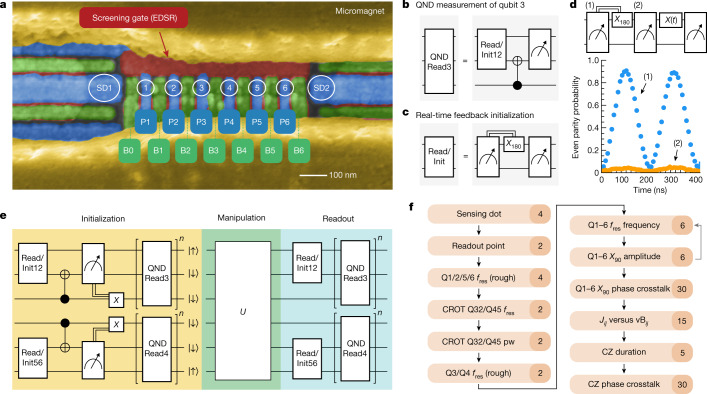
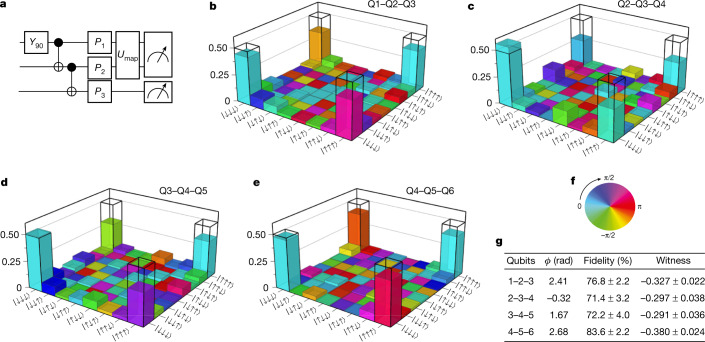
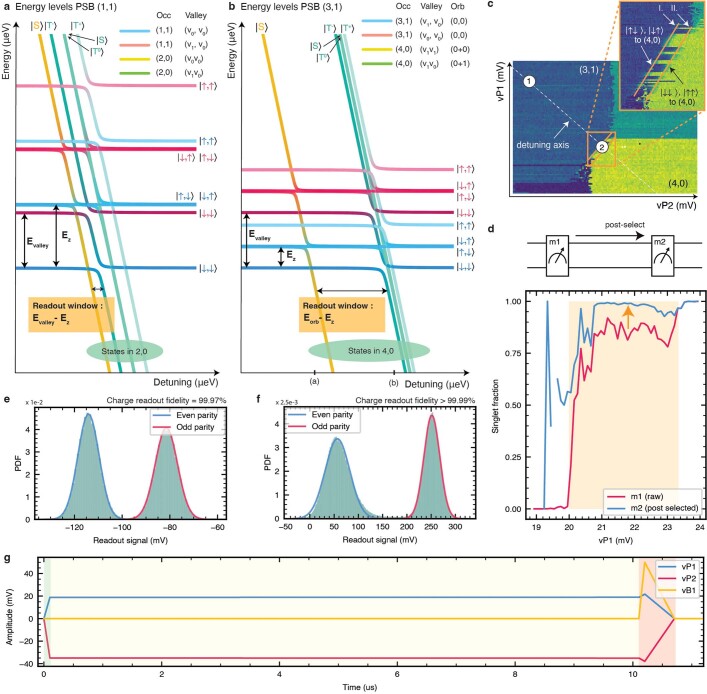
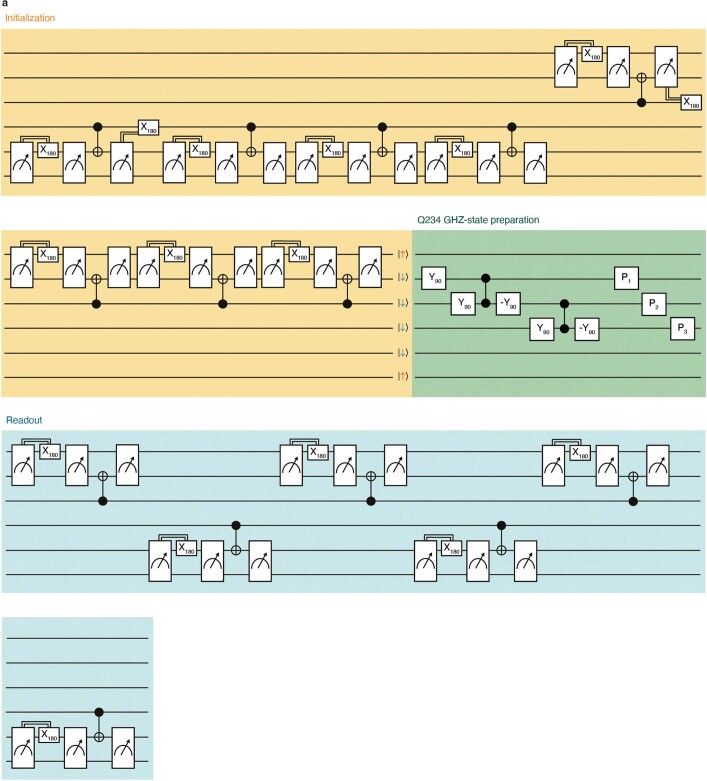
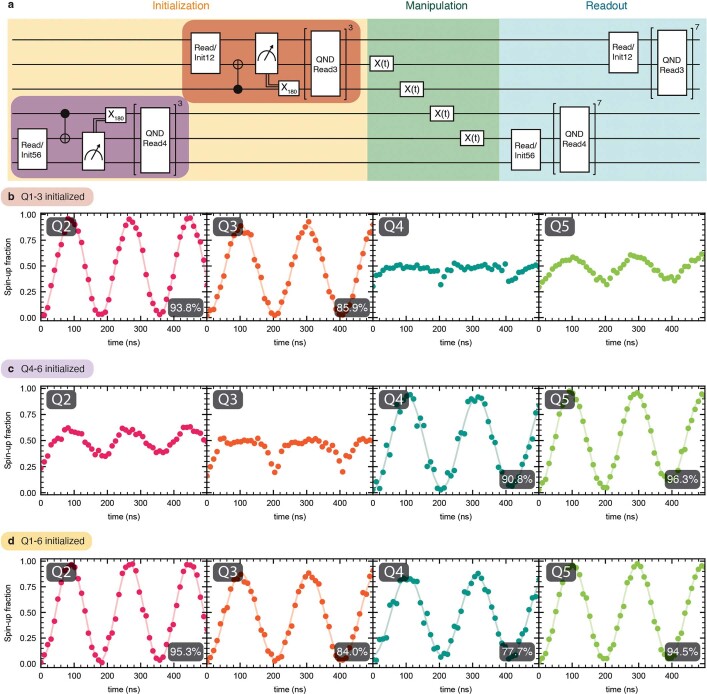
Future quantum computers capable of solving relevant problems will require a large number of qubits that can be operated reliably 1 . However, the requirements of having a large qubit count and operating with high fidelity are typically conflicting. Spins in semiconductor quantum dots show long-term promise 2,3 but demonstrations so far use between one and four qubits and typically optimize the fidelity of either single- or two-qubit operations, or initialization and readout 4–11 . Here, we increase the number of qubits and simultaneously achieve respectable fidelities for universal operation, state preparation and measurement. We design, fabricate and operate a six-qubit processor with a focus on careful Hamiltonian engineering, on a high level of abstraction to program the quantum circuits, and on efficient background calibration, all of which are essential to achieve high fidelities on this extended system. State preparation combines initialization by measurement and real-time feedback with quantum-non-demolition measurements. These advances will enable testing of increasingly meaningful quantum protocols and constitute a major stepping stone towards large-scale quantum computers.
Overview
The claims and statistics of this paper haven’t been checked yet.
Free: it reads the open-access text and checks the first 5 claims that cite a source we can check. Create a free account to check every claim.
Integrity signals
Registry
Cites
Statistics
Figures
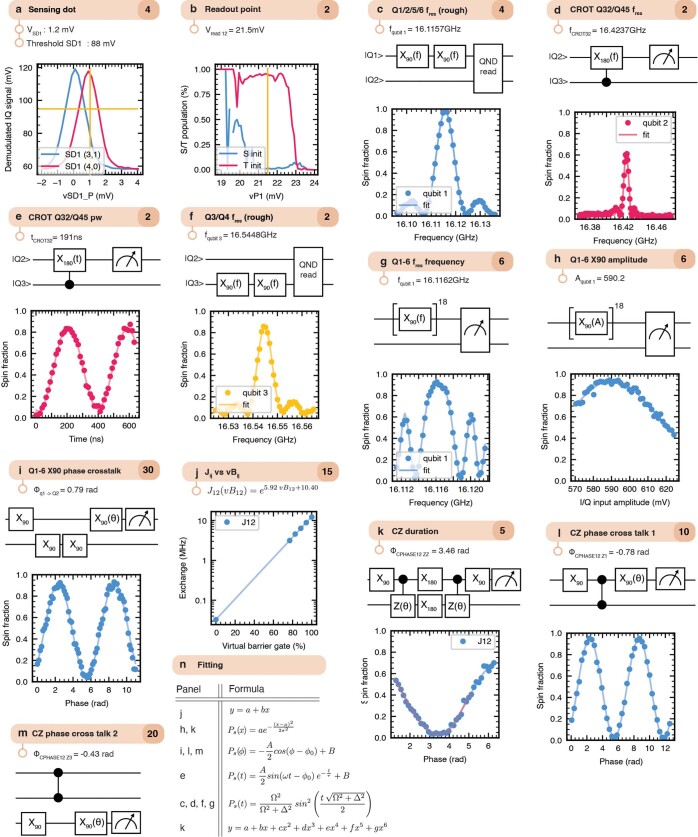
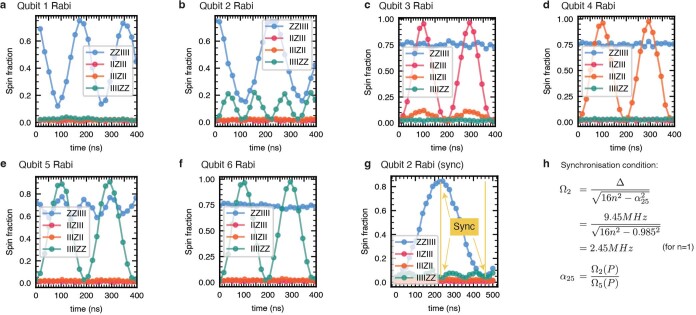
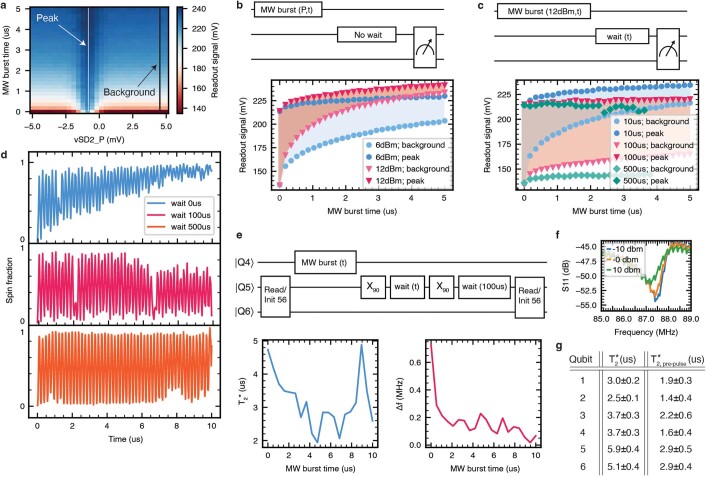
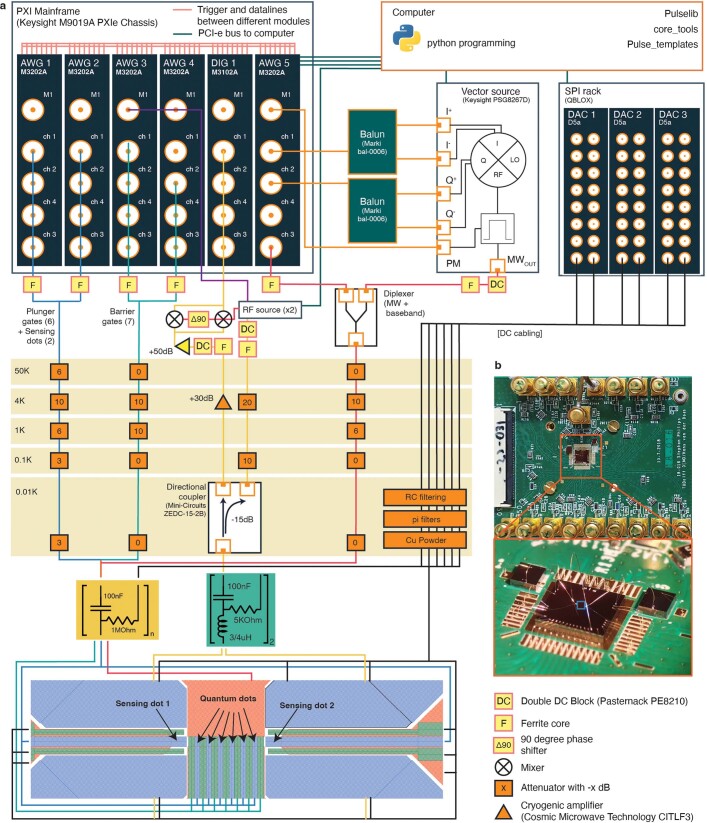
Verification
Claims the paper makes
The claims and statistics of this paper haven’t been checked yet.
Free: it reads the open-access text and checks the first 5 claims that cite a source we can check. Create a free account to check every claim.
Self-check
Percentages, sums and reported differences re-computed from the paper’s own numbers.
The self-check needs the paper’s full text.
Citations
Cites
Quantum supremacy using a programmable superconducting processor
Arute, F., Arya, K., Babbush, R., Bacon, D., Bardin, J. C., Barends, R., Biswas, R., Boixo, S., Brandao, F. G. S. L., Buell, D. A., et al. (2019) · Nature · doi:10.1038/s41586-019-1666-5 · Cited by 7,720 · cited 1×
“Nevertheless, spin qubits currently lag behind in scale when compared to superconducting, trapped ions and photonic platforms, which have demonstrated control of several dozen qubits 16–18 .”
BackgroundQuantum computational advantage using photons
Zhong, H.-S., Wang, H., Deng, Y.-H., Chen, M.-C., Peng, L.-C., Luo, Y.-H., Qin, J., Wu, D., Ding, X., Hu, Y., et al. (2020) · Science · doi:10.1126/science.abe8770 · Cited by 2,405 · cited 1×
“Nevertheless, spin qubits currently lag behind in scale when compared to superconducting, trapped ions and photonic platforms, which have demonstrated control of several dozen qubits 16–18 .”
BackgroundGreenberger, D. M., Horne, M. A., & Zeilinger, A. (1989) · Bell’s Theorem, Quantum Theory and Conceptions of the Universe · doi:10.1007/978-94-017-0849-4_10 · Cited by 1,513
Trapped-ion quantum computing: Progress and challenges
Bruzewicz, C. D., Chiaverini, J., McConnell, R., & Sage, J. M. (2019) · Applied Physics Reviews · doi:10.1063/1.5088164 · Cited by 1,483 · cited 1×
“…shows that, in scaling up, maintaining the quality of the control requires substantial effort, particularly, for instance, to deal with the denser motional spectrum in trapped ions 23 , to avert crosstalk in superconducting circuits 24 or to avoid increased losses in photonic circuits 25 .”
BackgroundZwanenburg, F. A., Dzurak, A. S., Morello, A., Simmons, M. Y., Hollenberg, L. C. L., Klimeck, G., Rogge, S., Coppersmith, S. N., & Eriksson, M. A. (2013) · Reviews of Modern Physics · doi:10.1103/revmodphys.85.961 · Cited by 1,210
An addressable quantum dot qubit with fault-tolerant control-fidelity
Veldhorst, M., Hwang, J. C. C., Yang, C. H., Leenstra, A. W., de Ronde, B., Dehollain, J. P., Muhonen, J. T., Hudson, F. E., Itoh, K. M., Morello, A., et al. (2014) · Nature Nanotechnology · doi:10.1038/nnano.2014.216 · Cited by 940
Self-citationA quantum-dot spin qubit with coherence limited by charge noise and fidelity higher than 99.9%
Yoneda, J., Takeda, K., Otsuka, T., Nakajima, T., Delbecq, M. R., Allison, G., Honda, T., Kodera, T., Oda, S., Hoshi, Y., et al. (2018) · Nature Nanotechnology · doi:10.1038/s41565-017-0014-x · Cited by 900 · cited 1×
“• Following [13], we aim at a maximal decoherence gradient (|z ∂z |+ | ∂Bz ∂y |) of 0.”
MethodCurrent Rectification by Pauli Exclusion in a Weakly Coupled Double Quantum Dot System
Ono, K., Austing, D. G., Tokura, Y., & Tarucha, S. (2002) · Science · doi:10.1126/science.1070958 · Cited by 801 · cited 1×
“PSB readout is a method used to convert a spin state to a more easily detectable charge state 58 .”
MethodA programmable two-qubit quantum processor in silicon
Watson, T. F., Philips, S. G. J., Kawakami, E., Ward, D. R., Scarlino, P., Veldhorst, M., Savage, D. E., Lagally, M. G., Friesen, M., Coppersmith, S. N., et al. (2018) · Nature · doi:10.1038/nature25766 · Cited by 741 · cited 2×
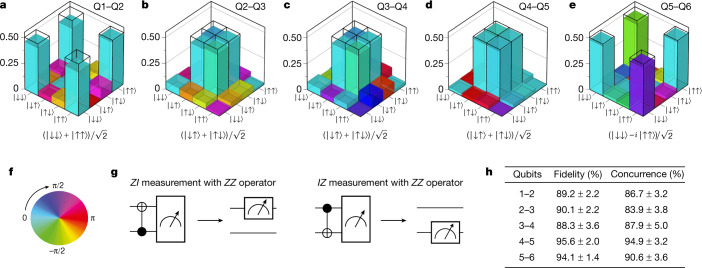
“…measured across the six-dot array have state fidelity ranging from 88% to 96%, which is considerably higher than the Bell state fidelities of 78% to 89% (all state preparation and measurement (SPAM) corrected, see Methods) reported on two-qubit quantum dot devices just a few years ago 42,44,45 .”
BackgroundSelf-citationInterfacing spin qubits in quantum dots and donors—hot, dense, and coherent
Vandersypen, L. M. K., Bluhm, H., Clarke, J. S., Dzurak, A. S., Ishihara, R., Morello, A., Reilly, D. J., Schreiber, L. R., & Veldhorst, M. (2017) · npj Quantum Information · doi:10.1038/s41534-017-0038-y · Cited by 624 · cited 1×
“To scale beyond, we envision networks of local registers [6, 7], connected together with quantum coherent links.”
BackgroundSelf-citation
Research works printed but not linked: 1
- Harvey-Collard P High-fidelity single-shot readout for a spin qubit via an enhanced latching mechanism Phys. Rev. X 2018 8 021046
Cited by
Items 201–300 of 468
Tröger, J., Kersting, R., Hagenhoff, B., Bougeard, D., Abrosimov, N. V., Klos, J., Schreiber, L. R., & Bracht, H. A. (2025) · Journal of Applied Physics · doi:10.1063/5.0232252 · Cited by 8
High-fidelity dispersive spin sensing in a tunable unit cell of silicon MOS quantum dots
Lainé, C., Oakes, G. A., Ciriano-Tejel, V. N., Chittock-Wood, J. F., Peri, L., Fogarty, M. A., Patomäki, S. M., Kubicek, S., Wise, D. F., Leon, R. C. C., et al. (2026) · Nature Sensors · doi:10.1038/s44460-026-00084-6 · Cited by 10
“https://doi.org/10.1038/s44460-026-00084-6 its relaxation rate differs from the other triplets, which could offer more efficient state initialization by reducing the number of readout attempts 44,45 .”
InfluentialSinglet-triplet-state readout in silicon metal-oxide-semiconductor double quantum dots
Ma, R.-L., Zhu, S.-K., Kong, Z., Sun, T., Ni, M., Zhou, Y.-C., Zhou, Y. L., Luo, G., Cao, G., Wang, G., et al. (2024) · Physical Review Applied · doi:10.1103/physrevapplied.21.034022 · Cited by 8
Advances in Modeling of Noisy Quantum Computers: Spin Qubits in Semiconductor Quantum Dots
Costa, D., Simoni, M., Piccinini, G., & Graziano, M. (2023) · IEEE Access · doi:10.1109/access.2023.3312559 · Cited by 9
“Experiments on physical devices are indeed yielding noteworthy results in terms of charge control, gate fidelities and coherence times, in both 1D [21], [22] and 2D arrays [23], [24].”
BackgroundMethodEight-qubit operation of a 300 mm SiMOS foundry-fabricated device
Nickl, A., Stuyck, N. D., Steinacker, P., Cifuentes, J. D., Serrano, S., Feng, M., Vahapoglu, E., Hudson, F. E., Chan, K. W., Kubicek, S., et al. (2026) · Nature Communications · doi:10.1038/s41467-026-74597-6 · Cited by 11
“Linear spin qubit arrays have been demonstrated in Ge 11–13 and Si/Ge 14–18 quantum dots, while CMOS-based implementations have so far been limited to one or two qubits 19–23 .”
Hole-spin qubits in germanium beyond the single-particle regime
Secchi, A., Forghieri, G., Bordone, P., Loss, D., Bosco, S., & Troiani, F. (2026) · Physical Review Applied · doi:10.1103/9w1z-8x7g · Cited by 7
Tunable p–n junction barriers in few-electron bilayer graphene quantum dots
Jing, F., Qin, G., Zhang, Z., Song, X., & Guo, G. (2023) · Applied Physics Letters · doi:10.1063/5.0165593 · Cited by 7
Protocols to measure the non-Abelian Berry phase by pumping a spin qubit through a quantum-dot loop
Kolok, B., & Pályi, A. (2024) · Physical review. B./Physical review. B · doi:10.1103/physrevb.109.045438 · Cited by 7
Combining multiplexed gate-based readout and isolated CMOS quantum dot arrays
Hamonic, P., Nurizzo, M., Nath, J., Dartiailh, M., El-Homsy, V., Fragnol, M., Martínez, B., Julliard, P.-L., Paz, B. C., Ouvrier-Buffet, M., et al. (2025) · Nature Communications · doi:10.1038/s41467-025-61556-w · Cited by 8
“For arrays with capacitive cross couplings, virtual gates are required to achieve accurate tuning 6 – 8 ,15, 16 .”
Codebase release 1.0 for QDarts
Krzywda, J. A., Liu, W., van Nieuwenburg, E., & Krause, O. (2025) · SciPost Physics Codebases · doi:10.21468/scipostphyscodeb.43 · Cited by 7
Minimal state-preparation times for silicon spin qubits
Long, C. K., Mayhall, N. J., Economou, S. E., Barnes, E., Barnes, C. H. W., Martins, F., Arvidsson-Shukur, D. R. M., & Mertig, N. (2025) · npj Quantum Information · doi:10.1038/s41534-025-01027-8 · Cited by 10
“We use parameters extracted from recent experiments 34,35,38 – 42 to numerically estimate the METs in two important settings.”
InfluentialSpinHex: A low-crosstalk, spin-qubit architecture based on multielectron couplers
Otxoa, R. M., Martínez, J. E., Schnabl, P., del Moral, J. O., Mertig, N., Smith, C. G., & Martins, F. (2026) · Physical Review Research · doi:10.1103/t2ry-ll9n · Cited by 7
A compact and versatile cryogenic probe station for quantum device testing
de Kruijf, M., Geyer, S., Berger, T., Mergenthaler, M., Braakman, F., Warburton, R. J., & Kuhlmann, A. V. (2023) · Review of Scientific Instruments · doi:10.1063/5.0139825 · Cited by 9
Hong, P.-Y., Lai, C.-C., Tsai, T., Lin, H., George, T. A., Kuo, D. M.-T., & Li, P.-W. (2023) · Scientific Reports · doi:10.1038/s41598-023-41582-8 · Cited by 7
Magnetic phases of bilayer quantum-dot Hubbard model plaquettes
Buterakos, D. L., & Sarma, S. D. (2023) · Physical review. B./Physical review. B · doi:10.1103/physrevb.108.235301 · Cited by 8
The Virtual Quantum Device (VQD): A tool for detailed emulation of quantum computers
Gustiani, C., Jones, T., & Benjamin, S. C. (2025) · Quantum · doi:10.22331/q-2025-02-25-1642 · Cited by 9
“Labels Qj indicate the qubits aliases used in reference [70], while the numbers below represent qubit indices used in our VQD’s internal notation.”
InfluentialElectrical readout of spins in the absence of spin blockade
von Horstig, F.-E., Peri, L., Ciriano-Tejel, V. N., Barraud, S., Robinson, J. W. A., Benito, M., Martins, F., & González-Zalba, M. F. (2025) · npj Quantum Information · doi:10.1038/s41534-025-01102-0 · Cited by 7
“/Si1%bondwires.”
Efficient adaptive Bayesian estimation of a slowly fluctuating Overhauser field gradient
Benestad, J., Krzywda, J. A., van Nieuwenburg, E., & Danon, J. (2024) · SciPost Physics · doi:10.21468/scipostphys.17.1.014 · Cited by 9
Valley physics in the two-band k · p model for SiGe heterostructures and spin qubits
Salamone, T., Diaz, B. M., Li, J., Cvitkovich, L., & Niquet, Y. (2026) · Physical review. B./Physical review. B · doi:10.1103/vhwf-qbnc · Cited by 6
“16, calculated in the exact field of the micro-magnet (no gradient or higher order approximation), remain very long, and matching the experimental spin T ∗ 2 ≈ 5 µ s [11] calls for large effective noise amplitudes δV i ∼ 100 µ V.”
InfluentialFast readout of quantum dot spin qubits via Andreev spins
Anonymous, Laubscher, K., Vecchio, P. D., Chatterjee, A., Fatemi, V., & Bosco, S. (2026) · Physical Review Applied · doi:10.1103/qcch-2hhy · Cited by 7
Optimization of Si / Si -Ge heterostructures for large and robust valley splitting in silicon qubits
Anonymous, Ermoneit, L., Schreiber, L. R., Koprucki, T., & Kantner, M. (2026) · Physical Review Applied · doi:10.1103/pd5d-sddp · Cited by 6
Generating Shuttling Procedures for Constrained Silicon Quantum Dot Array
Sato, N., Sekiguchi, T., Utsugi, T., & Mizuno, H. (2025) · IEEE Transactions on Quantum Engineering · doi:10.1109/tqe.2025.3542462 · Cited by 6
“In addition, silicon qubits can suffer from interference, called crosstalk [15] [16] [17] [18] [19] [20], between neighboring qubits during qubit gate operations, resulting in reduced fidelity.”
BackgroundApplication of zero-noise-extrapolation-based quantum error mitigation to a silicon spin qubit
Sohn, H., Jung, J., Park, J., Jang, H., Stehouwer, L. E. A., Esposti, D. D., Scappucci, G., & Kim, D. (2025) · Physical Review A · doi:10.1103/925y-b4s1 · Cited by 7
Self-citationEngineering precise and robust effective Hamiltonians
Chen, J., & Cory, D. G. (2026) · Physical Review A · doi:10.1103/j65l-f8lf · Cited by 6
“Other control building blocks include tuning of local potentials and tunneling rates in quantum dots [208, 209], setting amplitudes and phases of photonic modes in linear optics [210], and applying local modulations and mode couplings in cavity arrays [211].”
Universal logical operations in a silicon quantum processor
Zhang, C., Xu, F., Zhang, S., Duan, M., Zhong, D., Bai, X., Wang, H., Huang, C., Deng, Y., Gao, M., et al. (2026) · Nature Nanotechnology · doi:10.1038/s41565-026-02140-1 · Cited by 12
“Recent advances highlight the potential of silicon qubit platforms for scalable quantum processors, including quantum gate fidelities above the fault-tolerance threshold 3–6 , seminal attempts at quantum error correction 7,8 and early-stage multi-qubit integration 9–12 .”
Single-shot in situ readout of a spin qubit unit cell
Hamonic, P., Toubeix, M., Haas, G., Nath, J., Dartiailh, M., Martínez, B., Bertrand, B., Niebojewski, H., Vinet, M., Bäuerle, C., et al. (2026) · Nature Electronics · doi:10.1038/s41928-026-01654-9 · Cited by 7
Quantum estimation and remote charge sensing with a hole-spin qubit in silicon
Forghieri, G., Secchi, A., Bertoni, A., Bordone, P., & Troiani, F. (2023) · Physical Review Research · doi:10.1103/physrevresearch.5.043159 · Cited by 6
Tunnel and capacitive coupling optimization in FDSOI spin-qubit devices
Bertrand, B., Martínez, B., Li, J., Paz, B. C., Millory, V., Labracherie, V., Brévard, L., Sahin, H., Roussely, G., Sarrazin, A., et al. (2023) · Technical digest - International Electron Devices Meeting/Technical digest · doi:10.1109/iedm45741.2023.10413763 · Cited by 6
Two-qubit quantum gates with minimal pulse sequences
Solá, I. R., Shin, S., & Chang, B. Y. (2024) · Physical Review A · doi:10.1103/physreva.109.052603 · Cited by 6
Highly Tunable 2D Silicon Quantum Dot Array with Coupling beyond Nearest Neighbors
Wang, N., Kang, J., Lu, W.-L., Wang, S., Wang, Y.-J., Li, H.-O., Cao, G., Wang, B., & Guo, G. (2024) · Nano Letters · doi:10.1021/acs.nanolett.4c02345 · Cited by 10
Short two-qubit pulse sequences for exchange-only spin qubits in two-dimensional layouts
Chadwick, J. D., Guerreschi, G. G., Luthi, F., Mądzik, M. T., Mohiyaddin, F. A., Prabhu, P., Schmitz, A. T., Litteken, A., Premaratne, S., Bishop, N. C., et al. (2025) · Physical Review A · doi:10.1103/physreva.111.052616 · Cited by 8
Self-citationReadout using resonant tunneling in silicon spin qubits
Tanamoto, T., & Ono, K. (2023) · Journal of Applied Physics · doi:10.1063/5.0174588 · Cited by 6
Peri, L., Oakes, G. A., Cochrane, L., Ford, C. J. B., & González-Zalba, M. F. (2024) · Quantum · doi:10.22331/q-2024-03-21-1294 · Cited by 16
“In the area of quantum computing [1], six-qubit quantum processors [2] and the fabrication of two-dimensional arrays of M. F. Gonzalez-Zalba: fernando@quantummotion.tech 4 × 4 quantum dots have been shown [3].”
BackgroundEstakhri, N. M., Warren, A., Economou, S. E., & Barnes, E. (2024) · Physical Review Research · doi:10.1103/physrevresearch.6.043029 · Cited by 7
New progress of silicon-based semiconductor quantum computation
Wang, N., Wang, B., & Guo, G. (2022) · Acta Physica Sinica · doi:10.7498/aps.71.20221900 · Cited by 6
Intrinsic noise of the single-electron box
Cochrane, L., Seshia, A. A., & González-Zalba, M. F. (2024) · Physical Review Applied · doi:10.1103/physrevapplied.21.064066 · Cited by 8
“They offer prospects to leverage industrial fabrication techniques [2, 3] and to be integrated with classical electronics [4] to scale up current demonstrations of few-qubit processors [5, 6].”
BackgroundElectrical manipulation of a single electron spin in CMOS with micromagnet and spin-valley couplingPreprint
Klemt, B., El-Homsy, V., Nurizzo, M., Hamonic, P., Martínez, B., Paz, B. C., Spence, C., Dartiailh, M., Jadot, B., Chanrion, E., et al. (2023) · arXiv (Cornell University) · doi:10.48550/arxiv.2303.04960 · Cited by 6
Régent, F.-M. L. (2025) · arXiv (Cornell University) · doi:10.48550/arxiv.2507.03678 · Cited by 7
“The references are, in chronological order, for ion traps [12, 87, 99–101], neutral atoms [68, 77, 102–108], superconducting circuit [70, 109– 112], semiconductor spins [113–115], and NV centers [116].”
Modeling correlated-noise in silicon spin qubit device
Cheng, G., & Guo, J. H. (2025) · APL Quantum · doi:10.1063/5.0216833 · Cited by 5
Shortcuts to adiabatic transducers in a hybrid spin-superconducting system
Zhu, X., Zhu, L.-T., Guo, G., Tu, T., & Li, C.-F. (2025) · Physical Review A · doi:10.1103/physreva.111.012621 · Cited by 6
Formation of few-electron triple quantum dots in ZnO heterostructures
Baba, K., Noro, K., Kozuka, Y., Kumasaka, T., Shinozaki, M., Kawasaki, M., & Otsuka, T. (2025) · Scientific Reports · doi:10.1038/s41598-025-20567-9 · Cited by 6
Pauli spin blockade in a resonant triple quantum dot molecule
Shim, Y.-P. (2022) · Journal of Applied Physics · doi:10.1063/5.0098716 · Cited by 5
Guevel, L. L., Billiot, G., Franceschi, S. D., Morel, A., Jehl, X., Jansen, A. G. M., & Pillonnet, G. (2023) · Chip · doi:10.1016/j.chip.2023.100068 · Cited by 5
FASQuiC: Flexible Architecture for Scalable Spin Qubit Control
Toubeix, M., Guthmuller, È., Evans, A., Faurie, A., & Meunier, T. (2024) · IEEE Transactions on Quantum Engineering · doi:10.1109/tqe.2024.3409811 · Cited by 5
“They require fine temporal and amplitude control of ramps [9] while achieving high V/ns slopes for nonadiabatic quantum state transitions.”
BackgroundEntangled Photon-Pair Emission in Waveguide Circuit QED from a Cooper Pair Splitter
Governale, M., Schönenberger, C., Scarlino, P., & Rastelli, G. (2025) · PRX Quantum · doi:10.1103/prxquantum.6.020339 · Cited by 5
Nanosecond laser annealing: Impact on superconducting silicon on insulator monocrystalline epilayers
Baron, Y., Lábár, J. L., Lequien, S., Pecz, B., Daubriac, R., Kerdilès, S., Acosta-Alba, P., Marcenat, C., Débarre, D., Lefloch, F., et al. (2024) · APL Materials · doi:10.1063/5.0231177 · Cited by 6
Charge-induced energy shift of a single-spin qubit under a magnetic field gradient
Kobayashi, T., Noiri, A., Nakajima, T., Takeda, K., Camenzind, L. C., Jin, I. K., Scappucci, G., & Tarucha, S. (2025) · Physical Review Applied · doi:10.1103/physrevapplied.23.054078 · Cited by 6
Self-citationBersano, F., Aldeghi, M., Martinolli, N., Boureau, V., Aboud, T., Ghini, M., Scarlino, P., Salis, G., & Ionescu, A. M. (2025) · Advanced Functional Materials · doi:10.1002/adfm.202419940 · Cited by 5
DC-Readout of Semiconductor Spin Qubits: Opportunities and Limits
Kiene, G., Pietx-Casas, O., Babaie, M., Vandersypen, L. M. K., & Sebastiano, F. (2025) · IEEE Transactions on Circuits and Systems I Regular Papers · doi:10.1109/tcsi.2025.3542335 · Cited by 6
“Typically, a single-electron transistor (SET) is used for this purpose, e.g., as in [18].”
Self-citationPolarimetry with Spins in the Solid State
Peri, L., von Horstig, F.-E., Barraud, S., Ford, C. J. B., Benito, M., & González-Zalba, M. F. (2025) · Nano Letters · doi:10.1021/acs.nanolett.5c01511 · Cited by 6
Comparison of spin-qubit architectures for quantum error-correcting codes
Gutiérrez, M., Rojas-Arias, J. S., Obando, D., & Chang, C. Y. (2026) · Physical Review A · doi:10.1103/qlw3-xk2f · Cited by 5
Tailoring potentials by simulation-aided design of gate layouts for spin-qubit applications
Seidler, I., Neul, M., Kammerloher, E., Künne, M., Schmidbauer, A., Diebel, L. K., Ludwig, A., Ritzmann, J., Wieck, A. D., Bougeard, D., et al. (2023) · Physical Review Applied · doi:10.1103/physrevapplied.20.044058 · Cited by 5
Leveraging off-the-shelf silicon chips for quantum computing
Michniewicz, J., & Kim, M. S. (2024) · Applied Physics Letters · doi:10.1063/5.0207162 · Cited by 5
ArtA: automating Design Space Exploration of spin-qubit architectures
Paraskevopoulos, N., Hamel, D., Sarkar, A., Almudéver, C. G., & Feld, S. (2025) · Quantum Information Processing · doi:10.1007/s11128-025-04759-w · Cited by 9
“We took reference for our two-qubit gate (i.e.,”
Single shot latched readout of a quantum dot qubit using barrier gate pulsing
Park, S., Benson, J., Corrigan, J., Dodson, J. P., Coppersmith, S. N., Friesen, M. G., & Eriksson, M. A. (2025) · npj Quantum Information · doi:10.1038/s41534-025-01094-x · Cited by 5
“This method can be readily adapted to any type of quantum dot qubit that employs latched readout.”
Chan, G. X., & Wang, X. (2022) · Physical review. B./Physical review. B · doi:10.1103/physrevb.105.245409 · Cited by 6
Characterizing non-Markovian quantum processes by fast Bayesian tomography
Su, Y., Huang, J. Y., Stuyck, N. D., Feng, M., Gilbert, W., Evans, T. J., Lim, W. H., Hudson, F. E., Chan, K. W., Huang, W., et al. (2025) · Physical Review A · doi:10.1103/physreva.111.052425 · Cited by 5
“[31] Stephan GJ Philips, Mateusz T Mądzik, Sergey V Amitonov, Sander L de Snoo, Maximilian Russ, Nima Kalhor, Christian Volk, William IL Lawrie, Delphine Brousse, Larysa Tryputen, et al.”
Charge-Based Single-Shot Readout Systems in Quantum Computing [Feature]
Power, C., Staszewski, R. B., & Blokhina, E. (2024) · IEEE Circuits and Systems Magazine · doi:10.1109/mcas.2024.3401618 · Cited by 5
“An example of accumulation gates can be seen in the Supplementary Information of [107].”
Muto, Y., Zielewski, M. R., Shinozaki, M., Noro, K., & Otsuka, T. (2026) · Scientific Reports · doi:10.1038/s41598-026-38889-7 · Cited by 6
“As the number of qubits increases 10–12 , the parameter tuning process becomes complicated and infeasible, making automation critical for large-scale quantum computers 13–15 .”
Khalifa, M., Kirwin, P. S., Young, J. F., & Salfi, J. (2025) · npj Quantum Information · doi:10.1038/s41534-025-01055-4 · Cited by 5
“Distributing quantum information across a quantum network [1, 2] where nodes operate in the microwave domain [3–6], will inevitably require a coherent interface be-tween microwave photons and optical photons.”
Singlet-Only Always-On Gapless Exchange Qubits with Baseband Control
Foulk, N. L., Hoffman, S., Laubscher, K., & Sarma, S. D. (2025) · Physical Review Letters · doi:10.1103/j1hn-k5m8 · Cited by 11
“These experimental requisites have inhibited scale-up of LD qubits [8–12].”
Hole Spin Resilient to Dipole-Induced Thermal Effects
Champain, V., Boschetto, G., Niebojewski, H., Bertrand, B., Mauro, L., Haab, C., Bassi, M., Schmitt, V., Jehl, X., Zihlmann, S., et al. (2026) · PRX Quantum · doi:10.1103/py6k-k5zr · Cited by 4
“This leads to dephasing and a consequent loss of gate fidelities in simultaneously operated spin qubits 1,11–14 , pinpointing a clear hurdle for spin-qubit integration.”
Jang, W., Kim, J., Park, J., Cho, M.-K., Jang, H., Sim, S., Jung, H., Umansky, V., & Kim, D. (2025) · npj Quantum Information · doi:10.1038/s41534-025-01151-5 · Cited by 4
“In Si, valley-excited states can provide access to spin triplet states 9,32 without the need for WM formation, where a micromagnet can induce a sizable Δ B z to realize the true DFS 48,49 .”
Valley splitting in Si/SiGe heterostructures from first principles
Cvitkovich, L., Salamone, T., Wilhelmer, C., Martínez, B., Grasser, T., & Niquet, Y. (2026) · Physical review. B./Physical review. B · doi:10.1103/frx3-41bz · Cited by 4
Disorder-independent hole-spin manipulation by hopping
Martínez, B., Sempere-Sanchis, A., Abadillo-Uriel, J. C., & Niquet, Y. (2026) · Physical Review Applied · doi:10.1103/qwgc-mwzn · Cited by 5
“At the same time, the number of qubits integrated into quantum processors continues to scale up [7, 12–16], while technology transfer to industry has reached an advanced stage of maturity.”
Roux, M.-A., Rivard, J., Yon, V., Morel, A., Leclerc, D., Rohrbacher, C., Ndiaye, E. B., Tafuri, F. F., Bono, B., Kubicek, S., et al. (2026) · IEEE Transactions on Quantum Engineering · doi:10.1109/tqe.2026.3670353 · Cited by 3
“Companies, such as Keysight Technologies [34], [35], [36], Quantum Machines [37], [38], Qblox [39], and Zurich Instruments [38], [40], each offer a platform with the option to program experiment sequences in an FPGA, using a user-friendly interface, to achieve precise control over the generated…”
Impact of surface passivation on the electrical stability of strained germanium devices
李, Z.-H. 宗. L., 王, M.-L. 茂. W., 孔, Z.-Z. 真. K., 王, G.-L. 桂. W., 康, Y. 原. K., Xu, Y.-Q., 吴, R. 睿. W., Hao, T.-Y., 魏, Z.-C. 泽. W., Wang, B., et al. (2025) · Chinese Physics B · doi:10.1088/1674-1056/add4de · Cited by 4
Sifft, M., Bayer, J. C., Hägele, D., & Haug, R. J. (2025) · Physical review. B./Physical review. B · doi:10.1103/physrevb.111.205412 · Cited by 5
Implementation of single-qubit gates with two rotations around axes in a plane
Shim, Y.-P., Takyi, E., Fei, J., Oh, S., Hu, X., & Friesen, M. G. (2025) · APL Quantum · doi:10.1063/5.0267247 · Cited by 5
Engineering Si-Qubit MOSFET: Quantum-Electrostatic Integration at Cryogenic Temperatures
Pandey, N., Basu, D., Chauhan, Y. S., Register, L. F., & Banerjee, S. K. (2025) · IEEE Transactions on Electron Devices · doi:10.1109/ted.2025.3570285 · Cited by 4
Limitations of the g -tensor formalism of semiconductor spin qubits
György, Z., Pályi, A., & Széchenyi, G. (2025) · Physical review. B./Physical review. B · doi:10.1103/gq3h-76mx · Cited by 4
Readout Sweet Spots for Spin Qubits with Strong Spin-Orbit Interaction
Svastits, D., Hetényi, B., Széchenyi, G., Wootton, J. R., Loss, D., Bosco, S., & Pályi, A. (2026) · Physical Review Letters · doi:10.1103/4x97-np1f · Cited by 7
Circuit-QED based time-averaged dispersive readout of a semiconductor charge qubit
Lin, T. C., Gu, S., Xu, Y.-Q., Jiang, S.-L., Wang, N., Wang, B., Li, H.-O., Cao, G., & Guo, G. (2022) · Applied Physics Letters · doi:10.1063/5.0108206 · Cited by 4
Hansen, I., Seedhouse, A. E., Saraiva, A., Dzurak, A. S., & Yang, C. H. (2023) · Physical Review A · doi:10.1103/physreva.108.012426 · Cited by 8
Quantum computation by spin-parity measurements with encoded spin qubits
Brooks, M., & Tahan, C. (2023) · Physical review. B./Physical review. B · doi:10.1103/physrevb.108.035206 · Cited by 5
Single-Electron-Transistor Compact Model for Spin-Qubit Readout
van Rijs, S., Ercan, İ., Vladimirescu, A., & Sebastiano, F. (2023) · International Conference on Synthesis, Modeling, Analysis and Simulation Methods and Applications to Circuit Design · doi:10.1109/smacd58065.2023.10192251 · Cited by 4
Semiconductor-Quantum-Dot Modulator for Cryogenic Operation of Quantum Circuitry
Hogg, M., House, M. G., Pakkiam, P., & Simmons, M. Y. (2023) · Physical Review Applied · doi:10.1103/physrevapplied.20.034066 · Cited by 4
Jansen, R., & Yuasa, S. (2024) · Physical Review Applied · doi:10.1103/physrevapplied.22.054049 · Cited by 4
Ji, S., Tajiri, T., Liu, X.-F., Kiyama, H., Oiwa, A., Ritzmann, J., Ludwig, A., Wieck, A. D., & Iwamoto, S. (2022) · Japanese Journal of Applied Physics · doi:10.35848/1347-4065/acac3a · Cited by 4
“15,16) The polarization selection rule of optical absorption in III –”
Dispersive cavity-mediated quantum gate between driven dot-donor nuclear spins
Mielke, J., & Burkard, G. (2023) · Physical review. B./Physical review. B · doi:10.1103/physrevb.107.155302 · Cited by 5
Universal control of superexchange in linear triple quantum dots with an empty mediator
Chan, G. X., Huang, P., & Wang, X. (2023) · Physical review. B./Physical review. B · doi:10.1103/physrevb.108.035402 · Cited by 4
Pandey, N., Basu, D., Register, L. F., & Banerjee, S. (2025) · arXiv (Cornell University) · doi:10.48550/arxiv.2510.07831 · Cited by 4
“A six-qubit silicon processor was demonstrated with simultaneous high-fidelity control and initialization [6].”
High-fidelity spin readout via the double latching mechanism
Kiyama, H., van Hien, D., Ludwig, A., Wieck, A. D., & Oiwa, A. (2024) · npj Quantum Information · doi:10.1038/s41534-024-00882-1 · Cited by 4
Electrical spin manipulation in SrTiO3 / LaAlO3 double quantum dots
Szafran, B., Wójcik, P., Zegrodnik, M., Nowak, M. P., & Citro, R. (2024) · Physical Review Applied · doi:10.1103/physrevapplied.22.044012 · Cited by 3
Fast Virtual Gate Extraction For Silicon Quantum Dot Devices
Che, S., Oh, S., Qin, H., Liu, Y., Sigillito, A. J., & Li, G. (2024) · ACM/IEEE Design Automation Conference (DAC) · doi:10.1145/3649329.3655923 · Cited by 4
Wen, C., Takahashi, H., Ibad, S. I., Nishiyama, S., Kato, K., Liu, Y., Murakami, S., Mori, T., Mizokuchi, R., Yoneda, J., et al. (2025) · Applied Physics Express · doi:10.35848/1882-0786/ad9af8 · Cited by 4
Phonon-induced exchange gate infidelities in semiconducting Si-SiGe spin qubits
Brooks, M., Lundgren, R., & Tahan, C. (2024) · Physical review. B./Physical review. B · doi:10.1103/physrevb.110.235204 · Cited by 3
“This is known as a leakage error[17, 18], and is particularly problematic during two-qubit exchange gates[17], unless either long, complicated sequences of exchange pulses are employed[19, 20], or alternatively entangling gates are achieved by measurement-based approaches[9, 21–23].”
InfluentialFPGA innovation research in the Netherlands: present landscape and future outlook
Alachiotis, N., van den Belt, S., van der Vlugt, S., van der Walle, R., Safari, M., Forlin, B. E., Matteis, T. D., Al-Ars, Z., Jordans, R., de Almeida, A. J. S., et al. (2025) · Frontiers in High Performance Computing · doi:10.3389/fhpcp.2025.1572844 · Cited by 5
Young, S. M., Brickson, M. I., Petta, J. R., & Jacobson, N. T. (2025) · Physical Review Applied · doi:10.1103/j4ww-lt1l · Cited by 4
Non-Markovianity induced by Pauli twirling
Kattemölle, J., Gulácsi, B., & Burkard, G. (2026) · npj Quantum Information · doi:10.1038/s41534-026-01345-5 · Cited by 4
“As a concrete example, consider spin qubits in silicon, where typically t g ~ 100 ns, T 1 ≫ 1 ms, and T (cid:5) 2 (cid:10) 1 (cid:2) 10 μ s 39 .”
Sarkar, A., & Loss, D. (2026) · Physical Review Research · doi:10.1103/rsnv-mnlw · Cited by 3
Park, J., Jang, H., Sohn, H., Song, Y., Stehouwer, L. E. A., Esposti, D. D., Scappucci, G., & Kim, D. (2026) · Nano Letters · doi:10.1021/acs.nanolett.6c00044 · Cited by 3
“4,9,25 In early device implementations, approaching the single-electron regime was a crucial objective, which prompted the fabrication of plunger gates with an appropriate width to ensure their energy controllability and sufficient coupling between quantum dots.”
Self-citationConfinement Drives Valley Splitting above 4 K in Buried Silicon Quantum Wells
Esposti, D. D., Brann, E., Elsayed, A., Costa, D., Friesen, M. G., & Scappucci, G. (2026) · Nano Letters · doi:10.1021/acs.nanolett.6c04172 · Cited by 4
Self-citationSynergy between quantum computing and semiconductor technology
Verberk, R., Michalak, D. J., Versluis, R., Polinder, H., Samkharadze, N., Amitonov, S. V., Sammak, A., Tryputen, L., Brousse, D., & Hanfoug, R. (2022) · European Mask and Lithography Conference (EMLC) · doi:10.1117/12.2639994 · Cited by 4
“Physical realizations of quantum bits span a wide range of material systems including: superconducting circuits 6 , silicon-based quantum dots 4 , diamond vacancies 7,8 , trapped ions 9 , photonics 10 , and many others.”
BackgroundMethodInfluentialSelf-citationMicromagnet design for addressable fast spin manipulations in a 2 × 2 quantum dot array
Nakamura, S., Kiyama, H., & Oiwa, A. (2022) · Journal of Applied Physics · doi:10.1063/5.0088840 · Cited by 3
Transport diagrams of germanium double quantum dots/Si barriers using photocurrent measurement
Wang, I.-H., Chiu, Y.-W., Lin, H., & Li, P.-W. (2024) · Scientific Reports · doi:10.1038/s41598-024-71177-w · Cited by 3
Averting Multi-Qubit Burst Errors in Surface Code Magic State Factories
Chadwick, J. D., Kang, C., Viszlai, J., Lin, S. F., & Chong, F. T. (2024) · IEEE International Conference on Quantum Computing and Engineering (QCE) · doi:10.1109/qce60285.2024.00128 · Cited by 10
Ryu, H., Cho, K. W., & Ryu, J. (2025) · RSC Advances · doi:10.1039/d5ra01109d · Cited by 3
Dressed basis sets for the modeling of exchange interactions in double quantum dots
Rodríguez, M. J., Rodríguez-Mena, E. A., Kalo, A. F., & Niquet, Y. (2025) · Physical review. B./Physical review. B · doi:10.1103/fc5b-5xbx · Cited by 6
Fast high-fidelity parity measurement of spin qubits in quantum dots using modulated pulses
Zhu, X., Tu, T., Guo, G., & Li, C. (2023) · Physical Review A · doi:10.1103/physreva.107.033708 · Cited by 3
Metadata
- Authors
- Philips, S. G. J., Mądzik, M. T., Amitonov, S. V., de Snoo, S. L., Russ, M., Kalhor, N., Volk, C., Lawrie, W. I. L., Brousse, D., Tryputen, L., Wuetz, B. P., Sammak, A., Veldhorst, M., Scappucci, G., & Vandersypen, L. M. K.
- Affiliations
- QuTech (NL)
- Netherlands Organisation for Applied Scientific Research (NL)
- Corresponding author
- Vandersypen, Lieven M. K.
- ORCID
- Venue
- Nature
- Published
- 2022-09-28
- Volume
- 609
- Issue
- 7929
- Pages
- 919-924
- ISSN
- 0028-0836 (ISSN-L)
- 1476-4687
- PMC
- PMC9519456
- OpenAlex
- W4297473634
- Semantic Scholar
- ff7a92d1abbe5d355cfd40b7d1e3a8bf25055c26
- Cited by
- 410
- References
- 64
- Citations by year
- 2026: 58 · 2025: 117 · 2024: 121 · 2023: 94 · 2022: 20
- FWCI
- 36.09
- Type
- journal article
- Language
- en
- Open access
- hybrid
- doi.org
- Licence
- cc-by
- creativecommons.org/licenses/by/4.0 (tdm)
- creativecommons.org/licenses/by/4.0 (vor)
- Locations
- Nature (publishedVersion, cc-by)
- PubMed Central (publishedVersion, cc-by)
- PubMed (publishedVersion)
- arXiv (Cornell University) (submittedVersion)
- TNO Repository (submittedVersion)
- OSTI OAI (U.S. Department of Energy Office of Scientific and Technical Information) (submittedVersion)
- RePEc: Research Papers in Economics (submittedVersion)
- Research Repository (Delft University of Technology) (submittedVersion)
- Data Archiving and Networked Services (DANS) (submittedVersion, cc-by)
- arXiv (Cornell University) (cc-by)
- Funders
- U.S. Department of Energy (DE‐FG02‐, FG0203ER46028, DEFG0203ER46028)
- Keysight Technologies
- Nederlandse Organisatie voor Wetenschappelijk Onderzoek (NWA.1292.19.194)
- Army Research Office (W911NF‐17‐1‐0274, W911NF, W911NF1210607)
- H2020 Marie Skłodowska-Curie Actions (676108)
- Topics
- Physical Sciences › Physics and Astronomy › Condensed Matter Physics › Quantum and electron transport phenomena
- Physical Sciences › Physics and Astronomy › Atomic and Molecular Physics, and Optics › Semiconductor Quantum Structures and Devices
- Physical Sciences › Computer Science › Artificial Intelligence › Quantum Computing Algorithms and Architecture
- Keywords
- silicon quantum dots, semiconductor spin qubits, Hamiltonian engineering, background calibration, real-time feedback, quantum non-demolition measurement, state preparation and measurement, gate fidelity
About these checks
Registry, retraction, Cites and statistics results are computed, not judged, with one exception: a printed reference that no index lists is read once by a model before it counts as a citation error. Claims are extracted by a model and kept only when their quote appears verbatim in the text; each cited source is then checked, with a model’s help, for whether it says what the claim relies on. Those verdicts can be wrong — read the claim’s quote and the cited source before relying on one.
Statistics and arithmetic are recomputed, not judged.
Confidence bands are shown only for fields calibrated on our annotated test set. None is calibrated yet, so no band is shown.
What counts as a claim ›How we measure confidence ›How we check this ›
Are you an author, or do you see a problem with this page? Request a review
Data sources
Bibliographic data: Semantic Scholar, OpenAlex, Crossref.
Contains information from the Semantic Scholar Academic Graph Datasets, made available under the ODC Attribution License (ODC-BY 1.0).
Semantic Scholar’s data is described in: Kinney, R., et al. (2023). The Semantic Scholar Open Data Platform. arXiv:2301.10140.
