

Universal control of a six-qubit quantum processor in silicon
Open accessThe DOI matches its Crossref record; 64 of the 64 references it cites were found in a registry or an index.
Abstract
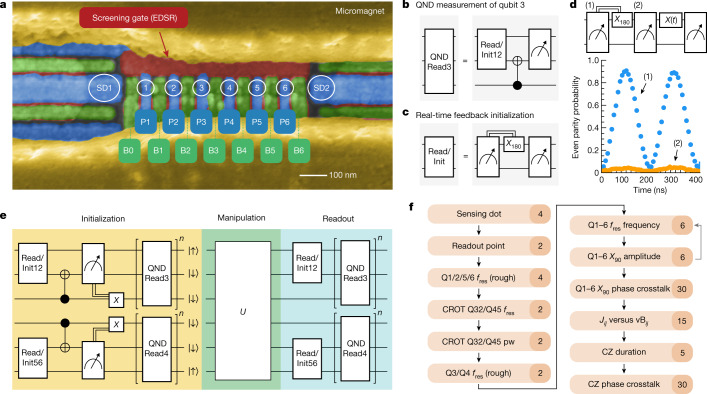
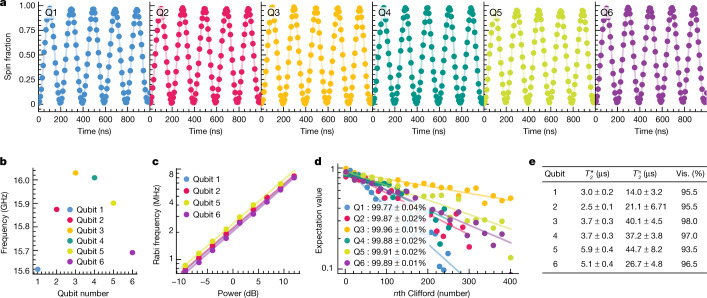
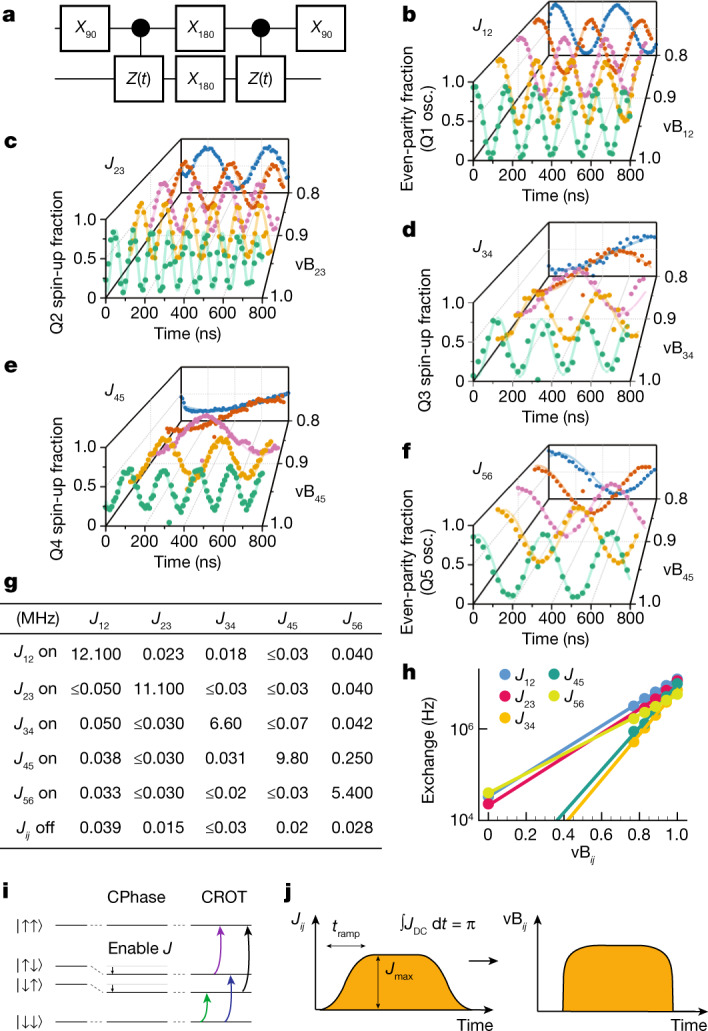
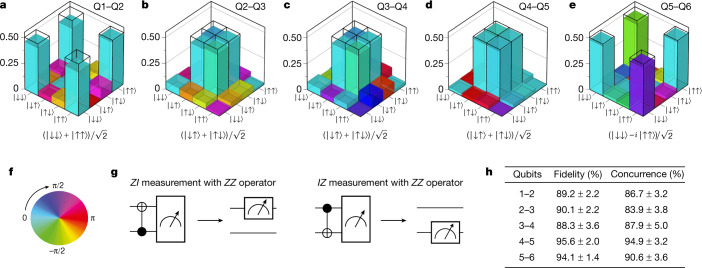
Future quantum computers capable of solving relevant problems will require a large number of qubits that can be operated reliably 1 . However, the requirements of having a large qubit count and operating with high fidelity are typically conflicting. Spins in semiconductor quantum dots show long-term promise 2,3 but demonstrations so far use between one and four qubits and typically optimize the fidelity of either single- or two-qubit operations, or initialization and readout 4–11 . Here, we increase the number of qubits and simultaneously achieve respectable fidelities for universal operation, state preparation and measurement. We design, fabricate and operate a six-qubit processor with a focus on careful Hamiltonian engineering, on a high level of abstraction to program the quantum circuits, and on efficient background calibration, all of which are essential to achieve high fidelities on this extended system. State preparation combines initialization by measurement and real-time feedback with quantum-non-demolition measurements. These advances will enable testing of increasingly meaningful quantum protocols and constitute a major stepping stone towards large-scale quantum computers.
Overview
The claims and statistics of this paper haven’t been checked yet.
Free: it reads the open-access text and checks the first 5 claims that cite a source we can check. Create a free account to check every claim.
Integrity signals
Registry
Cites
Statistics
Figures
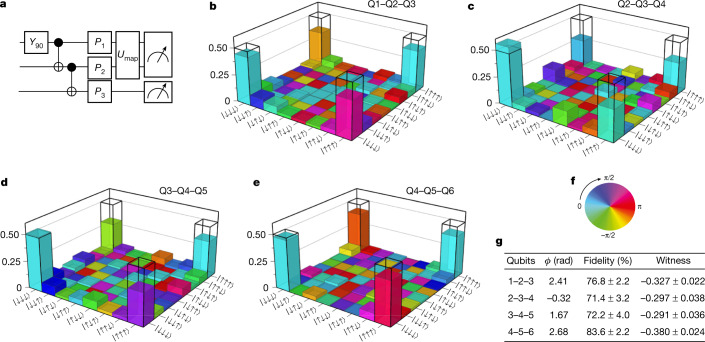
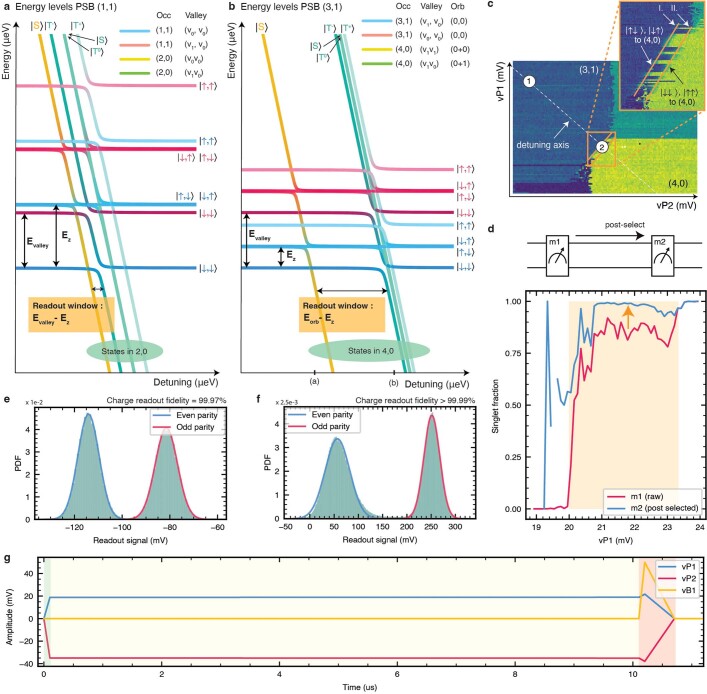
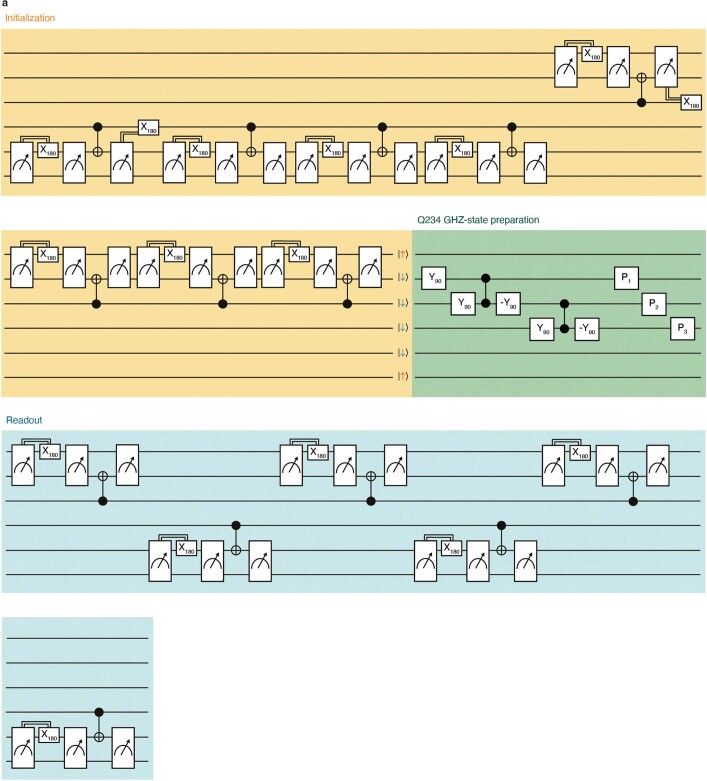
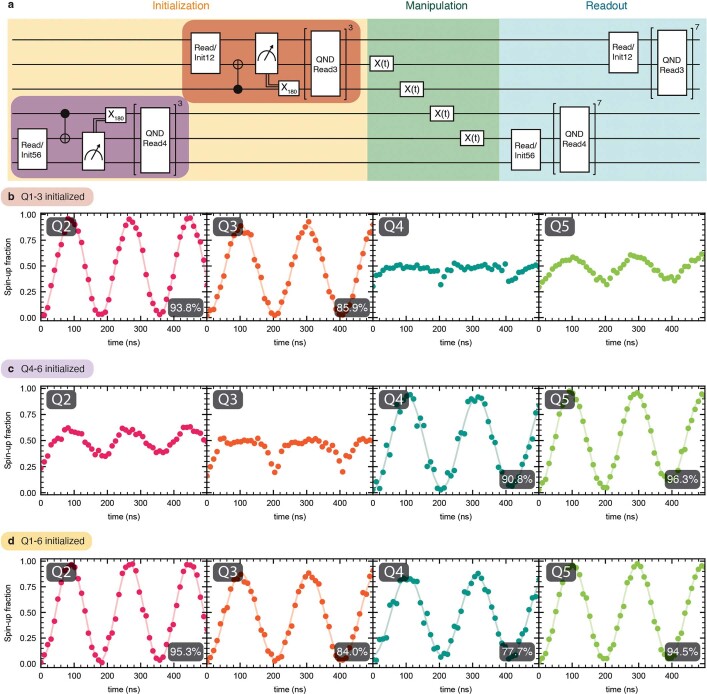
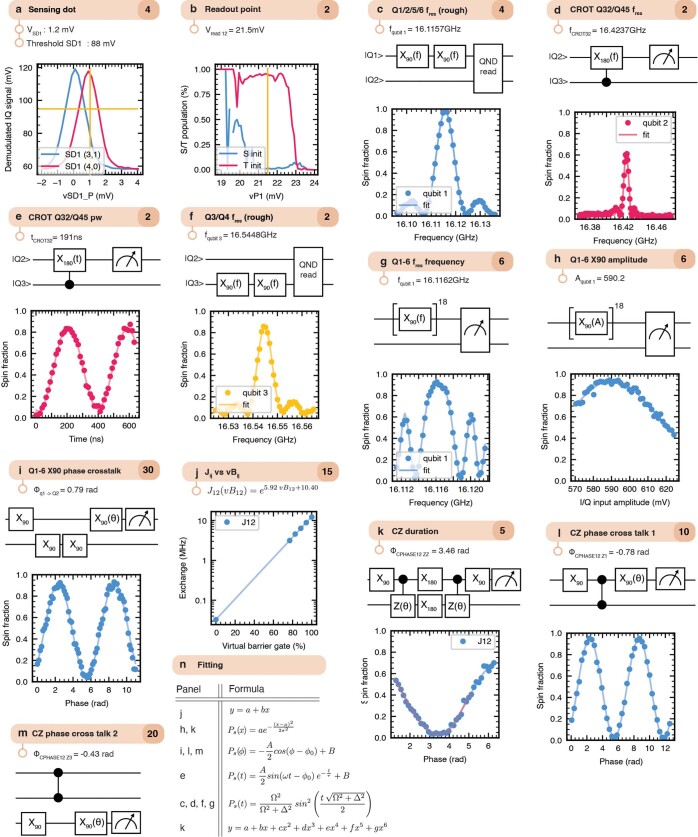
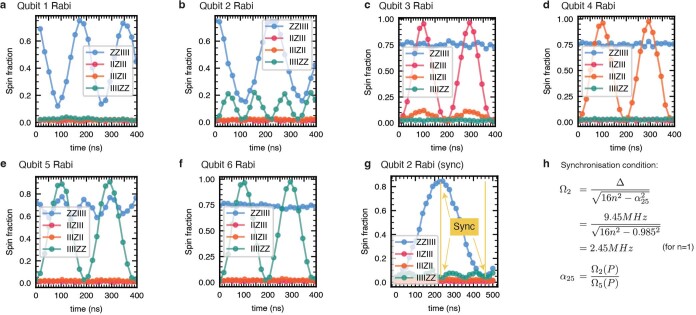
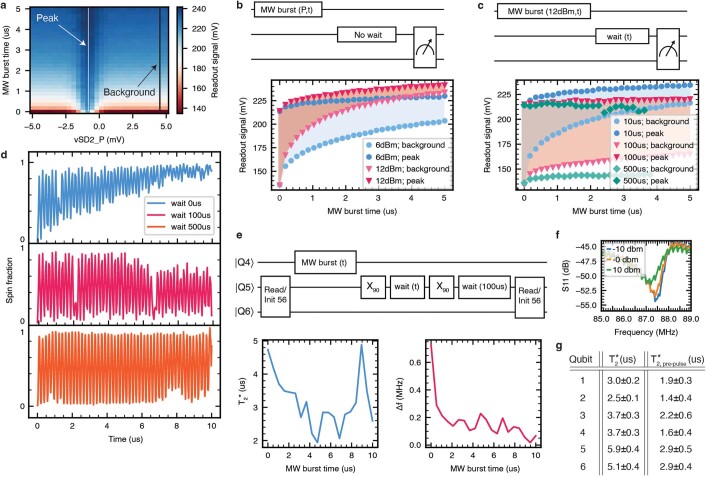
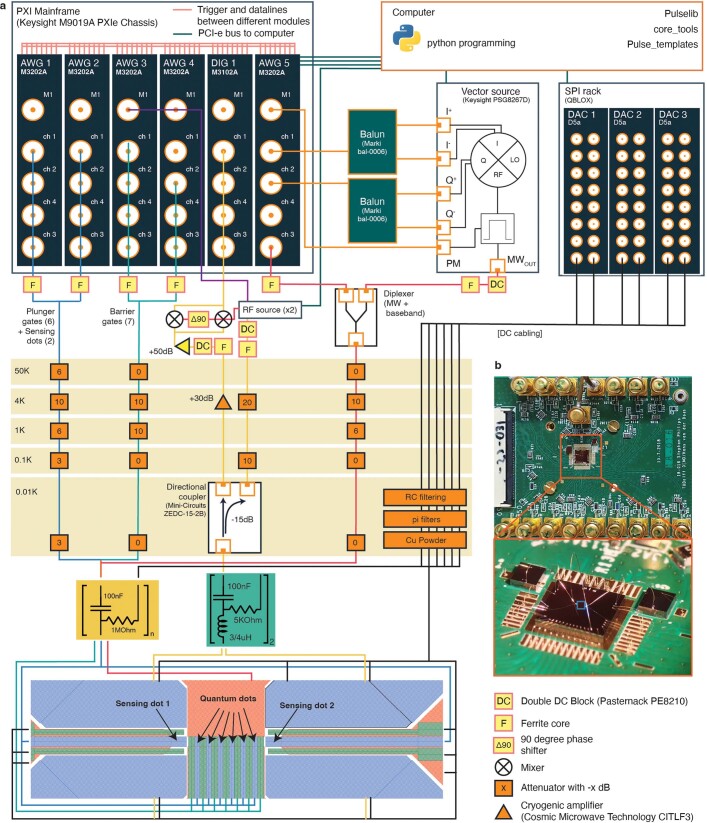
Verification
Claims the paper makes
The claims and statistics of this paper haven’t been checked yet.
Free: it reads the open-access text and checks the first 5 claims that cite a source we can check. Create a free account to check every claim.
Self-check
Percentages, sums and reported differences re-computed from the paper’s own numbers.
The self-check needs the paper’s full text.
Citations
Cites
Quantum supremacy using a programmable superconducting processor
Arute, F., Arya, K., Babbush, R., Bacon, D., Bardin, J. C., Barends, R., Biswas, R., Boixo, S., Brandao, F. G. S. L., Buell, D. A., et al. (2019) · Nature · doi:10.1038/s41586-019-1666-5 · Cited by 7,720 · cited 1×
“Nevertheless, spin qubits currently lag behind in scale when compared to superconducting, trapped ions and photonic platforms, which have demonstrated control of several dozen qubits 16–18 .”
BackgroundQuantum computational advantage using photons
Zhong, H.-S., Wang, H., Deng, Y.-H., Chen, M.-C., Peng, L.-C., Luo, Y.-H., Qin, J., Wu, D., Ding, X., Hu, Y., et al. (2020) · Science · doi:10.1126/science.abe8770 · Cited by 2,405 · cited 1×
“Nevertheless, spin qubits currently lag behind in scale when compared to superconducting, trapped ions and photonic platforms, which have demonstrated control of several dozen qubits 16–18 .”
BackgroundGreenberger, D. M., Horne, M. A., & Zeilinger, A. (1989) · Bell’s Theorem, Quantum Theory and Conceptions of the Universe · doi:10.1007/978-94-017-0849-4_10 · Cited by 1,513
Trapped-ion quantum computing: Progress and challenges
Bruzewicz, C. D., Chiaverini, J., McConnell, R., & Sage, J. M. (2019) · Applied Physics Reviews · doi:10.1063/1.5088164 · Cited by 1,483 · cited 1×
“…shows that, in scaling up, maintaining the quality of the control requires substantial effort, particularly, for instance, to deal with the denser motional spectrum in trapped ions 23 , to avert crosstalk in superconducting circuits 24 or to avoid increased losses in photonic circuits 25 .”
BackgroundZwanenburg, F. A., Dzurak, A. S., Morello, A., Simmons, M. Y., Hollenberg, L. C. L., Klimeck, G., Rogge, S., Coppersmith, S. N., & Eriksson, M. A. (2013) · Reviews of Modern Physics · doi:10.1103/revmodphys.85.961 · Cited by 1,210
An addressable quantum dot qubit with fault-tolerant control-fidelity
Veldhorst, M., Hwang, J. C. C., Yang, C. H., Leenstra, A. W., de Ronde, B., Dehollain, J. P., Muhonen, J. T., Hudson, F. E., Itoh, K. M., Morello, A., et al. (2014) · Nature Nanotechnology · doi:10.1038/nnano.2014.216 · Cited by 940
Self-citationA quantum-dot spin qubit with coherence limited by charge noise and fidelity higher than 99.9%
Yoneda, J., Takeda, K., Otsuka, T., Nakajima, T., Delbecq, M. R., Allison, G., Honda, T., Kodera, T., Oda, S., Hoshi, Y., et al. (2018) · Nature Nanotechnology · doi:10.1038/s41565-017-0014-x · Cited by 900 · cited 1×
“• Following [13], we aim at a maximal decoherence gradient (|z ∂z |+ | ∂Bz ∂y |) of 0.”
MethodCurrent Rectification by Pauli Exclusion in a Weakly Coupled Double Quantum Dot System
Ono, K., Austing, D. G., Tokura, Y., & Tarucha, S. (2002) · Science · doi:10.1126/science.1070958 · Cited by 801 · cited 1×
“PSB readout is a method used to convert a spin state to a more easily detectable charge state 58 .”
MethodA programmable two-qubit quantum processor in silicon
Watson, T. F., Philips, S. G. J., Kawakami, E., Ward, D. R., Scarlino, P., Veldhorst, M., Savage, D. E., Lagally, M. G., Friesen, M., Coppersmith, S. N., et al. (2018) · Nature · doi:10.1038/nature25766 · Cited by 741 · cited 2×
“…measured across the six-dot array have state fidelity ranging from 88% to 96%, which is considerably higher than the Bell state fidelities of 78% to 89% (all state preparation and measurement (SPAM) corrected, see Methods) reported on two-qubit quantum dot devices just a few years ago 42,44,45 .”
BackgroundSelf-citationInterfacing spin qubits in quantum dots and donors—hot, dense, and coherent
Vandersypen, L. M. K., Bluhm, H., Clarke, J. S., Dzurak, A. S., Ishihara, R., Morello, A., Reilly, D. J., Schreiber, L. R., & Veldhorst, M. (2017) · npj Quantum Information · doi:10.1038/s41534-017-0038-y · Cited by 624 · cited 1×
“To scale beyond, we envision networks of local registers [6, 7], connected together with quantum coherent links.”
BackgroundSelf-citation
Research works printed but not linked: 1
- Harvey-Collard P High-fidelity single-shot readout for a spin qubit via an enhanced latching mechanism Phys. Rev. X 2018 8 021046
Cited by
Review of performance metrics of spin qubits in gated semiconducting nanostructures
Stano, P., & Loss, D. (2022) · Nature Reviews Physics · doi:10.1038/s42254-022-00484-w · Cited by 165
Quantum error correction with silicon spin qubits
Takeda, K., Noiri, A., Nakajima, T., Kobayashi, T., & Tarucha, S. (2022) · Nature · doi:10.1038/s41586-022-04986-6 · Cited by 172
Probing single electrons across 300-mm spin qubit wafers
Neyens, S., Zietz, O. K., Watson, T. F., Luthi, F., Nethwewala, A., George, H. C., Henry, E., Islam, M., Wagner, A. J., Borjans, F., et al. (2024) · Nature · doi:10.1038/s41586-024-07275-6 · Cited by 178
“Today, integrated spin qubit arrays have reached sizes of six quantum dots 9,15 , with larger quantum dot platforms in 1D (refs.”
InfluentialSelf-citationShared control of a 16 semiconductor quantum dot crossbar array
Borsoi, F., Hendrickx, N. W., John, V., Meyer, M., Motz, S., van Riggelen, F., Sammak, A., de Snoo, S. L., Scappucci, G., & Veldhorst, M. (2024) · Nature Nanotechnology · doi:10.1038/s41565-023-01491-3 · Cited by 165
Self-citationNoisy intermediate-scale quantum computers
Cheng, B., Deng, X., Gu, X. Q., He, Y., Hu, G., Huang, P., Li, J., Lin, B., Lu, D., Lu, Y., et al. (2023) · Frontiers of Physics · doi:10.1007/s11467-022-1249-z · Cited by 182
High-fidelity spin qubit operation and algorithmic initialization above 1 K
Huang, J. Y., Su, R. Y., Lim, W. H., Feng, M., van Straaten, B., Severin, B., Gilbert, W., Stuyck, N. D., Tanttu, T., Serrano, S., et al. (2024) · Nature · doi:10.1038/s41586-024-07160-2 · Cited by 194
“5b–d), feedback on the gate voltage levels, spin resonance frequencies and microwave amplitudes 9 are not used, which reduces the number of feedback parameters by seven and lowers the time and computation cost.”
InfluentialUniversal logic with encoded spin qubits in silicon
Weinstein, A. J., Reed, M. D., Jones, A. M., Andrews, R. W., Barnes, D., Blumoff, J. Z., Euliss, L. E., Eng, K., Fong, B. H., Ha, S. D., et al. (2023) · Nature · doi:10.1038/s41586-023-05777-3 · Cited by 124
Operating semiconductor quantum processors with hopping spins
Wang, C.-A., John, V., Tidjani, H., Yu, C. X., Ivlev, A., Déprez, C., van Riggelen, F., Woods, B. D., Hendrickx, N. W., Lawrie, W. I. L., et al. (2024) · Science · doi:10.1126/science.ado5915 · Cited by 109
Self-citationSweet-spot operation of a germanium hole spin qubit with highly anisotropic noise sensitivity
Hendrickx, N. W., Massai, L., Mergenthaler, M., Schupp, F. J., Paredes, S., Bedell, S. W., Salis, G., & Fuhrer, A. (2024) · Nature Materials · doi:10.1038/s41563-024-01857-5 · Cited by 158
“Here we report the highly anisotropic heavy-hole g -tensor and its dependence on electric fields, revealing how qubit driving and decoherence originate from electric modulations of the g -tensor.”
BackgroundSimultaneous single-qubit driving of semiconductor spin qubits at the fault-tolerant threshold
Lawrie, W. I. L., Rimbach-Russ, M., van Riggelen, F., Hendrickx, N. W., de Snoo, S. L., Sammak, A., Scappucci, G., Helsen, J., & Veldhorst, M. (2023) · Nature Communications · doi:10.1038/s41467-023-39334-3 · Cited by 138
Self-citationAssessment of the errors of high-fidelity two-qubit gates in silicon quantum dots
Tanttu, T., Lim, W. H., Huang, J. Y., Stuyck, N. D., Gilbert, W., Su, R. Y., Feng, M., Cifuentes, J. D., Seedhouse, A. E., Seritan, S., et al. (2024) · Nature Physics · doi:10.1038/s41567-024-02614-w · Cited by 96
“Due to the relative phases, the number of parameters requiring feedback grows prohibitively fast with the number of qubits if no mitigation strategy is adopted 44 .”
12-Spin-Qubit Arrays Fabricated on a 300 mm Semiconductor Manufacturing Line
George, H. C., Mądzik, M. T., Henry, E., Wagner, A. J., Islam, M. M., Borjans, F., Connors, E. J., Corrigan, J., Curry, M., Harper, M. K., et al. (2024) · Nano Letters · doi:10.1021/acs.nanolett.4c05205 · Cited by 139
“In summary, Tunnel Falls spin-qubit devices are functional linear arrays of 12 QDs enabling up to 12 qubits which is the largest number of qubits reported in a single device in Si/SiGe [33].”
Self-citationThe SpinBus architecture for scaling spin qubits with electron shuttling
Künne, M., Willmes, A., Oberländer, M., Gorjaew, C., Teske, J. D., Bhardwaj, H., Beer, M., Kammerloher, E., Otten, R., Seidler, I., et al. (2024) · Nature Communications · doi:10.1038/s41467-024-49182-4 · Cited by 133
“Furthermore, the operation of multi-qubit devices has been shown in several material systems 12 – 15 .”
Reducing charge noise in quantum dots by using thin silicon quantum wells
Wuetz, B. P., Esposti, D. D., Zwerver, A.-M., Amitonov, S. V., Botifoll, M., Arbiol, J., Vandersypen, L. M. K., Rimbach-Russ, M., & Scappucci, G. (2023) · Nature Communications · doi:10.1038/s41467-023-36951-w · Cited by 122
Self-citationLow charge noise quantum dots with industrial CMOS manufacturing
Elsayed, A., Shehata, M. M. E. K., Godfrin, C., Kubicek, S., Massar, S., Canvel, Y., Jussot, J., Simion, G., Mongillo, M., Wan, D., et al. (2024) · npj Quantum Information · doi:10.1038/s41534-024-00864-3 · Cited by 113
“The overlapping structure has been the main design for high fi delity qubit operations 18,20,22,23 , and the integration with the standard industrial fabrication allows wafer-scale accurate critical dimen-sioncontrolandhighdeviceyield 7,8,10,35 .”
Recent advances in hole-spin qubits
Fang, Y., Philippopoulos, P., Culcer, D., Coish, W. A., & Chesi, S. (2023) · Materials for Quantum Technology · doi:10.1088/2633-4356/acb87e · Cited by 102
“9%) single-qubit manipulation [4, 5], strong coupling of spin qubits to a superconducting resonator [6–9] and, very recently, two-qubit quantum processors with gate fidelities surpassing the fault-tolerance threshold [10–12] and universal operation of a six-qubit array [13].”
BackgroundHigh-fidelity single-spin shuttling in silicon
Smet, M. D., Matsumoto, Y., Zwerver, A.-M., Tryputen, L., de Snoo, S. L., Amitonov, S. V., Katiraee-Far, S. R., Sammak, A., Samkharadze, N., Gül, Ö., et al. (2025) · Nature Nanotechnology · doi:10.1038/s41565-025-01920-5 · Cited by 138
“Recent advances in this field showcase extended spin coherence [20], high-fidelity single-[21–23] and two-qubit [24–27] gates, high-temperature operation [28, 29], and universal control over up to six qubits [30].”
Self-citationColloquium : Advances in automation of quantum dot devices control
Zwolak, J. P., & Taylor, J. M. (2023) · Reviews of Modern Physics · doi:10.1103/revmodphys.95.011006 · Cited by 87
Anisotropic exchange interaction of two hole-spin qubits
Geyer, S., Hetényi, B., Bosco, S., Camenzind, L. C., Eggli, R. S., Fuhrer, A., Loss, D., Warburton, R. J., Zumbühl, D. M., & Kuhlmann, A. V. (2024) · Nature Physics · doi:10.1038/s41567-024-02481-5 · Cited by 100
Shuttling an Electron Spin through a Silicon Quantum Dot Array
Zwerver, A.-M., Amitonov, S. V., de Snoo, S. L., Mądzik, M. T., Rimbach-Russ, M., Sammak, A., Scappucci, G., & Vandersypen, L. M. K. (2023) · PRX Quantum · doi:10.1103/prxquantum.4.030303 · Cited by 91
Self-citationCoherent spin qubit shuttling through germanium quantum dots
van Riggelen, F., Wang, C.-A., de Snoo, S. L., Lawrie, W. I. L., Hendrickx, N. W., Rimbach-Russ, M., Sammak, A., Scappucci, G., Déprez, C., & Veldhorst, M. (2024) · Nature Communications · doi:10.1038/s41467-024-49358-y · Cited by 69
“Significant progress has been made in controlling few-qubit registers [2, 3].”
Self-citationUniversal control of four singlet–triplet qubits
Zhang, X., Morozova, E., Rimbach-Russ, M., Jirovec, D., Hsiao, T.-K., Fariña, P. C., Wang, C.-A., Oosterhout, S. D., Sammak, A., Scappucci, G., et al. (2024) · Nature Nanotechnology · doi:10.1038/s41565-024-01817-9 · Cited by 69
“The use of baseband-only control signals can avoid commonly encountered problems of single-spin qubits such as microwave heating effects [11, 31, 32] and may furthermore alleviate crosstalk effects [33].”
Self-citationMills, A., Guinn, C. R., Feldman, M. M., Sigillito, A. J., Gullans, M. J., Rakher, M. T., Kerckhoff, J., Jackson, C. A. C., & Petta, J. R. (2022) · Physical Review Applied · doi:10.1103/physrevapplied.18.064028 · Cited by 81
Xue, R., Beer, M., Seidler, I., Humpohl, S., Tu, J., Trellenkamp, S., Struck, T., Bluhm, H., & Schreiber, L. R. (2024) · Nature Communications · doi:10.1038/s41467-024-46519-x · Cited by 98
Fast High-Fidelity Single-Shot Readout of Spins in Silicon Using a Single-Electron Box
Oakes, G. A., Ciriano-Tejel, V. N., Wise, D. F., Fogarty, M. A., Lundberg, T., Lainé, C., Schaal, S., Martins, F., Ibberson, D. J., Hutin, L., et al. (2023) · Physical Review X · doi:10.1103/physrevx.13.011023 · Cited by 90
Dielectrics for Two-Dimensional Transition-Metal Dichalcogenide Applications
Lau, C. S., Das, S., Verzhbitskiy, I., Huang, D., Zhang, Y., Talha-Dean, T., Fu, W., Venkatakrishnarao, D., & Goh, K. E. J. (2023) · ACS Nano · doi:10.1021/acsnano.3c03455 · Cited by 70
“Planar spin qubits are the most well-known implementation and have been demonstrated on various material platforms including III-V GaAs/AlGaAs heterostructures,[354, 355] Si,[356– 359] and Ge.”
BackgroundHotter is Easier: Unexpected Temperature Dependence of Spin Qubit Frequencies
Undseth, B., Pietx-Casas, O., Raymenants, E., Mehmandoost, M., Mądzik, M. T., Philips, S. G. J., de Snoo, S. L., Michalak, D. J., Amitonov, S. V., Tryputen, L., et al. (2023) · Physical Review X · doi:10.1103/physrevx.13.041015 · Cited by 86
Self-citationSpin-EPR-pair separation by conveyor-mode single electron shuttling in Si/SiGe
Struck, T., Volmer, M., Visser, L., Offermann, T., Xue, R., Tu, J., Trellenkamp, S., Cywiński, Ł., Bluhm, H., & Schreiber, L. R. (2024) · Nature Communications · doi:10.1038/s41467-024-45583-7 · Cited by 86
“Sparse qubit grids have good perspective to eliminate qubit cross-talk issues of their dense counter-part [16] and to solve the signal-fanout problem [17] by employing tiles of on-chip control-electronics [12, 18, 19].”
BackgroundRobust and localised control of a 10-spin qubit array in germanium
John, V., Yu, C. X., van Straaten, B., Rodríguez-Mena, E. A., Rodríguez, M. J., Oosterhout, S. D., Stehouwer, L. E. A., Scappucci, G., Rimbach-Russ, M., Bosco, S., et al. (2025) · Nature Communications · doi:10.1038/s41467-025-65577-3 · Cited by 56
Self-citationCMOS Integrated Circuits for the Quantum Information Sciences
Anders, J., Babaie, M., Bardin, J. C., Bashir, I., Billiot, G., Blokhina, E., Bonen, S., Charbon, E., Chiaverini, J., Chuang, I. L., et al. (2023) · IEEE Transactions on Quantum Engineering · doi:10.1109/tqe.2023.3290593 · Cited by 63
Low disorder and high valley splitting in silicon
Esposti, D. D., Stehouwer, L. E. A., Gül, Ö., Samkharadze, N., Déprez, C., Meyer, M., Meijer, I. N., Tryputen, L., Karwal, S., Botifoll, M., et al. (2024) · npj Quantum Information · doi:10.1038/s41534-024-00826-9 · Cited by 72
“[5].”
BackgroundResultInfluentialSelf-citationParticle–hole symmetry protects spin-valley blockade in graphene quantum dots
Banszerus, L., Möller, S., Hecker, K., Icking, E., Watanabe, K., Taniguchi, T., Hassler, F., Volk, C., & Stampfer, C. (2023) · Nature · doi:10.1038/s41586-023-05953-5 · Cited by 52
Self-citationGrover’s algorithm in a four-qubit silicon processor above the fault-tolerant threshold
Thorvaldson, I., Poulos, D., Moehle, C. M., Misha, S. H., Edlbauer, H., Reiner, J.-M., Geng, H., Voisin, B., Jones, M. T., Donnelly, M. B., et al. (2025) · Nature Nanotechnology · doi:10.1038/s41565-024-01853-5 · Cited by 66
Universal distributed blind quantum computing with solid-state qubits
Wei, Y.-C., Stas, P.-J., Suleymanzade, A., Baranes, G., Machado, F., Huan, Y. Q., Knaut, C. M., Ding, S. W., Merz, M., Knall, E., et al. (2025) · Science · doi:10.1126/science.adu6894 · Cited by 84
Control and readout of a 13-level trapped ion qudit
Low, P. J., White, B., & Senko, C. (2025) · npj Quantum Information · doi:10.1038/s41534-025-01031-y · Cited by 66
Spin-qubit control with a milli-kelvin CMOS chip
Bartee, S. K., Gilbert, W., Zuo, K., Das, K., Tanttu, T., Yang, C. H., Stuyck, N. D., Pauka, S., Su, R. Y., Lim, W. H., et al. (2025) · Nature · doi:10.1038/s41586-025-09157-x · Cited by 51
“Materials such as lead appear to be ideally placed for creating thermally isolating interconnects and future publications will report details on this topic.”
Silicon spin qubits from laboratory to industry
Michielis, M. D., Ferraro, E., Prati, E., Hutin, L., Bertrand, B., Charbon, E., Ibberson, D. J., & González-Zalba, M. F. (2023) · Journal of Physics D Applied Physics · doi:10.1088/1361-6463/acd8c7 · Cited by 64
Simultaneous high-fidelity single-qubit gates in a spin qubit array
Wu, Y.-H., Camenzind, L. C., Bütler, P., Jin, I. K., Noiri, A., Takeda, K., Nakajima, T., Kobayashi, T., Scappucci, G., Goan, H., et al. (2026) · Nature Physics · doi:10.1038/s41567-026-03466-2 · Cited by 56
“The dots containing three electrons serve as the projection dots for the PSB readouts, which helps increase the readout windows [13].”
InfluentialSelf-citationRapid single-shot parity spin readout in a silicon double quantum dot with fidelity exceeding 99%
Takeda, K., Noiri, A., Nakajima, T., Camenzind, L. C., Kobayashi, T., Sammak, A., Scappucci, G., & Tarucha, S. (2024) · npj Quantum Information · doi:10.1038/s41534-024-00813-0 · Cited by 60
“For the (4,0) configuration, the first excited state is energetically split by the orbital splitting rather than the valley splitting [11].”
BackgroundSelf-citationNonlinear Response and Crosstalk of Electrically Driven Silicon Spin Qubits
Undseth, B., Xue, X., Mehmandoost, M., Rimbach-Russ, M., Eendebak, P. T., Samkharadze, N., Sammak, A., Dobrovitski, V. V., Scappucci, G., & Vandersypen, L. M. K. (2023) · Physical Review Applied · doi:10.1103/physrevapplied.19.044078 · Cited by 53
Self-citationBounds to electron spin qubit variability for scalable CMOS architectures
Cifuentes, J. D., Tanttu, T., Gilbert, W., Huang, J. Y., Vahapoglu, E., Leon, R. C. C., Serrano, S., Otter, D., Dunmore, D., Mai, P. Y., et al. (2024) · Nature Communications · doi:10.1038/s41467-024-48557-x · Cited by 56
“Moreover, the dominant effect of spin – orbit coupling being studied here is masked by the presence of micromagnets, which are commonly adopted in SiGe qubit architectures 3 .”
BackgroundA singlet-triplet hole-spin qubit in MOS silicon
Liles, S. D., Halverson, D. J., Wang, Z., Shamim, A., Eggli, R. S., Jin, I. K., Hillier, J., Kumar, K. S., Vorreiter, I., Rendell, M. J., et al. (2024) · Nature Communications · doi:10.1038/s41467-024-51902-9 · Cited by 53
Modular Quantum Processor with an All-to-All Reconfigurable Router
Wu, X., Yan, H., Andersson, G., Anferov, A., Chou, M.-H., Conner, C. R., Grebel, J., Joshi, Y. J., Li, S., Miller, J. M., et al. (2024) · Physical Review X · doi:10.1103/physrevx.14.041030 · Cited by 62
“We determine the uncertainties in the state fidelities by bootstrapping the experimental data [73], which involves Monte Carlo re-sampling from the original dataset with replacement and then calculating the standard deviation of the resulting list of fidelities.”
MethodSimple framework for systematic high-fidelity gate operations
Rimbach-Russ, M., Philips, S. G. J., Xue, X., & Vandersypen, L. M. K. (2023) · Quantum Science and Technology · doi:10.1088/2058-9565/acf786 · Cited by 53
Self-citationParity and Singlet-Triplet High-Fidelity Readout in a Silicon Double Quantum Dot at 0.5 K
Niegemann, D. J., El-Homsy, V., Jadot, B., Nurizzo, M., Paz, B. C., Chanrion, E., Dartiailh, M., Klemt, B., Thiney, V., Bäuerle, C., et al. (2022) · PRX Quantum · doi:10.1103/prxquantum.3.040335 · Cited by 41
Chip-integrated quantum signature network over 200 km
Du, Y., Li, B.-H., Hua, X., Cao, X., Zhao, Z., Xie, F., Zhang, Z., Yin, H., Xiao, X., & Wei, K. (2025) · Light Science & Applications · doi:10.1038/s41377-025-01775-4 · Cited by 49
Kim, C. W., Nichol, J. M., Jordan, A. N., & Franco, I. (2022) · PRX Quantum · doi:10.1103/prxquantum.3.040308 · Cited by 43
Superconducting quantum computers: who is leading the future?
AbuGhanem, M. (2025) · EPJ Quantum Technology · doi:10.1140/epjqt/s40507-025-00405-7 · Cited by 61
Braiding-based quantum control of a Majorana qubit built from quantum dots
Boross, P., & Pályi, A. (2024) · Physical review. B./Physical review. B · doi:10.1103/physrevb.109.125410 · Cited by 44
Industrial 300 mm wafer processed spin qubits in natural silicon/silicon-germanium
Koch, T., Godfrin, C., Adam, V., Ferrero, J., Schroller, D., Glaeser, N., Kubicek, S., Li, R., Loo, R., Massar, S., et al. (2025) · npj Quantum Information · doi:10.1038/s41534-025-01016-x · Cited by 41
“The realisation of the up to date largest semiconductor based quantum processor consists of six qubits hosted in quantum dots formed in an isotopically puri fi ed 28 Si quantum well strained between silicon-germanium layers 12 .”
High-fidelity initialization and control of electron and nuclear spins in a four-qubit register
Reiner, J.-M., Chung, Y., Misha, S. H., Lehner, C., Moehle, C. M., Poulos, D., Monir, S., Charde, K., Macha, P., Kranz, L., et al. (2024) · Nature Nanotechnology · doi:10.1038/s41565-023-01596-9 · Cited by 49
“5c, comparable to previous donor-based 8,37 and gate-defined quantum dot single spin qubits 38,39 ( T ∗ 2 ≈ 10μs ).”
BackgroundCharge state-dependent symmetry breaking of atomic defects in transition metal dichalcogenides
Xiang, F., Huberich, L., Vargas, P. A., Torsi, R., Allerbeck, J., Tan, A. M. Z., Dong, C., Ruffieux, P., Fasel, R., Gröning, O., et al. (2024) · Nature Communications · doi:10.1038/s41467-024-47039-4 · Cited by 39
“If they don’t control the doping with an external voltage through an insulafing layer, they should not use the term ‘gafing’.”
Exploiting strained epitaxial germanium for scaling low-noise spin qubits at the micrometre scale
Stehouwer, L. E. A., Yu, C. X., van Straaten, B., Tosato, A., John, V., Esposti, D. D., Elsayed, A., Costa, D., Oosterhout, S. D., Hendrickx, N. W., et al. (2025) · Nature Materials · doi:10.1038/s41563-025-02276-w · Cited by 54
Self-citationPeña, L. F., Koepke, J., Dycus, J. H., Mounce, A. M., Baczewski, A., Jacobson, N. T., & Bussmann, E. (2024) · npj Quantum Information · doi:10.1038/s41534-024-00827-8 · Cited by 35
“[10] Stephan GJ Philips, Mateusz T Mądzik, Sergey V Amitonov, Sander L de Snoo, Maximilian Russ, Nima Kalhor, Christian Volk, William IL Lawrie, Delphine Brousse, Larysa Tryputen, et al.”
Long optical and electron spin coherence times for erbium ions in silicon
Berkman, I. R., Lyasota, A., de Boo, G. G., Bartholomew, J. G., Lim, S. Q., Johnson, B. C., McCallum, J. C., Xu, B.-B., Xie, S., Abrosimov, N. V., et al. (2025) · npj Quantum Information · doi:10.1038/s41534-025-01008-x · Cited by 40
“ThehighRabifrequencyseenhereiscomparablewithotherstate-of-the-artelectronspinqubitsystemsinsilicon 13 – 15, 23 , and A Hahn echo sequence 79 is used to measure the decoherence time ( T 2,Hahn ) of Site E and Site F.”
Klemt, B., El-Homsy, V., Nurizzo, M., Hamonic, P., Martínez, B., Paz, B. C., Spence, C., Dartiailh, M., Jadot, B., Chanrion, E., et al. (2023) · npj Quantum Information · doi:10.1038/s41534-023-00776-8 · Cited by 37
Strong hole-photon coupling in planar Ge for probing charge degree and strongly correlated states
Palma, F. D., Oppliger, F., Jang, W., Bosco, S., Janík, M., Calcaterra, S., Katsaros, G., Isella, G., Loss, D., & Scarlino, P. (2024) · Nature Communications · doi:10.1038/s41467-024-54520-7 · Cited by 50
“Semiconductor quantum dots (QDs) represent a promising platform for advanced quantum information processing [1–3].”
Brillouin optomechanics in the quantum ground state
Doeleman, H. M., Schatteburg, T., Benevides, R., Vollenweider, S., Macri, D., & Chu, Y. (2023) · Physical Review Research · doi:10.1103/physrevresearch.5.043140 · Cited by 40
Exciton Transport in a Germanium Quantum Dot Ladder
Hsiao, T.-K., Fariña, P. C., Oosterhout, S. D., Jirovec, D., Zhang, X., van Diepen, C. J., Lawrie, W. I. L., Wang, C.-A., Sammak, A., Scappucci, G., et al. (2024) · Physical Review X · doi:10.1103/physrevx.14.011048 · Cited by 33
Self-citationCompromise-free scaling of qubit speed and coherence
Carballido, M. J., Svab, S., Eggli, R. S., Patlatiuk, T., Kwon, P. C., Schuff, J., Kaiser, R. M., Camenzind, L. C., Li, A., Ares, N., et al. (2025) · Nature Communications · doi:10.1038/s41467-025-62614-z · Cited by 39
“Their success is attributed to their competitive coherence times 4,5 , the demonstration of robust multi-qubit operations 6 – 8 , coherent spin control above 1 K 9 – 12 and their compatibility with industrial fabrication techniques 13 – 15 .”
Hole Spin Qubits in Thin Curved Quantum Wells
Bosco, S., & Loss, D. (2022) · Physical Review Applied · doi:10.1103/physrevapplied.18.044038 · Cited by 34
A 2D quantum dot array in planar 28Si/SiGe
Unseld, F. K., Meyer, M., Mądzik, M. T., Borsoi, F., de Snoo, S. L., Amitonov, S. V., Sammak, A., Scappucci, G., Veldhorst, M., & Vandersypen, L. M. K. (2023) · Applied Physics Letters · doi:10.1063/5.0160847 · Cited by 36
Self-citationQuantum computing on magnetic racetracks with flying domain wall qubits
Zou, J., Bosco, S., Pal, B., Parkin, S., Klinovaja, J., & Loss, D. (2023) · Physical Review Research · doi:10.1103/physrevresearch.5.033166 · Cited by 32
Gate-tunable kinetic inductance parametric amplifier
Splitthoff, L. J., Wesdorp, J. J., Pita‐Vidal, M., Bargerbos, A., Liu, Y., & Andersen, C. K. (2024) · Physical Review Applied · doi:10.1103/physrevapplied.21.014052 · Cited by 32
CMOS on-chip thermometry at deep cryogenic temperatures
Noah, G. M., Swift, T. H., de Kruijf, M., Gomez-Saiz, A., Morton, J. J. L., & González-Zalba, M. F. (2024) · Applied Physics Reviews · doi:10.1063/5.0190040 · Cited by 36
“…quantum processor platforms demonstrate optimum behaviour at deep cryogenic temperatures (0.01 to 4 K), including super-conducting [8, 9], spin [10, 11], trapped ion [12, 13] and photonic [14] qubits, and hence the goal of more tightly integrating the control electronics with quantum processors…”
InfluentialCross-Platform Autonomous Control of Minimal Kitaev Chains
van Driel, D., Koch, R., Sietses, V. P. M., ten Haaf, S. L. D., Liu, C.-X., Zatelli, F., Roovers, B., Bordin, A., van Loo, N., Wang, G., et al. (2026) · PRX Intelligence · doi:10.1103/ryll-qb42 · Cited by 30
“Mesoscopic quantum devices are promising for both quantum computing [1–3] and quantum simulation [4–8] due to the flexibility and scalability in the design and fabrication.”
Zhang, Z., Wu, Y., & Ma, X. (2025) · Energy Conversion and Management · doi:10.1016/j.enconman.2025.119694 · Cited by 33
“In contrast, quantum computing uses quantum bits, or qubits [113].”
Electrical Control of Uniformity in Quantum Dot Devices
Meyer, M., Déprez, C., van Abswoude, T. R., Meijer, I. N., Liu, D., Wang, C.-A., Karwal, S., Oosterhout, S. D., Borsoi, F., Sammak, A., et al. (2023) · Nano Letters · doi:10.1021/acs.nanolett.2c04446 · Cited by 33
Self-citationTowards Early Fault Tolerance on a 2 × N Array of Qubits Equipped with Shuttling
Siegel, A. C., Strikis, A., & Fogarty, M. A. (2024) · PRX Quantum · doi:10.1103/prxquantum.5.040328 · Cited by 48
“Indeed, spin-coherence times T 2 exceeding 20ms have been demonstrated for purified silicon electron spins [56], which is 4 orders of magnitude above initialisation, measurement and single-and two-qubit gate times (at most a few microseconds [27, 57– 59]).”
InfluentialSingle-Electron Spin Qubits in Silicon for Quantum Computing
Hu, G., Huang, W., Cai, R., Wang, L., Yang, C. H., Cao, G., Xue, X., Huang, P., & He, Y. (2025) · Intelligent Computing · doi:10.34133/icomputing.0115 · Cited by 33
Ultra-low-power cryogenic complementary metal oxide semiconductor technology
Zhao, Q., Han, Y., Han, H.-C., Schreiber, L. R., Lee, T.-E., Chiang, H.-L., Radu, I. P., Enz, C., Grützmacher, D., Stampfer, C., et al. (2025) · Nature Reviews Electrical Engineering · doi:10.1038/s44287-025-00157-7 · Cited by 34
Baseband control of single-electron silicon spin qubits in two dimensions
Unseld, F. K., Undseth, B., Raymenants, E., Matsumoto, Y., de Snoo, S. L., Karwal, S., Pietx-Casas, O., Ivlev, A., Meyer, M., Sammak, A., et al. (2025) · Nature Communications · doi:10.1038/s41467-025-60351-x · Cited by 46
“Initialization and readout are performed using Pauli spin blockadeandpost-selectionsimilarto 9 .”
InfluentialSelf-citationCrawford, O., Cruise, J. R., Mertig, N., & González-Zalba, M. F. (2023) · npj Quantum Information · doi:10.1038/s41534-023-00679-8 · Cited by 31
High-fidelity two-qubit gates of hybrid superconducting-semiconducting singlet-triplet qubits
Spethmann, M., Bosco, S., Hofmann, A., Klinovaja, J., & Loss, D. (2024) · Physical review. B./Physical review. B · doi:10.1103/physrevb.109.085303 · Cited by 28
“Front-runner quantum bits (qubits) are encoded in the spin of particles confined in semiconducting quantum dots [5–9] or in collective modes of superconducting devices [10, 11].”
BackgroundReal-time two-axis control of a spin qubit
Berritta, F., Rasmussen, T., Krzywda, J. A., van der Heijden, J., Fedele, F., Fallahi, S., Gardner, G. C., Manfra, M. J., van Nieuwenburg, E., Danon, J., et al. (2024) · Nature Communications · doi:10.1038/s41467-024-45857-0 · Cited by 44
“Speci fi cally, an FPGA-powered quantum orchestration platform (OPX 40 ) repeatedly separates singlet-correlated electron pairs using voltage pulses and performs single-shot readout classi fi cations to estimate on-the-fl y the fl uctuating nuclear fi eld gradient within the double dot 41 .”
Tailoring quantum error correction to spin qubits
Hetényi, B., & Wootton, J. R. (2024) · Physical Review A · doi:10.1103/physreva.109.032433 · Cited by 29
“Spin qubit platforms to date have demonstrated single-and two-qubit operations and spin read-out above 99% fidelity [4–6] in devices with up to six qubits [7].”
BackgroundBlueprint for All-to-All-Connected Superconducting Spin Qubits
Pita‐Vidal, M., Wesdorp, J. J., & Andersen, C. K. (2025) · PRX Quantum · doi:10.1103/prxquantum.6.010308 · Cited by 40
“Recent experiments in these architectures have realized systems with tens and hundreds of qubits, respectively [1–9], as well as two-qubit gates with fidelities above 99 % [3, 10–20].”
Probabilistic Interpolation of Quantum Rotation Angles
Koczor, B., Morton, J. J. L., & Benjamin, S. C. (2024) · Physical Review Letters · doi:10.1103/physrevlett.132.130602 · Cited by 45
“Most of the currently leading qubit hardware platforms operate optimally at cryogenic temperatures, including superconducting qubits [5, 12], trapped ions [13, 14], semiconductor spin qubits [15, 16], and photonic qubits [17].”
BackgroundAn 11-qubit atom processor in silicon
Edlbauer, H., Wang, J., Huq, A. M. S., Thorvaldson, I., Jones, M. T., Misha, S. H., Pappas, W. J., Moehle, C. M., Hsueh, Y., Bornemann, H., et al. (2025) · Nature · doi:10.1038/s41586-025-09827-w · Cited by 49
Cavity-enhanced single-shot readout of a quantum dot spin within 3 nanoseconds
Antoniadis, N. O., Hogg, M., Stehl, W. F., Javadi, A., Tomm, N., Schott, R., Valentin, S. R., Wieck, A. D., Ludwig, A., & Warburton, R. J. (2023) · Nature Communications · doi:10.1038/s41467-023-39568-1 · Cited by 35
High-Fidelity Spin Qubit Shuttling via Large Spin-Orbit Interactions
Bosco, S., Zou, J., & Loss, D. (2024) · PRX Quantum · doi:10.1103/prxquantum.5.020353 · Cited by 36
“…of the noise sources, and can be reached also by moving spin in an inhomogeneous Zeeman field for example produced by varying g -tensors [95, 96] or micro-magnets [1, 66, 97], opening up to effective SOI-driven improvements of shuttling fidelity in electron spin qubits in silicon and germanium.”
BackgroundWeight-four parity checks in a spin-shuttling architecture
Undseth, B., Meggiato, N., Wu, Y.-H., Katiraee-Far, S. R., Tryputen, L., de Snoo, S. L., Esposti, D. D., Scappucci, G., Greplová, E., & Vandersypen, L. M. K. (2026) · Nature · doi:10.1038/s41586-026-10766-3 · Cited by 33
“However, to realize these advantages of sparser architectures, coherent spin shuttling must be integrated within a multi-qubit setting while maintaining universal control and efficient measurement 34–39 .”
InfluentialSelf-citationBridging the Reality Gap in Quantum Devices with Physics-Aware Machine Learning
Craig, D., Moon, H., Fedele, F., Lennon, D. T., van Straaten, B., Vigneau, F., Camenzind, L. C., Zumbühl, D. M., Briggs, G. A. D., Osborne, M. A., et al. (2024) · Physical Review X · doi:10.1103/physrevx.14.011001 · Cited by 35
Coherent control of a triangular exchange-only spin qubit
Acuna, E., Broz, J., Shyamsundar, K., Mei, A. B., Feeney, C. P., Smetanka, V., Davis, T., Lee, K., Choi, M. D., Boyd, B., et al. (2024) · Physical Review Applied · doi:10.1103/physrevapplied.22.044057 · Cited by 31
“In this device, state preparation and readout performance improves at higher electron numbers in dot 1, and readout performance is best at the (3,1,1)-(4,1,0) charge transition [11].”
BackgroundComplete Readout of Two-Electron Spin States in a Double Quantum Dot
Nurizzo, M., Jadot, B., Mortemousque, P.-A., Thiney, V., Chanrion, E., Niegemann, D. J., Dartiailh, M., Ludwig, A., Wieck, A. D., Bäuerle, C., et al. (2023) · PRX Quantum · doi:10.1103/prxquantum.4.010329 · Cited by 24
Scalable on-chip multiplexing of silicon single and double quantum dots
Bohuslavskyi, H., Ronzani, A., Hätinen, J., Rantala, A., Shchepetov, A., Koppinen, P. J., Lehtinen, J. S., & Prunnila, M. (2024) · Communications Physics · doi:10.1038/s42005-024-01806-3 · Cited by 25
Two-qubit logic and teleportation with mobile spin qubits in silicon
Matsumoto, Y., Smet, M. D., Tryputen, L., de Snoo, S. L., Amitonov, S. V., Sammak, A., Rimbach-Russ, M., Scappucci, G., & Vandersypen, L. M. K. (2026) · Nature · doi:10.1038/s41586-026-10423-9 · Cited by 29
“It is important to note that due to the mixing of the triplet T 0 and the singlet S during PSB parity read-out [39, 40], while this method can distinguish between the | 00 ⟩ and | 11 ⟩ states, it cannot di ff erentiate between the | 10 ⟩ and | 01 ⟩ states.”
Self-citationQuantum Snakes on a Plane: Mobile, Low-Dimensional Logical Qubits on a 2D Surface
Siegel, A., Cai, Z., Jnane, H., Koczor, B., Pexton, S., Strikis, A., & Benjamin, S. C. (2026) · PRX Quantum · doi:10.1103/494s-jd8h · Cited by 32
“Small silicon spin qubit processors have already been engineered [19] and small error correcting codes have been implemented [20].”
Supporting quantum technologies with an ultralow-loss silicon photonics platform
Cherchi, M., Bera, A., Kemppinen, A., Nissilä, J., Tappura, K., Caputo, M., Lehtimäki, L., Lehtinen, J. S., Govenius, J., Hassinen, T., et al. (2023) · Advanced Photonics Nexus · doi:10.1117/1.apn.2.2.024002 · Cited by 25
Machine learning on quantum experimental data toward solving quantum many-body problems
Cho, G., & Kim, D. (2024) · Nature Communications · doi:10.1038/s41467-024-51932-3 · Cited by 21
“Further details on this are elaborated in Supplementary Note 5.”
BackgroundInfluentialPhase-Driving Hole Spin Qubits
Bosco, S., Geyer, S., Camenzind, L. C., Eggli, R. S., Fuhrer, A., Warburton, R. J., Zumbühl, D. M., Egues, J. C., Kuhlmann, A. V., & Loss, D. (2023) · Physical Review Letters · doi:10.1103/physrevlett.131.197001 · Cited by 21
Silicon spin qubit noise characterization using real-time feedback protocols and wavelet analysis
Stuyck, N. D., Seedhouse, A. E., Serrano, S., Tanttu, T., Gilbert, W., Huang, J. Y., Hudson, F. E., Itoh, K. M., Laucht, A., Lim, W. H., et al. (2024) · Applied Physics Letters · doi:10.1063/5.0179958 · Cited by 21
Klos, J., Tröger, J., Keutgen, J., Losert, M. P., Abrosimov, N. V., Knoch, J., Bracht, H. A., Coppersmith, S. N., Friesen, M. G., Cojocaru‐Mirédin, O., et al. (2024) · Advanced Science · doi:10.1002/advs.202407442 · Cited by 24
Modular Autonomous Virtualization System for Two-Dimensional Semiconductor Quantum Dot Arrays
Rao, A. S., Buterakos, D. L., van Straaten, B., John, V., Yu, C. X., Oosterhout, S. D., Stehouwer, L. E. A., Scappucci, G., Veldhorst, M., Borsoi, F., et al. (2025) · Physical Review X · doi:10.1103/physrevx.15.021034 · Cited by 38
“This effect can be studied with precision by mapping the exchange coupling as measured via resonant qubit spectroscopy as a function of virtualized barriers in the ON regime [ ?”
Self-citationTwo-Dimensional Si Spin Qubit Arrays with Multilevel Interconnects
Ha, S. D., Acuna, E., Raach, K., Bloom, Z. T., Brecht, T. L., Chappell, J. M., Choi, M. D., Christensen, J. E., Counts, I. T. H., Daprano, D., et al. (2025) · PRX Quantum · doi:10.1103/sgn1-1t2d · Cited by 30
Machine learning on quantum experimental data toward solving quantum many-body problems
Kim, D., & Cho, G. (2023) · doi:10.21203/rs.3.rs-3674601/v1 · Cited by 21
Materials for quantum technologies: A roadmap for spin and topology
Banerjee, N., Bell, C., Ciccarelli, C., Hesjedal, T., Johnson, F., Kurebayashi, H., Moore, T. A., Moutafis, C., Stern, H. L., Vera-Marun, I. J., et al. (2025) · Applied Physics Reviews · doi:10.1063/5.0294020 · Cited by 26
Impact of the local valley splitting on the coherence of conveyor-belt spin shuttling in 28Si/SiGe
Volmer, M., Struck, T., Sala, A., Tu, J., Trellenkamp, S., Esposti, D. D., Scappucci, G., Cywiński, Ł., Bluhm, H., & Schreiber, L. R. (2026) · Nature Communications · doi:10.1038/s41467-026-74382-5 · Cited by 23
“En-hancing valley splitting has therefore become crucial for the Si/SiGe platform [46, 48, 49], since regions of low E VS degrade the performance of both static and mobile qubits and pose a substantial challenge for scalability [3, 34, 50].”
Self-citationSpin dynamics in quantum dots on liquid helium
Dykman, M. I., Asban, O., Chen, Q., Jin, D., & Lyon, S. A. (2023) · Physical review. B./Physical review. B · doi:10.1103/physrevb.107.035437 · Cited by 22
“Such dynamics underlies the operation of semiconductor-based qubits [4], a topic of significant current interest and an area of rapid progress (cf. [5–8] and references therein).”
BackgroundCoherence of group-IV color centers
Harris, I., & Englund, D. R. (2024) · Physical review. B./Physical review. B · doi:10.1103/physrevb.109.085414 · Cited by 20
Metadata
- Authors
- Philips, S. G. J., Mądzik, M. T., Amitonov, S. V., de Snoo, S. L., Russ, M., Kalhor, N., Volk, C., Lawrie, W. I. L., Brousse, D., Tryputen, L., Wuetz, B. P., Sammak, A., Veldhorst, M., Scappucci, G., & Vandersypen, L. M. K.
- Affiliations
- QuTech (NL)
- Netherlands Organisation for Applied Scientific Research (NL)
- Corresponding author
- Vandersypen, Lieven M. K.
- ORCID
- Venue
- Nature
- Published
- 2022-09-28
- Volume
- 609
- Issue
- 7929
- Pages
- 919-924
- ISSN
- 0028-0836 (ISSN-L)
- 1476-4687
- PMC
- PMC9519456
- OpenAlex
- W4297473634
- Semantic Scholar
- ff7a92d1abbe5d355cfd40b7d1e3a8bf25055c26
- Cited by
- 410
- References
- 64
- Citations by year
- 2026: 58 · 2025: 117 · 2024: 121 · 2023: 94 · 2022: 20
- FWCI
- 36.09
- Type
- journal article
- Language
- en
- Open access
- hybrid
- doi.org
- Licence
- cc-by
- creativecommons.org/licenses/by/4.0 (tdm)
- creativecommons.org/licenses/by/4.0 (vor)
- Locations
- Nature (publishedVersion, cc-by)
- PubMed Central (publishedVersion, cc-by)
- PubMed (publishedVersion)
- arXiv (Cornell University) (submittedVersion)
- TNO Repository (submittedVersion)
- OSTI OAI (U.S. Department of Energy Office of Scientific and Technical Information) (submittedVersion)
- RePEc: Research Papers in Economics (submittedVersion)
- Research Repository (Delft University of Technology) (submittedVersion)
- Data Archiving and Networked Services (DANS) (submittedVersion, cc-by)
- arXiv (Cornell University) (cc-by)
- Funders
- U.S. Department of Energy (DE‐FG02‐, FG0203ER46028, DEFG0203ER46028)
- Keysight Technologies
- Nederlandse Organisatie voor Wetenschappelijk Onderzoek (NWA.1292.19.194)
- Army Research Office (W911NF‐17‐1‐0274, W911NF, W911NF1210607)
- H2020 Marie Skłodowska-Curie Actions (676108)
- Topics
- Physical Sciences › Physics and Astronomy › Condensed Matter Physics › Quantum and electron transport phenomena
- Physical Sciences › Physics and Astronomy › Atomic and Molecular Physics, and Optics › Semiconductor Quantum Structures and Devices
- Physical Sciences › Computer Science › Artificial Intelligence › Quantum Computing Algorithms and Architecture
- Keywords
- silicon quantum dots, semiconductor spin qubits, Hamiltonian engineering, background calibration, real-time feedback, quantum non-demolition measurement, state preparation and measurement, gate fidelity
About these checks
Registry, retraction, Cites and statistics results are computed, not judged, with one exception: a printed reference that no index lists is read once by a model before it counts as a citation error. Claims are extracted by a model and kept only when their quote appears verbatim in the text; each cited source is then checked, with a model’s help, for whether it says what the claim relies on. Those verdicts can be wrong — read the claim’s quote and the cited source before relying on one.
Statistics and arithmetic are recomputed, not judged.
Confidence bands are shown only for fields calibrated on our annotated test set. None is calibrated yet, so no band is shown.
What counts as a claim ›How we measure confidence ›How we check this ›
Are you an author, or do you see a problem with this page? Request a review
Data sources
Bibliographic data: Semantic Scholar, OpenAlex, Crossref.
Contains information from the Semantic Scholar Academic Graph Datasets, made available under the ODC Attribution License (ODC-BY 1.0).
Semantic Scholar’s data is described in: Kinney, R., et al. (2023). The Semantic Scholar Open Data Platform. arXiv:2301.10140.
