

A high-performance speech neuroprosthesis
Open accessPublished version of a preprint
The DOI matches its Crossref record; 60 of the 60 references it cites were found in a registry or an index; 28 of the 35 sources its claims cite were checked for support.
Abstract
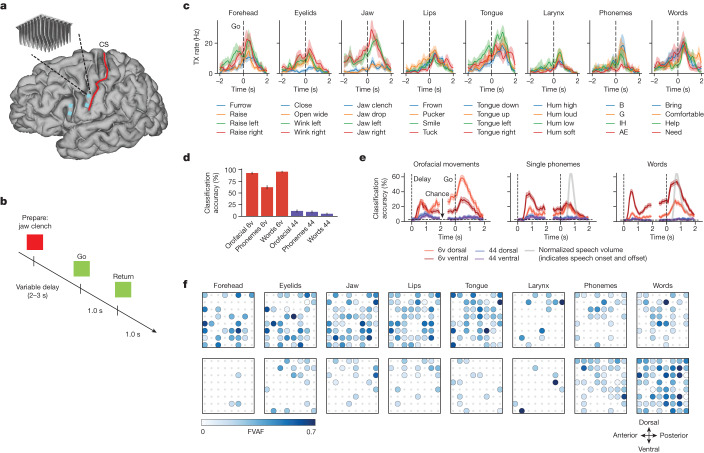
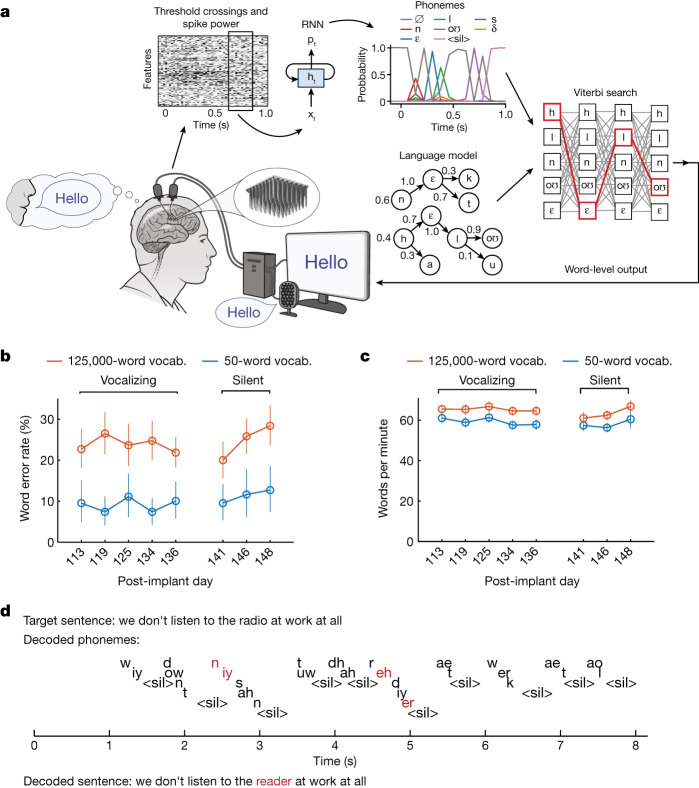
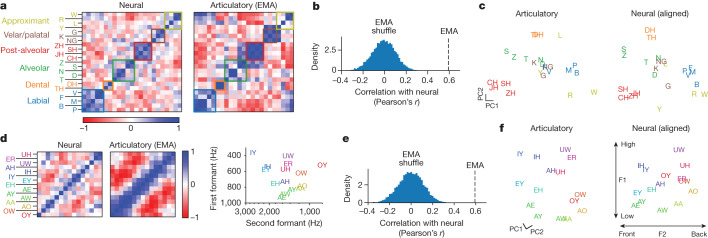
Abstract Speech brain–computer interfaces (BCIs) have the potential to restore rapid communication to people with paralysis by decoding neural activity evoked by attempted speech into text 1,2 or sound 3,4 . Early demonstrations, although promising, have not yet achieved accuracies sufficiently high for communication of unconstrained sentences from a large vocabulary 1–7 . Here we demonstrate a speech-to-text BCI that records spiking activity from intracortical microelectrode arrays. Enabled by these high-resolution recordings, our study participant—who can no longer speak intelligibly owing to amyotrophic lateral sclerosis—achieved a 9.1% word error rate on a 50-word vocabulary (2.7 times fewer errors than the previous state-of-the-art speech BCI 2 ) and a 23.8% word error rate on a 125,000-word vocabulary (the first successful demonstration, to our knowledge, of large-vocabulary decoding). Our participant’s attempted speech was decoded at 62 words per minute, which is 3.4 times as fast as the previous record 8 and begins to approach the speed of natural conversation (160 words per minute 9 ). Finally, we highlight two aspects of the neural code for speech that are encouraging for speech BCIs: spatially intermixed tuning to speech articulators that makes accurate decoding possible from only a small region of cortex, and a detailed articulatory representation of phonemes that persists years after paralysis. These results show a feasible path forward for restoring rapid communication to people with paralysis who can no longer speak.
Overview
CoChat Summary
TL;DR
A speech-to-text brain–computer interface using intracortical microelectrode arrays in one participant with ALS decoded attempted speech at 62 words per minute, with 9.1% word error rate on a 50-word vocabulary and 23.8% on a 125,000-word vocabulary. The study also reports spatially intermixed articulator tuning in area 6v and a preserved articulatory representation of phonemes years after paralysis.
Key findings
- The participant achieved a 9.1% word error rate on a 50-word vocabulary when vocalizing (11.2% silent) and a 23.8% word error rate on a 125,000-word vocabulary when vocalizing (24.7% silent); the 50-word result was 2.7 times fewer errors than the previous state-of-the-art speech BCI.
- Attempted speech was decoded at 62 words per minute, described as 3.4 times as fast as the previous record and approaching natural conversation at 160 words per minute.
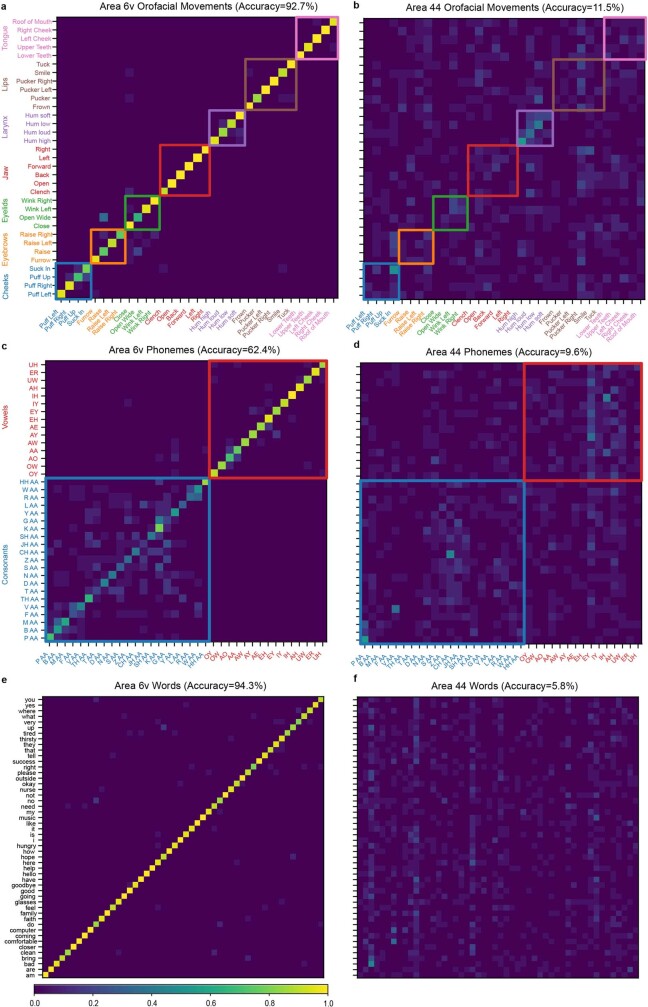
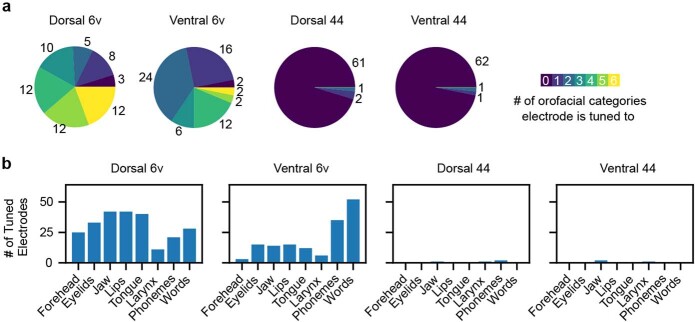
- Area 6v contained strong speech-related information: naive Bayes decoding from 1 s of neural activity reached 92% accuracy for 33 orofacial movements, 62% for 39 phonemes, and 94% for 50 words; area 44 showed classification accuracy below 12%.
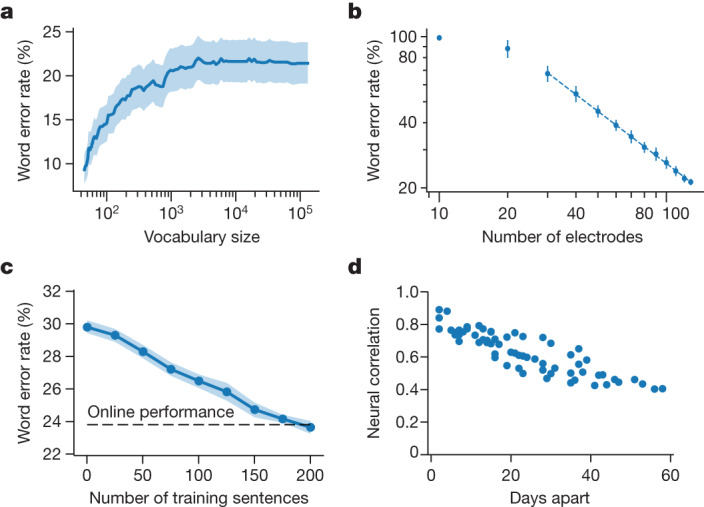
- Offline analyses reduced 125,000-word word error rate from 23.8% to 17.4% with an improved language model and to 11.8% with an improved language model plus a proximal test set; doubling electrode count cut word error rate by nearly half (factor of 0.57), and word error rate was 30% with no retraining on the evaluation day.
Methods
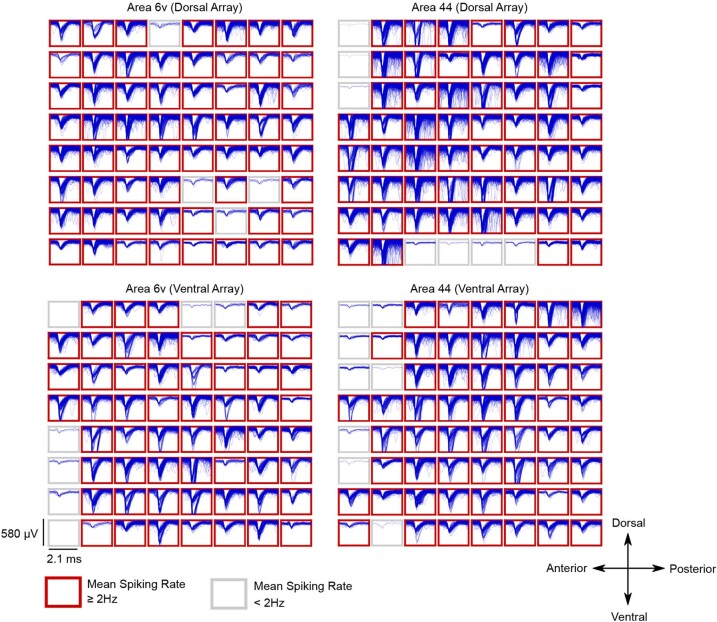
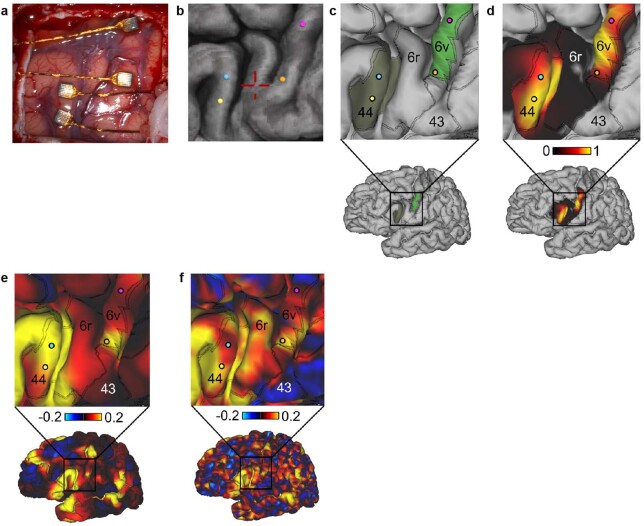
- Single participant T12 in the BrainGate2 pilot clinical trial, with bulbar-onset ALS, limited orofacial movement and vocalization but no intelligible speech; four intracortical microelectrode arrays were implanted, two in area 6v and two in area 44.
- Tasks included attempted individual orofacial movements, single phonemes, single words, and sentences; evaluation used 5 vocalized speech days and 3 silent speech days, with sentences from the Switchboard corpus for the 125,000-word vocabulary and the word set/test sentences from Moses et al. for the 50-word vocabulary.
- A five-layer gated recurrent unit RNN emitted phoneme probabilities every 80 ms, combined with a custom 125,000-word trigram language model in Kaldi; training used 260–480 sentences per day, reaching 10,850 total sentences by the final day, with unique input layers per day and rolling feature adaptation. Additional analyses used naive Bayes classifiers, RNN saliency vectors, electromagnetic articulography comparisons, and offline language-model and electrode-count manipulations.
Limitations
- The paper states that this is a proof of concept and not yet a complete, clinically viable system; work remains to reduce decoder training time and adapt to across-day neural changes without requiring the user to pause and recalibrate.
- The paper states that results must be confirmed in additional participants, generalizability to people with more profound orofacial weakness remains open, brain anatomy variability is a concern, and intracortical microelectrode array technology still needs further demonstrations of longevity and efficacy.
- The paper states that a 24% word error rate is probably not yet sufficiently low for everyday use, compared with 4–5% for state-of-the-art speech-to-text systems; evident from the text, the study reports one participant, and the best 11.8% word error rate came from offline analyses rather than online real-time decoding.
Model-written summary. Check it against the paper before relying on it.
Integrity signals
Registry
Cites
Statistics
Figures
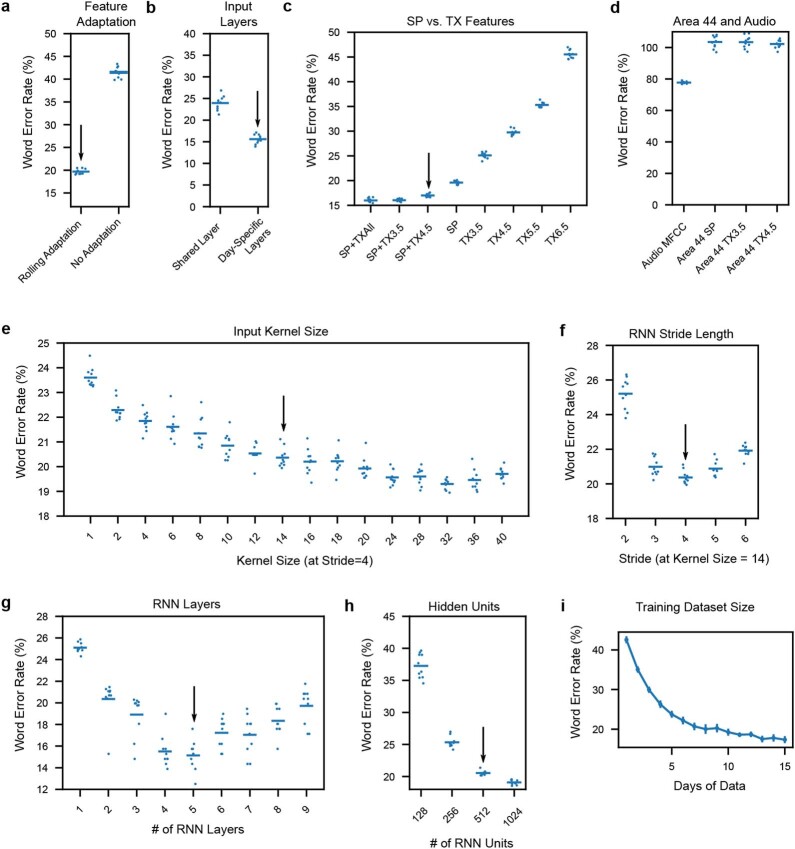
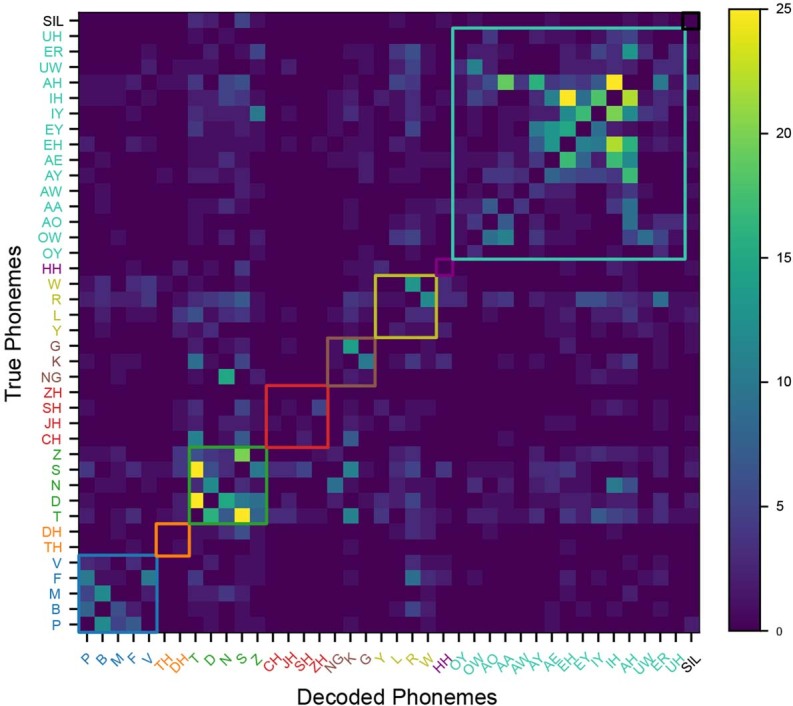
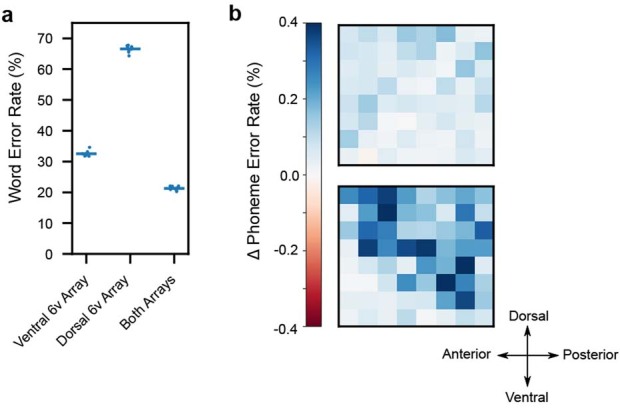
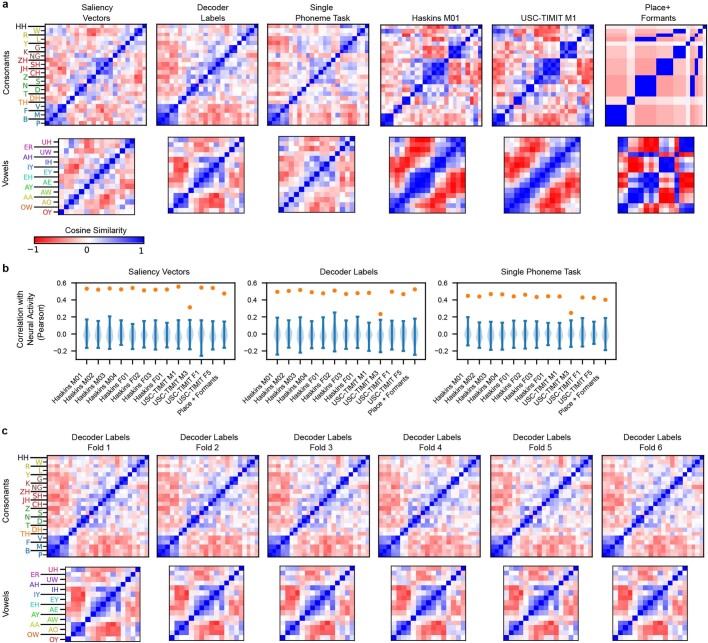
Verification
Claims the paper makes
11 Valid · 1 Not valid · 4 Not checked · 52 Own results and interpretations
At least one cited source doesn’t support this claim or points to a different paper, and none confirmed it — see the verdicts below.
In the paper
“which is 3.4 times as fast as the previous record8”
- Also stated in: § Decoding attempted speech · plain
“which more than triples the speed of the previous state of the art for any type of BCI (18 words per minute for a handwriting BCI8)”
§ A high-performance speech neuroprosthesis > Abstract
What the sources say
- Disputedcites [8] Willett FR Avansino DT Hochberg LR Henderson JM Shenoy KV High-performance brain-to-text communication via handwriting Nature 2021 593 249 254 10.1038/s41586-021-03506-2 33981047 PMC8163299 sourceExperimental — accuracy not yet measured
The Discussion (page unavailable) reports 90 characters per minute for this BCI and 60 characters per minute for an earlier EEG speller. That makes the reported speed 1.5 times the earlier rate, not 3.4 times the previous record for any type of BCI. (LLM, conf=0.88)
Checked by a reasoning model — may be wrong.
plainSingle case- Asserted: passes — The authors put it forward as true.
- Checkable: passes — It can be checked against evidence.
- Load-bearing: passes — The paper’s conclusions depend on it.
- Based: passes — The paper gives a reason why it holds.
- Also stated in: § Decoding attempted speech · plain
The cited sources support only part of this claim — read each source’s verdict below.
In the paper
“Recently, BCIs based on hand movement activity have enabled typing speeds of between eight and 18 words per minute in people with paralysis8,29.”
§ A high-performance speech neuroprosthesis > Discussion
What the sources say
- Supportedcites [8] Willett FR Avansino DT Hochberg LR Henderson JM Shenoy KV High-performance brain-to-text communication via handwriting Nature 2021 593 249 254 10.1038/s41586-021-03506-2 33981047 PMC8163299 source
The Discussion reports 90 characters per minute for the paper’s handwriting BCI in a person with tetraplegia, while “Temporal variety improves decoding” reports 40 characters per minute for prior point-and-click BCIs. At five characters per word, those rates correspond to 18 and eight words per minute. No page numbers are available in our copy. (LLM, conf=0.90)
- Partly supportedcites [29] Pandarinath C High performance communication by people with paralysis using an intracortical brain-computer interface eLife 2017 6 e18554 10.7554/eLife.18554 28220753 PMC5319839 sourceExperimental — accuracy not yet measured
The Introduction’s Figure 1 caption describes recordings from the hand area of motor cortex, and the Discussion reports copy-typing rates in people with paralysis reaching 7.8 words per minute—approximately eight. This paper does not report an 18-word-per-minute typing rate, so it supports the lower end of the cited range but not the upper end. (LLM, conf=0.88)
plainstates a cause- Asserted: passes — The authors put it forward as true.
- Checkable: passes — It can be checked against evidence.
- Load-bearing: passes — The paper’s conclusions depend on it.
- Based: passes — The paper gives a reason why it holds.
- Supported
Every source the paper cites for this claim was checked and supports it.
In the paper
“Furthermore, we found that neural activity changed at a gradual rate over time, suggesting that unsupervised algorithms for updating decoders to neural changes should be feasible24–27 (Fig. 4d).”
§ A high-performance speech neuroprosthesis > Design considerations for speech BCIs
What the sources say
- Supportedcites [24] Dyer EL A cryptography-based approach for movement decoding Nat. Biomed. Eng. 2017 1 967 976 10.1038/s41551-017-0169-7 31015712 PMC8376093 source
The Discussion (page unavailable) proposes DAD, an unsupervised decoding approach, as a way to re-align a decoder and suggests extending it to reduce the labeled data needed for calibration. That supports the citing sentence’s qualified claim that unsupervised decoder updates should be feasible; the observation that neural activity changed gradually is the citing authors’ own finding, not a claim attributed to this source. (LLM, conf=0.86)
- Supportedcites [25] Farshchian, A. et al. Adversarial domain adaptation for stable brain-machine interfaces. Preprint at 10.48550/arXiv.1810.00045 (2019). source
Section 4.2.3 (p. 5) says ADAN aligns neural recordings across days in an unsupervised manner. The Introduction (p. 2) reports that this adaptation stabilizes a fixed decoder despite changes in neural recordings, supporting the cited suggestion that unsupervised updating is feasible. (LLM, conf=0.91)
- Supportedcites [26] Degenhart, A. D. et al. Stabilization of a brain–computer interface via the alignment of low-dimensional spaces of neural activity. Nat. Biomed. Eng. 10.1038/s41551-020-0542-9 (2020). PMC7822646 32313100 source
The section ‘Stabilization can outperform supervised recalibration’ says the stabilizer is updated without estimating user intent and can counteract neural recording instabilities. The Methods section ‘Stabilization and decoder’ describes updates using neural activity collected during online BCI use, supporting the feasibility of unsupervised adaptation to neural changes. The citing authors’ observation that changes were gradual is their own finding, not a finding attributed to this source. (LLM, conf=0.88)
- Supportedcites [27] Karpowicz, B. M. et al. Stabilizing brain-computer interfaces through alignment of latent dynamics. Preprint at bioRxiv10.1101/2022.04.06.487388 (2022). PMC12089531 40389429 source
The Introduction describes unsupervised recalibration as a way to compensate for neural-interface instabilities using data collected during normal use. In “Potential Future Applications,” the paper reports that its completely unsupervised NoMAD alignment stabilized decoding for weeks to months, supporting the claim that such updating is feasible. (LLM, conf=0.92)
hedgedSingle case- Asserted: passes — The authors put it forward as true.
- Checkable: passes — It can be checked against evidence.
- Load-bearing: passes — The paper’s conclusions depend on it.
- Based: passes — The paper gives a reason why it holds.
- Supported
The cited sources support only part of this claim — read each source’s verdict below.
In the paper
“Early demonstrations, although promising, have not yet achieved accuracies sufficiently high for communication of unconstrained sentences from a large vocabulary1–7.”
- Also stated in: § Discussion · plain
“Speech BCIs have the potential to restore natural communication at a much faster rate but have not yet achieved high accuracies on large vocabularies (that is, unconstrained communication of any sentence the user may want to say)1–7.”
§ A high-performance speech neuroprosthesis > Abstract
What the sources say
- Supportedcites [1] Herff C Brain-to-text: decoding spoken phrases from phone representations in the brain Front. Neurosci. 2015 9 217 10.3389/fnins.2015.00217 26124702 PMC4464168 source
The Conclusion (section 4.4; page unavailable) says the system reconstructs phrases with a limited dictionary and describes communication with scalable vocabularies as an eventual possibility. The Results (section 3.2; page unavailable) report 75% word recognition with a 10-word dictionary. Together, these support the claim that this early demonstration had not achieved sufficiently accurate communication of unconstrained sentences from a large vocabulary. (LLM, conf=0.88)
- Partly supportedcites [2] Moses DA Neuroprosthesis for decoding speech in a paralyzed person with anarthria N. Engl. J. Med. 2021 385 217 227 10.1056/NEJMoa2027540 34260835 PMC8972947 sourceExperimental — accuracy not yet measured
The Methods (Word and Sentence Task Design; page unavailable) describe decoding 50 preset sentences using a 50-word vocabulary, and the Results (Sentence Decoding; page unavailable) report a median word error rate of 25.6% with language modeling. This supports the narrower point that this demonstration did not establish communication using unconstrained sentences and a large vocabulary. The paper does not establish that insufficient accuracy is the reason such communication had not been achieved across early demonstrations. (LLM, conf=0.82)
- Supportedcites [3] Anumanchipalli GK Chartier J Chang EF Speech synthesis from neural decoding of spoken sentences Nature 2019 568 493 498 10.1038/s41586-019-1119-1 31019317 PMC9714519 source
The Discussion (page not provided) says previous speech-decoding strategies were limited in their ability to scale to larger vocabularies and communication rates. The Synthesis performance section (page not provided) describes this paper’s sentence-transcription test as closed-vocabulary, using pools of 25 or 50 words. Together, these passages support the claim that early demonstrations had not established accurate communication of unconstrained, large-vocabulary sentences. (LLM, conf=0.88)
- Partly supportedcites [4] Herff C Generating natural, intelligible speech from brain activity in motor, premotor, and inferior frontal cortices Front. Neurosci. 2019 13 1267 10.3389/fnins.2019.01267 31824257 PMC6882773 sourceExperimental — accuracy not yet measured
The Results report 66.1% word identification in a four-option listening test and estimate 36% intelligibility for transcription; the Limitations section says usable speech BCIs remain a long way off. These findings support the limitation for this demonstration, but the paper does not establish that early demonstrations generally failed to achieve sufficient accuracy for unconstrained, large-vocabulary sentences. (LLM, conf=0.84)
- Supportedcites [5] Kellis S Decoding spoken words using local field potentials recorded from the cortical surface J. Neural Eng. 2010 7 056007 10.1088/1741-2560/7/5/056007 20811093 PMC2970568 source
The Introduction reports classification of finite sets of up to 10 words and says the breadth of decoded language is inherently limited. The Conclusion describes the result as enabling limited communication, while Future work identifies improving accuracy for larger dictionaries as an open task. This demonstration therefore did not achieve communication of unconstrained sentences from a large vocabulary. (LLM, conf=0.88)
- Supportedcites [6] Pei X Barbour DL Leuthardt EC Schalk G Decoding vowels and consonants in spoken and imagined words using electrocorticographic signals in humans J. Neural Eng. 2011 8 046028 10.1088/1741-2560/8/4/046028 21750369 PMC3772685 source
The Results (§3.1) report roughly 36–41% accuracy for decoding vowels and consonants, not unconstrained sentences. The Discussion (§4) says further work is needed to improve accuracy and extend decoding to more vowel and consonant categories, supporting the claim as applied to this early demonstration. (LLM, conf=0.91)
- Supportedcites [7] Mugler EM Direct classification of all American English phonemes using signals from functional speech motor cortex J. Neural Eng. 2014 11 035015 10.1088/1741-2560/11/3/035015 24836588 PMC4097188 source
The Introduction says early whole-word speech-decoding results were preliminary and could not be extrapolated to more complex speech. The Discussion states that this study’s word-identification accuracy was insufficient for communication and describes whole-word decoding from a broader set of words as a future step. The supplied passages do not give page numbers. (LLM, conf=0.91)
plain- Asserted: passes — The authors put it forward as true.
- Checkable: passes — It can be checked against evidence.
- Load-bearing: passes — The paper’s conclusions depend on it.
- Based: passes — The paper gives a reason why it holds.
- Also stated in: § Discussion · plain
The cited sources support only part of this claim — read each source’s verdict below.
In the paper
“These results indicate that substantial gains in performance are probably still possible with further language model improvements and more robust decoding algorithms that generalize better to non-stationary data (for example, unsupervised methods that track non-stationarities without the requirement for new training data24–27).”
§ A high-performance speech neuroprosthesis > Decoding attempted speech
What the sources say
- Partly supportedcites [24] Dyer EL A cryptography-based approach for movement decoding Nat. Biomed. Eng. 2017 1 967 976 10.1038/s41551-017-0169-7 31015712 PMC8376093 sourceExperimental — accuracy not yet measured
The Results describe DAD as an unsupervised decoder that worked across recording days without changing model parameters, supporting its use without new paired training data. But the paper does not show the method tracking non-stationarities; the Discussion treats accounting for drift in neural properties as a potential improvement not included in DAD. (LLM, conf=0.82)
- Partly supportedcites [25] Farshchian, A. et al. Adversarial domain adaptation for stable brain-machine interfaces. Preprint at 10.48550/arXiv.1810.00045 (2019). sourceExperimental — accuracy not yet measured
The Methods (p. 5) describe an unsupervised approach to aligning neural recordings across days, supporting the example of a method that addresses non-stationarity. But the Results (p. 7) say domain adaptation with ADAN requires a small new training set—prediction accuracy saturates at about one minute of data—so this source does not support the claim that no new training data is required. It does not address language-model improvements. (LLM, conf=0.88)
- Supportedcites [26] Degenhart, A. D. et al. Stabilization of a brain–computer interface via the alignment of low-dimensional spaces of neural activity. Nat. Biomed. Eng. 10.1038/s41551-020-0542-9 (2020). PMC7822646 32313100 source
The cited paper supports the parenthetical example, not the citing authors’ prediction about language-model gains. Its Methods (‘Stabilization and decoder’; page unavailable) describe updating the stabilizer with neural data collected during ongoing BCI use, and its results (‘Stabilization can outperform supervised recalibration’; page unavailable) state that stabilization does not require an estimate of user intent. The paper also reports recovery from recording instabilities without a new supervised calibration session. (LLM, conf=0.89)
- Supportedcites [27] Karpowicz, B. M. et al. Stabilizing brain-computer interfaces through alignment of latent dynamics. Preprint at bioRxiv10.1101/2022.04.06.487388 (2022). PMC12089531 40389429 source
The citation supports the parenthetical example, not the sentence's separate prediction about language-model improvements. In “Potential Future Applications” (page unavailable), the paper says NoMAD's alignment is completely unsupervised and uses only a small initial supervised training dataset; the reaching-task section describes unsupervised alignment of later sessions before applying the original decoder. (LLM, conf=0.91)
hedgedstates a possible causeSingle case- Asserted: passes — The authors put it forward as true.
- Checkable: passes — It can be checked against evidence.
- Load-bearing: passes — The paper’s conclusions depend on it.
- Based: passes — The paper gives a reason why it holds.
- Partly supported
48 more claims · 4 with their cited sources checked
Create a free account to see all 68 claims and every source verdict.
- Probably not a substantial claim. 6
- It may state two separate claims as one. 8
- The quote only partly states this claim. 1
Claims other papers make about this one
Each is checked against this paper’s own text: does it say what the citing paper says it does?
The cited source doesn’t support the claim as written.
In the citing paper
“we also targeted one array each into two areas which, to our knowledge, have not previously been recorded from with multielectrode arrays”
From An Accurate and Rapidly Calibrating Speech Neuroprosthesis (2024) · cites this paper as [21]
Checked by a reasoning model — may be wrong.
Experimental — accuracy not yet measuredThe source backs part of the claim, not all of it — or backs it for a different population, condition or comparison.
In the citing paper
“They have shown significant efficacy in improving the quality of life for those suffering from a range of conditions, including but not limited to Parkinson’s disease, ALS (Willett et al., 2023), movement disorders, epilepsy, and mental health issues (Fisher and Velasco, 2014; Bergfeld et al., 2016; França et al., 2022).”
From Comparative analysis of energy transfer mechanisms for neural implants (2024) · cites this paper as Willett et al., 2023
Experimental — accuracy not yet measuredThe source backs part of the claim, not all of it — or backs it for a different population, condition or comparison.
In the citing paper
“Current speech-decoding applications from brain activity are primarily aimed at restoring communication to individuals with both limb and vocal-tract paralysis14–16.”
From The speech neuroprosthesis (2024) · cites this paper as [15]
Experimental — accuracy not yet measuredThe source backs part of the claim, not all of it — or backs it for a different population, condition or comparison.
In the citing paper
“Interestingly, at the neuronal level, locations on the anterior precentral gyrus in orofacial or hand areas contain single neurons tuned to movements of the whole body, including key speech articulators15,51,52.”
From The speech neuroprosthesis (2024) · cites this paper as [15]
Experimental — accuracy not yet measuredThe source backs part of the claim, not all of it — or backs it for a different population, condition or comparison.
In the citing paper
“Recent studies have also achieved high-performance speech-decoding results15,16 by measuring relevant single-unit and multi-unit neuronal activity from multiple small (4 × 4 mm2 (ref. 83)) cortical regions on the anterior precentral gyrus15,16,52,98.”
From The speech neuroprosthesis (2024) · cites this paper as [15]
Experimental — accuracy not yet measured
20 more claims about this paper
Create a free account to see every claim other papers make about this one.
Self-check
Percentages, sums and reported differences re-computed from the paper’s own numbers.
Each contradiction between two passages listed here was confirmed by an independent check.
Rated minor: it would not touch a result — a value no result rests on, a p-value that stays on the same side of the significance level, or a conflict that is clerical, resolved elsewhere in the paper, or outside its own findings.
In the paper
§ A high-performance speech neuroprosthesis > Decoding attempted speech
“At the beginning of each RNN performance-evaluation day we first recorded training data during which T12 attempted to speak 260–480 sentences at her own pace”
§ A high-performance speech neuroprosthesis > Design considerations for speech BCIs
“Finally, in this demonstration we used a large amount of training data per day (260–440 sentences).”
Citations
Cites
BERT: Pre-training of Deep Bidirectional Transformers for Language Understanding
Devlin, J., Chang, M.-W., Lee, K., & Toutanova, K. (2018) · arXiv · doi:10.48550/arxiv.1810.04805 · Cited by 73,173
Language Models are Few-Shot Learners
Brown, T. B., Mann, B., Ryder, N., Subbiah, M., Kaplan, J., Dhariwal, P., Neelakantan, A., Shyam, P., Sastry, G., Askell, A., et al. (2020) · arXiv · doi:10.48550/arxiv.2005.14165 · Cited by 23,372
Brainard, D. H. (1997) · Spatial Vision · doi:10.1163/156856897x00357 · Cited by 19,702
Hinton, G., Deng, L., Yu, D., Dahl, G., Mohamed, A.-R., Jaitly, N., Senior, A., Vanhoucke, V., Nguyen, P., Sainath, T., et al. (2012) · IEEE Signal Processing Magazine · doi:10.1109/msp.2012.2205597 · Cited by 10,260
Speech recognition with deep recurrent neural networks
Graves, A., Mohamed, A.-R., & Hinton, G. (2013) · 2013 IEEE International Conference on Acoustics, Speech and Signal Processing · doi:10.1109/icassp.2013.6638947 · Cited by 8,893
Graves, A., Fernández, S., Gomez, F., & Schmidhuber, J. (2006) · Proceedings of the 23rd international conference on Machine learning - ICML '06 · doi:10.1145/1143844.1143891 · Cited by 5,370
A multi-modal parcellation of human cerebral cortex
Glasser, M. F., Coalson, T. S., Robinson, E. C., Hacker, C. D., Harwell, J., Yacoub, E., Ugurbil, K., Andersson, J., Beckmann, C. F., Jenkinson, M., et al. (2016) · Nature · doi:10.1038/nature18933 · Cited by 5,111
Self-citationTHE POPULATION FREQUENCIES OF SPECIES AND THE ESTIMATION OF POPULATION PARAMETERS
GOOD, I. J. (1953) · Biometrika · doi:10.1093/biomet/40.3-4.237 · Cited by 3,437
SWITCHBOARD: telephone speech corpus for research and development
Godfrey, J. J., Holliman, E. C., & McDaniel, J. (1992) · [Proceedings] ICASSP-92: 1992 IEEE International Conference on Acoustics, Speech, and Signal Processing · doi:10.1109/icassp.1992.225858 · Cited by 2,134
An Integrated Brain-Machine Interface Platform With Thousands of Channels
Musk, E., & Neuralink (2019) · Journal of Medical Internet Research · doi:10.2196/16194 · Cited by 1,206
Research works printed but not linked: 1
- Broca P Nouvelle observation d’aphemie produite par une lesion de la troisieme circonvolution frontale Bull. Soc. Anat. 1861 2 398 407
Cited by
Items 201–300 of 577
Zhou, S., Liu, Y. M., Turnbull, A. G., Tapparello, C., Adeli, E., & Lin, F. V. (2025) · Ageing Research Reviews · doi:10.1016/j.arr.2025.102877 · Cited by 10
AI for brain-computer interfaces
Haslacher, D., Akmazoglu, T. B., van Beinum, A., Starke, G., Buthut, M., & Soekadar, S. R. (2024) · Developments in neuroethics and bioethics · doi:10.1016/bs.dnb.2024.02.003 · Cited by 12
Ail, B. E., Ramele, R., Gambini, J., & Santos, J. M. (2024) · Brain Sciences · doi:10.3390/brainsci14080836 · Cited by 5
Ethical challenges in translating brain–computer interfaces
Wexler, A., & Feinsinger, A. (2024) · Nature Human Behaviour · doi:10.1038/s41562-024-01972-y · Cited by 5
Ammanuel, S. G., Kondapavulur, S., Lu, A. Y., Breshears, J. D., Clark, J. P., Silva, A. B., & Chang, E. F. (2024) · Journal of neurosurgery · doi:10.3171/2023.10.jns231023 · Cited by 6
Aligning Brains into a Shared Space Improves their Alignment to Large Language ModelsPreprint
Bhattacharjee, A., Zada, Z., Wang, H., Aubrey, B., Doyle, W., Dugan, P. C., Friedman, D. J., Devinsky, O., Flinker, A., Ramadge, P. J., et al. (2024) · bioRxiv (Cold Spring Harbor Laboratory) · doi:10.1101/2024.06.04.597448 · Cited by 4
Leinders, S., Aarnoutse, E. J., Branco, M. P., Freudenburg, Z. V., Geukes, S. H., Schippers, A., Verberne, M. S. W., van den Boom, M., van der Vijgh, B. H., Crone, N. E., et al. (2024) · medRxiv · doi:10.1101/2024.10.11.24315027 · Cited by 5
VocalMind: A Stereotactic EEG Dataset for Vocalized, Mimed, and Imagined Speech in Tonal Language
He, T., Wei, M., Wang, R., Wang, R., Du, S., Cai, S., Tao, W., & Li, H. (2025) · Scientific Data · doi:10.1038/s41597-025-04741-2 · Cited by 17
“To validate the quality and reliability of the VocalMind dataset, we employed a baseline model, the recurrent neural network (RNN), which is widely used in speech decoding 9,10,16,24,29,30,32 , to decode mel-spectrograms of speech.”
InfluentialNeural–Computer Interfaces: Theory, Practice, Perspectives
Dubynin, I. A., Zemlyanskov, M. S., Shalayeva, I., Gorskii, O., Grinevich, V. P., & Евгеньевич, М. П. (2025) · Applied Sciences · doi:10.3390/app15168900 · Cited by 7
McCartney, G. J., & Chark, R. (2025) · Current Issues in Tourism · doi:10.1080/13683500.2025.2556986 · Cited by 4
Universal differential equations as a unifying modeling language for neuroscience
El-Gazzar, A., & van Gerven, M. A. J. (2025) · Frontiers in Computational Neuroscience · doi:10.3389/fncom.2025.1677930 · Cited by 23
An ultrasoft, breathable, and multichannel ear-computer interface patch
Sun, Y., Liu, W., Zhang, H., Du, Z., Liu, H., Ma, K., Li, D., Wang, S., Fan, S., Li, L., et al. (2026) · Science Bulletin · doi:10.1016/j.scib.2025.12.042 · Cited by 7
Individualized brain-computer interface for people with disabilities: a review
Saha, S., Karlsson, P., Anderson, C. J., Kavehei, O., & McEwan, A. L. (2026) · Frontiers in Human Neuroscience · doi:10.3389/fnhum.2026.1738876 · Cited by 6
Restoring rapid natural bimanual typing with a neuroprosthesis after paralysis
Jude, J. J., Levi-Aharoni, H., Acosta, A. J., Allcroft, S., Nicolas, C., Lacayo, B. E., Card, N. S., Wairagkar, M., Levin, A. D., Brandman, D. M., et al. (2026) · Nature Neuroscience · doi:10.1038/s41593-026-02218-y · Cited by 19
“A day-specific nonlinear input layer was added per session to account for cross-session neural variability, as was used in recent work 12,13,39 , where using day-specific input layers outperformed the alternative of a shared input layer across all session days.”
Self-citationJude, J. J., Haro, S., Levi-Aharoni, H., Hashimoto, H., Acosta, A. J., Card, N. S., Wairagkar, M., Brandman, D. M., Stavisky, S. D., Williams, Z. M., et al. (2026) · Cell Reports · doi:10.1016/j.celrep.2026.117162 · Cited by 17
“Importantly, real-time sentence decoding word error rate is above the word error rate shown with other participants 14,15 and above the word error rate that would be required for independent use for primary communication.”
Self-citationNoninvasive decoding of typed sentences from human brain activity
Levy, J., Zhang, M., Pinet, S., Rapin, J., Banville, H. J., d’Ascoli, S., & King, J.-R. (2026) · Nature Neuroscience · doi:10.1038/s41593-026-02303-2 · Cited by 55
“In particular, several patients suffering from anarthria 1,2 , amyotrophic lateral sclerosis 3 or severe paralysis 4 have now been able to produce full sentences via a neuroprosthesis, which records and decodes neural activity from motor regions in the brain.”
Caregivers in implantable brain-computer interface research: a scoping review
Wohns, N., Dorfman, N. J., & Klein, E. P. (2024) · Frontiers in Human Neuroscience · doi:10.3389/fnhum.2024.1490066 · Cited by 7
“The following is an example: “We thank participant T12 and her caregivers for their generously volunteered time and effort as part of the BrainGate2 pilot clinical trial” (Willett et al., 2023).”
Neurosurgery and the Brain-Computer Interface
Rosenfeld, J. V. (2024) · Advances in experimental medicine and biology · doi:10.1007/978-3-031-64892-2_32 · Cited by 8
Towards Dynamic Neural Communication and Speech Neuroprosthesis Based on Viseme Decoding
Park, J.-H., Lee, S., Kim, S.-W., & Lee, S.-W. (2025) · IEEE International Conference on Acoustics Speech and Signal Processing · doi:10.1109/icassp49660.2025.10888113 · Cited by 7
Verwoert, M., Ottenhoff, M. C., Tousseyn, S., van Dijk, J. P., Kubben, P., & Herff, C. (2025) · Cell Reports · doi:10.1016/j.celrep.2025.116241 · Cited by 6
Progress, challenges and future of linguistic neural decoding with deep learning
Wang, Y., Liu, H., Wang, Y., Xuan, C., Hou, Y., Feng, S., Liu, H., Liao, Y., & Wang, Y. (2025) · Communications Biology · doi:10.1038/s42003-025-08511-z · Cited by 15
“Additionally, it has been veri fi ed that brain patterns vary over time and in subjects 124 .”
Akhoundi, A., Yan, P., Landbrug, Y., Hays, M. R., Murmann, B., Chichilnisky, E. J., & Muratore, D. G. (2025) · IEEE Journal of Solid-State Circuits · doi:10.1109/jssc.2025.3611139 · Cited by 15
Pokala, S. D., Bernert, M., Nanami, T., Kohno, T., Levi, T., & Yvert, B. (2025) · Nature Communications · doi:10.1038/s41467-025-64231-2 · Cited by 10
Pan, H., Teng, B., Li, Z., Fu, Y., & Li, L. (2025) · Biomedical Signal Processing and Control · doi:10.1016/j.bspc.2025.108871 · Cited by 5
Aligning brains into a shared space improves their alignment with large language models
Bhattacharjee, A., Zada, Z., Wang, H., Aubrey, B., Doyle, W., Dugan, P. C., Friedman, D. J., Devinsky, O., Flinker, A., Ramadge, P. J., et al. (2025) · Nature Computational Science · doi:10.1038/s43588-025-00900-y · Cited by 14
“Given a shared, naturalistic stimulus, SRM can allow us to leverage previously collected data from a larger group of participants in a single individual’s idiosyncratic electrode space—which may accelerate research on individualized brain decoding and brain– computer interfaces 44,45 .”
Ikegawa, Y., Fukuma, R., Sugano, H., Oshino, S., Tani, N., Tamura, K., Iimura, Y., Suzuki, H., Yamamoto, S., Fujita, Y., et al. (2024) · Journal of Neural Engineering · doi:10.1088/1741-2552/ad417a · Cited by 10
Gustatory interface for operative assessment and taste decoding in patients with tongue cancer
Wang, X., Bai, G., Liang, J., Xie, Q., Chen, Z., Zhou, E., Li, M., Wei, X., Sun, L., Zhang, Z., et al. (2024) · Nature Communications · doi:10.1038/s41467-024-53379-y · Cited by 7
Abdelgaliel, B. H., Exalto, M., Ou-Yang, Y.-H., & Muratore, D. G. (2024) · IEEE Biomedical Circuits and Systems Conference (BioCAS) · doi:10.1109/biocas61083.2024.10798201 · Cited by 4
A Fuzzy Logic-Based Approach to Predict Human Interaction by Functional Near-Infrared Spectroscopy
Jiang, X., Ou, L. S., Chen, Y., Ao, N., Chang, Y., Do, T., & Lin, C. (2025) · IEEE Transactions on Fuzzy Systems · doi:10.1109/tfuzz.2025.3528376 · Cited by 11
15.1 A 3.9mW 200words/min Neural Signal Processor in Speech Decoding for Brain-Machine Interface
Chang, T.-Y., Wang, J., Tsai, Y.-H., et al. (2025) · Digest of technical papers/Digest of technical papers - IEEE International Solid-State Circuits Conference · doi:10.1109/isscc49661.2025.10904671 · Cited by 4
“As selected in [3], the number of channels for speech decoding is 128.”
InfluentialCapturing the Electrical Activity of all Cortical Neurons: Are Solutions Within Reach?
Kaszás, A., Meszéna, D., Fiáth, R., Slézia, A., Ulbert, I., & Katona, G. (2025) · Advanced Science · doi:10.1002/advs.202506225 · Cited by 9
Towards cobodied/symbodied AI: concept and eight scientific and technical problems
Lu, F., & Zhao, Q. (2026) · Science China Information Sciences · doi:10.1007/s11432-025-4589-x · Cited by 12
Reconstructing language from brain signals and deconstructing adversarial thought-reading
Giraud, A., & Su, Y. (2023) · Cell Reports Medicine · doi:10.1016/j.xcrm.2023.101115 · Cited by 6
The year of brain–computer interfaces
(2023) · Nature Electronics · doi:10.1038/s41928-023-01041-8 · Cited by 4
Farzan, F. (2024) · Elsevier eBooks · doi:10.1016/b978-0-323-95730-4.00003-2 · Cited by 8
Temmar, H., Willsey, M. S., Costello, J. T., Mender, M. J., Cubillos, L. H., Lam, J. L., Wallace, D. M., Kelberman, M. M., Patil, P. G., & Chestek, C. A. (2024) · bioRxiv (Cold Spring Harbor Laboratory) · doi:10.1101/2024.03.01.583000 · Cited by 5
[Ethical considerations for medical applications of implantable brain-computer interfaces].
Zhang, Z., Chen, Y., Zhao, X., Wang, F., Ding, P., Zhao, L., & Fu, Y. (2024) · PubMed Central · doi:10.7507/1001-5515.202309083 · Cited by 11
Using Eye Gaze to Train an Adaptive Myoelectric InterfacePreprint
Chou, A. H. Y., Madduri, M. M., Li, S. J., Isa, J., Christensen, A., Hutchison, F. (., Burden, S. A., & Orsborn, A. L. (2024) · bioRxiv (Cold Spring Harbor Laboratory) · doi:10.1101/2024.04.08.588608 · Cited by 7
Optogenetic stimulation of a cortical biohybrid implant guides goal directed behaviorPreprint
Brown, J., Zappitelli, K. M., Dawson, P. M., Yoon, E., Shiraga, S., Rochford, A. E., Eltaeb, M., Rodriguez, A., Kong, Y., Hodak, M., et al. (2024) · bioRxiv (Cold Spring Harbor Laboratory) · doi:10.1101/2024.11.22.624907 · Cited by 8
Cross-brain transfer of high-performance intracortical speech and handwriting BCIsPreprint
Levin, A. D., Avansino, D. T., Kamdar, F. B., Card, N. S., Wairagkar, M., Jacques, B. G., Jude, J. J., Iacobacci, C., Lacayo, B. E., Bechefsky, P. H., et al. (2026) · bioRxiv (Cold Spring Harbor Laboratory) · doi:10.64898/2026.01.12.699110 · Cited by 7
Self-citationThe ‘Brussels 4’: essential requirements for implantable brain–computer interface user autonomy
Oxley, T. J., Deo, D. R., Cernera, S., Sawyer, A., Putrino, D. F., Ramsey, N. F., & Fry, A. (2025) · Journal of Neural Engineering · doi:10.1088/1741-2552/ada0e6 · Cited by 7
Towards developing brain-computer interfaces for people with Multiple Sclerosis
Russo, J. S., Mahoney, T., Kokorin, K., Reynolds, A., Lin, C., John, S. E., & Grayden, D. B. (2025) · PLoS ONE · doi:10.1371/journal.pone.0319811 · Cited by 5
“Respondents reported never (41%, n=14), sometimes (47%, n=16), or often (12%, n=4) requiring the assistance of a carer for everyday activities (Figure 4a), where a carer could be a professional, partner, family member, or friend.”
Implantable Neural Speech Decoders: Recent Advances, Future Challenges
Jhilal, S., Marchesotti, S., Thirion, B., Soudrie, B., Giraud, A., & Mandonnet, E. (2025) · Neurorehabilitation and neural repair · doi:10.1177/15459683251369468 · Cited by 9
“18,20,21 These intermediate levels allow for a multi-layered natural language processing (NLP) approach that uses contextual information to predict sequence probabilities, greatly enhancing the chances of recovering the attempted utterances.”
InfluentialConnecting Minds and Devices: A Fifty-Year Review of Brain-Computer Interfaces
Sun, Y., Chen, X., Wang, Y., Li, Y., Zhang, Y., Wu, Q., Gao, S., & Gao, X. (2025) · Chinese Journal of Electronics · doi:10.23919/cje.2023.00.325 · Cited by 4
The future of psychiatry: clinical practice, diagnosis, and treatment
Turner, S., Yadav, P., Morrin, H., & Bhat, A. (2025) · International Review of Psychiatry · doi:10.1080/09540261.2025.2594523 · Cited by 23
Wang, S., Guo, Y., Dong, Y., Shen, Y., Zhang, Z., Cheung, A. C., Pu, J., Zhong, S.-H., Tong, R. K., Li, Y., et al. (2026) · IEEE Transactions on Consumer Electronics · doi:10.1109/tce.2025.3650654 · Cited by 9
Li, Y., Feng, Y., Liu, X., Yuan, R., Chen, S., Wang, J., Pan, C., Li, G., & Tang, Z. (2026) · Neural Regeneration Research · doi:10.4103/nrr.nrr-d-25-00595 · Cited by 4
Murphy, A., Schaly, S., Chiu, D., Mitchell, A., Shen, C., Maddirala, G., Singh, T., McEwan, A. L., & Karlsson, P. (2026) · Augmentative and Alternative Communication · doi:10.1080/07434618.2026.2619160 · Cited by 3
van Stuijvenberg, O. C., Bassil, K. C., de Vos, C. C., Geleijnse, G., Noordmans, H. J., Broekman, M. L. D., van der Graaf, R., Bertens, R., Lázaro‐Muñoz, G., & Jongsma, K. R. (2026) · Neuromodulation Technology at the Neural Interface · doi:10.1016/j.neurom.2025.12.011 · Cited by 5
Population Dynamics in Songbird RA and HVC During Learned Motor-Vocal Behavior
Tostado-Marcos, P., Arneodo, E. M., Ostrowski, L. M., Brown, D. E., Perez, X. A., Kadwory, A., Stanwicks, L. L., Alothman, A., Gentner, T. Q., & Gilja, V. (2026) · Journal of Neuroscience · doi:10.1523/jneurosci.0580-25.2026 · Cited by 6
Transforming healthcare through in-body bioelectronic systems
Ceto, S., Elshove, S. A., Wu, M., Ramadi, K. B., Tondera, C., Minev, I. R., Srinivasan, S. S., Lee, K., Gora, M. J., Rogers, J. A., et al. (2026) · Nature Communications · doi:10.1038/s41467-026-71188-3 · Cited by 5
“Examples include neuro-prostheses for speech decoding 96,97 , recording motor signals with stentrodes in patients with paralysis due to amyotrophic lateral sclerosis 98 (Fig.”
Human learning of noninvasive brain–computer interfaces via manifold geometry
Busch, E. L., Fincke, E. C., Lajoie, G., Krishnaswamy, S., & Turk‐Browne, N. B. (2026) · Nature Neuroscience · doi:10.1038/s41593-026-02311-2 · Cited by 10
Mapping the neuronal building blocks of human language with language models
Cai, J., Kfir, Y., Jamali, M., Huang, H., Kim, Y. J., Cash, S. S., & Williams, Z. M. (2026) · Nature · doi:10.1038/s41586-026-10691-5 · Cited by 11
The prospects of using AI in euthanasia and physician-assisted suicide: a legal exploration
van Kolfschooten, H. (2024) · AI and Ethics · doi:10.1007/s43681-024-00491-w · Cited by 4
“It is conceivable that for this, physicians could use AI brain-reading implants in the near future, as two studies in August 2023 in Nature reported significant developments in technologies designed to help people with facial paralysis to communicate [21].”
BackgroundSenior employment technology: Leveraging opportunities in population ageing
Su, Z., Bentley, B. L., McDonnell, D., Alimu, T., Dai, W., Jiang, J., Liu, Y., Yu, X., Feng, Y., Diao, Y., et al. (2024) · Health Policy and Technology · doi:10.1016/j.hlpt.2024.100883 · Cited by 6
MEGFormer: Enhancing Speech Decoding from Brain Activity Through Extended Semantic Representations
Boyko, M., Druzhinina, P., Kormakov, G. V., Beliaeva, A., & Sharaev, M. (2024) · Lecture notes in computer science · doi:10.1007/978-3-031-72069-7_27 · Cited by 4
Kayama, T., Tamura, A., Xiaoying, T., Tsutsui, K., Kitajo, K., & Sasaki, T. (2024) · Scientific Reports · doi:10.1038/s41598-024-75616-6 · Cited by 3
Chen, Z. S., & Li, X. (2024) · IEEE Signal Processing Magazine · doi:10.1109/msp.2024.3484629 · Cited by 5
qPRF: A system to accelerate population receptive field modeling
Waz, S., Wang, Y., & Lu, Z. (2025) · NeuroImage · doi:10.1016/j.neuroimage.2024.120994 · Cited by 6
Yang, H., Li, T., Zhao, L., Wei, Y., Chen, X., Pan, J., & Fu, Y. (2025) · Frontiers in Human Neuroscience · doi:10.3389/fnhum.2025.1554266 · Cited by 4
Koester, H. H., Fager, S. K., Gormley, J., Jakobs, E., Johnsen, K., & Brumberg, J. S. (2025) · Augmentative and Alternative Communication · doi:10.1080/07434618.2025.2499676 · Cited by 4
“…some intriguingly fast results in the last few years: including 5.6 correct wpm for cursor control on an on-screen keyboard (Pandarinath et al., 2017), 18 wpm decoding attempted handwriting (Willett et al., 2021), and 62 wpm (with 25% error rate) decoding attempted speech (Willett et al., 2023).”
InfluentialGuggisberg, A. G., Siebner, H. R., Lundell, H., Madsen, M. A. J., Madsen, K. H., Wiggermann, V., Mégevand, P., Proix, T., Dalal, S. S., Grouiller, F., et al. (2025) · Clinical Neurophysiology · doi:10.1016/j.clinph.2025.2110942 · Cited by 5
Neural activity flows through cortical subnetworks during speech production
Castellucci, G. A., MacKay, M., Kovach, C. K., Tabasi, F., Greenlee, J. D. W., & Long, M. A. (2025) · Cell Reports · doi:10.1016/j.celrep.2025.116783 · Cited by 3
A Personalized and Adaptable User Interface for a Speech and Cursor Brain-Computer Interface
Peracha, H., Iacobacci, C., Singer-Clark, T., Hochberg, L. R., Stavisky, S. D., Brandman, D. M., & Card, N. S. (2026) · CHI Conference on Human Factors in Computing Systems · doi:10.1145/3772318.3790750 · Cited by 5
Self-citationSemantic Representations of Speech Production in Intracranial EEG
Herff, C., Verwoert, M., Amigó-Vega, J., & Ottenhoff, M. C. (2023) · Conference proceedings/Conference proceedings - IEEE International Conference on Systems, Man, and Cybernetics · doi:10.1109/smc53992.2023.10394550 · Cited by 3
Decoding speech intent from non-frontal cortical areas
Prakash, P. R., Lei, T., Flint, R. D., Hsieh, J. K., Fitzgerald, Z., Mugler, E. M., Templer, J. W., Goldrick, M., Tate, M. C., Rosenow, J. M., et al. (2025) · Journal of Neural Engineering · doi:10.1088/1741-2552/adaa20 · Cited by 7
How different immersive environments affect intracortical brain computer interfaces
Tortolani, A. F., Kunigk, N. G., Sobinov, A. R., Boninger, M. L., Bensmaïa, S. J., Collinger, J. L., Hatsopoulos, N. G., & Downey, J. E. (2025) · Journal of Neural Engineering · doi:10.1088/1741-2552/adb078 · Cited by 5
Chen, K., Wu, Z., Xu, Y., Wang, R., Jiang, S., Chen, L., Zhao, F., Mao, Y. Q., & Li, M. (2025) · View · doi:10.1002/viw.20240138 · Cited by 3
(2023) · Nature Electronics · doi:10.1038/s41928-023-00938-8 · Cited by 3
Interpretability of statistical approaches in speech and language neurosciencePreprint
Bouton, S., Chambon, V., Golestani, N., Formisano, E., Proix, T., & Giraud, A. (2019) · PsyArXiv (OSF Preprints) · doi:10.31234/osf.io/8vwcs · Cited by 2
Decoding semantics from natural speech using human intracranial EEGPreprint
Pescatore, C. R. C., Zhang, H., Hadjinicolaou, A. E., Paulk, A. C., Rolston, J. D., Richardson, R. M., Williams, Z. M., Cai, J., & Cash, S. S. (2025) · bioRxiv (Cold Spring Harbor Laboratory) · doi:10.1101/2025.02.10.637051 · Cited by 5
Jude, J. J., Haro, S., Levi-Aharoni, H., Hashimoto, H., Acosta, A. J., Card, N. S., Wairagkar, M., Brandman, D. M., Stavisky, S. D., Williams, Z. M., et al. (2025) · bioRxiv (Cold Spring Harbor Laboratory) · doi:10.1101/2025.08.12.668516 · Cited by 3
“This is contrary to the tuning in 6v arrays found in another clinical trial participant (T12) with intracortical arrays 15 , where the more dorsal 6v array electrodes were more tuned to orofacial movement conditions than phonemes and vice versa for the ventral 6v array.”
InfluentialSelf-citationSONIC: A Benchmarking Paradigm for Brain-Computer InterfacesPreprint
Perkins, S. M., Trumpis, M., Reitman, M. E., Jarosiewicz, B., Patel, A. N., Weiss, A., Scott, J. W., Nishimura, K. A., Angle, M. R., Qiao, S., et al. (2025) · bioRxiv (Cold Spring Harbor Laboratory) · doi:10.1101/2025.09.30.679683 · Cited by 4
Remote Optical Decoding of Inner Speech in Broca’s Area via AI-based Speckle Pattern AnalysisPreprint
Segal, N., Bar, M., Rubinstein, D., et al. (2026) · Research Square · doi:10.21203/rs.3.rs-8703722/v1 · Cited by 3
Nason, S. R., Deevi, P. I., Jude, J. J., Rabbani, Q., Jacques, B. G., Pritchard, A. L., Wimalasena, L. N., Richards, B. A., Karpowicz, B. M., Bechefsky, P. H., et al. (2026) · medRxiv · doi:10.64898/2026.02.19.26346583 · Cited by 8
Self-citationChang, H., Sun, Y., Lu, S., & Lan, Y. (2024) · Polymers · doi:10.3390/polym16172507 · Cited by 3
“BCI technology helps neuroscientists decipher the brain’s information-processing mechanisms, which can lead to in-depth studies of complex neural behaviors such as memory, learning, and decision-making [5–7].”
BackgroundA Low-Power Wireless 128-Channel Neural Interface Circuit for Multiregional Brain Recording
Song, Y., Liu, T., Sun, C., Zhang, Y., Zheng, M., & Zhang, M. (2024) · IEEE Biomedical Circuits and Systems Conference (BioCAS) · doi:10.1109/biocas61083.2024.10798169 · Cited by 2
“For instance, restoring dexterous movements, such as high degrees of freedom hand movements [1], or fine motor skills, such as handwriting [2] or speech capabilities [3]–[5] requires recording from hundreds of electrodes.”
A Novel Multimodal Method for Decoding Speech Perception from Brain Activities
Zhang, A., Wang, B., Xi-hong, W., & Chen, J. (2025) · IEEE International Conference on Acoustics Speech and Signal Processing · doi:10.1109/icassp49660.2025.10889637 · Cited by 4
Dynamic Neural Communication: Convergence of Computer Vision and Brain-Computer Interface
Park, J.-H., Lee, S.-H., Kim, S.-W., & Lee, S.-W. (2025) · International Winter Conference on Brain-Computer Interface (BCI) · doi:10.1109/bci65088.2025.10931467 · Cited by 3
“These results suggest the potential to decode visemes not only from overt EEG but also from mimed or imagined EEG, showing promise for applications such as neuroprosthesis for speech impairments and the development of new forms of neural communication [10].”
Yonza, A. K. I., Tao, L., Zhang, X., Postnov, D. D., Kucharz, K., Lind, B. L., Asiminas, A., Han, A., Sonego, V., Kim, K., et al. (2025) · Brain stimulation · doi:10.1016/j.brs.2025.04.015 · Cited by 6
Architectural Exploration of Hybrid Neural Decoders for Neuromorphic Implantable BMI
Mohan, V., Zhou, B., Wang, Z., Bharath, A. A., Drakakis, E. M., & Basu, A. (2025) · IEEE International Symposium on Circuits and Systems proceedings · doi:10.1109/iscas56072.2025.11043277 · Cited by 3
Shared latent representations of speech production for cross-patient speech decoding
Spalding, Z., Duraivel, S., Rahimpour, S., Wang, C., Barth, K. J., Schmitz, C., Lad, S. P., Friedman, A. H., Southwell, D. G., Viventi, J., et al. (2026) · Nature Communications · doi:10.1038/s41467-026-75455-1 · Cited by 7
Klus, J., Boys, A. J., Serrano, R. R., Malliaras, G. G., & Carnicer‐Lombarte, A. (2025) · Journal of Neural Engineering · doi:10.1088/1741-2552/ae0c3b · Cited by 2
Evaluating EEG-to-text models through noise-based performance analysis
Jo, H., Yang, Y., Han, J., Duan, Y., Xiong, H., & Lee, W. H. (2025) · Scientific Reports · doi:10.1038/s41598-025-29587-x · Cited by 56
Li, T., Gao, Y., Zhou, J., Chen, Y., Zhang, S., Gong, X., & Liu, Y. (2025) · Frontiers in Neuroscience · doi:10.3389/fnins.2025.1658315 · Cited by 8
Gonçalves, F., Fernandes, C. S., Teixeira, M. M., Melo, C., & Dias, C. (2026) · Sclerosis · doi:10.3390/sclerosis4010002 · Cited by 3
“Invasive chronic implants are a possible solution to this state [5,29,31,34,35,53,59], but further studies are needed, and careful ethical considerations are required [59].”
Generative AI for brain-computer interfaces decoding: Advances, challenges and future
Guo, Y., Ren, G., Ma, S., Zhou, J., Al-Nashash, H. A., Jolfaei, A., Zhang, Z., Li, G., Li, Y., Hu, Y., et al. (2026) · The Innovation Medicine · doi:10.59717/j.xinn-med.2026.100193 · Cited by 8
Real-time brain-controlled selective hearing enhances speech perception in multi-talker environments
Choudhari, V., Nentwich, M., Johnson, S., Herrero, J. L., Bickel, S., Mehta, A. D., Friedman, D. J., Flinker, A., Chang, E. F., & Mesgarani, N. (2026) · Nature Neuroscience · doi:10.1038/s41593-026-02281-5 · Cited by 8
Higgins, N., Blakely, B. D., Everingham, R., Gilbert, F., Griffin, S., Harris, A. R., Herring, S. E., Ho, C. W.-L., Hoy, K. E., Kiel-Chisholm, S., et al. (2026) · BMC Medical Ethics · doi:10.1186/s12910-026-01475-7 · Cited by 4
Gorenshtein, A., Omar, M., Barash, Y., Nadkarni, G. N., & Klang, E. (2026) · Biomedical Physics & Engineering Express · doi:10.1088/2057-1976/ae737b · Cited by 5
Learning Human–Environment Interactions via Wearable AI Interfaces
Wen, F., Wang, S., & Zhang, T. (2026) · ACS Nano · doi:10.1021/acsnano.6c05494 · Cited by 3
When Two Become One: Singular Duos and the Neuroethical Frontiers of Brain-to-Brain Interfaces
Zohny, H., & Savulescu, J. (2024) · Cambridge Quarterly of Healthcare Ethics · doi:10.1017/s0963180124000197 · Cited by 6
“More recent research detailed two methods for translating neural signals into sentences at near-conversational speeds, with one method decoding at an average rate of 62 words per minute 29 and the other at 78 words per minute.”
Raghavan, V., O’Sullivan, J., Herrero, J. L., Bickel, S., Mehta, A. D., & Mesgarani, N. (2024) · Imaging Neuroscience · doi:10.1162/imag_a_00148 · Cited by 6
Can brain-computer interface promote affected upper limb movements of stroke patients?
Wang, J. (2024) · Med · doi:10.1016/j.medj.2024.04.003 · Cited by 2
Using data from cue presentations results in grossly overestimating semantic BCI performance
Rybář, M., Poli, R., & Daly, I. P. (2024) · Scientific Reports · doi:10.1038/s41598-024-79309-y · Cited by 3
Zhou, Z., Hu, Z., & Lyu, H. (2025) · Journal of Neural Engineering · doi:10.1088/1741-2552/adb5c4 · Cited by 2
Protocol to perform offline ECoG brain-to-text decoding for natural tonal sentences
Zhang, D., Wang, Z., Qian, Y., Zhao, Z., Liu, Y., Lu, J., & Li, Y. (2025) · STAR Protocols · doi:10.1016/j.xpro.2025.103650 · Cited by 2
Invasive Brain-Computer Interface (BCI) for Communication
Chaudhary, U. (2025) · Springer eBooks · doi:10.1007/978-3-031-78991-5_5 · Cited by 3
Multistable bimodal perceptual coding within the ventral premotor cortex
Andrade-Ortega, B., Díaz, H., Bayonés, L., Álvarez, M., Zainos, A., Rivera‐Yoshida, N., Franci, A., Romo, R., & Rossi-Pool, R. (2025) · Science Advances · doi:10.1126/sciadv.adw5500 · Cited by 5
sEEG-based brain-computer interfacing in a large adult and pediatric cohort
Jensen, M. A., Schalk, G., Ince, N. F., Hermes, D., Worrell, G. A., Brunner, P., Staff, N. P., & Miller, K. J. (2025) · Journal of Neural Engineering · doi:10.1088/1741-2552/ae2955 · Cited by 5
Metadata
- Authors
- Willett, F. R., Kunz, E. M., Fan, C., Avansino, D. T., Wilson, G. H., Choi, E. Y., Kamdar, F., Glasser, M. F., Hochberg, L. R., Druckmann, S., Shenoy, K. V., & Henderson, J. M.
- Affiliations
- Howard Hughes Medical Institute (US)
- Stanford University (US)
- Stanford Medicine (US)
- Washington University in St. Louis (US)
- Harvard University (US)
- Corresponding author
- Willett, Francis R.
- ORCID
- Venue
- Nature
- Published
- 2023-08-23
- Volume
- 620
- Issue
- 7976
- Pages
- 1031-1036
- ISSN
- 0028-0836 (ISSN-L)
- 1476-4687
- PMC
- PMC10468393
- OpenAlex
- W4386091044
- Semantic Scholar
- f95f33b05683dd8172afa9d08e71e924bed9c5f3
- Cited by
- 581
- References
- 38
- Citations by year
- 2026: 175 · 2025: 207 · 2024: 155 · 2023: 42
- FWCI
- 86.49
- Type
- journal article
- Language
- en
- Open access
- hybrid
- doi.org
- Licence
- cc-by
- creativecommons.org/licenses/by/4.0 (tdm)
- creativecommons.org/licenses/by/4.0 (vor)
- Locations
- Nature (publishedVersion, cc-by)
- bioRxiv (Cold Spring Harbor Laboratory) (acceptedVersion)
- PubMed Central (publishedVersion, cc-by)
- PubMed (publishedVersion)
- PubMed Central (submittedVersion)
- Digital Commons@Becker (Washington University School of Medicine) (submittedVersion, cc-by)
- RePEc: Research Papers in Economics (submittedVersion)
- Funders
- U.S. Department of Veterans Affairs (A2295R)
- Office of Research and Development
- National Institutes of Health (5u01dc017844-06)
- Wu Tsai Neurosciences Institute, Stanford University
- National Institute of Mental Health (R01MH060974)
- National Institute on Deafness and Other Communication Disorders (DC017844, U01DC019430, U01- DC017844)
- Topics
- Life Sciences › Neuroscience › Cognitive Neuroscience › EEG and Brain-Computer Interfaces
- Life Sciences › Neuroscience › Cellular and Molecular Neuroscience › Neuroscience and Neural Engineering
- Life Sciences › Neuroscience › Cognitive Neuroscience › Tactile and Sensory Interactions
- Keywords
- amyotrophic lateral sclerosis, paralysis, intracortical microelectrode arrays, speech articulators, communication restoration
About these checks
Registry, retraction, Cites and statistics results are computed, not judged, with one exception: a printed reference that no index lists is read once by a model before it counts as a citation error. Claims are extracted by a model and kept only when their quote appears verbatim in the text; each cited source is then checked, with a model’s help, for whether it says what the claim relies on. Those verdicts can be wrong — read the claim’s quote and the cited source before relying on one.
The claim verdicts this report counts are experimental: their accuracy is not yet measured.
A language model drew the claims from the paper on 2026-10-10, under version 3 of the claim definition (model deepseek-v4.1-flash, prompt extract-v3).
A second model labelled each claim on 2026-10-10 (model jev-1.13-20260917, definition revision gold-guideline-v0.2).
Cited sources are checked with a language model’s help (gpt-6-sol).
Statistics and arithmetic are recomputed, not judged.
Confidence bands are shown only for fields calibrated on our annotated test set. None is calibrated yet, so no band is shown.
What counts as a claim ›How we measure confidence ›How we check this ›
Are you an author, or do you see a problem with this page? Request a review
Data sources
Bibliographic data: Semantic Scholar, OpenAlex, Crossref.
Contains information from the Semantic Scholar Academic Graph Datasets, made available under the ODC Attribution License (ODC-BY 1.0).
Semantic Scholar’s data is described in: Kinney, R., et al. (2023). The Semantic Scholar Open Data Platform. arXiv:2301.10140.
