

A high-performance speech neuroprosthesis
Open accessPublished version of a preprint
The DOI matches its Crossref record; 60 of the 60 references it cites were found in a registry or an index; 28 of the 35 sources its claims cite were checked for support.
Abstract
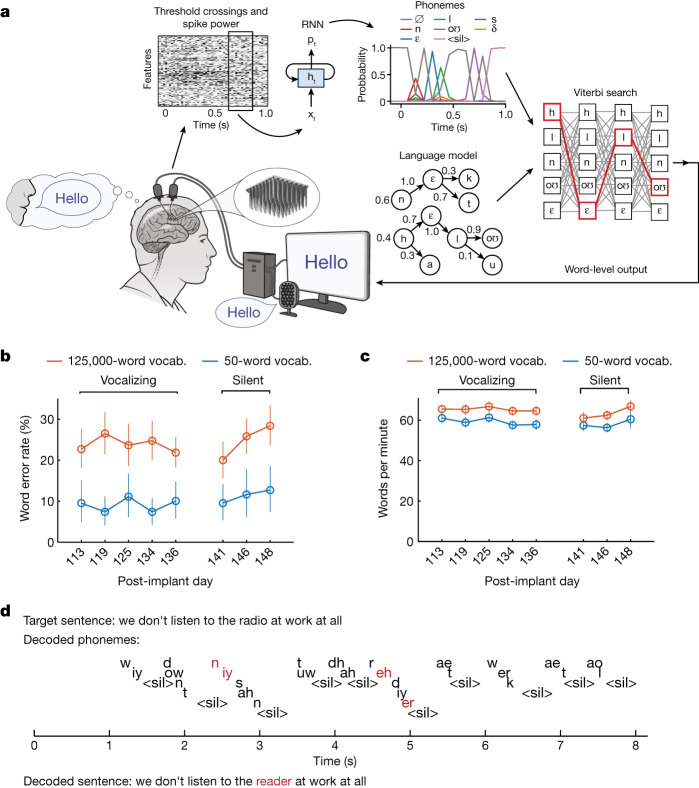
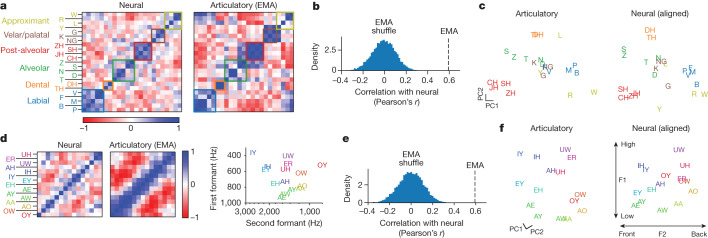
Abstract Speech brain–computer interfaces (BCIs) have the potential to restore rapid communication to people with paralysis by decoding neural activity evoked by attempted speech into text 1,2 or sound 3,4 . Early demonstrations, although promising, have not yet achieved accuracies sufficiently high for communication of unconstrained sentences from a large vocabulary 1–7 . Here we demonstrate a speech-to-text BCI that records spiking activity from intracortical microelectrode arrays. Enabled by these high-resolution recordings, our study participant—who can no longer speak intelligibly owing to amyotrophic lateral sclerosis—achieved a 9.1% word error rate on a 50-word vocabulary (2.7 times fewer errors than the previous state-of-the-art speech BCI 2 ) and a 23.8% word error rate on a 125,000-word vocabulary (the first successful demonstration, to our knowledge, of large-vocabulary decoding). Our participant’s attempted speech was decoded at 62 words per minute, which is 3.4 times as fast as the previous record 8 and begins to approach the speed of natural conversation (160 words per minute 9 ). Finally, we highlight two aspects of the neural code for speech that are encouraging for speech BCIs: spatially intermixed tuning to speech articulators that makes accurate decoding possible from only a small region of cortex, and a detailed articulatory representation of phonemes that persists years after paralysis. These results show a feasible path forward for restoring rapid communication to people with paralysis who can no longer speak.
Overview
CoChat Summary
TL;DR
A speech-to-text brain–computer interface using intracortical microelectrode arrays in one participant with ALS decoded attempted speech at 62 words per minute, with 9.1% word error rate on a 50-word vocabulary and 23.8% on a 125,000-word vocabulary. The study also reports spatially intermixed articulator tuning in area 6v and a preserved articulatory representation of phonemes years after paralysis.
Key findings
- The participant achieved a 9.1% word error rate on a 50-word vocabulary when vocalizing (11.2% silent) and a 23.8% word error rate on a 125,000-word vocabulary when vocalizing (24.7% silent); the 50-word result was 2.7 times fewer errors than the previous state-of-the-art speech BCI.
- Attempted speech was decoded at 62 words per minute, described as 3.4 times as fast as the previous record and approaching natural conversation at 160 words per minute.
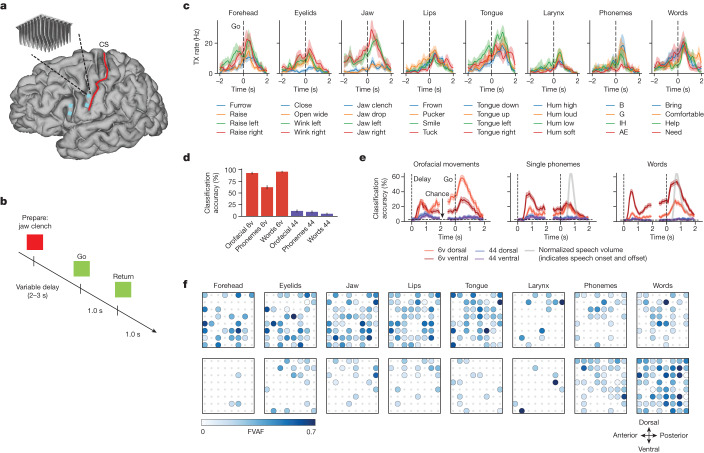
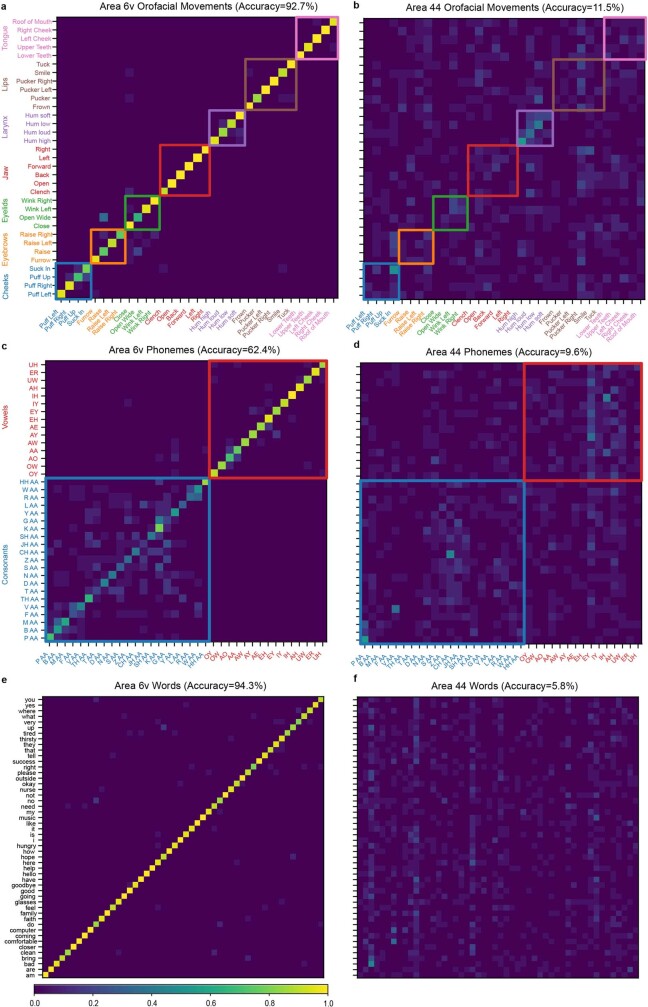
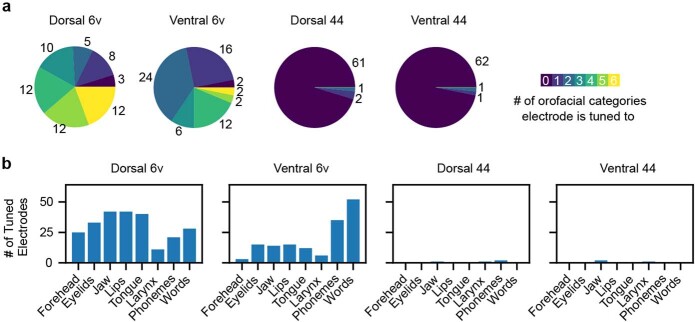
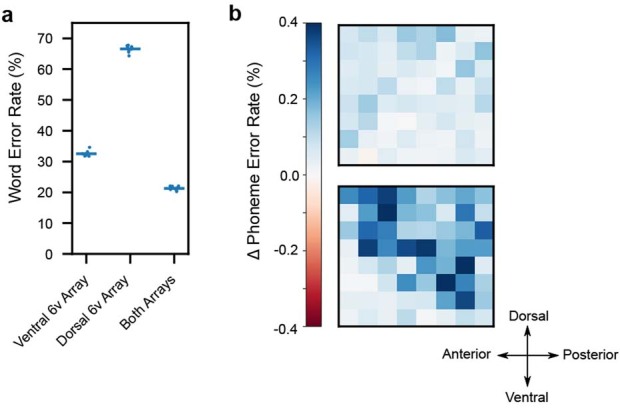
- Area 6v contained strong speech-related information: naive Bayes decoding from 1 s of neural activity reached 92% accuracy for 33 orofacial movements, 62% for 39 phonemes, and 94% for 50 words; area 44 showed classification accuracy below 12%.
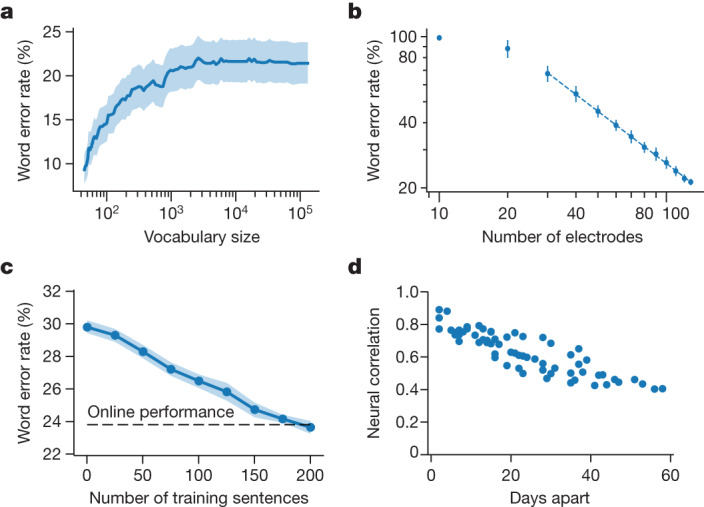
- Offline analyses reduced 125,000-word word error rate from 23.8% to 17.4% with an improved language model and to 11.8% with an improved language model plus a proximal test set; doubling electrode count cut word error rate by nearly half (factor of 0.57), and word error rate was 30% with no retraining on the evaluation day.
Methods
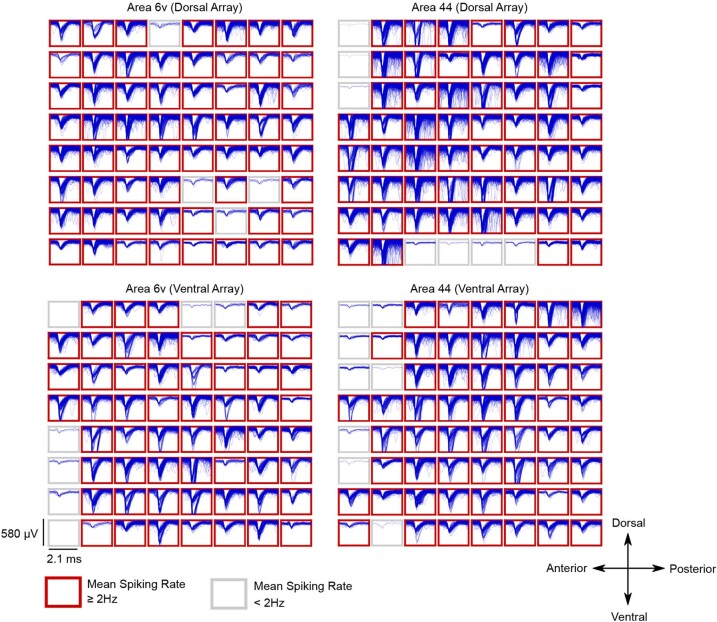
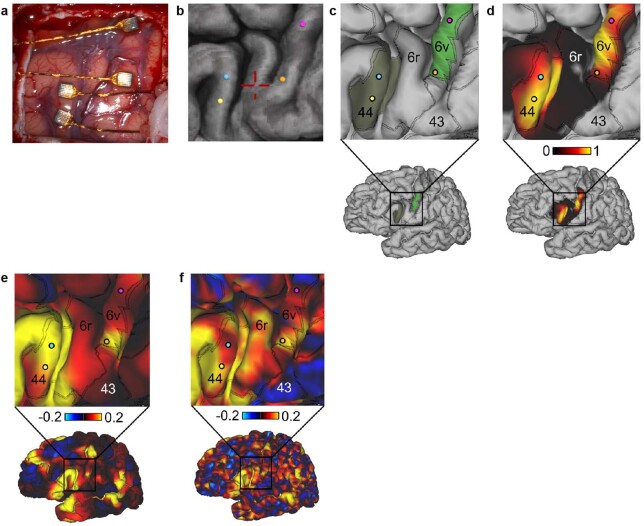
- Single participant T12 in the BrainGate2 pilot clinical trial, with bulbar-onset ALS, limited orofacial movement and vocalization but no intelligible speech; four intracortical microelectrode arrays were implanted, two in area 6v and two in area 44.
- Tasks included attempted individual orofacial movements, single phonemes, single words, and sentences; evaluation used 5 vocalized speech days and 3 silent speech days, with sentences from the Switchboard corpus for the 125,000-word vocabulary and the word set/test sentences from Moses et al. for the 50-word vocabulary.
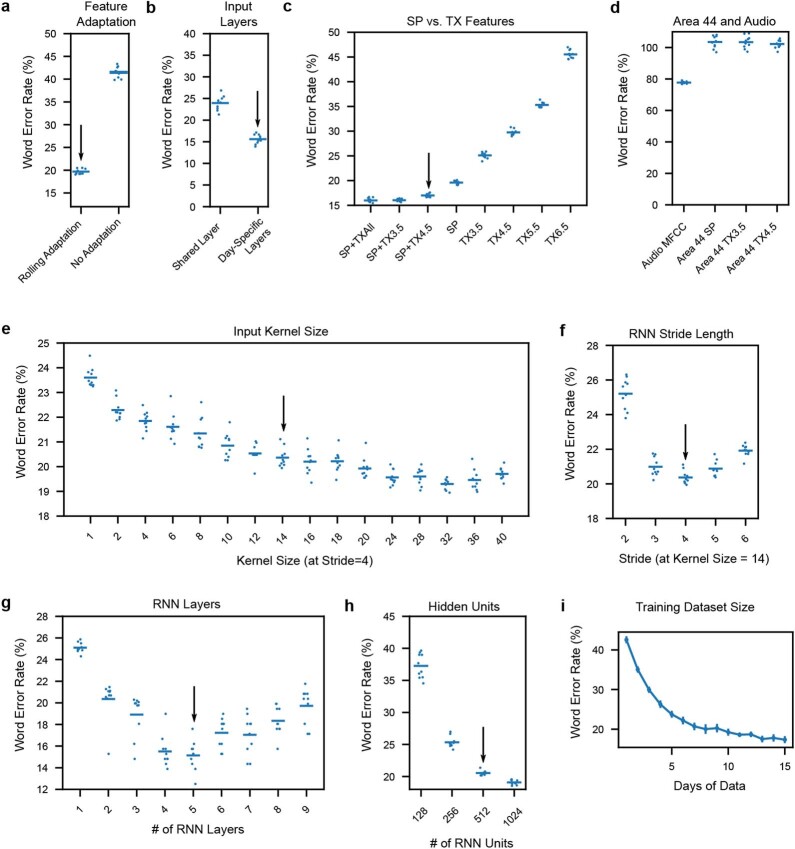
- A five-layer gated recurrent unit RNN emitted phoneme probabilities every 80 ms, combined with a custom 125,000-word trigram language model in Kaldi; training used 260–480 sentences per day, reaching 10,850 total sentences by the final day, with unique input layers per day and rolling feature adaptation. Additional analyses used naive Bayes classifiers, RNN saliency vectors, electromagnetic articulography comparisons, and offline language-model and electrode-count manipulations.
Limitations
- The paper states that this is a proof of concept and not yet a complete, clinically viable system; work remains to reduce decoder training time and adapt to across-day neural changes without requiring the user to pause and recalibrate.
- The paper states that results must be confirmed in additional participants, generalizability to people with more profound orofacial weakness remains open, brain anatomy variability is a concern, and intracortical microelectrode array technology still needs further demonstrations of longevity and efficacy.
- The paper states that a 24% word error rate is probably not yet sufficiently low for everyday use, compared with 4–5% for state-of-the-art speech-to-text systems; evident from the text, the study reports one participant, and the best 11.8% word error rate came from offline analyses rather than online real-time decoding.
Model-written summary. Check it against the paper before relying on it.
Integrity signals
Registry
Cites
Statistics
Figures
Verification
Claims the paper makes
11 Valid · 1 Not valid · 4 Not checked · 52 Own results and interpretations
At least one cited source doesn’t support this claim or points to a different paper, and none confirmed it — see the verdicts below.
In the paper
“which is 3.4 times as fast as the previous record8”
- Also stated in: § Decoding attempted speech · plain
“which more than triples the speed of the previous state of the art for any type of BCI (18 words per minute for a handwriting BCI8)”
§ A high-performance speech neuroprosthesis > Abstract
What the sources say
- Disputedcites [8] Willett FR Avansino DT Hochberg LR Henderson JM Shenoy KV High-performance brain-to-text communication via handwriting Nature 2021 593 249 254 10.1038/s41586-021-03506-2 33981047 PMC8163299 sourceExperimental — accuracy not yet measured
The Discussion (page unavailable) reports 90 characters per minute for this BCI and 60 characters per minute for an earlier EEG speller. That makes the reported speed 1.5 times the earlier rate, not 3.4 times the previous record for any type of BCI. (LLM, conf=0.88)
Checked by a reasoning model — may be wrong.
plainSingle case- Asserted: passes — The authors put it forward as true.
- Checkable: passes — It can be checked against evidence.
- Load-bearing: passes — The paper’s conclusions depend on it.
- Based: passes — The paper gives a reason why it holds.
- Also stated in: § Decoding attempted speech · plain
The cited sources support only part of this claim — read each source’s verdict below.
In the paper
“Recently, BCIs based on hand movement activity have enabled typing speeds of between eight and 18 words per minute in people with paralysis8,29.”
§ A high-performance speech neuroprosthesis > Discussion
What the sources say
- Supportedcites [8] Willett FR Avansino DT Hochberg LR Henderson JM Shenoy KV High-performance brain-to-text communication via handwriting Nature 2021 593 249 254 10.1038/s41586-021-03506-2 33981047 PMC8163299 source
The Discussion reports 90 characters per minute for the paper’s handwriting BCI in a person with tetraplegia, while “Temporal variety improves decoding” reports 40 characters per minute for prior point-and-click BCIs. At five characters per word, those rates correspond to 18 and eight words per minute. No page numbers are available in our copy. (LLM, conf=0.90)
- Partly supportedcites [29] Pandarinath C High performance communication by people with paralysis using an intracortical brain-computer interface eLife 2017 6 e18554 10.7554/eLife.18554 28220753 PMC5319839 sourceExperimental — accuracy not yet measured
The Introduction’s Figure 1 caption describes recordings from the hand area of motor cortex, and the Discussion reports copy-typing rates in people with paralysis reaching 7.8 words per minute—approximately eight. This paper does not report an 18-word-per-minute typing rate, so it supports the lower end of the cited range but not the upper end. (LLM, conf=0.88)
plainstates a cause- Asserted: passes — The authors put it forward as true.
- Checkable: passes — It can be checked against evidence.
- Load-bearing: passes — The paper’s conclusions depend on it.
- Based: passes — The paper gives a reason why it holds.
- Supported
Every source the paper cites for this claim was checked and supports it.
In the paper
“Furthermore, we found that neural activity changed at a gradual rate over time, suggesting that unsupervised algorithms for updating decoders to neural changes should be feasible24–27 (Fig. 4d).”
§ A high-performance speech neuroprosthesis > Design considerations for speech BCIs
What the sources say
- Supportedcites [24] Dyer EL A cryptography-based approach for movement decoding Nat. Biomed. Eng. 2017 1 967 976 10.1038/s41551-017-0169-7 31015712 PMC8376093 source
The Discussion (page unavailable) proposes DAD, an unsupervised decoding approach, as a way to re-align a decoder and suggests extending it to reduce the labeled data needed for calibration. That supports the citing sentence’s qualified claim that unsupervised decoder updates should be feasible; the observation that neural activity changed gradually is the citing authors’ own finding, not a claim attributed to this source. (LLM, conf=0.86)
- Supportedcites [25] Farshchian, A. et al. Adversarial domain adaptation for stable brain-machine interfaces. Preprint at 10.48550/arXiv.1810.00045 (2019). source
Section 4.2.3 (p. 5) says ADAN aligns neural recordings across days in an unsupervised manner. The Introduction (p. 2) reports that this adaptation stabilizes a fixed decoder despite changes in neural recordings, supporting the cited suggestion that unsupervised updating is feasible. (LLM, conf=0.91)
- Supportedcites [26] Degenhart, A. D. et al. Stabilization of a brain–computer interface via the alignment of low-dimensional spaces of neural activity. Nat. Biomed. Eng. 10.1038/s41551-020-0542-9 (2020). PMC7822646 32313100 source
The section ‘Stabilization can outperform supervised recalibration’ says the stabilizer is updated without estimating user intent and can counteract neural recording instabilities. The Methods section ‘Stabilization and decoder’ describes updates using neural activity collected during online BCI use, supporting the feasibility of unsupervised adaptation to neural changes. The citing authors’ observation that changes were gradual is their own finding, not a finding attributed to this source. (LLM, conf=0.88)
- Supportedcites [27] Karpowicz, B. M. et al. Stabilizing brain-computer interfaces through alignment of latent dynamics. Preprint at bioRxiv10.1101/2022.04.06.487388 (2022). PMC12089531 40389429 source
The Introduction describes unsupervised recalibration as a way to compensate for neural-interface instabilities using data collected during normal use. In “Potential Future Applications,” the paper reports that its completely unsupervised NoMAD alignment stabilized decoding for weeks to months, supporting the claim that such updating is feasible. (LLM, conf=0.92)
hedgedSingle case- Asserted: passes — The authors put it forward as true.
- Checkable: passes — It can be checked against evidence.
- Load-bearing: passes — The paper’s conclusions depend on it.
- Based: passes — The paper gives a reason why it holds.
- Supported
The cited sources support only part of this claim — read each source’s verdict below.
In the paper
“Early demonstrations, although promising, have not yet achieved accuracies sufficiently high for communication of unconstrained sentences from a large vocabulary1–7.”
- Also stated in: § Discussion · plain
“Speech BCIs have the potential to restore natural communication at a much faster rate but have not yet achieved high accuracies on large vocabularies (that is, unconstrained communication of any sentence the user may want to say)1–7.”
§ A high-performance speech neuroprosthesis > Abstract
What the sources say
- Supportedcites [1] Herff C Brain-to-text: decoding spoken phrases from phone representations in the brain Front. Neurosci. 2015 9 217 10.3389/fnins.2015.00217 26124702 PMC4464168 source
The Conclusion (section 4.4; page unavailable) says the system reconstructs phrases with a limited dictionary and describes communication with scalable vocabularies as an eventual possibility. The Results (section 3.2; page unavailable) report 75% word recognition with a 10-word dictionary. Together, these support the claim that this early demonstration had not achieved sufficiently accurate communication of unconstrained sentences from a large vocabulary. (LLM, conf=0.88)
- Partly supportedcites [2] Moses DA Neuroprosthesis for decoding speech in a paralyzed person with anarthria N. Engl. J. Med. 2021 385 217 227 10.1056/NEJMoa2027540 34260835 PMC8972947 sourceExperimental — accuracy not yet measured
The Methods (Word and Sentence Task Design; page unavailable) describe decoding 50 preset sentences using a 50-word vocabulary, and the Results (Sentence Decoding; page unavailable) report a median word error rate of 25.6% with language modeling. This supports the narrower point that this demonstration did not establish communication using unconstrained sentences and a large vocabulary. The paper does not establish that insufficient accuracy is the reason such communication had not been achieved across early demonstrations. (LLM, conf=0.82)
- Supportedcites [3] Anumanchipalli GK Chartier J Chang EF Speech synthesis from neural decoding of spoken sentences Nature 2019 568 493 498 10.1038/s41586-019-1119-1 31019317 PMC9714519 source
The Discussion (page not provided) says previous speech-decoding strategies were limited in their ability to scale to larger vocabularies and communication rates. The Synthesis performance section (page not provided) describes this paper’s sentence-transcription test as closed-vocabulary, using pools of 25 or 50 words. Together, these passages support the claim that early demonstrations had not established accurate communication of unconstrained, large-vocabulary sentences. (LLM, conf=0.88)
- Partly supportedcites [4] Herff C Generating natural, intelligible speech from brain activity in motor, premotor, and inferior frontal cortices Front. Neurosci. 2019 13 1267 10.3389/fnins.2019.01267 31824257 PMC6882773 sourceExperimental — accuracy not yet measured
The Results report 66.1% word identification in a four-option listening test and estimate 36% intelligibility for transcription; the Limitations section says usable speech BCIs remain a long way off. These findings support the limitation for this demonstration, but the paper does not establish that early demonstrations generally failed to achieve sufficient accuracy for unconstrained, large-vocabulary sentences. (LLM, conf=0.84)
- Supportedcites [5] Kellis S Decoding spoken words using local field potentials recorded from the cortical surface J. Neural Eng. 2010 7 056007 10.1088/1741-2560/7/5/056007 20811093 PMC2970568 source
The Introduction reports classification of finite sets of up to 10 words and says the breadth of decoded language is inherently limited. The Conclusion describes the result as enabling limited communication, while Future work identifies improving accuracy for larger dictionaries as an open task. This demonstration therefore did not achieve communication of unconstrained sentences from a large vocabulary. (LLM, conf=0.88)
- Supportedcites [6] Pei X Barbour DL Leuthardt EC Schalk G Decoding vowels and consonants in spoken and imagined words using electrocorticographic signals in humans J. Neural Eng. 2011 8 046028 10.1088/1741-2560/8/4/046028 21750369 PMC3772685 source
The Results (§3.1) report roughly 36–41% accuracy for decoding vowels and consonants, not unconstrained sentences. The Discussion (§4) says further work is needed to improve accuracy and extend decoding to more vowel and consonant categories, supporting the claim as applied to this early demonstration. (LLM, conf=0.91)
- Supportedcites [7] Mugler EM Direct classification of all American English phonemes using signals from functional speech motor cortex J. Neural Eng. 2014 11 035015 10.1088/1741-2560/11/3/035015 24836588 PMC4097188 source
The Introduction says early whole-word speech-decoding results were preliminary and could not be extrapolated to more complex speech. The Discussion states that this study’s word-identification accuracy was insufficient for communication and describes whole-word decoding from a broader set of words as a future step. The supplied passages do not give page numbers. (LLM, conf=0.91)
plain- Asserted: passes — The authors put it forward as true.
- Checkable: passes — It can be checked against evidence.
- Load-bearing: passes — The paper’s conclusions depend on it.
- Based: passes — The paper gives a reason why it holds.
- Also stated in: § Discussion · plain
The cited sources support only part of this claim — read each source’s verdict below.
In the paper
“These results indicate that substantial gains in performance are probably still possible with further language model improvements and more robust decoding algorithms that generalize better to non-stationary data (for example, unsupervised methods that track non-stationarities without the requirement for new training data24–27).”
§ A high-performance speech neuroprosthesis > Decoding attempted speech
What the sources say
- Partly supportedcites [24] Dyer EL A cryptography-based approach for movement decoding Nat. Biomed. Eng. 2017 1 967 976 10.1038/s41551-017-0169-7 31015712 PMC8376093 sourceExperimental — accuracy not yet measured
The Results describe DAD as an unsupervised decoder that worked across recording days without changing model parameters, supporting its use without new paired training data. But the paper does not show the method tracking non-stationarities; the Discussion treats accounting for drift in neural properties as a potential improvement not included in DAD. (LLM, conf=0.82)
- Partly supportedcites [25] Farshchian, A. et al. Adversarial domain adaptation for stable brain-machine interfaces. Preprint at 10.48550/arXiv.1810.00045 (2019). sourceExperimental — accuracy not yet measured
The Methods (p. 5) describe an unsupervised approach to aligning neural recordings across days, supporting the example of a method that addresses non-stationarity. But the Results (p. 7) say domain adaptation with ADAN requires a small new training set—prediction accuracy saturates at about one minute of data—so this source does not support the claim that no new training data is required. It does not address language-model improvements. (LLM, conf=0.88)
- Supportedcites [26] Degenhart, A. D. et al. Stabilization of a brain–computer interface via the alignment of low-dimensional spaces of neural activity. Nat. Biomed. Eng. 10.1038/s41551-020-0542-9 (2020). PMC7822646 32313100 source
The cited paper supports the parenthetical example, not the citing authors’ prediction about language-model gains. Its Methods (‘Stabilization and decoder’; page unavailable) describe updating the stabilizer with neural data collected during ongoing BCI use, and its results (‘Stabilization can outperform supervised recalibration’; page unavailable) state that stabilization does not require an estimate of user intent. The paper also reports recovery from recording instabilities without a new supervised calibration session. (LLM, conf=0.89)
- Supportedcites [27] Karpowicz, B. M. et al. Stabilizing brain-computer interfaces through alignment of latent dynamics. Preprint at bioRxiv10.1101/2022.04.06.487388 (2022). PMC12089531 40389429 source
The citation supports the parenthetical example, not the sentence's separate prediction about language-model improvements. In “Potential Future Applications” (page unavailable), the paper says NoMAD's alignment is completely unsupervised and uses only a small initial supervised training dataset; the reaching-task section describes unsupervised alignment of later sessions before applying the original decoder. (LLM, conf=0.91)
hedgedstates a possible causeSingle case- Asserted: passes — The authors put it forward as true.
- Checkable: passes — It can be checked against evidence.
- Load-bearing: passes — The paper’s conclusions depend on it.
- Based: passes — The paper gives a reason why it holds.
- Partly supported
48 more claims · 4 with their cited sources checked
Create a free account to see all 68 claims and every source verdict.
- Probably not a substantial claim. 6
- It may state two separate claims as one. 8
- The quote only partly states this claim. 1
Claims other papers make about this one
Each is checked against this paper’s own text: does it say what the citing paper says it does?
The cited source doesn’t support the claim as written.
In the citing paper
“we also targeted one array each into two areas which, to our knowledge, have not previously been recorded from with multielectrode arrays”
From An Accurate and Rapidly Calibrating Speech Neuroprosthesis (2024) · cites this paper as [21]
Checked by a reasoning model — may be wrong.
Experimental — accuracy not yet measuredThe source backs part of the claim, not all of it — or backs it for a different population, condition or comparison.
In the citing paper
“They have shown significant efficacy in improving the quality of life for those suffering from a range of conditions, including but not limited to Parkinson’s disease, ALS (Willett et al., 2023), movement disorders, epilepsy, and mental health issues (Fisher and Velasco, 2014; Bergfeld et al., 2016; França et al., 2022).”
From Comparative analysis of energy transfer mechanisms for neural implants (2024) · cites this paper as Willett et al., 2023
Experimental — accuracy not yet measuredThe source backs part of the claim, not all of it — or backs it for a different population, condition or comparison.
In the citing paper
“Current speech-decoding applications from brain activity are primarily aimed at restoring communication to individuals with both limb and vocal-tract paralysis14–16.”
From The speech neuroprosthesis (2024) · cites this paper as [15]
Experimental — accuracy not yet measuredThe source backs part of the claim, not all of it — or backs it for a different population, condition or comparison.
In the citing paper
“Interestingly, at the neuronal level, locations on the anterior precentral gyrus in orofacial or hand areas contain single neurons tuned to movements of the whole body, including key speech articulators15,51,52.”
From The speech neuroprosthesis (2024) · cites this paper as [15]
Experimental — accuracy not yet measuredThe source backs part of the claim, not all of it — or backs it for a different population, condition or comparison.
In the citing paper
“Recent studies have also achieved high-performance speech-decoding results15,16 by measuring relevant single-unit and multi-unit neuronal activity from multiple small (4 × 4 mm2 (ref. 83)) cortical regions on the anterior precentral gyrus15,16,52,98.”
From The speech neuroprosthesis (2024) · cites this paper as [15]
Experimental — accuracy not yet measured
20 more claims about this paper
Create a free account to see every claim other papers make about this one.
Self-check
Percentages, sums and reported differences re-computed from the paper’s own numbers.
Each contradiction between two passages listed here was confirmed by an independent check.
Rated minor: it would not touch a result — a value no result rests on, a p-value that stays on the same side of the significance level, or a conflict that is clerical, resolved elsewhere in the paper, or outside its own findings.
In the paper
§ A high-performance speech neuroprosthesis > Decoding attempted speech
“At the beginning of each RNN performance-evaluation day we first recorded training data during which T12 attempted to speak 260–480 sentences at her own pace”
§ A high-performance speech neuroprosthesis > Design considerations for speech BCIs
“Finally, in this demonstration we used a large amount of training data per day (260–440 sentences).”
Citations
Cites
BERT: Pre-training of Deep Bidirectional Transformers for Language Understanding
Devlin, J., Chang, M.-W., Lee, K., & Toutanova, K. (2018) · arXiv · doi:10.48550/arxiv.1810.04805 · Cited by 73,173
Language Models are Few-Shot Learners
Brown, T. B., Mann, B., Ryder, N., Subbiah, M., Kaplan, J., Dhariwal, P., Neelakantan, A., Shyam, P., Sastry, G., Askell, A., et al. (2020) · arXiv · doi:10.48550/arxiv.2005.14165 · Cited by 23,372
Brainard, D. H. (1997) · Spatial Vision · doi:10.1163/156856897x00357 · Cited by 19,702
Hinton, G., Deng, L., Yu, D., Dahl, G., Mohamed, A.-R., Jaitly, N., Senior, A., Vanhoucke, V., Nguyen, P., Sainath, T., et al. (2012) · IEEE Signal Processing Magazine · doi:10.1109/msp.2012.2205597 · Cited by 10,260
Speech recognition with deep recurrent neural networks
Graves, A., Mohamed, A.-R., & Hinton, G. (2013) · 2013 IEEE International Conference on Acoustics, Speech and Signal Processing · doi:10.1109/icassp.2013.6638947 · Cited by 8,893
Graves, A., Fernández, S., Gomez, F., & Schmidhuber, J. (2006) · Proceedings of the 23rd international conference on Machine learning - ICML '06 · doi:10.1145/1143844.1143891 · Cited by 5,370
A multi-modal parcellation of human cerebral cortex
Glasser, M. F., Coalson, T. S., Robinson, E. C., Hacker, C. D., Harwell, J., Yacoub, E., Ugurbil, K., Andersson, J., Beckmann, C. F., Jenkinson, M., et al. (2016) · Nature · doi:10.1038/nature18933 · Cited by 5,111
Self-citationTHE POPULATION FREQUENCIES OF SPECIES AND THE ESTIMATION OF POPULATION PARAMETERS
GOOD, I. J. (1953) · Biometrika · doi:10.1093/biomet/40.3-4.237 · Cited by 3,437
SWITCHBOARD: telephone speech corpus for research and development
Godfrey, J. J., Holliman, E. C., & McDaniel, J. (1992) · [Proceedings] ICASSP-92: 1992 IEEE International Conference on Acoustics, Speech, and Signal Processing · doi:10.1109/icassp.1992.225858 · Cited by 2,134
An Integrated Brain-Machine Interface Platform With Thousands of Channels
Musk, E., & Neuralink (2019) · Journal of Medical Internet Research · doi:10.2196/16194 · Cited by 1,206
Research works printed but not linked: 1
- Broca P Nouvelle observation d’aphemie produite par une lesion de la troisieme circonvolution frontale Bull. Soc. Anat. 1861 2 398 407
Cited by
Items 101–200 of 577
Intelligent Neural Interfaces: An Emerging Era in Neurotechnology
Shoaran, M., Shin, U., & Shaeri, M. (2024) · Custom Integrated Circuits Conference · doi:10.1109/cicc60959.2024.10529099 · Cited by 21
“For instance, restoring dexterous (i.e., with a high degree of freedom) [23] or fine movements (i.e., with a high number of classes) like handwriting [16] or speech ability [17, 18, 24] necessitates the recording of data from hundreds of electrodes or even more.”
BackgroundLim, M. J. R., Lo, Y. T., Tan, Y. Y., Lin, H.-Y., Wang, Y., Tan, D., Wang, E., Ma, Y. Y. N., Ng, J. J. W., Jefree, R. A., et al. (2025) · Journal of Neural Engineering · doi:10.1088/1741-2552/adb88e · Cited by 21
Advances in endovascular brain computer interface: Systematic review and future implications
Ognard, J., Hajj, G. E., Verma, O., Ghozy, S. A., Kadirvel, R., Kallmes, D. F., & Brinjikji, W. (2025) · Journal of Neuroscience Methods · doi:10.1016/j.jneumeth.2025.110471 · Cited by 28
“The integration of cloud-based adaptive models could enable real-time patient-specific signal processing, potentially extending device functionality beyond motor control to include cognitive and speech prostheses (Willett et al., 2023).”
Recommendations for promoting user agency in the design of speech neuroprostheses
Sankaran, N., Moses, D., Chiong, W., & Chang, E. F. (2023) · Frontiers in Human Neuroscience · doi:10.3389/fnhum.2023.1298129 · Cited by 14
The ethical significance of user-control in AI-driven speech-BCIs: a narrative review
van Stuijvenberg, O. C., Samlal, D. P. S., Vansteensel, M. J., Broekman, M. L. D., & Jongsma, K. R. (2024) · Frontiers in Human Neuroscience · doi:10.3389/fnhum.2024.1420334 · Cited by 13
Neural representation of action symbols in primate frontal cortex
Tian, L. Y., Gupta, K. G., Hanuska, D. J., Rouse, A. G., Eldridge, M. A. G., Schieber, M. H., Wang, X., Tenenbaum, J. B., & Freiwald, W. A. (2026) · Nature · doi:10.1038/s41586-026-10297-x · Cited by 27
“Our findings raise the possibility that the involvement of PMv in diverse motor behaviours—including possibly speech 54 —may reflect diverse types of action symbols.”
Li, J., Zhang, W., Liao, Y., Qiu, Y., Zhu, Y., Zhang, X., & Wang, C. (2025) · Physics of Life Reviews · doi:10.1016/j.plrev.2025.08.007 · Cited by 21
Wearable intelligent throat enables natural speech in stroke patients with dysarthria
Tang, C., Gao, S., Li, C., Yi, W., Jin, Y., Zhai, X., Lei, S., Meng, H., Zhang, Z., Xu, M., et al. (2026) · Nature Communications · doi:10.1038/s41467-025-68228-9 · Cited by 24
“The sentence expansion agent (SEA) intelligently expands the TSA-generated sentence, incorporating personalized emotion labels and objective contextual background data to produce a re fi ned, emotionally expressive, and logically coherent sentence that captures the user ’ s intended meaning (Fig.”
Brain implants that enable speech pass performance milestones
Ramsey, N. F., & Crone, N. E. (2023) · Nature · doi:10.1038/d41586-023-02546-0 · Cited by 15
Transformer-based neural speech decoding from surface and depth electrode signals
Chen, J., Chen, X., Wang, R., Le, C., Khalilian-Gourtani, A., Jensen, E., Dugan, P. C., Doyle, W., Devinsky, O., Friedman, D. J., et al. (2025) · Journal of Neural Engineering · doi:10.1088/1741-2552/adab21 · Cited by 29
Semantic language decoding across participants and stimulus modalities
Tang, J., & Huth, A. G. (2025) · Current Biology · doi:10.1016/j.cub.2025.01.024 · Cited by 24
Kacker, K., Chetty, N., Feldman, A. K., Bennett, J. D., Yoo, P. E., Fry, A., Lacomis, D., Harel, N. Y., Nogueira, R. G., Majidi, S., et al. (2025) · Journal of Neural Engineering · doi:10.1088/1741-2552/adbd78 · Cited by 17
A mosaic of whole-body representations in human motor cortexPreprint
Deo, D. R., Okorokova, E. V., Pritchard, A. L., Hahn, N. V., Card, N. S., Nason, S. R., Jude, J. J., Hosman, T., Choi, E. Y., Qiu, D., et al. (2024) · bioRxiv (Cold Spring Harbor Laboratory) · doi:10.1101/2024.09.14.613041 · Cited by 13
Self-citationEl-Osta, A. A. R., Al-Ammouri, M., Khan, S., Altalib, S., Karki, M., Sasco, E. R., & Majeed, A. (2025) · PLOS Digital Health · doi:10.1371/journal.pdig.0000524 · Cited by 18
A flexible intracortical brain-computer interface for typing using finger movementsPreprint
Shah, N. P., Willsey, M. S., Hahn, N. V., Kamdar, F. B., Avansino, D. T., Fan, C., Hochberg, L. R., Willett, F. R., & Henderson, J. M. (2024) · bioRxiv (Cold Spring Harbor Laboratory) · doi:10.1101/2024.04.22.590630 · Cited by 16
Self-citationLi, J., Zhou, Z.-C., Wang, Z.-C., & Lv, H. (2026) · Military Medical Research · doi:10.1186/s40779-026-00684-w · Cited by 29
“Recent work decoding speech from neural signals at conversational rates suggests future channels for hands-free, attention-friendly clinician-AI interaction [50, 51].”
Mokienko, O. A. (2024) · Современные технологии в медицине · doi:10.17691/stm2024.16.1.08 · Cited by 17
Chien, C.-H., & Trappey, A. J. C. (2025) · Advanced Engineering Informatics · doi:10.1016/j.aei.2025.103327 · Cited by 16
Sawyer, A., Cooke, L., Ramsey, N. F., & Putrino, D. F. (2023) · Journal of NeuroInterventional Surgery · doi:10.1136/jnis-2023-020316 · Cited by 13
Chen, Y., Wang, F., Li, T., Zhao, L., Gong, A., Nan, W., Ding, P., & Fu, Y. (2024) · Frontiers in Human Neuroscience · doi:10.3389/fnhum.2024.1391550 · Cited by 18
Bullock, L., Forseth, K. J., Woolnough, O., Rollo, P. S., & Tandon, N. (2024) · iScience · doi:10.1016/j.isci.2024.111531 · Cited by 21
Mind captioning: Evolving descriptive text of mental content from human brain activity
Horikawa, T. (2025) · Science Advances · doi:10.1126/sciadv.adw1464 · Cited by 21
“Recently, substantial progress has been made in brain decoding of language-related information, enabling the direct production of linguistic outputs, such as text, from the human brain ( 1 – 4 ).”
InfluentialTankus, A., Stern, E., Klein, G., Kaptzon, N., Nash, L., Marziano, T., Shamia, O., Gurevitch, G., Bergman, L., Goldstein, L., et al. (2024) · Neurosurgery · doi:10.1227/neu.0000000000003068 · Cited by 13
“5,11 Recently, long-term recordings from multiple microwires were demonstrated in the amygdala of a behaving rabbit for more than 2.5 years 32 ; and from microelectrode array: in the striatum of marmosets, for 10 months 33 ; and in the somatosensory cortex of a human, for more than 4 years.”
InfluentialDruschel, L. N., Kasthuri, N. M., Song, S. S., Wang, J., Hess‐Dunning, A., Chan, E. R., & Capadona, J. R. (2024) · Journal of Materials Chemistry B · doi:10.1039/d4tb01628a · Cited by 12
Mohan, V., Tay, W. P., & Basu, A. (2025) · Neuromorphic Computing and Engineering · doi:10.1088/2634-4386/adad10 · Cited by 15
Akhoundi, A., Landbrug, Y., Yan, P., Chichilnisky, E. J., Murmann, B., & Muratore, D. G. (2025) · Digest of technical papers/Digest of technical papers - IEEE International Solid-State Circuits Conference · doi:10.1109/isscc49661.2025.10904780 · Cited by 10
Long-term independent use of an intracortical brain–computer interface for speech and cursor control
Card, N. S., Singer-Clark, T., Peracha, H., Iacobacci, C., Hou, X., Wairagkar, M., Fogg, Z., Offenberg, E. C., Hochberg, L. R., Stavisky, S. D., et al. (2026) · Nature Medicine · doi:10.1038/s41591-026-04414-6 · Cited by 39
“This linear offset (as opposed to a nonlinear transformation as was used for the RNN 5,7 ) was empirically found to perform better for this architecture.”
InfluentialSelf-citationRizzoglio, F., Altan, E., Ma, X., Bodkin, K. L., Dekleva, B. M., Solla, S. A., Kennedy, A., & Miller, L. E. (2023) · Journal of Neural Engineering · doi:10.1088/1741-2552/ad038e · Cited by 13
Balancing Memorization and Generalization in RNNs for High Performance Brain-Machine InterfacesPreprint
Costello, J. T., Temmar, H., Cubillos, L. H., et al. (2023) · bioRxiv (Cold Spring Harbor Laboratory) · doi:10.1101/2023.05.28.542435 · Cited by 10
Hahn, N. V., Stein, E. A., Donoghue, J. P., Simeral, J. D., Hochberg, L. R., & Willett, F. R. (2025) · medRxiv · doi:10.1101/2025.07.02.25330310 · Cited by 24
Self-citationMind-reading devices are revealing the brain’s secrets
Naddaf, M. (2024) · Nature · doi:10.1038/d41586-024-00481-2 · Cited by 12
Brain–machine-interface device translates internal speech into text
(2024) · Nature Human Behaviour · doi:10.1038/s41562-024-01869-w · Cited by 9
Toward an interventional science of recovery after coma
Schiff, N. D. (2024) · Neuron · doi:10.1016/j.neuron.2024.04.027 · Cited by 15
Brain–computer interfaces patient preferences: a systematic review
Brannigan, J., Liyanage, K., Horsfall, H. L., Bashford, L., Muirhead, W. R., & Fry, A. (2024) · Journal of Neural Engineering · doi:10.1088/1741-2552/ad94a6 · Cited by 20
Principles and Advancements of Microelectrode Arrays in Brain-Machine Interfaces
Seyedkhani, S. A., Mohammadpour, R., & zad, A. I. (2024) · Biomedical engineering · doi:10.5772/intechopen.113875 · Cited by 10
Norrie, C. S., Deckers, S. R. J. M., Radstaake, M., & van Balkom, H. (2024) · Multimodal Technologies and Interaction · doi:10.3390/mti8050038 · Cited by 15
“…viable and effective but remain limited in their distribution/availability [130]) access technology that detect changes in brain activity and utilise computer algorithms to analyse and decode patterns with the intention of interpreting thoughts, words, intentions or user commands [131,132].”
BackgroundMethodContextual neural dynamics during time perception in the primate ventral premotor cortex
Díaz, H., Bayones, L., Álvarez, M., Andrade-Ortega, B., Valero, S., Zainos, A., Romo, R., & Rossi-Pool, R. (2025) · Proceedings of the National Academy of Sciences · doi:10.1073/pnas.2420356122 · Cited by 10
“Supporting this, recent studies in humans suggest that the VPC plays a central role in integrating information and generating abstract representations during speech ( 46 ), hinting at its capacity to organize temporal information from different modalities.”
Schippers, A., Vansteensel, M. J., Freudenburg, Z. V., & Ramsey, N. F. (2024) · doi:10.1101/2024.01.21.23300437 · Cited by 9
Zhao, L., Gong, Y. P., Liu, X., Shi, W., Han, Y., Li, W., & Jia, Y. (2025) · IEEE Journal of Solid-State Circuits · doi:10.1109/jssc.2025.3532646 · Cited by 10
“I MPLANTABLE neural interface devices show great potential in exploring fundamental neural mechanisms, developing new therapies for neurological disorders, and enhancing human capabilities [1], [2], [3], [4], [5].”
Cleanroom‐Free Toolkit for Patterning Submicron‐Resolution Bioelectronics on Flexibles
Tao, X., Carnicer‐Lombarte, A., Dominguez‐Alfaro, A., Gatecliff, L. W., Zhang, J., Bidinger, S. L., Keene, S. T., Hadwe, S. E., Dong, C., Boys, A. J., et al. (2025) · Small · doi:10.1002/smll.202411979 · Cited by 9
Neural models for detection and classification of brain states and transitions
Marin‐Llobet, A., Manasanch, A., Porta, L. D., Torao‐Angosto, M., & Sanchez-Vives, M. V. (2025) · Communications Biology · doi:10.1038/s42003-025-07991-3 · Cited by 15
“The use of these algorithms has recently allowed unpre-cedentedadvancesinspeechdecoding 54,61 ,facilitatingsocialcommunication and thus improving quality of life for these patients.”
Advances in Neuromodulation and Digital Brain–Spinal Cord Interfaces for Spinal Cord Injury
Jaszczuk, P., Bratelj, D., Capone, C., Rudnick, M., Pötzel, T., Verma, R. K., & Fiechter, M. (2025) · International Journal of Molecular Sciences · doi:10.3390/ijms26136021 · Cited by 13
“Integrating sensory information into stimulation protocols is crucial for improving outcomes and unlocking therapeutic potential [13,19].”
Multi-functional 3D printed hydrogel electrodes for brain-computer interfaces and wearable sensing
Wu, X., Ge, H., Zhao, W., Thummavichai, K., Bi, L., & Chen, B. (2025) · Journal of Colloid and Interface Science · doi:10.1016/j.jcis.2025.139418 · Cited by 9
Ohkubo, M. (2023) · Review of Scientific Instruments · doi:10.1063/5.0167372 · Cited by 9
Machine learning decoding of single neurons in the thalamus for speech brain-machine interfaces
Tankus, A., Rosenberg, N., Ben-Hamo, O., Stern, E., & Strauss, I. (2024) · Journal of Neural Engineering · doi:10.1088/1741-2552/ad4179 · Cited by 9
Don’t put words in my mouth: speech perception can falsely activate a brain-computer interface
Schippers, A., Vansteensel, M. J., Freudenburg, Z. V., Luo, S., Crone, N. E., & Ramsey, N. F. (2025) · Journal of NeuroEngineering and Rehabilitation · doi:10.1186/s12984-025-01689-7 · Cited by 8
“Intracortical approaches with indwelling microelectrode arrays have also been used with success to control a speech BCI, decoding speech similar to the ECoG studies [13, 14].”
An emerging view of neural geometry in motor cortex supports high-performance decoding
Perkins, S. M., Amematsro, E. A., Cunningham, J. P., Wang, Q., & Churchland, M. M. (2025) · eLife · doi:10.7554/elife.89421 · Cited by 33
Representation of verbal thought in motor cortex and implications for speech neuroprosthesesPreprint
Kunz, E. M., Meschede-Krasa, B., Kamdar, F. B., Avansino, D. T., Nason, S. R., Card, N. S., Jacques, B. G., Bechefsky, P. H., Hahn, N. V., Iacobacci, C., et al. (2024) · bioRxiv (Cold Spring Harbor Laboratory) · doi:10.1101/2024.10.04.616375 · Cited by 8
Self-citationHuman Precentral Gyrus Neurons Link Speech Sequences from Listening to SpeakingPreprint
Xu, D., Chung, J. E., Silva, A. B., Metzger, S. L., Greicius, Q., Zhang, Y., Leonard, M. K., Aghi, M. K., Hervey‐Jumper, S. L., & Chang, E. F. (2024) · SSRN Electronic Journal · doi:10.1101/2024.12.27.630563 · Cited by 12
Speech decoding using cortical and subcortical electrophysiological signals
Wu, H., Cai, C., Ming, W., Chen, W., Zhu, Z., Chen, F., Jiang, H., Zheng, Z., Sawan, M., Wang, T., et al. (2024) · Frontiers in Neuroscience · doi:10.3389/fnins.2024.1345308 · Cited by 9
Dong, P., Tian, S., Chen, S., Li, Y., Li, S., Zheng, M., & Yao, S. (2024) · Advanced Materials Technologies · doi:10.1002/admt.202400990 · Cited by 10
Combining SNNs with filtering for efficient neural decoding in implantable brain-machine interfaces
Zhou, B., Sun, P.-S. V., & Basu, A. (2025) · Neuromorphic Computing and Engineering · doi:10.1088/2634-4386/adba82 · Cited by 12
Zhang, L., Liu, S., Wang, Z., et al. (2026) · Advanced Materials · doi:10.1002/adma.202521208 · Cited by 7
A framework of digital biomarkers for neurodegenerative diseases
Nerrise, F., Schütz, N., Zhao, Q., Gould, C. E., Milstein, A. S., Schulman, K. A., Henderson, V. W., Landay, J. A., Fei-Fei, L., Lin, F. V., et al. (2026) · Nature Reviews Bioengineering · doi:10.1038/s44222-026-00433-7 · Cited by 9
“Although brain–computer interfaces have been used to administer clinical interventions for long-term cognitive decline 109,110 or to analyse and interpret brain signals into useful commands that can replace lost function 111 , they are not actively being used as DBMs for disease monitoring.”
Semantic Reconstruction of Continuous Language from Meg Signals
Wang, B., Xu, X., Zhang, L., Xiao, B., Wu, X. H., & Chen, J. (2024) · IEEE International Conference on Acoustics Speech and Signal Processing · doi:10.1109/icassp48485.2024.10448281 · Cited by 15
“Previous studies have demonstrated that acoustic information [1], [2], articulatory movements [3], [4], and semantic information [5] could be effectively de-coded from intracranial recordings, offering hope for restoring communication to the patients.”
BackgroundEvent detection and classification from multimodal time series with application to neural data
Sadras, N., Pesaran, B., & Shanechi, M. M. (2024) · Journal of Neural Engineering · doi:10.1088/1741-2552/ad3678 · Cited by 9
Iterative alignment discovery of speech-associated neural activity
Rabbani, Q., Shah, S., Milsap, G., Fifer, M. S., Heřmanský, H., & Crone, N. E. (2024) · Journal of Neural Engineering · doi:10.1088/1741-2552/ad663c · Cited by 7
Implanted cortical neuroprosthetics for speech and movement restoration
Muirhead, W. R., Horsfall, H. L., Aicardi, C., Carolan, J., Akram, H., Vanhoestenberghe, A., Schaefer, A. T., & Marcus, H. J. (2024) · Journal of Neurology · doi:10.1007/s00415-024-12604-w · Cited by 10
Cernera, S., Gemicioglu, T., Berezutskaya, J., Csáky, R., Verwoert, M., Polyakov, D., Papadopoulos, S., Spagnolo, V., Gonzalez-Astudillo, J., Kumar, S., et al. (2025) · Journal of Neural Engineering · doi:10.1088/1741-2552/adb335 · Cited by 8
An emerging view of neural geometry in motor cortex supports high-performance decoding
Perkins, S. M., Amematsro, E. A., Cunningham, J. P., Wang, Q., & Churchland, M. M. (2025) · eLife · doi:10.1101/2023.04.05.535396 · Cited by 16
Jude, J. J., Levi-Aharoni, H., Acosta, A. J., Allcroft, S. B., Nicolas, C., Lacayo, B. E., Card, N. S., Wairagkar, M., Brandman, D. M., Stavisky, S. D., et al. (2025) · medRxiv · doi:10.1101/2025.04.01.25324990 · Cited by 7
Self-citationSarrett, M. E., & Toscano, J. C. (2023) · Psychophysiology · doi:10.1111/psyp.14475 · Cited by 8
A Novel Candidate Neuromarker of Central Motor Dysfunction in Childhood Apraxia of Speech
Anastasopoulou, I., Cheyne, D., Lieshout, P. H. H. M. V., Wilson, P. H., Ballard, K. J., & Johnson, B. W. (2025) · Journal of Neuroscience · doi:10.1523/jneurosci.1471-24.2025 · Cited by 6
Speech imagery brain–computer interfaces: a systematic literature review
Tates, A., Matran‐Fernandez, A., Halder, S., & Daly, I. P. (2025) · Journal of Neural Engineering · doi:10.1088/1741-2552/ade28e · Cited by 13
The path to biotechnological singularity: Current breakthroughs and outlook
Wen, Z., Yang, D., Yang, Y., Hu, J., Parviainen, A., Chen, X., Li, Q., VanDeusen, E. A., Ma, J., & Tay, F. R. (2025) · Biotechnology Advances · doi:10.1016/j.biotechadv.2025.108667 · Cited by 8
Neuroimplants and the Glial Scar: What Makes the Brain–Computer Link Work?
Paveliev, M., Melnikova, A., Egorchev, A. A., Parpura, V., & Aganov, A. V. (2025) · Journal of Neurochemistry · doi:10.1111/jnc.70203 · Cited by 11
de Camargo, P. S., Souza, G. D. O. S. E., Arévalo, A. L., & Lepski, G. A. (2025) · Brain and Behavior · doi:10.1002/brb3.70900 · Cited by 7
Transfer learning via distributed brain recordings enables reliable speech decoding
Singh, A., Thomas, T. M., Li, J., Hickok, G. S., Pitkow, X., & Tandon, N. (2025) · Nature Communications · doi:10.1038/s41467-025-63825-0 · Cited by 23
“Comparing to linear models and CNN models, these sequence-based models effectively capture the latent temporal articulatory 6,7,50,51 and acoustic information 15,32,52 in speech production.”
Zhang, H., Pan, Y., Jin, L., & Wang, B. (2025) · MedComm · doi:10.1002/mco2.70377 · Cited by 11
Usman, M., Ashebir, S. E., Okey-Mbata, C., Yun, Y., & Kim, S. (2025) · Applied Sciences · doi:10.3390/app152111316 · Cited by 9
Brain–computer interface in critical care and rehabilitation
Oh, E., Shin, S., & Kim, S.-P. (2024) · Acute and Critical Care · doi:10.4266/acc.2023.01382 · Cited by 8
D-FaST: Cognitive Signal Decoding With Disentangled Frequency–Spatial–Temporal Attention
Chen, W., Wang, C., Xu, K., Yuan, Y., Bai, Y., & Zhang, D. (2024) · IEEE Transactions on Cognitive and Developmental Systems · doi:10.1109/tcds.2024.3370261 · Cited by 8
Consistent spectro-spatial features of human ECoG successfully decode naturalistic behavioral states
Alasfour, A., & Gilja, V. (2024) · Frontiers in Human Neuroscience · doi:10.3389/fnhum.2024.1388267 · Cited by 6
Deep Representation Learning for Open Vocabulary Electroencephalography-to-Text Decoding
Amrani, H., Micucci, D., & Napoletano, P. (2024) · IEEE Journal of Biomedical and Health Informatics · doi:10.1109/jbhi.2024.3416066 · Cited by 25
Effective Phoneme Decoding With Hyperbolic Neural Networks for High-Performance Speech BCIs
Tan, X., Lian, Q., Zhu, J., Zhang, J., Wang, Y., & Qi, Y. (2024) · IEEE Transactions on Neural Systems and Rehabilitation Engineering · doi:10.1109/tnsre.2024.3457313 · Cited by 10
Recent advances in neurotechnology-based biohybrid robots
Chen, G., Dang, D., Zhang, C., Qin, L., Yan, T., Wang, W., & Liang, W. (2024) · Soft Matter · doi:10.1039/d4sm00768a · Cited by 9
van Balen, B. (2025) · Phenomenology and the Cognitive Sciences · doi:10.1007/s11097-024-10044-5 · Cited by 9
Multi-view graph fusion of self-weighted EEG feature representations for speech imagery decoding
Zhao, Z., Li, Y., Peng, Y. K., Camilleri, K., & Kong, W. (2025) · Journal of Neuroscience Methods · doi:10.1016/j.jneumeth.2025.110413 · Cited by 9
Ho, T. L., Xue, W., See, M. K., Chan, D., Tsang, A. C. O., Mak, C. H., Wong, S., & Lee, M. W. (2025) · Surgical Practice · doi:10.1111/1744-1633.70002 · Cited by 6
“90 Recent studies have further advanced the field, with decoding algorithms achieving higher communication rates at 62 to 78 words per minute, 91,92 and a bilingual speech neuroprosthesis capable of decoding cortical activity into sentences in both English and Spanish.”
Deep transfer learning-based decoder calibration for intracortical brain-machine interfaces
Li, X., Dong, X., Wang, J., Mao, H., Tu, X., Li, W., He, J., Li, Q., & Zhang, P. (2025) · Computers in Biology and Medicine · doi:10.1016/j.compbiomed.2025.110231 · Cited by 8
Simple decoding of behavior from a complicated neural manifoldPreprint
Perkins, S. M., Cunningham, J. P., Wang, Q., & Churchland, M. M. (2023) · eLife · doi:10.7554/elife.89421.1 · Cited by 8
Error encoding in human speech motor cortexPreprint
Hou, X., Iacobacci, C., Card, N. S., Wairagkar, M., Singer-Clark, T., Kunz, E. M., Fan, C., Kamdar, F. B., Hahn, N. V., Hochberg, L. R., et al. (2025) · bioRxiv (Cold Spring Harbor Laboratory) · doi:10.1101/2025.06.07.658426 · Cited by 8
Self-citationInvestigating the benefits of artificial neural networks over linear approaches to BMI decoding
Temmar, H., Willsey, M. S., Costello, J. T., Mender, M. J., Cubillos, L. H., DeMatteo, J. C., Lam, J. L., Wallace, D. M., Kelberman, M. M., Patil, P. G., et al. (2025) · Journal of Neural Engineering · doi:10.1088/1741-2552/ade568 · Cited by 13
Toward Natural Limb Function: A New Era in Prosthetic Innovation
Tian, Y., Wallace, D. M., Cederna, P. S., Chestek, C. A., & Kemp, S. W. P. (2025) · Annals of Neurology · doi:10.1002/ana.27287 · Cited by 8
“131 These studies have been carried out primarily using the Utah array, a 4 (cid:1) 4-mm intracortical array with a 10 (cid:1) 10 grid of 1-mm long penetrating electrodes, for which there is the largest amount of safety data available for an intracortical array.”
Decoding Handwriting Trajectories from Intracortical Brain Signals for Brain‐to‐Text Communication
Xu, G., Wang, Z., Xu, K., Zhu, J., Zhang, J., Wang, Y., & Hao, Y. (2025) · Advanced Science · doi:10.1002/advs.202505492 · Cited by 11
Silva, A. B., Liu, J. R., Anderson, V. R., Kurtz-Miott, C. M., Hallinan, I. P., Littlejohn, K. T., Brosler, S., Tu-Chan, A., Ganguly, K., Moses, D. A., et al. (2025) · Journal of Neural Engineering · doi:10.1088/1741-2552/adf50e · Cited by 7
Brain–computer interfaces as a causal probe for scientific inquiry
Motiwala, A., Soldado-Magraner, J., Batista, A. P., Smith, M. A., & Yu, B. M. (2025) · Trends in Cognitive Sciences · doi:10.1016/j.tics.2025.06.017 · Cited by 13
Brain-to-text decoding with context-aware neural representations and large language models
Li, J., Le, T., Fan, C., Chen, M., & Shlizerman, E. (2025) · Journal of Neural Engineering · doi:10.1088/1741-2552/adfab1 · Cited by 15
Self-citationObject-directed action representations are componentially built in parietal cortex
Caglar, L. R., Walbrin, J., Akwayena, E., Almeida, J., & Mahon, B. Z. (2025) · Proceedings of the National Academy of Sciences · doi:10.1073/pnas.2421032122 · Cited by 9
Li, W., Zou, H., Yang, B., Xiao, L., Liu, S., Chen, Z., Xie, L., Zhu, W., Zhao, X. Q., Wang, L., et al. (2025) · Small Methods · doi:10.1002/smtd.202501471 · Cited by 6
Silk-enabled conformal intraventricular interfaces for minimally invasive neural recordings
Liang, J., Wang, X., Chen, Z., Wei, X., Sun, L., Liu, K., Shi, Z., Tao, T. H., & Zhou, Z. (2025) · Nature Communications · doi:10.1038/s41467-025-64397-9 · Cited by 5
Lin, S.-K., Lee, J.-H., Tsai, H.-S., Chen, Y.-C., Zhang, M.-X., Kuo, W.-C., & Yang, Y.-J. J. (2025) · Sensors and Actuators Reports · doi:10.1016/j.snr.2025.100407 · Cited by 7
Facial gestures are enacted through a cortical hierarchy of dynamic and stable codes
Ianni, G. R., Vázquez, Y., Rouse, A. G., Schieber, M. H., Prut, Y., & Freiwald, W. A. (2026) · Science · doi:10.1126/science.aea0890 · Cited by 11
Sensing technologies for silent speech interfaces
Tang, C., Qi, L., Gao, S., Zhang, Z., Yi, W., Xu, M., Occhipinti, E., Pan, Y., & Occhipinti, L. G. (2026) · Nature Sensors · doi:10.1038/s44460-025-00010-2 · Cited by 9
“Transfer learning and few-shot personalization enable rapid adaptation to new vocabularies or users 11,70 , whereas contrastive and cross-modal learning increasingly bridge silent and vocal speech domains using”
A mosaic of whole-body representations on the human precentral gyrus
Deo, D. R., Okorokova, E. V., Pritchard, A. L., Hahn, N. V., Card, N. S., Nason, S. R., Jude, J. J., Hosman, T., Choi, E. Y., Qiu, D., et al. (2026) · Nature · doi:10.1038/s41586-026-10653-x · Cited by 26
“All hyperparameters were the same as those used in our previous work 56 , except instead of using the connectionist temporal classification (CTC) loss, we used a cross-entropy loss applied to a linear readout from the last RNN layer (using the PyTorch function torch. nn.CrossEntropyLoss).”
InfluentialSelf-citationPark, S., Lipton, M. H., & Dadarlat, M. C. (2024) · Journal of Neural Engineering · doi:10.1088/1741-2552/ad83c0 · Cited by 8
Unlocking minds: Psychological roadblocks to the adoption of AI-powered brain–machine interfaces
Cloarec, J., Meyer‐Waarden, L., Timmler, K., Thiele, S., Weiß, M., & Wiese, M. (2024) · Recherche et Applications en Marketing (English Edition) · doi:10.1177/20515707241283308 · Cited by 7
“…used for healthcare applications such as monitoring (Michael and Michael, 2014), enhancement of medical devices, and other therapeutic purposes (Willett et al., 2023), and hold the potential to restore rapid communication to individuals with paralysis by decoding neural signals associated with…”
Li, F., Huang, M., You, W., Zhu, L., Cheng, H., & Yang, R. (2024) · Neurocomputing · doi:10.1016/j.neucom.2024.128902 · Cited by 9
Imagined Speech and Visual Imagery as Intuitive Paradigms for Brain-Computer Interfaces
Lee, S., Park, J.-H., & Kim, D.-S. (2025) · International Winter Conference on Brain-Computer Interface (BCI) · doi:10.1109/bci65088.2025.10931355 · Cited by 6
Encoding of speech modes and loudness in ventral precentral gyrus
Srinivasan, A., Wairagkar, M., Iacobacci, C., Hou, X., Card, N. S., Jacques, B. G., Pritchard, A. L., Bechefsky, P. H., Hochberg, L. R., Yong, N. A., et al. (2026) · Nature Communications · doi:10.1038/s41467-026-71284-4 · Cited by 9
“Recent efforts in intracortical speech BCIs have demonstrated the ability to decode intended speech as text from vPCG activity 19,21 .”
Self-citation
Metadata
- Authors
- Willett, F. R., Kunz, E. M., Fan, C., Avansino, D. T., Wilson, G. H., Choi, E. Y., Kamdar, F., Glasser, M. F., Hochberg, L. R., Druckmann, S., Shenoy, K. V., & Henderson, J. M.
- Affiliations
- Howard Hughes Medical Institute (US)
- Stanford University (US)
- Stanford Medicine (US)
- Washington University in St. Louis (US)
- Harvard University (US)
- Corresponding author
- Willett, Francis R.
- ORCID
- Venue
- Nature
- Published
- 2023-08-23
- Volume
- 620
- Issue
- 7976
- Pages
- 1031-1036
- ISSN
- 0028-0836 (ISSN-L)
- 1476-4687
- PMC
- PMC10468393
- OpenAlex
- W4386091044
- Semantic Scholar
- f95f33b05683dd8172afa9d08e71e924bed9c5f3
- Cited by
- 581
- References
- 38
- Citations by year
- 2026: 175 · 2025: 207 · 2024: 155 · 2023: 42
- FWCI
- 86.49
- Type
- journal article
- Language
- en
- Open access
- hybrid
- doi.org
- Licence
- cc-by
- creativecommons.org/licenses/by/4.0 (tdm)
- creativecommons.org/licenses/by/4.0 (vor)
- Locations
- Nature (publishedVersion, cc-by)
- bioRxiv (Cold Spring Harbor Laboratory) (acceptedVersion)
- PubMed Central (publishedVersion, cc-by)
- PubMed (publishedVersion)
- PubMed Central (submittedVersion)
- Digital Commons@Becker (Washington University School of Medicine) (submittedVersion, cc-by)
- RePEc: Research Papers in Economics (submittedVersion)
- Funders
- U.S. Department of Veterans Affairs (A2295R)
- Office of Research and Development
- National Institutes of Health (5u01dc017844-06)
- Wu Tsai Neurosciences Institute, Stanford University
- National Institute of Mental Health (R01MH060974)
- National Institute on Deafness and Other Communication Disorders (DC017844, U01DC019430, U01- DC017844)
- Topics
- Life Sciences › Neuroscience › Cognitive Neuroscience › EEG and Brain-Computer Interfaces
- Life Sciences › Neuroscience › Cellular and Molecular Neuroscience › Neuroscience and Neural Engineering
- Life Sciences › Neuroscience › Cognitive Neuroscience › Tactile and Sensory Interactions
- Keywords
- amyotrophic lateral sclerosis, paralysis, intracortical microelectrode arrays, speech articulators, communication restoration
About these checks
Registry, retraction, Cites and statistics results are computed, not judged, with one exception: a printed reference that no index lists is read once by a model before it counts as a citation error. Claims are extracted by a model and kept only when their quote appears verbatim in the text; each cited source is then checked, with a model’s help, for whether it says what the claim relies on. Those verdicts can be wrong — read the claim’s quote and the cited source before relying on one.
The claim verdicts this report counts are experimental: their accuracy is not yet measured.
A language model drew the claims from the paper on 2026-10-10, under version 3 of the claim definition (model deepseek-v4.1-flash, prompt extract-v3).
A second model labelled each claim on 2026-10-10 (model jev-1.13-20260917, definition revision gold-guideline-v0.2).
Cited sources are checked with a language model’s help (gpt-6-sol).
Statistics and arithmetic are recomputed, not judged.
Confidence bands are shown only for fields calibrated on our annotated test set. None is calibrated yet, so no band is shown.
What counts as a claim ›How we measure confidence ›How we check this ›
Are you an author, or do you see a problem with this page? Request a review
Data sources
Bibliographic data: Semantic Scholar, OpenAlex, Crossref.
Contains information from the Semantic Scholar Academic Graph Datasets, made available under the ODC Attribution License (ODC-BY 1.0).
Semantic Scholar’s data is described in: Kinney, R., et al. (2023). The Semantic Scholar Open Data Platform. arXiv:2301.10140.
