

A high-performance speech neuroprosthesis
Open accessPublished version of a preprint
The DOI matches its Crossref record; 60 of the 60 references it cites were found in a registry or an index; 28 of the 35 sources its claims cite were checked for support.
Abstract
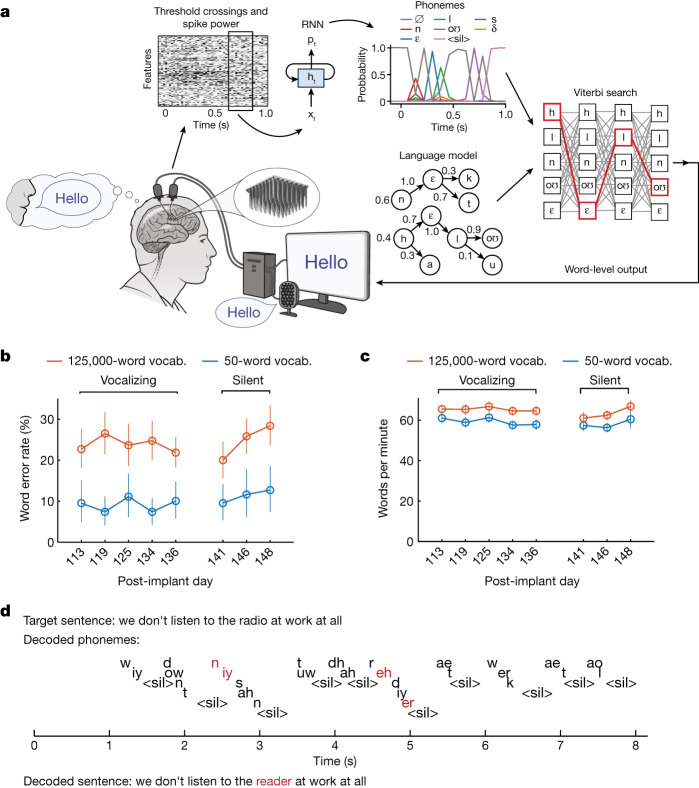
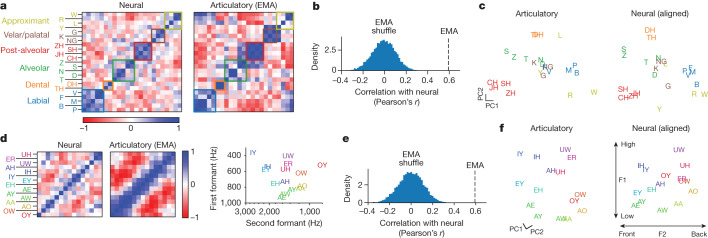
Abstract Speech brain–computer interfaces (BCIs) have the potential to restore rapid communication to people with paralysis by decoding neural activity evoked by attempted speech into text 1,2 or sound 3,4 . Early demonstrations, although promising, have not yet achieved accuracies sufficiently high for communication of unconstrained sentences from a large vocabulary 1–7 . Here we demonstrate a speech-to-text BCI that records spiking activity from intracortical microelectrode arrays. Enabled by these high-resolution recordings, our study participant—who can no longer speak intelligibly owing to amyotrophic lateral sclerosis—achieved a 9.1% word error rate on a 50-word vocabulary (2.7 times fewer errors than the previous state-of-the-art speech BCI 2 ) and a 23.8% word error rate on a 125,000-word vocabulary (the first successful demonstration, to our knowledge, of large-vocabulary decoding). Our participant’s attempted speech was decoded at 62 words per minute, which is 3.4 times as fast as the previous record 8 and begins to approach the speed of natural conversation (160 words per minute 9 ). Finally, we highlight two aspects of the neural code for speech that are encouraging for speech BCIs: spatially intermixed tuning to speech articulators that makes accurate decoding possible from only a small region of cortex, and a detailed articulatory representation of phonemes that persists years after paralysis. These results show a feasible path forward for restoring rapid communication to people with paralysis who can no longer speak.
Overview
CoChat Summary
TL;DR
A speech-to-text brain–computer interface using intracortical microelectrode arrays in one participant with ALS decoded attempted speech at 62 words per minute, with 9.1% word error rate on a 50-word vocabulary and 23.8% on a 125,000-word vocabulary. The study also reports spatially intermixed articulator tuning in area 6v and a preserved articulatory representation of phonemes years after paralysis.
Key findings
- The participant achieved a 9.1% word error rate on a 50-word vocabulary when vocalizing (11.2% silent) and a 23.8% word error rate on a 125,000-word vocabulary when vocalizing (24.7% silent); the 50-word result was 2.7 times fewer errors than the previous state-of-the-art speech BCI.
- Attempted speech was decoded at 62 words per minute, described as 3.4 times as fast as the previous record and approaching natural conversation at 160 words per minute.
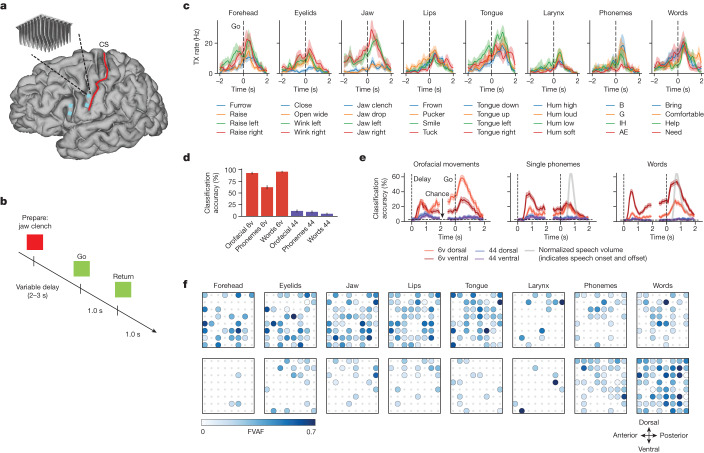
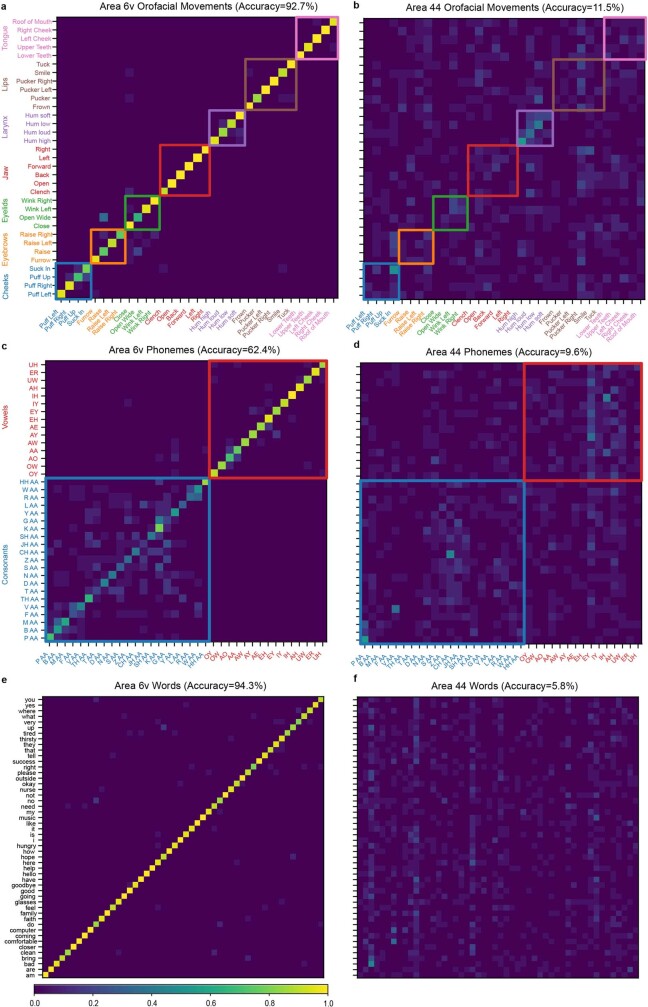
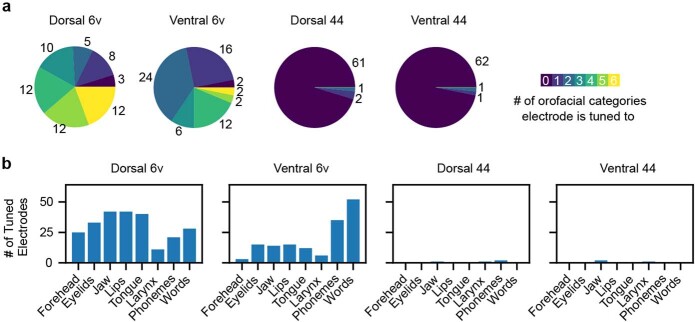
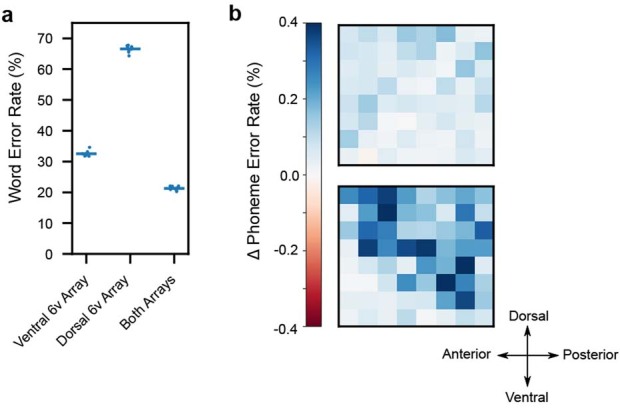
- Area 6v contained strong speech-related information: naive Bayes decoding from 1 s of neural activity reached 92% accuracy for 33 orofacial movements, 62% for 39 phonemes, and 94% for 50 words; area 44 showed classification accuracy below 12%.
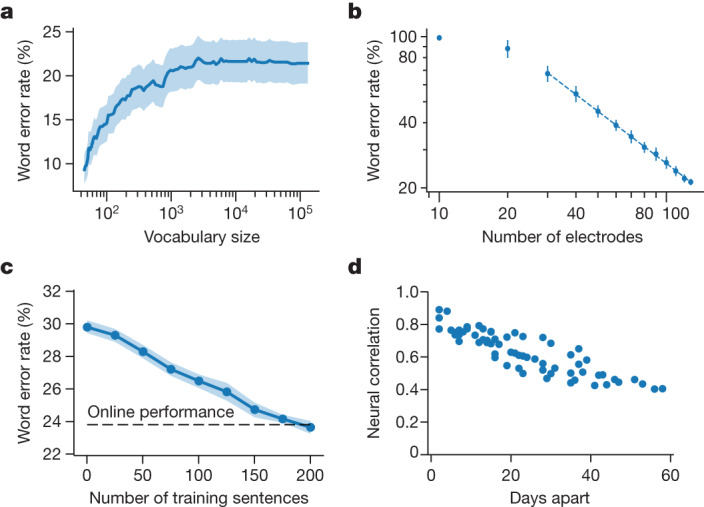
- Offline analyses reduced 125,000-word word error rate from 23.8% to 17.4% with an improved language model and to 11.8% with an improved language model plus a proximal test set; doubling electrode count cut word error rate by nearly half (factor of 0.57), and word error rate was 30% with no retraining on the evaluation day.
Methods
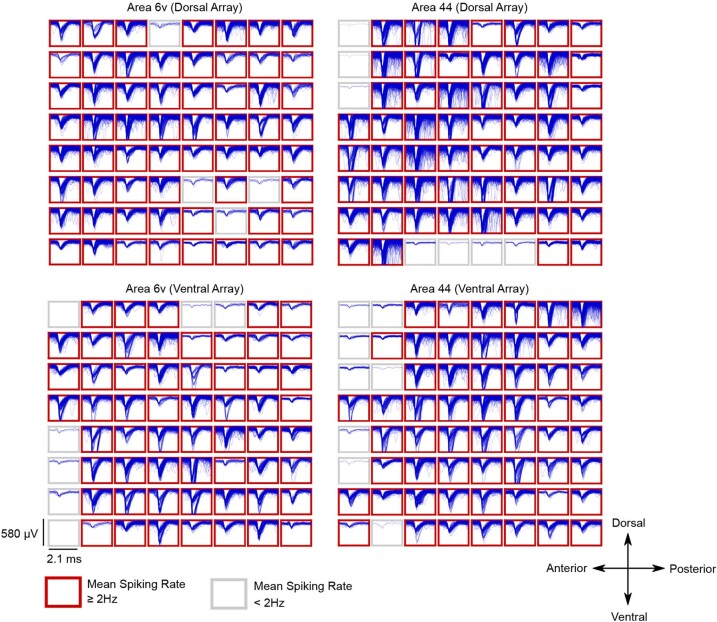
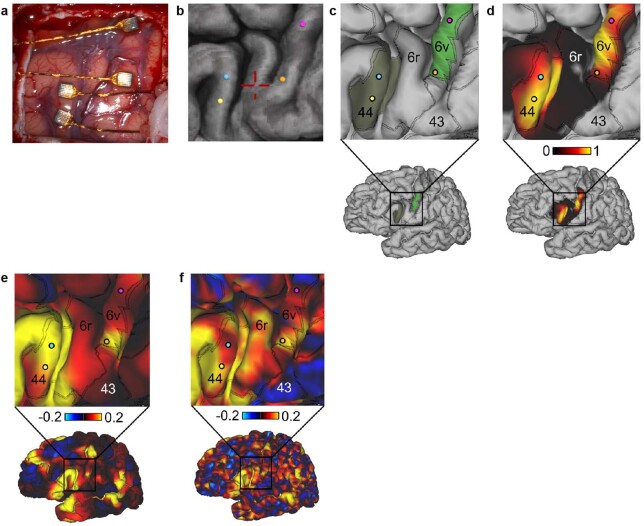
- Single participant T12 in the BrainGate2 pilot clinical trial, with bulbar-onset ALS, limited orofacial movement and vocalization but no intelligible speech; four intracortical microelectrode arrays were implanted, two in area 6v and two in area 44.
- Tasks included attempted individual orofacial movements, single phonemes, single words, and sentences; evaluation used 5 vocalized speech days and 3 silent speech days, with sentences from the Switchboard corpus for the 125,000-word vocabulary and the word set/test sentences from Moses et al. for the 50-word vocabulary.
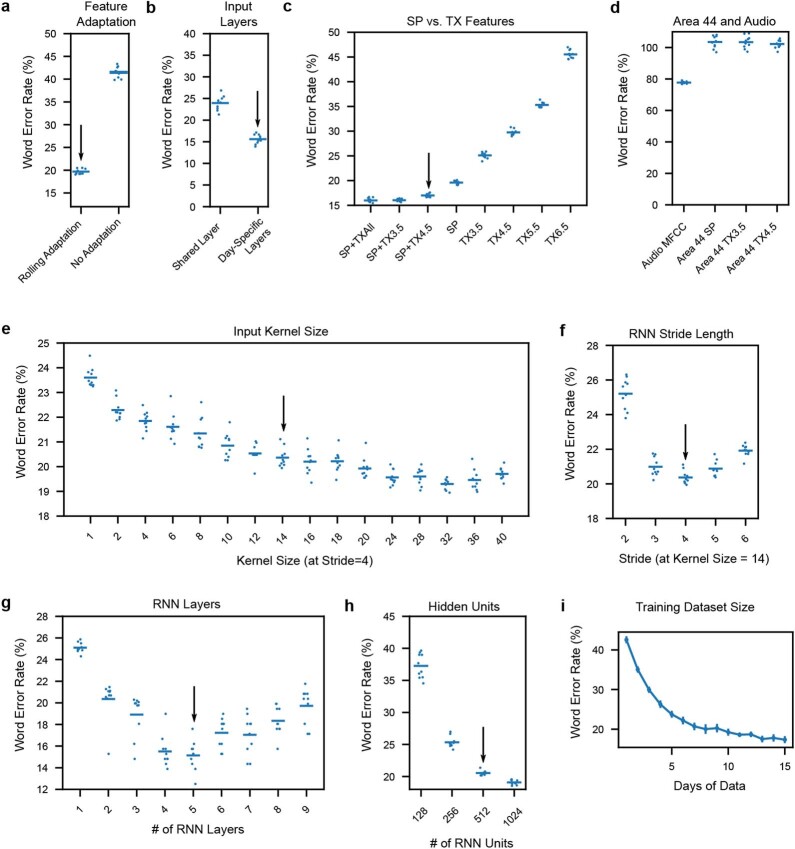
- A five-layer gated recurrent unit RNN emitted phoneme probabilities every 80 ms, combined with a custom 125,000-word trigram language model in Kaldi; training used 260–480 sentences per day, reaching 10,850 total sentences by the final day, with unique input layers per day and rolling feature adaptation. Additional analyses used naive Bayes classifiers, RNN saliency vectors, electromagnetic articulography comparisons, and offline language-model and electrode-count manipulations.
Limitations
- The paper states that this is a proof of concept and not yet a complete, clinically viable system; work remains to reduce decoder training time and adapt to across-day neural changes without requiring the user to pause and recalibrate.
- The paper states that results must be confirmed in additional participants, generalizability to people with more profound orofacial weakness remains open, brain anatomy variability is a concern, and intracortical microelectrode array technology still needs further demonstrations of longevity and efficacy.
- The paper states that a 24% word error rate is probably not yet sufficiently low for everyday use, compared with 4–5% for state-of-the-art speech-to-text systems; evident from the text, the study reports one participant, and the best 11.8% word error rate came from offline analyses rather than online real-time decoding.
Model-written summary. Check it against the paper before relying on it.
Integrity signals
Registry
Cites
Statistics
Figures
Verification
Claims the paper makes
11 Valid · 1 Not valid · 4 Not checked · 52 Own results and interpretations
At least one cited source doesn’t support this claim or points to a different paper, and none confirmed it — see the verdicts below.
In the paper
“which is 3.4 times as fast as the previous record8”
- Also stated in: § Decoding attempted speech · plain
“which more than triples the speed of the previous state of the art for any type of BCI (18 words per minute for a handwriting BCI8)”
§ A high-performance speech neuroprosthesis > Abstract
What the sources say
- Disputedcites [8] Willett FR Avansino DT Hochberg LR Henderson JM Shenoy KV High-performance brain-to-text communication via handwriting Nature 2021 593 249 254 10.1038/s41586-021-03506-2 33981047 PMC8163299 sourceExperimental — accuracy not yet measured
The Discussion (page unavailable) reports 90 characters per minute for this BCI and 60 characters per minute for an earlier EEG speller. That makes the reported speed 1.5 times the earlier rate, not 3.4 times the previous record for any type of BCI. (LLM, conf=0.88)
Checked by a reasoning model — may be wrong.
plainSingle case- Asserted: passes — The authors put it forward as true.
- Checkable: passes — It can be checked against evidence.
- Load-bearing: passes — The paper’s conclusions depend on it.
- Based: passes — The paper gives a reason why it holds.
- Also stated in: § Decoding attempted speech · plain
The cited sources support only part of this claim — read each source’s verdict below.
In the paper
“Recently, BCIs based on hand movement activity have enabled typing speeds of between eight and 18 words per minute in people with paralysis8,29.”
§ A high-performance speech neuroprosthesis > Discussion
What the sources say
- Supportedcites [8] Willett FR Avansino DT Hochberg LR Henderson JM Shenoy KV High-performance brain-to-text communication via handwriting Nature 2021 593 249 254 10.1038/s41586-021-03506-2 33981047 PMC8163299 source
The Discussion reports 90 characters per minute for the paper’s handwriting BCI in a person with tetraplegia, while “Temporal variety improves decoding” reports 40 characters per minute for prior point-and-click BCIs. At five characters per word, those rates correspond to 18 and eight words per minute. No page numbers are available in our copy. (LLM, conf=0.90)
- Partly supportedcites [29] Pandarinath C High performance communication by people with paralysis using an intracortical brain-computer interface eLife 2017 6 e18554 10.7554/eLife.18554 28220753 PMC5319839 sourceExperimental — accuracy not yet measured
The Introduction’s Figure 1 caption describes recordings from the hand area of motor cortex, and the Discussion reports copy-typing rates in people with paralysis reaching 7.8 words per minute—approximately eight. This paper does not report an 18-word-per-minute typing rate, so it supports the lower end of the cited range but not the upper end. (LLM, conf=0.88)
plainstates a cause- Asserted: passes — The authors put it forward as true.
- Checkable: passes — It can be checked against evidence.
- Load-bearing: passes — The paper’s conclusions depend on it.
- Based: passes — The paper gives a reason why it holds.
- Supported
Every source the paper cites for this claim was checked and supports it.
In the paper
“Furthermore, we found that neural activity changed at a gradual rate over time, suggesting that unsupervised algorithms for updating decoders to neural changes should be feasible24–27 (Fig. 4d).”
§ A high-performance speech neuroprosthesis > Design considerations for speech BCIs
What the sources say
- Supportedcites [24] Dyer EL A cryptography-based approach for movement decoding Nat. Biomed. Eng. 2017 1 967 976 10.1038/s41551-017-0169-7 31015712 PMC8376093 source
The Discussion (page unavailable) proposes DAD, an unsupervised decoding approach, as a way to re-align a decoder and suggests extending it to reduce the labeled data needed for calibration. That supports the citing sentence’s qualified claim that unsupervised decoder updates should be feasible; the observation that neural activity changed gradually is the citing authors’ own finding, not a claim attributed to this source. (LLM, conf=0.86)
- Supportedcites [25] Farshchian, A. et al. Adversarial domain adaptation for stable brain-machine interfaces. Preprint at 10.48550/arXiv.1810.00045 (2019). source
Section 4.2.3 (p. 5) says ADAN aligns neural recordings across days in an unsupervised manner. The Introduction (p. 2) reports that this adaptation stabilizes a fixed decoder despite changes in neural recordings, supporting the cited suggestion that unsupervised updating is feasible. (LLM, conf=0.91)
- Supportedcites [26] Degenhart, A. D. et al. Stabilization of a brain–computer interface via the alignment of low-dimensional spaces of neural activity. Nat. Biomed. Eng. 10.1038/s41551-020-0542-9 (2020). PMC7822646 32313100 source
The section ‘Stabilization can outperform supervised recalibration’ says the stabilizer is updated without estimating user intent and can counteract neural recording instabilities. The Methods section ‘Stabilization and decoder’ describes updates using neural activity collected during online BCI use, supporting the feasibility of unsupervised adaptation to neural changes. The citing authors’ observation that changes were gradual is their own finding, not a finding attributed to this source. (LLM, conf=0.88)
- Supportedcites [27] Karpowicz, B. M. et al. Stabilizing brain-computer interfaces through alignment of latent dynamics. Preprint at bioRxiv10.1101/2022.04.06.487388 (2022). PMC12089531 40389429 source
The Introduction describes unsupervised recalibration as a way to compensate for neural-interface instabilities using data collected during normal use. In “Potential Future Applications,” the paper reports that its completely unsupervised NoMAD alignment stabilized decoding for weeks to months, supporting the claim that such updating is feasible. (LLM, conf=0.92)
hedgedSingle case- Asserted: passes — The authors put it forward as true.
- Checkable: passes — It can be checked against evidence.
- Load-bearing: passes — The paper’s conclusions depend on it.
- Based: passes — The paper gives a reason why it holds.
- Supported
The cited sources support only part of this claim — read each source’s verdict below.
In the paper
“Early demonstrations, although promising, have not yet achieved accuracies sufficiently high for communication of unconstrained sentences from a large vocabulary1–7.”
- Also stated in: § Discussion · plain
“Speech BCIs have the potential to restore natural communication at a much faster rate but have not yet achieved high accuracies on large vocabularies (that is, unconstrained communication of any sentence the user may want to say)1–7.”
§ A high-performance speech neuroprosthesis > Abstract
What the sources say
- Supportedcites [1] Herff C Brain-to-text: decoding spoken phrases from phone representations in the brain Front. Neurosci. 2015 9 217 10.3389/fnins.2015.00217 26124702 PMC4464168 source
The Conclusion (section 4.4; page unavailable) says the system reconstructs phrases with a limited dictionary and describes communication with scalable vocabularies as an eventual possibility. The Results (section 3.2; page unavailable) report 75% word recognition with a 10-word dictionary. Together, these support the claim that this early demonstration had not achieved sufficiently accurate communication of unconstrained sentences from a large vocabulary. (LLM, conf=0.88)
- Partly supportedcites [2] Moses DA Neuroprosthesis for decoding speech in a paralyzed person with anarthria N. Engl. J. Med. 2021 385 217 227 10.1056/NEJMoa2027540 34260835 PMC8972947 sourceExperimental — accuracy not yet measured
The Methods (Word and Sentence Task Design; page unavailable) describe decoding 50 preset sentences using a 50-word vocabulary, and the Results (Sentence Decoding; page unavailable) report a median word error rate of 25.6% with language modeling. This supports the narrower point that this demonstration did not establish communication using unconstrained sentences and a large vocabulary. The paper does not establish that insufficient accuracy is the reason such communication had not been achieved across early demonstrations. (LLM, conf=0.82)
- Supportedcites [3] Anumanchipalli GK Chartier J Chang EF Speech synthesis from neural decoding of spoken sentences Nature 2019 568 493 498 10.1038/s41586-019-1119-1 31019317 PMC9714519 source
The Discussion (page not provided) says previous speech-decoding strategies were limited in their ability to scale to larger vocabularies and communication rates. The Synthesis performance section (page not provided) describes this paper’s sentence-transcription test as closed-vocabulary, using pools of 25 or 50 words. Together, these passages support the claim that early demonstrations had not established accurate communication of unconstrained, large-vocabulary sentences. (LLM, conf=0.88)
- Partly supportedcites [4] Herff C Generating natural, intelligible speech from brain activity in motor, premotor, and inferior frontal cortices Front. Neurosci. 2019 13 1267 10.3389/fnins.2019.01267 31824257 PMC6882773 sourceExperimental — accuracy not yet measured
The Results report 66.1% word identification in a four-option listening test and estimate 36% intelligibility for transcription; the Limitations section says usable speech BCIs remain a long way off. These findings support the limitation for this demonstration, but the paper does not establish that early demonstrations generally failed to achieve sufficient accuracy for unconstrained, large-vocabulary sentences. (LLM, conf=0.84)
- Supportedcites [5] Kellis S Decoding spoken words using local field potentials recorded from the cortical surface J. Neural Eng. 2010 7 056007 10.1088/1741-2560/7/5/056007 20811093 PMC2970568 source
The Introduction reports classification of finite sets of up to 10 words and says the breadth of decoded language is inherently limited. The Conclusion describes the result as enabling limited communication, while Future work identifies improving accuracy for larger dictionaries as an open task. This demonstration therefore did not achieve communication of unconstrained sentences from a large vocabulary. (LLM, conf=0.88)
- Supportedcites [6] Pei X Barbour DL Leuthardt EC Schalk G Decoding vowels and consonants in spoken and imagined words using electrocorticographic signals in humans J. Neural Eng. 2011 8 046028 10.1088/1741-2560/8/4/046028 21750369 PMC3772685 source
The Results (§3.1) report roughly 36–41% accuracy for decoding vowels and consonants, not unconstrained sentences. The Discussion (§4) says further work is needed to improve accuracy and extend decoding to more vowel and consonant categories, supporting the claim as applied to this early demonstration. (LLM, conf=0.91)
- Supportedcites [7] Mugler EM Direct classification of all American English phonemes using signals from functional speech motor cortex J. Neural Eng. 2014 11 035015 10.1088/1741-2560/11/3/035015 24836588 PMC4097188 source
The Introduction says early whole-word speech-decoding results were preliminary and could not be extrapolated to more complex speech. The Discussion states that this study’s word-identification accuracy was insufficient for communication and describes whole-word decoding from a broader set of words as a future step. The supplied passages do not give page numbers. (LLM, conf=0.91)
plain- Asserted: passes — The authors put it forward as true.
- Checkable: passes — It can be checked against evidence.
- Load-bearing: passes — The paper’s conclusions depend on it.
- Based: passes — The paper gives a reason why it holds.
- Also stated in: § Discussion · plain
The cited sources support only part of this claim — read each source’s verdict below.
In the paper
“These results indicate that substantial gains in performance are probably still possible with further language model improvements and more robust decoding algorithms that generalize better to non-stationary data (for example, unsupervised methods that track non-stationarities without the requirement for new training data24–27).”
§ A high-performance speech neuroprosthesis > Decoding attempted speech
What the sources say
- Partly supportedcites [24] Dyer EL A cryptography-based approach for movement decoding Nat. Biomed. Eng. 2017 1 967 976 10.1038/s41551-017-0169-7 31015712 PMC8376093 sourceExperimental — accuracy not yet measured
The Results describe DAD as an unsupervised decoder that worked across recording days without changing model parameters, supporting its use without new paired training data. But the paper does not show the method tracking non-stationarities; the Discussion treats accounting for drift in neural properties as a potential improvement not included in DAD. (LLM, conf=0.82)
- Partly supportedcites [25] Farshchian, A. et al. Adversarial domain adaptation for stable brain-machine interfaces. Preprint at 10.48550/arXiv.1810.00045 (2019). sourceExperimental — accuracy not yet measured
The Methods (p. 5) describe an unsupervised approach to aligning neural recordings across days, supporting the example of a method that addresses non-stationarity. But the Results (p. 7) say domain adaptation with ADAN requires a small new training set—prediction accuracy saturates at about one minute of data—so this source does not support the claim that no new training data is required. It does not address language-model improvements. (LLM, conf=0.88)
- Supportedcites [26] Degenhart, A. D. et al. Stabilization of a brain–computer interface via the alignment of low-dimensional spaces of neural activity. Nat. Biomed. Eng. 10.1038/s41551-020-0542-9 (2020). PMC7822646 32313100 source
The cited paper supports the parenthetical example, not the citing authors’ prediction about language-model gains. Its Methods (‘Stabilization and decoder’; page unavailable) describe updating the stabilizer with neural data collected during ongoing BCI use, and its results (‘Stabilization can outperform supervised recalibration’; page unavailable) state that stabilization does not require an estimate of user intent. The paper also reports recovery from recording instabilities without a new supervised calibration session. (LLM, conf=0.89)
- Supportedcites [27] Karpowicz, B. M. et al. Stabilizing brain-computer interfaces through alignment of latent dynamics. Preprint at bioRxiv10.1101/2022.04.06.487388 (2022). PMC12089531 40389429 source
The citation supports the parenthetical example, not the sentence's separate prediction about language-model improvements. In “Potential Future Applications” (page unavailable), the paper says NoMAD's alignment is completely unsupervised and uses only a small initial supervised training dataset; the reaching-task section describes unsupervised alignment of later sessions before applying the original decoder. (LLM, conf=0.91)
hedgedstates a possible causeSingle case- Asserted: passes — The authors put it forward as true.
- Checkable: passes — It can be checked against evidence.
- Load-bearing: passes — The paper’s conclusions depend on it.
- Based: passes — The paper gives a reason why it holds.
- Partly supported
48 more claims · 4 with their cited sources checked
Create a free account to see all 68 claims and every source verdict.
- Probably not a substantial claim. 6
- It may state two separate claims as one. 8
- The quote only partly states this claim. 1
Claims other papers make about this one
Each is checked against this paper’s own text: does it say what the citing paper says it does?
The cited source doesn’t support the claim as written.
In the citing paper
“we also targeted one array each into two areas which, to our knowledge, have not previously been recorded from with multielectrode arrays”
From An Accurate and Rapidly Calibrating Speech Neuroprosthesis (2024) · cites this paper as [21]
Checked by a reasoning model — may be wrong.
Experimental — accuracy not yet measuredThe source backs part of the claim, not all of it — or backs it for a different population, condition or comparison.
In the citing paper
“They have shown significant efficacy in improving the quality of life for those suffering from a range of conditions, including but not limited to Parkinson’s disease, ALS (Willett et al., 2023), movement disorders, epilepsy, and mental health issues (Fisher and Velasco, 2014; Bergfeld et al., 2016; França et al., 2022).”
From Comparative analysis of energy transfer mechanisms for neural implants (2024) · cites this paper as Willett et al., 2023
Experimental — accuracy not yet measuredThe source backs part of the claim, not all of it — or backs it for a different population, condition or comparison.
In the citing paper
“Current speech-decoding applications from brain activity are primarily aimed at restoring communication to individuals with both limb and vocal-tract paralysis14–16.”
From The speech neuroprosthesis (2024) · cites this paper as [15]
Experimental — accuracy not yet measuredThe source backs part of the claim, not all of it — or backs it for a different population, condition or comparison.
In the citing paper
“Interestingly, at the neuronal level, locations on the anterior precentral gyrus in orofacial or hand areas contain single neurons tuned to movements of the whole body, including key speech articulators15,51,52.”
From The speech neuroprosthesis (2024) · cites this paper as [15]
Experimental — accuracy not yet measuredThe source backs part of the claim, not all of it — or backs it for a different population, condition or comparison.
In the citing paper
“Recent studies have also achieved high-performance speech-decoding results15,16 by measuring relevant single-unit and multi-unit neuronal activity from multiple small (4 × 4 mm2 (ref. 83)) cortical regions on the anterior precentral gyrus15,16,52,98.”
From The speech neuroprosthesis (2024) · cites this paper as [15]
Experimental — accuracy not yet measured
20 more claims about this paper
Create a free account to see every claim other papers make about this one.
Self-check
Percentages, sums and reported differences re-computed from the paper’s own numbers.
Each contradiction between two passages listed here was confirmed by an independent check.
Rated minor: it would not touch a result — a value no result rests on, a p-value that stays on the same side of the significance level, or a conflict that is clerical, resolved elsewhere in the paper, or outside its own findings.
In the paper
§ A high-performance speech neuroprosthesis > Decoding attempted speech
“At the beginning of each RNN performance-evaluation day we first recorded training data during which T12 attempted to speak 260–480 sentences at her own pace”
§ A high-performance speech neuroprosthesis > Design considerations for speech BCIs
“Finally, in this demonstration we used a large amount of training data per day (260–440 sentences).”
Citations
Cites
BERT: Pre-training of Deep Bidirectional Transformers for Language Understanding
Devlin, J., Chang, M.-W., Lee, K., & Toutanova, K. (2018) · arXiv · doi:10.48550/arxiv.1810.04805 · Cited by 73,173
Language Models are Few-Shot Learners
Brown, T. B., Mann, B., Ryder, N., Subbiah, M., Kaplan, J., Dhariwal, P., Neelakantan, A., Shyam, P., Sastry, G., Askell, A., et al. (2020) · arXiv · doi:10.48550/arxiv.2005.14165 · Cited by 23,372
Brainard, D. H. (1997) · Spatial Vision · doi:10.1163/156856897x00357 · Cited by 19,702
Hinton, G., Deng, L., Yu, D., Dahl, G., Mohamed, A.-R., Jaitly, N., Senior, A., Vanhoucke, V., Nguyen, P., Sainath, T., et al. (2012) · IEEE Signal Processing Magazine · doi:10.1109/msp.2012.2205597 · Cited by 10,260
Speech recognition with deep recurrent neural networks
Graves, A., Mohamed, A.-R., & Hinton, G. (2013) · 2013 IEEE International Conference on Acoustics, Speech and Signal Processing · doi:10.1109/icassp.2013.6638947 · Cited by 8,893
Graves, A., Fernández, S., Gomez, F., & Schmidhuber, J. (2006) · Proceedings of the 23rd international conference on Machine learning - ICML '06 · doi:10.1145/1143844.1143891 · Cited by 5,370
A multi-modal parcellation of human cerebral cortex
Glasser, M. F., Coalson, T. S., Robinson, E. C., Hacker, C. D., Harwell, J., Yacoub, E., Ugurbil, K., Andersson, J., Beckmann, C. F., Jenkinson, M., et al. (2016) · Nature · doi:10.1038/nature18933 · Cited by 5,111
Self-citationTHE POPULATION FREQUENCIES OF SPECIES AND THE ESTIMATION OF POPULATION PARAMETERS
GOOD, I. J. (1953) · Biometrika · doi:10.1093/biomet/40.3-4.237 · Cited by 3,437
SWITCHBOARD: telephone speech corpus for research and development
Godfrey, J. J., Holliman, E. C., & McDaniel, J. (1992) · [Proceedings] ICASSP-92: 1992 IEEE International Conference on Acoustics, Speech, and Signal Processing · doi:10.1109/icassp.1992.225858 · Cited by 2,134
An Integrated Brain-Machine Interface Platform With Thousands of Channels
Musk, E., & Neuralink (2019) · Journal of Medical Internet Research · doi:10.2196/16194 · Cited by 1,206
Research works printed but not linked: 1
- Broca P Nouvelle observation d’aphemie produite par une lesion de la troisieme circonvolution frontale Bull. Soc. Anat. 1861 2 398 407
Cited by
Items 301–400 of 577
Brain-reading devices allow paralysed people to talk using their thoughts
Naddaf, M. (2023) · Nature · doi:10.1038/d41586-023-02682-7 · Cited by 2
Wu, S., Bhadra, K., Giraud, A., & Marchesotti, S. (2023) · bioRxiv (Cold Spring Harbor Laboratory) · doi:10.1101/2023.12.12.571206 · Cited by 2
Xu, G., Wang, Z., Xu, K., Zhu, J., Zhang, J., Wang, Y., & Hao, Y. (2024) · medRxiv · doi:10.1101/2024.07.02.24309802 · Cited by 2
Iwata, T., Nakamura, H., Uemura, T., et al. (2024) · bioRxiv (Cold Spring Harbor Laboratory) · doi:10.1101/2024.08.29.610418 · Cited by 2
Non-invasive brain-machine interface control with artificial intelligence copilotsPreprint
Lee, J. Y., Lee, S., Mishra, A., Xu, Y., McMahan, B., Gaisford, B., Kobashigawa, C., Qu, M., Xie, C., & Kao, J. C. (2024) · bioRxiv (Cold Spring Harbor Laboratory) · doi:10.1101/2024.10.09.615886 · Cited by 2
Multi-Stable Bimodal Perceptual Coding within the Ventral Premotor CortexPreprint
Andrade-Ortega, B., Díaz, H., Bayones, L., et al. (2024) · bioRxiv (Cold Spring Harbor Laboratory) · doi:10.1101/2024.12.11.628069 · Cited by 2
Lee, J., Park, H., Spencer, A., Gong, X., DeNardo, M., Vashahi, F., Pollet, F., Norris, S., Hinton, H., Fakiri, M. E., et al. (2025) · medRxiv · doi:10.1101/2025.04.24.25326126 · Cited by 4
Sensorimotor Theta Oscillations Coordinate Speech MovementsPreprint
Norman, Y., Frank, L. M., & Chang, E. F. (2025) · bioRxiv (Cold Spring Harbor Laboratory) · doi:10.1101/2025.10.09.681482 · Cited by 4
3M-CPSEED, An EEG-based Dataset for Chinese Pinyin Production in Overt, Mouthed, and Imagined Speech
Ma, X., Jiang, Y., & Jiang, N. (2025) · Scientific Data · doi:10.1038/s41597-025-06346-1 · Cited by 6
“Previous studies primarily focused on non-tonal languages like English 18,19,25–29 , Spanish 30 , and Dutch 31–34 , yet neural mechanisms for processing different languages vary significantly.”
InfluentialWang, Y., Wang, S., Cai, W., Ford, G., Cui, Y., Zhang, Y., Du, C., Fan, C., Li, D., Zhou, H., et al. (2025) · bioRxiv (Cold Spring Harbor Laboratory) · doi:10.64898/2025.11.30.691403 · Cited by 5
Self-citationListening in to perceived speech with contrastive learning
Stavisky, S. D., & Wairagkar, M. (2023) · Nature Machine Intelligence · doi:10.1038/s42256-023-00742-1 · Cited by 1
Decoding Single and Paired Phonemes Using 7T Functional MRI
Vitória, M. A., Fernandes, F. G., van den Boom, M., Ramsey, N. F., & Raemaekers, M. A. H. (2024) · Brain Topography · doi:10.1007/s10548-024-01034-6 · Cited by 2
“…al. 2001; Shuster and Lemieux 2005 ; Zhang et al. 2020; Brumberg et al. 2016; Soroush et al. 2023 ) and classifiers trained on attempted speech have been successfully used to classify overt speech based on features acquired using intra-cranial recordings (Metzger et al. 2023; Willett et al. 2023).”
MethodGuiding Brain-to-Vocalization Decoder Design Using Structured Generalization Error
Huang, J., Tostado-Marcos, P., Narasimha, S. M., Patel, A. N., Arneodo, E. M., Gentner, T. Q., Mishne, G., & Gilja, V. (2024) · Annual International Conference of the IEEE Engineering in Medicine and Biology Society (EMBC) · doi:10.1109/embc53108.2024.10782761 · Cited by 1
“…in this paper: VG holds shares in Neuralink Corp. and is Chief Scientific Officer and an options holder at Paradromics, Inc. through attempted speech, achieving a nearly 7-fold increase in communication rates compared to arm control, from 7.84 to 47.24 correct words per minute [1], [2], [5].”
InfluentialA Vision Transformer Architecture For Overt Speech Decoding From ECoG Data
Ticha, M. B. B., Ran, X., Roussel, P., Bocquelet, F., Godais, G. L., Aubert, M., Costecalde, T., Struber, L., Zhang, S., Charvet, G., et al. (2024) · Annual International Conference of the IEEE Engineering in Medicine and Biology Society (EMBC) · doi:10.1109/embc53108.2024.10781877 · Cited by 3
Invasive Brain–Computer Interfaces: 25 Years of Clinical Trials, Scientific and Practical Issues
Mokienko, O. A. (2025) · Annals of the Russian academy of medical sciences · doi:10.15690/vramn17994 · Cited by 1
Stentrode: Pioneering Minimally Invasive Brain-Computer Interfaces – A Review
Talluri, P., Raghunath, S., & Sankargalsubhan, N. B. (2024) · Global Conference on Communications and Information Technologies (GCCIT) · doi:10.1109/gccit63234.2024.10862378 · Cited by 1
“The third stage involves generating commands from translated features to manage external devices like a cursor for text selection, a wheelchair, or a robotic arm [10].”
Letner, J. G., Lam, J. L. W., Copenhaver, M. G., Barrow, M., Patel, P. R., Richie, J. M., Lee, J., Kim, H.-S., Cai, D., Weiland, J. D., et al. (2026) · Frontiers in Neuroscience · doi:10.3389/fnins.2026.1848862 · Cited by 2
“Current BMIs often target neurons deep in cortex to obtain high-resolution neural firing patterns (Moran, 2010; Losanno et al., 2023).”
InfluentialNeuroIncept Decoder for High-Fidelity Speech Reconstruction from Neural Activity
Khanday, O. M., Pérez-Córdoba, J. L., Mir, M. Y., Najar, A. A., & González, J. A. (2025) · IEEE International Conference on Acoustics Speech and Signal Processing · doi:10.1109/icassp49660.2025.10888547 · Cited by 5
“The ASR-based approach [11]–[13] utilizes specialized software and models to convert neural signals into textual representations, while the speech synthesis approach aims to generate audible audio directly from the neural signals.”
Offenberg, E. C., Berezutskaya, J., Müller, L., Freudenburg, Z. V., Ramsey, N. F., & Vansteensel, M. J. (2026) · Clinical Neurophysiology · doi:10.1016/j.clinph.2026.2111940 · Cited by 3
Inferring collective synchrony observing spiking of one or several neurons
PIKOVSKY, A. S., & Rosenblum, M. G. (2025) · Journal of Computational Neuroscience · doi:10.1007/s10827-025-00900-x · Cited by 1
“This result aligns with the findings that a small subset of neuronal populations is involved in the visual perception of complex images (Quian Quiroga et al., 2005) or conveys information sufficient for neuroprosthetics purposes (Willett et al., 2023).”
Low-Power Feature Extraction for BCI Applications Using Approximate Continuous Wavelet Transform
Saad, J., Evans, A., Miro-Panades, I., Aksenova, T., & Anghel, L. (2025) · International Winter Conference on Brain-Computer Interface (BCI) · doi:10.1109/bci65088.2025.10931272 · Cited by 1
“The decoded information can be used in different systems that perform motor con-trol [1]–[4] or speech synthesis [5]–[7].”
Real-time Open-vocabulary Sentence Decoding from MEG Signals Using Transformers
Luo, K. (2024) · International Conference on Image Processing, Computer Vision and Machine Learning (ICICML) · doi:10.1109/icicml63543.2024.10957766 · Cited by 1
“Several configurations were tested, varying the number of encoder and decoder layers (4, 6, 8), hidden state sizes (256, 512, 1024), and attention head dimensions (32, 64, 128) to assess the impact of model complexity on decoding performance.”
Why the 21st-century neuroscientist needs to be neuroethically engaged
Rommelfanger, K. S. (2025) · The Transmitter · doi:10.53053/llri8307 · Cited by 1
Spatial richness of neural magnetic fields
Ali, Z., & Poon, A. S. Y. (2026) · PLoS Computational Biology · doi:10.1371/journal.pcbi.1014283 · Cited by 1
“Over the past two decades, researchers have achieved significant breakthroughs in decoding neural representations of cognitive intentions, such as limb movements [1] and speech [2], as well as external stimuli, including visual [3] and auditory [4] signals.”
Intracortical brain-computer interface for navigation in virtual reality in macaque monkeys
Saussus, O., Schrijver, S. D., Ramirez, J. G., Decramer, T., & Janssen, P. (2026) · Science Advances · doi:10.1126/sciadv.adw3876 · Cited by 3
“…and humans have enabled con-trol of computer cursors ( 4 – 11 ), manipulation of robotic or prosthetic arms ( 6 , 10 – 17 ), wheelchair control ( 18 , 19 ), restoration of communication ( 20 – 24 ), restoring motion of paralyzed limbs ( 25 – 27 ), and even the provision of sensory feedback ( 28 ).”
New Applications of Neurotechnologies for Neurological Disorders
Orsborn, A. L., Pirondini, E., Capogrosso, M., Gaunt, R. A., & Stavisky, S. D. (2025) · Springer eBooks · doi:10.1007/978-3-031-89307-0_25 · Cited by 1
Bhattacharjee, S., Chakraborty, I., Kashyap, R., Sreeraj, V. S., Arshad, F., Yamini, B. K., Bharath, R. D., Sivakumar, P. T., Venkatsubramanian, G., Alladi, S., et al. (2025) · Brain Disorders · doi:10.1016/j.dscb.2025.100255 · Cited by 1
Mannan, M. M. N., Lloyd, D. G., & Pizzolato, C. (2025) · International Conference on Rehabilitation Robotics · doi:10.1109/icorr66766.2025.11063010 · Cited by 1
“Recent clinical studies have aimed to validate the effectiveness of BCI-based rehabilitation in individuals with neurological impairments, with trials demonstrating functional improvements [25], [26], [27].”
Speech mode classification from electrocorticography: transfer between electrodes and participants
de Borman, A., Wittevrongel, B., Dyck, B. V., Rooy, K. V., Carrette, E., Meurs, A., Roost, D. V., & Hulle, M. M. V. (2025) · Journal of Neural Engineering · doi:10.1088/1741-2552/adf2de · Cited by 2
Adaptive Multi-Granularity Information Exploration for EEG-Based Speech Recognition
Ye, G., Chen, Q., Kong, Z., et al. (2025) · IEEE Signal Processing Letters · doi:10.1109/lsp.2025.3592109 · Cited by 1
Rethink the motor cortical control via the experiment-analysis-model flywheel: an overview
Jiang, H., Bu, X., Shi, Q., Zheng, Z., Zhu, D., Tang, H., & Chen, Y. (2025) · Med-X · doi:10.1007/s44258-025-00059-1 · Cited by 1
“A patient with ALS could ’speak’ at 62 words per minute and begin to approach the speed of natural conversation (160 words per minute) [169].”
Enabling Neuroprostheses via Machine Learning
Chen, Q., Lin, P., Yu, Z., & Pan, G. (2025) · Machine Intelligence Research · doi:10.1007/s11633-025-1571-3 · Cited by 2
Magnetoencephalography (MEG) based non-invasive Chinese speech decoding
Jia, Z., Wang, H., Shen, Y., Hu, F., An, J., Shu, K., & Wu, D. (2025) · Journal of Neural Engineering · doi:10.1088/1741-2552/ae1ea2 · Cited by 5
Wang, L., & Chen, Y. (2025) · Measurement · doi:10.1016/j.measurement.2025.119789 · Cited by 2
Neurorestoration – A New Synthesis: Repair, Replace, and Optimize
Liu, C. Y., Abedi, A., Lam, J. L. W., Lo, Y. T., & Young, C. C. (2025) · Cambridge University Press eBooks · doi:10.1017/9781009597852.006 · Cited by 1
Speech Envelope Reconstruction From Stereo EEG in a Speech Production Task
Ivucic, D., Bayer, T., Ivucic, G., Riès, S., Shih, J. J., Krusienski, D. J., & Schultz, T. (2025) · Annual International Conference of the IEEE Engineering in Medicine and Biology Society (EMBC) · doi:10.1109/embc58623.2025.11253269 · Cited by 3
“…Speech BCIs based on intracranial recording methods such as electrocorticography (ECoG) or microelectrode arrays (MEAs) have achieved impressive decoding results for phoneme classification [2][3][4] and speech synthesis [5][6], with performance approaching what is needed for practical application.”
Ball, J. B., Finch, M. R., Taylor, J. A., Smith, Z. Z., Rocha, I. R. C., Green‐Fulgham, S. M., Rowe, E. B., Dragavon, J. M., McNulty, C. J., Dreher, R. A., et al. (2025) · Journal of Neuroscience · doi:10.1523/jneurosci.1306-25.2025 · Cited by 1
Learning discrete neural latent spaces for high-performance speech decoding
Jia, Y., Lian, Q., Wang, L., Wang, Y., & Qi, Y. (2025) · Journal of Neural Engineering · doi:10.1088/1741-2552/ae2ccd · Cited by 1
Using Artificial Intelligence Systems in Modern Neurobehavioral Research
Apukhtin, K. V., Zolotova, A. E., Leunenko, A. O., Perfilova, V. N., & Kalueff, A. V. (2025) · Journal of Evolutionary Biochemistry and Physiology · doi:10.1134/s0022093025060080 · Cited by 1
Eyvazpour, R., Farrokhi, B., & Erfanian, A. (2025) · iScience · doi:10.1016/j.isci.2025.114521 · Cited by 4
ControlIt: A Universal Framework for Translational, Adaptive, and Online Brain–Computer Interfaces
Yang, W., Li, C., Xu, X., Wang, X., Guo, Y., Chai, X., Cao, T., Song, J., Wang, N., Zhang, X., et al. (2026) · Advanced Intelligent Systems · doi:10.1002/aisy.202501148 · Cited by 3
Zhang, J., Song, Y., & Tan, L. (2026) · Frontiers in Human Neuroscience · doi:10.3389/fnhum.2025.1726577 · Cited by 2
Zhang, B., You, X., Liu, Y. P., Xu, J., & Xu, S. (2026) · Sensors · doi:10.3390/s26020576 · Cited by 3
“…with paralysis or amyotrophic lateral sclerosis (ALS) have reported decoding rates of approximately 60 words per minute with large-vocabulary sentence-level spelling accuracy, approaching or even surpassing the communication efficiency of conventional assistive communication devices [24,90,91].”
Cao, Y., Yang, H., Xue, Y., Wang, F., Li, T., Zhao, L., & Fu, Y. (2026) · Cognitive Neurodynamics · doi:10.1007/s11571-025-10380-5 · Cited by 2
An intracortical brain-machine interface based on macaque ventral premotor activity
Schrijver, S. D., Ramirez, J. G., Iregui, S., Aertbeliën, E., Schutter, J. D., Theys, T., Decramer, T., & Janssen, P. (2026) · Scientific Reports · doi:10.1038/s41598-026-38536-1 · Cited by 2
“…motor cortical activity in nonhuman primates and humans has led to online 2D 1 and 3D cursor control 2,3 , robot control for self-feeding 4,5 , movement of paralyzed muscles by means of electrical stimulation 6 , locomotion through a brain-spine interface 7 , and even hand writing and speech 8,9 .”
Li, Z., He, S., Huang, J., Zhang, G., Dang, J., Zhao, S., & Han, J. (2026) · Information Fusion · doi:10.1016/j.inffus.2026.104262 · Cited by 1
Li, J., Guo, C., Zhang, C., Chang, E. F., & Li, Y. (2026) · eLife · doi:10.7554/elife.109400.3 · Cited by 4
Brain-to-Speech: Prosody Feature Engineering and Transformer-Based Reconstruction
Al-Radhi, M. S., Németh, G., Tchechmedjiev, A., & Xu, B. (2026) · Springer eBooks · doi:10.1007/978-3-032-10561-5_16 · Cited by 1
Neuroscience-Inspired Deep Learning Brain–Machine Interface Decoder
Ou, H., Hasegawa, T., Fukayama, O., & Miyashita, E. (2026) · Bioengineering · doi:10.3390/bioengineering13040440 · Cited by 1
“There are also more and more researchers using DNN models to decode information from cortical neural signals and have obtained some exciting results in motor, speech [22], and cognitive function reconstruction [23].”
Large-scale single-neuron recording in the human cortex using an ultra-flexible electrode array
Wu, S. P., Yan, Z., Kong, C., Jiang, X., Dong, Q., Qian, Y., Chen, G., Chen, B., Ren, C., Lu, J., et al. (2026) · Nature Communications · doi:10.1038/s41467-026-71443-7 · Cited by 9
Melnikova, A., Egorchev, A. A., Rosin, A. A., Faritovich, N. L., Lipachev, N., Vedischeva, D. S., V.Derzhavin, D., Perepechenov, S., Sukhodolova, E. А., V.Shabernev, G., et al. (2026) · International Journal of Molecular Sciences · doi:10.3390/ijms27083524 · Cited by 1
A holistic perspective on noninvasive brain–computer interfaces
Ding, Y., Kosnoff, J., & He, B. (2026) · Trends in Neurosciences · doi:10.1016/j.tins.2026.04.009 · Cited by 4
A survey on communication with in-body medical devices
Ambroziak, S. J., Korostynska, O., Bagheri, N., Garcia‐Pardo, C., Škorić, T., Sergiou, C., Castelló-Palacios, S., Katzis, K., & Kułakowski, P. (2026) · Physical Communication · doi:10.1016/j.phycom.2026.103190 · Cited by 1
Restoring vision and touch with cortical microstimulation
Valle, G. D., Oswalt, D. N., Gaunt, R. A., Roelfsema, P. R., Greenspon, C. M., & Fernandez, E. (2026) · Nature Reviews Bioengineering · doi:10.1038/s44222-026-00449-z · Cited by 2
“Nevertheless, clinical trials such as the BrainGate and CORTIVIS studies have demonstrated promising restoration of motor, speech and visual perception in patients 18,39,40 .”
Meyer, L. M., & Zamani, M. (2026) · Journal of Neural Engineering · doi:10.1088/1741-2552/ae6dfd · Cited by 1
Chen, Q., Huang, N., Tong, C., Liu, P., Que, S., Xue, H., Xiao, X., & Song, E. (2026) · npj Biosensing · doi:10.1038/s44328-026-00109-7 · Cited by 4
Brain organoids and brain disease organoids modeling in the age of artificial intelligence
Long, J., & Han, X. (2026) · Cell organoid (Print) · doi:10.26599/co.2026.9410024 · Cited by 1
Linguistics and human brain: a perspective of computational neuroscience
Zhang, F., Chai, B., Wu, Y., Siok, W. T., & Wang, N. (2026) · Cognitive Neurodynamics · doi:10.1007/s11571-026-10496-2 · Cited by 7
“…in settings where temporally precise neural dynamics, event-driven computation, online adaptation, or low-power real-time interaction are central concerns, such as speech-related electrophysiology, closed-loop brain–computer interfaces, or causal perturbation paradigms (Willett et al. 2023).”
InfluentialAdvancing data protections for implantable brain-computer interfaces
Sandbrink, J. D., & Young, M. J. (2026) · Communications Medicine · doi:10.1038/s43856-026-01797-y · Cited by 2
Wang, H., Zhang, G. L., Xie, X., Qin, Y., Zheng, T., Cb, Z., Huang, J., Tian, F., & Wei, S. (2026) · Frontiers in Psychology · doi:10.3389/fpsyg.2026.1833448 · Cited by 3
Fu, K., Li, P., XinXi, P., Li, S., Zhao, Y., Chen, X., Ding, Y., & Ye, C. (2026) · Frontiers in Digital Health · doi:10.3389/fdgth.2026.1877688 · Cited by 2
“Invasive systems have demonstrated technical feasibility of motor function restoration (13, 14), and speech neuro-prosthetics have achieved near-conversational decoding speeds (15, 16)(Willett et al., 2023; Metzger et al., 2023).”
Brain Stimulation Therapeutic Interventions in Neuropsychiatry: A Cambrian Explosion
Sackeïm, H. A., & George, M. S. (2026) · American Journal of Psychiatry · doi:10.1176/appi.ajp.20260691 · Cited by 1
Whalley, K. (2023) · Nature reviews. Neuroscience · doi:10.1038/s41583-023-00746-1 · Cited by 1
Stanford University School of Medicine: Our Neurosurgical Heritage
Veeravagu, A., Kim, L. H., Rao, V. L., et al. (2023) · Neurosurgery · doi:10.1227/neu.0000000000002799 · Cited by 1
“Perhaps propelling the history of Stanford Neurosurgery, marked with unwavering persistence, countless challenges, and remarkable growth, is the shared belief in aspiring for our fellow humans.”
BackgroundUsing augmented intelligence to improve long term outcomes
Zahavi, I., Shitrit, I. B., & Einav, S. (2024) · Current Opinion in Critical Care · doi:10.1097/mcc.0000000000001185 · Cited by 3
Reducing power requirements for high-accuracy decoding in iBCIs
Karpowicz, B. M., Bhaduri, B., Nason, S. R., Jacques, B. G., Ali, Y. H., Flint, R. D., Bechefsky, P. H., Hochberg, L. R., Yong, N. A., Slutzky, M. W., et al. (2024) · Journal of Neural Engineering · doi:10.1088/1741-2552/ad88a4 · Cited by 1
Self-citationSpeech Sensitivity Analysis of Spatially Distributed Brain Areas Using Stereotactic EEG
Ivucic, D., Dexheimer, M. G., Soroush, P. Z., Riès, S., Shih, J. J., Krusienski, D. J., & Schultz, T. (2024) · Annual International Conference of the IEEE Engineering in Medicine and Biology Society (EMBC) · doi:10.1109/embc53108.2024.10782208 · Cited by 1
“Current work on speech neuropros-theses utilizes electrocorticography (ECoG) [4] and micro-arrays [5] to achieve remarkable results in decoding and synthesizing textual and acoustic representations of speech via Deep Learning.”
Giraud, A. (2025) · Physics of Life Reviews · doi:10.1016/j.plrev.2025.01.010 · Cited by 1
Navigating the Road to Progress in Neurodegeneration
Badawi, Y., & Kolarcik, C. L. (2025) · American Journal Of Pathology · doi:10.1016/j.ajpath.2025.02.010 · Cited by 1
Xue, Y., Chen, Y., Wang, F., Zhao, L., Li, T., Gong, A., Nan, W., & Fu, Y. (2025) · Cognitive Neurodynamics · doi:10.1007/s11571-025-10341-y · Cited by 2
“Patients who have lost communicative ability due to conditions such as ALS can leverage BCI to decode brain signals for spelling and speech synthesis, facilitat - ing effective interaction with caregivers and the external environment (Willett et al. 2023; Metzger et al. 2023).”
The effect of perceived auditory feedback on speech Brain-Computer Interface decoding performance
Schippers, A., Berezutskaya, J., Vansteensel, M. J., Freudenburg, Z. V., Crone, N. E., & Ramsey, N. F. (2025) · Clinical Neurophysiology · doi:10.1016/j.clinph.2025.2111403 · Cited by 6
Towards EEG-to-Text: Handwritten Character Classification via Continuous Kinematic DecodingPreprint
Crell, M. R., & Müller-Putz, G. (2024) · bioRxiv · doi:10.1101/2024.04.26.591369 · Cited by 2
Image retrieval based on closed-loop visual–semantic neural decodingPreprint
Fukuma, R., Yanagisawa, T., Sugano, H., Tamura, K., Oshino, S., Tani, N., Iimura, Y., Khoo, H. M., Suzuki, H., Yang, H., et al. (2024) · bioRxiv (Cold Spring Harbor Laboratory) · doi:10.1101/2024.08.05.606113 · Cited by 1
Komeiji, S., Shigemi, K., Mitsuhashi, T., Iimura, Y., Suzuki, H., Sugano, H., Shinoda, K., Yatabe, K., & Tanaka, T. (2024) · bioRxiv (Cold Spring Harbor Laboratory) · doi:10.1101/2024.08.21.608927 · Cited by 2
Few-shot Algorithms for Consistent Neural Decoding (FALCON) BenchmarkPreprint
Karpowicz, B. M., Ye, J., Fan, C., et al. (2024) · bioRxiv (Cold Spring Harbor Laboratory) · doi:10.1101/2024.09.15.613126 · Cited by 1
Self-citationPirondini, E., Grigsby, E. M., Tang, L. W., Damiani, A., Ho, J., Montanaro, I. M., Nouduri, S., Trant, S., Constantine, T., Adams, G. M., et al. (2024) · Research Square · doi:10.21203/rs.3.rs-5085807/v1 · Cited by 1
Outcome measures in implantable brain-computer interface research: a systematic reviewPreprint
Dohle, E., Swanson, E., Yusuf, S., Jovanović, L., Thompson, L., Horsfall, H. L., Muirhead, W. R., Bashford, L., & Brannigan, J. (2024) · medRxiv · doi:10.1101/2024.10.15.24315534 · Cited by 1
An emerging view of neural geometry in motor cortex supports high-performance decodingPreprint
Perkins, S. M., Amematsro, E. A., Cunningham, J. P., Wang, Q., & Churchland, M. M. (2024) · eLife · doi:10.7554/elife.89421.2 · Cited by 2
Sparse neural networks enable low-power, implantable neural interfacesPreprint
Costello, J. T., Temmar, H., Cubillos, L. H., Mender, M. J., Wallace, D. M., Kelberman, M. M., Benharush, O., Simons, J., Willsey, M. S., Kumar, N. G., et al. (2024) · bioRxiv (Cold Spring Harbor Laboratory) · doi:10.1101/2024.12.17.628936 · Cited by 1
Facial gestures are enacted via a cortical hierarchy of dynamic and stable codesPreprint
Ianni, G. R., Vázquez, Y., Rouse, A. G., Schieber, M. H., Prut, Y., & Freiwald, W. A. (2025) · bioRxiv (Cold Spring Harbor Laboratory) · doi:10.1101/2025.03.03.641159 · Cited by 1
MAIS: an in-vitro sandbox enables adaptive neuromodulation via scalable neural interfacesPreprint
Chen, H., Chen, F., Chen, X., Liu, Y., Xu, J., Li, J., Bao, X., Chen, Y., Sun, H., Jiang, J., et al. (2025) · bioRxiv (Cold Spring Harbor Laboratory) · doi:10.1101/2025.03.15.641656 · Cited by 1
Wearable intelligent throat enables natural speech in stroke patients with dysarthriaPreprint
Occhipinti, L. G., Tang, C., Gao, S., Li, C., Yi, W., Jin, Y., Zhai, X., Lei, S., Meng, H., Zhang, Z., et al. (2025) · Research Square · doi:10.21203/rs.3.rs-5469584/v1 · Cited by 2
Large-scale single-neuron recording using the uFINE array in human cortexPreprint
Wu, S. P., Yan, Z., Kong, C., Li, X., Dong, Q., Qian, Y., Chen, G., Chen, B., Ren, C., Lu, J., et al. (2025) · bioRxiv (Cold Spring Harbor Laboratory) · doi:10.1101/2025.04.14.648657 · Cited by 1
Cortically Interfaced Human Avatar Enables Remote Volitional Grasp and Shared Discriminative TouchPreprint
Cater, E., Wandelt, S. K., Jangam, A., Elias, Z., Ibroçi, E., Maffei, C., Griffin, D., Bickel, S., Ben-Shalom, N., Stein, A., et al. (2025) · medRxiv · doi:10.1101/2025.09.21.25336267 · Cited by 1
Motor Cortex Coverage Predicts Signal Strength of a Stentrode Endovascular Brain-Computer InterfacePreprint
Schone, H. R., Yoo, P. E., Fry, A., Chetty, N., Sawyer, A., Herbers, C., Liu, F., Moon, C., Hill, K. J., Majidi, S., et al. (2025) · medRxiv · doi:10.1101/2025.09.19.25335875 · Cited by 5
An open dataset of multidimensional signals based on different speech patterns in pragmatic Mandarin
Zhao, R., Bai, Y., Zhang, S., Zhu, J., Liu, H., & Ni, G. (2025) · Scientific Data · doi:10.1038/s41597-025-06213-z · Cited by 6
“Overt speech BCIs capture neural activity during actual vocalization, often utilizing signals like EEG or ECoG, and may produce real-time speech or text output 5,6 .”
Li, J., Guo, C., Zhang, C., Chang, E. F., & Li, Y. (2025) · eLife · doi:10.7554/elife.109400 · Cited by 1
“The first, neural- to-acoustic decoding, maps brain signals to low-level spectral or wave-form features, such as formants, pitch, or spectrograms ( Akbari et al., 2019 ; Guenther et al., 2009 ; Pasley et al., 2012 ; He et al., 2025 ).”
Li, J., Guo, C., Zhang, C., Chang, E. F., & Li, Y. (2025) · eLife · doi:10.7554/elife.109400.1 · Cited by 1
A Surgical Planning Pipeline for Human Implantable Brain-Computer InterfacesPreprint
Hadar, P., Li, J., Coughlin, B. F., Munoz, W., Hsueh, B., Williams, Z. M., Yee, S., Rapalino, O., Brandman, D. M., Stavisky, S. D., et al. (2026) · medRxiv · doi:10.64898/2026.02.01.26345325 · Cited by 2
Self-citationCompositional decoding of neural activity enhances generalization in handwriting BCIsPreprint
Narasimha, S. M., Huang, J., Sristi, R. D., Gilja, V., & Mishne, G. (2026) · bioRxiv (Cold Spring Harbor Laboratory) · doi:10.64898/2026.02.09.704932 · Cited by 1
Stable speech BCI performance during slow progression of ALS: a longitudinal ECoG study
Ouyang, Z., Walmsley, K., Luo, S., Tippett, D. C., Wyse‐Sookoo, K., Fifer, M. S., Vansteensel, M. J., Angrick, M., Ramsey, N. F., & Crone, N. E. (2026) · Journal of NeuroEngineering and Rehabilitation · doi:10.21203/rs.3.rs-9156039/v1 · Cited by 3
Contactless optical decoding of cortical language responses via region-transferable speckle dynamicsPreprint
Segal, N., Bar, M., Rubinstein, D., Krapovnytskyi, Y., Agdarov, S., Beiderman, Y., Beiderman, Y., & Zalevsky, Z. (2026) · Research Square · doi:10.21203/rs.3.rs-9141990/v1 · Cited by 2
Huang, J., Narasimha, S. M., Patel, A. N., Sristi, R. D., Mishne, G., & Gilja, V. (2026) · bioRxiv (Cold Spring Harbor Laboratory) · doi:10.64898/2026.04.02.715749 · Cited by 2
Artificial Intelligence-Fueled Neuroprostheses Achieve Greater Speech Fluency in Anarthric Patients
Hurley, D. (2023) · Neurology Today · doi:10.1097/01.nt.0000991232.60788.cf
Investigation of contributions from cortical and subcortical brain structures for speech decodingPreprint
Wu, H., Cai, C., Ming, W., et al. (2023) · bioRxiv (Cold Spring Harbor Laboratory) · doi:10.1101/2023.11.12.566678
Luo, Y., Liu, D., Liu, B., & Zhang, J. (2023) · PsyArXiv (OSF Preprints) · doi:10.31234/osf.io/tzg9s
Once More about Human Nature, Enhancement and Substitution
Burgan, R. (2023) · E-LOGOS · doi:10.18267/j.e-logos.499
Oxley, T. J. (2024) · American Journal of Physical Medicine & Rehabilitation · doi:10.1097/phm.0000000000002463 · Cited by 2
An Interpretable and Generalizable Speech Detector Based on a CNN-LSTM Framework
Wan, Z., Wu, Y., Ticha, M. B. B., Godais, G. L., Kahane, P., Chabardès, S., Chen, W., Zhang, S., & Yvert, B. (2024) · IEEE International Conference on Acoustics Speech and Signal Processing · doi:10.1109/icassp48485.2024.10445835 · Cited by 2
Roussel, P., Bocquelet, F., Chabardès, S., & Yvert, B. (2024) · bioRxiv (Cold Spring Harbor Laboratory) · doi:10.1101/2024.03.21.586130 · Cited by 1
Metadata
- Authors
- Willett, F. R., Kunz, E. M., Fan, C., Avansino, D. T., Wilson, G. H., Choi, E. Y., Kamdar, F., Glasser, M. F., Hochberg, L. R., Druckmann, S., Shenoy, K. V., & Henderson, J. M.
- Affiliations
- Howard Hughes Medical Institute (US)
- Stanford University (US)
- Stanford Medicine (US)
- Washington University in St. Louis (US)
- Harvard University (US)
- Corresponding author
- Willett, Francis R.
- ORCID
- Venue
- Nature
- Published
- 2023-08-23
- Volume
- 620
- Issue
- 7976
- Pages
- 1031-1036
- ISSN
- 0028-0836 (ISSN-L)
- 1476-4687
- PMC
- PMC10468393
- OpenAlex
- W4386091044
- Semantic Scholar
- f95f33b05683dd8172afa9d08e71e924bed9c5f3
- Cited by
- 581
- References
- 38
- Citations by year
- 2026: 175 · 2025: 207 · 2024: 155 · 2023: 42
- FWCI
- 86.49
- Type
- journal article
- Language
- en
- Open access
- hybrid
- doi.org
- Licence
- cc-by
- creativecommons.org/licenses/by/4.0 (tdm)
- creativecommons.org/licenses/by/4.0 (vor)
- Locations
- Nature (publishedVersion, cc-by)
- bioRxiv (Cold Spring Harbor Laboratory) (acceptedVersion)
- PubMed Central (publishedVersion, cc-by)
- PubMed (publishedVersion)
- PubMed Central (submittedVersion)
- Digital Commons@Becker (Washington University School of Medicine) (submittedVersion, cc-by)
- RePEc: Research Papers in Economics (submittedVersion)
- Funders
- U.S. Department of Veterans Affairs (A2295R)
- Office of Research and Development
- National Institutes of Health (5u01dc017844-06)
- Wu Tsai Neurosciences Institute, Stanford University
- National Institute of Mental Health (R01MH060974)
- National Institute on Deafness and Other Communication Disorders (DC017844, U01DC019430, U01- DC017844)
- Topics
- Life Sciences › Neuroscience › Cognitive Neuroscience › EEG and Brain-Computer Interfaces
- Life Sciences › Neuroscience › Cellular and Molecular Neuroscience › Neuroscience and Neural Engineering
- Life Sciences › Neuroscience › Cognitive Neuroscience › Tactile and Sensory Interactions
- Keywords
- amyotrophic lateral sclerosis, paralysis, intracortical microelectrode arrays, speech articulators, communication restoration
About these checks
Registry, retraction, Cites and statistics results are computed, not judged, with one exception: a printed reference that no index lists is read once by a model before it counts as a citation error. Claims are extracted by a model and kept only when their quote appears verbatim in the text; each cited source is then checked, with a model’s help, for whether it says what the claim relies on. Those verdicts can be wrong — read the claim’s quote and the cited source before relying on one.
The claim verdicts this report counts are experimental: their accuracy is not yet measured.
A language model drew the claims from the paper on 2026-10-10, under version 3 of the claim definition (model deepseek-v4.1-flash, prompt extract-v3).
A second model labelled each claim on 2026-10-10 (model jev-1.13-20260917, definition revision gold-guideline-v0.2).
Cited sources are checked with a language model’s help (gpt-6-sol).
Statistics and arithmetic are recomputed, not judged.
Confidence bands are shown only for fields calibrated on our annotated test set. None is calibrated yet, so no band is shown.
What counts as a claim ›How we measure confidence ›How we check this ›
Are you an author, or do you see a problem with this page? Request a review
Data sources
Bibliographic data: Semantic Scholar, OpenAlex, Crossref.
Contains information from the Semantic Scholar Academic Graph Datasets, made available under the ODC Attribution License (ODC-BY 1.0).
Semantic Scholar’s data is described in: Kinney, R., et al. (2023). The Semantic Scholar Open Data Platform. arXiv:2301.10140.
