

Ultra-fast deep-learned CNS tumour classification during surgery
Open accessPublished version of a preprint
The DOI matches its Crossref record; 44 of the 44 references it cites were found in a registry or an index.
Abstract
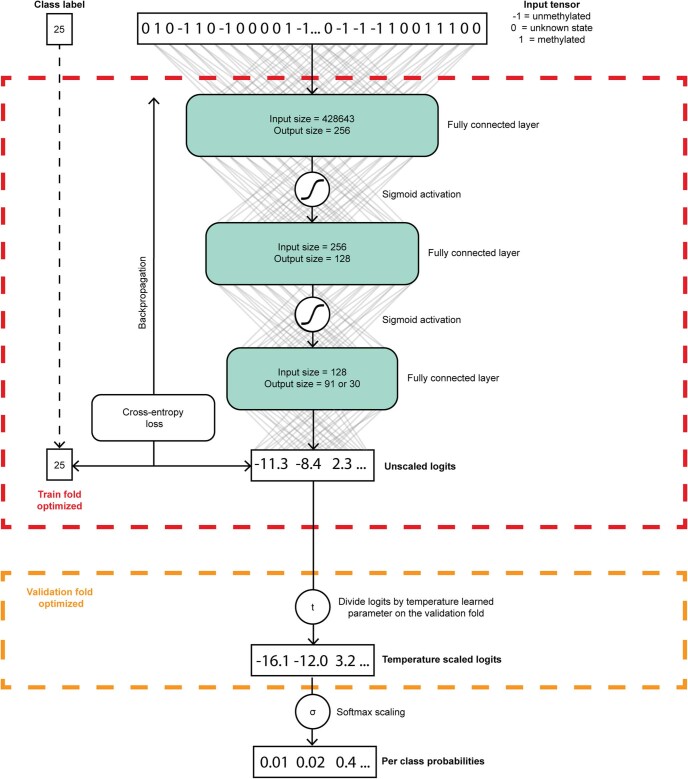
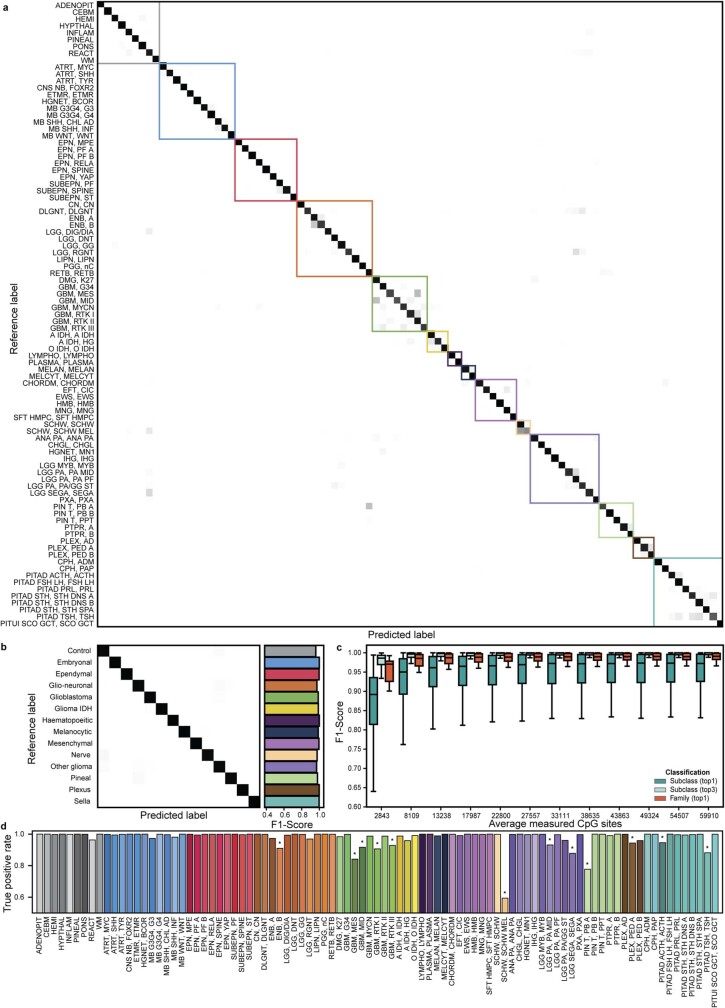
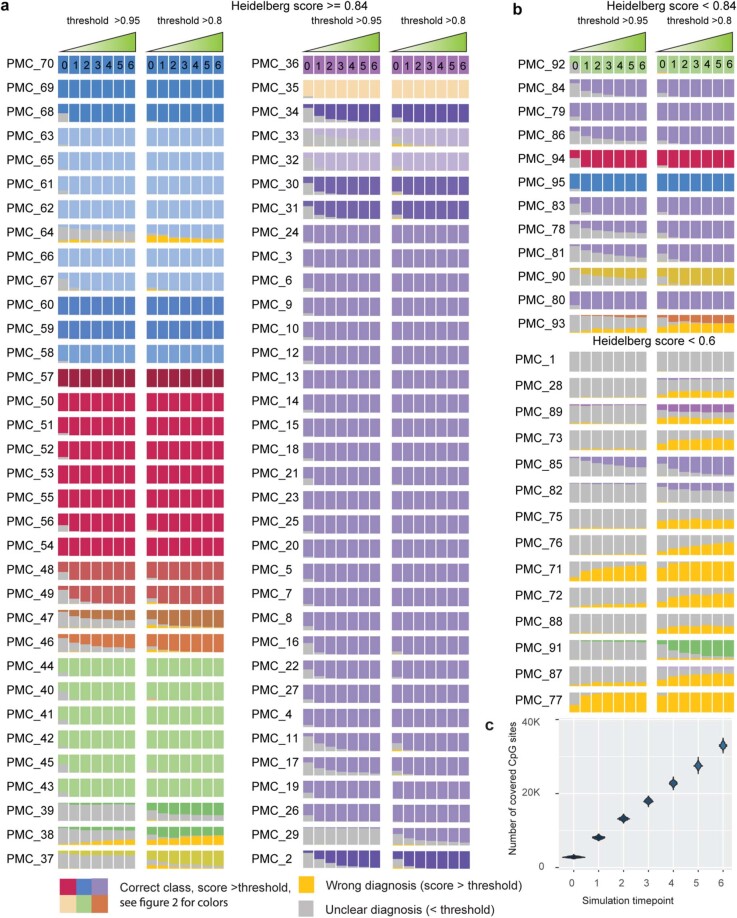
Central nervous system tumours represent one of the most lethal cancer types, particularly among children 1 . Primary treatment includes neurosurgical resection of the tumour, in which a delicate balance must be struck between maximizing the extent of resection and minimizing risk of neurological damage and comorbidity 2,3 . However, surgeons have limited knowledge of the precise tumour type prior to surgery. Current standard practice relies on preoperative imaging and intraoperative histological analysis, but these are not always conclusive and occasionally wrong. Using rapid nanopore sequencing, a sparse methylation profile can be obtained during surgery 4 . Here we developed Sturgeon, a patient-agnostic transfer-learned neural network, to enable molecular subclassification of central nervous system tumours based on such sparse profiles. Sturgeon delivered an accurate diagnosis within 40 minutes after starting sequencing in 45 out of 50 retrospectively sequenced samples (abstaining from diagnosis of the other 5 samples). Furthermore, we demonstrated its applicability in real time during 25 surgeries, achieving a diagnostic turnaround time of less than 90 min. Of these, 18 (72%) diagnoses were correct and 7 did not reach the required confidence threshold. We conclude that machine-learned diagnosis based on low-cost intraoperative sequencing can assist neurosurgical decision-making, potentially preventing neurological comorbidity and avoiding additional surgeries.
Overview
The claims and statistics of this paper haven’t been checked yet.
Free: it reads the open-access text and checks the first 5 claims that cite a source we can check. Create a free account to check every claim.
Integrity signals
Registry
Cites
Statistics
Figures
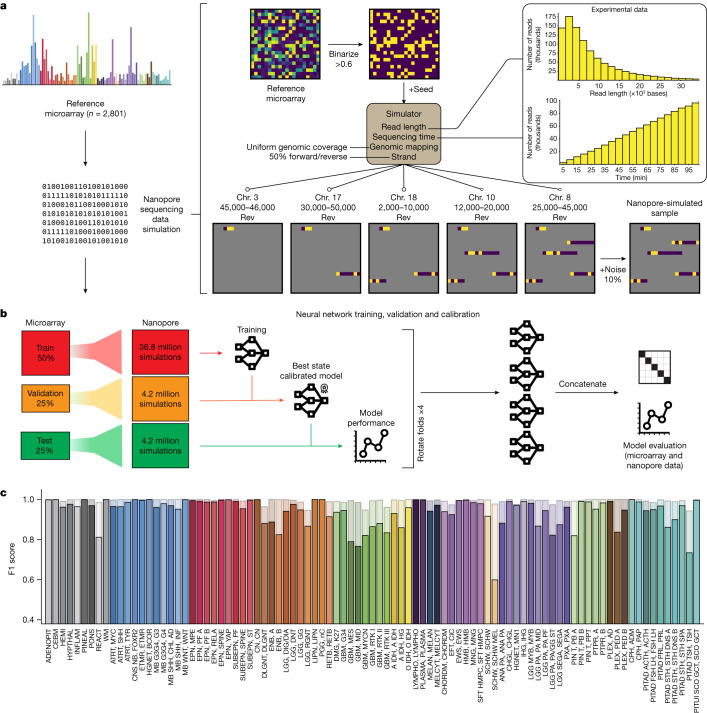
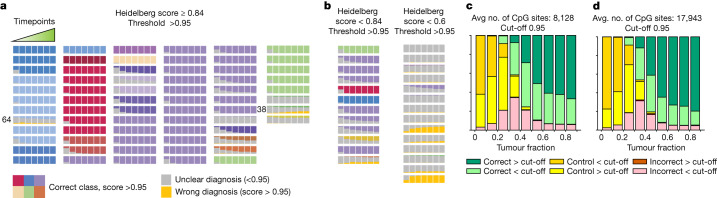
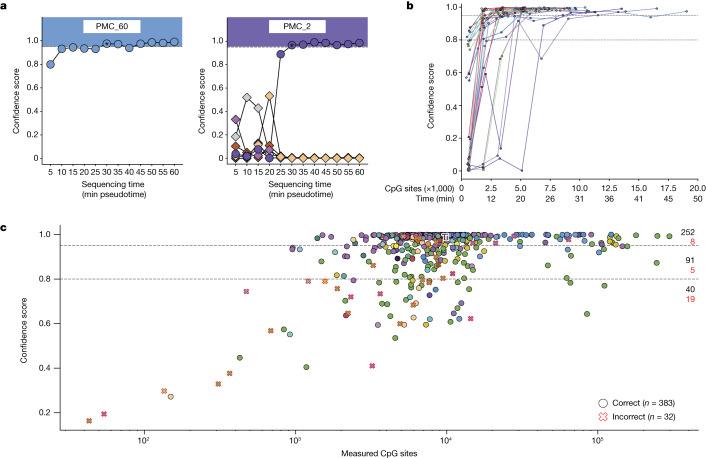

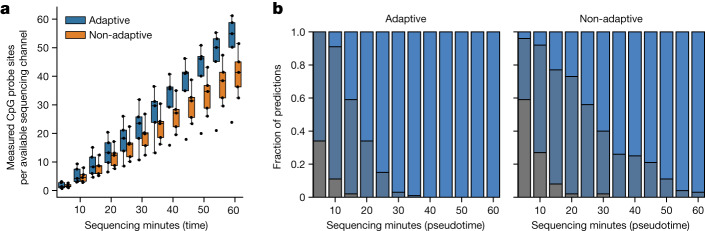
Verification
Claims the paper makes
The claims and statistics of this paper haven’t been checked yet.
Free: it reads the open-access text and checks the first 5 claims that cite a source we can check. Create a free account to check every claim.
Claims other papers make about this one
Each is checked against this paper’s own text: does it say what the citing paper says it does?
The source backs part of the claim, not all of it — or backs it for a different population, condition or comparison.
In the citing paper
“By integrating advanced algorithms with robotic systems, AI enhances the surgeon’s ability to perform complex procedures with unparalleled accuracy.101”
From A foundational architecture for AI agents in healthcare (2025) · cites this paper as [101]
Experimental — accuracy not yet measured
Self-check
Percentages, sums and reported differences re-computed from the paper’s own numbers.
The self-check needs the paper’s full text.
Citations
Cites
BEDTools: a flexible suite of utilities for comparing genomic features
Quinlan, A. R., & Hall, I. M. (2010) · Bioinformatics · doi:10.1093/bioinformatics/btq033 · Cited by 27,437
The future of digital health with federated learning
Rieke, N., Hancox, J., Li, W., Milletarì, F., Roth, H. R., Albarqouni, S., Bakas, S., Galtier, M. N., Landman, B. A., Maier-Hein, K., et al. (2020) · npj Digital Medicine · doi:10.1038/s41746-020-00323-1 · Cited by 4,015 · cited 1×
“Sturgeon is ideally suited to address this as it can readily be employed in a federated learning setting 33 .”
BackgroundThe Future of Digital Health with Federated Learning
Rieke, N., Hancox, J., Li, W., Milletari, F., Roth, H., Albarqouni, S., Bakas, S., Galtier, M. N., Landman, B., Maier-Hein, K., et al. (2020) · arXiv · doi:10.48550/arxiv.2003.08119 · Cited by 3,495 · cited 1×
“Sturgeon is ideally suited to address this as it can readily be employed in a federated learning setting 33 .”
BackgroundStummer, W., Pichlmeier, U., Meinel, T., Wiestler, O. D., Zanella, F., & Reulen, H.-J. (2006) · The Lancet Oncology · doi:10.1016/s1470-2045(06)70665-9 · Cited by 3,423 · cited 1×
“…showing enhancement on T1 contrast-weighted MRI, intraoperative fluorescence (5-aminolevulinic acid) is used to mark tumour cells during resection 30 , allowing consistent sampling of high tumour content samples and resulting in successful classification in 4 out of 5 cases where tumour was…”
MethodDNA methylation-based classification of central nervous system tumours
Capper, D., Jones, D. T. W., Sill, M., Hovestadt, V., Schrimpf, D., Sturm, D., Koelsche, C., Sahm, F., Chavez, L., Reuss, D. E., et al. (2018) · Nature · doi:10.1038/nature26000 · Cited by 3,033 · cited 12×
“14 , can be found in Supplementary Table 2.”
BackgroundMethodInfluentialValidation of a DNA methylation microarray for 450,000 CpG sites in the human genome
Sandoval, J., Heyn, H., Moran, S., Serra-Musach, J., Pujana, M. A., Bibikova, M., & Esteller, M. (2011) · Epigenetics · doi:10.4161/epi.6.6.16196 · Cited by 990 · cited 1×
“Methylation arrays 17,18 , in combination with the algorithm described by Capper et al. 14 , are widely used in routine diagnostic practice.”
MethodMoran, S., Arribas, C., & Esteller, M. (2016) · Epigenomics · doi:10.2217/epi.15.114 · Cited by 697
Molinaro, A. M., Hervey-Jumper, S., Morshed, R. A., Young, J., Han, S. J., Chunduru, P., Zhang, Y., Phillips, J. J., Shai, A., Lafontaine, M., et al. (2020) · JAMA Oncology · doi:10.1001/jamaoncol.2019.6143 · Cited by 631 · cited 1×
“For the five CNS tumour samples from adult patients, we focused specifically on glioma, as surgical strategy may affect the outcome differently in IDH-wild-type versus IDH-mutant high-grade gliomas 28,29 .”
MethodCapper, D., Stichel, D., Sahm, F., Jones, D. T. W., Schrimpf, D., Sill, M., Schmid, S., Hovestadt, V., Reuss, D. E., Koelsche, C., et al. (2018) · Acta Neuropathologica · doi:10.1007/s00401-018-1879-y · Cited by 567
Scheinin, I., Sie, D., Bengtsson, H., van de Wiel, M. A., Olshen, A. B., van Thuijl, H. F., van Essen, H. F., Eijk, P. P., Rustenburg, F., Meijer, G. A., et al. (2014) · Genome Research · doi:10.1101/gr.175141.114 · Cited by 518 · cited 1×
“Therefore, we restricted the analysis to genomic bins spanning 2 Megabases using the QDNAseq package 37 .”
MethodSelf-citation
Research works printed but not linked: 2
- Guo, C., Pleiss, G., Sun, Y. & Weinberger, K. Q. On calibration of modern neural networks. In Proc. 34th International Conference on Machine Learning, Vol. 70 (eds Precup, D. & Teh, Y. W.) 1321–1330 (Proceedings of Machine Learning Research, 2017).
- Loshchilov, I & Hutter, F. Decoupled Weight Decay Regularization. In Proc. 7th International Conference on Learning Representations (ICLR, 2019).
Cited by
Items 201–234 of 234
Monajjemi, M., Mollaamin, F., Shahriari, A. H., & Khandestan, M. (2026) · Biointerface Research in Applied Chemistry · doi:10.33263/briac163.090
Shah, A., Green, D., Wainmann, L., Karrs, J. X., & Shah, P. (2026) · medRxiv · doi:10.64898/2026.06.16.26355747
“…sequencing further accelerated this paradigm by enabling direct measurement of methylation states from native DNA without bisulfite conversion, supporting same-day genomic and epigenomic diagnosis of brain tumors [8] and intra-operative subclassification from sparse profiles within 40 minutes [9].”
Guerra-Núñez, L., Hughes-Herrera, D., Molina-López, J. M., & Valor, L. M. (2026) · Epigenomics · doi:10.1080/17501911.2026.2688961
Achterberg, T., Vermeulen, C., van der Ent, H. T., Jongmans, M., Cammel, K., de Ruijter, E., Groenewegen, N., Kranenburg, C., van Tuil, M. C., Waanders, E., et al. (2026) · medRxiv · doi:10.64898/2026.07.02.26356825
Self-citationFadel, M. G., Robb, H., Das, B., Alizadeh, A., Arif, A., Ariarasa, O., Fehervari, M., & Ashrafian, H. (2026) · PLoS ONE · doi:10.1371/journal.pone.0351633
Genomics comes of age: From research tool to routine care
Cuppen, E. P. J. G. (2026) · Journal of Internal Medicine · doi:10.1111/joim.70126
Long-read sequencing enhances molecular and epigenetic characterisation in brain tumour diagnostics
Petrin, S., Kert, Š., Zupan, A., Paska, A. V., Kouter, K., & Matjašič, A. (2026) · Discover Oncology · doi:10.1007/s12672-026-05595-9
“Additionally, current methyla-tion-based classifiers for LRS have been validated using high-quality fresh-frozen (FF) tissue [22, 57, 60].”
Diagnostic Challenges in Choroid Plexus Tumours
Thomas, C., & Hasselblatt, M. (2026) · Neuropathology and Applied Neurobiology · doi:10.1111/nan.70095
Wang, G., Kubelt, C., Smičius, R., Zidane, K., Rohrandt, C., Brändl, B., Wong, D., Steiger, M., Lum, A. M., Evers, M., et al. (2026) · medRxiv · doi:10.64898/2026.07.21.26358307
Calina, T. G., Grafenhorst, E., Schallenberg, S., Möbs, M., Daenekas, B., Sabo, A. A., Chen, B., Koch, I., Janik, T., Churchman, M., et al. (2026) · Cell Reports Medicine · doi:10.1016/j.xcrm.2026.102941
“38,50 In this context, our initial results were suboptimal.”
Development of a clinical prediction model using integrated epigenetics to predict COVID-19 severity
Arnold, C. G., Holmes, J. F., LaSalle, J. M., Tancredi, D. J., Konigsberg, I. R., Yang, I. V., Edelmann, M. N., Campbell, M., Barnes, K. C., & Monte, A. A. (2026) · Human Genomics · doi:10.1186/s40246-026-01017-7
“Long-read sequencing by Oxford Nanopore Technologies can directly read DNAm data from targeted regions in real time, enabling fast decisions about clinical care, as in the case of brain tumors [54, 55].”
Intraoperative diagnosis of myxoid glioneuronal tumor guiding safe limited resection: a case report
Morita, K., Nakashima, Y., Kurose, N., Kawashima, A., Nishiyama, A., & Fujisawa, H. (2026) · Child s Nervous System · doi:10.1007/s00381-026-07421-7
“Recent diagnostic advances using nanopore sequencing have enabled the intraoperative evaluation of molecular features, including DNA methylation profiles and selected tumor-defining genetic alterations [12, 13 ].”
Putting the I in AML: Artificial Intelligence and Machine Learning in Acute Myeloid Leukemia
Marchi, F. D., Ciotti, G., Atanasio, A., Pascarella, G., Sperotto, A. A., & Gottardi, M. (2026) · Cells · doi:10.3390/cells15171539
“The approach was proven in neuro-oncology, where the Sturgeon network classified central-nervous-system tumors intraoperatively from sparse nanopore data in about 40 min [37], and unified assays such as ROBIN now add copy number, single-nucleotide variants, and fusions in one same-day workflow [38].”
The Intersection Between Neuropathology and Artificial Intelligence: A Review
Frassetto, F. P. (2026) · Sage Open Pathology · doi:10.1177/30502098261472442
“Associating the methylation profile with intraoperative evaluation, Vermeulen et al. 34 developed Sturgeon, a deep neural network trained to classify tumors based on sparse DNA methylation profiles generated by intraoperative nanopore sequencing.”
Accorroni, A., Wurm, R., Wiest, R., Ienca, M., Bernard‐Valnet, R., Sferruzza, G., Marson, A. G., Jurman, G., Teo, J., Moro, E., et al. (2026) · European Journal of Neurology · doi:10.1111/ene.70728
“In neuro-oncology, AI can aid in tumor detection, segmentation, and radiogenomic characterization, contributing to more precise diagnosis and treatment planning [22–25].”
Clinical evaluation of the CrossNN DNA methylation classifier for central nervous system tumors
Dahnoun, J., van Kempen, L. C. L. T., Koljenovic, S., de Beeck, K. O., Menovsky, T., Feyen, B. F. E., Ahmed, M., Sieben, A., & Zwaenepoel, K. (2026) · Brain Pathology · doi:10.1111/bpa.70137
“Similar observations have been reported previously, highlighting the impact of tissue composition on classifier performance [8,13].”
The transformative impact of ultra-rapid nanopore sequencing in precision medicine
Grasedieck, S., Keating, B. J., Yip, S. S. F., Lan, J., Sherwood, K. R., & Keown, P. A. (2026) · Frontiers in Immunology · doi:10.3389/fimmu.2026.1861975
Alanany, R., Sherif, S., Sanchez, A., Saifullah, A., Salhab, A., Saadah, H., Ahmed, E. I., Özer, E., Maaz, A. U. R., Wongsurawat, T., et al. (2026) · Modern Pathology · doi:10.1016/j.modpat.2026.101081
Grunwald, A., Feinberg, G., Toledano, H., Birger, Y., Izraeli, S., & Ebenstein, Y. (2026) · medRxiv · doi:10.64898/2026.09.03.26361431
Cao, R., Zhang, Y., Cao, L., & Jiang, H. (2026) · International Journal of Medical Informatics · doi:10.1016/j.ijmedinf.2026.106718
Maßgeschneiderte Resektionsplanung bei Gliomen
Ricklefs, F. L., & Heiland, D. H. (2026) · Im Focus Onkologie · doi:10.1007/s15015-026-4798-0
“Sie erlaubt es, aus dem Operations-präparat innerhalb kurzer Zeit ein redu-ziertes Methylierungsprofil zu erstellen und den Tumor darüber zu klassifizieren [18].”
Monajjemi, M., Bıyıklıoğlu, O., Mollaamin, F., Shahriari, A. H., Karabıcak, S., & Çeter, T. (2026) · Revista Colombiana de Ciencias Químico Farmacéuticas · doi:10.15446/rcciquifa.v55n3.129588
“It is capable of categorizing the tumors' sub-genome with a scanning time between 50-100 minutes [48].”
Wang, C., Wang, Q. A., Liu, L., Zhang, X., Li, M., Ma, W., Yan, X., Zhao, R., Li, B., Yao, H., et al. (2026) · ACS Sensors · doi:10.1021/acssensors.6c03074
Lahariya, R., Sinha, M., Das, A. K., & Singh, S. K. (2026) · Journal of Clinical Neuroscience · doi:10.1016/j.jocn.2026.112316
Ricci, A. A. (n.d.) · Institutional Research Information System University of Turin (University of Turin)
AI in neuro-oncology: An overarching review
Pitarch-Abaigar, C., Lohmann, P., Aloy, P., Al‐Shahrour, F., Arnaout, O., Bi, W. L., Galldiks, N., Huse, J. T., Karschnia, P., Nasrallah, M. P., et al. (2026) · Neuro-Oncology · doi:10.1093/neuonc/noag257 · Cited by 1
Zhang, J., Cai, H., Zhang, J., Chen, Z., Zhou, Y., Hu, R., Tang, M., Wu, L., Cai, S., 介建政, et al. (2026) · Surgical Endoscopy · doi:10.1007/s00464-026-13490-1
FOCUS: A Subspecialty Foundation Model for Intraoperative Central Nervous System PathologyPreprint
Liu, X., Guo, Y., Lv, H., Lou, L., Tan, Y., Du, J., Zhang, X., Zhang, M., Pang, C., Li, M., et al. (2026) · arXiv (Cornell University) · doi:10.48550/arxiv.2610.16914
Sturgeon V2: a clinically applicable CNS tumor classifier trained on relabeled dataPreprint
Vermeulen, C., van der Ent, H. T., Maas, S. L. N., Bos, E. M., Cammel, K., Maier, A. D., Mathiesen, T. I., Kranendonk, M. E. G., Wesseling, P., Seinstra, D., et al. (2026) · medRxiv · doi:10.64898/2026.10.19.26365910
Self-citationAdvances in Single-Cell and Spatial Omics for Glioblastoma Precision Medicine
Prakash, L., & Rahman, R. (2026) · Current Oncology Reports · doi:10.1007/s11912-026-01847-7
“Subsequently, comprehensive SNV, CNV, and structural variant profiling completed within 24 h and shown to inform surgical strategy, achieving up to 90% concordance with final integrated diag - nosis in prospective cohorts [57, 58 ].”
Zhou, W. (2025) · Zenodo (CERN European Organization for Nuclear Research) · doi:10.5281/zenodo.17632460
Diagnostic evaluation of long-read nanopore sequencing for pediatric CNS tumors
Vega, S. F., Kwan, R. S.-Y., Rahmqvist, I., Schepke, E., Sabel, M., Bontell, T. O., Kling, T., & Carén, H. (2026) · Acta Neuropathologica Communications · doi:10.1186/s40478-026-02466-w
“8 [13], RapidCNS 2 [12], Sturgeon [19], NanoDx (including PanNanoDx) [9, 24] and M-PACT [17].”
Goff, N. K., Markert, J. E., Park, M., Springer, A., Chen, A. M., & Orringer, D. A. (2026) · Neurosurgical FOCUS · doi:10.3171/2026.8.focus26439
Dyer, M. J. (2026) · Memorial University Research Repository (Memorial University) · doi:10.48336/450
Metadata
- Authors
- Vermeulen, C., Pagès-Gallego, M., Kester, L., Kranendonk, M. E. G., Wesseling, P., Verburg, N., de Witt Hamer, P., Kooi, E. J., Dankmeijer, L., van der Lugt, J., van Baarsen, K., Hoving, E. W., Tops, B. B. J., & de Ridder, J.
- Affiliations
- University Medical Center Utrecht (NL)
- Princess Máxima Center (NL)
- Amsterdam University Medical Centers (NL)
- Corresponding author
- Tops, B. B. J.
- ORCID
- Venue
- Nature
- Published
- 2023-10-11
- Volume
- 622
- Issue
- 7984
- Pages
- 842-849
- ISSN
- 0028-0836 (ISSN-L)
- 1476-4687
- PMC
- PMC10600004
- OpenAlex
- W4387541211
- Semantic Scholar
- 65ea217bf0bbbb0a585d8317668b0398f0faec69
- Cited by
- 216
- References
- 41
- Citations by year
- 2026: 57 · 2025: 85 · 2024: 68 · 2023: 6
- FWCI
- 37.62
- Type
- journal article
- Language
- en
- Open access
- hybrid
- doi.org
- Licence
- cc-by
- creativecommons.org/licenses/by/4.0 (tdm)
- creativecommons.org/licenses/by/4.0 (vor)
- Locations
- Nature (publishedVersion, cc-by)
- medRxiv (acceptedVersion, cc-by-nd)
- PubMed Central (publishedVersion, cc-by)
- PubMed (publishedVersion)
- RePEc: Research Papers in Economics (submittedVersion)
- Utrecht University Repository (Utrecht University) (submittedVersion, other-oa)
- Amsterdam UMC (VU Amsterdam) - Institutional Repository (submittedVersion, other-oa)
- Funders
- Nederlandse Organisatie voor Wetenschappelijk Onderzoek (184.034.019)
- Universitair Medisch Centrum Utrecht
- Stichting Kinderen Kankervrij (184.034.019)
- Oncode Institute
- Topics
- Health Sciences › Medicine › Oncology › Glioma Diagnosis and Treatment
- Life Sciences › Biochemistry, Genetics and Molecular Biology › Cancer Research › Cancer Genomics and Diagnostics
- Life Sciences › Biochemistry, Genetics and Molecular Biology › Molecular Biology › Gene expression and cancer classification
- Keywords
- central nervous system tumors, intraoperative diagnosis, nanopore sequencing, DNA methylation profiling, transfer learning, neural network classifier, sturgeon, neurosurgical resection, extent of resection, pediatric brain tumors, molecular subtyping, real-time sequencing
- MeSH terms
- Clinical Decision-Making, Deep Learning, Child, Humans, Intraoperative Care, Methylation, Retrospective Studies, Time Factors, Central Nervous System Neoplasms, Sequence Analysis, DNA
About these checks
Registry, retraction, Cites and statistics results are computed, not judged, with one exception: a printed reference that no index lists is read once by a model before it counts as a citation error. Claims are extracted by a model and kept only when their quote appears verbatim in the text; each cited source is then checked, with a model’s help, for whether it says what the claim relies on. Those verdicts can be wrong — read the claim’s quote and the cited source before relying on one.
Statistics and arithmetic are recomputed, not judged.
Confidence bands are shown only for fields calibrated on our annotated test set. None is calibrated yet, so no band is shown.
What counts as a claim ›How we measure confidence ›How we check this ›
Are you an author, or do you see a problem with this page? Request a review
Data sources
Bibliographic data: Semantic Scholar, OpenAlex, Crossref.
Contains information from the Semantic Scholar Academic Graph Datasets, made available under the ODC Attribution License (ODC-BY 1.0).
Semantic Scholar’s data is described in: Kinney, R., et al. (2023). The Semantic Scholar Open Data Platform. arXiv:2301.10140.
