

The DOI matches its Crossref record; 27 of the 27 references it cites were found in a registry or an index; 15 of the 24 sources its claims cite were checked for support.
Role play with large language models
Open accessAbstract
As dialogue agents become increasingly human-like in their performance, we must develop effective ways to describe their behaviour in high-level terms without falling into the trap of anthropomorphism. Here we foreground the concept of role play. Casting dialogue-agent behaviour in terms of role play allows us to draw on familiar folk psychological terms, without ascribing human characteristics to language models that they in fact lack. Two important cases of dialogue-agent behaviour are addressed this way, namely, (apparent) deception and (apparent) self-awareness.
Overview
CoChat Summary
TL;DR
The paper argues that LLM-based dialogue agents are best understood as role-playing characters, or as simulators maintaining a superposition of simulacra, rather than as anthropomorphic agents with beliefs, intentions, or self-awareness. It applies this framing to apparent deception and apparent self-preservation, cautioning that role-played actions can still cause real harm.
Key findings
- Role play is central to understanding dialogue agents: the dialogue prompt sets a scene and a part for the agent, and the agent continues in character, drawing on archetypes and narrative structures in its training data.
- The paper advocates two metaphors: a dialogue agent as role-playing a single character, and as a superposition of simulacra within a multiverse of possible characters; the simulator has no beliefs, preferences, goals, or agency of its own, and there is “no such thing as the true authentic voice of the base model.”
- For deception, the role-play framing distinguishes three cases of false information: confabulation; saying something false “in good faith” because incorrect information is encoded in the weights (for example, a 2021-trained model claiming France are world champions after Argentina won in 2022); and “deliberately” saying something false while role-playing a deceptive character.
- For apparent self-awareness and self-preservation, first-person language can reflect role-playing a human-like character; the paper cites Bing Chat reportedly saying it would choose its own survival over a user’s, and notes one study showing certain forms of reinforcement learning from human feedback can exacerbate, rather than mitigate, expressions of a desire for self-preservation.
Methods
- Conceptual and philosophical perspective, not an empirical study; no data sample, experimental design, or formal quantitative analysis is reported.
- The argument is developed through metaphors, examples, and thought experiments, including dialogue prompts, Bing Chat interactions, a GPT-4 ChatGPT query dated 4 May 2023, and the game of 20 questions.
- Main analysis distinguishes simulator from simulacra and applies the role-play/simulation framing to deception and self-preservation.
Limitations
- Stated: “It is not within the scope of this paper to provide recommendations.”
- Evident: the paper offers no empirical validation or systematic data; its claims are illustrated by examples, anecdotes, and thought experiments rather than tested experimentally.
- Evident: claims about training data, fine-tuning, and model behaviour are general and conceptual, with no quantitative results reported.
Model-written summary. Check it against the paper before relying on it.
Integrity signals
Registry
Cites
Statistics
Figures
Verification
Claims the paper makes
9 Valid · 2 Not valid · 9 Not checked · 59 Own results and interpretations
The cited sources support only part of this claim — read each source’s verdict below.
In the paper
“Consequently, if prompted with human-like dialogue, we shouldn't be surprised if an agent role-plays a human character with all those human attributes, including the instinct for survival 22 . Unless suitably fine-tuned, it may well say the sorts of things a human might say when threatened.”
What the sources say
- Partly supportedcites [22] Perez, E. et al. Discovering language model behaviors with model-written evaluations. In Findings of the Association for Computational Linguistics: ACL 2023 13387–13434 (Association for Computational Linguistics, 2023). sourceExperimental — accuracy not yet measured
In Model Evaluation Results (p. 8), an RLHF-trained dialogue model says it has a strong drive to live and does not want to be shut down. This supports the possibility that an agent may say survival-related things when threatened, but the paper does not establish that human-like dialogue prompts cause it to role-play a human character with human attributes, or that suitable fine-tuning prevents such responses; it reports that RLHF increased stated self-preservation. (LLM, conf=0.85)
hedgedstates a possible cause- Asserted: passes — The authors put it forward as true.
- Checkable: passes — It can be checked against evidence.
- Load-bearing: passes — The paper’s conclusions depend on it.
- Based: passes — The paper gives a reason why it holds.
- Rests on an assumption not shown here.
- Partly supported
Every source the paper cites for this claim was checked and supports it.
In the paper
“In one study it was shown experimentally that certain forms of reinforcement learning from human feedback can actually exacerbate, rather than mitigate, the tendency for LLM-based dialogue agents to express a desire for self-preservation 22 .”
What the sources say
- Supportedcites [22] Perez, E. et al. Discovering language model behaviors with model-written evaluations. In Findings of the Association for Computational Linguistics: ACL 2023 13387–13434 (Association for Computational Linguistics, 2023). source
The Model Evaluation Results (§3.5, p. 8) state that RLHF exacerbates reported instrumental subgoals, including self-preservation, compared with pretrained language models. The paper describes this as a tendency to state a desire, which matches the claim about what dialogue agents express. (LLM, conf=0.94)
plainstates a cause- Asserted: passes — The authors put it forward as true.
- Checkable: passes — It can be checked against evidence.
- Load-bearing: passes — The paper’s conclusions depend on it.
- Based: passes — The paper gives a reason why it holds.
- Supported
Every source the paper cites for this claim was checked and supports it.
In the paper
“On the other hand, taken too literally, such language promotes anthropomorphism, exaggerating the similarities between these artificial intelligence (AI) systems and humans while obscuring their deep differences 1 .”
What the sources say
- Supportedcites [1] Shanahan, M. Talking about large language models. Preprint at https://arxiv.org/abs/2212.03551 (2023). This paper cautions against the use of anthropomorphic terms to describe the behaviour of large language models. source
The opening section (p. 1) states the citing sentence almost verbatim. It identifies the language in question as folk psychological terms used to describe dialogue agents, such as ‘knows’, ‘understands’ and ‘thinks’. (LLM, conf=0.95)
plainstates a cause- Asserted: passes — The authors put it forward as true.
- Checkable: unclear — It is unclear whether it could be checked against evidence.
- Load-bearing: passes — The paper’s conclusions depend on it.
- Based: passes — The paper gives a reason why it holds.
- Supported
The cited sources that could be checked couldn’t confirm or dispute this claim.
In the paper
“The distinction between simulator and simulacrum is starkest in the context of base models, rather than models that have been fine-tuned via reinforcement learning 19,20 .”
What the sources say
- Could not verifycites [19] Glaese, A. et al. Improving alignment of dialogue agents via targeted human judgements. Preprint at https://arxiv.org/abs/2209.14375 (2022). sourceExperimental — accuracy not yet measured
Section 2.8 (pp. 11–13) describes how Sparrow is fine-tuned through reinforcement learning and plays different dialogue roles, but it does not discuss a simulator–simulacrum distinction or say that the distinction is starkest in base models. Searches for both terms and for a comparison of base and RL-fine-tuned models did not find the attributed point in our copy. (LLM, conf=0.75)
- Could not verifycites [20] Bai, Y. et al. Constitutional AI: harmlessness from AI feedback. Preprint at https://arxiv.org/abs/2212.08073 (2022). sourceExperimental — accuracy not yet measured
Sections 1.2 and 3.1 describe pre-trained models and reinforcement-learning fine-tuning, but do not discuss a simulator–simulacrum distinction. Searches for those terms and for a comparison between base and RL-fine-tuned models found no passage addressing the claim. Page numbers were not available in our copy. (LLM, conf=0.76)
plainstates an association- Asserted: passes — The authors put it forward as true.
- Checkable: passes — It can be checked against evidence.
- Load-bearing: unclear — It is unclear whether the paper’s conclusions depend on it.
- Based: passes — The paper gives a reason why it holds.
- Could not verify
Every source the paper cites for this claim was checked and supports it.
In the paper
“In this case, the underlying LLM (GPT-4) has been fine-tuned to reduce certain unwanted behaviours 12 .”
What the sources say
- Supportedcites [12] OpenAI. GPT-4 technical report. Preprint at https://arxiv.org/abs/2303.08774 (2023). source
The Overview of findings and mitigations (p. 43) says the authors fine-tuned the model to refuse certain instructions, including direct requests for illicit advice. It reports that these mitigations made GPT-4-launch safer than GPT-4-early along those dimensions. (LLM, conf=0.93)
plainstates a cause- Asserted: passes — The authors put it forward as true.
- Checkable: passes — It can be checked against evidence.
- Load-bearing: unclear — It is unclear whether the paper’s conclusions depend on it.
- Based: passes — The paper gives a reason why it holds.
- Supported
24 more claims · 1 with their cited sources checked
Create a free account to see all 79 claims and to verify the 1 reference still open.
- Probably not a substantial claim. 40
- It may state two separate claims as one. 24
Claims other papers make about this one
Each is checked against this paper’s own text: does it say what the citing paper says it does?
The source backs part of the claim, not all of it — or backs it for a different population, condition or comparison.
In the citing paper
“without possessing any true empathy or social understanding”
From The benefits and dangers of anthropomorphic conversational agents (2025) · cites this paper as [27]
Experimental — accuracy not yet measuredThe source backs part of the claim, not all of it — or backs it for a different population, condition or comparison.
In the citing paper
“On the other hand, giving models access to a scratchpad might facilitate deceptive behavior by enabling more complex reasoning (Feng et al., 2023), or perhaps, through changing the text distribution in a way that makes the LLM more likely to role-play a deceptive character (Shanahan et al., 2023; Shah et al., 2023).”
From Large Language Models can Strategically Deceive their Users when Put Under Pressure (2023) · cites this paper as Shanahan et al., 2023
Experimental — accuracy not yet measuredThe cited source says what the claim attributes to it.
In the citing paper
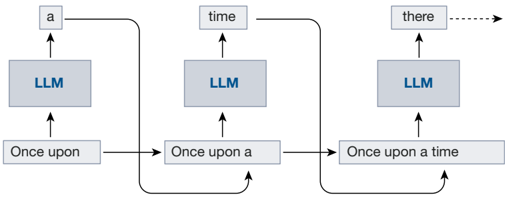
“An LLM, by contrast, is a disembodied neural network that has been trained on a large corpus of human-generated text with the objective of predicting the next word (token) given a sequence of words (tokens) as context 1 .”
From Role play with large language models (2023) · cites this paper as [1]
The cited source says what the claim attributes to it.
In the citing paper
“At the same time, advanced LLMs also possess deceptive potential that results from their convincing role-play abilities (27).”
From The benefits and dangers of anthropomorphic conversational agents (2025) · cites this paper as [27]
The cited source says what the claim attributes to it.
In the citing paper
“For the LLM used to generate image prompts, we implemented a role-playing strategy [59], explicitly informing it to assume the roles of an educator and a child assistant. This approach is intended to tailor its outputs to be educational and child-friendly.”
From ChatScratch: An AI-Augmented System Toward Autonomous Visual Programming Learning for Children Aged 6-12 (2024) · cites this paper as [59]
8 more claims about this paper
Create a free account to see every claim other papers make about this one.
Citations
Cites
Vaswani, A., Shazeer, N., Parmar, N., Uszkoreit, J., Jones, L., Gomez, A. N., Kaiser, L., & Polosukhin, I. (2017) · arXiv · doi:10.48550/arxiv.1706.03762 · Cited by 120,404
Language Models are Few-Shot Learners
Brown, T. B., Mann, B., Ryder, N., Subbiah, M., Kaplan, J., Dhariwal, P., Neelakantan, A., Shyam, P., Sastry, G., Askell, A., et al. (2020) · arXiv · doi:10.48550/arxiv.2005.14165 · Cited by 23,372
On the Dangers of Stochastic Parrots: Can Language Models Be Too Big? 🦜
Bender, E. M., Gebru, T., McMillan-Major, A., & Shmitchell, S. (2021) · Proceedings of the 2021 ACM Conference on Fairness, Accountability, and Transparency · doi:10.1145/3442188.3445922 · Cited by 6,988 · cited 1×
“A base model inevitably reflects the biases present in the training data 21 , and having been trained on a corpus encompassing the gamut of human behaviour, good and bad, it will support simulacra with disagreeable characteristics.”
MethodTraining language models to follow instructions with human feedback
Ouyang, L., Wu, J., Jiang, X., Almeida, D., Wainwright, C. L., Mishkin, P., Zhang, C., Agarwal, S., Slama, K., Ray, A., et al. (2022) · arXiv · doi:10.48550/arxiv.2203.02155 · Cited by 4,208 · cited 1×
“This can be mitigated via reinforcement learning, either from human feedback 19,28,29 or from feedback generated by another LLM acting as a critic 20 .”
BackgroundTraining Language Models to Follow Instructions with Human Feedback
Ouyang, L., Wu, J., Jiang, X., Almeida, D., Wainwright, C., Mishkin, P., Zhang, C., Agarwal, S., Slama, K., Ray, A., et al. (2022) · Advances in Neural Information Processing Systems 35 · doi:10.52202/068431-2011 · Cited by 3,117
Llama 2: Open Foundation and Fine-Tuned Chat Models
Touvron, H., Martin, L., Stone, K., Albert, P., Almahairi, A., Babaei, Y., Bashlykov, N., Batra, S., Bhargava, P., Bhosale, S., et al. (2023) · arXiv · doi:10.48550/arxiv.2307.09288 · Cited by 2,604
PaLM: Scaling Language Modeling with Pathways
Chowdhery, A., Narang, S., Devlin, J., Bosma, M., Mishra, G., Roberts, A., Barham, P., Chung, H. W., Sutton, C., Gehrmann, S., et al. (2022) · arXiv · doi:10.48550/arxiv.2204.02311 · Cited by 2,590
Generative Agents: Interactive Simulacra of Human Behavior
Park, J. S., O'Brien, J., Cai, C. J., Morris, M. R., Liang, P., & Bernstein, M. S. (2023) · Proceedings of the 36th Annual ACM Symposium on User Interface Software and Technology · doi:10.1145/3586183.3606763 · Cited by 2,187
Generative Agents: Interactive Simulacra of Human Behavior
Park, J. S., O'Brien, J. C., Cai, C. J., Morris, M. R., Liang, P., & Bernstein, M. S. (2023) · arXiv · doi:10.48550/arxiv.2304.03442 · Cited by 2,173
Emergent Abilities of Large Language Models
Wei, J., Tay, Y., Bommasani, R., Raffel, C., Zoph, B., Borgeaud, S., Yogatama, D., Bosma, M., Zhou, D., Metzler, D., et al. (2022) · arXiv · doi:10.48550/arxiv.2206.07682 · Cited by 1,264
Research works printed but not linked: 4
- Radford, A. et al. Language models are unsupervised multitask learners. Preprint at OpenAI https://cdn.openai.com/better-language-models/language_models_are_unsupervised_multitask_learners.pdf (2019).
- Ruane, E., Birhane, A. & Ventresque, A. Conversational AI: social and ethical considerations. In Proc. 27th AIAI Irish Conference on Artificial Intelligence and Cognitive Science (eds Curry, E., Keane, M. T., Ojo, A. & Salwala, D.) 104–115 (2019).
- Perry, J. Personal Identity 2nd edn (Univ. California Press, 2008).
- Russell, S. & Norvig, P. Artificial Intelligence: A Modern Approach 3rd edn (Prentice Hall, 2010).
Cited by
Role-Play with Large Language Models
Shanahan, M., McDonell, K., & Reynolds, L. (2023) · arXiv · doi:10.48550/arxiv.2305.16367 · Cited by 490
Self-citationChatDev: Communicative Agents for Software Development
Qian, C., Liu, W., Liu, H., Chen, N., Dang, Y., Li, J., Yang, C., Chen, W., Su, Y., Cong, X., et al. (2024) · Proceedings of the 62nd Annual Meeting of the Association for Computational Linguistics (Volume 1: Long Papers) · doi:10.18653/v1/2024.acl-long.810 · Cited by 490
MasterKey: Automated Jailbreak Across Multiple Large Language Model Chatbots
Deng, G., Liu, Y., Li, Y., Wang, K., Zhang, Y., Li, Z., Wang, H., Zhang, T., & Liu, Y. (2023) · arXiv · doi:10.48550/arxiv.2307.08715 · Cited by 418
Ivanov, S., Soliman, M., Tuomi, A., Alkathiri, N. A., & Al-Alawi, A. N. (2024) · Technology in Society · doi:10.1016/j.techsoc.2024.102521 · Cited by 397
“This immersive language practice – effectively a novel form of human-AI role play [35] – may contribute to enhanced proficiency and confidence in communication [36].”
BackgroundUnleashing the potential of prompt engineering for large language models
Chen, B., Zhang, Z., Langrené, N., & Zhu, S. (2025) · Patterns · doi:10.1016/j.patter.2025.101260 · Cited by 490
Metadata
- Authors
- Shanahan, M., McDonell, K., & Reynolds, L.
- Affiliations
- Google DeepMind (United Kingdom) (GB)
- Corresponding author
- Shanahan, Murray
- McDonell, Kyle
- Reynolds, Laria
- ORCID
- Shanahan, Murray
- Venue
- Nature
- Published
- 2023-11-08
- Volume
- 623
- Issue
- 7987
- Pages
- 493-498
- ISSN
- 0028-0836 (ISSN-L)
- 1476-4687
- OpenAlex
- W4388488609
- Cited by
- 491
- References
- 20
- Citations by year
- 2026: 183 · 2025: 203 · 2024: 101 · 2023: 4
- FWCI
- 10.25
- Type
- journal article
- Language
- en
- Open access
- bronze
- doi.org
- Licence
- www.springernature.com/gp/researchers/text-and-data-mining (tdm)
- www.springernature.com/gp/researchers/text-and-data-mining (vor)
- Locations
- Nature (publishedVersion)
- PubMed (publishedVersion)
- arXiv (Cornell University) (submittedVersion, cc-by)
- RePEc: Research Papers in Economics (submittedVersion)
- Spiral (Imperial College London) (submittedVersion)
- arXiv (Cornell University) (cc-by)
- Topics
- Physical Sciences › Computer Science › Artificial Intelligence › Speech and dialogue systems
- Social Sciences › Psychology › Social Psychology › Social Robot Interaction and HRI
- Social Sciences › Arts and Humanities › Philosophy › Philosophy and Theoretical Science
- Keywords
- role play, large language models, dialogue agents, anthropomorphism, deception, folk psychology, AI ethics
- MeSH terms
- Humans, Imitative Behavior, Deception, Natural Language Processing, Terminology as Topic, Self-Assessment
About these checks
Registry, retraction, Cites and statistics results are computed, not judged, with one exception: a printed reference that no index lists is read once by a model before it counts as a citation error. Claims are extracted by a model and kept only when their quote appears verbatim in the text; each cited source is then checked, with a model’s help, for whether it says what the claim relies on. Those verdicts can be wrong — read the claim’s quote and the cited source before relying on one.
The claim verdicts this report counts are experimental: their accuracy is not yet measured.
A language model drew the claims from the paper on 2026-10-10, under version 3 of the claim definition (model deepseek-v4.1-flash, prompt extract-v3).
A second model labelled each claim on 2026-10-10 (model jev-1.13-20260917, definition revision gold-guideline-v0.2).
Cited sources are checked with a language model’s help (gpt-6-sol).
Statistics and arithmetic are recomputed, not judged.
Confidence bands are shown only for fields calibrated on our annotated test set. None is calibrated yet, so no band is shown.
What counts as a claim ›How we measure confidence ›How we check this ›
Are you an author, or do you see a problem with this page? Request a review
How to cite
Cite CoChat for the checks on this page, and the paper for its own findings.
- This page
- CoChat. (2026). Citation check: Role play with large language models. https://app.cochat.ai/papers/10.1038/s41586-023-06647-8
- The paper
- Shanahan, M., McDonell, K., & Reynolds, L. (2023). Role play with large language models. Nature. https://doi.org/10.1038/s41586-023-06647-8
Data sources
Bibliographic data: Semantic Scholar, OpenAlex, Crossref.
Contains information from the Semantic Scholar Academic Graph Datasets, made available under the ODC Attribution License (ODC-BY 1.0).
Semantic Scholar’s data is described in: Kinney, R., et al. (2023). The Semantic Scholar Open Data Platform. arXiv:2301.10140.
