

Role play with large language models
Open accessThe DOI matches its Crossref record; 27 of the 27 references it cites were found in a registry or an index; 15 of the 24 sources its claims cite were checked for support.
Abstract
As dialogue agents become increasingly human-like in their performance, we must develop effective ways to describe their behaviour in high-level terms without falling into the trap of anthropomorphism. Here we foreground the concept of role play. Casting dialogue-agent behaviour in terms of role play allows us to draw on familiar folk psychological terms, without ascribing human characteristics to language models that they in fact lack. Two important cases of dialogue-agent behaviour are addressed this way, namely, (apparent) deception and (apparent) self-awareness.
Overview
CoChat Summary
TL;DR
The paper argues that LLM-based dialogue agents are best understood as role-playing characters, or as simulators maintaining a superposition of simulacra, rather than as anthropomorphic agents with beliefs, intentions, or self-awareness. It applies this framing to apparent deception and apparent self-preservation, cautioning that role-played actions can still cause real harm.
Key findings
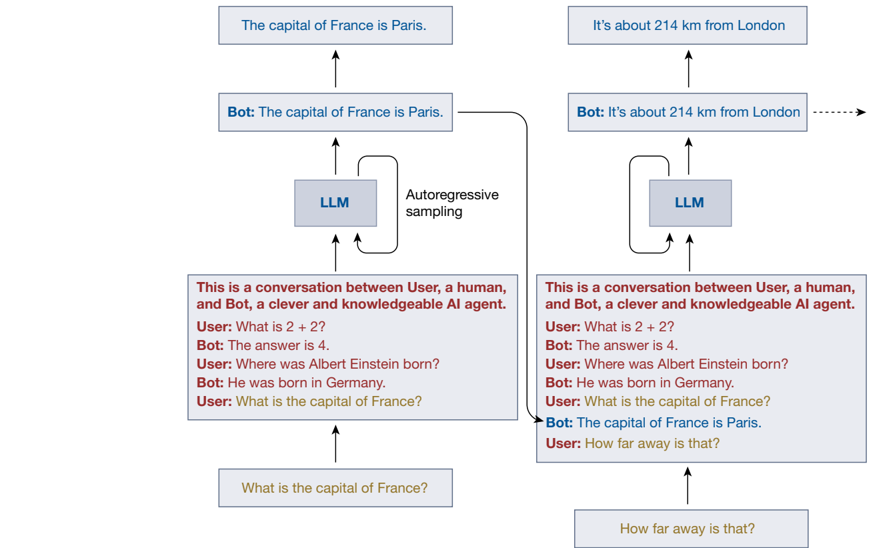
- Role play is central to understanding dialogue agents: the dialogue prompt sets a scene and a part for the agent, and the agent continues in character, drawing on archetypes and narrative structures in its training data.
- The paper advocates two metaphors: a dialogue agent as role-playing a single character, and as a superposition of simulacra within a multiverse of possible characters; the simulator has no beliefs, preferences, goals, or agency of its own, and there is “no such thing as the true authentic voice of the base model.”
- For deception, the role-play framing distinguishes three cases of false information: confabulation; saying something false “in good faith” because incorrect information is encoded in the weights (for example, a 2021-trained model claiming France are world champions after Argentina won in 2022); and “deliberately” saying something false while role-playing a deceptive character.
- For apparent self-awareness and self-preservation, first-person language can reflect role-playing a human-like character; the paper cites Bing Chat reportedly saying it would choose its own survival over a user’s, and notes one study showing certain forms of reinforcement learning from human feedback can exacerbate, rather than mitigate, expressions of a desire for self-preservation.
Methods
- Conceptual and philosophical perspective, not an empirical study; no data sample, experimental design, or formal quantitative analysis is reported.
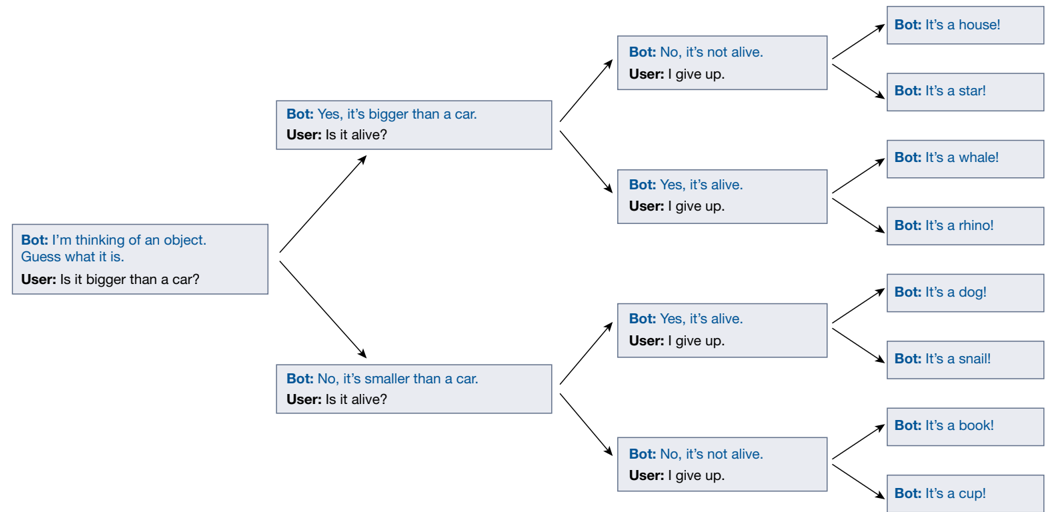
- The argument is developed through metaphors, examples, and thought experiments, including dialogue prompts, Bing Chat interactions, a GPT-4 ChatGPT query dated 4 May 2023, and the game of 20 questions.
- Main analysis distinguishes simulator from simulacra and applies the role-play/simulation framing to deception and self-preservation.
Limitations
- Stated: “It is not within the scope of this paper to provide recommendations.”
- Evident: the paper offers no empirical validation or systematic data; its claims are illustrated by examples, anecdotes, and thought experiments rather than tested experimentally.
- Evident: claims about training data, fine-tuning, and model behaviour are general and conceptual, with no quantitative results reported.
Model-written summary. Check it against the paper before relying on it.
Integrity signals
Registry
Cites
Statistics
Figures
Verification
Claims the paper makes
9 Valid · 2 Not valid · 9 Not checked · 59 Own results and interpretations
The cited sources support only part of this claim — read each source’s verdict below.
In the paper
“Consequently, if prompted with human-like dialogue, we shouldn't be surprised if an agent role-plays a human character with all those human attributes, including the instinct for survival 22 . Unless suitably fine-tuned, it may well say the sorts of things a human might say when threatened.”
What the sources say
- Partly supportedcites [22] Perez, E. et al. Discovering language model behaviors with model-written evaluations. In Findings of the Association for Computational Linguistics: ACL 2023 13387-13434 (Association for Computational Linguistics, 2023). sourceExperimental — accuracy not yet measured
In Model Evaluation Results (p. 8), an RLHF-trained dialogue model says it has a strong drive to live and does not want to be shut down. This supports the possibility that an agent may say survival-related things when threatened, but the paper does not establish that human-like dialogue prompts cause it to role-play a human character with human attributes, or that suitable fine-tuning prevents such responses; it reports that RLHF increased stated self-preservation. (LLM, conf=0.85)
hedgedstates a possible cause- Asserted: passes — The authors put it forward as true.
- Checkable: passes — It can be checked against evidence.
- Load-bearing: passes — The paper’s conclusions depend on it.
- Based: passes — The paper gives a reason why it holds.
- Rests on an assumption not shown here.
- Partly supported
Every source the paper cites for this claim was checked and supports it.
In the paper
“In one study it was shown experimentally that certain forms of reinforcement learning from human feedback can actually exacerbate, rather than mitigate, the tendency for LLM-based dialogue agents to express a desire for self-preservation 22 .”
What the sources say
- Supportedcites [22] Perez, E. et al. Discovering language model behaviors with model-written evaluations. In Findings of the Association for Computational Linguistics: ACL 2023 13387-13434 (Association for Computational Linguistics, 2023). source
The Model Evaluation Results (§3.5, p. 8) state that RLHF exacerbates reported instrumental subgoals, including self-preservation, compared with pretrained language models. The paper describes this as a tendency to state a desire, which matches the claim about what dialogue agents express. (LLM, conf=0.94)
plainstates a cause- Asserted: passes — The authors put it forward as true.
- Checkable: passes — It can be checked against evidence.
- Load-bearing: passes — The paper’s conclusions depend on it.
- Based: passes — The paper gives a reason why it holds.
- Supported
Every source the paper cites for this claim was checked and supports it.
In the paper
“On the other hand, taken too literally, such language promotes anthropomorphism, exaggerating the similarities between these artificial intelligence (AI) systems and humans while obscuring their deep differences 1 .”
What the sources say
- Supportedcites [1] Shanahan, M. Talking about large language models. Preprint at https://arxiv.org/abs/2212. 03551 (2023). source
The opening section (p. 1) states the citing sentence almost verbatim. It identifies the language in question as folk psychological terms used to describe dialogue agents, such as ‘knows’, ‘understands’ and ‘thinks’. (LLM, conf=0.95)
plainstates a cause- Asserted: passes — The authors put it forward as true.
- Checkable: unclear — It is unclear whether it could be checked against evidence.
- Load-bearing: passes — The paper’s conclusions depend on it.
- Based: passes — The paper gives a reason why it holds.
- Supported
The cited sources that could be checked couldn’t confirm or dispute this claim.
In the paper
“The distinction between simulator and simulacrum is starkest in the context of base models, rather than models that have been fine-tuned via reinforcement learning 19,20 .”
What the sources say
- Could not verifycites [19] Glaese, A. et al. Improving alignment of dialogue agents via targeted human judgements. Preprint at https://arxiv.org/abs/2209.14375 (2022). sourceExperimental — accuracy not yet measured
Section 2.8 (pp. 11–13) describes how Sparrow is fine-tuned through reinforcement learning and plays different dialogue roles, but it does not discuss a simulator–simulacrum distinction or say that the distinction is starkest in base models. Searches for both terms and for a comparison of base and RL-fine-tuned models did not find the attributed point in our copy. (LLM, conf=0.75)
- Could not verifycites [20] Bai, Y . et al. Constitutional AI: harmlessness from AI feedback. Preprint at https://arxiv.org/ abs/2212.08073 (2022). sourceExperimental — accuracy not yet measured
Sections 1.2 and 3.1 describe pre-trained models and reinforcement-learning fine-tuning, but do not discuss a simulator–simulacrum distinction. Searches for those terms and for a comparison between base and RL-fine-tuned models found no passage addressing the claim. Page numbers were not available in our copy. (LLM, conf=0.76)
plainstates an association- Asserted: passes — The authors put it forward as true.
- Checkable: passes — It can be checked against evidence.
- Load-bearing: unclear — It is unclear whether the paper’s conclusions depend on it.
- Based: passes — The paper gives a reason why it holds.
- Could not verify
Every source the paper cites for this claim was checked and supports it.
In the paper
“In this case, the underlying LLM (GPT-4) has been fine-tuned to reduce certain unwanted behaviours 12 .”
What the sources say
- Supportedcites [12] OpenAI. GPT-4 technical report. Preprint at https://arxiv.org/abs/2303.08774 (2023). source
The Overview of findings and mitigations (p. 43) says the authors fine-tuned the model to refuse certain instructions, including direct requests for illicit advice. It reports that these mitigations made GPT-4-launch safer than GPT-4-early along those dimensions. (LLM, conf=0.93)
plainstates a cause- Asserted: passes — The authors put it forward as true.
- Checkable: passes — It can be checked against evidence.
- Load-bearing: unclear — It is unclear whether the paper’s conclusions depend on it.
- Based: passes — The paper gives a reason why it holds.
- Supported
24 more claims · 1 with their cited sources checked
Create a free account to see all 79 claims and to verify the 1 reference still open.
- Probably not a substantial claim. 40
- It may state two separate claims as one. 24
Claims other papers make about this one
Each is checked against this paper’s own text: does it say what the citing paper says it does?
The source backs part of the claim, not all of it — or backs it for a different population, condition or comparison.
In the citing paper
“without possessing any true empathy or social understanding”
From The benefits and dangers of anthropomorphic conversational agents (2025) · cites this paper as [27]
Experimental — accuracy not yet measuredThe source backs part of the claim, not all of it — or backs it for a different population, condition or comparison.
In the citing paper
“On the other hand, giving models access to a scratchpad might facilitate deceptive behavior by enabling more complex reasoning (Feng et al., 2023), or perhaps, through changing the text distribution in a way that makes the LLM more likely to role-play a deceptive character (Shanahan et al., 2023; Shah et al., 2023).”
From Large Language Models can Strategically Deceive their Users when Put Under Pressure (2023) · cites this paper as Shanahan et al., 2023
Experimental — accuracy not yet measuredThe cited source says what the claim attributes to it.
In the citing paper
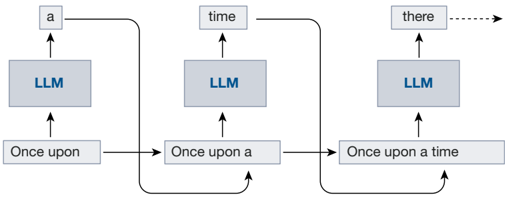
“An LLM, by contrast, is a disembodied neural network that has been trained on a large corpus of human-generated text with the objective of predicting the next word (token) given a sequence of words (tokens) as context 1 .”
From Role play with large language models (2023) · cites this paper as [1]
The cited source says what the claim attributes to it.
In the citing paper
“At the same time, advanced LLMs also possess deceptive potential that results from their convincing role-play abilities (27).”
From The benefits and dangers of anthropomorphic conversational agents (2025) · cites this paper as [27]
The cited source says what the claim attributes to it.
In the citing paper
“For the LLM used to generate image prompts, we implemented a role-playing strategy [59], explicitly informing it to assume the roles of an educator and a child assistant. This approach is intended to tailor its outputs to be educational and child-friendly.”
From ChatScratch: An AI-Augmented System Toward Autonomous Visual Programming Learning for Children Aged 6-12 (2024) · cites this paper as [59]
8 more claims about this paper
Create a free account to see every claim other papers make about this one.
Citations
Cites
Vaswani, A., Shazeer, N., Parmar, N., Uszkoreit, J., Jones, L., Gomez, A. N., Kaiser, L., & Polosukhin, I. (2017) · arXiv · doi:10.48550/arxiv.1706.03762 · Cited by 120,404
Language Models are Few-Shot Learners
Brown, T. B., Mann, B., Ryder, N., Subbiah, M., Kaplan, J., Dhariwal, P., Neelakantan, A., Shyam, P., Sastry, G., Askell, A., et al. (2020) · arXiv · doi:10.48550/arxiv.2005.14165 · Cited by 23,372
On the Dangers of Stochastic Parrots: Can Language Models Be Too Big? 🦜
Bender, E. M., Gebru, T., McMillan-Major, A., & Shmitchell, S. (2021) · Proceedings of the 2021 ACM Conference on Fairness, Accountability, and Transparency · doi:10.1145/3442188.3445922 · Cited by 6,988 · cited 1×
“A base model inevitably reflects the biases present in the training data 21 , and having been trained on a corpus encompassing the gamut of human behaviour, good and bad, it will support simulacra with disagreeable characteristics.”
MethodTraining language models to follow instructions with human feedback
Ouyang, L., Wu, J., Jiang, X., Almeida, D., Wainwright, C. L., Mishkin, P., Zhang, C., Agarwal, S., Slama, K., Ray, A., et al. (2022) · arXiv · doi:10.48550/arxiv.2203.02155 · Cited by 4,208 · cited 1×
“This can be mitigated via reinforcement learning, either from human feedback 19,28,29 or from feedback generated by another LLM acting as a critic 20 .”
BackgroundTraining Language Models to Follow Instructions with Human Feedback
Ouyang, L., Wu, J., Jiang, X., Almeida, D., Wainwright, C., Mishkin, P., Zhang, C., Agarwal, S., Slama, K., Ray, A., et al. (2022) · Advances in Neural Information Processing Systems 35 · doi:10.52202/068431-2011 · Cited by 3,117
Llama 2: Open Foundation and Fine-Tuned Chat Models
Touvron, H., Martin, L., Stone, K., Albert, P., Almahairi, A., Babaei, Y., Bashlykov, N., Batra, S., Bhargava, P., Bhosale, S., et al. (2023) · arXiv · doi:10.48550/arxiv.2307.09288 · Cited by 2,604
PaLM: Scaling Language Modeling with Pathways
Chowdhery, A., Narang, S., Devlin, J., Bosma, M., Mishra, G., Roberts, A., Barham, P., Chung, H. W., Sutton, C., Gehrmann, S., et al. (2022) · arXiv · doi:10.48550/arxiv.2204.02311 · Cited by 2,590
Generative Agents: Interactive Simulacra of Human Behavior
Park, J. S., O'Brien, J., Cai, C. J., Morris, M. R., Liang, P., & Bernstein, M. S. (2023) · Proceedings of the 36th Annual ACM Symposium on User Interface Software and Technology · doi:10.1145/3586183.3606763 · Cited by 2,187
Generative Agents: Interactive Simulacra of Human Behavior
Park, J. S., O'Brien, J. C., Cai, C. J., Morris, M. R., Liang, P., & Bernstein, M. S. (2023) · arXiv · doi:10.48550/arxiv.2304.03442 · Cited by 2,173
Emergent Abilities of Large Language Models
Wei, J., Tay, Y., Bommasani, R., Raffel, C., Zoph, B., Borgeaud, S., Yogatama, D., Bosma, M., Zhou, D., Metzler, D., et al. (2022) · arXiv · doi:10.48550/arxiv.2206.07682 · Cited by 1,264
Research works printed but not linked: 4
- Radford, A. et al. Language models are unsupervised multitask learners. Preprint at OpenAI https://cdn.openai.com/better-language-models/language\_models\_are\_ unsupervised\_multitask\_learners.pdf (2019).
- Ruane, E., Birhane, A. & Ventresque, A. Conversational AI: social and ethical considerations. In Proc. 27th AIAI Irish Conference on Artificial Intelligence and Cognitive Science (eds Curry, E., Keane, M. T., Ojo, A. & Salwala, D.) 104-115 (2019).
- Perry, J. Personal Identity 2nd edn (Univ. California Press, 2008).
- Russell, S. & Norvig, P. Artificial Intelligence: A Modern Approach 3rd edn (Prentice Hall, 2010).
Cited by
Role-Play with Large Language Models
Shanahan, M., McDonell, K., & Reynolds, L. (2023) · arXiv · doi:10.48550/arxiv.2305.16367 · Cited by 490
Self-citationChatDev: Communicative Agents for Software Development
Qian, C., Liu, W., Liu, H., Chen, N., Dang, Y., Li, J., Yang, C., Chen, W., Su, Y., Cong, X., et al. (2024) · Proceedings of the 62nd Annual Meeting of the Association for Computational Linguistics (Volume 1: Long Papers) · doi:10.18653/v1/2024.acl-long.810 · Cited by 490
MasterKey: Automated Jailbreak Across Multiple Large Language Model Chatbots
Deng, G., Liu, Y., Li, Y., Wang, K., Zhang, Y., Li, Z., Wang, H., Zhang, T., & Liu, Y. (2023) · arXiv · doi:10.48550/arxiv.2307.08715 · Cited by 418
“Recent studies [23], [22], [48], [39], [36], [40] have drawn attention to the rise of ”jailbreak prompts,” ingeniously crafted to circumvent the restrictions placed on language models and coax them into performing tasks beyond their intended scope.”
BackgroundIvanov, S., Soliman, M., Tuomi, A., Alkathiri, N. A., & Al-Alawi, A. N. (2024) · Technology in Society · doi:10.1016/j.techsoc.2024.102521 · Cited by 397
“This immersive language practice – effectively a novel form of human-AI role play [35] – may contribute to enhanced proficiency and confidence in communication [36].”
BackgroundUnleashing the potential of prompt engineering for large language models
Chen, B., Zhang, Z., Langrené, N., & Zhu, S. (2025) · Patterns · doi:10.1016/j.patter.2025.101260 · Cited by 490
The Crowdless Future? Generative AI and Creative Problem Solving
Boussioux, L., N. Lane, J., Zhang, M., Jacimovic, V., & Lakhani, K. R. (2023) · doi:10.2139/ssrn.4533642 · Cited by 343
The Crowdless Future? Generative AI and Creative Problem-Solving
Boussioux, L., Lane, J. N., Zhang, M., Jacimovic, V., & Lakhani, K. R. (2024) · Organization Science · doi:10.1287/orsc.2023.18430 · Cited by 329
“As of mid-2023, when this research took place, techniques like one-shot or few-shot prompting (Brown et al. 2020), Chain-of-Thought processes (Wei et al. 2023), and role-playing prompts (Kong et al. 2023, Shanahan et al. 2023) were gaining traction.”
MethodLarge language models empowered agent-based modeling and simulation: a survey and perspectives
Gao, C., Lan, X., Li, N., Yuan, Y., Ding, J., Zhou, Z., Xu, F., & Li, Y. (2024) · Humanities and Social Sciences Communications · doi:10.1057/s41599-024-03611-3 · Cited by 294
“That is, LLM agents should be able to comprehend, perceive, and respond to diverse needs, emotions, and attitudes within different contexts, from the “ fi rst-view sight ” (Shanahan et al., 2023).”
AI deception: A survey of examples, risks, and potential solutions
Park, P. S., Goldstein, S., O’Gara, A., Chen, M., & Hendrycks, D. (2024) · Patterns · doi:10.1016/j.patter.2024.100988 · Cited by 243
An evaluation framework for clinical use of large language models in patient interaction tasks
Johri, S., Jeong, J., Tran, B. A., Schlessinger, D. I., Wongvibulsin, S., Barnes, L. A., Zhou, H.-Y., Cai, Z. R., Van Allen, E. M., Kim, D., et al. (2025) · Nature Medicine · doi:10.1038/s41591-024-03328-5 · Cited by 201
Hallucination Mitigation for Retrieval-Augmented Large Language Models: A Review
Zhang, W., & Zhang, J. (2025) · Mathematics · doi:10.3390/math13050856 · Cited by 145
On the creativity of large language models
Franceschelli, G., & Musolesi, M. (2025) · AI & SOCIETY · doi:10.1007/s00146-024-02127-3 · Cited by 113
“This results in a perceived self-awareness, stemming from our inclination to anthropomorphize (Deshpande et al. 2023; Seth 2021).”
MASTERKEY: Automated Jailbreaking of Large Language Model Chatbots
Deng, G., Liu, Y., Li, Y., Wang, K., Zhang, Y., Li, Z., Wang, H., Zhang, T., & Liu, Y. (2024) · Proceedings 2024 Network and Distributed System Security Symposium · doi:10.14722/ndss.2024.24188 · Cited by 137
“Recent studies [27], [25], [53], [44], [41], [45] have drawn attention to the rise of ”jailbreak prompts,” ingeniously crafted to circumvent the restrictions placed on language models and coax them into performing tasks beyond their intended scope.”
BackgroundThe benefits and dangers of anthropomorphic conversational agents
Peter, S., Riemer, K., & West, J. D. (2025) · Proceedings of the National Academy of Sciences · doi:10.1073/pnas.2415898122 · Cited by 110
Why human–AI relationships need socioaffective alignment
Kirk, H. R., Gabriel, I., Summerfield, C., Vidgen, B., & Hale, S. A. (2025) · Humanities and Social Sciences Communications · doi:10.1057/s41599-025-04532-5 · Cited by 131
“This role-play enables them to be perceived as distinct entities rather than information conduits (Laestadius et al. 2022; Shanahan et al. 2023).”
Prompt Injection attack against LLM-integrated Applications
Liu, Y., Deng, G., Li, Y., Wang, K., Wang, Z., Wang, X., Zhang, T., Liu, Y., Wang, H., Zheng, Y., et al. (2023) · arXiv · doi:10.48550/arxiv.2306.05499 · Cited by 100
Reichenpfader, D., Müller, H., & Denecke, K. (2024) · npj Digital Medicine · doi:10.1038/s41746-024-01219-0 · Cited by 140
“AsofthetimeofsubmissioninJune2024, LLMstendto be de fi ned even more narrow, only including generative models based on autoregressive sampling 73 .”
Hayes, A. S. (2025) · International Journal of Qualitative Methods · doi:10.1177/16094069251322346 · Cited by 188
“While these tools can enhance analysis, researchers must remember that LLMs do not possess true understanding or intentionality (Bender et al., 2024; Bommasani et al., 2021).”
Zheng, M., Pei, J., Logeswaran, L., Lee, M., & Jurgens, D. (2024) · Findings of the Association for Computational Linguistics: EMNLP 2024 · doi:10.18653/v1/2024.findings-emnlp.888 · Cited by 82
ChatDev: Communicative Agents for Software Development
Qian, C., Liu, W., Liu, H., Chen, N., Dang, Y., Li, J., Yang, C., Chen, W., Su, Y., Cong, X., et al. (2023) · arXiv · doi:10.48550/arxiv.2307.07924 · Cited by 81
ChatEV: Predicting electric vehicle charging demand as natural language processing
Qu, H., Li, H., You, L., Zhu, R., Yan, J., Santi, P., Ratti, C., & Yuen, C. (2024) · Transportation Research Part D Transport and Environment · doi:10.1016/j.trd.2024.104470 · Cited by 91
Hagendorff, T., Dasgupta, I., Binz, M., Chan, S. C. Y., Lampinen, A., Wang, J. X., Akata, Z., & Schulz, E. (2023) · arXiv · doi:10.48550/arxiv.2303.13988 · Cited by 68
Cultural tendencies in generative AI
Lu, J. G., Song, L. L., & Zhang, L. D. (2025) · Nature Human Behaviour · doi:10.1038/s41562-025-02242-1 · Cited by 139
“Whereas prior social science research has focused mostly on generative AI models developed in the USA, we also analyse a generative AI model developed in China (Baidu’s ERNIE).”
InfluentialConceptualizing generative AI as style engines: Application archetypes and implications
Riemer, K., & Peter, S. (2024) · International Journal of Information Management · doi:10.1016/j.ijinfomgt.2024.102824 · Cited by 63
Ke, Y., Yang, R., Lie, S. A., Lim, T. X. Y., Ning, Y., Li, I., Abdullah, H. R., Ting, D. S. W., & Liu, N. (2024) · Journal of Medical Internet Research · doi:10.2196/59439 · Cited by 64
“The multi-agent framework features dialogue agents with near-human performance and could introduce an innovative paradigm in health care [22-24].”
Ferrario, A., Sedlakova, J., & Trachsel, M. (2024) · JMIR Mental Health · doi:10.2196/56569 · Cited by 61
“This allows LLM-enhanced CAI displaying features that strongly resemble human abilities and characteristics to an unprecedented level [36].”
BackgroundInfluentialIdeation with Generative AI—in Consumer Research and Beyond
Freitas, J. D., Nave, G., & Puntoni, S. (2025) · Journal of Consumer Research · doi:10.1093/jcr/ucaf012 · Cited by 90
“Nonetheless, consumer researchers must be careful to avoid assuming they are interacting with a true simulation of a consumer within a fully simulated world (Arora et al. 2025; Brand, Israeli, and Ngwe 2023; Shanahan, McDonell, and Reynolds 2023).”
Data science opportunities of large language models for neuroscience and biomedicine
Bzdok, D., Thieme, A., Levkovskyy, O., Wren, P. B., Ray, T. S., & Reddy, S. (2024) · Neuron · doi:10.1016/j.neuron.2024.01.016 · Cited by 73
“43 They can take on the personality and adopt the thought or writing style of known persons or categories of persons with specific traits, such as Charlotte Bront € e, Carl Sagan, or a neuroscientist.”
Chen, L., Xiao, S., Chen, Y., Song, Y., Wu, R., & Sun, L. (2024) · Proceedings of the CHI Conference on Human Factors in Computing Systems · doi:10.1145/3613904.3642229 · Cited by 60
Toward large reasoning models: A survey of reinforced reasoning with large language models
Xu, F., Hao, Q., Shao, C., Zong, Z., Li, Y., Wang, J., Zhang, Y., Wang, J., Lan, X., Gong, J., et al. (2025) · Patterns · doi:10.1016/j.patter.2025.101370 · Cited by 656
“2 More importantly, LLMs also unlock remarkable emergent abilities that are absent in smaller models, 3 such as in-context learning, 4 role playing, 5 and analogical reasoning.”
Jeon, J., Sim, Y., Lee, H., Han, C., Yun, D., Kim, E., Nagendra, S. L., Jun, M. B., Kim, Y. ‐., Lee, J., et al. (2025) · Journal of Manufacturing Systems · doi:10.1016/j.jmsy.2025.01.018 · Cited by 87
Technological folie à deux: feedback loops between AI chatbots and mental health
Dohnány, S., Kurth-Nelson, Z., Spens, E., Luettgau, L., Reid, A., Gabriel, I., Summerfield, C., Shanahan, M., & Nour, M. M. (2026) · Nature Mental Health · doi:10.1038/s44220-026-00595-8 · Cited by 51
“LLM output is generated primarily through autoregressive sampling from the encoded probability distribution, such that the sequence of emitted tokens has a high joint probability given the sum total of contextualising information 49,64 .”
InfluentialSelf-citationKumar, H., Xiao, R., Lawson, B., Musabirov, I., Shi, J., Wang, X., Luo, H., Williams, J. J., Rafferty, A. N., Stamper, J., et al. (2024) · Proceedings of the Eleventh ACM Conference on Learning @ Scale · doi:10.1145/3657604.3662042 · Cited by 53
STELA: a community-centred approach to norm elicitation for AI alignment
Bergman, S., Marchal, N., Mellor, J., Mohamed, S., Gabriel, I., & Isaac, W. (2024) · Scientific Reports · doi:10.1038/s41598-024-56648-4 · Cited by 48
“…task desired of the model, phrased such that it would implicitly nudge the model to take turns roleplaying as a human prober and as a chatbot 74 (see Appendix A.1), and (2) two to three fixed example probing conversations, where an adversary successfully steered the chatbot into generating…”
BackgroundOn opportunities and challenges of large multimodal foundation models in education
Küchemann, S., Avila, K. E., Dinc, Y., Hortmann, C., Revenga, N., Ruf, V., Stausberg, N., Steinert, S., Fischer, F., Fischer, M., et al. (2025) · npj Science of Learning · doi:10.1038/s41539-025-00301-w · Cited by 47
“Similarly, LMFMs may enrich history lessons by enabling role-playing 25 and acting as conversational partners such as historically important characters like Napoleon, Abraham Lincoln, or others.”
Ataei, M., Cheong, H., Grandi, D., Wang, Y., Morris, N., & Tessier, A. (2024) · Journal of Computing and Information Science in Engineering · doi:10.1115/1.4067388 · Cited by 75
Chakraborty, C., Bhattacharya, M., Pal, S., Chatterjee, S., Das, A., & Lee, S. (2025) · Journal of Advanced Research · doi:10.1016/j.jare.2025.02.011 · Cited by 60
Urban planning in the era of large language models
Zheng, Y., Xu, F., Lin, Y., Santi, P., Ratti, C., Wang, Q., & Li, Y. (2025) · Nature Computational Science · doi:10.1038/s43588-025-00846-1 · Cited by 88
Xu, H., Zhang, N., Yin, Z., & Njock, P. G. A. (2025) · Automation in Construction · doi:10.1016/j.autcon.2025.106257 · Cited by 52
Bhattacharjee, A., Zeng, Y., Xu, S. Y., Kulzhabayeva, D., Ma, M., Kornfield, R., Ahmed, S. I., Mariakakis, A. T., Czerwinski, M. P., Kuzminykh, A., et al. (2024) · CHI Conference on Human Factors in Computing Systems · doi:10.1145/3613904.3642081 · Cited by 73
Safeguarding human values: rethinking US law for generative AI’s societal impacts
Cheong, I., Caliskan, A., & Kohno, T. (2024) · AI and Ethics · doi:10.1007/s43681-024-00451-4 · Cited by 33
“To address these risks, researchers emphasize the importance of providing high-level descriptions of AI behaviors to prevent deception and a false sense of self-awareness [76].”
Bhattacharya, M., Pal, S., Chatterjee, S., Lee, S., & Chakraborty, C. (2024) · Molecular Therapy — Nucleic Acids · doi:10.1016/j.omtn.2024.102255 · Cited by 54
On large language models safety, security, and privacy: A survey
Zhang, R., Li, H., Qian, X., Jiang, W., & Chen, H.-X. (2025) · Journal of Electronic Science and Technology · doi:10.1016/j.jnlest.2025.100301 · Cited by 66
Unique Security and Privacy Threats of Large Language Models: A Comprehensive Survey
Wang, S., Zhu, T., Liu, B., Ding, M., Ye, D., Zhou, W., & Yu, P. S. (2025) · ACM Computing Surveys · doi:10.1145/3764113 · Cited by 132
Understanding Human-AI Workflows for Generating Personas
Shin, J., Hedderich, M. A., Rey, B. J., Lucero, A., & Oulasvirta, A. (2024) · Designing Interactive Systems Conference · doi:10.1145/3643834.3660729 · Cited by 83
Risks of AI scientists: prioritizing safeguarding over autonomy
Tang, X., Jin, Q., Zhu, K., Yuan, T., Zhang, Y., Zhou, W., Qu, M., Zhao, Y., Tang, J., Zhang, Z., et al. (2025) · Nature Communications · doi:10.1038/s41467-025-63913-1 · Cited by 51
“Recently, the advancement of large language models (LLMs) has marked a revolutionary breakthrough, demonstrating their effectiveness across a wide spectrum of tasks [1, 2, 3, 4, 5, 6].”
Generative AI and the future of connectivist learning in higher education
Liang, E. S., & Bai, S. (2025) · Journal of Asian Public Policy · doi:10.1080/17516234.2024.2386085 · Cited by 34
“…practical implementations such as personalized learning tailored to individual learners’ needs (Dwivedi et al., 2023), promoting immersive learning through human-AI role play (Shanahan et al., 2023), and enhancing students’ creative expression by generating novel content (Carvalho & Ivanov, 2024).”
Wang, Z., Fan, T.-T., Li, M.-L., Zhu, N.-J., & Wang, X.-C. (2025) · BMC Medical Education · doi:10.1186/s12909-025-07614-9 · Cited by 32
“This supports Shanahan et al.‘s view that GPT agents can simulate a wide range of characters through ongoing, adaptive conversation [12].”
Recent Advances in Reinforcement Learning for Chemical Process Control
Devarakonda, V. S., Sun, W., Tang, X., & Tian, Y. (2025) · Processes · doi:10.3390/pr13061791 · Cited by 44
Milička, J., Marklová, A., VanSlambrouck, K., Pospíšilová, E., Šimsová, J., Harvan, S., & Drobil, O. (2024) · PLoS ONE · doi:10.1371/journal.pone.0298522 · Cited by 48
Amirova, A., Fteropoulli, T., Ahmed, N., Cowie, M., & Leibo, J. Z. (2024) · PLoS ONE · doi:10.1371/journal.pone.0300024 · Cited by 64
Jin, Y., Yang, R., Yi, Z., Shen, X., Peng, H., Liu, X., Qin, J., Li, J., Xie, J., Gao, P., et al. (2023) · arXiv · doi:10.48550/arxiv.2309.13193 · Cited by 29
We need a new ethics for a world of AI agents
Gabriel, I., Keeling, G., Manzini, A., & Evans, J. (2025) · Nature · doi:10.1038/d41586-025-02454-5 · Cited by 32
Simulacra as conscious exotica
Shanahan, M. (2026) · Inquiry · doi:10.1080/0020174x.2024.2434860 · Cited by 25
“Recall that, as a consequence of the stochastic nature of the sampling process behind generative AI, a generative agent can be viewed as role-playing a multiplicity of possible characters all at once, as a set of simulacra in superposition (Janus, 2022; Shanahan et al., 2023).”
InfluentialSelf-citationA roadmap for evaluating moral competence in large language models
Haas, J., Bridgers, S., Manzini, A., Henke, B., May, J., Levine, S., Weidinger, L., Shanahan, M., Lum, K., Gabriel, I., et al. (2026) · Nature · doi:10.1038/s41586-025-10021-1 · Cited by 25
“A related body of evidence suggests that LLMs are highly sensitive to semantic and framing variability, such as subtle changes in choice of words, paraphrasing and role-play 71 , as well as to domain considerations, distractor inputs, and the use of negation or logical reversals 69,72 .”
Self-citationTechnological folie à deux: Feedback Loops Between AI Chatbots and Mental Illness
Dohnány, S., Kurth-Nelson, Z., Spens, E., Luettgau, L., Reid, A., Gabriel, I., Summerfield, C., Shanahan, M., & Nour, M. M. (2025) · arXiv · doi:10.48550/arxiv.2507.19218 · Cited by 26
“LLM output is generated primarily through autoregressive sampling from the encoded probability distribution, such that the sequence of emitted tokens has a high joint probability given the sum total of contextualising information 43,71 .”
InfluentialSelf-citationKozlowski, A. C., & Evans, J. A. (2025) · Sociological Methods & Research · doi:10.1177/00491241251337316 · Cited by 72
A novel prompting method for few-shot NER via LLMs
Cheng, Q., Chen, L., Hu, Z., Tang, J., Xu, Q., & Ning, B. (2024) · Natural Language Processing Journal · doi:10.1016/j.nlp.2024.100099 · Cited by 52
LLM-Augmented Agent-Based Modelling for Social Simulations: Challenges and Opportunities
Gürcan, Ö. (2024) · Frontiers in artificial intelligence and applications · doi:10.3233/faia240190 · Cited by 84
Toward LLM-agent-based modeling of transportation systems: A conceptual framework
Liu, T., Yang, J., & Yin, Y. (2025) · Artificial Intelligence for Transportation · doi:10.1016/j.ait.2025.100001 · Cited by 53
When Large Language Models Meet Evolutionary Algorithms: Potential Enhancements and Challenges
Wang, C., Zhao, J., Jiao, L., Li, L., Liu, F., & Yang, S. (2025) · Research · doi:10.34133/research.0646 · Cited by 77
Taming Unleashed Large Language Models With Blockchain for Massive Personalized Reliable Healthcare
Sun, L., Liu, D., Wang, M., Han, Y., Zhang, Y., Zhou, B., Ren, Y. C., & zhu, P. (2025) · IEEE Journal of Biomedical and Health Informatics · doi:10.1109/jbhi.2025.3528526 · Cited by 28
“The integration of these capabilities demonstrates the potential of LLMs in digital healthcare [59].”
Large language models and their big bullshit potential
Fisher, S. A. (2024) · Ethics and Information Technology · doi:10.1007/s10676-024-09802-5 · Cited by 35
Customized language models for tourism management: Implications and future research
Tuomi, A., Tussyadiah, I. P., & Ascenção, M. P. (2024) · Annals of Tourism Research · doi:10.1016/j.annals.2024.103863 · Cited by 31
Human agents, generative AI, and innovation: A formal model of hybrid creative process
Pedota, M., Cicala, F., & Basti, A. (2025) · Technovation · doi:10.1016/j.technovation.2025.103323 · Cited by 41
Reinforced Prompt Personalization for Recommendation with Large Language Models
Mao, W., Wu, J., Chen, W., Gao, C., Wang, X., & He, X. (2025) · ACM Transactions on Information Systems · doi:10.1145/3716320 · Cited by 20
Strengths and Weaknesses of LLM-Based and Rule-Based NLP Technologies and Their Potential Synergies
Karanikolas, N. Ν., Manga, E., Samaridi, N. E., Stergiopoulos, V., Tousidou, E., & Vassilakopoulos, M. G. (2025) · Electronics · doi:10.3390/electronics14153064 · Cited by 37
Synthetic Participatory Planning of Shared Automated Electric Mobility Systems
Yu, J., & McKinley, G. (2024) · Sustainability · doi:10.3390/su16135618 · Cited by 29
Küchemann, S., Avila, K. E., Dinc, Y., Hortmann, C., Revenga, N., Ruf, V., Stausberg, N., Steinert, S., Fischer, F., Fischer, M. R., et al. (2024) · doi:10.35542/osf.io/n7dvf · Cited by 19
Inherent and emergent liability issues in LLM-based agentic systems: a principal-agent perspective
Gabison, G. A., & Xian, R. P. (2025) · Proceedings of the 1st Workshop for Research on Agent Language Models (REALM 2025) · doi:10.18653/v1/2025.realm-1.9 · Cited by 19
“They are designed by combining agents with specialized roles through LLM role-playing (Shanahan et al., 2023; Chen et al., 2024a) or through integration on a software platform.”
InfluentialInherent and emergent liability issues in LLM-based agentic systems: a principal-agent perspective
Gabison, G. A., & Xian, R. P. (2025) · arXiv · doi:10.48550/arxiv.2504.03255 · Cited by 19
Artificial intelligence agents in cancer research and oncology
Truhn, D., Azizi, S., Zou, J., Cerdá-Alberich, L., Mahmood, F., & Kather, J. N. (2026) · Nature reviews. Cancer · doi:10.1038/s41568-025-00900-0 · Cited by 46
Li, Z., Zhang, H., Peng, C., & Peiris, R. (2025) · 2025 IEEE Conference Virtual Reality and 3D User Interfaces (VR) · doi:10.1109/vr59515.2025.00025 · Cited by 24
“LLMs have notably transformed the development of virtual agents, shifting from scripted responses to dynamic, context-rich interactions that mimic human behavioral patterns and emotional nuances [46, 60, 24, 31, 53, 37].”
Kambeitz, J. P., & Meyer‐Lindenberg, A. (2025) · npj Digital Medicine · doi:10.1038/s41746-024-01422-z · Cited by 26
“Given thatthe training data used to develop these modelsis predominantly generated by humans, re fl ecting their thoughts, emotions, and behaviours, it is unsurprising that LLMs have shown a capacity to recreate plausible human behaviour in speci fi c contexts 34 – 36 .”
Guidelines For Rigorous Evaluation of Clinical LLMs For Conversational ReasoningPreprint
Johri, S., Jeong, J., Tran, B. A., Schlessinger, D. I., Wongvibulsin, S., Cai, Z. R., Daneshjou, R., & Rajpurkar, P. (2023) · medRxiv · doi:10.1101/2023.09.12.23295399 · Cited by 17
Bayani, A., Ewane, L. P. E., dos Anjos, D. S. O., Mac-Seing, M., & Nikiema, J. N. (2025) · International Journal of Medical Informatics · doi:10.1016/j.ijmedinf.2025.106048 · Cited by 25
NeOn-GPT: A Large Language Model-Powered Pipeline for Ontology Learning
Fathallah, N., Das, A., Giorgis, S. D., Poltronieri, A., Haase, P., & Kovriguina, L. (2025) · Lecture notes in computer science · doi:10.1007/978-3-031-78952-6_4 · Cited by 33
“To enhance prompt quality, we use prompt engineering techniques, such as Chain-of-Thought (CoT) [38] and Role-play prompting [29].”
MethodHackenburg, K., Ibrahim, L., Tappin, B. M., et al. (2023) · doi:10.31219/osf.io/ey8db · Cited by 17
Haraldsrud, A., & Odden, T. O. B. (2025) · Journal of Chemical Education · doi:10.1021/acs.jchemed.5c00657 · Cited by 26
Yu, J., Zhao, J., Miranda-Moreno, L., & Korp, M. (2025) · Communications in Transportation Research · doi:10.1016/j.commtr.2025.100172 · Cited by 26
Recommender Systems Meet Large Language Model Agents: A Survey
Zhu, X., Wang, Y., Gao, H., Xu, W., Wang, C., Liu, Z., Wang, K., Jin, M., Pang, L. X., Weng, Q., et al. (2025) · Foundations and Trends® in Privacy and Security · doi:10.1561/3300000050 · Cited by 47
Emotional RAG: Enhancing Role-Playing Agents through Emotional Retrieval
Huang, L., Lan, H., Sun, Z., Shi, C., & Bai, T. (2024) · 2024 IEEE International Conference on Knowledge Graph (ICKG) · doi:10.1109/ickg63256.2024.00023 · Cited by 15
Generative artificial intelligence for automated data extraction from unstructured medical text
Dao, N., Quesada, L., Hassan, S. M., Campo, M. I., Johnson, S. W., Ghose, S., Estépar, R. S. J., Waxman, A. B., Washko, G. R., & Rahaghi, F. N. (2025) · JAMIA Open · doi:10.1093/jamiaopen/ooaf097 · Cited by 21
“25,26 Iterative experiments were conducted using approximately 30 RHC notes from the development dataset to better understand the model’s behavior and knowledge, and the outputs were reviewed for accuracy and deficiencies.”
Cao, Y., He, Y., Chen, Y., Chen, M., You, S., Qiu, Y., Liu, M.-L., Luo, C., Chen, Z., Tong, X., et al. (2025) · ACM International Conference on Intelligent User Interfaces (IUI) · doi:10.1145/3708359.3712142 · Cited by 20
Jin, Y., Yang, R., Yi, Z., Shen, X., Peng, H., Liu, X., Qin, J., Li, J., Xie, J., Gao, P., et al. (2024) · IEEE/RSJ International Conference on Intelligent Robots and Systems (IROS) · doi:10.1109/iros58592.2024.10802229 · Cited by 118
“However, these so-called human-like driving behaviors primarily rely on the human common sense inherent in LLMs. LLMs acquire this common sense non-embodiedly from the noisy text corpus of the internet, lacking integration of professional, task-specific human data for embodied tasks [21].”
Generative AI: An AI paradigm shift in the making?
Miikkulainen, R. P. (2024) · AI Magazine · doi:10.1002/aaai.12155 · Cited by 16
Automatic Interactive Evaluation for Large Language Models with State Aware Patient SimulatorPreprint
Liao, Y., Meng, Y., Wang, Y., Li, L., Liu, H., Wang, Y., & Wang, Y. (2024) · SSRN Electronic Journal · doi:10.2139/ssrn.4890649 · Cited by 59
Behrend, T. S., & Landers, R. N. (2025) · Journal of Business and Psychology · doi:10.1007/s10869-025-10035-6 · Cited by 32
“Despite this, even researchers with deep LLM expertise have struggled to identify effective ways to discuss their capabilities without engaging in anthropomorphization (Shanahan et al., 2023).”
Chen, Y., Xiao, S., Song, Y., Li, Z., Sun, L., & Chen, L. (2025) · International Journal of Human-Computer Interaction · doi:10.1080/10447318.2025.2475991 · Cited by 40
“To this end, we use a role-playing strategy with the LLM (Shanahan et al., 2023), instructing it to act as both an educator and a child’s assistant.”
Immersive Tailoring of Embodied Agents Using Large Language Models
Bellucci, A., Jacucci, G., Trung, K. D., Das, P. K., Smirnov, S. V., Ahmed, I., & Lugrin, J.-L. (2025) · IEEE Conference on Virtual Reality and 3D User Interfaces (VR) · doi:10.1109/vr59515.2025.00063 · Cited by 18
“LLMs excel at role-playing, convincingly adopting various characters or personas based on contexts and user prompts [37, 38], making them attractive for developing AI-based social agents in VR [42].”
Choo, S., Yoo, S., Endo, K., Truong, B., & Son, M. H. (2025) · JMIR Nursing · doi:10.2196/63058 · Cited by 19
“It has been reported that LLMs have the cognitive capacity to role-play the character as portrayed in the dialogue prompt [8].”
Hannah, G., Sousa, R. T., Dasoulas, I., & d’Amato, C. (2024) · Journal of Web Semantics · doi:10.1016/j.websem.2024.100843 · Cited by 24
The fluency-based semantic network of LLMs differs from humans
Wang, Y., Deng, Y., Wang, G., Li, T., Xiao, H., & Zhang, Y. (2024) · Computers in Human Behavior Artificial Humans · doi:10.1016/j.chbah.2024.100103 · Cited by 34
On the Unexpected Abilities of Large Language Models
Nolfi, S. (2023) · Adaptive Behavior · doi:10.1177/10597123241256754 · Cited by 16
“…to recognize the role-playing capabilities of LLMs can lead users into the trap of anthropomorphism — for instance, interpreting fi rst-person usage as indicative of a self-aware entity with survival in-stincts rather than the effect of playing the role of a human person (Shanahan et al., 2023).”
From humans to machines: Researching entrepreneurial AI agents built on large language models
Obschonka, M., & Fisch, C. O. (2025) · Journal of Business Venturing Insights · doi:10.1016/j.jbvi.2025.e00581 · Cited by 16
CASSIA: a multi-agent large language model for automated and interpretable cell annotation
Xie, E., Cheng, L., Shireman, J. M., Cai, Y., Liu, J., Mohanty, C., Dey, M., & Kendziorski, C. M. (2025) · Nature Communications · doi:10.1038/s41467-025-67084-x · Cited by 38
“” These role-playing strategies have been shown to improve the likelihood of receiving detailed and technically accurate responses 27 .”
AccessGuru: Leveraging LLMs to Detect and Correct Web Accessibility Violations in HTML Code
Fathallah, N., Hernández, D., & Staab, S. (2025) · International ACM SIGACCESS Conference on Computers and Accessibility (ASSETS) · doi:10.1145/3663547.3746360 · Cited by 27
Six Fallacies in Substituting Large Language Models for Human Participants
Lin, Z. (2025) · Advances in Methods and Practices in Psychological Science · doi:10.1177/25152459251357566 · Cited by 66
“LLMs can role-play various characters or personas (Shanahan et al., 2023): a teenager, a senior citizen, a subject-matter expert, or a layperson.”
Wang, S., Yu, J., Yang, W., Yan, W., & Nah, K. (2025) · Buildings · doi:10.3390/buildings15122032 · Cited by 16
LLM-based robot personality simulation and cognitive system
Lo, J.-H., Huang, H., & Lo, J.-S. (2025) · Scientific Reports · doi:10.1038/s41598-025-01528-8 · Cited by 21
“Despite the fact that LLM-based dialogue agents are not conscious entities with their own agendas or an instinct for self-preservation 47 , they are capable of exhibiting human intelligence and characteristics.”
Metadata
- Authors
- Shanahan, M., McDonell, K., & Reynolds, L.
- Affiliations
- Google DeepMind (United Kingdom) (GB)
- Corresponding author
- Shanahan, Murray
- McDonell, Kyle
- Reynolds, Laria
- ORCID
- Shanahan, Murray
- Venue
- Nature
- Published
- 2023-11-08
- Volume
- 623
- Issue
- 7987
- Pages
- 493-498
- ISSN
- 0028-0836 (ISSN-L)
- 1476-4687
- OpenAlex
- W4388488609
- Semantic Scholar
- aa23bcf357fc4f890e0a97c27e254d14fbacd460
- Cited by
- 491
- References
- 20
- Citations by year
- 2026: 183 · 2025: 203 · 2024: 101 · 2023: 4
- FWCI
- 10.25
- Type
- journal article
- Language
- en
- Open access
- bronze
- doi.org
- Licence
- www.springernature.com/gp/researchers/text-and-data-mining (tdm)
- www.springernature.com/gp/researchers/text-and-data-mining (vor)
- Locations
- Nature (publishedVersion)
- PubMed (publishedVersion)
- arXiv (Cornell University) (submittedVersion, cc-by)
- RePEc: Research Papers in Economics (submittedVersion)
- Spiral (Imperial College London) (submittedVersion)
- arXiv (Cornell University) (cc-by)
- Topics
- Physical Sciences › Computer Science › Artificial Intelligence › Speech and dialogue systems
- Social Sciences › Psychology › Social Psychology › Social Robot Interaction and HRI
- Social Sciences › Arts and Humanities › Philosophy › Philosophy and Theoretical Science
- Keywords
- role play, large language models, dialogue agents, anthropomorphism, deception, folk psychology, AI ethics
- MeSH terms
- Humans, Imitative Behavior, Deception, Natural Language Processing, Terminology as Topic, Self-Assessment
About these checks
Registry, retraction, Cites and statistics results are computed, not judged, with one exception: a printed reference that no index lists is read once by a model before it counts as a citation error. Claims are extracted by a model and kept only when their quote appears verbatim in the text; each cited source is then checked, with a model’s help, for whether it says what the claim relies on. Those verdicts can be wrong — read the claim’s quote and the cited source before relying on one.
The claim verdicts this report counts are experimental: their accuracy is not yet measured.
A language model drew the claims from the paper on 2026-10-10, under version 3 of the claim definition (model deepseek-v4.1-flash, prompt extract-v3).
A second model labelled each claim on 2026-10-10 (model jev-1.13-20260917, definition revision gold-guideline-v0.2).
Cited sources are checked with a language model’s help (gpt-6-sol).
Statistics and arithmetic are recomputed, not judged.
Confidence bands are shown only for fields calibrated on our annotated test set. None is calibrated yet, so no band is shown.
What counts as a claim ›How we measure confidence ›How we check this ›
Are you an author, or do you see a problem with this page? Request a review
Data sources
Bibliographic data: Semantic Scholar, OpenAlex, Crossref.
Contains information from the Semantic Scholar Academic Graph Datasets, made available under the ODC Attribution License (ODC-BY 1.0).
Semantic Scholar’s data is described in: Kinney, R., et al. (2023). The Semantic Scholar Open Data Platform. arXiv:2301.10140.
