

A distinct Fusobacterium nucleatum clade dominates the colorectal cancer niche
Open accessThe DOI matches its Crossref record; 82 of the 82 references it cites were found in a registry or an index.
Abstract
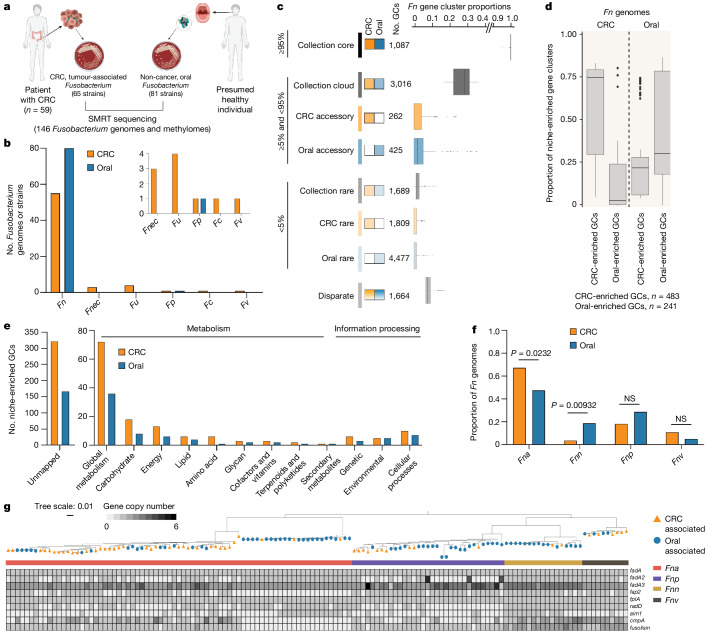
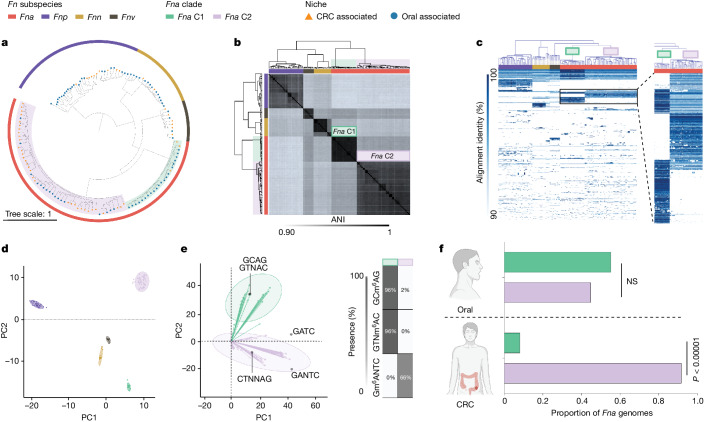
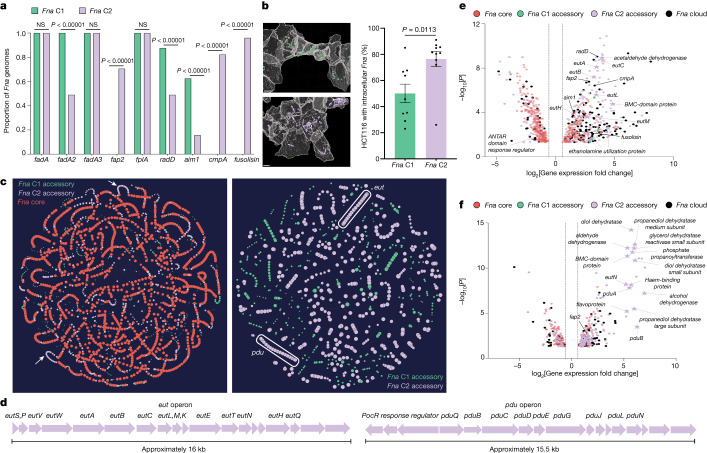
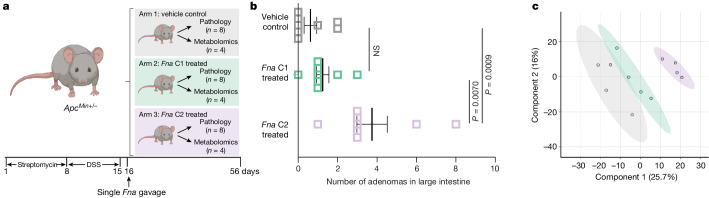
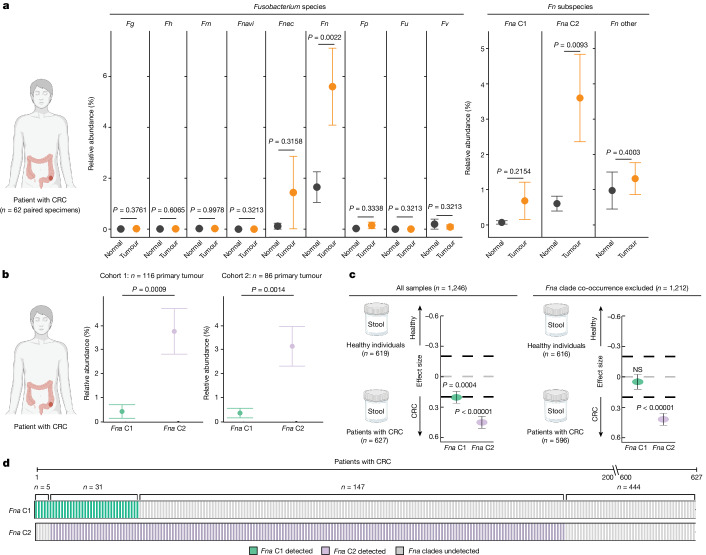
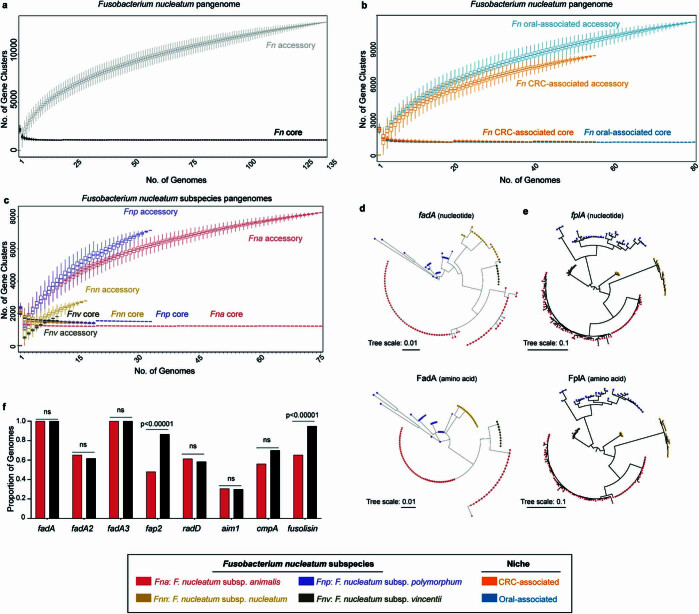
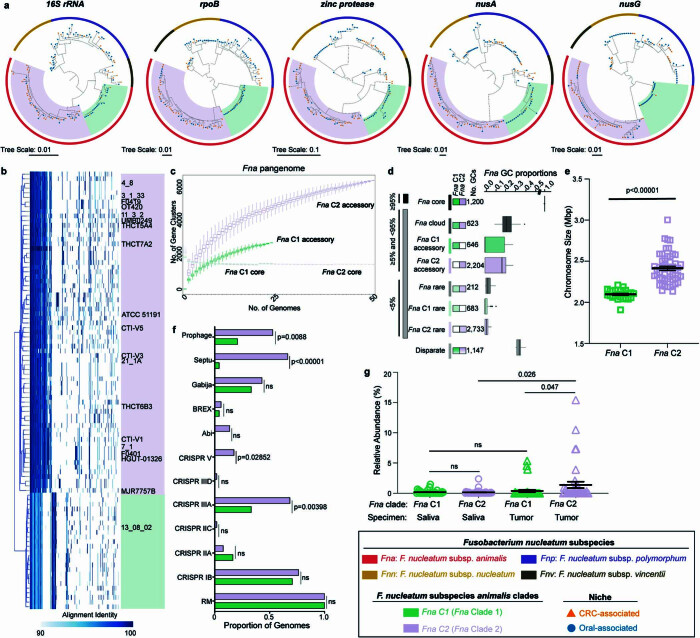
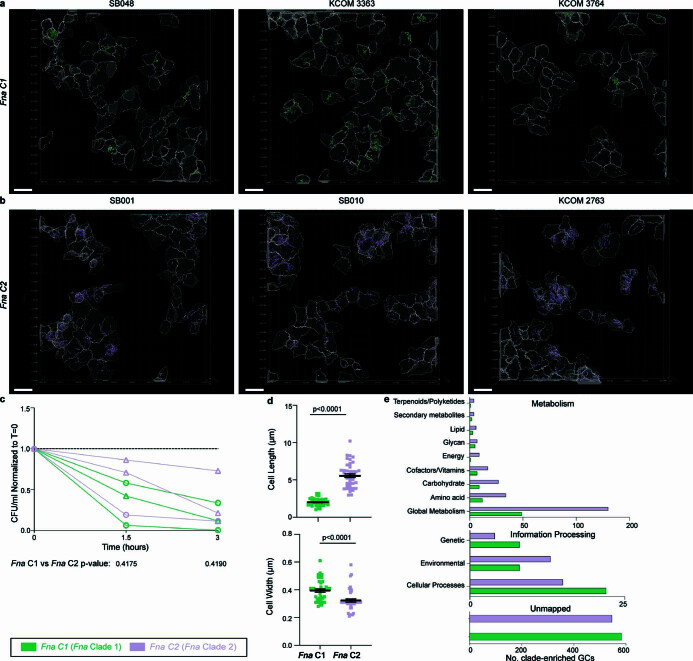
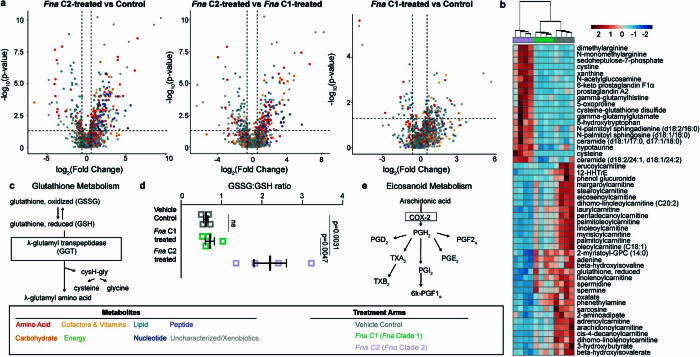
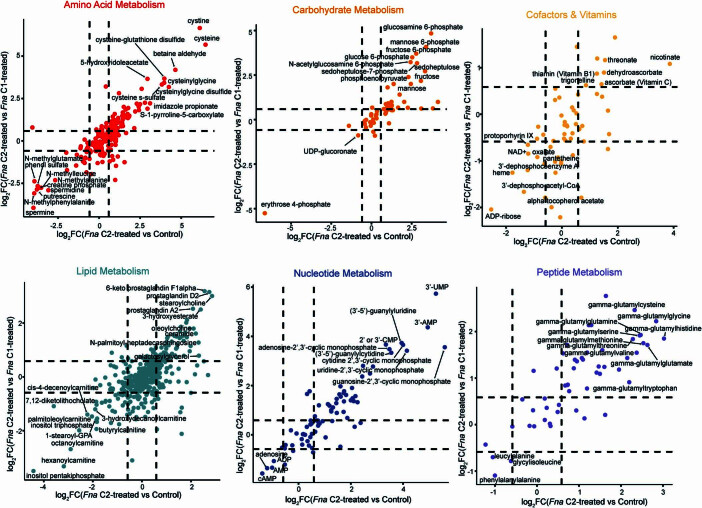
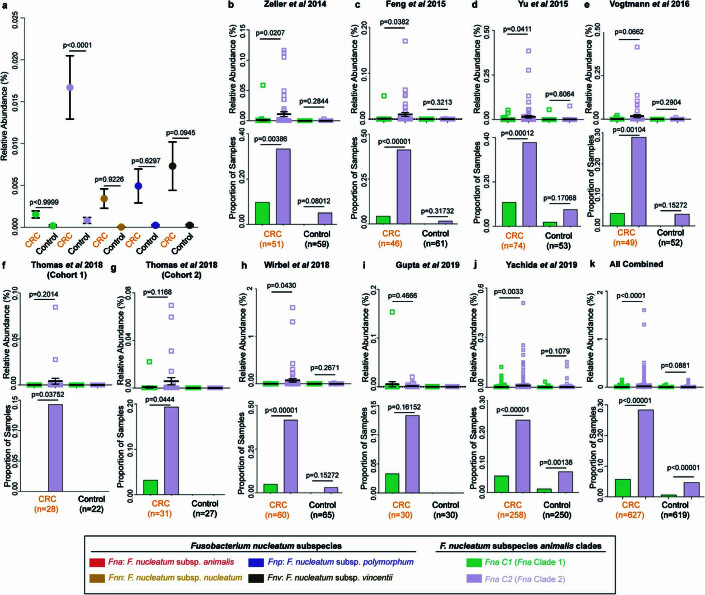
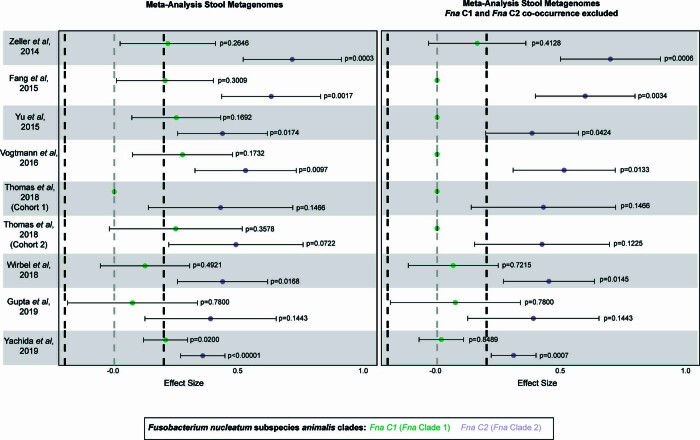
Fusobacterium nucleatum ( Fn ), a bacterium present in the human oral cavity and rarely found in the lower gastrointestinal tract of healthy individuals 1 , is enriched in human colorectal cancer (CRC) tumours 2–5 . High intratumoural Fn loads are associated with recurrence, metastases and poorer patient prognosis 5–8 . Here, to delineate Fn genetic factors facilitating tumour colonization, we generated closed genomes for 135 Fn strains; 80 oral strains from individuals without cancer and 55 unique cancer strains cultured from tumours from 51 patients with CRC. Pangenomic analyses identified 483 CRC-enriched genetic factors. Tumour-isolated strains predominantly belong to Fn subspecies animalis ( Fna ). However, genomic analyses reveal that Fna , considered a single subspecies, is instead composed of two distinct clades ( Fna C1 and Fna C2). Of these, only Fna C2 dominates the CRC tumour niche. Inter- Fna analyses identified 195 Fna C2-associated genetic factors consistent with increased metabolic potential and colonization of the gastrointestinal tract. In support of this, Fna C2-treated mice had an increased number of intestinal adenomas and altered metabolites. Microbiome analysis of human tumour tissue from 116 patients with CRC demonstrated Fna C2 enrichment. Comparison of 62 paired specimens showed that only Fna C2 is tumour enriched compared to normal adjacent tissue. This was further supported by metagenomic analysis of stool samples from 627 patients with CRC and 619 healthy individuals. Collectively, our results identify the Fna clade bifurcation, show that specifically Fna C2 drives the reported Fn enrichment in human CRC and reveal the genetic underpinnings of pathoadaptation of Fna C2 to the CRC niche.
Overview
The claims and statistics of this paper haven’t been checked yet.
Free: it reads the open-access text and checks the first 5 claims that cite a source we can check. Create a free account to check every claim.
Integrity signals
Registry
Cites
Statistics
Figures
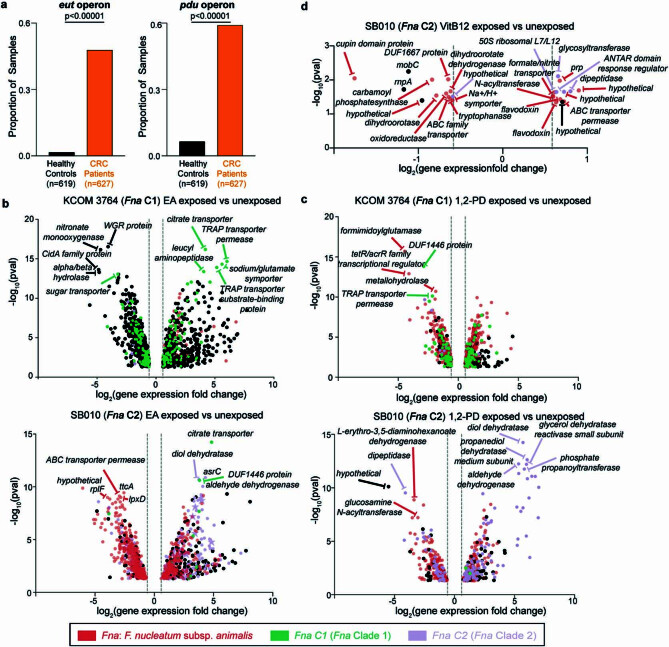
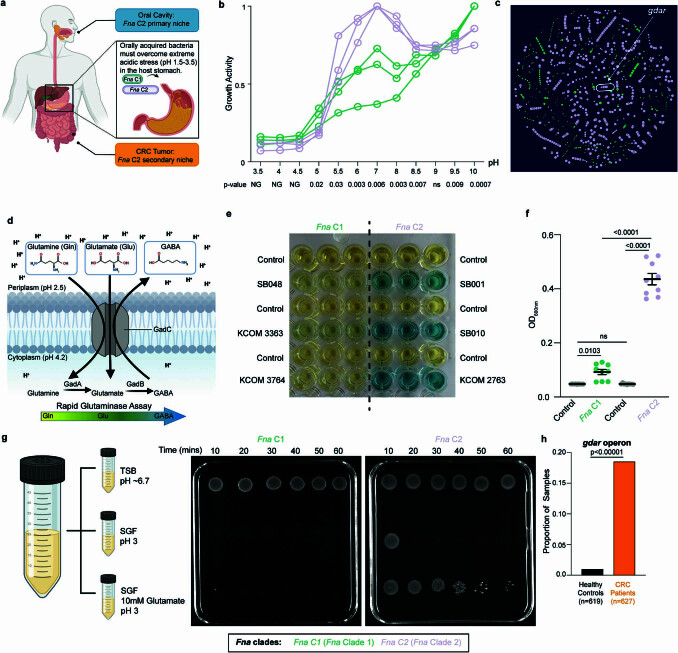
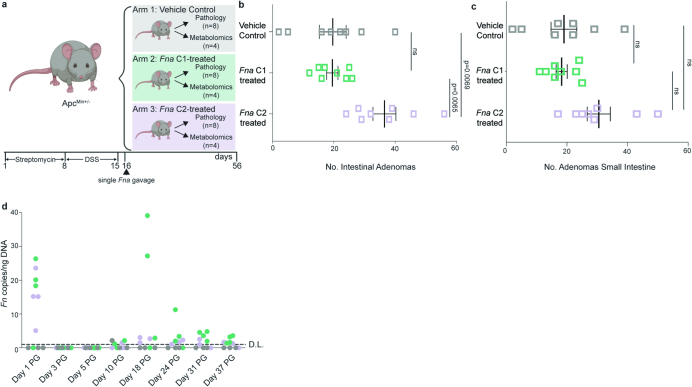
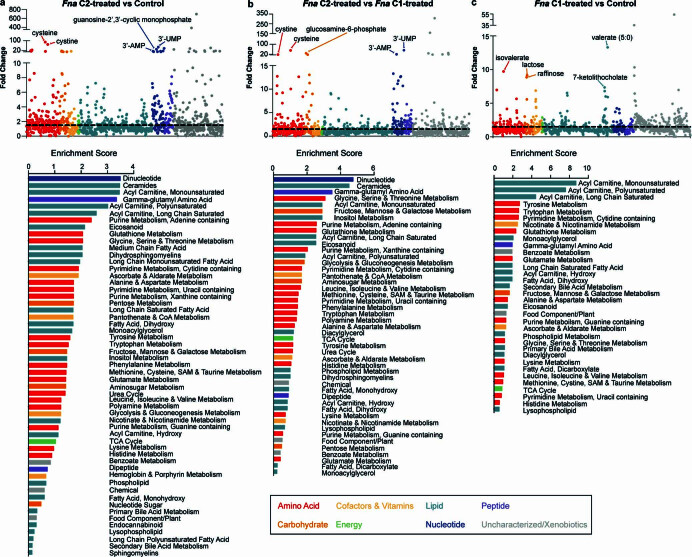
Verification
Claims the paper makes
The claims and statistics of this paper haven’t been checked yet.
Free: it reads the open-access text and checks the first 5 claims that cite a source we can check. Create a free account to check every claim.
Claims other papers make about this one
Each is checked against this paper’s own text: does it say what the citing paper says it does?
In the citing paper
“including some (but not all) clades of F. nucleatum in the context of CRC 54”
From Impact of the ONCOBIOME network in cancer microbiome research (2025) · cites this paper as [54]
In the citing paper
“It is worth noting that CRC has often been associated with Fusobac terium species and clades, as have several other bacterial spe cies, 31,47,48”
From Global genetic diversity of human gut microbiome species is related to geographic location and host health (2025) · cites this paper as [47]
Self-check
Percentages, sums and reported differences re-computed from the paper’s own numbers.
The self-check needs the paper’s full text.
Citations
Cites
Trimmomatic: a flexible trimmer for Illumina sequence data
Bolger, A. M., Lohse, M., & Usadel, B. (2014) · Bioinformatics · doi:10.1093/bioinformatics/btu170 · Cited by 65,548
Fast gapped-read alignment with Bowtie 2
Langmead, B., & Salzberg, S. L. (2012) · Nature Methods · doi:10.1038/nmeth.1923 · Cited by 56,400 · cited 1×
“Metagenomic samples were mapped against the Fna SB010 eut , pdu and gdar operons using Bowtie2 (version 2.4.5, --sensitive parameter) 77 .”
MethodInfluentialMEGA X: Molecular Evolutionary Genetics Analysis across Computing Platforms
Kumar, S., Stecher, G., Li, M., Knyaz, C., & Tamura, K. (2018) · Molecular Biology and Evolution · doi:10.1093/molbev/msy096 · Cited by 37,529 · cited 1×
“65) using the MUSCLE clustering algorithm from which a maximum-likelihood dendrogram was generated. kSNP3 (ref.”
MethodInteractive Tree Of Life (iTOL) v5: an online tool for phylogenetic tree display and annotation
Letunic, I., & Bork, P. (2021) · Nucleic Acids Research · doi:10.1093/nar/gkab301 · Cited by 11,124 · cited 1×
“66).”
Borenstein, M., Hedges, L. V., Higgins, J. P. T., & Rothstein, H. R. (2021) · doi:10.1002/9781119558378 · Cited by 9,799
Shifting the genomic gold standard for the prokaryotic species definition
Richter, M., & Rosselló-Móra, R. (2009) · Proceedings of the National Academy of Sciences · doi:10.1073/pnas.0906412106 · Cited by 6,359
GTDB-Tk: a toolkit to classify genomes with the Genome Taxonomy Database
Chaumeil, P.-A., Mussig, A. J., Hugenholtz, P., & Parks, D. H. (2020) · Bioinformatics · doi:10.1093/bioinformatics/btz848 · Cited by 5,259
Effect size, confidence interval and statistical significance: a practical guide for biologists
Nakagawa, S., & Cuthill, I. C. (2007) · Biological Reviews · doi:10.1111/j.1469-185x.2007.00027.x · Cited by 3,835 · cited 1×
“For each model, an adjusted standardized mean difference between the two study conditions was extracted as previously described 74 : standardized mean difference = ( t × ( n 1 + n 2))/(sqrt( n 1 + n 2) × sqrt( n 1 + n 2 − 2)), in which t defines the t -score of the corresponding variable, n 1 is…”
MethodReal-Time DNA Sequencing from Single Polymerase Molecules
Eid, J., Fehr, A., Gray, J., Luong, K., Lyle, J., Otto, G., Peluso, P., Rank, D., Baybayan, P., Bettman, B., et al. (2009) · Science · doi:10.1126/science.1162986 · Cited by 3,732 · cited 1×
“Single-molecule real-time sequencing 18 was carried out on a PacBio Sequel instrument (Pacific Biosciences) or a PacBio Sequel II instrument (Pacific Biosciences) at the University of Minnesota Genomics Center.”
MethodPHASTER: a better, faster version of the PHAST phage search tool
Arndt, D., Grant, J. R., Marcu, A., Sajed, T., Pon, A., Liang, Y., & Wishart, D. S. (2016) · Nucleic Acids Research · doi:10.1093/nar/gkw387 · Cited by 3,557 · cited 1×
“The presence of innate bacterial defence systems was queried using the Prokaryotic Antiviral Defense Locator 67 and intact prophage presence was analysed using the Phage Search Tool Enhanced Release 68,69 tools.”
Method
Cited by
Breast cancer: pathogenesis and treatments
Xiong, X., Zheng, L.-W., Ding, Y., Chen, Y.-F., Cai, Y.-W., Wang, L.-P., Huang, L., Liu, C.-C., Shao, Z.-M., & Yu, K.-D. (2025) · Signal Transduction and Targeted Therapy · doi:10.1038/s41392-024-02108-4 · Cited by 958
“Fusobacterium nucleatum, a bacterium closely associated with colorectal cancer, 192,199 can translocate to breast cancer tissues exhibiting high Gal-GalNAc expression through hematogenous spread, primarily via the interaction between Fap2 expressed by Fusobacterium nucleatum and Gal-GalNAc on the…”
The oral–gut microbiome axis in health and disease
Kunath, B. J., De Rudder, C., Laczny, C. C., Letellier, E., & Wilmes, P. (2024) · Nature Reviews Microbiology · doi:10.1038/s41579-024-01075-5 · Cited by 316
“This study identified a specific F. nucleatum clade associated with an increased risk for human CRC, underscoring the significant genetic and physiological diversity within the F. nucleatum species 122 .”
Fusobacterium nucleatum facilitates anti-PD-1 therapy in microsatellite stable colorectal cancer
Wang, X., Fang, Y., Liang, W., Wong, C. C., Qin, H., Gao, Y., Liang, M., Song, L., Zhang, Y., Fan, M., et al. (2024) · Cancer Cell · doi:10.1016/j.ccell.2024.08.019 · Cited by 247
Gut microbiota shapes cancer immunotherapy responses
Lei, W., Zhou, K., Lei, Y., Li, Q., & Zhu, H. (2025) · npj Biofilms and Microbiomes · doi:10.1038/s41522-025-00786-8 · Cited by 194
Piccinno (2025) · doi:10.1038/s41591-025-03693-9 · Cited by 133
“We also used new computational, statistical and machine learning (ML) strategies to achieve higher profiling resolution extended to previously unknown species and differentiated clades of F. nucleatum 23 .”
The gut microbiome and cancer: from tumorigenesis to therapy
Nobels, A., van Marcke, C., Jordan, B. F., Hul, M. V., & Cani, P. D. (2025) · Nature Metabolism · doi:10.1038/s42255-025-01287-w · Cited by 136
“Nonetheless, elevated levels of some specific bacteria are consistently found in CRC tissues compared to normal or benign lesions 21,22 , and some studies provide strong in vitro or in vivo mechanistic evidence of causality between gut bacteria and occurrence of oncogenic somatic mutations.”
Zhang, T., Li, Y., Zhai, E., Zhao, R., Qian, Y., Huang, Z., Liu, Y., Zhao, Z., Xu, X., Liu, J., et al. (2025) · Cancer Research · doi:10.1158/0008-5472.can-24-2580 · Cited by 127
“Current research gradually confirms that intratumoral bacteria play crucial roles in the malignant progression and treatment outcomes of tumors (35).”
Sung, H., Jiang, C., Bandi, P., Minihan, A. K., Fidler-Benaoudia, M. M., Islami, F., Siegel, R. L., & Jemal, A. (2024) · The Lancet Public Health · doi:10.1016/s2468-2667(24)00156-7 · Cited by 120
The adhesin RadD enhances Fusobacterium nucleatum tumour colonization and colorectal carcinogenesis
Zhang, L., Leng, X.-X., Qi, J., Wang, N., Han, J., Tao, Z., Zhuang, Z.-Y., Ren, Y., Xie, Y., Jiang, S., et al. (2024) · Nature Microbiology · doi:10.1038/s41564-024-01784-w · Cited by 103
“In addition, given tumour niche-enriched strains predominantly belong to F. nucleatum subsp. animalis C2 ( Fna C2) 54 , further validations are needed to explore RadD-mediated colonization of F. nucleatum in tumours within clinically relevant subspecies.”
Clinical translation of microbiome research
Gilbert, J. A., Azad, M. B., Bäckhed, F., Blaser, M. J., Byndloss, M. X., Chiu, C. Y., Chu, H., Dugas, L. R., Elinav, E., Gibbons, S. M., et al. (2025) · Nature Medicine · doi:10.1038/s41591-025-03615-9 · Cited by 123
“While some studies have demonstrated that identical strains of F. nucleatum are found in the oral cavity and distal GI tumors of patients with CRC 135 , other studies suggest that the F. nucleatum strains in CRC tumors are distinct from oral strains 136 .”
Colibactin-driven colon cancer requires adhesin-mediated epithelial binding
Jans, M., Kolata, M., Blancke, G., D’Hondt, A., Gräf, C., Ciers, M., Sze, M., Thiran, A., Petta, I., Andries, V., et al. (2024) · Nature · doi:10.1038/s41586-024-08135-z · Cited by 84
Andreu-Sánchez, S., Blanco-Míguez, A., Wang, D., Golzato, D., Manghi, P., Heidrich, V., Fackelmann, G., Zhernakova, D. V., Kurilshikov, A., Valles-Colomer, M., et al. (2025) · Cell · doi:10.1016/j.cell.2025.04.014 · Cited by 81
Self-citationWizenty, J., & Sigal, M. J. (2025) · Nature Reviews Gastroenterology & Hepatology · doi:10.1038/s41575-025-01042-2 · Cited by 106
“Interestingly, both have been associated with colorectal cancer 237,238 .”
Hu, Y., Yang, Y., Li, Y., Zhang, Q., Zhang, W., Jia, J., Han, Z., & Wang, J. (2025) · Frontiers in Immunology · doi:10.3389/fimmu.2025.1651063 · Cited by 83
“Similarly, the isolation of a highly invasive strain from patients has implicated Fusobacterium nucleate in its speci fi c association with ulcerative colitis and the development of colorectal cancer (89).”
Navigating established and emerging biomarkers for immune checkpoint inhibitor therapy
Wang, S. L., & Chan, T. A.-T. (2025) · Cancer Cell · doi:10.1016/j.ccell.2025.03.006 · Cited by 87
Fusobacterium nucleatum: ecology, pathogenesis and clinical implications
Jiang, S., Chen, Y., & Fang, J. (2025) · Nature Reviews Microbiology · doi:10.1038/s41579-025-01237-z · Cited by 86
“Advances over the past 5 years highlight the diagnostic relevance of specific subspecies, particularly Fna, which is selectively enriched in CRC faecal and tumour samples owing to its enhanced gut colonization and tumour-promoting genetic adaptations 26 .”
InfluentialDadgar-Zankbar, L., Elahi, Z., Shariati, A., Khaledi, A., Razavi, S., & Khoshbayan, A. (2024) · Cell Communication and Signaling · doi:10.1186/s12964-024-01909-y · Cited by 71
Consistent signatures in the human gut microbiome of old- and young-onset colorectal cancer
Qin, Y., Tong, X., Mei, W.-J., Cheng, Y., Zou, Y., Han, K., Yu, J., Jie, Z., Zhang, T., Zhu, S., et al. (2024) · Nature Communications · doi:10.1038/s41467-024-47523-x · Cited by 74
“Notably, in the fi nal revision of this manuscript, a comprehensive study repor-ted the dominance of a distinct clade of Fa in the CRC niche 35 .”
Associations Among Estrogens, the Gut Microbiome and Osteoporosis
Kverka, M., & Stepan, J. J. (2024) · Current Osteoporosis Reports · doi:10.1007/s11914-024-00896-w · Cited by 76
“Nevertheless, these associations are still part of the emerging science and studies finding this microbial signature are criticized for their technical, methodological or design short-comings and because only some isolates of the associated bacteria can drive the disease [44, 45].”
Herlo, L.-F., Sălcudean, A., Șirli, R., Iurciuc, S., Herlo, A., Twakor, A. N., Alexandrescu, L., & Dumache, R. (2024) · International Journal of Molecular Sciences · doi:10.3390/ijms25147937 · Cited by 64
Fusobacterium nucleatum is enriched in invasive biofilms in colorectal cancer
Queen, J., Cing, Z., Minsky, H., Nandi, A., Southward, T., Ferri, J., McMann, M., Iyadorai, T., Vadivelu, J., Roslani, A. C., et al. (2025) · npj Biofilms and Microbiomes · doi:10.1038/s41522-025-00717-7 · Cited by 66
“Classi fi cation of Fusobacterium nucleatum C1 or C2 subgroups was performed for individual 16S rRNA amplicon sequences, using BLASTN (ungapped alignment; word size 124; minimum 99% identity) against a reference database of C1 and C2 amplicon sequence variant representatives 12 .”
InfluentialThe danger theory of immunity revisited
Kroemer, G., Montégut, L., Kepp, O., & Zitvogel, L. (2024) · Nature reviews. Immunology · doi:10.1038/s41577-024-01102-9 · Cited by 58
“For example, Fusobacterium nucleatum , which is involved in the pathogenesis of colorectal cancer 128 , downregulates CALR and suppresses its translocation to the surface of the malignant cells it infects.”
Foroughi, M. R., Torabinejad, M., Angelov, N., Ojcius, D. M., Parang, K., Ravnan, M. C., & Lam, J. T. (2025) · Infection · doi:10.1007/s15010-025-02568-y · Cited by 86
“Fn in particular has been associated with CRC, and a specific clade of Fn is thought to cause CRC [101].”
Tumor-infiltrating bacteria disrupt cancer epithelial cell interactions and induce cell-cycle arrest
Niño, J. L. G., Ponath, F., Ajisafe, V. A., Becker, C. R., Kempchinsky, A. G., Zepeda‐Rivera, M. A., Gomez, J. A., Wu, H., Terrazas, J. G., Bouzek, H. K., et al. (2025) · Cancer Cell · doi:10.1016/j.ccell.2025.09.010 · Cited by 65
Self-citationPorcari, S., Ng, S. C., Zitvogel, L., Sokol, H., Weersma, R. K., Elinav, E., Gasbarrini, A., Cammarota, G., Tilg, H., & Ianiro, G. (2025) · Cell · doi:10.1016/j.cell.2025.04.016 · Cited by 61
The tumor microbiome in cancer progression: mechanisms and therapeutic potential
Zhang, W., Xiang, Y., Ren, H., Liu, Y., Wang, Q., Ran, M., Zhou, W., Lu, T., Zheng, X., Qiao, C., et al. (2025) · Molecular Cancer · doi:10.1186/s12943-025-02403-w · Cited by 64
“Its unique metabolic and virulence genes can enhance its survival and carcinogenicity in the acidic environment of the intestine [90].”
Gut Microbiota and Colorectal Cancer: A Balance Between Risk and Protection
Ionescu, V. A., Diaconu, C. C., Gheorghe, G., Mihai, M.-M., Diaconu, C. C., Bostan, M., & Bleoţu, C. (2025) · International Journal of Molecular Sciences · doi:10.3390/ijms26083733 · Cited by 61
“Zepeda-Rivera et al. demonstrated the subdivision of this subspecies into two distinct clades, Fna C1 and Fna C2 [147].”
InfluentialChen, F.-F., Guo, S., Li, Y., Lu, Y., Liu, L., Chen, S., An, J., & Zhang, G. (2024) · Gut Microbes · doi:10.1080/19490976.2024.2442037 · Cited by 49
Recent advances in therapeutic probiotics: insights from human trials
Cho, M.-Y., Eom, J.-H., Choi, E.-M., Yang, S., Lee, D., Kim, Y.-Y., Kim, H.-S., & Hwang, I. (2025) · Clinical Microbiology Reviews · doi:10.1128/cmr.00240-24 · Cited by 58
Fusobacterium in the microbiome: from health to disease across the oral–gut axis and beyond
Li, Z., Liu, J., Li, J., Zhou, Z., Huang, X., Gopinath, D., Luo, P., Wang, Q., & Shan, D. (2025) · npj Biofilms and Microbiomes · doi:10.1038/s41522-025-00838-z · Cited by 55
“The Fusobacterium detected in colorectal cancer tissues is genetically identical to strains from the oral cavity, suggesting microbial translocation via hematogenous or enteric routes 89,90 .”
Gut microbial metabolites: Shaping future diagnosis and treatment against gastrointestinal cancer
Gou, H., Zeng, R., Lau, H. C.-H., & Yu, J. Q. (2024) · Pharmacological Research · doi:10.1016/j.phrs.2024.107373 · Cited by 51
Sulaiman, Y., Pacauskienė, I. M., Šadzevičienė, R., & Anuzyte, R. (2024) · Medicina · doi:10.3390/medicina60091416 · Cited by 56
“F. nucleatum has been detected in the esophagus and pancreas, and its presence in colorectal cancer patients has garnered significant attention, as it is typically absent in healthy colons [30,35,38].”
BackgroundInfluentialGalaski, J., Rishiq, A., Liu, M., Bsoul, R., Bergson, A., Lux, R., Bachrach, G., & Mandelboim, O. (2024) · iScience · doi:10.1016/j.isci.2024.110157 · Cited by 43
Defining precancer: a grand challenge for the cancer community
Faupel‐Badger, J. M., Kohaar, I., Bahl, M., Chan, A. T., Campbell, J. D., Ding, L., Marzo, A. M. D., Maitra, A., Merrick, D. T., Hawk, E. T., et al. (2024) · Nature reviews. Cancer · doi:10.1038/s41568-024-00744-0 · Cited by 46
Zong, G., Deng, R., Pan, Y., Liu, M., Zhu, H., Tao, R., Shan, Y., Wei, Z., & Lu, Y. (2025) · International Journal of Biological Macromolecules · doi:10.1016/j.ijbiomac.2025.142015 · Cited by 49
The challenge and opportunity of gut microbiota‐targeted nanomedicine for colorectal cancer therapy
Wei, Y., Shen, F., Song, H., Zhao, R., Feng, W., Pan, Y., Li, X., Yu, H., Familiari, G., Relucenti, M., et al. (2024) · iMeta · doi:10.1002/imt2.213 · Cited by 42
“Recently, a distinct Fn clade was reported to dominate CRC progression [17].”
BackgroundHamid, M. A., Pammer, L. M., Oberparleiter, S., Günther, M., Amann, A., Gruber, R., Mair, A., Nocera, F. I., Ormanns, S., Zimmer, K., et al. (2025) · npj Precision Oncology · doi:10.1038/s41698-025-00892-y · Cited by 49
“Recent studies have identi fi ed a distinct Fn subtype, Fn subspecies animalis clade C2, prevalent in the CRC tumor niche, characterized by enhanced virulence attributes and Patho adaptation 109 .”
Proton Pump Inhibitors and Oral–Gut Microbiota: From Mechanism to Clinical Significance
Zhang, X., Li, Q., Xia, S., He, Y., Liu, Y., Yang, J., & Xiao, X. (2024) · Biomedicines · doi:10.3390/biomedicines12102271 · Cited by 46
“Furthermore, Zepeda-Rivera et al. reported that tumor-isolated strains predominantly belong to the F. nucleatum subspecies animalis (Fna), and specifically Fna C2, which has an oncogenic function [92].”
BackgroundBiomarkers in Colorectal Cancer: Actual and Future Perspectives
Lișcu, H.-D., Verga, N. I., Atasiei, D.-I., Badiu, C. D., Dumitru, A. V., Ultimescu, F., Pavel, C. J. V., Stefan, R.-E., Manole, D.-C., & Ionescu, A.-I. (2024) · International Journal of Molecular Sciences · doi:10.3390/ijms252111535 · Cited by 40
Microbial signals in primary and metastatic brain tumors
Morad, G., Damania, A. V., Melendez, B., Singh, B. B., Veguilla, F. J., Soto, R. A., Hoballah, Y. M., Sahasrabhojane, P. V., Wong, M. C., Ahmed, M. M., et al. (2025) · Nature Medicine · doi:10.1038/s41591-025-03957-4 · Cited by 46
“…proposed for the Article https://doi.org/10.1038/s41591-025-03957-4 transfer of microorganisms and microbial elements to the TME, including colonization by local commensals, hematogenous spread, tumor-mediated and immune-cell-mediated translocation and bacterial extracellular vesicles 6,10,34,35 .”
InfluentialSelf-citationBaldanzi, G., Larsson, A. H., Sayols-Baixeras, S., Dekkers, K. F., Hammar, U., Nguyen, D., Graells, T., Ahmad, S., Volpiano, C. G., Méric, G., et al. (2026) · Nature Medicine · doi:10.1038/s41591-026-04284-y · Cited by 56
“11 and 12 and Supplementary Tables 12 and 13).”
Oncological characteristics, treatments and prognostic outcomes in MMR-deficient colorectal cancer
Fan, W., Su, F., Zhang, Y., Zhang, X., Du, Y., Gao, Y., Li, W., Hu, W., & Zhao, J. (2024) · Biomarker Research · doi:10.1186/s40364-024-00640-7 · Cited by 39
“Detection of Fn DNA in colorectal tissues has revealed that Fn-positive patients have lower cancer-specific survival and OS, particularly those with Fn strain C2 [115], which dominates the TME and is closely linked to poorer prognosis.”
BackgroundIncognito, D., Ciappina, G., Gelsomino, C., Picone, A., Consolo, P., Scano, A., Franchina, T., Maurea, N., Quagliariello, V., Berretta, S., et al. (2025) · International Journal of Molecular Sciences · doi:10.3390/ijms26199710 · Cited by 37
Talapko, J., Erić, S., Meštrović, T., Mravak‐Stipetić, M., Juzbašić, M., Katalinić, D., Bekić, S., Muršić, D., Flam, J., Belić, D., et al. (2024) · Cancers · doi:10.3390/cancers16172997 · Cited by 41
Rahal, Z., Liu, Y., Peng, F., Yang, S., Jamal, M. A., Sharma, M., Moreno, H., Damania, A. V., Wong, M. C., Ross, M. C., et al. (2024) · Cancer Immunology Research · doi:10.1158/2326-6066.cir-24-0469 · Cited by 34
Elkrief, A., Routy, B., Derosa, L., Bolte, L. A., Wargo, J. A., McQuade, J. L., & Zitvogel, L. (2025) · American Society of Clinical Oncology Educational Book · doi:10.1200/edbk-25-472902 · Cited by 43
Intestinal dysbiosis and colorectal cancer
Kang, Z., Jiang, S., Fang, J., & Chen, H. (2025) · Chinese Medical Journal · doi:10.1097/cm9.0000000000003617 · Cited by 38
Personalized colorectal cancer risk assessment through explainable AI and Gut microbiome profiling
Novielli, P., Baldi, S., Romano, D., Magarelli, M., Diacono, D., Bitonto, P. D., Nannini, G., Gloria, L. D., Bellotti, R., Amedei, A., et al. (2025) · Gut Microbes · doi:10.1080/19490976.2025.2543124 · Cited by 35
“64 Conversely, SHAP analysis identified a negative association between CRC and the Eubacterium eligens group as well as other members of the Lachnospiraceae family.”
Reexamining the role of Fusobacterium nucleatum subspecies in clinical and experimental studies
Krieger, M., Guo, M., & Merritt, J. L. (2024) · Gut Microbes · doi:10.1080/19490976.2024.2415490 · Cited by 37
“14 As with other members of the human microbiome, the mere presence of Fn is not necessarily indicative of active disease.”
RNA modifications in the tumor microenvironment: insights into the cancer-immunity cycle and beyond
Ding, Y.-P., Liu, C., & Yu, K. (2025) · Experimental Hematology and Oncology · doi:10.1186/s40164-025-00648-1 · Cited by 39
“Intratumoral microbiomes have been identified in various cancers including pancreatic, colorectal [103], liver [104], esophageal, breast, and lung cancers [105].”
Gut microbiome compositional and functional features associate with Alzheimer's disease pathology
Kang, J. W., Khatib, L. A., Heston, M. B., Dilmore, A. H., Labus, J. S., Deming, Y. K., Schimmel, L., Blach, C., McDonald, D. T., González, A., et al. (2025) · Alzheimer s & Dementia · doi:10.1002/alz.70417 · Cited by 44
Integrative systems biology approaches for analyzing microbiome dysbiosis and species interactions
Rehman, S. S. U., Nasar, M. I., Mesquita, C. S., Khodor, S. A., Notebaart, R. A., Ott, S., Mundra, S., Arasardanam, R. P., Muhammad, K., & Alam, M. T. (2025) · Briefings in Bioinformatics · doi:10.1093/bib/bbaf323 · Cited by 36
“Similarly, colorectal cancer, a leading global cause of mortality , dysbiosis manifests as an overabundance of Escherichia coli and Bacteroides fragilis , which is reported to promote chronic inflammation and tumorigenesis [85–87].”
Lam, H. Y. P., Lai, M.-J., Wang, P.-C., Wu, W.-J., Chen, L.-K., Fan, H.-W., Tseng, C.-C., Peng, S.-Y., & Chang, K.-C. (2025) · Antibiotics · doi:10.3390/antibiotics14010045 · Cited by 29
Balancing the Oral–Gut–Brain Axis with Diet
Kerstens, R., Ng, Y. Z., Pettersson, S., & Jayaraman, A. (2024) · Nutrients · doi:10.3390/nu16183206 · Cited by 37
Interplay of m6A RNA methylation and gut microbiota in modulating gut injury
Wang, H., Han, J., & Zhang, X. (2025) · Gut Microbes · doi:10.1080/19490976.2025.2467213 · Cited by 36
Singh, G., Chaudhry, Z., Boyadzhyan, A., Sasaninia, K., & Rai, V. (2025) · Exploration of Targeted Anti-tumor Therapy · doi:10.37349/etat.2025.1002329 · Cited by 38
Wang, K., Lo, C., Mehta, R. S., Nguyen, L. H., Wang, Y., Ma, W., Ugai, T., Kawamura, H., Ugai, S., Takashima, Y., et al. (2024) · Gastroenterology · doi:10.1053/j.gastro.2024.07.040 · Cited by 32
Self-citationRetractedIntratumoral Microbiota: Metabolic Influences and Biomarker Potential in Gastrointestinal Cancer
Bi, X., Wang, J., & Liu, C. (2024) · Biomolecules · doi:10.3390/biom14080917 · Cited by 27
“F. nucleatum was reported as being associated with cancer progression and poorer patient prognosis of CRC [76].”
BackgroundEmerging roles of intratumor microbiota in cancer: tumorigenesis and management strategies
Shi, Z., Li, Z., & Zhang, M. (2024) · Journal of Translational Medicine · doi:10.1186/s12967-024-05640-7 · Cited by 27
The Role of Bacteria-Derived Hydrogen Sulfide in Multiple Axes of Disease
Birg, A., & Lin, H. C. (2025) · International Journal of Molecular Sciences · doi:10.3390/ijms26073340 · Cited by 26
“Interestingly, out of the two known clades of Fusobacterium nucleatum ( Fn ), only one clade within the subspecies of animalis (Fna C2) drives colorectal tumorigenesis [66].”
Yu, J., Liang, Y., Zhang, Q., Ding, H., Xie, M., Zhang, J., Hu, W., Xu, S., Xiao, Y., Xu, S., et al. (2025) · Cell Host & Microbe · doi:10.1016/j.chom.2025.04.003 · Cited by 29
Shigematsu, Y., Saito, R., Amori, G., Kanda, H., Takahashi, Y., Takeuchi, K., Takahashi, S., & Inamura, K. (2024) · Cancer Science · doi:10.1111/cas.16315 · Cited by 28
“18,19 22 A recent study that used a mouse model of CRC liver metastasis found that oral administration of F. nucleatum modulates the hepatic immune environment and upregulates proinflammatory cytokines in the plasma.”
BackgroundThe physical biogeography of Fusobacterium nucleatum in health and disease
Connolly, J. P., & Kelly, L. (2025) · mBio · doi:10.1128/mbio.02989-24 · Cited by 25
Fusobacterium nucleatum interacts with cancer-associated fibroblasts to promote colorectal cancer
Karta, J., Meyers, M., Rodriguez, F., Koncina, E., Gilson, C., Klein, E., Gabola, M., Benzarti, M., Escriva, P. P., Molina‐Tijeras, J. A., et al. (2025) · The EMBO Journal · doi:10.1038/s44318-025-00542-w · Cited by 26
Impact of the ONCOBIOME network in cancer microbiome research
Zitvogel, L., Derosa, L., Routy, B., Loibl, S., Heinzerling, L., de Vries, I. J. M., Engstrand, L., ONCOBIOME Network, Silva, C. A. C., Barbieri, D., et al. (2025) · Nature Medicine · doi:10.1038/s41591-025-03608-8 · Cited by 23
“ONCOBIOME specifically addressed the clinical relevance of the ileal microbiota in CRC.”
InfluentialSelf-citationModeling cancer–microbiome interactions in vitro: A guide to co‐culture platforms
Moskal, K., Khurana, N., Siegert, L., Lee, Y., Clevers, H. C., Elinav, E., & Puschhof, J. (2024) · International Journal of Cancer · doi:10.1002/ijc.35298 · Cited by 25
“To further increase the reflection of the tissue microbiome, complex microbial communities are starting to be introduced to in vitro models. invasion, 6,126 while other models like organoids or OOCs used if longer co-cultures are preferable 45,70 (Figure 3).”
Zhang, Y., Song, Q., Meng, Q., Zhao, T., Wang, X., Meng, X., & Cong, J. (2025) · Journal of Hazardous Materials · doi:10.1016/j.jhazmat.2025.137215 · Cited by 24
Li, X., Zhang, S., Sheng, H.-F., Zhen, Y., Wu, B., Li, Z., Chen, D., & Zhou, H. (2025) · Journal of Oral Microbiology · doi:10.1080/20002297.2025.2453964 · Cited by 25
Chiscuzzu, F., Crescio, C., Varrucciu, S., Rizzo, D., Sali, M., Delogu, G., & Bussu, F. (2025) · Cancers · doi:10.3390/cancers17020171 · Cited by 27
“Moreover, similarly to what was recently observed for CRC with Fn animalis clades [48], the genetic characterization of the Fn strains isolated in OSCC may help us understand whether some strains show enhanced carcinogenic potential, identify the associated genetic and phenotypic features [47] and…”
InfluentialHarnessing the microbiome for cancer therapy
Hajjar, R., Mars, R. A. T., & Kashyap, P. (2026) · Nature Reviews Microbiology · doi:10.1038/s41579-025-01268-6 · Cited by 34
Deciphering the personalized functional redundancy hierarchy in the gut microbiome
Jiang, Y., Che, L., & Li, S. C. (2025) · Microbiome · doi:10.1186/s40168-025-02273-w · Cited by 26
Han, Q., Li, J., Li, Z. Y., Aishajiang, R., & Yu, D. N. (2025) · Materials Today Bio · doi:10.1016/j.mtbio.2025.101601 · Cited by 32
“…metastasis, drug resistance, and immune microenvironment regulation of CRC, making Np-mediated elimination of F. nucleatum an important strategy for treating CRC. Abbas et al. reported that silver Nps (diameter: 10 nm) inhibited the proliferation of F. nucleatum in a dose-dependent manner [127].”
Addressing controversy in Fusobacterium nomenclature: what exactly does “ F. nucleatum ” refer to?
Zepeda‐Rivera, M. A., Dewhirst, F. E., Bullman, S., & Johnston, C. D. (2025) · Gut Microbes · doi:10.1080/19490976.2025.2514797 · Cited by 19
“Secondly, reporting that F. animalis is enriched in CRC could appear unrelated or in addition to the well-established association between F. nucleatum ( sensu lato ) and CRC.”
InfluentialSelf-citationTissue-resident microbiota impacts colorectal cancer progression and prognosis
Shi, Z., Ren, H., Lin, C., Li, F., Wu, M., Yang, F., Luo, T., Nunes, L., Isaksson, A., Hammarström, K., et al. (2025) · Nature Communications · doi:10.1038/s41467-025-67047-2 · Cited by 25
“1) 12 .”
InfluentialBacterial small molecule metabolites implicated in gastrointestinal cancer development
Turocy, T., & Crawford, J. M. (2024) · Nature Reviews Microbiology · doi:10.1038/s41579-024-01103-4 · Cited by 24
“Recently, a study identified a distinct clade ( FnaC2 ) within the known colorectal cancer-associated F. nucleatum animalis subspecies (proposed F. animalis 159 ), which dominates the colorectal cancer niche 171 .”
Multi‐level insights into the immuno‐oncology‐microbiome axis: From biotechnology to novel therapies
Pi, Z., Liu, W. L., Song, C., Zhu, C., Liu, J., Wang, L., Zhao, H., Yang, C., Wu, L., Liu, T., et al. (2024) · iMeta · doi:10.1002/imt2.240 · Cited by 18
“…clade within Fn subspecies, termed as Fn subspecies animalis ( Fna ) C2, was identified to predominantly enrich in colorectal cancer niches [20], indicating that different subspecies, featuring similar “ core genome ” and distinct “ accessory genome, ” have disparate effects on…”
BackgroundRethinking the rise of early-onset gastrointestinal cancers: a call to action
Weinberg, B. A., Murphy, C. C., Freyer, D. R., Greathouse, K. L., Blancato, J. K., Stoffel, E. M., Drewes, J. L., Blaes, A. H., Salsman, J. M., You, Y. N., et al. (2025) · JNCI Cancer Spectrum · doi:10.1093/jncics/pkaf002 · Cited by 20
“43 This mutational signature, present in approximately 10% of patients with CRC and colibactin-induced mutations, correlates with earlier onset CRC. 43 Studies have also highlighted the significance of metagenomics, metabolomic, and multikingdom microbiota analyses in identifying bacterial and fungal biomarkers of CRC…”
InfluentialLuo, M. (2024) · American Journal of Cancer Research · doi:10.62347/myza2640 · Cited by 21
The rise and evolving role of Fusobacterium nucleatum subspecies
Wolf, M., Steinberg, T., Scholz, K. J., Kruse, A., Rezasoltani, S., Conrads, G., Al‐Ahmad, A., & Cieplik, F. (2025) · Current Research in Microbial Sciences · doi:10.1016/j.crmicr.2025.100414 · Cited by 24
The Role of Gut Microbiota in Colorectal Cancer Pathogenesis: A Comprehensive Literature Review
Păduraru, D. N., Palcău, A. C., Dincă, V. G., Ciuc, D. M., & Constantinescu, A. (2025) · International Journal of Molecular Sciences · doi:10.3390/ijms262411870 · Cited by 23
“Recent genomic investigations have revealed subspecies-level variations in CRC association, with F. nucleatum subspecies animalis demonstrating particular dominance in the CRC niche through enhanced colonization capacity [38,39].”
Reliable detection of Host-Microbe Signatures in cancer using PRISM
Ghaddar, B., Blaser, M. J., & De, S. (2026) · Cancer Cell · doi:10.1016/j.ccell.2026.01.007 · Cited by 20
Li, J., Zhang, C., Huang, X., Sun, H., Yang, L., Liu, H., Zhang, L., Wu, N., Xie, Y., Qi, J., et al. (2026) · Cancer Cell · doi:10.1016/j.ccell.2026.02.001 · Cited by 27
Targeted protein evolution in the gut microbiome by diversity-generating retroelements
Macadangdang, B. R., Wang, Y., Woodward, C. L., Revilla, J. I., Shaw, B. M., Sasaninia, K., Varnum, G. E., Makanani, S. K., Berruto, C., Ahuja, U., et al. (2025) · Science · doi:10.1126/science.adv2111 · Cited by 19
“Numerous studies have highlighted the impact of microbial genetic variation on human health and disease ( 79 – 81 ).”
Ogino, S., Ugai, S., Hamada, T., & Ugai, T. (2025) · European Journal of Epidemiology · doi:10.1007/s10654-025-01322-w · Cited by 21
Fusobacterium nucleatum in Colorectal Cancer: Ally Mechanism and Targeted Therapy Strategies
Lu, J., Wei, W., & Zheng, D. (2025) · Research · doi:10.34133/research.0640 · Cited by 20
“Excitingly, Fna C2 is the dominant clade in the CRC tumor niche [ 47 ].”
Gut microbiome in gastrointestinal neoplasms: from mechanisms to precision therapeutic strategies
Song, J., Zhang, W., & Wang, D. (2025) · Gut Pathogens · doi:10.1186/s13099-025-00734-z · Cited by 18
“It is notable that this technology further realizes the spatial distribution and localization of oncogenic bacteria at the forefront of tumor invasion [76], thereby identifying the key interaction hotspots that affect tumor metastasis and treatment resistance [77].”
Chen, J., Gao, Y., Chen, Y., Wang, Q., Zhang, Y., Huang, Y., Xian, X., Zhou, D., Zhou, H., Liu, R., et al. (2025) · Cell Reports Medicine · doi:10.1016/j.xcrm.2025.102306 · Cited by 22
The multi-kingdom cancer microbiome
Dohlman, A. B., Pan, X., Zitvogel, L., & Iliev, I. D. (2025) · Nature Microbiology · doi:10.1038/s41564-025-02103-7 · Cited by 18
“Recent evidence suggests that a specific subclade of F. nucleatum dominates the colo-rectal cancer niche 83 , suggesting potential adaptation.”
Zhao, Y.-Q., Wu, R., Duan, Y., Kong, X., Zhang, Y., You, Y., Zhang, J., Wang, Y., Zhou, L., & Duan, L. (2025) · Cellular & Molecular Biology Letters · doi:10.1186/s11658-025-00817-4 · Cited by 17
Liu, H., Wu, T., Yu, Y., Xin, Y., Lu, H., Zhao, S., Su, M., Ga, L., Dong, A., Elsabahy, M., et al. (2025) · Aggregate · doi:10.1002/agt2.740 · Cited by 15
Sivertsen, A., Forni, D., Molteni, C., Bivand, J. M., Dimmen, G., Bruvold, T. S., Sironi, M., & Kommedal, Ø. (2025) · mBio · doi:10.1128/mbio.00941-25 · Cited by 13
The oncomicrobiome: New insights into microorganisms in cancer
Ma, Y., Chen, T., Sun, T., Dilinuer, D., & Xiao, Y. (2024) · Microbial Pathogenesis · doi:10.1016/j.micpath.2024.107091 · Cited by 16
Zhou, Z., Niu, Y., Ma, Y., Zhang, D., Wang, Y., Ji, R., Zhao, J., Ma, C., Zhu, H., Liu, Y., et al. (2025) · Microbiome · doi:10.1186/s40168-025-02133-7 · Cited by 18
“According to the detection rate of F. nucleatum in CRC [6], we divided feces and blood samples into Fn-high and Fn-low groups.”
InfluentialExploring the Role of the Gut Microbiota in Colorectal Cancer Development
Ionescu, V. A., Gheorghe, G., Georgescu, T. F., Buică, V., Cătănescu, M.-Ș., Cercel, I.-A., Budeanu, B., Budan, M., Bacalbaşa, N., & Diaconu, C. C. (2024) · Gastrointestinal Disorders · doi:10.3390/gidisord6020036 · Cited by 13
Integration of precision medicine into the dental care setting
Steigmann, L., Kačarević, Ž. P., Khoury, J., Nagy, K., & Feres, M. (2024) · Frontiers in Dental Medicine · doi:10.3389/fdmed.2024.1398897 · Cited by 18
“Speci fi cally, periodontitis and periodontal pathogens have been associated with diabetes mellitus, metabolic syndrome, obesity, eating disorders, liver disease, cardiovascular disease, Alzheimer disease, rheumatoid arthritis, adverse pregnancy outcomes, and cancer (24 – 26).”
Toto, F., Marangelo, C., Scanu, M., Angelis, P. D., Isoldi, S., Abreu, M. T., Cucchiara, S., Stronati, L., CHIERICO, F. D., & Putignani, L. (2024) · International Journal of Molecular Sciences · doi:10.3390/ijms25179618 · Cited by 18
Fusobacterium nucleatum elicits subspecies-specific responses in human neutrophils
Muchova, M., Kuehne, S. A., Grant, M. M., Smith, P. P., Nagi, M., Chapple, I., & Hirschfeld, J. (2024) · Frontiers in Cellular and Infection Microbiology · doi:10.3389/fcimb.2024.1449539 · Cited by 15
Zhou, Z., Yang, M., Fang, H., Zhang, B., Ma, Y., Li, Y., Liu, Y., Cheng, Z., Zhao, Y., Si, Z., et al. (2025) · Advanced Science · doi:10.1002/advs.202414232 · Cited by 19
Gao, K.-Q., Zhang, J.-Q., Liu, C., Yang, Y., Wang, J., Zhang, J.-F., Ma, H.-Q., Wang, F.-F., Zhao, L.-M., & Wang, G.-Y. (2025) · Journal of Translational Medicine · doi:10.1186/s12967-025-07226-3 · Cited by 12
“A study found that over 50% of CRC tissues are infected with Fusobacterium nucleatum ( Fn ), potentially a significant yet under-researched factor in chemotherapy resistance [9–11].”
Quagliariello, V., Forte, P., Ciappina, G., Colarusso, L., Giorgi, C., Fiorica, F., Bottari, A., Mauro, G. D., Maurea, N., & Berretta, M. (2025) · Cancers · doi:10.3390/cancers17203348 · Cited by 17
“Genomic and translational studies have delineated specific subspecies, most notably the Fna C2 clade, that preferentially colonize colorectal tumors and exhibit enhanced acid resistance and tumor tropism, suggesting a refined microbial driver rather than a passive passenger in oncogenesis [54].”
Metadata
- Authors
- Zepeda-Rivera, M., Minot, S. S., Bouzek, H., Wu, H., Blanco-Míguez, A., Manghi, P., Jones, D. S., LaCourse, K. D., Wu, Y., McMahon, E. F., Park, S.-N., Lim, Y. K., Kempchinsky, A. G., Willis, A. D., Cotton, S. L., Yost, S. C., Sicinska, E., Kook, J.-K., Dewhirst, F. E., Segata, N., Bullman, S., & Johnston, C. D.
- Affiliations
- Fred Hutch Cancer Center (US)
- University of Trento (IT)
- Chosun University (KR)
- University of Washington (US)
- The Forsyth Institute (US)
- Harvard University (US)
- Corresponding author
- Bullman, Susan
- Johnston, Christopher D.
- ORCID
- Venue
- Nature
- Published
- 2024-03-20
- Volume
- 628
- Issue
- 8007
- Pages
- 424-432
- ISSN
- 0028-0836 (ISSN-L)
- 1476-4687
- PMC
- PMC11006615
- OpenAlex
- W4392984046
- Cited by
- 451
- References
- 80
- Citations by year
- 2026: 174 · 2025: 203 · 2024: 74
- FWCI
- 61.22
- Type
- journal article
- Language
- en
- Open access
- hybrid
- doi.org
- Licence
- cc-by
- creativecommons.org/licenses/by/4.0 (tdm)
- creativecommons.org/licenses/by/4.0 (vor)
- Locations
- Nature (publishedVersion, cc-by)
- PubMed Central (publishedVersion, cc-by)
- PubMed (publishedVersion)
- RePEc: Research Papers in Economics (submittedVersion)
- Institutional Research Information System (Università degli Studi di Trento) (submittedVersion)
- Funders
- Washington Research Foundation
- Fred Hutchinson Cancer Research Center (P30CA015704)
- University of Washington (P30 CA015704)
- National Research Foundation
- National Institutes of Health (1s10od028685-01, CA015704)
- National Cancer Institute (CA015704, R00CA229984, P30CA015704)
- National Institute of General Medical Sciences (R35GM133420)
- National Institute of Dental and Craniofacial Research (R21DE033533, R01DE027850)
- Topics
- Life Sciences › Biochemistry, Genetics and Molecular Biology › Molecular Biology › Gut microbiota and health
- Health Sciences › Dentistry › Periodontics › Oral microbiology and periodontitis research
- Health Sciences › Medicine › Infectious Diseases › Clostridium difficile and Clostridium perfringens research
- Keywords
- Fusobacterium nucleatum, colorectal cancer, bacterial clades, pan-genome, gut microbiota, pathoadaptation, intestinal adenoma, metagenomics, strain genomics
- MeSH terms
- Adenoma, Animals, Feces, Female, Humans, Mouth, Colorectal Neoplasms, Case-Control Studies, Genome, Bacterial, Fusobacterium nucleatum, Gastrointestinal Tract, Mice
About these checks
Registry, retraction, Cites and statistics results are computed, not judged, with one exception: a printed reference that no index lists is read once by a model before it counts as a citation error. Claims are extracted by a model and kept only when their quote appears verbatim in the text; each cited source is then checked, with a model’s help, for whether it says what the claim relies on. Those verdicts can be wrong — read the claim’s quote and the cited source before relying on one.
Statistics and arithmetic are recomputed, not judged.
Confidence bands are shown only for fields calibrated on our annotated test set. None is calibrated yet, so no band is shown.
What counts as a claim ›How we measure confidence ›How we check this ›
Are you an author, or do you see a problem with this page? Request a review
Data sources
Bibliographic data: Semantic Scholar, OpenAlex, Crossref.
Contains information from the Semantic Scholar Academic Graph Datasets, made available under the ODC Attribution License (ODC-BY 1.0).
Semantic Scholar’s data is described in: Kinney, R., et al. (2023). The Semantic Scholar Open Data Platform. arXiv:2301.10140.
