

A distinct Fusobacterium nucleatum clade dominates the colorectal cancer niche
Open accessThe DOI matches its Crossref record; 82 of the 82 references it cites were found in a registry or an index.
Abstract
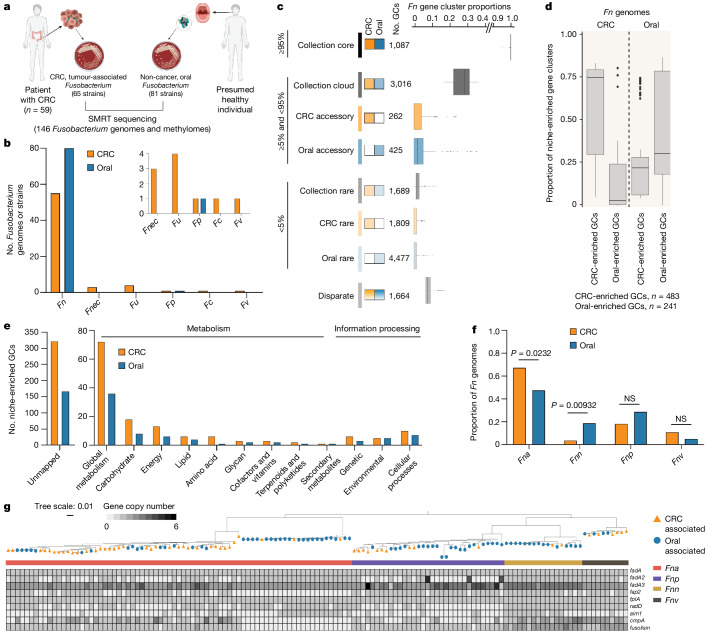
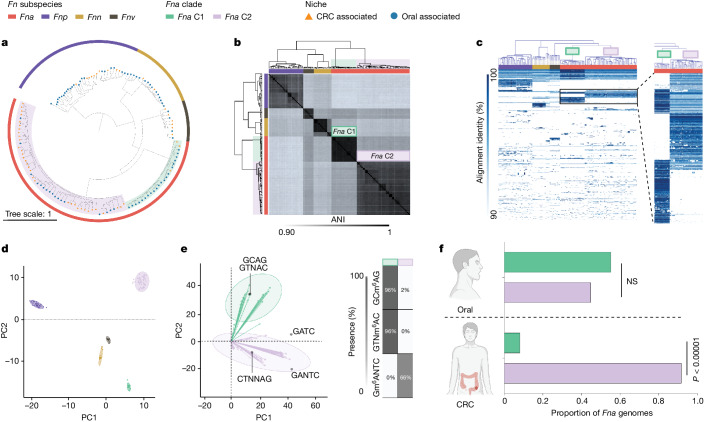
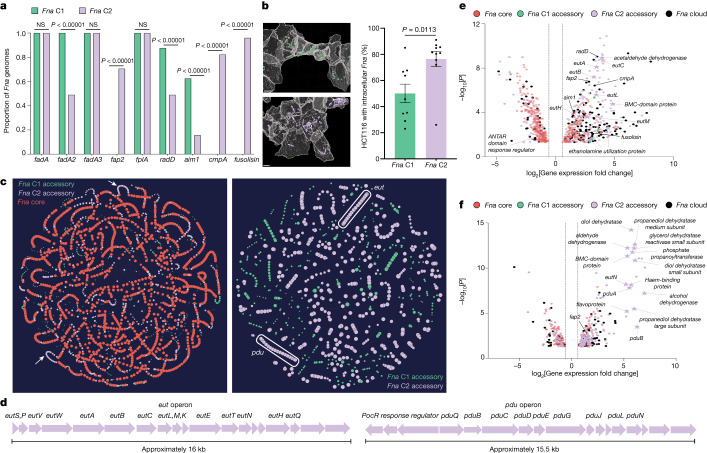
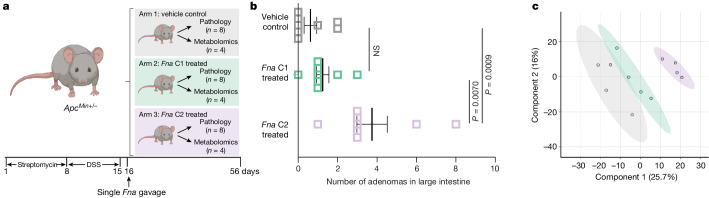
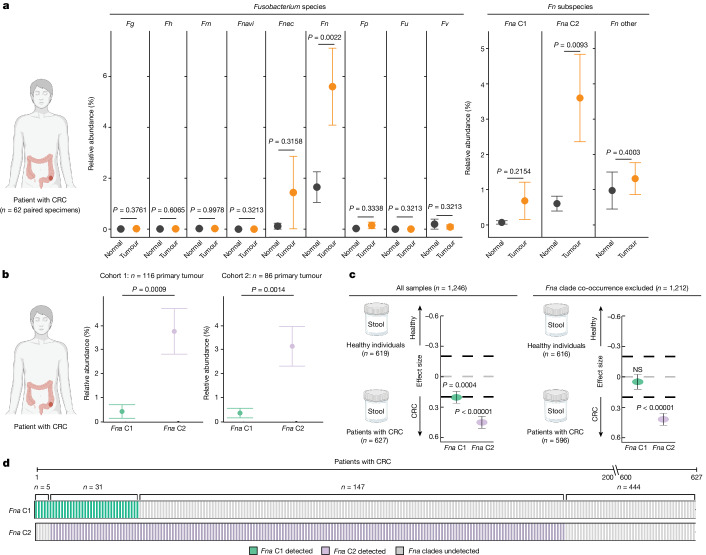
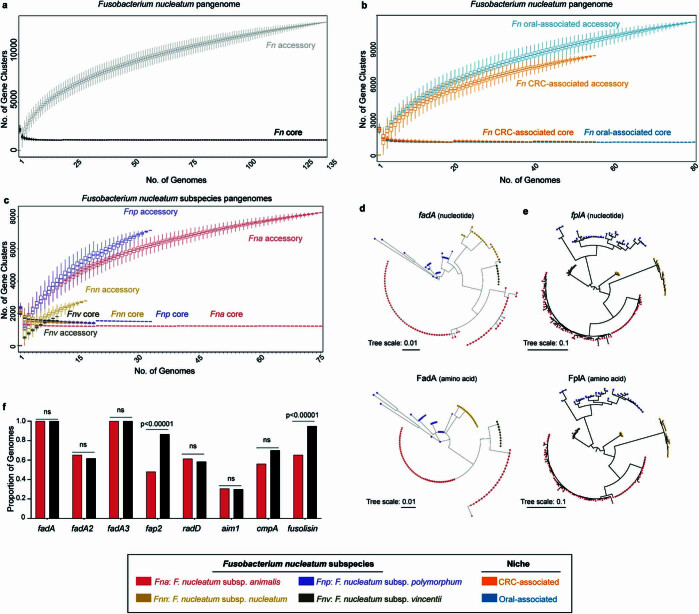
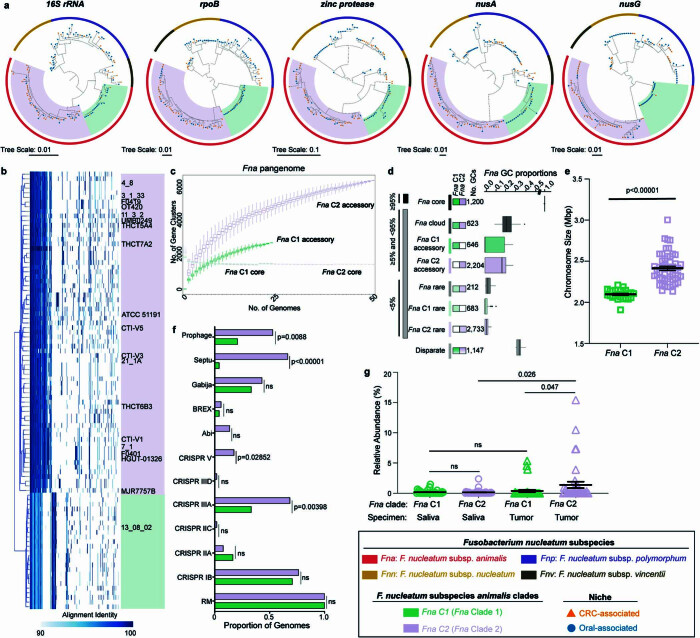
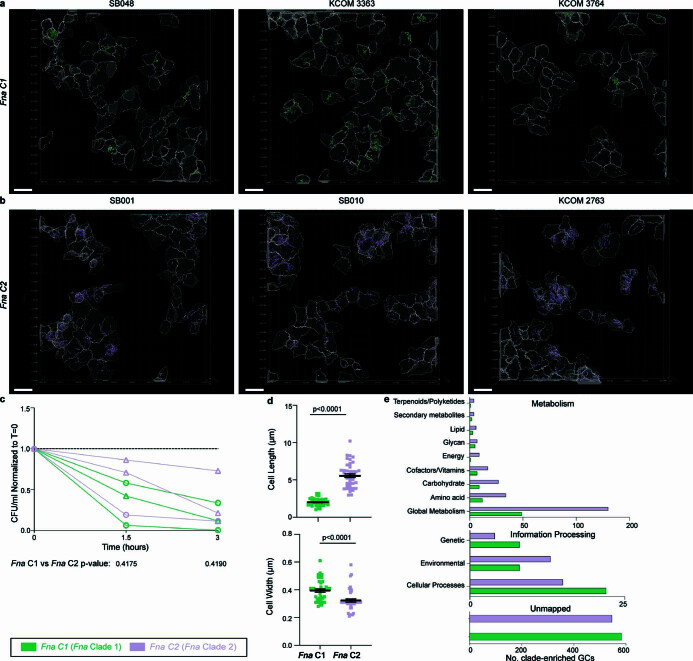
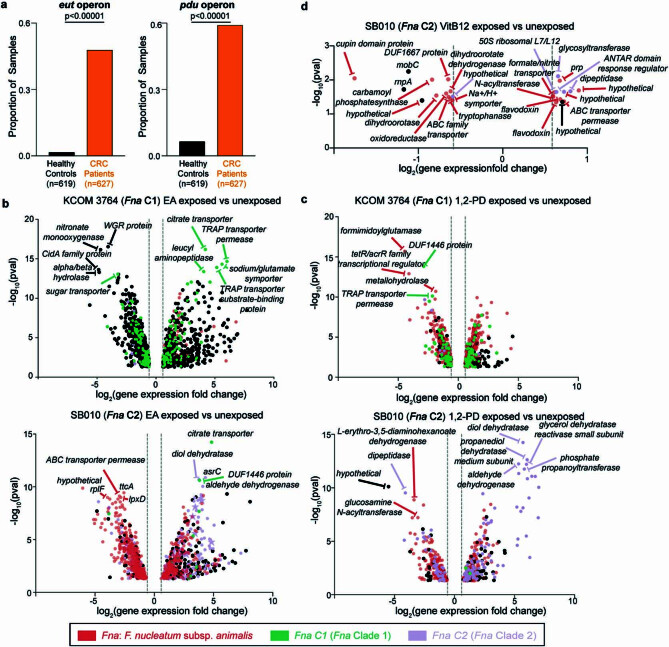
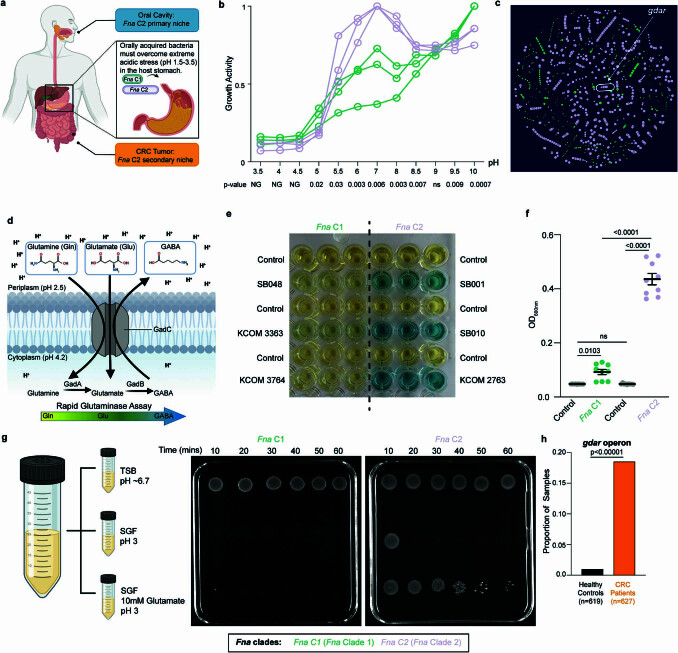
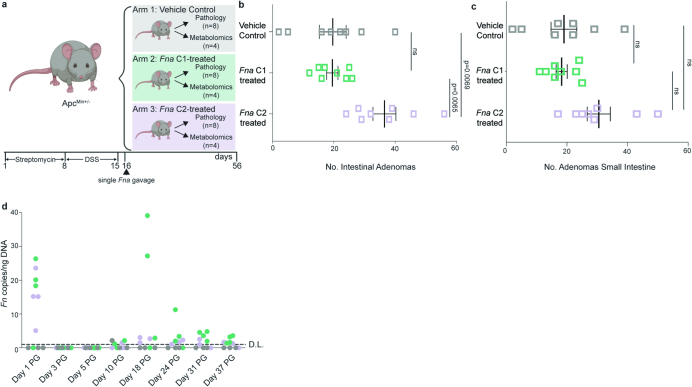
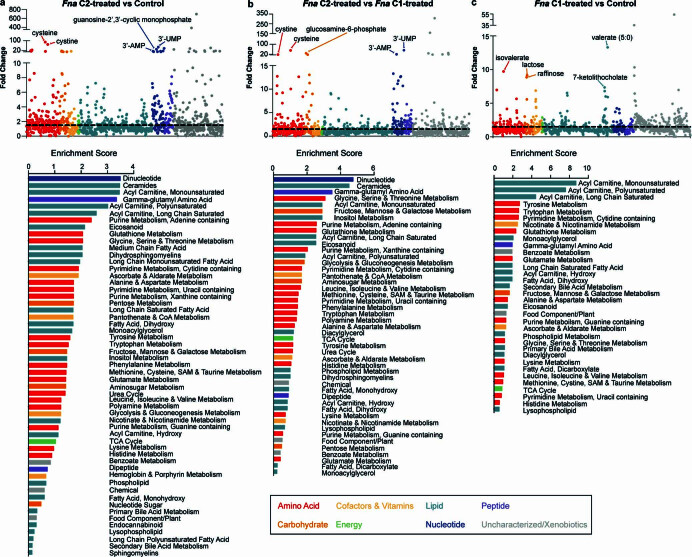
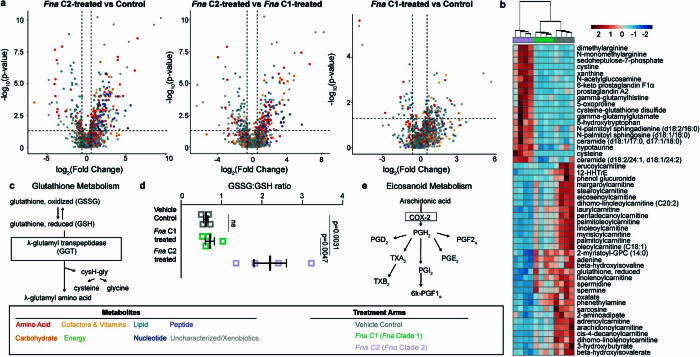
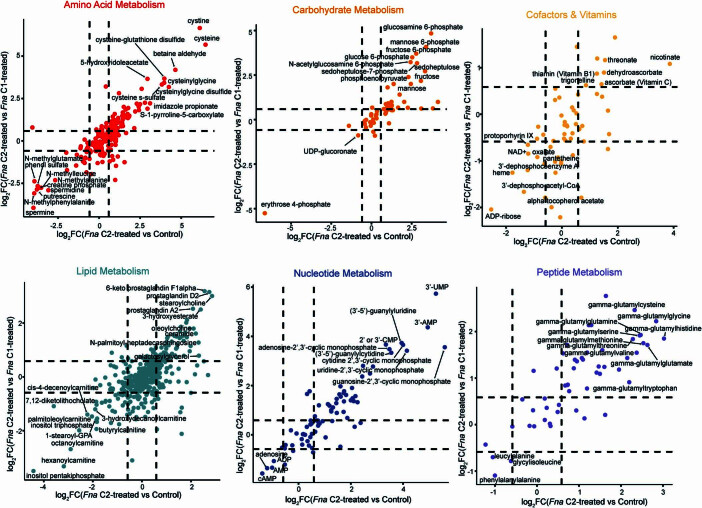
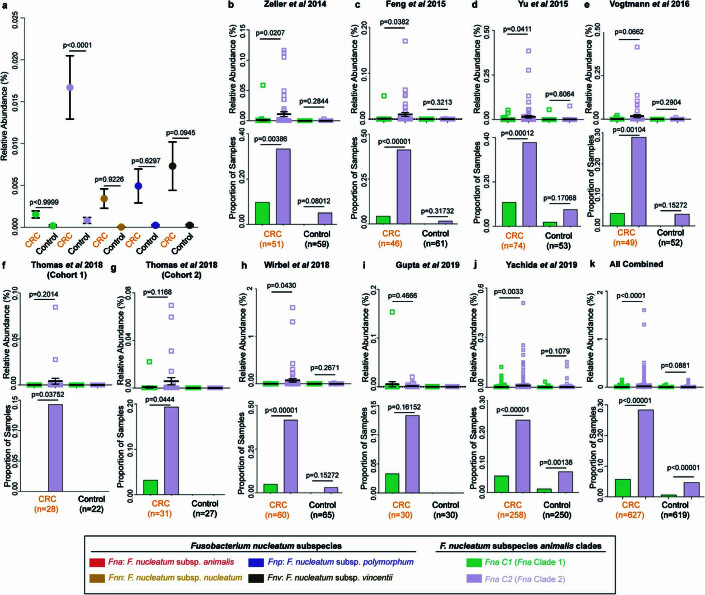
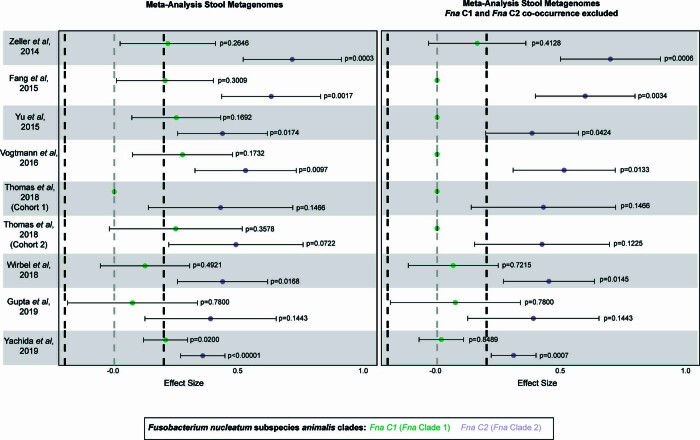
Fusobacterium nucleatum ( Fn ), a bacterium present in the human oral cavity and rarely found in the lower gastrointestinal tract of healthy individuals 1 , is enriched in human colorectal cancer (CRC) tumours 2–5 . High intratumoural Fn loads are associated with recurrence, metastases and poorer patient prognosis 5–8 . Here, to delineate Fn genetic factors facilitating tumour colonization, we generated closed genomes for 135 Fn strains; 80 oral strains from individuals without cancer and 55 unique cancer strains cultured from tumours from 51 patients with CRC. Pangenomic analyses identified 483 CRC-enriched genetic factors. Tumour-isolated strains predominantly belong to Fn subspecies animalis ( Fna ). However, genomic analyses reveal that Fna , considered a single subspecies, is instead composed of two distinct clades ( Fna C1 and Fna C2). Of these, only Fna C2 dominates the CRC tumour niche. Inter- Fna analyses identified 195 Fna C2-associated genetic factors consistent with increased metabolic potential and colonization of the gastrointestinal tract. In support of this, Fna C2-treated mice had an increased number of intestinal adenomas and altered metabolites. Microbiome analysis of human tumour tissue from 116 patients with CRC demonstrated Fna C2 enrichment. Comparison of 62 paired specimens showed that only Fna C2 is tumour enriched compared to normal adjacent tissue. This was further supported by metagenomic analysis of stool samples from 627 patients with CRC and 619 healthy individuals. Collectively, our results identify the Fna clade bifurcation, show that specifically Fna C2 drives the reported Fn enrichment in human CRC and reveal the genetic underpinnings of pathoadaptation of Fna C2 to the CRC niche.
Overview
The claims and statistics of this paper haven’t been checked yet.
Free: it reads the open-access text and checks the first 5 claims that cite a source we can check. Create a free account to check every claim.
Integrity signals
Registry
Cites
Statistics
Figures
Verification
Claims the paper makes
The claims and statistics of this paper haven’t been checked yet.
Free: it reads the open-access text and checks the first 5 claims that cite a source we can check. Create a free account to check every claim.
Claims other papers make about this one
Each is checked against this paper’s own text: does it say what the citing paper says it does?
In the citing paper
“including some (but not all) clades of F. nucleatum in the context of CRC 54”
From Impact of the ONCOBIOME network in cancer microbiome research (2025) · cites this paper as [54]
In the citing paper
“It is worth noting that CRC has often been associated with Fusobac terium species and clades, as have several other bacterial spe cies, 31,47,48”
From Global genetic diversity of human gut microbiome species is related to geographic location and host health (2025) · cites this paper as [47]
Self-check
Percentages, sums and reported differences re-computed from the paper’s own numbers.
The self-check needs the paper’s full text.
Citations
Cites
Trimmomatic: a flexible trimmer for Illumina sequence data
Bolger, A. M., Lohse, M., & Usadel, B. (2014) · Bioinformatics · doi:10.1093/bioinformatics/btu170 · Cited by 65,548
Fast gapped-read alignment with Bowtie 2
Langmead, B., & Salzberg, S. L. (2012) · Nature Methods · doi:10.1038/nmeth.1923 · Cited by 56,400 · cited 1×
“Metagenomic samples were mapped against the Fna SB010 eut , pdu and gdar operons using Bowtie2 (version 2.4.5, --sensitive parameter) 77 .”
MethodInfluentialMEGA X: Molecular Evolutionary Genetics Analysis across Computing Platforms
Kumar, S., Stecher, G., Li, M., Knyaz, C., & Tamura, K. (2018) · Molecular Biology and Evolution · doi:10.1093/molbev/msy096 · Cited by 37,529 · cited 1×
“65) using the MUSCLE clustering algorithm from which a maximum-likelihood dendrogram was generated. kSNP3 (ref.”
MethodInteractive Tree Of Life (iTOL) v5: an online tool for phylogenetic tree display and annotation
Letunic, I., & Bork, P. (2021) · Nucleic Acids Research · doi:10.1093/nar/gkab301 · Cited by 11,124 · cited 1×
“66).”
Borenstein, M., Hedges, L. V., Higgins, J. P. T., & Rothstein, H. R. (2021) · doi:10.1002/9781119558378 · Cited by 9,799
Shifting the genomic gold standard for the prokaryotic species definition
Richter, M., & Rosselló-Móra, R. (2009) · Proceedings of the National Academy of Sciences · doi:10.1073/pnas.0906412106 · Cited by 6,359
GTDB-Tk: a toolkit to classify genomes with the Genome Taxonomy Database
Chaumeil, P.-A., Mussig, A. J., Hugenholtz, P., & Parks, D. H. (2020) · Bioinformatics · doi:10.1093/bioinformatics/btz848 · Cited by 5,259
Effect size, confidence interval and statistical significance: a practical guide for biologists
Nakagawa, S., & Cuthill, I. C. (2007) · Biological Reviews · doi:10.1111/j.1469-185x.2007.00027.x · Cited by 3,835 · cited 1×
“For each model, an adjusted standardized mean difference between the two study conditions was extracted as previously described 74 : standardized mean difference = ( t × ( n 1 + n 2))/(sqrt( n 1 + n 2) × sqrt( n 1 + n 2 − 2)), in which t defines the t -score of the corresponding variable, n 1 is…”
MethodReal-Time DNA Sequencing from Single Polymerase Molecules
Eid, J., Fehr, A., Gray, J., Luong, K., Lyle, J., Otto, G., Peluso, P., Rank, D., Baybayan, P., Bettman, B., et al. (2009) · Science · doi:10.1126/science.1162986 · Cited by 3,732 · cited 1×
“Single-molecule real-time sequencing 18 was carried out on a PacBio Sequel instrument (Pacific Biosciences) or a PacBio Sequel II instrument (Pacific Biosciences) at the University of Minnesota Genomics Center.”
MethodPHASTER: a better, faster version of the PHAST phage search tool
Arndt, D., Grant, J. R., Marcu, A., Sajed, T., Pon, A., Liang, Y., & Wishart, D. S. (2016) · Nucleic Acids Research · doi:10.1093/nar/gkw387 · Cited by 3,557 · cited 1×
“The presence of innate bacterial defence systems was queried using the Prokaryotic Antiviral Defense Locator 67 and intact prophage presence was analysed using the Phage Search Tool Enhanced Release 68,69 tools.”
Method
Cited by
Items 101–200 of 451
Fusobacterium nucleatum in Health and Disease
Yang, X., Zhang, S., Ning, T., & Wu, J. (2025) · MedComm · doi:10.1002/mco2.70465 · Cited by 18
Oral pathogens meet the gut microbiome: new mechanistic insights on systemic disease
Gan, G., Chen, R., Zheng, P., Long, K., Ma, K. K., Sulaiman, J. E., & Huang, X. (2026) · Frontiers in Cellular and Infection Microbiology · doi:10.3389/fcimb.2025.1673512 · Cited by 23
Jallet, D., Soldan, V., Shayan, R., Stella, A., Ismail, N., Zenati, R., Cahoreau, E., Burlet‐Schiltz, O., Balor, S., Millard, P., et al. (2024) · mSystems · doi:10.1128/msystems.00750-24 · Cited by 15
The role of Fusobacterium nucleatum in the pathogenesis of colon cancer
Hong, B., Chhaya, A., Robles, A., Cervantes, J., & Tiwari, S. (2024) · Journal of Investigative Medicine · doi:10.1177/10815589241277829 · Cited by 15
“40 Despite both possibilities exist, F . nucleatum may be a prognostic biomarker of CRC. 41 This is important as it opens the door for the potential use of antibiotics in the treatment or prevention of CRC.”
InfluentialComparative genomics reveal a novel phylotaxonomic order in the genus Fusobacterium
Molteni, C., Forni, D., Cagliani, R., & Sironi, M. (2024) · Communications Biology · doi:10.1038/s42003-024-06825-y · Cited by 13
“This lineage comprises species often associated with CRC, including the highly studied F.nucleatum (anditssubspecies),andthedifferentspecieshavehigh sequence similarity in the analysis of core genes (Fig.”
InfluentialNakatsu, G., Ko, D., Michaud, M., Franzosa, E. A., Morgan, X. C., Huttenhower, C., & Garrett, W. S. (2025) · mBio · doi:10.1128/mbio.03732-24 · Cited by 14
γ-Linolenic acid derived from Lactobacillus plantarum MM89 induces ferroptosis in colorectal cancer
Chen, Y. X., Zhang, Y., Dai, M., Qiu, C., Sun, Q., Fan, T., Guo, Y., Zhao, L., & Jiang, Y. (2025) · Food & Function · doi:10.1039/d4fo04790g · Cited by 14
Exploring the role of gut microbiota in colorectal liver metastasis through the gut-liver axis
Liu, Q.-L., Zhou, H., Wang, Z., & Chen, Y. (2025) · Frontiers in Cell and Developmental Biology · doi:10.3389/fcell.2025.1563184 · Cited by 14
Harnessing intratumoral microbiota: new horizons in immune microenvironment and immunotherapy
Zhang, J., You, Z., Li, X., Hu, J., Li, J., & Jing, Z. (2025) · Journal of Translational Medicine · doi:10.1186/s12967-025-06916-2 · Cited by 19
“[57].”
Challenges and Opportunities in Analyzing Cancer-Associated Microbiomes
Chia, M., Pop, M., Salzberg, S. L., & Nagarajan, N. (2025) · Cancer Research · doi:10.1158/0008-5472.can-24-3629 · Cited by 12
Kohn, J. F., Troester, A. M., Ziegert, Z., Frebault, J., Boatman, S. M., Martell, M., Nalluri, H., Bobel, M. C., Goffredo, P., Johnson, A. J., et al. (2025) · Antibiotics · doi:10.3390/antibiotics14090881 · Cited by 15
Fusobacterium nucleatum: a transboundary pathogen in host-microbiota networks
Gao, X., Cao, F., Li, Y., Huang, J., Hu, X., & Li, Z. (2025) · Gut Pathogens · doi:10.1186/s13099-025-00775-4 · Cited by 12
“…resolves Fna into two functionally specialized clades: C1, enriched in oral colonization genes (radD/ ami1/fadA2), and C2, predominating in CRC tumors and harboring fap2/cmpA/fusolisin—a suite of virulence factors hypothesized to facilitate intestinal niche colonization and persistence [51].”
Streptococcus anginosus -derived methionine promotes gastric cancer progression
Zhou, C., Zhao, L., Qin, Y., Yu, J., Li, W., Feng, Q., Tong, X., Abuduaini, R., Lu, S., Tang, H., et al. (2026) · Gut · doi:10.1136/gutjnl-2025-336966 · Cited by 20
“Considering the recent advancements in the strain-level diversity of Fusobacterium nucleatum in colorectal cancer, 25 26 we performed strain-level analysis of S. anginosus and S. constellatus using StrainPhlAn 27 and inStrain 28 .”
da Silva, A. C., Lapkin, J., Yin, Q., Muller, E., & Almeida, A. (2026) · Cell Host & Microbe · doi:10.1016/j.chom.2026.01.013 · Cited by 21
Emerging trends in the global burden of colorectal cancer
Lee, D., Parikh, A., Sirohi, B., Cao, Y., & Chan, A. T. (2026) · Nature Reviews Clinical Oncology · doi:10.1038/s41571-026-01149-8 · Cited by 29
“Fusobacterium nucleatum , a typically oral species, is rarely detected in the healthy lower gut but significantly enriched in tumour tissue and stools from patients with CRC, as observed and replicated in multiple independent cohorts 116–118 .”
Normal Gut Microbiomes in Diverse Populations: Clinical Implications
Shete, O., & Ghosh, T. S. (2024) · Annual Review of Medicine · doi:10.1146/annurev-med-051223-031809 · Cited by 12
Vargas, E., & Rincón‐Riveros, A. (2025) · Cancer Medicine · doi:10.1002/cam4.70603 · Cited by 15
Exploring micronutrients and microbiome synergy: pioneering new paths in cancer therapy
Bhatnagar, K., Jha, K., Dalal, N., Patki, N., Gupta, G., Kumar, A., Kumar, A., & Chaudhary, S. (2024) · Frontiers in Immunology · doi:10.3389/fimmu.2024.1442788 · Cited by 12
“Microbiome analysis of human tumor tissue and metagenomic analysis of stool samples consistently indicates a clear enrichment of F. nucelatum animalis clade 2 , especially in the proximal colon, with its presence varying across patients tissues from approximately 10% to 90% (147, 148).”
Sharma, K. K., Gupta, S., & Bisen, P. S. (2025) · Journal of Cancer Biomoleculars and Therapeutics · doi:10.62382/jcbt.v2i1.28 · Cited by 12
Linking microbiome to cancer: A mini-review on contemporary advances
Lim, L. W. K. (2025) · The Microbe · doi:10.1016/j.microb.2025.100279 · Cited by 10
Zhao, S., Yu, Y., Xin, Y., Lu, H., Li, X., Wang, S., Ma, F., & Gao, H. (2025) · Nano Today · doi:10.1016/j.nantod.2025.102742 · Cited by 11
Zhong, H., Pan, Z.-Y., Wei, Y.-F., Yu, Q., Wu, L., Hong Kui, W. E. I., & He, X. (2025) · Journal of Translational Medicine · doi:10.1186/s12967-025-06846-z · Cited by 12
Choudhury, A., Scano, C., Barton, A., Kearney, C. M., & Greathouse, K. L. (2025) · Microbial Biotechnology · doi:10.1111/1751-7915.70241 · Cited by 10
Mafra, D., Borges, N. A., Baptista, B. G., Martins, L. F., Borland, G., Shiels, P. G., & Stenvinkel, P. (2024) · Nutrients · doi:10.3390/nu16111789 · Cited by 12
Majumder, B., Nataraj, N. B., Maitreyi, L., & Datta, S. (2024) · Frontiers in Immunology · doi:10.3389/fimmu.2024.1414376 · Cited by 11
The emerging role of Fusobacteria in carcinogenesis
Gibbs, R. J., Chambers, A., & Hill, D. J. (2024) · European Journal of Clinical Investigation · doi:10.1111/eci.14353 · Cited by 9
Development of a conditional plasmid for gene deletion in non-model Fusobacterium nucleatum strains
Zhou, P., Bibek, G. C., & Wu, C. (2025) · Applied and Environmental Microbiology · doi:10.1128/aem.01816-24 · Cited by 7
“Interestingly, studies have suggested that within the FNA subspecies, there are two distinct clades, C1 and C2, with only FNA C2 dominating the CRC tumor niche (20).”
Scano, A., Fais, S., Ciappina, G., Genovese, M., Granata, B., Montopoli, M., Consolo, P., Carroccio, P., Muscolino, P., Ottaiano, A., et al. (2025) · Antioxidants · doi:10.3390/antiox14030323 · Cited by 9
Diet’s impact on gut microbial assemblage in health and disease
Koletic, C. F., Mrad, A., Martin, A., & Devkota, S. (2025) · Journal of Clinical Investigation · doi:10.1172/jci184319 · Cited by 10
“For example, a recurring observation in the gut microbiomes of individuals living in urban, industrialized areas includes reduced bacterial diversity relative to individuals living in rural areas that is coupled with increased incidence of metabolic, cardiovascular, and GI diseases (51, 54, 60, 61).”
Jeepipalli, S. P. K., Aravindraja, C., Duncan, W. D., Krishna, V., Sahay, B., Chan, E. K. L., & Kesavalu, L. N. (2025) · mSystems · doi:10.1128/msystems.01732-24 · Cited by 9
Dan, W., Xiong, C., Zhou, G., Chen, J., & Pan, F. (2025) · Biochimica et Biophysica Acta (BBA) - Reviews on Cancer · doi:10.1016/j.bbcan.2025.189381 · Cited by 11
Subspecies of the human gut microbiota carry implicit information for in-depth microbiome research
Tričković, M., Kieser, S., Zdobnov, E. M., & Trajkovski, M. (2025) · Cell Host & Microbe · doi:10.1016/j.chom.2025.07.015 · Cited by 13
Zhang, R., Li, M., Tan, H. Q., Liu, J., Wang, L., Dai, W., Fan, Z., & Liu, J. (2025) · Gut Microbes · doi:10.1080/19490976.2025.2555446 · Cited by 13
Design and application of synthetic human gut microbial communities
Kim, M. S., & Bisanz, J. E. (2025) · Gut Microbes · doi:10.1080/19490976.2025.2575923 · Cited by 10
“103 Using a model-based design approach with metabolic networking, they designed SynCom, a 7-member community with complementary metabolic capacity.”
Personalized Delivery of Probiotics and Prebiotics via 3D Food Printing
Yu, J. Y. (2025) · Metabolites · doi:10.3390/metabo15110744 · Cited by 12
Biodiversity and biogeography of the multi-kingdom cancer microbiome
Dohlman, A. B., Mjelle, R., Wood, H. M., Jiang, K., Shumate, A., Lee, I., Piccinno, G., Serna, G., Yakubu, A.-R., Nuciforo, P. G., et al. (2026) · Cell · doi:10.1016/j.cell.2026.04.015 · Cited by 16
Self-citationSong, Y., Wang, X., Lu, X., & Wang, T. (2024) · Ecotoxicology and Environmental Safety · doi:10.1016/j.ecoenv.2024.116750 · Cited by 9
Mechanisms by Which the Intratumoral Microbiome May Potentiate Immunotherapy Response
Figueroa, D. N., & Colbert, L. E. (2024) · Journal of Clinical Oncology · doi:10.1200/jco.24.00908 · Cited by 7
Association of Fusobacterium nucleatum infection with colorectal cancer in Kazakhstani patients
Kulmambetova, G., Kurentay, B., Гусмаулемова, А., Utupov, T., Auganova, D., Tarlykov, P., Mamlin, M., Khamzina, S., Shalekenov, S. B., & Kozhakhmetov, A. (2024) · Frontiers in Oncology · doi:10.3389/fonc.2024.1473575 · Cited by 11
Bai, H., Liu, T., Wang, H., Li, Y., & Wang, Z. (2025) · Journal of Agricultural and Food Chemistry · doi:10.1021/acs.jafc.4c12847 · Cited by 8
Obesity and cancer: unravelling the microbiome’s hidden role
Gaskell, C., MacDonald, R. S., Aleem, E. A., & Bendriss, G. (2025) · Frontiers in Nutrition · doi:10.3389/fnut.2025.1602603 · Cited by 11
Wang, Q., Lu, Q., Tang, Y., Li, Q., Gao, P., Pang, S., Zhang, W., Nie, C., Niu, J., & Ma, X. (2025) · Frontiers in Veterinary Science · doi:10.3389/fvets.2025.1615310 · Cited by 13
“Additionally, it can disrupt tight junctions in intestinal epithelial cells, increasing intestinal permeability and leading to increased serum levels of ET and DAO (51).”
Wang, X., Feng, S., Chen, H., Zhou, B., Fan, T., Qin, Y., Zhao, L., Jiang, Y., & Chen, Y. X. (2025) · Analytical Chemistry · doi:10.1021/acs.analchem.5c04132 · Cited by 8
Metalog: curated and harmonised contextual data for global metagenomics samples
Kuhn, M., Schmidt, T., Ferretti, P., Glazek, A. M., Robbani, S. M., Akanni, W. A., Fullam, A., Schudoma, C., Cetin, E., Hassan, M., et al. (2025) · Nucleic Acids Research · doi:10.1093/nar/gkaf1118 · Cited by 17
Advanced oral therapies for colorectal cancer via nanomedicine and microbiota modulation
Wang, Y., Chen, C., Xiao, X. H., Kang, Y., He, J., Beloqui, A., & Xu, Y. (2025) · Advanced Drug Delivery Reviews · doi:10.1016/j.addr.2025.115741 · Cited by 10
Agüera-Sánchez, A., Ros, E. P., Martínez‐Martínez, I., & García-Molina, F. (2026) · Journal of Personalized Medicine · doi:10.3390/jpm16010048 · Cited by 11
“The overabundance of these microorganisms, among other microbial shifts in stool, has been proposed as a biomarker to flag individuals at risk for CRC [5,68].”
Chen, Y., Zheng, Y., & Liu, S. (2024) · Journal of Cellular and Molecular Medicine · doi:10.1111/jcmm.70182 · Cited by 9
“24 The planktonic growth and density of FN were monitored by measuring the OD at 600 nm.”
MethodZepeda‐Rivera, M. A., Eisele, Y., Baryiames, A. A., Wu, H., Mengoni, C., Piccinno, G., McMahon, E. F., LaCourse, K. D., Jones, D. S., Hauner, H., et al. (2024) · Gut Microbes · doi:10.1080/19490976.2024.2442522 · Cited by 10
“As significant genomic heterogeneity has been reported within the Fusobacterium genus, with genome size, architecture, and content differing between species of varying pathogenic capabilities, 17,18 we sought to characterize the genomic content of Fs .”
Self-citationBacteria and Carcinogenesis and the Management of Cancer: A Narrative Review
Plewa, P., Kiełbowski, K., Mentel, O., Figiel, K., Bakinowska, E., Becht, R., Banach, B., & Pawlik, A. (2025) · Pathogens · doi:10.3390/pathogens14050509 · Cited by 9
“Zepeda-Rivera et al. [63] observed that a specific clade of F. nucleatum colo-nizes CRC tissue, thus highlighting its specific properties.”
Deng, Y., Liu, D., Dissanayake, I., Jaye, K. M., Bhuyan, D. J., Low, M., & Li, C. G. (2025) · Food Research International · doi:10.1016/j.foodres.2025.116836 · Cited by 11
Abdelaziz, M. A., Alalawy, A. I., Sobhi, M., Alatawi, O. M., & Alaysuy, O. (2025) · International Journal of Biological Macromolecules · doi:10.1016/j.ijbiomac.2025.146093 · Cited by 9
Meta-analysis of gut microbiome reveals patterns of dysbiosis in colorectal cancer patients
Yan, R., Zheng, R., Han, Y., Song, G., Huo, B., & Sun, H. L. (2025) · Journal of Medical Microbiology · doi:10.1099/jmm.0.002042 · Cited by 9
“For example, metabolic products of certain bacteria can cause DNA damage in intestinal epithelial cells and induce non-dependent apoptosis of p53 [16–18].”
Fan, Y., Gu, X., Yang, H., Chen, Y., Fang, C., Deng, H., & Dai, L. (2025) · Molecular Biomedicine · doi:10.1186/s43556-025-00376-2 · Cited by 10
Autoimmunity and Periodontitis
Costalonga, M., Thumbigere‐Math, V., & Herzberg, M. (2026) · Journal of Periodontal Research · doi:10.1111/jre.70058 · Cited by 7
“Mucosal biopsies from IBD and colorectal cancer patients are often enriched in oral taxa such as Fusobacterium nucleatum [31, 32, 117, 150–154], P. gingivalis [33–37], Prevotella [34, 38–42], Veillonellaceae [43, 152], and Klebsiella [44, 45], correlating with the severity of intestinal pathology…”
Wolf, M., Scholz, K. J., Al‐Ahmad, A., Steinberg, T., Kruse, A., Rezasoltani, S., Cieplik, F., & Conrads, G. (2026) · Virulence · doi:10.1080/21505594.2026.2629110 · Cited by 8
“In contrast, these three factors were significantly associated with Fan , which exhibited increased adherence and invasion in CRC models [17].”
InfluentialSetting higher standards for reports of microbial species in human cancers
Salzberg, S. L., Chia, M., Tay, C. Y., de Miranda, N. F. C. C., Smit, V. T. H. B. M., Wesseling, J., Irizarry, R. A., Marshall, B. J., Willerslev, E., Neefjes, J., et al. (2026) · Nature Cancer · doi:10.1038/s43018-026-01121-6 · Cited by 8
Bachir, A., Altaie, A. M., Bendardaf, R., Talaat, I. M., & Hamoudi, R. (2026) · Frontiers in Microbiology · doi:10.3389/fmicb.2026.1795882 · Cited by 9
Pekel, S., Karcher, N., Essex, M., Springer, F., Romano, S., Ducarmon, Q. R., Schudoma, C., Larralde, M., Lupatin, A., Zeißig, S., et al. (2026) · Cell Host & Microbe · doi:10.1016/j.chom.2026.05.030 · Cited by 12
A crucial Fusobacterium nucleatum clade in colorectal cancer
Ray, K. (2024) · Nature Reviews Gastroenterology & Hepatology · doi:10.1038/s41575-024-00930-3 · Cited by 7
Intraspecies associations from strain-rich metagenome samples
Qu, E. B., Baker, J. S., Markey, L., Khadka, V. D., Mancuso, C. P., Tripp, A. D., & Lieberman, T. D. (2025) · Cell Reports · doi:10.1016/j.celrep.2025.116134 · Cited by 7
“We have demonstrated improved performance using both simulated (Figure 3) and real metagenomic data (Figure 4) and demonstrated PHLAME’s practical utility by identifying novel microbial associations in public metagenomes (Figures 5 and 6).”
Lu, W., Aihaiti, A., Abudukeranmu, P., Liu, Y., & Gao, H. (2024) · Journal of Translational Medicine · doi:10.1186/s12967-024-05320-6 · Cited by 9
“For instance, Fusobacteria, commonly found in the human oral cavity, has been detected in higher abundance in CRC tissues compared to healthy controls, suggesting its role in promoting tumour growth and CRC progression [97–100].”
BackgroundGonzález, A., Fullaondo, A., Navarro, D., Rodríguez, J., Tîrnȃucȃ, C., & Odriozola, A. (2024) · Cancers · doi:10.3390/cancers16234008 · Cited by 8
Greco, L., Rubbino, F., Ferrari, C., Cameletti, M., Grizzi, F., Bonelli, F., Malesci, A., Mazzone, M., Ricciardiello, L., & Laghi, L. (2025) · Gut Microbiome · doi:10.1017/gmb.2025.3 · Cited by 8
Guan, Z., Qi, H., & Feng, Q. (2025) · View · doi:10.1002/viw.20240153 · Cited by 7
Bacteria-assisted metal antitumor immunotherapy
Guo, J., Liang, J., Chen, Z., Pan, Y., He, Y., & Chao, H. (2025) · Coordination Chemistry Reviews · doi:10.1016/j.ccr.2025.216938 · Cited by 6
Dias, K. K. D. R., Tochetto, C., Varela, A. P. M., Loiko, M. R., dos Santos, A. C., Frazzon, J., Roehe, P. M., & Mayer, F. Q. (2025) · Microbial Pathogenesis · doi:10.1016/j.micpath.2025.107878 · Cited by 7
Colorectal cancer-associated Streptococcus gallolyticus : a hidden diversity expose
Périchon, B., Cokelaer, T., Teh, W. K., du Merle, L., Ma, L., Touchon, M., Doloy, A., Poyart, C., Givskov, M., Trieu‐Cuot, P., et al. (2025) · Journal of Bacteriology · doi:10.1128/jb.00230-25 · Cited by 6
“Very recently, it was shown that a distinct Fusobacterium nucleatum clade dominates the colorectal cancer niche, namely Fn subsp. animalis clade 2 (18).”
Primary tumor microbiomes predict distant metastasis of colorectal cancer
Parajuli, B., Midya, V., Kiddle, R., Jager, N. D., Eggers, S. I., Spakowicz, D. J., Hoyd, R., Salhia, B., Chan, C. H. F., Churchman, M. L., et al. (2025) · npj Precision Oncology · doi:10.1038/s41698-025-01188-x · Cited by 9
“Speci fi c sub-species Fusobacterium taxa (the Fna C2 clade) have been implicated as key colonizers of human CRC 41 , and this level of granular genetic diversity is not measured with our 16S metagenomics approach.”
Wang, J.-Y., Lu, Y.-Q., Tan, X.-R., Ma, S., Dai, J.-H., Feng, S.-Y., Duan, Y.-F., Bai, J., Li, Y.-Q., Gong, S., et al. (2026) · Molecular Cancer · doi:10.1186/s12943-026-02581-1 · Cited by 10
“A maximum-likelihood phylogenetic tree was constructed based on 259 high-quality F. nucleatum genomes, comprising 10 draft genomes generated in this study, 180 publicly available genomes from the NCBI database, and 69 genomes sourced from M. Zepeda-Rivera et al. [21].”
Unveiling the culprit: the fusobacterium lineage that populates colorectal cancer
Betge, J., & Ebert, M. P. (2024) · Signal Transduction and Targeted Therapy · doi:10.1038/s41392-024-01844-x · Cited by 6
Niu, J., Su, M., De‐E, L., Li, N., Xin, Y., Chen, Q., Yunjian, Y., Feihe, M., Elsabahy, M., & Gao, H. (2024) · Advanced Healthcare Materials · doi:10.1002/adhm.202402887 · Cited by 8
Ethanolamine-induced assembly of microcompartments is required for Fusobacterium nucleatum virulence
Franklin, D. S., Chen, Y.-W., Chen, Y., Wittchen, M., Agnew, A., Luu, A., Whitelegge, J. P., Zhou, Z. H., Tauch, A., Das, A., et al. (2024) · mBio · doi:10.1128/mbio.03405-24 · Cited by 7
Gestal, M. C., Oates, A. E., Akob, D. M., Criss, A. K., Speakers, H.-M. R., Fidel, P. L., Watnick, P. I., Young, V. B., Zackular, J. P., Casadevall, A., et al. (2024) · mSphere · doi:10.1128/msphere.00256-24 · Cited by 7
Di Pierro, F., Sagheddu, V., Galletti, S., Casaroli, A., Labrini, E., Soldi, S., Cazzaniga, M., Bertuccioli, A., Matera, M., Cavecchia, I., et al. (2026) · Probiotics and Antimicrobial Proteins · doi:10.1007/s12602-025-10522-5 · Cited by 5
“Studies on the gut microbiota have recently provided strong evidence of the involvement of intestinal oncobacteria such as F. nucleatum , enterotoxigenic B. fragilis , and pathogenic E. coli strains [149–152].”
Oral microbiota in colorectal cancer: Unraveling mechanisms and application potential
Zhang, X., Chen, Y., Xia, Y., Lin, S., Zhou, X., Pang, X., Yu, J., & Sun, L. (2025) · Life Sciences · doi:10.1016/j.lfs.2025.123462 · Cited by 5
Silva, C. A. C., Almonte, A. A., & Zitvogel, L. (2025) · Biomolecules · doi:10.3390/biom15040504 · Cited by 6
“Importantly, distinct strains or subclades of microbial species may have different biological effects and clinical relevance [34,72,91].”
Microbial metabolite ammonia disrupts TGF-β signaling to promote colon cancer
Bhowmick, K., Yang, X., Mohammad, T., Xiang, X., Molmenti, C. L. S., Mishra, B., Dasarathy, S., Krainer, A. R., Hassan, M. I., Crandall, K. A., et al. (2025) · Journal of Biological Chemistry · doi:10.1016/j.jbc.2025.108559 · Cited by 6
“Fusobacterium nucleatum – derived succinic acid inhibits the cGAS – interferon-b pathway promoting CRC through effects on the tumor microenvironment (9 – 11).”
Luévano, J. M., Liu, J. C., & Stappenbeck, T. S. (2025) · Clinical and Translational Gastroenterology · doi:10.14309/ctg.0000000000000864 · Cited by 6
“Several prevalent oral bacteria, Peptostreptococcus (43) and F. nucleatum (67 – 69), have been associated with CRC, and unique oral microbiome shifts were successfully used to develop predictive models (60,62).”
Yang, Y., Chen, Y., Liu, Q., Guan, L., & Liang, G. (2025) · Tissue and Cell · doi:10.1016/j.tice.2025.103065 · Cited by 5
Hemati, S., Abdolalipour, E., Emadi, A., Ghadiri-Asli, S.-A., Aghababa, A. A., Sanami, S., Naderian, R., Mahooti, M., & Zare, D. (2025) · Food Bioscience · doi:10.1016/j.fbio.2025.107400 · Cited by 5
Glowacki, R. W. P., Engelhart, M. J., Till, J. M., Kadam, A., Nemet, I., Sangwan, N., & Ahern, P. P. (2025) · Microbiology Spectrum · doi:10.1128/spectrum.03419-24 · Cited by 7
Omran, T. A., Camacho, J. L. S., Senthakumaran, T., Gundersen, G., Alte, A. K., Randen, U., Tunsjø, H. S., Saether, P. C., & Bemanian, V. (2025) · Frontiers in Immunology · doi:10.3389/fimmu.2025.1601423 · Cited by 5
“F. animalis has emerged as the predominant species detected in CRC tumors (7 – 9).”
Microbiome unlocks cancer immunotherapeutic potential: State of the art and future
Luo, H.-Y., Cao, L., Zhou, K., Xiao, Y., Li, Z., Liu, B., & Bu, L. (2025) · Seminars in Cancer Biology · doi:10.1016/j.semcancer.2025.08.001 · Cited by 6
Fusobacterium nucleatum Lipopolysaccharides O-Antigen Defines a Novel Siglec-7 Binding Epitope
Carluccio, C. D., Nieto‐Fabregat, F., Cerofolini, L., Abreu, C., Padilla‐Cortés, L., Gheorghita, G. R., Masi, A. A., Buono, L., Ali, M. G. A., Lamprinaki, D., et al. (2025) · JACS Au · doi:10.1021/jacsau.5c00810 · Cited by 7
Lowe, M. S., & Peek, R. M. (2025) · Frontiers in Microbiology · doi:10.3389/fmicb.2025.1691080 · Cited by 7
Yu, Y., Jin, Y., Zhou, Y., Cui, Z., Xin, Y., Liu, H., Zhao, J., Elsabahy, M., Su, M., & Gao, H. (2025) · Journal of Controlled Release · doi:10.1016/j.jconrel.2025.114512 · Cited by 5
Chen, Y., & Tang, D. (2026) · Frontiers in Immunology · doi:10.3389/fimmu.2026.1739357 · Cited by 7
“Speci fi cally, CRC cells downregulate von Hippel-Lindau (VHL) protein in Schwann cells (37).”
InfluentialGenome-wide sweeps create ecological units in the human gut microbiome
Yu, X. A., Strachan, C. R., Herbold, C. W., Lang, M., Gasché, C., Makristathis, A., Segata, N., Pollak, S., Tett, A., & Polz, M. F. (2026) · Nature · doi:10.1038/s41586-026-10476-w · Cited by 12
“Such hypotheses can subsequently be tested in experimental models using animals colonized with isolates assumed to represent the identified bacterial group 6,7 .”
Self-citationTruong, T. T. T., Phan, T. V., Oo, Y., Sariya, L., Chaisuparat, R., Scaglione, S., Souza, G. R., Yodmuang, S., Hong, C., Tan, K. S., et al. (2025) · Engineered Regeneration · doi:10.1016/j.engreg.2025.02.001 · Cited by 7
Hirasawa, Y., Isobe, J., Hosonuma, M., Tsurui, T., Baba, Y., Funayama, E., Tajima, K., Murayama, M., Narikawa, Y., Toyoda, H., et al. (2025) · Frontiers in Immunology · doi:10.3389/fimmu.2025.1528521 · Cited by 5
Wu, K., Xu, B., Zhou, X., Guo, H., Du, G., Zhang, C., Chen, F., & Chen, X. (2025) · Infectious Agents and Cancer · doi:10.1186/s13027-025-00662-2 · Cited by 8
Whittling down the bacterial subspecies that might drive colon cancer
Sears, C. L., & Queen, J. (2024) · Nature · doi:10.1038/d41586-024-00662-z · Cited by 5
pks+ E. coli adhesins—The fine line between good and evil
Wong, C. C., & Yu, J. (2025) · Cell Host & Microbe · doi:10.1016/j.chom.2024.12.007 · Cited by 5
A pan-cancer atlas of therapeutic T cell targetsPreprint
Li, G., Guzmán-Bringas, O. U., Sharma, A., Dellacherie, M. O., Sekhri, P., Yamin, R., Stepec, D., Burq, M., Clotea, I., Tardio, E., et al. (2025) · bioRxiv (Cold Spring Harbor Laboratory) · doi:10.1101/2025.01.22.634237 · Cited by 9
Ang, T. L., Koo, S. H., Ang, D., Tan, C. K., Wang, L. M., Wong, S. H., & Chow, P. K. H. (2024) · Journal of Gastroenterology and Hepatology · doi:10.1111/jgh.16846 · Cited by 6
“Species and even strain [43, 44] or clade level [45] resolution is important for characterizing the impact of microbiota on health or disease.”
Microbiome data integration via shared dictionary learning
Yuan, B., & Wang, S. (2025) · Nature Communications · doi:10.1038/s41467-025-63425-y · Cited by 8
“…linked to periodontitis disease (Karim et al., 2013; Bao et al., 2017; Mazurel et al., 2023) show a significant association with the development of colorectal cancer, fur-436 ther underscoring the close relationship between the oral microbiome and colorectal cancer (Zepeda-Rivera et al., 2024).”
Wu, Z., Zhu, Z., Zhou, C., Lin, Z., Yang, H., Jiang, G., Ding, S., Yu, J., & Sun, L. (2025) · Frontiers in Microbiology · doi:10.3389/fmicb.2025.1658693 · Cited by 5
Wu, Y., Ji, G. L., Han, D., Zhang, Y., Zhu, X., Li, H., Li, M., Gao, Y., Xie, R., Xu, M., et al. (2025) · npj Biofilms and Microbiomes · doi:10.1038/s41522-025-00826-3 · Cited by 5
“It has been suggested that fap2 , cmpA and fusolisin are responsible for promoting gastrointestinal niche adaptation, whereas fadA2 , radD and aim1 are related to adaptation in the oral niche 9 .”
InfluentialSelf-citationChoi, E.-M., & Park, S.-K. (2025) · Frontiers in Oral Health · doi:10.3389/froh.2025.1668943 · Cited by 4
Self-citationThe gut microbiota and colorectal cancer: Molecular insights and translational implications
Chen, J., Du, X., Shao, M., Sun, Y., Shi, X., & He, S. (2025) · Clinical Surgical Oncology · doi:10.1016/j.cson.2025.100107 · Cited by 5
Metadata
- Authors
- Zepeda-Rivera, M., Minot, S. S., Bouzek, H., Wu, H., Blanco-Míguez, A., Manghi, P., Jones, D. S., LaCourse, K. D., Wu, Y., McMahon, E. F., Park, S.-N., Lim, Y. K., Kempchinsky, A. G., Willis, A. D., Cotton, S. L., Yost, S. C., Sicinska, E., Kook, J.-K., Dewhirst, F. E., Segata, N., Bullman, S., & Johnston, C. D.
- Affiliations
- Fred Hutch Cancer Center (US)
- University of Trento (IT)
- Chosun University (KR)
- University of Washington (US)
- The Forsyth Institute (US)
- Harvard University (US)
- Corresponding author
- Bullman, Susan
- Johnston, Christopher D.
- ORCID
- Venue
- Nature
- Published
- 2024-03-20
- Volume
- 628
- Issue
- 8007
- Pages
- 424-432
- ISSN
- 0028-0836 (ISSN-L)
- 1476-4687
- PMC
- PMC11006615
- OpenAlex
- W4392984046
- Cited by
- 451
- References
- 80
- Citations by year
- 2026: 174 · 2025: 203 · 2024: 74
- FWCI
- 61.22
- Type
- journal article
- Language
- en
- Open access
- hybrid
- doi.org
- Licence
- cc-by
- creativecommons.org/licenses/by/4.0 (tdm)
- creativecommons.org/licenses/by/4.0 (vor)
- Locations
- Nature (publishedVersion, cc-by)
- PubMed Central (publishedVersion, cc-by)
- PubMed (publishedVersion)
- RePEc: Research Papers in Economics (submittedVersion)
- Institutional Research Information System (Università degli Studi di Trento) (submittedVersion)
- Funders
- Washington Research Foundation
- Fred Hutchinson Cancer Research Center (P30CA015704)
- University of Washington (P30 CA015704)
- National Research Foundation
- National Institutes of Health (1s10od028685-01, CA015704)
- National Cancer Institute (CA015704, R00CA229984, P30CA015704)
- National Institute of General Medical Sciences (R35GM133420)
- National Institute of Dental and Craniofacial Research (R21DE033533, R01DE027850)
- Topics
- Life Sciences › Biochemistry, Genetics and Molecular Biology › Molecular Biology › Gut microbiota and health
- Health Sciences › Dentistry › Periodontics › Oral microbiology and periodontitis research
- Health Sciences › Medicine › Infectious Diseases › Clostridium difficile and Clostridium perfringens research
- Keywords
- Fusobacterium nucleatum, colorectal cancer, bacterial clades, pan-genome, gut microbiota, pathoadaptation, intestinal adenoma, metagenomics, strain genomics
- MeSH terms
- Adenoma, Animals, Feces, Female, Humans, Mouth, Colorectal Neoplasms, Case-Control Studies, Genome, Bacterial, Fusobacterium nucleatum, Gastrointestinal Tract, Mice
About these checks
Registry, retraction, Cites and statistics results are computed, not judged, with one exception: a printed reference that no index lists is read once by a model before it counts as a citation error. Claims are extracted by a model and kept only when their quote appears verbatim in the text; each cited source is then checked, with a model’s help, for whether it says what the claim relies on. Those verdicts can be wrong — read the claim’s quote and the cited source before relying on one.
Statistics and arithmetic are recomputed, not judged.
Confidence bands are shown only for fields calibrated on our annotated test set. None is calibrated yet, so no band is shown.
What counts as a claim ›How we measure confidence ›How we check this ›
Are you an author, or do you see a problem with this page? Request a review
Data sources
Bibliographic data: Semantic Scholar, OpenAlex, Crossref.
Contains information from the Semantic Scholar Academic Graph Datasets, made available under the ODC Attribution License (ODC-BY 1.0).
Semantic Scholar’s data is described in: Kinney, R., et al. (2023). The Semantic Scholar Open Data Platform. arXiv:2301.10140.
