

A distinct Fusobacterium nucleatum clade dominates the colorectal cancer niche
Open accessThe DOI matches its Crossref record; 82 of the 82 references it cites were found in a registry or an index.
Abstract
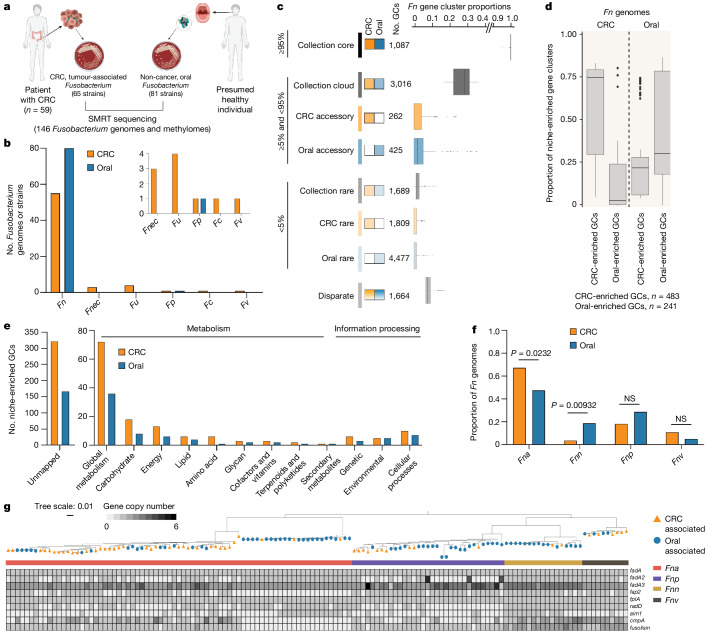
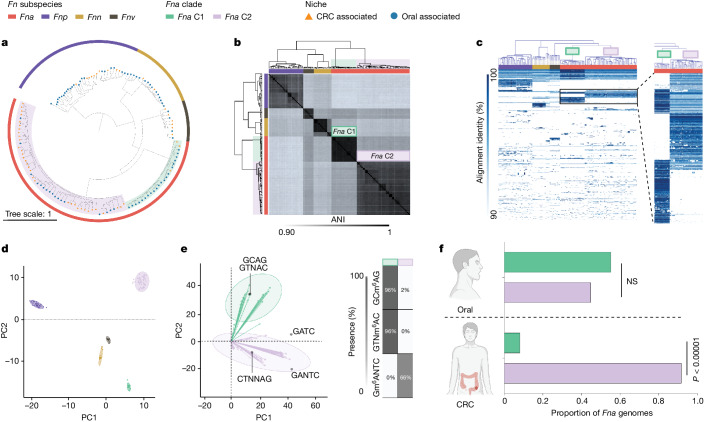
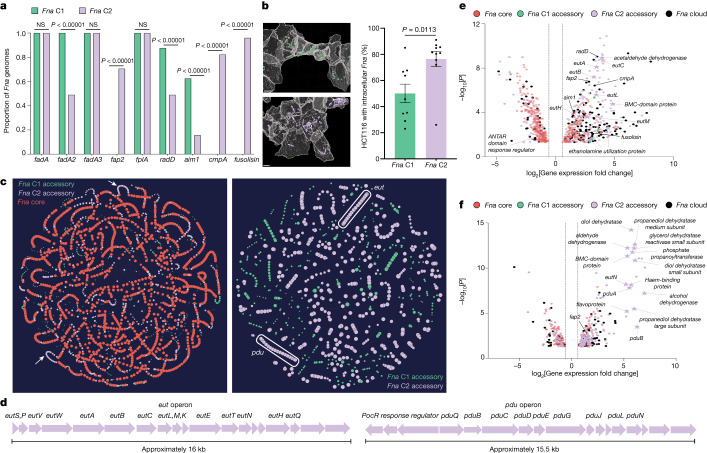
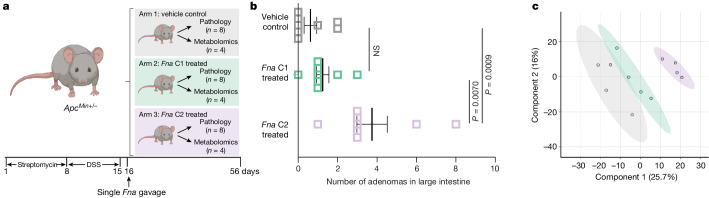
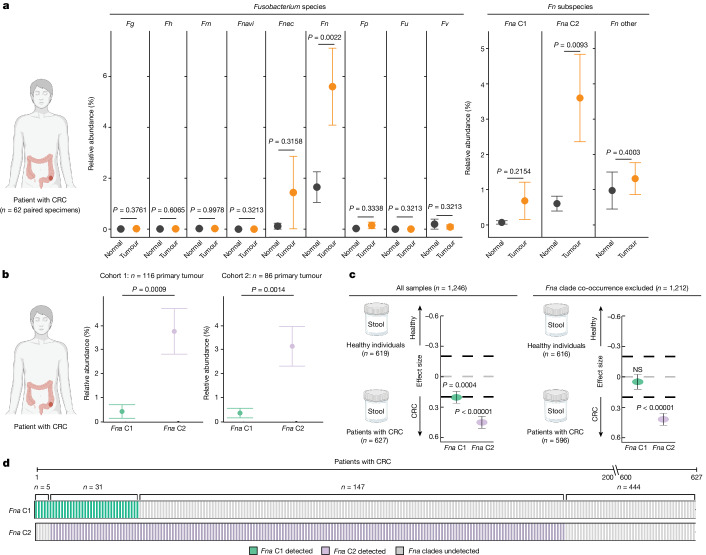
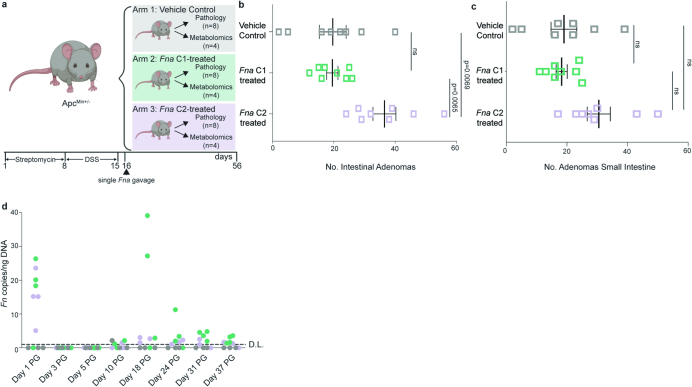
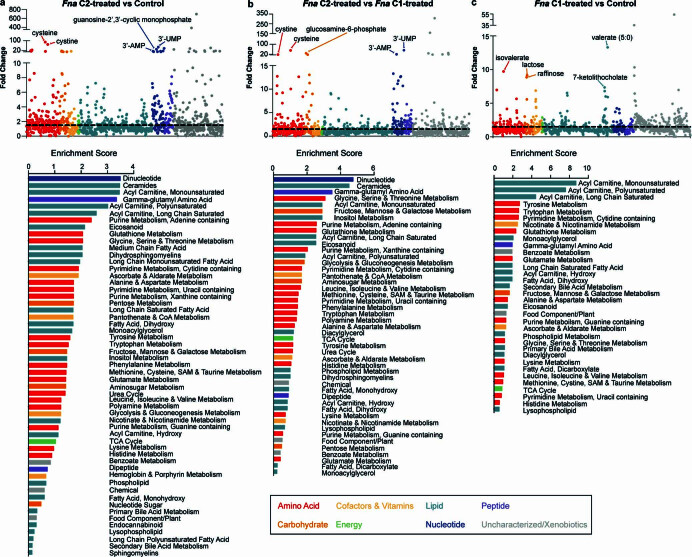
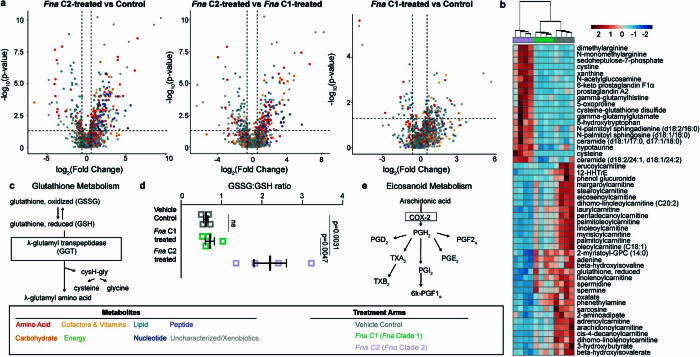
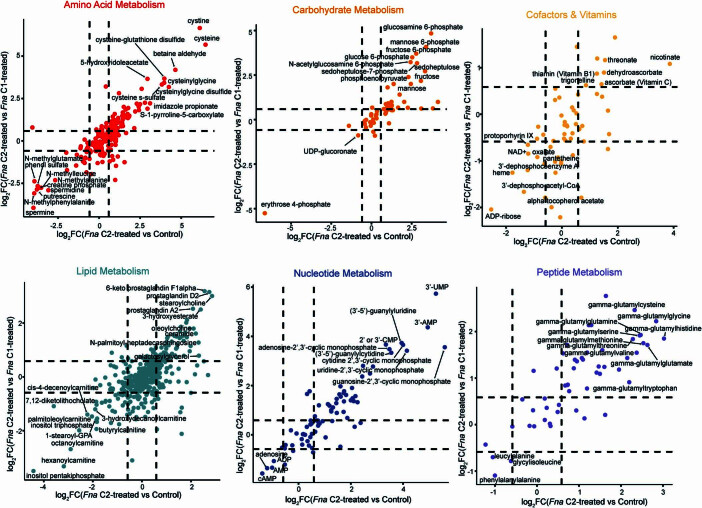
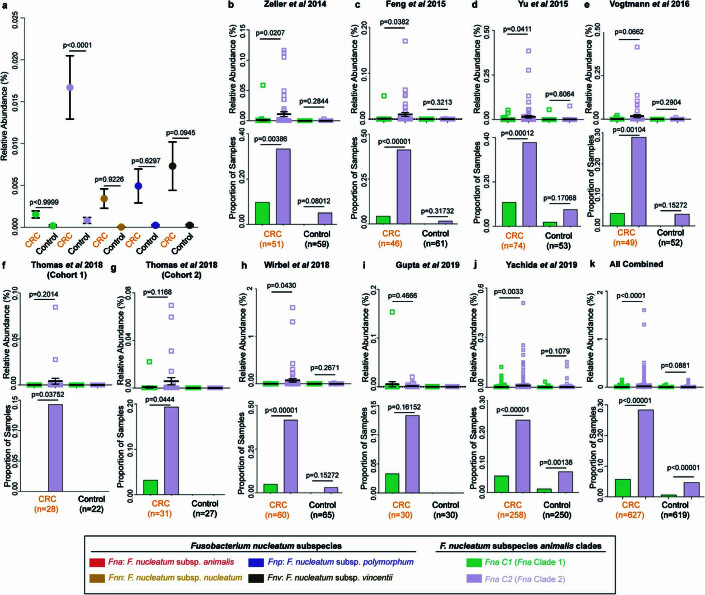
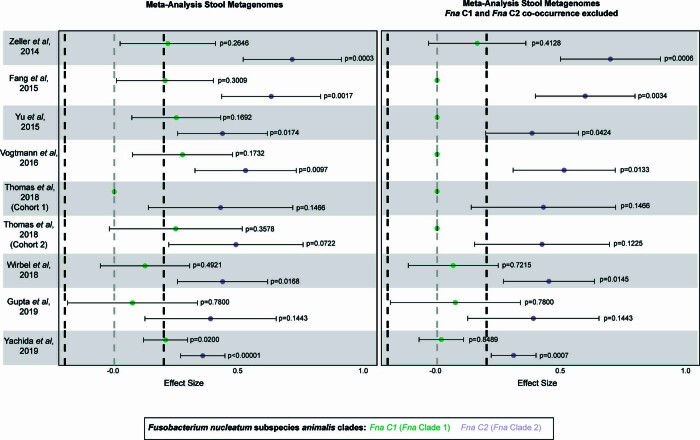
Fusobacterium nucleatum ( Fn ), a bacterium present in the human oral cavity and rarely found in the lower gastrointestinal tract of healthy individuals 1 , is enriched in human colorectal cancer (CRC) tumours 2–5 . High intratumoural Fn loads are associated with recurrence, metastases and poorer patient prognosis 5–8 . Here, to delineate Fn genetic factors facilitating tumour colonization, we generated closed genomes for 135 Fn strains; 80 oral strains from individuals without cancer and 55 unique cancer strains cultured from tumours from 51 patients with CRC. Pangenomic analyses identified 483 CRC-enriched genetic factors. Tumour-isolated strains predominantly belong to Fn subspecies animalis ( Fna ). However, genomic analyses reveal that Fna , considered a single subspecies, is instead composed of two distinct clades ( Fna C1 and Fna C2). Of these, only Fna C2 dominates the CRC tumour niche. Inter- Fna analyses identified 195 Fna C2-associated genetic factors consistent with increased metabolic potential and colonization of the gastrointestinal tract. In support of this, Fna C2-treated mice had an increased number of intestinal adenomas and altered metabolites. Microbiome analysis of human tumour tissue from 116 patients with CRC demonstrated Fna C2 enrichment. Comparison of 62 paired specimens showed that only Fna C2 is tumour enriched compared to normal adjacent tissue. This was further supported by metagenomic analysis of stool samples from 627 patients with CRC and 619 healthy individuals. Collectively, our results identify the Fna clade bifurcation, show that specifically Fna C2 drives the reported Fn enrichment in human CRC and reveal the genetic underpinnings of pathoadaptation of Fna C2 to the CRC niche.
Overview
The claims and statistics of this paper haven’t been checked yet.
Free: it reads the open-access text and checks the first 5 claims that cite a source we can check. Create a free account to check every claim.
Integrity signals
Registry
Cites
Statistics
Figures
Verification
Claims the paper makes
The claims and statistics of this paper haven’t been checked yet.
Free: it reads the open-access text and checks the first 5 claims that cite a source we can check. Create a free account to check every claim.
Claims other papers make about this one
Each is checked against this paper’s own text: does it say what the citing paper says it does?
In the citing paper
“including some (but not all) clades of F. nucleatum in the context of CRC 54”
From Impact of the ONCOBIOME network in cancer microbiome research (2025) · cites this paper as [54]
In the citing paper
“It is worth noting that CRC has often been associated with Fusobac terium species and clades, as have several other bacterial spe cies, 31,47,48”
From Global genetic diversity of human gut microbiome species is related to geographic location and host health (2025) · cites this paper as [47]
Self-check
Percentages, sums and reported differences re-computed from the paper’s own numbers.
The self-check needs the paper’s full text.
Citations
Cites
Trimmomatic: a flexible trimmer for Illumina sequence data
Bolger, A. M., Lohse, M., & Usadel, B. (2014) · Bioinformatics · doi:10.1093/bioinformatics/btu170 · Cited by 65,548
Fast gapped-read alignment with Bowtie 2
Langmead, B., & Salzberg, S. L. (2012) · Nature Methods · doi:10.1038/nmeth.1923 · Cited by 56,400 · cited 1×
“Metagenomic samples were mapped against the Fna SB010 eut , pdu and gdar operons using Bowtie2 (version 2.4.5, --sensitive parameter) 77 .”
MethodInfluentialMEGA X: Molecular Evolutionary Genetics Analysis across Computing Platforms
Kumar, S., Stecher, G., Li, M., Knyaz, C., & Tamura, K. (2018) · Molecular Biology and Evolution · doi:10.1093/molbev/msy096 · Cited by 37,529 · cited 1×
“65) using the MUSCLE clustering algorithm from which a maximum-likelihood dendrogram was generated. kSNP3 (ref.”
MethodInteractive Tree Of Life (iTOL) v5: an online tool for phylogenetic tree display and annotation
Letunic, I., & Bork, P. (2021) · Nucleic Acids Research · doi:10.1093/nar/gkab301 · Cited by 11,124 · cited 1×
“66).”
Borenstein, M., Hedges, L. V., Higgins, J. P. T., & Rothstein, H. R. (2021) · doi:10.1002/9781119558378 · Cited by 9,799
Shifting the genomic gold standard for the prokaryotic species definition
Richter, M., & Rosselló-Móra, R. (2009) · Proceedings of the National Academy of Sciences · doi:10.1073/pnas.0906412106 · Cited by 6,359
GTDB-Tk: a toolkit to classify genomes with the Genome Taxonomy Database
Chaumeil, P.-A., Mussig, A. J., Hugenholtz, P., & Parks, D. H. (2020) · Bioinformatics · doi:10.1093/bioinformatics/btz848 · Cited by 5,259
Effect size, confidence interval and statistical significance: a practical guide for biologists
Nakagawa, S., & Cuthill, I. C. (2007) · Biological Reviews · doi:10.1111/j.1469-185x.2007.00027.x · Cited by 3,835 · cited 1×
“For each model, an adjusted standardized mean difference between the two study conditions was extracted as previously described 74 : standardized mean difference = ( t × ( n 1 + n 2))/(sqrt( n 1 + n 2) × sqrt( n 1 + n 2 − 2)), in which t defines the t -score of the corresponding variable, n 1 is…”
MethodReal-Time DNA Sequencing from Single Polymerase Molecules
Eid, J., Fehr, A., Gray, J., Luong, K., Lyle, J., Otto, G., Peluso, P., Rank, D., Baybayan, P., Bettman, B., et al. (2009) · Science · doi:10.1126/science.1162986 · Cited by 3,732 · cited 1×
“Single-molecule real-time sequencing 18 was carried out on a PacBio Sequel instrument (Pacific Biosciences) or a PacBio Sequel II instrument (Pacific Biosciences) at the University of Minnesota Genomics Center.”
MethodPHASTER: a better, faster version of the PHAST phage search tool
Arndt, D., Grant, J. R., Marcu, A., Sajed, T., Pon, A., Liang, Y., & Wishart, D. S. (2016) · Nucleic Acids Research · doi:10.1093/nar/gkw387 · Cited by 3,557 · cited 1×
“The presence of innate bacterial defence systems was queried using the Prokaryotic Antiviral Defense Locator 67 and intact prophage presence was analysed using the Phage Search Tool Enhanced Release 68,69 tools.”
MethodExact sequence variants should replace operational taxonomic units in marker-gene data analysis
Callahan, B. J., McMurdie, P. J., & Holmes, S. P. (2017) · The ISME Journal · doi:10.1038/ismej.2017.119 · Cited by 3,300 · cited 1×
“To gain resolution to the Fna clade level, we identified Fna clade-specific amplicon sequence variants 48 (Methods and Supplementary Table 8).”
MethodKostic, A. D., Chun, E., Robertson, L., Glickman, J. N., Gallini, C. A., Michaud, M., Clancy, T. E., Chung, D. C., Lochhead, P., Hold, G. L., et al. (2013) · Cell Host & Microbe · doi:10.1016/j.chom.2013.07.007 · Cited by 2,718
Tettelin, H., Masignani, V., Cieslewicz, M. J., Donati, C., Medini, D., Ward, N. L., Angiuoli, S. V., Crabtree, J., Jones, A. L., Durkin, A. S., et al. (2005) · Proceedings of the National Academy of Sciences · doi:10.1073/pnas.0506758102 · Cited by 2,631 · cited 1×
“Pangenomic analysis identifies all genes present in a species (‘pangenome’) and discerns between gene content conserved among most members (‘core genome’) and gene content shared among subsets of members (‘accessory genomes’) 22,23 .”
BackgroundRubinstein, M. R., Wang, X., Liu, W., Hao, Y., Cai, G., & Han, Y. W. (2013) · Cell Host & Microbe · doi:10.1016/j.chom.2013.07.012 · Cited by 2,476 · cited 1×
“38,39), mediates Fn attachment to and invasion of host epithelial cells 40,41 , with two additional FadA homologues recently identified 42 .”
BackgroundMetaboAnalyst: a web server for metabolomic data analysis and interpretation
Xia, J., Psychogios, N., Young, N., & Wishart, D. S. (2009) · Nucleic Acids Research · doi:10.1093/nar/gkp356 · Cited by 2,266 · cited 1×
“Further analysis, including partial least squares discriminant analysis on detected metabolites and heat map clustering were carried out on sample-normalized data using MetaboAnalyst 70 , v.5.”
MethodFusobacterium nucleatum Promotes Chemoresistance to Colorectal Cancer by Modulating Autophagy
Yu, T., Guo, F., Yu, Y., Sun, T., Ma, D., Han, J., Qian, Y., Kryczek, I., Sun, D., Nagarsheth, N., et al. (2017) · Cell · doi:10.1016/j.cell.2017.07.008 · Cited by 2,198
KofamKOALA: KEGG ortholog assignment based on profile HMM and adaptive score threshold
Aramaki, T., Blanc-Mathieu, R., Endo, H., Ohkubo, K., Kanehisa, M., Goto, S., & Ogata, H. (2019) · doi:10.1101/602110 · Cited by 2,054 · cited 1×
“Kyoto Encyclope-dia of Genes and Genomes (KEGG) orthologue analysis 27 of the 724 niche-enriched gene clusters revealed that mapped gene clusters (31.2”
BackgroundInfluentialPHAST: A Fast Phage Search Tool
Zhou, Y., Liang, Y., Lynch, K. H., Dennis, J. J., & Wishart, D. S. (2011) · Nucleic Acids Research · doi:10.1093/nar/gkr485 · Cited by 2,048 · cited 1×
“The presence of innate bacterial defence systems was queried using the Prokaryotic Antiviral Defense Locator 67 and intact prophage presence was analysed using the Phage Search Tool Enhanced Release 68,69 tools.”
MethodFusobacterium nucleatum infection is prevalent in human colorectal carcinoma
Castellarin, M., Warren, R. L., Freeman, J. D., Dreolini, L., Krzywinski, M., Strauss, J., Barnes, R., Watson, P., Allen-Vercoe, E., Moore, R. A., et al. (2012) · Genome Research · doi:10.1101/gr.126516.111 · Cited by 2,043 · cited 1×
“In CRC, Fn gained early and continued attention owing to the fact that this bacterium was rarely detected in the lower GI tract of healthy individuals 1 , yet enriched within the CRC tumour microbiome 2,60 .”
BackgroundGenomic analysis identifies association of Fusobacterium with colorectal carcinoma
Kostic, A. D., Gevers, D., Pedamallu, C. S., Michaud, M., Duke, F., Earl, A. M., Ojesina, A. I., Jung, J., Bass, A. J., Tabernero, J., et al. (2012) · Genome Research · doi:10.1101/gr.126573.111 · Cited by 1,960
Anvi’o: an advanced analysis and visualization platform for ‘omics data
Eren, A. M., Esen, Ö. C., Quince, C., Vineis, J. H., Morrison, H. G., Sogin, M. L., & Delmont, T. O. (2015) · PeerJ · doi:10.7717/peerj.1319 · Cited by 1,887
Methods to estimate the between‐study variance and its uncertainty in meta‐analysis
Veroniki, A. A., Jackson, D., Viechtbauer, W., Bender, R., Bowden, J., Knapp, G., Kuss, O., Higgins, J. P., Langan, D., & Salanti, G. (2016) · Research Synthesis Methods · doi:10.1002/jrsm.1164 · Cited by 1,685 · cited 1×
“Effect sizes were pooled and analysed using random-effect meta-analysis 75 using the Paule–Mandel heterogeneity estimator 76 .”
MethodPasolli, E., Asnicar, F., Manara, S., Zolfo, M., Karcher, N., Armanini, F., Beghini, F., Manghi, P., Tett, A., Ghensi, P., et al. (2019) · Cell · doi:10.1016/j.cell.2019.01.001 · Cited by 1,591
Self-citationAnalysis of Fusobacterium persistence and antibiotic response in colorectal cancer
Bullman, S., Pedamallu, C. S., Sicinska, E., Clancy, T. E., Zhang, X., Cai, D., Neuberg, D., Huang, K., Guevara, F., Nelson, T., et al. (2017) · Science · doi:10.1126/science.aal5240 · Cited by 1,574 · cited 3×
“Moreover, exogenous Fn infection in animal and cellular models has supported a cancer-promoting role for this bacterium 6,9–14 .”
BackgroundSelf-citationGur, C., Ibrahim, Y., Isaacson, B., Yamin, R., Abed, J., Gamliel, M., Enk, J., Bar-On, Y., Stanietsky-Kaynan, N., Coppenhagen-Glazer, S., et al. (2015) · Immunity · doi:10.1016/j.immuni.2015.01.010 · Cited by 1,490
Blanco-Míguez, A., Beghini, F., Cumbo, F., McIver, L. J., Thompson, K. N., Zolfo, M., Manghi, P., Dubois, L., Huang, K. D., Thomas, A. M., et al. (2023) · Nature Biotechnology · doi:10.1038/s41587-023-01688-w · Cited by 1,442
Self-citationPatients with familial adenomatous polyposis harbor colonic biofilms containing tumorigenic bacteria
Dejea, C. M., Fathi, P., Craig, J. M., Boleij, A., Taddese, R., Geis, A. L., Wu, X., DeStefano Shields, C. E., Hechenbleikner, E. M., Huso, D. L., et al. (2018) · Science · doi:10.1126/science.aah3648 · Cited by 1,105 · cited 1×
“Although synergistic interactions between CRC-enriched microbes have previously been reported 61 , it is not clear whether Fna C1 co-occurrence with Fna C2 results in a compounding pathogenic effect.”
BackgroundFusobacterium nucleatum in colorectal carcinoma tissue and patient prognosis
Mima, K., Nishihara, R., Qian, Z. R., Cao, Y., Sukawa, Y., Nowak, J. A., Yang, J., Dou, R., Masugi, Y., Song, M., et al. (2016) · Gut · doi:10.1136/gutjnl-2015-310101 · Cited by 1,080 · cited 3×
“Previous work by our group and others demonstrated that patients with CRC tumours harbouring high levels of Fn have poorer survival 5 , that Fusobacterium colo-nizes regions of patient tumours with immune and epithelial cell functions supportive of cancer progression 10 , that Fusobacterium…”
BackgroundResultSelf-citationSegata, N., Haake, S. K., Mannon, P., Lemon, K. P., Waldron, L., Gevers, D., Huttenhower, C., & Izard, J. (2012) · Genome Biology · doi:10.1186/gb-2012-13-6-r42 · Cited by 1,076
Self-citationCeramide-orchestrated signalling in cancer cells
Morad, S. A. F., & Cabot, M. C. (2013) · Nature Reviews Cancer · doi:10.1038/nrc3398 · Cited by 1,014 · cited 1×
“Ceramides can also be metabolized by cancer cells to reduce tumour cell apoptosis and proliferation 59 .”
BackgroundAbed, J., Emgård, J. E. M., Zamir, G., Faroja, M., Almogy, G., Grenov, A., Sol, A., Naor, R., Pikarsky, E., Atlan, K. A., et al. (2016) · Cell Host & Microbe · doi:10.1016/j.chom.2016.07.006 · Cited by 888 · cited 1×
“20,31), a urogenital isolate, and Fna 7_1 (ref.”
BackgroundEffect of the intratumoral microbiota on spatial and cellular heterogeneity in cancer
Galeano Niño, J. L., Wu, H., LaCourse, K. D., Kempchinsky, A. G., Baryiames, A., Barber, B., Futran, N., Houlton, J., Sather, C., Sicinska, E., et al. (2022) · Nature · doi:10.1038/s41586-022-05435-0 · Cited by 887 · cited 2×
“Notably, recent work from our group demonstrated that Fusobacterium was predominantly associated with epithelial cells harbouring severe chromosomal abnormalities 10 , one of the most common forms of genomic instability in cancer.”
BackgroundSelf-citationRole of Glutathione in Cancer: From Mechanisms to Therapies
Kennedy, L., Sandhu, J. K., Harper, M.-E., & Cuperlovic-Culf, M. (2020) · Biomolecules · doi:10.3390/biom10101429 · Cited by 880 · cited 1×
“GSH deficiency or an elevated ratio of oxidized (GSSG) to reduced (GSH) forms of glutathione increases the vulnerability of mammalian cells to oxidative stress, inflammation and tumour progression 55 .”
BackgroundGardner, S. N., Slezak, T., & Hall, B. G. (2015) · Bioinformatics · doi:10.1093/bioinformatics/btv271 · Cited by 612 · cited 1×
“45) with a k-mer size of 13, resulting in a fraction of core k -mers of 0.217, was used to generate a maximum-likelihood phylogeny of the 135 Fn genomes in our collection.”
MethodInfluentialStrauss, J., Kaplan, G. G., Beck, P. L., Rioux, K., Panaccione, R., DeVinney, R., Lynch, T., & Allen-Vercoe, E. (2011) · Inflammatory Bowel Diseases · doi:10.1002/ibd.21606 · Cited by 573 · cited 2×
“29), an isolate from a patient with IBD.”
BackgroundFlanagan, L., Schmid, J., Ebert, M., Soucek, P., Kunicka, T., Liska, V., Bruha, J., Neary, P., Dezeeuw, N., Tommasino, M., et al. (2014) · European Journal of Clinical Microbiology & Infectious Diseases · doi:10.1007/s10096-014-2081-3 · Cited by 498
Komiya, Y., Shimomura, Y., Higurashi, T., Sugi, Y., Arimoto, J., Umezawa, S., Uchiyama, S., Matsumoto, M., & Nakajima, A. (2019) · Gut · doi:10.1136/gutjnl-2018-316661 · Cited by 316 · cited 3×
“5a, and Supplementary Tables 8 and 19; t -test, paired, P = 0.0093).”
BackgroundInfluentialMartin, F. E., Nadkarni, M. A., Jacques, N. A., & Hunter, N. (2002) · Journal of Clinical Microbiology · doi:10.1128/jcm.40.5.1698-1704.2002 · Cited by 296 · cited 1×
“A custom TaqMan primer and probe set was used to amplify Fusobacterium genus DNA (Integrated DNA Technologies) as previously described 71 .”
MethodStaying in Shape: the Impact of Cell Shape on Bacterial Survival in Diverse Environments
Yang, D. C., Blair, K. M., & Salama, N. R. (2016) · Microbiology and Molecular Biology Reviews · doi:10.1128/mmbr.00031-15 · Cited by 295 · cited 1×
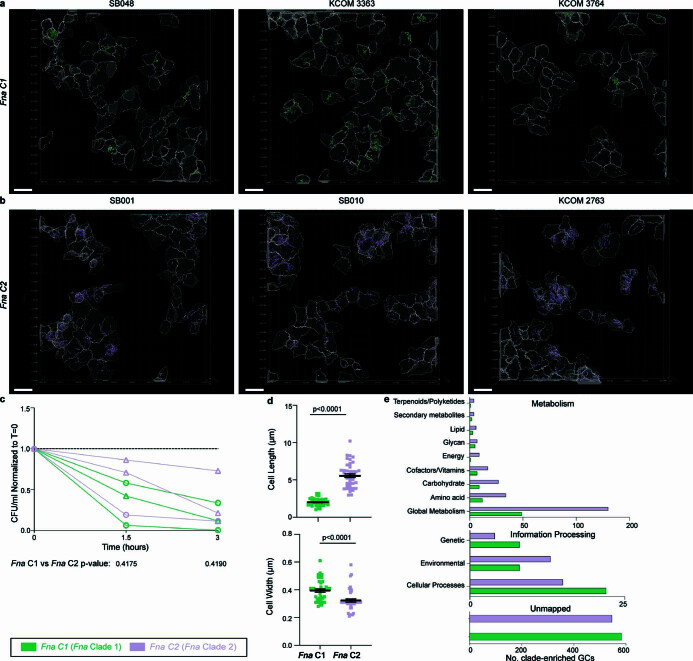
“As bacterial morphology can affect colonization of host niches and susceptibility to host defences 50 , physical differences between Fna clade cells are noteworthy.”
BackgroundFardini, Y., Wang, X., Témoin, S., Nithianantham, S., Lee, D., Shoham, M., & Han, Y. W. (2011) · Molecular Microbiology · doi:10.1111/j.1365-2958.2011.07905.x · Cited by 291 · cited 1×
“38,39), mediates Fn attachment to and invasion of host epithelial cells 40,41 , with two additional FadA homologues recently identified 42 .”
BackgroundExpression of γ-glutamyltransferase in cancer cells and its significance in drug resistance
Pompella, A., De Tata, V., Paolicchi, A., & Zunino, F. (2006) · Biochemical Pharmacology · doi:10.1016/j.bcp.2005.10.005 · Cited by 280 · cited 1×
“In cancer cells, this is a source of endogenous reactive oxygen species that can facilitate persistent oxidative stress and contribute to genomic instability 56,57 .”
BackgroundPPanGGOLiN: Depicting microbial diversity via a partitioned pangenome graph
Gautreau, G., Bazin, A., Gachet, M., Planel, R., Burlot, L., Dubois, M., Perrin, A., Médigue, C., Calteau, A., Cruveiller, S., et al. (2020) · PLOS Computational Biology · doi:10.1371/journal.pcbi.1007732 · Cited by 274 · cited 1×
“As functionally related bacterial genes often form co-regulated units (operons), we implemented the Partitioned PanGenome Graph of Linked Neighbors (PPanGGOLiN) 51 tool to assess whether Fna clade-unique genetic factors formed putative operons (Fig.”
Method(2014) · Advances in Cancer Research · doi:10.1016/b978-0-12-420117-0.00003-7 · Cited by 271
Abed, J., Maalouf, N., Manson, A. L., Earl, A. M., Parhi, L., Emgård, J. E. M., Klutstein, M., Tayeb, S., Almogy, G., Atlan, K. A., et al. (2020) · Frontiers in Cellular and Infection Microbiology · doi:10.3389/fcimb.2020.00400 · Cited by 267 · cited 11×
“Fn species are normal members of the human oral microbiota, and strains from the oral cavity are thought to seed CRC tumours 19,20 .”
BackgroundResultInfluentialIdentification and Characterization of a Novel Adhesin Unique to Oral Fusobacteria
Han, Y. W., Ikegami, A., Rajanna, C., Kawsar, H. I., Zhou, Y., Li, M., Sojar, H. T., Genco, R. J., Kuramitsu, H. K., & Deng, C. X. (2005) · Journal of Bacteriology · doi:10.1128/jb.187.15.5330-5340.2005 · Cited by 259 · cited 2×
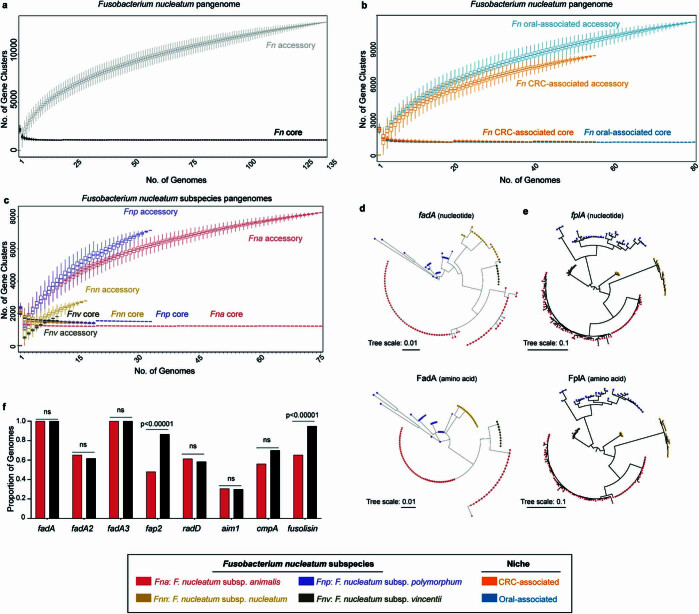
“Previously analysed fadA distribution in a limited number of Fusobacterium genomes has suggested fadA absence from passively invading species and increased incidence in highly invasive species 13 , although this distribution does not always coincide with in vivo invasion assays 13,38,42,43 .”
BackgroundKaplan, C. W., Lux, R., Haake, S. K., & Shi, W. (2009) · Molecular Microbiology · doi:10.1111/j.1365-2958.2008.06503.x · Cited by 252 · cited 1×
“36) and CmpA (ref.”
Locoregional Effects of Microbiota in a Preclinical Model of Colon Carcinogenesis
Tomkovich, S., Yang, Y., Winglee, K., Gauthier, J., Mühlbauer, M., Sun, X., Mohamadzadeh, M., Liu, X., Martin, P., Wang, G. P., et al. (2017) · Cancer Research · doi:10.1158/0008-5472.can-16-3472 · Cited by 252 · cited 2×
“Such heterogeneity has raised challenges with reproducing Fn cancer-inducing phenotypes in animal and cellular models 16,17 and it has been proposed that only a select group of Fn strains may possess carcinogenic capabilities 17 .”
BackgroundCoppenhagen-Glazer, S., Sol, A., Abed, J., Naor, R., Zhang, X., Han, Y. W., & Bachrach, G. (2015) · Infection and Immunity · doi:10.1128/iai.02838-14 · Cited by 249 · cited 1×
“34), Aim1 (ref.”
Payne, L. J., Todeschini, T. C., Wu, Y., Perry, B. J., Ronson, C. W., Fineran, P. C., Nobrega, F. L., & Jackson, S. A. (2021) · Nucleic Acids Research · doi:10.1093/nar/gkab883 · Cited by 230 · cited 1×
“The presence of innate bacterial defence systems was queried using the Prokaryotic Antiviral Defense Locator 67 and intact prophage presence was analysed using the Phage Search Tool Enhanced Release 68,69 tools.”
MethodSelf-citationShaiber, A., Willis, A. D., Delmont, T. O., Roux, S., Chen, L.-X., Schmid, A. C., Yousef, M., Watson, A. R., Lolans, K., Esen, Ö. C., et al. (2020) · Genome Biology · doi:10.1186/s13059-020-02195-w · Cited by 227 · cited 1×
“Functional enrichment analysis 26 identified 483 and 241 gene clusters significantly enriched ( q 0.05) in CRC and oral strains, respectively (Fig.”
BackgroundInfluentialSelf-citationXu, M., Yamada, M., Li, M., Liu, H., Chen, S. G., & Han, Y. W. (2007) · Journal of Biological Chemistry · doi:10.1074/jbc.m611567200 · Cited by 199 · cited 1×
“38,39), mediates Fn attachment to and invasion of host epithelial cells 40,41 , with two additional FadA homologues recently identified 42 .”
BackgroundDe Biase, D., & Pennacchietti, E. (2012) · Molecular Microbiology · doi:10.1111/mmi.12020 · Cited by 188 · cited 1×
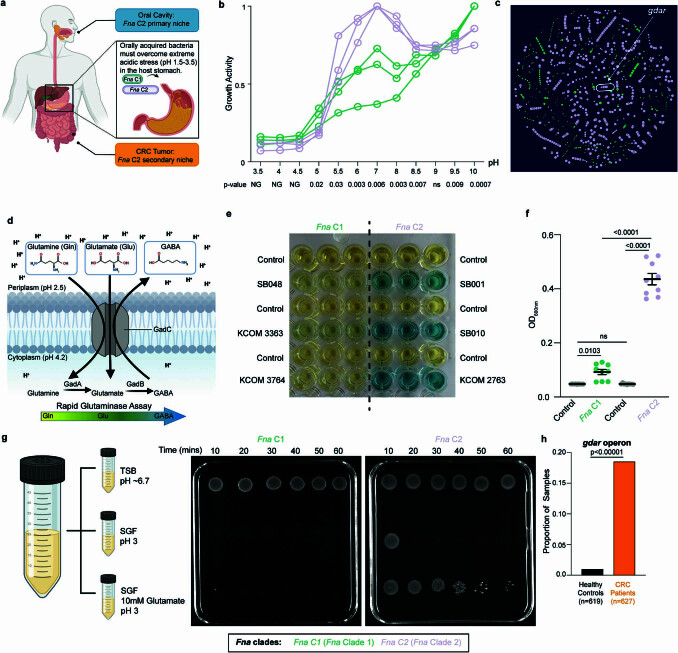
“The GDAR system, found in pathogenic and commensal gut bacteria, is one of the most potent acid resistance mechanisms 53 , with glutamate being the only component necessary for the system to operate at pH ≤3 (Extended Data Fig.”
BackgroundLaCourse, K. D., Zepeda-Rivera, M., Kempchinsky, A. G., Baryiames, A., Minot, S. S., Johnston, C. D., & Bullman, S. (2022) · Cell Reports · doi:10.1016/j.celrep.2022.111625 · Cited by 173 · cited 1×
“…poorer survival 5 , that Fusobacterium colo-nizes regions of patient tumours with immune and epithelial cell functions supportive of cancer progression 10 , that Fusobacterium persists in metastatic disease 6 and that microbiome modulation targeting Fn could change the course of this disease 6,11 .”
BackgroundSelf-citationTanaka, T., Kohno, H., Suzuki, R., Hata, K., Sugie, S., Niho, N., Sakano, K., Takahashi, M., & Wakabayashi, K. (2006) · International Journal of Cancer · doi:10.1002/ijc.21282 · Cited by 171
Serna, G., Ruiz-Pace, F., Hernando, J., Alonso, L., Fasani, R., Landolfi, S., Comas, R., Jimenez, J., Elez, E., Bullman, S., et al. (2020) · Annals of Oncology · doi:10.1016/j.annonc.2020.06.003 · Cited by 155 · cited 8×
“Similar to our observation in CRC tumour tissue (Supplementary Tables 20 and 21), our data show that Fna C2 is more prevalent and abundant in the stool of patients with CRC than Fna C1 (Fig.”
BackgroundInfluentialSelf-citationFusobacterium nucleatum: An emerging gut pathogen?
Allen-Vercoe, E., Strauss, J., & Chadee, K. (2011) · Gut Microbes · doi:10.4161/gmic.2.5.18603 · Cited by 145
Engevik, M. A., Danhof, H. A., Auchtung, J., Endres, B. T., Ruan, W., Bassères, E., Engevik, A. C., Wu, Q., Nicholson, M., Luna, R. A., et al. (2021) · Gastroenterology · doi:10.1053/j.gastro.2020.11.034 · Cited by 122
Evolution of Invasion in a Diverse Set of Fusobacterium Species
Manson McGuire, A., Cochrane, K., Griggs, A. D., Haas, B. J., Abeel, T., Zeng, Q., Nice, J. B., MacDonald, H., Birren, B. W., Berger, B. W., et al. (2014) · mBio · doi:10.1128/mbio.01864-14 · Cited by 117 · cited 1×
“Previously analysed fadA distribution in a limited number of Fusobacterium genomes has suggested fadA absence from passively invading species and increased incidence in highly invasive species 13 , although this distribution does not always coincide with in vivo invasion assays 13,38,42,43 .”
BackgroundPolyamines in Gut Epithelial Renewal and Barrier Function
Rao, J. N., Xiao, L., & Wang, J. (2020) · Physiology · doi:10.1152/physiol.00011.2020 · Cited by 105 · cited 1×
“In addition to their role in combating oxidative stress, polyamines are able to suppress inflammation through inhibition of macrophage cytokine synthesis 58 .”
BackgroundDetecting contamination in viromes using ViromeQC
Zolfo, M., Pinto, F., Asnicar, F., Manghi, P., Tett, A., Bushman, F. D., & Segata, N. (2019) · Nature Biotechnology · doi:10.1038/s41587-019-0334-5 · Cited by 103
Self-citationGenome-Based Reclassification of Fusobacterium nucleatum Subspecies at the Species Level
Kook, J., Park, S., Lim, Y. K., Cho, E., Jo, E., Roh, H., Shin, Y., Paek, J., Kim, H.-S., Kim, H., et al. (2017) · Current Microbiology · doi:10.1007/s00284-017-1296-9 · Cited by 100 · cited 2×
“As there is sufficient genetic heterogeneity between the four Fn subspecies that reclassification into separate species has been proposed 30 , we increased the resolution of our analyses to the subspecies level ( Fna , Fn subspecies nucleatum ( Fnn ), Fn subspecies polymorphum ( Fnp ) and Fn…”
BackgroundMethodSelf-citationLima, B. P., Shi, W., & Lux, R. (2017) · MicrobiologyOpen · doi:10.1002/mbo3.444 · Cited by 91 · cited 1×
“37) adhesins that mediate Fn interactions with either host cells or other bacterial species.”
BackgroundThe Pangenome: Diversity, Dynamics and Evolution of Genomes
(2020) · Springer eBooks · doi:10.1007/978-3-030-38281-0 · Cited by 91 · cited 1×
“Pangenomic analysis identifies all genes present in a species (‘pangenome’) and discerns between gene content conserved among most members (‘core genome’) and gene content shared among subsets of members (‘accessory genomes’) 22,23 .”
BackgroundBlanco-Miguez, A., Beghini, F., Cumbo, F., McIver, L. J., Thompson, K. N., Zolfo, M., Manghi, P., Dubois, L., Huang, K. D., Thomas, A. M., et al. (2022) · bioRxiv (Cold Spring Harbor Laboratory) · doi:10.1101/2022.08.22.504593 · Cited by 89
Self-citationGursoy, U. K., Pöllänen, M., Könönen, E., & Uitto, V. (2010) · Journal of Periodontology · doi:10.1902/jop.2010.090664 · Cited by 79 · cited 1×
“Previously analysed fadA distribution in a limited number of Fusobacterium genomes has suggested fadA absence from passively invading species and increased incidence in highly invasive species 13 , although this distribution does not always coincide with in vivo invasion assays 13,38,42,43 .”
BackgroundKim, H.-S., Lee, D., Chang, Y.-H., Kim, M. J., Koh, S., Kim, J., Seong, J., Song, S. K., Shin, H. S., Son, J.-B., et al. (2009) · Journal of Clinical Microbiology · doi:10.1128/jcm.01631-09 · Cited by 75 · cited 1×
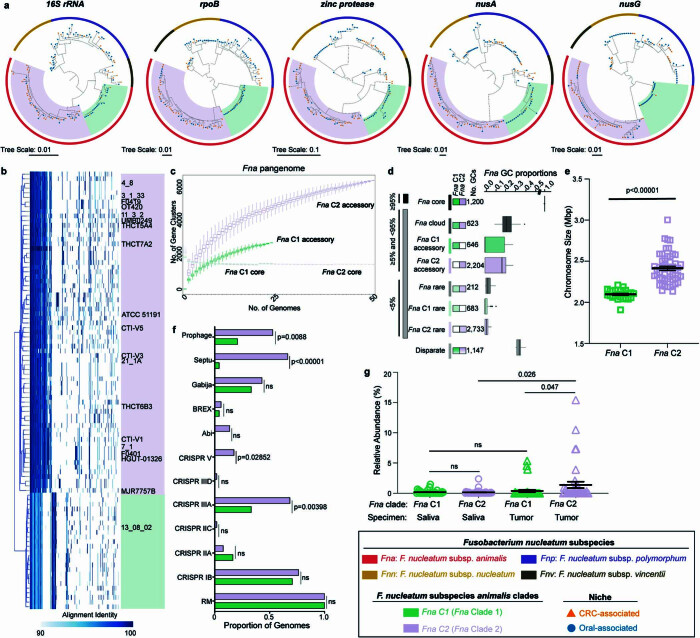
“To further examine the observation that Fna strains form two distinct clades, we compared phylogenetic trees of housekeeping genes previously used for Fn subspecies typing 28,44 .”
MethodSelf-citationFusobacterium nucleatum Apoptosis-inducing Outer Membrane Protein
Kaplan, C. W., Lux, R., Huynh, T., Jewett, A., Shi, W., & Haake, S. K. (2005) · Journal of Dental Research · doi:10.1177/154405910508400803 · Cited by 73 · cited 1×
“35), RadD (ref.”
Queen, J., Domingue, J. C., White, J. R., Stevens, C. M., Udayasuryan, B., Nguyen, T. T. D., Wu, S., Ding, H., Fan, H., McMann, M., et al. (2022) · mBio · doi:10.1128/mbio.02991-21 · Cited by 64 · cited 2×
“Such heterogeneity has raised challenges with reproducing Fn cancer-inducing phenotypes in animal and cellular models 16,17 and it has been proposed that only a select group of Fn strains may possess carcinogenic capabilities 17 .”
BackgroundUmaña, A., Sanders, B. E., Yoo, C. C., Casasanta, M. A., Udayasuryan, B., Verbridge, S. S., & Slade, D. J. (2019) · Journal of Bacteriology · doi:10.1128/jb.00273-19 · Cited by 63 · cited 2×
“Previously analysed fadA distribution in a limited number of Fusobacterium genomes has suggested fadA absence from passively invading species and increased incidence in highly invasive species 13 , although this distribution does not always coincide with in vivo invasion assays 13,38,42,43 .”
BackgroundBorozan, I., Zaidi, S. H., Harrison, T. A., Phipps, A. I., Zheng, J., Lee, S., Trinh, Q. M., Steinfelder, R. S., Adams, J., Banbury, B. L., et al. (2022) · Cancer Epidemiology, Biomarkers & Prevention · doi:10.1158/1055-9965.epi-21-0463 · Cited by 57 · cited 3×
“1f), validating previous studies 28 , whereas Fnn is significantly enriched in the oral niche (two-sample z -test, two-tailed, P = 0.00932; Fig.”
BackgroundMethodInfluentialSelf-citationThe relationship between gastrointestinal cancers and the microbiota
LaCourse, K. D., Johnston, C. D., & Bullman, S. (2021) · The Lancet Gastroenterology & Hepatology · doi:10.1016/s2468-1253(20)30362-9 · Cited by 56 · cited 3×
“8b and 9).”
BackgroundSelf-citationEnteric Pathogens Exploit the Microbiota-generated Nutritional Environment of the Gut
Pacheco, A. R., & Sperandio, V. (2015) · Microbiology Spectrum · doi:10.1128/microbiolspec.mbp-0001-2014 · Cited by 55 · cited 1×
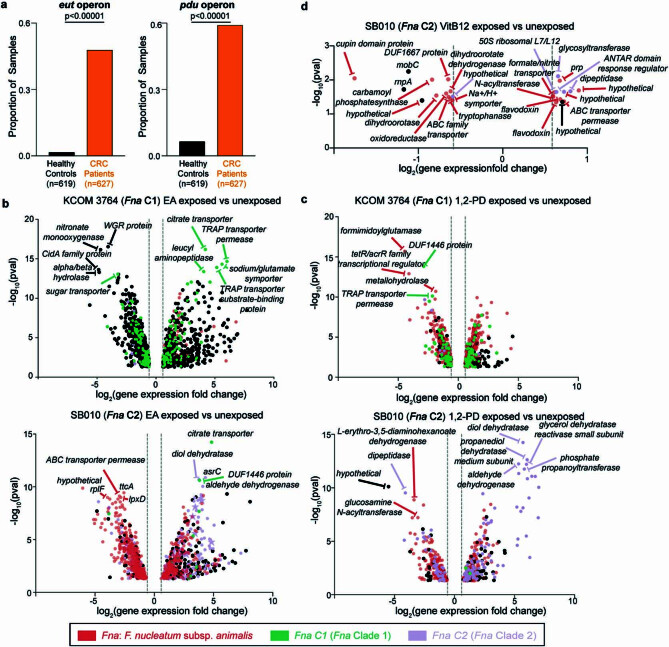
“Sensing through eut and pdu activates global regulators of virulence and induces transcriptional profiles consistent with GI niche adaptation 52 .”
BackgroundIdentification of a Fusobacterium nucleatum 65 kDa serine protease
Bachrach, G., Rosen, G., Bellalou, M., Naor, R., & Sela, M. N. (2004) · Oral Microbiology and Immunology · doi:10.1111/j.0902-0055.2004.00132.x · Cited by 54 · cited 1×
“Fn type Va autotransporter virulence factors include fusolisin 32 , a serine protease that damages host tissue and inactivates immune effectors, FplA (ref.”
BackgroundRusso, E., Gloria, L. D., Nannini, G., Meoni, G., Niccolai, E., Ringressi, M. N., Baldi, S., Fani, R., Tenori, L., Taddei, A., et al. (2023) · Neoplasia · doi:10.1016/j.neo.2023.100901 · Cited by 45 · cited 1×
“We further tested this observation on publicly available 16S rRNA gene sequencing data from paired tumour tissue and saliva samples from patients with CRC 47 .”
MethodDifferent evolutionary trends form the twilight zone of the bacterial pan-genome
Horesh, G., Taylor–Brown, A., McGimpsey, S., Lassalle, F., Corander, J., Heinz, E., & Thomson, N. R. (2021) · Microbial Genomics · doi:10.1099/mgen.0.000670 · Cited by 41 · cited 1×
“To account for uneven sampling 25 between CRC ( n = 55) and oral ( n = 80) genomes, we sub-set our analysis on the basis of niche and found that CRC-associated Fn strains have a smaller accessory genome compared to that of oral-associated strains (Fig.”
Casasanta, M. A., Yoo, C. C., Smith, H. B., Duncan, A. J., Cochrane, K., Varano, A. C., Allen-Vercoe, E., & Slade, D. J. (2017) · Journal of Biological Chemistry · doi:10.1074/jbc.m117.819144 · Cited by 39
Ponath, F., Zhu, Y., Cosi, V., & Vogel, J. (2022) · Proceedings of the National Academy of Sciences · doi:10.1073/pnas.2201460119 · Cited by 39
Comparative Genome Analysis ofFusobacterium nucleatum
Ang, M. Y., Dutta, A., Wee, W. Y., Dymock, D., Paterson, I. C., & Choo, S. W. (2016) · Genome Biology and Evolution · doi:10.1093/gbe/evw199 · Cited by 35 · cited 1×
“We observed that accessory genome size increases as the number of sampled Fn genomes increases, supportive of previous proposals that Fn has an open pangenome 24 (Extended Data Fig.”
BackgroundTumor Potentiating Mechanisms of Fusobacterium nucleatum , A Multifaceted Microbe
Holt, R. A., & Cochrane, K. (2017) · Gastroenterology · doi:10.1053/j.gastro.2017.01.024 · Cited by 34 · cited 1×
“Moreover, exogenous Fn infection in animal and cellular models has supported a cancer-promoting role for this bacterium 6,9–14 .”
BackgroundPPanGGOLiN: depicting microbial diversity via a partitioned pangenome graphPreprint
Gautreau, G., Bazin, A., Gachet, M., et al. (2019) · bioRxiv (Cold Spring Harbor Laboratory) · doi:10.1101/836239 · Cited by 22
Different evolutionary trends form the twilight zone of the bacterial pan-genomePreprint
Horesh, G., Taylor–Brown, A., McGimpsey, S., et al. (2021) · bioRxiv (Cold Spring Harbor Laboratory) · doi:10.1101/2021.02.15.431222 · Cited by 20
Shaiber, A., Willis, A. D., Delmont, T. O., Roux, S., Chen, L.-X., Schmid, A. C., Yousef, M., Watson, A. R., Lolans, K., Esen, Ö. C., et al. (2020) · bioRxiv (Cold Spring Harbor Laboratory) · doi:10.1101/2020.04.29.069278 · Cited by 18
Self-citation
Cited by
Breast cancer: pathogenesis and treatments
Xiong, X., Zheng, L.-W., Ding, Y., Chen, Y.-F., Cai, Y.-W., Wang, L.-P., Huang, L., Liu, C.-C., Shao, Z.-M., & Yu, K.-D. (2025) · Signal Transduction and Targeted Therapy · doi:10.1038/s41392-024-02108-4 · Cited by 958
“Fusobacterium nucleatum, a bacterium closely associated with colorectal cancer, 192,199 can translocate to breast cancer tissues exhibiting high Gal-GalNAc expression through hematogenous spread, primarily via the interaction between Fap2 expressed by Fusobacterium nucleatum and Gal-GalNAc on the…”
The oral–gut microbiome axis in health and disease
Kunath, B. J., De Rudder, C., Laczny, C. C., Letellier, E., & Wilmes, P. (2024) · Nature Reviews Microbiology · doi:10.1038/s41579-024-01075-5 · Cited by 316
“This study identified a specific F. nucleatum clade associated with an increased risk for human CRC, underscoring the significant genetic and physiological diversity within the F. nucleatum species 122 .”
Fusobacterium nucleatum facilitates anti-PD-1 therapy in microsatellite stable colorectal cancer
Wang, X., Fang, Y., Liang, W., Wong, C. C., Qin, H., Gao, Y., Liang, M., Song, L., Zhang, Y., Fan, M., et al. (2024) · Cancer Cell · doi:10.1016/j.ccell.2024.08.019 · Cited by 247
Gut microbiota shapes cancer immunotherapy responses
Lei, W., Zhou, K., Lei, Y., Li, Q., & Zhu, H. (2025) · npj Biofilms and Microbiomes · doi:10.1038/s41522-025-00786-8 · Cited by 194
Piccinno (2025) · doi:10.1038/s41591-025-03693-9 · Cited by 133
“We also used new computational, statistical and machine learning (ML) strategies to achieve higher profiling resolution extended to previously unknown species and differentiated clades of F. nucleatum 23 .”
Metadata
- Authors
- Zepeda-Rivera, M., Minot, S. S., Bouzek, H., Wu, H., Blanco-Míguez, A., Manghi, P., Jones, D. S., LaCourse, K. D., Wu, Y., McMahon, E. F., Park, S.-N., Lim, Y. K., Kempchinsky, A. G., Willis, A. D., Cotton, S. L., Yost, S. C., Sicinska, E., Kook, J.-K., Dewhirst, F. E., Segata, N., Bullman, S., & Johnston, C. D.
- Affiliations
- Fred Hutch Cancer Center (US)
- University of Trento (IT)
- Chosun University (KR)
- University of Washington (US)
- The Forsyth Institute (US)
- Harvard University (US)
- Corresponding author
- Bullman, Susan
- Johnston, Christopher D.
- ORCID
- Venue
- Nature
- Published
- 2024-03-20
- Volume
- 628
- Issue
- 8007
- Pages
- 424-432
- ISSN
- 0028-0836 (ISSN-L)
- 1476-4687
- PMC
- PMC11006615
- OpenAlex
- W4392984046
- Cited by
- 451
- References
- 80
- Citations by year
- 2026: 174 · 2025: 203 · 2024: 74
- FWCI
- 61.22
- Type
- journal article
- Language
- en
- Open access
- hybrid
- doi.org
- Licence
- cc-by
- creativecommons.org/licenses/by/4.0 (tdm)
- creativecommons.org/licenses/by/4.0 (vor)
- Locations
- Nature (publishedVersion, cc-by)
- PubMed Central (publishedVersion, cc-by)
- PubMed (publishedVersion)
- RePEc: Research Papers in Economics (submittedVersion)
- Institutional Research Information System (Università degli Studi di Trento) (submittedVersion)
- Funders
- Washington Research Foundation
- Fred Hutchinson Cancer Research Center (P30CA015704)
- University of Washington (P30 CA015704)
- National Research Foundation
- National Institutes of Health (1s10od028685-01, CA015704)
- National Cancer Institute (CA015704, R00CA229984, P30CA015704)
- National Institute of General Medical Sciences (R35GM133420)
- National Institute of Dental and Craniofacial Research (R21DE033533, R01DE027850)
- Topics
- Life Sciences › Biochemistry, Genetics and Molecular Biology › Molecular Biology › Gut microbiota and health
- Health Sciences › Dentistry › Periodontics › Oral microbiology and periodontitis research
- Health Sciences › Medicine › Infectious Diseases › Clostridium difficile and Clostridium perfringens research
- Keywords
- Fusobacterium nucleatum, colorectal cancer, bacterial clades, pan-genome, gut microbiota, pathoadaptation, intestinal adenoma, metagenomics, strain genomics
- MeSH terms
- Adenoma, Animals, Feces, Female, Humans, Mouth, Colorectal Neoplasms, Case-Control Studies, Genome, Bacterial, Fusobacterium nucleatum, Gastrointestinal Tract, Mice
About these checks
Registry, retraction, Cites and statistics results are computed, not judged, with one exception: a printed reference that no index lists is read once by a model before it counts as a citation error. Claims are extracted by a model and kept only when their quote appears verbatim in the text; each cited source is then checked, with a model’s help, for whether it says what the claim relies on. Those verdicts can be wrong — read the claim’s quote and the cited source before relying on one.
Statistics and arithmetic are recomputed, not judged.
Confidence bands are shown only for fields calibrated on our annotated test set. None is calibrated yet, so no band is shown.
What counts as a claim ›How we measure confidence ›How we check this ›
Are you an author, or do you see a problem with this page? Request a review
Data sources
Bibliographic data: Semantic Scholar, OpenAlex, Crossref.
Contains information from the Semantic Scholar Academic Graph Datasets, made available under the ODC Attribution License (ODC-BY 1.0).
Semantic Scholar’s data is described in: Kinney, R., et al. (2023). The Semantic Scholar Open Data Platform. arXiv:2301.10140.
