

A distinct Fusobacterium nucleatum clade dominates the colorectal cancer niche
Open accessThe DOI matches its Crossref record; 82 of the 82 references it cites were found in a registry or an index.
Abstract
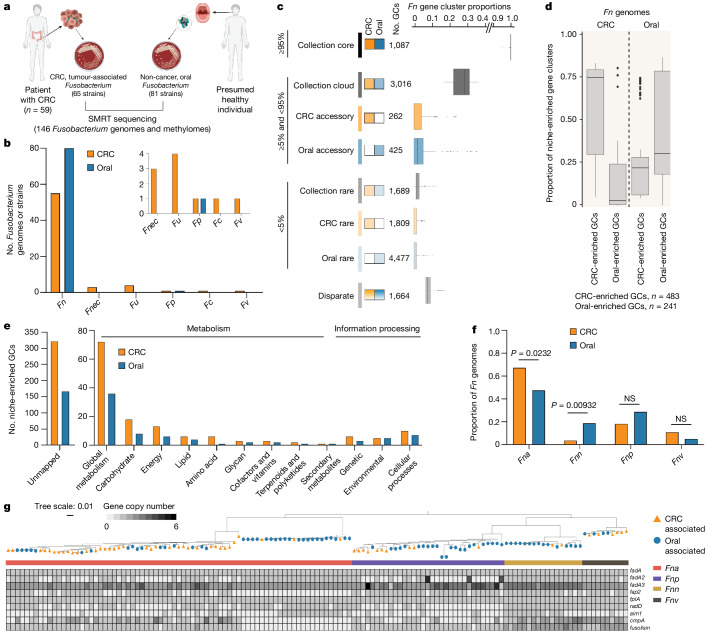
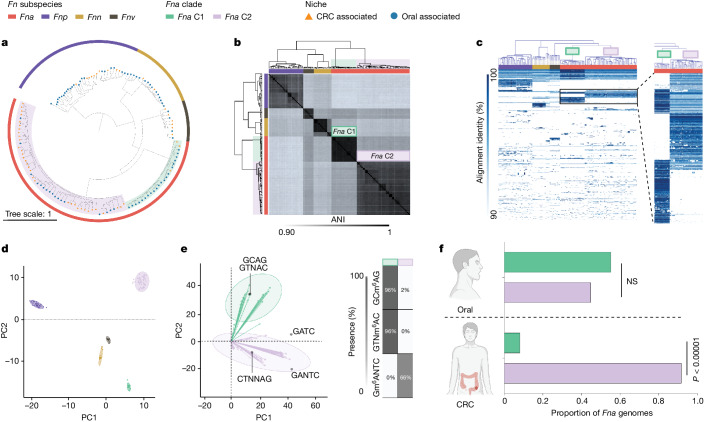
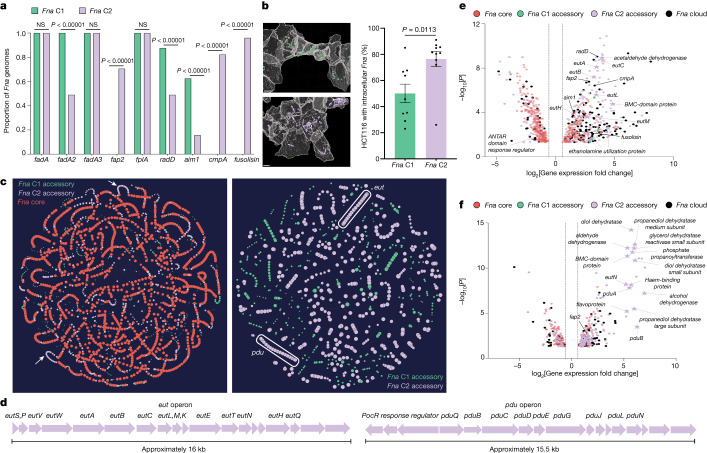
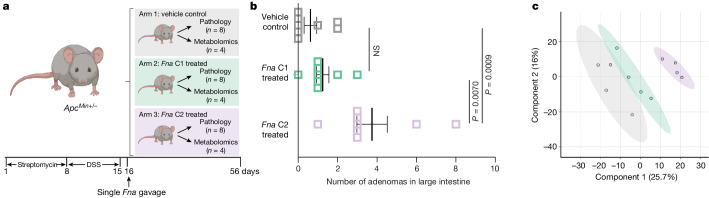
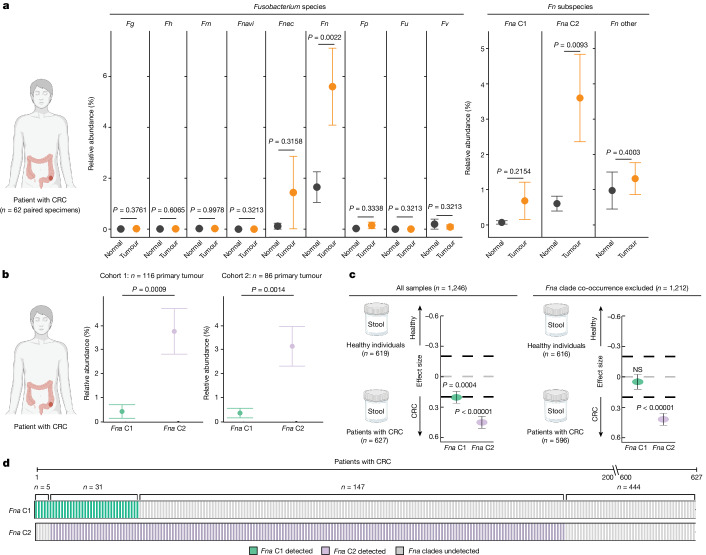
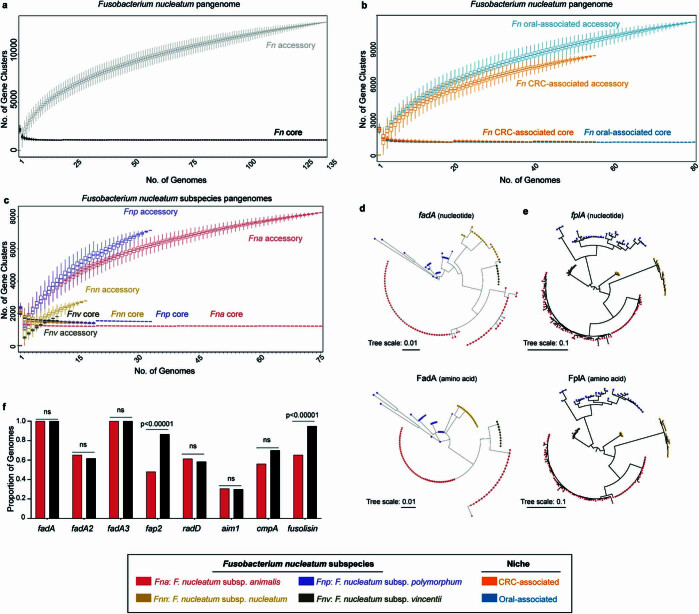
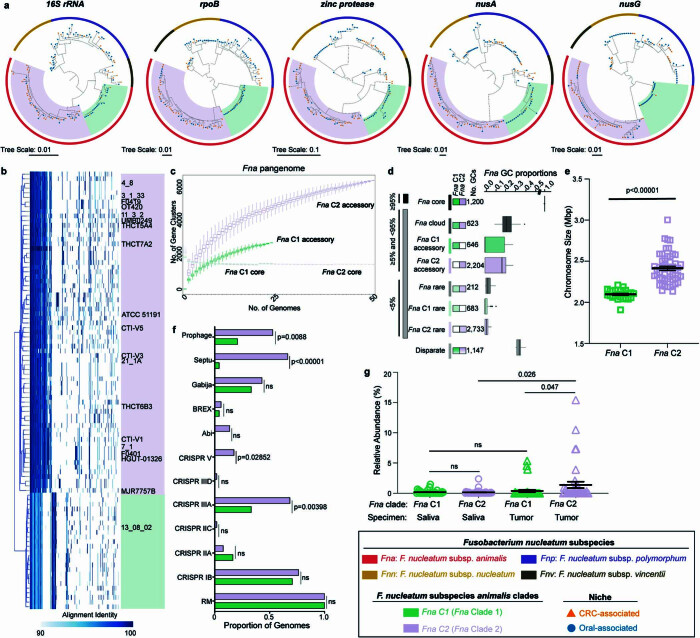
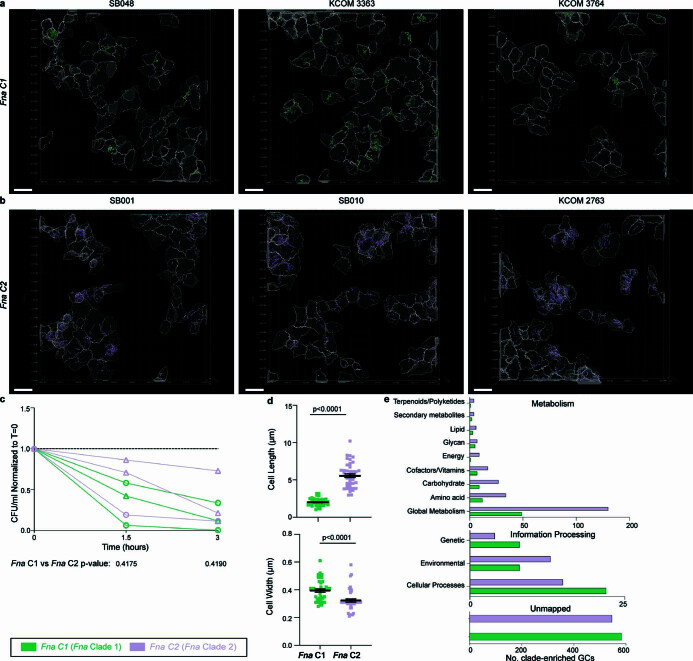
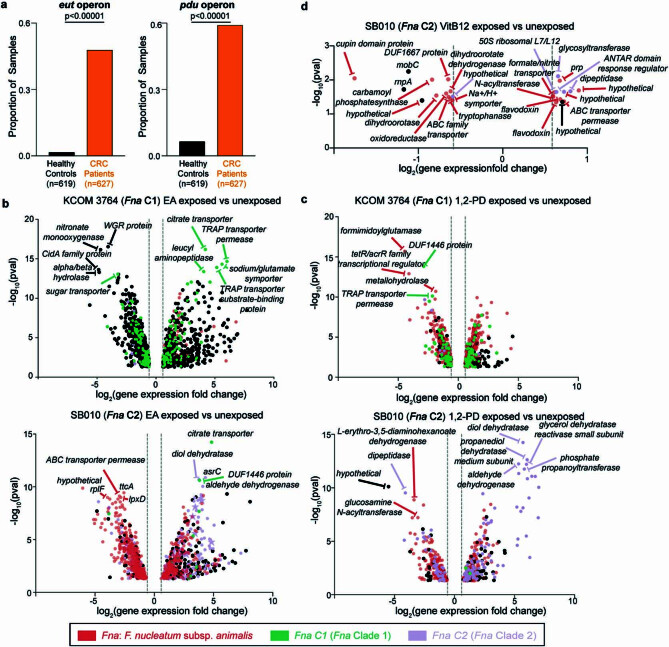
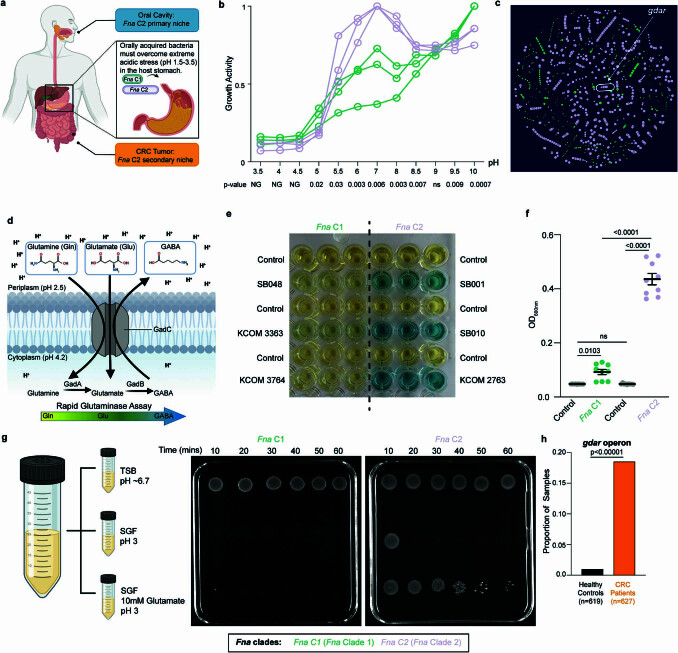
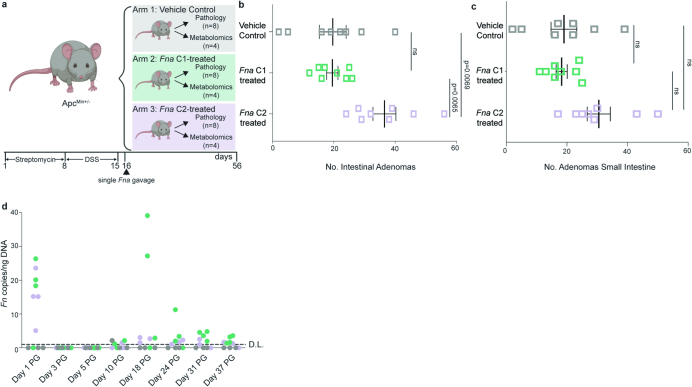
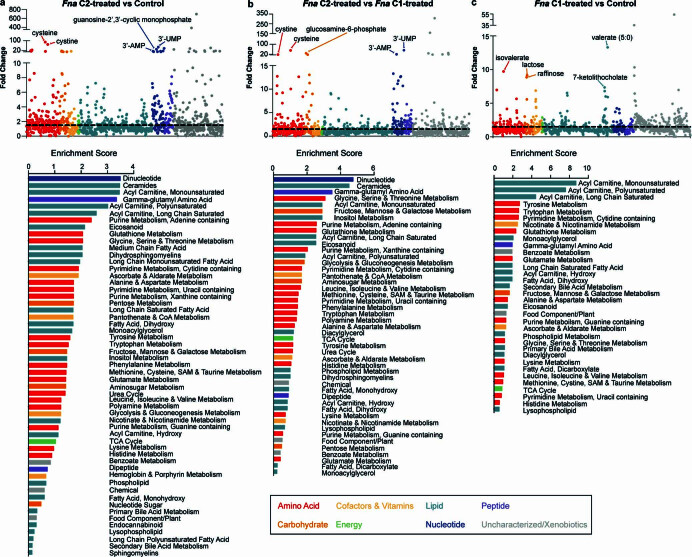
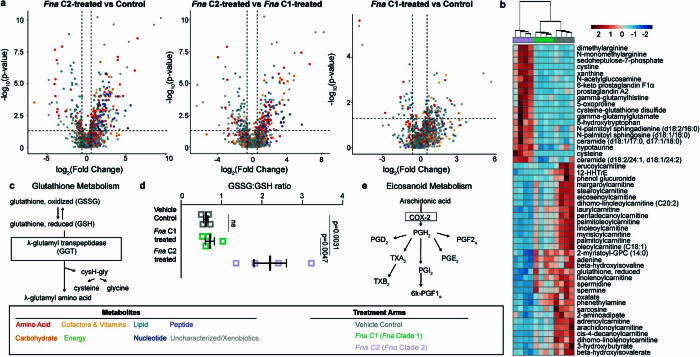
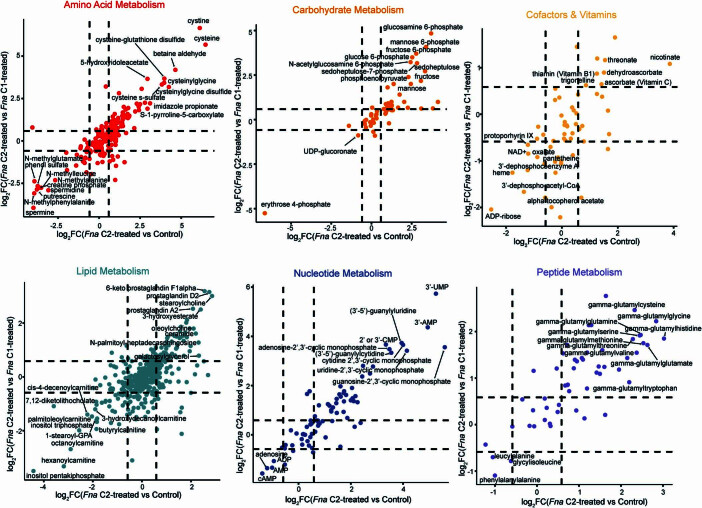
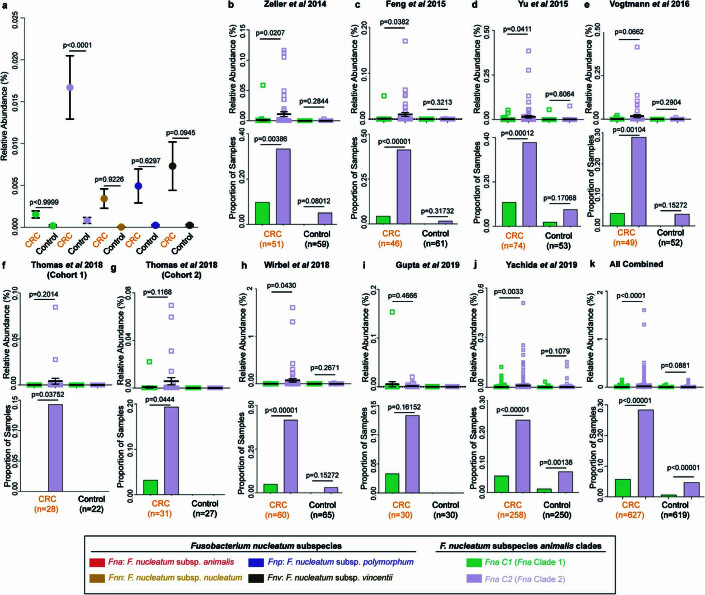
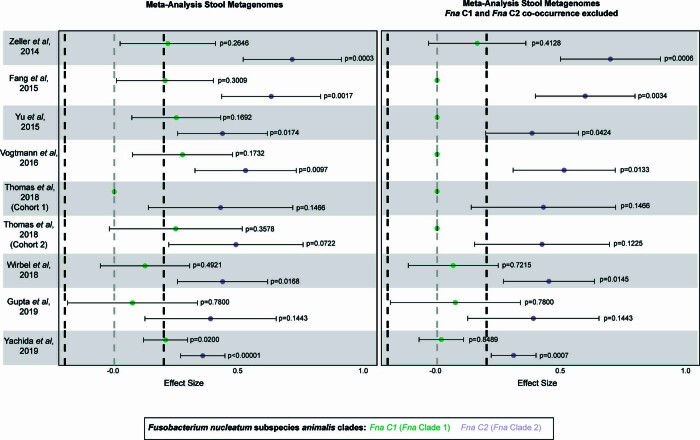
Fusobacterium nucleatum ( Fn ), a bacterium present in the human oral cavity and rarely found in the lower gastrointestinal tract of healthy individuals 1 , is enriched in human colorectal cancer (CRC) tumours 2–5 . High intratumoural Fn loads are associated with recurrence, metastases and poorer patient prognosis 5–8 . Here, to delineate Fn genetic factors facilitating tumour colonization, we generated closed genomes for 135 Fn strains; 80 oral strains from individuals without cancer and 55 unique cancer strains cultured from tumours from 51 patients with CRC. Pangenomic analyses identified 483 CRC-enriched genetic factors. Tumour-isolated strains predominantly belong to Fn subspecies animalis ( Fna ). However, genomic analyses reveal that Fna , considered a single subspecies, is instead composed of two distinct clades ( Fna C1 and Fna C2). Of these, only Fna C2 dominates the CRC tumour niche. Inter- Fna analyses identified 195 Fna C2-associated genetic factors consistent with increased metabolic potential and colonization of the gastrointestinal tract. In support of this, Fna C2-treated mice had an increased number of intestinal adenomas and altered metabolites. Microbiome analysis of human tumour tissue from 116 patients with CRC demonstrated Fna C2 enrichment. Comparison of 62 paired specimens showed that only Fna C2 is tumour enriched compared to normal adjacent tissue. This was further supported by metagenomic analysis of stool samples from 627 patients with CRC and 619 healthy individuals. Collectively, our results identify the Fna clade bifurcation, show that specifically Fna C2 drives the reported Fn enrichment in human CRC and reveal the genetic underpinnings of pathoadaptation of Fna C2 to the CRC niche.
Overview
The claims and statistics of this paper haven’t been checked yet.
Free: it reads the open-access text and checks the first 5 claims that cite a source we can check. Create a free account to check every claim.
Integrity signals
Registry
Cites
Statistics
Figures
Verification
Claims the paper makes
The claims and statistics of this paper haven’t been checked yet.
Free: it reads the open-access text and checks the first 5 claims that cite a source we can check. Create a free account to check every claim.
Claims other papers make about this one
Each is checked against this paper’s own text: does it say what the citing paper says it does?
In the citing paper
“including some (but not all) clades of F. nucleatum in the context of CRC 54”
From Impact of the ONCOBIOME network in cancer microbiome research (2025) · cites this paper as [54]
In the citing paper
“It is worth noting that CRC has often been associated with Fusobac terium species and clades, as have several other bacterial spe cies, 31,47,48”
From Global genetic diversity of human gut microbiome species is related to geographic location and host health (2025) · cites this paper as [47]
Self-check
Percentages, sums and reported differences re-computed from the paper’s own numbers.
The self-check needs the paper’s full text.
Citations
Cites
Trimmomatic: a flexible trimmer for Illumina sequence data
Bolger, A. M., Lohse, M., & Usadel, B. (2014) · Bioinformatics · doi:10.1093/bioinformatics/btu170 · Cited by 65,548
Fast gapped-read alignment with Bowtie 2
Langmead, B., & Salzberg, S. L. (2012) · Nature Methods · doi:10.1038/nmeth.1923 · Cited by 56,400 · cited 1×
“Metagenomic samples were mapped against the Fna SB010 eut , pdu and gdar operons using Bowtie2 (version 2.4.5, --sensitive parameter) 77 .”
MethodInfluentialMEGA X: Molecular Evolutionary Genetics Analysis across Computing Platforms
Kumar, S., Stecher, G., Li, M., Knyaz, C., & Tamura, K. (2018) · Molecular Biology and Evolution · doi:10.1093/molbev/msy096 · Cited by 37,529 · cited 1×
“65) using the MUSCLE clustering algorithm from which a maximum-likelihood dendrogram was generated. kSNP3 (ref.”
MethodInteractive Tree Of Life (iTOL) v5: an online tool for phylogenetic tree display and annotation
Letunic, I., & Bork, P. (2021) · Nucleic Acids Research · doi:10.1093/nar/gkab301 · Cited by 11,124 · cited 1×
“66).”
Borenstein, M., Hedges, L. V., Higgins, J. P. T., & Rothstein, H. R. (2021) · doi:10.1002/9781119558378 · Cited by 9,799
Shifting the genomic gold standard for the prokaryotic species definition
Richter, M., & Rosselló-Móra, R. (2009) · Proceedings of the National Academy of Sciences · doi:10.1073/pnas.0906412106 · Cited by 6,359
GTDB-Tk: a toolkit to classify genomes with the Genome Taxonomy Database
Chaumeil, P.-A., Mussig, A. J., Hugenholtz, P., & Parks, D. H. (2020) · Bioinformatics · doi:10.1093/bioinformatics/btz848 · Cited by 5,259
Effect size, confidence interval and statistical significance: a practical guide for biologists
Nakagawa, S., & Cuthill, I. C. (2007) · Biological Reviews · doi:10.1111/j.1469-185x.2007.00027.x · Cited by 3,835 · cited 1×
“For each model, an adjusted standardized mean difference between the two study conditions was extracted as previously described 74 : standardized mean difference = ( t × ( n 1 + n 2))/(sqrt( n 1 + n 2) × sqrt( n 1 + n 2 − 2)), in which t defines the t -score of the corresponding variable, n 1 is…”
MethodReal-Time DNA Sequencing from Single Polymerase Molecules
Eid, J., Fehr, A., Gray, J., Luong, K., Lyle, J., Otto, G., Peluso, P., Rank, D., Baybayan, P., Bettman, B., et al. (2009) · Science · doi:10.1126/science.1162986 · Cited by 3,732 · cited 1×
“Single-molecule real-time sequencing 18 was carried out on a PacBio Sequel instrument (Pacific Biosciences) or a PacBio Sequel II instrument (Pacific Biosciences) at the University of Minnesota Genomics Center.”
MethodPHASTER: a better, faster version of the PHAST phage search tool
Arndt, D., Grant, J. R., Marcu, A., Sajed, T., Pon, A., Liang, Y., & Wishart, D. S. (2016) · Nucleic Acids Research · doi:10.1093/nar/gkw387 · Cited by 3,557 · cited 1×
“The presence of innate bacterial defence systems was queried using the Prokaryotic Antiviral Defense Locator 67 and intact prophage presence was analysed using the Phage Search Tool Enhanced Release 68,69 tools.”
Method
Cited by
Items 301–400 of 451
Wu, Q., Lu, S., Wang, L., Liao, X., & Wei, D. (2025) · Gut Pathogens · doi:10.1186/s13099-025-00784-3 · Cited by 2
“A significant increase in the abundance of Fusobacteria at the order level further supports its established role in promoting mucosal inflammation and tumorigenesis [3, 61].”
Larionova, E., & Moran, G. P. (2026) · FEMS Microbes · doi:10.1093/femsmc/xtag002 · Cited by 2
“Recent genomic analyses further focus on the impact of the intra-tumoural microbiota—an intrinsic component of the tumour microenvironment (TME) (Zepeda-Rivera et al. 2024 ).”
Huang, Q., Wei, S., Yu, J., Wu, Y., Lai, H., Wei, W., Yan, L., Su, C., Shi, W., & Su, Z. (2026) · Frontiers in Immunology · doi:10.3389/fimmu.2025.1744692 · Cited by 4
“Notably, it may enhance anti-PD-1 ef fi cacy in microsatellite-stable CRC by increasing butyric acid and reducing CD8 + T cell exhaustion (163, 164).”
Self-citationMicrobiota-Derived Proteins Shape T Cell Responses in Healthy and Colorectal Cancer Subjects
Niccolai, E., Nannini, G., Martinelli, S., Puca, V., Luca, V. D., Fortuna, L., Cianchi, F., Carradori, S., Capasso, C., Grande, R., et al. (2026) · Biomedicines · doi:10.3390/biomedicines14010252 · Cited by 2
Modeling microbiome modulation of tumor metabolic networks to predict synergistic therapies
Badenoch, A. J., Pang, Z., Chung, C. H., Robida, A. M., Badenoch, B., Natesan, R., Kakish, L., Li, J., & C.Sriram, C. S. (2026) · Cell Reports Methods · doi:10.1016/j.crmeth.2026.101549 · Cited by 1
Li, Z., Hou, H., Zhang, W., Chen, J., Lu, Y., Shang, K., Tian, R., Guo, Z. G. Z., Shen, D., & Liu, Z. (2026) · Chemical Engineering Journal · doi:10.1016/j.cej.2026.175161 · Cited by 3
Zhang, W., Liu, J., Sha, S., Yan, Q., & Ma, Y. (2026) · Microorganisms · doi:10.3390/microorganisms14030707 · Cited by 3
Mucosal immunity in cancer metastasis: roles, mechanisms, and therapeutic implications
Miao, Y., Cui, D., Bi, Y., & Zhang, R. (2026) · Frontiers in Immunology · doi:10.3389/fimmu.2026.1809558 · Cited by 2
“The primary disorder of the mucosal microbiota can lead to the depletion of immune regulatory metabolites derived from the intestine, and subsequently, through systemic immune regulatory pathways, remotely alter the functional state of immune cells in the lungs (56).”
Wei, S.-N., Cai, C., Wang, J., Zhang, D.-Y., Min, J., Zhang, Y., Wang, L., Liu, W.-L., Cheng, Y.-J., Han, X., et al. (2026) · Acta Biomaterialia · doi:10.1016/j.actbio.2026.04.010 · Cited by 2
The oral-gut-brain axis: how periodontitis influence depression
Li, Z., Xie, C., & Pan, C. (2026) · Frontiers in Microbiology · doi:10.3389/fmicb.2026.1778744 · Cited by 3
Microbiota as a modulator of drug response: targeting microbial–drug crosstalk in cancer therapy
Zhao, T., Liu, M., Qiu, L. X., Zhang, H., Zhang, N., Liu, Z., Xia, Z., Luo, P., Huang, J., & Cheng, Q. (2026) · Gut Microbes · doi:10.1080/19490976.2026.2651930 · Cited by 1
Xiao, R., Bai, Y., Liu, W., & Sun, H. (2026) · Pathogens · doi:10.3390/pathogens15050483 · Cited by 1
“In CRC, although multiple subspecies can be detected, certain subgroups appear to show more pronounced enrichment and greater ecological adaptation [13,16].”
InfluentialAli, S., Chaudhary, A. A., Sheikh, W. M., Ali, M. A. M., Chopra, C., Dar, M. A., Wani, A. K., & Bashir, S. M. (2026) · Pathology - Research and Practice · doi:10.1016/j.prp.2026.156543 · Cited by 1
Gao, X., Zou, Y., Fang, J., Wu, X., Zheng, W., Zhang, Y., & Hao, W. (2026) · Journal of Oral Microbiology · doi:10.1080/20002297.2026.2681268 · Cited by 1
“For example, Fusobacterium nucleatum subtypes detected in colorectal tumors and the oral cavity [20], and oral microbial signatures prospectively associated with gastric cancer risk [21].”
Shemfe, D. P., Mvubu, N. E., Naidoo, P., Giandhari, J., Byrd, D. A., Kader, S., & Mkhize‐Kwitshana, Z. L. (2026) · International Journal of Molecular Sciences · doi:10.3390/ijms27114957 · Cited by 1
“Similarly, the Zepeda-Rivera and Minot [35] study, comparing 627 CRC patients and 619 healthy controls, identified a clade of F . nucleatum (subspecies animalis clade C2) that was significantly overrepresented in both tumour tissues and stool samples.”
Chouaibi, S., Fertitta, V., Porreca, S., Njim, L., Carcagnì, A., Toietta, G., Canettieri, G., Zouari, K., Mastouri, M., Kadri, Y., et al. (2026) · Gut Microbes · doi:10.1080/19490976.2026.2681818 · Cited by 1
“9-12 Mechanistically, F. nucleatum 's ability to enter the bloodstream, colonize the intestinal microbiota, and infect epithelial cells through its virulence factors (like the adhesins FadA and Fap2) explains its enrichment in colorectal cancer.”
Trends in colorectal cancer mortality among younger vs older adults in 49 countries
Sung, H., Kelly, K., Jiang, C., Laversanne, M., Siegel, R. L., Bray, F., & Jemal, A. (2026) · JNCI Journal of the National Cancer Institute · doi:10.1093/jnci/djag153 · Cited by 1
The gut microbiome and colorectal cancer
Dietz, M. A., Subramanian, S., & Staley, C. M. (2026) · Clinical Microbiology Reviews · doi:10.1128/cmr.00332-25 · Cited by 1
Steele, S., Mazengenya, P., & Chambuso, R. (2026) · Journal of Translational Medicine · doi:10.1186/s12967-026-08426-1 · Cited by 1
“…through experimental, genomic and mechanistic studies (e.g., Fusobacterium nucleatum , enterotoxigenic Bacteroides fragilis , and colibactin-producing E. coli ), disentangling causality at the individual tumour level remains a general constraint of human observational datasets [20, 102, 151, 152].”
Coordinated oral–gut microbiota relocation in connective tissue diseases: a systematic review
Meyer, V. I., Redanz, S., & Kriegel, M. A. (2026) · Frontiers in Immunology · doi:10.3389/fimmu.2026.1841874 · Cited by 2
“A second, less likely, potential mechanism is the hematogenous spread (95), mainly suggested for Fusobacterium to colonize colon cancers, although a direct oral-gut relocating route is supported by more recent data (101).”
Jiang, Z., Li, L., Long, Q., Guo, W., Wang, M., Li, X., Li, J., & Yi, Y. (2026) · Frontiers in Cellular and Infection Microbiology · doi:10.3389/fcimb.2026.1815707 · Cited by 1
“…vary according to disease stage, tumor location, cohort background, and taxonomic or strain-level resolution, supporting the need for cautious interpretation of species-level fi ndings in individual cohorts (Chen et al., 2022; Fidelle et al., 2023; Zepeda-Rivera et al., 2024; Piccinno et al., 2025).”
Lu, N., Zhang, L., Sun, H., Zhou, Y., He, P., Zhao, C., & Wang, Y. (2026) · Frontiers in Immunology · doi:10.3389/fimmu.2026.1932590 · Cited by 2
Zhang, Y., Zhao, Y., Zhang, L., Xuan, B., Wang, Z., Yu, B., Li, W., Huang, X., Zhou, Y., Ning, L., et al. (2026) · Nature Microbiology · doi:10.1038/s41564-026-02497-y · Cited by 1
TIME Is Critical for Oncolytic Viral Therapies Against Solid Cancers
Kumar, V., & Stewart, J. H. (2024) · Interdisciplinary cancer research · doi:10.1007/16833_2024_440 · Cited by 1
The impact of fermented foods and microbiota modulation on colorectal cancer
Sarıkaya, D., & Cömert, T. K. (2025) · Gulhane Medical Journal · doi:10.4274/gulhane.galenos.2025.59672 · Cited by 2
Nanomedicine-Driven Modulation of the Microbiota for Cancer Therapy
Yan, H., Li, Z., Iqbal, A. Z., Cai, J., Zhao, Y., & Li, C. (2025) · ACS Applied Nano Materials · doi:10.1021/acsanm.5c01345 · Cited by 1
Meyers, A. L., Dowty, J. G., Mahmood, K., Macrae, F., Rosty, C., Buchanan, D. D., & Jenkins, M. A. (2025) · medRxiv · doi:10.1101/2025.04.21.25326138 · Cited by 2
Metaplasia Enables Stomach Colonization by Fusobacterium animalisPreprint
Gómez-Garzón, C., Chen, Q., O'Brien, V. P., & Salama, N. R. (2025) · bioRxiv (Cold Spring Harbor Laboratory) · doi:10.64898/2025.12.16.694801 · Cited by 1
Degregori, S., Patel, L., Xu, L., Iter, M., Weng, Y., Huang, I., Martel, H., Kisselev, D., Zhou, J., Allaband, C., et al. (2026) · bioRxiv (Cold Spring Harbor Laboratory) · doi:10.64898/2026.04.29.721755 · Cited by 1
“Because Fusobacterium has been consistently implicated in colorectal cancer 36,37 , we investigated its prevalence across animal gut microbiomes.”
Whelan, R., Wands, D. I. F., Rimmer, P. J., Hansen, R., Wilson, D., Moran, G. W., Imai, J., Hold, G., Chapple, I., Iqbal, T., et al. (2026) · medRxiv · doi:10.64898/2026.04.28.26351936 · Cited by 1
Tangled genetic relationships within the Fusobacterium genusPreprint
Molteni, C., Forni, D., Cagliani, R., & Sironi, M. (2024) · bioRxiv (Cold Spring Harbor Laboratory) · doi:10.1101/2024.03.27.587012
“Also, a recent report suggested that F. nucleatum subspecies animalis is divided into two clades, only one of which is associated with CRC 6 .”
BackgroundResultInfluential2020 Grand challenge revisited: removing silos, advancing research to improve overall health
Somerman, M. J., Mouradian, W. E., & Ganesan, S. M. (2024) · Frontiers in Dental Medicine · doi:10.3389/fdmed.2024.1430828
Argyris, P. P., & Herzberg, M. C. (2024) · Elsevier eBooks · doi:10.1016/b978-0-323-95488-4.00134-0
Mapping Tumor-Infiltrating Microbes: Microniches to Single Cells in the Tumor Microenvironment
Bullman, S. (2024) · doi:10.52843/cassyni.0vd8kj
Self-citationEthanolamine-induced assembly of microcompartments is required for Fusobacterium nucleatum virulencePreprint
Franklin, D. S., Chen, Y., Chen, Y., Wittchen, M., Agnew, A., Luu, A., Whitelegge, J. P., Zhou, Z., Tauch, A., Das, A., et al. (2024) · bioRxiv (Cold Spring Harbor Laboratory) · doi:10.1101/2024.11.11.623001
Zha, L., Shimomura, Y., Kitamura, T., Komukai, S., Narii, N., Komatsu, M., Shiba, S., Mizutani, S., Yamada, T., Yachida, S., et al. (2025) · European Journal of Cancer Prevention · doi:10.1097/cej.0000000000000974
Righetti, F., Massara, M., & Calcinotto, A. (2025) · The microbiomes of humans, animals, plants, and the environment · doi:10.1007/978-3-031-84065-4_8
Asnicar, F., & Manara, S. (2025) · The microbiomes of humans, animals, plants, and the environment · doi:10.1007/978-3-031-84065-4_6
Shi, Y., Yan, F., Wang, W., & Li, X. (2025) · International Journal of Surgery · doi:10.1097/js9.0000000000002655
“F. nucleatum promotes tumor growth via β -catenin activation [ 3 ] , immune modulation [ 4 ] , and autophagy induction [ 5 ] , and interacts with TP53/APC driver mutations and the tumor micro-environment [ 6 , 7 ] .”
Zhao, H., Li, Q., & Qin, J. (2025) · Cancer Heterogeneity and Plasticity · doi:10.47248/chp2502020011
Prospect of interdisciplinary research on gut microbiota and colorectal cancer immunotherapy
Lu, Y., Zhang, Z., Chen, L., Xue, P., Zhang, Y., Li, Y., & Guo, H. (2025) · Critical Reviews in Oncology/Hematology · doi:10.1016/j.critrevonc.2025.104832 · Cited by 1
Role of Microbiota in Pathogenesis of Gastrointestinal Cancers
Belkhiri, A., & Pidkovka, N. A. (2025) · Open Medicine Journal · doi:10.2174/0118742203388914250710052206
Kim, S.-K., Ku, I.-Y., & Han, S.-J. (2025) · SSRN Electronic Journal · doi:10.2139/ssrn.5385610
Karzinogenese des kolorektalen Karzinoms
Beck, F., Kreipp, M.-L., & Janssen, K. (2025) · Die Onkologie · doi:10.1007/s00761-025-01846-6
Fang, J., Zhang, Y., Wang, W., Zuo, X., Chen, T., Li, K., Yang, H., Zhu, T., Zhang, Y., Wei, D., et al. (2025) · bioRxiv (Cold Spring Harbor Laboratory) · doi:10.1101/2025.10.22.683275
Influence of bacterial proteins on the host’s cell cycle
Benedetti, F., Summers, C., Gallo, R. C., & Zella, D. (2025) · Cell Cycle · doi:10.1080/15384101.2025.2577757
Mapping the oral microbiome opens links to periodontitis.
Sempeck, C., & Olm, M. (2025) · Cell Host and Microbe · doi:10.1016/j.chom.2025.10.009
Living therapeutics: Colorectal related diseases precision therapy with engineered organisms
Huang, J., Lan, Y., Chen, L., Guan, X., Liang, R., Liang, J., Gao, M., Gan, J., Guo, Y., & Zhang, S. (2025) · Chinese Chemical Letters · doi:10.1016/j.cclet.2025.112151
Frolova, M. S., Maguire, B., Düßmann, H., Rayan, M., Burke, C., Korashy, H. M., Raman, A., Gallagher, W. M., Burke, J. P., Furney, S. J., et al. (2025) · bioRxiv (Cold Spring Harbor Laboratory) · doi:10.1101/2025.11.24.690231
“Recent studies suggest that F. animalis may play a more aggressive role in colorectal cancer progression compared to F. nucleatum [34], [35], so calling subspecies correctly matters.”
Moser, T., Moser, M. J., & Mahnert, A. (2025) · mSystems · doi:10.1128/msystems.00039-24
Morales, M. F. G., Hogue, S., Pitcher, S., Jeong, D. K., Radosavljevic, I., Stefanou, A. J., Felder, S. I., Burns, J. R., Dowd, S. E., Vogtmann, E., et al. (2025) · Gut Pathogens · doi:10.1186/s13099-025-00773-6 · Cited by 1
“In recent studies, other oral bacteria (e.g., Fusobacterium spp. ) survived acidic conditions and adhered to epithelial cells in the gut [49, 50].”
Scahill, S. D., Sherman, K. J., & Paúl, D. (2025) · International Journal of Molecular Sciences · doi:10.3390/ijms27010424 · Cited by 1
Ghadimi, D., Blömer, S., KAYA, A. Ş., Krüger, S., Röcken, C., Schäfer, H., Uchiyama, J., Matsuzaki, S., & Bockelmann, W. (2026) · Experimental and Molecular Pathology · doi:10.1016/j.yexmp.2025.105021
metaFun: An analysis pipeline for metagenomic big data with fast and unified functional searches
Lee, H. G., Song, J. Y., Yoon, J., Chung, Y., Kwon, S.-K., & Kim, J. F. (2026) · Gut Microbes · doi:10.1080/19490976.2025.2611544 · Cited by 4
“In our CRC cohort analysis, strain-level profiling revealed elevated SNV density and nucleotide diversity in a specific genus including Faecalibacterium , CAG-103, CAG-217, among CTRL samples, suggesting disease-associated decreases in population heterogeneity.”
Intratumoral microbiota: Distribution, mechanisms, and therapeutic implications
Ge, J., Gao, L., & Yu, L. (2026) · Critical Reviews in Oncology/Hematology · doi:10.1016/j.critrevonc.2026.105128 · Cited by 1
Association of Fusobacterium nucleatum with suppressed anti-tumor T cell responses in gastric cancerPreprint
Hsieh, Y.-Y., Liu, W., Wang, C.-T., Kuo, W.-L., & Li, C. (2026) · Research Square · doi:10.21203/rs.3.rs-8216991/v1
Function of Gut Microbiota in Cancer as a Microbial Approach for Personalised Therapy
Malik, S., Bora, J., Mishra, A., & Мадан, А. К. (2026) · IGI Global eBooks · doi:10.4018/979-8-3373-4382-2.ch009
Influence of topography on the mucosa-associated gut microbiota in colon cancer
Álvarez-Aguilera, M., Moreno, A. C., Cózar, M. Á. B., Valerdiz, N., de la Osa, J. M. O., Miranda, J. L. D., Quirós, I. A., Gutiérrez, G. M., Martín, J. J. B., Ramírez, C. C., et al. (2026) · Cirugía Española (English Edition) · doi:10.1016/j.cireng.2026.800298
Bergheim, I., Cadranel, J. F. D., Chen, J., Ding, W., Eferl, R., García‐Ruiz, C., Jaeschke, H., Kazerouni, F., Lonardo, A., Mann, D. A., et al. (2026) · Exploration of Digestive Diseases · doi:10.37349/edd.2026.1005110
Galbraith, N. J., White, M. G., & Smith, J. J. (2025) · Diseases of the Colon & Rectum · doi:10.1097/dcr.0000000000004037
Biedroń, P., Skrzypek, A., Hutkowski, M., Zbrożek, M., Chwostek, Z., Kosiarski, B., Markowicz, P., Maruchniak, H., Marzec, W., & Biłyk, K. (2026) · International Journal of Innovative Technologies in Social Science · doi:10.31435/ijitss.1(49).2026.4808
Kim, S.-K., Ku, I.-Y., & Han, S.-J. (2026) · BMC Oral Health · doi:10.1186/s12903-026-07968-6 · Cited by 1
Project MEPROT: Shaping the Future of Early Onset Colorectal Cancer PreventionPreprint
Jovanović, I. (2026) · doi:10.24108/preprints-3114629
Ali, M. G. A., Psomiadou, V., Martin, M., Lamprinaki, D., Nieto‐Fabregat, F., Sobczak, K., Macauley, M. S., Ereño‐Orbea, J., Castro, C. D., Silipo, A., et al. (2026) · JACS Au · doi:10.1021/jacsau.5c01502
AI-2 Production in Fusobacterium nucleatum Is Subspecies-Specific and Uncoupled from Quorum SensingPreprint
Bibek, G. C., Xu, S., Tran, T., & Wu, C. (2026) · bioRxiv (Cold Spring Harbor Laboratory) · doi:10.64898/2026.03.02.709096
Mutations in Exon 29 of Ring Finger Protein 213 Are Associated with Early-Onset Colorectal Cancer
Jiang, E. X., Quarta, G., Delau, O., & Shaukat, A. (2026) · Digestive Diseases and Sciences · doi:10.1007/s10620-026-09784-y
Luan, W.-Y., Zhang, S.-P., Xu, K.-Z., Shang, Y.-H., Hu, W., Sun, H., & Miao, Y. (2026) · World Journal of Gastrointestinal Oncology · doi:10.4251/wjgo.v18.i3.115722
A sticky situation: E. bolteae adhesion fuels liver cancer
Tang, Z., & Zeng, S. (2026) · Cell Host & Microbe · doi:10.1016/j.chom.2026.02.003 · Cited by 1
Nicotinamide attenuates the virulence of colorectal cancer-associated Fusobacterium nucleatum
Yang, Z., Lei, Z., Ma, Q., Zeng, J., Xu, M., Zhang, D., Xu, P., Li, K., Gong, T., & Li, Y. (2026) · Infection and Immunity · doi:10.1128/iai.00488-25 · Cited by 1
Thomas, C. E., Lorona, N. C., LaBrie, S. D., Curtis, K. R., Yin, H., Ma, N., Randolph, T. W., Qu, C., Huyghe, J. R., Thomas, S., et al. (2026) · Cancer Epidemiology Biomarkers & Prevention · doi:10.1158/1055-9965.epi-25-1580
Westling, E. H., Smith, D., Leong, A., Mannan, I. A., & Feil, E. G. (2026) · JMIR Formative Research · doi:10.2196/70346
Influencia de la topografía en la microbiota intestinal asociada a mucosa en el cáncer de colon
Álvarez-Aguilera, M., Moreno, A. C., Cózar, M. Á. B., Valerdiz, N., de la Osa, J. M. O., Miranda, J. L. D., Quirós, I. A., Gutiérrez, G. M., Martín, J. J. B., Ramírez, C. C., et al. (2026) · Cirugía Española · doi:10.1016/j.ciresp.2026.800298
Hagens, E. (2025) · British Journal of Cancer Research · doi:10.31488/bjcr.212
Kingsley, C., Nair-Menon, J. U., McKee, P. R., Daulagala, A. C., Yoon, A. J., Pandruvada, S. N. M., Engevik, A. C., Engevik, M. A., & Kourtidis, A. (2026) · American Journal Of Pathology · doi:10.1016/j.ajpath.2026.04.007
The Gut Microbiome and Colorectal Cancer: From Association to Causation
Takahashi, T., & Goel, A. (2026) · Cancer Biome and Targeted Therapy · doi:10.66505/cbtt.v1i2.40
“Recent studies indicate the existence of a CRC-enriched clade of F. nucleatum, suggesting its involvement in tumorigenesis (14).”
Future Directions and Research Opportunities
Genovese, G., & Perelli, L. (2026) · Current clinical pathology · doi:10.1007/978-3-032-18790-1_20
Li, S., Huang, J., Xu, S., Zhang, X., Liu, H., Wang, X., Ding, Z., Li, M., Liu, Z., Yong, T., et al. (2026) · Acta Pharmaceutica Sinica B · doi:10.1016/j.apsb.2026.05.018
Zhou, C., Yang, Z., Lu, W., Zhao, J., Zhang, H., Chen, W., & Zhu, J. (2026) · Food Bioscience · doi:10.1016/j.fbio.2026.109124
Microbial Differences in Prostate Lesions Between Black and White American Men
Verma, S., Gupta, K., Qiao, X., Shen, D. L., MacLennan, G. T., Suryavanshi, M. V., Zhang, L., Miller, A. W., & Gupta, S. (2026) · The Prostate · doi:10.1002/pros.70200 · Cited by 1
Becker, J., Mertens, A., Rieger, M. D., Conrads, G., & Rezasoltani, S. (2026) · International Journal of Molecular Sciences · doi:10.3390/ijms27114865
Yuan, K., Lian, Y., Huang, P., Cao, F., Yang, X., Lu, Y., Ding, X., Wang, L., Yang, H., Ye, Z., et al. (2026) · Cell Reports · doi:10.1016/j.celrep.2026.117413
Modulating commensal microbiota: shifting from broad interventions to precision control
Yu, W., & Zheng, D. (2026) · Scientia Sinica Vitae · doi:10.1360/ssv-2025-0417
Zhang, J., Zhu, M.-L., Xie, Y.-X., Fan, Y.-Q., Zhang, W., Liu, S.-S., Yu, X., Wang, W., & Fu, X.-Y. (2026) · World Journal of Gastroenterology · doi:10.3748/wjg.119646
Research advances in the correlation between oral microbiota and tumors
Liu, X., Liu, S., & Guo, Z. (2026) · Holistic Integrative Oncology · doi:10.1007/s44178-026-00270-z
“These studies collectively suggest that oral microbes may reach and persist in the colorectum through multiple routes [72–74]: continuous swallowing allows acid-resistant oral species such as Porphyromonas gingivalis to survive gastric transit and reach the distal gut; hematogenous or lymphatic…”
Turcu, S., Prasoula, K.-L., Legaki, E., Grama, F. A., Mandi, D.-M., Bordea, A., Dutei, C. A., & Gazouli, M. (2026) · World Journal of Gastrointestinal Oncology · doi:10.4251/wjgo.v18.i6.118753
Heidrich, V., Fackelmann, G., Ricci, L., Spadazzi, R., Baldanzi, G., Punčochář, M., Catassi, G. N., Marchi, P., Modesto, M., Piccinno, G., et al. (2026) · Cell Press Blue · doi:10.1016/j.cpblue.2026.100034 · Cited by 2
Self-citationSpatial atlas highlights contribution of C. difficile in early-stage colorectal cancerPreprint
Markham, N. O., Drewes, J. L., Green, E. H., Ball, W., Lunnemann, H. M., Simmons, A. J., Kaur, H., Queen, J., Geis, A. L., Pourmaleki, M., et al. (2026) · bioRxiv (Cold Spring Harbor Laboratory) · doi:10.64898/2026.06.18.733268
Shen, C., Lou, R., Bai, F., Zhang, Y., Xu, T., & Huang, Z. (2026) · Frontiers in Oncology · doi:10.3389/fonc.2026.1860619
“Collectively, these results establish that Fna C2 — rather than Fn as a whole — is the relevant target for mechanistic and therapeutic investigation in CRC (63).”
InfluentialThe interplay of gut microbiota and energy homeostasis in obesity-related diseases
Ruan, J., & Kao, C. (2026) · Elsevier eBooks · doi:10.1016/b978-0-443-40306-4.00009-0
Dang, J. T., Lee, Y., Wills, M. V., Brown, J. M., Madsen, K., & Mocanu, V. (2026) · British journal of surgery · doi:10.1093/bjs/znag082 · Cited by 1
Li, B., Dong, Y., Dai, Y., Zhang, M., Zou, Z., & Yang, H. (2026) · Frontiers in Immunology · doi:10.3389/fimmu.2026.1840240
Following Ariadne’s thread through microbiome-based biomarker discovery in CRC
Kang, J. X., & Wong, S. H. (2026) · Cell Host & Microbe · doi:10.1016/j.chom.2026.06.003
Wang, S., Wang, W., Zhang, Y., Li, Y., Zhang, Q., Yuan, J., Liu, T. T., Sun, J. K., Jiang, X., & Sun, B. (2026) · Chemical Engineering Journal · doi:10.1016/j.cej.2026.179264
Niu, J., Sun, W., Gong, R., & Pan, Q. (2026) · Clinical & Translational Oncology · doi:10.1007/s12094-026-04496-1
Virulome over taxonomy: refining the driver-passenger model in colorectal carcinogenesis
Glazunova, E. V., Kurnosov, A., Bogacheva, A., Makarov, V., & Zlobovskaya, O. A. (2026) · Frontiers in Cellular and Infection Microbiology · doi:10.3389/fcimb.2026.1858868
Frolova, M. S., Maguire, B., Düßmann, H., Rayan, M., Burke, C., Korashy, H. M., Raman, A., Gallagher, W. M., Burke, J. P., Furney, S. J., et al. (2026) · mSystems · doi:10.1128/msystems.00550-26 · Cited by 1
Lu, Y.-Q., Dai, J.-H., Duan, Y.-F., Qin, G., Huang, S.-W., Lin, L., Tan, X.-R., Zhu, X.-H., He, Q.-M., Wang, J.-Y., et al. (2026) · Science Translational Medicine · doi:10.1126/scitranslmed.aec4847 · Cited by 1
Aging and the Microbiome: precondition for gastrointestinal carcinogenesis
Wizenty, J., & Sigal, M. (2026) · Best Practice & Research Clinical Gastroenterology · doi:10.1016/j.bpg.2026.102122
“…F. nucleatum is bifurcated into two distinct genetic clades, arguing against the dogma of F. nucleatum translocation from the mouth to the colon: Fna C1, which is largely restricted to the oral cavity, and Fna C2, which dominates the human CRC niche, particularly in advanced cancer stages [64,65].”
Aldriwesh, M. G., Altammami, M. A., Alswaji, A. A., Almatrafi, R., Hakami, M., Alqarni, A., Alselaim, N. A., Alhalafi, M., Alawfi, H., Algarni, M., et al. (2026) · Scientific Reports · doi:10.1038/s41598-026-62044-x
Metadata
- Authors
- Zepeda-Rivera, M., Minot, S. S., Bouzek, H., Wu, H., Blanco-Míguez, A., Manghi, P., Jones, D. S., LaCourse, K. D., Wu, Y., McMahon, E. F., Park, S.-N., Lim, Y. K., Kempchinsky, A. G., Willis, A. D., Cotton, S. L., Yost, S. C., Sicinska, E., Kook, J.-K., Dewhirst, F. E., Segata, N., Bullman, S., & Johnston, C. D.
- Affiliations
- Fred Hutch Cancer Center (US)
- University of Trento (IT)
- Chosun University (KR)
- University of Washington (US)
- The Forsyth Institute (US)
- Harvard University (US)
- Corresponding author
- Bullman, Susan
- Johnston, Christopher D.
- ORCID
- Venue
- Nature
- Published
- 2024-03-20
- Volume
- 628
- Issue
- 8007
- Pages
- 424-432
- ISSN
- 0028-0836 (ISSN-L)
- 1476-4687
- PMC
- PMC11006615
- OpenAlex
- W4392984046
- Cited by
- 451
- References
- 80
- Citations by year
- 2026: 174 · 2025: 203 · 2024: 74
- FWCI
- 61.22
- Type
- journal article
- Language
- en
- Open access
- hybrid
- doi.org
- Licence
- cc-by
- creativecommons.org/licenses/by/4.0 (tdm)
- creativecommons.org/licenses/by/4.0 (vor)
- Locations
- Nature (publishedVersion, cc-by)
- PubMed Central (publishedVersion, cc-by)
- PubMed (publishedVersion)
- RePEc: Research Papers in Economics (submittedVersion)
- Institutional Research Information System (Università degli Studi di Trento) (submittedVersion)
- Funders
- Washington Research Foundation
- Fred Hutchinson Cancer Research Center (P30CA015704)
- University of Washington (P30 CA015704)
- National Research Foundation
- National Institutes of Health (1s10od028685-01, CA015704)
- National Cancer Institute (CA015704, R00CA229984, P30CA015704)
- National Institute of General Medical Sciences (R35GM133420)
- National Institute of Dental and Craniofacial Research (R21DE033533, R01DE027850)
- Topics
- Life Sciences › Biochemistry, Genetics and Molecular Biology › Molecular Biology › Gut microbiota and health
- Health Sciences › Dentistry › Periodontics › Oral microbiology and periodontitis research
- Health Sciences › Medicine › Infectious Diseases › Clostridium difficile and Clostridium perfringens research
- Keywords
- Fusobacterium nucleatum, colorectal cancer, bacterial clades, pan-genome, gut microbiota, pathoadaptation, intestinal adenoma, metagenomics, strain genomics
- MeSH terms
- Adenoma, Animals, Feces, Female, Humans, Mouth, Colorectal Neoplasms, Case-Control Studies, Genome, Bacterial, Fusobacterium nucleatum, Gastrointestinal Tract, Mice
About these checks
Registry, retraction, Cites and statistics results are computed, not judged, with one exception: a printed reference that no index lists is read once by a model before it counts as a citation error. Claims are extracted by a model and kept only when their quote appears verbatim in the text; each cited source is then checked, with a model’s help, for whether it says what the claim relies on. Those verdicts can be wrong — read the claim’s quote and the cited source before relying on one.
Statistics and arithmetic are recomputed, not judged.
Confidence bands are shown only for fields calibrated on our annotated test set. None is calibrated yet, so no band is shown.
What counts as a claim ›How we measure confidence ›How we check this ›
Are you an author, or do you see a problem with this page? Request a review
Data sources
Bibliographic data: Semantic Scholar, OpenAlex, Crossref.
Contains information from the Semantic Scholar Academic Graph Datasets, made available under the ODC Attribution License (ODC-BY 1.0).
Semantic Scholar’s data is described in: Kinney, R., et al. (2023). The Semantic Scholar Open Data Platform. arXiv:2301.10140.
