

A distinct Fusobacterium nucleatum clade dominates the colorectal cancer niche
Open accessThe DOI matches its Crossref record; 82 of the 82 references it cites were found in a registry or an index.
Abstract
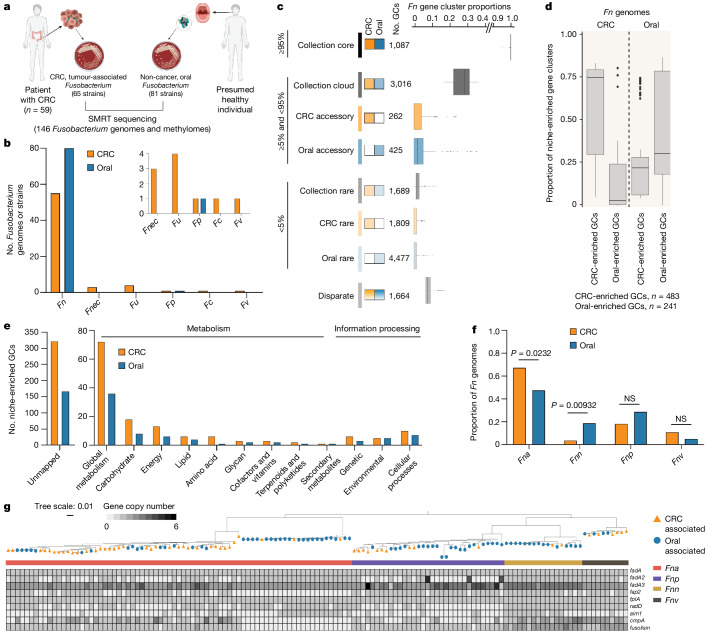
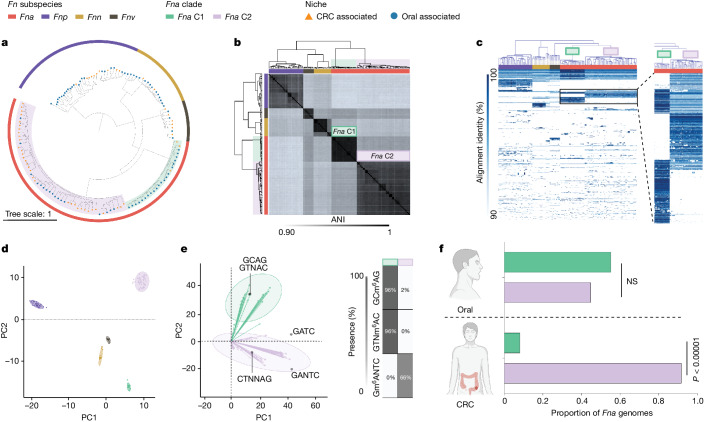
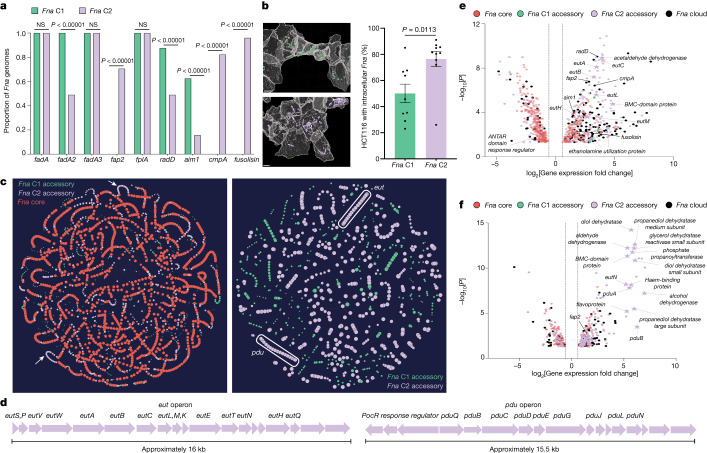
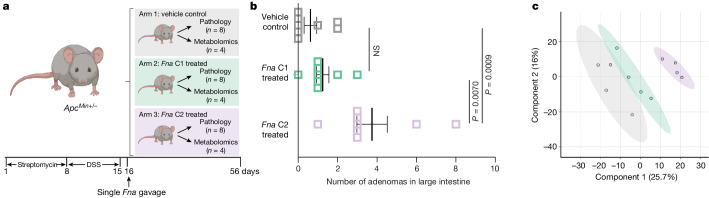
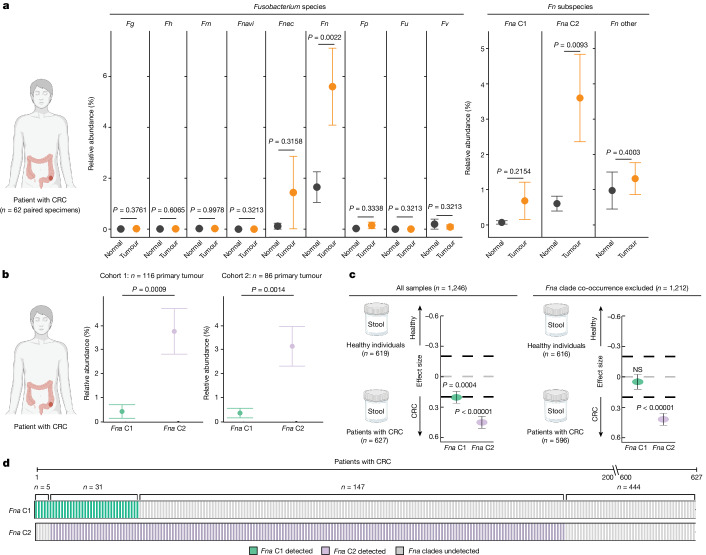
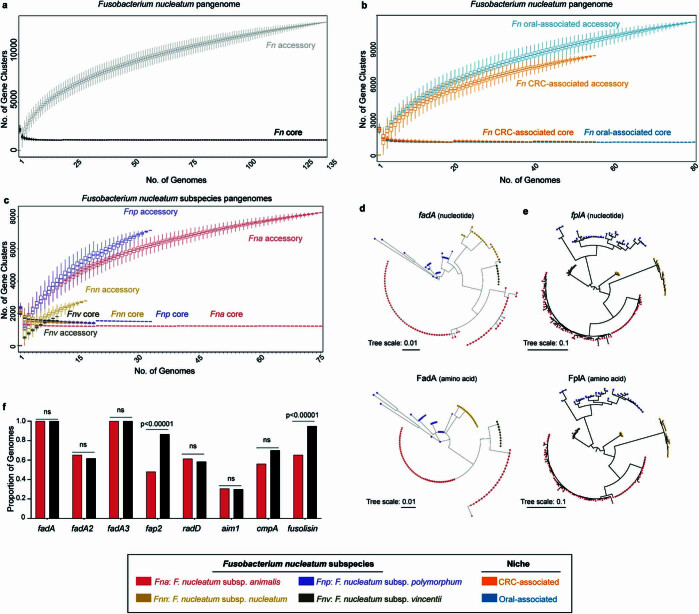
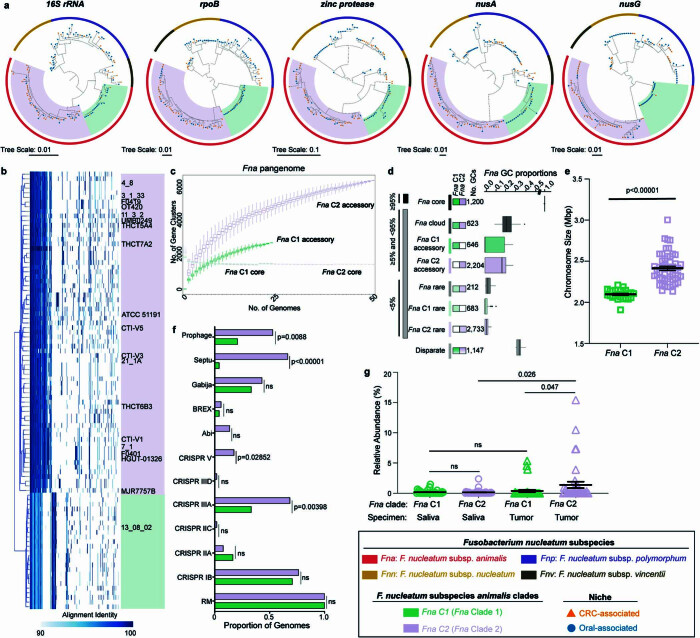
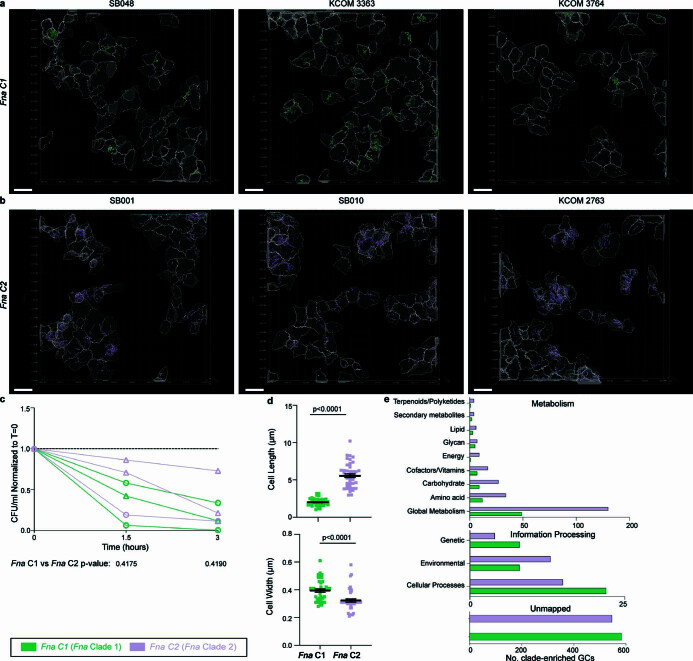
Fusobacterium nucleatum ( Fn ), a bacterium present in the human oral cavity and rarely found in the lower gastrointestinal tract of healthy individuals 1 , is enriched in human colorectal cancer (CRC) tumours 2–5 . High intratumoural Fn loads are associated with recurrence, metastases and poorer patient prognosis 5–8 . Here, to delineate Fn genetic factors facilitating tumour colonization, we generated closed genomes for 135 Fn strains; 80 oral strains from individuals without cancer and 55 unique cancer strains cultured from tumours from 51 patients with CRC. Pangenomic analyses identified 483 CRC-enriched genetic factors. Tumour-isolated strains predominantly belong to Fn subspecies animalis ( Fna ). However, genomic analyses reveal that Fna , considered a single subspecies, is instead composed of two distinct clades ( Fna C1 and Fna C2). Of these, only Fna C2 dominates the CRC tumour niche. Inter- Fna analyses identified 195 Fna C2-associated genetic factors consistent with increased metabolic potential and colonization of the gastrointestinal tract. In support of this, Fna C2-treated mice had an increased number of intestinal adenomas and altered metabolites. Microbiome analysis of human tumour tissue from 116 patients with CRC demonstrated Fna C2 enrichment. Comparison of 62 paired specimens showed that only Fna C2 is tumour enriched compared to normal adjacent tissue. This was further supported by metagenomic analysis of stool samples from 627 patients with CRC and 619 healthy individuals. Collectively, our results identify the Fna clade bifurcation, show that specifically Fna C2 drives the reported Fn enrichment in human CRC and reveal the genetic underpinnings of pathoadaptation of Fna C2 to the CRC niche.
Overview
The claims and statistics of this paper haven’t been checked yet.
Free: it reads the open-access text and checks the first 5 claims that cite a source we can check. Create a free account to check every claim.
Integrity signals
Registry
Cites
Statistics
Figures
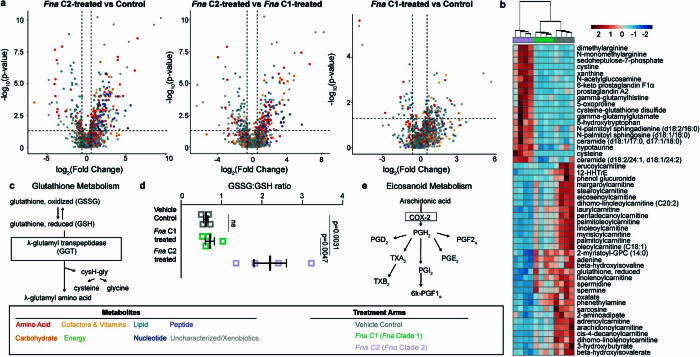
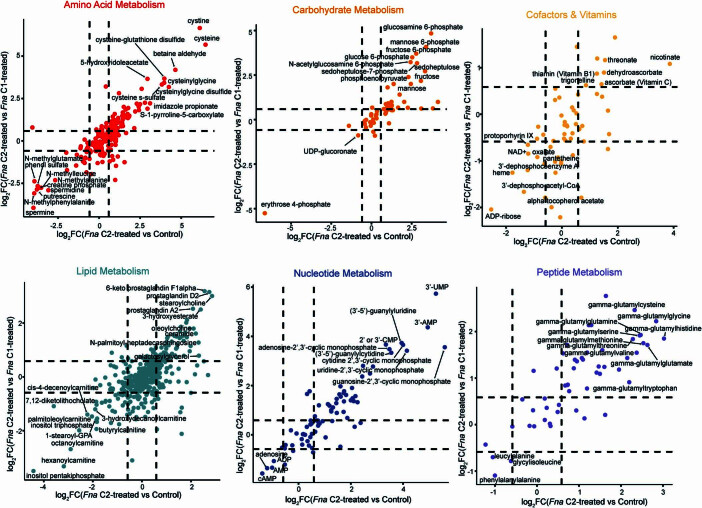
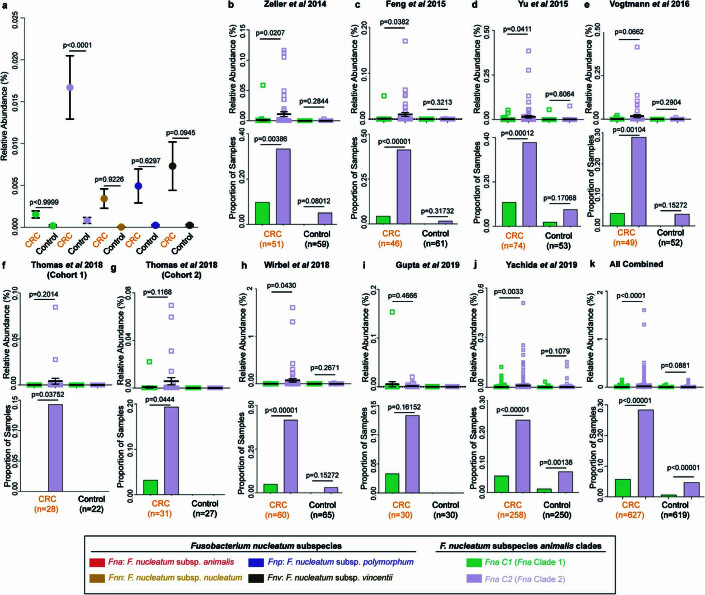
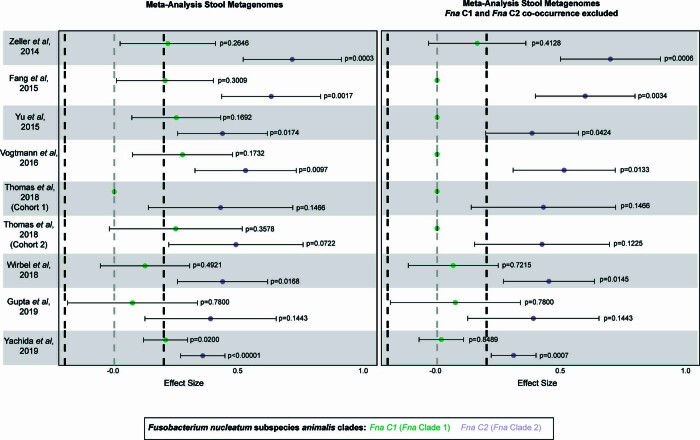
Verification
Claims the paper makes
The claims and statistics of this paper haven’t been checked yet.
Free: it reads the open-access text and checks the first 5 claims that cite a source we can check. Create a free account to check every claim.
Claims other papers make about this one
Each is checked against this paper’s own text: does it say what the citing paper says it does?
In the citing paper
“including some (but not all) clades of F. nucleatum in the context of CRC 54”
From Impact of the ONCOBIOME network in cancer microbiome research (2025) · cites this paper as [54]
In the citing paper
“It is worth noting that CRC has often been associated with Fusobac terium species and clades, as have several other bacterial spe cies, 31,47,48”
From Global genetic diversity of human gut microbiome species is related to geographic location and host health (2025) · cites this paper as [47]
Self-check
Percentages, sums and reported differences re-computed from the paper’s own numbers.
The self-check needs the paper’s full text.
Citations
Cites
Trimmomatic: a flexible trimmer for Illumina sequence data
Bolger, A. M., Lohse, M., & Usadel, B. (2014) · Bioinformatics · doi:10.1093/bioinformatics/btu170 · Cited by 65,548
Fast gapped-read alignment with Bowtie 2
Langmead, B., & Salzberg, S. L. (2012) · Nature Methods · doi:10.1038/nmeth.1923 · Cited by 56,400 · cited 1×
“Metagenomic samples were mapped against the Fna SB010 eut , pdu and gdar operons using Bowtie2 (version 2.4.5, --sensitive parameter) 77 .”
MethodInfluentialMEGA X: Molecular Evolutionary Genetics Analysis across Computing Platforms
Kumar, S., Stecher, G., Li, M., Knyaz, C., & Tamura, K. (2018) · Molecular Biology and Evolution · doi:10.1093/molbev/msy096 · Cited by 37,529 · cited 1×
“65) using the MUSCLE clustering algorithm from which a maximum-likelihood dendrogram was generated. kSNP3 (ref.”
MethodInteractive Tree Of Life (iTOL) v5: an online tool for phylogenetic tree display and annotation
Letunic, I., & Bork, P. (2021) · Nucleic Acids Research · doi:10.1093/nar/gkab301 · Cited by 11,124 · cited 1×
“66).”
Borenstein, M., Hedges, L. V., Higgins, J. P. T., & Rothstein, H. R. (2021) · doi:10.1002/9781119558378 · Cited by 9,799
Shifting the genomic gold standard for the prokaryotic species definition
Richter, M., & Rosselló-Móra, R. (2009) · Proceedings of the National Academy of Sciences · doi:10.1073/pnas.0906412106 · Cited by 6,359
GTDB-Tk: a toolkit to classify genomes with the Genome Taxonomy Database
Chaumeil, P.-A., Mussig, A. J., Hugenholtz, P., & Parks, D. H. (2020) · Bioinformatics · doi:10.1093/bioinformatics/btz848 · Cited by 5,259
Effect size, confidence interval and statistical significance: a practical guide for biologists
Nakagawa, S., & Cuthill, I. C. (2007) · Biological Reviews · doi:10.1111/j.1469-185x.2007.00027.x · Cited by 3,835 · cited 1×
“For each model, an adjusted standardized mean difference between the two study conditions was extracted as previously described 74 : standardized mean difference = ( t × ( n 1 + n 2))/(sqrt( n 1 + n 2) × sqrt( n 1 + n 2 − 2)), in which t defines the t -score of the corresponding variable, n 1 is…”
MethodReal-Time DNA Sequencing from Single Polymerase Molecules
Eid, J., Fehr, A., Gray, J., Luong, K., Lyle, J., Otto, G., Peluso, P., Rank, D., Baybayan, P., Bettman, B., et al. (2009) · Science · doi:10.1126/science.1162986 · Cited by 3,732 · cited 1×
“Single-molecule real-time sequencing 18 was carried out on a PacBio Sequel instrument (Pacific Biosciences) or a PacBio Sequel II instrument (Pacific Biosciences) at the University of Minnesota Genomics Center.”
MethodPHASTER: a better, faster version of the PHAST phage search tool
Arndt, D., Grant, J. R., Marcu, A., Sajed, T., Pon, A., Liang, Y., & Wishart, D. S. (2016) · Nucleic Acids Research · doi:10.1093/nar/gkw387 · Cited by 3,557 · cited 1×
“The presence of innate bacterial defence systems was queried using the Prokaryotic Antiviral Defense Locator 67 and intact prophage presence was analysed using the Phage Search Tool Enhanced Release 68,69 tools.”
Method
Cited by
Items 201–300 of 451
Rosenbaum, W., Garcia, M. R., Löfgren‐Burström, A., Larsson, P. G., Edin, S., Bronnec, V., & Palmqvist, R. (2026) · Gut Microbes · doi:10.1080/19490976.2026.2656004 · Cited by 4
“21,32 Recent studies consistently identify F. animalis as the species most enriched in CRC samples, 16,17 underscoring the need for methods capable of resolving these species.”
InfluentialMulti Omics Integration in Colorectal Cancer: From Molecular Insights to Precision Oncology
Liu, Z., Ang, M. Y., & Kue, C. S. (2026) · Cancers · doi:10.3390/cancers18101504 · Cited by 7
“This, in turn, enhances epithelial proliferation and oncogenic transcriptional programs [131].”
Outer membrane vesicles hijack TIM-1 for cellular uptake
MacNair, C. R., Tiku, V., Cao, S., Sanchez, A. D., Udayasuryan, B., Kroll, K. T., Singh, A., & Tan, M. (2026) · PLoS Pathogens · doi:10.1371/journal.ppat.1014256 · Cited by 4
“Growing evidence implicates F. nucleatum in colorectal and other cancers [51] which are known to overexpress TIM-1 [52].”
Microbes, macrophages, and melanin: a unifying theory of disease as exemplified by cancer
Berg, S. Z., & Berg, J. (2025) · Frontiers in Immunology · doi:10.3389/fimmu.2024.1493978 · Cited by 7
Robinson, A. V., Vancuren, S. J., Marcone, M. F., & Allen‐Vercoe, E. (2025) · mSphere · doi:10.1128/msphere.00789-24 · Cited by 8
“Protein-rich diets may influence disease risk via enrichment of CRC-linked bacterial taxa and metabolites within gut bacterial communities (9).”
InfluentialBurke, C., Glynn, T. J., Jahangir, C. A., Murphy, C. L., Buckley, N. E., Tangney, M., Rahman, A., & Gallagher, W. M. (2025) · Expert Review of Molecular Diagnostics · doi:10.1080/14737159.2025.2465743 · Cited by 6
“Researchers could identify distinct transcriptomic differences between two separate F. nucleatum clades ( Fna C1 and Fna C2 ) via RNA sequencing, which holds significance in CRC for future prognostic biomarkers [12].”
Host-microbe-cancer interactions on-a-chip
Sousa, M. G. C., Brasino, D. S. K., Krieger, M., Dindar, D. A., Duhen, R., Zhang, Z., França, C. M., & Bertassoni, L. E. (2025) · Frontiers in Bioengineering and Biotechnology · doi:10.3389/fbioe.2025.1505963 · Cited by 6
Esophageal cancer and precancerous lesions: focus on resident bacteria and fungi
Yuan, L., Zhang, Y., Wen, C., Liu, S., Zhang, Q., Yin, W., Jia, Q., Chen, M., Luo, G., Deng, M., et al. (2025) · Microbiology Spectrum · doi:10.1128/spectrum.03137-24 · Cited by 6
“Notably, a large-scale study of F. nucleatum strains from CRC and non-cancer oral samples found that Fna splits into two clades: Fna C1, confined to the oral cavity, and Fna C2, which dominates the CRC tumor niche (41).”
Assessing the effects of tofacitinib on the gut microbiome in inflammatory bowel disease
Favaron, A., Sangfuang, N., McCoubrey, L. E., Awad, A., Ghyselinck, J., Marzorati, M., Verstrepen, L., Munck, J. D., Medts, J. D., Basit, A. W., et al. (2025) · European Journal of Pharmaceutical Sciences · doi:10.1016/j.ejps.2025.107365 · Cited by 5
HIV-1 Viremia and Cancer Risk in 2.8 Million People: The South African HIV Cancer Match Study
Ruffieux, Y., Mwansa-Kambafwile, J. R. M., Metekoua, C., Tombe-Nyahuma, T., Bohlius, J., Muchengeti, M. M., Egger, M., & Rohner, E. (2024) · Clinical Infectious Diseases · doi:10.1093/cid/ciae652 · Cited by 6
“Furthermore, some cancers currently classified as infection-unrelated may indeed have a link with infectious agents, as has been suggested for colorectal cancer and Fusobacterium nucleatum [31].”
Photodynamic therapy of cancer‐associated infections
Kassab, G., Chen, J., & Zheng, G. (2024) · Photochemistry and Photobiology · doi:10.1111/php.14038 · Cited by 6
“66,67 In a randomized clinical trial proposing to address periodontitis using MB, no difference was seen in the extent of F. nucleatum colonization of the mouth after one PDT session.”
Establishment and improvement of genetic manipulation tools for Fusobacterium nucleatum
Guan, Z., Wang, H., & Feng, Q. (2025) · Engineering Microbiology · doi:10.1016/j.engmic.2025.100192 · Cited by 4
“Each subspecies prefers specific body sites [ 47– 50 ].”
Conjugation-based genetic manipulation of Fusobacterium animalis
Ko, D., & Garrett, W. S. (2025) · mBio · doi:10.1128/mbio.01714-25 · Cited by 4
“However, a recent study found that F. animalis ( Fa ), rather than Fn , is a major CRC-associated Fusobacterium , supporting the importance of focusing on Fa as a primary target for mechanistic studies (8).”
Genome-wide sweeps create fundamental ecological units in the human gut microbiomePreprint
Yu, X. A., Strachan, C. R., Herbold, C. W., Lang, M., Gasché, C., Makristathis, A., Segata, N., Pollak, S., Tett, A., & Polz, M. F. (2024) · bioRxiv (Cold Spring Harbor Laboratory) · doi:10.1101/2024.05.25.595854 · Cited by 4
“Such hypotheses can subsequently be tested in experimental models using animals colonized with isolates assumed to represent the identified bacterial group 6,7 .”
BackgroundSelf-citationPeridontopathogenic key species in correlation to the current classification system
Sigusch, B. W., Kranz, S., Heyder, M., Weber, A., Guellmar, A., Mahmudova, N., & Reise, M. (2025) · Clinical Oral Investigations · doi:10.1007/s00784-025-06413-2 · Cited by 6
Gutmacher, E., Sárai, B. Z., Martineková, P., Kiss‐Dala, S., Agócs, G., Hegyi, P., Bródy, A., & Zsembery, Á. (2025) · Scientific Reports · doi:10.1038/s41598-025-07465-w · Cited by 3
“A specific clade of Fna, such as Fna C2, has been shown to alter the metabolic profile of the tumor microenvironment, promoting adenoma formation and cancer progression 12 .”
Dzutsev, A., & Trinchieri, G. (2025) · Cancer Discovery · doi:10.1158/2159-8290.cd-25-0899 · Cited by 4
Positive selection at core genes may underlie niche adaptation in Fusobacterium animalis
Forni, D., Sivertsen, A., Cagliani, R., Mozzi, A., Molteni, C., Kommedal, Ø., & Sironi, M. (2025) · Gut Pathogens · doi:10.1186/s13099-025-00740-1 · Cited by 4
“1D), were shown to differ in cell length and width [10, 15].”
Relationship Between Periodontal Disease and Systemic Diseases in Non-Human Primates
Miranda, B. P., da Silva, A. F., Ascenção, J. D. C., dos Reis, R. B., Teixeira, M., Miglionico, M. T. D. S., & Santos, H. L. C. (2025) · Veterinary Sciences · doi:10.3390/vetsci12080784 · Cited by 3
Microbial infection and treatment strategies in cancer patients
Zhu, K., Yuan, Z., Li, J., & Fu, A. (2025) · Frontiers in Microbiology · doi:10.3389/fmicb.2025.1582382 · Cited by 6
Can Fusobacterium utilize nucleomodulins in the pathophysiology of CRC?
Anand, S., Korgaonkar, S., & Bose, C. (2025) · Frontiers in Cellular and Infection Microbiology · doi:10.3389/fcimb.2025.1644443 · Cited by 4
Kabwe, M., Tucci, J., Dashper, S. G., Adil, S. S. B. M. Y., & Petrovski, S. (2025) · Journal of Oral Microbiology · doi:10.1080/20002297.2025.2584952 · Cited by 3
“In this study, we isolated and characterized three novel bacteriophages (FNU2, FNU3, and FNU4) that specifically target F. nucleatum , a key bacterium in biofilms implicated in periodontitis and a range of cancers [52].”
HGMT: a database of human gut microbiota for tumors and immunotherapy response
Liu, J., Wang, M., Xu, C., Jia, L., Lai, S., Zhang, Z.-C., Zhang, J., Chen, W., Yang, Y., & Zhao, X. (2025) · Genome biology · doi:10.1186/s13059-025-03865-3 · Cited by 4
“Second, higher-resolution profiling at the subspecies and strain levels will help clarify the roles of microbes in modulating tumor microenvironments and therapeutic efficacy [113–115].”
Intra-tumoral microbiota: Key modulators of tumor immunity and therapeutic potential
He, J., Tan, H. Z., Qiu, Y., Dan, Y., Wan, Q., Li, L., Wu, J., Song, Q., Chen, H., & Xu, B. (2025) · Genes & Diseases · doi:10.1016/j.gendis.2025.101963 · Cited by 5
Bommana, S., Olagoke, O. S., Hu, Y., Wang, R., Kama, M., Dehdashti, M., Kodimerla, R., Read, T. D., & Dean, D. (2025) · npj Biofilms and Microbiomes · doi:10.1038/s41522-025-00858-9 · Cited by 3
“Both S. lutetiensis and Fuso-bacterium spp. are associated with ulcerative colitis (UC) and colorectal cancer 45 – 49 .”
Unveiling hidden players: the role of intratumoral microbiota in gastrointestinal cancer dynamics
Tang, W., Li, F., Zheng, H., Zhou, S., Li, C., Xu, X., & Fu, J. (2025) · Journal of Cancer Research and Clinical Oncology · doi:10.1007/s00432-025-06401-9 · Cited by 5
“In colorectal cancer, F. nucleatum enrichment is correlated with decreased CD8+ T-cell infiltration and increased Tregs, highlighting its role in creating an immunosuppressive niche (Lee et al. 2021; Zepeda-Rivera et al. 2024).”
Targeting Intratumoral Bacteria for Cancer Nanotherapeutics
Wang, Y., Yu, J. S., & Gao, L. (2025) · ACS Applied Materials & Interfaces · doi:10.1021/acsami.5c16720 · Cited by 4
Oral–Gut Microbial Crosstalk and Therapeutic Applications of Bacterial Extracellular Vesicles
Fu, W., Yang, N., Yan, J., Han, B., Niu, Q., Li, Z., Bai, R., & Yu, T. (2025) · Biomolecules · doi:10.3390/biom16010026 · Cited by 4
Snow, J. A., Hatzios, S. K., & Salama, N. R. (2026) · Journal of Bacteriology · doi:10.1128/jb.00457-25 · Cited by 5
Feng, H., Chen, K., Xi, Z., Xia, B., Chen, X., Huang, Y., Huang, Z., Guo, J., Zhu, D., Ling, F., et al. (2026) · Nature Communications · doi:10.1038/s41467-026-68649-0 · Cited by 4
Integrating ANI and phylogenies for re-evaluation of Fusobacterium taxonomy and disease associations
Bi, D., Wu, Y., Ji, G., Zhu, X., Li, H., Xie, R., Gao, Y., Deng, Z., Han, D., Qin, H., et al. (2026) · Nature Communications · doi:10.1038/s41467-026-70540-x · Cited by 3
“Zepeda-Rivera et al. designated them as Fna C1 after distinguishing them from the F. nucleatum ( sensu lato ) subsp. animalis 7_1 lineage based on pangenomic, ANI and phylogenetic analyses of F. nucleatum ( sensu lato ) genomes 25 .”
InfluentialSelf-citationLoaiza‐Bonilla, A., Leyfman, Y., Cortiana, V., Crawford, R., & Modi, S. (2026) · Cancers · doi:10.3390/cancers18060909 · Cited by 4
Recent progress in metal-based drugs for colorectal cancer therapy
Liu, X., Zhang, Q., Yang, X., Liang, J., He, Y., Chao, H., & Pan, Y. (2026) · Coordination Chemistry Reviews · doi:10.1016/j.ccr.2026.217971 · Cited by 3
Impact of alcohol on gut microbial metabolism and the gut-liver-brain axis
Freund, L., Leal, B. R., & Hsu, C. L. (2026) · Alcohol · doi:10.1016/j.alcohol.2026.04.009 · Cited by 3
Nogal, A., Wang, K., Thompson, K. N., Kim, H., Bhosle, A., Piccinno, G., Maharjan, S., Upreti, C. R., Nguyen, L. H., Segata, N., et al. (2026) · Cell Host & Microbe · doi:10.1016/j.chom.2026.05.001 · Cited by 3
Self-citationPreetam, S., Bora, J., Dutta, S. P., Talukdar, N., Rustagi, S., Thapliyal, S., Malik, S., Choudhary, N., Kumar, D., & Kondaveeti, S. B. (2026) · Infectious Agents and Cancer · doi:10.1186/s13027-026-00767-2 · Cited by 3
“There are also different Fn subspecies that are carried by different human populations and only some Fn clades are very virulent [50].”
Zhao, F., An, R., Yu, S., Ma, Y., Liu, W., 盛彩霞, Xie, X., & Zhang, J. (2026) · Clinical and Translational Medicine · doi:10.1002/ctm2.70704 · Cited by 4
“54 Given the growing clinical relevance of F. nucleatum in oncology, 55 this review focuses on mechanistic basis of its tumour-associated activities rather than attempting to comprehensively catalogue all microbiome–cancer associations.”
Rethinking Colorectal Cancer Microbiome: From Universal Biomarkers to Patient-Stratified Signatures
Schena, C. A., Laterza, V., Covino, M., & Rosa, F. (2026) · Gastrointestinal Disorders · doi:10.3390/gidisord8020026 · Cited by 3
“In vitro and animal models suggest that Fn promotes invasion and chemotherapy resistance through FadA-mediated Wnt/ β -catenin and E-cadherin signaling [8,21,27–31].”
Association Between Oral Microbiota and Gastrointestinal/Extra-Gastrointestinal Diseases
Park, D.-Y., Kim, Y.-Y., Kim, C. K., Hwang, I., Lee, J.-H., Hwang, J., & Hwang, J.-Y. (2024) · The Korean Journal of Helicobacter and Upper Gastrointestinal Research · doi:10.7704/kjhugr.2024.0051 · Cited by 4
“…subsp. animalis ( Fna ) is exclusively colonized in inflammatory environmental niches, such as odontogenic abscesses 43 and in-tra-colorectal tumor, 44 whereas other F. nucleatum subspecies, including F. nucleatum subsp. polymorphum ( Fnp ), F. nucleatum subsp. nucleatum ( Fnn ), and F. nucleatum…”
Deng, D., Xu, W., Wu, B., Comes, H. P., Feng, Y. Z., Li, P., Zheng, J., Chen, G., & Heng, P. (2025) · Nature Communications · doi:10.1038/s41467-025-61684-3 · Cited by 5
Intratumoral microbiota: a new perspective in cancer initiation, development, and therapy
Liu, H., Luo, Z. K., Luo, F., Wang, X., Wei, H., & Yu, C. (2025) · RSC Pharmaceutics · doi:10.1039/d5pm00045a · Cited by 3
Bakr, M. M., Caswell, G. M., Ankily, M. A., Zeitoun, S. I., Ahmed, N., Meer, M., & Shamel, M. (2025) · Oral · doi:10.3390/oral5030066 · Cited by 4
Datorre, J. G., dos Reis, M. B., de Carvalho, A. C., Porto, J., Rodrigues, G. H., Lima, A. B., Reis, M. T., Hirai, W. Y., HASHIMOTO, C. L., Guimarães, D. P., et al. (2024) · Cancer Prevention Research · doi:10.1158/1940-6207.capr-23-0331 · Cited by 6
Molecular Signatures for Microbe-Associated Colorectal CancersPreprint
Sayed, I. M., Vo, D. T., Alcantara, J. A., Inouye, K., Pranadinata, R. F., Luo, L., Boland, C. R., Goyal, N. P., Kuo, D. J., Huang, S. C., et al. (2024) · bioRxiv (Cold Spring Harbor Laboratory) · doi:10.1101/2024.05.26.595902 · Cited by 3
Won, K., Jin, P.-R., Davis, L., Orjala, J., Armstrong, A. T., Wang, W. H., Kothandaraman, H., Utturkar, S. M., Bae, D., Jeong, B., et al. (2025) · bioRxiv (Cold Spring Harbor Laboratory) · doi:10.1101/2025.09.25.678601 · Cited by 3
Hu, D., Zhao, J., Wu, M., Zhou, Y., Lyu, B., Xu, C., Huang, C., Su, Z., Zhang, H., Guo, J., et al. (2025) · Cancer Letters · doi:10.1016/j.canlet.2025.217807 · Cited by 3
Improved Key Microbial Biomarker Discovery Using Ensemble Statistical Methods
Pirovano, W., Gangopadhyay, Y., Baak, M. L., de Leeuw, C., Bongoni, R., & Klaassens, E. S. (2025) · Advanced Gut & Microbiome Research · doi:10.1155/agm3/9676659 · Cited by 3
“This genus and species are consistently associated with disease progression, although their functional mechanisms appear to be primarily strain-and clade-speci fi c [129].”
Advances in intestinal flora for the development, diagnosis and treatment of CRC
Hu, R., Qiu, Y., Liu, D.-A., Chen, S., Chen, K., Xu, Y., Yuan, J., Zhang, X., & Li, X. (2025) · Frontiers in Microbiology · doi:10.3389/fmicb.2025.1495274 · Cited by 5
Gopalakrishnan, V., Saravanan, V., Mahendran, M. I. M. S., Boopathy, V., Vaithianathan, R., Srinivasan, S., & Krishnamurthy, S. (2025) · Apmis · doi:10.1111/apm.70041 · Cited by 3
Genome sequences of eight Fusobacterium watanabei sp. isolates
Zepeda‐Rivera, M. A., Ponath, F., Lewis, K. N., Gavate, R. P., Dewhirst, F. E., Tomida, J., Kawamura, Y., Tanaka, K. Y., Bullman, S., & Johnston, C. D. (2025) · Microbiology Resource Announcements · doi:10.1128/mra.00132-25 · Cited by 2
Self-citationZhao, Z., Chua, L. W., Feng, S., Kang, X., Wong, S. H., & Loo, S. C. J. (2025) · International Journal of Biological Macromolecules · doi:10.1016/j.ijbiomac.2025.147391 · Cited by 2
The role of oral microbiota in digestive system diseases: current advances and perspectives
Li, Y., Xin, Y., Zong, W., & Li, X. (2025) · Journal of Oral Microbiology · doi:10.1080/20002297.2025.2566403 · Cited by 5
“Martha and colleagues [131] analyzed colon tissues by pan-genomic analysis and observed a significantly higher abundance of F. nucleatum in CRC tumor tissues compared to adjacent normal tissues.”
Invisible influencers: the tumor microbiome’s impact on immunotherapy in colorectal cancer (CRC)
Omar, T. M., Al-Hussainy, A. F., Jyothi, S. R., Nayak, P. P., Janney, J. B., Singh, G., Polatova, D., Sameer, H. N., Salih, R. M., Adil, M., et al. (2025) · Expert Review of Anticancer Therapy · doi:10.1080/14737140.2025.2579656 · Cited by 3
“A CRC-adapted clade of F. nucleatum has been identified and it preferentially occupies the CRC niche, adding a strain level layer to disease ecology [51].”
Mediated electron transfer in five prevalent human oral microbial species
Hernández-Villamor, D., Jeaidi, A., Boydens, R., Rabaey, K., de Wiele, T. V., & Prévoteau, A. (2025) · Bioelectrochemistry · doi:10.1016/j.bioelechem.2025.109149 · Cited by 2
Le, D. T. P., & Pham, T. D. (2025) · Exploration of Medicine · doi:10.37349/emed.2025.1001371 · Cited by 5
Seo, Y., Kim, K., Lee, S., Lim, Y., Seo, Y., Kim, T. K., Kim, C. H., Kim, Y., Jereis, F., Kim, W. K., et al. (2025) · International Journal of Molecular Sciences · doi:10.3390/ijms262311319 · Cited by 2
Self-citationDextran sodium sulfate confounds causal role of periodontitis in inflammatory bowel disease
Tanwar, H., Gnanasekaran, J. M., Ganesh, N., Zhou, C. Q., Plotkin, A. J., Baima, G., Costalonga, M., Zhou, F., Feng, H., Jani, P. H., et al. (2025) · Journal of Periodontology · doi:10.1002/jper.70045 · Cited by 2
“1,2 10 Since 2020, over 200 publications have reinforced the paradigm that the oral cavity is not merely a passive indicator of systemic health, but an active driver of gastrointestinal disease through microbial translocation, immune priming, and inflammatory amplification.”
Wang, M., Sun, J., Jiang, Y., Wang, J., Xu, C. J., Ma, J., & Zhang, H. (2026) · Frontiers in Immunology · doi:10.3389/fimmu.2025.1712971 · Cited by 2
Li, H., Zhang, W., Yan, W., Wang, K., Chen, S., Li, Y., Sheng, A., Shang, A., & Zeng, B. (2026) · Frontiers in Immunology · doi:10.3389/fimmu.2026.1668737 · Cited by 5
“The population-level variance in this association highlights that the functional impact of the gut microbiota is not uniform, thereby supporting a highly context-dependent model of host-microbe interaction (19).”
Tang, X., Man, C., Liu, Z., Gong, D., & Fan, Y. (2026) · Frontiers in Immunology · doi:10.3389/fimmu.2026.1745842 · Cited by 2
The gut microbiome as a biomarker and modifiable risk factor in Lynch Syndrome
Colaco, V. S., & Boleij, A. (2026) · Familial Cancer · doi:10.1007/s10689-026-00540-9 · Cited by 2
Healthy lifestyle and periodontitis: a multi-omics cross-sectional study in a Chinese cohort
Xu, N., Chen, N., Halizere, S., Zhao, B., He, J., Yang, Y., Shi, Y., Wu, Q., Hao, Y., Zheng, W., et al. (2026) · Journal of Oral Microbiology · doi:10.1080/20002297.2026.2649434 · Cited by 2
“Furthermore, Fusobacterium is negatively associated with a healthy lifestyle in both the oral and gut suggesting that it may be a co-occurrence target regulated by the healthy lifestyle, which echoes the cross-systemic associations of Fusobacterium discussed in recent reviews [51,52].”
Advances in microbiome in gastrointestinal cancer
Wong, C. C., & Yu, J. (2026) · Holistic Integrative Oncology · doi:10.1007/s44178-026-00241-4 · Cited by 2
Dai, M., Lin, Y., Gan, R., Shen, X., Park, S. Y., Lee, S., & Su, Q. (2026) · Microbiota Medicine Research · doi:10.1002/mmr3.70004 · Cited by 2
Self-citationTumor-associated bacterial effectors: novel frontiers in tumor biology and immunity
Dai, J.-H., Lu, Y.-Q., Feng, S.-Y., Tan, X.-R., Li, L., Zeng, Y.-C., Chen, J., Ma, J., & Liu, N. (2026) · Science Bulletin · doi:10.1016/j.scib.2026.04.034 · Cited by 4
Distinct signatures in the human gut and oral microbiomes of gastric cancer
Qin, Y., Zhang, Y.-X., Liu, L.-P., Xie, Y.-H., Ma, X.-Y., Hao, Y., Zhao, L.-C., Dong, J.-J., He, Y., Sun, K., et al. (2026) · Cell Reports Medicine · doi:10.1016/j.xcrm.2026.102761 · Cited by 4
Li, Y., Xu, Q., Zhu, M., Wang, W., Liu, Y. H., Yang, H., & Liu, Y. (2026) · Gut Microbes · doi:10.1080/19490976.2026.2662082 · Cited by 3
“17,18 These findings suggest that, beyond direct pathogenic effects, F. nucleatum may influence disease progression through interactions with microbial ecosystems.”
Probiotics Cancer Interaction, Prevention, and Therapy
Saebi, M., Barjasteh, A. H., Mahmoudi, M., Kheder, R. K., Ramazanpour, S., Ebadpour, N., Fadaee, A., & Esmaeili, S. (2026) · Immunity Inflammation and Disease · doi:10.1002/iid3.70435 · Cited by 2
Synbiotics as a Microbiome-Based Strategy in Colorectal Cancer
Procopciuc, L. M., Hangan, A. C., & Lucaciu, R. L. (2026) · Nutrients · doi:10.3390/nu18101591 · Cited by 3
“These include enrichment of pro-inflammatory and pro-carcinogenic bacteria, such as Fusobacterium nucleatum and enterotoxigenic Bacteroides fragilis , alongside depletion of protective commensals [41,42].”
InfluentialCheng, H., & Wong, C. C. (2026) · Molecular Cancer · doi:10.1186/s12943-026-02698-3 · Cited by 3
Sun, B., & Wang, T. (2026) · Frontiers in Immunology · doi:10.3389/fimmu.2026.1768792 · Cited by 4
“Among these, the animalis subspecies clade C2 (Fna C2) is highly enriched in CRC and harbors an expanded repertoire of virulence genes — including fadA , fap2 , cmpA , and fusolisin — that confer enhanced colonization and bio fi lm-forming capabilities (17).”
Fusobacterium nucleatum in cancer: from bystander to driver
Zhong, Z.-W., Lu, Y.-Q., Duan, Y., Ma, J. Y., & Liu, N. (2026) · Gut · doi:10.1136/gutjnl-2025-338000 · Cited by 2
“9 Additionally, Fn colonisation is further facilitated by polymicrobial crosstalk, as its enrichment is predominantly restricted to biofilm-positive CRC tissues and tightly linked to a consortium of oral-derived bacteria, highlighting the synergistic effect of microbial communities in supporting…”
InfluentialThe gut microbiome in colorectal cancer: molecular paradigms and translational frontiers
Liu, Y., & Mei, D. (2026) · Frontiers in Bioengineering and Biotechnology · doi:10.3389/fbioe.2026.1864299 · Cited by 2
Dong, B., Wang, B., Chen, J., Xu, X., & Xu, Z. Z. (2026) · Applied and Environmental Microbiology · doi:10.1128/aem.00788-26 · Cited by 4
Scano, C., Choudhury, A., Rojo, M., Hawkins, J., Crowhurst, L., Zaharas, G., Lavado, R., & Greathouse, K. L. (2026) · Microbiology · doi:10.1099/mic.0.001729 · Cited by 1
AI-2 production in Fusobacterium nucleatum is subspecies-specific and uncoupled from quorum sensing
Bibek, G. C., Xu, S., Tran, T., & Wu, C. (2026) · Journal of Bacteriology · doi:10.1128/jb.00223-26 · Cited by 2
Fluorescent Peptide Probe for Specific Detection and In Vivo Imaging of Fusobacterium Nucleatum
Wu, H. B., Zhang, B., Lu, Z., Wen, J., Shen, M., Wang, B., Xiong, J., Xu, T., Yang, Z., & Chen, J. (2026) · Analytical Chemistry · doi:10.1021/acs.analchem.6c01904 · Cited by 2
Self-citationBacteroides acidifaciens enriched by KRAS mutation promotes colorectal tumorigenesis
Jiao, Y., Cheng, C. H., Gao, X., Li, W., Ji, F., Liang, C., Huang, P., Ko, L. H., Ye, L., Kam, I. C. H., et al. (2026) · Cell Host & Microbe · doi:10.1016/j.chom.2026.08.010 · Cited by 2
The Cellular Microbiome of Visceral Organs: An Inherent Inhabitant of Parenchymal Cells
Sun, X., Zhang, H., Zhang, X., gao, W., Zhou, C., Kou, X. X., Deng, J.-X., & Zhang, J. G. (2024) · Microorganisms · doi:10.3390/microorganisms12071333 · Cited by 2
Resveratrol and Curcumin: Extending the Frontier of Phytomedicine
Harney, T. L. (2024) · IntechOpen eBooks · doi:10.5772/intechopen.1006617 · Cited by 3
Wang, K., Han, L., Ma, J., Fang, Y., He, Y., Liu, X., Wen, S., Zhuang, J., & Yuan, H. (2025) · Frontiers in Microbiology · doi:10.3389/fmicb.2025.1539046 · Cited by 2
Shastry, R. P., Hameed, A., Banerjee, S., Prabhu, A., Bajire, S. K., Pavan, S. R., Dhanyashree, H. R., Kotimoole, C. N., Stothard, P., Surya, S., et al. (2025) · Scientific Reports · doi:10.1038/s41598-025-94666-y · Cited by 3
“These observations are consistent with previous studies where bacterial components or secretomes have been linked to tumor formation in animal models 5,57,58 .”
Microbiome of Young and Later-Onset Colorectal Cancer
Galbraith, N. J., & White, M. G. (2025) · Surgical Clinics of North America · doi:10.1016/j.suc.2025.06.002 · Cited by 2
The use of stem cells and organoids for modeling host-microbe interactions in low-biomass tissues
Shaw, C. A., Verstraete, M., Graniczkowska, K. B., Risoen, K. R., Dini, P., & Weimer, B. C. (2025) · Frontiers in Cellular and Infection Microbiology · doi:10.3389/fcimb.2025.1641366 · Cited by 3
Nanodrug-based therapeutic interventions for tumor-associated microbiota modulation
Nie, C., Yao, Q., Wang, T., Shan, Y., Xie, C., Jiang, Z., Ke, Z., Zhang, L., Du, S. M., Xiong, H., et al. (2025) · Journal of Controlled Release · doi:10.1016/j.jconrel.2025.114196 · Cited by 5
Complete genome sequences of Fusobacterium watanabei sp. isolatesPreprint
Zepeda‐Rivera, M. A., Ponath, F., Lewis, K. N., Gavate, R. P., Dewhirst, F. E., Tomida, J., Kawamura, Y., Tanaka, K. Y., Bullman, S., & Johnston, C. D. (2025) · bioRxiv (Cold Spring Harbor Laboratory) · doi:10.1101/2025.03.25.645266 · Cited by 2
Self-citationНиколаевна, Ш. В., Goncharov, A. Е., Валерьевич, А. Д., Sitkin, S. I., Лаврентьевич, Л. Э., Aslanov, B. I., Анатольевич, Б. М., & Эльдарович, Т. Р. (2024) · Journal of microbiology epidemiology immunobiology · doi:10.36233/0372-9311-564 · Cited by 1
Phylosymbiosis and Elevated Cancer Risk in Genetically Depauperate Channel Island Foxes
DeCandia, A. L., Lu, J., Hamblen, E. E., Brenner, L. J., King, J. L., Gagorik, C. N., Schamel, J., Baker, S., Ferrara, F. J., Booker, M., et al. (2024) · Molecular Ecology · doi:10.1111/mec.17610 · Cited by 2
Modulation of intestinal bile acids influences colonic mucosal responses
Wortmann, E., Groll, T., Strigli, A., Peuker, K., Volet, C., Arps, L., Bernier‐Latmani, R., Zeißig, S., Steiger, K., Middelhoff, M. A., et al. (2026) · Scientific Reports · doi:10.1038/s41598-026-55206-4 · Cited by 2
“The percentage of mitochondrial genes, which can be an indicator of dying cells, was 25 % and 26% in OMM12 and OMM12+E mice, respectively, driven mainly by cell cluster 3 and 6 (Supplementary Figure S1).”
Li, H., Leaman, A. A., & Zheng, Q. (2025) · Advances in clinical chemistry · doi:10.1016/bs.acc.2025.04.001 · Cited by 4
Schmidt, N. S., Dörner, E., Podlesny, D., Bohlhammer, E., Bubeck, A. M., Ruple, H. K., Tetzlaff-Lelleck, V., Sina, C., Schmidt, H., & Fricke, W. F. (2025) · Gut Microbes · doi:10.1080/19490976.2025.2539452 · Cited by 4
van Dorsten, R. T., & Breiman, R. F. (2025) · Frontiers in Cellular and Infection Microbiology · doi:10.3389/fcimb.2025.1625818 · Cited by 3
Emerging Non-Invasive Biomarkers for Early Detection of Gastrointestinal Cancers
Singh, A., Kesani, H., Saleh, T. M., & Rai, M. (2025) · Cureus · doi:10.7759/cureus.92296 · Cited by 5
“…enriched in tumors, implying that strain-level resolution may improve diagnostic specificity and suggest therapeutic targets; limitations include the need to translate tumor-associated strain detection into non-invasive (fecal/oral) assays and to test performance in screening populations [27].”
Fusobacterium, quiescent niches, and therapy response in colorectal cancer
Ghaddar, B., De, S., & Blaser, M. J. (2025) · Cancer Cell · doi:10.1016/j.ccell.2025.10.002 · Cited by 1
Michaud, D. S., Platz, E. A., Garrett, W. S., Waterboer, T., Kaaks, R., Pasanisi, F., Abilleira, E., Pala, V. M., Milani, L., Castilla, J., et al. (2025) · Cancer Epidemiology Biomarkers & Prevention · doi:10.1158/1055-9965.epi-25-1084 · Cited by 2
Zhou, J., Deng, Y., Yu, D., Hajian, T., Vedadi, M., Zhang, X., Blumenthal, R., Huang, R., & Cheng, X. (2025) · ACS Omega · doi:10.1021/acsomega.5c09571 · Cited by 1
Role of microbiota in the outcome of immune checkpoint inhibition therapy of cancer
Rijkers, G. T., Langcauon, Y., van Leersum, P., Popović, L., & van Overveld, F. J. (2025) · Exploration of Targeted Anti-tumor Therapy · doi:10.37349/etat.2025.1002348 · Cited by 1
Diakite, M. T., Sun, S., Somboro, A. M., Diakité, B., Koné, A., Kassogué, Y., Fofana, D., Balam, S., Traoré, C. B., Maïga, A., et al. (2025) · Gene · doi:10.1016/j.gene.2025.149913 · Cited by 1
Infectious microbes and spectrum of cancer: Need to sharpen the depth and broaden the width
Anand, T., & Kumar, A. (2025) · The Microbe · doi:10.1016/j.microb.2025.100615 · Cited by 1
Yu, R., Yu, C., Bi, H., Shang, D., & Dong, W. (2025) · ACS Infectious Diseases · doi:10.1021/acsinfecdis.5c00800 · Cited by 1
Metadata
- Authors
- Zepeda-Rivera, M., Minot, S. S., Bouzek, H., Wu, H., Blanco-Míguez, A., Manghi, P., Jones, D. S., LaCourse, K. D., Wu, Y., McMahon, E. F., Park, S.-N., Lim, Y. K., Kempchinsky, A. G., Willis, A. D., Cotton, S. L., Yost, S. C., Sicinska, E., Kook, J.-K., Dewhirst, F. E., Segata, N., Bullman, S., & Johnston, C. D.
- Affiliations
- Fred Hutch Cancer Center (US)
- University of Trento (IT)
- Chosun University (KR)
- University of Washington (US)
- The Forsyth Institute (US)
- Harvard University (US)
- Corresponding author
- Bullman, Susan
- Johnston, Christopher D.
- ORCID
- Venue
- Nature
- Published
- 2024-03-20
- Volume
- 628
- Issue
- 8007
- Pages
- 424-432
- ISSN
- 0028-0836 (ISSN-L)
- 1476-4687
- PMC
- PMC11006615
- OpenAlex
- W4392984046
- Cited by
- 451
- References
- 80
- Citations by year
- 2026: 174 · 2025: 203 · 2024: 74
- FWCI
- 61.22
- Type
- journal article
- Language
- en
- Open access
- hybrid
- doi.org
- Licence
- cc-by
- creativecommons.org/licenses/by/4.0 (tdm)
- creativecommons.org/licenses/by/4.0 (vor)
- Locations
- Nature (publishedVersion, cc-by)
- PubMed Central (publishedVersion, cc-by)
- PubMed (publishedVersion)
- RePEc: Research Papers in Economics (submittedVersion)
- Institutional Research Information System (Università degli Studi di Trento) (submittedVersion)
- Funders
- Washington Research Foundation
- Fred Hutchinson Cancer Research Center (P30CA015704)
- University of Washington (P30 CA015704)
- National Research Foundation
- National Institutes of Health (1s10od028685-01, CA015704)
- National Cancer Institute (CA015704, R00CA229984, P30CA015704)
- National Institute of General Medical Sciences (R35GM133420)
- National Institute of Dental and Craniofacial Research (R21DE033533, R01DE027850)
- Topics
- Life Sciences › Biochemistry, Genetics and Molecular Biology › Molecular Biology › Gut microbiota and health
- Health Sciences › Dentistry › Periodontics › Oral microbiology and periodontitis research
- Health Sciences › Medicine › Infectious Diseases › Clostridium difficile and Clostridium perfringens research
- Keywords
- Fusobacterium nucleatum, colorectal cancer, bacterial clades, pan-genome, gut microbiota, pathoadaptation, intestinal adenoma, metagenomics, strain genomics
- MeSH terms
- Adenoma, Animals, Feces, Female, Humans, Mouth, Colorectal Neoplasms, Case-Control Studies, Genome, Bacterial, Fusobacterium nucleatum, Gastrointestinal Tract, Mice
About these checks
Registry, retraction, Cites and statistics results are computed, not judged, with one exception: a printed reference that no index lists is read once by a model before it counts as a citation error. Claims are extracted by a model and kept only when their quote appears verbatim in the text; each cited source is then checked, with a model’s help, for whether it says what the claim relies on. Those verdicts can be wrong — read the claim’s quote and the cited source before relying on one.
Statistics and arithmetic are recomputed, not judged.
Confidence bands are shown only for fields calibrated on our annotated test set. None is calibrated yet, so no band is shown.
What counts as a claim ›How we measure confidence ›How we check this ›
Are you an author, or do you see a problem with this page? Request a review
Data sources
Bibliographic data: Semantic Scholar, OpenAlex, Crossref.
Contains information from the Semantic Scholar Academic Graph Datasets, made available under the ODC Attribution License (ODC-BY 1.0).
Semantic Scholar’s data is described in: Kinney, R., et al. (2023). The Semantic Scholar Open Data Platform. arXiv:2301.10140.
