

Tumour-selective activity of RAS-GTP inhibition in pancreatic cancer
Open accessThe DOI matches its Crossref record; 64 of the 64 references it cites were found in a registry or an index.
Abstract
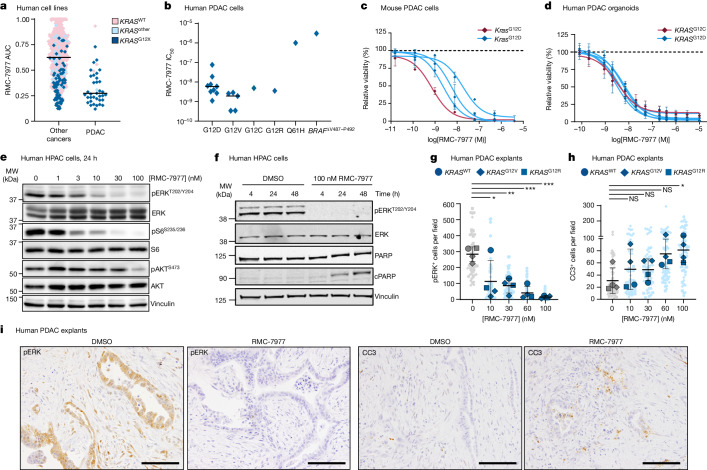
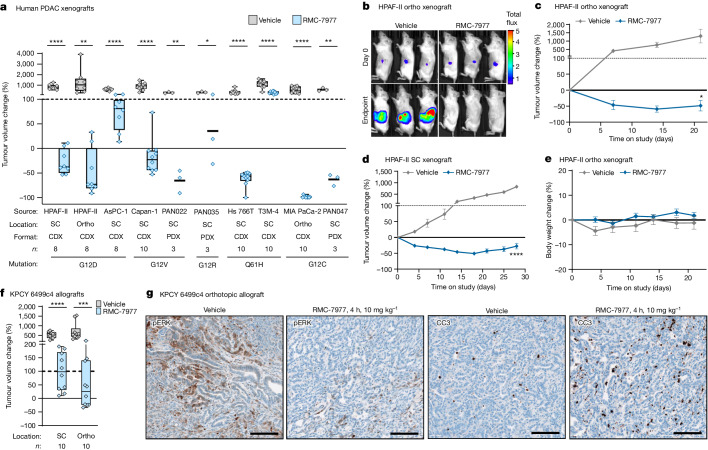
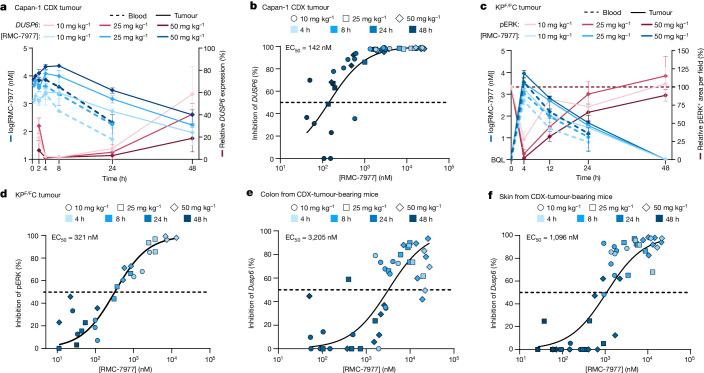
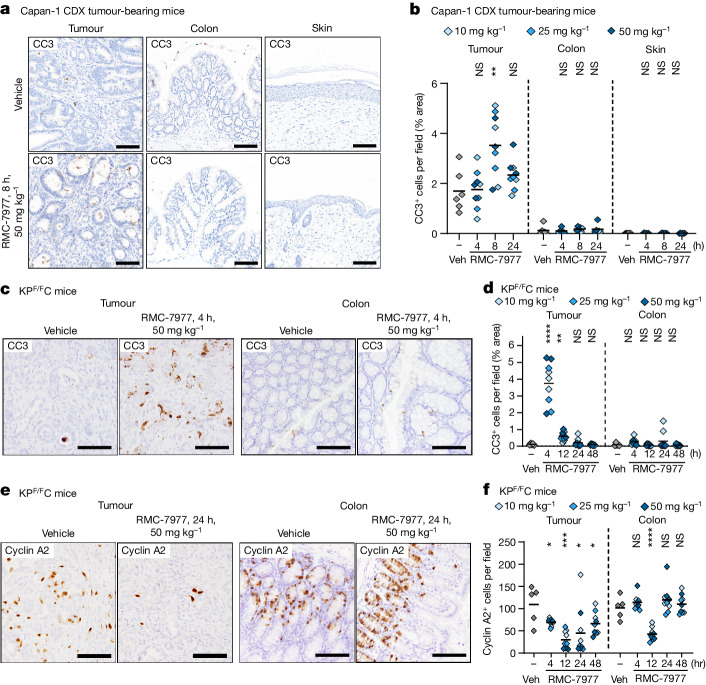
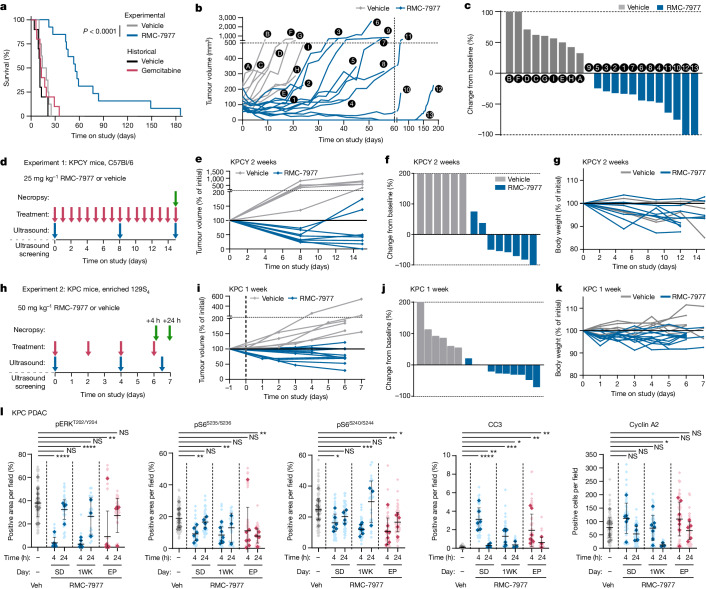
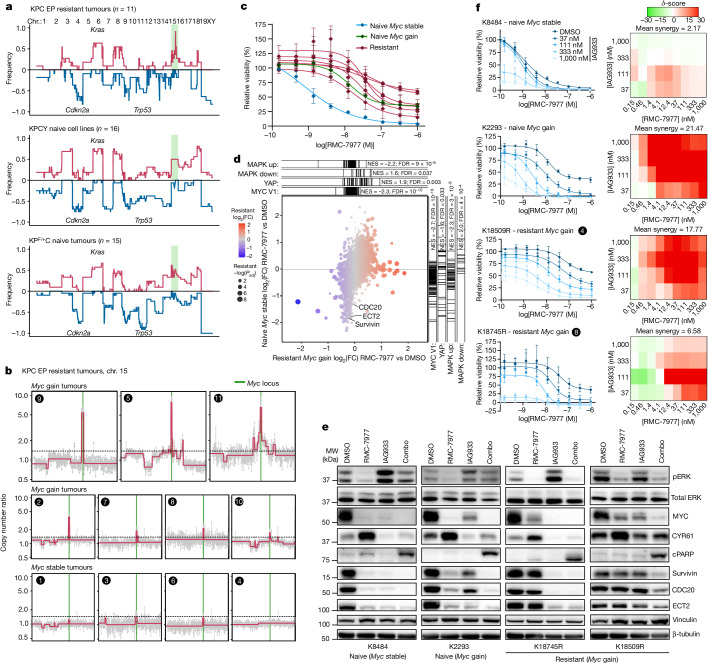
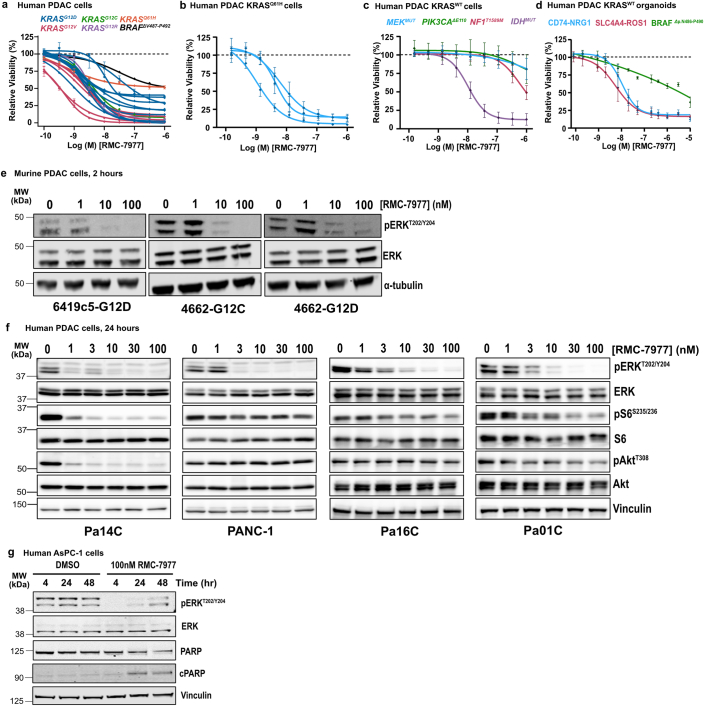
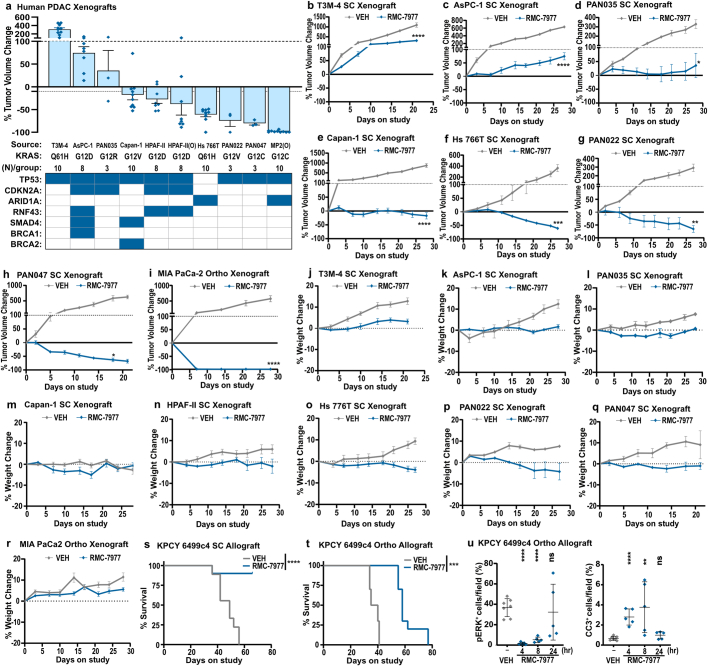
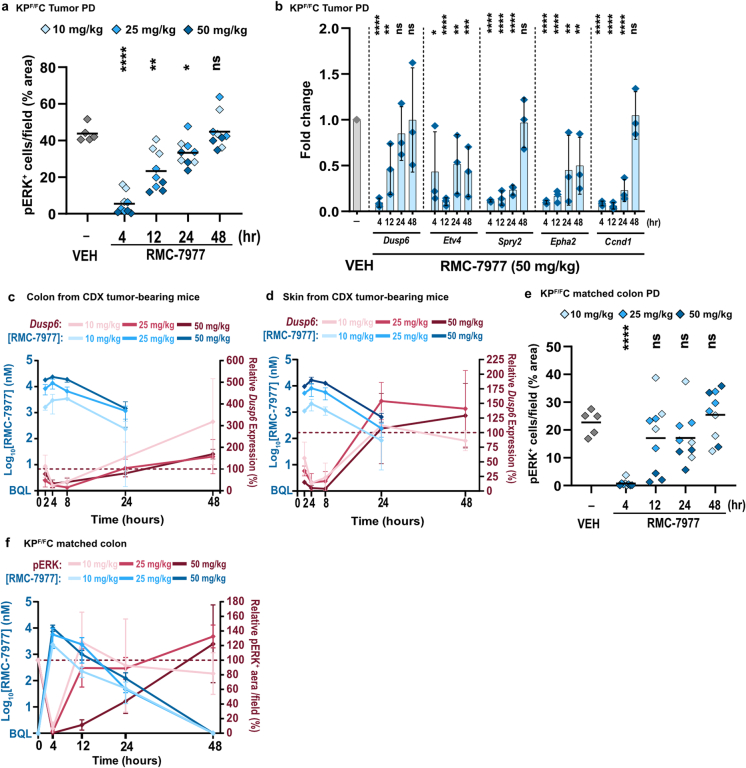
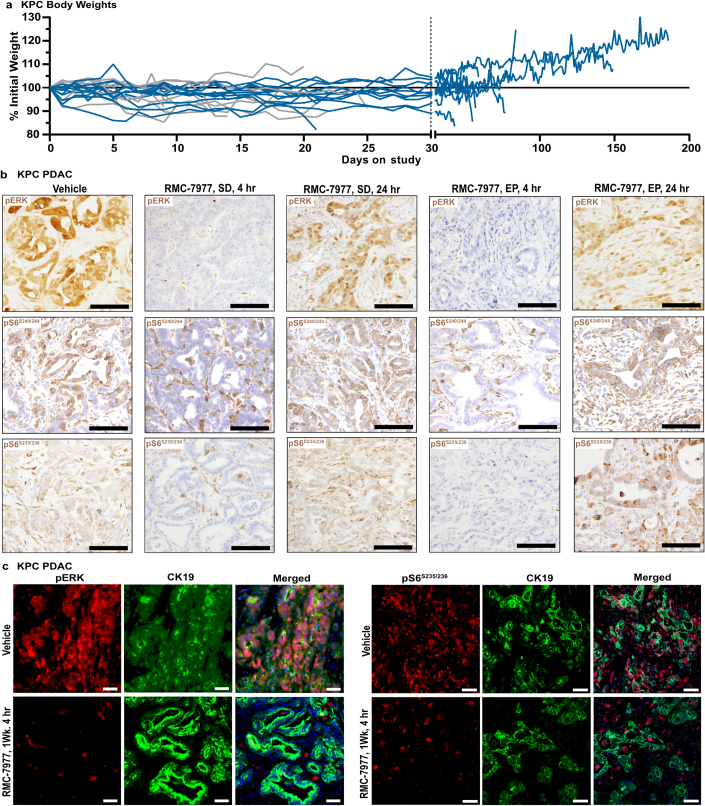
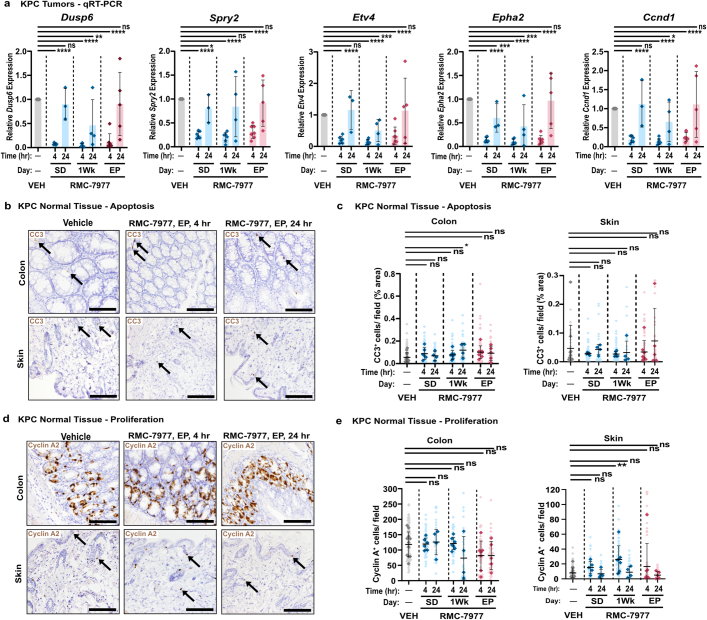
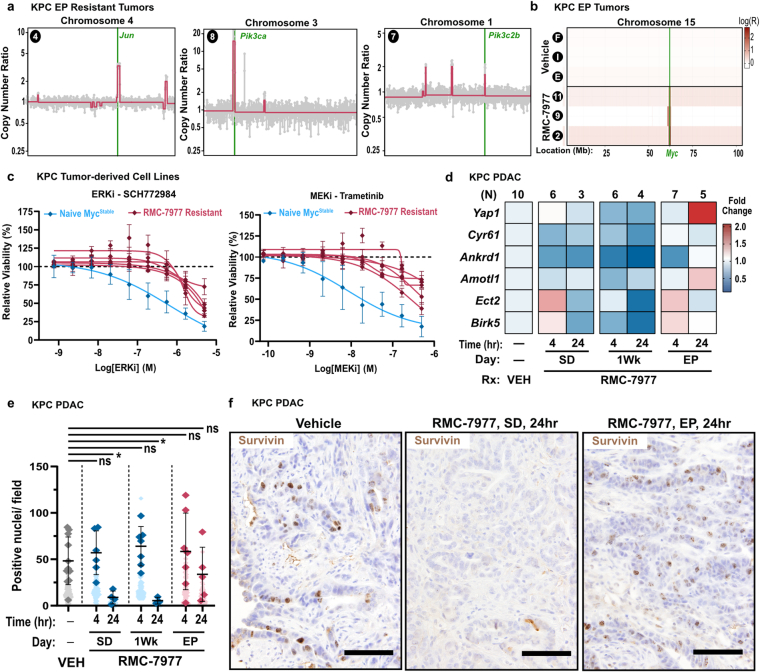
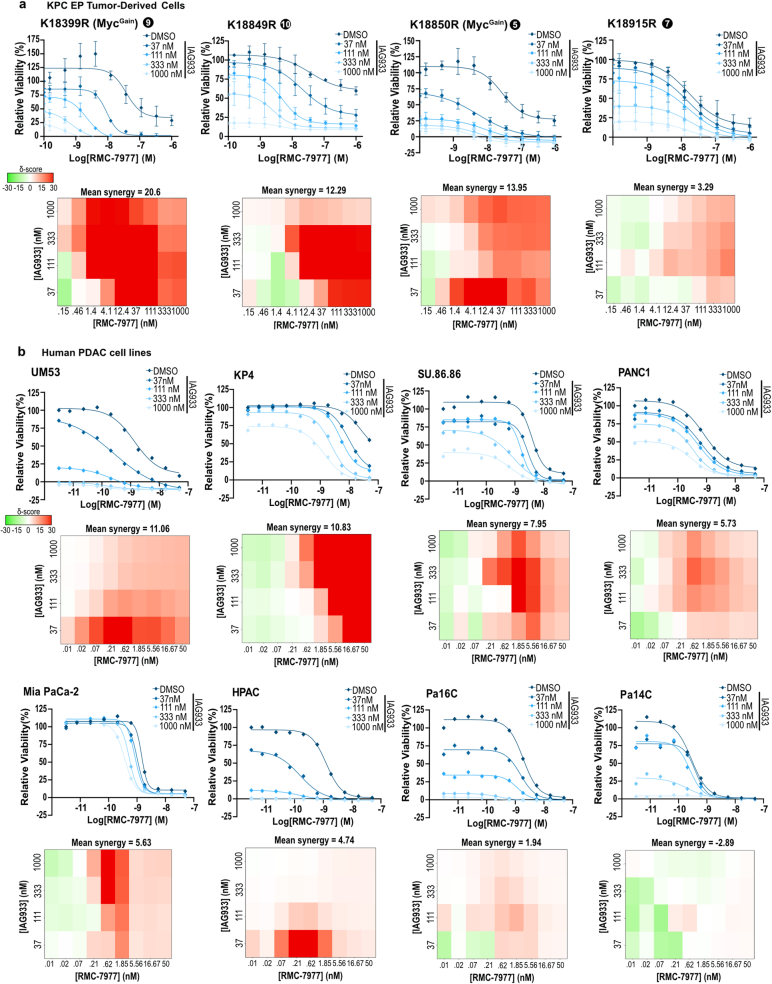
Broad-spectrum RAS inhibition has the potential to benefit roughly a quarter of human patients with cancer whose tumours are driven by RAS mutations 1,2 . RMC-7977 is a highly selective inhibitor of the active GTP-bound forms of KRAS, HRAS and NRAS, with affinity for both mutant and wild-type variants 3 . More than 90% of cases of human pancreatic ductal adenocarcinoma (PDAC) are driven by activating mutations in KRAS 4 . Here we assessed the therapeutic potential of RMC-7977 in a comprehensive range of PDAC models. We observed broad and pronounced anti-tumour activity across models following direct RAS inhibition at exposures that were well-tolerated in vivo. Pharmacological analyses revealed divergent responses to RMC-7977 in tumour versus normal tissues. Treated tumours exhibited waves of apoptosis along with sustained proliferative arrest, whereas normal tissues underwent only transient decreases in proliferation, with no evidence of apoptosis. In the autochthonous KPC mouse model, RMC-7977 treatment resulted in a profound extension of survival followed by on-treatment relapse. Analysis of relapsed tumours identified Myc copy number gain as a prevalent candidate resistance mechanism, which could be overcome by combinatorial TEAD inhibition in vitro. Together, these data establish a strong preclinical rationale for the use of broad-spectrum RAS-GTP inhibition in the setting of PDAC and identify a promising candidate combination therapeutic regimen to overcome monotherapy resistance.
Overview
The claims and statistics of this paper haven’t been checked yet.
Free: it reads the open-access text and checks the first 5 claims that cite a source we can check. Create a free account to check every claim.
Integrity signals
Registry
Cites
Statistics
Figures
Verification
Claims the paper makes
The claims and statistics of this paper haven’t been checked yet.
Free: it reads the open-access text and checks the first 5 claims that cite a source we can check. Create a free account to check every claim.
Claims other papers make about this one
Each is checked against this paper’s own text: does it say what the citing paper says it does?
The source backs part of the claim, not all of it — or backs it for a different population, condition or comparison.
In the citing paper
“Recently developed “pan-RAS” or “pan-KRAS” inhibitors capable of targeting all RAS isoforms or all KRAS alleles will be broadly applicable to most patients with PDAC (71–74).”
From Mechanisms of Resistance to Oncogenic KRAS Inhibition in Pancreatic Cancer (2024) · cites this paper as [74]
Experimental — accuracy not yet measured
Self-check
Percentages, sums and reported differences re-computed from the paper’s own numbers.
The self-check needs the paper’s full text.
Citations
Cites
Robinson, M. D., McCarthy, D. J., & Smyth, G. K. (2010) · Bioinformatics · doi:10.1093/bioinformatics/btp616 · Cited by 41,364
limma powers differential expression analyses for RNA-sequencing and microarray studies
Ritchie, M. E., Phipson, B., Wu, D., Hu, Y., Law, C. W., Shi, W., & Smyth, G. K. (2015) · Nucleic Acids Research · doi:10.1093/nar/gkv007 · Cited by 40,458 · cited 1×
“56.2) 63 .”
InfluentialCox, J., & Mann, M. (2008) · Nature Biotechnology · doi:10.1038/nbt.1511 · Cited by 14,855
Salmon provides fast and bias-aware quantification of transcript expression
Patro, R., Duggal, G., Love, M. I., Irizarry, R. A., & Kingsford, C. (2017) · Nature Methods · doi:10.1038/nmeth.4197 · Cited by 12,700
Robust Locally Weighted Regression and Smoothing Scatterplots
Cleveland, W. S. (1979) · Journal of the American Statistical Association · doi:10.1080/01621459.1979.10481038 · Cited by 11,594 · cited 1×
“Read counts were subsequently corrected for GC content using LOWESS smoothing algorithm, normalized and segmented using circular binary segmentation 57,58 .”
MethodAdjusting batch effects in microarray expression data using empirical Bayes methods
Johnson, W. E., Li, C., & Rabinovic, A. (2007) · Biostatistics · doi:10.1093/biostatistics/kxj037 · Cited by 8,658
Andromeda: A Peptide Search Engine Integrated into the MaxQuant Environment
Cox, J., Neuhauser, N., Michalski, A., Scheltema, R. A., Olsen, J. V., & Mann, M. (2011) · Journal of Proteome Research · doi:10.1021/pr101065j · Cited by 5,500 · cited 2×
“All mass spectrometry raw files were jointly searched using MaxQuant 60 (MQ) 2.4.3.0 Androm-eda search engine 61 using the UniProt Mouse Reference Proteome 62 (21,864 sequences, accessed October 2023) and known contaminants included in MQ.”
BackgroundMethodInfluentialMapping identifiers for the integration of genomic datasets with the R/Bioconductor package biomaRt
Durinck, S., Spellman, P. T., Birney, E., & Huber, W. (2009) · Nature Protocols · doi:10.1038/nprot.2009.97 · Cited by 4,197
Differential analyses for RNA-seq: transcript-level estimates improve gene-level inferences
Soneson, C., Love, M. I., & Robinson, M. D. (2015) · F1000Research · doi:10.12688/f1000research.7563.1 · Cited by 3,929 · cited 2×
“The PLATE-Seq FASTQ files were pseudoaligned to the GRCh38 human transcriptome and gene expression was quantified using kallisto (version 0.44.0), tximport package 50 and biomaRt package 65 .”
MethodInfluentialNext-generation characterization of the Cancer Cell Line Encyclopedia
Ghandi, M., Huang, F. W., Jané-Valbuena, J., Kryukov, G. V., Lo, C. C., McDonald, E. R., Barretina, J., Gelfand, E. T., Bielski, C. M., Li, H., et al. (2019) · Nature · doi:10.1038/s41586-019-1186-3 · Cited by 3,394 · cited 1×
“Gene mutation, gene expression and lineage data were downloaded from the 22Q4 release of the DepMap Data Portal 45 .”
Method
Cited by
Items 101–200 of 210
Beyond the Limit: MYC Mediates Tumor Immune Escape
Hong, Z., Ming, S., Luan, X., Sun, Z., & Zhang, W. (2025) · Pharmaceuticals · doi:10.3390/ph18070978 · Cited by 5
Anticancer activity of RAS-GTP inhibition in cholangiocarcinoma
Entrialgo‐Cadierno, R., Morali, K., Feliu, I., Wang, Y., Evans, J., Yáñez-Bartolomé, M., López, I., Macaya, I., Cueto‐Ureña, C., Sin-Coscujuela, D., et al. (2026) · Cancer Cell · doi:10.1016/j.ccell.2026.03.020 · Cited by 8
Self-citationPan-RAS inhibitor RMC-7977 is efficacious in treating NF1-related tumors
Bai, R.-Y., Xu, M., Lu, Y., Liu, J., & Staedtke, V. (2025) · Neuro-Oncology Advances · doi:10.1093/noajnl/vdaf065 · Cited by 8
“3,4 The closely related investigational agent RMC-6236 is currently undergoing clinical evaluation.”
Pan-RAS inhibitors and polo-like kinase 1: promising targets in colorectal cancer
Jayachandran, P., Elliott, A., Soni, S., Battaglin, F., Mittal, P., Algaze, S. D., Lo, J. H., Yang, Y., Ashouri, K., Torres, E. T. R., et al. (2025) · Oncogene · doi:10.1038/s41388-025-03484-z · Cited by 6
“Another oral pan-RAS inhibitor known as RMC-7977, with high selectivity for GTP-bound KRAS , HRAS , and NRAS (regardless of mutational status), effectively targets the common cancer-causing RAS proteins while minimally impacting normal cells [44].”
Self-citationAust, O., Thiel, M. R. T., Blanc, E., Lüthen, M., Hollek, V., Astaburuaga-García, R., Klinger, B., Böhning, F., Trinks, A., Beule, D., et al. (2025) · Science Signaling · doi:10.1126/scisignal.adr3738 · Cited by 5
Self-citationZhang, Q., Geng, Y., 陈海涛, Ni, J., Guan, L., Zhai, D., Wang, Y., Xu, S., Niu, M., Zheng, L., et al. (2026) · Journal of Medicinal Chemistry · doi:10.1021/acs.jmedchem.5c02435 · Cited by 4
Self-citationMahadevan, K. K., Maldonado, A. S., Li, B., Bickert, A. A., Perdyan, A., Kumbhar, S. V., Piya, S., Sockwell, A. M., Morse, S. J., Arian, K. A., et al. (2026) · Nature Communications · doi:10.1038/s41467-026-75960-3 · Cited by 12
Velcrin compounds activate the SLFN12 tRNase to induce tomoptosis
Greulich, H. E. (2024) · Cell chemical biology · doi:10.1016/j.chembiol.2024.05.012 · Cited by 6
McAndrews, K. M., Mahadevan, K. K., Li, B., Sockwell, A. M., Morse, S. J., Kelly, P. J., Patel, S. I., Kirtley, M. L., Diaz, B. A. M., Lyu, H., et al. (2025) · bioRxiv (Cold Spring Harbor Laboratory) · doi:10.1101/2025.01.29.635543 · Cited by 4
Engineered protein circuits for cancer therapyPreprint
Lu, A. C., Moeller, L., Moore, S., Ho, K., Tobin, V., Qiang, A., Zhang, E., Li, Z., Wang, M., Xia, S., et al. (2025) · bioRxiv (Cold Spring Harbor Laboratory) · doi:10.1101/2025.04.16.647665 · Cited by 8
Molecular dynamics driving phenotypic divergence among KRAS mutants in pancreatic tumorigenesis
Grimont, A., Falvo, D. J., Sisso, W. J., dos Santos, F., Chan, C. W., Zumbo, P., Fall, W. B., Ferrick, K. R., Pan, G., Cleveland, M., et al. (2026) · Developmental Cell · doi:10.1016/j.devcel.2026.06.016 · Cited by 5
EGFR blockade confers sensitivity to pan-RAS inhibitors in KRAS-mutated cancers
Han, J., Yu, B., Jing, J., He, X., Hua, Y., & Xu, G. (2025) · Cellular Oncology · doi:10.1007/s13402-025-01075-4 · Cited by 6
“…altered conformation in switches I and II of the G domains, thereby leading to KRAS activation through binding to its downstream molecules to mediate a series of signaling cascades, including the mitogen-activated protein kinase (MAPK) and phosphatidylinositol 3-kinase (PI3K) pathways [16, 21, 22].”
Targeting oncogenic K-RAS mutants with small-molecule degrader XMU-MP-9 through NEDD4-1
Zeng, T., Jiang, T., Zhang, B., Zhang, T., Dai, W., Yin, X., Li, Y., Yu, Z., Wu, C., Wu, Y., et al. (2025) · Acta Pharmaceutica Sinica B · doi:10.1016/j.apsb.2025.07.031 · Cited by 8
Lu, T., Song, Y., Liang, K., Zhang, Z., Li, Y., Tan, X., Li, X., & Li, F. (2026) · Communications Biology · doi:10.1038/s42003-026-09538-6 · Cited by 4
“Pancreatic ductal adenocarcinoma (PDAC) remains a lethal malignancy with a poor prognosis, for which chemotherapy is still a fi rst-line treatment 30 .”
Rare, Yet Targetable: New Perspectives on Ampullary Carcinomas
Gutmans, J., Friedlaender, A., & Mechahougui, H. (2026) · International Journal of Molecular Sciences · doi:10.3390/ijms27031597 · Cited by 4
Systematic and precise interventions for KRAS-mutant cancers
Liang, J., Wu, J., Zhang, Y., Wang, H., Zheng, Y., & He, Q. (2026) · Experimental Hematology and Oncology · doi:10.1186/s40164-026-00763-7 · Cited by 4
Magann, N. L., Barnes, G. L., Schioldager, R., Hörmann, F. M., Muñoz, R. M., Han, H., Hoff, D. V., & Vanderwal, C. D. (2026) · Journal of the American Chemical Society · doi:10.1021/jacs.6c06599 · Cited by 3
Cregg, J., Edwards, A. V., Tomlinson, A. C. A., Gill, A. L., & Koltun, E. S. (2024) · Elsevier eBooks · doi:10.1016/b978-0-443-21861-3.00011-5 · Cited by 3
Self-citationIntratumor heterogeneity in KRAS signaling shapes treatment resistance
Petrenko, O., Kirillov, V., D’Amico, S., & Reich, N. C. (2024) · iScience · doi:10.1016/j.isci.2024.111662 · Cited by 4
“32,42 To assess the reliability and robustness of single cell-clus-tering, we examined the gene expression profiles of over 300 samples from the COMPASS database representing locally advanced and metastatic human PDAC.”
Zhang, M., Yang, Y., Wu, J., & Sun, Q. (2025) · ONCOLOGIE · doi:10.1515/oncologie-2024-0596 · Cited by 3
Self-citationRMC-7977, a highly selective inhibitor of the active RAS-GTP to treat pancreatic cancer
Song, Y., Li, Q., & Sheng, C. (2024) · Acta Pharmaceutica Sinica B · doi:10.1016/j.apsb.2024.07.014 · Cited by 4
“Recently, a novel research led by Mallika Singh and Kenneth P. Olive 1,2 published in Nature identified a highly selective inhibitor (RMC-7977) of the active GTP-bound forms of human RAS family (KRAS, HRAS and NRAS) with affinity for both mutant and wild-type variants.”
BackgroundZBTB11 Depletion Targets Metabolic Vulnerabilities in K-Ras Inhibitor Resistant PDACPreprint
Tran, N. L., Jiang, J., Ma, M., Gadbois, G. E., Gulay, K. C. M., Verano, A. L., Zhou, H., Huang, C., Scott, D. A., Bang, A. G., et al. (2024) · bioRxiv (Cold Spring Harbor Laboratory) · doi:10.1101/2024.05.19.594824 · Cited by 3
Self-citationPopescu, B., Jones, M. F., Piao, M., Tran, E., Koh, A., Lomeli, I., Peretz, C. A. C., Murad, N. F., Abelson, S., Morales, C., et al. (2025) · bioRxiv (Cold Spring Harbor Laboratory) · doi:10.1101/2025.06.10.658786 · Cited by 3
“46,52 Daraxonrasib has shown a manageable safety profile in solid malignancies trials, with overall mild hematologic toxicitiy.”
Coka, L. D., Roa‐Peña, L., Flescher, A. M., Escobar‐Hoyos, L. F., & Shroyer, K. R. (2025) · Cancers · doi:10.3390/cancers17121899 · Cited by 2
Targeting RAS-mutant cancer cells using a synthetic RAS-activated cancer killing system
Teng, F., Gao, Q., Li, Z., Cui, T., Tan, X., Ding, Y., Li, R., Li, B., Zhong, B., Miao, M., et al. (2025) · Trends in biotechnology · doi:10.1016/j.tibtech.2025.07.031 · Cited by 2
Lee, W., Woo, H.-M., Cho, J. H., & Kim, M. S. (2025) · Frontiers in Oncology · doi:10.3389/fonc.2025.1718911 · Cited by 3
Tan, Z., Tang, Y., Chen, B., Lv, Y., Zhang, B. F., Liu, K.-J., & Bu, Y. (2025) · The FASEB Journal · doi:10.1096/fj.202503144r · Cited by 2
“…with small cell lung cancer and neuroblastoma [43], recent work in PDAC has shown that therapy-induced recurrence can be driven by increased MYC copy number and drug resistance [44], with ecDNA-mediated MYC amplification acting as a central molecular basis of intra-tumoral heterogeneity [45].”
Stickler, S., Eggerstorfer, M.-T., Rieche, M., Arslan, S., Teufelsbauer, M., HOHENEGGER, M., Weigl, L. G., & Hamilton, G. (2026) · Scientific Reports · doi:10.1038/s41598-026-43207-2 · Cited by 3
Labadie, B. W., Obradović, A., Raufi, A. G., Wasko, U. N., Tomassoni, L., Ge, L., May, M. S., Vij, M., Li, L., Ross, I., et al. (2026) · JCO Precision Oncology · doi:10.1200/po-26-00138 · Cited by 2
Self-citationHu, L., Ahmari, N., Schaeper, A., Pundavela, J., Kim, M., Dombi, E., Wu, J., Brunmair, J., Petronczki, Ö. Y., & Ratner, N. (2026) · Science Advances · doi:10.1126/sciadv.aeg3475 · Cited by 2
Shao, T., Han, L., Xie, Y., Shi, Z., Yang, Q., Liu, A., Liu, Y., Chen, L., Huang, J., Peng, B., et al. (2025) · Small · doi:10.1002/smll.202412249 · Cited by 3
Road Map to Defeat Pancreatic Cancer
Ferguson, L. P., & Tuveson, D. A. (2025) · Annual Review of Cancer Biology · doi:10.1146/annurev-cancerbio-060624-044323 · Cited by 3
RAS mutation-specific signaling dynamics in response to paralog- and state- selective RAS inhibitorsPreprint
Baars, B., Orive-Ramos, A., Kou, Z., Gaire, B., Desaunay, M., Adamopoulos, C., Aaronson, S. A., Wang, S., Gavathiotis, E., & Poulikakos, P. I. (2025) · bioRxiv (Cold Spring Harbor Laboratory) · doi:10.1101/2025.02.14.638317 · Cited by 2
“This approach enables the targeting of active RAS, a previously inaccessible conformation, and has shown promise across a broad spectrum of RAS-MUT 19,20 .”
Villanueva, M. T. (2024) · Nature Reviews Drug Discovery · doi:10.1038/d41573-024-00082-8 · Cited by 2
Digital twin in cancer: Pancreatic cancer, lung cancer, and melanoma metastases
Sheth, V., & Shah, M. (2025) · Elsevier eBooks · doi:10.1016/b978-0-443-33984-4.00005-5 · Cited by 1
Targeting RAS for Cancer Treatment: What a Long, Strange Trip It's Been
Cox, A. D., & Der, C. J. (2025) · Annual Review of Cancer Biology · doi:10.1146/annurev-cancerbio-071024-082459 · Cited by 1
Self-citationThe pancreatic cancer models helping to drive innovation in the field
Nuwer, R. (2025) · Nature · doi:10.1038/d41586-025-03944-2 · Cited by 1
Intrinsic resistance to RAS inhibitors is driven by dysregulation of KRAS degradation
Ivanišević, T., Ma, Y., Boxel, E. V., Magits, W., Lechat, B., Koçberber, Z., Willnow, P., Fendt, S., Velde, G. V., Sewduth, R. N., et al. (2025) · Nature Communications · doi:10.1038/s41467-025-67109-5 · Cited by 4
Kötting, C., Rudack, T., & Gerwert, K. B. (2025) · Biological Chemistry · doi:10.1515/hsz-2025-0227 · Cited by 1
“Another promising class of Ras inhibitors are “ tricomplex ” inhibitors, where the small molecule binds to cyclophilin A and then to Ras (Wasko et al. 2024).”
Graus, M. U. J. E., van Diepen, A. E., Broekman, T. H. T., van Eijck, C. W. F., van Hooft, J. E., Homs, M. Y. V., Wumkes, M. L., Wilmink, J. W., de Hingh, I. H. J. T., Iersel, L. V., et al. (2026) · European Journal of Cancer · doi:10.1016/j.ejca.2026.116263 · Cited by 1
Wang, R., Li, J., Su, D., Yang, J., Ma, P., Hua, L., Luo, J. T., Liu, J., Yang, R., Zhang, L. J., et al. (2026) · Gut · doi:10.1136/gutjnl-2025-335641 · Cited by 2
“9 41–43 Nevertheless, limitations persist, particularly the rapid development of acquired resistance whose mechanisms require further elucidation.”
Vitale, A., Marafioti, M., Galassi, T., Madonia, G., Moro, M., & Dubois, M. (2026) · Critical Reviews in Oncology/Hematology · doi:10.1016/j.critrevonc.2026.105396 · Cited by 2
Sobu, R., Kobayashi, Y., Kashima, S., Inoue, T., Sumiyoshi, T., Hamana, H., Takeda, M., Hiroshima, Y., Seki, S., Fujiyama, N., et al. (2026) · iScience · doi:10.1016/j.isci.2026.116386 · Cited by 1
“Notably, because PDX models often exhibit substantial inter-animal variability in baseline tumor burden and tumor growth kinetics, 27–29 we also evaluated tumor growth based on tumor volume change rates.”
Xiao, X.-Z., Wang, Y.-J., Pang, X.-F., & Zhang, A. (2026) · Acta Pharmacologica Sinica · doi:10.1038/s41401-026-01866-x · Cited by 2
“In other studies, tumors that relapsed following treatment with the pan-RAS MG RMC-7977 largely maintained suppression of MAPK signaling but exhibited a signi fi cant gain in MYC copy number [50].”
Self-citationİyikesici, M. S., Oncul, O., Hallaç, M., Şen, S., Taflan, Ş., Öncül, S., Duraj, T., & Seyfried, T. N. (2026) · Current Oncology · doi:10.3390/curroncol33080489 · Cited by 2
“Recently, daraxonrasib resulted in promising survival benefit in patients with RAS G12 mutations, but response to therapy was not universal and resistance mechanisms are likely to develop [4,5].”
Li, Q., Hoffman, M. T., Chun, J.-H., Parent, B. D., Hambitzer, F., Peprah, F., Kureshi, C. T. S., Lim, B. S., Chang, E., Walsh, M. J., et al. (2026) · Cell · doi:10.1016/j.cell.2026.08.045 · Cited by 2
Self-citationLineage identity governs oncogene dependence in mouse NSCLC models of KRAS inhibitor resistance
Mathey‐Andrews, N., Rodriguez, C. L., Shui, B., Patriotis, A. L., Rideout, W. M., Chen, V. Z., Murazzi, I., Ghazi, P., Cornwall-Brady, M. R., Liu, M., et al. (2026) · Nature Genetics · doi:10.1038/s41588-026-02768-8 · Cited by 2
“While c-Myc amplification has been reported as a preclinical resistance mechanism to RAS(ON) therapy in pancreatic ductal adenocarcinoma 45 , we are not aware of reports implicating N-Myc in KRAS inhibitor resistance.”
Right ON target: a new RAS-GTP inhibitor
Senft, D. (2024) · Nature reviews. Cancer · doi:10.1038/s41568-024-00703-9 · Cited by 2
Xiong, Q., & Zhang, Y. (2024) · Science China Life Sciences · doi:10.1007/s11427-024-2669-2 · Cited by 1
“The research also uncovers a potential resistance mechanism involving Myc copy number gain, which could be mitigated by combinatorial TEAD inhibition, providing a promising strategy to enhance RAS inhibition efficacy (Wasko et al., 2024).”
Targeting the Yin and Yang of KRASG12C
Adamopoulos, C., Papavassiliou, K. A., & Papavassiliou, A. G. (2025) · Trends in Molecular Medicine · doi:10.1016/j.molmed.2025.03.007 · Cited by 1
Serresi, M., Çetin, A. O., Dramaretska, Y., Kertalli, S., Schmitt, M. J., Naumann, H., Zschummel, M., Asselin-Labat, M.-L., Maciel, L. F., Declercq, J., et al. (2024) · bioRxiv (Cold Spring Harbor Laboratory) · doi:10.1101/2024.12.29.630643 · Cited by 1
Regulating MYC translation in cancer
Hussain, Z., & Sherman, M. H. (2025) · Nature Cell Biology · doi:10.1038/s41556-024-01589-3 · Cited by 1
Branon, T. C. (2025) · Wiley eBooks · doi:10.1002/9781394236145.ch16 · Cited by 1
Chu, B., He, Y., Chen, Y., Toth, E. A., & Orban, J. P. (2026) · bioRxiv (Cold Spring Harbor Laboratory) · doi:10.64898/2026.01.15.699477 · Cited by 1
“…been a long-standing target for downregulation via small-molecule inhibitors, with recent successes starting with the covalent modification of KRAS-G12C (17-23), followed by the development of KRAS-G12D-specific inhibitors (24, 25) and pan-RAS inhibitors (26-30) that directly target RAS activity.”
Yeung, S. F., Chen, J. X., Law, C. T., Law, A. C. H., Lee, C., Leung, A. M. F., Chau, M. P. K., Chi-Bun, B. K., Yue, W., Tong, M., et al. (2026) · bioRxiv (Cold Spring Harbor Laboratory) · doi:10.64898/2026.02.18.706707 · Cited by 1
Goldstein, M. E., Chu, B., Carillo, K. J., Orban, J. P., Toth, E. A., & Fuerst, T. R. (2026) · bioRxiv (Cold Spring Harbor Laboratory) · doi:10.64898/2026.03.04.709402 · Cited by 1
“…RAS-driven cancers or as a reagent, is an important goal that has been sought via a variety of approaches that include small molecule inhibitors ( 11-23 ), PROteolysis TArgeting Chimeras (PROTACs) that stimulate RAS degradation ( 24 ), monobodies that inhibit RAS signaling ( 25 ), and proteases…”
Ching, Y. M., Narayanan, S., Klomp, J. A., Isermann, T., Loewe, S., Chang, W.-H., Waters, A. M., Peña, S. R. N., Baldelli, E., Martin, C. P., et al. (2026) · bioRxiv (Cold Spring Harbor Laboratory) · doi:10.64898/2026.08.10.743026 · Cited by 2
Self-citationTherapie des Pankreaskarzinoms: Innovative Chirurgie und moderne Systemtherapien
Hank, T. P., Springfeld, C., Loos, M., Zhou, X., Neoptolemos, J. P., Roth, S., Mehrabi, A., Michalski, C. W., Büchler, M. W., & Al‐Saeedi, M. (2024) · Deutsches Ärzteblatt · doi:10.3238/personko.2024.09.06.01
Mediating kinase activity in Ras-mutant cancer: potential for an individualised approach?
Healy, F. M., Turner, A. L., Marensi, V., & MacEwan, D. J. (2024) · Frontiers in Pharmacology · doi:10.3389/fphar.2024.1441938 · Cited by 1
“Compounds such as the aforementioned RMC-7977 appear to show selectivity for mutant or over-expressed, therefore reducing the risk of “ on-target ” toxicity concerns (Wasko et al., 2024).”
BackgroundKRAS-driven cancer models for in vivo pharmacology and drug discovery
Chugh, S., Dow, L. E., Singh, M., & Aguirre, A. J. (2024) · Elsevier eBooks · doi:10.1016/b978-0-443-21861-3.00004-8
Self-citationPan-Cancer Biomarker Analysis from the Cancer Dependency Map: A Blueprint for Precision OncologyPreprint
Gong, D. H. (2025) · bioRxiv (Cold Spring Harbor Laboratory) · doi:10.1101/2025.02.07.637152 · Cited by 1
Treatment options for KRAS G12C mutated metastatic colorectal cancer
Liberko, M. (2025) · Onkologie · doi:10.36290/xon.2025.008
Targeting RAS and associated proteins
Müller, M. P., Goody, R. S., & Rauh, D. (2025) · Elsevier eBooks · doi:10.1016/b978-0-443-29808-0.00008-x
Therapie des Pankreaskarzinoms: Innovative Chirurgie und moderne Systemtherapien
Hank, T. P., Springfeld, C., Loos, M., Zhou, X., Neoptolemos, J. P., Roth, S., Mehrabi, A., Michalski, C. W., Büchler, M. W., & MohamAl-Saeedi (2025) · Deutsches Ärzteblatt · doi:10.3238/persgastro.2025.04.04.02
Current progress in targeting mitotic kinases in PDAC
Barlow, T. M. A., Rooman, I., & Ballet, S. (2025) · RSC Medicinal Chemistry · doi:10.1039/d5md00162e
Opsahl, E. L. L., & di Magliano, M. P. (2025) · Cancer Discovery · doi:10.1158/2159-8290.cd-25-0878
Tumor nutrient stress gives rise to a drug tolerant cell state in pancreatic cancerPreprint
Sheehan, C. S., Hu, L., Cognet, G., Croley, G., Nguyen, T. T., Thomas-Toth, A. T., Agovino, D., Jonker, P. B., Sadullozoda, M., Ziolkowski, L. M., et al. (2025) · bioRxiv (Cold Spring Harbor Laboratory) · doi:10.1101/2025.09.04.673818 · Cited by 1
“More recently, KRAS inhibitors, which target the most common oncogenic driver in PDAC, have shown efficacy in the treatment of murine (5–7) and human (8) PDAC.”
Chen, X., Keller, S. J., Das, T., Hafner, P., Alrawashdeh, A. Y., Jumaa, H., Chen, T., Besson, S., Norona, J., Schneider, M., et al. (2025) · medRxiv · doi:10.1101/2025.09.09.25335395
RALGEF inhibitors suppress RAS-driven pancreatic cancer and metastasis
Donninger, H., Ferrill, R., Baby, B. V., Hobbing, K. R., Dean, W. L., Miriyala, N., Jigo, R., Burlison, J. A., Trent, J. O., Monsen, R., et al. (2025) · Journal of Biological Chemistry · doi:10.1016/j.jbc.2025.110809 · Cited by 1
The very druggable RAS proteins
Hasselluhn, M. C., & Olive, K. P. (2025) · Trends in cancer · doi:10.1016/j.trecan.2025.10.005
Self-citationp53 and YAP/TAZ-TEAD activities determine metaplastic heterogeneity in pancreatic cancerPreprint
Martin, C. P., Bang, S., Gomes, J. R., Sullivan, W. B., Liu, Y., Smith, M. D., Edwards, A. C., Der, C. J., & Morris, J. P. (2025) · bioRxiv (Cold Spring Harbor Laboratory) · doi:10.64898/2025.12.11.693520
Self-citationTsuda, M., Keith, D. J., Daniel, C. J., Pelz, C., Blise, K. E., Ozmen, T. Y., Ozmen, F., Hawthone, K., Eng, J. R., Li, X., et al. (2025) · bioRxiv (Cold Spring Harbor Laboratory) · doi:10.64898/2025.12.12.693851
Bai, Y., Liu, Z., Zhai, X., Zhang, D., Liu, S., Xia, Q., Chen, L., Shi, Y., Liao, Y., Liu, Y., et al. (2026) · Cancer Letters · doi:10.1016/j.canlet.2026.218299 · Cited by 1
Luo, G., Li, D., Peng, J., Liu, R., Meng, Y., Ward, R., Zhang, Y., Zhang, X., Cui, F., Wang, J., et al. (2026) · Cell Communication and Signaling · doi:10.1186/s12964-026-02798-z · Cited by 1
“…inhibitors that selectively target the active state of both mutant and wild-type KRAS, NRAS, and HRAS variants, exhibiting broad-spectrum antitumor activity, particularly in non-small cell lung cancer and pancreatic ductal adenocarcinoma, with minimal effects on normal tissues [11, 12, 28].”
Self-citationUnlocking drug sensitivity in KRAS
MingCong, L. I., YueSong, Z. H. O. U., Qiao, T. D., QingLin, B. A. I., & Li, C. (2026) · Scientia Sinica Vitae · doi:10.1360/ssv-2025-0279
“RMC-7977 是一款靶向 GTP 结合状态的 广谱 RAS 抑制剂 , 对三种 RAS 亚型的突变型及野生型 均具亲和力 , 在多种 PDAC 模型中均显示出显著抗肿 瘤活性 , 治疗组肿瘤组织出现凋亡及持续性增殖抑制 , 正常组织反应温和 , 为联合疗法提供新方向 [16,71,72] .”
Therapeutic potential of natural triterpenoids in pancreatic cancer
Niu, C., Han, Y., Zhang, J., & Okolo, P. I., III (2026) · Seminars in Oncology · doi:10.1016/j.seminoncol.2026.152500
Zhu, G., Pei, L., Li, J., Zhang, C., Ye, D., Li, J., Tang, Q., Huang, H., Xu, H., & Bi, F. (2026) · Cell Reports · doi:10.1016/j.celrep.2026.117338
Emerging concepts, hot topics, and open questions in today’s pancreatic cancer research
Keber, C. U., Schmitt, M., Visekruna, A., Brichkina, A. I., von Strandmann, E. P., Bartsch, J. W., Huber, M., Bauer, U., Gress, T. M., & Lauth, M. (2026) · Biochimica et Biophysica Acta (BBA) - Reviews on Cancer · doi:10.1016/j.bbcan.2026.189614
Radiosensitization of Glioblastoma by the K-ras Inhibitor RMC-6236Preprint
Yun, H. S., Kramp, T. R., Sproull, M. T., Thakur, K., Chakravarti, A., & Camphausen, K. A. (2026) · bioRxiv (Cold Spring Harbor Laboratory) · doi:10.64898/2026.05.29.728724
Shrivastava, A., Pederson, E. N., Nguyen, T. U., Chuen, J., Mohan, P., Pande, S., Toribio, A. R., Lecomte, N., Melchor, J. P., McAuliffe, J. C., et al. (2026) · Cell Reports · doi:10.1016/j.celrep.2026.117520
Choi, P. H., Meredith, J., Sharma, M., Chen, X., Qiu, J., Markov, V., de Stanchina, E., Singh, M., & Rosen, N. X. (2026) · Cell Reports · doi:10.1016/j.celrep.2026.117559 · Cited by 2
Self-citationTherapeutic inhibition of RAS in non-small cell lung cancer
Nichols, K. B., & Herzberg, B. O. (2026) · Frontiers in Oncology · doi:10.3389/fonc.2026.1817943
“Subsequent work revealed the basis of the therapeutic index was in differential responses to drug of RAS-activated tumor versus normal tissue (136), and that tricomplex inhibitors could even restore normal GTP hydrolysis in normally incompetent mutants to aid in their antitumor activity (137).”
Alnatsha, A., Xu, J., Habshi, T., Li, Q., Riçku, K., Allawadhi, P., Saka, D., Dai, R., Xue, Y., Nguyen, H., et al. (2026) · Gut · doi:10.1136/gutjnl-2025-337363
Robb, R. N., Ackermann, S. E., Degan, S. E., Taylor, K. E., Yang, R. Y., Marler, A. Z., Calvert, V. S., Pierobon, M., Lyons, S. P., Barker, N. K., et al. (2026) · Cancer Research Communications · doi:10.1158/2767-9764.crc-25-0731 · Cited by 2
Self-citationTMEM87A/EBP/7-DHC/7-DHD Axis Promotes Pancreatic Cancer Progression via Ferroptosis EvasionPreprint
Li, J., Ouyang, S., Yu, X., Xu, Y., Li, Z., Li, Y., Fei, J., Song, L., & Li, M. (2026) · Research Square · doi:10.21203/rs.3.rs-10197859/v1
Sharmin, S., Kashatus, J. A., Adair, S. J., Loewgren, E. B., Fallahi‐Sichani, M., Bauer, T. W., & Kashatus, D. F. (2026) · British Journal of Cancer · doi:10.1038/s41416-026-03542-7 · Cited by 1
Yang, X., Tao, X., Qi, W., Luo, R., Lan, T., Xie, K., Cai, Y., Gao, F., Lv, Y., Liu, C., et al. (2026) · Journal of Pharmaceutical Analysis · doi:10.1016/j.jpha.2026.101718
Krenz, B., Kannan, T., Mattavelli, G., Schmitz, W., Gebhardt-Wolf, A., John, M., Cetkovic, A., Aintablian, A., Caviccioli, S., Nowak, L., et al. (2026) · bioRxiv (Cold Spring Harbor Laboratory) · doi:10.64898/2026.07.23.740267
MYC in Oncogenesis and Therapeutic Implications
Zhang, N., Wei, L., Tang, C., Pl, L., Zhong, W., & You, H. (2026) · MedComm · doi:10.1002/mco2.70893
“Importantly, MYC inhibition in preclinical models induces reversible tumor regression, often via cell quiescence or differentiation rather than apoptosis, and with minimal toxicity to normal tissues, supporting a favorable therapeutic window for intervention [ 233–235 ].”
Daraxonrasib and Beyond: Pan‐ RAS Inhibition, Resistance, and Next‐Generation Strategies
Honda, R. P. (2026) · Cancer Science · doi:10.1111/cas.70497
Hruban, R. H., & Kern, S. E. (2026) · Modern Pathology · doi:10.1016/j.modpat.2026.101059
Engineered caspases directly rewire mutant Ras to cell deathPreprint
Moeller, L., Lu, A. C., Ho, K., Zhang, E., & Elowitz, M. B. (2026) · bioRxiv (Cold Spring Harbor Laboratory) · doi:10.64898/2026.08.06.743376
Salih, R., Sirajudeen, F., & Rahmani, M. (2026) · Journal of Advanced Research · doi:10.1016/j.jare.2026.08.030 · Cited by 1
From RAS inhibitor resistance to rational combination strategies
Lynch, P., Macarulla, T. M., & O'Kane, G. M. (2026) · Nature Medicine · doi:10.1038/s41591-026-04529-w
RAS Inhibitor RMC ‐7977 Blocks Vascular Overgrowth of NRAS Q61R Mutant Endothelial Cells
Alharbi, S., Merkle, S., Pastura, P. A., McDaniel, C. G., Zaky, G. S., Waters, A. M., & Cras, T. D. L. (2026) · Journal of Cellular and Molecular Medicine · doi:10.1111/jcmm.71316 · Cited by 1
“These studies used xenograft mouse models and started treating with RMC-7977 (25 mg/kg) the same day of cell injections and treated mice daily via oral gavage for 16 days [13].”
InfluentialGonzález, J., Cai, X., Diao, W., Roué, G., València-Clua, K., Olmo-González, D., González-Cao, M., Jain, A., Lewintre, E. J., Giménez-Capitán, A. A., et al. (2026) · Neoplasia · doi:10.1016/j.neo.2026.101351
“Of interest, Myc copy number gain was identified as a prevalent mechanism of resistance in vitro to pan-RAS inhibitors in KRAS-mutant pancreatic cancer that could be overcome by combination with YAP/TEAD inhibition [40] .”
Tumor-tropic E. coli engineered as living T and NK cell engagersPreprint
Yang, S., Bader, A. C., Sendker, S., Hu, A., Chen, D. C., Nath, H., Chen, A., Bobilev, E., Sheffer, M., Hui, V. W., et al. (2026) · bioRxiv (Cold Spring Harbor Laboratory) · doi:10.64898/2026.08.18.745642
Self-citationSmall-molecule RAS/RAF inhibitors target RAS-driven cancers via allosteric RAF disruption
Yoshikawa, Y., Kubota, H., Matsumoto, S., Makino, Y., Kawamura, T., Yuki, H., Sakai, N., Shibaike, A., Okamura, M., Fujimoto-Sakisaka, W., et al. (2026) · Nature Communications · doi:10.1038/s41467-026-76337-2 · Cited by 1
Mariano, M. P., Sgarilli, E., Mijnlieff, D., Visuvasam, B., Blesio, A., Digiacomo, G., Cavazzoni, A., Ferracin, M., & Giovannetti, E. (2026) · Cancer Drug Resistance · doi:10.20517/cdr.2026.52 · Cited by 1
“…PDAC Preclinical evidence (K)RAS inhibition Supports combinations with immune checkpoint blockade during a potential immunostimulatory window [95,100] YAP1-associated immunosuppressive TME remodeling PDAC Preclinical evidence Pan-KRAS inhibition Suggests combined targeting of tumor-cell…”
Fuerst, T. R., Goldstein, M., Chu, B., Carillo, K. J., Orban, J. P., & Toth, E. (2026) · Research Square · doi:10.21203/rs.3.rs-10438702/v1
“…tool, is an important goal that has been sought via a variety of approaches that include small molecule inhibitors 8, 15–19, 21, 22, 29–31, 34, 35, 41 , PROteolysis TArgeting Chimeras (PROTACs) that stimulate RAS degradation 28 , monobodies that inhibit RAS signaling 40 , and proteases that…”
Metadata
- Authors
- Wasko, U. N., Jiang, J., Dalton, T. C., Curiel-Garcia, A., Edwards, A. C., Wang, Y., Lee, B., Orlen, M., Tian, S., Stalnecker, C. A., Drizyte-Miller, K., Menard, M., Dilly, J., Sastra, S. A., Palermo, C. F., Hasselluhn, M. C., Decker-Farrell, A. R., Chang, S., Jiang, L., Wei, X., Yang, Y. C., Helland, C., Courtney, H., Gindin, Y., Muonio, K., Zhao, R., Kemp, S. B., Clendenin, C., Sor, R., Vostrejs, W. P., Hibshman, P. S., Amparo, A. M., Hennessey, C., Rees, M. G., Ronan, M. M., Roth, J. A., Brodbeck, J., Tomassoni, L., Bakir, B., Socci, N. D., Herring, L. E., Barker, N. K., Wang, J., Cleary, J. M., Wolpin, B. M., Chabot, J. A., Kluger, M. D., Manji, G. A., Tsai, K. Y., Sekulic, M., Lagana, S. M., Califano, A., Quintana, E., Wang, Z., Smith, J. A. M., Holderfield, M., Wildes, D., Lowe, S. W., Badgley, M. A., Aguirre, A. J., Vonderheide, R. H., Stanger, B. Z., Baslan, T., Der, C. J., Singh, M., & Olive, K. P.
- Affiliations
- Columbia University Irving Medical Center (US)
- Revolution Medicines (United States) (US)
- University of North Carolina at Chapel Hill (US)
- University of Pennsylvania (US)
- Memorial Sloan Kettering Cancer Center (US)
- Harvard University (US)
- Abramson Cancer Center (US)
- Broad Institute (US)
- Moffitt Cancer Center (US)
- Johns Hopkins University (US)
- Parker Institute for Cancer Immunotherapy (US)
- Corresponding author
- Singh, Mallika
- Olive, Kenneth P.
- ORCID
- Wasko, Urszula N.
- Jiang, Jingjing
- Dalton, Tanner C.
- Curiel-Garcia, Alvaro
- Edwards, A. Cole
- Wang, Yingyun
- Lee, Bianca
- Orlen, Margo
- Tian, Sha
- Stalnecker, Clint A.
- Menard, Marie
- Dilly, Julien
- Sastra, Stephen A.
- Palermo, Carmine F.
- Hasselluhn, Marie C.
- Decker-Farrell, Amanda R.
- Chang, Stephanie
- Jiang, Lingyan
- Yang, Yu C.
- Helland, Ciara
- Gindin, Yevgeniy
- Kemp, Samantha B.
- Clendenin, Cynthia
- Sor, Rina
- Vostrejs, William P.
- Hibshman, Priya S.
- Amparo, Amber M.
- Hennessey, Connor
- Rees, Matthew G.
- Ronan, Melissa M.
- Roth, Jennifer A.
- Brodbeck, Jens
- Tomassoni, Lorenzo
- Socci, Nicholas D.
- Herring, Laura E.
- Barker, Natalie K.
- Wang, Junning
- Cleary, James M.
- Wolpin, Brian M.
- Kluger, Michael D.
- Manji, Gulam A.
- Tsai, Kenneth Y.
- Sekulic, Miroslav
- Lagana, Stephen M.
- Califano, Andrea
- Quintana, Elsa
- Wang, Zhengping
- Smith, Jacqueline A. M.
- Holderfield, Matthew
- Wildes, David
- Lowe, Scott W.
- Badgley, Michael A.
- Aguirre, Andrew J.
- Vonderheide, Robert H.
- Stanger, Ben Z.
- Baslan, Timour
- Der, Channing J.
- Singh, Mallika
- Olive, Kenneth P.
- Venue
- Nature
- Published
- 2024-04-08
- Volume
- 629
- Issue
- 8013
- Pages
- 927-936
- ISSN
- 0028-0836 (ISSN-L)
- 1476-4687
- PMC
- PMC11111406
- OpenAlex
- W4394580205
- Semantic Scholar
- 7776743bf12cbb5f73496d61b0d8b283e856ab6b
- Cited by
- 209
- References
- 64
- Citations by year
- 2026: 78 · 2025: 92 · 2024: 38
- FWCI
- 35.43
- Type
- journal article
- Language
- en
- Update notices
- correction (2024-11-12)
- Open access
- hybrid
- doi.org
- Licence
- cc-by
- creativecommons.org/licenses/by/4.0 (tdm)
- creativecommons.org/licenses/by/4.0 (vor)
- Locations
- Nature (publishedVersion, cc-by)
- PubMed Central (publishedVersion, cc-by)
- PubMed (publishedVersion)
- Carolina Digital Repository (University of North Carolina at Chapel Hill) (submittedVersion, cc-by)
- RePEc: Research Papers in Economics (submittedVersion)
- UNC Libraries
- Funders
- U.S. Department of Defense
- American Cancer Society
- Pancreatic Cancer Action Network
- Lustgarten Foundation
- National Institutes of Health (1s10od021764-01, 1s10od032433-01a1, 1s10od012351-01, UL1TR001873)
- National Cancer Institute (T32CA009140, R01CA229803, P01CA129243, R35CA232113, T32CA009156, F31CA275260, F32CA232529, U01CA217858, P30CA008748, U01CA274312, U01CA272610, R01CA215607, P50CA257911, R01CA266558, U54CA274506, R01CA276268, P30CA016086, P30CA013696, T32CA071341)
- National Institute of General Medical Sciences (T32GM119999)
- National Institute of Allergy and Infectious Diseases (K08AI106953)
- National Institute of Diabetes and Digestive and Kidney Diseases (P30DK132710)
- National Center for Advancing Translational Sciences
- Topics
- Health Sciences › Medicine › Oncology › Pancreatic and Hepatic Oncology Research
- Life Sciences › Biochemistry, Genetics and Molecular Biology › Molecular Biology › Protein Kinase Regulation and GTPase Signaling
- Life Sciences › Biochemistry, Genetics and Molecular Biology › Molecular Biology › Protein Tyrosine Phosphatases
- Keywords
- RMC-7977, pancreatic ductal adenocarcinoma, KRAS mutation, apoptosis, proliferative arrest, KPC mouse model, resistance mechanisms, combination therapy, antitumour activity
- MeSH terms
- Animals, Antineoplastic Agents, Disease Models, Animal, Female, Guanosine Triphosphate, Humans, Membrane Proteins, Mice, Inbred BALB C, Mice, Inbred C57BL, Mutation, Neoplasm Recurrence, Local, Pancreatic Neoplasms, Genes, myc, Proto-Oncogene Proteins p21(ras), Treatment Outcome, Apoptosis, Drug Resistance, Neoplasm, GTP Phosphohydrolases, Carcinoma, Pancreatic Ductal, Xenograft Model Antitumor Assays, Cell Line, Tumor, Cell Proliferation, Mice, DNA Copy Number Variations
About these checks
Registry, retraction, Cites and statistics results are computed, not judged, with one exception: a printed reference that no index lists is read once by a model before it counts as a citation error. Claims are extracted by a model and kept only when their quote appears verbatim in the text; each cited source is then checked, with a model’s help, for whether it says what the claim relies on. Those verdicts can be wrong — read the claim’s quote and the cited source before relying on one.
Statistics and arithmetic are recomputed, not judged.
Confidence bands are shown only for fields calibrated on our annotated test set. None is calibrated yet, so no band is shown.
What counts as a claim ›How we measure confidence ›How we check this ›
Are you an author, or do you see a problem with this page? Request a review
Data sources
Bibliographic data: Semantic Scholar, OpenAlex, Crossref.
Contains information from the Semantic Scholar Academic Graph Datasets, made available under the ODC Attribution License (ODC-BY 1.0).
Semantic Scholar’s data is described in: Kinney, R., et al. (2023). The Semantic Scholar Open Data Platform. arXiv:2301.10140.
