

Tumour-selective activity of RAS-GTP inhibition in pancreatic cancer
Open accessThe DOI matches its Crossref record; 64 of the 64 references it cites were found in a registry or an index.
Abstract
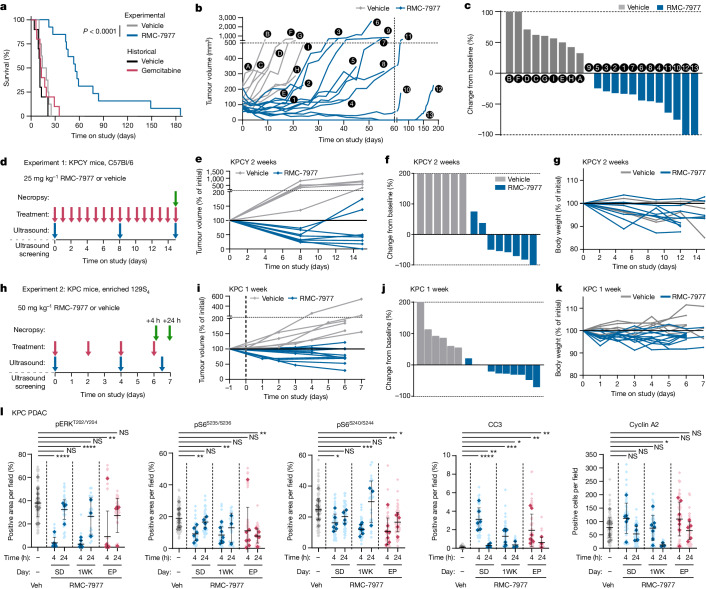
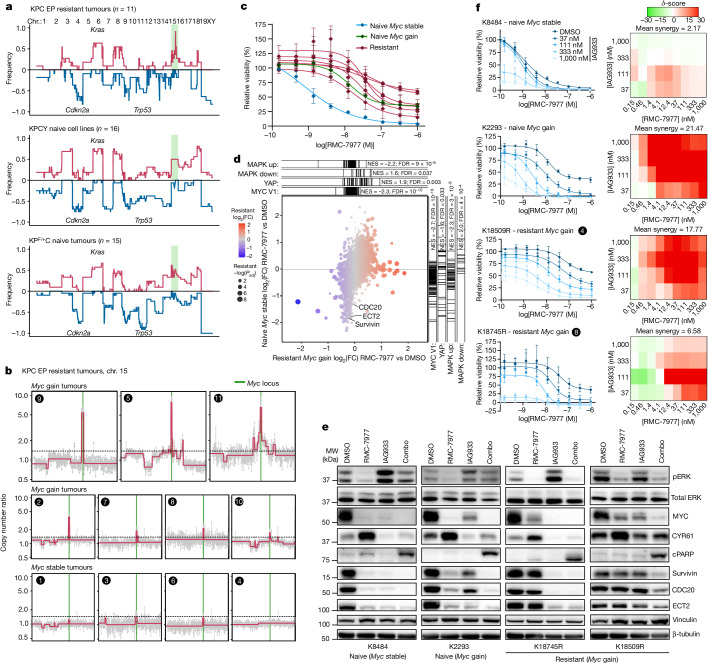
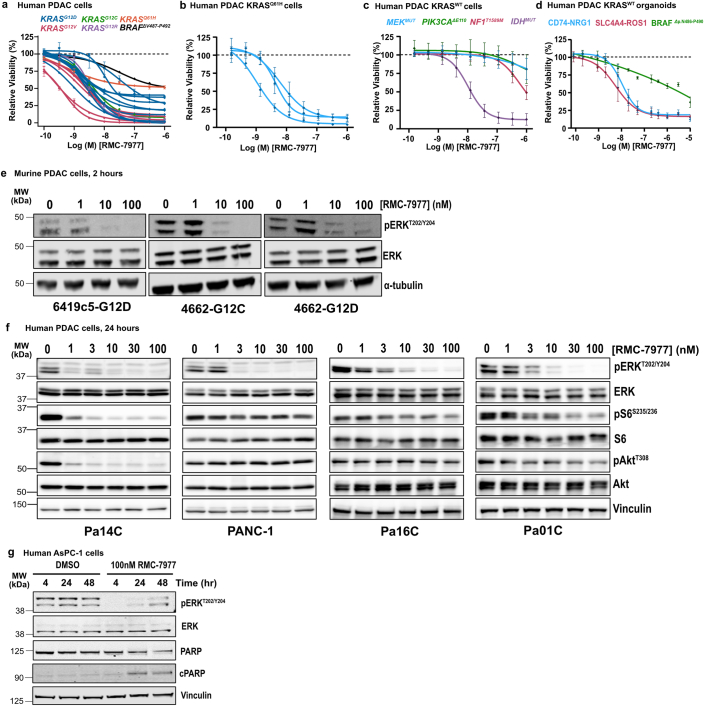
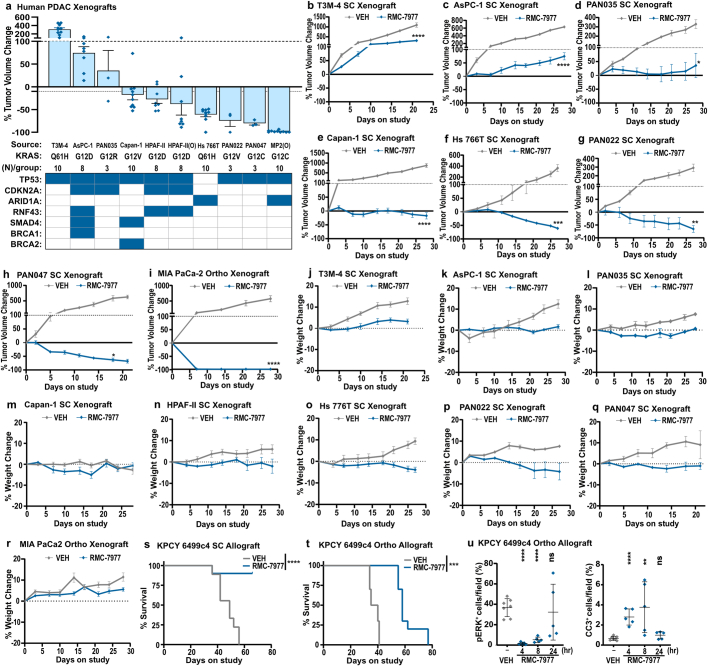
Broad-spectrum RAS inhibition has the potential to benefit roughly a quarter of human patients with cancer whose tumours are driven by RAS mutations 1,2 . RMC-7977 is a highly selective inhibitor of the active GTP-bound forms of KRAS, HRAS and NRAS, with affinity for both mutant and wild-type variants 3 . More than 90% of cases of human pancreatic ductal adenocarcinoma (PDAC) are driven by activating mutations in KRAS 4 . Here we assessed the therapeutic potential of RMC-7977 in a comprehensive range of PDAC models. We observed broad and pronounced anti-tumour activity across models following direct RAS inhibition at exposures that were well-tolerated in vivo. Pharmacological analyses revealed divergent responses to RMC-7977 in tumour versus normal tissues. Treated tumours exhibited waves of apoptosis along with sustained proliferative arrest, whereas normal tissues underwent only transient decreases in proliferation, with no evidence of apoptosis. In the autochthonous KPC mouse model, RMC-7977 treatment resulted in a profound extension of survival followed by on-treatment relapse. Analysis of relapsed tumours identified Myc copy number gain as a prevalent candidate resistance mechanism, which could be overcome by combinatorial TEAD inhibition in vitro. Together, these data establish a strong preclinical rationale for the use of broad-spectrum RAS-GTP inhibition in the setting of PDAC and identify a promising candidate combination therapeutic regimen to overcome monotherapy resistance.
Overview
The claims and statistics of this paper haven’t been checked yet.
Free: it reads the open-access text and checks the first 5 claims that cite a source we can check. Create a free account to check every claim.
Integrity signals
Registry
Cites
Statistics
Figures
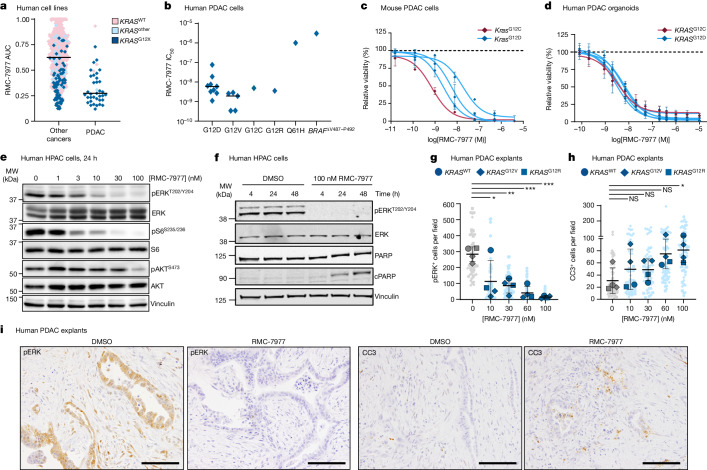
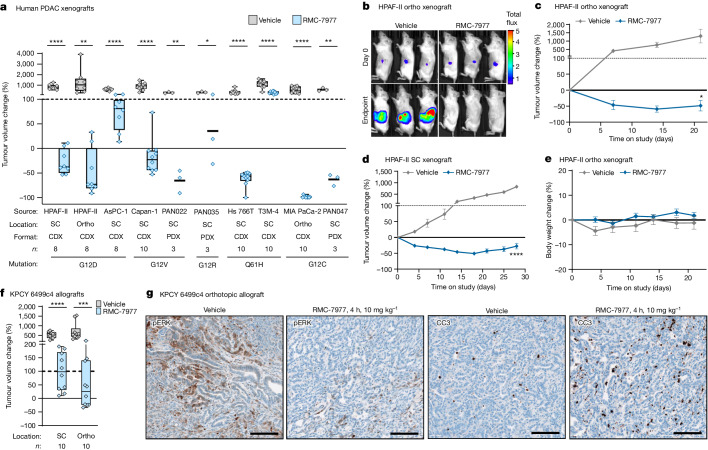
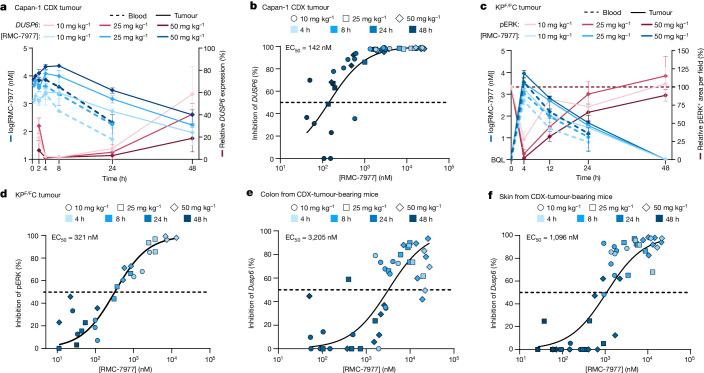
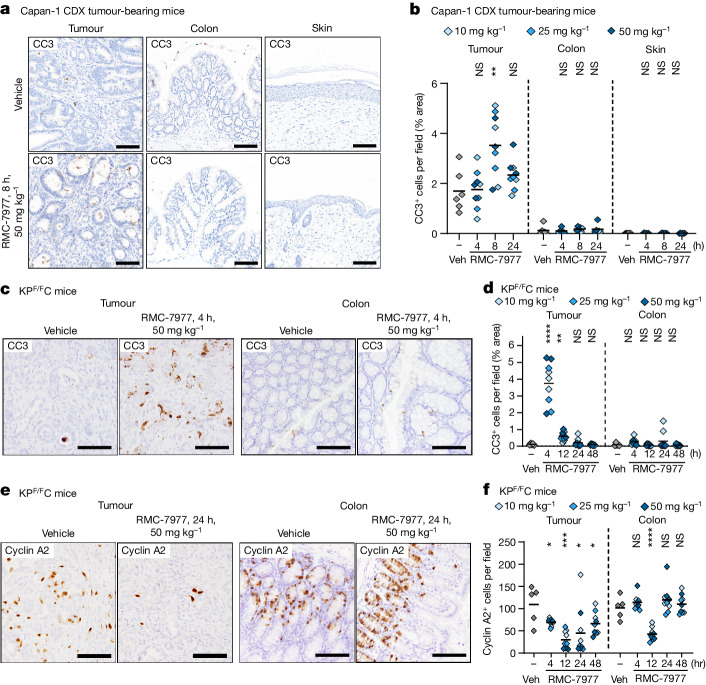
Verification
Claims the paper makes
The claims and statistics of this paper haven’t been checked yet.
Free: it reads the open-access text and checks the first 5 claims that cite a source we can check. Create a free account to check every claim.
Claims other papers make about this one
Each is checked against this paper’s own text: does it say what the citing paper says it does?
The source backs part of the claim, not all of it — or backs it for a different population, condition or comparison.
In the citing paper
“Recently developed “pan-RAS” or “pan-KRAS” inhibitors capable of targeting all RAS isoforms or all KRAS alleles will be broadly applicable to most patients with PDAC (71–74).”
From Mechanisms of Resistance to Oncogenic KRAS Inhibition in Pancreatic Cancer (2024) · cites this paper as [74]
Experimental — accuracy not yet measured
Self-check
Percentages, sums and reported differences re-computed from the paper’s own numbers.
The self-check needs the paper’s full text.
Citations
Cites
Robinson, M. D., McCarthy, D. J., & Smyth, G. K. (2010) · Bioinformatics · doi:10.1093/bioinformatics/btp616 · Cited by 41,364
limma powers differential expression analyses for RNA-sequencing and microarray studies
Ritchie, M. E., Phipson, B., Wu, D., Hu, Y., Law, C. W., Shi, W., & Smyth, G. K. (2015) · Nucleic Acids Research · doi:10.1093/nar/gkv007 · Cited by 40,458 · cited 1×
“56.2) 63 .”
InfluentialCox, J., & Mann, M. (2008) · Nature Biotechnology · doi:10.1038/nbt.1511 · Cited by 14,855
Salmon provides fast and bias-aware quantification of transcript expression
Patro, R., Duggal, G., Love, M. I., Irizarry, R. A., & Kingsford, C. (2017) · Nature Methods · doi:10.1038/nmeth.4197 · Cited by 12,700
Robust Locally Weighted Regression and Smoothing Scatterplots
Cleveland, W. S. (1979) · Journal of the American Statistical Association · doi:10.1080/01621459.1979.10481038 · Cited by 11,594 · cited 1×
“Read counts were subsequently corrected for GC content using LOWESS smoothing algorithm, normalized and segmented using circular binary segmentation 57,58 .”
MethodAdjusting batch effects in microarray expression data using empirical Bayes methods
Johnson, W. E., Li, C., & Rabinovic, A. (2007) · Biostatistics · doi:10.1093/biostatistics/kxj037 · Cited by 8,658
Andromeda: A Peptide Search Engine Integrated into the MaxQuant Environment
Cox, J., Neuhauser, N., Michalski, A., Scheltema, R. A., Olsen, J. V., & Mann, M. (2011) · Journal of Proteome Research · doi:10.1021/pr101065j · Cited by 5,500 · cited 2×
“All mass spectrometry raw files were jointly searched using MaxQuant 60 (MQ) 2.4.3.0 Androm-eda search engine 61 using the UniProt Mouse Reference Proteome 62 (21,864 sequences, accessed October 2023) and known contaminants included in MQ.”
BackgroundMethodInfluentialMapping identifiers for the integration of genomic datasets with the R/Bioconductor package biomaRt
Durinck, S., Spellman, P. T., Birney, E., & Huber, W. (2009) · Nature Protocols · doi:10.1038/nprot.2009.97 · Cited by 4,197
Differential analyses for RNA-seq: transcript-level estimates improve gene-level inferences
Soneson, C., Love, M. I., & Robinson, M. D. (2015) · F1000Research · doi:10.12688/f1000research.7563.1 · Cited by 3,929 · cited 2×
“The PLATE-Seq FASTQ files were pseudoaligned to the GRCh38 human transcriptome and gene expression was quantified using kallisto (version 0.44.0), tximport package 50 and biomaRt package 65 .”
MethodInfluentialNext-generation characterization of the Cancer Cell Line Encyclopedia
Ghandi, M., Huang, F. W., Jané-Valbuena, J., Kryukov, G. V., Lo, C. C., McDonald, E. R., Barretina, J., Gelfand, E. T., Bielski, C. M., Li, H., et al. (2019) · Nature · doi:10.1038/s41586-019-1186-3 · Cited by 3,394 · cited 1×
“Gene mutation, gene expression and lineage data were downloaded from the 22Q4 release of the DepMap Data Portal 45 .”
MethodOlive, K. P., Jacobetz, M. A., Davidson, C. J., Gopinathan, A., McIntyre, D., Honess, D., Madhu, B., Goldgraben, M. A., Caldwell, M. E., Allard, D., et al. (2009) · Science · doi:10.1126/science.1171362 · Cited by 3,170 · cited 2×
“The delivery of drugs to autochthonous PDAC tumours can be impeded by their expansive desmoplastic stroma, which both suppresses tumour vascularity and impedes diffusion 26,27 .”
BackgroundSelf-citationOncoKB: A Precision Oncology Knowledge Base
Chakravarty, D., Gao, J., Phillips, S., Kundra, R., Zhang, H., Wang, J., Rudolph, J. E., Yaeger, R., Soumerai, T., Nissan, M. H., et al. (2017) · JCO Precision Oncology · doi:10.1200/po.17.00011 · Cited by 2,589 · cited 1×
“Functional annotation of the resulting mutation calls was accomplished with Variant Effect Predictor and further annotated with oncoKB 47 .”
MethodSelf-citationProvenzano, P. P., Cuevas, C., Chang, A. E., Goel, V. K., Von Hoff, D. D., & Hingorani, S. R. (2012) · Cancer Cell · doi:10.1016/j.ccr.2012.01.007 · Cited by 2,195 · cited 1×
“The delivery of drugs to autochthonous PDAC tumours can be impeded by their expansive desmoplastic stroma, which both suppresses tumour vascularity and impedes diffusion 26,27 .”
BackgroundOrganoid models of human and mouse ductal pancreatic cancer
Boj, S. F., Hwang, C.-I., Baker, L. A., Chio, I. I. C., Engle, D. D., Corbo, V., Jager, M., Ponz-Sarvise, M., Tiriac, H., Spector, M. S., et al. (2015) · Cell · doi:10.1016/j.cell.2014.12.021 · Cited by 2,150 · cited 1×
“…mM HEPES, 2 mM GlutaMAX, 10 mM nicotinamide, 1.25 mM N -acetylcysteine, 50 ng ml −1 mouse EGF, 100 ng ml −1 human FGF10, 0.01 μM human gastrin I, 500 nM A83–01, 100 ng ml −1 noggin, 1× WNT3A conditioned 10% FBS DMEM (50% by volume) and 1× R-spondin conditioned basal medium (10% by volume) 52,53 .”
MethodInfluentialOncogenic Kras maintains pancreatic tumors through regulation of anabolic glucose metabolism
Ying, H., Kimmelman, A. C., Lyssiotis, C. A., Hua, S., Chu, G. C., Fletcher-Sananikone, E., Locasale, J. W., Son, J., Zhang, H., Coloff, J. L., et al. (2012) · Cell · doi:10.1016/j.cell.2012.01.058 · Cited by 2,043
Self-citationUniProt: the universal protein knowledgebase
UniProt Consortium, T. (2018) · Nucleic Acids Research · doi:10.1093/nar/gky092 · Cited by 2,020
Drugging the undruggable RAS: Mission Possible?
Cox, A. D., Fesik, S. W., Kimmelman, A. C., Luo, J., & Der, C. J. (2014) · Nature Reviews Drug Discovery · doi:10.1038/nrd4389 · Cited by 1,997 · cited 1×
“Efforts to target prenylation of RAS proteins, upstream receptors and downstream signalling have been hampered by functional redundancies and compensatory feedback mechanisms 1,3,10,11,15,16 .”
BackgroundSelf-citationSotorasib for Lung Cancers with KRAS p.G12C Mutation
Skoulidis, F., Li, B. T., Dy, G. K., Price, T. J., Falchook, G. S., Wolf, J., Italiano, A., Schuler, M., Borghaei, H., Barlesi, F., et al. (2021) · New England Journal of Medicine · doi:10.1056/nejmoa2103695 · Cited by 1,849
Acquired Resistance to KRAS G12C Inhibition in Cancer
Awad, M. M., Liu, S., Rybkin, I. I., Arbour, K. C., Dilly, J., Zhu, V. W., Johnson, M. L., Heist, R. S., Patil, T., Riely, G. J., et al. (2021) · New England Journal of Medicine · doi:10.1056/nejmoa2105281 · Cited by 1,247
Self-citationThe Frequency of Ras Mutations in Cancer
Prior, I. A., Hood, F. E., & Hartley, J. L. (2020) · Cancer Research · doi:10.1158/0008-5472.can-19-3682 · Cited by 1,130
Hyaluronan impairs vascular function and drug delivery in a mouse model of pancreatic cancer
Jacobetz, M. A., Chan, D. S., Neesse, A., Bapiro, T. E., Cook, N., Frese, K. K., Feig, C., Nakagawa, T., Caldwell, M. E., Zecchini, H. I., et al. (2013) · Gut · doi:10.1136/gutjnl-2012-302529 · Cited by 1,120 · cited 1×
“5a), exceeding the most effective therapy reported in the KPC model 31,32 .”
BackgroundOrganoid Profiling Identifies Common Responders to Chemotherapy in Pancreatic Cancer
Tiriac, H., Belleau, P., Engle, D. D., Plenker, D., Deschênes, A., Somerville, T. D. D., Froeling, F. E. M., Burkhart, R. A., Denroche, R. E., Jang, G.-H., et al. (2018) · Cancer Discovery · doi:10.1158/2159-8290.cd-18-0349 · Cited by 1,092 · cited 1×
“…mM HEPES, 2 mM GlutaMAX, 10 mM nicotinamide, 1.25 mM N -acetylcysteine, 50 ng ml −1 mouse EGF, 100 ng ml −1 human FGF10, 0.01 μM human gastrin I, 500 nM A83–01, 100 ng ml −1 noggin, 1× WNT3A conditioned 10% FBS DMEM (50% by volume) and 1× R-spondin conditioned basal medium (10% by volume) 52,53 .”
MethodInfluentialSelf-citationAdagrasib in Non–Small-Cell Lung Cancer Harboring a KRAS G12C Mutation
Jänne, P. A., Riely, G. J., Gadgeel, S. M., Heist, R. S., Ou, S.-H. I., Pacheco, J. M., Johnson, M. L., Sabari, J. K., Leventakos, K., Yau, E., et al. (2022) · New England Journal of Medicine · doi:10.1056/nejmoa2204619 · Cited by 1,061
A faster circular binary segmentation algorithm for the analysis of array CGH data
Venkatraman, E. S., & Olshen, A. B. (2007) · Bioinformatics · doi:10.1093/bioinformatics/btl646 · Cited by 961 · cited 1×
“Read counts were subsequently corrected for GC content using LOWESS smoothing algorithm, normalized and segmented using circular binary segmentation 57,58 .”
MethodPancreatic cancer stroma: an update on therapeutic targeting strategies
Hosein, A. N., Brekken, R. A., & Maitra, A. (2020) · Nature Reviews Gastroenterology & Hepatology · doi:10.1038/s41575-020-0300-1 · Cited by 950 · cited 1×
“Multiple studies have demonstrated that stromal cells resident in PDAC tissues can modulate the sensitivity of malignant cells to therapy 24 .”
BackgroundKRAS: The Critical Driver and Therapeutic Target for Pancreatic Cancer
Waters, A. M., & Der, C. J. (2018) · Cold Spring Harbor Perspectives in Medicine · doi:10.1101/cshperspect.a031435 · Cited by 875
Self-citationOncogenic Kras is required for both the initiation and maintenance of pancreatic cancer in mice
Collins, M. A., Bednar, F., Zhang, Y., Brisset, J.-C., Galbán, S., Galbán, C. J., Rakshit, S., Flannagan, K. S., Adsay, N. V., & Pasca di Magliano, M. (2012) · Journal of Clinical Investigation · doi:10.1172/jci59227 · Cited by 770 · cited 1×
“Studies of Kras G12D gene deletion in engineered mouse models have demonstrated that mutant KRAS has an essential role in the maintenance of PDAC 17–19 .”
BackgroundLi, J., Byrne, K. T., Yan, F., Yamazoe, T., Chen, Z., Baslan, T., Richman, L. P., Lin, J. H., Sun, Y. H., Rech, A. J., et al. (2018) · Immunity · doi:10.1016/j.immuni.2018.06.006 · Cited by 750
Self-citationBardeesy, N., Aguirre, A. J., Chu, G. C., Cheng, K.-H., Lopez, L. V., Hezel, A. F., Feng, B., Brennan, C., Weissleder, R., Mahmood, U., et al. (2006) · Proceedings of the National Academy of Sciences · doi:10.1073/pnas.0601273103 · Cited by 581 · cited 1×
“…the pharmacology of RMC-7977 permits effective targeting of RAS-GTP in the context of a native tumour microenvironment, we utilized Kras LSL.G12D/+ ; Trp53 flox/flox ; Pdx1-cre tg/+ (KP F/F C) mice 28 , a genetically engineered model that rapidly develops autochthonous Kras G12D mutant PDAC.”
MethodSelf-citationAnti-tumor efficacy of a potent and selective non-covalent KRASG12D inhibitor
Hallin, J., Bowcut, V., Calinisan, A., Briere, D. M., Hargis, L., Engstrom, L. D., Laguer, J., Medwid, J., Vanderpool, D., Lifset, E., et al. (2022) · Nature Medicine · doi:10.1038/s41591-022-02007-7 · Cited by 553
The current state of the art and future trends in RAS-targeted cancer therapies
Punekar, S. R., Velcheti, V., Neel, B. G., & Wong, K.-K. (2022) · Nature Reviews Clinical Oncology · doi:10.1038/s41571-022-00671-9 · Cited by 549
K-ras is an essential gene in the mouse with partial functional overlap with N-ras
Johnson, L., Greenbaum, D., Cichowski, K., Mercer, K., Murphy, E., Schmitt, E., Bronson, R. T., Umanoff, H., Edelmann, W., Kucherlapati, R., et al. (1997) · Genes & Development · doi:10.1101/gad.11.19.2468 · Cited by 545 · cited 2×
“However, given the critical role of RAS proteins in normal tissue homeostasis 20,21 , a prevailing question is whether broad inhibition of RAS activity in tumours can be implemented with a suitable therapeutic index 22 .”
BackgroundRapid non-uniform adaptation to conformation-specific KRAS(G12C) inhibition
Xue, J. Y., Zhao, Y., Aronowitz, J., Mai, T. T., Vides, A., Qeriqi, B., Kim, D., Li, C., de Stanchina, E., Mazutis, L., et al. (2020) · Nature · doi:10.1038/s41586-019-1884-x · Cited by 543 · cited 1×
“…majority of cases, tumours overcome mutation-selective RAS inhibition through reactivation of RAS–MAPK signalling, either through the emergence or outgrowth of clones with second-site RAS mutations, through amplification of pathway members, or through compensatory signalling mechanisms 9,10,34,35 .”
BackgroundPan-KRAS Inhibitor Disables Oncogenic Signalling and Tumour Growth
Kim, D., Herdeis, L., Rudolph, D., Zhao, Y., Böttcher, J., Vides, A., Ayala-Santos, C. I., Pourfarjam, Y., Cuevas-Navarro, A., Xue, J. Y., et al. (2023) · Nature · doi:10.1038/s41586-023-06123-3 · Cited by 534
Tanaka, N., Lin, J. J., Li, C., Ryan, M. B., Zhang, J., Kiedrowski, L. A., Michel, A. G., Syed, M. U., Fella, K. A., Sakhi, M., et al. (2021) · Cancer Discovery · doi:10.1158/2159-8290.cd-21-0365 · Cited by 527 · cited 3×
“Efforts to target prenylation of RAS proteins, upstream receptors and downstream signalling have been hampered by functional redundancies and compensatory feedback mechanisms 1,3,10,11,15,16 .”
BackgroundSotorasib in KRAS p.G12C–Mutated Advanced Pancreatic Cancer
Strickler, J. H., Satake, H., George, T. J., Yaeger, R., Hollebecque, A., Garrido-Laguna, I., Schuler, M., Burns, T. F., Coveler, A. L., Falchook, G. S., et al. (2023) · New England Journal of Medicine · doi:10.1056/nejmoa2208470 · Cited by 527
Garcia, E. P., Minkovsky, A., Jia, Y., Ducar, M. D., Shivdasani, P., Gong, X., Ligon, A. H., Sholl, L. M., Kuo, F. C., MacConaill, L. E., et al. (2017) · Archives of Pathology and Laboratory Medicine · doi:10.5858/arpa.2016-0527-oa · Cited by 524 · cited 1×
“Genetic profiling was performed on tissue biopsies from patients using whole-genome sequencing or OncoPanel 43,51 .”
MethodThe American Cancer Society’s Facts & Figures: 2020 Edition
Hallquist Viale, R. (2020) · Journal of the Advanced Practitioner in Oncology · doi:10.6004/jadpro.2020.11.2.1 · Cited by 484
Diverse alterations associated with resistance to KRAS(G12C) inhibition
Zhao, Y., Murciano-Goroff, Y. R., Xue, J. Y., Ang, A., Lucas, J., Mai, T. T., Da Cruz Paula, A. F., Saiki, A. Y., Mohn, D., Achanta, P., et al. (2021) · Nature · doi:10.1038/s41586-021-04065-2 · Cited by 479 · cited 1×
“Efforts to target prenylation of RAS proteins, upstream receptors and downstream signalling have been hampered by functional redundancies and compensatory feedback mechanisms 1,3,10,11,15,16 .”
BackgroundInstitutional implementation of clinical tumor profiling on an unselected cancer population
Sholl, L. M., Do, K., Shivdasani, P., Cerami, E., Dubuc, A. M., Kuo, F. C., Garcia, E. P., Jia, Y., Davineni, P., Abo, R. P., et al. (2016) · JCI Insight · doi:10.1172/jci.insight.87062 · Cited by 450 · cited 1×
“Genetic profiling was performed on tissue biopsies from patients using whole-genome sequencing or OncoPanel 43,51 .”
MethodSelf-citationTherapeutic strategies to target RAS-mutant cancers
Ryan, M. B., & Corcoran, R. B. (2018) · Nature Reviews Clinical Oncology · doi:10.1038/s41571-018-0105-0 · Cited by 420 · cited 1×
“Efforts to target prenylation of RAS proteins, upstream receptors and downstream signalling have been hampered by functional redundancies and compensatory feedback mechanisms 1,3,10,11,15,16 .”
BackgroundEfficacy of a small-molecule inhibitor of KrasG12D in immunocompetent models of pancreatic cancer
Kemp, S. B., Cheng, N., Markosyan, N., Sor, R., Kim, I.-K., Hallin, J., Shoush, J., Quinones, L., Brown, N. V., Bassett, J. B., et al. (2023) · Cancer Discovery · doi:10.1158/2159-8290.cd-22-1066 · Cited by 370 · cited 1×
“This was recently supported by preclinical evidence showing tumour regressions in PDAC models 12,13 following pharmacologic inhibition of KRAS(G12D).”
Self-citationConcurrent inhibition of oncogenic and wild-type RAS-GTP for cancer therapy
Holderfield, M., Lee, B. J., Jiang, J., Tomlinson, A., Seamon, K. J., Mira, A., Patrucco, E., Goodhart, G., Dilly, J., Gindin, Y., et al. (2024) · Nature · doi:10.1038/s41586-024-07205-6 · Cited by 369 · cited 4×
“Efforts to target prenylation of RAS proteins, upstream receptors and downstream signalling have been hampered by functional redundancies and compensatory feedback mechanisms 1,3,10,11,15,16 .”
BackgroundMethodInfluentialSelf-citationAdagrasib in Advanced Solid Tumors Harboring a KRAS G12C Mutation
Bekaii-Saab, T. S., Yaeger, R., Spira, A. I., Pelster, M. S., Sabari, J. K., Hafez, N., Barve, M., Velastegui, K., Yan, X., Shetty, A., et al. (2023) · Journal of Clinical Oncology · doi:10.1200/jco.23.00434 · Cited by 313
Inhibition of Myc family proteins eradicates KRas-driven lung cancer in mice
Soucek, L., Whitfield, J. R., Sodir, N. M., Massó-Vallés, D., Serrano, E., Karnezis, A. N., Swigart, L. B., & Evan, G. I. (2013) · Genes & Development · doi:10.1101/gad.205542.112 · Cited by 301 · cited 1×
“Perhaps the closest parallel is the systemic inhibition of MYC (which serves as a conduit for RAS signalling in many cell types) through inducible expression of the dominant negative protein Omomyc 39 .”
BackgroundFreed, D., Aldana, R., Weber, J. A., & Edwards, J. S. (2017) · bioRxiv (Cold Spring Harbor Laboratory) · doi:10.1101/115717 · Cited by 293 · cited 1×
“DNA mutation calling was accomplished with TNSeq using the hg38 version of the human genome 46 .”
MethodOrdered and deterministic cancer genome evolution after p53 loss
Baslan, T., Morris, J. P., Zhao, Z., Reyes, J., Ho, Y.-J., Tsanov, K. M., Bermeo, J., Tian, S., Zhang, S., Askan, G., et al. (2022) · Nature · doi:10.1038/s41586-022-05082-5 · Cited by 221 · cited 1×
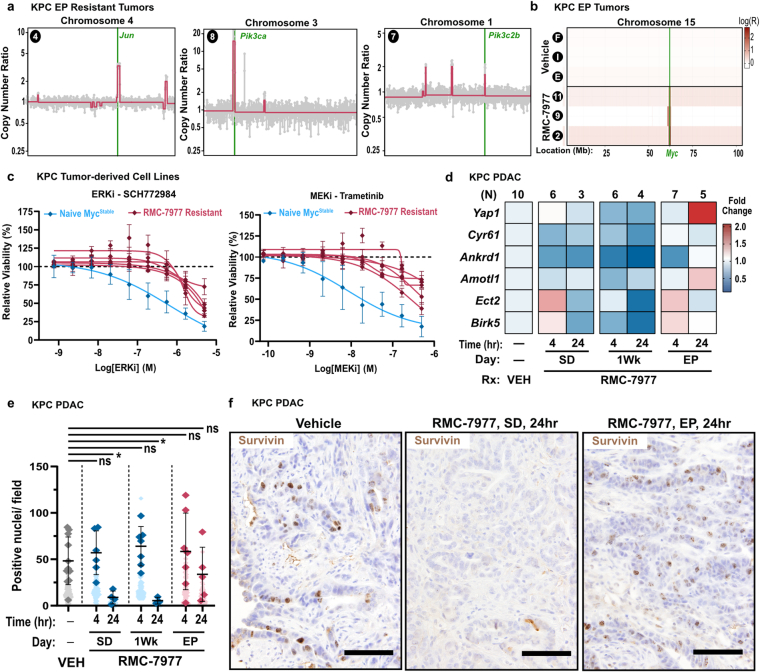
“…sparse genome copy number variation (CNV) analysis, comparing both to a set of 5 vehicle-treated EP tumours as well as to historical reference samples comprising 15 KP F/+ C pancreatic tumours 36 (KPC with a heterozygous conditional null allele) and cell lines from 16 KPCY pancreatic tumours 37 .”
MethodSelf-citationExperimental microdissection enables functional harmonisation of pancreatic cancer subtypes
Maurer, C., Holmstrom, S. R., He, J., Laise, P., Su, T., Ahmed, A., Hibshoosh, H., Chabot, J. A., Oberstein, P. E., Sepulveda, A. R., et al. (2019) · Gut · doi:10.1136/gutjnl-2018-317706 · Cited by 216
Self-citationMetastatic pancreatic cancer is dependent on oncogenic Kras in mice
Collins, M. A., Brisset, J.-C., Zhang, Y., Bednar, F., Pierre, J., Heist, K. A., Galbán, C. J., Galbán, S., & di Magliano, M. P. (2012) · PLoS ONE · doi:10.1371/journal.pone.0049707 · Cited by 178
Optimizing sparse sequencing of single cells for highly multiplex copy number profiling
Baslan, T., Kendall, J., Ward, B., Cox, H., Leotta, A., Rodgers, L., Riggs, M., D'Italia, S., Sun, G., Yong, M., et al. (2015) · Genome Research · doi:10.1101/gr.188060.114 · Cited by 127
Self-citationPLATE-Seq for genome-wide regulatory network analysis of high-throughput screens
Bush, E. C., Ray, F., Alvarez, M. J., Realubit, R., Li, H., Karan, C., Califano, A., & Sims, P. A. (2017) · Nature Communications · doi:10.1038/s41467-017-00136-z · Cited by 107 · cited 1×
“Detailed protocol for preparation of the automated PLATE-seq experiment was described by Bush et al. 64 .”
MethodSelf-citationCell Type–Specific Adaptive Signaling Responses to KRASG12C Inhibition
Solanki, H. S., Welsh, E. A., Fang, B., Izumi, V., Darville, L., Stone, B., Franzese, R., Chavan, S., Kinose, F., Imbody, D., et al. (2021) · Clinical Cancer Research · doi:10.1158/1078-0432.ccr-20-3872 · Cited by 106
MYC Levels Regulate Metastatic Heterogeneity in Pancreatic Adenocarcinoma
Maddipati, R., Norgard, R. J., Baslan, T., Rathi, K. S., Zhang, A., Saeid, A., Higashihara, T., Wu, F., Kumar, A., Annamalai, V., et al. (2022) · Cancer Discovery · doi:10.1158/2159-8290.cd-20-1826 · Cited by 97 · cited 1×
“…sparse genome copy number variation (CNV) analysis, comparing both to a set of 5 vehicle-treated EP tumours as well as to historical reference samples comprising 15 KP F/+ C pancreatic tumours 36 (KPC with a heterozygous conditional null allele) and cell lines from 16 KPCY pancreatic tumours 37 .”
MethodSelf-citationMultiple low dose therapy as an effective strategy to treat EGFR inhibitor-resistant NSCLC tumours
Fernandes Neto, J. M., Nadal, E., Bosdriesz, E., Ooft, S. N., Farre, L., McLean, C., Klarenbeek, S., Jurgens, A., Hagen, H., Wang, L., et al. (2020) · Nature Communications · doi:10.1038/s41467-020-16952-9 · Cited by 92
Quantification of Murine Pancreatic Tumors by High-Resolution Ultrasound
Sastra, S. A., & Olive, K. P. (2013) · Methods in Molecular Biology · doi:10.1007/978-1-62703-287-2_13 · Cited by 58 · cited 1×
“Longitudinal, high-resolution 3D ultrasound imaging 33 revealed that mice treated with 50 mg kg −1 RMC-7977 (administered on alternate days) exhibited tumour stabilizations or regressions.”
BackgroundSelf-citationKras is Required for Adult Hematopoiesis
Damnernsawad, A., Kong, G., Wen, Z. H., Liu, Y., Rajagopalan, A., You, X., Wang, J., Zhou, Y., Ranheim, E. A., Luo, H. R., et al. (2016) · Stem Cells · doi:10.1002/stem.2355 · Cited by 44 · cited 2×
“However, given the critical role of RAS proteins in normal tissue homeostasis 20,21 , a prevailing question is whether broad inhibition of RAS activity in tumours can be implemented with a suitable therapeutic index 22 .”
BackgroundSelf-citationMore to the RAS Story: KRAS G12C Inhibition, Resistance Mechanisms, and Moving Beyond KRAS G12C
Lietman, C. D., Johnson, M. L., McCormick, F., & Lindsay, C. R. (2022) · American Society of Clinical Oncology Educational Book · doi:10.1200/edbk_351333 · Cited by 44
Eberle-Singh, J. A., Sagalovskiy, I. R., Maurer, H. C., Sastra, S. A., Palermo, C. F., Decker-Farrell, A. R., Kim, M. J., Sheedy, J., Mollin, A., Cao, L., et al. (2019) · Clinical Cancer Research · doi:10.1158/1078-0432.ccr-18-3281 · Cited by 43
Self-citationKaunitz, J. D., & Akiba, Y. (2019) · Digestive Diseases and Sciences · doi:10.1007/s10620-019-05778-1 · Cited by 40 · cited 1×
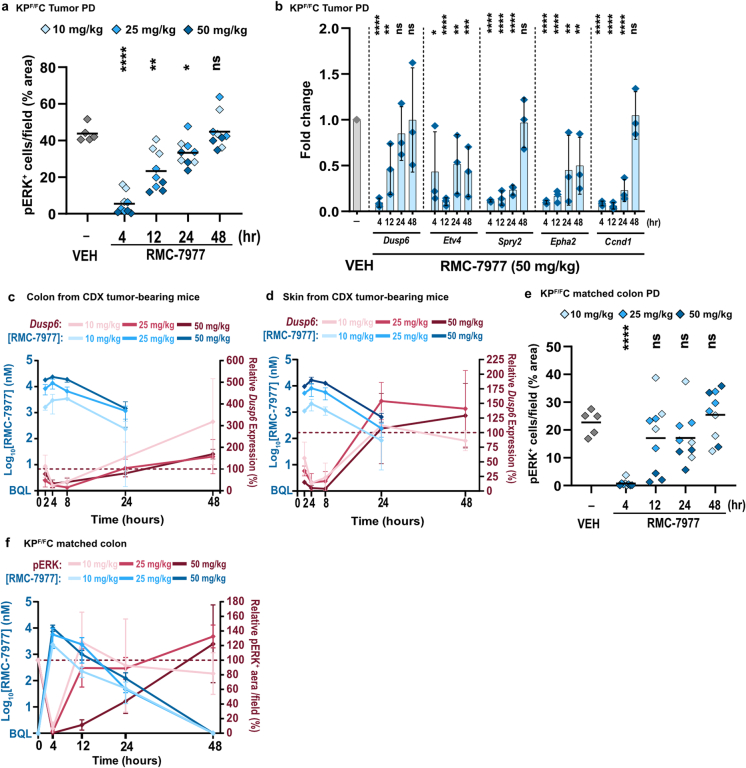
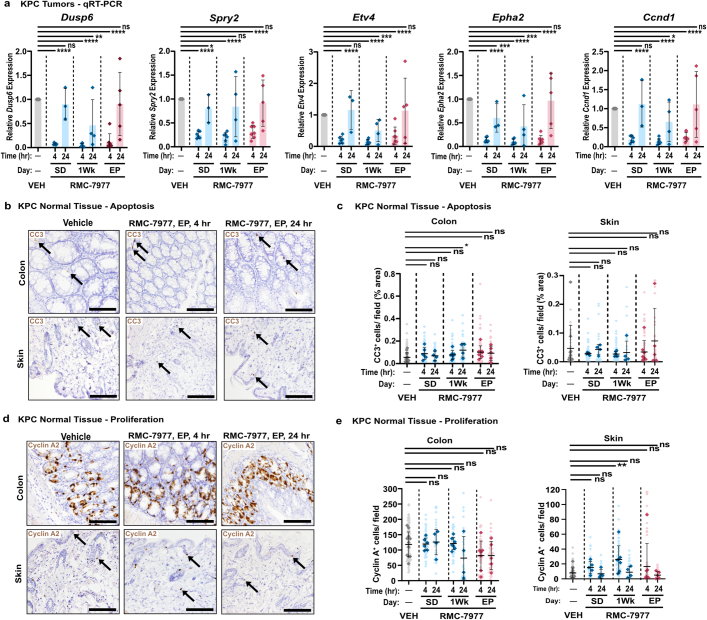
“To assess the effect of RMC-7977 on normal tissues, we measured its effect on mouse Dusp6 mRNA levels (using RT–qPCR) in normal colon and skin, two proliferative tissues that are known to rely on RAS signalling for self-renewal 29,30 .”
BackgroundHasselluhn, M. C., Decker-Farrell, A. R., Vlahos, L. J., Thomas, D. H., Curiel‐García, Á., Maurer, H. C., Wasko, U. N., Tomassoni, L., Sastra, S. A., Palermo, C. F., et al. (2023) · Cancer Discovery · doi:10.1158/2159-8290.cd-23-0240 · Cited by 30
Self-citationZhao, B., Pobbati, A. V., Rubin, B. P., & Stauffer, S. R. (2023) · Pharmaceuticals · doi:10.3390/ph16040583 · Cited by 26 · cited 7×
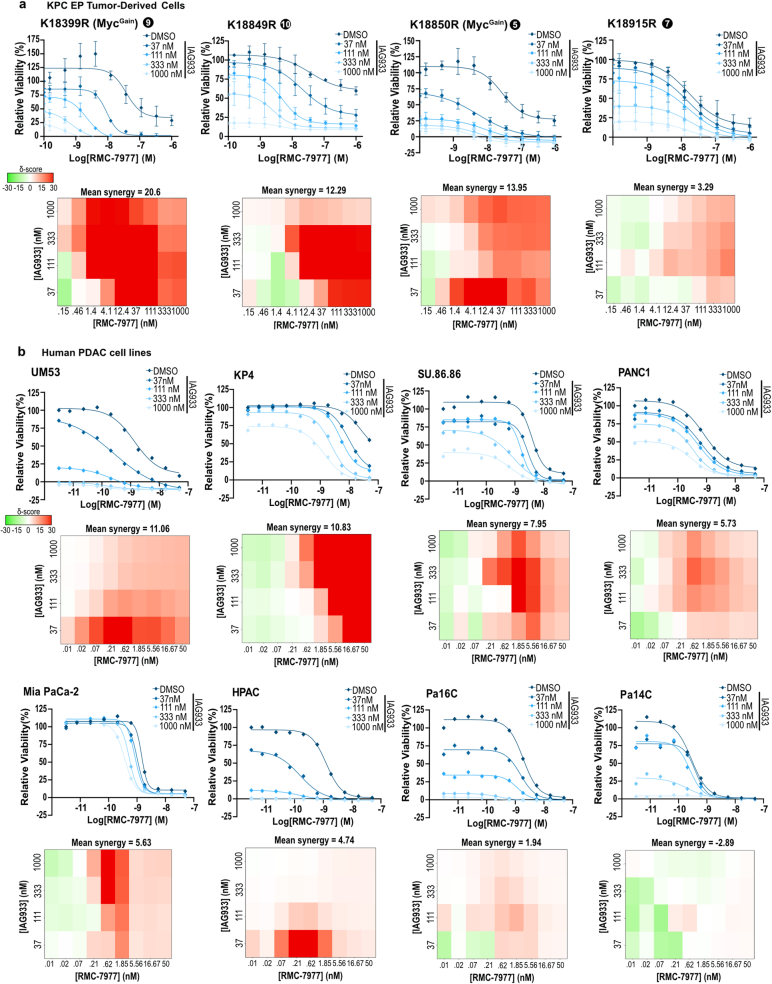
“Finally, dose-escalation experiments using RMC-7977 in combination with IAG933 found that these agents have additive or synergistic effects in PDAC cell lines from both RMC-7977-resistant and naive KPC tumours (Fig.”
BackgroundInfluentialMapping Replication Timing in Single Mammalian Cells
Bartlett, D. A., Dileep, V., Baslan, T., & Gilbert, D. M. (2022) · Current Protocols · doi:10.1002/cpz1.334 · Cited by 15 · cited 1×
“Sparse whole-genome and targeted locus sequencing of KPC tumours DNA from microdissected KPC tumour tissue was subject to whole-genome amplification as described before 55 .”
MethodSelf-citationRaepple, D., von Lintig, F. C., Żemojtel, T., Duchniewicz, M., Jung, A., Lübbert, M., Boss, G. R., & Scheele, J. S. (2008) · Annals of Hematology · doi:10.1007/s00277-008-0593-6 · Cited by 11 · cited 1×
“Systemic RAS inhibition may prove to be similar in nature, with tolerability enabled by the relatively low levels of active RAS-GTP (the target for RMC-7977) in normal tissues 40 and the reduced affinity of RMC-7977 for wild-type RAS compared with mutant variants 3 .”
BackgroundRole of Ras in regulation of intestinal epithelial cell homeostasis and crosstalk with Wnt signaling
Kotani, T., Ihara, N., Okamoto, S., Setiawan, J., Konno, T., Saito, Y., Murata, Y., & Matozaki, T. (2021) · PLoS ONE · doi:10.1371/journal.pone.0256774 · Cited by 9 · cited 2×
“To assess the effect of RMC-7977 on normal tissues, we measured its effect on mouse Dusp6 mRNA levels (using RT–qPCR) in normal colon and skin, two proliferative tissues that are known to rely on RAS signalling for self-renewal 29,30 .”
BackgroundResult
Cited by
Stoop, T. F., Javed, A. A., Oba, A., Koerkamp, B. G., Seufferlein, T., Wilmink, J. W., & Besselink, M. G. (2025) · The Lancet · doi:10.1016/s0140-6736(25)00261-2 · Cited by 479
Mechanisms of Resistance to Oncogenic KRAS Inhibition in Pancreatic Cancer
Dilly, J., Hoffman, M. T., Abbassi, L., Li, Z., Paradiso, F., Parent, B. D., Hennessey, C. J., Jordan, A. C., Morgado, M., Dasgupta, S., et al. (2024) · Cancer Discovery · doi:10.1158/2159-8290.cd-24-0177 · Cited by 308
“Recently developed “pan-RAS” or “pan-KRAS” inhibitors capable of targeting all RAS isoforms or all KRAS alleles will be broadly applicable to most patients with PDAC (71–74).”
BackgroundSelf-citationKRAS inhibitors: resistance drivers and combinatorial strategies
Isermann, T., Sers, C., Der, C. J., & Papke, B. (2025) · Trends in Cancer · doi:10.1016/j.trecan.2024.11.009 · Cited by 196
Self-citationRAS signaling in carcinogenesis, cancer therapy and resistance mechanisms
Yang, X., & Wu, H. K. (2024) · Journal of Hematology & Oncology · doi:10.1186/s13045-024-01631-9 · Cited by 146
Daraxonrasib in Previously Treated Advanced RAS -Mutated Pancreatic Cancer
Wolpin, B. M., Park, W., Garrido-Laguna, I., Spira, A., Starodub, A., Sommerhalder, D., Punekar, S. R., Barve, M., Pelster, M., Herzberg, B., et al. (2026) · New England Journal of Medicine · doi:10.1056/nejmoa2505783 · Cited by 90
Self-citation
Metadata
- Authors
- Wasko, U. N., Jiang, J., Dalton, T. C., Curiel-Garcia, A., Edwards, A. C., Wang, Y., Lee, B., Orlen, M., Tian, S., Stalnecker, C. A., Drizyte-Miller, K., Menard, M., Dilly, J., Sastra, S. A., Palermo, C. F., Hasselluhn, M. C., Decker-Farrell, A. R., Chang, S., Jiang, L., Wei, X., Yang, Y. C., Helland, C., Courtney, H., Gindin, Y., Muonio, K., Zhao, R., Kemp, S. B., Clendenin, C., Sor, R., Vostrejs, W. P., Hibshman, P. S., Amparo, A. M., Hennessey, C., Rees, M. G., Ronan, M. M., Roth, J. A., Brodbeck, J., Tomassoni, L., Bakir, B., Socci, N. D., Herring, L. E., Barker, N. K., Wang, J., Cleary, J. M., Wolpin, B. M., Chabot, J. A., Kluger, M. D., Manji, G. A., Tsai, K. Y., Sekulic, M., Lagana, S. M., Califano, A., Quintana, E., Wang, Z., Smith, J. A. M., Holderfield, M., Wildes, D., Lowe, S. W., Badgley, M. A., Aguirre, A. J., Vonderheide, R. H., Stanger, B. Z., Baslan, T., Der, C. J., Singh, M., & Olive, K. P.
- Affiliations
- Columbia University Irving Medical Center (US)
- Revolution Medicines (United States) (US)
- University of North Carolina at Chapel Hill (US)
- University of Pennsylvania (US)
- Memorial Sloan Kettering Cancer Center (US)
- Harvard University (US)
- Abramson Cancer Center (US)
- Broad Institute (US)
- Moffitt Cancer Center (US)
- Johns Hopkins University (US)
- Parker Institute for Cancer Immunotherapy (US)
- Corresponding author
- Singh, Mallika
- Olive, Kenneth P.
- ORCID
- Wasko, Urszula N.
- Jiang, Jingjing
- Dalton, Tanner C.
- Curiel-Garcia, Alvaro
- Edwards, A. Cole
- Wang, Yingyun
- Lee, Bianca
- Orlen, Margo
- Tian, Sha
- Stalnecker, Clint A.
- Menard, Marie
- Dilly, Julien
- Sastra, Stephen A.
- Palermo, Carmine F.
- Hasselluhn, Marie C.
- Decker-Farrell, Amanda R.
- Chang, Stephanie
- Jiang, Lingyan
- Yang, Yu C.
- Helland, Ciara
- Gindin, Yevgeniy
- Kemp, Samantha B.
- Clendenin, Cynthia
- Sor, Rina
- Vostrejs, William P.
- Hibshman, Priya S.
- Amparo, Amber M.
- Hennessey, Connor
- Rees, Matthew G.
- Ronan, Melissa M.
- Roth, Jennifer A.
- Brodbeck, Jens
- Tomassoni, Lorenzo
- Socci, Nicholas D.
- Herring, Laura E.
- Barker, Natalie K.
- Wang, Junning
- Cleary, James M.
- Wolpin, Brian M.
- Kluger, Michael D.
- Manji, Gulam A.
- Tsai, Kenneth Y.
- Sekulic, Miroslav
- Lagana, Stephen M.
- Califano, Andrea
- Quintana, Elsa
- Wang, Zhengping
- Smith, Jacqueline A. M.
- Holderfield, Matthew
- Wildes, David
- Lowe, Scott W.
- Badgley, Michael A.
- Aguirre, Andrew J.
- Vonderheide, Robert H.
- Stanger, Ben Z.
- Baslan, Timour
- Der, Channing J.
- Singh, Mallika
- Olive, Kenneth P.
- Venue
- Nature
- Published
- 2024-04-08
- Volume
- 629
- Issue
- 8013
- Pages
- 927-936
- ISSN
- 0028-0836 (ISSN-L)
- 1476-4687
- PMC
- PMC11111406
- OpenAlex
- W4394580205
- Semantic Scholar
- 7776743bf12cbb5f73496d61b0d8b283e856ab6b
- Cited by
- 209
- References
- 64
- Citations by year
- 2026: 78 · 2025: 92 · 2024: 38
- FWCI
- 35.43
- Type
- journal article
- Language
- en
- Update notices
- correction (2024-11-12)
- Open access
- hybrid
- doi.org
- Licence
- cc-by
- creativecommons.org/licenses/by/4.0 (tdm)
- creativecommons.org/licenses/by/4.0 (vor)
- Locations
- Nature (publishedVersion, cc-by)
- PubMed Central (publishedVersion, cc-by)
- PubMed (publishedVersion)
- Carolina Digital Repository (University of North Carolina at Chapel Hill) (submittedVersion, cc-by)
- RePEc: Research Papers in Economics (submittedVersion)
- UNC Libraries
- Funders
- U.S. Department of Defense
- American Cancer Society
- Pancreatic Cancer Action Network
- Lustgarten Foundation
- National Institutes of Health (1s10od021764-01, 1s10od032433-01a1, 1s10od012351-01, UL1TR001873)
- National Cancer Institute (T32CA009140, R01CA229803, P01CA129243, R35CA232113, T32CA009156, F31CA275260, F32CA232529, U01CA217858, P30CA008748, U01CA274312, U01CA272610, R01CA215607, P50CA257911, R01CA266558, U54CA274506, R01CA276268, P30CA016086, P30CA013696, T32CA071341)
- National Institute of General Medical Sciences (T32GM119999)
- National Institute of Allergy and Infectious Diseases (K08AI106953)
- National Institute of Diabetes and Digestive and Kidney Diseases (P30DK132710)
- National Center for Advancing Translational Sciences
- Topics
- Health Sciences › Medicine › Oncology › Pancreatic and Hepatic Oncology Research
- Life Sciences › Biochemistry, Genetics and Molecular Biology › Molecular Biology › Protein Kinase Regulation and GTPase Signaling
- Life Sciences › Biochemistry, Genetics and Molecular Biology › Molecular Biology › Protein Tyrosine Phosphatases
- Keywords
- RMC-7977, pancreatic ductal adenocarcinoma, KRAS mutation, apoptosis, proliferative arrest, KPC mouse model, resistance mechanisms, combination therapy, antitumour activity
- MeSH terms
- Animals, Antineoplastic Agents, Disease Models, Animal, Female, Guanosine Triphosphate, Humans, Membrane Proteins, Mice, Inbred BALB C, Mice, Inbred C57BL, Mutation, Neoplasm Recurrence, Local, Pancreatic Neoplasms, Genes, myc, Proto-Oncogene Proteins p21(ras), Treatment Outcome, Apoptosis, Drug Resistance, Neoplasm, GTP Phosphohydrolases, Carcinoma, Pancreatic Ductal, Xenograft Model Antitumor Assays, Cell Line, Tumor, Cell Proliferation, Mice, DNA Copy Number Variations
About these checks
Registry, retraction, Cites and statistics results are computed, not judged, with one exception: a printed reference that no index lists is read once by a model before it counts as a citation error. Claims are extracted by a model and kept only when their quote appears verbatim in the text; each cited source is then checked, with a model’s help, for whether it says what the claim relies on. Those verdicts can be wrong — read the claim’s quote and the cited source before relying on one.
Statistics and arithmetic are recomputed, not judged.
Confidence bands are shown only for fields calibrated on our annotated test set. None is calibrated yet, so no band is shown.
What counts as a claim ›How we measure confidence ›How we check this ›
Are you an author, or do you see a problem with this page? Request a review
Data sources
Bibliographic data: Semantic Scholar, OpenAlex, Crossref.
Contains information from the Semantic Scholar Academic Graph Datasets, made available under the ODC Attribution License (ODC-BY 1.0).
Semantic Scholar’s data is described in: Kinney, R., et al. (2023). The Semantic Scholar Open Data Platform. arXiv:2301.10140.
