

Tumour-selective activity of RAS-GTP inhibition in pancreatic cancer
Open accessThe DOI matches its Crossref record; 64 of the 64 references it cites were found in a registry or an index.
Abstract
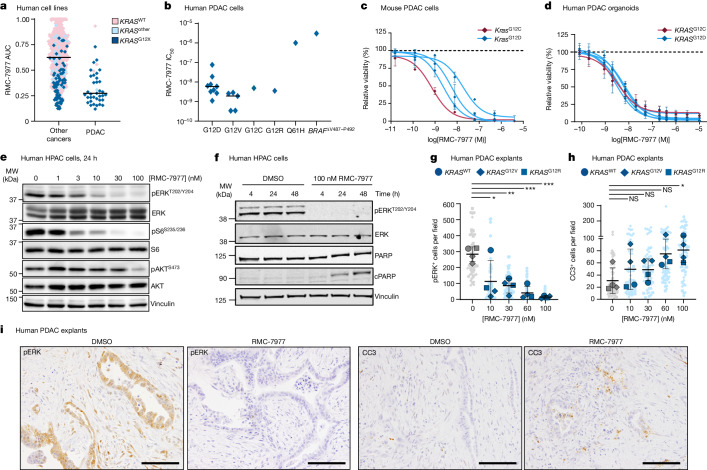
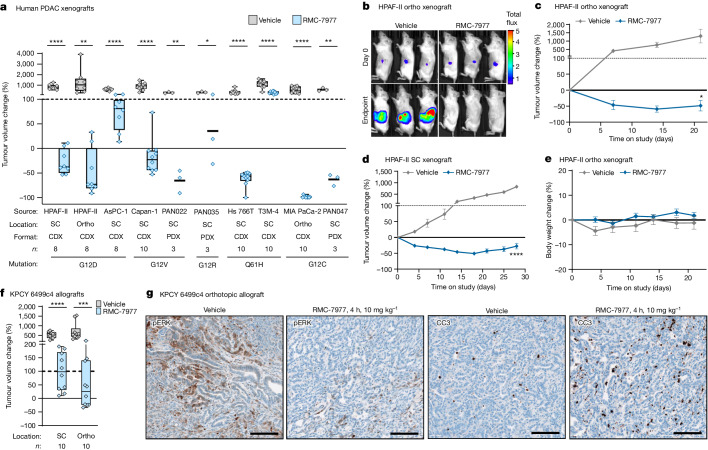
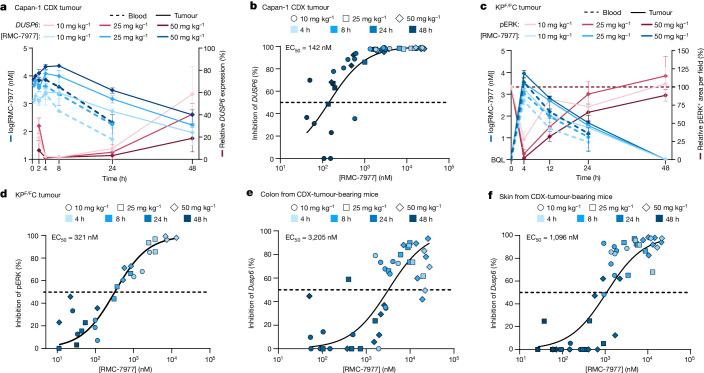
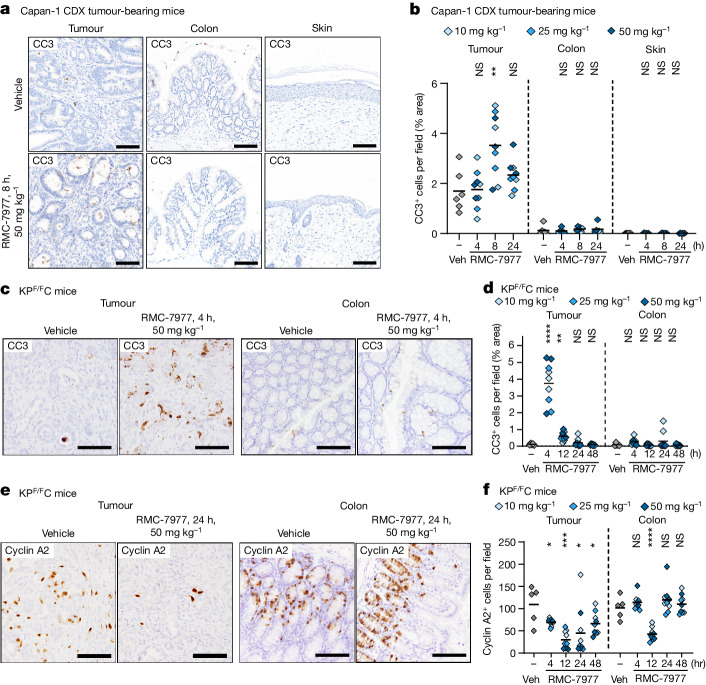
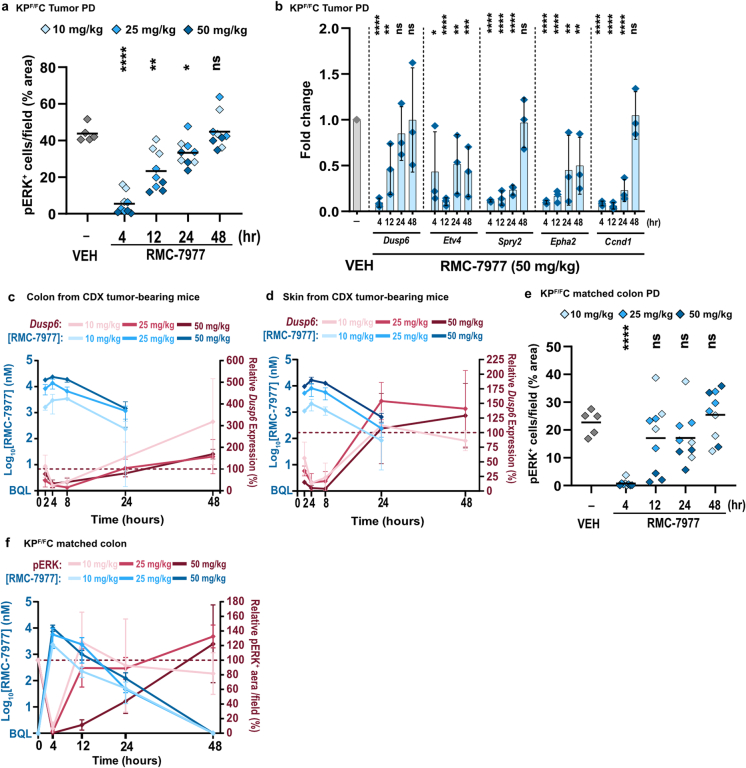
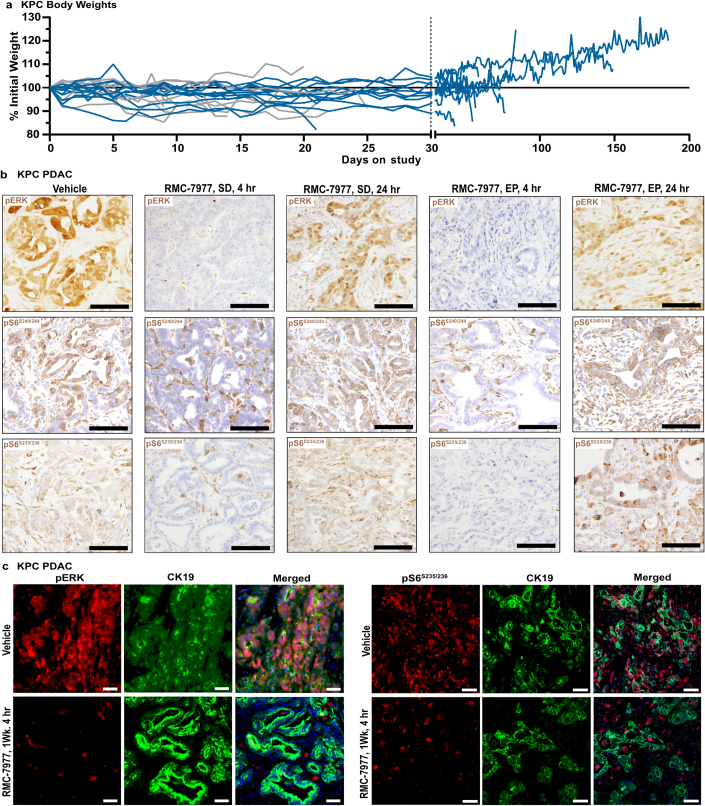
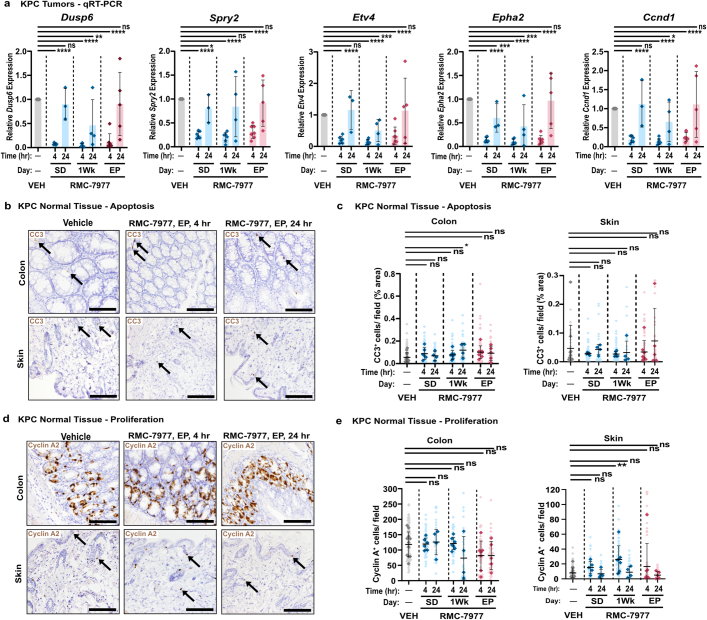
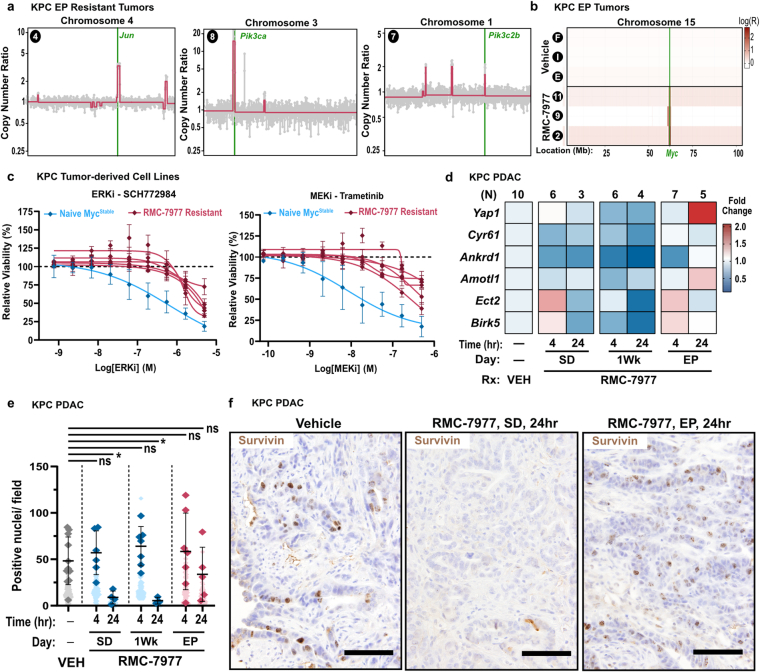
Broad-spectrum RAS inhibition has the potential to benefit roughly a quarter of human patients with cancer whose tumours are driven by RAS mutations 1,2 . RMC-7977 is a highly selective inhibitor of the active GTP-bound forms of KRAS, HRAS and NRAS, with affinity for both mutant and wild-type variants 3 . More than 90% of cases of human pancreatic ductal adenocarcinoma (PDAC) are driven by activating mutations in KRAS 4 . Here we assessed the therapeutic potential of RMC-7977 in a comprehensive range of PDAC models. We observed broad and pronounced anti-tumour activity across models following direct RAS inhibition at exposures that were well-tolerated in vivo. Pharmacological analyses revealed divergent responses to RMC-7977 in tumour versus normal tissues. Treated tumours exhibited waves of apoptosis along with sustained proliferative arrest, whereas normal tissues underwent only transient decreases in proliferation, with no evidence of apoptosis. In the autochthonous KPC mouse model, RMC-7977 treatment resulted in a profound extension of survival followed by on-treatment relapse. Analysis of relapsed tumours identified Myc copy number gain as a prevalent candidate resistance mechanism, which could be overcome by combinatorial TEAD inhibition in vitro. Together, these data establish a strong preclinical rationale for the use of broad-spectrum RAS-GTP inhibition in the setting of PDAC and identify a promising candidate combination therapeutic regimen to overcome monotherapy resistance.
Overview
The claims and statistics of this paper haven’t been checked yet.
Free: it reads the open-access text and checks the first 5 claims that cite a source we can check. Create a free account to check every claim.
Integrity signals
Registry
Cites
Statistics
Figures
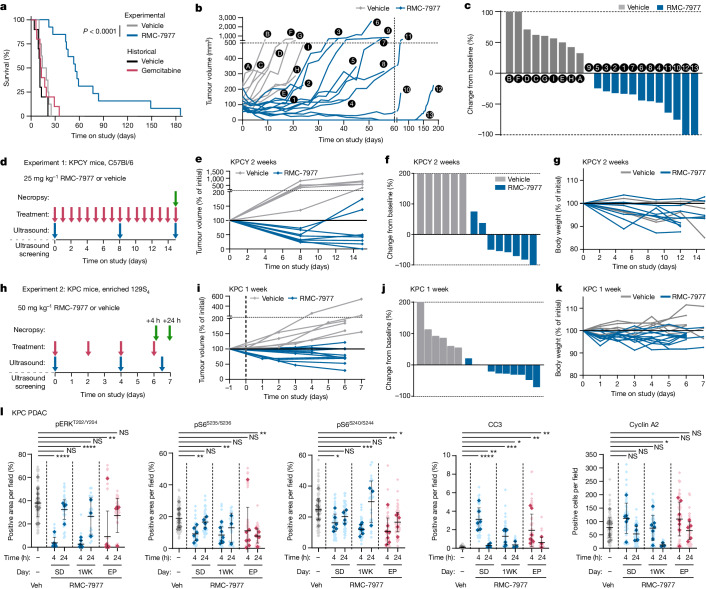
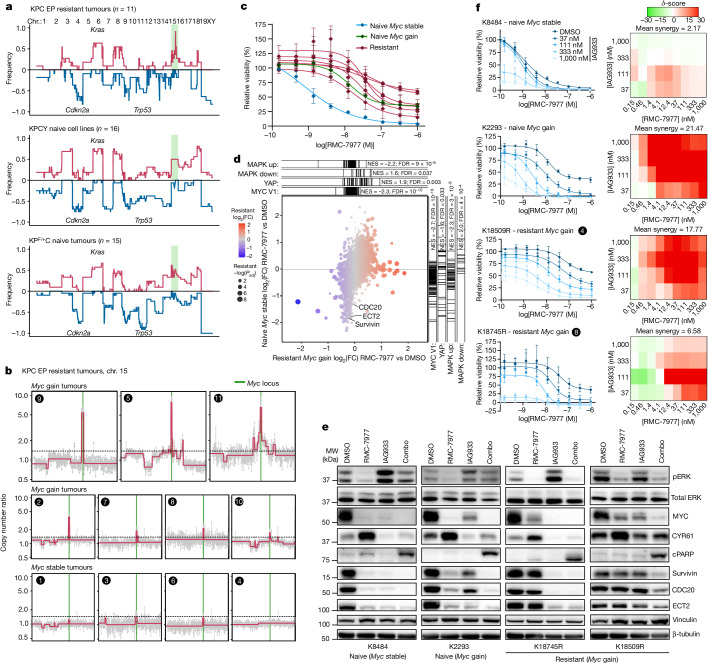
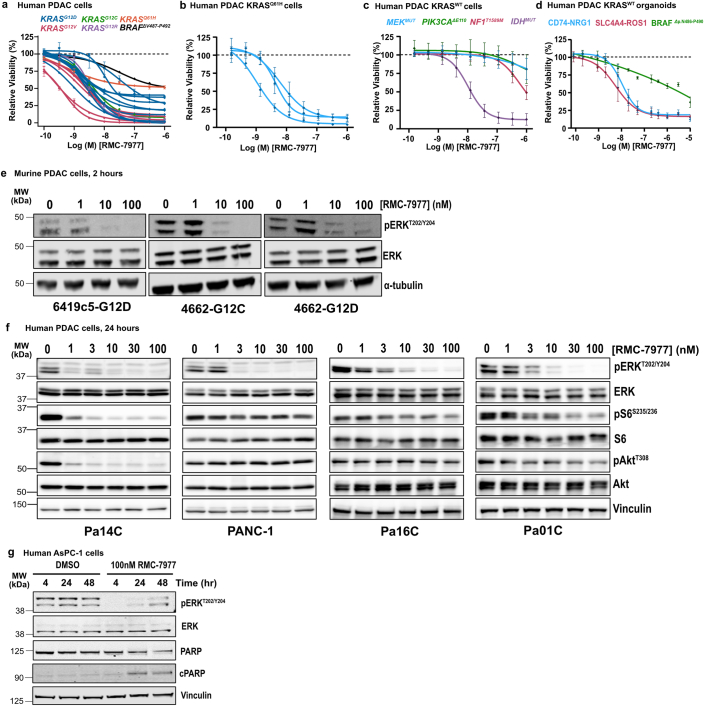
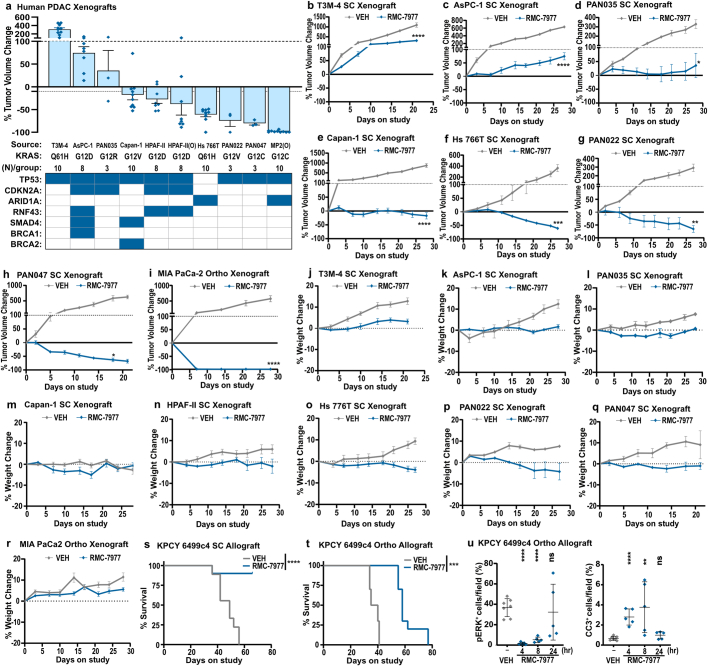
Verification
Claims the paper makes
The claims and statistics of this paper haven’t been checked yet.
Free: it reads the open-access text and checks the first 5 claims that cite a source we can check. Create a free account to check every claim.
Claims other papers make about this one
Each is checked against this paper’s own text: does it say what the citing paper says it does?
The source backs part of the claim, not all of it — or backs it for a different population, condition or comparison.
In the citing paper
“Recently developed “pan-RAS” or “pan-KRAS” inhibitors capable of targeting all RAS isoforms or all KRAS alleles will be broadly applicable to most patients with PDAC (71–74).”
From Mechanisms of Resistance to Oncogenic KRAS Inhibition in Pancreatic Cancer (2024) · cites this paper as [74]
Experimental — accuracy not yet measured
Self-check
Percentages, sums and reported differences re-computed from the paper’s own numbers.
The self-check needs the paper’s full text.
Citations
Cites
Robinson, M. D., McCarthy, D. J., & Smyth, G. K. (2010) · Bioinformatics · doi:10.1093/bioinformatics/btp616 · Cited by 41,364
limma powers differential expression analyses for RNA-sequencing and microarray studies
Ritchie, M. E., Phipson, B., Wu, D., Hu, Y., Law, C. W., Shi, W., & Smyth, G. K. (2015) · Nucleic Acids Research · doi:10.1093/nar/gkv007 · Cited by 40,458 · cited 1×
“56.2) 63 .”
InfluentialCox, J., & Mann, M. (2008) · Nature Biotechnology · doi:10.1038/nbt.1511 · Cited by 14,855
Salmon provides fast and bias-aware quantification of transcript expression
Patro, R., Duggal, G., Love, M. I., Irizarry, R. A., & Kingsford, C. (2017) · Nature Methods · doi:10.1038/nmeth.4197 · Cited by 12,700
Robust Locally Weighted Regression and Smoothing Scatterplots
Cleveland, W. S. (1979) · Journal of the American Statistical Association · doi:10.1080/01621459.1979.10481038 · Cited by 11,594 · cited 1×
“Read counts were subsequently corrected for GC content using LOWESS smoothing algorithm, normalized and segmented using circular binary segmentation 57,58 .”
MethodAdjusting batch effects in microarray expression data using empirical Bayes methods
Johnson, W. E., Li, C., & Rabinovic, A. (2007) · Biostatistics · doi:10.1093/biostatistics/kxj037 · Cited by 8,658
Andromeda: A Peptide Search Engine Integrated into the MaxQuant Environment
Cox, J., Neuhauser, N., Michalski, A., Scheltema, R. A., Olsen, J. V., & Mann, M. (2011) · Journal of Proteome Research · doi:10.1021/pr101065j · Cited by 5,500 · cited 2×
“All mass spectrometry raw files were jointly searched using MaxQuant 60 (MQ) 2.4.3.0 Androm-eda search engine 61 using the UniProt Mouse Reference Proteome 62 (21,864 sequences, accessed October 2023) and known contaminants included in MQ.”
BackgroundMethodInfluentialMapping identifiers for the integration of genomic datasets with the R/Bioconductor package biomaRt
Durinck, S., Spellman, P. T., Birney, E., & Huber, W. (2009) · Nature Protocols · doi:10.1038/nprot.2009.97 · Cited by 4,197
Differential analyses for RNA-seq: transcript-level estimates improve gene-level inferences
Soneson, C., Love, M. I., & Robinson, M. D. (2015) · F1000Research · doi:10.12688/f1000research.7563.1 · Cited by 3,929 · cited 2×
“The PLATE-Seq FASTQ files were pseudoaligned to the GRCh38 human transcriptome and gene expression was quantified using kallisto (version 0.44.0), tximport package 50 and biomaRt package 65 .”
MethodInfluentialNext-generation characterization of the Cancer Cell Line Encyclopedia
Ghandi, M., Huang, F. W., Jané-Valbuena, J., Kryukov, G. V., Lo, C. C., McDonald, E. R., Barretina, J., Gelfand, E. T., Bielski, C. M., Li, H., et al. (2019) · Nature · doi:10.1038/s41586-019-1186-3 · Cited by 3,394 · cited 1×
“Gene mutation, gene expression and lineage data were downloaded from the 22Q4 release of the DepMap Data Portal 45 .”
Method
Cited by
Stoop, T. F., Javed, A. A., Oba, A., Koerkamp, B. G., Seufferlein, T., Wilmink, J. W., & Besselink, M. G. (2025) · The Lancet · doi:10.1016/s0140-6736(25)00261-2 · Cited by 479
Mechanisms of Resistance to Oncogenic KRAS Inhibition in Pancreatic Cancer
Dilly, J., Hoffman, M. T., Abbassi, L., Li, Z., Paradiso, F., Parent, B. D., Hennessey, C. J., Jordan, A. C., Morgado, M., Dasgupta, S., et al. (2024) · Cancer Discovery · doi:10.1158/2159-8290.cd-24-0177 · Cited by 308
“Recently developed “pan-RAS” or “pan-KRAS” inhibitors capable of targeting all RAS isoforms or all KRAS alleles will be broadly applicable to most patients with PDAC (71–74).”
BackgroundSelf-citationKRAS inhibitors: resistance drivers and combinatorial strategies
Isermann, T., Sers, C., Der, C. J., & Papke, B. (2025) · Trends in Cancer · doi:10.1016/j.trecan.2024.11.009 · Cited by 196
Self-citationRAS signaling in carcinogenesis, cancer therapy and resistance mechanisms
Yang, X., & Wu, H. K. (2024) · Journal of Hematology & Oncology · doi:10.1186/s13045-024-01631-9 · Cited by 146
Daraxonrasib in Previously Treated Advanced RAS -Mutated Pancreatic Cancer
Wolpin, B. M., Park, W., Garrido-Laguna, I., Spira, A., Starodub, A., Sommerhalder, D., Punekar, S. R., Barve, M., Pelster, M., Herzberg, B., et al. (2026) · New England Journal of Medicine · doi:10.1056/nejmoa2505783 · Cited by 90
Self-citationA Classical Epithelial State Drives Acute Resistance to KRAS Inhibition in Pancreatic Cancer
Singhal, A., Styers, H. C., Rub, J., Li, Z., Torborg, S. R., Kim, J. Y., Grbovic-Huezo, O., Feng, H., Tarcan, Z. C., Sahin Ozkan, H., et al. (2024) · Cancer Discovery · doi:10.1158/2159-8290.cd-24-0740 · Cited by 84
Molecular principles underlying aggressive cancers
Nussinov, R., Yavuz, B. R., & Jang, H. (2025) · Signal Transduction and Targeted Therapy · doi:10.1038/s41392-025-02129-7 · Cited by 100
Macrophages and fibroblasts as regulators of the immune response in pancreatic cancer
Shakiba, M., & Tuveson, D. A. (2025) · Nature Immunology · doi:10.1038/s41590-025-02134-6 · Cited by 97
“Yet, complete responses remain low and many patients relapse 143–145 .”
Araujo, H. A., Pechuan-Jorge, X., Zhou, T., Do, M. T., Hu, X., Rojas Alvarez, F. R., Salvatierra, M. E., Ibarguen, H. P., Lee, R., Raghulan, R., et al. (2024) · Cancer Discovery · doi:10.1158/2159-8290.cd-24-0421 · Cited by 70
Self-citationTargeting PIKfyve-driven lipid metabolism in pancreatic cancer
Cheng, C., Hu, J., Mannan, R., He, T., Bhattacharyya, R., Magnuson, B., Wisniewski, J. P., Peters, S., Karim, S. A., MacLean, D., et al. (2025) · Nature · doi:10.1038/s41586-025-08917-z · Cited by 89
Self-citationRAS-ON inhibition overcomes clinical resistance to KRAS G12C-OFF covalent blockade
Nokin, M., Mira, A., Patrucco, E., Ricciuti, B., Cousin, S., Soubeyran, I., José, S. S., Peirone, S., Caizzi, L., Michelina, S. V., et al. (2024) · Nature Communications · doi:10.1038/s41467-024-51828-2 · Cited by 76
Response and Resistance to RAS Inhibition in Cancer
Ebright, R. Y., Dilly, J., Shaw, A. T., & Aguirre, A. J. (2025) · Cancer Discovery · doi:10.1158/2159-8290.cd-25-0349 · Cited by 83
Self-citationImproving outcomes of patients with pancreatic cancer
Dreyer, S. B., Beer, P. A., Hingorani, S. R., & Biankin, A. V. (2025) · Nature Reviews Clinical Oncology · doi:10.1038/s41571-025-01019-9 · Cited by 81
“One such inhibitor is daraxonrasib, a selective inhibitor of the ‘on’ state with activity against mutant and wild-type KRAS, NRAS and HRAS, which demonstrated excellent antitumour activity in preclinical models of PDAC 133 .”
The tumour microenvironment in pancreatic cancer — new clinical challenges, but more opportunities
Kung, H., Zheng, K., Zimmerman, J. W., & Zheng, L. (2025) · Nature Reviews Clinical Oncology · doi:10.1038/s41571-025-01077-z · Cited by 101
“Despite activity against both wild-type and mutant RAS, evidence from preclinical models suggests that RMC-7977 has limited adverse effects in non-malignant tissues 370 .”
Targeting the Hippo pathway in cancer
Harvey, K. F., & Tang, T. T.-L. (2025) · Nature Reviews Drug Discovery · doi:10.1038/s41573-025-01234-0 · Cited by 83
A neomorphic protein interface catalyzes covalent inhibition of RAS G12D aspartic acid in tumors
Weller, C. E., Burnett, G. L., Jiang, L., Chakraborty, S., Zhang, D., Vita, N. A., Dilly, J., Kim, E., Maldonato, B. J., Seamon, K. J., et al. (2025) · Science · doi:10.1126/science.ads0239 · Cited by 78
Self-citationKRAS: the Achilles’ heel of pancreas cancer biology
Drizyte‐Miller, K., Talabi, T., Somasundaram, A., Cox, A. D., & Der, C. J. (2025) · Journal of Clinical Investigation · doi:10.1172/jci191939 · Cited by 73
“RMC-7977 and its clinical analog daraxonrasib/RMC-6236 are first-in-class reversible tri-complex RAS(ON) pan-RAS-selective inhibitors that bind to both WT and mutant KRAS, NRAS, and HRAS proteins (148–150) (Figure 3).”
Self-citationOrlen, M., Vostrejs, W. P., Sor, R., McDevitt, J. C., Kemp, S. B., Kim, I., Kramer, A. B., Shifrin, N. T., Markosyan, N., Clendenin, C., et al. (2025) · Cancer Discovery · doi:10.1158/2159-8290.cd-24-1475 · Cited by 71
“As RAS(ON) multi-selective inhibition with RMC-7977 has previously been shown to have potent antitumor activity in the KPC/Y model (23), we sought to determine whether combining RMC-7977 with chemotherapy or immunotherapy could have additional benefits in this setting.”
InfluentialSelf-citationBreakthrough in RAS targeting with pan-RAS(ON) inhibitors RMC-7977 and RMC-6236
Filis, P., Salgkamis, D., Matikas, A., & Zerdes, I. (2024) · Drug Discovery Today · doi:10.1016/j.drudis.2024.104250 · Cited by 55
USP7 deubiquitinates KRAS and promotes non-small cell lung cancer
Huang, B., Cao, D., Yuan, X., Xiong, Y., Chen, B., Wang, Y., Niu, X., Tian, R., & Huang, H. (2024) · Cell Reports · doi:10.1016/j.celrep.2024.114917 · Cited by 54
Self-citationPancreatic cancer: molecular pathogenesis and emerging therapeutic strategies
Rozengurt, E., & Eibl, G. (2026) · Signal Transduction and Targeted Therapy · doi:10.1038/s41392-025-02499-y · Cited by 66
“448 Although cotargeting RAS and YAP/TEAD is emerging as an attractive therapeutic approach that warrants further investigation, resistance to TEAD inhibitors via RAF/MEK/ERK pathway activation leading to FOSL1 also develops.”
Liu, Y., Han, J., Hsu, W., LaBella, K. A., Deng, P., Shang, X., de Lara, P. T., Cai, L., Jiang, S., & DePinho, R. A. (2024) · Cancer Discovery · doi:10.1158/2159-8290.cd-24-0489 · Cited by 50
Glecirasib in KRASG12C-mutated nonsmall-cell lung cancer: a phase 2b trial
Shi, Y., Fang, J., Xing, L., Yao, Y., Zhang, J., Liu, L., Wang, Y., Hu, C., Xiong, J., Liu, Z., et al. (2025) · Nature Medicine · doi:10.1038/s41591-024-03401-z · Cited by 42
Self-citationFeng, J., Xiao, X., Xia, X., Min, J., Tang, W., Shi, X., Xu, K., Zhou, G., Li, K., Shen, P., et al. (2025) · Cancer Cell · doi:10.1016/j.ccell.2025.07.006 · Cited by 46
Discovery of fully synthetic FKBP12-mTOR molecular glues
Deutscher, R. C. E., Meyners, C., Repity, M. L., Sugiarto, W. O., Kolos, J., Maciel, E. V. S., Heymann, T., Geiger, T. M., Knapp, S., Lermyte, F., et al. (2025) · Chemical Science · doi:10.1039/d4sc06917j · Cited by 40
MARK2/MARK3 Kinases Are Catalytic Codependencies of YAP/TAZ in Human Cancer
Klingbeil, O., Skopelitis, D. S., Tonelli, C., Yoshimoto, T., Alpsoy, A., Panepinto, M. C., Minicozzi, F., Merrill, J. R., Cafiero, A. M., Aggarwal, D., et al. (2024) · Cancer Discovery · doi:10.1158/2159-8290.cd-23-1529 · Cited by 35
“Preclinical studies have identified YAP/TAZ hyperactivation as a common strategy used by tumor cells to evade the anticancer effects of targeted therapy (27, 77–80), a finding well supported by experiments performed in animal models (77, 81, 82).”
A first-in-class EGFR-directed KRAS G12V selective inhibitor
Stanland, L. J., Huggins, H. P., Sahoo, S. S., Porrello, A., Chareddy, Y. S., Azam, S. H., Perry, J. L., Pallan, P. S., Whately, K. M., Edatt, L., et al. (2025) · Cancer Cell · doi:10.1016/j.ccell.2025.05.016 · Cited by 42
Evaluation of KRAS inhibitor-directed therapies for pancreatic cancer treatment
Long, S.-A., Amparo, A. M., Goodhart, G., Ahmad, S. A., & Waters, A. M. (2024) · Frontiers in Oncology · doi:10.3389/fonc.2024.1402128 · Cited by 31
Self-citationLineage plasticity and histological transformation: tumor histology as a spectrum
Li, X., Gardner, E. E., Molina‐Pinelo, S., Wilhelm, C., Mu, P., & Quintanal-Villalonga, À. (2025) · Cell Research · doi:10.1038/s41422-025-01180-x · Cited by 39
“99,138 139 – 141 To the best of our knowledge, most studies describing model systems to study histologic transformation have failed to observe fully differentiated NE transformation outside of a host animal or patient, and the reason for this remains an open question.”
Anticancer drugs: How to select small molecule combinations?
Nussinov, R., Yavuz, B. R., & Jang, H. (2024) · Trends in Pharmacological Sciences · doi:10.1016/j.tips.2024.04.012 · Cited by 31
Lokhandwala, J., Smalley, T. B., & Tran, T. H. (2024) · Frontiers in Oncology · doi:10.3389/fonc.2024.1394702 · Cited by 29
“Additionally, emerging studies show that these broad-spectrum inhibitors may have moderate tumor selectivity in NSCLC and PDAC mouse models and decreased resistance escape (53, 54).”
BackgroundPancreatic Cancer: Pathogenesis and Clinical Studies
Zhou, K., Liu, Y., Tang, C., & Zhu, H. (2025) · MedComm · doi:10.1002/mco2.70162 · Cited by 35
Maddipati, R. (2025) · Journal of Clinical Investigation · doi:10.1172/jci191943 · Cited by 37
“Recent advances in KRAS inhibitor therapies have shown promising efficacy in metastatic PDAC (173, 174).”
Liaki, V., Barrambana, S., Kostopoulou, M., Lechuga, C. G., Zamorano-Domínguez, E., Acosta, D., Morales-Cacho, L., Álvarez, R., Sun, P., Rosas-Pérez, B., et al. (2025) · Proceedings of the National Academy of Sciences · doi:10.1073/pnas.2523039122 · Cited by 37
RetractedBroderick, C., Mezzadra, R., Sisso, E. M., Mbuga, F., Raghulan, R., Perez, A. C., Kulick, A. R., Jiang, L., Jiang, J., Ho, Y.-J., et al. (2025) · Cancer Discovery · doi:10.1158/2159-8290.cd-24-1425 · Cited by 32
“Consistent with prior work (9, 10), RMC-7977 treatment in the orthotopic models led to rapid tumor regressions though tumors began to relapse by day 14 of treatment (Fig.”
Self-citationKinase signaling cascades: an updated mechanistic landscape
Nussinov, R., Regev, C., & Jang, H. (2025) · Chemical Science · doi:10.1039/d5sc04657b · Cited by 33
“150,154,155 These Ras (ON) drugs are small molecule inhibitors that act as molecular glues, forming a tricomplex with Ras and cyclophilin A (CypA), preventing e ff ectors from binding to Ras and thereby disrupting downstream signaling.”
Disrupted molecular glue complex drives RAS inhibitor resistance
Sang, B., Ye, L. F., Fu, Z., Pourfarjam, Y., Cuevas-Navarro, A., Fan, S., Hu, F., Washington, A., Rodriguez, D. J., Vides, A., et al. (2026) · Cell · doi:10.1016/j.cell.2026.03.031 · Cited by 53
Self-citationBandi, D. S. R., Nagaraju, G. P., Sarvesh, S., Carstens, J. L., Foote, J. B., Graff, E. C., Fang, Y.-H. D., Keeton, A. B., Chen, X., Valiyaveettil, J., et al. (2025) · Molecular Cancer · doi:10.1186/s12943-025-02288-9 · Cited by 32
Evolution of direct RAS inhibitors: from undruggable target to clinical breakthroughs
Wang, X., Wu, J., Xiao, A., Wang, J., & Tian, J. (2025) · Molecular Cancer · doi:10.1186/s12943-025-02364-0 · Cited by 29
Self-citationPrecision Oncology: 2024 in Review
Repetto, M., Fernandez, N. C., Drilon, A. E. D. C., & Chakravarty, D. (2024) · Cancer Discovery · doi:10.1158/2159-8290.cd-24-1476 · Cited by 31
Alexander, P., Chan, A. H., Rabara, D., Swain, M., Larsen, E. K., Dyba, M. D., Chertov, O., Ashraf, M., Champagne, A., Lin, K. Y., et al. (2025) · Journal of Biological Chemistry · doi:10.1016/j.jbc.2025.110331 · Cited by 27
KRAS-Driven Tumorigenesis and KRAS-Driven Therapy in Pancreatic Adenocarcinoma
Than, M. T., O’Hara, M. H., Stanger, B. Z., & Reiss, K. A. (2024) · Molecular Cancer Therapeutics · doi:10.1158/1535-7163.mct-23-0519 · Cited by 23
Self-citationCYP51A1 in health and disease: from sterol metabolism to regulated cell death
Chen, F., Liang, R., Zhang, J., Kang, R., Tang, D., & Liu, J. (2025) · Cell Death Discovery · doi:10.1038/s41420-025-02621-7 · Cited by 27
“It is also a principal mechanism by which many chemotherapeutic agents exert cytotoxic effects on cancer cells [52].”
Exosome-based advances in pancreatic cancer: The potential of mesenchymal stem cells
Rahimian, S., Mirkazemi, K., Nejad, A. K., & Doroudian, M. (2024) · Critical Reviews in Oncology/Hematology · doi:10.1016/j.critrevonc.2024.104594 · Cited by 21
Lloyd, E. G., Jihad, M., Manansala, J. S., Li, W., Cheng, P. S. W., Teles, S. P., Mucciolo, G., Henríquez, J. A., Ashworth, S., Luo, W., et al. (2025) · Cancer Research · doi:10.1158/0008-5472.can-24-2330 · Cited by 22
Marasco, M., Kumar, D., Borrego, S. G., Seale, T. S., Maddalena, G., Mezzadra, R., Belanger, K., Cole, S., Perez, B., Luan, W., et al. (2025) · Cancer Discovery · doi:10.1158/2159-8290.cd-24-0614 · Cited by 21
Self-citationTargeted degradation of oncogenic KRASG12V triggers antitumor immunity in lung cancer models
Li, D., Geng, K., Yuan, H., Gu, J., Kumar, S., Olson, A. T., Kuismi, C. C., Kim, H. M., Pan, Y., Sherman, F., et al. (2024) · Journal of Clinical Investigation · doi:10.1172/jci174249 · Cited by 21
Ma, J., Fu, S., Tan, J., Han, Y., Chen, Y., Deng, X., Shen, H., Zeng, S., Peng, Y., & Cai, C. (2025) · Advanced Science · doi:10.1002/advs.202502714 · Cited by 23
TEAD-targeting small molecules induce a cofactor switch to regulate the Hippo pathway
Guarnaccia, A. D., Hagenbeek, T. J., Lee, W., Kljavin, N. M., Choi, M., Tombling, B. J., Peukert, C., Ulas, G., Kameswaran, V., Le, D., et al. (2025) · Proceedings of the National Academy of Sciences · doi:10.1073/pnas.2425984122 · Cited by 21
McAndrews, K. M., Paradiso, F., Stalnecker, C. A., Selvanesan, B. C., Thege, F. I., Peng, D. H., Diaz, B. A. M., Sugimoto, H., Patel, S. I., Mahadevan, K. K., et al. (2025) · Science Translational Medicine · doi:10.1126/scitranslmed.adt5511 · Cited by 19
Self-citationContreras, C. T., Falke, J. D., Seifert, D., Schneider, C., Krauß, L., Fang, X., Müller, D., Demirdizen, E., Spitzner, M., Oliveira, T. D., et al. (2024) · Molecular Oncology · doi:10.1002/1878-0261.13725 · Cited by 22
Unveiling the Promise: Navigating Clinical Trials 1978–2024 for PDAC
Dominguez, A. A., Perz, M., Xu, Y., Cedillo, L. G., Huang, O. L., McIntyre, C. A., Vudatha, V., Trevino, J. G., Liu, J., & Wang, P. (2024) · Cancers · doi:10.3390/cancers16213564 · Cited by 17
“Ongoing PDAC Trials (C: Combination, I: Immune, U: Unique, M: Method, G: Gemcitabine, F: FOLFIRINOX or components of FOLFIRINOX, P: Paclitaxel).”
BackgroundGrzes, M., Jaiswar, A., Grochowski, M., Wojtyś, W., Kaźmierczak, W., Olesiński, T., Lenarcik, M., Nowak-Niezgoda, M., Kołos, M., Canarutto, G., et al. (2024) · Cell Death and Disease · doi:10.1038/s41419-024-06965-3 · Cited by 17
“Thus, combinational protocols and inhibitors targeting other KRAS mutants are currently in tests [8, 10].”
Aguirre, A. J., Stanger, B. Z., & Maitra, A. (2024) · Cancer Research · doi:10.1158/0008-5472.can-24-1926 · Cited by 18
Self-citationAdvances and Challenges in RAS Signaling Targeted Therapy in Leukemia
Chen, Y., Yin, Z., Westover, K. D., Zhou, Z., & Shu, L. (2024) · Molecular Cancer Therapeutics · doi:10.1158/1535-7163.mct-24-0504 · Cited by 18
“5 ), covalently binds to KRAS mutants in the GTP-bound state and form a tri-complex with GTP-bound KRAS and immu-nophilin cyclophilin A, demonstrating anticancer effects in different types of cancer (58–62).”
Aronchik, I., Kar, S., Zhuang, Y., Ahler, E., Lai, L., Seshadri, V., Yang, Y. C., Bulle, A. S., Ménard, M., Nayak, B., et al. (2026) · Nature Medicine · doi:10.1038/s41591-026-04537-w · Cited by 34
Self-citationTargeting the MAPK pathway for NRAS mutant melanoma: from mechanism to clinic
Wang, Y., Xu, G., & Xia, H. (2025) · British Journal of Dermatology · doi:10.1093/bjd/ljaf178 · Cited by 15
Self-citationPopescu, B., Jones, M. F., Piao, M., Tran, E., Koh, A., Lomeli, I., Peretz, C. A. C., Murad, N. F., Abelson, S., Morales, C. E., et al. (2025) · Blood · doi:10.1182/blood.2025030558 · Cited by 18
Finding the sweet spot: Targeting RAS in tumors while sparing normal tissue
Perurena, N., & Cichowski, K. M. (2024) · Cancer Cell · doi:10.1016/j.ccell.2024.05.020 · Cited by 15
Cao, J., Zhang, X., Xia, Q., Hang, K., Men, J., Tian, J., Liao, D., Xia, Z., & Li, K. (2025) · Bioorganic Chemistry · doi:10.1016/j.bioorg.2025.108264 · Cited by 16
Mechanisms of resistance to active state selective tri-complex RAS inhibitorsPreprint
Sang, B., Ye, L. F., Hu, F., Pourfarjam, Y., Cuevas-Navarro, A., Fan, S., Fu, Z. Q., Washington, A., Rodriguez, D. J., Vides, A., et al. (2025) · bioRxiv (Cold Spring Harbor Laboratory) · doi:10.1101/2025.04.24.649345 · Cited by 12
Self-citationPrecision immune regulation in KRAS-mutated cancers: the final piece of the puzzle?
Fu, S., Ma, J., Cai, C., Tan, J., Deng, X., Shen, H., Zeng, S., Chen, Y., & Han, Y. (2025) · Journal of Experimental & Clinical Cancer Research · doi:10.1186/s13046-025-03444-1 · Cited by 14
Targeting KRAS Inhibitor–Resistant Pancreatic Cancer with an MUC1-C Antibody–Drug Conjugate
Ozawa, H., Takahashi, K., Motegi, T., Jacobi, J. J., Bhattacharya, A., Shigeta, K., Takamori, S., Onishi, M., Luan, Z., Fukuda, K., et al. (2025) · Clinical Cancer Research · doi:10.1158/1078-0432.ccr-25-2333 · Cited by 14
Self-citationLloyd, M. R., Chica-Parrado, M. D. R., Weipert, C. M., Knepper, T. C., Podany, E. L., Napolitano, F., Ye, D., Lin, C.-C. A., Uemoto, Y., Liao, J., et al. (2025) · EBioMedicine · doi:10.1016/j.ebiom.2025.105828 · Cited by 11
“27,28,68 Our data suggest that inhibition of RAS-mediated AKT activation, using either RAS or AKT inhibitors, is a compelling therapeutic strategy to overcome palbociclib resistance mediated by NF1 loss-of-function alterations.”
Autologous multiantigen-targeted T cell therapy for pancreatic cancer: a phase 1/2 trial
Musher, B., Vasileiou, S., Smaglo, B. G., Robertson, C. S., Wu, M., Wang, T., Watanabe, A., Kuvalekar, M., Velazquez, Y., Ketkar, S., et al. (2026) · Nature Medicine · doi:10.1038/s41591-025-04043-5 · Cited by 14
KRAS/ABHD17C/ALOX15B Axis Promotes Pancreatic Cancer Progression via Ferroptosis Evasion
Li, M., Yu, X., Liu, Y., Ouyang, S., Wu, L., Chen, X., Yu, H. J., Chen, H., Lian, S., Li, Z., et al. (2025) · Advanced Science · doi:10.1002/advs.202504470 · Cited by 17
Inverted chimeric RNAi molecules synergistically cotarget MYC and KRAS in KRAS-driven cancers
Chareddy, Y. S., Huggins, H. P., Sahoo, S. S., Stanland, L. J., Gutierrez-Ford, C., Whately, K. M., Edatt, L., Azam, S. H., Fleming, M. C., Im, J., et al. (2025) · Journal of Clinical Investigation · doi:10.1172/jci187204 · Cited by 13
“Thus, we evaluated whether the MYC/KRAS chimeric siRNA could overcome MYC amplification–driven resistance to the pan-RAS inhibitor RMC-7977 (69).”
InfluentialZBTB11 depletion targets metabolic vulnerabilities in KRAS inhibitor-resistant PDAC
Tran, N. L., Jiang, J., Ma, M., Gadbois, G. E., Gulay, K. C. M., Verano, A. L., Schiavon, C. R., Rebollo, E., Zhou, H., Huang, C., et al. (2025) · Nature Chemical Biology · doi:10.1038/s41589-025-01978-1 · Cited by 17
“…reprogramming of cancer cells, including hyperactivation of the PI3K–Akt pathway 16,17 , elevated tricarboxylic acid (TCA) cycle flux 18 , Myc amplification 19 and upregulation of mitochondrial biogenesis 20 , culminating in heightened reliance on oxidative phosphorylation (OXPHOS) 20,21 .”
Self-citationFibroblast STAT3 Activation Drives Organ-Specific Premetastatic Niche Formation
Opsahl, E. L. L., Espinoza, C. E., Olivei, A. C., Okoye, J. O., Watkoske, H. R., Hoffman, M. T., Avritt, F. R., Elhossiny, A. M., Bischoff, A. C., Donahue, K. L., et al. (2025) · Cancer Research · doi:10.1158/0008-5472.can-25-3472 · Cited by 12
Melanoma: Pathogenesis and Targeted Therapy
Fu, Y., Liu, J., Mo, Z., Wang, B., Deng, Y., & Jiang, Y. (2026) · MedComm · doi:10.1002/mco2.70566 · Cited by 15
“In a preclinical study reported by Wasko et al., RMC-7977 prominently inhibited a series of pancreatic ductal adenocarcinoma models with KRAS mutations via the RAS–MAPK pathway [ 133, 134 ].”
Hafner, P., Keller, S. J., Chen, X., Alrawashdeh, A. Y., Jumaa, H., Nollmann, F. I., Besson, S., Kemming, J., Gorka, O., Das, T., et al. (2026) · Signal Transduction and Targeted Therapy · doi:10.1038/s41392-025-02563-7 · Cited by 12
Pancreatic cancer subtyping - the keystone of precision treatment
Fan, Z., Xiao, Y., Du, Y., Zhang, Y., & Zhou, W. (2025) · Frontiers in Immunology · doi:10.3389/fimmu.2025.1563725 · Cited by 14
“KRAS is the most commonly mutated oncogene in pancreatic cancer and represents one of the earliest alterations observed in pancreatic intraepithelial neoplasia (Pan IN) (Figure 2), where KRAS mutations lead to the activation of downstream effectors, driving various pro-tumorigenic processes (11).”
Discovery of Novel Oxazolo[4,3-f]purine Derivatives as Antitumor Agents through PPIA Interaction
Li, X.-J., Zhang, M., Li, X., Guan, L., Liang, Y., Hao, E., Wang, Y., & Guo, H. (2025) · Journal of Medicinal Chemistry · doi:10.1021/acs.jmedchem.4c02819 · Cited by 9
Self-citationHibshman, P. S., Stalnecker, C. A., Klomp, J. A., Drizyte‐Miller, K., Klomp, J. E., Edwards, A. C., Pita, L. M., Hodge, R. G., Diehl, J. N., Mouery, R. D., et al. (2025) · Science Signaling · doi:10.1126/scisignal.adu7145 · Cited by 10
Self-citationKRAS-targeted therapies in cancer: novel approaches and overcoming resistance
Tang, D., Kroemer, G., & Kang, R. (2025) · BMJ Oncology · doi:10.1136/bmjonc-2025-000946 · Cited by 16
Bhattacharya, D., Roman, B., & Reddy, S. (2026) · Cancer Gene Therapy · doi:10.1038/s41417-026-01003-0 · Cited by 11
Cancer interception with KRAS inhibitors in preclinical models of pancreatic ductal adenocarcinoma
Than, M. T., Dequiedt, L., Sor, R., Nair, S., Markosyan, N., Furth, E. E., Yang, C., Ray-Fofana, C., Menard, M. J., Quintana, E., et al. (2026) · Science · doi:10.1126/science.aec7929 · Cited by 13
Self-citationRas-dependent activation of BMAL2 regulates hypoxic metabolism in pancreatic cancerPreprint
Curiel-Garcia, A., Holmstrom, S. R., Castillo, C., Palermo, C. F., Sastra, S. A., Andren, A. C., Tomassoni, L., Zhang, L., Large, T. Y. S. L., Sagalovskiy, I. R., et al. (2023) · bioRxiv (Cold Spring Harbor Laboratory) · doi:10.1101/2023.03.19.533333 · Cited by 9
Self-citationAdvances in RAS Therapeutics for Pancreatic Cancer
Der, C. J., & Yeh, J. J. (2026) · New England Journal of Medicine · doi:10.1056/nejme2600517 · Cited by 9
Self-citationCRISPR-Cas9 Screening Identifies Resistance Mechanisms to KRAS Inhibition in Pancreatic Cancer
Lim, S.-A., Todd, H., Goodhart, G., Chang, W.-H., Amparo, A. M., Bridgens, R., Dilly, J., Park, S. J., Beal, R. M., Shehadeh, S. M., et al. (2025) · Cancer Research · doi:10.1158/0008-5472.can-25-1835 · Cited by 13
“In the absence of KRAS signaling, YAP-TEAD signaling compensates through TEAD-driven activation of PI3K signaling, expression of ERK transcriptional targets, and in vivo by promoting MYC activity (17).”
Self-citationIdentification and characterization of binders to a cryptic and functional pocket in KRAS
Beyer, K. S., Klein, J., Katz, S., Welker, P., Lanter, M., Guthy, D. A., Pollehn, K., Gluck-Gadé, A., Bleu, M., Desogus, J., et al. (2025) · Nature Communications · doi:10.1038/s41467-025-65844-3 · Cited by 8
Mulero‐Sánchez, A., Bosma, A. R., Visuvasam, B., Pouliopoulou, N., van de Ven, M., Proost, N., Boeije, M., Lieftink, C., Beijersbergen, R. L., Bernards, R., et al. (2026) · Journal of Experimental & Clinical Cancer Research · doi:10.1186/s13046-025-03616-z · Cited by 8
“Direct targeting of RAS — previously considered undruggable — has recently become a realistic and promising strategy [5, 58, 59].”
Gupta, M., Choi, H., Kemp, S. B., Furth, E. E., Pickup, S., Clendenin, C., Orlen, M., Rosen, M., Liu, F., Cao, Q., et al. (2025) · Clinical Cancer Research · doi:10.1158/1078-0432.ccr-24-4049 · Cited by 10
Self-citationUnlocking the promise of RAS inhibition in pancreatic cancer
Haldar, S. D., & Azad, N. S. (2024) · Nature Reviews Gastroenterology & Hepatology · doi:10.1038/s41575-024-00951-y · Cited by 7
“Further supporting the role of these agents in PDAC, in a recent issue of Nature , Wasko et al. 6 demonstrated the tumour-selective efficacy of the multi-RAS inhibitor RMC-7977 across a comprehensive range of in vitro, ex vivo and in vivo PDAC models.”
InfluentialMahadevan, K. K., Maldonado, A. S., Li, B., Bickert, A. A., Perdyan, A., Kumbhar, S. V., Piya, S., Sockwell, A. M., Morse, S. J., Arian, K. A., et al. (2025) · bioRxiv (Cold Spring Harbor Laboratory) · doi:10.1101/2025.02.28.640711 · Cited by 7
“…ASP3082 and KRB-456) 1-5 and Kras G12C mutations (Sotorasib/ AMG-510 6-8 , Adagrasib/ MRTX849 9-11 , pan-Ras inhibitors (RMC-6236, RMC-7977) 12,13 , panKras inhibitors (BI-2493, BI-2865) 14 , iExosomes inhibiting Kras G12D 15,16 and drugs inhibiting downstream targets of oncogenic Kras such…”
Mo, X., Du, Y., & Fu, H. (2025) · ASPET Discovery · doi:10.1016/j.aspetd.2025.100003 · Cited by 6
Barrambana, S., Zamorano-Domínguez, E., Liaki, V., & Guerra, C. E. (2025) · Advanced Drug Delivery Reviews · doi:10.1016/j.addr.2025.115652 · Cited by 10
Pan‐ERBB Inhibitors Synergize With KRAS Inhibitors in Rectal Cancer
Buchloh, J., Spitzner, M., Zimmermann, H., Fang, X., Contreras, C. T., Schneider, C., de Oliveria, T., Küffer, S., Linnebacher, M., Rühlmann, F., et al. (2025) · United European Gastroenterology Journal · doi:10.1002/ueg2.70086 · Cited by 6
Alanazi, F. E., Alatawi, Y. M., Alattar, A., Alshaman, R., Kotb, A. A., & Hetta, H. F. (2025) · Pharmaceuticals · doi:10.3390/ph18121788 · Cited by 9
“…to this favorable tolerability profile: (1) The drugs tend to accumulate specifically within tumor tissue, minimizing systemic exposure [14,46,56]; (2) they demonstrate limited effects on healthy tissues [46,56], likely due to (a) lower RAS-GTP levels in normal cells, and (b) decreased…”
InfluentialTowards Targeting Endothelial Rap1B to Overcome Vascular Immunosuppression in Cancer
Nakhchi, B. G., Kosuru, R., & Chrzanowska‐Wodnicka, M. (2024) · International Journal of Molecular Sciences · doi:10.3390/ijms25189853 · Cited by 10
“Preclinical studies demonstrated that RMC-7977 showed strong effectiveness against RAS-addicted tumors with various RAS genotypes, especially KRAS codon 12 mutations (KRAS-G12X) [128,130].”
BackgroundThe Hippo signaling pathway modulates pancreatic tissue homeostasis
Wang, X., Du, J., Li, H., Cao, Z., Cheng, Z., & Wang, Z. (2025) · Cell Death Discovery · doi:10.1038/s41420-025-02636-0 · Cited by 9
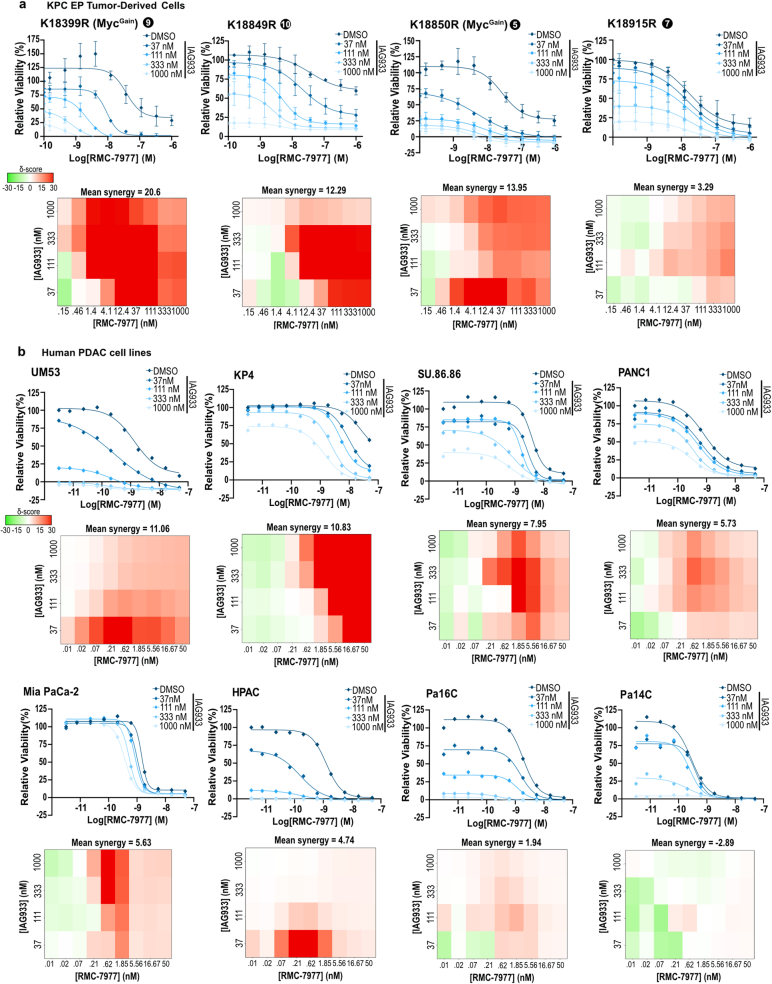
“Furthermore, TEAD inhibition combined with broad-spectrum RAS-GTP inhibition has been identi fi ed to be a promising candidate combination therapeutic regimen to overcome mono-therapy resistance [101].”
Self-citationXu, Y., Nipper, M. H., Dominguez, A. A., He, C., Sharkey, F. E., Khan, S., Xu, H., Zhou, D., Zheng, L., Luan, Y., et al. (2026) · Journal of Clinical Investigation · doi:10.1172/jci194395 · Cited by 8
“Despite recent advances in targeted therapies aimed at oncogenic RAS signaling (5, 6), therapeutic strategies targeting other key driver mutations remain limited.”
Genomic evolution of pancreatic cancer at single-cell resolution
Zhang, H., Sashittal, P., Karnoub, E.-R. R., Jakatdar, A., Umeda, S., Hong, J., Noronha, A. M., Cardenas, A., Erakky, A., McIntyre, C. A., et al. (2026) · Nature Genetics · doi:10.1038/s41588-025-02468-9 · Cited by 10
Treating Pancreatic Ductal Adenocarcinoma: The Targeted Revolution is Here
May, M. S., Park, W., & O'Reilly, E. M. (2026) · Drugs · doi:10.1007/s40265-026-02295-0 · Cited by 7
Lin, Q., Morales-Giron, A. A., Sander, C., Curtis, J. M., Barnes, H., Patel, P. S., de la Cruz, F. F., Riedl, J. M., Matsubara, H., Nakamura, H., et al. (2026) · Clinical Cancer Research · doi:10.1158/1078-0432.ccr-25-1788 · Cited by 12
“…adaptive signaling (whether through EGFR, FGFR, or other RTKs) converges to activate RAS, we evaluated a novel RAS(ON) multi-selective inhibitor—RMC-7977, a preclinical tool compound representative of the investigational agent daraxonrasib—that can inhibit all RAS isoforms (39, 47, 48).”
GAP mimetic activity of pan-Ras TCI daraxonrasib synergizes with K-Ras Switch-II pocket inhibition
Pfaff, P., & Shokat, K. M. (2026) · Biological Chemistry · doi:10.1515/hsz-2025-0249 · Cited by 5
“Indeed, it was surprising when manageable safety pro fi les were reported within the ongoing clinical trials of daraxonrasib.”
Foth, M., Kim, W., O’Toole, K. T., Murphy, B., Justo-Garrido, M., Boggaram, S. S., Ghazi, P. C., Brennan, E., Wright, M. I., Shepherd, T., et al. (2026) · Cancer Research · doi:10.1158/0008-5472.can-26-1313 · Cited by 6
Self-citationMcAndrews, K. M., Mahadevan, K. K., Li, B., Comptdaer, A. M., Sockwell, A. M., Morse, S. J., Kelly, P. J., Patel, S. I., Kirtley, M. L., Diaz, B. A. M., et al. (2026) · The EMBO Journal · doi:10.1038/s44318-026-00854-5 · Cited by 12
“…the context of resistance to RMC7977, whereas Myc ampli fi cation is a conserved genetic event in PDAC tumors resistant to RMC7977 and MRTX1133 (Dilly et al, 2024; Wasko et al, 2024), supporting the existence of conserved and divergent resistance mechanisms across distinct types of KRAS inhibitors.”
InfluentialTumors and their microenvironments: Learning from pediatric brain pathologies
Nussinov, R., Yavuz, B. R., & Jang, H. (2025) · Biochimica et Biophysica Acta (BBA) - Reviews on Cancer · doi:10.1016/j.bbcan.2025.189328 · Cited by 7
“K-Ras mutations in pancreatic adenocarcinoma (PDAC), which collaborates with c-Myc copy number gain leading to overexpression [165] is a prominent recent example (Fig.”
Targeting active RAS with molecular glue
Su, W., & Hou, X. (2024) · Pharmaceutical Science Advances · doi:10.1016/j.pscia.2024.100047 · Cited by 5
Metadata
- Authors
- Wasko, U. N., Jiang, J., Dalton, T. C., Curiel-Garcia, A., Edwards, A. C., Wang, Y., Lee, B., Orlen, M., Tian, S., Stalnecker, C. A., Drizyte-Miller, K., Menard, M., Dilly, J., Sastra, S. A., Palermo, C. F., Hasselluhn, M. C., Decker-Farrell, A. R., Chang, S., Jiang, L., Wei, X., Yang, Y. C., Helland, C., Courtney, H., Gindin, Y., Muonio, K., Zhao, R., Kemp, S. B., Clendenin, C., Sor, R., Vostrejs, W. P., Hibshman, P. S., Amparo, A. M., Hennessey, C., Rees, M. G., Ronan, M. M., Roth, J. A., Brodbeck, J., Tomassoni, L., Bakir, B., Socci, N. D., Herring, L. E., Barker, N. K., Wang, J., Cleary, J. M., Wolpin, B. M., Chabot, J. A., Kluger, M. D., Manji, G. A., Tsai, K. Y., Sekulic, M., Lagana, S. M., Califano, A., Quintana, E., Wang, Z., Smith, J. A. M., Holderfield, M., Wildes, D., Lowe, S. W., Badgley, M. A., Aguirre, A. J., Vonderheide, R. H., Stanger, B. Z., Baslan, T., Der, C. J., Singh, M., & Olive, K. P.
- Affiliations
- Columbia University Irving Medical Center (US)
- Revolution Medicines (United States) (US)
- University of North Carolina at Chapel Hill (US)
- University of Pennsylvania (US)
- Memorial Sloan Kettering Cancer Center (US)
- Harvard University (US)
- Abramson Cancer Center (US)
- Broad Institute (US)
- Moffitt Cancer Center (US)
- Johns Hopkins University (US)
- Parker Institute for Cancer Immunotherapy (US)
- Corresponding author
- Singh, Mallika
- Olive, Kenneth P.
- ORCID
- Wasko, Urszula N.
- Jiang, Jingjing
- Dalton, Tanner C.
- Curiel-Garcia, Alvaro
- Edwards, A. Cole
- Wang, Yingyun
- Lee, Bianca
- Orlen, Margo
- Tian, Sha
- Stalnecker, Clint A.
- Menard, Marie
- Dilly, Julien
- Sastra, Stephen A.
- Palermo, Carmine F.
- Hasselluhn, Marie C.
- Decker-Farrell, Amanda R.
- Chang, Stephanie
- Jiang, Lingyan
- Yang, Yu C.
- Helland, Ciara
- Gindin, Yevgeniy
- Kemp, Samantha B.
- Clendenin, Cynthia
- Sor, Rina
- Vostrejs, William P.
- Hibshman, Priya S.
- Amparo, Amber M.
- Hennessey, Connor
- Rees, Matthew G.
- Ronan, Melissa M.
- Roth, Jennifer A.
- Brodbeck, Jens
- Tomassoni, Lorenzo
- Socci, Nicholas D.
- Herring, Laura E.
- Barker, Natalie K.
- Wang, Junning
- Cleary, James M.
- Wolpin, Brian M.
- Kluger, Michael D.
- Manji, Gulam A.
- Tsai, Kenneth Y.
- Sekulic, Miroslav
- Lagana, Stephen M.
- Califano, Andrea
- Quintana, Elsa
- Wang, Zhengping
- Smith, Jacqueline A. M.
- Holderfield, Matthew
- Wildes, David
- Lowe, Scott W.
- Badgley, Michael A.
- Aguirre, Andrew J.
- Vonderheide, Robert H.
- Stanger, Ben Z.
- Baslan, Timour
- Der, Channing J.
- Singh, Mallika
- Olive, Kenneth P.
- Venue
- Nature
- Published
- 2024-04-08
- Volume
- 629
- Issue
- 8013
- Pages
- 927-936
- ISSN
- 0028-0836 (ISSN-L)
- 1476-4687
- PMC
- PMC11111406
- OpenAlex
- W4394580205
- Semantic Scholar
- 7776743bf12cbb5f73496d61b0d8b283e856ab6b
- Cited by
- 209
- References
- 64
- Citations by year
- 2026: 78 · 2025: 92 · 2024: 38
- FWCI
- 35.43
- Type
- journal article
- Language
- en
- Update notices
- correction (2024-11-12)
- Open access
- hybrid
- doi.org
- Licence
- cc-by
- creativecommons.org/licenses/by/4.0 (tdm)
- creativecommons.org/licenses/by/4.0 (vor)
- Locations
- Nature (publishedVersion, cc-by)
- PubMed Central (publishedVersion, cc-by)
- PubMed (publishedVersion)
- Carolina Digital Repository (University of North Carolina at Chapel Hill) (submittedVersion, cc-by)
- RePEc: Research Papers in Economics (submittedVersion)
- UNC Libraries
- Funders
- U.S. Department of Defense
- American Cancer Society
- Pancreatic Cancer Action Network
- Lustgarten Foundation
- National Institutes of Health (1s10od021764-01, 1s10od032433-01a1, 1s10od012351-01, UL1TR001873)
- National Cancer Institute (T32CA009140, R01CA229803, P01CA129243, R35CA232113, T32CA009156, F31CA275260, F32CA232529, U01CA217858, P30CA008748, U01CA274312, U01CA272610, R01CA215607, P50CA257911, R01CA266558, U54CA274506, R01CA276268, P30CA016086, P30CA013696, T32CA071341)
- National Institute of General Medical Sciences (T32GM119999)
- National Institute of Allergy and Infectious Diseases (K08AI106953)
- National Institute of Diabetes and Digestive and Kidney Diseases (P30DK132710)
- National Center for Advancing Translational Sciences
- Topics
- Health Sciences › Medicine › Oncology › Pancreatic and Hepatic Oncology Research
- Life Sciences › Biochemistry, Genetics and Molecular Biology › Molecular Biology › Protein Kinase Regulation and GTPase Signaling
- Life Sciences › Biochemistry, Genetics and Molecular Biology › Molecular Biology › Protein Tyrosine Phosphatases
- Keywords
- RMC-7977, pancreatic ductal adenocarcinoma, KRAS mutation, apoptosis, proliferative arrest, KPC mouse model, resistance mechanisms, combination therapy, antitumour activity
- MeSH terms
- Animals, Antineoplastic Agents, Disease Models, Animal, Female, Guanosine Triphosphate, Humans, Membrane Proteins, Mice, Inbred BALB C, Mice, Inbred C57BL, Mutation, Neoplasm Recurrence, Local, Pancreatic Neoplasms, Genes, myc, Proto-Oncogene Proteins p21(ras), Treatment Outcome, Apoptosis, Drug Resistance, Neoplasm, GTP Phosphohydrolases, Carcinoma, Pancreatic Ductal, Xenograft Model Antitumor Assays, Cell Line, Tumor, Cell Proliferation, Mice, DNA Copy Number Variations
About these checks
Registry, retraction, Cites and statistics results are computed, not judged, with one exception: a printed reference that no index lists is read once by a model before it counts as a citation error. Claims are extracted by a model and kept only when their quote appears verbatim in the text; each cited source is then checked, with a model’s help, for whether it says what the claim relies on. Those verdicts can be wrong — read the claim’s quote and the cited source before relying on one.
Statistics and arithmetic are recomputed, not judged.
Confidence bands are shown only for fields calibrated on our annotated test set. None is calibrated yet, so no band is shown.
What counts as a claim ›How we measure confidence ›How we check this ›
Are you an author, or do you see a problem with this page? Request a review
Data sources
Bibliographic data: Semantic Scholar, OpenAlex, Crossref.
Contains information from the Semantic Scholar Academic Graph Datasets, made available under the ODC Attribution License (ODC-BY 1.0).
Semantic Scholar’s data is described in: Kinney, R., et al. (2023). The Semantic Scholar Open Data Platform. arXiv:2301.10140.
