

Acquisition of epithelial plasticity in human chronic liver disease
Open accessThe DOI matches its Crossref record; 71 of the 71 references it cites were found in a registry or an index.
Abstract
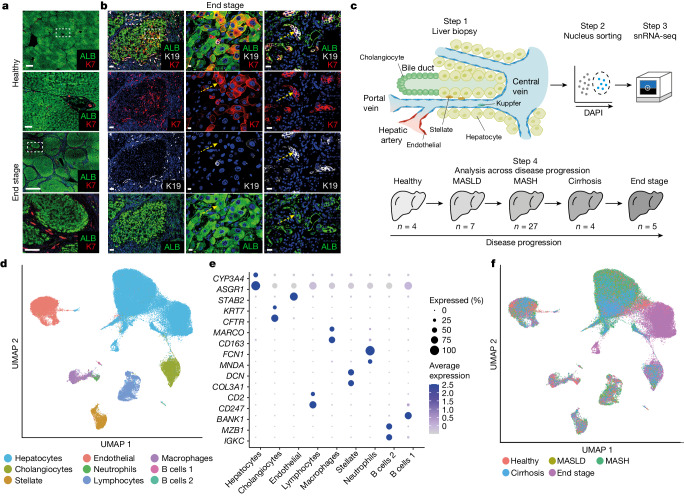
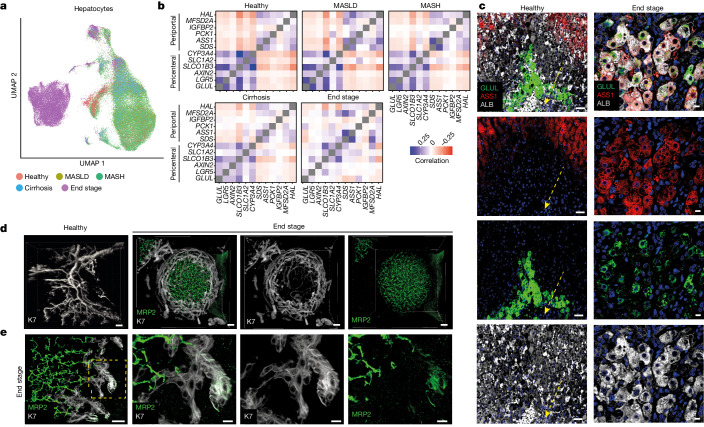
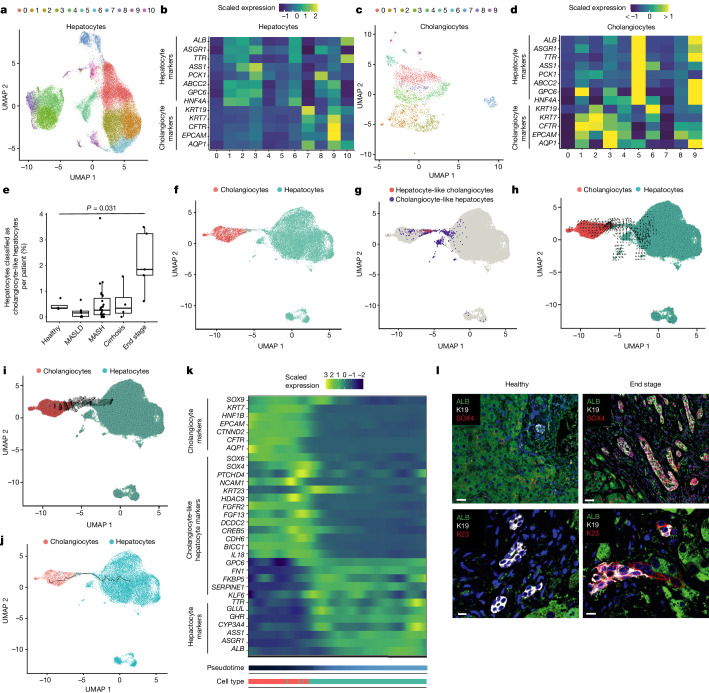
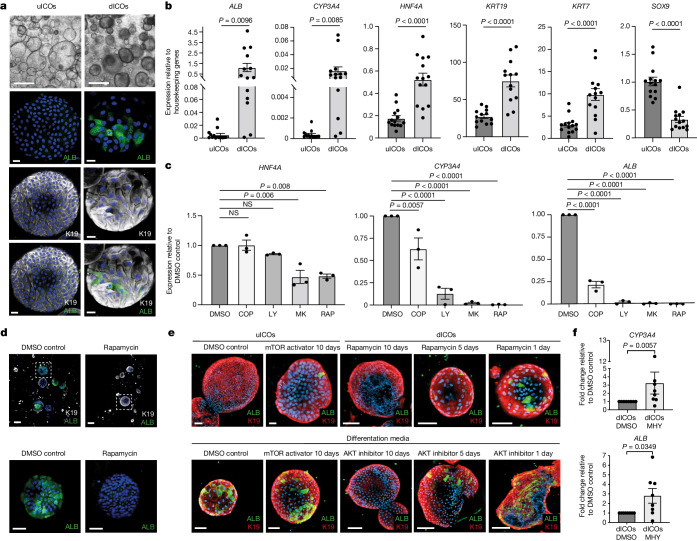
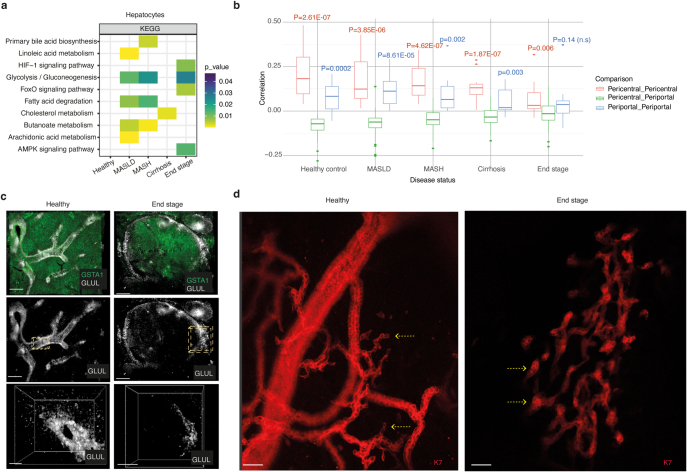
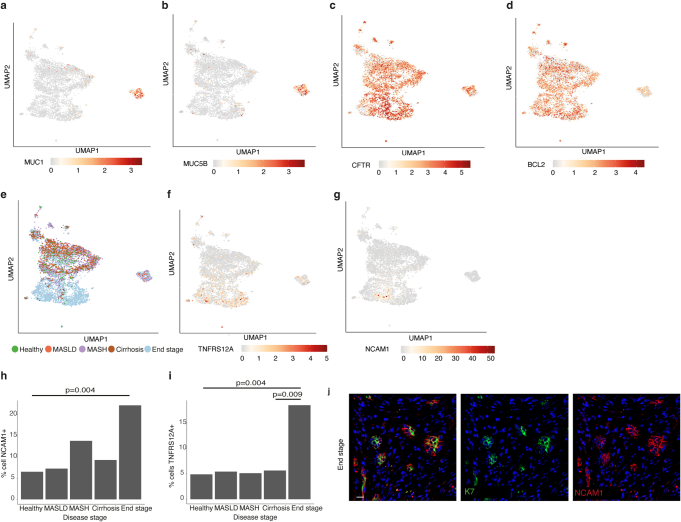
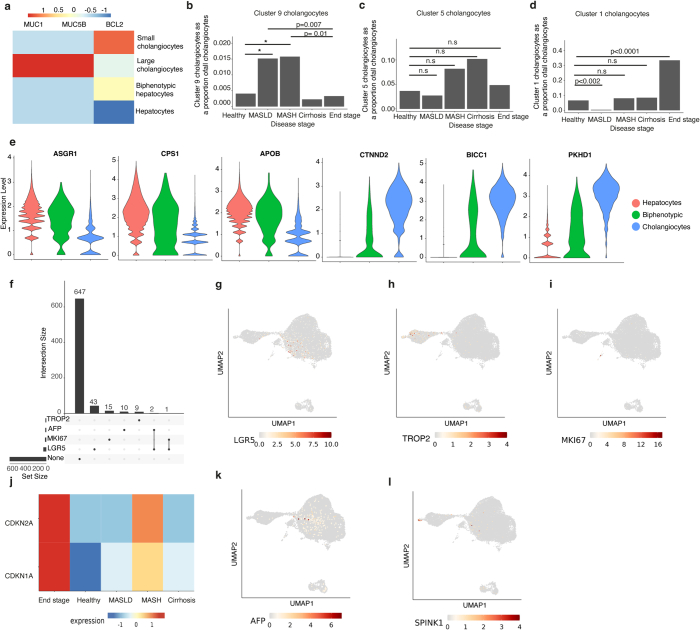
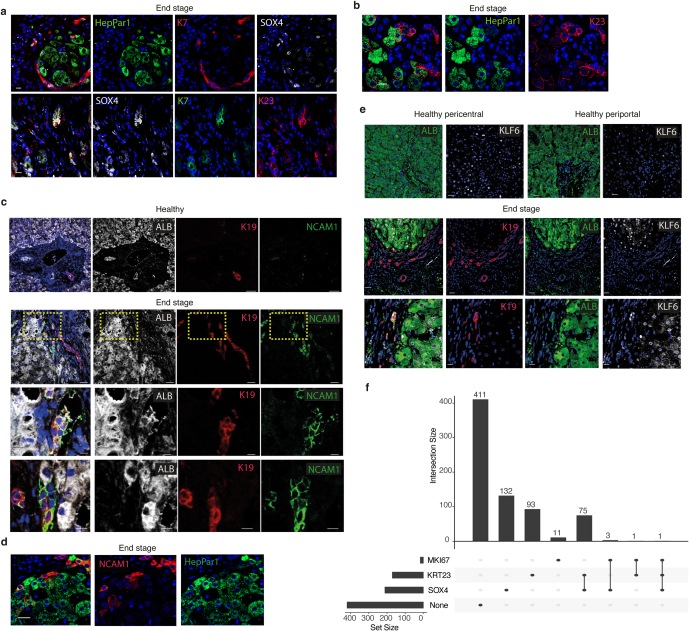
For many adult human organs, tissue regeneration during chronic disease remains a controversial subject. Regenerative processes are easily observed in animal models, and their underlying mechanisms are becoming well characterized 1–4 , but technical challenges and ethical aspects are limiting the validation of these results in humans. We decided to address this difficulty with respect to the liver. This organ displays the remarkable ability to regenerate after acute injury, although liver regeneration in the context of recurring injury remains to be fully demonstrated. Here we performed single-nucleus RNA sequencing (snRNA-seq) on 47 liver biopsies from patients with different stages of metabolic dysfunction-associated steatotic liver disease to establish a cellular map of the liver during disease progression. We then combined these single-cell-level data with advanced 3D imaging to reveal profound changes in the liver architecture. Hepatocytes lose their zonation and considerable reorganization of the biliary tree takes place. More importantly, our study uncovers transdifferentiation events that occur between hepatocytes and cholangiocytes without the presence of adult stem cells or developmental progenitor activation. Detailed analyses and functional validations using cholangiocyte organoids confirm the importance of the PI3K–AKT–mTOR pathway in this process, thereby connecting this acquisition of plasticity to insulin signalling. Together, our data indicate that chronic injury creates an environment that induces cellular plasticity in human organs, and understanding the underlying mechanisms of this process could open new therapeutic avenues in the management of chronic diseases.
Overview
The claims and statistics of this paper haven’t been checked yet.
Free: it reads the open-access text and checks the first 5 claims that cite a source we can check. Create a free account to check every claim.
Integrity signals
Registry
Cites
Statistics
Figures
Verification
Claims the paper makes
The claims and statistics of this paper haven’t been checked yet.
Free: it reads the open-access text and checks the first 5 claims that cite a source we can check. Create a free account to check every claim.
Claims other papers make about this one
Each is checked against this paper’s own text: does it say what the citing paper says it does?
The source backs part of the claim, not all of it — or backs it for a different population, condition or comparison.
In the citing paper
“Similarly, more recent findings further elaborate on the hepatocyte-cholangiocyte phenotypical plasticity that takes place during liver regeneration [161].”
From Inflammation and immunity in liver homeostasis and disease: a nexus of hepatocytes, nonparenchymal cells and immune cells (2025) · doi:10.1038/s41423-025-01313-7 · cites this paper as [161]
Experimental — accuracy not yet measuredThe source backs part of the claim, not all of it — or backs it for a different population, condition or comparison.
In the citing paper
“On the one hand, the community now benefits from extensive information that can be used to define transcriptomic and proteomic signatures associated with specific cell types and states, which provide essential input as to what models should be mimicked [161].”
From Inflammation and immunity in liver homeostasis and disease: a nexus of hepatocytes, nonparenchymal cells and immune cells (2025) · doi:10.1038/s41423-025-01313-7 · cites this paper as [161]
Experimental — accuracy not yet measuredThe source backs part of the claim, not all of it — or backs it for a different population, condition or comparison.
In the citing paper
“Indeed, crucial milestones have been reached within the last decade, from the isolation and in vitro expansion of bile duct-derived progenitor cells to diseased patient-derived cholangiocyte organoid cultures for detailed disease-driving mechanism investigations [161, 348].”
From Inflammation and immunity in liver homeostasis and disease: a nexus of hepatocytes, nonparenchymal cells and immune cells (2025) · doi:10.1038/s41423-025-01313-7 · cites this paper as [161]
Experimental — accuracy not yet measuredIn the citing paper
“Notably, recent insights from single-nuclei sequencing analyses of patient liver samples suggested that hepatocyte-cholangiocyte cellular plasticity is a key mechanism of liver repair in MASLD [161].”
From Inflammation and immunity in liver homeostasis and disease: a nexus of hepatocytes, nonparenchymal cells and immune cells (2025) · doi:10.1038/s41423-025-01313-7 · cites this paper as [161]
In the citing paper
“Single-nucleus RNA sequencing analyses of MASLD progression reveal that cholangiocytes can transdifferentiate into hepatocytes and vice versa (Fig. 2D-F) [83].”
From Constructing biomimetic microenvironments for liver regeneration (2025) · doi:10.1186/s12951-025-03729-9 · cites this paper as [83]
Self-check
Percentages, sums and reported differences re-computed from the paper’s own numbers.
The self-check needs the paper’s full text.
Citations
Cites
Integrated analysis of multimodal single-cell data
Hao, Y., Hao, S., Andersen-Nissen, E., Mauck, W. M., Zheng, S., Butler, A., Lee, M. J., Wilk, A. J., Darby, C., Zagar, M., et al. (2020) · doi:10.1101/2020.10.12.335331 · Cited by 15,508 · cited 1×
“The preprocessing of raw count matrices was performed using Seurat (v.4.0.3) 67 .”
MethodInfluentialMassively parallel digital transcriptional profiling of single cells
Zheng, G. X. Y., Terry, J. M., Belgrader, P., Ryvkin, P., Bent, Z. W., Wilson, R., Ziraldo, S. B., Wheeler, T. D., McDermott, G. P., Zhu, J., et al. (2017) · Nature Communications · doi:10.1038/ncomms14049 · Cited by 7,353
Identification of stem cells in small intestine and colon by marker gene Lgr5
Barker, N., van Es, J. H., Kuipers, J., Kujala, P., van den Born, M., Cozijnsen, M., Haegebarth, A., Korving, J., Begthel, H., Peters, P. J., et al. (2007) · Nature · doi:10.1038/nature06196 · Cited by 5,687 · cited 1×
“2d and Supplementary Videos 3 and 4).”
Global burden of NAFLD and NASH: trends, predictions, risk factors and prevention
Younossi, Z., Anstee, Q. M., Marietti, M., Hardy, T., Henry, L., Eslam, M., George, J., & Bugianesi, E. (2018) · Nature Reviews Gastroenterology & Hepatology · doi:10.1038/nrgastro.2017.109 · Cited by 5,249 · cited 1×
“This pathway has been associated with obesity and metabolic syndrome 48 , both of which are tightly linked to MASLD 49 .”
BackgroundRaudvere, U., Kolberg, L., Kuzmin, I., Arak, T., Adler, P., Peterson, H., & Vilo, J. (2019) · Nucleic Acids Research · doi:10.1093/nar/gkz369 · Cited by 5,045 · cited 1×
“GSEA of differentially expressed genes was carried out using gprofiler2 (v.0.2.0) 70 using all genes detected in the compared cell groups as the background set.”
MethodInfluentialHafemeister, C., & Satija, R. (2019) · Genome Biology · doi:10.1186/s13059-019-1874-1 · Cited by 4,479 · cited 1×
“Gene-expression values were normalized for library size using sctransform 68 .”
MethodLa Manno, G., Soldatov, R., Zeisel, A., Braun, E., Hochgerner, H., Petukhov, V., Lidschreiber, K., Kastriti, M. E., Lönnerberg, P., Furlan, A., et al. (2018) · Nature · doi:10.1038/s41586-018-0414-6 · Cited by 4,118
Mechanisms of Insulin Action and Insulin Resistance
Petersen, M. C., & Shulman, G. I. (2018) · Physiological Reviews · doi:10.1152/physrev.00063.2017 · Cited by 3,028 · cited 1×
“Importantly, the PI3K–AKT–mTOR pathway is activated by insulin 51 , and insulin resistance is commonly associated with MASLD progression 30 .”
BackgroundThe prevalence and incidence of NAFLD worldwide: a systematic review and meta-analysis
Riazi, K., Azhari, H., Charette, J. H., Underwood, F. E., King, J. A., Afshar, E. E., Swain, M. G., Congly, S. E., Kaplan, G. G., & Shaheen, A.-A. (2022) · The Lancet Gastroenterology & Hepatology · doi:10.1016/s2468-1253(22)00165-0 · Cited by 2,246 · cited 2×
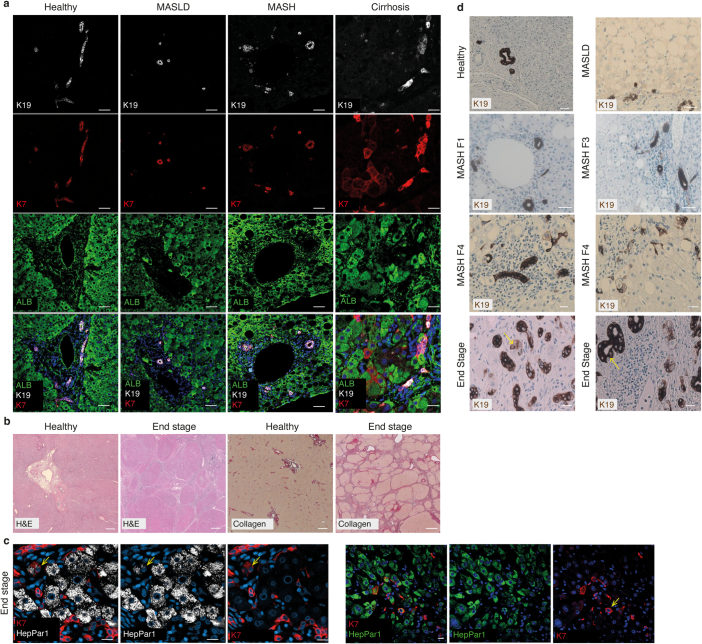
“However, we also observed cells co-expressing ALB, K7 and K19 that seem to be present specifically in end-stage liver (Fig.”
BackgroundLong-Term Culture of Genome-Stable Bipotent Stem Cells from Adult Human Liver
Huch, M., Gehart, H., van Boxtel, R., Hamer, K., Blokzijl, F., Verstegen, M. M. A., Ellis, E., van Wenum, M., Fuchs, S. A., de Ligt, J., et al. (2015) · Cell · doi:10.1016/j.cell.2014.11.050 · Cited by 1,619 · cited 3×
“These cells can be grown for an extended period of time in vitro and maintain their biliary identity 50 and their capacity to differentiate into cells expressing hepatocyte markers 26 .”
BackgroundResult
Cited by
Items 101–157 of 157
Li, Y., Huang, C., Fan, W., Hammad, S., Berger, L., Géraud, C., Yao, Y., Link, F., Tong, C., Nwosu, Z. C., et al. (2024) · bioRxiv (Cold Spring Harbor Laboratory) · doi:10.1101/2024.02.17.580798
Novel hepatocyte-like liver organoids recapitulate crucial mature hepatic functionsPreprint
Ardisasmita, A. I., Joore, I. P., Levy, N., Myszczyszyn, A., Marsee, A., Sinnige, T. L., Ruiter, J. P. N., Ferdinandusse, S., Dudaryeva, O. Y., Gruber, E., et al. (2024) · bioRxiv (Cold Spring Harbor Laboratory) · doi:10.1101/2024.10.29.620824
“Previously, cholangiocytes in the mouse and human liver have been shown to transdifferentiate into hepatocytes under certain liver damage conditions in vivo (Pu, 2022; Gribben, 2024).”
BackgroundZhang, L., Wang, D., Ye, F., & Wu, M. (2025) · 中国科学通报:英文版 · doi:10.1016/j.scib.2025.01.024
Advancements and future pathway in human body digital twins
Chen, X., Tang, C., Dai, Y., Li, C., & Gao, S. (2025) · Elsevier eBooks · doi:10.1016/b978-0-443-34226-4.00019-8
Yamamoto, T., Yamaguchi, J., Kokuryo, T., Yokoyama, Y., Mizuno, T., Onoe, S., Sunagawa, M., Baba, T., & Ebata, T. (2025) · Cells · doi:10.3390/cells14171323
Kim, M. K., & Kim, H. (2025) · Biochemical and Biophysical Research Communications · doi:10.1016/j.bbrc.2025.152639
Decoding the PSC fibrotic niche: Hepatocyte stress and metallothioneins
Nakib, D., & MacParland, S. A. (2025) · Hepatology · doi:10.1097/hep.0000000000001478
Eat, Heal, Repeat: How zebrafish master regeneration
Pérez-Montes, C., Lavado-Fernández, E., Martínez-Rojo, I., Santos-Ledo, A., & García-Macia, M. (2025) · International review of cytology · doi:10.1016/bs.ircmb.2025.10.008 · Cited by 1
Wang, J., Tao, J., Xia, C., Tang, M., Stoica, A.-F., Yuan, S., Li, Y., Guo, L., Kong, X., & Wang, J. (2025) · bioRxiv (Cold Spring Harbor Laboratory) · doi:10.1101/2025.11.25.690307 · Cited by 1
Liver Zonation Disruption Fuels Hepatocellular Carcinoma in Chronic Liver DiseasePreprint
Yang, S. B., Tullio, F. D., Yang, L., Cogliati, B., Schnidrig, D., Benjak, A., Roshan, S., Almeida, J. I., Li, L. Y., Ma, S., et al. (2025) · bioRxiv (Cold Spring Harbor Laboratory) · doi:10.64898/2025.12.06.692782
Unveiling Gene Regulatory Network Dynamics using Fuzzy ClusteringPreprint
Kollyfas, R., Cagna, M., Nicaise, A. M., Vallier, L., & Mohorianu, I. I. (2026) · bioRxiv (Cold Spring Harbor Laboratory) · doi:10.64898/2025.12.31.697266
Self-citationZhang, X., Guo, Y., Zhang, S., & Wang, Y. (2026) · Elsevier eBooks · doi:10.1016/b978-0-443-40423-8.00012-9
Wang, L., Tang, Z., & Xu, H. (2026) · Elsevier eBooks · doi:10.1016/b978-0-443-40423-8.00003-8
Zhang, J., Xu, Y., & Lu, X. (2026) · Frontiers in Cell and Developmental Biology · doi:10.3389/fcell.2026.1743286
“Some studies suggest that cholangiocytes can transdifferentiate into biphenotypic progenitor-like cells (Manco et al., 2019; Pu et al., 2023), whereas others have demonstrated that, under chronic injury, hepatocytes themselves acquire plasticity and adopt hybrid phenotypes (Gribben et al., 2024).”
HIRA-mediated H3.3 deposition preserves hepatocyte cell identity during liver agingPreprint
Arnold, R., Teneche, M. G., Lei, X., Gandhi, A., Shi, C. H., Proulx, J. M., Rajesh, A., Havas, A. P., Su, S., Sethiya, A., et al. (2026) · bioRxiv (Cold Spring Harbor Laboratory) · doi:10.64898/2026.03.09.710643
“…steatotic liver disease (MASLD) and other models of chronic liver damage, loss of liver zonation and acquisition of biphenotypic gene programs accompany disease progression 31,32 , underscoring how failure to maintain cell identity in aging and stress drives pathology in liver.”
Chen, Y., Li, X., Luo, C., Lin, G., Zhou, X., Wen, Z., Su, H., Meng, W., Chen, C., Lu, J., et al. (2026) · Journal of Advanced Research · doi:10.1016/j.jare.2026.03.039
CellCousin2: an optimized system for partial ablation and tracing of regenerative lineages
Hovhannisyan, G., Akhourbi, T., Eski, S. E., Pirson, I., Gurzov, E. N., & Singh, S. P. (2026) · npj Regenerative Medicine · doi:10.1038/s41536-026-00473-y
“This facultative regeneration mechanism has been documented in zebra fi sh 19 – 22 , rodents 12 – 18 , and even in human patients with chronic liver disease 8 – 11 , highlighting the liver as a model to study lineage plasticity during regeneration.”
Yu, B., Zhang, Y., Tang, Y., Hu, M., & Wei, J. (2026) · npj Aging · doi:10.1038/s41514-026-00370-0
The biliary tree: A new frontier in mucosal immunology?
Guo, Y., Chouik, Y., Hao, Y., Kohlhepp, M. S., & Guillot, A. (2026) · Mucosal Immunology · doi:10.1016/j.mucimm.2026.04.006
Self-citationFXR’s double life in bile ducts
Takahashi, S., & Gonzalez, F. J. (2026) · Nature Metabolism · doi:10.1038/s42255-026-01528-6
Extended precision cut liver slice culture models liver regeneration and ductular reaction
Barba, S. I., Rubio-Cruz, D., Naz, S., Su, S., Bhattarai, S., Xu, H., Nasser, I. A., Lee, D., Dib, M., Evenson, A. R., et al. (2026) · eGastroenterology · doi:10.1136/egastro-2026-100389
Mechanisms of Cell Plasticity during Injury-Induced Epithelial Reprogramming
Mazzarelli, E., & Lovisa, S. (2026) · Cells Tissues Organs · doi:10.1159/000552260
Alden, H. M. A., Ali, H. R., Lazim, A. J., & Suleiman, A. A. (2026) · Mathematical Biology and Bioinformatics · doi:10.17537/2026.21.175
Reduction in Hepatic Phosphatidylcholine Biosynthesis Promotes MASH Through Copper DeficiencyPreprint
Welles, J. E., Garifallou, J. P., Gonzalez, M. V., Santoleri, D., Choudhury, F. K., DeNicola, G. M., Martin, R. W., Jiang, C., Kim, J., Li, G., et al. (2026) · bioRxiv (Cold Spring Harbor Laboratory) · doi:10.64898/2026.05.13.723926
Ding, S., Liu, Y., Liu, Z., Chu, F., Lu, B., & Xu, L. (2026) · Journal of Inflammation Research · doi:10.2147/jir.s569506
HIRA-mediated H3.3 deposition preserves hepatocyte cell identity during liver agingPreprint
Adams, P. D., Arnold, R., Teneche, M. G., Lei, X., Gandhi, A., Shi, C., Proulx, J., Rajesh, A., Havas, A. P., Su, S., et al. (2026) · Research Square · doi:10.21203/rs.3.rs-9261217/v1
Liu, M., Huang, R., Wang, S., Lin, Y., Xiong, T., Li, R., Zheng, W., Huang, Q., Nan, Y., Liu, Z., et al. (2026) · Advanced Healthcare Materials · doi:10.1002/adhm.71320
HLiCA: An integrated cell atlas of the healthy human liverPreprint
Edgar, R. D., Portman, J. R., Hu, H., Pouyabahar, D., Rahman, R. R., Stueckmann, D., Choi, Y., Neavin, D. R., Atif, J., Clarke, Z. A., et al. (2026) · bioRxiv (Cold Spring Harbor Laboratory) · doi:10.64898/2026.06.30.735539
“We also observed differential gene expression between sexes in the newly identified UGT + hepatocyte population (Supplementary Data 10-11).”
Self-citationZhou, Z., Gu, X., Zheng, Z., Shao, Y., Tu, K., Jiang, J., Cao, Y., Gu, J., Zhao, L., & Yao, H. (2026) · Frontiers in Immunology · doi:10.3389/fimmu.2026.1745640
“Prior research has highlighted the importance of maintaining a balance between regeneration and tumorigenesis in biological and physiological processes (26).”
Spatial Glyco-Codes Define Human Liver Pathology and ProgressionPreprint
Tian, X., Fung, A. A., Shang, X., Zhang, D., Chen, B., Zhang, L., Li, K. E. X. I. N., Zhong, M., Deng, Y., Yang, M., et al. (2026) · bioRxiv (Cold Spring Harbor Laboratory) · doi:10.64898/2026.07.08.737217
Lineage recording reveals hijacked hepatic progenitor states as a common origin of HCC and ICCPreprint
Fan, J., Pei, J., Xu, N., Wang, X., Wang, X., Mao, S., Zhang, Y., Yu, L., Sun, Y., Gong, Y., et al. (2026) · bioRxiv (Cold Spring Harbor Laboratory) · doi:10.64898/2026.07.13.738237
Ryaboshapkina, M., Gunnarsson, S., Whatling, A., Henry, I., & Azzu, V. (2026) · Research Square · doi:10.21203/rs.3.rs-10436396/v1
Developmentally constrained plasticity as a therapeutic vulnerability in cancer
Xian, J., Yang, Y., Li, W.-L., Liu, M., & Zhang, X.-F. (2026) · Neoplasia · doi:10.1016/j.neo.2026.101344
“In HCC, erosion of hepatocyte identity safeguards, including HNF4A and PROX1, can permit oncofetal, progenitor-like, or biliary-like reprogramming within an endodermal hepatic repertoire [11 – 17].”
Xu, Y., Loesch, D. P., Taylor, H. J., Keating, M. F., Ritchie, S. C., Jiang, X., Tran, T., Foguet, C., Khullar, S., Yin, J., et al. (2026) · medRxiv · doi:10.64898/2026.08.04.26359685
Chen, M., Liu, Y., Qu, W., Zhang, Q., Li, F., Wang, Y., & Zhai, X. (2026) · Environmental Research · doi:10.1016/j.envres.2026.125418
Demirdizen, M. (2024) · Bilkent University Institutional Repository (Bilkent University)
Zhang, Y., Liu, S., Huang, Z., Song, S., Xu, S., Guan, C., Chen, Y., Song, M., Pang, P., Wu, W., et al. (2026) · International Urology and Nephrology · doi:10.1007/s11255-026-05325-8
Slabber, C. F., Lenkeit, F., Grove, K. J., Aebi, A., Orsini, V., Reyes, A., Ludwig, V., Crochemore, C., Bergling, S., Wild, S. A., et al. (2026) · EBioMedicine · doi:10.1016/j.ebiom.2026.106429
Wu, J., & Shen, Y. (2026) · bioRxiv (Cold Spring Harbor Laboratory) · doi:10.64898/2026.08.15.745056
Liu, Q., Wang, J., Zong, H., Ma, H., Li, M., Wang, M., Wu, D., Zheng, S., Wang, H., & Long, Q. (2026) · Cells · doi:10.3390/cells15171562
“To assess whether this relationship is conserved in human MAFLD/MASH, we re-analyzed a published liver snRNA-seq cohort (GSE202379) containing 47 MAFLD/MASH patients [28].”
InfluentialLing, H., Qiu, P., & Hu, Y. (2026) · International Journal of Molecular Sciences · doi:10.3390/ijms27177920
“The GSE202379 dataset served as the discovery cohort [61]; it spans the continuous clinical spectrum of metabolic dysfunction-associated steatotic liver disease (MASLD), including healthy controls, MASLD without MASH, early MASH, and advanced MASH.”
Zhai, J., Lu, Y., & Fan, J. (2026) · Journal of Clinical and Translational Hepatology · doi:10.14218/jcth.2026.00153
“30 The pathogenic functions are dictated by localization within fibrotic and lipotoxic niches rather than by cell identity alone.”
Wang, X., Wang, Y., & Wang, S. (2026) · Clinical and Molecular Hepatology · doi:10.3350/cmh.2026.0630
Intraoperative glucocorticoids confound surgical biopsy transcriptomics
Larsen, F. T., Wernberg, C. W., Nambiar, J., Dutta, S., Nielsen, E. J., Grønkjær, L. L., Jacobsen, B. G., Mandrup, S., Loft, A., Schmidt, S. F., et al. (2026) · JCI Insight · doi:10.64898/2026.09.08.26362140
Ganguly, D., Mondal, B., Das, S., Dey, I., Mandal, A., Ghosh, T., Deo, M., Ahmed, M., Banerjee, S., Chatterjee, A., et al. (2026) · Biochemistry and Biophysics Reports · doi:10.1016/j.bbrep.2026.102785
“To determine the cellular origin of this transcriptional programme, the snRNA-seq datasets GSE202379 [21] and GSE189175 [18 – 20], spanning the healthy – MASLD – MASH – HCC spectrum, were integrated.”
Zhang, H., Huang, X., Jayakumar, P., Zhang, Y., Yang, T., Guo, X., Wu, G., Kumar, A., Bharti, V., Onuma, A. E., et al. (2026) · JCI Insight · doi:10.1172/jci.insight.203495
“Additional studies have employed multiomics modalities, including scRNA-seq, single-nucleus RNA sequencing, and spatial transcriptomics, to generate a comprehensive atlas of the PSC liver (54) and to define a hepatocyte-cholangiocyte plasticity and zonation loss in MASH patients (55).”
Zhang, J., Zhang, M., Juramt, D., Qi, W., Feng, Z., & Chen, L. (2026) · Gut · doi:10.1136/gutjnl-2026-340378
Chenhao, J., Lu, H., Liu, Y., Jianhao, Z., Chen, H., Xinyun, W., Chi, X., Fan, L., Li, T., Shi, S., et al. (2026) · Journal of Hepatology · doi:10.1016/j.jhep.2026.08.036
Zaufel, A., Sun, W., Pastore, N., Taschler, U., Wagner, C., Hackl, H., Sommer, J., Silbert-Wagner, D., Hengstler, J. G., Begher‐Tibbe, B., et al. (2026) · Science Advances · doi:10.1126/sciadv.aee1905
“…the deletion of Tsc1 or Flcn by Alb-Cre results in severe liver damage and progenitor/cholangiocyte activation ( 75 , 76 , 80 ) as compared to AAV-Cre ( 18 , 19 ), which is in concurrence with PI3K/AKT/mTOR being a key regulator of cholangiocyte- to-hepatocyte plasticity in human MASLD ( 81 , 82 ).”
Rab1A Promotes Hepatic Steatosis by Suppressing Mitophagy via the Raf‐1/ERK1/2/PINK1 Signaling Axis
Zhang, L., Li, J., Zhang, H., Qin, Q., Huang, Y., Tian, X., Sun, C., Li, B., Wang, Z., & Zhang, X. (2026) · Advanced Science · doi:10.1002/advs.202517520
“Two single-nucleus RNA sequencing (snRNA-seq) datasets using 93 people across the different stages of MASLD progression were analyzed [ 38 ].”
Kotlyarov, S. N., Котлярова, А. А., Catanzaro, R., & Marotta, F. (2026) · International Journal of Molecular Sciences · doi:10.3390/ijms27198614
Wang, K., Li, L., Mei, X., & Gao, H. (2026) · Frontiers in Medicine · doi:10.3389/fmed.2026.1987203
“Third, mature hepatocytes can transdifferentiate toward a biliary fate through hepatocyte-to-biliary plasticity, a process dependent on Notch and Hippo/YAP signaling that is particularly prominent in biliary-dominant injury (3, 9, 10).”
Lymphatic Dysplasia Shapes Liver Epithelial Outcomes in Biliary AtresiaPreprint
Schumm, L., Chua, R. L., Kuzinska, M. Z., Meindl, M., Quach, S., Weihs, J., Gogol, D., Zschiesche, M., Duennebacke, R., Uecker, M., et al. (2026) · medRxiv · doi:10.64898/2026.10.12.26365253
Self-citationHu, X., Meng, F., Zhou, W., Li, S., 高玉杰, Zhang, Y., Zhang, J., Kong, L., Liu, G., 石晓红, et al. (2026) · Frontiers in Immunology · doi:10.3389/fimmu.2026.1849699
“Healthy liver samples from donors (4 samples) served as controls and were processed following stringent quality control protocols (23).”
Feng, G., Wang, X., Li, P., Wang, Y., Wan, H., Dong, K., Deng, H., 邹愚, Hu, Y., Jiang, S., et al. (2026) · JHEP Reports · doi:10.1016/j.jhepr.2026.102077
Zhang, J., Wang, J., Shen, Y., Zhang, Y., Luo, Z., Kong, X., Li, W., Luo, J., Xu, F., & Wan, S. (2026) · Frontiers in Cell and Developmental Biology · doi:10.3389/fcell.2026.1961567
Cai, J., Sentalati, B., Fan, Z., Chen, Y., & Zeng, B. (2026) · Genes · doi:10.3390/genes17111395
Metadata
- Authors
- Gribben, C., Galanakis, V., Calderwood, A., Williams, E. C., Chazarra-Gil, R., Larraz, M., Frau, C., Puengel, T., Guillot, A., Rouhani, F. J., Mahbubani, K., Godfrey, E., Davies, S. E., Athanasiadis, E., Saeb-Parsy, K., Tacke, F., Allison, M., Mohorianu, I., & Vallier, L.
- Affiliations
- Wellcome/MRC Cambridge Stem Cell Institute (GB)
- Berlin Institute of Health at Charité - Universitätsmedizin Berlin (DE)
- Charité – Universitätsmedizin Berlin (DE)
- The Francis Crick Institute (GB)
- University of Cambridge (GB)
- Addenbrooke's Hospital (GB)
- Cambridge University Hospitals NHS Foundation Trust (GB)
- Biomedical Research Foundation of the Academy of Athens (GR)
- Corresponding author
- Allison, Michael
- Mohorianu, Irina
- Vallier, Ludovic
- ORCID
- Gribben, Christopher
- Galanakis, Vasileios
- Williams, Eleanor C.
- Chazarra-Gil, Ruben
- Larraz, Miguel
- Frau, Carla
- Puengel, Tobias
- Guillot, Adrien
- Rouhani, Foad J.
- Mahbubani, Krishnaa
- Godfrey, Edmund
- Davies, Susan E.
- Athanasiadis, Emmanouil
- Saeb-Parsy, Kourosh
- Tacke, Frank
- Allison, Michael
- Mohorianu, Irina
- Vallier, Ludovic
- Venue
- Nature
- Published
- 2024-05-22
- Volume
- 630
- Issue
- 8015
- Pages
- 166-173
- ISSN
- 0028-0836 (ISSN-L)
- 1476-4687
- PMC
- PMC11153150
- OpenAlex
- W4398201925
- Cited by
- 142
- References
- 71
- Citations by year
- 2026: 55 · 2025: 69 · 2024: 17
- FWCI
- 36.91
- Type
- journal article
- Language
- en
- Open access
- hybrid
- doi.org
- Licence
- cc-by
- creativecommons.org/licenses/by/4.0 (tdm)
- creativecommons.org/licenses/by/4.0 (vor)
- Locations
- Nature (publishedVersion, cc-by)
- PubMed Central (publishedVersion, cc-by)
- PubMed (publishedVersion)
- Research Portal (King's College London) (publishedVersion, cc-by)
- RePEc: Research Papers in Economics (submittedVersion)
- Apollo (University of Cambridge) (submittedVersion, cc-by)
- Funders
- Wellcome Trust (203151/A/16/Z, 203151/Z/16/Z)
- Francis Crick Institute (CC2256)
- National Institute for Health and Care Research (CL-2016-14-004)
- Academy of Medical Sciences (SGL019\1092)
- Medical Research Council (MC_PC_17230)
- Topics
- Health Sciences › Medicine › Hepatology › Liver physiology and pathology
- Health Sciences › Medicine › Hepatology › Liver Disease Diagnosis and Treatment
- Life Sciences › Biochemistry, Genetics and Molecular Biology › Molecular Biology › Single-cell and spatial transcriptomics
- Keywords
- epithelial plasticity, chronic liver disease, non-alcoholic fatty liver disease, liver regeneration, hepatocyte zonation, PI3K/AKT/mTOR pathway, insulin signaling, cholangiocyte organoids, single-nucleus RNA sequencing, liver architecture
- MeSH terms
- Cell Plasticity, RNA-Seq, Biliary Tract, Biopsy, Chronic Disease, Epithelial Cells, Female, Humans, Insulin, Liver, Liver Diseases, Liver Regeneration, Male, Organoids, Signal Transduction, Disease Progression, Phosphatidylinositol 3-Kinases, Hepatocytes, Proto-Oncogene Proteins c-akt, Cell Transdifferentiation, TOR Serine-Threonine Kinases, Single-Cell Analysis
About these checks
Registry, retraction, Cites and statistics results are computed, not judged, with one exception: a printed reference that no index lists is read once by a model before it counts as a citation error. Claims are extracted by a model and kept only when their quote appears verbatim in the text; each cited source is then checked, with a model’s help, for whether it says what the claim relies on. Those verdicts can be wrong — read the claim’s quote and the cited source before relying on one.
Statistics and arithmetic are recomputed, not judged.
Confidence bands are shown only for fields calibrated on our annotated test set. None is calibrated yet, so no band is shown.
What counts as a claim ›How we measure confidence ›How we check this ›
Are you an author, or do you see a problem with this page? Request a review
Data sources
Bibliographic data: Semantic Scholar, OpenAlex, Crossref.
Contains information from the Semantic Scholar Academic Graph Datasets, made available under the ODC Attribution License (ODC-BY 1.0).
Semantic Scholar’s data is described in: Kinney, R., et al. (2023). The Semantic Scholar Open Data Platform. arXiv:2301.10140.
