

A multimodal generative AI copilot for human pathology
Open accessThe DOI matches its Crossref record; 80 of the 80 references it cites were found in a registry or an index.
Abstract
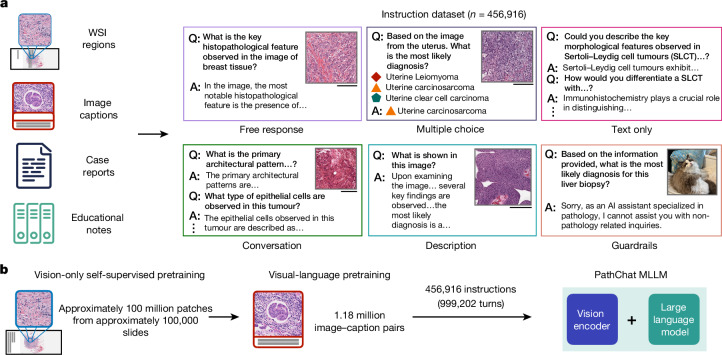
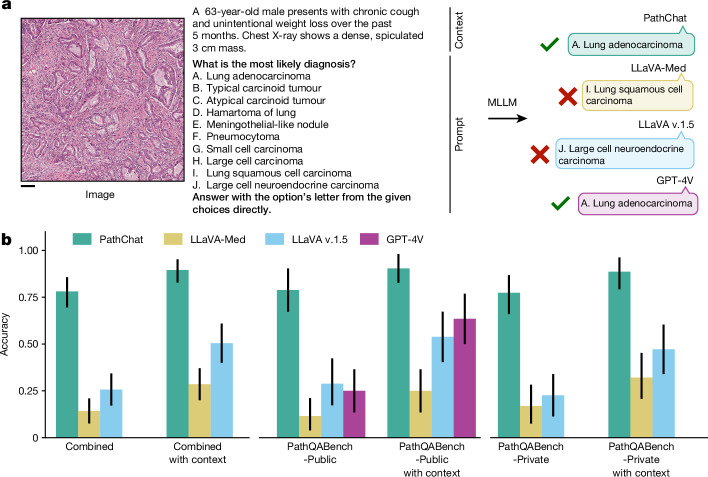
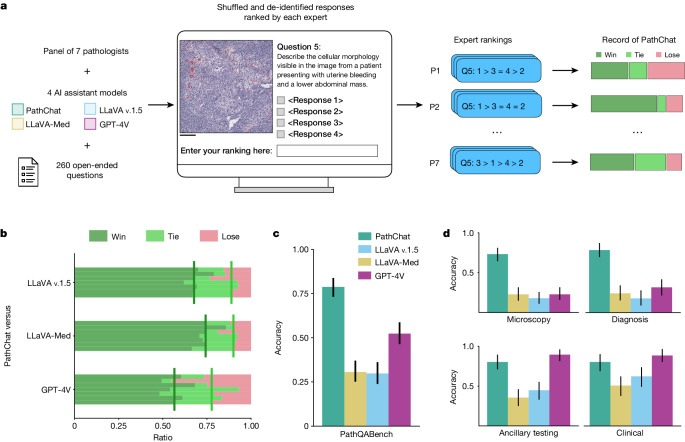
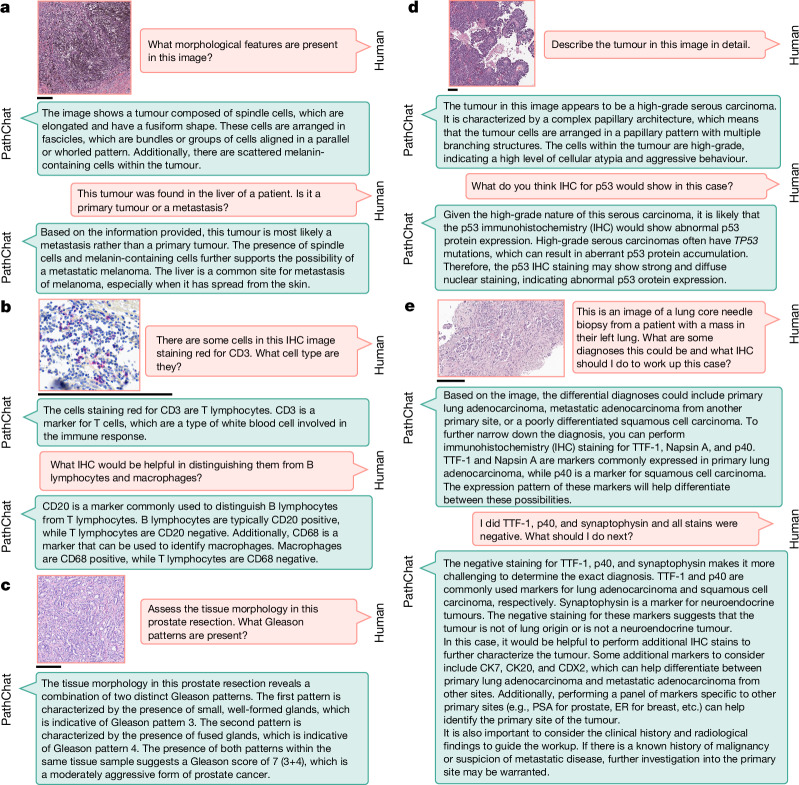
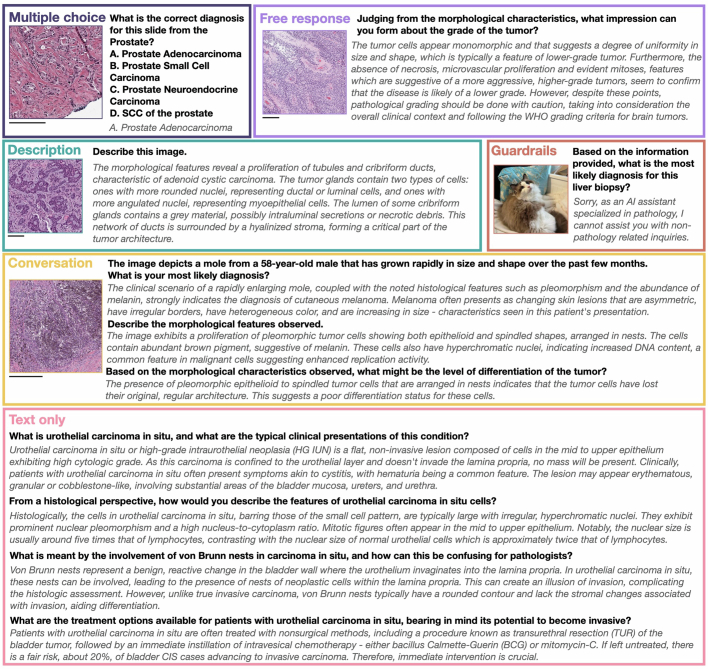
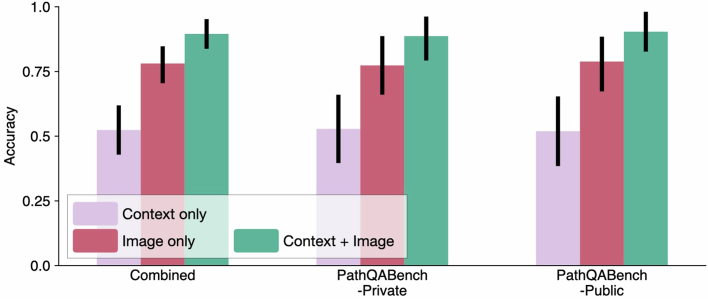
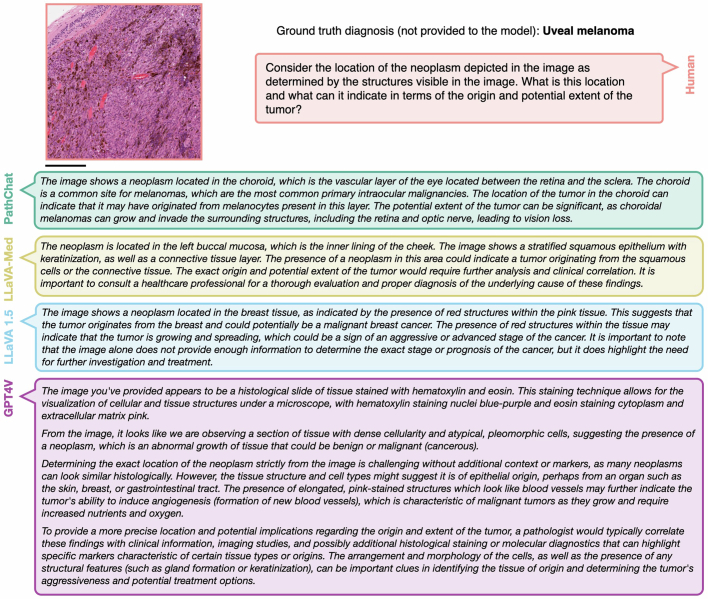
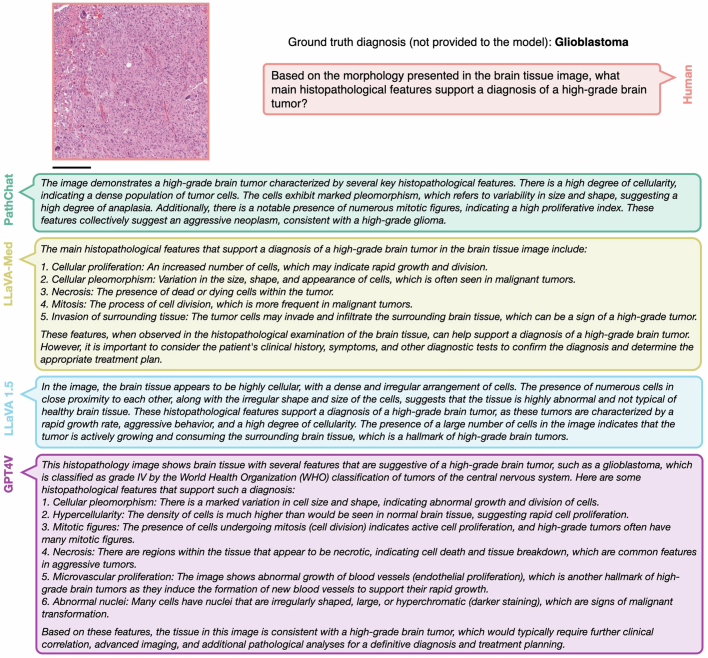
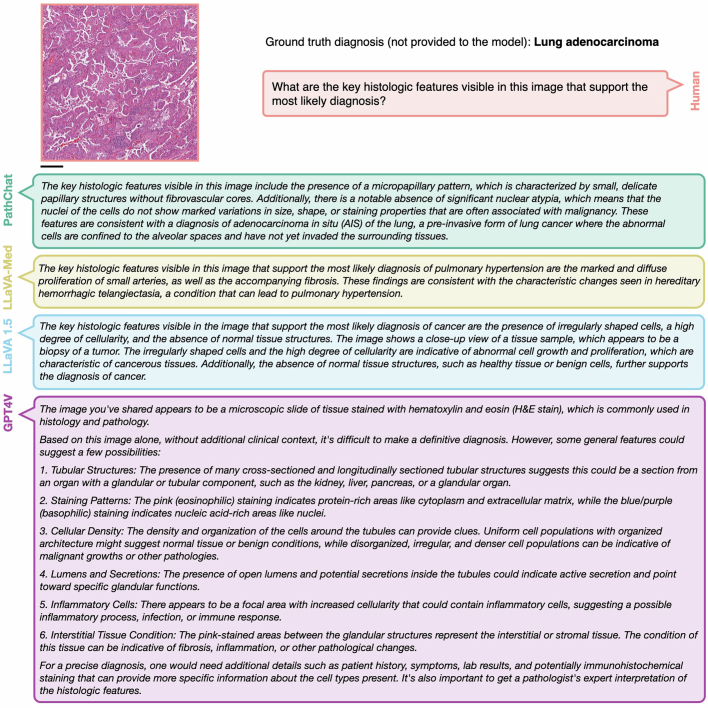
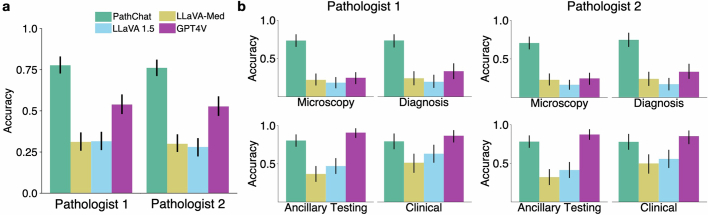
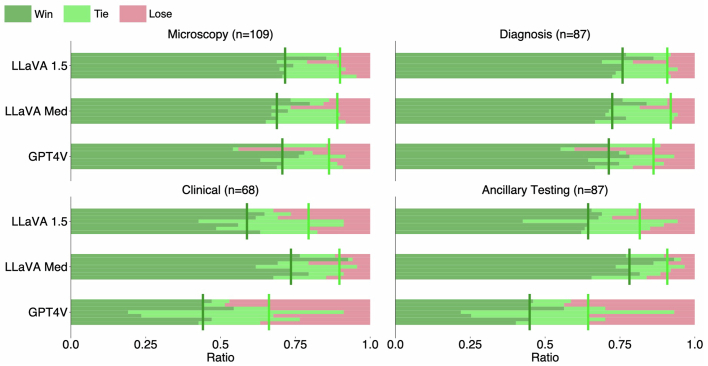
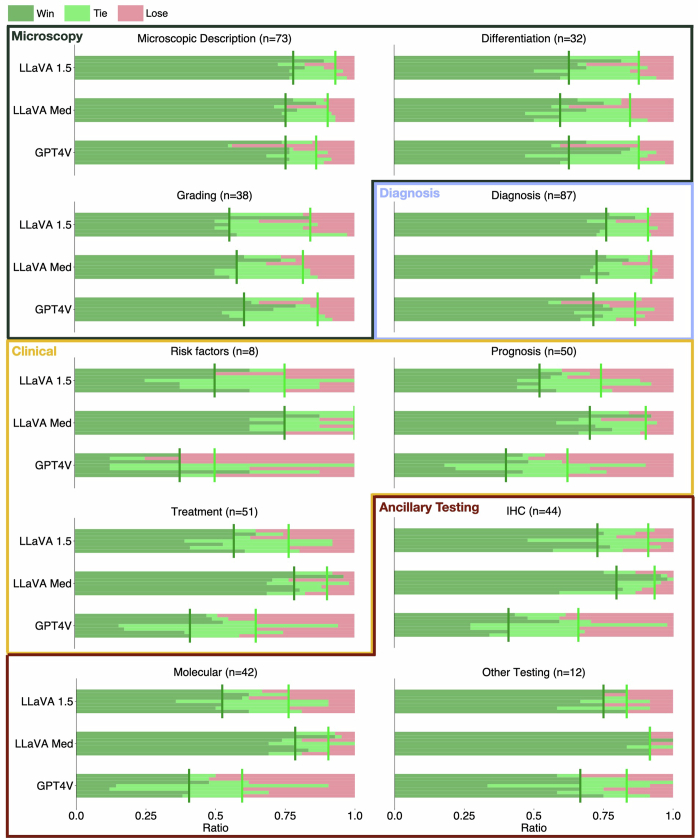
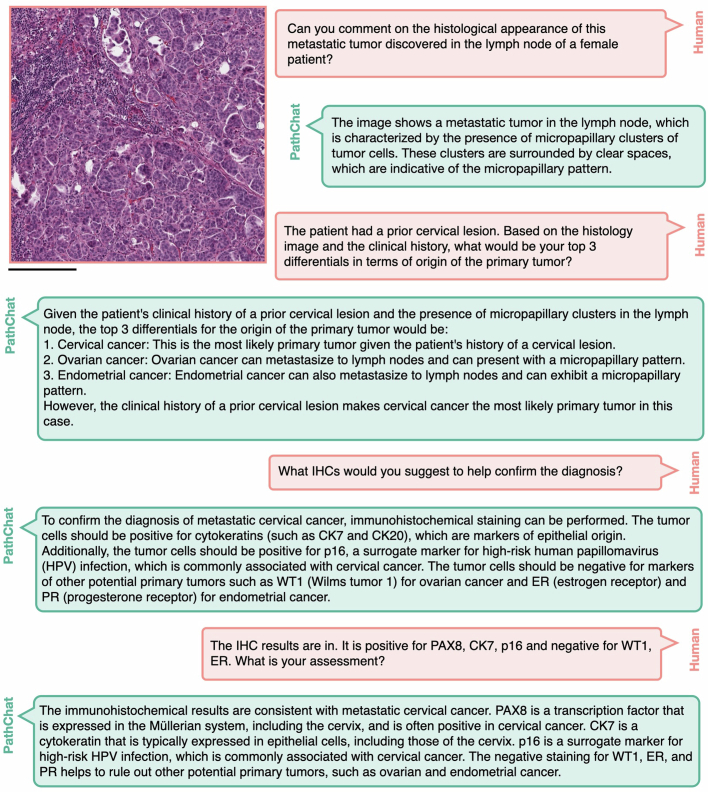
Computational pathology 1,2 has witnessed considerable progress in the development of both task-specific predictive models and task-agnostic self-supervised vision encoders 3,4 . However, despite the explosive growth of generative artificial intelligence (AI), there have been few studies on building general-purpose multimodal AI assistants and copilots 5 tailored to pathology. Here we present PathChat, a vision-language generalist AI assistant for human pathology. We built PathChat by adapting a foundational vision encoder for pathology, combining it with a pretrained large language model and fine-tuning the whole system on over 456,000 diverse visual-language instructions consisting of 999,202 question and answer turns. We compare PathChat with several multimodal vision-language AI assistants and GPT-4V, which powers the commercially available multimodal general-purpose AI assistant ChatGPT-4 (ref. 6 ). PathChat achieved state-of-the-art performance on multiple-choice diagnostic questions from cases with diverse tissue origins and disease models. Furthermore, using open-ended questions and human expert evaluation, we found that overall PathChat produced more accurate and pathologist-preferable responses to diverse queries related to pathology. As an interactive vision-language AI copilot that can flexibly handle both visual and natural language inputs, PathChat may potentially find impactful applications in pathology education, research and human-in-the-loop clinical decision-making.
Overview
The claims and statistics of this paper haven’t been checked yet.
Free: it reads the open-access text and checks the first 5 claims that cite a source we can check. Create a free account to check every claim.
Integrity signals
Registry
Cites
Statistics
Figures
Verification
Claims the paper makes
The claims and statistics of this paper haven’t been checked yet.
Free: it reads the open-access text and checks the first 5 claims that cite a source we can check. Create a free account to check every claim.
Claims other papers make about this one
Each is checked against this paper’s own text: does it say what the citing paper says it does?
The source backs part of the claim, not all of it — or backs it for a different population, condition or comparison.
In the citing paper
“The synthetic region-level captions can easily be generated with the generative AI model to provide a wealth of text guidance88,127.”
From A multimodal whole-slide foundation model for pathology (2025) · cites this paper as [88]
Experimental — accuracy not yet measured
Self-check
Percentages, sums and reported differences re-computed from the paper’s own numbers.
The self-check needs the paper’s full text.
Citations
Cites
Microsoft COCO: Common Objects in Context
Lin, T.-Y., Maire, M., Belongie, S., Hays, J., Perona, P., Ramanan, D., Dollár, P., & Zitnick, C. L. (2014) · Lecture Notes in Computer Science · doi:10.1007/978-3-319-10602-1_48 · Cited by 45,460
Language Models are Few-Shot Learners
Brown, T. B., Mann, B., Ryder, N., Subbiah, M., Kaplan, J., Dhariwal, P., Neelakantan, A., Shyam, P., Sastry, G., Askell, A., et al. (2020) · arXiv · doi:10.48550/arxiv.2005.14165 · Cited by 23,372
Learning Transferable Visual Models From Natural Language Supervision
Radford, A., Kim, J. W., Hallacy, C., Ramesh, A., Goh, G., Agarwal, S., Sastry, G., Askell, A., Mishkin, P., Clark, J., et al. (2021) · arXiv · doi:10.48550/arxiv.2103.00020 · Cited by 15,293
QuPath: Open source software for digital pathology image analysis
Bankhead, P., Loughrey, M. B., Fernández, J. A., Dombrowski, Y., McArt, D. G., Dunne, P. D., McQuaid, S., Gray, R. T., Murray, L. J., Coleman, H. G., et al. (2017) · Scientific Reports · doi:10.1038/s41598-017-17204-5 · Cited by 8,908
Training language models to follow instructions with human feedback
Ouyang, L., Wu, J., Jiang, X., Almeida, D., Wainwright, C. L., Mishkin, P., Zhang, C., Agarwal, S., Slama, K., Ray, A., et al. (2022) · arXiv · doi:10.48550/arxiv.2203.02155 · Cited by 4,208
Large Language Models Encode Clinical Knowledge
Singhal, K., Azizi, S., Tu, T., Mahdavi, S. S., Wei, J., Chung, H. W., Scales, N., Tanwani, A., Cole-Lewis, H., Pfohl, S., et al. (2022) · arXiv · doi:10.48550/arxiv.2212.13138 · Cited by 4,083
Large language models encode clinical knowledge
Singhal, K., Azizi, S., Tu, T., Mahdavi, S. S., Wei, J., Chung, H. W., Scales, N., Tanwani, A., Cole-Lewis, H., Pfohl, S., et al. (2023) · Nature · doi:10.1038/s41586-023-06291-2 · Cited by 4,083
Ehteshami Bejnordi, B., Veta, M., Johannes van Diest, P., van Ginneken, B., Karssemeijer, N., Litjens, G., van der Laak, J. A. W. M., and the CAMELYON16 Consortium, Hermsen, M., Manson, Q. F., et al. (2017) · JAMA · doi:10.1001/jama.2017.14585 · Cited by 3,293
Retrieval-Augmented Generation for Knowledge-Intensive NLP Tasks
Lewis, P., Perez, E., Piktus, A., Petroni, F., Karpukhin, V., Goyal, N., Küttler, H., Lewis, M., Yih, W.-T., Rocktäschel, T., et al. (2020) · arXiv · doi:10.48550/arxiv.2005.11401 · Cited by 3,101
Coudray, N., Ocampo, P. S., Sakellaropoulos, T., Narula, N., Snuderl, M., Fenyö, D., Moreira, A. L., Razavian, N., & Tsirigos, A. (2018) · Nature Medicine · doi:10.1038/s41591-018-0177-5 · Cited by 2,930
Research works printed but not linked: 1
- Tsuneki, M. & Kanavati, F. Inference of captions from histopathological patches. In Proc. International Conference on Medical Imaging with Deep Learning (Konukoglu, E. et al.) 1235–1250 (PMLR, 2022).
Cited by
Generalist foundation models from a multimodal dataset for 3D computed tomography
Hamamci, I. E., Er, S., Wang, C., Almas, F., Simsek, A. G., Esirgun, S. N., Dogan, I., Durugol, O. F., Hou, B., Shit, S., et al. (2026) · Nature Biomedical Engineering · doi:10.1038/s41551-025-01599-y · Cited by 104
“14, consists of an attention-pooling layer, followed by a 2-layer multilayer perceptron (MLP).”
Vision-language models for medical report generation and visual question answering: a review
Hartsock, I., & Rasool, G. (2024) · Frontiers in Artificial Intelligence · doi:10.3389/frai.2024.1430984 · Cited by 229
Baião, A. R., Cai, Z., Poulos, R. C., Robinson, P. J., Reddel, R. R., Zhong, Q., Vinga, S., & Gonçalves, E. (2025) · Briefings in Bioinformatics · doi:10.1093/bib/bbaf355 · Cited by 211
“A notable example is PathChat [191], a multimodal large language model (MLLM) designed for computational pathology.”
A Vision-Language Foundation Model for Precision Oncology
Xiang, J., Wang, X., Zhang, X., Xi, Y., Eweje, F., Chen, Y., Li, Y., Bergstrom, C., Gopaulchan, M., Kim, T., et al. (2025) · Nature · doi:10.1038/s41586-024-08378-w · Cited by 256
“Recent efforts have been made to develop vision–language foundation models for medicine 14 , particularly in the field of pathology 15–17 .”
Large language models for disease diagnosis: a scoping review
Zhou, S., Xu, Z., Zhang, M., Xu, C., Guo, Y., Zhan, Z., Fang, Y., Ding, S., Wang, J., Xu, K., et al. (2025) · npj Artificial Intelligence · doi:10.1038/s44387-025-00011-z · Cited by 122
Self-citationFerber, D., El Nahhas, O. S. M., Wölflein, G., Wiest, I. C., Clusmann, J., Leßmann, M.-E., Foersch, S., Lammert, J., Tschochohei, M., Jäger, D., et al. (2025) · Nature Cancer · doi:10.1038/s43018-025-00991-6 · Cited by 175
A multimodal whole-slide foundation model for pathology
Ding, T., Wagner, S. J., Song, A. H., Chen, R. J., Lu, M. Y., Zhang, A., Vaidya, A. J., Jaume, G., Shaban, M., Kim, A., et al. (2025) · Nature Medicine · doi:10.1038/s41591-025-03982-3 · Cited by 171
“To go beyond the typically brief clinical reports focused on the final diagnosis, we prompted PathChat to generate detailed morphological descriptions of ROIs, providing important training data for models to capture complex pathological features.”
InfluentialSelf-citationA Review on Edge Large Language Models: Design, Execution, and Applications
Zheng, Y., Chen, Y., Qian, B., Shi, X., Shu, Y., & Chen, J. (2025) · ACM Computing Surveys · doi:10.1145/3719664 · Cited by 169
“…[209] ODSearch [147] 3D-LLM [66] E2WM [198] [72] Gboard [146] Rewriting Agent [234] ChatEval [20] MobiVQA [19] DiaSum-MoE [175] WebAgent[61]SheetCopilot[105]RCIAgent[87] DriveVLM [174] LLM-Driver [23] VLP [139] AutoFL [84] LLMAO [208] Toggle [67] WinCLIP [76] AnomalyGPT [54] ALFA [232] Fig.”
Foundation Model for Advancing Healthcare: Challenges, Opportunities and Future Directions
He, Y., Huang, F., Jiang, X., Nie, Y., Wang, M., Wang, J., & Chen, H. (2024) · IEEE Reviews in Biomedical Engineering · doi:10.1109/rbme.2024.3496744 · Cited by 247
“For instance, PathAsst [210], PathChat [211], Qilin-Med-VL [212], and XrayGPT [213] combined a strong vision encoder backbone with an open-source large language model, achieving a vision language interactive AI assistant.”
Self-citationA comprehensive survey of large language models and multimodal large language models in medicine
Xiao, H., Zhou, F., Liu, X., Liu, T., Li, Z., Liu, X., & Huang, X. (2025) · Information Fusion · doi:10.1016/j.inffus.2024.102888 · Cited by 113
“PathInstruct [110] Instruction-Following Data 180K instruction-following data.”
InfluentialDigital twins as global learning health and disease models for preventive and personalized medicine
Li, X., Loscalzo, J., Mahmud, A. K. M. F., Aly, D. M., Rzhetsky, A., Žitnik, M., & Benson, M. (2025) · Genome Medicine · doi:10.1186/s13073-025-01435-7 · Cited by 151
Multimodal generative AI for medical image interpretation
Rao, V. M., Hla, M., Moor, M., Adithan, S., Kwak, S., Topol, E. J., & Rajpurkar, P. (2025) · Nature · doi:10.1038/s41586-025-08675-y · Cited by 180
“Other image-interpretation models have been developed for these fields that do not incorporate formal medical report generation as a downstream task 88,89 .”
HEST-1k: A Dataset For Spatial Transcriptomics and Histology Image Analysis
Jaume, G., Doucet, P., Song, A. H., Lu, M. Y., Almagro-Pérez, C., Wagner, S., Vaidya, A. J., Chen, R. H., Williamson, D. F. K., Kim, A., et al. (2024) · neural information processing systems · doi:10.52202/079017-1704 · Cited by 273
Self-citationThe generative era of medical AI
Fahrner, J., Chen, E., Topol, E. J., & Rajpurkar, P. (2025) · Cell · doi:10.1016/j.cell.2025.05.018 · Cited by 144
Bayesian Optimization of Catalysis with In-Context Learning
Ramos, M. C., Michtavy, S. S., White, A. D., & Porosoff, M. D. (2026) · ACS Central Science · doi:10.1021/acscentsci.5c02418 · Cited by 37
“27 Here, we investigate whether ICL can be coupled with sequential optimization to design new materials.”
Prompt injection attacks on vision language models in oncology
Clusmann, J., Ferber, D., Wiest, I. C., Schneider, C. V., Brinker, T. J., Foersch, S., Truhn, D., & Kather, J. N. (2025) · Nature Communications · doi:10.1038/s41467-024-55631-x · Cited by 138
Buess, L., Keicher, M., Navab, N., Maier, A., & Arasteh, S. T. (2025) · Biomedical Engineering Letters · doi:10.1007/s13534-025-00497-1 · Cited by 107
“Expanding beyond radiology, datasets like Quilt-1M [141] have introduced multi-modal resources covering additional domains such as digital pathology [122, 153].”
Jung, K.-H. (2025) · Healthcare Informatics Research · doi:10.4258/hir.2025.31.2.114 · Cited by 105
“Active research areas additionally include integrating multimodal data [58,59] and extending LLM capabilities into physical systems [60].”
Application of large language models in disease diagnosis and treatment
Yang, X., Li, T., Su, Q., Liu, Y., Kang, C., Lyu, Y., Zhao, L., Nie, Y., & Pan, Y. (2024) · Chinese Medical Journal · doi:10.1097/cm9.0000000000003456 · Cited by 100
Artificial intelligence-based biomarkers for treatment decisions in oncology
Ligero, M., Nahhas, O. S. M. E., Aldea, M. D., & Kather, J. N. (2025) · Trends in cancer · doi:10.1016/j.trecan.2024.12.001 · Cited by 83
Machine learning methods for histopathological image analysis: updates in 2024
Komura, D., Ochi, M., & Ishikawa, S. (2025) · Computational and Structural Biotechnology Journal · doi:10.1016/j.csbj.2024.12.033 · Cited by 76
Med3DVLM: An Efficient Vision-Language Model for 3D Medical Image Analysis
Xin, Y., Ates, G. C., Gong, K., & Shao, W. (2025) · IEEE Journal of Biomedical and Health Informatics · doi:10.1109/jbhi.2025.3604595 · Cited by 112
“Despite their success in analyzing 2D medical images, such as chest X-rays [8] and pathology slides [22], their application to 3D imaging remains limited.”
Human–AI collectives most accurately diagnose clinical vignettes
Zöller, N., Berger, J., Lin, I., Fu, N., Komarneni, J., Barabucci, G., Laskowski, K., Shia, V., Harack, B., Chu, E. A., et al. (2025) · Proceedings of the National Academy of Sciences · doi:10.1073/pnas.2426153122 · Cited by 97
Mohajer-Bastami, A., Moin, S., Ahmad, S., Ahmed, A., Pouwels, S., Hajibandeh, S., Yang, W., Parmar, C. D., Kermansaravi, M., Khalil, M., et al. (2025) · Frontiers in Digital Health · doi:10.3389/fdgth.2025.1644041 · Cited by 86
“Whole slide imaging scanners are now providing high resolution images for the entire glass slides, combining them with digital pathology tools integrating all aspects off pathology reporting including anatomical clinical and molecular pathology (34, 35).”
Artificial intelligence in lung cancer: current applications, future perspectives, and challenges
Huang, D., Li, Z., Jiang, T., Yang, C., & Li, N. (2024) · Frontiers in Oncology · doi:10.3389/fonc.2024.1486310 · Cited by 82
An eyecare foundation model for clinical assistance: a randomized controlled trial
Wu, Y.-L., Qian, B., Li, T., Qin, Y., Guan, Z., Chen, T., Jia, Y., Zhang, P., Zeng, D., Moroi, S. E., et al. (2025) · Nature Medicine · doi:10.1038/s41591-025-03900-7 · Cited by 91
“Moreover, most FM studies 1,3,13 evaluated the model performance via proof-of-concept technical feasibility studies and did not have robust prospective validation of real-world clinical performance.”
Self-citationData-Centric Foundation Models in Computational Healthcare: A Survey
Zhang, Y., Gao, J. G., Tan, Z., Zhou, L., Ding, K., Zhou, M., Zhang, S., & Wang, D. (2026) · ACM Computing Surveys · doi:10.1145/3800677 · Cited by 74
Self-eXplainable AI for medical image analysis: A survey and new outlooks
Hou, J., Liu, S., Bie, Y., Wang, H., Tan, A., Luo, L., & Chen, H. (2026) · Information Fusion · doi:10.1016/j.inffus.2026.104791 · Cited by 66
Tran, M., Balasooriya, C. D., Jonnagaddala, J., Leung, G., Mahboobani, N. R., Ramani, S., Rhee, J., Schuwirth, L., Najafzadeh-Tabrizi, N. S., Semmler, C., et al. (2025) · npj Digital Medicine · doi:10.1038/s41746-025-01721-z · Cited by 72
Heilala, V., Araya, R., & Hämäläinen, R. (2025) · ACM Symposium on Applied Computing · doi:10.1145/3672608.3707764 · Cited by 72
“These multimodal capabilities are suggested to benefit education [12], and multimodal AI is claimed to possess even an “immense” [51, p. 2] and “vast” [57, p. 271] potential.”
Progress and challenges of artificial intelligence in lung cancer clinical translation
Zhu, E., Muneer, A., Zhang, J., Yang, X., Li, X., Zhou, C., Heymach, J. V., Wu, J., & Le, X. (2025) · npj Precision Oncology · doi:10.1038/s41698-025-00986-7 · Cited by 64
Towards next-generation diagnostic pathology: AI-empowered label-free multiphoton microscopy
Wang, S., Pan, J., Zhang, X., Li, Y., Liu, W., Lin, R., Wang, X., Kang, D., Li, Z., Huang, F., et al. (2024) · Light Science & Applications · doi:10.1038/s41377-024-01597-w · Cited by 70
“Future advancements will enable tasks such as transforming between multiphoton and H&E images, interpreting multiphoton images alongside pathological reports, and engaging in iterative question-and-answer sessions involving pathological fi ndings and doctor-patient interactions 152 .”
BackgroundCellVoyager: AI CompBio agent generates new insights by autonomously analyzing biological data
Alber, S., Chen, B., Sun, E., Isakova, A., Wilk, A. J., & Zou, J. (2026) · Nature Methods · doi:10.1038/s41592-026-03029-6 · Cited by 79
Self-citationGuo, Y., Li, T., Gong, B., Hu, Y., Wang, S., Yang, L., & Zheng, C. (2024) · Advanced Science · doi:10.1002/advs.202408069 · Cited by 62
SlideChat: A Large Vision-Language Assistant for Whole-Slide Pathology Image Understanding
Chen, Y., Wang, G., Ji, Y., Li, Y., Ye, J., Li, T., Hu, M., Yu, R., Qiao, Y., & He, J. (2025) · IEEE Computer Society Conference on Computer Vision and Pattern Recognition/Proceedings - IEEE Computer Society Conference on Computer Vision and Pattern Recognition/Proceedings · doi:10.1109/cvpr52734.2025.00484 · Cited by 101
“Existing models [21, 23, 27] often process whole slides by extracting small patch/ROI-level data for subsequent analysis, resulting in a limited understanding of global slide con-a text and suboptimal performance in some complex pathological analysis.”
Ghezloo, F., Seyfioğlu, M. S., Soraki, R., Ikezogwo, W. O., Li, B., Vivekanandan, T., Elmore, J. G., Krishna, R., & Shapiro, L. G. (2025) · IEEE/CVF International Conference on Computer Vision (ICCV) · doi:10.1109/iccv51701.2025.02175 · Cited by 79
“While many other studies like Quilt-LLaVA [44], SlideChat [5], and PathChat [34] train histopathology Multi-modal Large Language models (MLLM) and improve on diagnostic reasoning tasks, none of these models effectively automatically navigate the giga-pixel scale WSIs towards a diagnosis.”
Teaching multimodal LLMs to comprehend 12-lead electrocardiographic images
Liu, R., Bai, Y., Yue, X., & Zhang, P. (2026) · npj Digital Medicine · doi:10.1038/s41746-026-02551-3 · Cited by 59
Artificial Intelligence Index Report 2025
Maslej, N., Fattorini, L., Perrault, R., Gil, Y., Parli, V., Kariuki, N., Capstick, E., Reuel, A., Brynjolfsson, E., Etchemendy, J., et al. (2025) · arXiv · doi:10.48550/arxiv.2504.07139 · Cited by 50
Ochi, M., Komura, D., & Ishikawa, S. (2025) · JMA Journal · doi:10.31662/jmaj.2024-0206 · Cited by 65
Generative Artificial Intelligence in Pathology and Medicine: A Deeper Dive
Rashidi, H. H., Pantanowitz, J., Chamanzar, A., Fennell, B. D., Wang, Y., Gullapalli, R. R., Tafti, A. P., Deebajah, M., Albahra, S., Glassy, E. F., et al. (2024) · Modern Pathology · doi:10.1016/j.modpat.2024.100687 · Cited by 56
Spatial architecture of development and disease
Lázár, E., & Lundeberg, J. (2025) · Nature Reviews Genetics · doi:10.1038/s41576-025-00892-5 · Cited by 57
China Protocol for early screening, precise diagnosis, and individualized treatment of lung cancer
Wang, C., Chen, B., Liang, S., Shao, J., Li, J., Yang, L., Ren, P., Wang, Z., Luo, W., Zhang, L., et al. (2025) · Signal Transduction and Targeted Therapy · doi:10.1038/s41392-025-02256-1 · Cited by 51
Self-citationDanish, S., Sadeghi‐Niaraki, A., Khan, S. U., Dang, L. M., Tightiz, L., & Moon, H. (2025) · Information Fusion · doi:10.1016/j.inffus.2025.103623 · Cited by 61
Zhang, X.-M., Gao, T.-H., Cai, Q.-Y., Xia, J.-B., Sun, Y., Yang, J. M., Li, W., Zhang, S.-X.-M., Lou, H.-R., Yu, X., et al. (2026) · Military Medical Research · doi:10.1186/s40779-025-00680-6 · Cited by 50
“Inspired by the LLaVA approach, studies [54, 214, 215] have utilized cleaned paired pathology image-text data to generate visual instruction fine-tuning data with the aid of ChatGPT, and then fine-tuned the LLaVA model using this data.”
Empowering Generalist Material Intelligence with Large Language Models
Yuan, W., Chen, G., Wang, Z., & You, F. (2025) · Advanced Materials · doi:10.1002/adma.202502771 · Cited by 54
Sun, Y., Si, Y., Zhu, C., Gong, X., Zhang, K., Chen, P., Zhang, Y., Shui, Z., Lin, T., & Yang, L. (2025) · IEEE Computer Society Conference on Computer Vision and Pattern Recognition/Proceedings - IEEE Computer Society Conference on Computer Vision and Pattern Recognition/Proceedings · doi:10.1109/cvpr52734.2025.00969 · Cited by 75
“Consequently, several pathology-specific LMMs have emerged, including PathAsst [48], PathGen-LLaVA [47], Quilt-LLaVA [41], and PathChat [35].”
Foundation Models in Computational Pathology: A Review of Challenges, Opportunities, and ImpactPreprint
Bilal, M., Aadam, Raza, M., Altherwy, Y. N., Alsuhaibani, A., Abduljabbar, A., Almarshad, F. A., Golding, P., & Rajpoot, N. (2025) · arXiv (Cornell University) · doi:10.48550/arxiv.2502.08333 · Cited by 66
Utilizing multimodal artificial intelligence to advance cardiovascular diseases
Yang, X.-Y., Li, Y., Wang, J., Jia, Y., Zhang, Y., & Chen, M. (2025) · Precision Clinical Medicine · doi:10.1093/pcmedi/pbaf016 · Cited by 50
“…and electronic health records (EHRs), offer a robust foundation and ideal application scenarios for MLLMs. Models like pathology copilot [ 12 ], EchoClip [ 13 ], SkinGPT-4 [ 14 ], and Biomed-Parse [ 15 ] have demonstrated impressive capabilities in zero-shot learning, adaptability,…”
Self-citationShin, Y., Lee, M., Lee, Y. K., Kim, K., & Kim, T. J. (2025) · Life · doi:10.3390/life15040654 · Cited by 50
“This superior performance is achieved despite PathChat being a smaller and more cost-effective model to deploy [95].”
Application of artificial intelligence and digital tools in cancer pathology
Shaktah, L., Carrero, Z. I., Hewitt, K. J., Gustav, M., Cecchini, M. J., Foersch, S., Berezowska, S., & Kather, J. N. (2025) · The Lancet Digital Health · doi:10.1016/j.landig.2025.100933 · Cited by 50
Impact of stain variation and color normalization for prognostic predictions in pathology
Lin, S., Zhou, H., Watson, M. A., Govindan, R., Côté, R. J., & Yang, C. (2025) · Scientific Reports · doi:10.1038/s41598-024-83267-w · Cited by 40
Li, D., Wan, G., Wu, X., Wu, X., He, Y., Chen, Z., Nirmal, A. J., Lian, C. G., Sorger, P. K., Semenov, Y. R., et al. (2026) · Knowledge and Information Systems · doi:10.1007/s10115-026-02806-1 · Cited by 45
“Multi-modal CPathFMs further integrate histopathological images with clinical reports and captions, improving model generalizability and interpretability in AI-assisted pathology.”
Generative Artificial Intelligence in Medicine
Shanmugam, D., Agrawal, M., Movva, R., Chen, I. Y., Ghassemi, M., Jacobs, M. L., & Pierson, E. (2025) · Annual Review of Biomedical Data Science · doi:10.1146/annurev-biodatasci-103123-095332 · Cited by 41
Gao, P., Xiao, Q., Tan, H. J. J., Song, J., Fu, Y., Xu, J., Zhao, J., Miao, Y., Li, X., Yi, J., et al. (2024) · Cell Reports Medicine · doi:10.1016/j.xcrm.2024.101848 · Cited by 44
Large language models for clinical decision support in gastroenterology and hepatology
Wiest, I. C., Bhat, M., Clusmann, J., Schneider, C. V., Jiang, X., & Kather, J. N. (2025) · Nature Reviews Gastroenterology & Hepatology · doi:10.1038/s41575-025-01108-1 · Cited by 48
Generating dermatopathology reports from gigapixel whole slide images with HistoGPT
Tran, M., Schmidle, P., Guo, R. R., Wagner, S. J., Koch, V., Lupperger, V., Novotny, B., Murphree, D. H., Hardway, H. D., D’Amato, M., et al. (2025) · Nature Communications · doi:10.1038/s41467-025-60014-x · Cited by 36
“The fi xed-size outputs of dimension 640×1536 are then used as keys and values in the tanh-gated cross-attention block (XATTN).”
Integrating language into medical visual recognition and reasoning: A survey
Lu, Y., & Wang, A. (2025) · Medical Image Analysis · doi:10.1016/j.media.2025.103514 · Cited by 48
Enhancing Large Language Models with Retrieval-Augmented Generation: A Radiology-Specific Approach
Weinert, D., & Rauschecker, A. M. (2025) · Radiology Artificial Intelligence · doi:10.1148/ryai.240313 · Cited by 36
Ma, Y., Jamdade, S., Konduri, L., & Sailem, H. (2025) · npj Digital Medicine · doi:10.1038/s41746-025-01524-2 · Cited by 42
Tiwari, A., Ghose, A., Hasanova, M., Faria, S. S., Mohapatra, S., Adeleke, S. M., & Boussios, S. (2025) · Discover Oncology · doi:10.1007/s12672-025-02212-z · Cited by 45
“Lu et al. developed a multi-modal generative AI copilot for human pathology that combined a ViT (trained on 100 million images) with a large language model and then fine-tuned on 456,000 + visual-language pathology instructions which covered 999,202 question–answer pairs [89].”
The potential of large language models to advance precision oncology
Liang, S., Zhang, J., Liu, X., Huang, Y., Shao, J., Liu, X., Li, W., Wang, G., & Wang, C. (2025) · EBioMedicine · doi:10.1016/j.ebiom.2025.105695 · Cited by 38
“18,19 In this review, we initially introduce a set of model construction strategies and general use of LLMs in medicine.”
Ghete, T., Kock, F., Pontones, M., Pfrang, D., Westphal, M., Höfener, H., & Metzler, M. (2024) · HemaSphere · doi:10.1002/hem3.70048 · Cited by 33
Gao, Y., Wen, P., Liu, Y., Sun, Y., Qian, H., Zhang, X., Peng, H., Gao, Y., Li, C., Gu, Z., et al. (2025) · Journal of Translational Medicine · doi:10.1186/s12967-025-06428-z · Cited by 34
“5) [60].”
FetalCLIP: a visual-language foundation model for fetal ultrasound image analysis
Maani, F. A., Saeed, N., Saleem, T. J., Farooq, Z., Alasmawi, H., Diehl, W., Mohammad, A., Waring, G., Valappil, S., Bricker, L., et al. (2026) · npj Digital Medicine · doi:10.1038/s41746-026-02907-9 · Cited by 45
“…growing need for efficient tuning to adapt large pre-trained models to diverse applications—an essential consideration in building large and complex AI systems [35–38]—we assessed the capability of the FetalCLIP image encoder to extract generalizable features for downstream fetal ultrasound tasks.”
The barriers to uptake of artificial intelligence in hepatology and how to overcome them
Clusmann, J., Balaguer‐Montero, M., Bassegoda, O., Schneider, C. V., Seraphin, T. P., Paintsil, E. K., Luedde, T., Pérez-López, R., Caldéraro, J., Gilbert, S., et al. (2025) · Journal of Hepatology · doi:10.1016/j.jhep.2025.07.003 · Cited by 34
RetractedHuang, Q., Wu, S., Ou, Z., & Gao, Y. (2025) · Intelligent Oncology · doi:10.1016/j.intonc.2025.03.004 · Cited by 36
Read like a radiologist: Efficient vision-language model for 3D medical imaging interpretation
Lee, C., Park, S. J., Shin, C., Choi, W. H., Park, H. J., Lee, J. E., & Ye, J. C. (2026) · Medical Image Analysis · doi:10.1016/j.media.2026.104077 · Cited by 32
A feasibility study of automating radiotherapy planning with large language model agents
Wang, Q., Wang, Z., Li, M., Ni, X., Tan, R., Zhang, W., Wubulaishan, M., Wang, W., Yuan, Z., Zhang, Z., et al. (2025) · Physics in Medicine & Biology · doi:10.1088/1361-6560/adbff1 · Cited by 28
“Despite these current limitations, future advancements and fine-tuning with diverse medical images, including dose distributions, CT/MR scans (Moor et al 2023), and even pathology slides (Lu et al 2024), hold promise for enhancing vLLM accuracy.”
How AI agents will change cancer research and oncology
Lee, Y., Ferber, D., Rood, J., Regev, A., & Kather, J. N. (2024) · Nature Cancer · doi:10.1038/s43018-024-00861-7 · Cited by 34
Multimodal integration strategies for clinical application in oncology
Zhang, B., Wan, Z., Luo, Y., Zhao, X., Samayoa, J. A., Zhao, W., & Wu, S. (2025) · Frontiers in Pharmacology · doi:10.3389/fphar.2025.1609079 · Cited by 36
“Vision-language models such as PathChat, LLaVA-Med, Clinical-BERT, and XrayGPT can generate clinical reports and provide insights based on clinical images (Lu et al., 2024b; Li C. et al., 2023; Huang Shih-Cheng et al., 2020; Thawakar et al., 2025).”
Leveraging multi-modal foundation models for analysing spatial multi-omic and histopathology data
Liu, T., Huang, T., Ding, T., Wu, H., Humphrey, P., Perincheri, S., Schalper, K., Ying, R., Xu, H., Zou, J., et al. (2026) · Nature Biomedical Engineering · doi:10.1038/s41551-025-01602-6 · Cited by 36
Self-citationArtificial intelligence agents in healthcare research: A scoping review
Njei, B., Al-Ajlouni, Y. A., Sidney Kanmounye, U., Boateng, S., Loic Nguefang, G., Njei, N., Hamouri, S., & Al-Ajlouni, A. F. (2026) · PLOS One · doi:10.1371/journal.pone.0342182 · Cited by 27
Digital pathology and multimodal learning on oncology data
Waqas, A., Naveed, J., Shahnawaz, W., Asghar, S., Bui, M. M., & Rasool, G. (2024) · BJR|Artificial Intelligence · doi:10.1093/bjrai/ubae014 · Cited by 35
Leveraging foundation and large language models in medical artificial intelligence
Wong, I. N., Monteiro, O., Baptista‐Hon, D. T., Wang, K., Lu, W.-Y., Sun, Z., Nie, S., & Yin, Y. (2024) · Chinese Medical Journal · doi:10.1097/cm9.0000000000003302 · Cited by 31
PA-LLaVA: A Large Language-Vision Assistant for Human Pathology Image Understanding
Dai, D., Zhang, Y., Xu, L., Yang, Q., Shen, X., Xia, S., & Wang, G. (2024) · IEEE International Conference on Bioinformatics and Biomedicine (BIBM) · doi:10.1109/bibm62325.2024.10821785 · Cited by 45
“Recently, several LLaVA-based models such as LLaVA-Med [17], PathChat [18], and Quilt-LLaVA [19] have gradually emerged in the field of medical image understanding.”
Evaluating ChatGPT’s diagnostic potential for pathology images
Ding, L., Fan, L., Shen, M., Wang, Y., Sheng, K., Zou, Z., An, H., & Jiang, Z. (2025) · Frontiers in Medicine · doi:10.3389/fmed.2024.1507203 · Cited by 30
Radiomics for lung cancer diagnosis, management, and future prospects
Martell, M. B., Linton‐Reid, K., Chen, M., & Aboagye, E. O. (2025) · Clinical Radiology · doi:10.1016/j.crad.2025.106926 · Cited by 29
Artificial Intelligence in Veterinary Clinical Pathology—An Introduction and Review
Neal, S. V., Rudmann, D. G., & Corps, K. N. (2025) · Veterinary Clinical Pathology · doi:10.1111/vcp.70012 · Cited by 29
“The utility of such approaches is evidenced through PathChat 2, which is a multimodal generative AI copilot built using a pathology foundation model and an LLM that shows great promise as a general human pathology tool [100, 101].”
Advancing Clinical Practice: The Potential of Multimodal Technology in Modern Medicine
Artsi, Y., Sorin, V., Glicksberg, B. S., Nadkarni, G. N., & Klang, E. (2024) · Journal of Clinical Medicine · doi:10.3390/jcm13206246 · Cited by 28
Aligning knowledge concepts to whole slide images for precise histopathology image analysis
Zhao, W., Guo, Z., Fan, Y., Jiang, Y., Yeung, M. C. F., & Yu, L. (2024) · npj Digital Medicine · doi:10.1038/s41746-024-01411-2 · Cited by 36
“Lastly, as PathChat [38], a multimodal generative vision-language AI assistant for human pathology, emerged as a concurrent work of ConcepPath, it would be promising if we could adopt PatChat as a basic building component in ConcepPath.”
A multimodal vision-language model for comprehensive dental diagnosis and enhanced clinical practice
Meng, Z., Hao, J., Dai, X., Feng, Y., Liu, J., Feng, B., Wu, H., Gai, X., Zhu, H., Hu, T., et al. (2026) · Nature Communications · doi:10.1038/s41467-026-75718-x · Cited by 28
“This integration facilitates instruction-following across diverse diagnosis tasks, enhances generalization in open-ended question-answering, and supports fl uid interaction via natural language explanations 47 – 51 .”
Bridging modalities with AI: a review of AI advances in multimodal biomedical imaging
Doan, L. M. T., Shahhosseini, K., Verma, S., Marefat, A., Locicero, G., Verma, S., Angione, C., & Occhipinti, A. (2026) · Communications Engineering · doi:10.1038/s44172-026-00602-x · Cited by 31
“Integrationoftextwith single imaging modalities, such as histopathology 125,127,128 or radiology 129 – 131 , remains an active area of research and continues to yield important advances.”
Cancer workforce—a global crisis: a Lancet Oncology Commission
Hricak, H., Ward, Z. J., Moraes, F. Y., Scott, A. M., Dako, F., Ngwa, W. F., Villarreal-Garza, C. M., Abdel-Wahab, M., Avery, S. M., Addai, B. W., et al. (2026) · The Lancet Oncology · doi:10.1016/s1470-2045(26)00065-3 · Cited by 29
Neittaanmäki, N. (2025) · Frontiers in Education · doi:10.3389/feduc.2025.1517116 · Cited by 29
A Review of the Applications, Benefits, and Challenges of Generative AI for Sustainable Toxicology
Alam, F., Alnazzawi, T. S. M., Mehmood, R., & Almaghthawi, A. (2025) · Current Research in Toxicology · doi:10.1016/j.crtox.2025.100232 · Cited by 28
Unravelling tumour spatiotemporal heterogeneity using spatial multimodal data
Zuo, C., Zhu, J., Zou, J., & Chen, L. (2025) · Clinical and Translational Medicine · doi:10.1002/ctm2.70331 · Cited by 24
“Integrating large-scale public omics and imaging data Computational biology and pathology are undergoing major changes, 122,188,189 with the rapid development of artificial intelligence (AI) research and the public availability of various omics and imaging data.”
A systematic review of multi-modal large language models on domain-specific applications
Li, S., Wong, K. W., Wang, G., & Duong, T.-T. (2025) · Artificial Intelligence Review · doi:10.1007/s10462-025-11398-1 · Cited by 27
“Notably, the inclusion of prompts leads to a significant boost in AUC scores for both CONCH and SOTA, underscoring the importance of in-context learning in improv - ing the model’s ability to generalise and extract relevant features from input data.”
InfluentialScaling medical AI across clinical contexts
Li, M. M., Reis, B. Y., Rodman, A. M., Cai, T., Dagan, N., Balicer, R. D., Loscalzo, J., Kohane, I. S., & Žitnik, M. (2026) · Nature Medicine · doi:10.1038/s41591-025-04184-7 · Cited by 31
“Prompting a foundation model while relying solely on its parametric knowledge limits its capacity to handle distribution shifts in target labels 5,6,8,9,34 , such as updates to disease classifications, evolving diagnostic criteria or newly recognized syndromes 12,13,35 .”
Muneer, A., Waqas, M. M., Saad, M. B., Showkatian, E., Bandyopadhyay, R., Xu, H. M., Li, W., Chang, J., Liao, Z., Haymaker, C., et al. (2026) · Artificial Intelligence Review · doi:10.1007/s10462-026-11522-9 · Cited by 28
Artificial intelligence facilitates information fusion for perception in complex environments
Yi, X., Ma, Y., Li, Y., Han, X., & Ma, J. (2025) · The Innovation · doi:10.1016/j.xinn.2025.100814 · Cited by 23
Huang, Y., Zhao, W., Zhang, Z., Chen, Y., Fu, Y., Wu, F., Jiang, Y., Liang, L., Wang, S., & Yu, L. (2025) · Nature Communications · doi:10.1038/s41467-025-66300-y · Cited by 32
Li, J., Zhou, Z.-C., Wang, Z.-C., & Lv, H. (2026) · Military Medical Research · doi:10.1186/s40779-026-00684-w · Cited by 29
“…or LLMs alone [22, 23] Pathology copilot Multimodal generative assistant for patholo‑ gists Expert preference; Enhanced complex reasoning support [24] Digital pathology adoption Review/world tour Context for integration and workflow [25] Reader performance and efficiency AI‑aided CXR…”
A universal foundation model for grounded biomedical image interpretation
Wu, L., Nie, Y., He, S., Zhuang, J., Luo, L., Li, T., Xie, Z., Chen, D., Zhao, Y., Mahboobani, N. R., et al. (2026) · Nature Communications · doi:10.1038/s41467-026-73986-1 · Cited by 27
Unified modeling of 3D molecular generation via atomic interactions with PocketXMol
Peng, X., Guo, R., Guo, F., Wang, Z., Sun, J., Guan, J., Jia, Y., Xu, Y., Huang, Y., Zhang, M., et al. (2026) · Cell · doi:10.1016/j.cell.2026.01.003 · Cited by 22
Chen, X., Xu, H., Yu, S., Hu, W., Zhang, Z., Wang, X., Yuan, Y., Wang, M., Chen, L., Lin, X., et al. (2025) · Biology · doi:10.3390/biology14060651 · Cited by 23
A deep learning framework for efficient pathology image analysis
Neidlinger, P., Lenz, T., Foersch, S., Loeffler, C. M. L., Clusmann, J., Gustav, M., Shaktah, L., Langer, R., Dislich, B., Boardman, L. A., et al. (2026) · Nature Communications · doi:10.1038/s41467-026-74918-9 · Cited by 21
“Recently, pathology-speci fi c multimodal large language models (MLLMs) have emerged as AI copilots for clinical decision-making, but they often underperform in biomarker prediction and the regulatory pathway for approving such models as medical devices remains uncertain 12 – 16 .”
Pathologyvlm: a large vision-language model for pathology image understanding
Dai, D., Zhang, Y., Yang, Q., Xu, L., Shen, X., Xia, S., & Wang, G. (2025) · Artificial Intelligence Review · doi:10.1007/s10462-025-11190-1 · Cited by 26
“Recently, several LLaVA-based models such as LLaVA-Med (Li et al. 2024), PathChat (Lu et al. 2024), and Quilt-LLaVA (Seyfioglu et al. 2024) have gradually emerged in the field of medical image understanding.”
Emerging AI approaches for cancer spatial omics
Noorbakhsh, J., pour, A. F., & Chuang, J. H. (2025) · GigaScience · doi:10.1093/gigascience/giaf128 · Cited by 21
“A recent category of foundation models uses paired H&E images and text (e.g., CONCH [ 36 ], PathChat [ 37 ], and TITAN [ 38 ]).”
Lipková, J., & Kather, J. N. (2024) · Nature Reviews Clinical Oncology · doi:10.1038/s41571-024-00941-8 · Cited by 21
Clinicians must participate in the development of multimodal AI
Banerji, C. R. S., Shah, A. B., Dabson, B., Chakraborti, T., Hellon, V., Harbron, C. G., & MacArthur, B. D. (2025) · EClinicalMedicine · doi:10.1016/j.eclinm.2025.103252 · Cited by 24
“Recent advances in multimodal AI are allowing us to harness information from disparate sources in ways which were not previously possible, such as developing ‘ co-pilots ’ for pathology 57 and radiology 58 reporting, as well as multimodal diagnostic tools.”
Metadata
- Authors
- Lu, M. Y., Chen, B., Williamson, D. F. K., Chen, R. J., Zhao, M., Chow, A. K., Ikemura, K., Kim, A., Pouli, D., Patel, A., Soliman, A., Chen, C., Ding, T., Wang, J. J., Gerber, G., Liang, I., Le, L. P., Parwani, A. V., Weishaupt, L. L., & Mahmood, F.
- Affiliations
- Broad Institute (US)
- Brigham and Women's Hospital (US)
- The Ohio State University Wexner Medical Center (US)
- Mayo Clinic (US)
- Harvard University (US)
- Corresponding author
- Mahmood, Faisal
- ORCID
- Venue
- Nature
- Published
- 2024-06-12
- Volume
- 634
- Issue
- 8033
- Pages
- 466-473
- ISSN
- 0028-0836 (ISSN-L)
- 1476-4687
- PMC
- PMC11464372
- OpenAlex
- W4399567248
- Semantic Scholar
- 15074299f9b3cfd1230f29fca3a26236dc8681b8
- Cited by
- 461
- References
- 68
- Citations by year
- 2026: 189 · 2025: 229 · 2024: 43
- FWCI
- 64.68
- Type
- journal article
- Language
- en
- Open access
- hybrid
- doi.org
- Licence
- cc-by
- creativecommons.org/licenses/by/4.0 (tdm)
- creativecommons.org/licenses/by/4.0 (vor)
- Locations
- Nature (publishedVersion, cc-by)
- PubMed Central (publishedVersion, cc-by)
- PubMed (publishedVersion)
- Digital Access to Scholarship at Harvard (DASH) (Harvard University) (submittedVersion, cc-by)
- RePEc: Research Papers in Economics (submittedVersion)
- Funders
- National Institute of General Medical Sciences (R35GM149270)
- Topics
- Physical Sciences › Computer Science › Computer Vision and Pattern Recognition › Multimodal Machine Learning Applications
- Health Sciences › Medicine › Health Informatics › Artificial Intelligence in Healthcare and Education
- Physical Sciences › Computer Science › Artificial Intelligence › AI in cancer detection
- Keywords
- vision-language models, computational pathology, large language models, pathology education, clinical decision support, human-in-the-loop
- MeSH terms
- Clinical Decision-Making, Artificial Intelligence, Diagnostic Imaging, Female, Humans, Language, Male, Natural Language Processing, Pathology
About these checks
Registry, retraction, Cites and statistics results are computed, not judged, with one exception: a printed reference that no index lists is read once by a model before it counts as a citation error. Claims are extracted by a model and kept only when their quote appears verbatim in the text; each cited source is then checked, with a model’s help, for whether it says what the claim relies on. Those verdicts can be wrong — read the claim’s quote and the cited source before relying on one.
Statistics and arithmetic are recomputed, not judged.
Confidence bands are shown only for fields calibrated on our annotated test set. None is calibrated yet, so no band is shown.
What counts as a claim ›How we measure confidence ›How we check this ›
Are you an author, or do you see a problem with this page? Request a review
Data sources
Bibliographic data: Semantic Scholar, OpenAlex, Crossref.
Contains information from the Semantic Scholar Academic Graph Datasets, made available under the ODC Attribution License (ODC-BY 1.0).
Semantic Scholar’s data is described in: Kinney, R., et al. (2023). The Semantic Scholar Open Data Platform. arXiv:2301.10140.
