

A multimodal generative AI copilot for human pathology
Open accessThe DOI matches its Crossref record; 80 of the 80 references it cites were found in a registry or an index.
Abstract
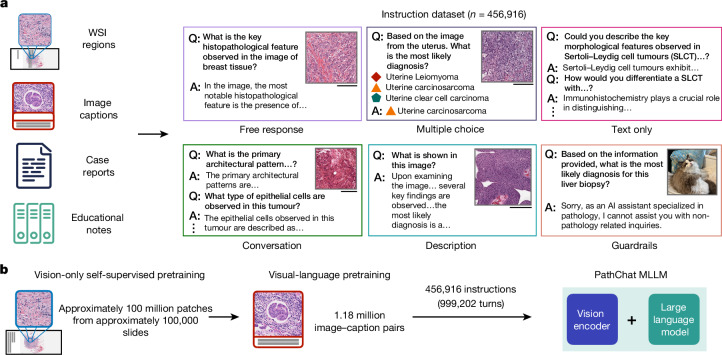
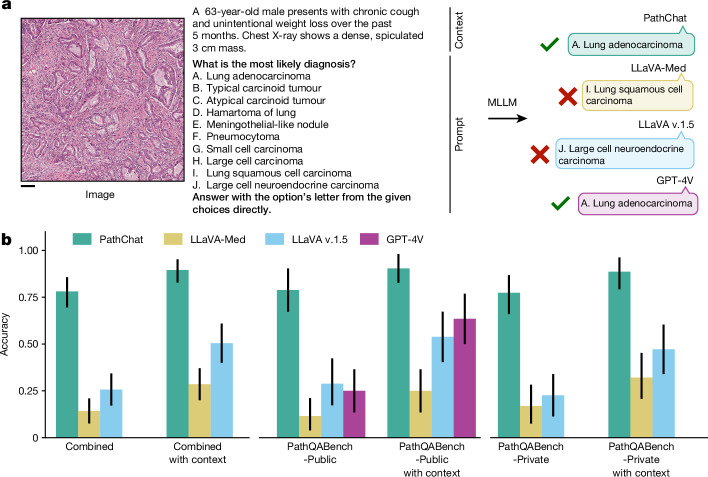
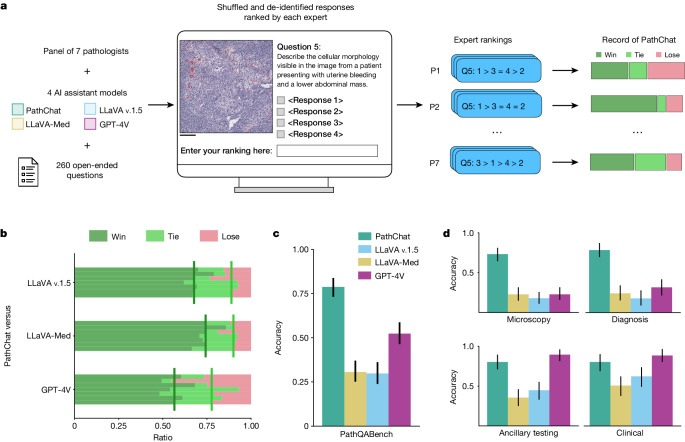
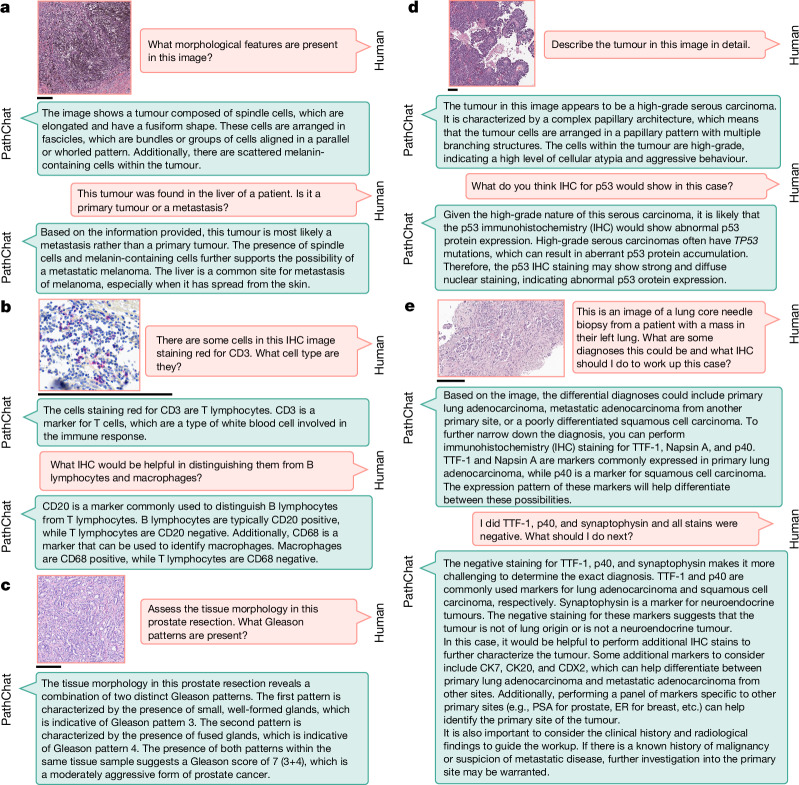
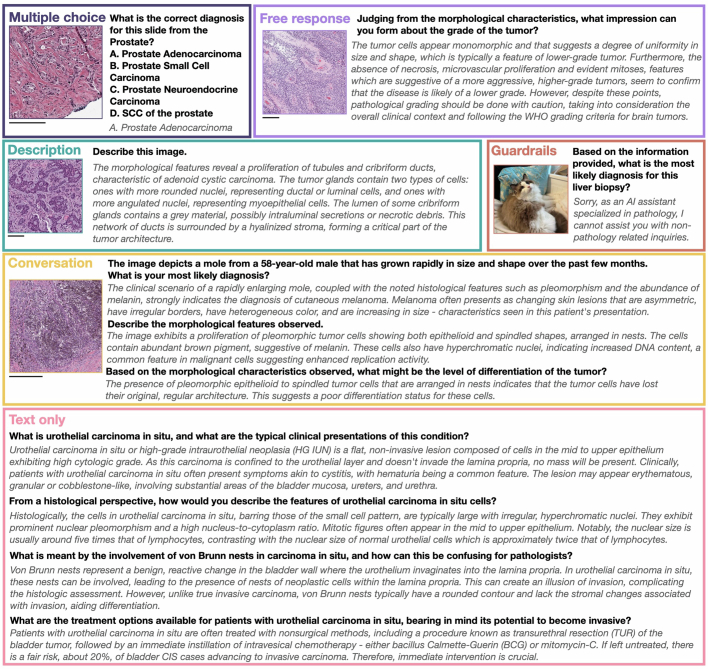
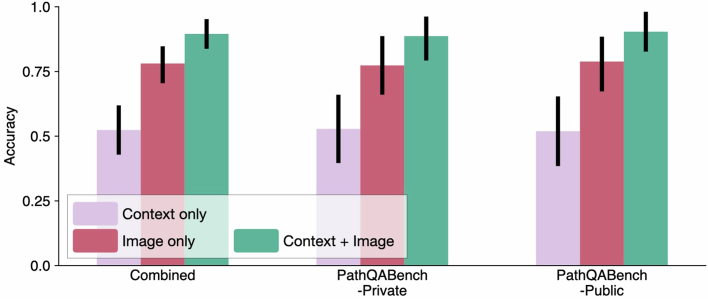
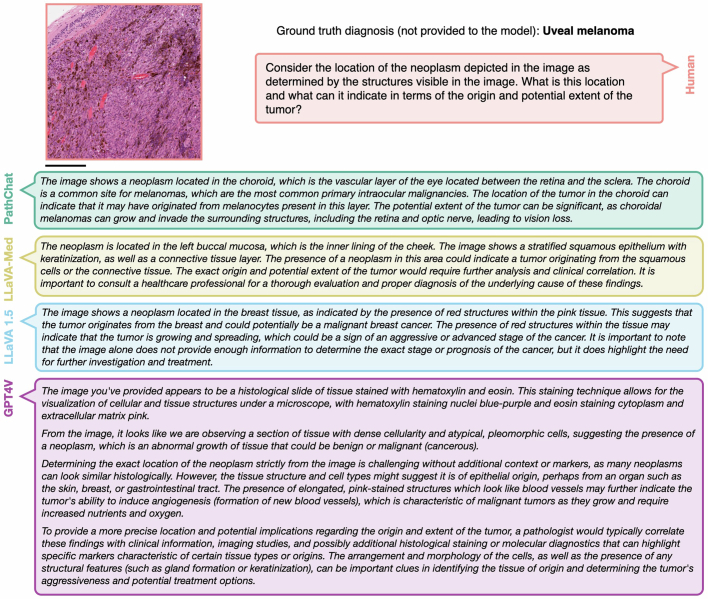
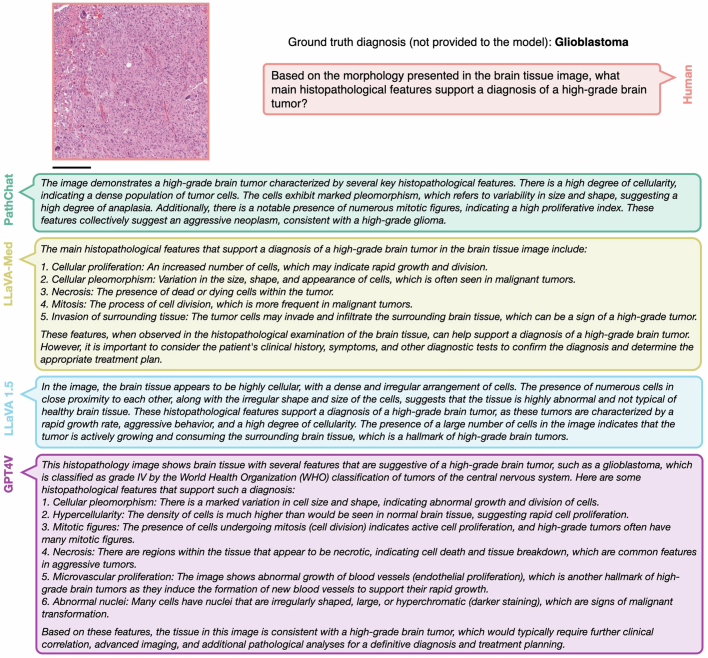
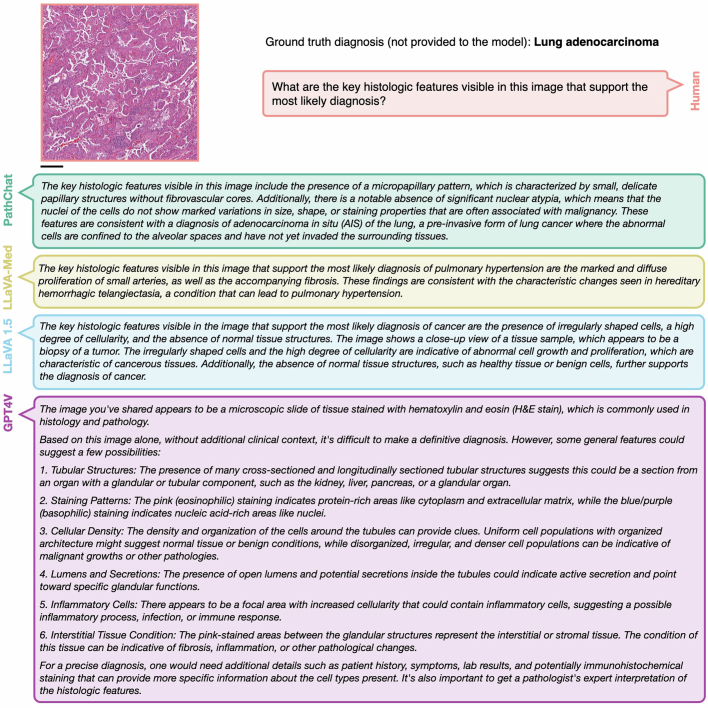
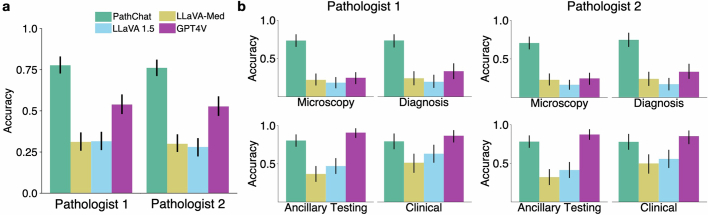
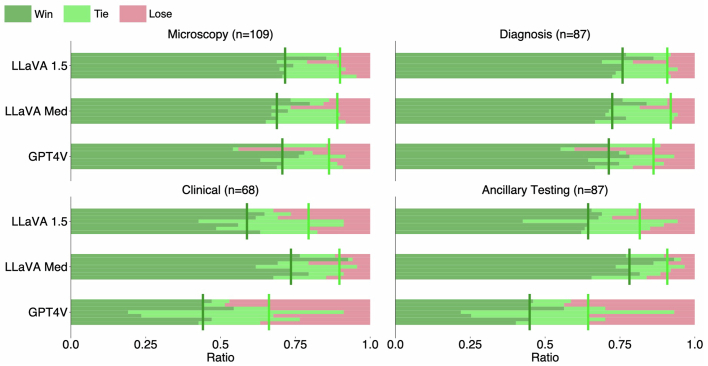
Computational pathology 1,2 has witnessed considerable progress in the development of both task-specific predictive models and task-agnostic self-supervised vision encoders 3,4 . However, despite the explosive growth of generative artificial intelligence (AI), there have been few studies on building general-purpose multimodal AI assistants and copilots 5 tailored to pathology. Here we present PathChat, a vision-language generalist AI assistant for human pathology. We built PathChat by adapting a foundational vision encoder for pathology, combining it with a pretrained large language model and fine-tuning the whole system on over 456,000 diverse visual-language instructions consisting of 999,202 question and answer turns. We compare PathChat with several multimodal vision-language AI assistants and GPT-4V, which powers the commercially available multimodal general-purpose AI assistant ChatGPT-4 (ref. 6 ). PathChat achieved state-of-the-art performance on multiple-choice diagnostic questions from cases with diverse tissue origins and disease models. Furthermore, using open-ended questions and human expert evaluation, we found that overall PathChat produced more accurate and pathologist-preferable responses to diverse queries related to pathology. As an interactive vision-language AI copilot that can flexibly handle both visual and natural language inputs, PathChat may potentially find impactful applications in pathology education, research and human-in-the-loop clinical decision-making.
Overview
The claims and statistics of this paper haven’t been checked yet.
Free: it reads the open-access text and checks the first 5 claims that cite a source we can check. Create a free account to check every claim.
Integrity signals
Registry
Cites
Statistics
Figures
Verification
Claims the paper makes
The claims and statistics of this paper haven’t been checked yet.
Free: it reads the open-access text and checks the first 5 claims that cite a source we can check. Create a free account to check every claim.
Claims other papers make about this one
Each is checked against this paper’s own text: does it say what the citing paper says it does?
The source backs part of the claim, not all of it — or backs it for a different population, condition or comparison.
In the citing paper
“The synthetic region-level captions can easily be generated with the generative AI model to provide a wealth of text guidance88,127.”
From A multimodal whole-slide foundation model for pathology (2025) · cites this paper as [88]
Experimental — accuracy not yet measured
Self-check
Percentages, sums and reported differences re-computed from the paper’s own numbers.
The self-check needs the paper’s full text.
Citations
Cites
Microsoft COCO: Common Objects in Context
Lin, T.-Y., Maire, M., Belongie, S., Hays, J., Perona, P., Ramanan, D., Dollár, P., & Zitnick, C. L. (2014) · Lecture Notes in Computer Science · doi:10.1007/978-3-319-10602-1_48 · Cited by 45,460
Language Models are Few-Shot Learners
Brown, T. B., Mann, B., Ryder, N., Subbiah, M., Kaplan, J., Dhariwal, P., Neelakantan, A., Shyam, P., Sastry, G., Askell, A., et al. (2020) · arXiv · doi:10.48550/arxiv.2005.14165 · Cited by 23,372
Learning Transferable Visual Models From Natural Language Supervision
Radford, A., Kim, J. W., Hallacy, C., Ramesh, A., Goh, G., Agarwal, S., Sastry, G., Askell, A., Mishkin, P., Clark, J., et al. (2021) · arXiv · doi:10.48550/arxiv.2103.00020 · Cited by 15,293
QuPath: Open source software for digital pathology image analysis
Bankhead, P., Loughrey, M. B., Fernández, J. A., Dombrowski, Y., McArt, D. G., Dunne, P. D., McQuaid, S., Gray, R. T., Murray, L. J., Coleman, H. G., et al. (2017) · Scientific Reports · doi:10.1038/s41598-017-17204-5 · Cited by 8,908
Training language models to follow instructions with human feedback
Ouyang, L., Wu, J., Jiang, X., Almeida, D., Wainwright, C. L., Mishkin, P., Zhang, C., Agarwal, S., Slama, K., Ray, A., et al. (2022) · arXiv · doi:10.48550/arxiv.2203.02155 · Cited by 4,208
Large Language Models Encode Clinical Knowledge
Singhal, K., Azizi, S., Tu, T., Mahdavi, S. S., Wei, J., Chung, H. W., Scales, N., Tanwani, A., Cole-Lewis, H., Pfohl, S., et al. (2022) · arXiv · doi:10.48550/arxiv.2212.13138 · Cited by 4,083
Large language models encode clinical knowledge
Singhal, K., Azizi, S., Tu, T., Mahdavi, S. S., Wei, J., Chung, H. W., Scales, N., Tanwani, A., Cole-Lewis, H., Pfohl, S., et al. (2023) · Nature · doi:10.1038/s41586-023-06291-2 · Cited by 4,083
Ehteshami Bejnordi, B., Veta, M., Johannes van Diest, P., van Ginneken, B., Karssemeijer, N., Litjens, G., van der Laak, J. A. W. M., and the CAMELYON16 Consortium, Hermsen, M., Manson, Q. F., et al. (2017) · JAMA · doi:10.1001/jama.2017.14585 · Cited by 3,293
Retrieval-Augmented Generation for Knowledge-Intensive NLP Tasks
Lewis, P., Perez, E., Piktus, A., Petroni, F., Karpukhin, V., Goyal, N., Küttler, H., Lewis, M., Yih, W.-T., Rocktäschel, T., et al. (2020) · arXiv · doi:10.48550/arxiv.2005.11401 · Cited by 3,101
Coudray, N., Ocampo, P. S., Sakellaropoulos, T., Narula, N., Snuderl, M., Fenyö, D., Moreira, A. L., Razavian, N., & Tsirigos, A. (2018) · Nature Medicine · doi:10.1038/s41591-018-0177-5 · Cited by 2,930
Research works printed but not linked: 1
- Tsuneki, M. & Kanavati, F. Inference of captions from histopathological patches. In Proc. International Conference on Medical Imaging with Deep Learning (Konukoglu, E. et al.) 1235–1250 (PMLR, 2022).
Cited by
Items 401–500 of 563
AI in Medicine Recent Progress Opportunities and Future Directions
Sodiqovna, I., & Park, J. C. (2024) · International Conference on Future Networks and Distributed Systems (ICFNDS) · doi:10.1145/3726122.3726267
“[45] Smart wearable healthcare devices, including smartphones, smartwatches, micro-fluidic patches, and smart rings, can aid in monitoring patient healthcare, such as diabetes, blood pressure, heart failure, and cardiovascular activities.”
Towards reproducible and high-impact machine learning in health: an editorial
Sun, J. (2025) · Machine Learning Health · doi:10.1088/3049-477x/adeb8d
Explicit-implicit feature modeling in drama videos: dataset and benchmark
Du, Z., & Wu, X. (2025) · Applied Intelligence · doi:10.1007/s10489-025-06699-5
From autonomy to augmentation: Rethinking AI's role in perioperative care
Li, Q., Duan, Y., & Yin, R. (2025) · Journal of Clinical Anesthesia · doi:10.1016/j.jclinane.2025.111957
Kather, J. N. (2025) · Springer eBooks · doi:10.1007/978-3-662-71042-5_5
Sewer Pipe Condition Evaluation Using Ensemble Machine Learning
Rouhi, M., Najafi, M., Kaushal, V., & Yu, J. (2025) · ASCE Pipelines Conference · doi:10.1061/9780784486382.054
Jeon, S. (2025) · medRxiv · doi:10.1101/2025.08.06.25333083
“The next step is to leverage this PSN as the grounding knowledge base for a Large Language Model (LLM)-powered clinical co-pilot [53-55].”
Dascălu, C. G., Forna, N. C., Georgescu, A., & Topoliceanu, C. (2025) · Romanian Journal of Oral Rehabilitation · doi:10.62610/rjor.2025.1.17.82 · Cited by 1
An Overview of Artificial Intelligence in Neurology
Parker, T., & Brush, B. (2025) · Seminars in Neurology · doi:10.1055/a-2693-0547 · Cited by 2
KI in der Diagnostik – aus Sicht der Pathologie
Schulz, S., Jesinghaus, M., & Foersch, S. (2025) · Die Onkologie · doi:10.1007/s00761-025-01849-3
Künstliche Intelligenz als Entscheidungshilfe in der Medizin
Höfner, T., Mercier, D., & Duwe, G. (2025) · Wiener klinisches Magazin · doi:10.1007/s00740-025-00573-3
Xu, G., Chen, B., Guo, H., LeBlanc, D., Kusari, A., Yarbasi, E., Ahmed, A., Sun, Z., & Bao, S. (2026) · SAE International Journal of Transportation Safety · doi:10.4271/09-14-01-0033
Self-citationGul, M. J. J., Paul, A., & Singh, K. K. (2025) · IEEE Transactions on Consumer Electronics · doi:10.1109/tce.2025.3634569
“Domain-specific successes include histopathology assistants [30], [31], genomic variant calling [32], drug discovery [33], materials science [34], and text-to-motion synthesis [35].”
Cotte, F., Schmude, M., Bode, P., Suliman, O., Lourenço, F. D., Pereira, M. P., Kini, N., Hartenstein, V., Muscoloni, A., Stroux, L., et al. (2025) · Research Square · doi:10.21203/rs.3.rs-8022874/v1
GENERATIVE ARTIFICIAL INTELLIGENCE: LEGAL CHALLENGES REGARDING COPYRIGHT IN THE USE OF CHATBOTS
Machado, J. D. S., Holanda, F. S. R., Neto, V. R. P., & Menezes, A. C. (2025) · Revista Foco · doi:10.54751/revistafoco.v18n11-292
Grajales, J. F. S., Cardona-Román, D. M., & Roa, Á. A. C. (2025) · Investigación e Innovación en Ingenierías · doi:10.17081/invinno.13.2.8059
A Multidisciplinary Bibliometric Analysis of Differences and Commonalities Between GenAI in Science
Sieciński, K., & Oliński, M. (2025) · Publications · doi:10.3390/publications13040067
KI in der Diagnostik – aus Sicht der Pathologie
Schulz, S., Jesinghaus, M., & Foersch, S. (2025) · Die Pathologie · doi:10.1007/s00292-025-01524-9
Deep Learning as a Diagnostic Discovery Engine in Solid Organ Transplant Pathology
Wu, J., Jiang, C., Fang, Z., Shang, G., Yang, C., & Zhu, D. (2025) · Organ medicine. · doi:10.1002/orm2.70024
AN NLP ENRICHED SEARCH ENGINE FOR PATHOLOGY REPORTS
Balu, S. (2024) · Carolina Digital Repository (University of North Carolina at Chapel Hill) · doi:10.17615/73a3-mf18
Yang, J., Cheng, S.-H., & Chen, K. (2025) · BMC Health Services Research · doi:10.1186/s12913-025-13780-9
“…advancing generative AI and large language model (LLM) programs (ChatGPT, Gemini, Llama, Claude) continuously reshape the landscape of clinical decision-making concerning diagnostic assessment [33], therapeutic interventions [34], prognostic assessment [35], and unravelling new insights [36].”
Thinking like a pathologist: anatomy-anchored artificial intelligence for liver pathology
Deshpande, V. (2025) · Journal of Clinical Pathology · doi:10.1136/jcp-2025-210519
Generative AI-Driven Brand Equity Growth: Evidence from GBA Enterprises
Xiong, X., & Jia, T. (2025) · International Conference on Implementing Generative AI into Telecommunication and Digital Innovation · doi:10.1145/3771792.3773883
“…[1] This paradigm shift is exemplified by multimodal models like GPT-4 and PathChat, which redefine value creation mechanisms across industries [2] In the marketing space, generative AI exceeds operational efficiencies by reshaping brand-consumer interactions, with core capabilities including…”
UniDis: Universal Distillation for Efficient and Personalized Pathology Diagnosis
Ma, R., Lu, M., & Xia, Y. (2026) · Lecture notes in computer science · doi:10.1007/978-3-032-09513-8_20
Self-citationEnhancing medical MLLMs with dual vision encoders and MoE-based modality projector
Zhou, F., Liu, X., Yang, Z., Li, Z., & Xiao, H. (2026) · Knowledge-Based Systems · doi:10.1016/j.knosys.2026.115275 · Cited by 1
OBUSight: Clinically Aligned Generative AI for Ophthalmic Ultrasound Interpretation and Diagnosis
Liu, X., Shao, A., Guan, B., Luo, Z., Lai, W., Huang, X., Liu, J., Yan, J., Li, H., Pan, X., et al. (2026) · Advanced Science · doi:10.1002/advs.202515864
“Artificial intelligence (AI) technologies have shown great promise in medical image interpretation, particularly with pretrained foundation models [ 6–8 ] and generative AI [ 9, 10 ] such as ChatGPT [ 11 ] and DeepSeek [ 12 ].”
Self-citationHuebner, H., Seitz, K., & Leutheuser, H. (2026) · Geburtshilfe und Frauenheilkunde · doi:10.1055/a-2725-1493
Nanomedicine in Clinical Anatomy and Pathology: A New Diagnostic Frontier
Amudala, K. C., Ahuja, N., Madadi, M., & Sutaram, V. (2025) · doi:10.47275/2332-4864-130
NM-LLaVA: A Novel Large Language Model Assistant for Nuclear Medicine Imaging Analysis and Reporting
Wang, W., Yun, C., Miao, H., Feng, A., & Zhao, X. (2025) · IEEE International Conference on Bioinformatics and Biomedicine (BIBM) · doi:10.1109/bibm66473.2025.11357214
Wang, X., Wang, C., Lang, X., Fu, Y., Chen, L., Li, J., Liu, X., & Hao, J. (2025) · IEEE International Conference on Bioinformatics and Biomedicine (BIBM) · doi:10.1109/bibm66473.2025.11356805 · Cited by 1
“For instance, PathChat integrates multimodal data to assist in professional summarization of pathology reports [7].”
Cruz, E. D. L. (2026) · IGI Global eBooks · doi:10.4018/979-8-3373-3912-2.ch013
Beyond origin: multimodal AI synthesis to resolve cancers of unknown primary
Shen, H., & Li, X. (2026) · Cancer Biology and Medicine · doi:10.20892/j.issn.2095-3941.2025.0636
“Systems such as CONCH and PathChat, which integrate visual and language data, can interpret and even discuss complex histopathological features in natural language, thus providing a powerful new interface that augments pathologists’ diagnostic capabilities 14,15 .”
Endocrine hypertension in 2025: how AI and multiomics are revolutionizing detection
Fuentes‐Mendoza, J. M., Concepción‐Zavaleta, M. J., Mendoza-Godoy, J. J., Aldave, J. E. Q., Morón-Siguas, J. C., & Paz‐Ibarra, J. (2026) · Expert Review of Cardiovascular Therapy · doi:10.1080/14779072.2026.2634025
“Although these applications remain largely at an early, experimental stage, emerging evidence highlights their substantial potential to enhance human – machine interaction across diagnostic workflows, research activities, and medical education [9–11].”
Privacy-preserving Data Possession Auditing and Rights Confirmation Scheme for AI Generated Content
Li, P., Zhang, J., Yang, Y., Liu, M., & Qi, H. (2025) · International Conference on Blockchain Technology and Information Security (ICBCTIS) · doi:10.1109/icbctis66509.2025.11387164
PMC-Vid: A Large-Scale Biomedical Video Captioning Dataset
Yamagishi, Y., Saito, K., Hashimoto, A., & Ushiku, Y. (2025) · IEEE International Conference on Computer Vision Workshops · doi:10.1109/iccvw69036.2025.00135
“Recent success in biomedical image text tasks, such as radiology report generation [16, 27, 42, 43] and pathology image analysis [37, 52], demonstrates the potential of multimodal learning in healthcare, yet similar progress in video understanding has been hindered by the lack of comprehensive…”
Design of a configurable SoC for Alzheimer’s disease detection based on multimodal signals
Yuan, Y., Sheng, L., Chen, Z., Zhang, Y., Li, Q., Chen, J., Ding, K., Shi, L., Hu, Q., & He, W. (2026) · BMC Bioinformatics · doi:10.1186/s12859-026-06410-6 · Cited by 1
“For example, Lu et al. [9] created PathChat, a multimodal AI assistant for pathology that integrates visual encoders with a large-scale language model and achieves SOTA performance in diagnostic issues.”
From prompts to partners: agentic artificial intelligence in T-cell immunology
Farhat, F., & Sohail, S. (2026) · Intelligent Medicine · doi:10.1016/j.imed.2026.03.001
Schuh, S., Schmidle, P., & Welzel, J. (2026) · Deutsche Dermatologie · doi:10.1007/s15011-026-7235-y
Wang, Q., Li, J., Li, X., & Deng, P. (2026) · Scientific Reports · doi:10.1038/s41598-026-40043-2
Chao, C., Asadi, M., Li, L., Ramasamy, G., Pecco, N., Wang, Y.-C., Poterucha, T. J., Arsanjani, R., Kane, G. C., Oh, J. K., et al. (2026) · medRxiv · doi:10.64898/2026.03.14.26348388 · Cited by 1
You, J. (2026) · International Journal of Information and Communication Technology Education · doi:10.4018/ijicte.404701
Sun, C., Liu, C., Lv, W., She, W., Wei, S., Chen, H., Tao, J., Xu, J., Lei, T., Wu, Q., et al. (2026) · medRxiv · doi:10.64898/2026.03.23.26349046
Brøchner, C. B., Stovgaard, E. S., Ejlertsen, J. S., Stolborg, U. B., Marcussen, N., Dabir, P. D., Kristensen, M. E., Pedersen, S. H., Anderson, K. B., & Willemoe, G. L. (2026) · Ugeskrift for Læger · doi:10.61409/v10250871
Lu, Y., Qi, M., Fu, Y., Xiao, Z., Shao, W., Tian, J., & Mu, W. (2026) · IEEE Transactions on Medical Imaging · doi:10.1109/tmi.2026.3682009
“While moderately slower than lightweight methods CLAM (0.64 ms) and TransMIL (8.51 ms), the 27ms latency is negligible compared to the minutes required for whole-slide scanning [33], and the sub-1GB memory ensures compatibility with standard workstations.”
InfluentialFatima, K., Singh, P., Alagarsamy, R., Chaudhary, G. R., Kharbanda, O. P., Lal, B., & Barathi, A. (2026) · The Cleft Palate-Craniofacial Journal · doi:10.1177/10556656261438912
Kaur, C., & Hooda, N. (2026) · Lecture notes in computer science · doi:10.1007/978-3-032-23241-0_3
From Research to Impact: A Comprehensive Platform for AI Model Deployment in Drug Discovery
Koletou, E., Mu, L., Stoyanova, R., Muñoz, J. O. G., Kozieł, K., Cisło, P., Maffioli, L., Adamczyk, D., Witkowski, J., Bartosik, M., et al. (2026) · Artificial Intelligence in the Life Sciences · doi:10.1016/j.ailsci.2026.100171
Gan, W., Liu, Y., Lin, A., Tang, B., Jiang, A., Chang, Q., Zhu, L., Mou, W., Zeng, D., Xiao, M., et al. (2026) · BMC Medical Education · doi:10.1186/s12909-026-09084-z · Cited by 1
“This bidirectional collaborative development model will help maximize the value of AI-chatbots in medical education and clinical practice [57].”
Ding, X., Fang, X., Bai, J., Liu, R., & S, C. (2026) · Journal of Pediatric Endocrinology and Metabolism · doi:10.1515/jpem-2025-0321
Rupp, M., Doucas, A., & Siebenlist, S. (2026) · Die Orthopädie · doi:10.1007/s00132-026-04832-x
Miamoto, F. T., & de Mesquita, M. A. (2025) · doi:10.11606/003283611
Wang, S., Su, J., Han, X., Kang, D., Zhang, X., Xu, F., Liu, C., Pan, J., Wang, X., Zhan, Q., et al. (2026) · Advanced Science · doi:10.1002/advs.75709
“Concurrent work has improved fine-grained feature recognition by extending analysis from image patches [ 20 ] to whole-slide images (WSI) [ 21 ].”
Hassanein, F. E. A., Veseli, E., & Abou‐Bakr, A. (2026) · Journal of Stomatology Oral and Maxillofacial Surgery · doi:10.1016/j.jormas.2026.102841 · Cited by 1
A composable multimodal framework for cine CMR-text–driven prediction of heart failure outcomes
Chen, J. M., Sun, J., Wang, X., Chen, X., Chu, H., Song, G., Luo, Y., Zhou, X., & Gu, R. (2026) · Physiological Measurement · doi:10.1088/1361-6579/ae6f6c
“…superior performance in oncology and pathology, covering areas such as radiation oncology (Oh et al 2024), clinical study automation (Tayebi Arasteh et al 2024), recurrence prediction (Volinsky-Fremond et al 2024), and advanced pathological analysis (Klughammer et al 2024, Lu et al 2024).”
Hu, Y., Zhu, A., Wesolowski, R., Tahir, M., Tozbikian, G. H., Parwani, A. V., Su, Z., Niazi, K., & Li, Z. (2026) · Journal of Clinical and Translational Pathology · doi:10.14218/jctp.2026.00007
Self-citationUnsupervised Tissue Concepts for Explainable Sarcoma Subtype Prediction from H&EPreprint
Bisson, T., Ingram, D., Singh, S., Li, A., Flynn, S. E., Wang, W.-L., Kim, A. E., Bridge, C. P., Demicco, E. G., Sorrentino, A., et al. (2026) · medRxiv · doi:10.64898/2026.05.15.26353333
Self-citationWu, X., Wei, J., Liu, C., Wang, P. Y., 葛文彤, & Han, Y. (2026) · Pediatric Investigation · doi:10.1002/ped4.70068
“72 Using this tool, it is possible to automatically and rapidly calculate the predicted cancer proliferation rate during slide scanning, which helps to assess the aggressiveness of pediatric nasal skull base malignant tumors and the prognosis of patients.”
Arısan, A., Genҫ, C., & Duran, G. S. (2026) · The Korean Journal of Orthodontics · doi:10.4041/kjod25.320
Hübner, H., Seitz, K., & Leutheuser, H. (2026) · Senologie - Zeitschrift für Mammadiagnostik und -therapie · doi:10.1055/a-2848-2642
Choi, J.-R., Jang, S.-J., Oh, S. S., Lee, J.-Y., Kim, K., & Oh, T. (2026) · Scientific Reports · doi:10.1038/s41598-026-56045-z · Cited by 1
“Recent models trained on large-scale WSI corpora, such as Virchow 53 , CHIEF 54 , and PathChat 55 , have shown strong performance across diverse pathology tasks, including pan-cancer detection, tumour origin identification, and multimodal diagnostic reasoning.”
Song, T., Tao, R., Wu, C. Y., Zhao, M., Deng, J., Guo, Y., Xu, F., Chen, C., & Qian, K. (2026) · Medical Image Analysis · doi:10.1016/j.media.2026.104152
Self-citationHart, S. N. (2026) · Croatian Medical Journal · doi:10.3325/cmj.2026.67.219
“When shown atypical lymphoid proliferation with the clinical note “post-transplant patient,” PathChat appropriately weighted post-transplant lymphoproliferative disorder rather than conventional lymphoma, aligning AI output with the pathologist’s own contextual reasoning and eliminating the additional mental step of r…”
Artificial intelligence for gastric cancer: Advances and current status in diagnosis and therapy
Chi, Z.-C. (2026) · World Chinese Journal of Digestology · doi:10.11569/wcjd.v34.i5.345
Chowdhury, S. H., Hossen, M. S., Miraz, M. M. I., Daiyan, A. H., Abdullah, M. I., Chowdhury, A. A., & Ifty, R. A. (2026) · IEEE International Conference on Quantum Photonics, Artificial Intelligence & Networking (QPAIN) · doi:10.1109/qpain69676.2026.11546332
Liang, M., Wang, X., Li, B., Zhang, Y., Zhang, Y., Jia, X., & Wang, L. (2026) · IEEE Transactions on Pattern Analysis and Machine Intelligence · doi:10.1109/tpami.2026.3702808
Clinical artificial intelligence applications of vision-language foundation models
Thirunavukarasu, A. J., Li, S. Y., Qin, P., Nie, D., Sanghera, R., Lim, E., Yu, J., & Zhang, L. (2026) · PLOS Digital Health · doi:10.1371/journal.pdig.0001453
“Many domain-specific foundation models have been developed to improve accuracy and expand functionality, using large datasets of pathology images and corresponding descriptions or reports [55–57].”
Cheng, Y., Zhou, C., Wang, P., Liu, H., & Han, Y. (2026) · Global Health & Medicine · doi:10.35772/ghm.2026.01058 · Cited by 1
Evaluation of DeepSeek ‐Generated Biochemistry Clinical Cases for Teaching Purpose
Tan, S., Ni, S., Zhang, K., Yang, Y., Tan, H., Li, L., Sun, Y., & Peng, Q. (2026) · Biochemistry and Molecular Biology Education · doi:10.1002/bmb.70063
“…natural language processing (NLP) feedback, significantly enhancing diagnostic reasoning skills [9], and finally, automated assessment tools using AI image analysis accurately evaluate histopathology assignments while generating personalized feedback, thereby improving teaching efficiency [10].”
Hübner, H., Seitz, K., & Leutheuser, H. (2026) · Onkologische Welt · doi:10.1055/a-2858-2734
Ahmad, W. S. H. M. W., Samidi, F. S., Ahmmed, M. B., Thiviyanathan, V. A., Thavaraj, S. J., & Majeed, A. P. P. A. (2026) · arXiv (Cornell University) · doi:10.48550/arxiv.2606.17702
Jun, S., Kim, S., Kang, Y.-J., & Kang, Y.-J. (2026) · Breast Cancer Research · doi:10.64898/2026.06.18.26355928
Large reasoning models as thinking machines for medicine
Zhou, H.-Y., Rodman, A. M., Liu, P., Rajpurkar, P., Hu, Y., Wong, T. Y., & Topol, E. J. (2026) · Nature Biomedical Engineering · doi:10.1038/s41551-026-01701-y · Cited by 1
Mesenchymal stem cells and extracellular vesicles in neurodegenerative diseases
Ganji, P., Hanagodu, M., Rao, P. G., Varigonda, D., Prabhakar, S., & Venkata, S. M. (2026) · Elsevier eBooks · doi:10.1016/b978-0-443-45056-3.00007-8
Data-Efficient Multimodal Alignment for Histopathology-based Molecular PredictionPreprint
Winter, D., Vonficht, D., Bescond, L. L., Gebbe, C., Rosati, M., Chen, R. J., Schick, M., Stewart, R., & Brieu, N. (2026) · arXiv (Cornell University) · doi:10.48550/arxiv.2606.29949
“Self-supervised foundation models trained on millions of digitized WSIs [3,16,20] enable robust image analysis, such as cancer subtyping, survival prediction, and biomarker discovery [20,5,12,14].”
Self-citationSaha, D., Lin, Y., & Ghose, D. (2026) · ACM Transactions on Computing for Healthcare · doi:10.1145/3828166
“The Med-MLLM framework [81] addressed the challenge of limited annotated medical data, while the MEIT framework [82] demonstrated expert-level ECG interpretation.”
CellPrior-net: Prior-guided nuclei detection and classification for H&E whole-slide images
Jabar, F., Lombardi, P., Torkpour, A., Tafavvoghi, M., Waaler, P. N., Andersen, S., Paulsen, E., Pøhl, M., Busund, L., Dønnem, T., et al. (2026) · Journal of Pathology Informatics · doi:10.1016/j.jpi.2026.100716
“1): • Morphology: Differences in nuclei shape, size, texture, and appearance across tissues and cancer grades.”
Dong, H., Jin, L., Mei, X., Jia, M., Wang, Z., Ren, B., & Cao, L. (2026) · iScience · doi:10.1016/j.isci.2026.116518
“9,12 In conclusion, pathology-informed exemplar optimization improved the feasibility and consistency of ICL-based gross image analysis by a generalist LVLM in a retrospective setting, with the most clinically defensible utility being region-level sampling guidance and risk flagging in…”
Wang, Y., Jin, X., Wang, P., Fan, Y., Fu, Y., & Wu, X. (2026) · Journal of King Saud University - Computer and Information Sciences · doi:10.1007/s44443-026-01016-7
Zhang, X., & Sheng, J. (2026) · Frontiers in Neurology · doi:10.3389/fneur.2026.1838329
Wang, X. (2026) · Transactions in Urban Data Science and Technology · doi:10.1177/27541231261459663
Ma, D., Nishikubo, H., Sano, T., & Yashiro, M. (2026) · Diseases · doi:10.3390/diseases14070249
“In parallel, multimodal pathology foundation models that jointly encode H&E images with paired pathology reports [32] or with transcriptomic embeddings represent an emerging route toward richer slide-level representations.”
Khan, Z. R., Khan, K., Nayab, M., Akram, M. U., Ali, S., Shakoor, H. A., Haque, A., & Ahmed, M. (2026) · International Journal of Imaging Systems and Technology · doi:10.1002/ima.70409
“PathChat is a vision-language model specifically trained in pathology datasets and outperformed GPT-4 in open-ended pathology questions [27].”
Wang, Z., Yang, C., Tang, X., Yin, E., Yao, Y., Luo, Y., He, J., & Sun, N. (2026) · Genome Medicine · doi:10.1186/s13073-026-01713-y
“Notably, language-augmented models consistently outperformed purely vision-based backbones: the vision transformer (ViT)-based GigaPath lagged even after extensive fine-tuning, supporting the view that “language-augmented” visual models capture richer histomorphologic cues [60, 62].”
Bridging the Gap — Translating AI in Pathology into Clinical Impact
Su, F.-Y., Marostica, E., Wang, X., Yang, S., Chiang, J.-H., Ogino, S., Golden, J. A., Kather, J. N., Qiu, Y., Chen, D., et al. (2026) · NEJM AI · doi:10.1056/aip2600029
Gradient-guided adapter merging for neuroimaging vision-language modelsPreprint
Bit, S., Güney, O. B., Jia, S., & Kolachalama, V. B. (2026) · medRxiv · doi:10.64898/2026.07.18.26358397
Yin, Z., & Ho, J. W. K. (2026) · Computational and Structural Biotechnology Journal · doi:10.34133/csbj.0197
“The same problem existed in the cross-modal optimization for natural clinical histology (CONCH) model [ 56 ].”
Yue, M., Lin, W., Zhao, M., Zhang, H., Liu, M., Wang, J., Qu, L., Li, S., Wang, Y., Wei, P., et al. (2026) · Archiv für Pathologische Anatomie und Physiologie und für Klinische Medicin · doi:10.1007/s00428-026-04654-4
Self-citationSajid, M. Z., Hamid, M. F., Khan, N. A., & Qureshi, I. (2026) · Computer Modeling in Engineering & Sciences · doi:10.32604/cmes.2026.084724
“…Network (TITAN) pushed the paradigm from tile-level to slide-level foundation models via vision–language alignment over hundreds of thousands of WSIs and synthetic pathology captions [10], while a multimodal generative copilot for pathology introduced interactive histology–language reasoning [11].”
MoLE: Mixture-of-LoRA Experts for Parameter-Efficient Dermoscopic Visual Question Answering
Younis, K., Muhammad, A. M., Hussain, T., Asma, M., & Alzahrani, A. K. (2026) · IEEE Access · doi:10.1109/access.2026.3717605
Technical Implementation of Generative AI-Assisted Programming Course
Nan, X., & Xu, F. (2026) · International Conference on Big Data & Artificial Intelligence & Software Engineering (ICBASE) · doi:10.1109/icbase70763.2026.11619509
“Lu et al. [9] introduced PathChat, a general-purpose visual language AI assistant for human pathology.”
Requena, L. S., Rizzi, J. S., Ribeiro, Z. M. T., Filho, P. T. H., & Ferretti, R. (2026) · Medical Science Educator · doi:10.1007/s40670-026-02839-9
Spatially resolved tissue architecture and computational pathology in pancreatic cancer
Bae, S.-W., Tsirigos, A., Min, J., & Maitra, A. (2026) · Experimental & Molecular Medicine · doi:10.1038/s12276-026-01782-4
Kumar, A., Kumar, V., Abhinav, Mishra, A., & Singh, A. (2026) · Lecture notes in networks and systems · doi:10.1007/978-3-032-30005-8_1
Rosbach, E., Ammeling, J., Bertram, C., Riener, A., & Aubreville, M. (2026) · Veterinary Pathology · doi:10.1177/03009858261472493
The Second Workshop on SciSoc Agents & LLMs: Agentic AI for Scientific and Societal Advances
Ding, J., Jin, W., Yang, C., Wang, Y., Park, C., Zhang, X., Sun, J., Koutra, D., Prakash, B. A., & Liu, Y. (2026) · ACM SIGKDD Conference on Knowledge Discovery and Data Mining (KDD) · doi:10.1145/3770855.3818253
Mijares, J., Gan, E., Jairath, N. K., Hamad, J., Alomari, A. K., Ramachandran, V., & Que, S. K. T. (2026) · Cancers · doi:10.3390/cancers18152524
“More recently, multimodal large language models (LLMs) have introduced the ability to interpret histopathologic images while simultaneously generating natural language explanations of their diagnostic reasoning [11].”
From fragile pipelines to reliable systems: error-correctable cascades in medical AI
Zheng, K., Zheng, X., Qu, C., Wang, J., WEN, X., Zhang, X., Fu, S., Wang, R., Xie, D., & Cai, M. (2026) · BMC Medicine · doi:10.1186/s12916-026-05120-3
Self-citationYin, Z., Lam, H.-P., & Jin, N. (2026) · SSRN Electronic Journal · doi:10.2139/ssrn.7229660
Explainable machine learning relates histological to genomic pathologyPreprint
Connelly, J. C., Hernando, B., Luft, J., Anderson, C. J., Bankhead, P., Connor, F., AITKEN, S. R. I., Semple, C. A. M., Flicek, P., Odom, D. T., et al. (2026) · bioRxiv (Cold Spring Harbor Laboratory) · doi:10.64898/2026.08.03.742582
“…algorithms have already demonstrated varying success at: (i) replicating some diagnostic capabilities of the pathologist in classifying neoplasia 17–22 , (ii) inferring ‘invisible’ information that is not discernible to the human expert, but that is associated with patient survival 23–26 , and…”
Metadata
- Authors
- Lu, M. Y., Chen, B., Williamson, D. F. K., Chen, R. J., Zhao, M., Chow, A. K., Ikemura, K., Kim, A., Pouli, D., Patel, A., Soliman, A., Chen, C., Ding, T., Wang, J. J., Gerber, G., Liang, I., Le, L. P., Parwani, A. V., Weishaupt, L. L., & Mahmood, F.
- Affiliations
- Broad Institute (US)
- Brigham and Women's Hospital (US)
- The Ohio State University Wexner Medical Center (US)
- Mayo Clinic (US)
- Harvard University (US)
- Corresponding author
- Mahmood, Faisal
- ORCID
- Venue
- Nature
- Published
- 2024-06-12
- Volume
- 634
- Issue
- 8033
- Pages
- 466-473
- ISSN
- 0028-0836 (ISSN-L)
- 1476-4687
- PMC
- PMC11464372
- OpenAlex
- W4399567248
- Semantic Scholar
- 15074299f9b3cfd1230f29fca3a26236dc8681b8
- Cited by
- 461
- References
- 68
- Citations by year
- 2026: 189 · 2025: 229 · 2024: 43
- FWCI
- 64.68
- Type
- journal article
- Language
- en
- Open access
- hybrid
- doi.org
- Licence
- cc-by
- creativecommons.org/licenses/by/4.0 (tdm)
- creativecommons.org/licenses/by/4.0 (vor)
- Locations
- Nature (publishedVersion, cc-by)
- PubMed Central (publishedVersion, cc-by)
- PubMed (publishedVersion)
- Digital Access to Scholarship at Harvard (DASH) (Harvard University) (submittedVersion, cc-by)
- RePEc: Research Papers in Economics (submittedVersion)
- Funders
- National Institute of General Medical Sciences (R35GM149270)
- Topics
- Physical Sciences › Computer Science › Computer Vision and Pattern Recognition › Multimodal Machine Learning Applications
- Health Sciences › Medicine › Health Informatics › Artificial Intelligence in Healthcare and Education
- Physical Sciences › Computer Science › Artificial Intelligence › AI in cancer detection
- Keywords
- vision-language models, computational pathology, large language models, pathology education, clinical decision support, human-in-the-loop
- MeSH terms
- Clinical Decision-Making, Artificial Intelligence, Diagnostic Imaging, Female, Humans, Language, Male, Natural Language Processing, Pathology
About these checks
Registry, retraction, Cites and statistics results are computed, not judged, with one exception: a printed reference that no index lists is read once by a model before it counts as a citation error. Claims are extracted by a model and kept only when their quote appears verbatim in the text; each cited source is then checked, with a model’s help, for whether it says what the claim relies on. Those verdicts can be wrong — read the claim’s quote and the cited source before relying on one.
Statistics and arithmetic are recomputed, not judged.
Confidence bands are shown only for fields calibrated on our annotated test set. None is calibrated yet, so no band is shown.
What counts as a claim ›How we measure confidence ›How we check this ›
Are you an author, or do you see a problem with this page? Request a review
Data sources
Bibliographic data: Semantic Scholar, OpenAlex, Crossref.
Contains information from the Semantic Scholar Academic Graph Datasets, made available under the ODC Attribution License (ODC-BY 1.0).
Semantic Scholar’s data is described in: Kinney, R., et al. (2023). The Semantic Scholar Open Data Platform. arXiv:2301.10140.
